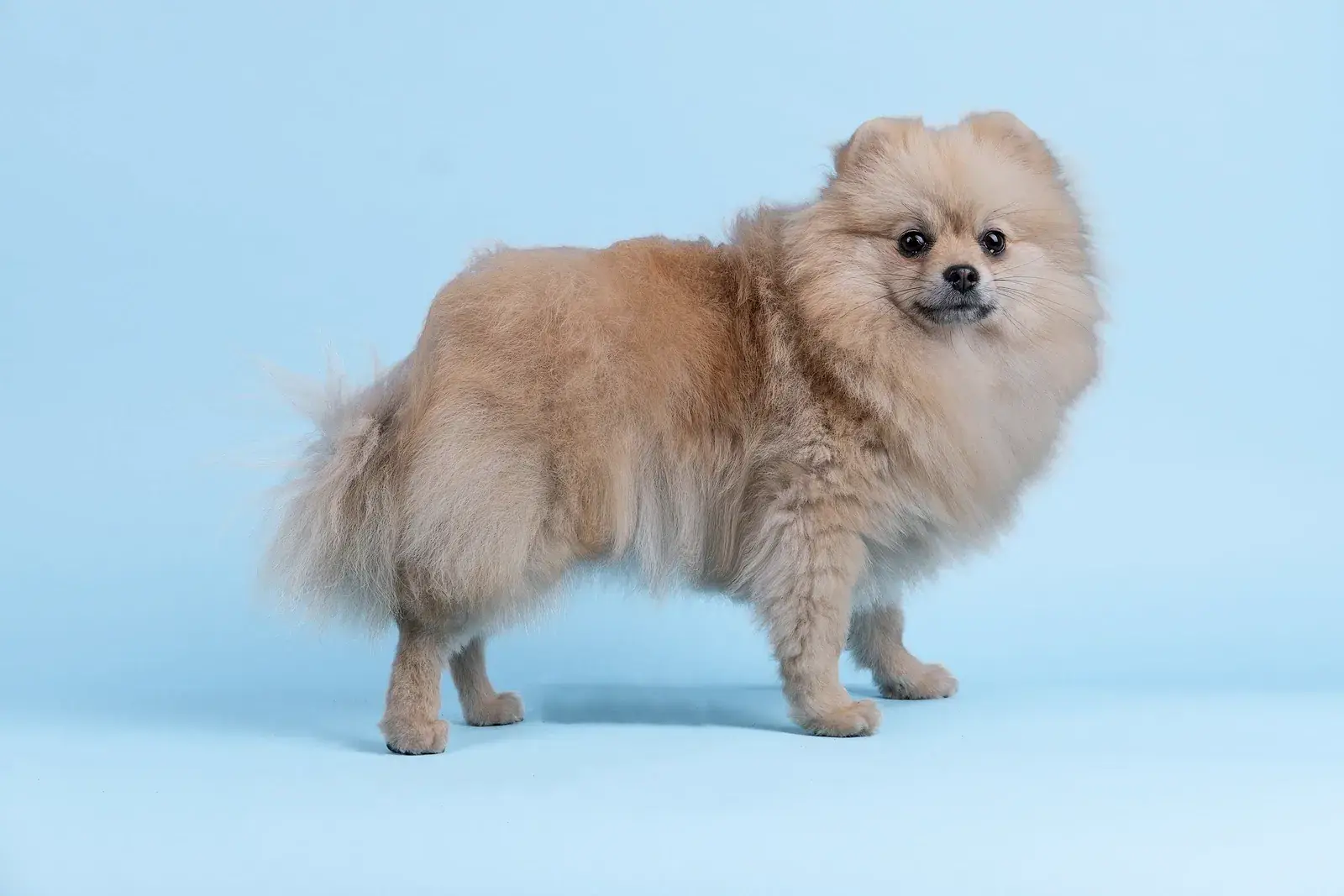
What is a Small Spitz?
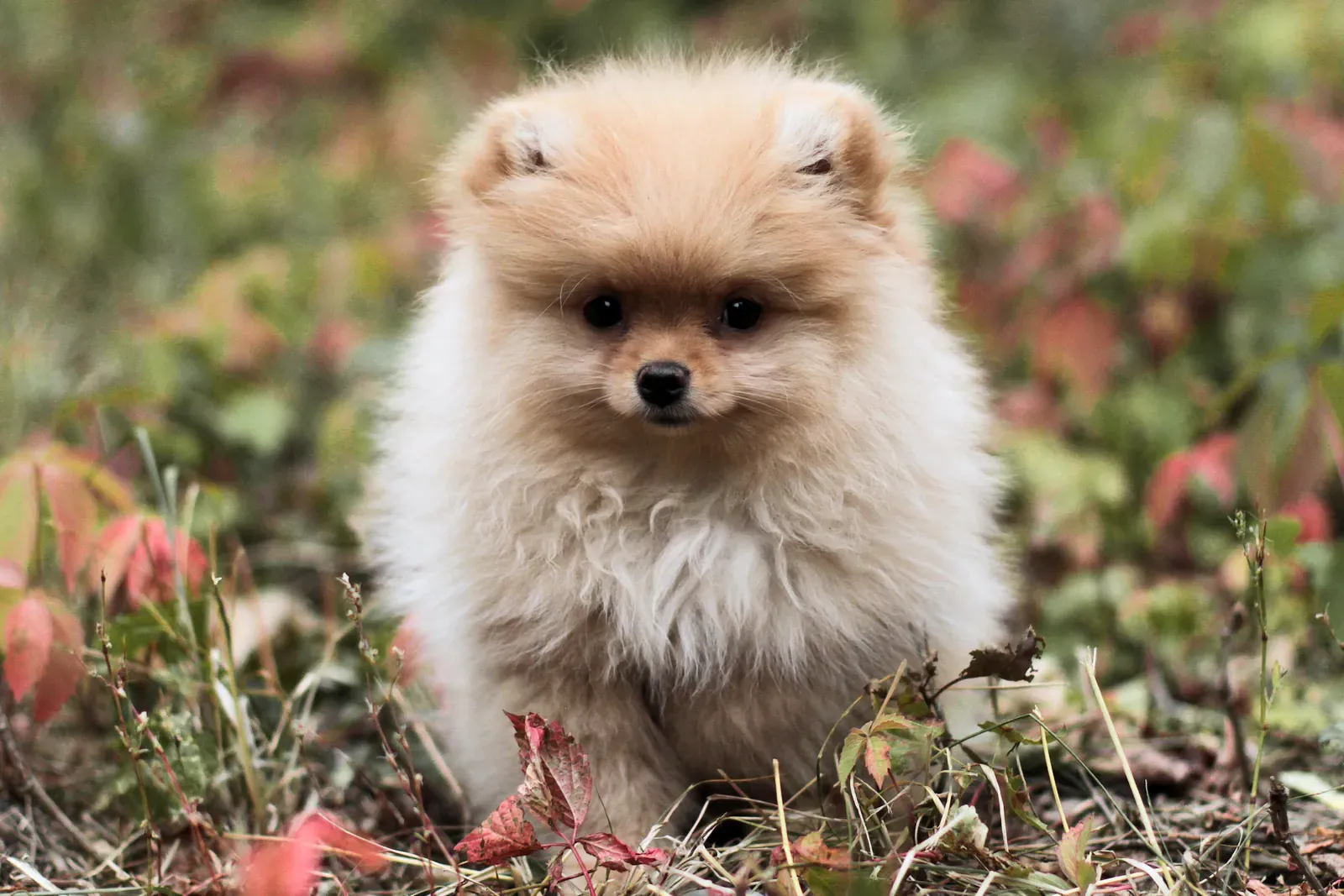
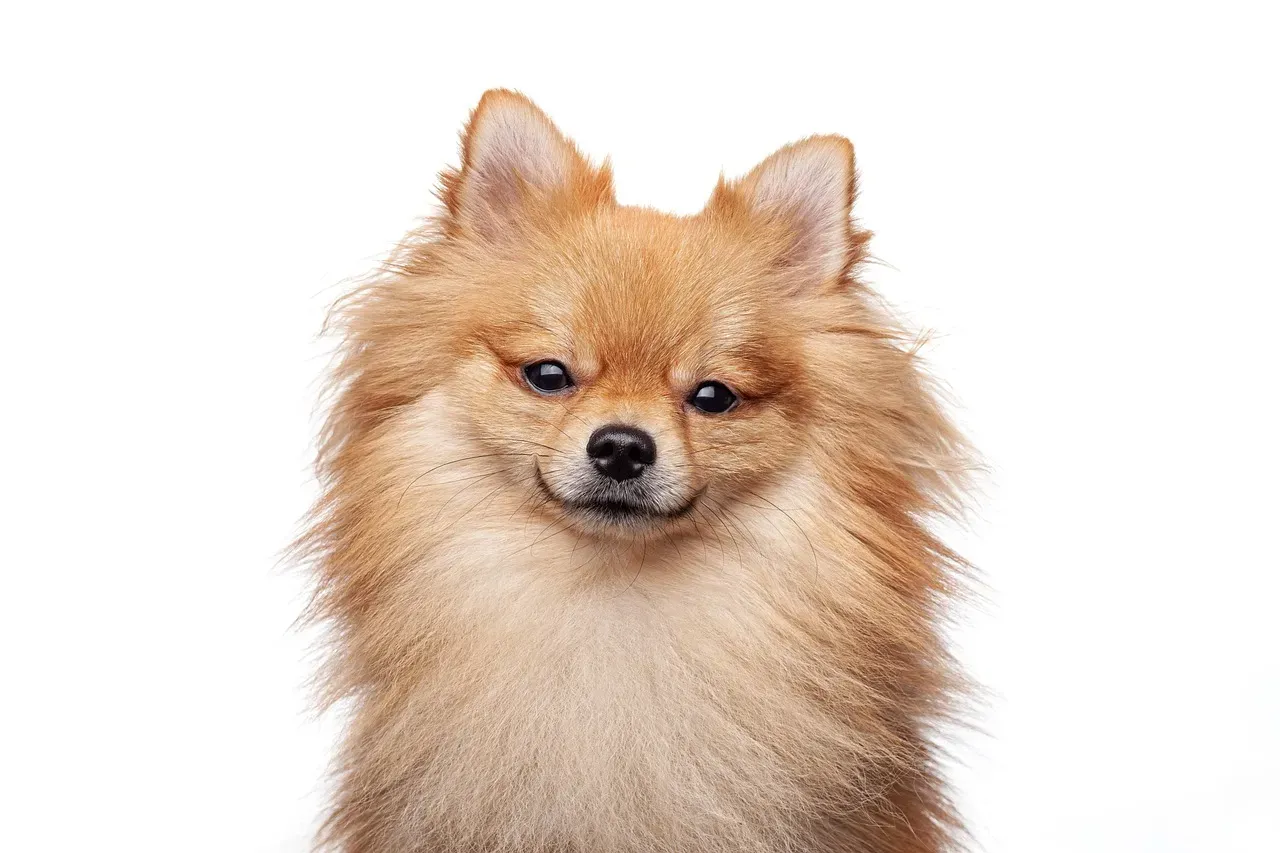
A spitz is a dog with a pointed muzzle, upright triangular ears, a thick double coat and a tail curled over the back. The word is German for "pointed". The Small Spitz family is a group of 10 small to medium spitz breeds from Europe, Turkey, India and Japan: the Pomeranian, German Spitz, Volpino Italiano, Japanese Spitz and six others. All 10 are living.
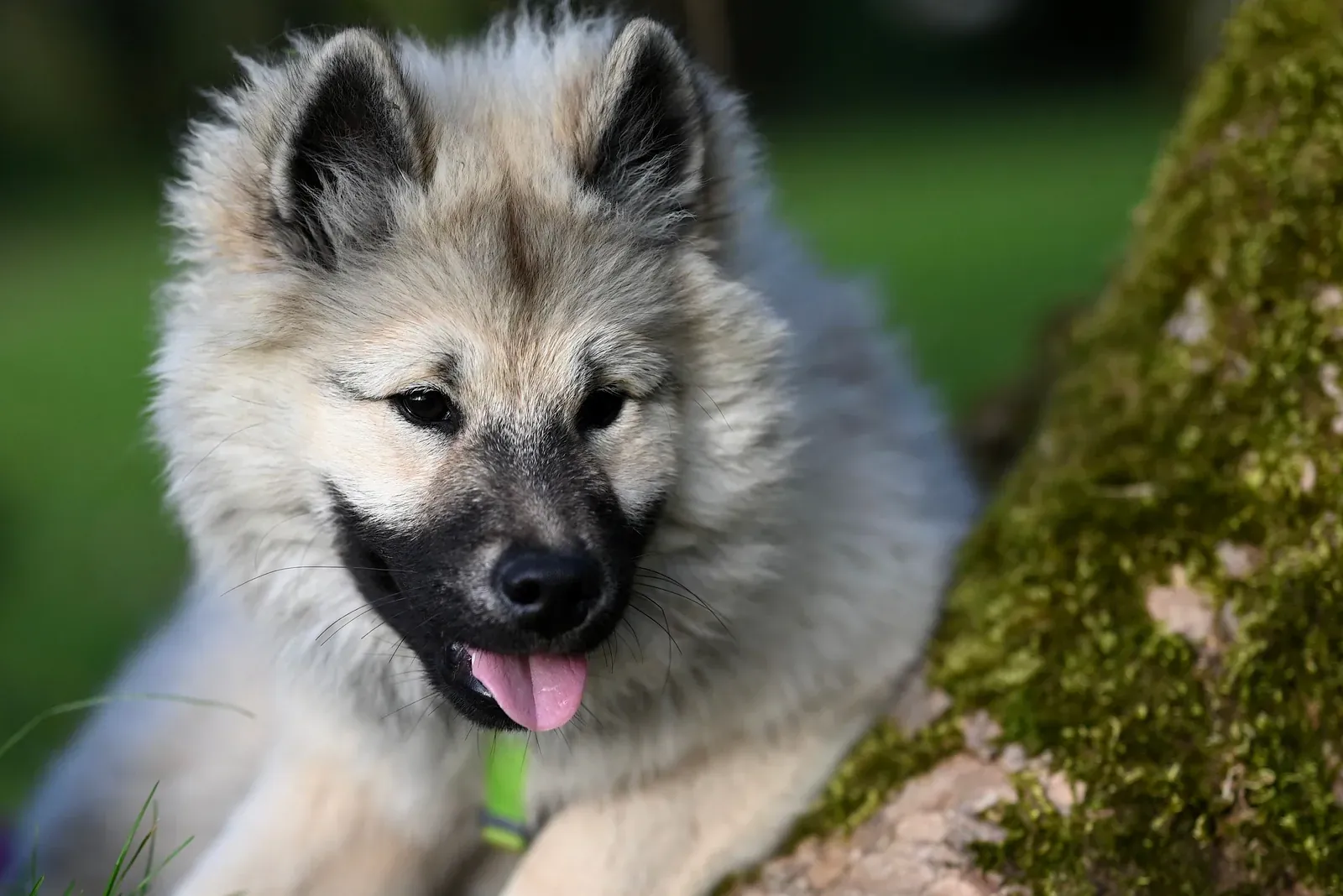 Save
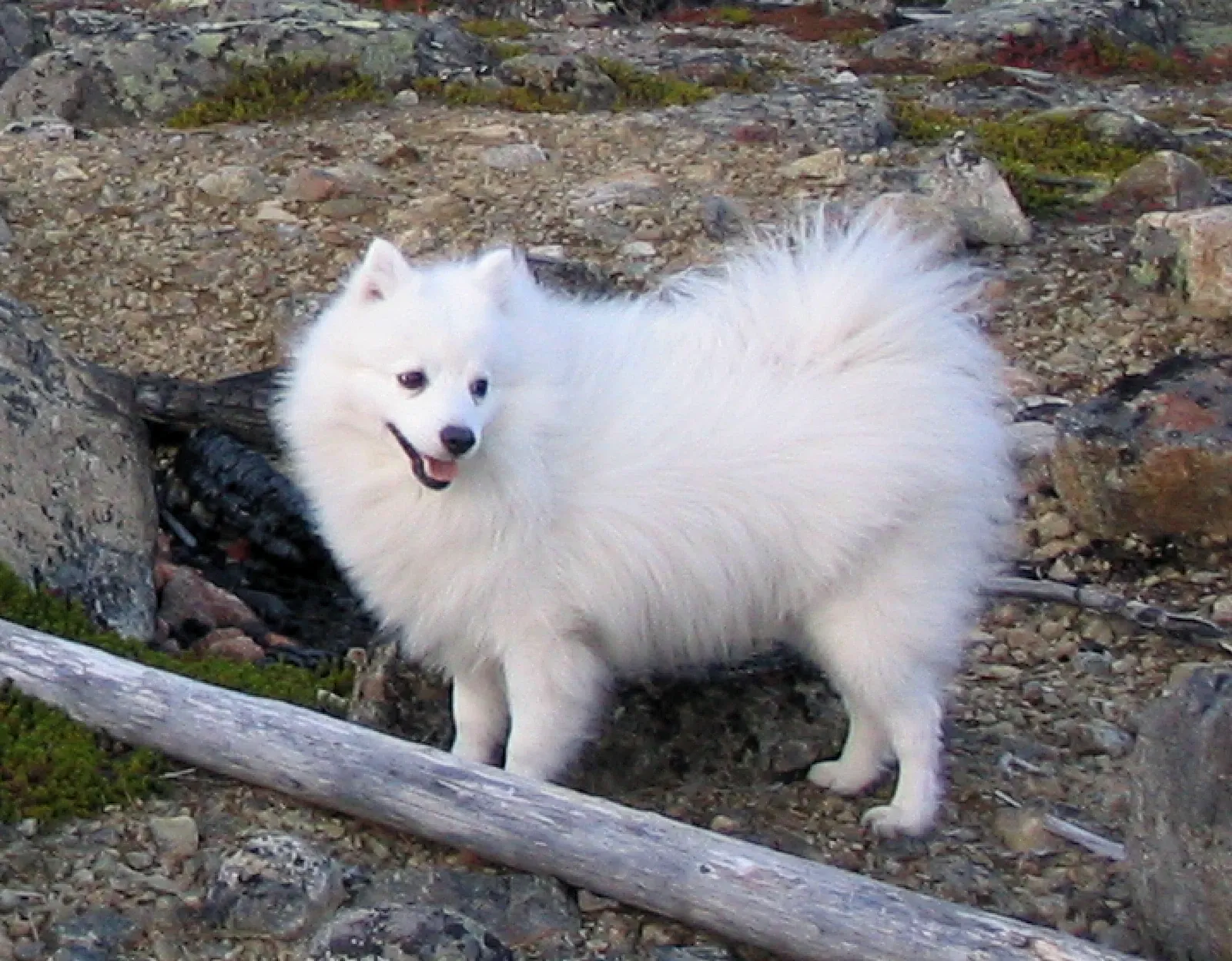 Save
 GuideSmartest dog breeds: what the rankings measure and what they missCoren's smartest dog breeds list, what it measured, what newer dog cognition research says, three kinds of dog intelligence and why smart dogs need work.
In this atlas a family is a group of breeds found together on the dog family tree by comparing genomes. It is a genetic idea, not the same as a kennel club group. The Eurasier is here, which surprises people, and the Keeshond, a spitz that looks like a close cousin, is not. This page explains who belongs and why.
Quick facts about the Small Spitz family
| Fact | Answer |
|---|---|
| Family type | Genetic clade (Parker et al. 2017) |
| Parent | European dogs |
| Breeds in this atlas | 10 (all living) |
| Breeds with DNA tested in the study | 3 (all with strong support) |
| Main homelands | Germany (3) and Turkey (2, plus one shared with Georgia) |
| Typical size | Small (5 of 10). Also 4 medium and 1 toy |
| Shared look | Pointed muzzle, upright ears, thick coat, curled tail |
| Core job | Watch dog and companion |
 GuideBanned and restricted dog breeds by countryWhich dog breeds are banned or restricted, country by country: UK, Ireland, France, Germany, Denmark, Norway, Spain, Australia and more.
Family or group: what is the difference?
In this atlas, "family" always means a DNA clade. "Group" is used only for kennel club groups such as the AKC Toy and Non-Sporting groups or FCI Group 5 (spitz and primitive types).
 GuideDog hybrids: what dogs can and cannot breed withCan dogs breed with wolves, coyotes, jackals or foxes? Wolfdogs, coydogs, the Sulimov dog and Dogxim explained, with chromosomes and DNA studies.
The two do not match. The FCI puts the spitz breeds in one group, while the AKC puts the Pomeranian in the Toy group and the Keeshond in the Non-Sporting group. Parker et al. (2017) sampled only three of the atlas's 10 breeds, the Volpino Italiano, the Pomeranian and the Eurasier, and found them in one Small Spitz clade with strong support. The other seven are placed here by written history, so those placements are best estimates. In the table below, the first three rows are DNA-tested.
Where do the Small Spitz breeds sit in the tree?
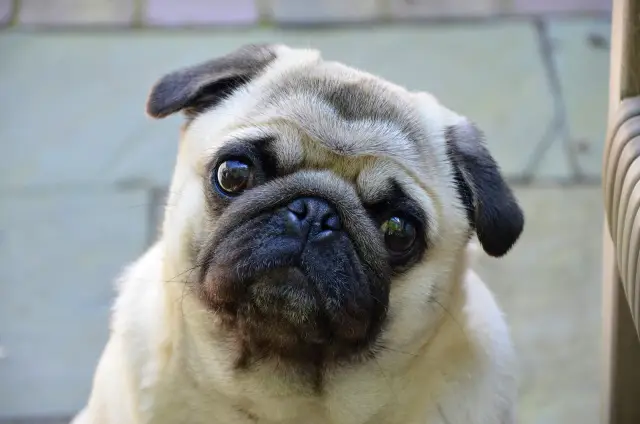
The family has one parent in the atlas data, European dogs. Other spitz live in other branches. The larger northern spitz, such as the Keeshond, sit in Nordic Spitz. The Pug and Schipperke sit in Toy Spitz. The Chow Chow, Samoyed and Shiba Inu sit in Asian Spitz. See the dog family tree for the whole picture.
 GuideDogs in Legends and Fairy TalesDogs in folklore and fairy tales: Black Shuck, The Tinderbox, Saint Guinefort, Panhu, Greyfriars Bobby, Barry and Old Drum, with legend and history kept apart.
What do the names mean?
- Spitz is German for "pointed", for the muzzle and ears (German Spitz, Danish Spitz).
- Pomeranian is named for the Pomerania region on the Baltic coast of Poland and Germany.
- Volpino Italiano means "little fox", from volpe, "fox", for its foxy face.
- Eurasier blends "Europe" and "Asia", for its spitz ancestry from both.
- Dikkulak is Turkish for "prick-eared".
- Tonya Finosu is named after the town of Tonya in Trabzon. Finosu is the local name of the breed.
- Zerdava is a Slavic word for a mustelid, perhaps for its marten-brown colour or its marten hunting.
- Indian Spitz and Japanese Spitz are named for the countries where they developed.
 GuideDog laws by country: tax, insurance and licencesDog tax, compulsory liability insurance, licences, microchips and leash rules in Germany, Austria, Switzerland, Spain, Ireland, the UK, the US and more.
What is the history of the Small Spitz breeds?
 GuideLivestock guardian dogs: what they do and who they suitWhat livestock guardian dogs do, how they differ from herding dogs, 40 LGD breeds by country, the DNA evidence, and whether they make good pets.
Before 1800: farm dogs and Renaissance pets
The spitz type is old in Europe. The German Spitz is dated in the atlas data from about 1400, the Volpino Italiano from about 1500, and the Zerdava from about 1000. The Danish Spitz appears from about 1700. Their jobs were practical: guarding farms, barges and wagons, and warning of strangers.
The Volpino is the best-documented. The FCI standard says it is a descendant of the European spitz and goes back to the same ancestors as the German Spitz. It is a relative of the German Spitz, not a descendant. The standard also cites a 1502 painting by Vittore Carpaccio that shows a Volpino. A story that Michelangelo owned one is repeated, but it is rumour. The FCI standard was written in 1913, and the breed was re-registered in 1972.
1800 to 1900: the German Spitz sizes and the Pomeranian
The German Spitz is one breed in several sizes. In the FCI system there are five size varieties, the Zwergspitz (the Pomeranian, 21 cm at the withers, plus or minus 3 cm), Klein, Mittel, Gross and the Wolfspitz, which is the Keeshond. In the UK Kennel Club standard the Klein is 23 to 29 cm and the Mittel 30 to 38 cm. A decision in June 1969 allowed the Mittelspitz to be shown with a height of 30 to 38 cm.
The Pomeranian is mostly a Victorian story. Queen Victoria met a small red Pomeranian named Marco in Florence in 1888 and brought him to Britain. He weighed about 5.4 kg. Marco was shown in 1891, the year the Pomeranian Club formed in Britain, and the AKC recognised the breed in 1900. The Queen's interest made small dogs fashionable, and breed histories describe the size roughly halving within her lifetime. See the Pomeranian article.
1900 to today: new breeds from old types
The Eurasier is a modern breed. Julius Wipfel began it in 1960 from the Chow Chow and the Wolfspitz (a German name of the Keeshond), and a Samoyed cross twelve years later gave the breed its final name. The atlas data dates it from 1960 to 1973.
The Japanese Spitz began with white German Spitz dogs, and other small white spitz breeds were crossed in later, in a period the atlas data dates from 1920 to 1948. The Indian Spitz was introduced by the British in the 19th century and is thought to descend from the German Spitz. The Volpino was revived: breeders brought it back in the early 1980s, after the Italian kennel club located 36 Volpinos in the countryside in 1984.
The Turkish breeds, Zerdava, Dikkulak and Tonya Finosu, are local spitz dogs of Turkey, and the Zerdava is also found in Georgia. The atlas data gives them broad date ranges that end in 1990 and a "by history" placement.
Who are the members of the Small Spitz family?
Here are all 10 breeds in the atlas data. The 3 breeds with DNA tested in the study come first. The other 7 are placed by history and are hidden until you choose to show all 10. "Appeared" is the period in which the breed took shape, as best the atlas records can say.
 GuideIs your dog suited to therapy work?How to make your dog a therapy dog: temperament checklist, first training steps, how Pet Partners, TDI and Pets As Therapy assess dogs, and welfare limits.
| Breed | Country | Status | Size | Appeared | DNA-tested |
|---|---|---|---|---|---|
| Volpino Italiano | Italy | Living | Small | 1500 to 1903 | Yes (Parker 2017) |
| Pomeranian | Germany | Living | Toy | 1800 to 1900 | Yes (Parker 2017) |
| Eurasier | Germany | Living | Medium | 1960 to 1973 | Yes (Parker 2017) |
| Zerdava | Turkey, Georgia | Living | Medium | 1000 to 1990 | By history |
| German Spitz | Germany | Living | Small | 1400 to 1899 | By history |
| Dikkulak | Turkey | Living | Small | 1500 to 1990 | By history |
| Danish Spitz | Denmark | Living | Medium | 1700 to 2013 | By history |
| Tonya Finosu | Turkey | Living | Medium | 1800 to 1990 | By history |
| Indian Spitz | India | Living | Small | 1850 to 1990 | By history |
| Japanese Spitz | Japan | Living | Small | 1920 to 1948 | By history |
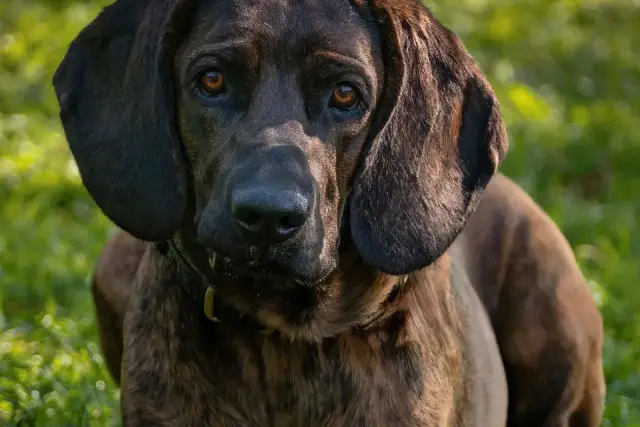
Who descends from whom, and which ties are strongest?
Two kinds of evidence are used. One is written history. The other is DNA: how many megabases (Mb, millions of DNA letters) two breeds share in matching stretches. A larger number means a closer shared ancestry, though it can also reflect a recent split or crossing.
 GuideDogs in science and spaceSpace dogs Laika, Belka and Strelka, Pavlov's dogs, Snuppy the clone, the dog genome and scent detection: what dogs did for science, and what it cost them.
Only three breeds in the family have DNA data, so the family tree is mostly written history. The strongest ties from the Parker study, as recorded in the atlas data:
| Pair | Shared DNA (Mb) | What it tells us |
|---|---|---|
| Eurasier and Chow Chow | 178.6 | Chow Chow is a founder of the Eurasier |
| Eurasier and Samoyed | 58.5 | A Samoyed cross gave the breed its final name |
| Eurasier and Keeshond | 36.7 | Wolfspitz, the German name of the Keeshond, was the other founder |
| Pomeranian and Volpino Italiano | 28.7 | Two small, fox-faced spitz |
| Pomeranian and Keeshond | 15.1 | A larger spitz cousin |
| Pomeranian and Standard Schnauzer | 12.9 | Probably shared small-dog stock in Europe |
Source: Parker et al. 2017, Cell Reports, shared haplotypes between 161 breeds (1,346 dogs).
The Eurasier shows how a family can hold a breed with most of its DNA elsewhere. Its top partners, the Chow Chow, Samoyed and Keeshond, are all in other families. The Eurasier sits in Small Spitz because the clade groups it with the Pomeranian and Volpino, not because it has the most DNA in common with them.
The written record adds a clear chain. The Pomeranian, the Indian Spitz and the Japanese Spitz all come from the German Spitz, at medium confidence. The German Spitz is the family's root breed.
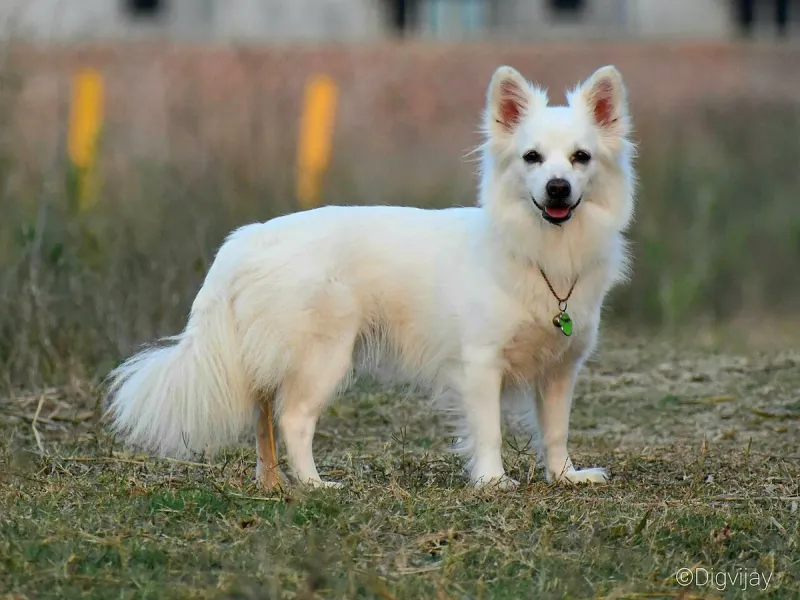
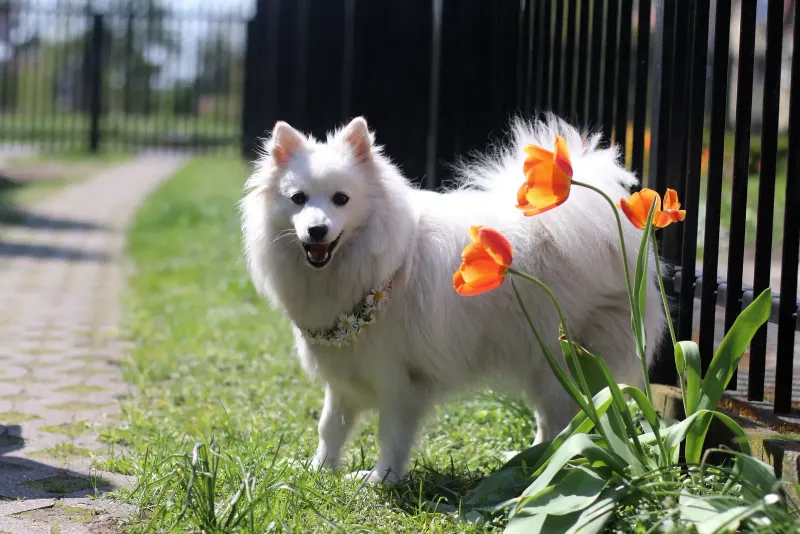
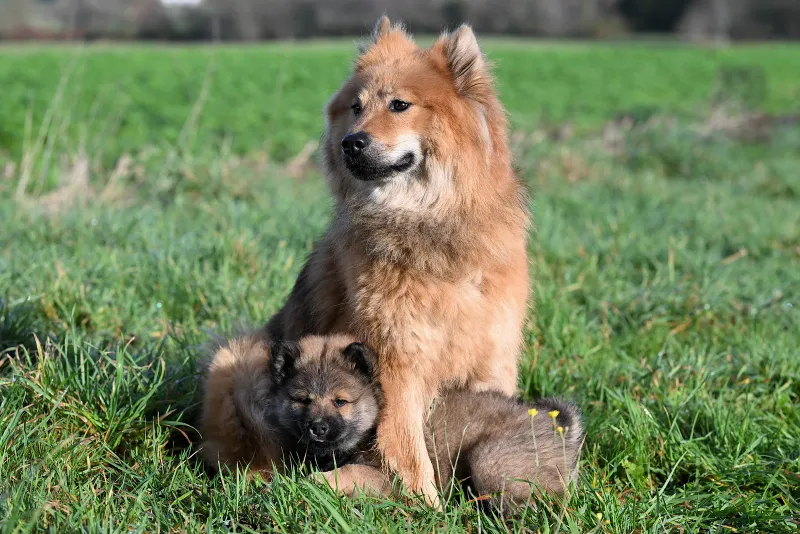 Eurasieralso Samoyed and KeeshondEurasieralso Samoyed and Keeshond

What do the Small Spitz breeds have in common?
Coat. A thick double coat with a stand-off ruff around the neck. Expect regular brushing. The Japanese Spitz is white.
 GuideHow to get an assistance dogHow to get a service dog or assistance dog in the USA, UK, Germany, France, Spain, Italy and the Netherlands: accredited schools, waits, owner-training and travel.
Build. Compact, with a wedge-shaped head and a high-set curled tail. Five of the 10 are small, four are medium, and the Pomeranian is the toy.
Face. A fox-like head with a pointed muzzle and small upright ears. This is not a flat-faced family.
Temperament. Alert and watchful, and often vocal. Spitz were farm and wagon watch dogs, and many still tell their owners when anyone arrives. This is a general tendency from breed writing, not a promise, and each dog differs.
What health issues are linked to Small Spitz breeds?
Most dogs in this family live healthy lives. Health depends on the breed, not the family, and the Pomeranian is the only one with several named studies in the sources used. The lighter points below apply to many small dogs. No study with named prevalence figures was found for the German Spitz, Japanese Spitz, Volpino Italiano or Eurasier, so no "1 in N" numbers are given for them.
 GuideService, therapy and emotional support dogs: what's the difference?Service dog vs emotional support dog vs therapy dog: the real differences, your rights in the USA and Europe, and why online certificates mean nothing.
| Condition | What it is | How common | What helps |
|---|---|---|---|
| Tracheal collapse (Pomeranian) | The windpipe loses rigidity and narrows, giving a honking cough | A 2024 retrospective study in Frontiers in Veterinary Science confirmed collapse in 19 of 25 Pomeranians examined; this is a referral group, not all Pomeranians | Keep weight healthy, avoid collar pressure on the neck, vet checks for a honking cough |
| Patellar luxation (Pomeranian) | The kneecap slips out of its groove | 6.5% of Pomeranians in English primary-care vets, with odds 6.5 times those of crossbreeds (O'Neill et al. 2016), about 1 in 15 | Healthy weight, vet checks, orthopaedic screening of breeding dogs |
| Alopecia X (Pomeranian) | Progressive hair loss on the trunk, thighs and tail | Cause unknown; genetic predisposition suspected (AKC Canine Health Foundation grant 03431) | Vet diagnosis; neutering helps some dogs |
| Dental disease (small spitz) | Crowding and tartar in small mouths | General veterinary teaching; no published breed figure | Tooth brushing, dental checks |
UK Kennel Club data list a life expectancy of 12.2 years for the Pomeranian (Lewis et al. 2018, Canine Genetics and Epidemiology). Ask a vet or the breed club which health tests apply before choosing a puppy.
 Save
 Save
 GuideDog Breeds by Country: Which Nations Made the Most?Dog breeds by country: how many breeds each nation produced in the Dogs Atlas data, from the UK and France to Japan, plus national dogs and families.GuideService, therapy and emotional support dogs: what's the difference?Service dog vs emotional support dog vs therapy dog: the real differences, your rights in the USA and Europe, and why online certificates mean nothing.
Which Small Spitz breeds are extinct?
None of the 10 breeds in this family is extinct in the atlas records. The nearest case is the Volpino Italiano, which became very rare in the 20th century. Breeders revived it in the 1980s.
 GuideHow to adopt a dog from a shelter or rescueHow to adopt a dog from a shelter or rescue: the process, costs in general terms, choosing a dog, the first weeks and what if it does not work out.
 GuideDogs of Japan: the native breeds and their storiesJapanese dog breeds explained: the six Nihon Ken, the Chin, Tosa, Japanese Spitz and Terrier, Hachiko, wartime near-extinction, DNA and who they suit.GuideHow to adopt a dog from a shelter or rescueHow to adopt a dog from a shelter or rescue: the process, costs in general terms, choosing a dog, the first weeks and what if it does not work out.
Are there surprises in the Small Spitz family?
- The Eurasier is a Small Spitz. It was built from the Chow Chow, Wolfspitz and Samoyed, yet clusters with the Pomeranian and Volpino.
- The Keeshond is not here. It is the Wolfspitz of the German Spitz family, but the atlas data places it in Nordic Spitz.
- The Pomeranian was once a big dog. Early Pomeranians were reported at about 13 kg, roughly three times a modern one, and the small dog is mostly a Victorian product.
- One dog, two views. The FCI treats the Pomeranian as the Zwergspitz, a size of the German Spitz, while English-speaking clubs treat it as its own breed.
- The Pug and Schipperke are in another family. They are small and spitz-like in the Pomeranian's DNA list (10.3 and 10.2 Mb) but sit in Toy Spitz.
- Europe, Asia and Turkey. The family reaches Japan and India through the German Spitz, and Turkey and Georgia through local breeds.
 Family storyAlpineRead the family's story: origins, members, DNA

What does research say about the Small Spitz breeds?
The key paper is Parker et al., "Genomic analyses reveal the influence of geographic origin, migration, and hybridization on modern dog breed development," Cell Reports, 2017. It built a family tree of 161 breeds from 1,346 dogs and found 23 clades. Small Spitz came out as one clade with strong support, though only 3 of the atlas's 10 breeds were in the study. The other seven follow written history, and these assignments are best estimates. For the broader picture of how families link up, see the dog family tree.
 Family storyAmerican Cur & FeistRead the family's story: origins, members, DNA

Which Small Spitz breed suits which owner?
This is a guide to type, not a promise for any single dog.
 Family storyAmerican TerrierRead the family's story: origins, members, DNA
- Flat or small-space living. The Pomeranian is a toy that suits a flat, but it is fragile and can be hurt by rough handling by young children.
- Owners who want a small, sturdy spitz. The Klein German Spitz and the Japanese Spitz are small dogs with the same fox-like look.
- Owners wanting a medium dog. The Mittel German Spitz, Danish Spitz and Eurasier are medium-size.
- Allergy-minded owners. No spitz is allergen-free, and all have a thick coat that needs brushing.
- Owners who dislike barking. Spitz are often vocal, so training and a calm routine matter.
Fun facts about the Small Spitz breeds
- Queen Victoria met her first Pomeranian, Marco, in Florence in 1888.
- The Volpino Italiano appears in a 1502 painting by Carpaccio, according to the FCI standard.
- The Eurasier's final name was chosen after a Samoyed cross, twelve years after the breed began in 1960.
- The Japanese Spitz began with white German Spitz dogs, in the period the atlas data dates from 1920 to 1948.
- Dikkulak is Turkish for "prick-eared".
 Family storyAmerican ToyRead the family's story: origins, members, DNA

Related families
- European dogs: the parent of the Small Spitz family.
- Nordic Spitz: the Keeshond and American Eskimo Dog, larger spitz cousins of the Pomeranian.
- Toy Spitz: Pug and Schipperke, which share DNA with the Pomeranian.
- Asian Spitz: Chow Chow and Samoyed, founders of the Eurasier.
 Family storyAncient American dogsRead the family's story: origins, members, DNA
 GuideDog Clothes: When Dogs Need Coats, and a Short History of Dog FashionDo dogs need coats in winter? When clothes help, when costumes stress a dog, safe fit, reflective gear, and a short history of dog fashion and dog art.Family storyAncient American dogsRead the family's story: origins, members, DNA
Frequently asked questions
What are the Small Spitz breeds?
In the atlas data: the Pomeranian, German Spitz, Volpino Italiano, Japanese Spitz, Eurasier, Danish Spitz, Indian Spitz and three Turkish breeds, the Zerdava, Dikkulak and Tonya Finosu.
Is the Pomeranian a German Spitz?
In the FCI system, yes: it is the Zwergspitz size of the German Spitz. The AKC and UK Kennel Club treat it as its own breed.
How big are German Spitz dogs?
The UK Kennel Club standard gives 23 to 29 cm for the Klein and 30 to 38 cm for the Mittel.
Is the Volpino a Pomeranian?
No. The FCI standard calls it a relative of the German Spitz, not a descendant. The two share 28.7 Mb of DNA in the Parker study.
Is the Eurasier a spitz?
Yes. It was built from the Chow Chow, Wolfspitz and Samoyed, and it sits with the Pomeranian and Volpino by DNA.
How long do Pomeranians live?
UK Kennel Club data list a life expectancy of 12.2 years (Lewis et al. 2018).
Read next
 Family storySchnauzerRead the family's story: origins, members, DNA
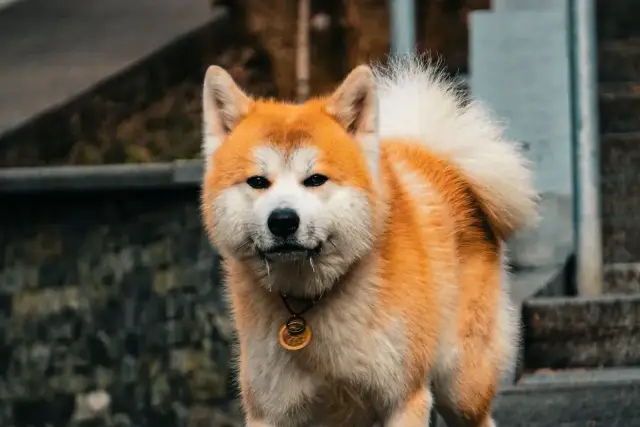 Family storyEast Eurasian dogsRead the family's story: origins, members, DNA
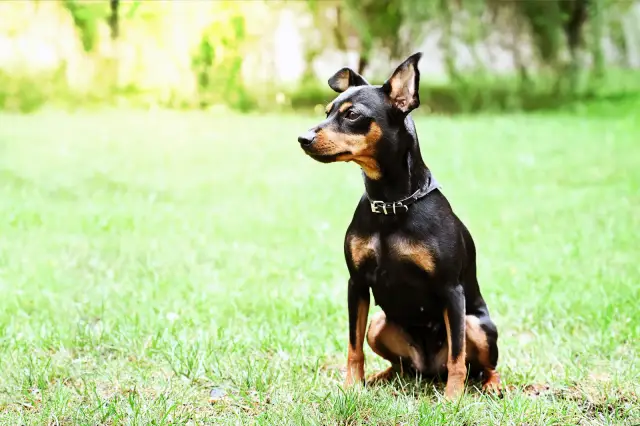 Family storyPinscherRead the family's story: origins, members, DNA
Sources (9)
- Parker, H. G., et al. (2017). Genomic analyses reveal the influence of geographic origin, migration, and hybridization on modern dog breed development. Cell Reports, 19(4), 697 to 708.
- O'Neill, D. G., et al. (2016). The epidemiology of patellar luxation in dogs attending primary-care veterinary practices in England. Canine Genetics and Epidemiology.
- Lewis, T. W., et al. (2018). Longevity and mortality in Kennel Club registered dog breeds in the UK in 2014. Canine Genetics and Epidemiology.
- Frontiers in Veterinary Science (2024). Retrospective study of tracheal collapse in dogs.
- AKC Canine Health Foundation, grant 03431 (alopecia X in the Pomeranian).
- Fédération Cynologique Internationale, standards for the Volpino Italiano and the German Spitz (no. 97).
- The Kennel Club (UK), breed standard for the German Spitz (Klein) and (Mittel).
- Pomeranian breed club histories (Queen Victoria, Pomeranian Club 1891, AKC recognition 1900).
- Breed records in the atlas data (Dogs Atlas, internal data).