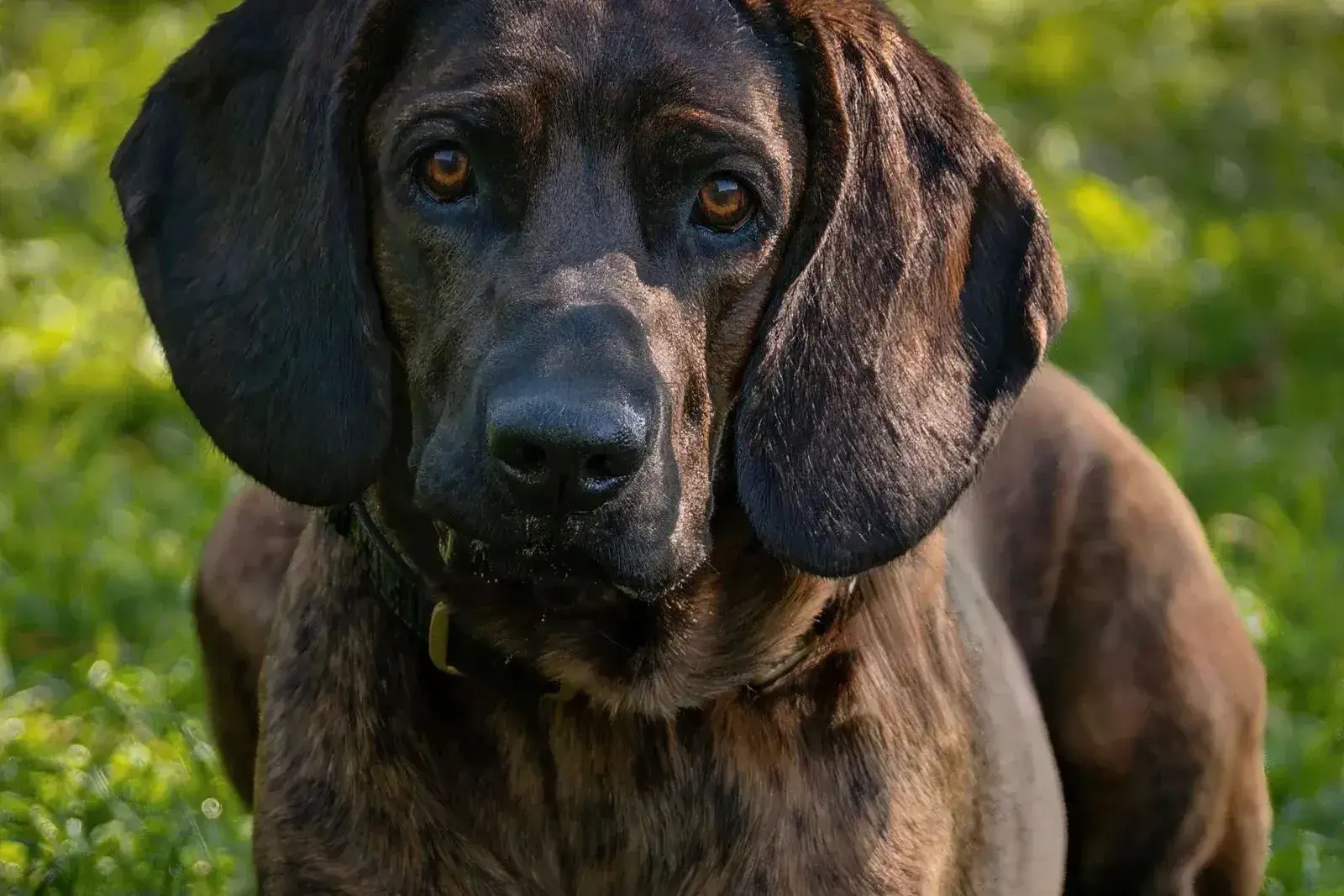
What is a scent hound?
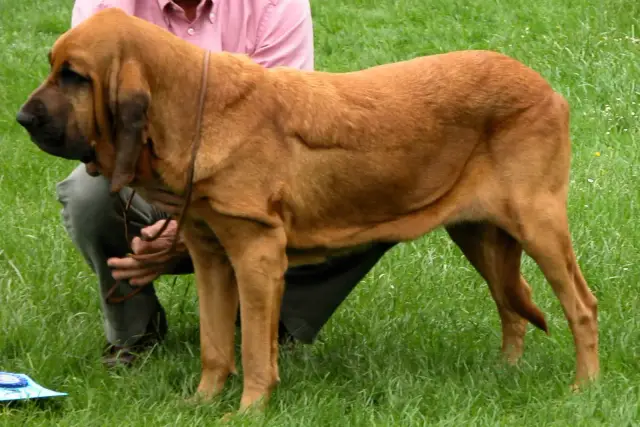
A scent hound is a dog bred to follow the smell of a trail, usually of a hare, fox, deer, boar or raccoon, and to give voice while it works. Most were built to hunt in packs, so that hunters on horseback or on foot could follow the sound. A few, such as the Bloodhound, were used to track people.
 GuideLivestock guardian dogs: what they do and who they suitWhat livestock guardian dogs do, how they differ from herding dogs, 40 LGD breeds by country, the DNA evidence, and whether they make good pets.
In this atlas, the Scent Hound family is a group of 113 breeds that share DNA and history. It is a genetic family, not the same thing as the kennel club "Hound" group. It is the biggest family, and most of its members are regional hounds from France, Britain and central Europe. This page explains who belongs, why, and how the lines run.
Quick facts about the Scent Hound family
| Fact | Answer |
|---|---|
| Family type | Genetic clade (Parker et al. 2017) |
| Parent | European dogs |
| Breeds in this atlas | 113 (93 living, 20 extinct) |
| Breeds with DNA tested in the study | 8 (all with strong support) |
| Main homelands | France (34), United Kingdom (17), United States (8) |
| Typical size | Medium (60 of 113). Also 40 large and 13 small |
| Core job | Following a scent trail, often in a pack |
| Shared look | Drop ears, deep chest, strong nose, a voice that carries |
| Shared temperament | Sociable with dogs, driven by scent, often hard to recall |
 GuideDogs in Legends and Fairy TalesDogs in folklore and fairy tales: Black Shuck, The Tinderbox, Saint Guinefort, Panhu, Greyfriars Bobby, Barry and Old Drum, with legend and history kept apart.
Family or group: what is the difference?
In this atlas, "family" always means a DNA clade, a branch of the family tree found by comparing genomes. "Group" is used only for kennel club groups such as the AKC Hound Group or FCI Group 6 (scenthounds and related breeds).
 GuideHow to adopt a dog from a shelter or rescueHow to adopt a dog from a shelter or rescue: the process, costs in general terms, choosing a dog, the first weeks and what if it does not work out.
The two overlap but do not match. Only 8 of our 113 breeds were sampled by Parker et al. (2017). They fall into one Scent Hound clade with strong support. The other 105 are placed here by written history: breeders and hunt records say they came from the same hound stock. In the table below, the first eight rows are DNA-tested and the rest are placed by history, so they are best estimates.
Why are only a few scent hounds DNA-tested?
The Parker study sampled 1,346 dogs from 161 breeds. That is a large study, but it covers fewer than half of the breeds in this one family alone. Our reading is that the sample favoured breeds with large registries and many dogs outside their home country. Regional French, Balkan and Scandinavian hounds are often kept in a few hundred to a few thousand dogs, mostly by hunters, and few were sampled. This is our inference, not a statement from the paper.
 ArticleThe first known dog on every continentEarliest accepted dog on each continent, from Bonn-Oberkassel to the dingo: dates, sites, how dogs arrived and which breeds carry those first dogs.
The result: the family tree below rests on 8 tested breeds, with 105 others attached by history. Treat the links between the untested hounds as informed estimates. They could change when more breeds are sequenced.
Where do scent hounds sit in the tree?
The Scent Hound family sits under European dogs. Its closest neighbours are the Spaniels, the Pointers and Setters and the Retrievers, all hunting dogs from western Europe. For how families join, see the dog family tree.
 GuideDog Clothes: When Dogs Need Coats, and a Short History of Dog FashionDo dogs need coats in winter? When clothes help, when costumes stress a dog, safe fit, reflective gear, and a short history of dog fashion and dog art.
Sighthounds such as the Greyhound belong to other families, not this one. A scent hound follows smell; a sighthound chases what it sees. Kennel clubs put both in a "hound" group, which is one reason group and family differ.
What does "hound" mean?
The word comes from the Old English hund, which once meant any dog. It narrowed to hunting dogs over time. Other names in this family tell you the job or place:
 GuideHow to get an assistance dogHow to get a service dog or assistance dog in the USA, UK, Germany, France, Spain, Italy and the Netherlands: accredited schools, waits, owner-training and travel.
- Bracke, Brake, Laufhund, Stövare, Kopov, Gończy: German, Swedish, Slavic and Polish words for hunting hounds. A "Laufhund" is a running hound, a "Stövare" is a dog that stirs up game.
- Basset: French for low. Bassets are short-legged hounds, bred so a hunter on foot could keep up.
- Griffon: French for a rough-coated hound.
- Grand and Petit: French for large and small, as in Grand Bleu de Gascogne and Petit Bleu de Gascogne.
- Briquet: a French word for a medium hound.
- Coonhound: a hound that trails raccoons ("coon") and then "trees" them.

What is the history of scent hounds?
 GuideService, therapy and emotional support dogs: what's the difference?Service dog vs emotional support dog vs therapy dog: the real differences, your rights in the USA and Europe, and why online certificates mean nothing.
Ancient hounds
Hunting with trailing dogs is very old. The atlas lists a Laconian hound in Greece from about 700 to 400 BCE and a Celtic hound, the Segusius, in Gaul from about 200 BCE to 200 CE. Both are extinct. The living Hellenic Hound is believed, but not proven, to descend from the Laconian. These links have low confidence.
700 to 1500: the monks and the royal packs
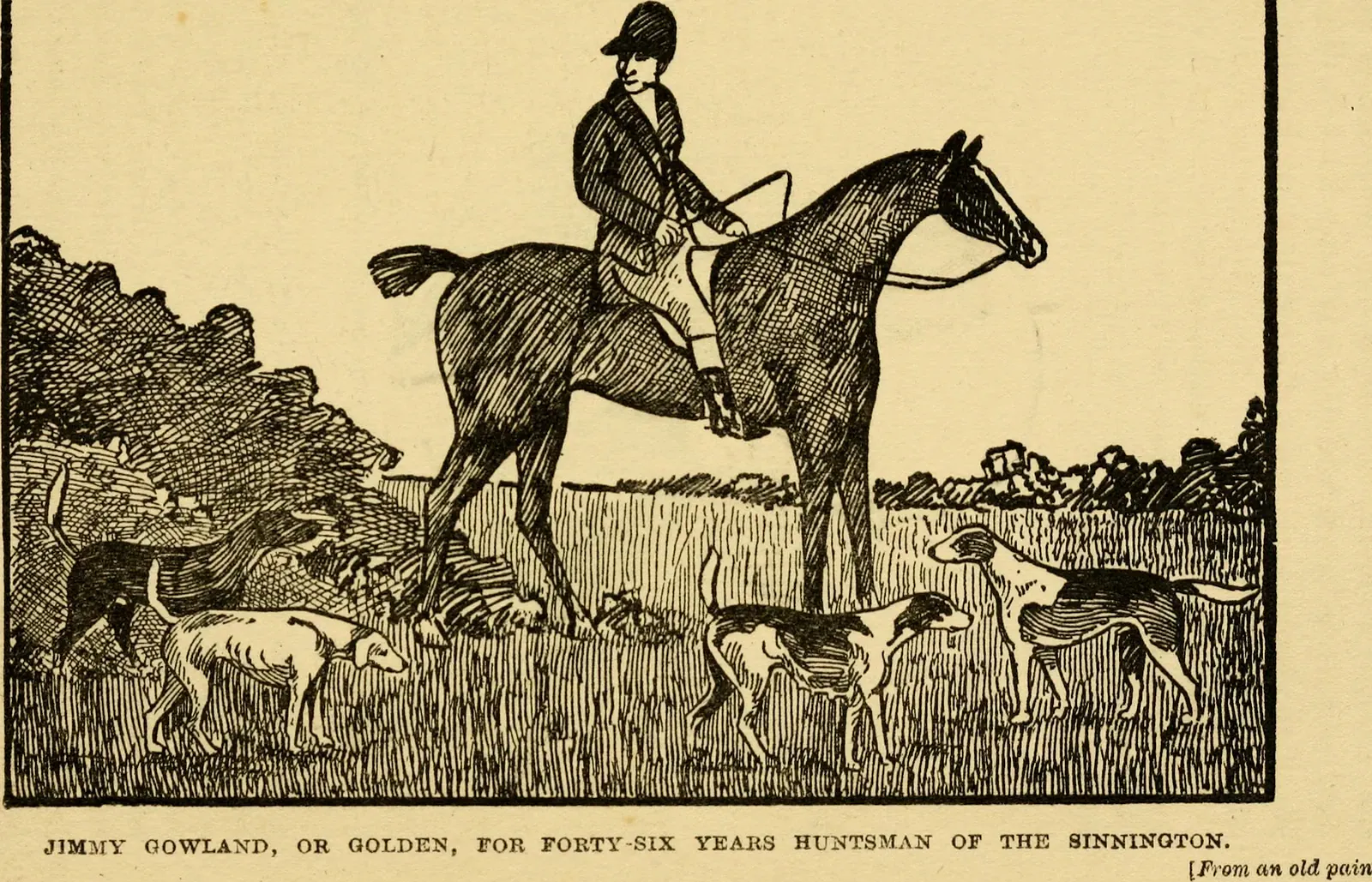
The best-known medieval line is the St Hubert hound. Hubert of Liège died in 727 and is the patron saint of hunters. His remains were moved in 825 to the Benedictine abbey in the Ardennes that took his name, Saint-Hubert. The abbey is traditionally named as a centre of hound breeding, and the Bloodhound is believed to descend from its hounds. The link is tradition. Whether the abbey's own hounds are direct ancestors is unclear.
The atlas dates the Bloodhound to about 1000 to 1100 and gives its country as Belgium and France. Hounds called Talbot, Southern Hound, Staghound and Sleuth Hound appear in England in medieval records. All are extinct.
A legend, labelled: many breed books say William the Conqueror brought St Hubert hounds and Talbots to England in 1066, and that these founded the Southern Hound. Breed sources repeat this, but there is no firm documentary proof. The Talbot itself is disputed: some writers call it a white Bloodhound, others a separate breed, and others an old British dog.
The royal packs of France mattered too. The King's White Hound is said to descend from a white St Hubert hound named Souillard, given to Louis XI in 1470. In 1520 Francois I added a Grand Fauve de Bretagne called Miraud, and in 1560 a Talbot called Barraud was added. These pack records come from our breed data; they show how royal kennels mixed hounds. The King's White Hound is believed to have been foundational for the Porcelaine and Grand Griffon Vendeen.
1500 to 1800: the French regional hounds
France has 34 breeds in this family, more than any other country. Regional packs developed from the medieval hounds, each shaped by terrain and quarry. The Grand Bleu de Gascogne, Poitevin, Saintongeois and Grand Griffon Vendéen are among the types recorded from this period. Poitevins are said to descend from 12 English Staghounds given to the Dauphin in 1692.
The French tradition split into "grand" (large) hounds for stag and boar and "petit" (small) hounds for hare, then added bassets, short-legged versions bred down from the big hounds. The Basset Bleu de Gascogne descended from the Grand Bleu de Gascogne. The Basset Fauve de Bretagne came from the Grand Fauve de Bretagne, now extinct.
Central Europe built its own line: the Hanover Hound, Tyrolean Hound, Swiss Laufhunds, and Balkan and Slavic hounds. Many of the Swiss types are tied by tradition to the St Hubert hound, for example the St. Hubert Jura Hound.
1700 to 1900: English foxhounds and the Beagle
In England, hunting changed from stag and hare to fox, and hounds were bred for speed. The atlas says the English Foxhound developed from the Southern Hound as hunts became faster. The Harrier, recorded from about 1260, and the Beagle served the hare hunters. Of the Beagle, the atlas says the modern breed grew from stock including the Southern Hound, the North Country Beagle and the Talbot. The North Country Beagle was strongly represented in the Honeywood pack that founded the modern breed. See the Beagle article.
English hounds crossed the Channel in the 1800s. French breeders crossed their own hounds with foxhounds to make the Anglo-French hounds: Grand Anglo-Français Blanc et Noir, Blanc et Orange and Tricolore, plus a smaller Anglo-Français de Petite Vénerie. Baron Gerard made the Beagle-Harrier in the late 1800s.
1650 to 1945: American hounds
Settlers took English and French hounds across the Atlantic. Robert Brooke's pack of English hounds was imported to Maryland in 1650 and is the root stock of the American Foxhound. George Washington is recorded as receiving French hounds from Lafayette and breeding them into his Virginia pack.
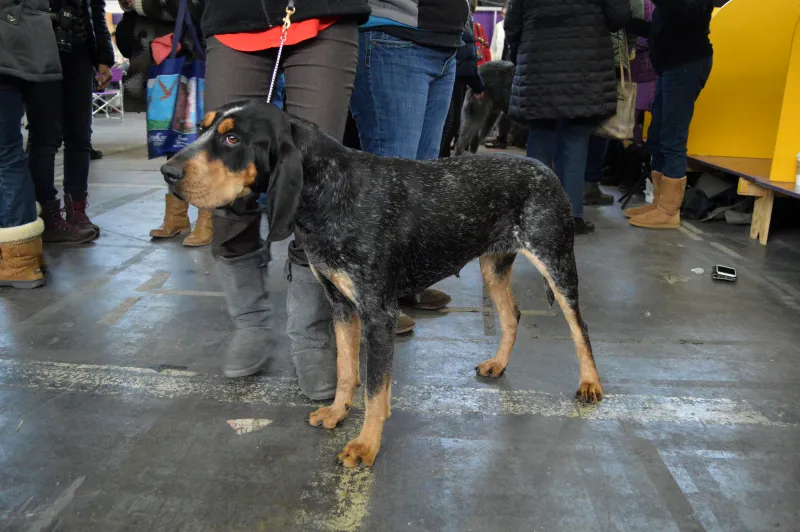
From foxhounds came the coonhounds. The American English Coonhound, Redbone, Black and Tan, Bluetick, Treeing Walker, Plott and Trigg Hound all trace to foxhound stock with Bloodhound, French or German hounds added. The Plott is the odd one: it is founded on Hanover Hounds brought from Germany by Johannes Plott in 1750.
1850 to today: standards and clubs
Late 1800s: kennel clubs and stud books arrived. The Basset Hound was developed in Britain from imported French bassets from the 1870s, and Everett Millais crossed a Basset with a Bloodhound bitch in the 1890s to make a heavier dog. Scandinavian hunters made the Hamiltonstövare, Schillerstövare, Dunker, Finnish Hound and others. Many of the breeds in this atlas were only recognised in the 1900s, and several are still being formalised, such as the Tatra Hound (2000 to 2026).
 Save
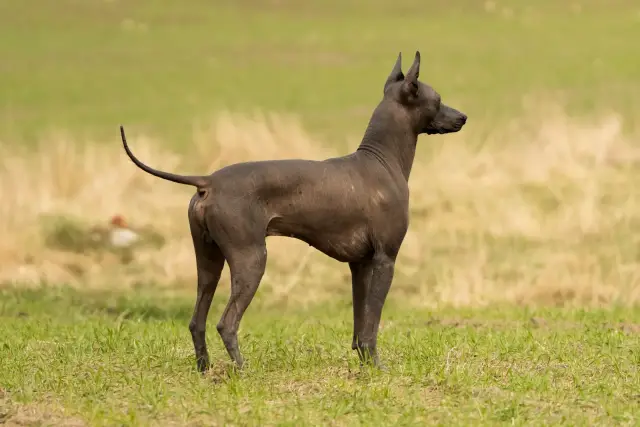
Who are the members of the Scent Hound family?
Here are all 113 breeds. The 8 breeds with DNA tested in the study come first. The other 105 are placed by history and are hidden until you choose to show all 113. "Appeared" is the period in which the breed or type is first documented, and some dates are rough. Only the breeds with an article in this atlas are linked.
 GuideIs your dog suited to therapy work?How to make your dog a therapy dog: temperament checklist, first training steps, how Pet Partners, TDI and Pets As Therapy assess dogs, and welfare limits.
| Breed | Country | Status | Size | Appeared | DNA-tested |
|---|---|---|---|---|---|
| Bloodhound | Belgium, France | Living | Large | 1000 to 1100 | Yes (Parker 2017) |
| Otterhound | United Kingdom | Living | Large | 1200 to 1900 | Yes (Parker 2017) |
| Beagle | United Kingdom | Living | Small | 1400 to 1890 | Yes (Parker 2017) |
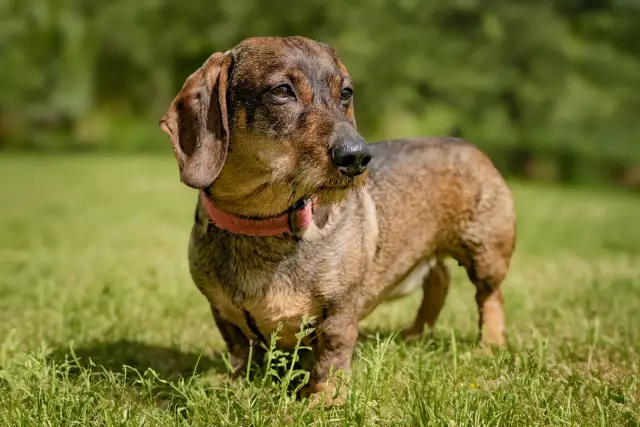
| Dachshund | Germany | Living | Small | 1600 to 1888 | Yes (Parker 2017) |
| English Foxhound | United Kingdom | Living | Large | 1650 to 1800 | Yes (Parker 2017) |
| Redbone Coonhound | United States | Living | Large | 1840 to 1902 | Yes (Parker 2017) |
| Basset Hound | United Kingdom | Living | Medium | 1860 to 1885 | Yes (Parker 2017) |
| Petit Basset Griffon Vendéen | France | Living | Small | 1898 to 1907 | Yes (Parker 2017) |
| Laconian | Greece | Extinct | Medium | 700 BCE to 400 BCE | By history |
| Hellenic Hound | Greece | Living | Medium | 500 BCE to 1996 | By history |
| Segusius | France | Extinct | Medium | 200 BCE to 200 CE | By history |
| Rache | United Kingdom | Extinct | Large | 900 CE to 1200 | By history |
| Welsh Gellgi | United Kingdom | Extinct | Large | 900 CE to 1300 | By history |
| Liangshan Dog | China | Living | Medium | 1000 to 1990 | By history |
| Norman Hound | France | Extinct | Large | 1000 to 1400 | By history |
| Talbot | United Kingdom | Extinct | Medium | 1000 to 1500 | By history |
| Transylvanian Hound | Hungary | Living | Medium | 1000 to 1968 | By history |
| Limer | United Kingdom | Extinct | Large | 1100 to 1400 | By history |
| Polish Hound | Poland | Living | Large | 1200 to 1966 | By history |
| Staghound | United Kingdom | Extinct | Large | 1200 to 1500 | By history |
| Chien-gris | France | Extinct | Large | 1250 to 1300 | By history |
| Harrier | United Kingdom | Living | Medium | 1260 to 1800 | By history |
| Buckhound | United Kingdom | Extinct | Large | 1300 to 1600 | By history |
| Gończy Polski | Poland | Living | Medium | 1300 to 2006 | By history |
| Grand Bleu de Gascogne | France | Living | Large | 1300 to 1900 | By history |
| Grand Fauve de Bretagne | France | Extinct | Large | 1300 to 1800 | By history |
| Griffon Nivernais | France | Living | Large | 1300 to 1925 | By history |
| Istrian Shorthaired Hound | Croatia | Living | Medium | 1300 to 1948 | By history |
| Montaimboeuf | France | Extinct | Large | 1300 to 1800 | By history |
| Segugio Italiano a Pelo Forte | Italy | Living | Medium | 1300 to 1950 | By history |
| Segugio Italiano a Pelo Raso | Italy | Living | Medium | 1300 to 1950 | By history |
| Sleuth Hound | United Kingdom | Extinct | Large | 1300 to 1500 | By history |
| Southern Hound | United Kingdom | Extinct | Large | 1300 to 1700 | By history |
| Lithuanian Hound | Lithuania | Living | Medium | 1400 to 1960 | By history |
| King's White Hound | France | Extinct | Large | 1461 to 1500 | By history |
| Basset Bleu de Gascogne | France | Living | Small | 1500 to 1900 | By history |
| Bulgarian Hound | Bulgaria | Living | Medium | 1500 to 1990 | By history |
| Bulgarian Scenthound | Bulgaria | Living | Medium | 1500 to 1990 | By history |
| Colombian Fino Hound | Colombia | Living | Medium | 1500 to 1990 | By history |
| Erbi Txakur | Spain | Living | Medium | 1500 to 2001 | By history |
| Grand Griffon Vendéen | France | Living | Large | 1500 to 1900 | By history |
| Griffon Fauve de Bretagne | France | Living | Medium | 1500 to 1949 | By history |
| Kerry Beagle | Ireland | Living | Medium | 1500 to 1990 | By history |
| North Country Beagle | United Kingdom | Extinct | Medium | 1500 to 1800 | By history |
| Porcelaine | France | Living | Medium | 1500 to 1950 | By history |
| Sabueso Español | Spain | Living | Medium | 1500 to 1920 | By history |
| Saintongeois | France | Extinct | Large | 1500 to 1700 | By history |
| Schweizer Laufhund | Switzerland | Living | Medium | 1500 to 1933 | By history |
| Schweizerischer Niederlaufhund | Switzerland | Living | Small | 1500 to 1933 | By history |
| Smaland Hound | Sweden | Living | Medium | 1500 to 1921 | By history |
| St. Hubert Jura Hound | Switzerland | Living | Medium | 1500 to 1933 | By history |
| Tyrolean Hound | Austria | Living | Medium | 1500 to 1896 | By history |
| Artois Hound | France | Living | Medium | 1600 to 1700 | By history |
| Basset Artésien Normand | France | Living | Small | 1600 to 1924 | By history |
| Curland Hound | Latvia | Extinct | Medium | 1600 to 1900 | By history |
| Griffon Bleu de Gascogne | France | Living | Medium | 1600 to 1900 | By history |
| Hanover Hound | Germany | Living | Large | 1600 to 1894 | By history |
| Holstein Hound | Germany | Extinct | Medium | 1600 to 1900 | By history |
| Poitevin | France | Living | Large | 1600 to 1957 | By history |
| Slovenský kopov | Slovakia | Living | Medium | 1600 to 1963 | By history |
| Welsh Hound | United Kingdom | Living | Medium | 1600 to 1900 | By history |
| American Foxhound | United States | Living | Large | 1650 to 1886 | By history |
| American English Coonhound | United States | Living | Large | 1700 to 1905 | By history |
| Black and Tan Coonhound | United States | Living | Large | 1700 to 1945 | By history |
| Bluetick Coonhound | United States | Living | Large | 1700 to 1945 | By history |
| Bruno Jura Hound | Switzerland | Living | Medium | 1700 to 1933 | By history |
| German Hound | Germany | Living | Medium | 1700 to 1900 | By history |
| Posavac Hound | Croatia | Living | Medium | 1700 to 1969 | By history |
| Segugio Maremmano | Italy | Living | Medium | 1700 to 1990 | By history |
| Plott Hound | United States | Living | Large | 1750 to 1946 | By history |
| West Country Harrier | United Kingdom | Living | Medium | 1750 to 1900 | By history |
| Alpine Dachsbracke | Austria | Living | Small | 1800 to 1932 | By history |
| Austrian Black and Tan Hound | Austria | Living | Medium | 1800 to 1900 | By history |
| Basset Fauve de Bretagne | France | Living | Small | 1800 to 1900 | By history |
| Bosnian Coarse-haired Hound | Bosnia and Herzegovina | Living | Medium | 1800 to 1965 | By history |
| Briquet de Provence | France | Living | Medium | 1800 to 1990 | By history |
| Briquet Griffon Vendéen | France | Living | Medium | 1800 to 1907 | By history |
| Finnish Hound | Finland | Living | Medium | 1800 to 1932 | By history |
| Grand Anglo-Français Blanc et Noir | France | Living | Large | 1800 to 1957 | By history |
| Grand Anglo-Français Blanc et Orange | France | Living | Large | 1800 to 1957 | By history |
| Grand Anglo-Français Tricolore | France | Living | Large | 1800 to 1957 | By history |
| Grand Basset Griffon Vendéen | France | Living | Small | 1800 to 1909 | By history |
| Istrian Coarse-haired Hound | Croatia | Living | Medium | 1800 to 1948 | By history |
| Pampas Deerhound | Brazil | Living | Medium | 1800 to 1990 | By history |
| Petit Bleu de Gascogne | France | Living | Medium | 1800 to 1955 | By history |
| Segugio dell'Appennino | Italy | Living | Small | 1800 to 2000 | By history |
| Treeing Walker Coonhound | United States | Living | Large | 1800 to 1945 | By history |
| Westphalian Dachsbracke | Germany | Living | Small | 1800 to 1886 | By history |
| Dunker | Norway | Living | Medium | 1820 to 1902 | By history |
| Hygen Hound | Norway | Living | Medium | 1830 to 1900 | By history |
| Gascon Saintongeois | France | Living | Large | 1840 to 1860 | By history |
| Anglo-Français de Petite Vénerie | France | Living | Medium | 1850 to 1978 | By history |
| Beagle-Harrier | France | Living | Medium | 1850 to 1974 | By history |
| Billy | France | Living | Large | 1850 to 1900 | By history |
| Halden Hound | Norway | Living | Medium | 1850 to 1900 | By history |
| Montenegrin Mountain Hound | Montenegro | Living | Medium | 1850 to 1924 | By history |
| Serbian Hound | Serbia | Living | Medium | 1850 to 1924 | By history |
| Trigg Hound | United States | Living | Medium | 1860 to 1900 | By history |
| Bavarian Mountain Hound | Germany | Living | Medium | 1870 to 1912 | By history |
| Styrian Coarse-haired Hound | Austria | Living | Medium | 1870 to 1889 | By history |
| Ariégeois | France | Living | Medium | 1880 to 1912 | By history |
| Hamiltonstövare | Sweden | Living | Medium | 1886 to 1921 | By history |
| Schillerstövare | Sweden | Living | Medium | 1887 to 1907 | By history |
| Chien Français Blanc et Noir | France | Living | Large | 1900 to 1957 | By history |
| Rastreador Brasileiro | Brazil | Living | Large | 1900 to 1967 | By history |
| Serbian Tricolour Hound | Serbia | Living | Medium | 1900 to 1946 | By history |
| Drever | Sweden | Living | Small | 1910 to 1947 | By history |
| Dumfriesshire Hound | United Kingdom | Extinct | Large | 1919 to 1930 | By history |
| Valdueza | Spain | Living | Large | 1940 to 2020 | By history |
| Estonian Hound | Estonia | Living | Medium | 1947 to 1959 | By history |
| Chien Français Tricolore | France | Living | Large | 1950 to 1965 | By history |
| Chien Français Blanc et Orange | France | Living | Large | 1970 to 1978 | By history |
| Tatra Hound | Slovakia | Living | Small | 2000 to 2026 | By history |
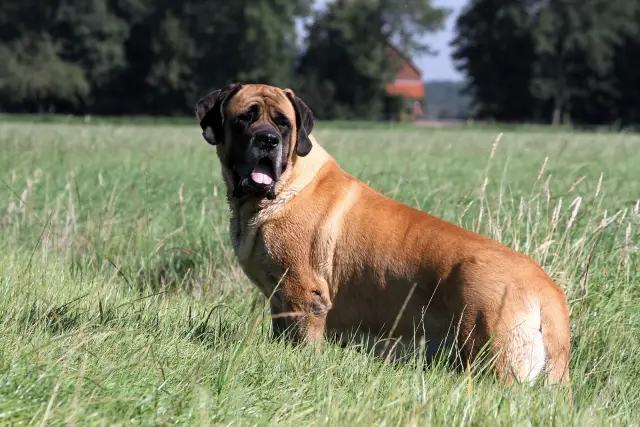
Who descends from whom, and which ties are strongest?
The DNA study measured how many megabases (Mb) of DNA each pair of tested breeds shares in long identical stretches. More shared DNA means a closer link. Among our 8 tested hounds, the strongest ties are:
 GuideBanned and restricted dog breeds by countryWhich dog breeds are banned or restricted, country by country: UK, Ireland, France, Germany, Denmark, Norway, Spain, Australia and more.
| Pair | Shared DNA (Mb) |
|---|---|
| Bloodhound and Otterhound | 108.2 |
| English Foxhound and Otterhound | 86.3 |
| Beagle and English Foxhound | 61.0 |
| Bloodhound and English Foxhound | 58.2 |
| Beagle and Redbone Coonhound | 56.3 |
| Beagle and Bloodhound | 50.0 |
Source: Parker et al. 2017, Cell Reports, shared haplotypes between 161 breeds (1,346 dogs).
Source: Parker et al. 2017, as recorded in this site's database.
The Bloodhound and Otterhound are the closest tested pair. The Otterhound is thought to carry French rough-coated hound blood, including Griffons, but that is documented history, not part of the DNA result. The Basset Hound shares 27.1 Mb with the Bloodhound, which fits its recorded Bloodhound cross.
Written history adds a web of ties that the DNA study could not test:
- Bloodhound line. The St Hubert hound is held to be an ancestor of the Norman Hound, Saintongeois, Grand Bleu de Gascogne, Gascon Saintongeois and Ariégeois, with low confidence for most.
- Grand Bleu line. The Grand Bleu de Gascogne leads to the Basset Bleu, Petit Bleu, Griffon Bleu and Bluetick Coonhound.
- Griffon Vendéen line. The Grand Griffon Vendéen led to the Briquet, Grand Basset and Petit Basset Griffon Vendéen (PBGV), and helped rebuild the Griffon Nivernais in 1925.
- Foxhound line. The English Foxhound leads to the American Foxhound, the Anglo-French hounds and most coonhounds.
- German and Hanover line. The Hanover Hound led to the Bavarian Mountain Hound, Plott Hound and Styrian Coarse-haired Hound.
- Dachsbracke line. Short-legged central European hounds: Alpine Dachsbracke, Westphalian Dachsbracke and the Swedish Drever, which descends from the Westphalian dog.
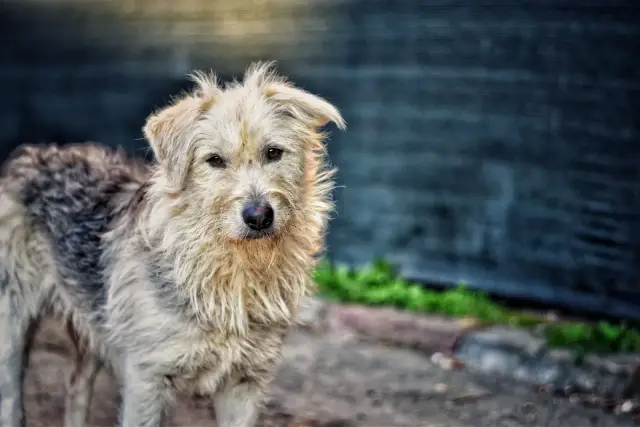
What do scent hounds have in common?
- A deep voice. Hounds bark, bay or bell as they trail, so the pack and the huntsman can follow. A hound's bay can carry far.
- A nose-first mind. A trailing hound can drop everything for a scent, including a recall. This is the hardest part of training.
- Drop ears and loose lips. A traditional explanation is that hanging ears stir scent up toward the nose. No study settles this.
- Stamina. Pack hounds were bred to run for hours, not sprint.
- Pack manners. Many get on well with other dogs. They can be less reliable with small pets that smell like quarry.
- A short, easy coat. Most are smooth coated; the Griffons, Otterhound and rough-coated Italian and Balkan hounds are the exceptions.
 GuideDogs in science and spaceSpace dogs Laika, Belka and Strelka, Pavlov's dogs, Snuppy the clone, the dog genome and scent detection: what dogs did for science, and what it cost them.
How good is a hound's nose?
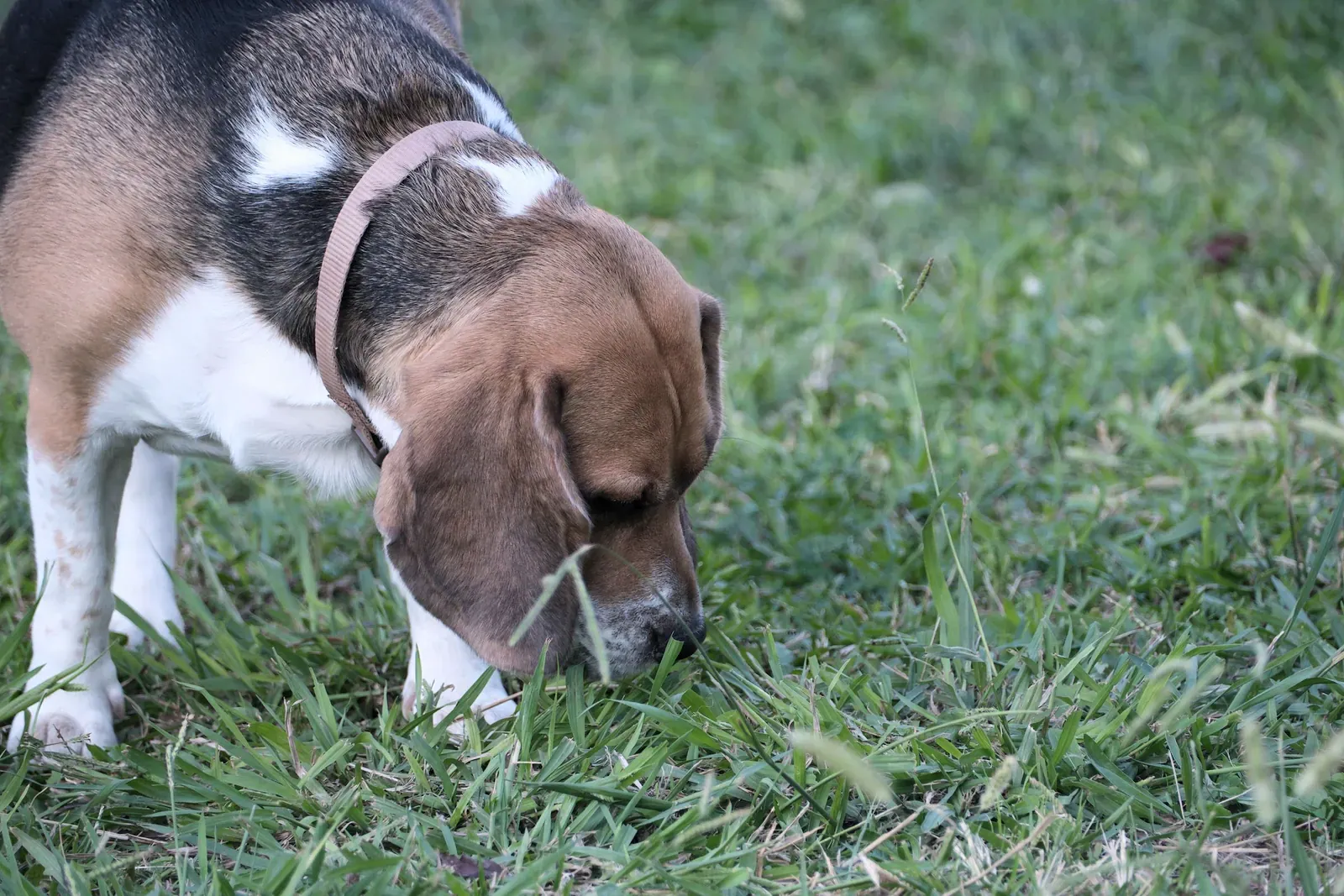
The idea that scent hounds have better noses than other dogs is common. The research is more mixed. The first big survey of canine smell genes, by Quignon and colleagues (Mammalian Genome, 2012), reports about 1,100 olfactory receptor genes in the dog, with about one in five inactive. A 2025 study in Molecular Biology and Evolution, "Genetic and Anatomical Determinants of Olfaction in Dogs and Wild Canids", used genome data from 635 dogs of 121 breeds. It found that scent hounds did not have significantly more working smell genes than other breeds, or than sighthounds. The same work found the flat-faced Pug had fewer. So a hound's reputation may come from how it is bred to work, how it behaves and perhaps nose shape, not from a bigger gene set. A scent hound's real advantage is that it is bred to keep its nose down and keep trailing.
 Save
What health issues are linked to scent hounds?
Most scent hounds live healthy lives. The conditions below are what breed clubs and vets watch for, and most can be managed. Hounds are many different breeds, so there is no single family health profile. Figures are only given when a named study gives them.
 GuideDogs in myth around the worldFrom Anubis and Cerberus to Fenrir, Xolotl and the Tiangou: how cultures across the world imagined dogs as guardians, guides and monsters.
| Condition | What it is | How common | What helps |
|---|---|---|---|
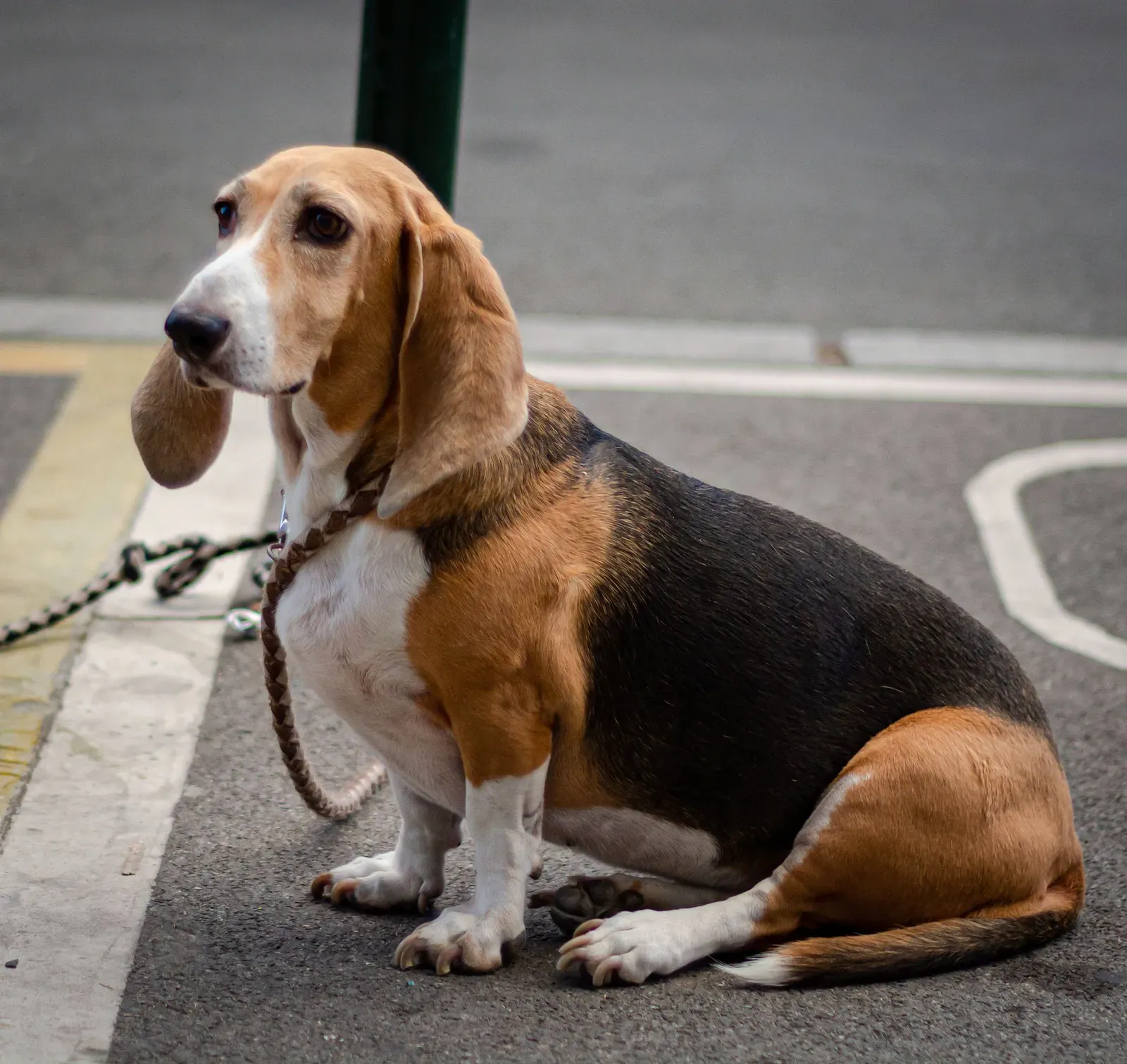
| Ear disease (otitis externa) | Inflammation of the ear canal, often in dogs with long, hanging ears | In a UK VetCompass study of 22,333 dogs (O'Neill et al. 2021), 7.3 percent of all dogs had it in a year, about 1 in 14. Basset Hounds were highest at 28.81 percent, about 1 in 3.5, and had 5.87 times the odds of crossbred dogs. Drop ears carried about 1.8 times the odds of erect ears | Routine ear checks, vet-advised cleaning, early treatment |
| Back disc disease (IVDD) | A disc in the spine bulges or bursts, causing pain or weakness. It is more common in long-backed, short-legged breeds | The UK DachsLife survey of 2015 found 15.7 percent in Dachshunds, about 1 in 6. No verified figure exists for Basset Hounds, though they are listed as at risk | Healthy weight, no repeated jumping from height, prompt vet check for back pain |
| Obesity | Carrying extra body fat, which strains joints | 24.27 percent of Beagles, about 1 in 4 (VetCompass, O'Neill et al. 2024) | Measured meals, treats counted, regular weigh-ins |
| Bloat (gastric dilatation-volvulus, GDV) | The stomach fills with gas and may twist; an emergency | A US study (Glickman et al. 2000) put lifetime risk at about 24 percent, about 1 in 4, for large breeds as a class. Bloodhounds were among its 11 breeds. No Bloodhound-only figure is published | Several small meals, no heavy exercise around meals, ask a vet about preventive gastropexy |
| Lafora disease in Beagles | Inherited late-onset epilepsy | One laboratory found 1.9 percent affected, about 1 in 53, and 22.9 percent carriers. Tested dogs are not a random sample | DNA test; test both parents before breeding |
| Bleeding disorders in Bassets | Inherited platelet or clotting problems | Frequency not given here | Basset clubs list thrombopathia and von Willebrand testing |
Overall health depends on the breed and the line. Ask the breed club which tests apply, and see the Beagle and Dachshund articles for more.
 Save
Which Scent Hound breeds are extinct?
20 of the 113 are extinct. Most are medieval or early modern packs, absorbed into later breeds.
 GuideDog laws by country: tax, insurance and licencesDog tax, compulsory liability insurance, licences, microchips and leash rules in Germany, Austria, Switzerland, Spain, Ireland, the UK, the US and more.
- England and Britain: Beagle ancestors Talbot, Southern Hound, North Country Beagle, Staghound, Buckhound, Limer, Rache, Sleuth Hound, Welsh Gellgi and the Dumfriesshire Hound (1919 to 1930), the youngest extinct hound here.
- France: Norman Hound, King's White Hound, Chien-gris, Grand Fauve de Bretagne, Montaimboeuf and Saintongeois. The Saintongeois fed the Gascon Saintongeois in the 1800s.
- Germany and the Baltic: Holstein Hound and Curland Hound.
- Ancient: Laconian (Greece) and Segusius (Gaul).
Are there surprises in the Scent Hound family?
- The Dachshund is a scent hound by DNA. It sits with the Beagle and Bloodhound, not with terriers. See the Dachshund article.
- The Otterhound is closest to the Bloodhound. More than the foxhound or the Beagle, in the tested set.
- The Beagle is not a miniature Foxhound. The atlas name the Southern Hound, North Country Beagle and Talbot as its sources, and DNA ties it to foxhounds and Redbone Coonhounds.
- Coonhounds are mostly English hounds. They are American in country but European in blood.
- Some members are far from Europe. Colombia, Brazil, China and Spain's Basque country have members. The atlas includes the Liangshan Dog of China here, which looks out of place and is placed by weak evidence.
- Hellenic and Laconian. An ancient Greek hound is tied to a living one, on belief only.
 GuideDog hybrids: what dogs can and cannot breed withCan dogs breed with wolves, coyotes, jackals or foxes? Wolfdogs, coydogs, the Sulimov dog and Dogxim explained, with chromosomes and DNA studies.

What does research say about scent hounds?
The key paper is Parker et al., "Genomic analyses reveal the influence of geographic origin, migration, and hybridization on modern dog breed development," Cell Reports, 2017. It built a family tree of 161 breeds from 1,346 dogs. Scent hounds came out as one clade, though only 8 of our 113 breeds were in the study.
 GuideDogs of Japan: the native breeds and their storiesJapanese dog breeds explained: the six Nihon Ken, the Chin, Tosa, Japanese Spitz and Terrier, Hachiko, wartime near-extinction, DNA and who they suit.
On smell, see Quignon et al. 2012 and the 2025 Molecular Biology and Evolution study named above. For health, see the VetCompass otitis externa paper by O'Neill et al. (Canine Genetics and Epidemiology, 2021) and the Glickman et al. GDV papers (JAVMA, 2000).
 GuideDog Breeds by Country: Which Nations Made the Most?Dog breeds by country: how many breeds each nation produced in the Dogs Atlas data, from the UK and France to Japan, plus national dogs and families.GuideDogs of Japan: the native breeds and their storiesJapanese dog breeds explained: the six Nihon Ken, the Chin, Tosa, Japanese Spitz and Terrier, Hachiko, wartime near-extinction, DNA and who they suit.
Which scent hound suits which owner?
This is a guide to type, not a promise for any single dog.
 Family storyAlpineRead the family's story: origins, members, DNA
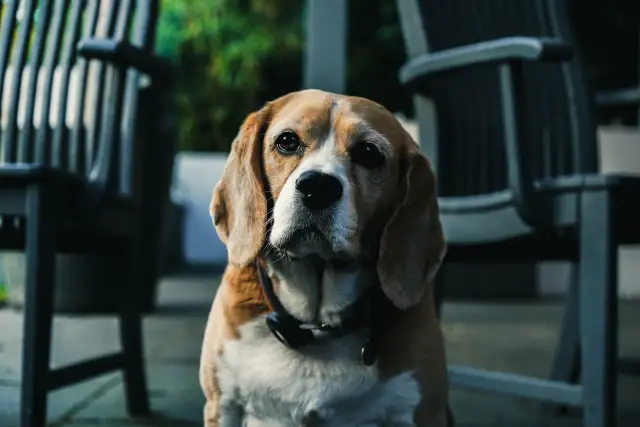
- First-time family with a garden. The Beagle is the usual pick, friendly and small. It needs a secure fence and a lot of sniffing time.
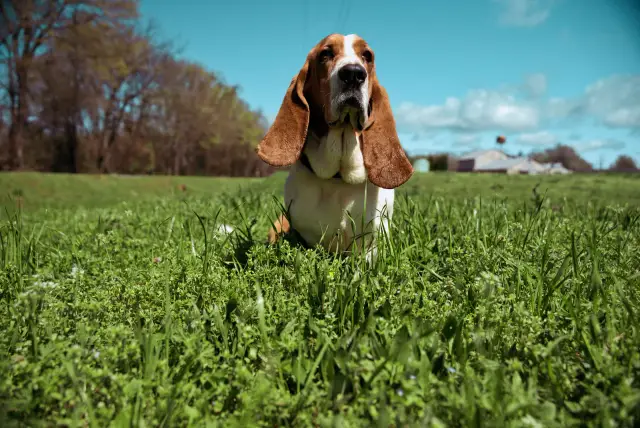
- Calm home, lots of walks. The Basset Hound and Basset Griffon Vendéen types are easy going but strong-willed. Watch ears, weight and backs.
- Active owners. The Foxhound types, coonhounds and many Anglo-French hounds are made to run all day and are rarely suited to flats.
- Hunters and trackers. Regional hounds in this family are mainly kept by hunters. Many are rare outside their homeland.
- A smaller dog with a hound's character. The Dachshund suits an owner who wants a clever, independent dog and will protect its back.
- Allergy-minded owners. No hound is allergen-free. The rough-coated Griffons shed less than most smooth coats.

Fun facts about scent hounds
- Hubert of Liège died in 727, and his relics were moved to Saint-Hubert abbey in 825.
- The Poitevin traces to 12 English Staghounds given to the Dauphin of France in 1692.
- George Washington received French hounds from Lafayette for his Virginia pack.
- The Plott Hound descends from Hanover Hounds brought from Germany in 1750.
- The Dumfriesshire Hound lasted only from about 1919 to 1930.
- France has 34 of the 113 breeds, about 3 in 10.
 Family storyAmerican Cur & FeistRead the family's story: origins, members, DNA

Related families
- European dogs: the parent of the Scent Hound family.
- Spaniel: hunting dogs that flush rather than trail.
- Pointer and Setter: hunting dogs that find and mark game.
- Retriever: gundogs that bring game back.
- Mediterranean: home of the sighthounds and the Podenco, which fed the Valdueza.
 Family storyAmerican TerrierRead the family's story: origins, members, DNA

Frequently asked questions
What are the main types of scent hounds?
In the atlas: Bloodhound and the St Hubert types, English and American Foxhounds, Beagle and Harrier, the French grand and petit hounds and bassets, central European Brackes and Laufhunds, Scandinavian Stövare and the American coonhounds.
Which scent hound has the best nose?
There is no clear winner. A 2025 genome study found scent hounds did not have more working smell genes than other breeds. Training, motivation and nose shape probably matter.
Are Bloodhounds and Basset Hounds related?
Yes. The atlas show a Basset crossed with a Bloodhound bitch in the 1890s, and DNA shows 27.1 Mb shared.
Is the Dachshund a scent hound?
By DNA, yes. The Parker study places it in the Scent Hound clade.
Why do scent hounds howl?
They were bred to give voice on a trail, so pack and hunters can follow.
Are scent hounds good family dogs?
Many are friendly and sociable. They need exercise, a secure fence and patient recall training.
What is a coonhound?
An American hound bred to trail raccoons and make them climb a tree. Most descend from English Foxhounds.
Read next
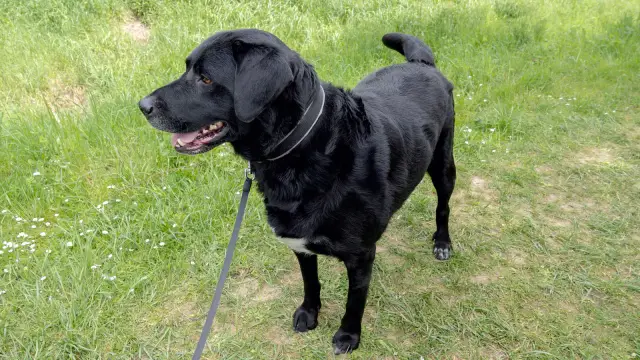 Family storyRetrieverRead the family's story: origins, members, DNA
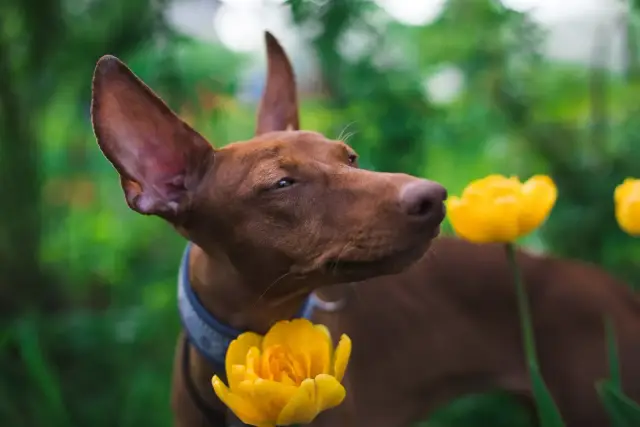 Family storyMediterraneanRead the family's story: origins, members, DNA
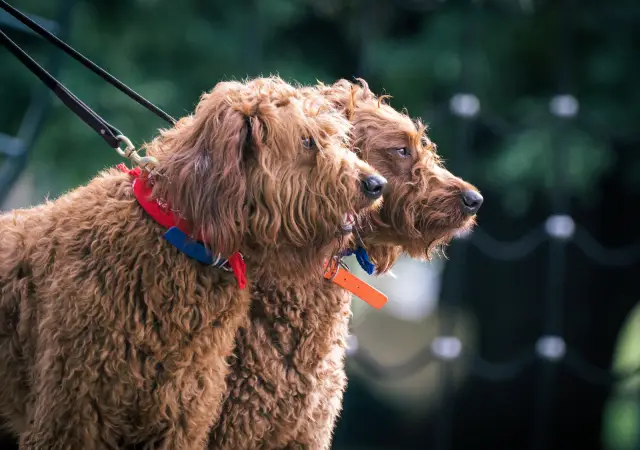 Family storyModern CrossbreedRead the family's story: origins, members, DNA
Sources (12)
- Parker, H. G., et al. (2017). Genomic analyses reveal the influence of geographic origin, migration, and hybridization on modern dog breed development. Cell Reports, 19(4), 697 to 708.
- Quignon, P., Rimbault, M., Robin, S., Galibert, F. (2012). Genetics of canine olfaction and receptor diversity. Mammalian Genome, 23, 132 to 143.
- Genetic and Anatomical Determinants of Olfaction in Dogs and Wild Canids (2025). Molecular Biology and Evolution, 42(3).
- O'Neill, D. G., et al. (2021). Frequency and predisposing factors for canine otitis externa in the UK. Canine Genetics and Epidemiology.
- O'Neill, D. G., et al. (2024). Beagles under primary veterinary care in the UK. Canine Medicine and Genetics.
- Glickman, L. T., et al. (2000). Incidence of and breed-related risk factors for gastric dilatation-volvulus in dogs. Journal of the American Veterinary Medical Association, 216, 40 to 45.
- Glickman, L. T., et al. (2000). Non-dietary risk factors for gastric dilatation-volvulus in large and giant breed dogs. Journal of the American Veterinary Medical Association.
- DachsLife 2015: an investigation of lifestyle associations with the risk of intervertebral disc disease in Dachshunds. Canine Genetics and Epidemiology.
- Basset Hound Club of America, health and genetic testing pages.
- Abbey of Saint-Hubert and Bloodhound entries in standard reference works (Encyclopaedia Britannica).
- The Kennel Club (UK), AKC and Fédération Cynologique Internationale, hound breed standards.
- Breed records in the atlas data (Dogs Atlas, internal data).