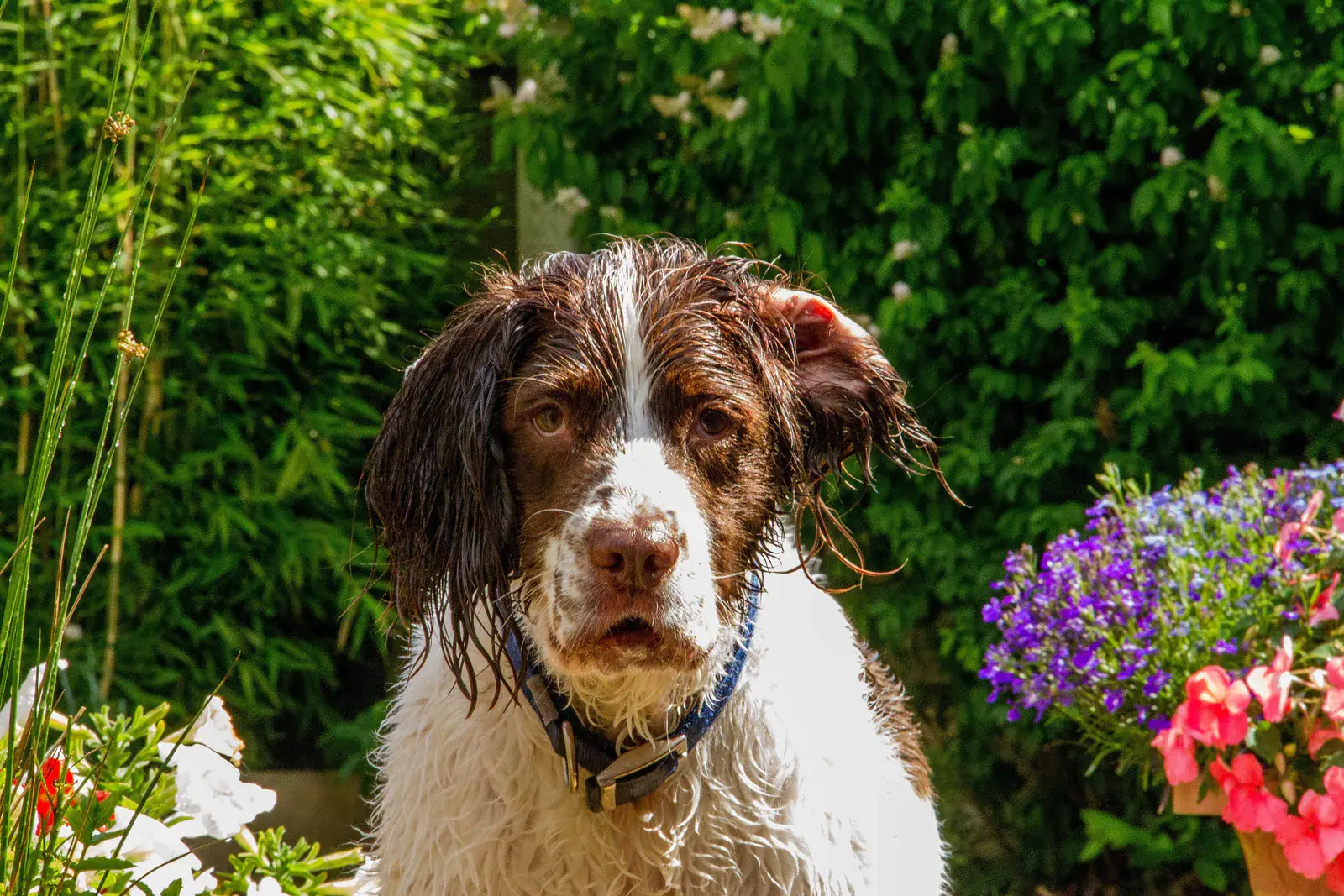
What is a spaniel?
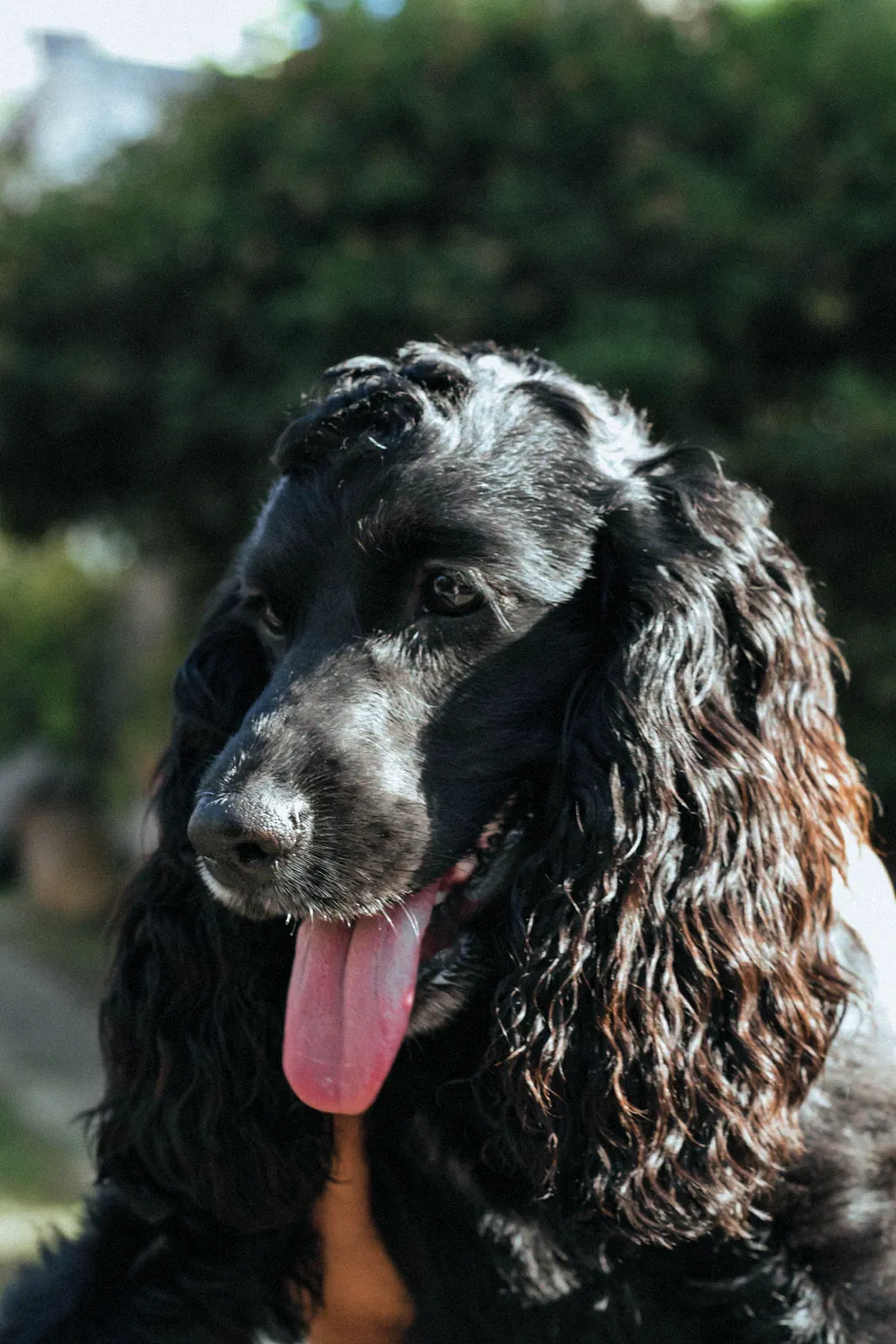
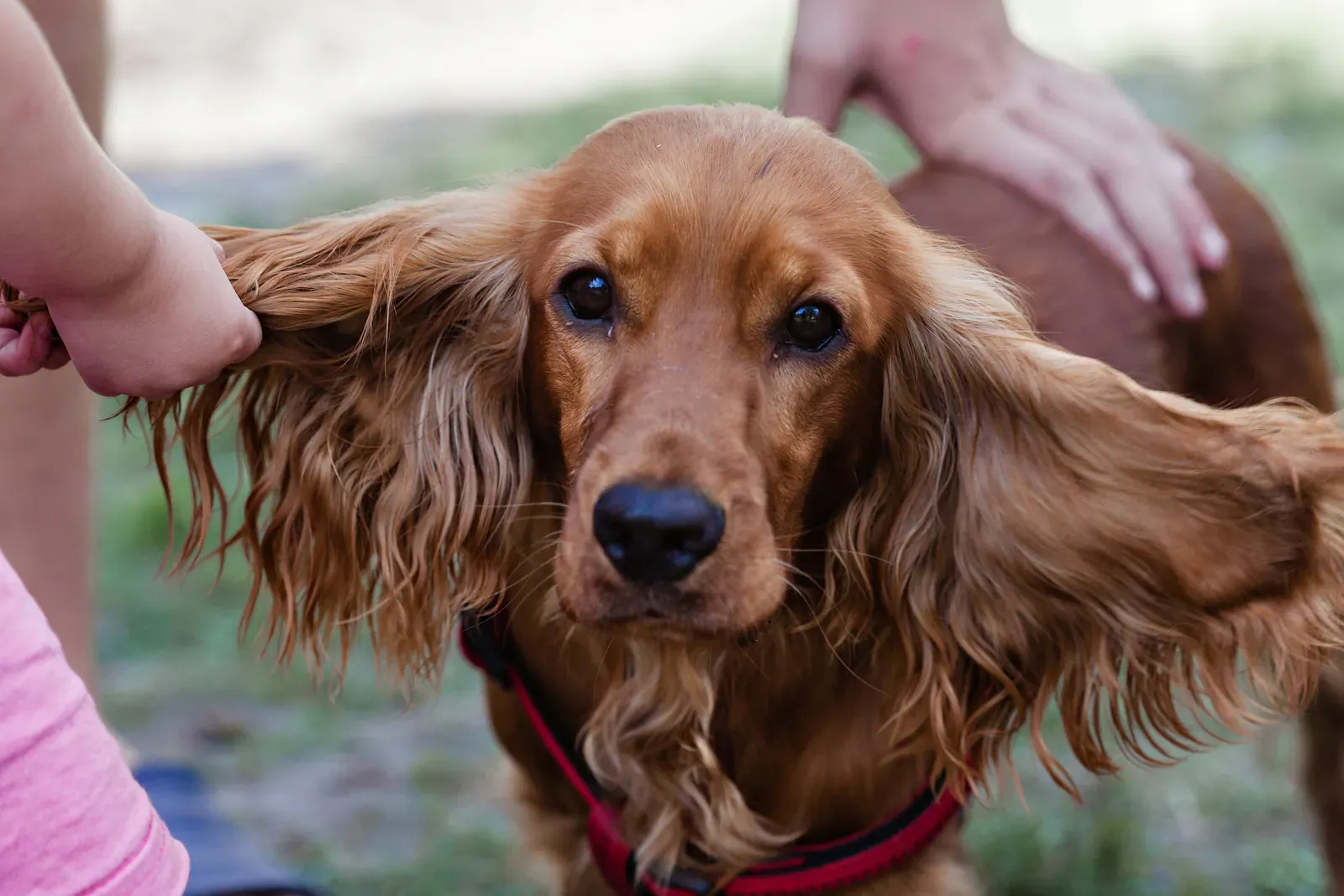
A spaniel is a gundog bred to find game in cover, flush it into the air or into the open, and in some breeds bring it back. Most spaniels are medium sized, with long drop ears, a feathered coat and a wagging tail that rarely stops. A few became lap dogs, and a few work in water.
 Save
 GuideDog Clothes: When Dogs Need Coats, and a Short History of Dog FashionDo dogs need coats in winter? When clothes help, when costumes stress a dog, safe fit, reflective gear, and a short history of dog fashion and dog art.
In this atlas, the Spaniel family is a group of 27 breeds that share DNA and history. It is a genetic family, not the same thing as the kennel club "Sporting" or "Gundog" group. Five of the breeds were DNA-tested; the rest are placed by history. This page explains who belongs, why, and how the breeds are tied together.
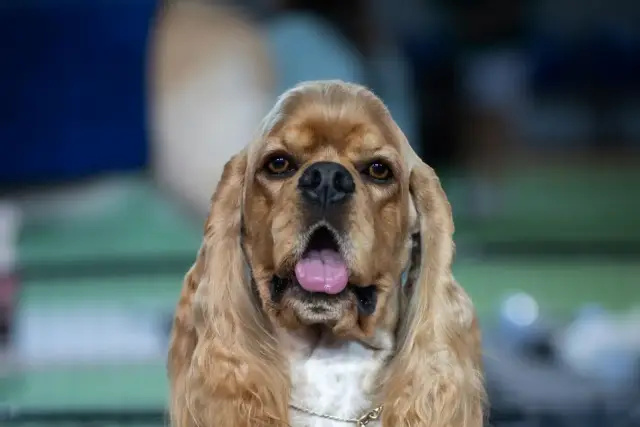 Member breedAmerican Cocker Spaniel1870 to 1946 · United StatesVictorian Breed BoomGuideDog Clothes: When Dogs Need Coats, and a Short History of Dog FashionDo dogs need coats in winter? When clothes help, when costumes stress a dog, safe fit, reflective gear, and a short history of dog fashion and dog art.
Quick facts about the Spaniel family
| Fact | Answer |
|---|---|
| Family type | Genetic clade (Parker et al. 2017) |
| Parent | European dogs |
| Breeds in this atlas | 27 (22 living, 5 extinct) |
| Breeds with DNA tested in the study | 5 (all with strong support) |
| Main homelands | United Kingdom (10), France (5), United States, Netherlands and Germany (3 each) |
| Typical size | Medium (17 of 27). Also 5 large, 3 small and 2 toy |
| Core job | Flushing and retrieving game, mainly birds |
| Shared look | Long drop ears, feathered coat, soft expression |
| Shared temperament | Eager, active, friendly, keen to work with people |
 GuideIs your dog suited to therapy work?How to make your dog a therapy dog: temperament checklist, first training steps, how Pet Partners, TDI and Pets As Therapy assess dogs, and welfare limits.
Family or group: what is the difference?
In this atlas, "family" always means a DNA clade, a branch of the family tree found by comparing genomes. "Group" is used only for kennel club groups such as the AKC Sporting Group, the UK Kennel Club Gundog Group or FCI Group 8.
 GuideDogs in Legends and Fairy TalesDogs in folklore and fairy tales: Black Shuck, The Tinderbox, Saint Guinefort, Panhu, Greyfriars Bobby, Barry and Old Drum, with legend and history kept apart.
The two do not match. Kennel clubs sort dogs by job, and the Spaniel clade also holds toy dogs that never hunted. Five of our 27 breeds were sampled by Parker et al. (2017) and fall into one Spaniel clade. The other 22 are placed here by written history, so they are best estimates. In the table below, the first five rows are DNA-tested and the rest are placed by history.
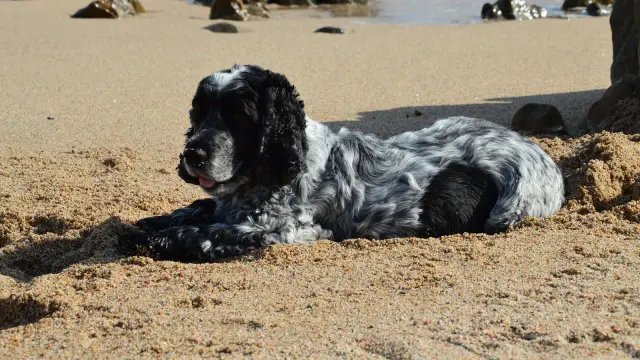
Where do spaniels sit in the tree?
The Spaniel family sits under European dogs. Its neighbours are the Retrievers, the Pointers and Setters and the Scent Hounds, other hunting dogs of western Europe. Water-loving relatives such as the Irish Water Spaniel and English Water Spaniel sit in the Retriever and Poodle families, not here. For the full map, see the dog family tree.
 GuideHow to adopt a dog from a shelter or rescueHow to adopt a dog from a shelter or rescue: the process, costs in general terms, choosing a dog, the first weeks and what if it does not work out.
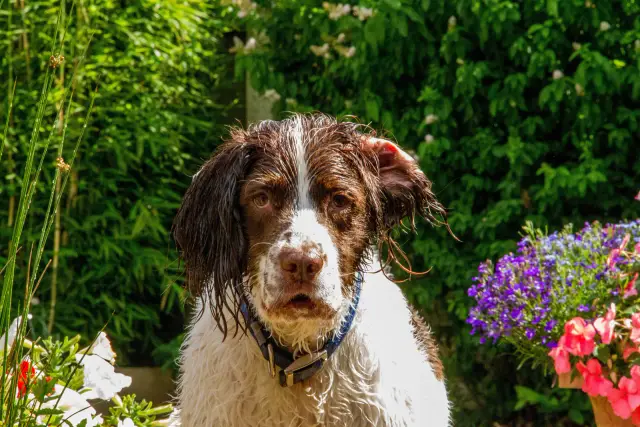
Name and origin: why "spaniel"?
The word came into English from Old French espaignol, meaning "Spanish". That path is well documented. Whether the dogs really came from Spain is not proven. Dictionaries call the Spain link a theory.
 ArticleThe first known dog on every continentEarliest accepted dog on each continent, from Bonn-Oberkassel to the dingo: dates, sites, how dogs arrived and which breeds carry those first dogs.
A theory, labelled: the medieval hunting book Livre de chasse by Gaston III of Foix-Béarn, in its English form The Master of Game, speaks of spaniels as being as much from Spain as Greyhounds are from England. That shows medieval writers tied spaniels to Spain. It does not prove where the dogs began. The Dutch name Spioenen (also written Spanjoelen) for an old spaniel type also points to Spain, and the atlas says those dogs reached the Netherlands through France.
Many other names in this family are job or place names:
- Springer: from springing, flushing game from cover.
- Cocker: from its use flushing woodcock.
- Clumber, Sussex, Norfolk, Welsh: named for an estate, a county or a country.
- Kooikerhondje: Dutch for little dog of the duck-decoy keeper.
- Stabyhoun: Frisian for "stand by me".
- Wachtelhund (German Spaniel): quail dog. Stöberer: rummager.
What is the history of spaniels?
 GuideDogs of Japan: the native breeds and their storiesJapanese dog breeds explained: the six Nihon Ken, the Chin, Tosa, Japanese Spitz and Terrier, Hachiko, wartime near-extinction, DNA and who they suit.
Before 1700: land spaniels across Europe
Spaniel-type dogs are recorded in France, Spain, the Low Countries and Britain by the 1400s to 1600s. The atlas lists the Picardy Spaniel from about 1400, the Drentse Patrijshond and Kooikerhondje from about 1500, and the French Spaniel and Welsh Springer Spaniel from about 1600. Before guns, they flushed birds toward nets, hawks or hunters.
The toy spaniel is just as old. The King Charles Spaniel is dated to about 1600 and is named for Charles II, who was known for his small spaniels.
1700 to 1850: separate types in Britain
British spaniels were not yet breeds, only types named for how they worked or where they lived. A common older split was between "springing" spaniels, which flushed game, and "cocking" spaniels, smaller dogs that worked woodland and woodcock. The English Springer descends from the Norfolk or Shropshire spaniels of the mid 1800s, according to the atlas. The Clumber was linked to the Duke of Newcastle's Clumber Park from the 1770s. The Sussex Spaniel is recorded from about 1795.
1850 to 1900: stud books and show rings
Kennel clubs began registering spaniels in the 1870s to 1890s. The English Cocker and English Springer split by size and by job: cockers for small game and woodcock, springers for larger flushing work. The Field Spaniel was shaped by breeders such as Phineas Bullock, who crossed it with the Sussex and English Water Spaniel in the 1870s.
France and Germany developed their own types: the Pont-Audemer, Blue Picardy, Saint-Usuge and Small Münsterländer, and the German Spaniel from the old Stöberer.
1900 to today: new breeds and recognition
New spaniels continued to appear: the American Water Spaniel (from the 1850s, Wisconsin), the Boykin Spaniel in South Carolina (1905 onward), the Russian Spaniel from English Cocker and English Springer stock (from the 1930s), and the Saint-Usuge Spaniel, revived by a priest's 1962 programme. Several European breeds, such as the Stabyhoun, were formally standardised only in the 1900s.
 Save
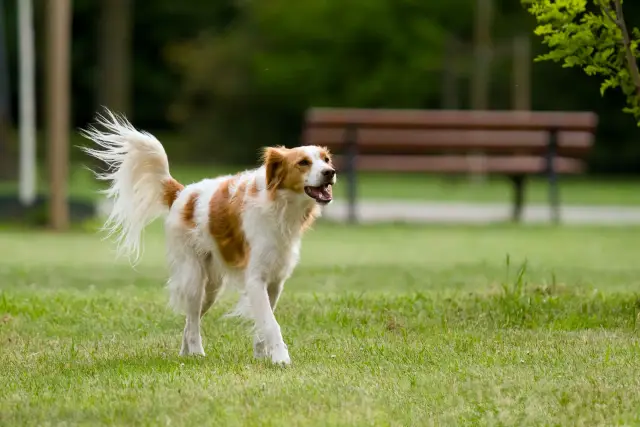
Land spaniels and water spaniels
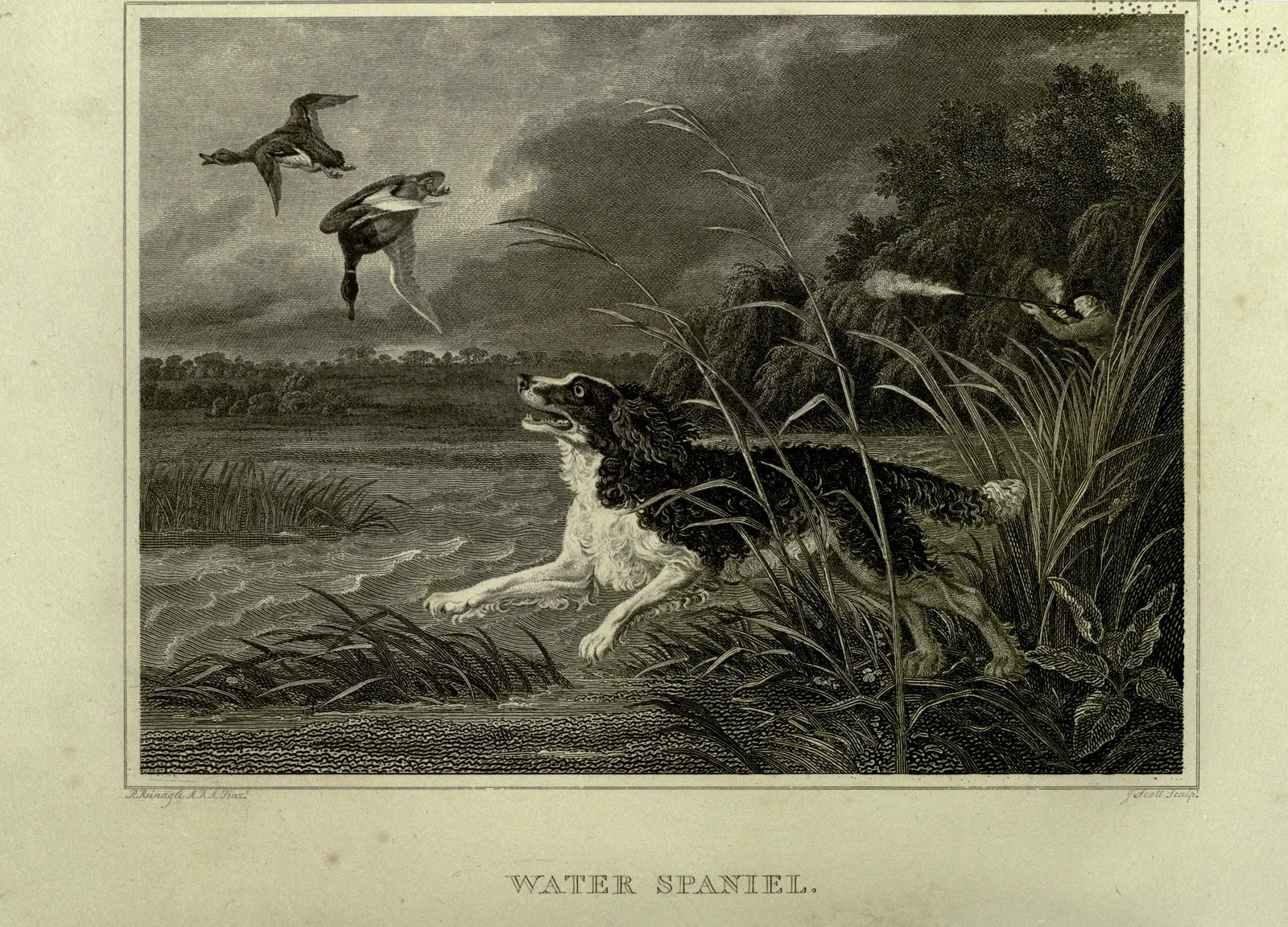
Land spaniels work on dry ground and are the bulk of the family: Springers, Cockers, Field, Sussex, Clumber, Welsh Springer, and the French and German types. The American Water Spaniel is the clearest water worker here, and the Boykin also retrieves from water. The classic water spaniels of Britain and Ireland, such as the Irish Water Spaniel and the extinct English Water and Tweed Water Spaniels, sit in other families. The American Water Spaniel is recorded as built from Irish and English Water Spaniels, plus possibly Curly-coated Retrievers and Poodles, which is why it sits across several branches.
 GuideDog hybrids: what dogs can and cannot breed withCan dogs breed with wolves, coyotes, jackals or foxes? Wolfdogs, coydogs, the Sulimov dog and Dogxim explained, with chromosomes and DNA studies.
So the old idea of "land" and "water" spaniels is a job split, not a DNA split. Water dogs from different lines were all called spaniels because of how they looked and worked.
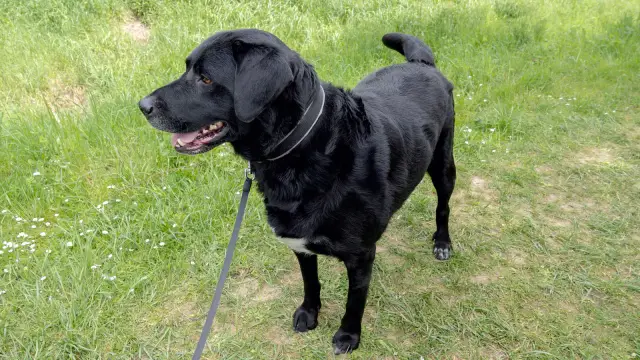
Setting, springing and cocking spaniels
Old hunting books sorted spaniels by how they worked: "setting" spaniels crouched or "set" for game, "springing" spaniels flushed it, and "cocking" spaniels hunted woodcock. A well-known story says the setting spaniels became the setters. That is a long-told account that this atlas does not test. The setters sit in the Pointer and Setter family, a close neighbour in the tree, which fits a shared root.
 GuideBanned and restricted dog breeds by countryWhich dog breeds are banned or restricted, country by country: UK, Ireland, France, Germany, Denmark, Norway, Spain, Australia and more.
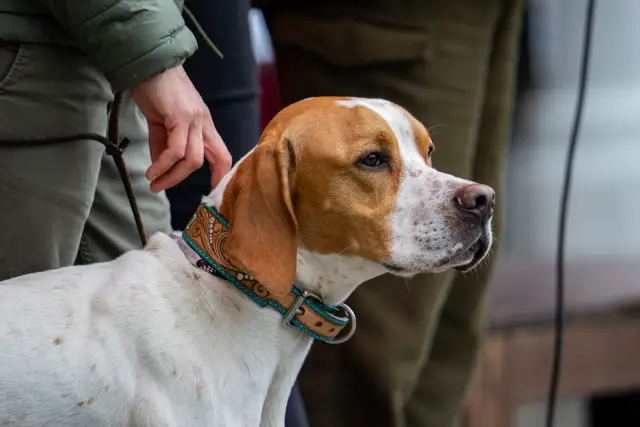
Toy spaniels
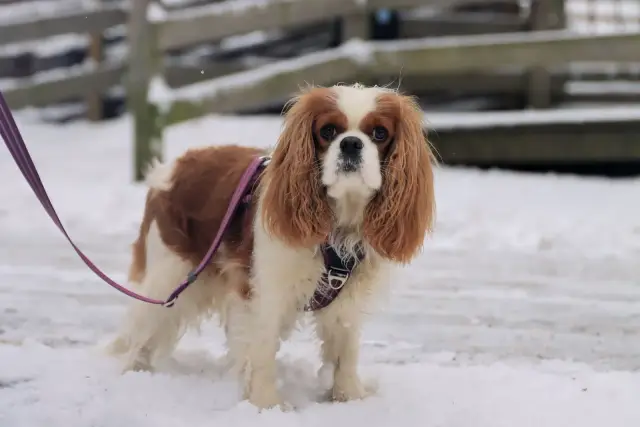
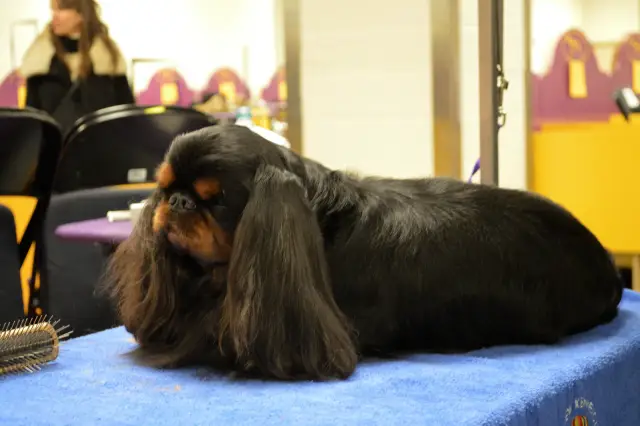
The toy spaniels are the Cavalier King Charles Spaniel, the King Charles Spaniel and the extinct Toy Trawler Spaniel (about 1850 to 1900).
 GuideDog laws by country: tax, insurance and licencesDog tax, compulsory liability insurance, licences, microchips and leash rules in Germany, Austria, Switzerland, Spain, Ireland, the UK, the US and more.
Only the Cavalier was DNA-tested. It sits in the Spaniel clade with strong support, and shares the most DNA with the Griffon Bruxellois (27.9 Mb) and the English Cocker Spaniel (21.1 Mb). That suggests toy spaniels are cousins of the working spaniels, not a separate lineage, though the study cannot show direction. The Cavalier and King Charles are close in history: the Cavalier was revived in the 1920s from the old long-nosed type, with a separate club formed in 1928. See the Cavalier King Charles Spaniel article.
One theory says the Clumber descends from the old Blenheim Spaniel later absorbed into the King Charles. The confidence is low.

Who are the members of the Spaniel family?
Here are all 27 breeds. The 5 breeds with DNA tested in the study come first. The other 22 are placed by history and are hidden until you choose to show all 27. "Appeared" is the period in which the breed or type is first documented, and some dates are rough. Only the breeds with an article in this atlas are linked.
 GuideDogs in science and spaceSpace dogs Laika, Belka and Strelka, Pavlov's dogs, Snuppy the clone, the dog genome and scent detection: what dogs did for science, and what it cost them.
| Breed | Country | Status | Size | Appeared | DNA-tested |
|---|---|---|---|---|---|
| English Cocker Spaniel | United Kingdom | Living | Medium | 1800 to 1892 | Yes (Parker 2017) |
| English Springer Spaniel | United Kingdom | Living | Medium | 1800 to 1902 | Yes (Parker 2017) |
| Field Spaniel | United Kingdom | Living | Medium | 1860 to 1892 | Yes (Parker 2017) |
| American Cocker Spaniel | United States | Living | Small | 1870 to 1946 | Yes (Parker 2017) |
| Cavalier King Charles Spaniel | United Kingdom | Living | Small | 1926 to 1945 | Yes (Parker 2017) |
| Picardy Spaniel | France | Living | Medium | 1400 to 1907 | By history |
| Drentse Patrijshond | Netherlands | Living | Large | 1500 to 1943 | By history |
| Kooikerhondje | Netherlands | Living | Small | 1500 to 1966 | By history |
| Spioenen | Spain | Extinct | Medium | 1500 to 1800 | By history |
| Saint-Usuge Spaniel | France | Living | Medium | 1550 to 2003 | By history |
| French Spaniel | France | Living | Large | 1600 to 1891 | By history |
| King Charles Spaniel | United Kingdom | Living | Toy | 1600 to 1903 | By history |
| Welsh Springer Spaniel | United Kingdom | Living | Medium | 1600 to 1902 | By history |
| Alpine Spaniel | Switzerland | Extinct | Large | 1700 to 1850 | By history |
| Stöberer | Germany | Extinct | Medium | 1700 to 1900 | By history |
| Clumber Spaniel | United Kingdom | Living | Large | 1770 to 1880 | By history |
| Sussex Spaniel | United Kingdom | Living | Medium | 1795 to 1884 | By history |
| Norfolk Spaniel | United Kingdom | Extinct | Medium | 1800 to 1890 | By history |
| Stabyhoun | Netherlands | Living | Medium | 1800 to 1942 | By history |
| American Water Spaniel | United States | Living | Medium | 1850 to 1940 | By history |
| Pont-Audemer Spaniel | France | Living | Medium | 1850 to 1900 | By history |
| Toy Trawler Spaniel | United Kingdom | Extinct | Toy | 1850 to 1900 | By history |
| German Spaniel | Germany | Living | Medium | 1890 to 1903 | By history |
| Blue Picardy Spaniel | France | Living | Large | 1900 to 1938 | By history |
| Small Münsterländer | Germany | Living | Medium | 1900 to 1912 | By history |
| Boykin Spaniel | United States | Living | Medium | 1905 to 2009 | By history |
| Russian Spaniel | Russia | Living | Medium | 1930 to 1951 | By history |
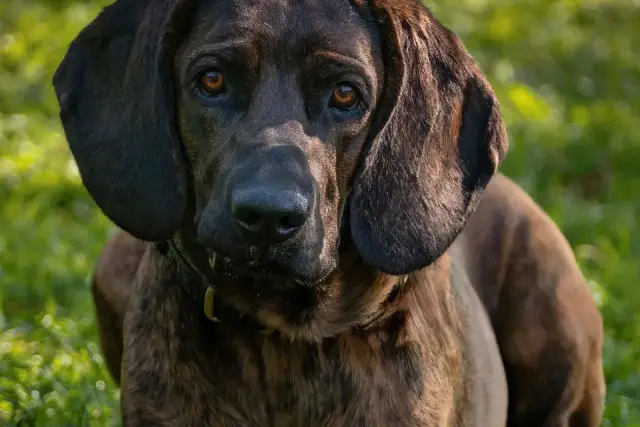
English and American Cocker: one name, two breeds
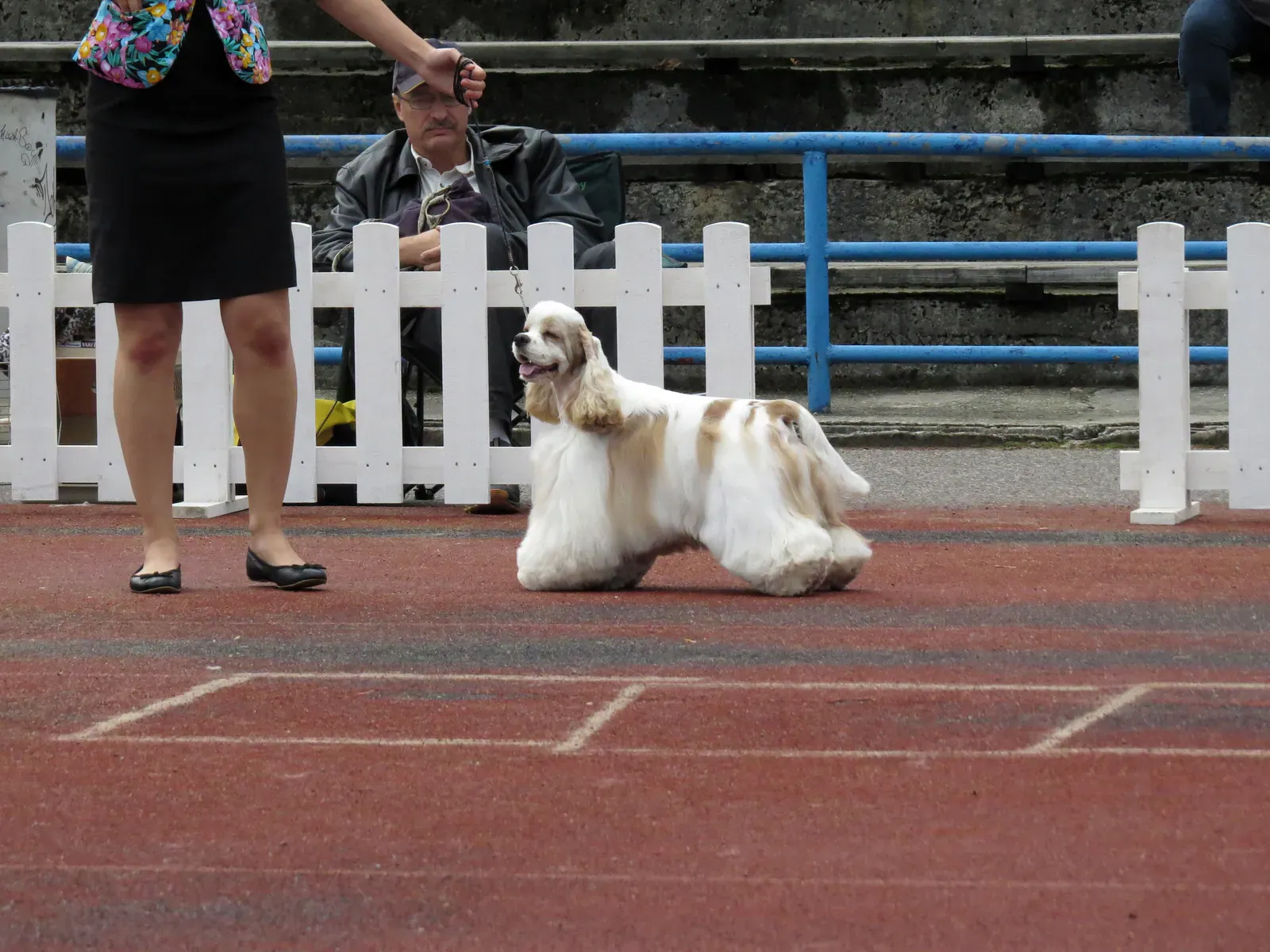
The English Cocker and the American Cocker share a name and a root. The American breed was founded on imported English Cocker stock and then diverged through the 1900s. The Parker study found them close: 60.1 Mb shared.
 GuideLivestock guardian dogs: what they do and who they suitWhat livestock guardian dogs do, how they differ from herding dogs, 40 LGD breeds by country, the DNA evidence, and whether they make good pets.
The split was about the show ring. American breeders favoured a smaller dog with a rounder head and a heavier coat, while English breeders kept a longer-muzzled working type. The AKC registered the English type as a variety and then as a separate breed in 1946, according to most sources, though some give 1947. The UK recognised the American type as a separate breed in 1970, according to one source.
Surprisingly, the English Cocker's closest tested partner is not the American Cocker but the Field Spaniel, with 137.7 Mb, the highest spaniel pair in the study. The English Springer shares 40 Mb with the English Cocker and 44.7 Mb with the Field Spaniel.
Who descends from whom, and which ties are strongest?
The DNA study measured how many megabases (Mb) of DNA each pair of tested breeds shares in long identical stretches. More shared DNA means a closer link.
 GuideDogs in myth around the worldFrom Anubis and Cerberus to Fenrir, Xolotl and the Tiangou: how cultures across the world imagined dogs as guardians, guides and monsters.
| Pair | Shared DNA (Mb) |
|---|---|
| English Cocker Spaniel and Field Spaniel | 137.7 |
| American Cocker Spaniel and English Cocker Spaniel | 60.1 |
| English Springer Spaniel and Field Spaniel | 44.7 |
| American Cocker Spaniel and Field Spaniel | 40.4 |
| English Cocker Spaniel and English Springer Spaniel | 40.0 |
| Cavalier King Charles Spaniel and Griffon Bruxellois | 27.9 |
Source: Parker et al. 2017, Cell Reports, shared haplotypes between 161 breeds (1,346 dogs).
Source: Parker et al. 2017, as recorded in this site's database.
Written history adds ties the study could not test:
- English line. The English Springer descends from the Norfolk Spaniel. The Russian Spaniel came mostly from English Cockers and Springers. The Field Spaniel was crossed with the Sussex Spaniel and English Water Spaniel in the 1870s.
- French and Dutch line. The Blue Picardy came from the Picardy Spaniel, with English Setter blood. The Drentse Patrijshond descends from the Spioenen of Spain. The Stabyhoun was often mixed with the Wetterhoun until 1942.
- German line. The German Spaniel descends from the Stöberer (mentioned from 1719). A Small Münsterländer was used in the Saint-Usuge programme in 1962.
- American line. The Boykin Spaniel was built, by family account, from a stray spaniel named Dumpy plus Springers, Cockers, American Water Spaniels and Chesapeake Bay Retrievers.
What do spaniels have in common?
- Work in cover. They cover ground in a zigzag pattern with the nose low. Flushing, not pointing, is the classic job.
- Soft mouth and willingness. Most retrieve well and are eager to work with a person.
- Drop ears and feathered coats. Both need regular care.
- People focus. Most spaniels bond closely and dislike long hours alone.
- Energy. Working lines need much more exercise than show lines.
 Family storyAlpineRead the family's story: origins, members, DNA

What health issues are linked to spaniels?
Most spaniels live healthy lives. The conditions below are what breed clubs and vets watch for, and most can be managed. Spaniels are many breeds, so there is no single family profile. Figures come from named studies. Where no study gave us a number, the table says so.
 Family storyAmerican Cur & FeistRead the family's story: origins, members, DNA
| Condition | What it is | How common | What helps |
|---|---|---|---|
| Ear disease (otitis externa) | Inflammation of the ear canal, often in dogs with long, hanging ears | UK VetCompass, English Cocker Spaniels: 10.09 percent in a year, about 1 in 10 (2023 study). A Finnish clinic study (2010 records) found 27.0 percent in American Cockers (about 1 in 4), 31.8 percent in Welsh Springers (about 1 in 3), 19.6 percent in English Springers (about 1 in 5) and 15.7 percent in English Cockers (about 1 in 6). The methods differ, so compare with care | Regular ear checks, vet-advised cleaning, early treatment of redness or smell |
| Mitral valve disease (Cavaliers) | Gradual thickening and leaking of the heart's mitral valve | In an echocardiography study of 126 Cavaliers aged 8 years or older (Animals, 2021), a murmur was heard in 89 percent, about 9 in 10. In the Danish Kennel Club breeding scheme, 10 percent of 1,380 young dogs, about 1 in 10, had a murmur (Birkegård et al. 2016) | Buy from breeders who follow heart screening; regular vet heart checks |
| Syringomyelia (Cavaliers) | Fluid pockets in the spinal cord, often with a skull too small for the brain | About 39 to 46 percent, about 1 in 2 to 2.5, in a Dutch and Danish MRI study (Frontiers in Veterinary Science, 2024). In screened breeding dogs it fell from 38 to 27 percent between 2010 to 2014 and 2015 to 2019 | MRI screening of breeding dogs; vet check for neck pain or scratching |
| Eye disease | Inherited eye problems occur in several spaniels. In American Cockers, a study of eye shape links it to a risk of primary angle-closure glaucoma | No breed-wide figure verified for this page | Eye screening exams of breeding dogs through national schemes; ask the breed club which tests apply |
| Obesity and dental disease | Extra body fat strains joints. Gum disease leads to tooth loss | In English Cockers, VetCompass found periodontal disease 20.97 percent, about 1 in 5, and obesity 9.88 percent, about 1 in 10 (2023 study) | Measured meals; tooth care; routine vet checks |
The same English Cocker study found a median age at death of 11.44 years, with neoplasia (cancer) the largest grouped cause of death, and females living about a year longer than males (12.01 against 11.00 years).
For Cavalier detail see the Cavalier King Charles Spaniel article. No UK VetCompass paper exists for the English Springer, and no verified prevalence for the other spaniel breeds, so they are left without numbers here.
 Save
Which Spaniel breeds are extinct?
5 of the 27 are extinct.
 Family storyAmerican TerrierRead the family's story: origins, members, DNA
- Norfolk Spaniel (1800 to 1890): the root of the English Springer.
- Spioenen (1500 to 1800): the old Spanish-Dutch spaniel and root of the Drentse Patrijshond.
- Stöberer (1700 to 1900): root of the German Spaniel.
- Alpine Spaniel (1700 to 1850): a large spaniel, thought by one theory to have fed the Clumber.
- Toy Trawler Spaniel (1850 to 1900): a toy spaniel of unknown origin.

Are there surprises in the Spaniel family?
- A toy dog is a spaniel by DNA. The Cavalier sits in the same clade as the Springer.
- The English Cocker's closest tested relative is the Field Spaniel, not the American Cocker.
- No Irish Water Spaniel here. It groups with retrievers, in the Retriever family.
- Spaniels and setters may be cousins. Setters sit in a neighbouring family.
- The Dutch spaniels are Spanish by story. The Drentse Patrijshond is said to come from Spain via France.
- Some members work as decoy dogs. The Kooikerhondje lures ducks into traps.
 Family storyAmerican ToyRead the family's story: origins, members, DNA

What does research say about spaniels?
The key paper is Parker et al., "Genomic analyses reveal the influence of geographic origin, migration, and hybridization on modern dog breed development," Cell Reports, 2017. It built a family tree of 161 breeds from 1,346 dogs. Spaniels came out as one clade, though only 5 of our 27 breeds were in the study. The other 22 follow written history, and these placements are best estimates that could shift when more breeds are sequenced.
 Family storyAncient American dogsRead the family's story: origins, members, DNA
For health, see the VetCompass English Cocker Spaniel papers (Canine Medicine and Genetics, 2023), O'Neill et al. on otitis externa in dogs (Canine Genetics and Epidemiology, 2021) and the Finnish otitis study of American Cockers (Acta Veterinaria Scandinavica, 2017).

Which spaniel suits which owner?
This is a guide to type, not a promise for any single dog.
 Family storyAncient BasalRead the family's story: origins, members, DNA
- Active family. The English Springer and English Cocker suit people who walk daily and enjoy training. Working lines are very energetic.
- Lap dog and company. The Cavalier suits a quiet home with someone around most of the day. Ask the breeder about heart and spine screening.
- Shooting and field work. Working Springers, Cockers, Welsh Springers and the continental types such as the German Spaniel are bred for work.
- Calm and slow. The Clumber and Sussex are heavier and steadier than other spaniels.
- Water and wetland. The American Water Spaniel and Boykin suit owners who want a swimming gundog.
- Rare and local. Many breeds here, such as the Stabyhoun and Saint-Usuge, are rare outside their home countries.

Fun facts about spaniels
- The word spaniel comes from Old French for Spanish, though the Spain link is unproven.
- The AKC split the English and American Cocker into two breeds in 1946, according to most sources.
- The Boykin Spaniel began with a stray spaniel named Dumpy, by family account.
- The Saint-Usuge Spaniel was revived by Father Billard's 1962 programme.
- The Stabyhoun's name means "stand by me".
- The Cavalier's prize in 1926 helped revive the long-nosed toy spaniel.
 Family storyArctic dogsRead the family's story: origins, members, DNA
Related families
- European dogs: the parent of the Spaniel family.
- Retriever: gundogs, including the Irish Water Spaniel.
- Poodle: home of the English Water Spaniel.
- Pointer and Setter: setters may share a root with setting spaniels.
- Scent Hound: hunting dogs that trail rather than flush.
 Family storyAsian SpitzRead the family's story: origins, members, DNA
Frequently asked questions
What are the main types of spaniels?
In the atlas: English Cocker, English Springer, Welsh Springer, Field, Sussex and Clumber in Britain; American Cocker, American Water and Boykin in the US; Picardy, Pont-Audemer and French types in France; and the toy King Charles and Cavalier.
Are English and American Cockers the same breed?
No. They share a root and 60.1 Mb of DNA but have been separate breeds since 1946 in the US.
Is a Cavalier King Charles Spaniel a real spaniel?
By DNA, yes. It sits in the Spaniel clade, though it was bred for company, not hunting.
What is the difference between a Cocker and a Springer?
Cockers are smaller and were used for woodcock; Springers are larger and flush game. They share 40 Mb of DNA.
Are spaniels prone to ear infections?
More than many breeds. A UK study found 10.09 percent of English Cockers affected in a year, about 1 in 10, and a Finnish study found higher rates in American Cockers and Welsh Springers.
How long do spaniels live?
It depends on the breed. UK VetCompass gave a median age at death of 11.44 years for English Cockers.
Are spaniels good family dogs?
Many are, when they get exercise and company. They are not suited to being alone all day.
Read next
 Family storyToy SpitzRead the family's story: origins, members, DNA
 Family storyModern CrossbreedRead the family's story: origins, members, DNAFamily storyEuropean dogsRead the family's story: origins, members, DNA
Sources (13)
- Parker, H. G., et al. (2017). Genomic analyses reveal the influence of geographic origin, migration, and hybridization on modern dog breed development. Cell Reports, 19(4), 697 to 708.
- Demography and disorders of English Cocker Spaniels under primary veterinary care in the UK (2023). Canine Medicine and Genetics.
- English Cocker Spaniels under primary veterinary care in the UK: disorder predispositions and protections (2023). Canine Medicine and Genetics.
- O'Neill, D. G., et al. (2021). Frequency and predisposing factors for canine otitis externa in the UK. Canine Genetics and Epidemiology.
- Survey of otitis externa in American Cocker Spaniels in Finland (2017). Acta Veterinaria Scandinavica.
- Ocular morphologic traits in the American Cocker Spaniel may confer primary angle closure glaucoma susceptibility. Veterinary ophthalmology research article.
- Birkegård, A. C., et al. (2016). Breeding restrictions decrease the prevalence of myxomatous mitral valve disease in Cavalier King Charles Spaniels. Journal of Veterinary Internal Medicine.
- Clinical and echocardiographic findings in an aged population of Cavalier King Charles Spaniels (2021). Animals.
- Syringomyelia in the Cavalier King Charles Spaniel, Dutch and Danish MRI study (2024). Frontiers in Veterinary Science.
- Gaston III of Foix-Béarn, Livre de chasse, and its English version The Master of Game (15th century).
- Standard dictionary etymologies of "spaniel" (Old French espaignol).
- The Kennel Club (UK), AKC and Fédération Cynologique Internationale, spaniel breed standards.
- Breed records in the atlas data (Dogs Atlas, internal data).