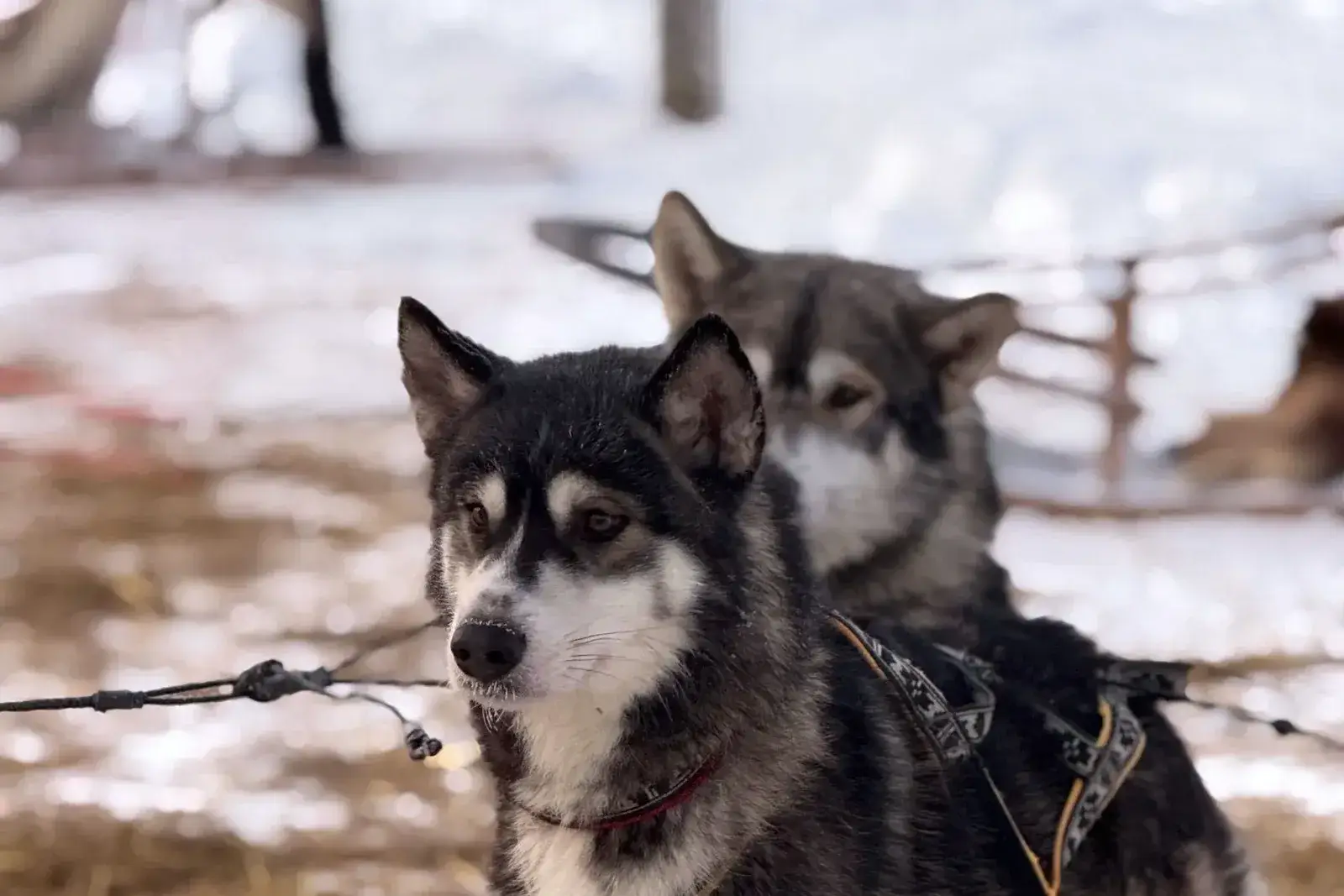
What are Arctic dogs?
Arctic dogs are a branch of dogs that lived with hunter-gatherers in Siberia and the polar north, pulled sleds and carried their ancestry to the Siberian Husky, the Alaskan Malamute, the Samoyed and the Greenland Dog. In this atlas the lineage grows out of East Eurasian dogs, and the first dogs of the Americas branch from it.
 GuideDog Breeds by Country: Which Nations Made the Most?Dog breeds by country: how many breeds each nation produced in the Dogs Atlas data, from the UK and France to Japan, plus national dogs and families.
The best-known ancient member is a dog from Zhokhov Island, in the Siberian Arctic, about 9,500 years old. It was found with sled parts, and its genome is the oldest one tied to sled dog ancestry.
Quick facts about the Arctic dogs lineage
| Fact | Answer |
|---|---|
| Branch type | Lineage (a deep branch above the breed families), living |
| Parent | East Eurasian dogs |
| Child branches | Asian Spitz, Ancient American dogs |
| Time in this atlas | About 12,000 to 7,500 years ago (low confidence) |
| Best-known ancient dog | Zhokhov Island, Siberia, about 9,500 years ago |
| Key studies | Sinding 2020 (Science), Bergström 2020 (Science), Skoglund 2015 (Current Biology) |
| Living breeds named in the atlas | Siberian Husky, Alaskan Malamute, Samoyed, Greenland Dog, Canadian Eskimo Dog |
 GuideDog Clothes: When Dogs Need Coats, and a Short History of Dog FashionDo dogs need coats in winter? When clothes help, when costumes stress a dog, safe fit, reflective gear, and a short history of dog fashion and dog art.

What this lineage is
An Arctic dog is not a single breed or a coat type. The word covers dogs that lived and worked in the cold north and share a long line of DNA. Many carry thick double coats, prick ears and a curled tail, but so do dogs from other parts of the tree, so DNA is what decides.
 GuideSmartest dog breeds: what the rankings measure and what they missCoren's smartest dog breeds list, what it measured, what newer dog cognition research says, three kinds of dog intelligence and why smart dogs need work.
In this atlas a lineage is a branch above the families (see the dog family tree). Arctic dogs sit under East Eurasian dogs, and two things hang from them: the Asian Spitz family, a DNA clade tested by Parker and colleagues (2017), and the pre-contact dogs of the Americas.
Zhokhov Island and the first sled dogs
Zhokhov Island lies in the De Long Islands of the East Siberian Sea. About 9,500 years ago people there lived by hunting polar bears and reindeer, and the dig produced dog remains next to sled parts. Sinding and colleagues (Science, 2020) sequenced a dog from the site and compared it with modern sled dogs and with other ancient dogs.
 GuideBanned and restricted dog breeds by countryWhich dog breeds are banned or restricted, country by country: UK, Ireland, France, Germany, Denmark, Norway, Spain, Australia and more.
They reported three things.
- The Zhokhov dog resembles modern Greenland sled dogs, and the main ancestry of sled dogs traces to Siberia.
- Sled dog ancestry is at least 9,500 years old, which makes sled dogs among the oldest dog types known by genome.
- Arctic sled dogs carry a small share of ancestry from the Taimyr wolf, a wolf of northern Siberia that lived about 35,000 years ago. This follows earlier work by Skoglund and colleagues (Current Biology, 2015), who found Taimyr wolf ancestry in high-latitude breeds.
The same paper also looked at genes that changed in Arctic dogs, including some linked to diet, a reminder that these dogs were shaped by the places they lived.
 ArticleThe first known dog on every continentEarliest accepted dog on each continent, from Bonn-Oberkassel to the dingo: dates, sites, how dogs arrived and which breeds carry those first dogs.GuideBanned and restricted dog breeds by countryWhich dog breeds are banned or restricted, country by country: UK, Ireland, France, Germany, Denmark, Norway, Spain, Australia and more.
Dates and caution
The 9,500-year figure is an estimate for one site, and it dates a dog that lived, not the origin of sled work. People may have used dogs for hauling earlier, but the sources checked give no earlier proof. The lineage dates in this atlas, about 12,000 to 7,500 years ago, come from the atlas's tree and carry low confidence.
 GuideDogs in Legends and Fairy TalesDogs in folklore and fairy tales: Black Shuck, The Tinderbox, Saint Guinefort, Panhu, Greyfriars Bobby, Barry and Old Drum, with legend and history kept apart.
Bergström and colleagues (Science, 2020) also place a dog from the Lake Baikal region, about 7,000 years old, on the eastern side of the dog tree. That dog helps anchor Siberian ancestry in the east, but it is not itself a sled dog.
 GuideDogs in myth around the worldFrom Anubis and Cerberus to Fenrir, Xolotl and the Tiangou: how cultures across the world imagined dogs as guardians, guides and monsters.GuideDogs in Legends and Fairy TalesDogs in folklore and fairy tales: Black Shuck, The Tinderbox, Saint Guinefort, Panhu, Greyfriars Bobby, Barry and Old Drum, with legend and history kept apart.
Which breeds carry Arctic dog ancestry
Breeds in the Asian Spitz family that the atlas links to Arctic dogs include:
 GuideIs your dog suited to therapy work?How to make your dog a therapy dog: temperament checklist, first training steps, how Pet Partners, TDI and Pets As Therapy assess dogs, and welfare limits.
- the Siberian Husky, bred by the Chukchi people of north-eastern Siberia and later raced in Alaska
- the Alaskan Malamute, a large freight dog from Alaska
- the Samoyed, a herding and sled dog of the Samoyedic peoples of northern Russia
- the Greenland Dog and the Canadian Eskimo Dog, the Arctic freight dogs of the Inuit
The breed pages say more about each dog. Two points matter here. First, these breeds were shaped in different places at different times, so they are cousins, not copies. Second, modern breed founding often involved crossing and recent mixing, and the old Arctic line is only one part of each dog's DNA.
 GuideDogs of Japan: the native breeds and their storiesJapanese dog breeds explained: the six Nihon Ken, the Chin, Tosa, Japanese Spitz and Terrier, Hachiko, wartime near-extinction, DNA and who they suit.GuideIs your dog suited to therapy work?How to make your dog a therapy dog: temperament checklist, first training steps, how Pet Partners, TDI and Pets As Therapy assess dogs, and welfare limits.
What branches from here
Arctic dogs have these child branches in the atlas.
 GuideLivestock guardian dogs: what they do and who they suitWhat livestock guardian dogs do, how they differ from herding dogs, 40 LGD breeds by country, the DNA evidence, and whether they make good pets.
- Asian Spitz: the Husky, Malamute, Samoyed and Greenland Dog sit in this family with the Akita, Shiba Inu and Chow Chow. The family has two parents in the tree, East Eurasian dogs and Arctic dogs.
- Ancient American dogs: the dogs that crossed into the Americas with the first people. Perri and colleagues (PNAS, 2021) tie them to Siberian dogs, and most of that line was later replaced.
The New World family keeps a small, second link to Ancient American dogs, mostly through the hairless breeds.
- Taimyr Peninsula wolf genome from about 35,000 years ago
- Zhokhov Island, Siberia sled-linked dogs, nearly 9,500 years old
- Bering Strait the sea crossing into the Americas
 GuideDog hybrids: what dogs can and cannot breed withCan dogs breed with wolves, coyotes, jackals or foxes? Wolfdogs, coydogs, the Sulimov dog and Dogxim explained, with chromosomes and DNA studies.GuideLivestock guardian dogs: what they do and who they suitWhat livestock guardian dogs do, how they differ from herding dogs, 40 LGD breeds by country, the DNA evidence, and whether they make good pets.
Surprises
- The oldest sled-linked dog genome is nearly 9,500 years old, far older than any modern sled dog breed.
- Arctic dogs mixed with a wolf that had been extinct for thousands of years, and carry a small trace of it.
- The Siberian Husky is a modern breed from a very old region, and later crossing means its ancestry is not a clean copy of the Zhokhov dogs.
- Greenland sled dogs, kept far from Siberia across the Arctic, still trace their main ancestry to Siberian dogs.
 GuideDog laws by country: tax, insurance and licencesDog tax, compulsory liability insurance, licences, microchips and leash rules in Germany, Austria, Switzerland, Spain, Ireland, the UK, the US and more.
 GuideBest dog breeds for familiesBest dog breeds for families, small homes, allergies, first-time owners and seniors, ranked from our breed ratings, with honest limits and a table.GuideDog laws by country: tax, insurance and licencesDog tax, compulsory liability insurance, licences, microchips and leash rules in Germany, Austria, Switzerland, Spain, Ireland, the UK, the US and more.
Related pages
- East Eurasian dogs
- Domestic dog
- Asian Spitz
- Ancient American dogs
- New World
- Dog family tree
- First dogs by continent
 GuideHow to get an assistance dogHow to get a service dog or assistance dog in the USA, UK, Germany, France, Spain, Italy and the Netherlands: accredited schools, waits, owner-training and travel.
 ArticleDog Breed Family Tree: How All Dog Breeds Are RelatedThe dog breed family tree from Ice Age wolves to 29 breed families.GuideHow to get an assistance dogHow to get a service dog or assistance dog in the USA, UK, Germany, France, Spain, Italy and the Netherlands: accredited schools, waits, owner-training and travel.
FAQ
What are Arctic dogs?
A lineage of sled and spitz dogs of Siberia and the polar north, under East Eurasian dogs in this atlas.
Where did sled dogs come from?
Sinding 2020 traces the main ancestry of sled dogs to Siberia, with the Zhokhov Island dog of about 9,500 years ago as the oldest genome.
Is the Siberian Husky an Arctic dog?
Yes by region and ancestry, with the caution that its modern ancestry also includes later mixing.
Are Huskies and Malamutes the same?
No. They are separate breeds in the Asian Spitz family. The Malamute is larger and was bred for heavy loads, the Husky for speed.
Are Arctic dogs part wolf?
A small share of their ancestry comes from the Taimyr wolf, but they are dogs, not wolf hybrids. The Wolfdog Hybrid family is a different thing.
How old are sled dogs?
At least 9,500 years by genome, according to Sinding 2020.
Read next
Family storyDomestic dogRead the family's story: origins, members, DNA Family storyLate Pleistocene wolfRead the family's story: origins, members, DNA
 Family storyAncient American dogsRead the family's story: origins, members, DNA
Sources (5)
- Sinding, M.-H.S. et al. (2020). Arctic-adapted dogs emerged at the Pleistocene-Holocene transition. Science 368(6498): 1495-1499.
- Bergström, A. et al. (2020). Origins and genetic legacy of prehistoric dogs. Science 370(6516): 557-564.
- Skoglund, P. et al. (2015). Ancient wolf genome reveals an early divergence of domestic dog ancestors and admixture into high-latitude breeds. Current Biology 25(11): 1515-1519.
- Perri, A.R. et al. (2021). Dog domestication and the dual dispersal of people and dogs into the Americas. PNAS 118(6).
- Parker, H.G. et al. (2017). Genomic analyses reveal the influence of geographic origin, migration, and hybridization on modern dog breed development. Cell Reports 19(4): 697-708.