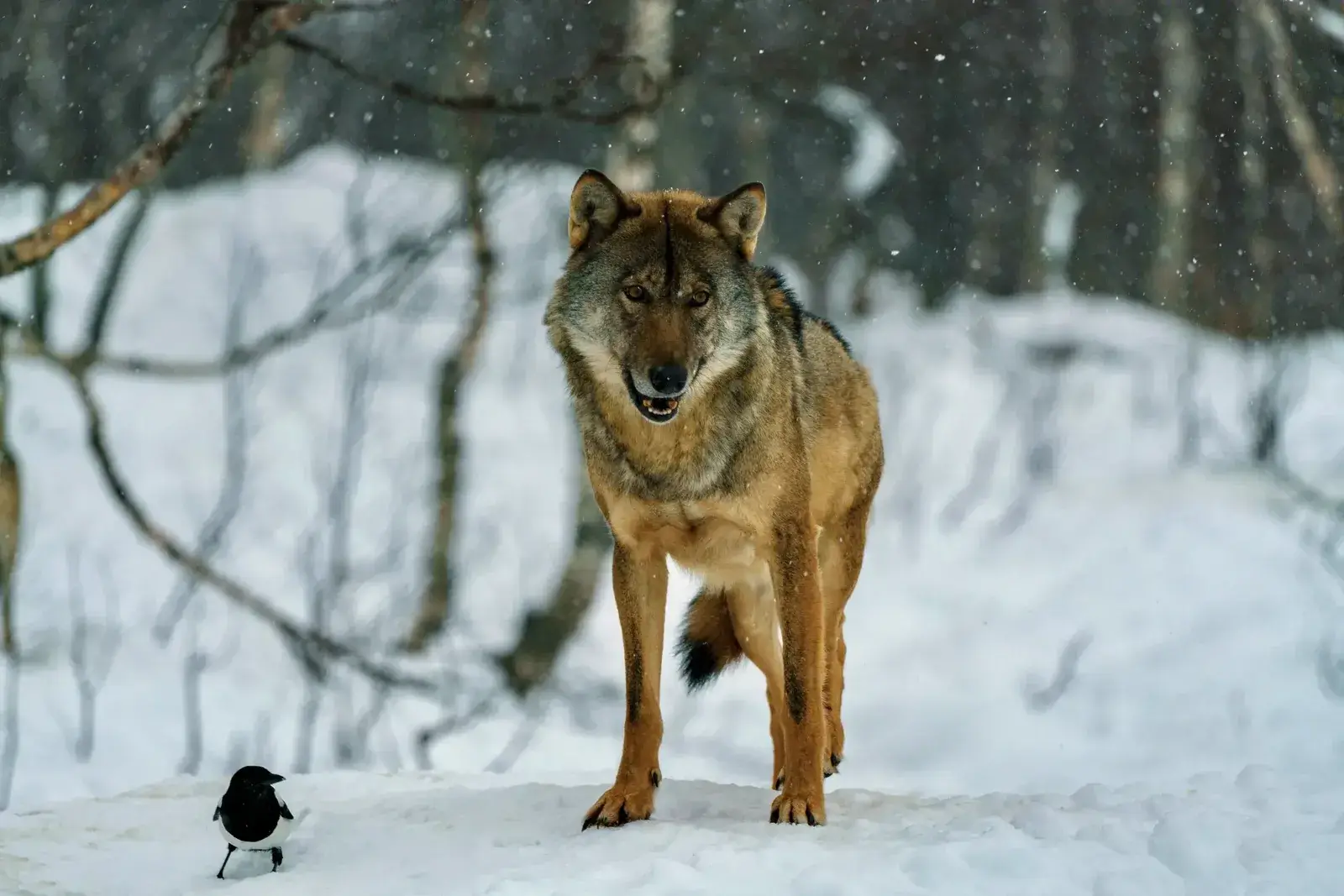
The Ice Age wolf behind every dog
Every dog alive today descends from wolves, but not from the grey wolves of today. The ancestors were Ice Age wolves of the Late Pleistocene, a population that no longer exists. The root of the dog family tree in this atlas is this extinct wolf population, and two branches grow from it: the living grey wolf and the domestic dog.
 GuideDogs in myth around the worldFrom Anubis and Cerberus to Fenrir, Xolotl and the Tiangou: how cultures across the world imagined dogs as guardians, guides and monsters.
Nobody has found the exact wolves that became dogs. Ancient wolf genomes show that dogs sit closer to wolves from eastern Eurasia, but none of the ancient wolves tested so far is a direct match.
 GuideDog hybrids: what dogs can and cannot breed withCan dogs breed with wolves, coyotes, jackals or foxes? Wolfdogs, coydogs, the Sulimov dog and Dogxim explained, with chromosomes and DNA studies.GuideDogs in myth around the worldFrom Anubis and Cerberus to Fenrir, Xolotl and the Tiangou: how cultures across the world imagined dogs as guardians, guides and monsters.
Quick facts about the Late Pleistocene wolf
| Fact | Answer |
|---|---|
| Branch type | Ancestral population (extinct) |
| Time in this atlas | About 50,000 to 40,000 years ago (low confidence) |
| Parent | None: the root of the tree |
| Children | Grey wolf, Domestic dog |
| Key genome | Taimyr wolf, Siberia, about 35,000 years old (Skoglund et al. 2015) |
| Split from dog ancestors | About 27,000 to 40,000 years ago (Skoglund et al. 2015), still debated |
| Main studies | Skoglund 2015, Bergström 2022 |
| Breeds in this atlas | None: this is a wild population |
 GuideDogs in Legends and Fairy TalesDogs in folklore and fairy tales: Black Shuck, The Tinderbox, Saint Guinefort, Panhu, Greyfriars Bobby, Barry and Old Drum, with legend and history kept apart.
 ArticleThe first known dog on every continentEarliest accepted dog on each continent, from Bonn-Oberkassel to the dingo: dates, sites, how dogs arrived and which breeds carry those first dogs.GuideDogs in Legends and Fairy TalesDogs in folklore and fairy tales: Black Shuck, The Tinderbox, Saint Guinefort, Panhu, Greyfriars Bobby, Barry and Old Drum, with legend and history kept apart.
What this branch is
The Late Pleistocene is the last part of the Ice Age, from about 126,000 to 11,700 years ago. Wolves then lived across the cold northern world, from Europe through Siberia to North America. They were not one tidy species with fixed borders. They were a wide, connected set of populations, and one of them gave rise to dogs.
 GuideLivestock guardian dogs: what they do and who they suitWhat livestock guardian dogs do, how they differ from herding dogs, 40 LGD breeds by country, the DNA evidence, and whether they make good pets.
This branch stands in for that population. It is a scientific inference, not a breed or a fossil. The atlas lists it as extinct because no living wolf is a direct copy of it, even though its genes live on in both dogs and wolves.
 ArticleDog Breed Family Tree: How All Dog Breeds Are RelatedThe dog breed family tree from Ice Age wolves to 29 breed families.GuideLivestock guardian dogs: what they do and who they suitWhat livestock guardian dogs do, how they differ from herding dogs, 40 LGD breeds by country, the DNA evidence, and whether they make good pets.
Dogs came from wolves, not from today's grey wolf
A common idea is that someone tamed a grey wolf like the ones in zoos. DNA says the story is older and more tangled. Dogs and modern grey wolves are sisters, not mother and daughter. They share a common ancestor, which was an Ice Age wolf population, and then each side kept changing.
 GuideDog laws by country: tax, insurance and licencesDog tax, compulsory liability insurance, licences, microchips and leash rules in Germany, Austria, Switzerland, Spain, Ireland, the UK, the US and more.
That is why this page and the grey wolf page are separate. Today's wolves have had tens of thousands of years of their own history.
 GuideDog Clothes: When Dogs Need Coats, and a Short History of Dog FashionDo dogs need coats in winter? When clothes help, when costumes stress a dog, safe fit, reflective gear, and a short history of dog fashion and dog art.GuideDog laws by country: tax, insurance and licencesDog tax, compulsory liability insurance, licences, microchips and leash rules in Germany, Austria, Switzerland, Spain, Ireland, the UK, the US and more.
When and where
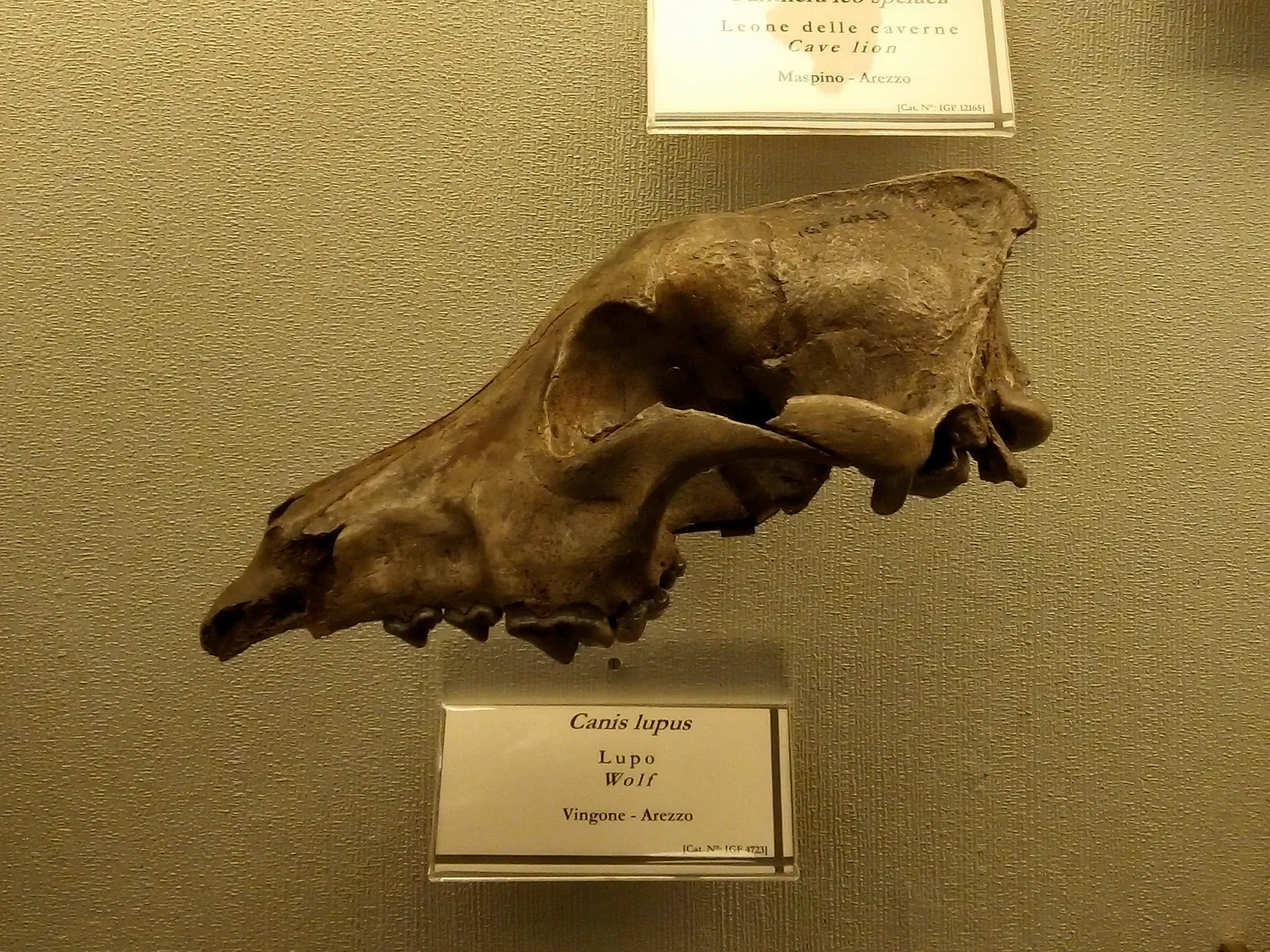
Skoglund and colleagues (Current Biology, 2015) sequenced a wolf bone from the Taimyr Peninsula in northern Siberia, dated to about 35,000 years ago. Comparing it with dogs and living wolves, they found that the Taimyr wolf split from the line leading to dogs and modern wolves before those two separated. They placed the dog and wolf split at roughly 27,000 to 40,000 years ago.
 GuideHow to get an assistance dogHow to get a service dog or assistance dog in the USA, UK, Germany, France, Spain, Italy and the Netherlands: accredited schools, waits, owner-training and travel.
That is a wide range, and it depends on assumptions about mutation rate, which researchers still debate. Treat it as a window, not a date.
Where this wolf population lived is also not settled. Thalmann and colleagues (Science, 2013) read ancient mitochondrial DNA, the maternal line, as pointing to Europe. Bergström and colleagues (Nature, 2022) later rejected Pleistocene European wolves like the ones they sampled as the source. Other studies have argued for Siberia or East Asia. See the first dogs by continent page for the dated dog finds.
 GuideSmartest dog breeds: what the rankings measure and what they missCoren's smartest dog breeds list, what it measured, what newer dog cognition research says, three kinds of dog intelligence and why smart dogs need work.GuideHow to get an assistance dogHow to get a service dog or assistance dog in the USA, UK, Germany, France, Spain, Italy and the Netherlands: accredited schools, waits, owner-training and travel.
What DNA shows
Skoglund 2015. The Taimyr wolf genome gave the first firm anchor for the dog and wolf split. The team also found that Taimyr wolf ancestry shows up in high-latitude breeds such as the Siberian Husky and the Greenland Dog. So wolves and dogs were still exchanging genes long after the split.
 GuideIs your dog suited to therapy work?How to make your dog a therapy dog: temperament checklist, first training steps, how Pet Partners, TDI and Pets As Therapy assess dogs, and welfare limits.
Bergström 2022. This Nature study sequenced 72 ancient wolf genomes covering the last 100,000 years from Europe, Siberia and North America. Its main findings:
- Wolves were widely connected in the Late Pleistocene. Differences between populations were about ten times lower than today.
- Dogs get ancestry from at least two wolf populations: an eastern source found in all dogs and a more westerly source found in some.
- Dogs in the Near East and Africa carry up to half of their ancestry from a population related to modern southwest Eurasian wolves.
- No ancient wolf studied is a direct match for either source, so the real ancestors are still unlocated.
The authors say the data fit two stories: separate domestication of eastern and western wolves that later merged in the west, or a single domestication. The study does not choose between them.
Wolf genes that stayed. The study also reported fast spread of a change in a gene called IFT88 in wolves about 40,000 to 30,000 years ago, a sign that natural selection worked on this connected population. Whether this gene mattered for the first dogs is not established.
 GuideBest dog breeds for familiesBest dog breeds for families, small homes, allergies, first-time owners and seniors, ranked from our breed ratings, with honest limits and a table.GuideIs your dog suited to therapy work?How to make your dog a therapy dog: temperament checklist, first training steps, how Pet Partners, TDI and Pets As Therapy assess dogs, and welfare limits.
What branches from here
The Late Pleistocene wolf has two child branches in this atlas.
 GuideService, therapy and emotional support dogs: what's the difference?Service dog vs emotional support dog vs therapy dog: the real differences, your rights in the USA and Europe, and why online certificates mean nothing.
- Grey wolf: the living wild branch, Canis lupus.
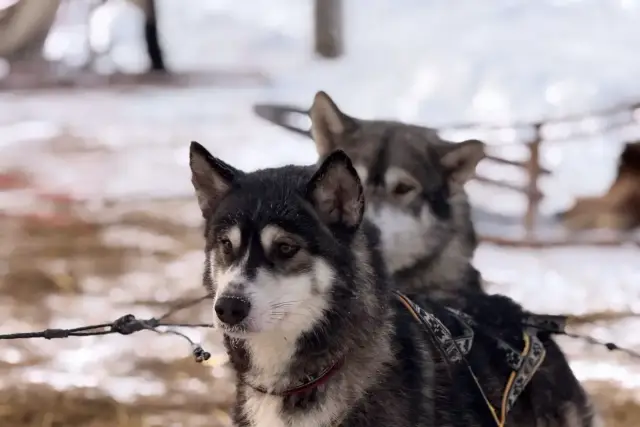
- Domestic dog: the tamed branch, which then split into deeper dog lineages.
Everything else in the atlas, from the Wolfdog Hybrid breeds to every kennel club breed, hangs below these two. For the full picture, see the dog family tree.
 GuideDogs of Japan: the native breeds and their storiesJapanese dog breeds explained: the six Nihon Ken, the Chin, Tosa, Japanese Spitz and Terrier, Hachiko, wartime near-extinction, DNA and who they suit.GuideService, therapy and emotional support dogs: what's the difference?Service dog vs emotional support dog vs therapy dog: the real differences, your rights in the USA and Europe, and why online certificates mean nothing.
Surprises
- The wolves that dogs came from are gone. What we have are their descendants and a handful of bones.
- A 35,000-year-old wolf from Siberia changed the dating of the dog story. Its genome showed that the split was far older than the oldest accepted dog burials, which date to about 14,200 years ago at Bonn-Oberkassel.
- Dogs may have two wolf sources, not one, but researchers disagree whether that means two domestications.
- Some Arctic dogs have a little of the Taimyr wolf in them, a trace of wolves breeding with early dogs.
 GuideDogs in science and spaceSpace dogs Laika, Belka and Strelka, Pavlov's dogs, Snuppy the clone, the dog genome and scent detection: what dogs did for science, and what it cost them.
 Save
 GuideDog Breeds by Country: Which Nations Made the Most?Dog breeds by country: how many breeds each nation produced in the Dogs Atlas data, from the UK and France to Japan, plus national dogs and families.GuideDogs in science and spaceSpace dogs Laika, Belka and Strelka, Pavlov's dogs, Snuppy the clone, the dog genome and scent detection: what dogs did for science, and what it cost them.
Related pages
 GuideHow to adopt a dog from a shelter or rescueHow to adopt a dog from a shelter or rescue: the process, costs in general terms, choosing a dog, the first weeks and what if it does not work out.
 GuideBanned and restricted dog breeds by countryWhich dog breeds are banned or restricted, country by country: UK, Ireland, France, Germany, Denmark, Norway, Spain, Australia and more.GuideHow to adopt a dog from a shelter or rescueHow to adopt a dog from a shelter or rescue: the process, costs in general terms, choosing a dog, the first weeks and what if it does not work out.
FAQ
What did dogs evolve from?
From a population of Late Pleistocene wolves that is now extinct, not from the modern grey wolf.
Are dogs descended from wolves?
Yes. Dogs and living grey wolves share an Ice Age wolf ancestor, so dogs descend from wolves but not from the wolves of today.
What is the Taimyr wolf?
A wolf from the Taimyr Peninsula in Siberia, about 35,000 years old, whose genome (Skoglund et al. 2015) helped date the split between dogs and wolves.
When did dogs split from wolves?
Skoglund and colleagues estimate about 27,000 to 40,000 years ago. The range is wide and debated.
Where did the ancestors of dogs live?
Unsettled. Europe, Siberia and East Asia have all been proposed, and Bergström 2022 points to eastern Eurasia for the main source.
Is the Late Pleistocene wolf a breed?
No. It is the wild ancestral population at the root of the tree.
Can I find a descendant of this wolf?
Every dog and every living wolf is one, but no living animal is a direct copy.
Read next
Family storyDomestic dogRead the family's story: origins, members, DNA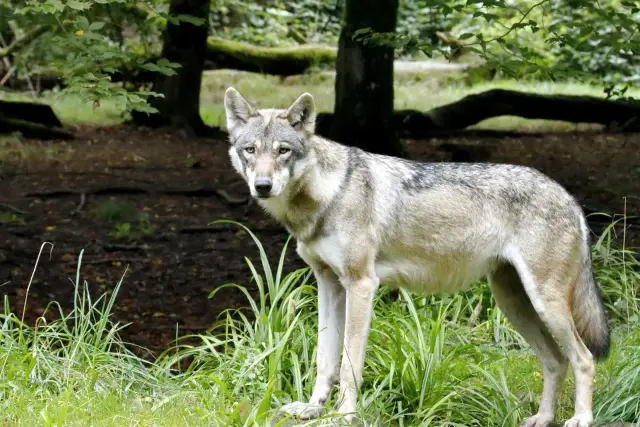 Family storyGrey wolfRead the family's story: origins, members, DNA
 Family storyArctic dogsRead the family's story: origins, members, DNA
Sources (4)
- Skoglund, P., Ersmark, E., Palkopoulou, E. and Dalén, L. (2015). Ancient wolf genome reveals an early divergence of domestic dog ancestors and admixture into high-latitude breeds. Current Biology 25(11): 1515-1519.
- Bergström, A. et al. (2022). Grey wolf genomic history reveals a dual ancestry of dogs. Nature 607: 313-320.
- Thalmann, O. et al. (2013). Complete mitochondrial genomes of ancient canids suggest a European origin of domestic dogs. Science 342(6160): 871-874.
- Bergström, A. et al. (2020). Origins and genetic legacy of prehistoric dogs. Science 370(6516): 557-564.