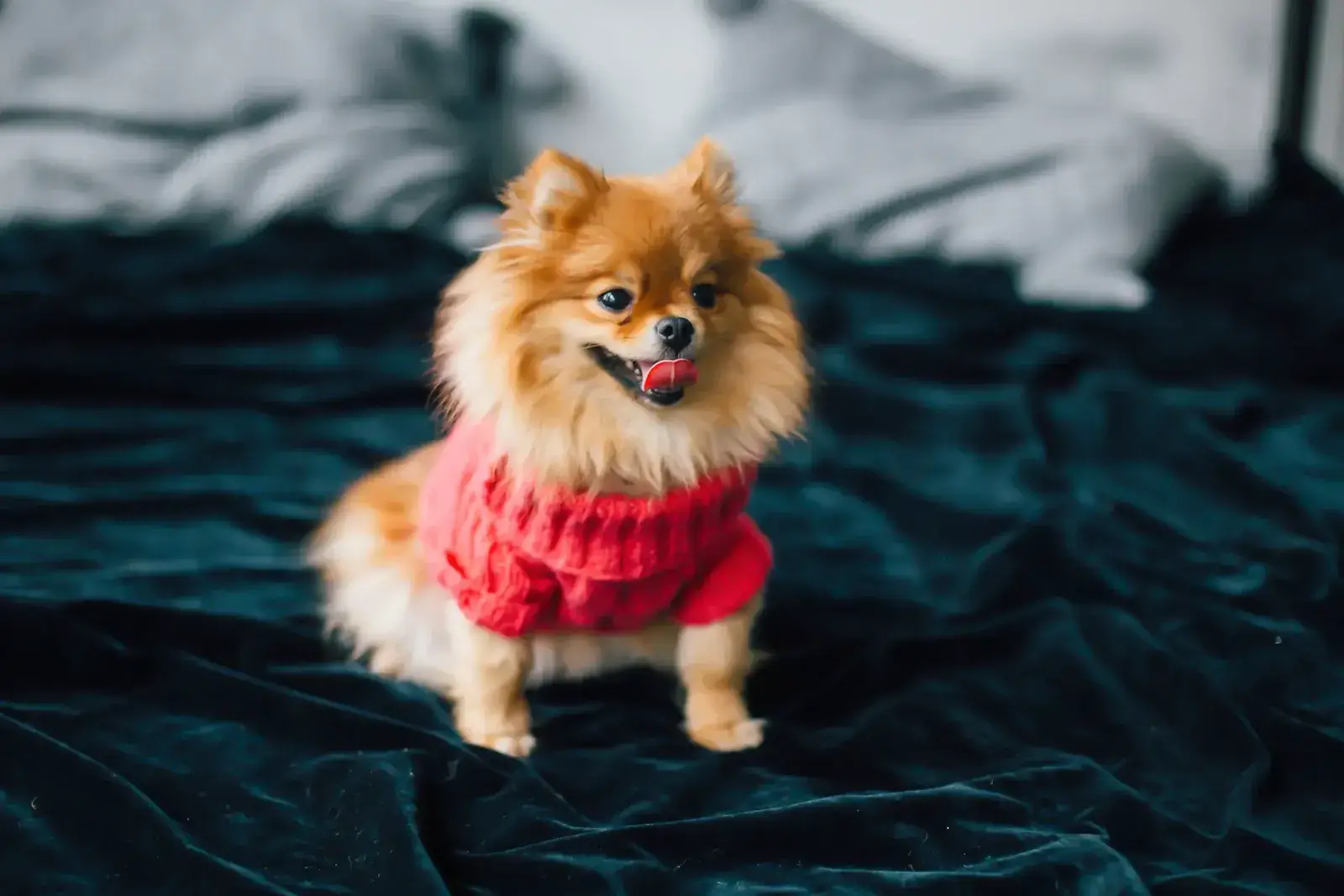
Many do not, and a few are made unhappy or unsafe by clothes. The honest answer to "should my dog wear clothes?" depends on the dog's size, coat, age, health and the weather, and on how the dog feels about wearing them. This guide explains who benefits from a coat, how to judge fit and safety, what vets and welfare charities say about costumes, how collars compare with body straps, and where dog fashion and dog art come from. It is general information. Your vet knows your dog and can tell you whether a coat makes sense.
Do dogs need coats in winter?
Most vet advice says it depends on the individual dog, not on a blanket rule. Breed, size, coat, age, health and how long the dog is outside all count.
 GuideMy Dog Keeps Shaking His Head: Ear Infection GuideDog shaking head, scratching ears or smelly ears? Ear infection signs, causes, ear haematoma, emergency signs, what to do and what to avoid.
Dogs that often benefit from a coat
- Very small dogs. They lose heat faster and have a harder time keeping warm, so they may need a sweater or coat for longer winter outings (PetMD).
- Thin, lean, short-haired dogs. Fine fur gives little insulation. Chihuahuas and Italian Greyhounds are commonly given as examples.
- Puppies and older dogs, which may feel the cold more.
- Dogs with certain illnesses. One vet mentions conditions such as hypothyroidism and diabetes, where extra insulation may help. Ask your own vet.
Dogs that usually do not need one
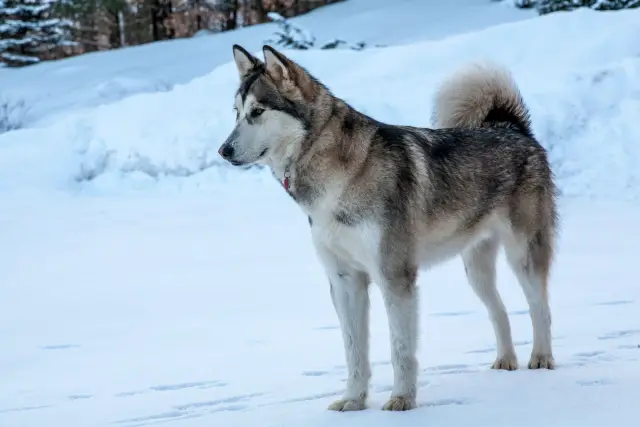
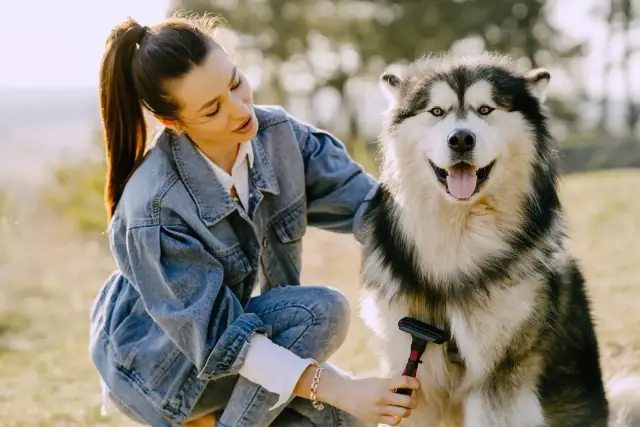
- Heavy double-coated dogs such as Huskies cope well in cold weather. A fit, healthy dog with a reasonably thick coat that stays active is usually fine (Petplan).
- Dogs on short toilet breaks. A quick trip outside rarely needs a coat. Below freezing it may help.
Signs that your dog is cold
Do not rely only on the thermometer. Watch the dog. Shivering, a hunched back, a tucked tail, slowing down or whining all say "I'm cold". If you see them, a coat or a shorter walk helps. Take the coat off indoors, because dogs can overheat. If a dog hates wearing one, changing the routine may work better than forcing it.
Wet weather matters as much as cold. A dog that is wet and in wind loses heat quickly. A dry towel after the walk helps every dog, with or without a coat. For the effects of heat, panting and warm weather see Dog panting.
 GuideDog laws by country: tax, insurance and licencesDog tax, compulsory liability insurance, licences, microchips and leash rules in Germany, Austria, Switzerland, Spain, Ireland, the UK, the US and more.GuideMy Dog Keeps Shaking His Head: Ear Infection GuideDog shaking head, scratching ears or smelly ears? Ear infection signs, causes, ear haematoma, emergency signs, what to do and what to avoid.
Which breeds need extra thought
Breed notes are a rough guide, since individual dogs differ.
 GuideDogs in Legends and Fairy TalesDogs in folklore and fairy tales: Black Shuck, The Tinderbox, Saint Guinefort, Panhu, Greyfriars Bobby, Barry and Old Drum, with legend and history kept apart.
| Breed | Coat | Clothing note |
|---|---|---|
| Chihuahua | Smooth or long, tiny body | Often feels the cold. A coat for cold, wet walks can help |
| Greyhound | Short, fine, close | Lean with a thin coat, so a well-fitted coat is common in winter |
| Xoloitzcuintle | Hairless or short coat | The skin is exposed, so cold weather needs cover, and sun needs care too |
| Pug | Short, smooth | Flat-faced, so avoid heavy or tight clothes, especially in warm weather |
| French Bulldog | Short, smooth | Flat-faced, can overheat. Choose light, loose garments and take them off in warm rooms |
| Siberian Husky | Thick double coat | Usually no coat needed in cold weather |
| Pomeranian | Thick double coat, small body | Coat is warm already. Watch for overheating |
Flat-faced breeds deserve a special note. PDSA says some costumes can stop pets from regulating their temperature and breathing freely, which is a particular concern for flat-faced dogs such as French Bulldogs and Pugs. See the Pug and French Bulldog pages for their breathing health.
 GuideBanned and restricted dog breeds by countryWhich dog breeds are banned or restricted, country by country: UK, Ireland, France, Germany, Denmark, Norway, Spain, Australia and more.GuideDogs in Legends and Fairy TalesDogs in folklore and fairy tales: Black Shuck, The Tinderbox, Saint Guinefort, Panhu, Greyfriars Bobby, Barry and Old Drum, with legend and history kept apart.
Safe fit and materials
A coat should be an easy, comfortable layer, not a restriction.
 GuideDog Breeds by Country: Which Nations Made the Most?Dog breeds by country: how many breeds each nation produced in the Dogs Atlas data, from the UK and France to Japan, plus national dogs and families.
- Check the fit. You should be able to slide two fingers under any strap. The coat should cover the back and chest without rubbing under the legs.
- Let the dog move. The dog must be able to run, sniff, squat and lift a leg. Clothing that makes movement or toileting hard is a bad choice, especially for puppies.
- Avoid dangling parts. Loose ribbons, buttons or hanging toys can be chewed or swallowed, or catch on something.
- Choose breathable, dry fabrics. Wet clothing chills a dog. Thick fabric can cause overheating. A coat is for outdoors.
- Match the coat to your strap or collar. A coat that sits under a strap can bunch up or rub. Check how they fit together.
- Check the skin. After the first few uses, look for rubbed spots, hair loss or redness.
- Wash it. Dirty, damp clothing irritates skin.
Never leave a dog wearing clothes unattended. Never use clothes as a way to stop a dog scratching or licking without talking to a vet first: see Why is my dog scratching?.
 GuideWinter Care for Dogs: Cold, Paws, Antifreeze and IceWinter care for dogs: how cold is too cold, coats, salt and antifreeze, hypothermia, frostbite, frozen ponds, dark walks and holiday hazards.GuideDog Breeds by Country: Which Nations Made the Most?Dog breeds by country: how many breeds each nation produced in the Dogs Atlas data, from the UK and France to Japan, plus national dogs and families.
Costumes: is it cruel to dress up dogs?
Dressing dogs up is not illegal and many dogs tolerate a simple costume for a short photo. But vets, welfare charities and behaviourists give a clear message: costumes are unnecessary and can be risky.
 GuideMy Dog's Eye Is Red: Causes and When to See a VetRed, weepy or squinting dog eye? Emergency signs, common causes like conjunctivitis and ulcers, what to do at home, what to avoid, and when to see a vet.
- Stress can be hidden. A UK behaviourist has said that dogs in outfits often freeze and emotionally shut down rather than struggle, so owners may think they are fine when they are not.
- Body language is blocked. PDSA says costumes can hide the signals dogs use to communicate, which can cause confusion or conflict with other animals.
- Physical risks. Thick fabric can cause overheating, and costumes that restrict walking, grooming or toileting are a problem.
- Practical versus novelty. The RSPCA separates clothing with clear benefits, such as keeping a dog warm or making it visible at night, from outfits worn purely for novelty.
Is it cruelty? The sources do not call it so. The charities say costumes can cause discomfort, and the UK Animal Welfare Act 2006 requires owners to protect their pet's welfare. A sensible rule: if the dog freezes, tries to remove it, hides, yawns, licks its lips, or goes still and quiet, take it off. If you want a costume photo, choose a very light item (a bandana or a simple hat), keep it to a minute or two, and give a treat. Leave out anything over the head, around the face or across the eyes.
 GuideBest dog breeds for familiesBest dog breeds for families, small homes, allergies, first-time owners and seniors, ranked from our breed ratings, with honest limits and a table.GuideMy Dog's Eye Is Red: Causes and When to See a VetRed, weepy or squinting dog eye? Emergency signs, common causes like conjunctivitis and ulcers, what to do at home, what to avoid, and when to see a vet.
Collars, body straps and tags
A collar is a convenient place for an ID tag, and many dogs walk well on one. A body strap spreads pressure over the chest and back instead of the neck, and veterinarians often suggest it for dogs that pull, have breathing problems or have delicate necks. A vet quoted by Dial A Vet notes that some dogs need both, a collar for ID tags and a strap for walking.
 ArticleDog Breed Family Tree: How All Dog Breeds Are RelatedThe dog breed family tree from Ice Age wolves to 29 breed families.
Whichever you choose:
- Make sure two fingers fit between strap and dog.
- Check the neck and chest for rubbing and hair loss.
- Do not leave a collar on in situations where it could catch, such as in a crate or while playing in a pack.
- Use a tag with a phone number, and consider a microchip too. This guide does not recommend any product.
 GuideHow to Groom a Dog: Brushing, Baths, Nails and CoatsHow to groom a dog at home: coat types, brushing, how often to bathe, cutting nails, ears, teeth, shedding, matting and whether to shave a double coat.ArticleDog Breed Family Tree: How All Dog Breeds Are RelatedThe dog breed family tree from Ice Age wolves to 29 breed families.
Reflective gear and visibility
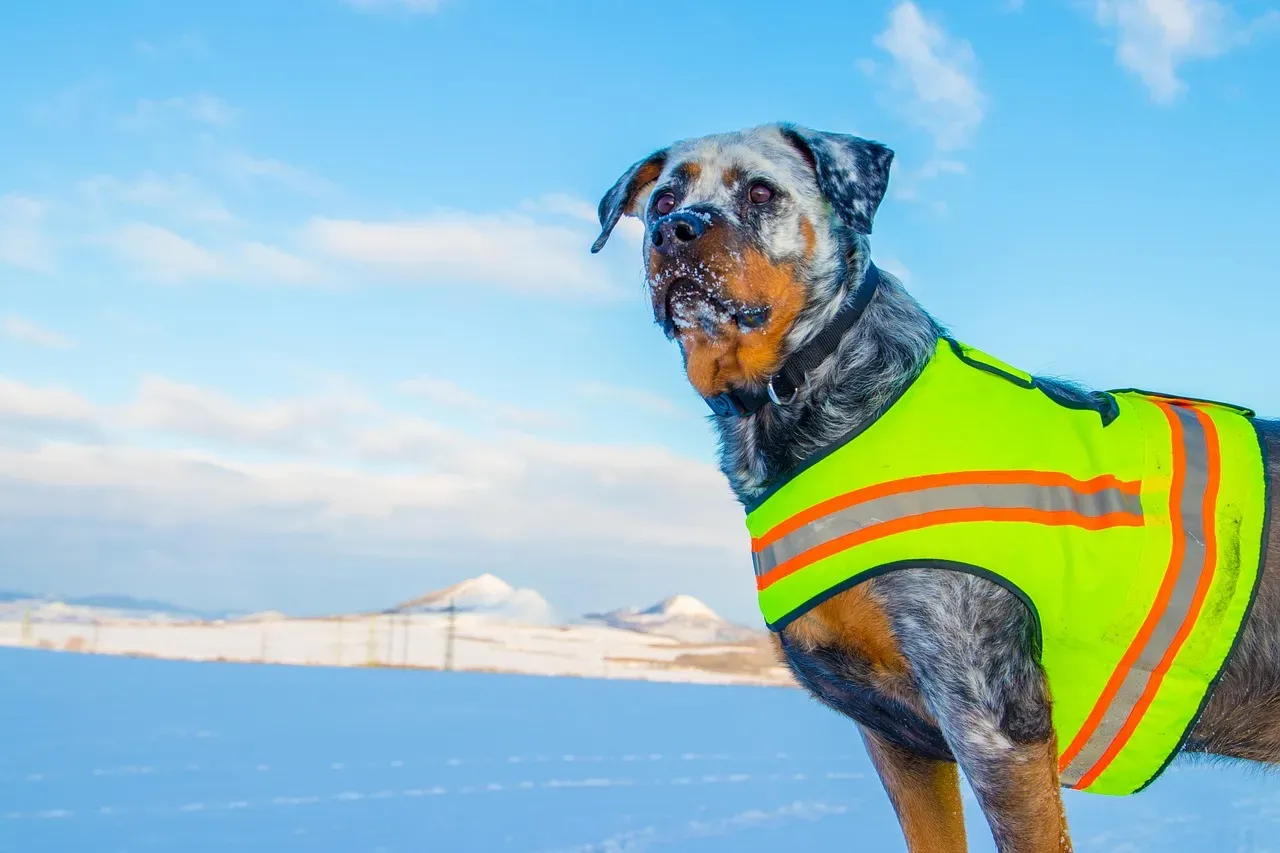
Dark mornings and evenings are the main reason many dogs wear visible gear. Advice from a European pet-gear company is to avoid relying on just one item. Combine a light on the collar or a clip-on light with reflectors, such as a vest or bands. Reflectors fade over time, and a product sold as high-visibility may not reflect much when tested with a torch, so check it. Light colours help in dusk, and a flashing light helps near roads. Keep the dog on a lead near traffic whatever it wears.
 GuideMy Dog Keeps Licking His Paws: Causes and What HelpsDog licking paws all the time: allergies, parasites, injury, yeast and boredom.
 Save
 GuideMy Dog Is Panting a Lot: Normal or Worrying?Dog panting heavily? Normal vs worrying panting, heatstroke signs and cooling steps, pain, anxiety, Cushing's disease, and when to see a vet.GuideMy Dog Keeps Licking His Paws: Causes and What HelpsDog licking paws all the time: allergies, parasites, injury, yeast and boredom.
A short history of dog clothes
People have probably put coverings on working dogs for centuries, because sled and hunting dogs worked in cold, wet places. Practical clothes came first. Fashion followed.
 GuideTicks and fleas on dogs: how to check, remove and prevent themTicks and fleas on dogs: how to tell them apart, check your dog, remove a tick safely, break the flea life cycle and prevent both.
In Victorian Britain and America, pet keeping grew, and dress for pet dogs became a display of taste and status. One pet historian describes a crocheted coat for a small dog published in an American women's magazine in 1873, with little bells for buttons so that the dog jingled as it trotted. Tailored coats, jewelled collars and embroidered garments for pampered pet dogs appear in many accounts of the period. Some popular histories also place the first dog boutiques in London and Paris, but that claim is not documented.
In the twentieth century clothing for dogs became more practical again, with waterproof coats, working-dog gear and cold-weather jackets. This is also when dog clothes became a regular item in everyday life for many owners.
Please note: stories such as "dogs wore jewelled collars in ancient Egypt" or a specific burial collar date show up on the internet. They are not documented and are not repeated here.
 GuideSmartest dog breeds: what the rankings measure and what they missCoren's smartest dog breeds list, what it measured, what newer dog cognition research says, three kinds of dog intelligence and why smart dogs need work.GuideTicks and fleas on dogs: how to check, remove and prevent themTicks and fleas on dogs: how to tell them apart, check your dog, remove a tick safely, break the flea life cycle and prevent both.
Dogs in art and design
Dogs have been in paintings for as long as there have been patrons to pay for portraits.
 GuideDog Pregnancy: Length, Signs and Week by WeekHow long dogs are pregnant, signs of pregnancy, a week by week table, giving birth, false pregnancy and when to call a vet.
- Velázquez, Las Meninas. A large mastiff lies in the foreground of the painting held at the Prado, usually dated to the 1650s. It is often read as a symbol of loyalty. Sources disagree on the dog's story, so treat the details with care.
- Dog portraiture as a genre. Dog portraiture rose in status in the 1600s. George Stubbs is described as the unsurpassed master of dog portraiture in Britain.
- Edwin Landseer. The leading British dog painter of the Victorian era. Art UK says that between 1830 and 1840 he specialised in dogs, around half of them commissions, and that his work often gave dogs human qualities. A Distinguished Member of the Humane Society, a Newfoundland dog, is usually dated 1838, though one source gives a different date. Queen Victoria admired him, and he was knighted in 1850. The Royal Collection holds his self-portrait The Connoisseurs, with two dogs.
Today dogs are also an everyday theme in illustration, photography and product design. This site does not promote brands or products, so we leave that part of the story to the reader.
 GuideMy Dog Is Coughing: Causes and When to See a VetDog coughing, honking or hacking? Emergency signs, kennel cough, collapsing trachea, heart cough, what to do at home and when to see a vet.GuideDog Pregnancy: Length, Signs and Week by WeekHow long dogs are pregnant, signs of pregnancy, a week by week table, giving birth, false pregnancy and when to call a vet.
Frequently asked questions
Do dogs need coats in winter?
Some do. Small, thin, short-coated, young, old or ill dogs often benefit. Fit, healthy dogs with thick coats usually do not.
What temperature does a dog need a coat?
There is no single number. It depends on the dog, wind, wet and how long you are out. Watch for shivering, a hunched back or a tucked tail.
Do Huskies need coats?
Usually not. Thick double-coated breeds cope well in the cold, provided they stay active and dry.
Do Chihuahuas and Greyhounds need coats?
Often yes in cold or wet weather. They are small or lean, with thin coats.
Is it cruel to dress up dogs?
Charities and vets call costumes unnecessary and sometimes risky, because they can cause stress, overheating and blocked body language. A short, simple item that the dog accepts is different from a full costume.
Can dogs wear clothes all day?
Take coats off indoors. Dogs can overheat, and wet or tight clothes irritate skin.
How do I know if a coat fits?
Two fingers under straps, free movement of legs, no rubbing, and the dog can squat and toilet normally.
Are dog costumes safe?
Choose light, loose items and watch the dog. Avoid anything over the head or face, anything that restricts breathing, and anything with parts that can be chewed off.
Is a collar or a body strap better?
Collars are practical for ID tags and calm walkers. Body straps reduce neck pressure and suit dogs that pull or have breathing issues. Some dogs use both.
What is the history of dog clothes?
Practical coats for working dogs came first. Victorian pet owners made dog fashion a display of status. Practical coats returned in the twentieth century.
What is the oldest painting of a dog?
No single answer is documented, so none is given.
Do hairless dogs need clothes?
Often in cold weather, and sun protection matters too. See the Xoloitzcuintle page.
Read next
 Family storyDroverRead the family's story: origins, members, DNA
 Family storySchnauzerRead the family's story: origins, members, DNA
 Family storyAlpineRead the family's story: origins, members, DNA
Sources (9)
- PetMD, "Do Some Breeds Actually Need Dog Coats?".
- Petplan (UK), "Do dogs need winter coats?".
- PDSA, statements on Halloween pet costumes and discomfort (as reported in UK press).
- RSPCA, statements on practical clothing versus novelty costumes (as reported in UK press).
- Dial A Vet, blog post comparing dog collars and chest straps.
- The Pet Historian, "Clothing for Victorian dogs".
- Art UK, "Art gone to the dogs: canine portraiture in modern Britain".
- Eclectic Light Company, "Faithful Friends: Dogs in paintings".
- Royal Collection Trust, entry for Landseer, "The Connoisseurs: Portrait of the Artist with two Dogs".