Counted from a single mating the spread is wider, because mating and ovulation do not happen on the same day. Most pregnancies and births go well, and a good relationship with a vet makes them easier. This guide covers how pregnancy is confirmed, a week by week table, food and exercise in general terms, preparing for the birth, the stages of labour, when to call a vet urgently, false pregnancy and what changes for flat-faced breeds. It is general information. Your vet knows your dog and makes the decisions.
A note about this site
This site is non-commercial and does not encourage breeding. Pregnancy happens in family homes by accident, in rescues and in planned litters, and the care is the same in each case. If you are thinking about breeding, talk to your vet first, and read the section on responsible breeding below.
 GuideDog Breeds by Country: Which Nations Made the Most?Dog breeds by country: how many breeds each nation produced in the Dogs Atlas data, from the UK and France to Japan, plus national dogs and families.
 GuideMy Dog Is Panting a Lot: Normal or Worrying?Dog panting heavily? Normal vs worrying panting, heatstroke signs and cooling steps, pain, anxiety, Cushing's disease, and when to see a vet.GuideDog Breeds by Country: Which Nations Made the Most?Dog breeds by country: how many breeds each nation produced in the Dogs Atlas data, from the UK and France to Japan, plus national dogs and families.
How long are dogs pregnant?
The commonly quoted figure is about 63 days from ovulation, or roughly nine weeks. Veterinary research gives a tighter window when the timing of ovulation is known. Concannon (2003) reported that birth falls 64 to 66 days after the pre-ovulation surge of luteinising hormone in over 95 percent of normal pregnancies. Ovulation follows the surge by a couple of days, which is how the 62 to 64 days from ovulation comes about. Most of this timing research was done in Beagles, so the exact days may differ a little between breeds.
 GuideBanned and restricted dog breeds by countryWhich dog breeds are banned or restricted, country by country: UK, Ireland, France, Germany, Denmark, Norway, Spain, Australia and more.
If an owner counts from the day of mating instead, the range is much wider. Concannon's work reports that birth can follow a single mating by anything from 56 days to 69 days. The reason is that mating can happen before or after ovulation, and sperm can survive for several days in the female.
Because of this, a due date is an estimate. Vets often give a window, not a day. A progesterone blood test during the heat, if one was done, makes the estimate more precise.
| How it is counted | Typical length |
|---|---|
| From ovulation | About 63 days (62 to 64) |
| From the luteinising hormone surge | 64 to 66 days |
| From a single mating | 56 to 69 days |
 GuideMy Dog's Eye Is Red: Causes and When to See a VetRed, weepy or squinting dog eye? Emergency signs, common causes like conjunctivitis and ulcers, what to do at home, what to avoid, and when to see a vet.GuideBanned and restricted dog breeds by countryWhich dog breeds are banned or restricted, country by country: UK, Ireland, France, Germany, Denmark, Norway, Spain, Australia and more.
Signs of dog pregnancy
Early signs are subtle and easy to miss, and some are the same as signs of false pregnancy. Common signs include:
 GuideHow to Groom a Dog: Brushing, Baths, Nails and CoatsHow to groom a dog at home: coat types, brushing, how often to bathe, cutting nails, ears, teeth, shedding, matting and whether to shave a double coat.
- A change in appetite. Some dogs eat less in the first weeks, then eat more.
- Mild sickness. Occasional morning sickness can happen around the third to fourth week.
- Quiet or clingy behaviour. Some dogs seek more attention, others want to be left alone.
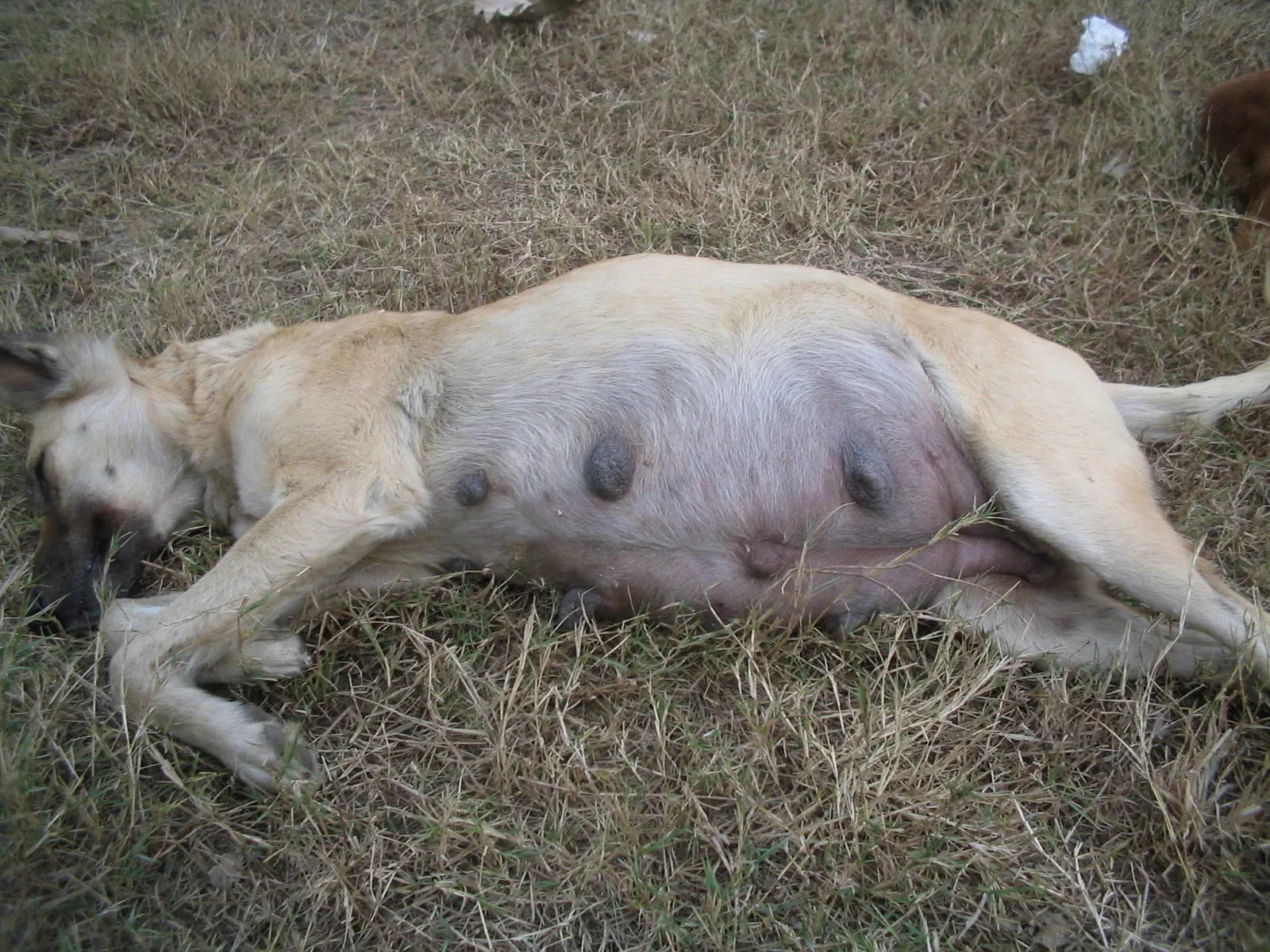
- Enlarged, pinker nipples. Often noticed in the middle of pregnancy.
- A clear discharge. A small amount of clear or mucus-like discharge can be normal. Coloured or smelly discharge is not.
- A rounder belly. Usually visible only in the second half of pregnancy, and with a small litter it may hardly show.
- Nesting. Gathering blankets, digging and looking for a den in the last week or two.
None of these signs proves pregnancy. A dog with false pregnancy can show nearly all of them. Only a vet check can confirm it.
 Save
 GuideMy Dog Keeps Shaking His Head: Ear Infection GuideDog shaking head, scratching ears or smelly ears? Ear infection signs, causes, ear haematoma, emergency signs, what to do and what to avoid.GuideHow to Groom a Dog: Brushing, Baths, Nails and CoatsHow to groom a dog at home: coat types, brushing, how often to bathe, cutting nails, ears, teeth, shedding, matting and whether to shave a double coat.
How pregnancy is confirmed
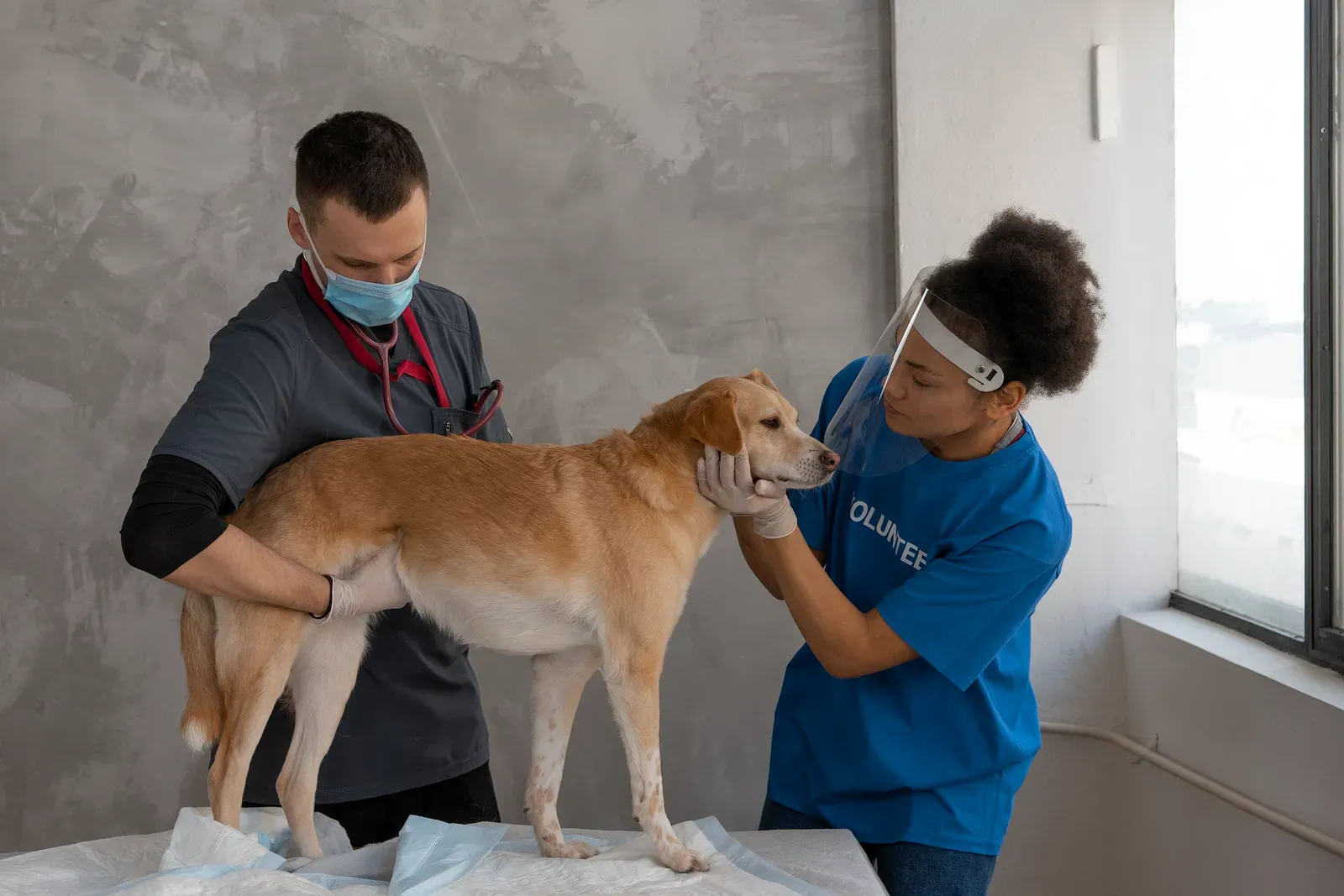
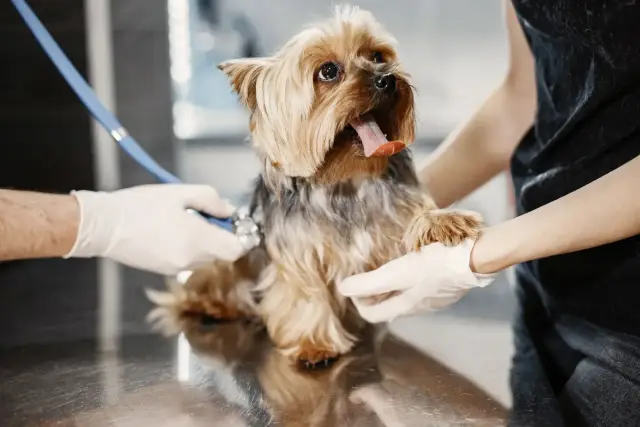
Your vet has several ways to confirm pregnancy, and they work at different times.
 ArticleDog Breed Family Tree: How All Dog Breeds Are RelatedThe dog breed family tree from Ice Age wolves to 29 breed families.
Palpation. Experienced vets can sometimes feel the swellings in the womb at around the fourth week. It is not always reliable and not all dogs allow it.
Ultrasound. Ultrasound is widely used for confirming pregnancy and seeing heartbeats. It is typically done between about 25 and 35 days after breeding. A scan before about 21 days can miss a pregnancy. Ultrasound gives only a rough count of puppies, so it is not the best tool for numbers.
Relaxin blood test. Relaxin is a hormone made by the placenta, so a positive result indicates pregnancy. The Merck Veterinary Manual says a commercial relaxin test is reliable after about 22 to 27 days of gestation. Other sources recommend waiting longer for the most reliable result, so ask your vet which timing the clinic uses. The test tells you whether she is pregnant, not how many puppies.
X-ray. The puppies' skeletons become visible on X-ray at around 42 to 45 days, and are clear by 47 to 48 days. The Merck Veterinary Manual says X-ray after 55 days is the best method to count the litter. Vets use it in the last stretch of pregnancy so you know how many puppies to expect and can tell when the birth is finished. A vet can explain the safety questions for your dog.
Counting days from breeding or from ovulation changes the numbers, so ask your clinic which they use.
 GuideDog Heat Cycle: Signs, Stages and How Long It LastsHow long dogs bleed in heat, when the first heat comes, the four cycle stages, signs, caring for her, and how males react.ArticleDog Breed Family Tree: How All Dog Breeds Are RelatedThe dog breed family tree from Ice Age wolves to 29 breed families.
Dog pregnancy week by week
The table below is a general guide based on typical timing. Individual dogs differ, and your vet's advice comes first.
 GuideAdvanced dog trainingAdvanced dog training explained: the 3 Ds, proofing, off-lead recall, formal heel, distance stays, impulse control, tricks, scent work, dog sports and Good Citizen schemes.
| Week | What may be happening | What you can do |
|---|---|---|
| 1 to 2 | Fertilised eggs travel to the womb. Nothing is visible. | Keep her routine normal. Keep her away from other dogs if you do not want a second mating. |
| 3 | Embryos attach to the womb. Appetite may change. | Book a vet visit for confirmation and to talk about food. |
| 4 | Ultrasound can often show heartbeats. A relaxin test may be positive. Some dogs have mild sickness. | Confirm the pregnancy. Ask about food and any worming advice. |
| 5 | Puppies grow quickly. Her appetite often increases. | Follow your vet's feeding advice. Keep exercise gentle. |
| 6 | Skeletons begin to form (visible on X-ray from about day 42 to 45). Belly starts to show. | Ask your vet whether an X-ray count is needed later. |
| 7 | Belly and nipples enlarge. She may tire more easily. | Smaller, more frequent meals can be easier. Short, easy walks. |
| 8 | Puppies move, and you may see or feel it. Nesting starts. | Set up the whelping area. Plan who to call. |
| 9 | Birth is close. X-ray after day 55 can count the litter. She may refuse food and be restless. | Stay near her. Keep the vet's number and an emergency number ready. |
Many dogs stay active and cheerful through most of this, and some barely look pregnant until late.
 GuideTicks and fleas on dogs: how to check, remove and prevent themTicks and fleas on dogs: how to tell them apart, check your dog, remove a tick safely, break the flea life cycle and prevent both.GuideAdvanced dog trainingAdvanced dog training explained: the 3 Ds, proofing, off-lead recall, formal heel, distance stays, impulse control, tricks, scent work, dog sports and Good Citizen schemes.
How many puppies?
Litter size depends largely on the size of the breed. A study of 10,810 litters from 224 breeds registered in the Norwegian Kennel Club (Borge and colleagues, Theriogenology, 2011) found an average of 5.4 puppies. Miniature breeds had an average of 3.5 puppies, and giant breeds an average of 7.1. Breed size was the strongest factor, followed by the age of the female and how she was mated. A single litter may be smaller or larger than these averages.
 GuideHow to get an assistance dogHow to get a service dog or assistance dog in the USA, UK, Germany, France, Spain, Italy and the Netherlands: accredited schools, waits, owner-training and travel.
 GuideWinter Care for Dogs: Cold, Paws, Antifreeze and IceWinter care for dogs: how cold is too cold, coats, salt and antifreeze, hypothermia, frostbite, frozen ponds, dark walks and holiday hazards.GuideHow to get an assistance dogHow to get a service dog or assistance dog in the USA, UK, Germany, France, Spain, Italy and the Netherlands: accredited schools, waits, owner-training and travel.
Food and exercise during pregnancy
Food and exercise needs change during pregnancy, and the best plan depends on the dog. Your vet should guide this. In general terms:
 GuideService, therapy and emotional support dogs: what's the difference?Service dog vs emotional support dog vs therapy dog: the real differences, your rights in the USA and Europe, and why online certificates mean nothing.
- Early weeks. Her normal diet is usually fine. Do not change food suddenly, since sudden changes upset the stomach.
- Later weeks. The puppies grow fast in the last third, and appetite usually rises. Vets often suggest a change in food and smaller, more frequent meals as her belly takes up room. Ask which food and how much.
- Do not add supplements on your own. Extra calcium and other products can cause harm if given without advice.
- Exercise. Keep walks regular and gentle. Avoid rough play, jumping and long hard exercise. In the last weeks, shorter walks suit most dogs.
- Weight. Neither too thin nor too heavy is ideal. Your vet can check her body condition.
- Medicines and parasite control. Some medicines are not safe in pregnancy. Check with your vet before giving anything, including flea, tick and worming treatments. See ticks and fleas on dogs for the general picture.
 GuideDog Clothes: When Dogs Need Coats, and a Short History of Dog FashionDo dogs need coats in winter? When clothes help, when costumes stress a dog, safe fit, reflective gear, and a short history of dog fashion and dog art.GuideService, therapy and emotional support dogs: what's the difference?Service dog vs emotional support dog vs therapy dog: the real differences, your rights in the USA and Europe, and why online certificates mean nothing.
Preparing for the birth
Preparation helps you feel calm, and it helps her. Many owners set up around two weeks before the due date.
 GuideMy Dog Is Lethargic: Causes and When to Call a VetDog tired, weak or not himself? Normal tiredness vs lethargy, emergency signs, common causes, what to note for the vet and what to avoid.
A whelping area. A quiet, warm, draught-free room with a large, low-sided box or pen. Lay washable bedding and newspaper. Let her get used to it early, because dogs often pick their own spot. If she chooses somewhere else, it is usually easier to move the setup to her.
A supplies list. Clean towels, a clock or phone to note times, a thermometer for her temperature, a box with a warm cover for the puppies, a notebook, a scale for weighing puppies, and non-slip flooring. Your vet can tell you what else to have.
Phone numbers. Your vet, the nearest out of hours emergency clinic and how long it takes to get there. Many births happen at night.
A plan for transport. If she needs to go to the clinic, have the car and a helper ready.
A temperature routine. Many vets suggest taking her temperature once or twice a day in the last week. A drop in temperature often comes about a day before labour starts. Ask your vet how to do this and what readings to expect.
Time off. Try to be home for the last week and around the birth.
 GuideMy Dog Is Vomiting: Causes and What to DoDog throwing up? Vomiting vs regurgitation, emergency signs like bloat, common causes, safe home care, what not to do, and when to see a vet.GuideMy Dog Is Lethargic: Causes and When to Call a VetDog tired, weak or not himself? Normal tiredness vs lethargy, emergency signs, common causes, what to note for the vet and what to avoid.
Signs that labour has started
Common signs, usually in the last day or so, are:
 GuideBorder Collie behaviour problems and how to train themBorder Collie behaviour and training: why they nip, chase, fixate and fear noise, what to do about each, and a weekly plan for owners.
- refusing food
- restlessness, panting, pacing, shivering or digging
- nesting behaviour
- a drop in body temperature
- clear discharge from the vulva
These can go on for several hours. This is normal and is the first stage of labour. Not every dog shows every sign.
 GuideMy Dog Keeps Licking His Paws: Causes and What HelpsDog licking paws all the time: allergies, parasites, injury, yeast and boredom.GuideBorder Collie behaviour problems and how to train themBorder Collie behaviour and training: why they nip, chase, fixate and fear noise, what to do about each, and a weekly plan for owners.
The stages of labour
 GuideIs your dog suited to therapy work?How to make your dog a therapy dog: temperament checklist, first training steps, how Pet Partners, TDI and Pets As Therapy assess dogs, and welfare limits.
Stage 1: contractions begin
The womb contracts, and the cervix opens. You may see panting and restlessness, but not pushing. This can last from 6 to 12 hours in many dogs, sometimes up to a day, especially in a first-time mother. Stay quiet and calm. She does not need much help.
Stage 2: puppies are born
Visible straining begins. A puppy usually arrives within a short time of strong contractions starting. Each puppy comes in a membrane sac, and the mother normally breaks it, licks the puppy and chews the cord. A new puppy should start to move, squeak and look for milk soon after. The gap between puppies varies, and short rests are normal.
Stage 3: the afterbirth
After each puppy, the placenta is usually passed. The mother may eat some. Count the placentas if you can, because a missing one can stay behind and cause trouble. Stages 2 and 3 repeat for every puppy.
Be a quiet helper, not a director. Keep the room warm and calm, keep visitors out and let her do the work. Dry and warm any puppy that is cold, and note times in your notebook.
 GuideDog laws by country: tax, insurance and licencesDog tax, compulsory liability insurance, licences, microchips and leash rules in Germany, Austria, Switzerland, Spain, Ireland, the UK, the US and more.GuideIs your dog suited to therapy work?How to make your dog a therapy dog: temperament checklist, first training steps, how Pet Partners, TDI and Pets As Therapy assess dogs, and welfare limits.
When to call a vet urgently
A calm, early phone call is always welcome. The Cornell University Riney Canine Health Center lists these as reasons to contact a vet right away. Time limits come from that source and can differ a little between vets, so ask yours which ones they prefer.
 GuideHow to calm a reactive dogHow to calm a reactive dog: why dogs bark and lunge, what to do in the moment, a step-by-step training plan, what to avoid and when to get help.
- Strong contractions for about 20 to 30 minutes with no puppy.
- Green discharge with no puppy within roughly 15 to 30 minutes. This can mean a puppy has separated from the placenta.
- A membrane or puppy visible for more than about 15 minutes without being born.
- Weak, on and off contractions for more than one to two hours without progress.
- A gap of more than about two to four hours between puppies when she is still clearly carrying more.
- Labour that has gone on for 12 to 24 hours without puppies.
- Foul-smelling discharge, heavy bleeding, a high temperature (Cornell gives above 103 F, or about 39.4 C) or a mother who seems very unwell, exhausted or is vomiting.
- A puppy stuck and not moving.
Also call if she goes past her expected window with no signs of labour, or if she was known to have a difficult birth before. The Cornell advice also says it is better to call about a false alarm than to wait and hope.
Flat-faced breeds are at higher risk of difficult births, so these breeds usually need planning with a vet from the start.
 Save
 GuideMale vs Female Dogs: Differences, Myths and NeuteringMale vs female dogs: what research says about size, trainability and affection, marking, mounting, roaming, and the spay or neuter timing decision.GuideHow to calm a reactive dogHow to calm a reactive dog: why dogs bark and lunge, what to do in the moment, a step-by-step training plan, what to avoid and when to get help.
After the birth
The first days are mostly about warmth, milk and quiet.
 GuideWhy does my dog do that? 15 common behavioursWhy does my dog lick me, stare, eat grass, spin, sigh or roll in smelly things? 15 everyday dog behaviours explained, with when to ask a vet.
- Puppies. They should be warm, feed in the first hours and gain weight. Weighing them each day in the first weeks is a good habit. A puppy that is cold, weak or not feeding needs a vet.
- The mother. Normal bleeding discharge (lochia) continues for a few weeks after birth. Foul-smelling discharge, fever, refusing food or lethargy is not normal. Watch for hard, hot or painful mammary glands.
- Feeding. A nursing mother needs more food than at any other time. Your vet will advise on what and how much.
- Check-up. Most vets like to examine the mother and the puppies in the first days after birth.
- Quiet. Limit visitors and noise. Let her settle.
Puppies need vet checks, worming and vaccinations on a schedule, which your vet will explain. If you are keeping or rehoming puppies, see adopting a dog for what to think about.
 GuideHow to adopt a dog from a shelter or rescueHow to adopt a dog from a shelter or rescue: the process, costs in general terms, choosing a dog, the first weeks and what if it does not work out.GuideWhy does my dog do that? 15 common behavioursWhy does my dog lick me, stare, eat grass, spin, sigh or roll in smelly things? 15 everyday dog behaviours explained, with when to ask a vet.
False pregnancy in dogs
False pregnancy, also called pseudopregnancy, is common in female dogs that are not spayed. It happens because of hormones, not because she is expecting puppies. The Merck Veterinary Manual notes that all non-pregnant female dogs are in a pseudopregnant state at the end of diestrus, though how strongly signs show varies a lot. Some dogs show no signs at all.
 GuideDog Grooming Competitions and Show Standards ExplainedHow breed standards shape dog grooming, from hand-stripped terriers to Poodle show clips, and how grooming competitions and creative grooming work.
Why it happens
After a heat, progesterone stays high for weeks, whether or not she mated. When progesterone falls, the hormone prolactin rises, and prolactin drives most of the behaviour and milk production seen in false pregnancy (UC Davis).
When it appears
Signs often begin four to nine weeks after the last heat according to VCA, or 45 to 60 days after a normal heat according to UC Davis.
Signs
- enlarged mammary glands, sometimes with milk
- nesting and gathering toys as "puppies"
- restlessness, reduced interest in play
- mild lethargy or occasional vomiting
- sometimes irritability, even towards her family
What helps
Most cases settle on their own in a few weeks and do not need treatment, according to UC Davis. Gentle ways to help include:
- keep her busy with walks and games
- remove the toys she mothers
- avoid squeezing or milking her breasts, which stimulates more milk
- keep her from licking her breasts excessively (your vet can advise if needed)
Medicines that lower prolactin exist and are used by vets in stronger cases. Never give them without a prescription.
When false pregnancy needs a vet
Call a vet if signs are strong, last more than a few weeks, or if she seems distressed or unwell. A vet visit is also needed for foul-smelling discharge, fever, vomiting, lethargy or drinking much more than usual. These can be signs of pyometra, a womb infection that can happen after a heat and needs prompt care. Spaying prevents false pregnancy for good (UC Davis). Read more in dog heat cycle: signs, stages and how long it lasts.
 GuideBest dog breeds for familiesBest dog breeds for families, small homes, allergies, first-time owners and seniors, ranked from our breed ratings, with honest limits and a table.GuideDog Grooming Competitions and Show Standards ExplainedHow breed standards shape dog grooming, from hand-stripped terriers to Poodle show clips, and how grooming competitions and creative grooming work.
Flat-faced breeds and caesarean births
Some breeds need help to give birth. Breeds with short skulls (brachycephalic breeds) and large puppy heads often have difficult labour, and many births are by caesarean section.
 GuideSmartest dog breeds: what the rankings measure and what they missCoren's smartest dog breeds list, what it measured, what newer dog cognition research says, three kinds of dog intelligence and why smart dogs need work.
O'Neill and colleagues (Veterinary Record, 2017) studied 18,758 entire female dogs seen at 50 UK emergency clinics. Difficult birth (dystocia) was recorded in 3.7 percent of them, which is about 1 in 27. The French Bulldog had much higher odds of dystocia than crossbred dogs (odds ratio 15.9). Many dogs with a difficult birth end up needing a caesarean, which is why a vet should be involved early. Among Bulldogs with a difficult birth, 86.7 percent ended in a caesarean in the same research. That figure refers to dogs who already had trouble, not to every Bulldog litter, but it shows why birth in these breeds is usually vet-planned. See Bulldog and French Bulldog for more on this.
For these breeds, vets often recommend:
- early talks with a vet about how the birth will be managed
- X-ray or ultrasound before the due date to count puppies and check their size
- planned or on-call surgery, with a clinic that is ready at any hour
- extra warmth and monitoring for newborns
This is not a reason for alarm in a pet dog that has an accidental pregnancy. It is a reason to see a vet early.
 GuideDogs in science and spaceSpace dogs Laika, Belka and Strelka, Pavlov's dogs, Snuppy the clone, the dog genome and scent detection: what dogs did for science, and what it cost them.GuideSmartest dog breeds: what the rankings measure and what they missCoren's smartest dog breeds list, what it measured, what newer dog cognition research says, three kinds of dog intelligence and why smart dogs need work.
Responsible breeding
A planned litter takes a great deal of money, time and knowledge, and the dogs need health tests before mating. Rescues and shelters have many dogs waiting for homes, and puppies are a big commitment for the owner. This site is non-commercial and does not encourage breeding. If you are still considering it, ask your vet about:
 GuideMy Dog Is Coughing: Causes and When to See a VetDog coughing, honking or hacking? Emergency signs, kennel cough, collapsing trachea, heart cough, what to do at home and when to see a vet.
- health tests for the breed, and whether both parents have passed them
- the right age for the mother, since the AKC says not to breed a female during her first and second cycles
- the cost of care for the mother, a possible caesarean and the puppies
- who will care for puppies and for how long, and a plan for each home
- whether neutering is a better choice for your dog
If you have an unplanned pregnancy, a vet can talk you through the options and the care.
 GuideMy Dog Has Bad Breath: Causes and What to DoDog breath smells? Gum disease is the usual cause, but sweet or ammonia smells can mean illness.GuideMy Dog Is Coughing: Causes and When to See a VetDog coughing, honking or hacking? Emergency signs, kennel cough, collapsing trachea, heart cough, what to do at home and when to see a vet.
Frequently asked questions
How long are dogs pregnant?
About 63 days from ovulation, with a normal range of 62 to 64 days. From a single mating the range can be 56 to 69 days (Concannon).
How soon can you tell if a dog is pregnant?
A vet can often see a pregnancy on ultrasound from about 25 days after breeding. A scan before 21 days can miss it. Relaxin blood tests work from about the fourth week or later, depending on the test.
How many puppies will she have?
It varies. The average is 5.4 puppies across breeds, 3.5 for miniature breeds and 7.1 for giant breeds (Borge and colleagues, 2011). An X-ray in the last week gives the best count.
Can a dog be pregnant and not show?
Yes. Small litters, a deep chest and a lean body can hide a pregnancy until late. A vet scan can confirm it.
What are the signs a dog is about to give birth?
Loss of appetite, restlessness, nesting, a drop in body temperature and clear discharge in the last day or so.
How long does labour last?
Stage 1 often lasts 6 to 12 hours and sometimes a day. The whole litter may take several hours. Time limits for calling a vet are listed in the section above.
What is a normal gap between puppies?
Gaps vary, and short rests are common. Cornell advises a call if more than about two to four hours pass while she is still carrying more puppies.
Is green discharge normal?
Green discharge after a puppy is born can be normal. Green discharge before the first puppy, or with no puppy for 15 to 30 minutes, should be treated as urgent.
Can my dog have a false pregnancy after a heat?
Yes, it is common. Signs often start one to two months after the heat. Most settle on their own. See the false pregnancy section above.
Do all flat-faced breeds need a caesarean?
No, but many do. Planning with a vet is the safest approach.
Can a pregnant dog be spayed?
Vets can sometimes do this, but it is a more involved operation. If an accidental mating has happened, call your vet for advice promptly.
Should I give my pregnant dog supplements?
Only if your vet advises. Extra calcium and other products can cause harm.
Read next
 Family storyEuropean MastiffRead the family's story: origins, members, DNA
 Family storyAlpineRead the family's story: origins, members, DNA
 Adopt a dogDog Shelters in FranceTen big cities checked, how adoption works, fees in euros
Sources (8)
- Concannon PW. Canine pregnancy: predicting parturition and timing. Reviews and conference papers, 2002 and 2003 (timing from the luteinising hormone surge; Concannon and Lein, 1989).
- Merck Veterinary Manual, pregnancy determination in dogs and cats; pseudopregnancy in small animals; estrous cycle table.
- Cornell University College of Veterinary Medicine, Riney Canine Health Center, "Dystocia in dogs: understanding difficult births".
- Borge KS and colleagues. Litter size at birth in purebred dogs, a retrospective study of 224 breeds. Theriogenology, 2011.
- O'Neill DG and colleagues. Breed and conformational predispositions to dystocia in UK dogs. Veterinary Record, 2017, and the related caesarean analysis from the Royal Veterinary College VetCompass programme.
- UC Davis School of Veterinary Medicine, health topics on false pregnancy in dogs.
- VCA Animal Hospitals, false pregnancy or pseudopregnancy in dogs.
- American Kennel Club, expert advice on breeding timing.