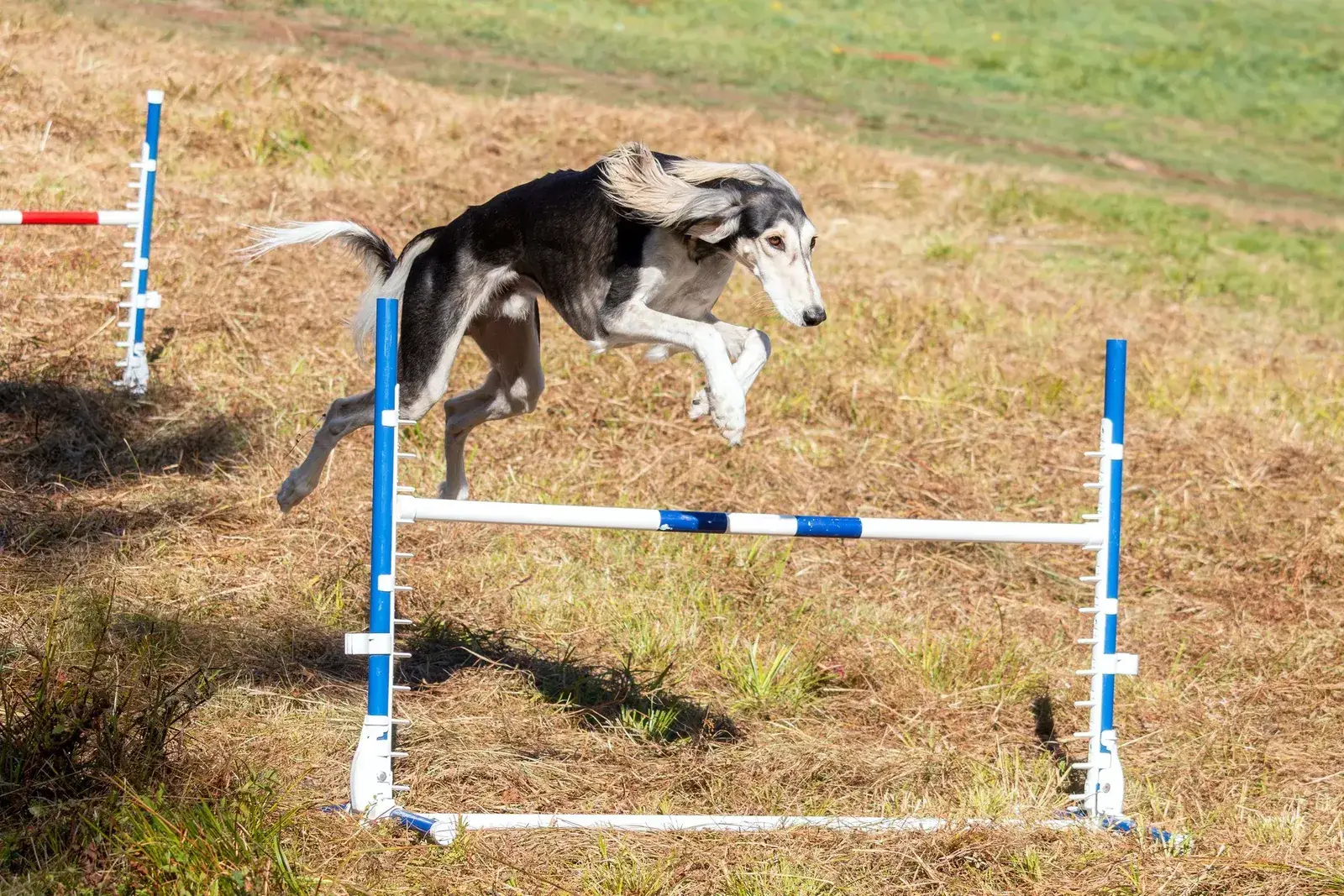
That is what advanced dog training is. It is not a new set of tricks. It is the same reward-based method applied slowly to harder places, longer times and bigger distractions, plus a few new skills such as formal heel, distance stays, impulse control, scent work and sports. This guide covers when a dog is ready, the 3 Ds, proofing, a safe path to off-lead recall, heel, stays out of sight, place, impulse control games, tricks, scent work, an overview of dog sports with age and health limits, and the Good Citizen schemes. It assumes you have worked through the dog training basics. If your dog still struggles with those, go back there first.
Is your dog ready?
Advanced work builds on a solid base. Your dog is ready when most of these are true:
 GuideHow to get an assistance dogHow to get a service dog or assistance dog in the USA, UK, Germany, France, Spain, Italy and the Netherlands: accredited schools, waits, owner-training and travel.
- It responds to its name in a quiet place nearly every time.
- Sit, down and a short stay work with a few treats in your pocket, not just in your hand.
- Recall works inside the house and in a garden.
- It can walk on a loose lead for a short stretch in a quiet street.
- It takes treats outdoors, which tells you it is relaxed enough to learn.
If a dog is anxious, over-excited or reactive on walks, work on that first, with a professional if needed. See the reactive dog guide. Pushing a worried dog into harder tasks is the quickest way to set it back.
 GuideMy Dog Is Lethargic: Causes and When to Call a VetDog tired, weak or not himself? Normal tiredness vs lethargy, emergency signs, common causes, what to note for the vet and what to avoid.GuideHow to get an assistance dogHow to get a service dog or assistance dog in the USA, UK, Germany, France, Spain, Italy and the Netherlands: accredited schools, waits, owner-training and travel.
Why aversive tools are not recommended
Advanced training is where some people reach for long-line jerks, e-collars or prong collars to "make it reliable". We do not recommend them, and the research backs that up.
 GuideService, therapy and emotional support dogs: what's the difference?Service dog vs emotional support dog vs therapy dog: the real differences, your rights in the USA and Europe, and why online certificates mean nothing.
- Vieira de Castro and colleagues (2020) studied 92 companion dogs and found that dogs trained in schools using aversive methods showed more stress behaviours, more time in tense or low states and higher cortisol after training than dogs from reward-based schools. They also scored more "pessimistic" in a cognitive test.
- China, Mills and Cooper (2020) trained dogs with poor recall with and without remote electronic collars. They found no evidence that the collars were needed, and that a positive reinforcement approach carried fewer welfare risks.
- Ziv (2017) reviewed the field and found punishment-based training linked with more fear, aggression and behaviour problems.
- Hiby, Rooney and Bradshaw (2004) found that dogs trained mostly with reward were more obedient than dogs trained with more punishment.
Many of these studies are observational, so they cannot prove cause alone, but the pattern is consistent. Reliability is built by rewarding the right choice often and making wrong choices hard to practise, not by adding pain or fear.
 GuideBorder Collie behaviour problems and how to train themBorder Collie behaviour and training: why they nip, chase, fixate and fear noise, what to do about each, and a weekly plan for owners.GuideService, therapy and emotional support dogs: what's the difference?Service dog vs emotional support dog vs therapy dog: the real differences, your rights in the USA and Europe, and why online certificates mean nothing.
The 3 Ds: duration, distance, distraction
Every behaviour has three dials.
 ArticleDog Breed Family Tree: How All Dog Breeds Are RelatedThe dog breed family tree from Ice Age wolves to 29 breed families.
- Duration. How long the dog holds the behaviour.
- Distance. How far away you are from the dog, or the dog from you.
- Distraction. How exciting the surroundings are.
The rule is simple: raise one dial at a time, and when you raise one, lower the others. If you add distance to a stay, shorten the time. If you move to a busier place, ask for the easy version of the behaviour. When the dog fails twice in a row, you have gone too far: drop back to an easy step, win, and try again later with a smaller change.
A useful scale for distraction, from easy to hard:
- Quiet room at home.
- Garden.
- Quiet street or empty field.
- Park with people far away.
- Park with other dogs at a distance.
- Near other dogs, children, bikes, wildlife or food.
Moving up a level means starting again with short, easy versions of the behaviour and a high-value treat.
- Quiet roomlevel 1At home
- Gardenlevel 2Still familiar
- Quiet street or empty fieldlevel 3New place, few distractions
- Park, people far awaylevel 4Distance from people
- Park, dogs at a distancelevel 5Other dogs in sight
- Near dogs, children, bikes, wildlife or foodlevel 6Hardest
 GuideHow to calm a reactive dogHow to calm a reactive dog: why dogs bark and lunge, what to do in the moment, a step-by-step training plan, what to avoid and when to get help.ArticleDog Breed Family Tree: How All Dog Breeds Are RelatedThe dog breed family tree from Ice Age wolves to 29 breed families.
Proofing behaviours
Proofing means testing a behaviour in new places and under new conditions until it works anywhere. Dogs do not generalise well. A dog that sits perfectly in the kitchen may seem to have forgotten the word outside. It has not forgotten: the cue just sounds different, and the situation looks different.
 GuideDog Breeds by Country: Which Nations Made the Most?Dog breeds by country: how many breeds each nation produced in the Dogs Atlas data, from the UK and France to Japan, plus national dogs and families.
How to proof:
- Practise each behaviour in at least 10 different places.
- Change your own position: stand, sit, face away, hold the lead in your other hand.
- Add a distraction at low level first (a person walking at a distance, a toy on the floor).
- Reward more often in new places, then fade gradually.
- Test with different people giving the cue.
- Use real-life rewards too: the open car door, the toy, permission to sniff, a run.
When a behaviour fails, do not repeat the cue louder. Move closer, lower the distraction, get the behaviour, and build up again.
 GuideMale vs Female Dogs: Differences, Myths and NeuteringMale vs female dogs: what research says about size, trainability and affection, marking, mounting, roaming, and the spay or neuter timing decision.GuideDog Breeds by Country: Which Nations Made the Most?Dog breeds by country: how many breeds each nation produced in the Dogs Atlas data, from the UK and France to Japan, plus national dogs and families.
Reliable off-lead recall
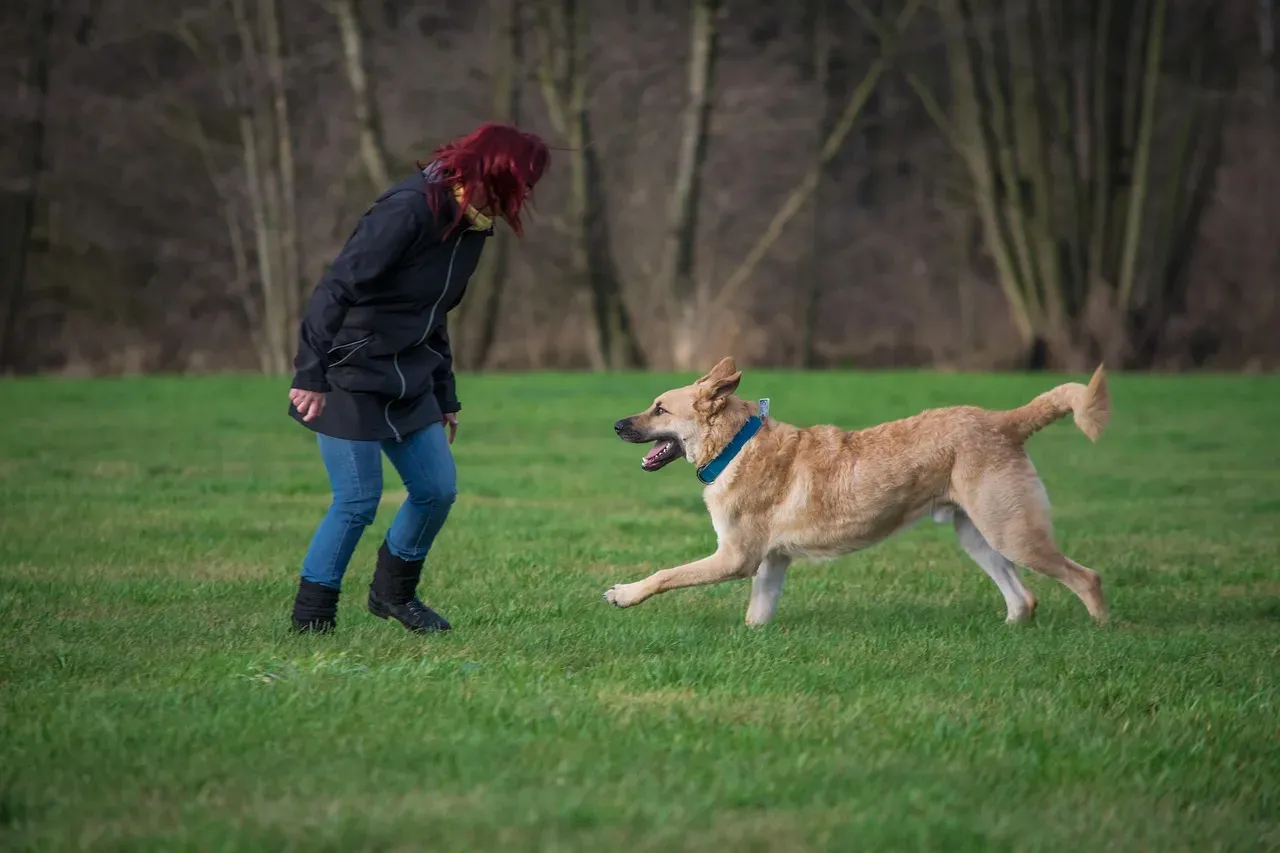
Off-lead recall is the most requested advanced skill and the one with the biggest safety stakes. A dog that is not safe to let off will not become safe by being let off. Use a long line until recall is proven.
 GuideHow to Groom a Dog: Brushing, Baths, Nails and CoatsHow to groom a dog at home: coat types, brushing, how often to bathe, cutting nails, ears, teeth, shedding, matting and whether to shave a double coat.
Before you start
- Check local rules on off-lead areas, and the dog's own nature. Some dogs, such as sighthounds and many terriers and hounds, have a strong chase drive, and may never be fully reliable around wildlife or livestock. A fenced field is the right place for them to run.
- Use a secure, well-fitted harness with the long line. Never attach the line to a collar that could hurt the neck if the dog hits the end at speed.
- Pick a place with no roads and few hazards.
Steps with a long line
- Start with the line of 5 metres in an empty, quiet field. Let the dog wander and sniff.
- When the dog is a few metres away and looking elsewhere, say its name and recall cue once, in a happy voice.
- When the dog turns toward you, praise. When it arrives, mark and give a handful of top-value treats, one at a time.
- Let the dog go back to sniffing or playing. Coming back should not end the fun every time.
- Practise 10 to 20 recalls per walk, using a mix of treats, toys and games.
- Move to a 10-metre line. Add easy distractions one at a time.
- When the dog comes every time, with distractions, over several weeks, try a dragging line in a fenced area.
- Move to off lead only in a safe, enclosed area, and for some dogs that is where the journey ends.
- 5 metre linestartEmpty, quiet field, dog sniffs
- Recall onceeach repName and cue, praise, top-value treats
- Release to playeach repComing back does not end the fun
- Practise10 to 20 per walkMix treats, toys and games
- 10 metre linenextAdd easy distractions one at a time
- Dragging lineseveral weeksFenced area, every recall works
- Off leadlastOnly in a safe, enclosed area
Habits that protect recall:
- Call only when you are fairly sure the dog will come. Use the line to help if it will not.
- Never scold a dog for returning, however late.
- Build a "check-in" habit: reward the dog whenever it looks at you or turns back by itself.
- Use a different, special whistle or word for emergencies, always followed by the best reward.
- Keep practising for the dog's whole life.
 Save
 GuideWhy does my dog do that? 15 common behavioursWhy does my dog lick me, stare, eat grass, spin, sigh or roll in smelly things? 15 everyday dog behaviours explained, with when to ask a vet.GuideHow to Groom a Dog: Brushing, Baths, Nails and CoatsHow to groom a dog at home: coat types, brushing, how often to bathe, cutting nails, ears, teeth, shedding, matting and whether to shave a double coat.
Formal heel
Heel means the dog walks close to your left (or right) side, in a set position, paying attention to you. It is different from loose lead walking: the dog's shoulder stays close to your leg, with its eyes or ears turned toward you. It is useful for crowded places, passing other dogs and in obedience and rally.
 GuideIs your dog suited to therapy work?How to make your dog a therapy dog: temperament checklist, first training steps, how Pet Partners, TDI and Pets As Therapy assess dogs, and welfare limits.
- Hold a treat at your hip on the side you want. Let the dog stand there.
- Take one step. If the dog stays in position, mark and reward at your leg.
- Build up to 3, 5, 10 steps.
- Add turns: a slow right turn, a left turn, a stop with the dog sitting at your side.
- Add the cue "heel" when the dog is in position.
- Fade the treat in your hand and reward from a pocket or a pouch.
- Practise in the garden, then on a quiet street, then near distractions.
Keep sessions to a few minutes, since heel takes concentration. Give the dog a release word and a sniffing break straight after, so heel remains something it chooses.
 GuideHow to adopt a dog from a shelter or rescueHow to adopt a dog from a shelter or rescue: the process, costs in general terms, choosing a dog, the first weeks and what if it does not work out.GuideIs your dog suited to therapy work?How to make your dog a therapy dog: temperament checklist, first training steps, how Pet Partners, TDI and Pets As Therapy assess dogs, and welfare limits.
Stays at a distance and out of sight
A dependable stay with you far away or out of view takes patience. Take it one D at a time.
 GuideMy Dog Keeps Licking His Paws: Causes and What HelpsDog licking paws all the time: allergies, parasites, injury, yeast and boredom.
- Duration first. Build a sit or down stay to 30 seconds, then 1 minute, with you standing next to the dog.
- Distance second. With the stay at 10 seconds, step back 1 metre, return and reward. Add distance in small steps up to 3, 5 and then 10 metres. Always return to reward while the dog is still in position, then release.
- Out of sight. Use a door or a wall. Step behind it for one second, return, reward. Build up to 5, 10, 30 seconds.
- Distraction last. Drop a toy, walk around the dog, have someone walk by.
If the dog breaks, go back two steps. Do not drift into repeating "stay" while moving away. Call the dog back to reward only if you teach a separate cue for that, and keep the release word as the only way to end the stay.
Do not push a worried dog. A dog that is anxious when you leave its sight needs help with separation, not more stay practice.
 GuideDogs in Legends and Fairy TalesDogs in folklore and fairy tales: Black Shuck, The Tinderbox, Saint Guinefort, Panhu, Greyfriars Bobby, Barry and Old Drum, with legend and history kept apart.GuideMy Dog Keeps Licking His Paws: Causes and What HelpsDog licking paws all the time: allergies, parasites, injury, yeast and boredom.
Place and boundaries
"Place" asks the dog to go to a mat or bed, lie down and stay until released. It is the advanced form of the settle, and gives you a calm way to deal with visitors, meals and the front door.
 GuideDog Pregnancy: Length, Signs and Week by WeekHow long dogs are pregnant, signs of pregnancy, a week by week table, giving birth, false pregnancy and when to call a vet.
- Start with the mat and the dog next to it. Reward any step toward the mat, then feet on the mat, then sitting, then lying down.
- Add the cue when the dog goes to the mat on its own.
- Move a step away from the mat. Cue "place" and reward when the dog goes there and lies down.
- Build distance up to several metres, and duration up to several minutes. Use calm treats given on the mat.
- Add distractions: a door knock, someone entering, a plate on the table.
- Teach a release word, so the dog knows when it may leave.
Boundaries work the same way: teach the dog that a doorway or a gate is a place where it stops and waits until you say it can go. Reward the pause at the door, then the sit, then the release.
 GuideHow to socialize a puppy or adult dogHow to socialize a puppy or adult dog: the sensitive period, a week-by-week puppy plan, rescue dogs, safe exposure before vaccines, mistakes and a checklist.GuideDog Pregnancy: Length, Signs and Week by WeekHow long dogs are pregnant, signs of pregnancy, a week by week table, giving birth, false pregnancy and when to call a vet.
Impulse control games
Impulse control is the skill of waiting for permission. It helps with every other behaviour. These games are short, and teach the dog that holding back makes good things happen.
 GuideDog laws by country: tax, insurance and licencesDog tax, compulsory liability insurance, licences, microchips and leash rules in Germany, Austria, Switzerland, Spain, Ireland, the UK, the US and more.
- Wait at the door. Hold the door a little open. If the dog moves forward, close it. When the dog waits, open a bit more. Release it to go through.
- Wait for the bowl. Lower the bowl slowly. If the dog moves, lift it. When the dog waits, lower it. Release it to eat.
- Leave it, advanced. Drop a treat on the floor. If the dog goes for it, cover it. When the dog looks at you, reward it from your hand. Then ask the dog to wait and release it to take the treat on the floor.
- It's your choice. Hold a treat in a closed fist. Open the hand when the dog looks away from the hand. Build up until the dog ignores an open palm.
- Stay for the toy. Throw a toy and ask for a stay. Release the dog to chase it.
Keep the games calm, and end with success. Frustration builds when the step is too hard.
 GuideDog training basicsDog training basics: how dogs learn, what you need, and step-by-step lessons for name, sit, down, stay, recall, loose lead walking, leave it, drop it and settle, plus a 4-week plan.GuideDog laws by country: tax, insurance and licencesDog tax, compulsory liability insurance, licences, microchips and leash rules in Germany, Austria, Switzerland, Spain, Ireland, the UK, the US and more.
Chaining and tricks
Tricks are play, but they teach the dog how to learn, and they strengthen your marker timing. A chain is two or more behaviours linked in a row, for example: fetch a toy, bring it to you, drop it into a basket.
 GuideMy Dog Is Coughing: Causes and When to See a VetDog coughing, honking or hacking? Emergency signs, kennel cough, collapsing trachea, heart cough, what to do at home and when to see a vet.
How to chain:
- Teach each part separately until it is solid on a cue.
- Link the last part first. Ask for the final behaviour and reward it.
- Add the part before it, so the dog performs both before the reward.
- Build backwards, one link at a time.
Ideas for beginners: spin, paw, bow, roll over, weave through your legs, back up, put toys in a box, close a door. Some tricks, such as "sit pretty", put strain on the back and hips of some dogs, so check with your vet if the dog is old, heavy or has joint problems.
 GuideLivestock guardian dogs: what they do and who they suitWhat livestock guardian dogs do, how they differ from herding dogs, 40 LGD breeds by country, the DNA evidence, and whether they make good pets.GuideMy Dog Is Coughing: Causes and When to See a VetDog coughing, honking or hacking? Emergency signs, kennel cough, collapsing trachea, heart cough, what to do at home and when to see a vet.
An introduction to scent work
Scent work, also called nosework, asks the dog to find a smell and tell you. It is a good activity for almost any dog: young, old, shy, energetic or with physical limits. It tires a dog mentally, builds confidence and uses a dog's strongest sense.
 GuideMy Dog Keeps Shaking His Head: Ear Infection GuideDog shaking head, scratching ears or smelly ears? Ear infection signs, causes, ear haematoma, emergency signs, what to do and what to avoid.
Beginner steps:
- Choose a scent. Many beginners start with a treat or a small piece of food, in a tin or box with holes.
- Put three or four boxes in a row. Put the treat in one. Let the dog sniff and mark the moment it finds the right box.
- Move the boxes around the room, then to different rooms.
- Hide the box higher or lower and under things.
- Add a cue such as "find it".
- When the dog finds the food reliably, introduce a target odour taught by a class or instructor.
Let the dog work at its own pace, off lead in a safe room or on a long line outdoors. Clubs and classes in many countries run nosework trials, for which a trainer can teach the target odour safely.
 GuideSmartest dog breeds: what the rankings measure and what they missCoren's smartest dog breeds list, what it measured, what newer dog cognition research says, three kinds of dog intelligence and why smart dogs need work.GuideMy Dog Keeps Shaking His Head: Ear Infection GuideDog shaking head, scratching ears or smelly ears? Ear infection signs, causes, ear haematoma, emergency signs, what to do and what to avoid.
Dog sports for beginners
Sports give a dog a job, and give you a team. Most clubs welcome beginners and mixed breeds.
 GuideMy Dog Is Panting a Lot: Normal or Worrying?Dog panting heavily? Normal vs worrying panting, heatstroke signs and cooling steps, pain, anxiety, Cushing's disease, and when to see a vet.
| Sport | What it is | Good to know |
|---|---|---|
| Obedience | Heel, stays, recall and retrieve in set patterns | Builds precision and focus |
| Rally | Follow a course of signs showing exercises | Friendlier than formal obedience, talking to the dog is allowed |
| Agility | Run a course of jumps, tunnels and weaves | High impact: age and fitness limits apply |
| Nosework | Find target odours in boxes, rooms or outdoors | Suits any age and most dogs |
| Canicross | Run with the dog attached to a waist belt | Needs a fit, healthy dog and you on soft ground; avoid hot weather |
| Herding instinct tests | Test a herding breed's instinct with livestock | Open to herding breeds, see the Border Collie guide |
| Tricks | Learn and show a list of tricks | Low impact, good for older dogs |
The American Kennel Club offers herding instinct tests for herding breeds, as a first step before herding trials.
Age and health limits
High-impact sports such as agility, jumping and canicross need a body that has finished growing. A puppy's growth plates, the soft areas of developing bone at the ends of the long bones, close at different ages depending on breed size and the bone: closure in large breeds can be well after the first birthday. Early neutering has been reported to delay growth plate closure (Zink, "Early spay-neuter considerations for the canine athlete", summarising earlier studies such as Salmeri and colleagues, 1991). Jumping and hard running before the plates close can risk injury.
Practical rules:
- Ask your vet when your dog is mature enough, since the answer depends on breed, size and the individual.
- Young puppies can do foundation work at ground level: body awareness, tunnels, low flat wobble boards, walking over poles on the ground, recall games.
- Delay jumps, repeated twisting and long runs on hard ground until the vet says the dog is physically mature. Many agility clubs set their own minimum ages for competition, so check with the club.
- Dogs with joint disease, a heavy build, a flat face, a long back or breathing trouble need a vet's advice before any high-impact sport.
- Warm up and cool down every time. Watch for lameness, stiffness after exercise or reluctance to jump.
- Avoid hot weather, particularly for flat-faced dogs.
Scent work, tricks and rally at a walking pace suit almost every dog, whatever age.
 GuideBest dog breeds for familiesBest dog breeds for families, small homes, allergies, first-time owners and seniors, ranked from our breed ratings, with honest limits and a table.GuideMy Dog Is Panting a Lot: Normal or Worrying?Dog panting heavily? Normal vs worrying panting, heatstroke signs and cooling steps, pain, anxiety, Cushing's disease, and when to see a vet.
Good Citizen schemes
Good Citizen schemes give you a clear goal and a certificate. They test everyday good manners rather than sport skills.
 GuideMy Dog's Eye Is Red: Causes and When to See a VetRed, weepy or squinting dog eye? Emergency signs, common causes like conjunctivitis and ulcers, what to do at home, what to avoid, and when to see a vet.
AKC Canine Good Citizen (United States)
The American Kennel Club Canine Good Citizen programme has a test of 10 items, all done on lead: accepting a friendly stranger, sitting politely for petting, appearance and grooming, walking on a loose lead, walking through a crowd, sit and down on cue and staying in place, coming when called, reacting to another dog, reacting to distractions, and supervised separation. The dog does not need to be registered, and any breed or age can take the test. A dog must pass all items.
The Kennel Club Good Citizen Dog Scheme (United Kingdom)
The Kennel Club's Good Citizen Dog Training Scheme was set up in 1992 and has four levels: Puppy Foundation, Bronze, Silver and Gold. It is open to all dogs, registered or not. Puppy Foundation can start from about 8 weeks of age, runs over at least four weeks and is assessed by the class instructor. Bronze, Silver and Gold end in a short test with an approved examiner, and you do not have to attend a course first. Gold is the top level and asks for responses in harder situations, such as off lead and with distractions. Only Kennel Club associated clubs can run the awards.
Both schemes suit a dog that is good at the basics, and the work needed is a good guide to what to practise. Details and rules change, so check with your national kennel club or a local trainer.
If your dog has a gentle, steady nature, you might also look at therapy work, which often asks for a Good Citizen certificate.
 GuideWinter Care for Dogs: Cold, Paws, Antifreeze and IceWinter care for dogs: how cold is too cold, coats, salt and antifreeze, hypothermia, frostbite, frozen ponds, dark walks and holiday hazards.GuideMy Dog's Eye Is Red: Causes and When to See a VetRed, weepy or squinting dog eye? Emergency signs, common causes like conjunctivitis and ulcers, what to do at home, what to avoid, and when to see a vet.
Keeping it fun and keeping the dog well
Advanced training asks more of a dog, so welfare matters more.
 GuideDogs in science and spaceSpace dogs Laika, Belka and Strelka, Pavlov's dogs, Snuppy the clone, the dog genome and scent detection: what dogs did for science, and what it cost them.
- Keep sessions short. Five to ten minutes of focused work, then play.
- End on a win. A last easy success sends the dog away happy.
- Watch stress signals. Yawning, lip licking, turning away, sniffing the ground, a tucked tail or a stiff body mean the task is too hard or the dog is tired. Take a break or make it easier.
- Mix work and play. Tug, fetch and sniffing walks are part of the plan.
- Rest days. Dogs need time to recover, physically and mentally.
- Be flexible. If the dog is not enjoying a sport, change sport. Many dogs find their favourite after trying two or three.
- Check health. Pain makes a dog slow, grumpy or resistant. Before blaming training, check with the vet.
- Do not compare. A dog's pace is its own.
 GuideDog Clothes: When Dogs Need Coats, and a Short History of Dog FashionDo dogs need coats in winter? When clothes help, when costumes stress a dog, safe fit, reflective gear, and a short history of dog fashion and dog art.GuideDogs in science and spaceSpace dogs Laika, Belka and Strelka, Pavlov's dogs, Snuppy the clone, the dog genome and scent detection: what dogs did for science, and what it cost them.
Frequently asked questions
When can I let my dog off the lead?
When recall is reliable in many places on a long line, with distractions, over weeks, and when the area is safe and legal for off-lead dogs. For some dogs with a strong chase drive, a long line or a fenced field is the safe option for life.
What does the heel command mean?
Heel means walking close to your side in a set position with attention on you. It is stricter than loose lead walking, in which the dog may walk a little further out as long as the lead is slack.
What are the 3 Ds of dog training?
Duration, distance and distraction. Raise one at a time, and drop the others when you do.
What does proofing mean?
Proofing is practising a behaviour in many places and situations until it works anywhere, not just at home.
How do I stop my dog breaking a stay?
You have probably asked for too much. Go back a step to where the dog succeeds, reward often there and raise only one D at a time. Always return to the dog to reward, and use a clear release word.
What is a good first dog sport?
Scent work, rally and tricks suit most dogs and owners, since they are low impact. Agility and canicross need a mature, fit dog.
At what age can a dog start agility?
Foundation work on the ground can start young. Jumping and full-height courses should wait until the vet confirms the dog is physically mature, and clubs set their own minimum ages. Growth finishes at different times depending on breed and size.
Is the Canine Good Citizen test worth taking?
It is a clear, practical goal that rewards good manners, and it can help with housing, insurance and therapy work in some places. Check what it offers where you live.
Can older dogs learn advanced skills?
Yes. Scent work, tricks and place suit older dogs very well. Choose low-impact activities and ask your vet about limits.
Read next
 Family storyContinental HerderRead the family's story: origins, members, DNA
 Family storyUK RuralRead the family's story: origins, members, DNA
 Family storyAmerican TerrierRead the family's story: origins, members, DNA
Sources (8)
- China, L., Mills, D. S., Cooper, J. J. (2020). Efficacy of dog training with and without remote electronic collars vs. a focus on positive reinforcement. Frontiers in Veterinary Science.
- Hiby, E. F., Rooney, N. J., Bradshaw, J. W. S. (2004). Dog training methods: their use, effectiveness and interaction with behaviour and welfare. Animal Welfare.
- Vieira de Castro, A. C., Fuchs, D., Morello, G. M., Pastur, S., de Sousa, L., Olsson, I. A. S. (2020). Does training method matter? Evidence for the negative impact of aversive-based methods on companion dog welfare. PLoS ONE.
- Ziv, G. (2017). The effects of using aversive training methods in dogs: a review. Journal of Veterinary Behavior.
- Zink, C. Early spay-neuter considerations for the canine athlete (summarising Salmeri et al., 1991).
- American Kennel Club. Canine Good Citizen test items.
- American Kennel Club. Herding: getting started and the herding instinct test.
- The Kennel Club (UK). Good Citizen Dog Training Scheme: information for dog owners.