An ear infection is the most common reason. Many ear problems are easy to treat when caught early. Some, like a swollen ear flap or a head tilt with poor balance, need quick care. This guide covers the emergency signs, the usual causes, what you can do at home and what to avoid. It is general information. A vet who looks in your dog's ears decides what is wrong.
Is this an emergency?
Most ear infections need a vet visit but not a night dash. Go to a vet or emergency clinic now, and phone ahead, if you see any of these:
 GuideMy Dog Is Coughing: Causes and When to See a VetDog coughing, honking or hacking? Emergency signs, kennel cough, collapsing trachea, heart cough, what to do at home and when to see a vet.
- Head tilt, loss of balance, stumbling, walking in circles or flickering eye movements. PDSA says signs of a middle or inner ear infection, such as a head tilt or loss of balance, are more serious and need a same-day appointment.
- Sudden severe pain. Your dog cries out, will not let anyone near the head or keeps pressing the head against a wall.
- Repeated vomiting or being unable to stand with the head tilt.
- An uncontrollable head tremor, which PDSA says to report to a vet straight away.
- A suddenly swollen, hot ear flap. This may be an ear haematoma, a blood-filled swelling. It needs a vet, not home care, though it is rarely an overnight emergency.
- Facial droop, a drooping eyelid or lip, or a dog that cannot eat or drink.
- Something stuck in the ear, such as a grass seed, with sudden head shaking and pain, especially after a walk in long grass.
If you are unsure, phone the clinic. A short call costs nothing.
 GuideMy Dog Is Panting a Lot: Normal or Worrying?Dog panting heavily? Normal vs worrying panting, heatstroke signs and cooling steps, pain, anxiety, Cushing's disease, and when to see a vet.GuideMy Dog Is Coughing: Causes and When to See a VetDog coughing, honking or hacking? Emergency signs, kennel cough, collapsing trachea, heart cough, what to do at home and when to see a vet.
Signs of an ear infection
Merck Veterinary Manual says otitis externa, inflammation of the lining of the ear canal, is the most common ear canal disorder in dogs. PDSA lists these signs:
 GuideMy Dog Stepped on a Bee: What to DoDog stung by a bee or wasp: emergency signs of an allergic reaction, safe first aid, what not to give, and when to see a vet.
- Head shaking, often again and again.
- Scratching the ear or rubbing the head and face along the floor.
- Smell. A sweet, musty or sour smell from the ear.
- Discharge. Waxy, dark, yellow or pus-like.
- Redness, swelling and heat in the ear flap or canal.
- Pain. The dog yelps when you touch the ear or pulls away.
- Scabs and crusts on the ear or the side of the face.
- A swollen ear flap from a haematoma.
One ear or both can be affected. Signs can be sudden or come and go over weeks. Deeper infections, in the middle or inner ear, may add a head tilt, loss of balance and vomiting.
 GuideMy Dog's Eye Is Red: Causes and When to See a VetRed, weepy or squinting dog eye? Emergency signs, common causes like conjunctivitis and ulcers, what to do at home, what to avoid, and when to see a vet.GuideMy Dog Stepped on a Bee: What to DoDog stung by a bee or wasp: emergency signs of an allergic reaction, safe first aid, what not to give, and when to see a vet.
Causes
PDSA explains that bacteria and yeast live in healthy ears, and trouble starts when something lets them overgrow. Most ear infections have an underlying cause, so treating the infection alone often brings it back. Merck makes the same point: unless every cause is found and treated, the problem often returns.
 GuideMy Dog Has Diarrhea: What Should I Do?Dog diarrhea: emergency signs, common causes, safe home care, what not to give, and when to see a vet.
- Allergies. Allergic skin disease, from pollen, dust or food, is one of the most common underlying causes. Ears are often one of the first places it shows. See dog scratching and dog licking paws.
- Ear mites. PDSA says these are common in puppies. Dark, crumbly wax and fierce itching are typical.
- Trapped water. After swimming or bathing, or in dogs that love water.
- Ear shape. Merck says the shape of the ear flap or canal can make some dogs more likely to get otitis externa. Floppy ears and hairy canals trap warmth and moisture.
- Something in the ear. A grass seed, plant material or a stuck lump of wax.
- Growths and polyps. More often seen in one ear and in older dogs.
- Too much cleaning or plucking. PDSA lists excessive cleaning and ear plucking as causes, because they irritate the canal.
Breeds with more ear trouble
Some of the atlas's breed articles give numbers from named studies. About 1 in 9 Beagles had an ear infection in VetCompass data (2024). About 1 in 8 Bulldogs (O'Neill 2019), about 1 in 13 Pugs (O'Neill 2016) and about 1 in 6 French Bulldogs (O'Neill 2018) have ear problems recorded. In the large McGreevy 2018 study, ear infections were the most common disorder in Labradors. In these dogs, regular ear checks are worth building into the week.
Ear haematoma from head shaking
PDSA describes an aural haematoma as a blood-filled swelling of the ear flap. Most are caused by head shaking or ear scratching, from an ear infection, ear mites or itchy skin. VCA gives a similar picture, naming infection, allergy and bite wounds as common triggers.
 GuideWhy Does My Dog Eat Grass? What Studies SayDog eating grass? What a large owner survey found, why dogs do it, when it is normal, when to worry (vomiting, lawn chemicals, toxic plants), what to do.
The flap swells suddenly, becomes puffy and droopy, and may feel warm. PDSA says some small, painless haematomas can heal on their own, but most are painful and need to be drained, and surgery may be advised if the swelling returns. A swelling left alone can leave a thickened, crinkly ear flap. The vet also treats the cause, such as an infection, or the shaking continues.
Do not try to drain it at home. PDSA warns this can cause injury or infection.
 GuideDog Pregnancy: Length, Signs and Week by WeekHow long dogs are pregnant, signs of pregnancy, a week by week table, giving birth, false pregnancy and when to call a vet.GuideWhy Does My Dog Eat Grass? What Studies SayDog eating grass? What a large owner survey found, why dogs do it, when it is normal, when to worry (vomiting, lawn chemicals, toxic plants), what to do.
What you can do at home
While you arrange a vet visit, for a dog that is bright, eating and not in severe pain:
 GuideDog Is Not Eating or Drinking: What to DoDog not eating or drinking water? Why not drinking is more urgent, causes, puppies and small dogs, home care, and when to call a vet.
- Look, and sniff. Check the ear flap and the opening of the canal for redness, discharge and smell. Compare both ears. Do not poke inside.
- Keep him from scratching. Trim nails. A soft cone may help if he is making the ear worse. Ask your vet.
- Keep ears dry. Dry the outer ear gently with a towel after swimming or a bath.
- Take a photo or a short video of the head shaking and any discharge. It helps your vet.
- Keep a short diary of other signs: itchy paws or skin, diarrhoea, season or time of year. Ear infections often come with other allergy signs.
- Go to the vet the same day or next day for a dog in pain, and within a few days for a mild case.
 GuideMy Dog Keeps Licking His Paws: Causes and What HelpsDog licking paws all the time: allergies, parasites, injury, yeast and boredom.GuideDog Is Not Eating or Drinking: What to DoDog not eating or drinking water? Why not drinking is more urgent, causes, puppies and small dogs, home care, and when to call a vet.
What not to do
- Do not push anything deep into the ear. No cotton buds, tissues or fingers into the canal. Anything pushed in can pack debris down, scratch the lining or damage the eardrum.
- Do not pour in drops, oils or home remedies. Vinegar, hydrogen peroxide, alcohol, oils and tea tree can sting and irritate the canal. If the eardrum is damaged, which you cannot see at home, some products can reach the inner ear.
- Do not use leftover ear drops from a past illness or a person's medicine. The cause may be different, and some drops are harmful if the eardrum is damaged.
- Do not clean or pluck the ears too often. PDSA says excess cleaning and plucking can set off infections. Ask your vet how often to clean and which cleaner is right.
- Do not wait for weeks. Ear infections can move deeper, and an untreated, painful ear is a sore dog.
- Do not stop treatment early because the ear looks better. Finish the course, and go to any recheck.
 GuideMy Dog Injured His Paw: First Aid and When to See a VetDog paw injury: cut pads, torn nails, grass seeds, hot pavement burns and limping.
 GuideMy Dog Is Vomiting: Causes and What to DoDog throwing up? Vomiting vs regurgitation, emergency signs like bloat, common causes, safe home care, what not to do, and when to see a vet.GuideMy Dog Injured His Paw: First Aid and When to See a VetDog paw injury: cut pads, torn nails, grass seeds, hot pavement burns and limping.
When to see a vet
Book a visit if:
 GuideDog Runny Nose: Causes, Discharge Colours and Vet SignsDog nose leaking or sneezing? Clear vs coloured discharge, nosebleed emergencies, causes like allergies and grass seeds, home care, and when to see a vet.
- Your dog shakes his head or scratches his ears for more than a day or two.
- You see smell, discharge, redness or swelling.
- One ear is held low or is painful to touch.
- Ear problems come back again and again. This points to an underlying cause such as allergy.
- Your dog has other signs of allergy such as itchy paws and skin.
- You are unsure whether the swelling is a haematoma.
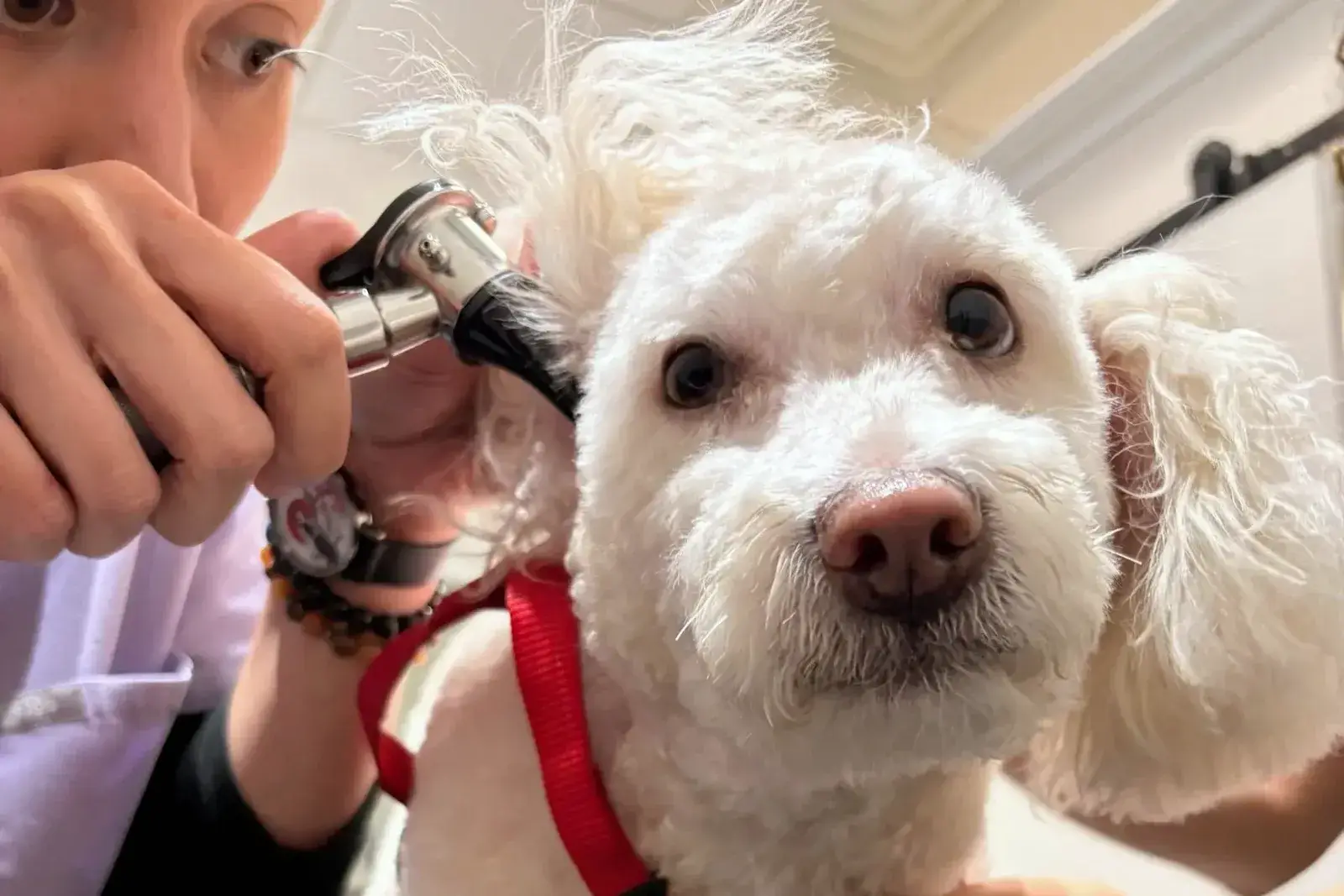
A vet looks in the ear with an otoscope, a small scope, and often takes a sample of the discharge to look at under a microscope (Merck). That shows whether bacteria, yeast or mites are involved, and whether the eardrum is intact. Treatment depends on the findings.
For a dog that is itchy all over, see dog scratching. If a dog with an ear problem is also off his food, see dog not eating or drinking. For other odd behaviour, see why does my dog.
 GuideMy Dog Is Lethargic: Causes and When to Call a VetDog tired, weak or not himself? Normal tiredness vs lethargy, emergency signs, common causes, what to note for the vet and what to avoid.GuideDog Runny Nose: Causes, Discharge Colours and Vet SignsDog nose leaking or sneezing? Clear vs coloured discharge, nosebleed emergencies, causes like allergies and grass seeds, home care, and when to see a vet.
FAQ
Why does my dog keep shaking his head?
The most common reason is an ear infection. Other reasons include ear mites, something stuck in the ear, allergies, a haematoma or an injury. A vet can tell by looking in the ear.
How do I know if my dog has an ear infection?
PDSA lists head shaking, scratching, redness, swelling, heat, a smelly or pus-like discharge and pain. A vet confirms it.
Why do my dog's ears smell?
A smell usually means yeast or bacteria are growing. A vet should check the ear and find the cause.
Can an ear infection go away on its own?
Mild irritation might settle. A true infection rarely does, and it can move deeper. See a vet.
Can I clean my dog's ears at home?
Ask your vet first. PDSA lists too much cleaning as a cause of infections. Never push anything deep into the canal.
Can I use hydrogen peroxide, vinegar or oil in my dog's ear?
No. They can irritate the ear and, if the eardrum is damaged, harm the inner ear.
What is an ear haematoma?
A blood-filled swelling in the ear flap, usually after head shaking or scratching. See a vet.
Is an ear infection an emergency?
Usually not, but a head tilt with loss of balance, severe pain or repeated vomiting needs a same-day visit.
Why does my dog's ear infection keep coming back?
Merck says the condition often returns unless every underlying cause is treated. Allergy is a common cause.
Do floppy ears cause infections?
Ear shape can make some dogs more likely to get otitis externa, according to Merck. Many floppy-eared dogs never have problems, and regular checks help.
Read next
 Family storyModern CrossbreedRead the family's story: origins, members, DNA
 Family storyWest Eurasian dogsRead the family's story: origins, members, DNA
 Family storyEuropean dogsRead the family's story: origins, members, DNA
Sources (6)
- PDSA, "Ear infections in dogs" pet health hub (signs, causes, underlying problems, over-cleaning and plucking, deeper infections).
- PDSA, "Itchy ears and head shaking in dogs" pet health hub (causes of head shaking, head tremor advice).
- PDSA, "Aural haematoma (swollen ear flap) in a dog" (cause, treatment, why not to drain at home).
- PDSA, "Vestibular Disease in dogs" (head tilt, loss of balance and when to see a vet).
- Merck Veterinary Manual, pet owner version, "Ear Infections and Otitis Externa in Dogs" (most common ear canal disorder, causes, ear shape, recurrence, otoscope exam).
- VCA Hospitals, "Aural Hematoma in Dogs" (triggers such as infection, allergy and bite wounds).