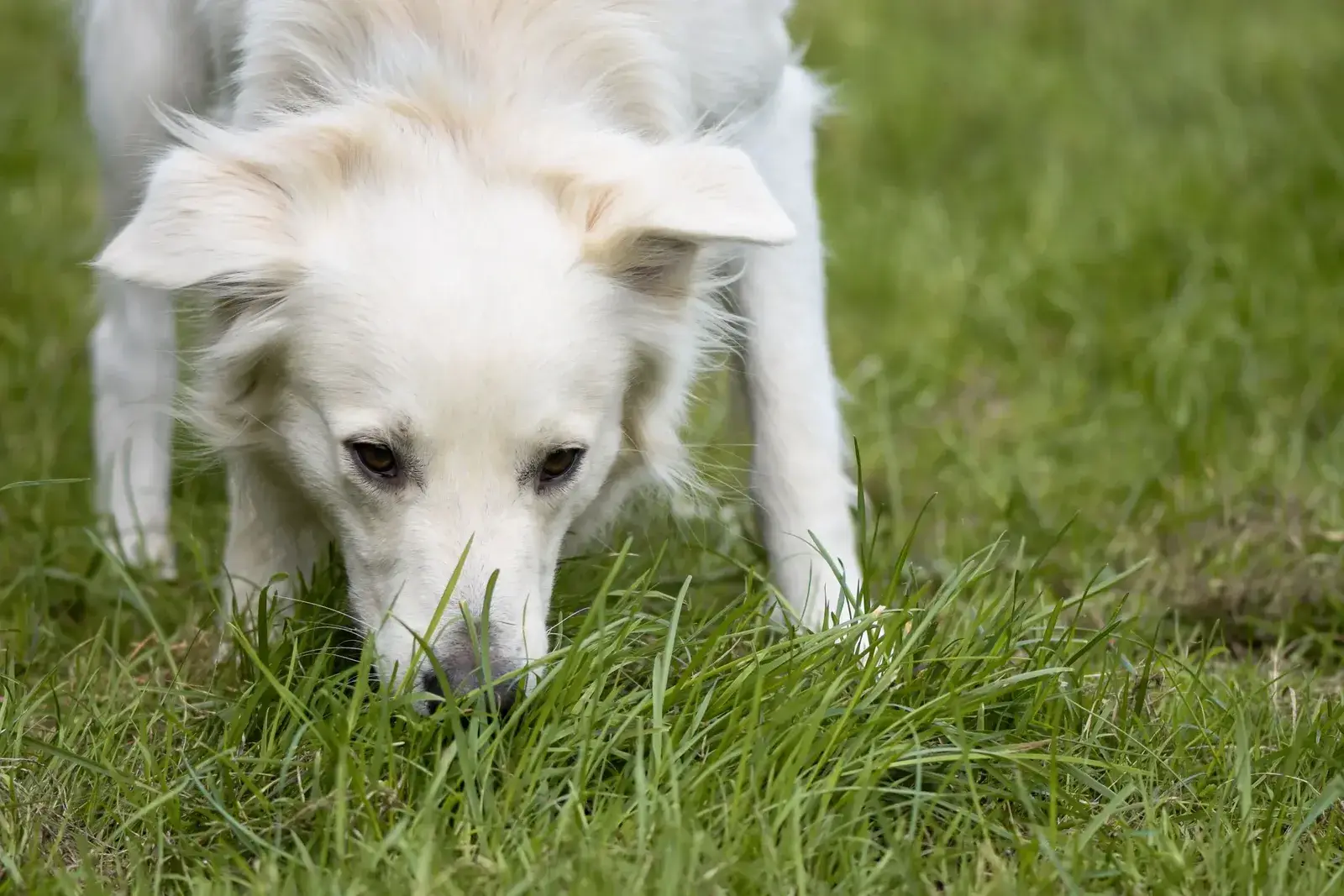
In most cases nothing is. Grass eating is common, often harmless and not well understood, even by researchers. This guide covers what studies found, when it is normal, when to worry (repeated vomiting, treated lawns, poisonous plants) and what to do about it. It is general information. A vet who examines your dog decides what is wrong.
Is this an emergency?
Go to a vet or emergency clinic now, and phone ahead, if you see any of these:
 GuideMy Dog Is Panting a Lot: Normal or Worrying?Dog panting heavily? Normal vs worrying panting, heatstroke signs and cooling steps, pain, anxiety, Cushing's disease, and when to see a vet.
- Your dog ate a known toxic plant, such as a lily, sago palm, oleander, yew or autumn crocus, or a plant you cannot name. Take a sample or photo with you.
- Your dog ate grass or plants treated with chemicals, such as weedkiller, slug pellets, rat poison, fertiliser or moss killer, and is drooling, shaking, vomiting, weak or breathing oddly.
- Repeated vomiting, vomiting blood or a dog that cannot keep water down. See dog vomiting.
- A swollen, hard belly, retching with nothing coming up, or a restless dog that cannot settle. This can be bloat.
- Choking, gagging or a dog that keeps swallowing, which can mean a blade or seed is stuck in the throat.
- Collapse, seizures, pale gums or sudden weakness.
- Black, tarry or bloody stool after grazing.
If you are unsure, phone the clinic. They would rather answer a call than see a dog that waited too long.
 GuideMy Dog Has Bad Breath: Causes and What to DoDog breath smells? Gum disease is the usual cause, but sweet or ammonia smells can mean illness.GuideMy Dog Is Panting a Lot: Normal or Worrying?Dog panting heavily? Normal vs worrying panting, heatstroke signs and cooling steps, pain, anxiety, Cushing's disease, and when to see a vet.
What studies say
The best-known work is a 2008 owner survey by Sueda, Hart and Cliff, "Characterisation of plant eating in dogs", published in Applied Animal Behaviour Science. It used a small survey of owners at a veterinary teaching hospital and a much larger internet survey, with 1,571 of 3,340 returned surveys meeting its entry rules. The main points:
 GuideMy Dog Injured His Paw: First Aid and When to See a VetDog paw injury: cut pads, torn nails, grass seeds, hot pavement burns and limping.
- Plant eating is common. In the hospital group, 79 per cent of the 47 owners said their dog had eaten grass or other plants, and grass was the plant eaten most often.
- Dogs were rarely ill first. Only about 9 per cent were reported to frequently look unwell before eating plants.
- Vomiting was not the usual result. Only about 22 per cent were reported to frequently vomit afterwards.
- Younger dogs did it more. Younger age went with more frequent plant eating and with a lower chance of regularly vomiting afterwards.
The authors concluded that this does not fit the popular idea that dogs eat grass to make themselves sick. Note the limits. These are owner reports, not vet exams, and they cannot tell us why a dog grazes. The Kennel Club also gives the usual guidance: if you are worried about your dog's health, contact your vet.
 GuideMy Dog Stepped on a Bee: What to DoDog stung by a bee or wasp: emergency signs of an allergic reaction, safe first aid, what not to give, and when to see a vet.GuideMy Dog Injured His Paw: First Aid and When to See a VetDog paw injury: cut pads, torn nails, grass seeds, hot pavement burns and limping.
Why dogs eat grass
Nobody knows for sure. These are the common ideas, with no single one proven:
 GuideMy Dog's Eye Is Red: Causes and When to See a VetRed, weepy or squinting dog eye? Emergency signs, common causes like conjunctivitis and ulcers, what to do at home, what to avoid, and when to see a vet.
- Taste and texture. Some dogs seem to enjoy it, especially fresh young grass.
- Fibre. A dog may be looking for roughage, though most dogs on a complete diet get enough.
- Habit and boredom. Dogs that are under-exercised or alone often graze, much as people nibble when bored.
- Instinct. Dogs are scavengers and eat plants, a trait that has stayed with them.
- Upset stomach. Some dogs seem to graze when nauseous and then vomit. The survey suggests this is not the main reason, but it may apply to some.
- Attention. If grazing gets a reaction, some dogs repeat it.
 GuideMy Dog Is Coughing: Causes and When to See a VetDog coughing, honking or hacking? Emergency signs, kennel cough, collapsing trachea, heart cough, what to do at home and when to see a vet.GuideMy Dog's Eye Is Red: Causes and When to See a VetRed, weepy or squinting dog eye? Emergency signs, common causes like conjunctivitis and ulcers, what to do at home, what to avoid, and when to see a vet.
When it is normal
Occasional grass eating is usually fine when your dog:
 GuideDog Runny Nose: Causes, Discharge Colours and Vet SignsDog nose leaking or sneezing? Clear vs coloured discharge, nosebleed emergencies, causes like allergies and grass seeds, home care, and when to see a vet.
- Is bright, eating normally and passing normal stools.
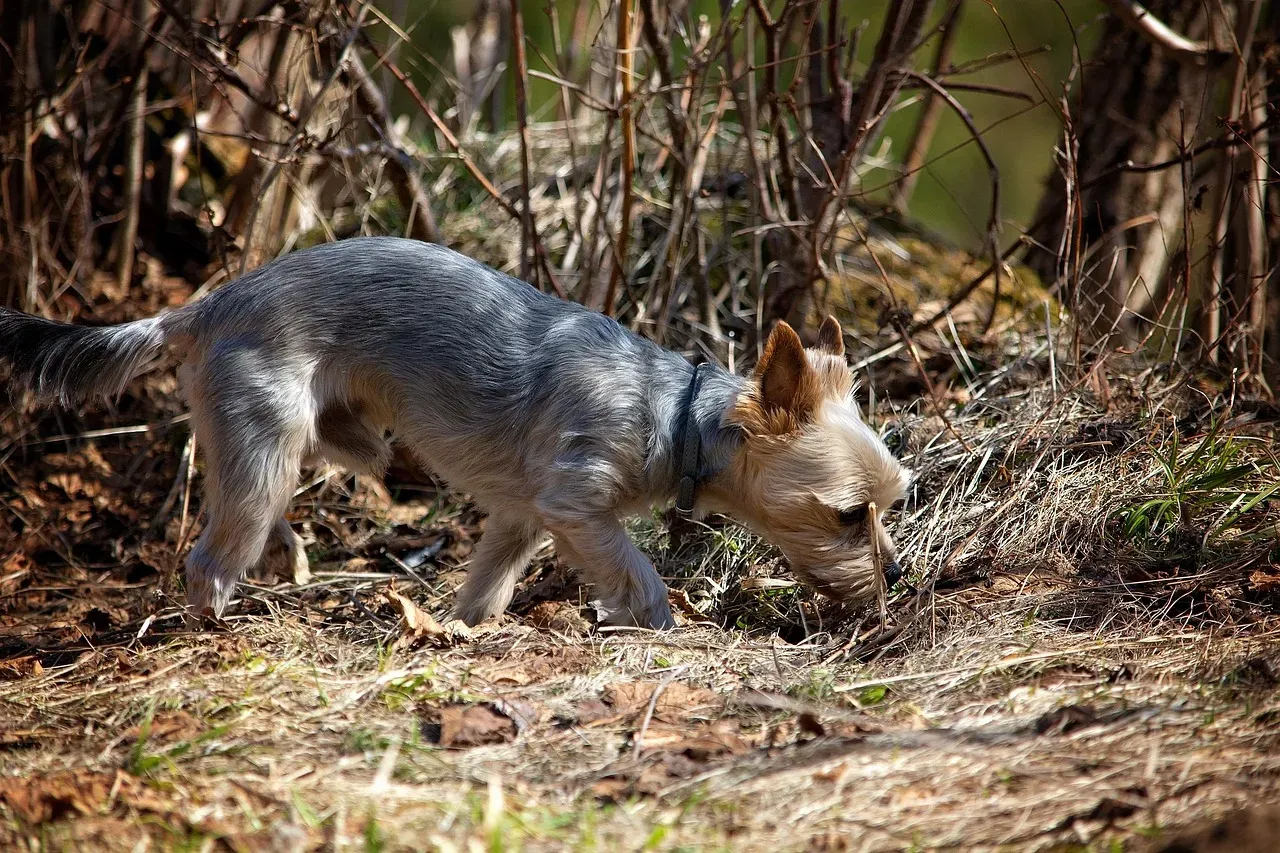
- Nibbles calmly on a walk or in the garden.
- Does not vomit, or vomits once after a big mouthful and then carries on as normal.
- Grazes on grass that you know is untreated.
Puppies and young dogs graze more. This is common and often fades with age.
 GuideMy Dog Has Diarrhea: What Should I Do?Dog diarrhea: emergency signs, common causes, safe home care, what not to give, and when to see a vet.GuideDog Runny Nose: Causes, Discharge Colours and Vet SignsDog nose leaking or sneezing? Clear vs coloured discharge, nosebleed emergencies, causes like allergies and grass seeds, home care, and when to see a vet.
When to worry
- Frequent or frantic grazing, especially if it is new. A dog that gulps grass fast and looks uneasy may be nauseous.
- Vomiting afterwards more than once, or on several days. See dog vomiting and dog diarrhoea.
- Lethargy, no appetite or weight loss. See dog not eating or drinking.
- Grazing on treated lawns or roadside verges. Lawn chemicals, slug pellets and weedkillers can poison dogs.
- Grazing on unknown or toxic plants. Some garden and wild plants are poisonous. See can dogs eat for common foods and plants to watch.
- Grass and other things. Dogs that eat soil, stones, socks or other objects need a vet check.
- Parasites. Grass can carry worm eggs from other dogs' droppings. Keep worming up to date.
- Grass seeds. Seeds can lodge in the throat, nose or paws. See dog paw injury and dog runny nose.
 GuideMy Dog Keeps Scratching: Causes and When to See a VetDog scratching non-stop? Emergency signs, fleas, allergies, mites, skin infections, food allergy, what to do at home and when to see a vet.
 Save
 GuideMy Dog Keeps Shaking His Head: Ear Infection GuideDog shaking head, scratching ears or smelly ears? Ear infection signs, causes, ear haematoma, emergency signs, what to do and what to avoid.GuideMy Dog Keeps Scratching: Causes and When to See a VetDog scratching non-stop? Emergency signs, fleas, allergies, mites, skin infections, food allergy, what to do at home and when to see a vet.
What you can do
- Watch and note. How often, how fast, and what happens afterwards? A short note helps your vet.
- Check what is on the grass. Avoid lawns and verges that may be treated, and keep dogs away from fresh spray or pellets until they are fully dry or safe.
- Know your plants. Look up garden plants and remove anything that is poisonous to dogs.
- Add exercise and play. A bored dog grazes more. Sniffing walks, chews and puzzle feeders can help.
- Offer safe greens. Some vets suggest a few pieces of dog-safe vegetables. Check with your vet or see can dogs eat.
- Review the diet. A complete diet at the right amount helps. Ask your vet if you wonder about fibre.
- Keep worming and flea prevention up to date. See ticks and fleas.
- Redirect gently. Call your dog away and reward it for coming. Do not shout.
 GuideMy Dog Is Vomiting: Causes and What to DoDog throwing up? Vomiting vs regurgitation, emergency signs like bloat, common causes, safe home care, what not to do, and when to see a vet.
 GuideMy Dog Is Lethargic: Causes and When to Call a VetDog tired, weak or not himself? Normal tiredness vs lethargy, emergency signs, common causes, what to note for the vet and what to avoid.GuideMy Dog Is Vomiting: Causes and What to DoDog throwing up? Vomiting vs regurgitation, emergency signs like bloat, common causes, safe home care, what not to do, and when to see a vet.
What not to do
- Do not make your dog vomit. Never try to induce vomiting at home unless a vet tells you to.
- Do not give human medicines for tummy troubles. Ibuprofen, paracetamol (acetaminophen), aspirin and naproxen can seriously harm dogs.
- Do not punish grazing. It does not help and can add stress.
- Do not let your dog graze on treated grass.
- Do not ignore frequent vomiting just because "dogs eat grass".
- Do not assume every plant is safe because it is green.
 GuideWinter Care for Dogs: Cold, Paws, Antifreeze and IceWinter care for dogs: how cold is too cold, coats, salt and antifreeze, hypothermia, frostbite, frozen ponds, dark walks and holiday hazards.
 GuideMy Dog Keeps Licking His Paws: Causes and What HelpsDog licking paws all the time: allergies, parasites, injury, yeast and boredom.GuideWinter Care for Dogs: Cold, Paws, Antifreeze and IceWinter care for dogs: how cold is too cold, coats, salt and antifreeze, hypothermia, frostbite, frozen ponds, dark walks and holiday hazards.
When to see a vet
Book a visit, ideally the same day, when:
 GuideDogs of Japan: the native breeds and their storiesJapanese dog breeds explained: the six Nihon Ken, the Chin, Tosa, Japanese Spitz and Terrier, Hachiko, wartime near-extinction, DNA and who they suit.
- Grass eating is new, frequent or frantic, and your dog seems unwell.
- Vomiting happens more than once after grazing, or on several days.
- Your dog is off its food, lethargic, losing weight or has diarrhoea.
- You know or suspect your dog ate chemicals or a poisonous plant. Do not wait for signs.
- Your dog also eats other objects such as soil, stones or fabric.
- Stool has blood in it or is black.
- Your dog gags or coughs after grazing.
A vet will ask what your dog eats and does, examine the mouth and belly and may suggest tests for stomach problems, parasites or other causes. Bring a note of how often your dog grazes and what happens next.
 GuideDog Is Not Eating or Drinking: What to DoDog not eating or drinking water? Why not drinking is more urgent, causes, puppies and small dogs, home care, and when to call a vet.GuideDogs of Japan: the native breeds and their storiesJapanese dog breeds explained: the six Nihon Ken, the Chin, Tosa, Japanese Spitz and Terrier, Hachiko, wartime near-extinction, DNA and who they suit.
FAQ
Why does my dog eat grass?
Nobody knows for sure. Taste, boredom, habit and instinct are common ideas. The 2008 survey found most grass eaters did not look ill beforehand and did not vomit afterwards.
Is it bad for dogs to eat grass?
Not usually. Grass itself is mostly harmless. The risks are chemicals, poisonous plants, parasites and grass seeds.
Does my dog eat grass because he is sick?
Rarely. In the Sueda, Hart and Cliff survey, only about 9 per cent of dogs often looked ill beforehand.
Why does my dog eat grass and vomit?
In that survey about 22 per cent often vomited afterwards. Occasional vomiting may be harmless, but repeated vomiting needs a vet. See dog vomiting.
Should I stop my dog eating grass?
Not if it is occasional and the grass is clean. Stop it if the grass may be treated, if there are toxic plants, or if it is frantic or followed by illness.
Why does my puppy eat grass?
Puppies explore with their mouths, and the survey found younger dogs graze more. Keep them away from treated lawns and plants, and watch for repeated vomiting.
Why does my dog eat grass in the morning?
Fresh dewy grass tastes good to some dogs. If it comes with drooling, gulping or vomiting, mention it to a vet.
Can eating grass give my dog worms?
It can, if the grass carries droppings from infected dogs. Regular worming reduces the risk.
What plants are poisonous to dogs?
Many garden plants, including lilies, sago palm, oleander and yew, are poisonous. Ask a vet or a poison helpline if your dog has eaten a plant you do not know.
Read next
 Family storyAlpineRead the family's story: origins, members, DNA
 Family storyAmerican Cur & FeistRead the family's story: origins, members, DNA
 Family storyAmerican TerrierRead the family's story: origins, members, DNA
Sources (2)
- Sueda KLC, Hart BL, Cliff KD (2008), "Characterisation of plant eating in dogs", Applied Animal Behaviour Science (owner surveys: how often dogs eat plants, look ill beforehand and vomit afterwards).
- The Kennel Club, "Why does my dog eat grass?" (general advice to contact a vet if you are worried about your dog's health).