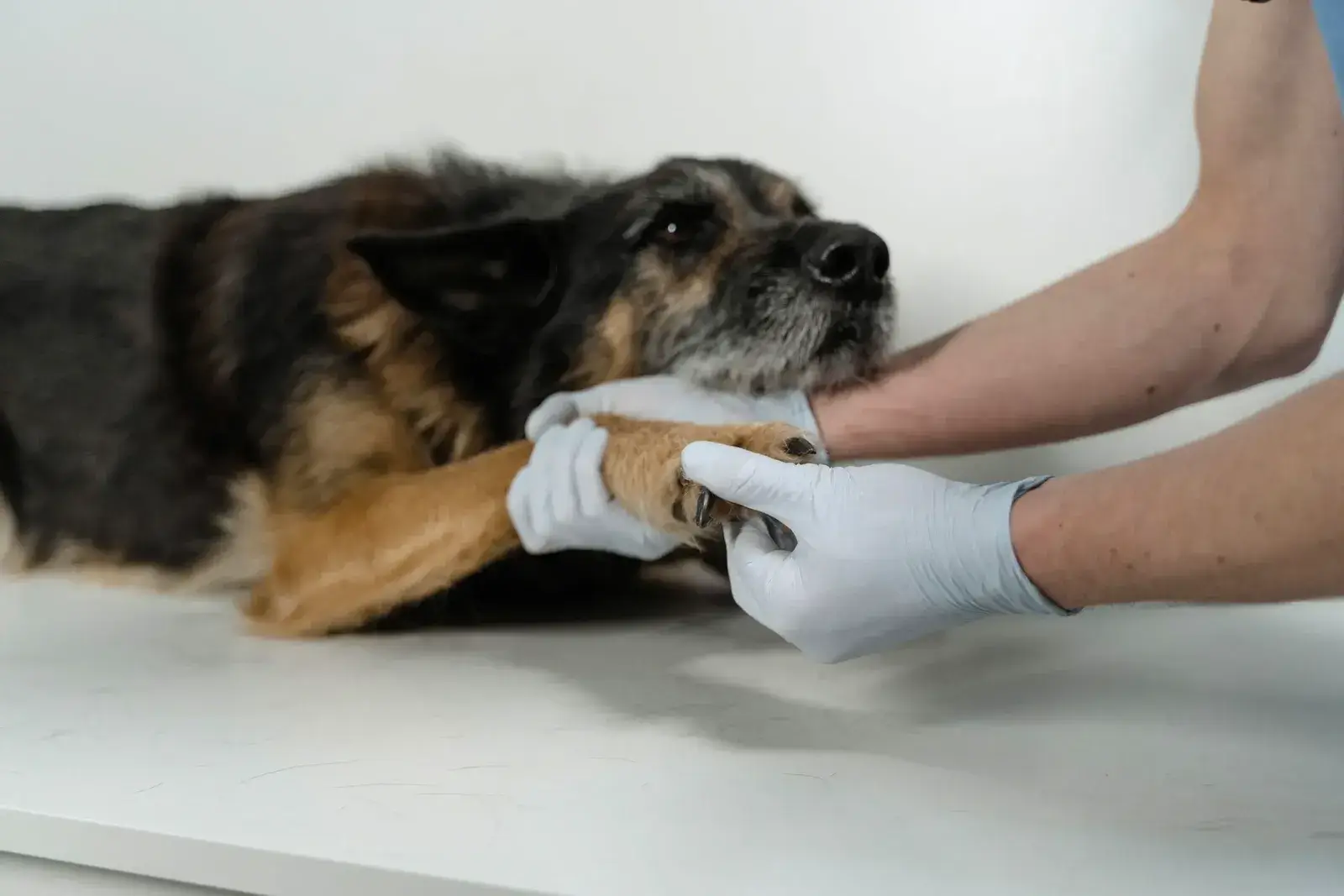
Many paw injuries are small and heal well, but pads bleed a lot and look worse than they are, and some injuries hide something deeper. This guide covers the emergency signs, safe first aid, what to avoid and when a vet visit is wise. It is general information. A vet who sees your dog decides what is right.
Is this an emergency?
Go to a vet or emergency clinic now, and phone ahead, if you see any of these:
 GuideMy Dog Stepped on a Bee: What to DoDog stung by a bee or wasp: emergency signs of an allergic reaction, safe first aid, what not to give, and when to see a vet.
- Heavy bleeding that keeps soaking through a pad of cloth after several minutes of firm, steady pressure.
- A deep cut, a gaping wound, a flap of pad hanging loose, or a cut you can see into.
- An object stuck in the paw, such as glass, metal or a large thorn. Do not pull it out if it is deeply lodged. Veterinary guidance says pulling out a deep object can cause more pain and bleeding.
- Bone, tendon or joint involvement: a paw bent at a strange angle, a swollen toe or foot, a grinding feel, or a visible bone or white tissue in the wound.
- Not putting any weight on the paw, or holding it up and refusing to walk. Dogs hide pain, so a dog that will not use a leg is in real pain.
- A badly torn or broken nail with bleeding that will not stop or a nail hanging by a thread.
- Burns, such as large blistered, raw or peeling pads after hot pavement or sand.
- Signs of shock: pale gums, weakness, fast breathing, collapse.
- A wound that is clearly infected: pus, strong smell, spreading redness, heat, swelling, or a dog with a fever or dull behaviour.
If you are unsure, phone the clinic. They would rather answer a call than see a dog that waited too long.
 GuideIs your dog suited to therapy work?How to make your dog a therapy dog: temperament checklist, first training steps, how Pet Partners, TDI and Pets As Therapy assess dogs, and welfare limits.GuideMy Dog Stepped on a Bee: What to DoDog stung by a bee or wasp: emergency signs of an allergic reaction, safe first aid, what not to give, and when to see a vet.
Common causes
- Cut pads. Glass, sharp stones, metal, rough ground or ice. Pad cuts can bleed a lot because pads have a rich blood supply. Walking on a cut keeps it from closing.
- Torn or broken nails. Snagged on carpet, roots or rough ground. Nails bleed and hurt a lot. A split nail can become infected if left alone.
- Foreign bodies. Thorns, splinters, and especially grass seeds (see below).
- Burns and blisters. Hot pavement, sand, tarmac in summer, or chemical grit and de-icer in winter. A simple check is to press the back of your hand to the ground for several seconds. If it is too hot for your hand, it is too hot for your dog's paws.
- Cracked or worn pads, from rough walking or dry, cold weather.
- Insect stings and bites on the paw. See dog bee sting.
- Sprains, strains and broken toes. Slips, jumps and awkward turns. The paw may look normal but the dog limps.
- Interdigital cysts and infections between the toes, often with swelling and licking.
 GuideMy Dog Has Diarrhea: What Should I Do?Dog diarrhea: emergency signs, common causes, safe home care, what not to give, and when to see a vet.
Grass seeds
Grass seeds (awns) are a common summer problem, and a well-known one for UK vets. PDSA advises owners to check dogs after every walk in long grass, remove any seeds you find, and go to a vet if one is stuck or a wound or swelling could hold one. PDSA also warns that seeds left in place can burrow into the body and cause infection and abscesses. The most common trouble spots are between the toes, in the ears and in the eyes.
Signs of a seed in the paw:
- Sudden or on-and-off limping, often worse after walks.
- Licking or chewing one paw, often between the toes.
- A small, swollen, red or weeping spot between the toes, sometimes with pinkish or brown staining of the fur from saliva.
- A hole that keeps draining.
Seeds are barbed and move in one direction, so they do not work their way back out. Vets often need to sedate a dog to find and remove one. Do not dig for a seed with tweezers or a needle if you cannot see it clearly, because pieces can break off and stay in. Breeds with feathered feet or thick feet fur, such as spaniels, collies and setters, pick seeds up more often.
 GuideHow to calm a reactive dogHow to calm a reactive dog: why dogs bark and lunge, what to do in the moment, a step-by-step training plan, what to avoid and when to get help.GuideMy Dog Has Diarrhea: What Should I Do?Dog diarrhea: emergency signs, common causes, safe home care, what not to give, and when to see a vet.
What you can do at home
Home care suits a small, shallow cut or graze on a bright dog that still walks on the paw. Even so, many vets prefer to look at any pad cut, because walking on an open wound slows healing.
 GuideMy Dog Keeps Shaking His Head: Ear Infection GuideDog shaking head, scratching ears or smelly ears? Ear infection signs, causes, ear haematoma, emergency signs, what to do and what to avoid.
- Keep your dog calm and still. Sit or lie down together. A hurting dog may snap, so be careful. A soft muzzle or a helper holding the head can keep you safe. Do not force it.
- Stop bleeding with pressure. Press a clean cloth or gauze firmly on the wound for a few minutes without lifting to check. If the cloth soaks through, put a fresh one on top and keep pressing. Heavy bleeding means going to a vet.
- Look for debris. Check between the toes and in the wound. Loose grit can be rinsed away. Lift out only a loose, clearly visible piece with clean tweezers. Leave anything deep.
- Rinse gently. Use lukewarm water or plain saline. A mild, pet-safe soap on the skin around the wound is fine. Pat dry.
- Cover it. A non-stick pad, held on with a soft self-clinging wrap, keeps the wound clean. Wrap it loosely. A bandage that is too tight cuts off blood flow, and that is a risk of its own. Check the toes: they should stay warm, and the bandage should not slip, swell the toes or smell. Change it daily or if it gets wet.
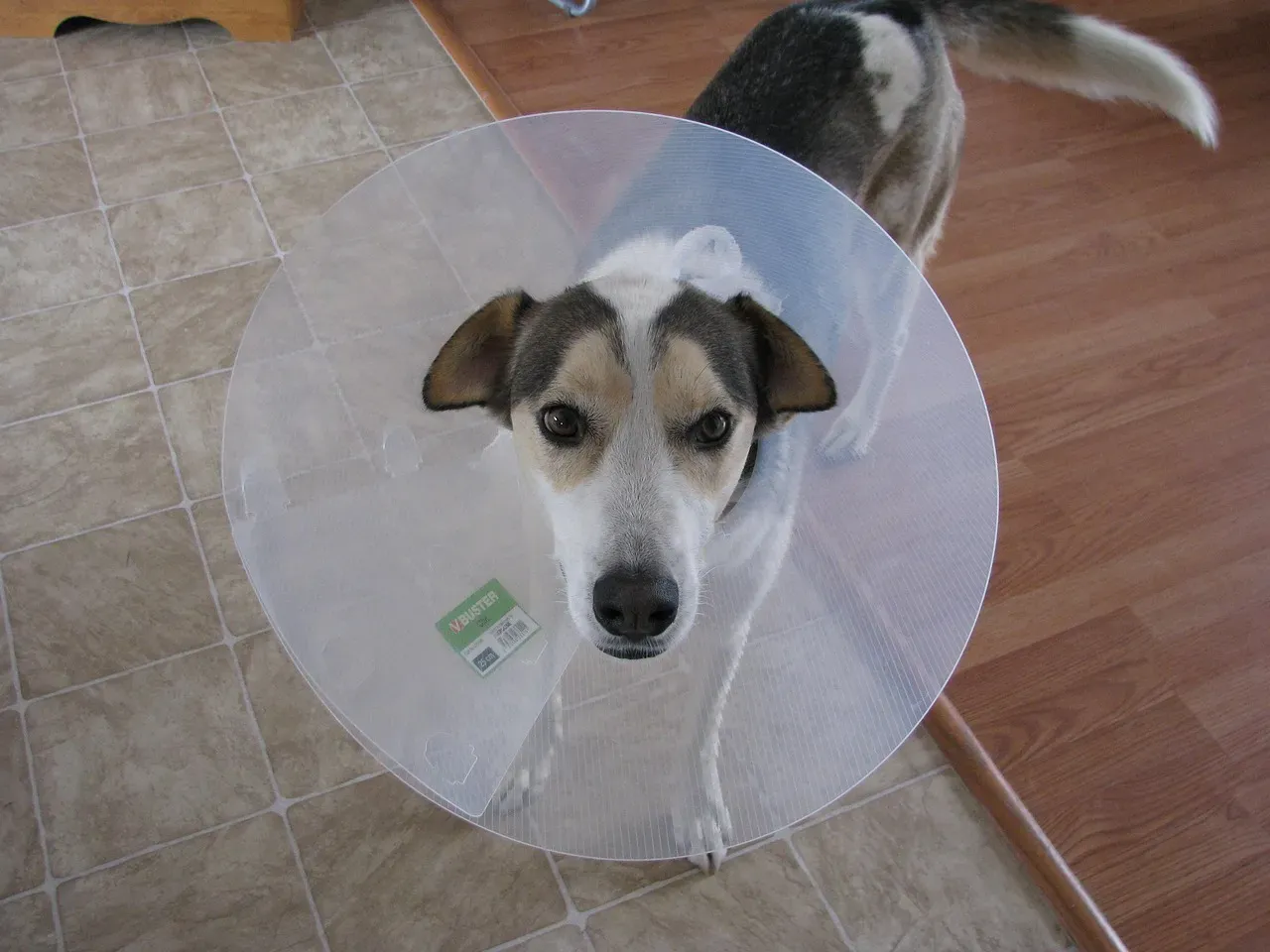
- Stop licking. Licking brings in germs and keeps wounds open. Use a cone or a clean, secure covering with you watching.
- Rest. Short lead walks to toilet only. No running, ball games or rough ground until a vet says it is fine. Keep dressings dry outdoors.
- Check daily. Redness, swelling, heat, discharge or a bad smell, or a dog that is limping more, means a vet visit.
For nail injuries, apply pressure to the nail tip with clean gauze. A torn nail is painful, so do not trim or pull it yourself unless a vet has shown you how.
 Save
 GuideMy Dog Is Vomiting: Causes and What to DoDog throwing up? Vomiting vs regurgitation, emergency signs like bloat, common causes, safe home care, what not to do, and when to see a vet.GuideMy Dog Keeps Shaking His Head: Ear Infection GuideDog shaking head, scratching ears or smelly ears? Ear infection signs, causes, ear haematoma, emergency signs, what to do and what to avoid.
What not to do
- No human painkillers. Ibuprofen, paracetamol (acetaminophen), aspirin and naproxen can seriously harm dogs.
- No hydrogen peroxide, alcohol or iodine on the wound unless a vet says so. They can damage healing tissue.
- No creams, sprays or ointments unless a vet suggests them. Your dog will lick them off and swallow them.
- Do not pull out deep objects. Cover around them and go in.
- Do not wrap tightly, and do not use sticky tape directly on the fur or skin.
- Do not leave a wet bandage on. A damp wrap can make infection more likely.
- Do not let your dog keep running on a limping paw. It can turn a sprain into something worse.
- Do not wait it out if any emergency sign shows up.
 GuideWhy Does My Dog Eat Grass? What Studies SayDog eating grass? What a large owner survey found, why dogs do it, when it is normal, when to worry (vomiting, lawn chemicals, toxic plants), what to do.
 GuideMy Dog Is Coughing: Causes and When to See a VetDog coughing, honking or hacking? Emergency signs, kennel cough, collapsing trachea, heart cough, what to do at home and when to see a vet.GuideWhy Does My Dog Eat Grass? What Studies SayDog eating grass? What a large owner survey found, why dogs do it, when it is normal, when to worry (vomiting, lawn chemicals, toxic plants), what to do.
When to see a vet
Book a visit, ideally the same day, when:
 GuideMy Dog Is Lethargic: Causes and When to Call a VetDog tired, weak or not himself? Normal tiredness vs lethargy, emergency signs, common causes, what to note for the vet and what to avoid.
- A pad is cut and does not look small and shallow. Pad skin is thick and often needs checking, and deeper cuts may need stitches.
- A torn nail is bleeding, hanging or the dog is in pain.
- Your dog keeps limping for more than a day, or the limp comes and goes over several days.
- You suspect a grass seed or other object. Do not wait for it to get worse.
- The paw is swollen, hot, smelly or leaking.
- Your dog will not let you touch the paw.
- Your dog keeps licking or chewing one paw and the skin is red or sore. See dog licking paws for causes of constant licking that are not injury.
- You do not know what happened. A limp with no clear cause can be a joint, ligament or bone problem.
A vet may sedate your dog to clean and look into the wound, remove an object, bandage or stitch the paw, and give pain relief or antibiotics. Bring a note of when it started and what your dog was doing.
 GuideMy Dog Has Bad Breath: Causes and What to DoDog breath smells? Gum disease is the usual cause, but sweet or ammonia smells can mean illness.GuideMy Dog Is Lethargic: Causes and When to Call a VetDog tired, weak or not himself? Normal tiredness vs lethargy, emergency signs, common causes, what to note for the vet and what to avoid.
Preventing paw injuries
- Check paws and between the toes after walks, especially in summer in long grass.
- Trim long fur between the toes and keep nails at a sensible length.
- Walk in the cool morning or evening when the ground is hot, and stay on grass or shade.
- Wash off winter grit and de-icer after walks and dry well.
- Avoid broken glass, building sites, rough rock and hot sand.
 GuideMy Dog Keeps Licking His Paws: Causes and What HelpsDog licking paws all the time: allergies, parasites, injury, yeast and boredom.
 GuideDog hybrids: what dogs can and cannot breed withCan dogs breed with wolves, coyotes, jackals or foxes? Wolfdogs, coydogs, the Sulimov dog and Dogxim explained, with chromosomes and DNA studies.GuideMy Dog Keeps Licking His Paws: Causes and What HelpsDog licking paws all the time: allergies, parasites, injury, yeast and boredom.
FAQ
My dog has a cut on his paw pad. What should I do?
Press a clean cloth on it until the bleeding slows, rinse with lukewarm water, cover with a loose dressing and stop licking. Call a vet for any cut that is deep, will not stop bleeding or looks more than a graze.
How long does a cut pad take to heal?
Small cuts often settle in about one to two weeks with rest. Deeper cuts and pads that keep getting walked on take longer. Your vet can give an idea for your dog.
Why is my dog limping on one paw but I can't see anything?
It could be a seed between the toes, a small cut under the fur, a sprain, a broken nail or a joint issue. If it lasts more than a day, or your dog will not put the paw down, see a vet.
Can I put a bandage on my dog's paw myself?
Yes, loosely, as first aid until a vet sees it. Use a non-stick pad and soft wrap, check the toes often and never leave it on wet or tight.
Is bleeding from a paw serious?
Pads bleed freely, so it looks dramatic. Light bleeding that stops after a few minutes of pressure is usually small. Bleeding that carries on soaking through needs a vet now.
Can hot pavement burn a dog's paws?
Yes. Tarmac and sand can get far hotter than the air. If it is too hot for the back of your hand, it is too hot for paws.
My dog keeps licking his paw after an injury. Is that normal?
Some licking is natural, but it slows healing and can bring infection. Use a cone and ask a vet if it carries on. See dog licking paws for other reasons.
Should I worry about a grass seed?
Yes. Seeds can burrow into the skin and cause abscesses, so a vet should remove them. Check after walks and call a vet if your dog licks or limps on a paw in summer.
Read next
 Family storyGrey wolfRead the family's story: origins, members, DNA
 Family storyHungarianRead the family's story: origins, members, DNA
 Adopt a dogDog Shelters in GermanyTen big cities checked, how adoption works, what it costs
Sources (1)
- PDSA, "Grass seeds in dogs" (check after walks, infection and abscess risk, common trouble spots).