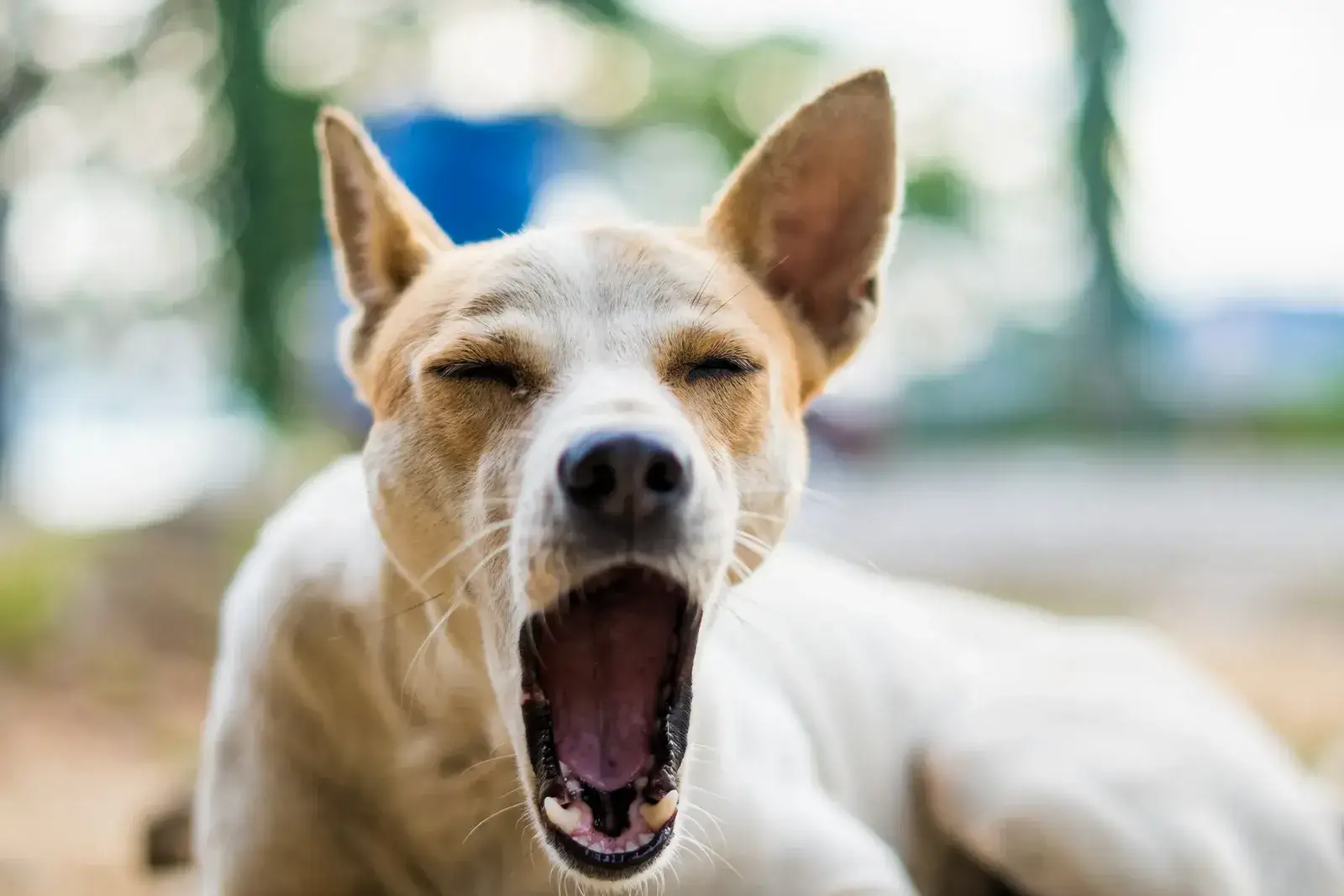
A little smell is normal. A strong, sour or rotten smell is not, and it is a sign that something in the mouth, or sometimes elsewhere in the body, needs attention. The good news is that the most common cause, gum disease, is very treatable and largely preventable. This guide covers the causes, the smells that point to something else, tooth care at home, what to avoid and when to see a vet. It is general information. A vet who looks in your dog's mouth decides what is wrong.
Is this an emergency?
Bad breath alone is rarely an emergency. It is a reason to book a vet visit. Go to a vet or emergency clinic now, and phone ahead, if bad breath comes with:
 GuideMy Dog Keeps Licking His Paws: Causes and What HelpsDog licking paws all the time: allergies, parasites, injury, yeast and boredom.
- Sweet, fruity or nail polish smelling breath with vomiting, extreme thirst, weakness or collapse. WebVet says uncontrolled diabetes can give breath a sweet, fruity smell, and ketoacidosis, a serious complication, is an emergency.
- Trouble breathing, or gums that are pale, blue or grey.
- A swollen face or jaw, especially with pain, drooling or a dog who cannot close his mouth or eat. This can be a tooth root abscess or an injury.
- Something stuck in the mouth or throat. PDSA says an object lodged in the mouth or throat can cause infection and a bad smell. A dog who is pawing at his mouth, gagging or drooling heavily needs a vet.
- Blood from the mouth that does not stop, or a dog who suddenly refuses all food and water.
- Collapse, repeated vomiting or a seizure.
- Signs of poisoning, such as a chemical or burnt smell with drooling, or sores in the mouth.
If you are unsure, phone your vet. PDSA advises booking a vet appointment when your dog has bad breath.
 GuideMy Dog's Eye Is Red: Causes and When to See a VetRed, weepy or squinting dog eye? Emergency signs, common causes like conjunctivitis and ulcers, what to do at home, what to avoid, and when to see a vet.GuideMy Dog Keeps Licking His Paws: Causes and What HelpsDog licking paws all the time: allergies, parasites, injury, yeast and boredom.
Gum disease: the most common cause
PDSA says dental disease is a very common cause of bad breath in dogs. Veterinary sources agree that periodontal disease, inflammation and infection of the tissues around the teeth, is the leading source.
 GuideDog Grooming Competitions and Show Standards ExplainedHow breed standards shape dog grooming, from hand-stripped terriers to Poodle show clips, and how grooming competitions and creative grooming work.
How it happens:
- Plaque builds up. Purdue's canine welfare resource describes plaque as a film of saliva, food particles and bacteria on the teeth.
- Plaque hardens into tartar, which a toothbrush cannot remove once it forms. The bacteria in it irritate the gums.
- The gums become inflamed. They look red and swollen and bleed easily. This early stage is called gingivitis and can be reversed with good care.
- Infection spreads below the gum line. The tissue holding the teeth in place is damaged, teeth loosen and abscesses can form. PDSA lists tartar, gum infections and tooth root abscesses among the dental causes of bad breath.
Even mild disease can cause a smell, and gum disease is very common in dogs by early adulthood. UC Davis's veterinary health resource says small breeds and flat-faced breeds are more often affected, probably because of their anatomy.
How common is it in named breeds?
VetCompass, the UK research programme that studies vet clinic records, gives these figures in the atlas's breed articles:
- Across all UK dogs, about 1 in 8 (12.5 percent) were diagnosed with periodontal disease (O'Neill et al. 2021, VetCompass, BMC Veterinary Research), as reported in the atlas's Maltese article.
- Yorkshire Terrier: about 1 in 5 (21.1 percent) diagnosed in one year of records, more often than in other breeds (VetCompass 2025).
- Miniature Schnauzer: 17.4 percent, about 1 in 6.
- Beagle: periodontal disease 17.78 percent, about 1 in 6 (VetCompass 2024).
- Shih Tzu: 9.5 percent, about 1 in 11 (VetCompass 2024).
- Boxer: 4.6 percent, about 1 in 22.
Figures differ because each study counts diagnoses in different ways and many mild cases are never recorded. Small mouths crowd teeth, which makes plaque harder to keep off. Every dog, whatever the breed, can get gum disease.
Signs to look for with the smell
- Yellow or brown tartar on the teeth, especially the back ones.
- Red, swollen or bleeding gums.
- Dropping food, chewing on one side, or reluctance to chew hard biscuits or toys.
- Drooling more than usual, or pawing at the mouth.
- A loose, broken or missing tooth.
- A swelling under the eye, which can be a tooth root abscess.
- A quieter dog who is off his food. Mouth pain often shows up as behaviour change.
 GuideMy Dog Keeps Shaking His Head: Ear Infection GuideDog shaking head, scratching ears or smelly ears? Ear infection signs, causes, ear haematoma, emergency signs, what to do and what to avoid.GuideDog Grooming Competitions and Show Standards ExplainedHow breed standards shape dog grooming, from hand-stripped terriers to Poodle show clips, and how grooming competitions and creative grooming work.
When the smell points to something else
Most bad breath starts in the mouth. A change in the type of smell, or a sudden change, can point elsewhere. A smell alone cannot confirm anything, and a vet needs to check.
 GuideMy Dog Is Lethargic: Causes and When to Call a VetDog tired, weak or not himself? Normal tiredness vs lethargy, emergency signs, common causes, what to note for the vet and what to avoid.
| Smell or sign | May point to | What to do |
|---|---|---|
| Rotten, sour, strong | Tartar, gum infection, abscess, a stuck object | Book a vet visit |
| Sweet, fruity or like nail polish remover | Diabetes (ketones), according to WebVet | Vet the same day, emergency if unwell |
| Ammonia or urine | Kidney disease, PDSA says | See a vet soon, mention drinking and urination |
| Foul with nasal discharge or a cough | Airway infection in the lungs, sinuses or windpipe, PDSA says | See a vet |
| Foul from the mouth plus vomiting or yellow gums | Liver or gut disease, per PDSA | See a vet promptly |
| Faeces smell on the breath | Eating faeces, a gut problem | Mention it to your vet |
Stay calm about the ammonia or sweet smell. These are not common causes, and a vet visit with simple blood and urine tests gives clear answers. PDSA says dental disease is the usual cause but that bad breath can be a sign of kidney, liver, lung or gut problems. A sudden change in smell, or a smell with other signs such as thirst, weight loss, vomiting or tiredness, matters more than a slow change.
See also dog lethargy and dog not eating or drinking when low energy or appetite comes with the smell.
 GuideMy Dog Is Coughing: Causes and When to See a VetDog coughing, honking or hacking? Emergency signs, kennel cough, collapsing trachea, heart cough, what to do at home and when to see a vet.GuideMy Dog Is Lethargic: Causes and When to Call a VetDog tired, weak or not himself? Normal tiredness vs lethargy, emergency signs, common causes, what to note for the vet and what to avoid.
Home tooth care
You can slow plaque and keep breath fresher with a little routine. These are general principles, not a treatment plan.
 GuideMy Dog Injured His Paw: First Aid and When to See a VetDog paw injury: cut pads, torn nails, grass seeds, hot pavement burns and limping.
- Brush, ideally daily. The RSPCA advised owners to brush pets' teeth daily with a specialist dog toothpaste. Use a soft dog toothbrush or finger brush. Brush the outer surfaces, where most plaque builds up.
- Go slowly. Start by letting your dog lick the dog toothpaste, then touch his teeth with a finger, then add the brush. A few seconds a day is enough to start. Praise and a calm voice help.
- Use dog toothpaste only. Human toothpaste can contain xylitol and fluoride. The RSPCA warned that xylitol is much more toxic to dogs and that products containing it should not be given to dogs. Dogs also cannot spit, so they swallow what you put in their mouth, and fluoride is a concern in larger amounts.
- Look for a seal. Some dental products carry the Veterinary Oral Health Council seal, which means tested for plaque or tartar control. Ask your vet which suit your dog.
- Check the mouth weekly. Lift the lips and look at gum colour, tartar and any broken teeth.
- Book a dental check. UC Davis suggests an annual evaluation by a vet or veterinary dentist. If your vet finds tartar or infection, a scale and polish under anaesthetic is the usual treatment. Anaesthetic lets the vet clean below the gum line and take dental X-rays, which cannot be done on a wide-awake dog.
- Ask about chews. Hard bones and antlers can break teeth. Ask your vet which chews are safe for your dog.
- Feed a suitable diet, and keep weight healthy. Ask your vet about dental diets.
 GuideMy Dog Is Vomiting: Causes and What to DoDog throwing up? Vomiting vs regurgitation, emergency signs like bloat, common causes, safe home care, what not to do, and when to see a vet.GuideMy Dog Injured His Paw: First Aid and When to See a VetDog paw injury: cut pads, torn nails, grass seeds, hot pavement burns and limping.
What not to do
For foods that may upset the mouth or stomach, see can dogs eat.
 GuideWhy does my dog do that? 15 common behavioursWhy does my dog lick me, stare, eat grass, spin, sigh or roll in smelly things? 15 everyday dog behaviours explained, with when to ask a vet.
- Do not use human toothpaste. Xylitol and fluoride are risks. If your dog swallowed some, check the label for xylitol and phone a vet or animal poison service straight away.
- Do not scrape tartar off with a tool. You can hurt the gums or damage enamel, and the real problem sits under the gum line. Dental scaling without anaesthetic does not clean below the gum and can mask disease.
- Do not rely on breath mints, sprays or additives to hide the smell. They cover a symptom and can delay treatment.
- Do not give hard objects such as bones, stones or hard plastic. They break teeth.
- Do not use home remedies in the mouth, such as bleach, peroxide or strong essential oils. They can burn or poison.
- Do not ignore it. Untreated gum disease is painful and the infection can spread. Bad breath that comes with a loose tooth, bleeding or a swollen face needs a vet.
- Do not assume a toy breed's smell is normal. Small breeds are more often affected, which is a reason to be more watchful, not less.
 GuideMy Dog Is Panting a Lot: Normal or Worrying?Dog panting heavily? Normal vs worrying panting, heatstroke signs and cooling steps, pain, anxiety, Cushing's disease, and when to see a vet.GuideWhy does my dog do that? 15 common behavioursWhy does my dog lick me, stare, eat grass, spin, sigh or roll in smelly things? 15 everyday dog behaviours explained, with when to ask a vet.
When to see a vet
Book a visit, within a few days, when:
 GuideBest dog breeds for familiesBest dog breeds for families, small homes, allergies, first-time owners and seniors, ranked from our breed ratings, with honest limits and a table.
- The breath smell is strong, new or getting worse.
- You can see tartar, red or bleeding gums, or a broken or loose tooth.
- He drops food, chews on one side or seems to avoid eating.
- Breath smells sweet, fruity or like ammonia.
- There is more drinking and urinating, weight loss, vomiting or tiredness.
- There is a swelling on the face or under the eye.
- Your dog is a toy or flat-faced breed with a smell. These breeds benefit from earlier dental checks.
The vet will look in the mouth, often under sedation or anaesthetic for a full exam, and may take dental X-rays. If other causes are suspected, blood and urine tests help. Treatment usually means a professional clean and sometimes removing damaged teeth. Dogs often feel and eat better afterwards.
 GuideHow to Groom a Dog: Brushing, Baths, Nails and CoatsHow to groom a dog at home: coat types, brushing, how often to bathe, cutting nails, ears, teeth, shedding, matting and whether to shave a double coat.GuideBest dog breeds for familiesBest dog breeds for families, small homes, allergies, first-time owners and seniors, ranked from our breed ratings, with honest limits and a table.
FAQ
Why does my dog's breath smell so bad?
Most often plaque and tartar causing gum disease. PDSA also lists mouth infections, an object stuck in the mouth and, less often, kidney, liver, lung or gut problems.
Is it normal for dogs to have bad breath?
A mild smell is normal. A strong rotten, sour or sweet smell is a reason to see a vet.
What does it mean if my dog's breath smells like ammonia?
PDSA says kidney disease can cause breath that smells of ammonia. Book a vet visit and mention drinking and urination.
What does it mean if my dog's breath smells sweet or fruity?
WebVet says uncontrolled diabetes can cause this. Call a vet the same day, and go to an emergency clinic if your dog is unwell.
How common is gum disease in dogs?
It is among the most common problems seen at the vet. VetCompass found about 1 in 8 UK dogs diagnosed with periodontal disease in one study, and some small breeds such as the Yorkshire Terrier about 1 in 5.
Can I use human toothpaste on my dog?
No. It may contain xylitol, which the RSPCA calls much more toxic to dogs, and fluoride. Use a dog toothpaste.
How often should I brush my dog's teeth?
The RSPCA advises daily. Even a few times a week is better than none.
Can I fix bad breath at home?
Brushing helps with plaque but cannot remove tartar or treat infection below the gums. A vet exam finds out why the breath smells.
Do dental chews and toys work?
Some help to reduce plaque, but they do not replace brushing or a vet check. Ask your vet which are safe, as hard items can crack teeth.
Why does my puppy have bad breath?
Teething can cause a mild smell for a short time. A strong smell, or one that lasts, needs a vet check. See also why does my dog.
Read next
 Family storyToy SpitzRead the family's story: origins, members, DNA
 Family storyTerrierRead the family's story: origins, members, DNA
 Family storyModern CrossbreedRead the family's story: origins, members, DNA
Sources (7)
- PDSA, "Bad breath in dogs," Pet Health Hub (dental disease as a very common cause, kidney, liver, lung and gut causes, ammonia smell, foreign objects, book a vet appointment).
- PDSA, "Tooth and gum disease in dogs," Pet Health Hub.
- UC Davis School of Veterinary Medicine, "Dog with Bad Breath," Health Topics (small and flat-faced breeds, annual dental evaluation).
- Purdue University Canine Welfare Science, "Dental Disease in Dogs" (plaque as a biofilm of saliva, food and bacteria).
- RSPCA, "Stop brushing your pets' teeth with toothpaste, RSPCA tells dog owners" (xylitol warning, daily brushing with specialist toothpaste).
- WebVet, "Dog bad breath causes" (sweet or fruity smell and diabetes, ketoacidosis as an emergency).
- O'Neill et al. 2021, VetCompass, BMC Veterinary Research; VetCompass breed studies 2024 and 2025 (breed figures, as cited in the atlas's breed articles).