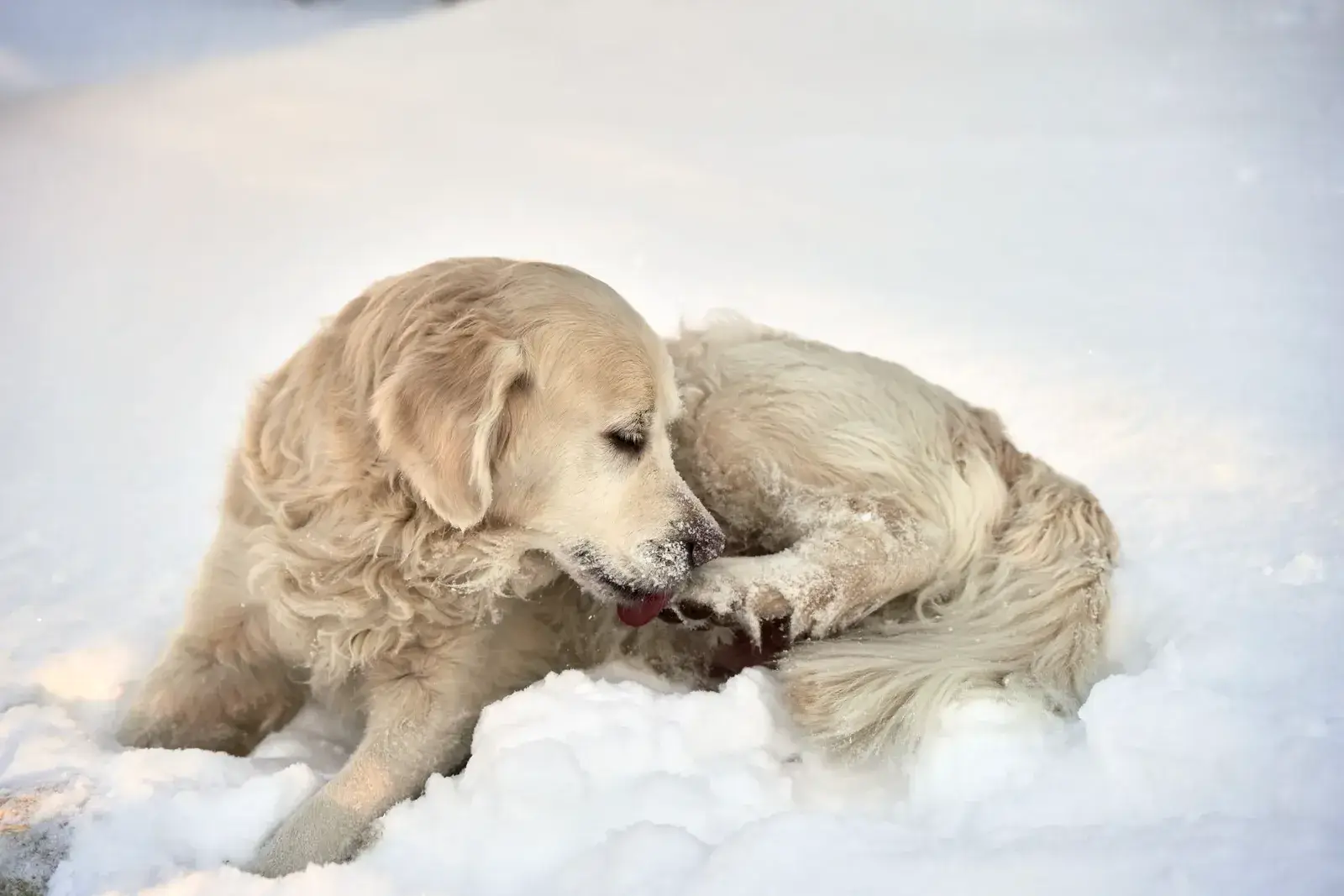
Licking that is constant, wakes you at night or leaves red, wet or stained paws is a sign, and the cause is usually something your vet can find. This guide goes through the common causes, the signs that mean a vet visit, and what can help at home in general terms. It is general information. A vet who examines your dog decides what is right.
Is this an emergency?
Paw licking is rarely an emergency. Call a vet or emergency clinic now if the licking comes with:
 GuideMy Dog Has Bad Breath: Causes and What to DoDog breath smells? Gum disease is the usual cause, but sweet or ammonia smells can mean illness.
- A sudden limp or a dog that will not put the paw down, especially with a visible wound, swelling or an object in the paw. See dog paw injury.
- Heavy bleeding or a deep cut on a pad or between the toes.
- Swelling of the face, hives or breathing trouble after a sting or a new exposure. This can be a severe allergic reaction. Veterinary guidance treats swelling of the face and throat, trouble breathing and collapse as emergency signs.
- A burn or chemical contact, for example after walking on de-icer, cleaning product or something unknown. Rinse with lukewarm water and phone the vet or a pet poison helpline.
- A dog that is dull, feverish, not eating or in clear pain.
- A very swollen, hot paw with pus or a strong smell.
If you are unsure, phone the clinic. They would rather answer a call than see a dog that waited too long.
 GuideMy Dog Is Coughing: Causes and When to See a VetDog coughing, honking or hacking? Emergency signs, kennel cough, collapsing trachea, heart cough, what to do at home and when to see a vet.GuideMy Dog Has Bad Breath: Causes and What to DoDog breath smells? Gum disease is the usual cause, but sweet or ammonia smells can mean illness.
Common causes
Paw licking is a sign, not a diagnosis. Most long-lasting cases come from one of the groups below, and several can be present together.
 GuideMy Dog Is Lethargic: Causes and When to Call a VetDog tired, weak or not himself? Normal tiredness vs lethargy, emergency signs, common causes, what to note for the vet and what to avoid.
- Allergies and atopic dermatitis. Atopic dermatitis is a long-term allergic skin disease that makes dogs itchy. Triggers include pollen, grass, mould spores and house dust mites. The feet are among the areas most often affected, along with the ears, face, armpits and belly. It often starts between about one and three years of age and comes and goes with the seasons or lasts all year. Vets diagnose it partly by ruling out other causes such as parasites and food allergy.
- Food allergy. Less common than environmental allergy, but it can also cause itchy feet, ears and bottom. It needs a vet-guided food trial. Do not change foods repeatedly without advice.
- Parasites. Fleas, mites and other skin parasites cause itch, and some dogs react to a single flea bite. See ticks and fleas.
- Injury or something stuck. A cut pad, torn nail, thorn, splinter or grass seed between the toes causes licking at one paw. Dogs often lick the sore spot. See dog paw injury.
- Yeast and bacterial infections. Licking keeps skin warm and wet, and this lets yeast (Malassezia) and bacteria overgrow. Yeast gives a musty or "corn chip" smell, brown or rusty staining of the fur, greasy skin and more itching, which leads to more licking. These infections often follow allergies, so treating only the infection can leave the cause behind.
- Pain. Arthritis, a sore joint or a torn ligament can lead a dog to lick the sore area. If your dog licks one leg and limps, mention it.
- Contact irritation. Cleaning products, lawn treatments, de-icer and some plants can irritate paws.
- Boredom, stress and anxiety. Licking can become a habit that calms a dog. This is a diagnosis for a vet to reach after medical causes have been ruled out. See why does my dog for other common dog habits, and adopting a dog for the settling-in period.
Breeds with more skin allergy
Any dog can have allergies, and some breeds see it more. In one large UK vet-records study, Pegram and colleagues (2020, Canine Medicine and Genetics) found that Staffordshire Bull Terriers had about 1.9 times the odds of atopic dermatitis compared with other dogs. See Staffordshire Bull Terrier. A breed link is not a diagnosis. Any itchy dog needs a vet check.
Which pattern points to which cause
| What you see | What it may point to |
|---|---|
| One paw only, sudden | Injury, seed, thorn, sting, torn nail |
| Both front paws, or all four | Allergy, yeast, contact irritation, parasites |
| Red skin between toes, brown fur staining | Allergy with yeast or bacteria |
| Licking mostly at night or when alone | Itch, or habit linked to boredom or stress |
| Itchy ears, face or belly as well | Allergy |
| Licking plus limping | Pain or injury |
This table is a guide, not a diagnosis.
 GuideMy Dog Is Vomiting: Causes and What to DoDog throwing up? Vomiting vs regurgitation, emergency signs like bloat, common causes, safe home care, what not to do, and when to see a vet.GuideMy Dog Is Lethargic: Causes and When to Call a VetDog tired, weak or not himself? Normal tiredness vs lethargy, emergency signs, common causes, what to note for the vet and what to avoid.
What you can do at home
These steps help comfort a dog and give your vet better information. They do not replace a vet visit if licking lasts more than a few days.
 GuideDog laws by country: tax, insurance and licencesDog tax, compulsory liability insurance, licences, microchips and leash rules in Germany, Austria, Switzerland, Spain, Ireland, the UK, the US and more.
- Look at the paws. Part the fur, look between the toes and at each pad and nail. Check for redness, swelling, cuts, seeds, odour, discharge and staining.
- Wipe paws after walks. Use plain lukewarm water and a clean towel, and dry well between the toes. Damp paws feed yeast. Avoid strong soaps and scented wipes unless a vet suggests them.
- Check parasite cover. Keep flea and worm treatment up to date as your vet advises. A dog with fleas licks and scratches.
- Keep the fur between the toes trimmed so it does not trap moisture and grass seeds.
- Stop licking with a cone or soft cover for a short time when skin is sore and you are watching. Constant licking can make a small problem big.
- Make a record. Note when licking happens, how long it lasts, which paws, the season, food changes and walk routes. Take photos. Vets use this.
- Meet needs. A dog with enough exercise, sniffing time, chews suitable for the dog and company licks less out of boredom. Do not punish licking. It adds stress.
- Bring the dog in for a check. Vets can test skin, treat infection, check parasites and plan allergy care.
 Save
 GuideMy Dog Is Panting a Lot: Normal or Worrying?Dog panting heavily? Normal vs worrying panting, heatstroke signs and cooling steps, pain, anxiety, Cushing's disease, and when to see a vet.GuideDog laws by country: tax, insurance and licencesDog tax, compulsory liability insurance, licences, microchips and leash rules in Germany, Austria, Switzerland, Spain, Ireland, the UK, the US and more.
What not to do
- No human medicines. Antihistamines, steroids, painkillers or creams made for people can be unsafe or the wrong dose for dogs. Ask a vet first.
- No antiseptics, vinegar, peroxide, tea tree or essential oils on the paws. Dogs lick them off and swallow them, and some are toxic.
- No bitter or sticky anti-lick products without vet advice, as they can irritate sore skin.
- No tight bandages or socks left on unchecked.
- No frequent food changes to guess at an allergy.
- Do not wait months. Chronic licking can lead to infections and skin damage that take longer to treat.
- Do not scold your dog for licking.
 GuideMy Dog Stepped on a Bee: What to DoDog stung by a bee or wasp: emergency signs of an allergic reaction, safe first aid, what not to give, and when to see a vet.
 GuideMy Dog's Eye Is Red: Causes and When to See a VetRed, weepy or squinting dog eye? Emergency signs, common causes like conjunctivitis and ulcers, what to do at home, what to avoid, and when to see a vet.GuideMy Dog Stepped on a Bee: What to DoDog stung by a bee or wasp: emergency signs of an allergic reaction, safe first aid, what not to give, and when to see a vet.
When to see a vet
Book a visit when:
 GuideMy Dog Has Diarrhea: What Should I Do?Dog diarrhea: emergency signs, common causes, safe home care, what not to give, and when to see a vet.
- Licking lasts more than a few days, or keeps coming back.
- The skin is red, sore, moist, thickened or darker, or the fur is stained brown or pink.
- There is a strong or musty smell, discharge or swelling.
- Your dog licks until the skin is raw or bleeding, or cannot settle.
- Only one paw is licked and your dog limps, or you suspect a seed or thorn. Do not wait.
- Your dog is also scratching the ears, face or belly, or has a past of allergies.
- Your dog is a puppy, senior or has a long-term illness.
- You see signs of fleas or other parasites.
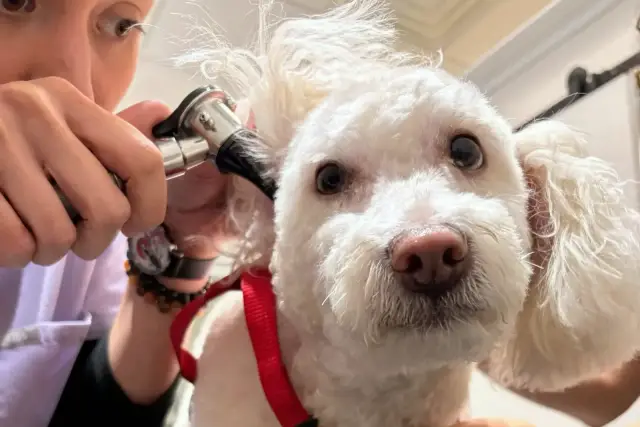
A vet may look closely at the paws, take a skin sample or swab to check for yeast or bacteria, check for parasites, talk through food and season, and plan treatment. Allergies usually need a long-term plan, not a single cure. Your vet will explain the choices for your dog.
 GuideMy Dog Keeps Shaking His Head: Ear Infection GuideDog shaking head, scratching ears or smelly ears? Ear infection signs, causes, ear haematoma, emergency signs, what to do and what to avoid.GuideMy Dog Has Diarrhea: What Should I Do?Dog diarrhea: emergency signs, common causes, safe home care, what not to give, and when to see a vet.
FAQ
Why does my dog keep licking his paws?
Common reasons are allergies, parasites, a small injury, yeast or bacteria, pain and boredom or stress. Which one depends on the pattern. A vet visit sorts it out.
Is it normal for a dog to lick his paws?
A little, yes. Many dogs tidy their paws after walks or before sleep. Licking that is constant or leaves sore, stained or smelly paws is not normal.
Why does my dog lick one paw only?
One paw usually points to something local, such as a cut, seed, thorn, sting, torn nail or sore joint. Check the paw and see a vet if licking carries on.
What do brown stains on dog paws mean?
Saliva stains fur brown or pink with licking. It means a lot of licking happens, not what causes it. Yeast infection can also stain and smell musty.
Can allergies make a dog lick his paws?
Yes. Environmental allergy (atopic dermatitis) and food allergy are common causes. Your vet can guide a plan.
Can boredom or anxiety cause paw licking?
Yes, but vets look for medical causes first. Once those are ruled out, more exercise, play, company and calm routines can help.
Why does my dog lick his paws at night?
Itch often feels worse when the dog is still and quiet. Licking at night can also be a habit or a sign of discomfort. Note it for your vet.
Can I give my dog an antihistamine?
Only if your vet says so and gives the dose. Human products can be unsafe.
Read next
 Family storyEuropean dogsRead the family's story: origins, members, DNA
 Family storyAmerican TerrierRead the family's story: origins, members, DNA
 Family storyAncient American dogsRead the family's story: origins, members, DNA
Sources (2)
- PDSA, "Grass seeds in dogs" (seeds between the toes, excessive paw licking, when to see a vet).
- Pegram et al. (2020), "Staffordshire Bull Terriers in the UK: their disorder predispositions and protections," Canine Medicine and Genetics (atopic dermatitis odds, VetCompass records).