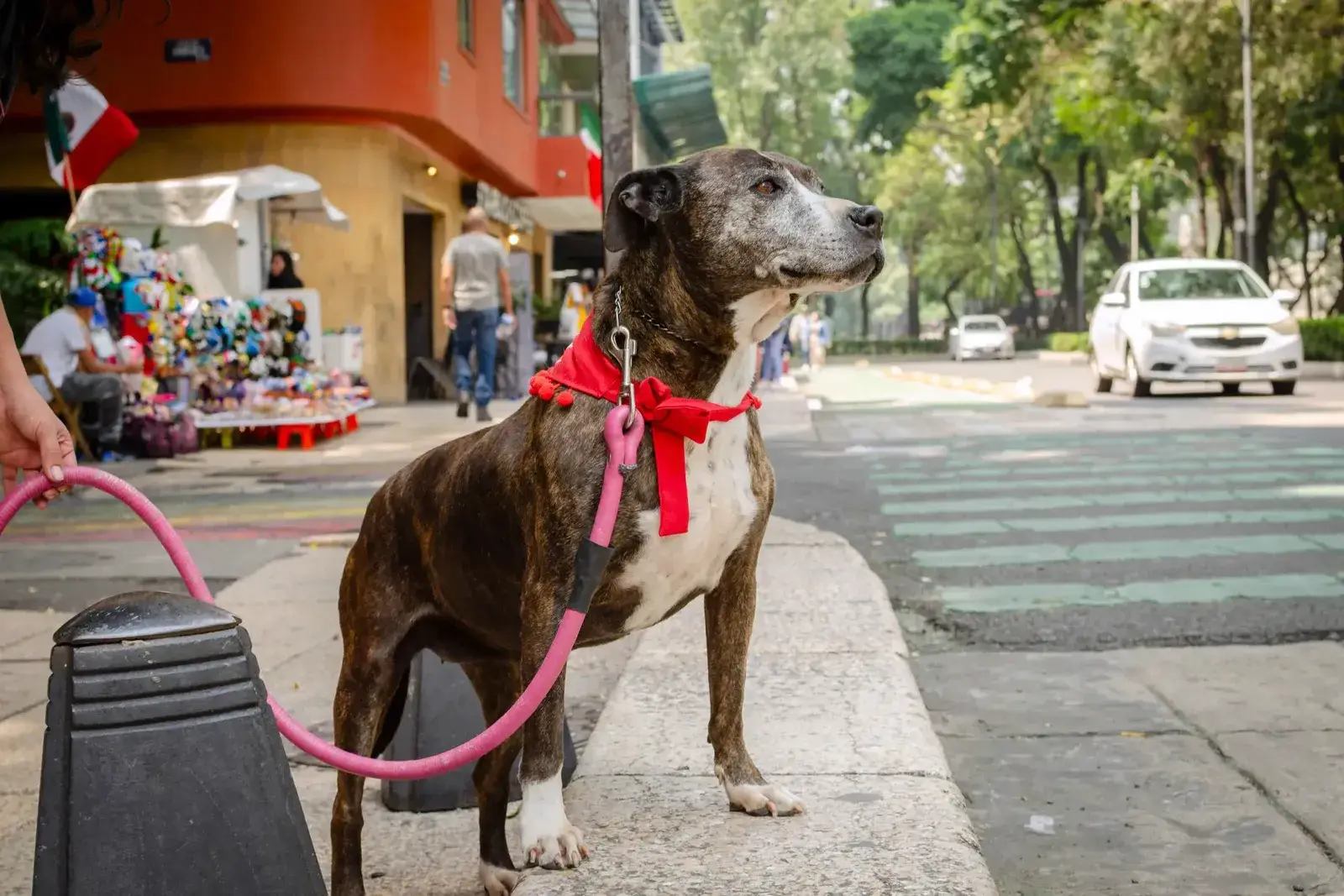
In Germany, Austria, Switzerland and the Netherlands an owner usually pays an annual dog tax to the town. In Spain, parts of Germany and Vienna, liability insurance for the dog is compulsory. Ireland and most US counties ask for a licence, England, Scotland and Wales dropped the licence in 1987 but require a microchip, and nearly everywhere a dog must be vaccinated against rabies.
This guide explains the four things most owners meet first: dog tax, compulsory insurance, licences and registration, and the leash and muzzle rules that decide how you walk your dog. It then covers moving or travelling with a dog and ends with a summary table and answers to common questions. Figures are examples as of 2026. Rules are set by laws, states and councils that change often, so always check your own city or council before you rely on a number.
Rules for specific breeds are a separate topic, covered in banned and restricted dog breeds.
Not legal advice. This guide is general information. Laws change, so check the official source for your country or city before you buy, import or travel. Rules last checked in October 2026.
Dog tax
A dog tax is a yearly charge paid to the local authority for keeping a dog. It is not a licence and does not buy you anything specific: the money goes into the town's general budget. It exists mainly in German-speaking countries and the Netherlands.
 GuideBest dog breeds for familiesBest dog breeds for families, small homes, allergies, first-time owners and seniors, ranked from our breed ratings, with honest limits and a table.
Germany: Hundesteuer
In Germany the Hundesteuer is a municipal tax. The federal state gives the framework, but each town sets its own rate in a local statute (Hundesteuersatzung). The rate you pay is the one in the statute of the town where you live.
Examples for 2026 from published rate calculators and city statutes:
- Munich: 100 euros per dog. A proposal before the city finance committee would raise it to 144 euros from 2027.
- Hamburg: about 90 euros per dog, the same for every dog in the household.
- Berlin: about 120 euros for the first dog and 180 euros for each further dog. Treat these as approximate and check with the district office.
- Several cities raised rates on 1 January 2026, including Stuttgart, Cologne and Leipzig.
Many towns charge more for a second dog. Some, including Munich, Hamburg and Cologne, charge the same for every dog. Towns often reduce or waive the tax for assistance dogs, working dogs and dogs adopted from a shelter, and for owners who pass a dog handler test, but the exact exemptions differ by statute.
Listed dogs, the breeds and types a town treats as dangerous, cost much more. Heidelberg introduced a tax of 600 euros a year for listed and dangerous dogs from 2026, the same level Feuchtwangen sets in its statute. Berlin is reported at about 600 euros for such dogs and Aachen at 660 euros. Rates for listed dogs range widely between towns, and a breed on one town's list can be at the normal rate in the next.
Austria: Hundeabgabe
Austria calls the same charge the Hundeabgabe, and it is set by each municipality. In Vienna the dog must be registered with the city office (MA 6) within 14 days and in the pet database within one month. Consumer guides give around 120 euros for the first dog and 160 euros for each further dog, with a change planned for 2027. Check the current amount on the city website before you pay. If you plan to adopt, our dog shelters in Austria page lists shelters by state and covers registration and dog tax for new owners.
Switzerland
Switzerland has no federal dog law. Parliament rejected one in 2010, so cantons and municipalities decide. The tax therefore varies widely: a comparison of first-dog rates in cantonal capitals and large cities found a range from about 70 francs in Bellinzona to 200 francs in Uster. In canton Solothurn a cantonal tax applies on top of the municipal one, and voters approved it. Every dog in Switzerland must also be registered in the national database AMICUS.
The Netherlands: hondenbelasting
The Dutch dog tax is a municipal choice, and more towns drop it each year. For 2026 only 102 of 342 municipalities still charge it, and nine stopped this year, including De Bilt, Hoorn, Beuningen and Lingewaard. Where it exists the average is about 76 euros per dog, with Katwijk at about 142 euros and Helmond at 75.48 euros for one dog. Your town hall tells you whether you pay. If you are adopting there, our dog shelters in the Netherlands page lists the shelters (dierenasielen) we found, by province.
Other countries
Most other countries have no dog tax. Where a charge exists it usually takes the form of a licence (see below). If you move to one of the countries above, expect to be asked to register the dog within a few weeks of arrival.
 GuideBanned and restricted dog breeds by countryWhich dog breeds are banned or restricted, country by country: UK, Ireland, France, Germany, Denmark, Norway, Spain, Australia and more.GuideBest dog breeds for familiesBest dog breeds for families, small homes, allergies, first-time owners and seniors, ranked from our breed ratings, with honest limits and a table.
Compulsory liability insurance
Liability insurance pays if your dog injures a person or damages property. In many countries it is recommended and sold widely, but only some places make it a legal duty. Where it is compulsory, the law also sets a minimum amount of cover.
 GuideMale vs Female Dogs: Differences, Myths and NeuteringMale vs female dogs: what research says about size, trainability and affection, marking, mounting, roaming, and the spay or neuter timing decision.
Spain
The Animal Welfare Law (Law 7/2023, in force from 2023) says dog owners must hold third party liability insurance for the whole life of the dog. The details of cover and of a short owner course were left to later regulation, and reports on how far the rule is applied in practice differ, so check with your region. A stricter rule has applied for years to potentially dangerous dogs (known as PPP): since 2002 they need cover of at least 120,000 euros.
Germany by state
Dog law in Germany belongs to the federal states, and so does the insurance rule. Berlin, Hamburg, Lower Saxony and Thuringia are listed in several sources as requiring insurance for all dogs. Minimum cover is reported as 1 million euros for Berlin and Hamburg and 500,000 euros for personal injury plus 250,000 euros for property damage in Lower Saxony. In North Rhine-Westphalia the duty covers dangerous dogs and large dogs, meaning 20 kg or 40 cm and above. Sources disagree on some states, including Brandenburg, Bremen and Saxony-Anhalt, so the state law is the final word.
Austria and Switzerland
In Vienna every dog needs liability insurance with a minimum cover of 725,000 euros under the Vienna Animal Keeping Act (Wiener Tierhaltegesetz). Switzerland leaves it to the canton: Schwyz, for example, requires it, while other cantons do not.
Where it is only advised
England, Scotland, Wales and Ireland do not require liability insurance for a pet dog, although home contents policies and specialist policies often cover it. Most US states do not require it either, but a dog bite claim can be large and some landlords and councils ask for proof. Listed or dangerous dog rules in many countries add insurance as a condition, which is covered in banned and restricted dog breeds.
 GuideDog Clothes: When Dogs Need Coats, and a Short History of Dog FashionDo dogs need coats in winter? When clothes help, when costumes stress a dog, safe fit, reflective gear, and a short history of dog fashion and dog art.GuideMale vs Female Dogs: Differences, Myths and NeuteringMale vs female dogs: what research says about size, trainability and affection, marking, mounting, roaming, and the spay or neuter timing decision.
Licences and registration
A licence is a permission you buy, usually yearly, and renew. Registration is a record of who owns the dog, usually tied to the microchip. Modern systems often combine the two.
 GuideDogs in science and spaceSpace dogs Laika, Belka and Strelka, Pavlov's dogs, Snuppy the clone, the dog genome and scent detection: what dogs did for science, and what it cost them.
Ireland
Ireland has one of the clearest national systems. The Control of Dogs Act 1986 and its 1992 amendment require a licence for every dog from four months old. In 2026 a one year licence costs 20 euros and a lifetime licence 140 euros, bought at a post office or online. Dogs must also be microchipped by a vet and registered on an approved database before they reach 12 weeks. Licences sold have dipped in some councils, and fines for having none are issued each year.
United Kingdom
England, Scotland and Wales abolished the dog licence in 1987. It is still required in Northern Ireland at 12.50 pounds a year, with reduced fees for neutered dogs. Instead, microchipping became compulsory: Wales from 25 December 2015, England from 6 April 2016 and Scotland from 2016, for all dogs from eight weeks old. The keeper's details must be kept up to date on a database.
European Union
The EU does not run one dog licence. It sets the rules for identification and rabies for travel (see below) and leaves licences, registers and tax to each country. Identification by microchip and registration on a national database are common national requirements, with the age limit set by each country.
United States
There is no federal dog licence. States, counties and cities set their own. Rabies vaccination is required by law in nearly every state and a licence is generally issued only with proof of a current rabies shot. Vaccination is usually due from the age of four months. Licences are normally renewed every year, and some places offer longer terms.
Fees often differ by whether the dog is spayed or neutered. In Turlock, California, a one year licence is 10 dollars for a spayed or neutered dog and 100 dollars for an unaltered one, with a late fee of 35 dollars. Senior and veteran discounts exist in some towns. You wear the licence tag with the rabies tag on the collar, which is also how a lost dog is traced to the owner.
 Save
 GuideMy Dog Keeps Licking His Paws: Causes and What HelpsDog licking paws all the time: allergies, parasites, injury, yeast and boredom.GuideDogs in science and spaceSpace dogs Laika, Belka and Strelka, Pavlov's dogs, Snuppy the clone, the dog genome and scent detection: what dogs did for science, and what it cost them.
Leash, muzzle and walking rules
Leash rules are local almost everywhere. A few examples show how much they differ.
 GuideDog Breeds by Country: Which Nations Made the Most?Dog breeds by country: how many breeds each nation produced in the Dogs Atlas data, from the UK and France to Japan, plus national dogs and families.
- Berlin: since 1 January 2019 a dog must be on a leash of no more than 2 metres in public, except in marked off-leash areas.
- Lower Saxony: the state requires an owner competence certificate for new owners, a theory test before getting the first dog and a practical test with the dog in the first year. It replaced the breed list in 2013, and the Hannover veterinary school reports a drop in dog incidents since.
- Vienna: a handler test is compulsory for listed breeds, and every new owner without a dog in the previous two years must show a certificate of knowledge (Sachkundenachweis) since July 2019.
- Austria: rules for leash and muzzle vary so much by municipality that one parliamentary motion counted 279 different local rule sets in one state.
- United Kingdom and Ireland: a dog must be under control in public, with local authorities setting leash zones, and guard and livestock rules apply in the countryside.
A good habit anywhere is to read the signs at the park entrance and look up the city or council website before the first walk in a new place. Many towns publish a short dog page with leash zones, bag rules and fines.
Breeds such as the Rottweiler, Cane Corso and Staffordshire Bull Terrier appear on breed lists in some places, so owners there should read the local rules with extra care.
 GuideHow to adopt a dog from a shelter or rescueHow to adopt a dog from a shelter or rescue: the process, costs in general terms, choosing a dog, the first weeks and what if it does not work out.GuideDog Breeds by Country: Which Nations Made the Most?Dog breeds by country: how many breeds each nation produced in the Dogs Atlas data, from the UK and France to Japan, plus national dogs and families.
Moving or travelling with a dog
Crossing a border with a dog involves three things: identification, rabies vaccination and the right travel paperwork. The order matters.
 GuideMy Dog Is Panting a Lot: Normal or Worrying?Dog panting heavily? Normal vs worrying panting, heatstroke signs and cooling steps, pain, anxiety, Cushing's disease, and when to see a vet.
Within the EU and into the EU
The dog needs an ISO microchip first. Only after the chip is in does a rabies vaccination count. The dog must be at least 12 weeks old for the first rabies vaccination, and there is a wait of 21 days before travel. For travel between EU countries you carry a European pet passport, which is issued to people living in the EU. A dog coming from Great Britain uses an animal health certificate, not a pet passport, and may need tapeworm treatment for some routes. Northern Ireland follows the EU rules. Rules were revised in 2026, so check the date on the official page before you book.
Entering Great Britain
Dogs must enter on an approved travel route with a microchip, a rabies vaccination at least 21 days before travel and the right document from the vet. A dog may need a tapeworm treatment between 24 hours and 5 days before arrival. A pet that does not meet the rules can be quarantined for up to 4 months or refused entry if it arrives by sea. Banned breeds need a valid certificate of exemption to enter.
Entering the United States
Since 1 August 2024 the Centers for Disease Control and Prevention requires every dog to be at least six months old, healthy on arrival and fitted with an ISO microchip before any rabies vaccine. Owners fill in a free online dog import form. Extra tests, such as a blood test at an approved lab, depend on the countries the dog has been in during the previous six months.
Moving for good
When you move, check the destination's rules for the dog's age, the microchip standard and any listed breeds, and look up local registration, licence, tax and insurance on arrival. Start months ahead: waiting periods and tests take time.
 GuideMy Dog Is Vomiting: Causes and What to DoDog throwing up? Vomiting vs regurgitation, emergency signs like bloat, common causes, safe home care, what not to do, and when to see a vet.GuideMy Dog Is Panting a Lot: Normal or Worrying?Dog panting heavily? Normal vs worrying panting, heatstroke signs and cooling steps, pain, anxiety, Cushing's disease, and when to see a vet.
Summary by country
All figures are examples as of 2026. The local authority or ministry is the final source.
 GuideSmartest dog breeds: what the rankings measure and what they missCoren's smartest dog breeds list, what it measured, what newer dog cognition research says, three kinds of dog intelligence and why smart dogs need work.
| Country or region | Dog tax | Liability insurance | Licence or registration |
|---|---|---|---|
| Germany | Municipal Hundesteuer, about 90 to 120 euros in large cities, listed dogs 600 euros or more | Compulsory for all dogs in several states (Berlin, Hamburg, Lower Saxony, Thuringia), limited in others | Microchip and local registration, tax office |
| Austria | Municipal Hundeabgabe, Vienna around 120 euros | Compulsory in Vienna, minimum 725,000 euros | Local registration within 14 days in Vienna |
| Switzerland | Cantonal and municipal, about 70 to 200 francs | Depends on the canton, for example Schwyz | AMICUS national registration |
| Netherlands | Only 102 of 342 municipalities, average about 76 euros | Not compulsory | Microchip and database |
| Spain | None nationally | Compulsory under Law 7/2023, PPP dogs 120,000 euros | Regional registers, microchip |
| Ireland | None | Not compulsory | Licence 20 euros or 140 euros lifetime, microchip by 12 weeks |
| England, Scotland, Wales | None | Not compulsory | No licence since 1987, microchip compulsory since 2015 to 2016 |
| Northern Ireland | None | Not compulsory | Licence 12.50 pounds a year |
| United States | None nationally | Not compulsory in most states | City or county licence, rabies vaccination |
 Save
 GuideDog Pregnancy: Length, Signs and Week by WeekHow long dogs are pregnant, signs of pregnancy, a week by week table, giving birth, false pregnancy and when to call a vet.GuideSmartest dog breeds: what the rankings measure and what they missCoren's smartest dog breeds list, what it measured, what newer dog cognition research says, three kinds of dog intelligence and why smart dogs need work.
Frequently asked questions
Do I have to pay a dog tax?
Only if you live in a place that charges one, mainly Germany, Austria, Switzerland and part of the Netherlands. The rate and exemptions are set by your town. Most countries do not have a dog tax, though many have a licence fee.
Is dog liability insurance mandatory?
In Spain, Vienna and several German states it is. In England, Scotland, Wales, Ireland and most US states it is not, but it is widely recommended. Where it is compulsory the law sets a minimum cover.
Do I need a dog licence in the UK?
Not in England, Scotland or Wales: the licence ended in 1987. Northern Ireland still requires one. All dogs in Great Britain must be microchipped and registered.
How much is a dog licence in Ireland?
In 2026 it is 20 euros for one year or 140 euros for the dog's lifetime. A dog needs a licence from four months old.
Is the microchip a legal duty?
In the UK, Ireland, most of the EU and Switzerland, yes. It is also the base for any travel paperwork. See the travel section above.
Which dogs pay more tax?
Listed dogs, meaning breeds or types the local authority treats as dangerous, are taxed at a higher rate in many German towns. A bigger dog is not taxed more by weight. Read banned and restricted dog breeds for what a listing means.
Can I take my dog to another country for a holiday?
Yes, with a microchip, rabies vaccination and the right document, and with enough time for the 21 day wait. Check the destination's date rules and any breed bans.
Where can I check today's rules?
At your city hall, county animal services or the ministry of agriculture in your country. Rates and rules change from year to year.
Read next
 Family storyAlpineRead the family's story: origins, members, DNA
 Family storyDroverRead the family's story: origins, members, DNA
 Adopt a dogDog Shelters in EuropeFind dog shelters in Europe, learn how shelters differ from country to country and why adopting a dog is a good option.
Sources (10)
- German municipal dog tax statutes, 2026: Munich, Heidelberg, Feuchtwangen; Munich city finance committee proposal on Hundesteuer 2027.
- Wiener Tierhaltegesetz (Vienna Animal Keeping Act) and City of Vienna MA 6 dog keeping brochure, 2026; oesterreich.gv.at on listed dogs in Vienna.
- Swiss Hundegesetz canton Schwyz; AMICUS national dog database municipal notices; SRF report on the Solothurn dog tax vote.
- Dutch municipal dog tax reports for 2026 (iamexpat.nl, NL Times, Helmond municipality).
- Spain Animal Welfare Law 7/2023, article 30; reports on Spanish dog insurance rules in 2023 and 2026.
- Control of Dogs Act 1986 and Control of Dogs (Amendment) Act 1992 (Ireland); Dublin City Council and Fingal County Council dog licence data; Irish regional press on licence fees 2026.
- UK dog licence history and Northern Ireland licence fee; Microchipping of Dogs regulations for England, Wales and Scotland 2015 and 2016.
- GOV.UK, Bringing your pet dog, cat or ferret to Great Britain; Swedish Board of Agriculture pet movement pages; EU pet travel rule reports 2026.
- US Centers for Disease Control and Prevention dog import rule, in effect 1 August 2024; municipal dog licence pages from Turlock (California), San Luis Obispo County and Door County (Wisconsin).
- Berlin district office pages "Hunde in Berlin"; Lower Saxony dog competence certificate reports; Austrian parliamentary motion on local leash and muzzle rules.