They flew above the atmosphere before any human did, they gave a name to a basic kind of learning, they were the first mammal cloned from an adult dog cell, and a Boxer called Tasha supplied the reference dog genome. This guide covers each story with the dates and the named sources, and it is calm about the cost to the animals, because that cost is part of the history.
Soviet space dogs
Before a person went into space, Soviet engineers wanted to know whether a living body could survive launch, weightlessness and return. Dogs were chosen because they were easy to train, tolerated small spaces and were understood well enough to read their heart rate and breathing. Most of the dogs were strays, picked partly on the belief that street animals were tougher.
 GuideHow to adopt a dog from a shelter or rescueHow to adopt a dog from a shelter or rescue: the process, costs in general terms, choosing a dog, the first weeks and what if it does not work out.
Dezik and Tsygan, 1951
On 22 July 1951 two dogs named Dezik and Tsygan flew on a rocket to a height of about 110 kilometres. They were the first dogs on a suborbital flight. They felt about four minutes of weightlessness and came back by parachute. Both survived. Dezik then flew again with a dog named Lisa, and both died when the parachute failed. Accounts differ on the date of that second flight. Tsygan was taken home as a pet by the Soviet physicist Anatoli Blagonravov.
Laika, Sputnik 2, 1957
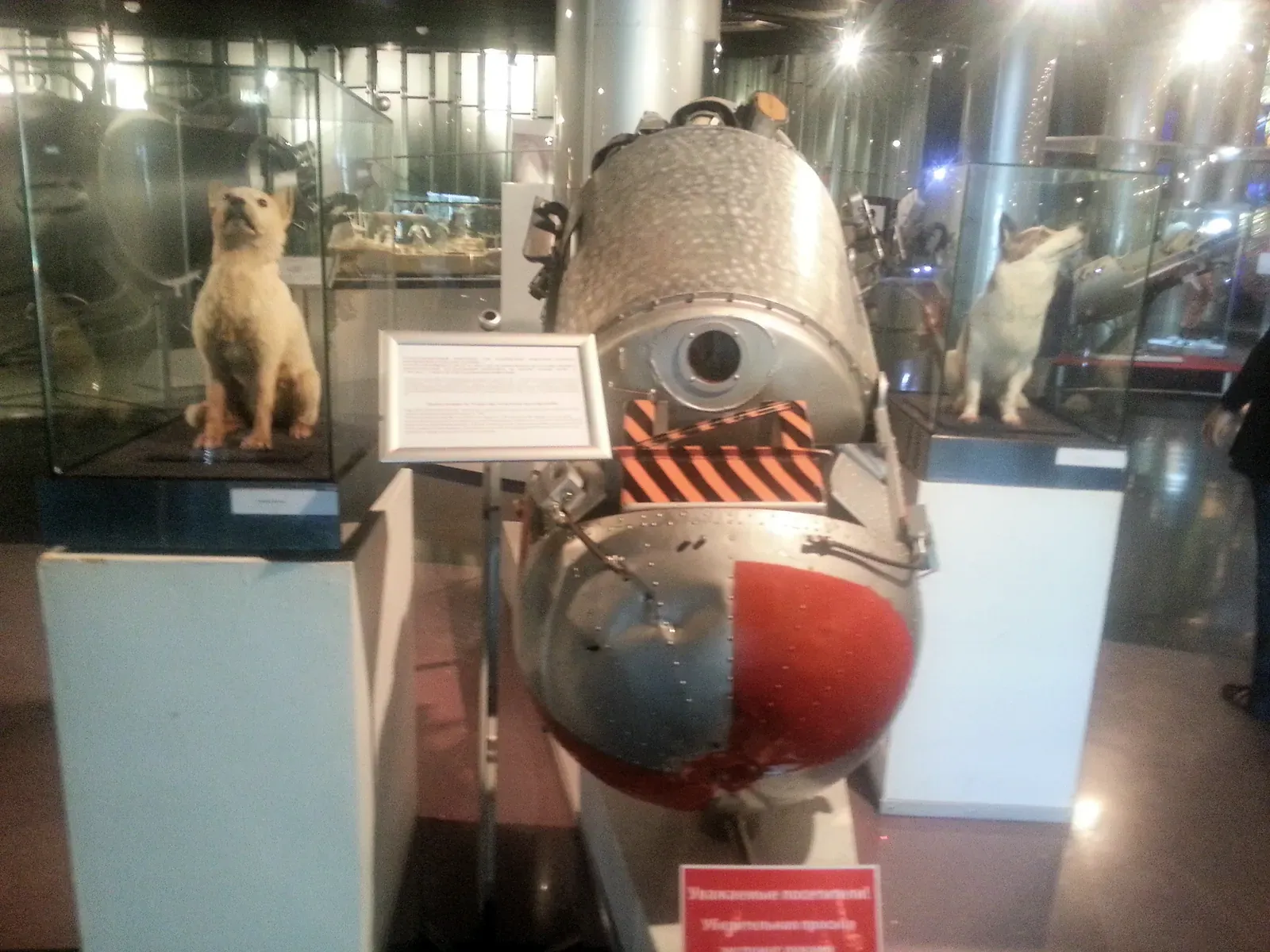
Laika was a stray from the streets of Moscow, a small mixed-breed female. On 3 November 1957 she was launched aboard Sputnik 2 and became the first animal to orbit the Earth. There was no plan to bring her back; the mission could not return to the ground, and Soviet statements at the time said she would be put to sleep painlessly after about ten days.
For decades the Soviet account of her death changed. Official statements gave different versions, including oxygen running out or euthanasia. The truth emerged in October 2002, when the Russian scientist Dimitri Malashenkov told the World Space Congress in Houston that Laika had died within hours of launch, from overheating and stress, about five to seven hours into the flight. Britannica attributes the problem to haste: the mission was rushed to meet the 40th anniversary of the October Revolution, and the temperature control system was not fully tested. Some popular accounts add cabin temperatures and details of a booster that failed to separate cleanly. Those specifics are not firmly established, so treat them with caution.
Laika became a symbol far beyond the mission. A monument to her stands in Moscow, and her story is still used in discussions of research ethics. Scientists involved in the programme later expressed regret about her fate.
Zvezdochka and the first human flight
The dogs were the rehearsal for human spaceflight. In 1961, a few weeks before Yuri Gagarin flew on 12 April, a dog named Zvezdochka, "little star", flew a single orbit and returned. After that, the Soviet programme considered the capsule ready for a person. The dogs had done what they were chosen to do, and the first human flight followed on their evidence.
What the dogs taught researchers
Heart rate, breathing and blood pressure were recorded in flight and compared with ground tests. The data told engineers that a living body could endure launch forces and short weightlessness, and they also showed the limits of the early life-support systems. The same records are the reason the early missions are described in the physiology literature as medical experiments as much as engineering tests. The programme had a human cost in animal lives, and its results cannot be separated from that cost.
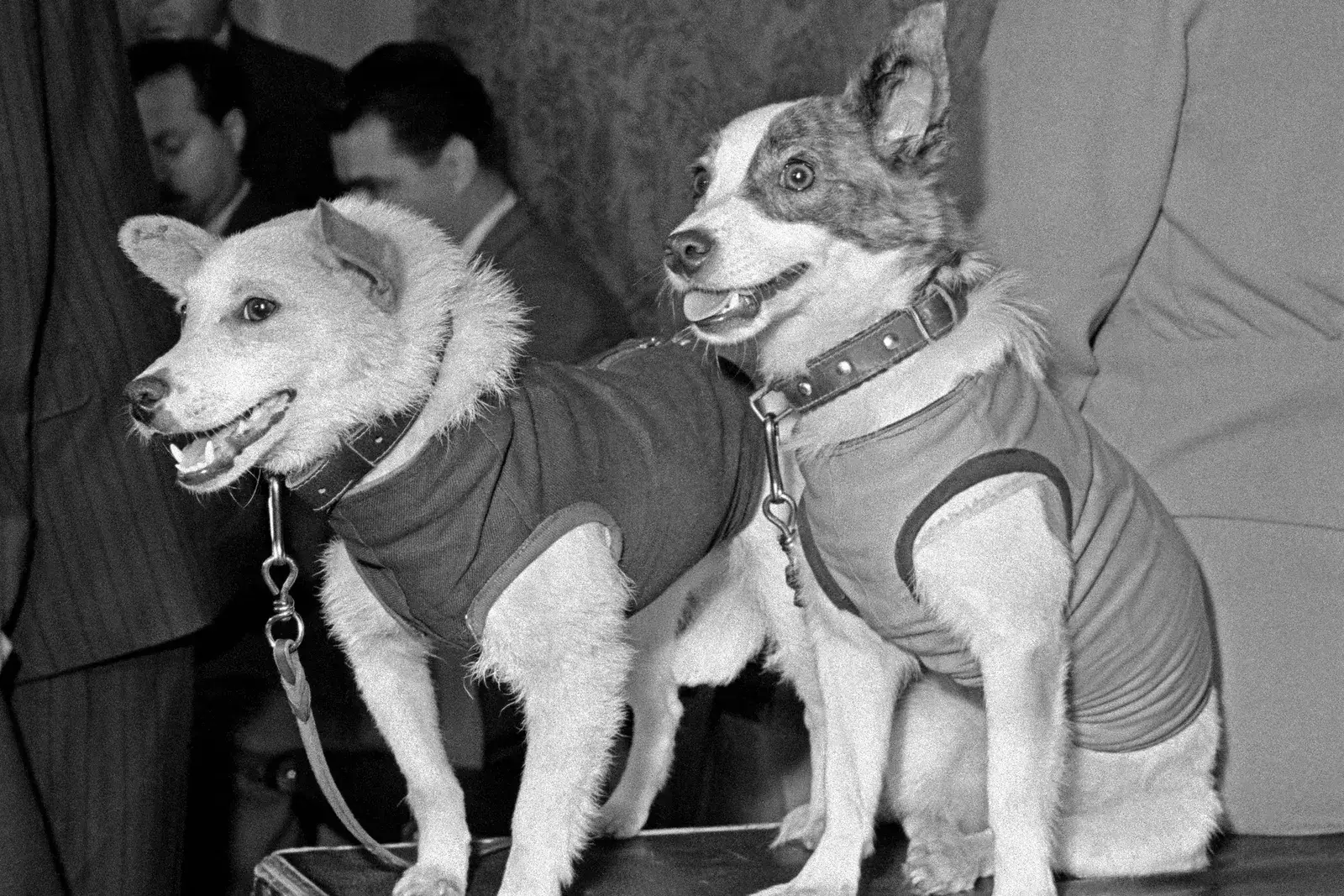
Belka and Strelka, 1960
On 19 August 1960 two dogs, Belka and Strelka, were launched on Korabl-Sputnik 2, also called Sputnik 5. The capsule made 17 orbits and landed on 20 August. They were the first higher animals to orbit the Earth and return alive. They flew with other passengers, including a rabbit, mice, rats and flies. Reports give slightly different durations of the flight, in the range of about 25 to 27 hours.
Pushinka and the Kennedys
Strelka later had puppies. One of them, called Pushinka, "Fluffy", was sent as a gift to the United States. Sources differ on the details of the gift. Some say it was for Caroline Kennedy, others for First Lady Jacqueline Kennedy, but all agree it was a goodwill gesture from the Soviet leader Nikita Khrushchev in the early 1960s. Pushinka later had puppies with the Kennedys' Welsh Terrier, Charlie, and President Kennedy called them "pupniks".
The dogs who flew did not choose any of it. Many did not return. The programme belongs to the history of the space age and also to the history of how people have treated animals in the name of discovery.
 Save
 GuideDog hybrids: what dogs can and cannot breed withCan dogs breed with wolves, coyotes, jackals or foxes? Wolfdogs, coydogs, the Sulimov dog and Dogxim explained, with chromosomes and DNA studies.GuideHow to adopt a dog from a shelter or rescueHow to adopt a dog from a shelter or rescue: the process, costs in general terms, choosing a dog, the first weeks and what if it does not work out.
Pavlov's dogs
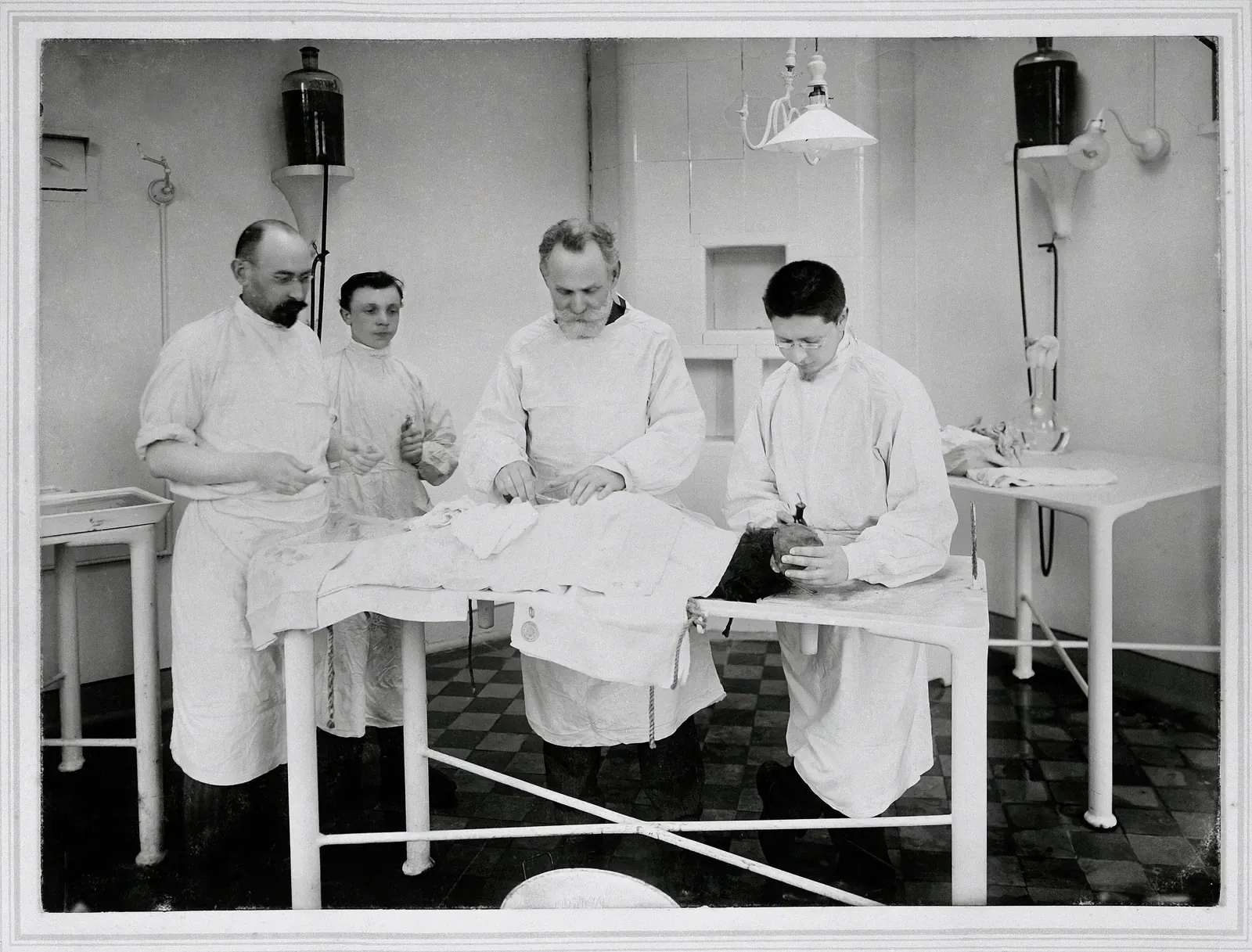
Ivan Pavlov, a Russian physiologist, won the 1904 Nobel Prize in Physiology or Medicine for his work on the digestive system, not for what he is best remembered for. In the course of that work, he and his colleagues noticed that dogs began to salivate before food reached their mouth, at the sight of the person who fed them or at the sound of footsteps.
 GuideDog Pregnancy: Length, Signs and Week by WeekHow long dogs are pregnant, signs of pregnancy, a week by week table, giving birth, false pregnancy and when to call a vet.
Pavlov built experiments around this. A neutral signal, such as a sound, was repeated just before food. After enough pairings the sound alone made the dog salivate. Pavlov called this a conditioned reflex; the textbook term is classical conditioning. Popular accounts say he used a bell. He did use various stimuli, including a metronome and other sounds, and the bell is a simplified version of the story.
The result changed psychology. It showed that learning could be measured, and it shaped the behaviourist school of the early 20th century. Everyday dog training still rests on the same idea: a clicker or a marker word works because it has been paired with a reward. Pavlov's dogs also gave a vocabulary to later work on fear, habit and advertising, though those applications go well beyond his own experiments.
How Pavlov measured it
Pavlov's team did not simply watch dogs drool. They made a small surgical opening in the cheek so that saliva could be collected and counted drop by drop, which turned an impression into a number. Such procedures are not allowed in many modern labs, and the dogs of the Pavlov laboratory are a good example of why research rules were tightened. A statue and a museum in the Russian city of Ryazan, Pavlov's birthplace, remember both the scientist and the animals.
Conditioning in the dog's everyday life
If you have ever seen a dog run to the door at the sound of keys, you have seen the same learning at work. The sound predicts a walk. Trainers use the same pairing on purpose, and the best programmes use it to build calm and trust, not fear.
 Save
 GuideMy Dog Has Bad Breath: Causes and What to DoDog breath smells? Gum disease is the usual cause, but sweet or ammonia smells can mean illness.GuideDog Pregnancy: Length, Signs and Week by WeekHow long dogs are pregnant, signs of pregnancy, a week by week table, giving birth, false pregnancy and when to call a vet.
Snuppy, the first cloned dog
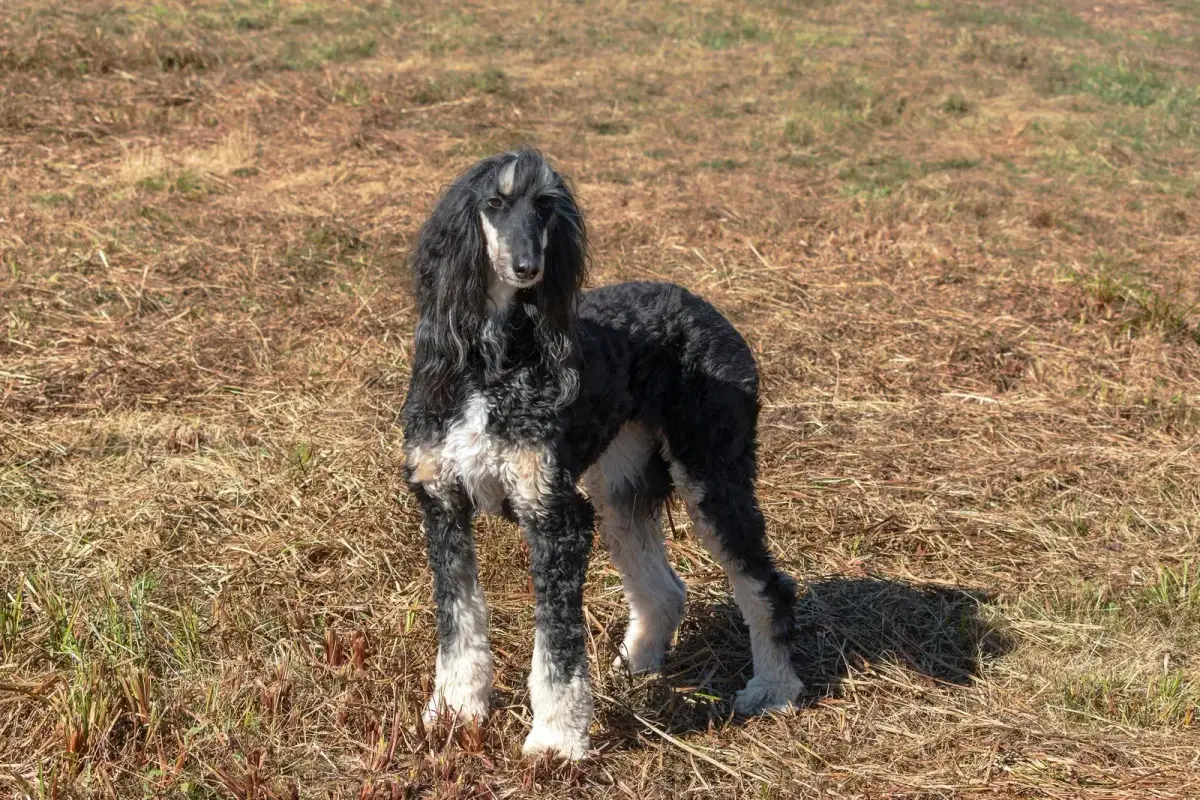
On 24 April 2005, a puppy was born at Seoul National University in South Korea. His name, Snuppy, blends "SNU" and "puppy". He was a male Afghan Hound, cloned from a skin cell of an adult male Afghan Hound by the team of Hwang Woo-suk. The embryos were carried by a surrogate, a yellow Labrador. Reports put the effort at more than a thousand reconstructed embryos moved into over a hundred surrogates, with only two pups born and one surviving. Guinness World Records lists the birth date a day later, so sources differ by one day.
 GuideDog laws by country: tax, insurance and licencesDog tax, compulsory liability insurance, licences, microchips and leash rules in Germany, Austria, Switzerland, Spain, Ireland, the UK, the US and more.
The results were published in Nature in August 2005. Months later, the same team's human stem-cell papers in Science were found to be fabricated and were retracted. The question was whether Snuppy was real. In January 2006, a committee at Seoul National University reported that the human cloning claims were false but that Snuppy was a genuine clone, confirmed by DNA testing. Snuppy lived until 2015.
Dog cloning has since moved into commercial services for pets, which this site does not promote. The scientific point of Snuppy was narrow: it showed that dog eggs, hard to work with, could be used to make a clone.
A word on what the clone was and was not
A clone shares the DNA of the donor but is not the same dog. Temperament and behaviour depend on upbringing, and coat patterns can differ because of how genes are switched on. Snuppy looked like Tie, the donor, and the match of the DNA was the proof the committee used. The episode is also a reminder of how research integrity works: the fraud was found by other scientists checking the claims, and the part that held up was the part that could be tested.
 Save
 GuideHow to Groom a Dog: Brushing, Baths, Nails and CoatsHow to groom a dog at home: coat types, brushing, how often to bathe, cutting nails, ears, teeth, shedding, matting and whether to shave a double coat.GuideDog laws by country: tax, insurance and licencesDog tax, compulsory liability insurance, licences, microchips and leash rules in Germany, Austria, Switzerland, Spain, Ireland, the UK, the US and more.
The dog genome
In December 2005, the journal Nature published "Genome sequence, comparative analysis and haplotype structure of the domestic dog", by Kerstin Lindblad-Toh and colleagues, led from the Broad Institute. The animal that was sequenced was a female Boxer named Tasha. She was chosen because tests showed she was highly inbred, which makes the DNA easier to assemble. The reference sequence spans about 2.4 billion letters of DNA. The team also compared the genomes of other dog breeds and found around 2.5 million single-letter differences between them.
 GuideMale vs Female Dogs: Differences, Myths and NeuteringMale vs female dogs: what research says about size, trainability and affection, marking, mounting, roaming, and the spay or neuter timing decision.
Why dogs help human genetics
- Shared diseases. Dogs and people live in the same homes and breathe the same air, and they get many of the same illnesses. Cancers, heart disease, allergies and eye disease all occur in both.
- Closed breeds. Each breed grew from a small group of founders, so a disease-causing change is often shared by every affected dog in the breed. That makes it easier to find. A well-known example is narcolepsy: the gene was first found in Dobermans and Labrador Retrievers (Lin and colleagues, Cell, 1999) and then helped researchers understand the human condition.
- Detailed records. Pedigrees and vet records are often better for dogs than for wild animals.
The same work serves the dogs. DNA tests used by breeders to avoid known inherited conditions grew directly out of this research. For how breeds group together by ancestry, see dog hybrids and the family tree covered on this site.
What came after the first genome
The Boxer reference was followed by more genomes from other breeds, from village dogs and from wolves. A large 2017 study led by Heidi Parker and colleagues, which this site uses for its breed families, grouped breeds into clades by DNA. A reference genome is a map, and each new dog sequenced adds detail: where a breed's special traits come from, how closely two breeds are related, and which inherited conditions can be tested for. Dogs also help ask where the species came from. For the wider picture of how dogs spread, see dog hybrids for crosses and the family tree guide for how breeds are related.
 GuideDog Grooming Competitions and Show Standards ExplainedHow breed standards shape dog grooming, from hand-stripped terriers to Poodle show clips, and how grooming competitions and creative grooming work.GuideMale vs Female Dogs: Differences, Myths and NeuteringMale vs female dogs: what research says about size, trainability and affection, marking, mounting, roaming, and the spay or neuter timing decision.
Dogs that detect disease
A dog's nose has hundreds of millions of scent receptors, far more than a human nose. Several research groups have tested whether dogs can smell disease. The results are interesting, and the cautions matter.
 ArticleDog Breed Family Tree: How All Dog Breeds Are RelatedThe dog breed family tree from Ice Age wolves to 29 breed families.
Cancer
In 2006, Michael McCulloch and colleagues published a study in Integrative Cancer Therapies. Five dogs, three Labrador Retrievers and two Portuguese Water Dogs, were trained for a short time to sit by breath samples from people with lung or breast cancer. The team reported high accuracy for both. Outside experts raised concerns about how the samples were collected and whether smoking or chemotherapy odours gave clues. McCulloch himself said that the work needed to be repeated with other dogs and backed up with chemical analysis of the breath. It is best read as an early proof of concept.
Diabetes alert dogs
Trained dogs are used by some people with type 1 diabetes to warn of low blood sugar. Studies of how reliable they are have given mixed results, and performance depends on the dog and the training. The studies are small, so no individual numbers are given here.
COVID-19
During the pandemic, several teams tested dogs on samples from infected people. A pilot study by Jendrny and colleagues (2020, BMC Infectious Diseases) trained dogs on saliva and similar samples from patients and reported an overall sensitivity of about 83 percent and a specificity of about 96 percent, with differences between dogs. Other groups, including a team led by Dominique Grandjean in France, tested sweat samples. A field study of trained scent dogs in Rwanda found they performed worse during the Omicron wave, which suggests dogs may need retraining as a virus changes.
What this adds up to: dogs can learn to respond to the odour of a disease, and the results look promising for screening in places where lab tests are scarce. They are not a replacement for a medical test. Dogs differ, training differs, and published studies are mostly small.
 GuideBest dog breeds for familiesBest dog breeds for families, small homes, allergies, first-time owners and seniors, ranked from our breed ratings, with honest limits and a table.ArticleDog Breed Family Tree: How All Dog Breeds Are RelatedThe dog breed family tree from Ice Age wolves to 29 breed families.
Welfare and ethics
Most of the dogs in this guide did not volunteer. Laika, Dezik and Pavlov's animals were used in ways that are not accepted in research today. In many countries, rules now limit when dogs can be used in experiments, require ethical review and push researchers to look for alternatives first. Not every country has the same rules, and practice varies.
 GuideMy Dog Is Coughing: Causes and When to See a VetDog coughing, honking or hacking? Emergency signs, kennel cough, collapsing trachea, heart cough, what to do at home and when to see a vet.
Dogs that work as detection partners are in a different position. They usually work for play and reward, in short sessions, and the better programmes put the dog's comfort first. A few honest points apply to every case:
- A dog cannot give consent.
- The benefits to people and to other dogs are real, and so are the costs.
- Past practice is not a model for present practice.
 GuideMy Dog Is Vomiting: Causes and What to DoDog throwing up? Vomiting vs regurgitation, emergency signs like bloat, common causes, safe home care, what not to do, and when to see a vet.GuideMy Dog Is Coughing: Causes and When to See a VetDog coughing, honking or hacking? Emergency signs, kennel cough, collapsing trachea, heart cough, what to do at home and when to see a vet.
FAQ
Who was the first dog in space?
Dezik and Tsygan flew to about 110 kilometres on 22 July 1951 and returned alive, on a suborbital flight. Laika was the first animal in orbit, on Sputnik 2 on 3 November 1957.
How did Laika die?
She died from overheating and stress a few hours into the flight, according to Dimitri Malashenkov, who made the disclosure in October 2002. Earlier Soviet statements gave different accounts.
Did Belka and Strelka survive?
Yes. They flew on 19 August 1960 for 17 orbits and landed the next day.
What are Pavlov's dogs?
They are the dogs used by Ivan Pavlov to study conditioned reflexes, in which a neutral signal comes to trigger salivation after being paired with food.
What breed was the first cloned dog?
Snuppy was an Afghan Hound, born in 2005 at Seoul National University.
Which dog was used for the dog genome?
A Boxer named Tasha. The sequence was published in Nature in December 2005.
Can dogs really smell cancer or COVID-19?
Studies suggest that trained dogs can respond to the odour of certain diseases. The studies are small and results vary, so dogs are a possible screening aid, not a diagnosis.
Read next
 Family storyUK RuralRead the family's story: origins, members, DNA
 Family storyAlpineRead the family's story: origins, members, DNA
 Family storyEuropean MastiffRead the family's story: origins, members, DNA
Sources (10)
- Encyclopaedia Britannica, entry on Laika.
- Dimitri Malashenkov, presentation at the World Space Congress, Houston, October 2002.
- Records on Dezik and Tsygan (1951) and Belka and Strelka, Korabl-Sputnik 2 (1960), as summarised in standard histories of the Soviet space programme.
- Nobel Prize in Physiology or Medicine 1904, Ivan Pavlov.
- Woo Suk Hwang and colleagues, Nature, August 2005 (Snuppy).
- Seoul National University investigation committee report, January 2006; Nature news coverage of the finding.
- Kerstin Lindblad-Toh and colleagues, Nature, December 2005, "Genome sequence, comparative analysis and haplotype structure of the domestic dog".
- Lin and colleagues, Cell, 1999 (canine narcolepsy gene).
- Michael McCulloch and colleagues, Integrative Cancer Therapies, 2006.
- Jendrny and colleagues, BMC Infectious Diseases, 2020.