For many breeds the written breed standard says how the coat should look and, sometimes, how it may be prepared. Separate grooming competitions test a different skill: how well a groomer can transform a dog with scissors, clippers or hands. This guide explains how standards shape grooming, what the Poodle clips are, why some terriers are hand-stripped, how grooming contests are judged, and where creative grooming raises welfare questions. For everyday coat care at home, see our dog grooming guide.
How breed standards shape grooming
A breed standard is the written ideal that a kennel club judges dogs against. Most standards describe the coat: its length, texture, colour and sometimes the way it is presented. They do not give grooming instructions in detail, but they set what the judge expects to see. The main patterns are these:
 GuideDogs in science and spaceSpace dogs Laika, Belka and Strelka, Pavlov's dogs, Snuppy the clone, the dog genome and scent detection: what dogs did for science, and what it cost them.
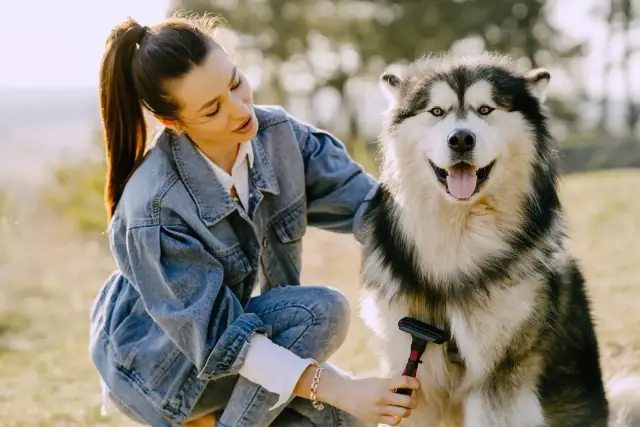
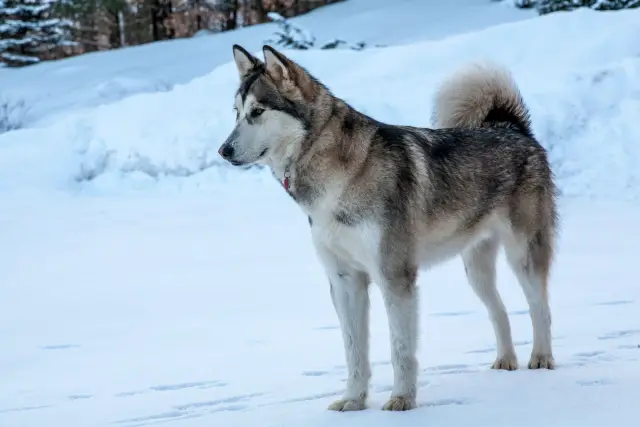
- Natural coats. Many spitz and herding breeds are shown with the coat left as it grows, brushed out and clean. Trimming is limited to tidying feet and the like. The Samoyed and Siberian Husky are examples of double-coated breeds whose coat is part of the standard, and shaving damages the insulation of such a coat, as veterinary and breed-club advice says.
- Long, untrimmed coats. The Afghan Hound standard under the FCI describes a long, fine coat with a silky topknot, short and close along the saddle in mature dogs, and records that clipping or scissoring is penalised.
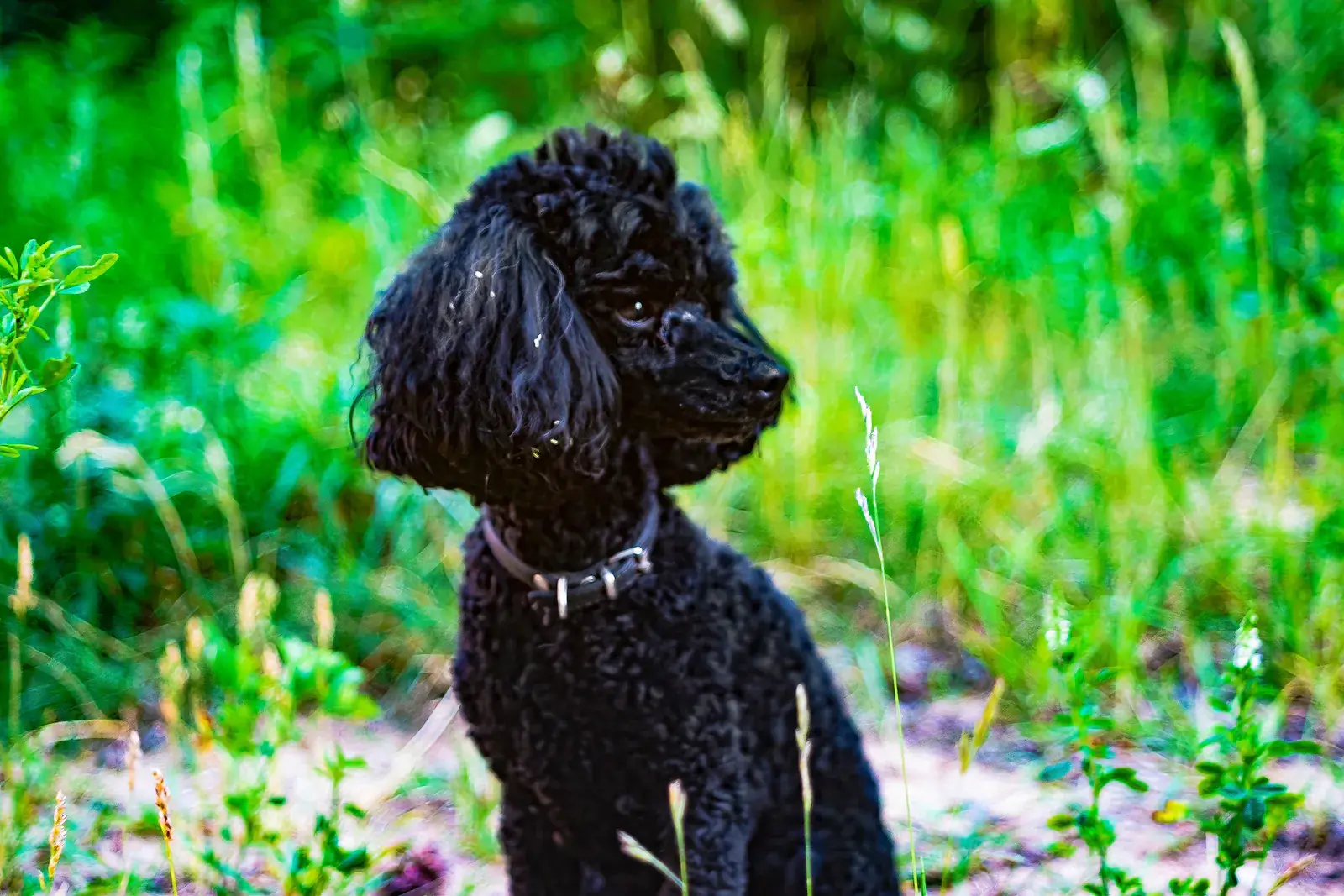
- Trimmed or clipped coats. Some standards expect shaping. The Poodle is the classic case, with accepted show clips. The Bichon Frisé may be shown trimmed or untrimmed according to the standards summarised in our breed profile.
- Hand-stripped coats. Wire-coated terriers are traditionally presented by hand stripping, the removal of dead hair by hand or with a blunt tool.
- Corded coats. The Komondor coat forms cords as it grows, and the Canadian Kennel Club notes that it cords naturally but needs help to produce an even corded effect.
The standards do not always agree, and what a standard says about presentation can differ between clubs. For the exact wording of your breed, read the standard on the kennel club's own site.
 GuideHow to Groom a Dog: Brushing, Baths, Nails and CoatsHow to groom a dog at home: coat types, brushing, how often to bathe, cutting nails, ears, teeth, shedding, matting and whether to shave a double coat.GuideDogs in science and spaceSpace dogs Laika, Belka and Strelka, Pavlov's dogs, Snuppy the clone, the dog genome and scent detection: what dogs did for science, and what it cost them.
Hand stripping and the wire coat
A wire-coated terrier, such as the West Highland White Terrier or the Miniature Schnauzer, grows a harsh outer coat that does not fall out on its own. In nature the old hair would be pulled out as part of a moult, and hand stripping copies that. Breed-care sources say a stripped coat keeps its colour and wiry texture, while a clipped coat grows back softer and paler. One breed-care source also argues that clipping leaves the roots of the old hairs in the follicles, which may irritate skin. That is one source's view, not a verdict, and many pet owners clip wire coats because it is simpler.
 GuideDog Breeds by Country: Which Nations Made the Most?Dog breeds by country: how many breeds each nation produced in the Dogs Atlas data, from the UK and France to Japan, plus national dogs and families.
The show ring is stricter. A Border Terrier club show report states that the correct and only way to present a Border Terrier is by hand stripping, and, quoting an older yearbook, that a razor, or a strip comb with a razor in it, is strongly objected to. That is a breed club and judges' view, not the Kennel Club standard. The same report says coat is secondary to construction and type when dogs are placed, because coats come and go naturally.
For a pet, the trade-off is practical. Stripping is slow and takes skill, and one owner of a retired show terrier says it is hard on arthritic hands. Clipping is quicker. Both are legitimate for a pet, and a groomer can show you what suits your dog. Our how to find a good groomer guide explains what to ask.
 GuideHow to Find a Good Dog Groomer: Questions and SignsHow to find a good dog groomer: qualifications, questions to ask, signs of good and poor care, sedation, dryers, mobile groomers and what to check after.GuideDog Breeds by Country: Which Nations Made the Most?Dog breeds by country: how many breeds each nation produced in the Dogs Atlas data, from the UK and France to Japan, plus national dogs and families.
Poodle show clips
The Poodle shows how a working haircut became a show style. Our Poodle profile explains that retrievers swam better with the hindquarters and limbs cut, while hair was left on the chest and joints to keep the heart, lungs and joints warm. The accepted clips today are:
 GuideSmartest dog breeds: what the rankings measure and what they missCoren's smartest dog breeds list, what it measured, what newer dog cognition research says, three kinds of dog intelligence and why smart dogs need work.
| Clip | What it looks like | Who may show it (AKC) |
|---|---|---|
| Puppy clip | Face, throat, feet and tail base shaved, pompon left on the tail | Poodles under 12 months |
| English Saddle | Face, throat, feet, forelegs and tail base shaved, puffs on the forelegs, a short blanket on the hindquarters with shaved bands on each hind leg, rest of the body in full coat | Adults in regular classes |
| Continental | Face, throat, feet and tail base shaved, hindquarters shaved with optional hip pompons, bracelets on the hind legs, puffs on the forelegs | Adults in regular classes |
| Sporting clip | A short, easy-care trim | Only stud dog and brood bitch classes and the non-competitive Parade of Champions |
Under the AKC rules, any other clip is grounds for disqualification. Many exhibitors show a "modified" Continental that is shorter, since the AKC standard does not specify coat length as long as the outline is smooth and unbroken. The United Kennel Club permits puppy and English Saddle clips as well as natural or corded coats. Check the UK Kennel Club's own wording on Poodle clips directly.
At home, a short all-over "lamb" or "sporting" trim is a common pet choice and keeps the coat manageable. It is not a show clip.
 GuideWinter Care for Dogs: Cold, Paws, Antifreeze and IceWinter care for dogs: how cold is too cold, coats, salt and antifreeze, hypothermia, frostbite, frozen ponds, dark walks and holiday hazards.GuideSmartest dog breeds: what the rankings measure and what they missCoren's smartest dog breeds list, what it measured, what newer dog cognition research says, three kinds of dog intelligence and why smart dogs need work.
Pet trim or show trim?
Neither is better for the dog. A "puppy cut" on a Shih Tzu, Maltese or Yorkshire Terrier, popular with owners, saves time and reduces mats. Show coats need daily care. The pet trim is not a lesser version of the show trim: it serves another purpose.
 GuideDogs of Japan: the native breeds and their storiesJapanese dog breeds explained: the six Nihon Ken, the Chin, Tosa, Japanese Spitz and Terrier, Hachiko, wartime near-extinction, DNA and who they suit.
| Show grooming | Pet grooming | |
|---|---|---|
| Aim | Match the breed standard for the ring | Comfort, hygiene and easy care |
| Coat | Often grown long and prepared for months | Often kept shorter and easier to brush |
| Methods | Hand stripping, specific clip, brushing and oiling in some breeds | Clipper trims, puppy cuts, regular brush-outs |
| Frequency | Plan around show dates | Every few weeks or as the coat needs |
 GuideMy Dog Has Bad Breath: Causes and What to DoDog breath smells? Gum disease is the usual cause, but sweet or ammonia smells can mean illness.GuideDogs of Japan: the native breeds and their storiesJapanese dog breeds explained: the six Nihon Ken, the Chin, Tosa, Japanese Spitz and Terrier, Hachiko, wartime near-extinction, DNA and who they suit.
Dog grooming competitions
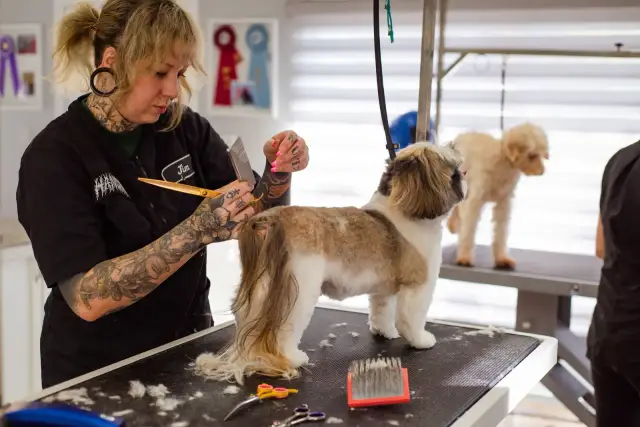
A grooming competition is not a dog show. In a dog show the judge compares dogs with the breed standard. In a grooming contest the judge looks at the work done on the dog. Groomers compete in classes, often split by skill level, and the dog is the canvas, though judges also look at how the dog is handled.
 GuideMy Dog's Eye Is Red: Causes and When to See a VetRed, weepy or squinting dog eye? Emergency signs, common causes like conjunctivitis and ulcers, what to do at home, what to avoid, and when to see a vet.
Intergroom. The Intergroom World Championship, listed in a 2019 trade magazine item, was open to any professional groomer, breeder or handler across two competition days. After each competition, two judges selected three groomers from the ring, and the Best in Show judge crowned one world champion. Judges were reported to look for dramatic transformation and precise styling.
The Royal Kennel Club Dog Grooming Championships. This competition has run at Crufts, according to the Crufts site. Check the event pages for current classes and criteria.
FCI guidelines. The FCI publishes judging guidelines for grooming competitions. They name factors such as suitability of the style to the dog, the difficulty of the clip and the quality of scissoring, shaving or stripping, and they say the welfare and health of the dogs must be of the highest importance. For creative salon clips, artistic clips that enhance the beauty of the dog's form are the basis of judging.
Common criteria. A competition guide lists technical skill, accuracy of the breed profile, balance and symmetry, and coat condition. Another source says grooming competitions emphasise balance, structure and finish of the coat more than classic breed shows do.
These sources are partly dated and from trade sites, so rules vary by event and year. If you want to compete, read the current rulebook of the event.
 GuideBest dog breeds for familiesBest dog breeds for families, small homes, allergies, first-time owners and seniors, ranked from our breed ratings, with honest limits and a table.GuideMy Dog's Eye Is Red: Causes and When to See a VetRed, weepy or squinting dog eye? Emergency signs, common causes like conjunctivitis and ulcers, what to do at home, what to avoid, and when to see a vet.
Creative grooming and the welfare debate
Creative classes sit at the far end of the sport. Contestants have built themed designs, with colour, shaping and props, and judging is more about creativity than the breed standard. Supporters see an art form that celebrates the dog. Critics worry about dogs being used as props.
 GuideMy Dog Is Coughing: Causes and When to See a VetDog coughing, honking or hacking? Emergency signs, kennel cough, collapsing trachea, heart cough, what to do at home and when to see a vet.
The clearest risk is dye. Human hair dye can contain ammonia, peroxide and paraphenylenediamine, which can irritate skin or cause burns, according to a commercial vet service, which advises using only products labelled for dogs. A widely reported US case involved a small Maltese mix dyed with a human product. Pinellas County Animal Services said she arrived with swollen-shut eyes and burns, and she recovered after months of care. Shelter staff also warned that dogs lick, so dye can be swallowed.
No peer-reviewed studies on dye welfare or veterinary association position statements exist, and one source says dyeing a dog is illegal in some parts of the United States without naming where. The sensible position for owners is cautious: never use human dye, ask a vet if your dog has skin problems, and do not pursue a design for a dog that dislikes long sessions. FCI guidance puts welfare first, and any competition groomer should too.
 ArticleDog Breed Family Tree: How All Dog Breeds Are RelatedThe dog breed family tree from Ice Age wolves to 29 breed families.GuideMy Dog Is Coughing: Causes and When to See a VetDog coughing, honking or hacking? Emergency signs, kennel cough, collapsing trachea, heart cough, what to do at home and when to see a vet.
Frequently asked questions
What is a breed standard trim?
A coat presentation that matches what the breed standard describes, such as a hand-stripped terrier or a Poodle in a Continental clip.
What is hand stripping?
Removing dead hair from a wire coat by hand or with a blunt tool, rather than cutting it. It keeps the coat's colour and texture, say breed-care sources.
What clips can a Poodle be shown in?
Under AKC rules, puppy clip under 12 months, then English Saddle or Continental. Other clips are disqualified, except the Sporting clip in limited classes.
Is a Poodle's show clip cruel?
No. It began as a working retriever's haircut. Whether a dog enjoys long preparation depends on handling.
Do all show dogs get clipped?
No. Many breeds are shown natural and brushed out, and the Afghan Hound standard penalises clipping.
How are dog grooming competitions judged?
On technical skill, breed profile, balance and symmetry, coat condition and, in creative classes, artistic impact. The FCI says welfare comes first.
What is creative grooming?
Grooming that uses colour, shapes or themes beyond a breed trim. It is judged for creativity.
Is it safe to dye a dog's coat?
Human dye is not safe for dogs. Dyes made for dogs reduce the risk but no study confirms their safety, so ask a vet and avoid use on sensitive skin.
Can my pet have a show trim?
Yes, if you like it, but it needs more brushing. Ask a groomer. See how to find a good groomer.
Read next
 Family storyEast Eurasian dogsRead the family's story: origins, members, DNA
 Family storyPoodleRead the family's story: origins, members, DNA
 Family storyModern CrossbreedRead the family's story: origins, members, DNA
Sources (12)
- AKC Poodle breed standard text on clips, as reproduced in SHOWSIGHT magazine, "Poodle trims"
- United Kennel Club, Poodle clip document.
- Border Terrier Club show report, Richmond Championship Show, 11 September 2010 (club and judges' views).
- Jane Dogs, "Clipping versus hand stripping" (breed-care source).
- FCI, grooming competition judging guidelines, GRO REG 2024.
- Groomer to Groomer magazine, "Intergroom: International Competition" (2019).
- Cayman Compass, "Where creativity wags its tail" (2010, on Intergroom creative classes).
- Royal Kennel Club Dog Grooming Championships document on the Crufts site
- Revelation Pets, "How to prep for your first dog grooming contest".
- PangoVet, "Is dog hair dye safe" (commercial vet service).
- Pinellas County Animal Services case of a dog dyed with human hair dye, as reported by news outlets and PETA
- Canadian Kennel Club and FCI standards as recorded in our breed profiles (Komondor, Afghan Hound, Bichon Frisé).