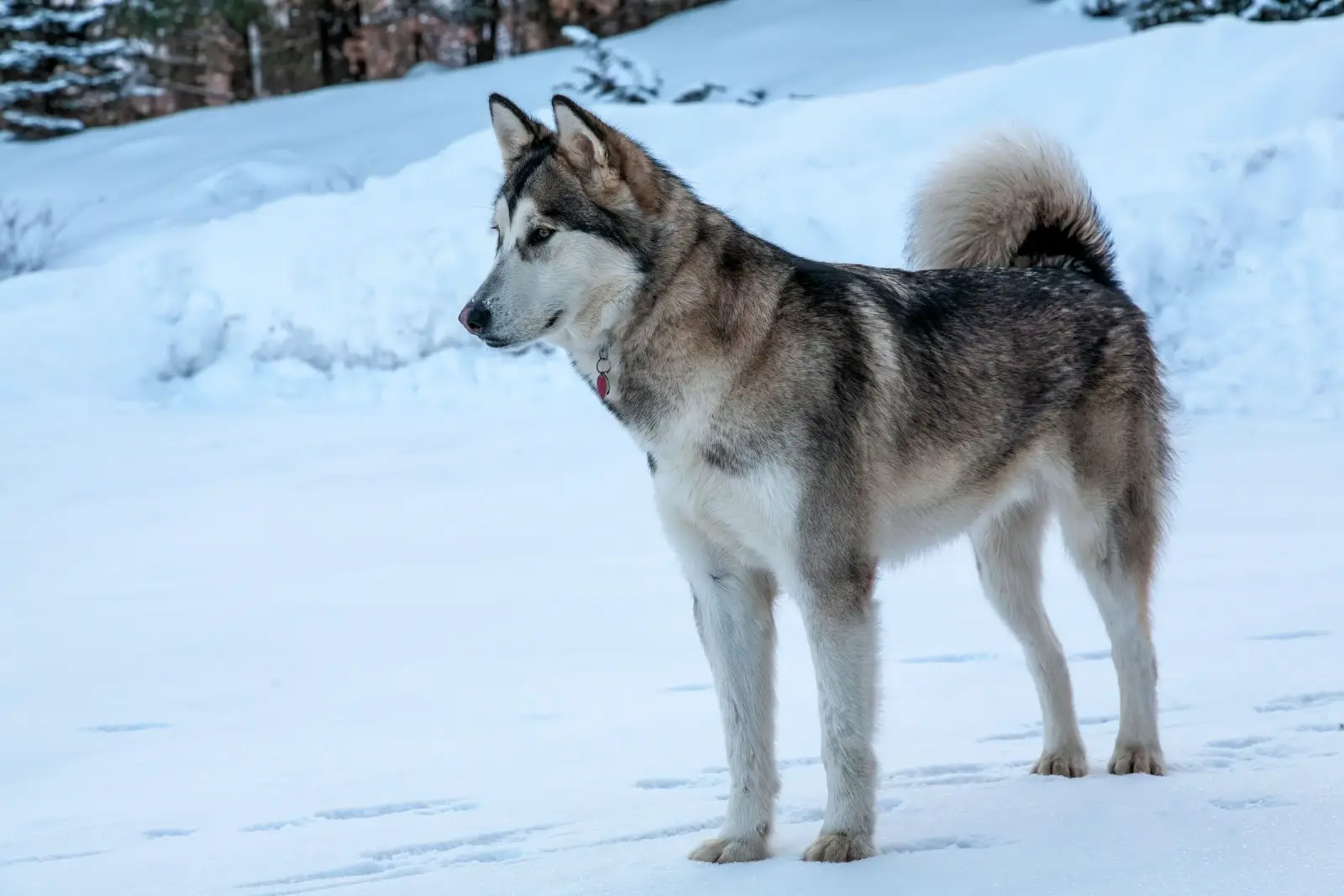
How much cold a dog can take depends on coat, size, age, body fat and health, so there is no single safe temperature. The winter dangers worth planning for are cold itself (hypothermia and frostbite), road salt and de-icers on the paws, antifreeze, frozen water and short, dark afternoons. This guide covers each one, what to do first and when to see a vet. It is general information, and a vet who examines your dog decides what is wrong.
How cold is too cold for dogs?
There is no one number. The RSPCA says all dogs are individual and are comfortable in different temperatures. What changes a dog's tolerance:
 GuideDog Pregnancy: Length, Signs and Week by WeekHow long dogs are pregnant, signs of pregnancy, a week by week table, giving birth, false pregnancy and when to call a vet.
- Coat. Breeds with a double coat (two layers of fur) are better adapted to cold months. Dogs with no fur or a thin, short coat are more susceptible to the cold and to cold-related illness (RSPCA).
- Size. Smaller dogs lose body heat faster. Bigger breeds are more insulated and higher above the ground, so they stay warm for longer (RSPCA).
- Age. Puppies cannot regulate their temperature fully yet. Elderly and sick dogs struggle too, as do dogs not used to the cold (RSPCA).
- Wet fur. PDSA says a dog that dries off after getting wet is unlikely to get cold, but one that stays wet and stops moving on a cold day can develop hypothermia. Merck adds that frostbite is more likely in wet or windy conditions.
- Health. Cold can make arthritic joints stiffer and more painful, especially in older dogs (RSPCA, PDSA). The RSPCA also lists flat-faced dogs, such as the Bulldog and the Pug, as having a higher risk of breathing difficulty in winter.
Breeds that cope and breeds that struggle
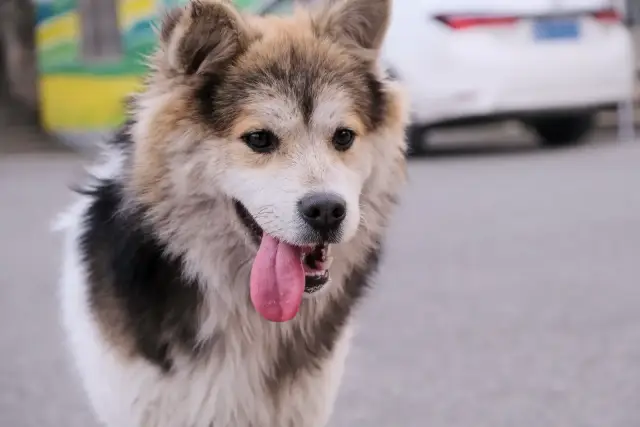
The AKC chief veterinarian writes that cold-weather breeds such as the Siberian Husky and the Alaskan Malamute are less prone to frostbite, but that every breed can get frostbite and hypothermia after enough time in the cold. A thick coat helps. It does not make a dog immune.
At the other end are slim, short-coated dogs. PDSA names greyhounds, lurchers and whippets as a type that particularly enjoys an extra layer of warmth. See the Greyhound, Whippet and Italian Greyhound pages. A very small dog like the Chihuahua falls under the RSPCA's point on size: a small body loses heat quickly.
What the vet bodies say about temperature
Vet organisations give few figures, and the ones they give are broad:
- The RSPCA says that at freezing (0 °C) all dogs are at risk of hypothermia and frostbite, especially small, slim, young and old dogs and those with little or no fur.
- The RSPCA suggests keeping indoor temperatures between 10 °C and 25 °C, and says dogs more susceptible to the cold may start to struggle below that.
- The AKC says dogs are at risk of frostbite once the temperature falls below 0 °C (32 °F), and that it can start to develop in as little as 30 minutes.
No published figure says a given breed is fine down to a given temperature. The ASPCA and the AKC both give a rule of thumb: if it is too cold for you, it is probably too cold for your dog. Check wind, rain and how long you will be out.
 GuideHow to Groom a Dog: Brushing, Baths, Nails and CoatsHow to groom a dog at home: coat types, brushing, how often to bathe, cutting nails, ears, teeth, shedding, matting and whether to shave a double coat.GuideDog Pregnancy: Length, Signs and Week by WeekHow long dogs are pregnant, signs of pregnancy, a week by week table, giving birth, false pregnancy and when to call a vet.
Does my dog need a coat in winter?
Some dogs do, many do not. PDSA says dogs that grow thick coats all year round are not as bothered by the chill, while shorter-haired breeds, puppies and older dogs may need extra help staying warm and would benefit from a coat. The RSPCA recommends a coat, jacket or jumper for dogs that feel the cold, are out in it for a long time, or are out in wintry weather generally.
 ArticleDog Breed Family Tree: How All Dog Breeds Are RelatedThe dog breed family tree from Ice Age wolves to 29 breed families.
A coat is more likely to help short-coated and slim dogs, very small dogs, puppies, seniors and dogs that stand still a lot on a walk. A thick-coated dog that keeps moving is less likely to need one. The AKC says clothing should never be used on an unattended dog or as a substitute for proper care, only as an addition.
How a coat should fit
The RSPCA says the coat must be a comfortable fit so the dog can behave normally, for example go to the toilet easily. For short-haired dogs the ASPCA suggests a high collar or turtleneck style with coverage from the base of the tail to the belly.
Do not shave the coat in winter
The ASPCA says never to shave a dog down to the skin in winter, because a longer coat gives more warmth. For a long-haired dog, trim only to reduce clinging ice balls, salt crystals and de-icing chemicals, and do not forget the hair between the toes. Our dog grooming guide covers coat care through the year.
 GuideDog Grooming Competitions and Show Standards ExplainedHow breed standards shape dog grooming, from hand-stripped terriers to Poodle show clips, and how grooming competitions and creative grooming work.ArticleDog Breed Family Tree: How All Dog Breeds Are RelatedThe dog breed family tree from Ice Age wolves to 29 breed families.
Winter paws: salt, grit, ice balls and cracked pads
The Merck Veterinary Manual points out that ice is slippery for everyone and that pets walking outside can pick up irritating salt or other chemicals on their paws. The common problems:
 GuideMy Dog Is Coughing: Causes and When to See a VetDog coughing, honking or hacking? Emergency signs, kennel cough, collapsing trachea, heart cough, what to do at home and when to see a vet.
- Salt and grit. PDSA says the salt and grit used on roads in winter can irritate paws.
- Snow and ice balls. PDSA says snow can build up on paws and cause discomfort. The RSPCA says ice balls that freeze into fur are heavy and painful.
- Dry and cracked skin. The RSPCA lists visible cracks on the paws, pads or nose, licking or chewing the feet, limping and holding up a paw.
- Licking it off. Merck warns that dogs may lick salt off their paws, which leads to poisoning (see below).
Before the walk
- Trim the hair between the pads and around the toes. PDSA says this leaves less hair for snow to gather on. The RSPCA says it stops ice balls forming and adds the fur around the back legs and bottom for medium and long-haired dogs.
- Protect the pads. PDSA suggests a thin layer of paw butter or other pet-safe skin cream. The ASPCA suggests petroleum jelly or a vet-approved paw protectant. Boots give more cover: the RSPCA says they protect against cold ground and contact with rock salt, grit and antifreeze.
- Check the route. The RSPCA suggests avoiding snowy or icy patches to help prevent dry, cracked skin.
After the walk
- Wash and dry the feet and belly. The ASPCA says to do this after every walk to remove ice, salt and chemicals, and to check for cracked pads or red skin between the toes.
- Soak off packed snow in warm water, as PDSA suggests, then dry well.
- Towel the dog dry. The ASPCA says going repeatedly from cold air into a warm home can cause itchy, flaking skin, so keep the home humidified.
- Bathe as little as possible during cold spells. The ASPCA says too much washing strips the skin's natural oils.
If a pad is cut, bleeding or swollen, or your dog keeps limping, see our dog paw injury guide. If the licking will not stop, see why dogs lick their paws.
 GuideDog Clothes: When Dogs Need Coats, and a Short History of Dog FashionDo dogs need coats in winter? When clothes help, when costumes stress a dog, safe fit, reflective gear, and a short history of dog fashion and dog art.GuideMy Dog Is Coughing: Causes and When to See a VetDog coughing, honking or hacking? Emergency signs, kennel cough, collapsing trachea, heart cough, what to do at home and when to see a vet.
Winter poisons: antifreeze, de-icers and rock salt
 GuideDogs in Legends and Fairy TalesDogs in folklore and fairy tales: Black Shuck, The Tinderbox, Saint Guinefort, Panhu, Greyfriars Bobby, Barry and Old Drum, with legend and history kept apart.
Antifreeze (ethylene glycol)
PDSA calls ethylene glycol a very toxic chemical that damages a dog's organs even in very small amounts, and says the poisoning is often fatal unless treated extremely quickly. It is also found in screen wash, brake fluid and radiator fluid. It tastes sweet, so dogs drink it, and they can swallow it by walking through a spill and licking their paws (PDSA). Pet Poison Helpline adds that not all antifreeze products contain ethylene glycol, so the type matters.
If you think your dog has had contact with antifreeze:
- Phone your vet or an emergency vet straight away. PDSA says never wait for symptoms to develop.
- Do not try to make your dog vomit unless a vet tells you to. PDSA says vomiting only helps in the very early stages and gives no benefit once the antifreeze is absorbed.
Signs can start within about an hour. PDSA lists wobbliness and weakness (which can pass and return), vomiting, low energy, drinking and weeing more and then less, fast breathing, seizures and collapse. PDSA says survival is more likely if treatment starts within 12 hours.
Prevention:
- Store antifreeze, screen wash and brake fluid in labelled, sealed containers, clean up spills at once and dispose of old containers, because dogs can drink rainwater from them (PDSA).
- PDSA says a bittering agent in antifreeze is not completely reliable. The ASPCA suggests products with propylene glycol instead of ethylene glycol.
- Keep your dog away from parked cars and places where there could be leaks (PDSA).
De-icers and rock salt
The RSPCA says swallowed road salt and grit can cause thirst, vomiting, lethargy and, in severe cases, convulsions and kidney damage. Merck describes vomiting within several hours that can progress to weakness, diarrhoea, muscle tremors and seizures. The ASPCA says swallowed rock salt can lead to dangerously high sodium levels, and that chemical ice melts can be dangerous if swallowed.
If your dog has licked a lot of salt or de-icer, or shows these signs, call your vet or a poison service. In the US that means the ASPCA Animal Poison Control Center or Pet Poison Helpline. Elsewhere, ask your vet for the local number now, before you need it. The ASPCA says "pet safe" has no set labelling rules, so follow the safety directions on any de-icer you buy.
 GuideHow to Find a Good Dog Groomer: Questions and SignsHow to find a good dog groomer: qualifications, questions to ask, signs of good and poor care, sedation, dryers, mobile groomers and what to check after.GuideDogs in Legends and Fairy TalesDogs in folklore and fairy tales: Black Shuck, The Tinderbox, Saint Guinefort, Panhu, Greyfriars Bobby, Barry and Old Drum, with legend and history kept apart.
Hypothermia in dogs: signs and first steps
Hypothermia means the body temperature drops dangerously low. PDSA says it is extremely dangerous and can cause death if not treated quickly, since a large or sudden drop can harm the heart, kidneys, gut and blood vessels. The RSPCA gives a dog's average body temperature as 37.5 to 39.2 °C and says hypothermia usually follows exposure to freezing temperatures or wet fur. PDSA also lists blood loss, some illnesses, and sedation or anaesthesia as causes.
 ArticleThe first known dog on every continentEarliest accepted dog on each continent, from Bonn-Oberkassel to the dingo: dates, sites, how dogs arrived and which breeds carry those first dogs.
Signs of hypothermia
PDSA and the RSPCA list shivering, drowsiness and confusion, clumsiness, pale gums, and collapse or loss of consciousness.
Merck says something different: shivering is not usually a sign of hypothermia in pets, as it is in people. Pets typically act weak or disoriented, breathe shallowly, have a slow pulse or, at worst, collapse. PDSA and the RSPCA both say a severely cold dog may stop shivering. The cautious reading: a shivering dog is cold and needs warming up, and a dog that has stopped shivering and seems sleepy is not better. Weakness, confusion or collapse in the cold is an emergency either way.
First steps
These come from PDSA and the RSPCA. Start them while you phone the vet or travel there:
- Get the dog out of the cold, wind and wet. Dry a wet dog with a towel.
- Warm slowly. Wrap the dog in blankets underneath and over the body, and raise the temperature around the dog by putting the heating on in the house or car.
- Use nothing hot on the skin. PDSA warns against burns from a hot water bottle. The RSPCA says that if you use one, fill it with warm, not boiling, water and cover it with a thick towel or blanket.
- Offer lukewarm water only if the dog is awake and able to drink.
- See a vet, even if your dog seems to recover (PDSA).
Never leave a dog in a cold car
PDSA says never to leave a pet somewhere cold, such as a car, after a walk. The RSPCA says never to leave a dog alone in a car, even with the heating on, as the dog could develop hypothermia or overheat.
 GuideMy Dog Is Panting a Lot: Normal or Worrying?Dog panting heavily? Normal vs worrying panting, heatstroke signs and cooling steps, pain, anxiety, Cushing's disease, and when to see a vet.ArticleThe first known dog on every continentEarliest accepted dog on each continent, from Bonn-Oberkassel to the dingo: dates, sites, how dogs arrived and which breeds carry those first dogs.
Frostbite in dogs: signs and what to do
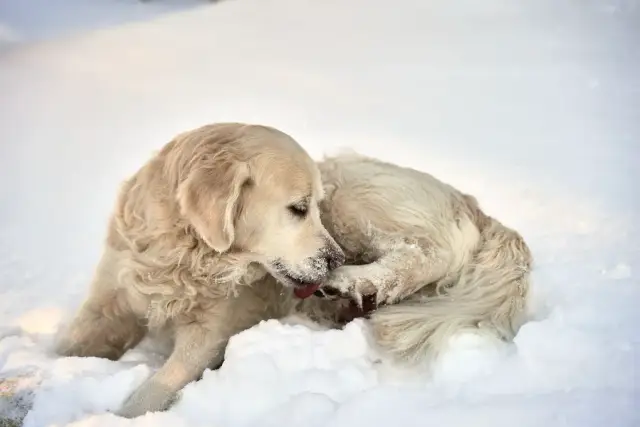
Frostbite is tissue damage from freezing. The RSPCA says it is very painful and hits the tail, foot pads, nose and ear tips. Merck says it is more likely in dogs poorly adapted to cold climates and in wet or windy weather.
 GuideMale vs Female Dogs: Differences, Myths and NeuteringMale vs female dogs: what research says about size, trainability and affection, marking, mounting, roaming, and the spay or neuter timing decision.
Signs of frostbite
- Pale skin, often blue-white, because blood flow is limited (RSPCA). Merck says it may also be red.
- Pain, tenderness or swelling (RSPCA, AKC, Merck).
- Skin cold to the touch, and stiffness or clumsiness (AKC).
- Blisters (RSPCA, AKC).
- In severe cases, skin that turns black, hard or dead and may come away (RSPCA, Merck).
- A dog licking or chewing the area (RSPCA).
What to do
- Move your dog to a warm, dry place and wrap the dog in blankets (RSPCA).
- Do not rub the area (RSPCA, AKC).
- Do not use direct heat. The AKC names hairdryers and heating pads, and the RSPCA says not to place anything hot on the skin.
- Phone your vet and go. The RSPCA and AKC say to take the dog to the vet immediately.
Merck describes treatment as rapid, gentle warming with warm, not hot, water plus supportive care, and says amputation may be needed in severe cases but should wait until a vet can see the difference between living and dead tissue. Where the sources differ on warming, the cautious route is to get the dog somewhere warm and let the vet do the rewarming.
The AKC adds that frostbite alone is not usually life-threatening, but is often followed by hypothermia, which can be fatal.
 GuideMy Dog Keeps Licking His Paws: Causes and What HelpsDog licking paws all the time: allergies, parasites, injury, yeast and boredom.GuideMale vs Female Dogs: Differences, Myths and NeuteringMale vs female dogs: what research says about size, trainability and affection, marking, mounting, roaming, and the spay or neuter timing decision.
Frozen ponds, lakes and rivers
Cheshire Fire and Rescue says ice is usually thin, weak and uneven, with hidden depths below, and that falling through can lead to cold water shock, hypothermia and drowning.
 GuideDog hybrids: what dogs can and cannot breed withCan dogs breed with wolves, coyotes, jackals or foxes? Wolfdogs, coydogs, the Sulimov dog and Dogxim explained, with chromosomes and DNA studies.
- Keep dogs on a lead near frozen water. PDSA says frozen ponds may tempt dogs but are as dangerous to pets as to people. The RSPCA says thin ice may break under a dog's weight. Cheshire Fire and Rescue says dogs are safest on leads and to stay away from edges and banks, which can be unstable or hidden under snow.
- Never go onto the ice or into the water after your dog. Cheshire Fire and Rescue says this applies to a pet or a person.
- Call the fire and rescue service. In the UK, phone 999 and ask for Fire and Rescue, giving a precise location. Elsewhere, call your local emergency number. Stay on firm ground and wait.
- If you fall in yourself, Cheshire Fire and Rescue says to float on your back in a starfish position and keep calm until help arrives.
After any dunking in cold water, treat the dog as at risk of hypothermia and follow the steps above.
 GuideMy Dog's Eye Is Red: Causes and When to See a VetRed, weepy or squinting dog eye? Emergency signs, common causes like conjunctivitis and ulcers, what to do at home, what to avoid, and when to see a vet.GuideDog hybrids: what dogs can and cannot breed withCan dogs breed with wolves, coyotes, jackals or foxes? Wolfdogs, coydogs, the Sulimov dog and Dogxim explained, with chromosomes and DNA studies.
Dark afternoons: walking and being seen
The RSPCA and PDSA both advise sticking to well-lit places and using reflective or LED gear on you and your dog, so drivers can see you. PDSA also mentions a torch. The ASPCA says never to let a dog off lead on snow or ice, especially in a snowstorm, because dogs can lose their scent and get lost, and more dogs are lost in winter. The RSPCA says a microchip with up-to-date details helps if a dog slips away. PDSA says icy surfaces are as slippery for pets as for us, so watch your footing.
 GuideAdvanced dog trainingAdvanced dog training explained: the 3 Ds, proofing, off-lead recall, formal heel, distance stays, impulse control, tricks, scent work, dog sports and Good Citizen schemes.
 GuideBest dog breeds for familiesBest dog breeds for families, small homes, allergies, first-time owners and seniors, ranked from our breed ratings, with honest limits and a table.GuideAdvanced dog trainingAdvanced dog training explained: the 3 Ds, proofing, off-lead recall, formal heel, distance stays, impulse control, tricks, scent work, dog sports and Good Citizen schemes.
Exercise on bad-weather days
Merck says walks matter for a dog's overall health and that it is still important to get dogs outside as temperatures drop, with walk times adjusted. When weather cuts a walk short, add exercise indoors:
 GuideMy Dog Is Lethargic: Causes and When to Call a VetDog tired, weak or not himself? Normal tiredness vs lethargy, emergency signs, common causes, what to note for the vet and what to avoid.
- Puzzle feeders, interactive toys and games. The RSPCA suggests these for indoor enrichment.
- Short training sessions. Our dog training basics guide has ideas to start with.
- Hide-and-seek with treats or a toy, which uses the nose and needs no equipment.
PDSA says staying active matters so pets do not become winter couch potatoes, and that comfy spaces raised off the floor keep pets out of cold draughts. The RSPCA notes that some dogs sleep or eat more in winter to conserve energy and others have more energy to warm up. If your dog refuses walks or goes off food, speak to a vet. See dog lethargy and a dog not eating or drinking.
 GuideMy Dog Keeps Shaking His Head: Ear Infection GuideDog shaking head, scratching ears or smelly ears? Ear infection signs, causes, ear haematoma, emergency signs, what to do and what to avoid.GuideMy Dog Is Lethargic: Causes and When to Call a VetDog tired, weak or not himself? Normal tiredness vs lethargy, emergency signs, common causes, what to note for the vet and what to avoid.
Food and water in winter
The RSPCA does not advise keeping dogs outside in any weather, and PDSA says that on very wintry nights dogs are ideally indoors.
 GuideBorder Collie behaviour problems and how to train themBorder Collie behaviour and training: why they nip, chase, fixate and fear noise, what to do about each, and a weekly plan for owners.
- Calories. The ASPCA says pets burn extra energy staying warm, so a little extra food can help. Merck says the same for outdoor dogs and suggests splitting the larger amount into several meals.
- Less activity, less food. PDSA says that if a pet's activity level drops, so should how much you feed.
- Water. The ASPCA says plenty of water keeps a dog hydrated and skin less dry. For outdoor dogs, Merck says to provide heated water buckets so water does not freeze.
- Sleeping place. The ASPCA recommends a warm bed off the floor and away from draughts.
 GuideHow to adopt a dog from a shelter or rescueHow to adopt a dog from a shelter or rescue: the process, costs in general terms, choosing a dog, the first weeks and what if it does not work out.GuideBorder Collie behaviour problems and how to train themBorder Collie behaviour and training: why they nip, chase, fixate and fear noise, what to do about each, and a weekly plan for owners.
Holiday hazards for dogs
PDSA lists these Christmas hazards:
 GuideDog laws by country: tax, insurance and licencesDog tax, compulsory liability insurance, licences, microchips and leash rules in Germany, Austria, Switzerland, Spain, Ireland, the UK, the US and more.
- Chocolate, including chocolate baubles on a tree. Leave chocolate decorations off the tree altogether.
- Mincemeat, currants, raisins and sultanas, in mince pies, Christmas pudding and cake.
- Onions, garlic, leeks and shallots, which can cause severe anaemia in high enough amounts. Gravy, stuffing and sauces can contain them.
- Bones, a choking hazard that can cause gut blockages and tears.
- Tinsel, small decorations and fairy lights, which can cause a serious blockage if swallowed.
- Plants: holly, ivy, poinsettia and mistletoe.
- The tree itself. Do not leave pets unsupervised around it, as it can be pulled down.
PDSA says to keep to the regular diet as much as possible, because a sudden change can upset the stomach, and to pick a healthy treat or puzzle feeder if you want to give one. Our can dogs eat guide covers common foods. If your dog eats something from this list, call your vet or a poison service at once.
 GuideSmartest dog breeds: what the rankings measure and what they missCoren's smartest dog breeds list, what it measured, what newer dog cognition research says, three kinds of dog intelligence and why smart dogs need work.GuideDog laws by country: tax, insurance and licencesDog tax, compulsory liability insurance, licences, microchips and leash rules in Germany, Austria, Switzerland, Spain, Ireland, the UK, the US and more.
Winter walk gear
For what to look for in coats, boots and lights, see our separate winter walk gear guide on the Dogs Atlas wishlist.
 GuideDogs in myth around the worldFrom Anubis and Cerberus to Fenrir, Xolotl and the Tiangou: how cultures across the world imagined dogs as guardians, guides and monsters.
The emergency signs and first steps in this guide were checked against PDSA, the RSPCA and the Merck Veterinary Manual in November 2026.
 GuideDog Breeds by Country: Which Nations Made the Most?Dog breeds by country: how many breeds each nation produced in the Dogs Atlas data, from the UK and France to Japan, plus national dogs and families.GuideDogs in myth around the worldFrom Anubis and Cerberus to Fenrir, Xolotl and the Tiangou: how cultures across the world imagined dogs as guardians, guides and monsters.
FAQ
How cold is too cold for dogs?
There is no single figure. The RSPCA says that at freezing (0 °C) all dogs are at risk of hypothermia and frostbite, especially small, slim, young and old dogs and those with little fur. If it feels too cold for you, it is probably too cold for your dog (ASPCA and AKC).
Do dogs need coats in winter?
Some do. PDSA says shorter-haired breeds, puppies and older dogs may need a coat in cold weather, while dogs with thick coats are less bothered. The coat should fit so the dog can move and toilet normally (RSPCA).
Is antifreeze really that dangerous for dogs?
Yes. PDSA says ethylene glycol damages organs even in very small amounts and is often fatal unless treated very quickly. Phone a vet at once if you think your dog had contact with it, and do not wait for symptoms.
Why do my dog's paws need washing after a winter walk?
To remove salt, grit and de-icer. The ASPCA says to wash and dry the feet and belly after each walk, and the Merck Veterinary Manual says dogs can lick salt off their paws, which can poison them.
How do I know if my dog has hypothermia?
PDSA and the RSPCA list shivering (which can stop if the dog is severely cold), drowsiness, confusion, clumsiness, pale gums and collapse. Merck describes weakness, disorientation, shallow breathing and a slow pulse. Warm the dog slowly, use nothing hot on the skin and see a vet.
Can dogs get frostbite?
Yes. It usually hits the ear tips, paws and tail. Move the dog somewhere warm, do not rub the area or use direct heat, and see a vet (RSPCA and AKC).
What should I do if my dog goes through the ice?
Do not go onto the ice yourself. Call the fire and rescue service and wait on firm ground (Cheshire Fire and Rescue; RSPCA). Afterwards, watch for hypothermia and see a vet.
Read next
 Family storyAmerican TerrierRead the family's story: origins, members, DNA
 Family storyAncient American dogsRead the family's story: origins, members, DNA
 Family storyNew WorldRead the family's story: origins, members, DNA
Sources (10)
- RSPCA, "How to help dogs in cold weather" (coat, size and age, indoor temperature, hypothermia, frostbite, antifreeze, rock salt, dark walks, indoor enrichment).
- PDSA, "Hypothermia in pets" pet health hub leaflet (causes, signs, first aid, cold cars, coats for greyhounds, lurchers and whippets).
- PDSA, "Antifreeze poisoning in dogs" pet health hub leaflet (signs, treatment, 12 hours, prevention).
- PDSA, "PDSA's winter advice to keep your pet safe through the cold season" (salt and grit, snowy paws, frozen ponds, visibility, feeding less when less active).
- PDSA, "How to have a pet-friendly Christmas" (decorations, chocolate, raisins, onions, bones, plants).
- Merck Veterinary Manual, "Keeping Pets Safe During Cold Winter Months" (hypothermia signs, frostbite, rock salt, antifreeze, outdoor dogs).
- ASPCA, "Cold Weather Safety Tips" (paw care, no shaving, feeding, antifreeze, never off lead on snow).
- American Kennel Club, "Can Dogs Get Frostbite?", Dr. Jerry Klein, 2023 (signs, treatment, breeds, 30 minutes).
- Cheshire Fire and Rescue Service, "Ice safety" (thin ice, never go after a pet, call 999, float to live).
- Pet Poison Helpline, "Antifreeze" (types of antifreeze, urgent contact).