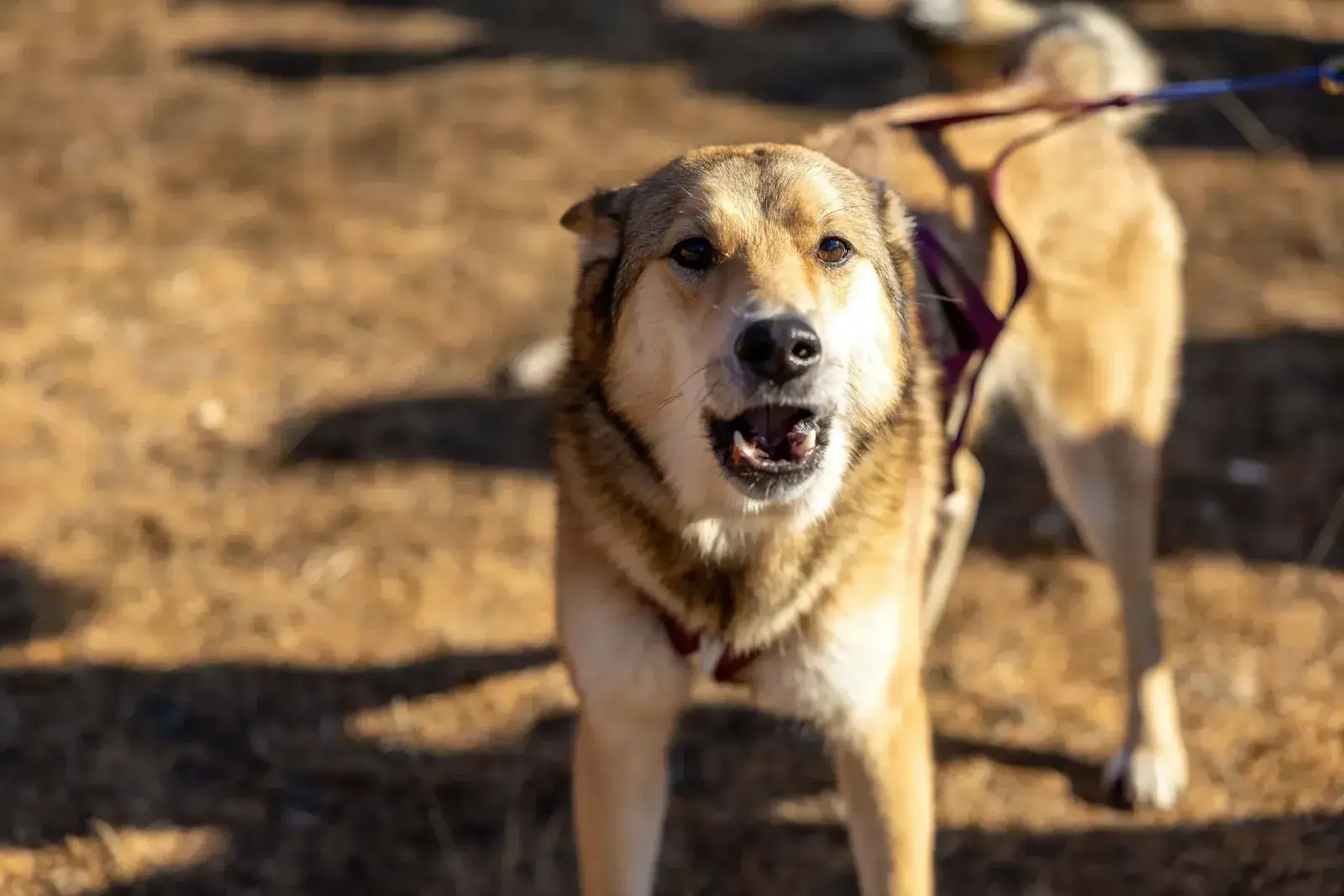
It is a dog that reacts too strongly to something it finds scary, frustrating or too exciting: another dog, a stranger, a bike, a loud noise. The reaction (barking, lunging, spinning, growling) is the dog's way of coping with a feeling that is too big. Calming a reactive dog means lowering that feeling, not suppressing the noise. This guide explains what reactivity is, why it happens, what to do in the moment and how to build a slow, steady training plan at home. It is for owners of any breed or mix. For one breed's version of the problem, see the Border Collie behaviour guide.
Quick answer: how do you calm a reactive dog?
- See the vet first. Pain and illness can cause or worsen reactivity.
- Add distance. Find the distance at which your dog notices the trigger but can still eat and listen. Work there.
- Stop practising the reaction. Change routes and walk times so the dog meets fewer triggers while training goes on.
- Pair triggers with food. Show the trigger at a low level, then feed. Over weeks the trigger starts to predict good things.
- Never punish the reaction. Punishment adds fear to a dog that is already afraid or frustrated.
- Expect weeks to months. Progress is real but slow, and setbacks are normal.
- Get professional help if the dog has bitten, or if you feel stuck.
 GuideDogs of Japan: the native breeds and their storiesJapanese dog breeds explained: the six Nihon Ken, the Chin, Tosa, Japanese Spitz and Terrier, Hachiko, wartime near-extinction, DNA and who they suit.
 GuideBorder Collie behaviour problems and how to train themBorder Collie behaviour and training: why they nip, chase, fixate and fear noise, what to do about each, and a weekly plan for owners.GuideDogs of Japan: the native breeds and their storiesJapanese dog breeds explained: the six Nihon Ken, the Chin, Tosa, Japanese Spitz and Terrier, Hachiko, wartime near-extinction, DNA and who they suit.
What is a reactive dog?
Reactivity means over-reacting to a trigger compared with what most dogs would do. The trigger is usually something specific: dogs, people, children, bikes, cars, noises, or a mix. The dog barks, lunges, growls, whines, spins or freezes, often at the end of a lead.
 GuideBanned and restricted dog breeds by countryWhich dog breeds are banned or restricted, country by country: UK, Ireland, France, Germany, Denmark, Norway, Spain, Australia and more.
Behind the display there are usually three feelings, alone or together:
- Fear. The dog wants the scary thing to go away. Barking and lunging make it go away (the other dog or person walks on), so the dog learns the display works.
- Frustration. The dog wants to reach the trigger, often to greet or chase, and cannot because of the lead. The feeling builds until it spills out. This is often called barrier or leash frustration.
- Over-excitement. The dog is so aroused by the trigger that it cannot think. It looks aggressive but may be wildly happy.
The same dog can feel different things in different situations, and it can be hard to tell which is which from the outside. That is fine. The training plan below works for all three.
 GuideMale vs Female Dogs: Differences, Myths and NeuteringMale vs female dogs: what research says about size, trainability and affection, marking, mounting, roaming, and the spay or neuter timing decision.GuideBanned and restricted dog breeds by countryWhich dog breeds are banned or restricted, country by country: UK, Ireland, France, Germany, Denmark, Norway, Spain, Australia and more.
Reactive or aggressive?
The two words overlap but are not the same. Reactivity describes a strong emotional response. Aggression describes behaviour meant to cause distance or harm, such as growling, snapping, snarling or biting, usually toward a person or another animal.
 GuideDog Clothes: When Dogs Need Coats, and a Short History of Dog FashionDo dogs need coats in winter? When clothes help, when costumes stress a dog, safe fit, reflective gear, and a short history of dog fashion and dog art.
Many reactive dogs never bite. Their barking and lunging is loud, but the dog has no intention to make contact. Others do bite when pushed past their limit. A growl is a warning, not a crime: it tells you the dog is struggling, and it is safer to listen to the warning than to punish it away. A dog that has been punished for growling may learn to skip the warning and go straight to the bite.
If a dog has bitten, or you are worried it might, see your vet and then a qualified behaviourist (see the section on professional help below). Do not wait for the reactivity to fix itself.
 GuideWhy does my dog do that? 15 common behavioursWhy does my dog lick me, stare, eat grass, spin, sigh or roll in smelly things? 15 everyday dog behaviours explained, with when to ask a vet.GuideDog Clothes: When Dogs Need Coats, and a Short History of Dog FashionDo dogs need coats in winter? When clothes help, when costumes stress a dog, safe fit, reflective gear, and a short history of dog fashion and dog art.
Why do dogs become reactive?
There is rarely one cause. Several factors usually stack up.
 GuideLivestock guardian dogs: what they do and who they suitWhat livestock guardian dogs do, how they differ from herding dogs, 40 LGD breeds by country, the DNA evidence, and whether they make good pets.
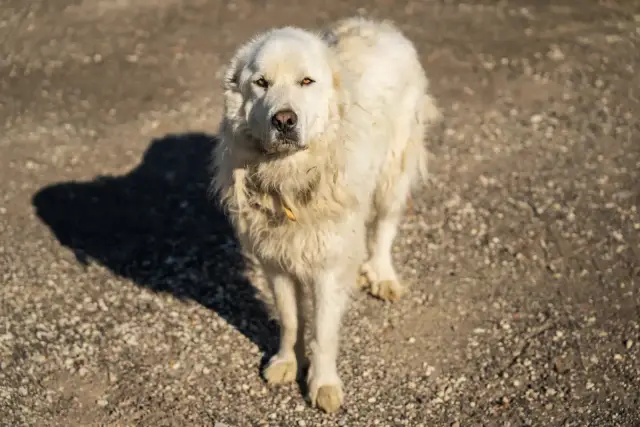
Genetics and temperament. Some dogs are born more sensitive. A large Finnish study of 13,700 pet dogs found that anxiety-related traits, including fear of noise and fear of strangers, were common and differed a lot between breeds, pointing to a genetic share (Salonen et al., 2020). Dogs bred to watch and herd movement, to guard, or to hunt can be quicker to react to moving or unfamiliar things. This does not mean every dog of those types is reactive; it means they may need more help.
Early socialisation gaps. Puppies learn most easily in their first weeks. Classic work on puppy development described a sensitive period from about 3 to 12 weeks, when puppies take in new people, animals and places without much fear (Scott and Fuller, 1965). The American Veterinary Society of Animal Behavior's position statement on puppy socialisation says the first three months of life are the main window, and that missed socialisation in that period can raise the later risk of fear, avoidance or aggression. A puppy that saw few dogs, people or sounds may find them alarming later. Good socialisation means pleasant, low-stress exposure, not flooding.
Bad experiences. One frightening encounter, such as being attacked by another dog, can leave lasting fear. Repeated bad encounters, such as being dragged past triggers on a short lead, add up.
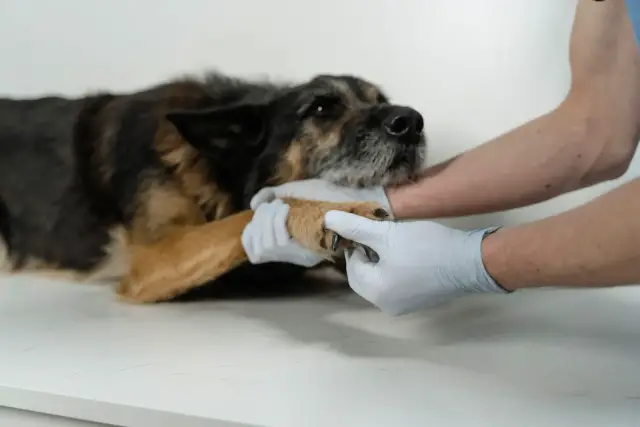
Pain and health. Pain makes dogs touchy, and many behaviour problems have a physical part. A 2020 review of dog behaviour cases by Mills and colleagues estimated that at least roughly a third of referred cases involve a painful condition, and that in some settings the figure may be much higher. Musculoskeletal pain was most often mentioned, but stomach, gut and skin problems also appeared (Mills et al., 2020). If reactivity appears suddenly, or gets worse with age, ask your vet to check joints, teeth, ears, eyes, skin and hormones before blaming training.
Practice. Every time a dog barks and the trigger leaves, the behaviour is rewarded. A habit grows. By the time the owner calls a behaviourist, the dog may have rehearsed the reaction hundreds of times.
Lack of rest and low-level stress. A dog that is tired, under-exercised, over-stimulated or living in a noisy house has a shorter fuse. Stress builds up over days. Reactivity often looks worse after a busy weekend or a night of poor sleep.
For more on odd or puzzling behaviour, see why does my dog.
 GuideAdvanced dog trainingAdvanced dog training explained: the 3 Ds, proofing, off-lead recall, formal heel, distance stays, impulse control, tricks, scent work, dog sports and Good Citizen schemes.GuideLivestock guardian dogs: what they do and who they suitWhat livestock guardian dogs do, how they differ from herding dogs, 40 LGD breeds by country, the DNA evidence, and whether they make good pets.
How to read your dog's body language
You cannot calm a dog you cannot read. Reactions rarely come from nowhere: the dog usually gave earlier signals that went unnoticed.
 ArticleDog Breed Family Tree: How All Dog Breeds Are RelatedThe dog breed family tree from Ice Age wolves to 29 breed families.
Early signs of stress or discomfort:
- Lip licking, yawning (out of context), looking away
- Ears pinned back or held stiffly forward
- Tense mouth, closed or tight lips
- Sniffing the ground suddenly
- Slow movement or stopping
- Shaking off when dry
- Tail held low, tucked or stiff and high
Signs the dog is getting close to reacting:
- Hard stare, body going still
- Weight shifting forward, hackles rising
- Pulling toward the trigger, or refusing to move
- Ignoring food and your voice
- Whining or panting heavily
The reaction itself: barking, lunging, growling, spinning, snapping.
A loose, wiggly body with a soft face and relaxed mouth is a dog at ease. A stiff, closed body with a hard face is a dog under pressure. Learn what your own dog looks like at each stage, and act early, before the reaction.
 Save
 GuideMy Dog Is Lethargic: Causes and When to Call a VetDog tired, weak or not himself? Normal tiredness vs lethargy, emergency signs, common causes, what to note for the vet and what to avoid.ArticleDog Breed Family Tree: How All Dog Breeds Are RelatedThe dog breed family tree from Ice Age wolves to 29 breed families.
The threshold idea
The most useful concept in reactivity training is the threshold. It is the distance, or intensity, at which your dog stops being able to cope.
 ArticleThe first known dog on every continentEarliest accepted dog on each continent, from Bonn-Oberkassel to the dingo: dates, sites, how dogs arrived and which breeds carry those first dogs.
- Under threshold: the dog sees the trigger, may be a little alert, but can still eat a treat, hear you and move easily. Learning is possible here.
- At threshold: the dog is tense, stares, starts to refuse food. Time to add distance.
- Over threshold: the dog barks, lunges, cannot hear you or eat. No learning happens. The dog is simply practising the reaction.
The threshold is not fixed. It shrinks when the dog is tired, stressed, in pain or has already met several triggers that day. It grows when the dog is rested and calm. Distance is the easiest thing to change: the same dog may cope with another dog 30 metres away and fall apart at 10 metres. All of the training below happens under threshold.
 GuideMy Dog Injured His Paw: First Aid and When to See a VetDog paw injury: cut pads, torn nails, grass seeds, hot pavement burns and limping.ArticleThe first known dog on every continentEarliest accepted dog on each continent, from Bonn-Oberkassel to the dingo: dates, sites, how dogs arrived and which breeds carry those first dogs.
What to do in the moment
When your dog reacts on a walk, the goal is to get out safely and calmly, not to teach a lesson. Teaching comes later, at a distance.
 GuideDog Breeds by Country: Which Nations Made the Most?Dog breeds by country: how many breeds each nation produced in the Dogs Atlas data, from the UK and France to Japan, plus national dogs and families.
- Add distance. Move away from the trigger. Cross the road, step between parked cars, go down a side street.
- Turn away calmly. Use a relaxed "let's go" and make a U-turn. Move at a normal pace. Racing away adds to the excitement.
- Use a treat scatter if it helps. Drop a few small treats on the ground. Sniffing calms the dog and gives it something else to do. This is a rescue tool for emergencies, not the training itself.
- Keep the lead loose. Tight leads can raise tension and worsen frustration. A well-fitted flat collar or body strap worn loosely helps the dog feel less restrained.
- Stay calm yourself. Dogs read tone and tension in the lead. Breathe, soften your shoulders, speak in a low, slow voice.
- Do not shout, jerk or scold. The dog is already past the point of learning. You add stress, and the dog may link the trigger with more bad feelings.
- Let it go. After the incident, give the dog time to settle before going on. Some dogs need a few minutes of sniffing in a quiet spot. Others need to go home.
Ask other owners to keep their dogs away. "My dog needs space" is a polite, clear request.
 GuideIs your dog suited to therapy work?How to make your dog a therapy dog: temperament checklist, first training steps, how Pet Partners, TDI and Pets As Therapy assess dogs, and welfare limits.GuideDog Breeds by Country: Which Nations Made the Most?Dog breeds by country: how many breeds each nation produced in the Dogs Atlas data, from the UK and France to Japan, plus national dogs and families.
The training plan, step by step
 GuideHow to Groom a Dog: Brushing, Baths, Nails and CoatsHow to groom a dog at home: coat types, brushing, how often to bathe, cutting nails, ears, teeth, shedding, matting and whether to shave a double coat.
Step 1: Management first
Management means reducing how often your dog meets triggers while it is not yet ready to cope. Every reaction is practice, so fewer reactions means less practice.
- Choose quieter times and routes. Early morning or late evening walks, back streets, fields, car park edges. Drive to a quiet spot if needed.
- Use distance as a tool. Walk on the side of the road away from where triggers appear. Look ahead and plan your exit.
- Block views at home. If your dog barks at passers-by through windows or fences, use frosted film, a screen or a closed door to stop the rehearsal.
- Use a long lead or a secure field for exercise, so your dog can move freely without meeting others. Make sure the area is truly secure.
- Warn others. Some owners find a yellow lead or a "nervous dog" vest helps. It signals to people to keep away.
- Avoid flooding. Flooding means forcing a dog to stay close to a trigger until it "gets used to it". It does not work for fearful dogs. The dog either shuts down or learns the trigger is even worse than it thought.
Management is not giving up. It buys time while training works.
Step 2: Desensitisation and counterconditioning
These two methods are the base of most modern reactivity plans. They are often used together.
- Desensitisation means showing the trigger at a level so low that the dog stays calm, then slowly raising the level.
- Counterconditioning means changing how the dog feels about the trigger by pairing it with something the dog loves, usually food.
In practice:
- Find the distance at which your dog notices the trigger, but stays under threshold. This may be 30 to 50 metres for some dogs.
- The moment the dog sees the trigger, give a small, tasty treat. Keep feeding while the trigger is visible.
- When the trigger moves out of sight, the food stops. The trigger makes the food appear; the trigger leaving makes it vanish.
- Over many sessions, the dog begins to look at you with a happy face when it sees the trigger. This is a conditioned emotional response: the feeling has changed.
- Only then, reduce distance a little. If the dog goes over threshold, go back to the last easy distance.
Use treats the dog really loves, in tiny pieces, and use real food, not the everyday kibble. Keep sessions short, 5 to 10 minutes. Two or three good sessions a week beat daily stressful ones.
Where to find triggers at a controlled distance: a quiet park edge from the car, a trainer's helper dog behind a fence, a training class for reactive dogs.
Step 3: "Look at that" and engage-disengage
"Look at that" is a version of counterconditioning that lets the dog take part. The dog sees the trigger, looks at it calmly and then turns to you for a treat. You mark the look with a word such as "yes" and reward it.
The steps:
- At a distance where your dog is calm, wait for the dog to glance at the trigger.
- Mark the look ("yes") and feed a treat, ideally by your side so the dog turns back to you.
- Repeat. Soon the dog looks at the trigger, then turns to you without being asked.
- When this is easy, reduce distance slowly.
The version often called engage-disengage uses the same idea: the dog engages with the trigger (looks), then disengages (turns away) and checks in with you. It gives the dog a job and a choice, which many reactive dogs find calming.
Practise easy skills in quiet places first: eye contact, a hand target, a U-turn cue. Teach them at home, then in the garden, then on a quiet street, long before you need them near a trigger.
Step 4: BAT, one method among others
Behaviour Adjustment Training, known as BAT, is a method that lets the dog choose how to deal with a trigger at a safe distance. Instead of feeding treats, the handler allows the dog to look, sniff or move away and uses the chance to leave the situation as the reward. The dog learns that calm behaviour makes the trigger go away without needing a display.
BAT is one option, not the only way. It needs careful set-up, good timing and a long line used safely. Many owners find it easier to learn with a trained instructor than from a book or video. If it suits your dog, it can sit alongside counterconditioning; if it does not, the food-based methods above are enough.
Step 5: Build calm at home
A dog that is relaxed all day has more room to cope outside. Reactivity training is not only about walks.
- Decompression walks. Go somewhere quiet and let the dog sniff on a long lead. Sniffing is calming and gives the brain work. Do not set a target or distance.
- Sniffing games. Scatter food in grass or a snuffle mat, hide treats around a room. Short, easy, and good for the nervous system.
- Real rest. Adult dogs often need 12 to 14 hours of rest a day, and puppies more. Give your dog a quiet bed away from household traffic.
- Chewing and licking. Safe chews and lick mats help dogs settle.
- Routine. Predictable days lower background stress. Meals, walks and rest at roughly the same times help.
- Fewer triggers in the day. If your dog has had an upsetting morning, skip the afternoon walk and do an easy game in the garden.
Calm is a skill. You can teach it by rewarding settling on a mat or bed, a few seconds at a time.
 Save
 GuideDogs in Legends and Fairy TalesDogs in folklore and fairy tales: Black Shuck, The Tinderbox, Saint Guinefort, Panhu, Greyfriars Bobby, Barry and Old Drum, with legend and history kept apart.GuideHow to Groom a Dog: Brushing, Baths, Nails and CoatsHow to groom a dog at home: coat types, brushing, how often to bathe, cutting nails, ears, teeth, shedding, matting and whether to shave a double coat.
How long does it take?
Weeks to months, and for some dogs a year or more. Most dogs improve, many a lot. A few stay sensitive for life and need ongoing management. Both outcomes are fine. A reactive dog that copes with life, has good walks and recovers quickly from a scare has had a very good result.
 GuideWinter Care for Dogs: Cold, Paws, Antifreeze and IceWinter care for dogs: how cold is too cold, coats, salt and antifreeze, hypothermia, frostbite, frozen ponds, dark walks and holiday hazards.
Some points on the way:
- Progress is uneven. A great week can be followed by a bad day. A bad day does not undo the work.
- Count small wins. A dog that looks at you sooner, recovers faster, or tolerates a closer distance is improving, even if it still barks sometimes.
- Keep records. A short diary (distance, trigger, reaction, mood) helps you see progress and spot patterns, such as bad days after poor sleep.
- Review if nothing changes. If weeks pass with no change, either the distance is too close, the treats are not good enough, the dog is in pain or the plan needs a professional eye.
 GuideHow to adopt a dog from a shelter or rescueHow to adopt a dog from a shelter or rescue: the process, costs in general terms, choosing a dog, the first weeks and what if it does not work out.GuideWinter Care for Dogs: Cold, Paws, Antifreeze and IceWinter care for dogs: how cold is too cold, coats, salt and antifreeze, hypothermia, frostbite, frozen ponds, dark walks and holiday hazards.
What not to do
Do not punish. Shouting, lead jerks, spray bottles, choke or prong collars and shock collars are all punishment. They suppress the display without changing the feeling behind it. A dog that barks at a trigger because it is scared will be more scared once the trigger also predicts pain. Some dogs then stop barking and bite without warning.
 GuideDog laws by country: tax, insurance and licencesDog tax, compulsory liability insurance, licences, microchips and leash rules in Germany, Austria, Switzerland, Spain, Ireland, the UK, the US and more.
The research points the same way. In a study of 92 companion dogs from seven Portuguese training schools, dogs from schools using aversive methods showed more stress behaviours, more time in tense or low states, more panting and higher post-training cortisol than dogs from reward-based schools, and were more "pessimistic" in a cognitive test (Vieira de Castro et al., 2020). The authors said aversive methods, especially in high proportions, should be avoided because of their effect on welfare. In a trial of dogs with poor recall, China and colleagues found no evidence that e-collars were necessary and found that positive reinforcement training carried fewer welfare risks (China et al., 2020). An earlier review of the field found that training based on punishment and negative reinforcement was linked with more behaviour problems, aggression and fear (Ziv, 2017). The studies have limits (many are observational, and school or owner differences may play a part), but the direction is consistent.
Do not flood. Dragging a fearful dog into a crowd or an off-lead dog park "to get over it" is more likely to make things worse.
Do not force greetings. Not every dog wants to say hello to every dog. "He just wants to say hi" is the start of many bad meetings. Teach your dog that walking past other dogs is normal and rewarding.
Do not use off-lead meetings as a test. Letting a reactive dog meet others off lead to "sort it out" is risky for everyone.
Do not skip the vet. A dog in pain will not respond to training until the pain is treated.
Do not compare. Another dog's progress says nothing about yours.
 GuideSmartest dog breeds: what the rankings measure and what they missCoren's smartest dog breeds list, what it measured, what newer dog cognition research says, three kinds of dog intelligence and why smart dogs need work.GuideDog laws by country: tax, insurance and licencesDog tax, compulsory liability insurance, licences, microchips and leash rules in Germany, Austria, Switzerland, Spain, Ireland, the UK, the US and more.
When to get professional help
Ask your vet first. Pain, thyroid problems, skin trouble, ear or eye problems, and age-related changes can all drive reactivity. Your vet may also discuss whether medication could help a very anxious dog, always alongside training and never instead of it.
 GuideMy Dog Is Coughing: Causes and When to See a VetDog coughing, honking or hacking? Emergency signs, kennel cough, collapsing trachea, heart cough, what to do at home and when to see a vet.
Then look for a qualified behaviourist or trainer. See one if:
- Your dog has bitten, or you fear it may
- The reaction is intense, or happens at long distances or in many places
- Training at home has stalled for several weeks
- The dog is anxious at home too, or your household is under strain
- Children or vulnerable people are at risk
How to recognise qualifications, in general terms:
- Veterinary behaviourist or veterinary behaviour specialist. A vet who has done extra postgraduate training and exams in behaviour. This is the route for complex or dangerous cases and for any case where medication may be considered.
- Certified or accredited clinical or applied animal behaviourist. A person with a degree-level education in behaviour and a recognised certification, who works with a vet referral.
- Qualified dog trainer with reward-based methods. Look for a recognised certification, a clear written approach, and a willingness to work with your vet. Ask what methods they use. Walk away if they mention choke chains, prong collars, shock collars or "dominance".
The title "behaviourist" or "trainer" is not always protected, so ask about training, certification and methods. A good professional explains the plan, watches your dog's body language, lets you observe, and does not guarantee a quick cure.
 GuideDog hybrids: what dogs can and cannot breed withCan dogs breed with wolves, coyotes, jackals or foxes? Wolfdogs, coydogs, the Sulimov dog and Dogxim explained, with chromosomes and DNA studies.GuideMy Dog Is Coughing: Causes and When to See a VetDog coughing, honking or hacking? Emergency signs, kennel cough, collapsing trachea, heart cough, what to do at home and when to see a vet.
Special cases
 GuideDogs in myth around the worldFrom Anubis and Cerberus to Fenrir, Xolotl and the Tiangou: how cultures across the world imagined dogs as guardians, guides and monsters.
Reactive rescue dogs
Many rescue dogs have unknown pasts, and gaps in early socialisation or bad experiences are common. They may also be stressed by a new home. Give a new dog time to settle: a quiet first few weeks with few visitors and plenty of rest, then slowly build up. The first weeks are not a good time to test the dog with crowds. Share what you know with your vet and trainer. For choosing and settling in a dog, see adopting a dog.
Noise reactivity
Some dogs react to bangs, doorbells, thunder or sounds from outside. The same plan applies: lower the volume until the dog stays calm, pair the sound with food, and increase the level slowly. Recorded sounds at very low volume are a safe way to start. Provide a den-like safe space, and ask your vet about help for severe fear. A study of Finnish pet dogs found noise sensitivity to be the most common anxiety-related trait, affecting about 32 percent of dogs (Salonen et al., 2020).
On-lead and off-lead reactivity
Many dogs react only on the lead. The lead limits their options: they cannot flee or greet normally, and many feel the tension through the line. Frustration and fear both grow. Some of these dogs are relaxed off lead. Others are not, and need a secure space for off-lead exercise. Do not assume off-lead calm will carry over to the lead, or the other way round. A long line or a secure field gives freedom without the risk, and a loose, comfortable lead position helps on the street.
Reactivity to people
Dogs that react to strangers may fear certain types: men, hats, uniforms, children, people who stare or loom. Ask visitors to ignore the dog, avoid eye contact and let the dog approach if it wants. Never push a fearful dog to be petted. Use the same distance-and-treat plan with people as with dogs.
Male and female dogs
Hormones, sex and neutering age can affect behaviour in some cases, though the effects are smaller and more mixed than people assume. See male vs female dogs for what the evidence does and does not say, and talk to your vet before deciding on neutering for behaviour reasons.
 GuideBest dog breeds for familiesBest dog breeds for families, small homes, allergies, first-time owners and seniors, ranked from our breed ratings, with honest limits and a table.GuideDogs in myth around the worldFrom Anubis and Cerberus to Fenrir, Xolotl and the Tiangou: how cultures across the world imagined dogs as guardians, guides and monsters.
Frequently asked questions
Will my reactive dog ever be cured?
Many dogs improve a great deal, and some become comfortable around triggers. Others stay sensitive and do best with ongoing management. Think "better and more manageable", not "fixed once and for all".
Why does my dog bark and lunge at other dogs on the lead but not off it?
On the lead the dog cannot flee or greet normally. The tight line and your own tension add stress, and the dog may be frustrated by being held back. Many dogs are calmer off lead. Training at a distance, with a loose lead, helps.
Is my dog reactive or aggressive?
Reactive dogs over-react to triggers, usually from fear, frustration or excitement. Aggression is behaviour meant to create distance or harm. The two overlap, and a reactive dog can bite if pushed. If you are unsure, ask a vet or qualified behaviourist.
Should I let my dog meet other dogs to get used to them?
Not if it is reactive. Forced meetings often make things worse. Use distance, treats and calm passing instead, and consider a controlled meeting with one calm, known dog once your trainer says it is safe.
Can I use a muzzle?
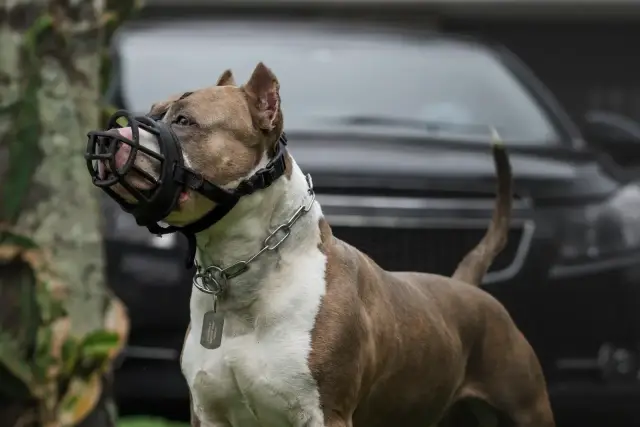
Yes. A well-fitted basket-type muzzle, introduced slowly with treats, is a safety tool and not a punishment. It protects others, and can help you feel calmer, which helps your dog. Ask a trainer how to condition your dog to it.
Does neutering help a reactive dog?
Not on its own. Reactivity usually comes from fear, frustration and learning, not from hormones alone, and in some dogs neutering may even raise fearfulness. Talk to your vet about your individual dog.
How often should I train?
Short sessions of 5 to 10 minutes, two or three times a week, are enough. Quality and calm matter more than quantity. Rest days are part of the plan.
Is my dog's reactivity my fault?
No. Genetics, early life and bad luck all play a part. What you do from here is what counts.
Read next
Family storyEuropean dogsRead the family's story: origins, members, DNA Family storyGrey wolfRead the family's story: origins, members, DNA
 Adopt a dogDog Shelters in GermanyTen big cities checked, how adoption works, what it costs
Sources (7)
- Mills, D. S., Demontigny-Bédard, I., Gruen, M., Klinck, M. P., McPeake, K. J., Barcelos, A. M., Hewison, L., Van Haevermaet, H., Denenberg, S., Hauser, H., Koch, C., Ballantyne, K., Wilson, C., Mathkari, C. V., Pounder, J., Garcia, E., Darder, M., Fatjó, J., Levine, E. (2020). Pain and problem behavior in cats and dogs. Animals.
- Vieira de Castro, A. C., Fuchs, D., Morello, G. M., Pastur, S., de Sousa, L., Olsson, I. A. S. (2020). Does training method matter? Evidence for the negative impact of aversive-based methods on companion dog welfare. PLoS ONE.
- China, L., Mills, D. S., Cooper, J. J. (2020). Efficacy of dog training with and without remote electronic collars vs. a focus on positive reinforcement. Frontiers in Veterinary Science.
- Ziv, G. (2017). The effects of using aversive training methods in dogs: a review. Journal of Veterinary Behavior.
- Salonen, M., Sulkama, S., Mikkola, S., Puurunen, J., Hakanen, E., Tiira, K., Araujo, C., Lohi, H. (2020). Prevalence, comorbidity, and breed differences in canine anxiety in 13,700 Finnish pet dogs. Scientific Reports.
- Scott, J. P., Fuller, J. L. (1965). Genetics and the Social Behavior of the Dog. University of Chicago Press.
- American Veterinary Society of Animal Behavior. Position statement on puppy socialization.