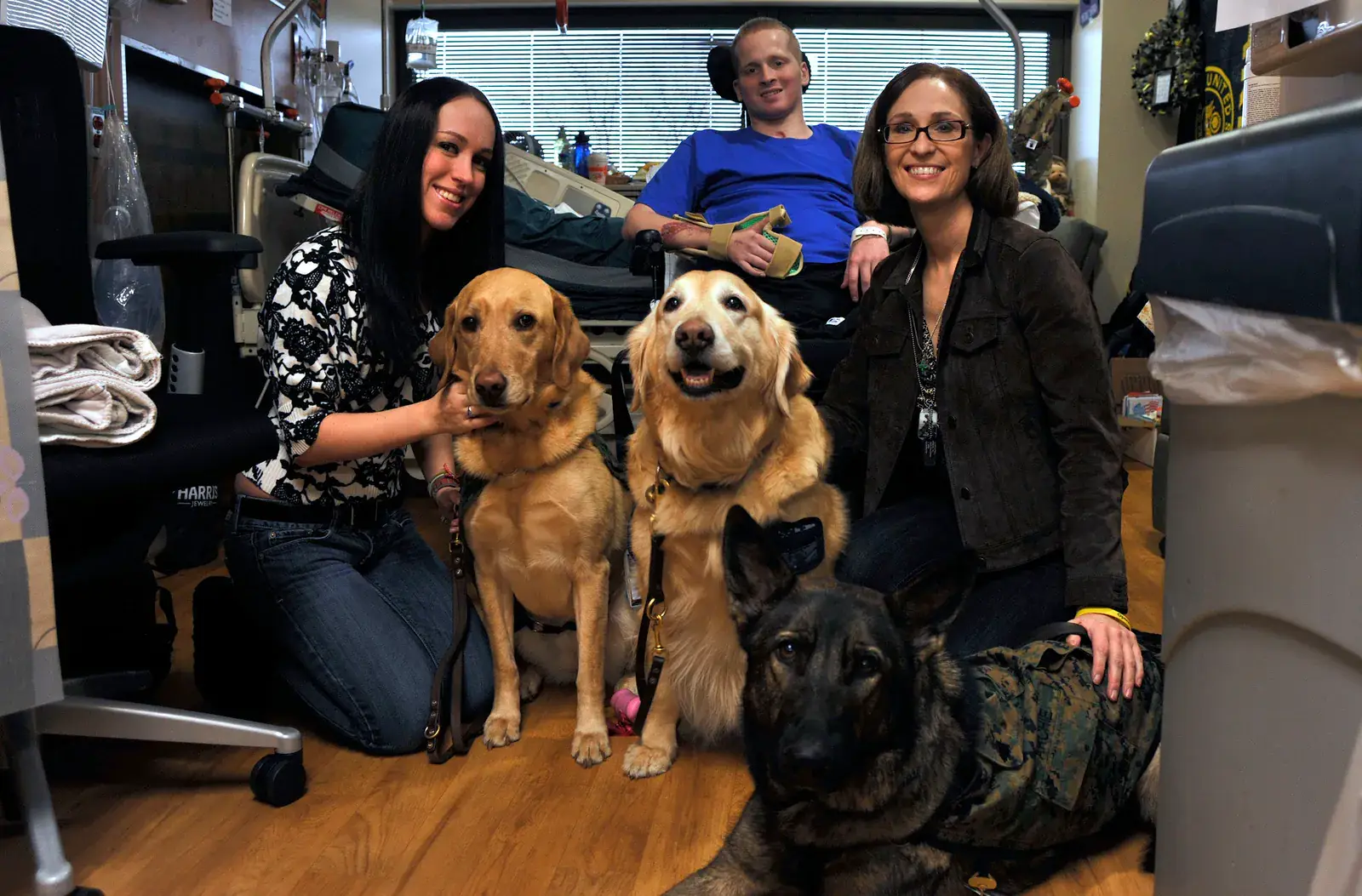
The dog has to enjoy meeting strangers, stay relaxed around noise and equipment, accept touch from many hands and want to be there. Training takes months of short, rewarded sessions, followed by an assessment by a therapy organisation. This article gives a temperament checklist, six first training steps, how real programmes assess dogs and the welfare limits that protect your dog. If you are unsure what a therapy dog is, start with Service, therapy and emotional support dogs.
What your dog will learn
- Greet people politely, with four paws on the floor
- Settle on a mat or at your feet while people talk and touch
- Accept being handled on paws, ears, tail and body
- Ignore dropped food and move on when told
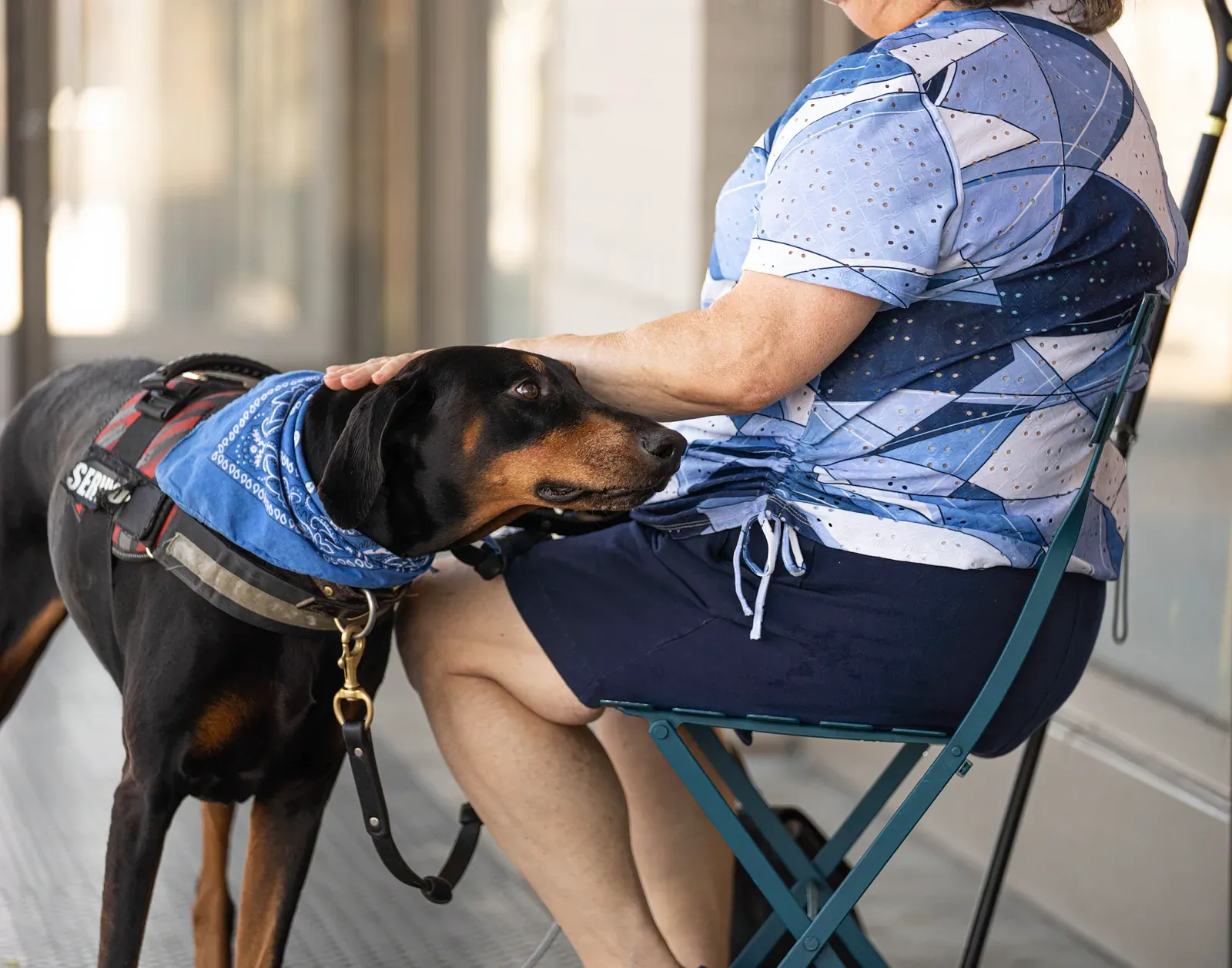
- Stay relaxed around equipment such as wheelchairs, walkers, crutches and trolleys
- Recover quickly after a sudden noise
 GuideDog Clothes: When Dogs Need Coats, and a Short History of Dog FashionDo dogs need coats in winter? When clothes help, when costumes stress a dog, safe fit, reflective gear, and a short history of dog fashion and dog art.
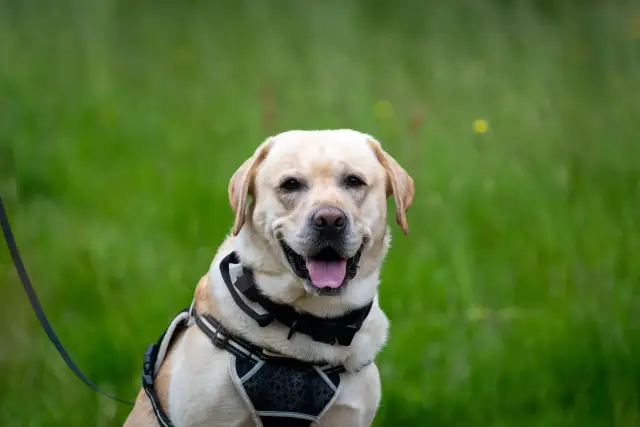 GuideHow to get an assistance dogHow to get a service dog or assistance dog in the USA, UK, Germany, France, Spain, Italy and the Netherlands: accredited schools, waits, owner-training and travel.GuideDog Clothes: When Dogs Need Coats, and a Short History of Dog FashionDo dogs need coats in winter? When clothes help, when costumes stress a dog, safe fit, reflective gear, and a short history of dog fashion and dog art.
What you need
- A dog at least one year old. Pet Partners, Therapy Dogs International (TDI) and the Alliance of Therapy Dogs all list a one-year minimum, and Pets As Therapy in the UK asks for twelve months. Some hospital programmes ask for more, for example at least two years.
- A dog you have known for some time. Pet Partners asks that the dog has lived with you at least six months. Pets As Therapy asks that you have known the dog for at least nine months.
- A flat collar or well-fitted harness and a loose lead. Pets As Therapy checks that the dog walks on a relaxed lead, without head collars, harnesses or check chains.
- Small, soft treats and a mat.
- A friend or two to help with practice. If you can borrow a wheelchair or walker, even better.
- Up-to-date vaccinations and a check-up with your vet. Say that you plan therapy work.
 GuideDogs in Legends and Fairy TalesDogs in folklore and fairy tales: Black Shuck, The Tinderbox, Saint Guinefort, Panhu, Greyfriars Bobby, Barry and Old Drum, with legend and history kept apart.
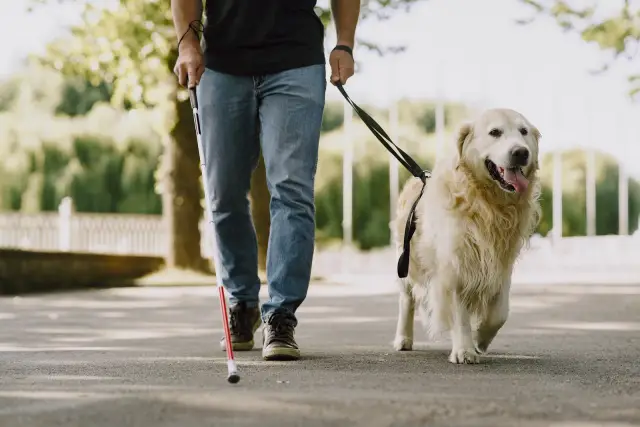 GuideService, therapy and emotional support dogs: what's the difference?Service dog vs emotional support dog vs therapy dog: the real differences, your rights in the USA and Europe, and why online certificates mean nothing.GuideDogs in Legends and Fairy TalesDogs in folklore and fairy tales: Black Shuck, The Tinderbox, Saint Guinefort, Panhu, Greyfriars Bobby, Barry and Old Drum, with legend and history kept apart.
Temperament checklist
Score your dog honestly. A "no" to several of these means therapy work may not be right for this dog, and that is fine.
 GuideHow to adopt a dog from a shelter or rescueHow to adopt a dog from a shelter or rescue: the process, costs in general terms, choosing a dog, the first weeks and what if it does not work out.
- Approaches new people with a loose, wiggly body, not stiff or frozen.
- Enjoys being petted by strangers, including awkward touches, and stays soft in the face.
- Is not worried by hats, beards, uniforms, walking sticks or sudden movements.
- Recovers from a surprise, such as a dropped tray, within a few seconds.
- Takes food gently and can leave food on the floor.
- Can wait or settle without constant instructions.
- Shows no growling, snapping, guarding or frantic jumping on greeting.
- Is happy to be left in a new place with you, and eats treats there. A dog that refuses food in a new place is often stressed.
Breed is a weak guide. Labradors and Golden Retrievers are common in this work, but plenty of mixes and other breeds do it. A shy, reactive or noise-sensitive dog is not suitable, whatever the breed. If your dog barks and lunges at other dogs or people, our reactive dog guide is the place to begin, and therapy work can wait or never happen.
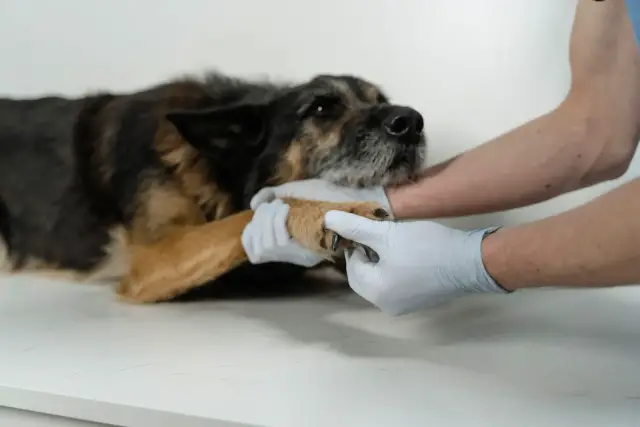 GuideMy Dog Injured His Paw: First Aid and When to See a VetDog paw injury: cut pads, torn nails, grass seeds, hot pavement burns and limping.GuideHow to adopt a dog from a shelter or rescueHow to adopt a dog from a shelter or rescue: the process, costs in general terms, choosing a dog, the first weeks and what if it does not work out.
Steps
Keep sessions short, five to ten minutes, and stop while the dog is still keen. Use treats, calm praise and play.
 ArticleDog Breed Family Tree: How All Dog Breeds Are RelatedThe dog breed family tree from Ice Age wolves to 29 breed families.
 Save
- Calm greetings. Ask a friend to approach slowly. Say "sit" and reward the dog for keeping four paws on the floor. If the dog jumps, the friend stops and turns away; reward when all four paws return to the floor. Build up to several people, then people in a park.
- Settle. Teach the dog to lie on a mat. Reward every few seconds at first, then stretch the time as the dog stays relaxed. Move the mat to new places, such as a friend's kitchen or a cafe terrace.
- Handling. Touch the paws, ears, tail and body for a second, give a treat and stop. Over days, build up to longer, firmer touches and different hands, including children's hands (always supervised). The dog should lean in or stay loose. If the dog tenses, go back a step.
- Leave it and ignoring dropped food. Drop a treat near the dog while you hold the lead. When the dog looks at you instead of the food, mark and reward from your hand. Progress to bigger, smellier food, then to food on the floor in a new place. This protects the dog around hospital trays and medicines.
- Equipment. Let the dog sniff a wheelchair or walker standing still, rewarding calm looks. Then move it slowly, then add someone sitting in it. Ask a friend to roll it past at a distance and bring it closer over several sessions. Do the same with crutches, trolleys and bag-laden people. The dog should stay close and relaxed.
- Sudden noises. Drop a light object such as a book at a distance, and reward the dog for staying calm or recovering. Move closer with later practice. If the dog flinches and cannot settle, reduce the volume or move farther away.
Move on from a step only when the dog is relaxed and eager at the current one. Practice in many new places, always with a loose lead.
- Temperament checkfirstUse the checklist above; shy or reactive dogs are not suitable
- Calm greetings and settlesteps 1 and 2Four paws down, relax on a mat
- Handling and leave itsteps 3 and 4Touch tolerance, ignore dropped food
- Equipment and noisessteps 5 and 6Wheelchairs, walkers, sudden sounds
- Check the programmebefore applyingRules differ, such as the minimum age of one year
- AssessmentlastRun by the programme, not a certificate you can buy
 GuideHow to calm a reactive dogHow to calm a reactive dog: why dogs bark and lunge, what to do in the moment, a step-by-step training plan, what to avoid and when to get help.ArticleDog Breed Family Tree: How All Dog Breeds Are RelatedThe dog breed family tree from Ice Age wolves to 29 breed families.
How therapy programmes assess dogs
Each organisation sets its own test. Contact the one you plan to join and read its current rules, since details change.
 GuideDog Breeds by Country: Which Nations Made the Most?Dog breeds by country: how many breeds each nation produced in the Dogs Atlas data, from the UK and France to Japan, plus national dogs and families.
- Pet Partners (USA). The team is evaluated for skills and aptitude in a simulated environment. The dog must be at least one year old and have lived with you at least six months.
- Therapy Dogs International (USA). The dog must be at least one year old, healthy and of sound temperament, and passes a TDI evaluation.
- Alliance of Therapy Dogs (USA). Lists a one-year minimum age. Check the organisation for its other requirements.
- Pets As Therapy (UK). The temperament assessment takes place at a neutral venue, not at home. The dog is checked on loose-lead walking, accepting handling of paws, ears and tail, taking treats gently and recovering from sudden noises. The owner is observed too, showing control of the dog while having a conversation with the assessor. The dog must be at least twelve months old, and you should have known it for at least nine months. Dogs listed under the Dangerous Dogs Act 1991 are not accepted.
Elsewhere in Europe, therapy and visiting dog schemes are run by local organisations and venues. Rules and assessments differ from country to country, so ask a local animal-assisted intervention group or the hospital or care home you would like to visit. Many venues also set their own rules for insurance, vaccination and age.
An assessment is not a "certificate" you can buy. It follows a test of you and your dog. If a website offers a therapy dog certificate for a fee with no evaluation, it carries no weight. A therapy team has no general public access rights. It visits where it is invited. See Service, therapy and emotional support dogs for details.
 GuideSmartest dog breeds: what the rankings measure and what they missCoren's smartest dog breeds list, what it measured, what newer dog cognition research says, three kinds of dog intelligence and why smart dogs need work.GuideDog Breeds by Country: Which Nations Made the Most?Dog breeds by country: how many breeds each nation produced in the Dogs Atlas data, from the UK and France to Japan, plus national dogs and families.
How you know it's working
- The dog goes towards new people on its own.
- The dog stays loose in the body, with soft eyes and an open mouth.
- The dog eats treats in new places and still responds to you.
- The dog shakes off a surprise within seconds.
- The dog settles on the mat at venues without fuss.
- After a session, the dog is relaxed, not clingy or wired.
 GuideMy Dog Keeps Shaking His Head: Ear Infection GuideDog shaking head, scratching ears or smelly ears? Ear infection signs, causes, ear haematoma, emergency signs, what to do and what to avoid.
 GuideDog hybrids: what dogs can and cannot breed withCan dogs breed with wolves, coyotes, jackals or foxes? Wolfdogs, coydogs, the Sulimov dog and Dogxim explained, with chromosomes and DNA studies.GuideMy Dog Keeps Shaking His Head: Ear Infection GuideDog shaking head, scratching ears or smelly ears? Ear infection signs, causes, ear haematoma, emergency signs, what to do and what to avoid.
Common mistakes and fixes
- Going too fast. Fix: drop back to the last step the dog enjoyed and go in smaller increments.
- Forcing greetings. Fix: let the dog choose to approach. Ask visitors to stay still and let the dog come to them.
- Ignoring subtle stress. Fix: learn the signs listed below and stop early.
- Correcting the dog with the lead or a harsh voice. Fix: use rewards for what you want. Punishment can damage the dog's trust.
- Assuming a friendly pet is ready. Fix: friendly at home is not the same as calm in a busy ward. Practice in busy, new places first.
- Pushing a worried dog. Fix: if the dog never enjoys it, retire the plan. It is a successful outcome if the dog stays happy.
 GuideWhy does my dog do that? 15 common behavioursWhy does my dog lick me, stare, eat grass, spin, sigh or roll in smelly things? 15 everyday dog behaviours explained, with when to ask a vet.
 GuideBest dog breeds for familiesBest dog breeds for families, small homes, allergies, first-time owners and seniors, ranked from our breed ratings, with honest limits and a table.GuideWhy does my dog do that? 15 common behavioursWhy does my dog lick me, stare, eat grass, spin, sigh or roll in smelly things? 15 everyday dog behaviours explained, with when to ask a vet.
Make it harder
- Practice in a busy shopping area, a train station and a cafe, at distances the dog can handle.
- Add noisy trolleys, sliding doors and lifts with a friend.
- Practise sitting next to a person in a chair for a few minutes while the person strokes the dog.
- Rehearse the visit: arrive, settle, greet one person at a time, rest, leave.
- Once accepted, begin with short visits of 30 to 60 minutes.
 ArticleThe first known dog on every continentEarliest accepted dog on each continent, from Bonn-Oberkassel to the dingo: dates, sites, how dogs arrived and which breeds carry those first dogs.
 GuideDogs of Japan: the native breeds and their storiesJapanese dog breeds explained: the six Nihon Ken, the Chin, Tosa, Japanese Spitz and Terrier, Hachiko, wartime near-extinction, DNA and who they suit.ArticleThe first known dog on every continentEarliest accepted dog on each continent, from Bonn-Oberkassel to the dingo: dates, sites, how dogs arrived and which breeds carry those first dogs.
Safety notes and welfare
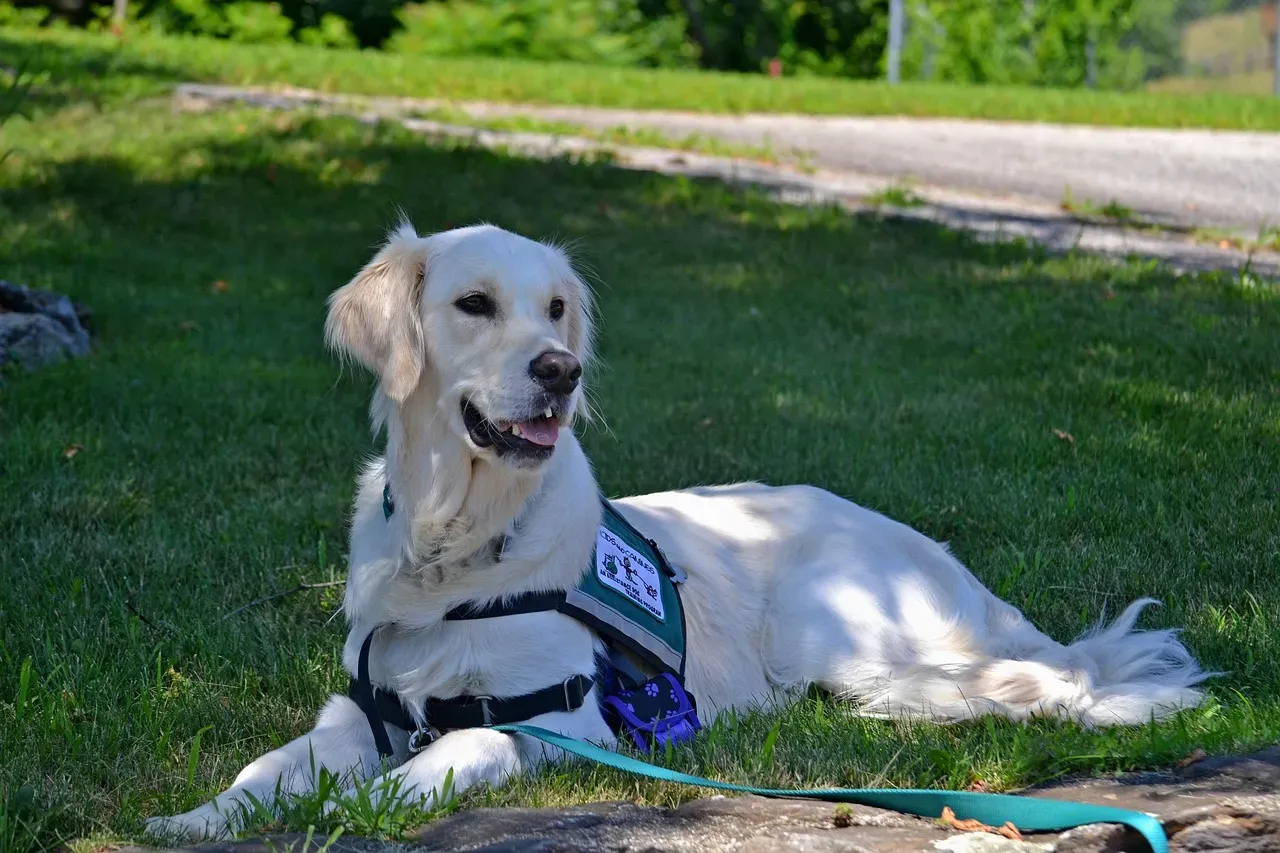
A therapy dog is a working dog, and it can say no.
 GuideDog laws by country: tax, insurance and licencesDog tax, compulsory liability insurance, licences, microchips and leash rules in Germany, Austria, Switzerland, Spain, Ireland, the UK, the US and more.
 Save
- Know the stress signs. Lip licking, yawning, turning the head away, a stiff body, a tucked tail, panting when not hot, shaking off, refusing treats, lifting a paw and moving away. Any of these means pause, step back or finish the visit.
- Give the dog an exit. A dog should always be able to move away from touch. Never hold a dog in place.
- Limit time. Short visits, with breaks. End while the dog is still happy, and give rest days.
- Watch the people. Ask visitors to touch the dog's shoulders and chest, not to grab or hug, and to let the dog sniff first.
- Protect health. Keep up vaccinations, parasite control and grooming. Do not take a sick or sore dog.
- Retire when needed. If the dog stops enjoying visits or gets older, end the work and let the dog be a pet.
- Rewards only. Do not use prong, choke or shock collars.
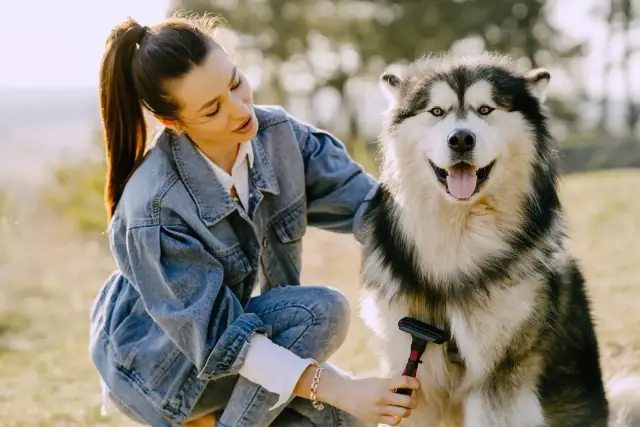 GuideHow to Groom a Dog: Brushing, Baths, Nails and CoatsHow to groom a dog at home: coat types, brushing, how often to bathe, cutting nails, ears, teeth, shedding, matting and whether to shave a double coat.GuideDog laws by country: tax, insurance and licencesDog tax, compulsory liability insurance, licences, microchips and leash rules in Germany, Austria, Switzerland, Spain, Ireland, the UK, the US and more.
Read next
- Service, therapy and emotional support dogs
- How to get an assistance dog
- How to calm a reactive dog
- Adopting a dog
 GuideMy Dog Is Coughing: Causes and When to See a VetDog coughing, honking or hacking? Emergency signs, kennel cough, collapsing trachea, heart cough, what to do at home and when to see a vet.
 GuideBanned and restricted dog breeds by countryWhich dog breeds are banned or restricted, country by country: UK, Ireland, France, Germany, Denmark, Norway, Spain, Australia and more.GuideMy Dog Is Coughing: Causes and When to See a VetDog coughing, honking or hacking? Emergency signs, kennel cough, collapsing trachea, heart cough, what to do at home and when to see a vet.
FAQ
How do I make my dog a therapy dog?
Check the temperament, train calm greetings, settling, handling, leave it and equipment, then apply to a therapy organisation for its assessment.
What age can a dog start therapy work?
Therapy organisations ask for at least one year, and some venues ask for more.
Can any breed be a therapy dog?
Many breeds and mixes can. Temperament matters more than breed.
Is a therapy dog the same as a service dog?
No. A service dog does trained tasks for one person with a disability and has public access rights in many countries. A therapy dog visits other people.
Does my dog need a certificate?
A recognised organisation assesses the team and accepts it. A certificate bought online with no evaluation means nothing.
Read next
Family storyEuropean dogsRead the family's story: origins, members, DNA Family storyModern CrossbreedRead the family's story: origins, members, DNA
 Adopt a dogDog Shelters in GermanyTen big cities checked, how adoption works, what it costs
Sources (4)
- Pet Partners, Therapy Dogs International and Alliance of Therapy Dogs: eligibility details as shown in a comparison chart and programme pages (check each organisation for current rules).
- Pets As Therapy. Your Dog's Temperament Assessment; Apply with your dog.
- Assistance Dogs UK. Assistance Dogs, Emotional Support Dogs and Therapy Dogs.
- Vieira de Castro, A. C., et al. (2020). Does training method matter? Evidence for the negative impact of aversive-based methods on companion dog welfare. PLoS ONE.