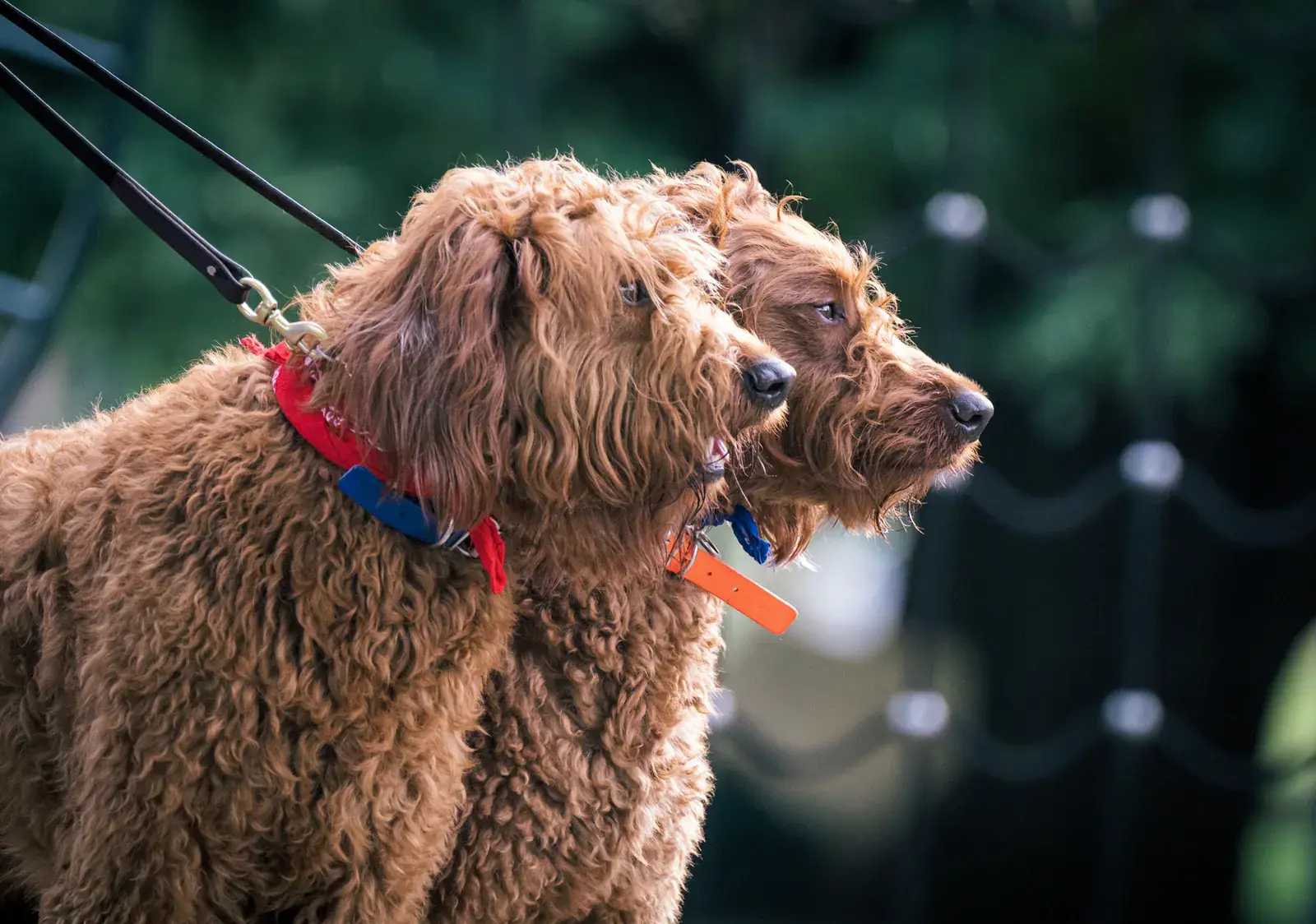
What are modern crossbreeds?
A designer crossbreed is a dog bred on purpose from two recognised breeds and given a catchy blended name: Labrador plus Poodle becomes Labradoodle, Pug plus Beagle becomes Puggle. This family holds 10 of them. Six are Poodle crosses, and the other four are Puggle, Pomsky, and the wolf-look Northern Inuit Dog and Tamaskan Dog.
 GuideDog Clothes: When Dogs Need Coats, and a Short History of Dog FashionDo dogs need coats in winter? When clothes help, when costumes stress a dog, safe fit, reflective gear, and a short history of dog fashion and dog art.
Almost all are young. Our oldest, the Cockapoo, is dated to the 1950s and 1960s, and the newest, the Pomsky, to around 2011. None is recognised as a breed by the major kennel clubs. This is a project-inferred family: no member was tested in the Parker et al. (2017) dog breed study, so there is no DNA clade here. We grouped them because they share one story, the deliberate cross, and filed them under European dogs. Our notes call most of them "not a lineage descendant: both parent links are crosses". See the dog family tree for where each parent breed sits.
Quick facts about the Modern Crossbreed family
| Fact | Answer |
|---|---|
| Family type | Inferred by the atlas, not a Parker 2017 clade |
| Parent | European dogs |
| Entries in this atlas | 10 (all living) |
| Members DNA-tested in the Parker study | 0 |
| Homelands | United States (6), Australia (2), United Kingdom (1), Finland (1) |
| Sizes | 1 toy, 4 small, 2 medium, 3 large |
| Typical life span | 10 to 16 years; Cockapoo 14 to 16, Labradoodle 12 to 14 |
| Kennel club status | None recognised as a breed by the AKC, UKC or Canadian Kennel Club |
| Most common parent | The Poodle (6 of 10) |
| Shared story | Two breeds crossed on purpose, then sold under a blended name |
 GuideDog hybrids: what dogs can and cannot breed withCan dogs breed with wolves, coyotes, jackals or foxes? Wolfdogs, coydogs, the Sulimov dog and Dogxim explained, with chromosomes and DNA studies.
Family or group: what is the difference?
In this atlas, "family" means a branch of the dog family tree, usually a DNA clade from Parker et al. (2017). "Group" is used only for kennel club groups.
 ArticleThe first known dog on every continentEarliest accepted dog on each continent, from Bonn-Oberkassel to the dingo: dates, sites, how dogs arrived and which breeds carry those first dogs.
A crossbreed has neither. It sits between the families of its two parents. A Labradoodle has a Retriever parent and a Poodle parent. A Puggle has a Toy spitz parent (the Pug) and a Scent hound parent (the Beagle). So we filed the crossbreeds in their own inferred family, and all ten are placed by history, not by DNA.
A crossbreed also differs from a breed. A breed breeds true over many generations from a closed studbook with a written standard. Many crosses are still being made fresh from two parents, so the puppies can differ a lot.
Where do they come from?
Mostly from the United States and Australia, in the last 70 years, with the Poodle as the common ingredient.
 GuideDogs of Japan: the native breeds and their storiesJapanese dog breeds explained: the six Nihon Ken, the Chin, Tosa, Japanese Spitz and Terrier, Hachiko, wartime near-extinction, DNA and who they suit.
The doodles. Breeders began to cross the Poodle, a low-shedding breed, with others: Cocker Spaniels from the 1950s (Cockapoo), Golden Retrievers from 1969 (Goldendoodle), and Labradors from 1988 and 1989 (Labradoodle). Cavapoo (with the Cavalier King Charles Spaniel) and Maltipoo (with the Maltese) followed in the 1990s. The Cockapoo is the one with a documented early start; the other dates are first appearances, with medium confidence.
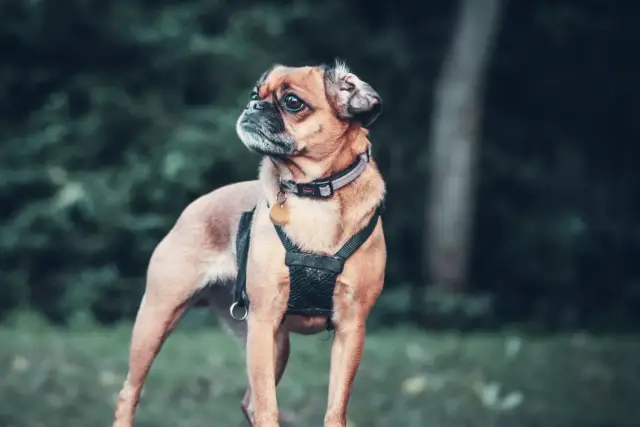
Puggle and Pomsky. Not Poodle crosses. The Puggle (Pug plus Beagle) is credited to Wisconsin breeder Wallace Havens in the 1980s, who also registered it with the American Canine Hybrid Club. Accounts differ on whether the first cross was planned. The Pomsky (Pomeranian plus Siberian Husky) came much later, and its start is disputed.
The wolf-look dogs. The Northern Inuit Dog and Tamaskan Dog are a different kind of cross. They were bred to look like wolves, using northern breeds: Siberian Husky, Alaskan Malamute and German Shepherd, with the Samoyed as a low-confidence extra.
Why are they called doodles, poos and other blends?
The names are portmanteaus: two parent names joined.
 GuideHow to get an assistance dogHow to get a service dog or assistance dog in the USA, UK, Germany, France, Spain, Italy and the Netherlands: accredited schools, waits, owner-training and travel.
- Doodle. From "poodle", which comes from the German "Pudel". A Labradoodle is Labrador plus poodle.
- Poo. Also from poodle: Cockapoo (cocker spaniel), Cavapoo (Cavalier), Maltipoo (Maltese).
- Puggle. Pug plus Beagle.
- Pomsky. Pomeranian plus Siberian Husky.
- Northern Inuit. Named for the Inuit of the Arctic, whose sled dogs it is meant to evoke. It is not a breed of Inuit dogs.
- Tamaskan. A coined name said to come from a Native American word for a wolf-like dog.
What is the history of designer crossbreeds?
 GuideService, therapy and emotional support dogs: what's the difference?Service dog vs emotional support dog vs therapy dog: the real differences, your rights in the USA and Europe, and why online certificates mean nothing.
1950s and 1960s: the first poodle crosses
The Cockapoo comes first, from Cocker Spaniels and Poodles crossed in the United States from the 1950s and 1960s. The atlas takes the Cocker type to be the American Cocker Spaniel.
1969 to 1992: the Goldendoodle
The atlas gives 1969 to 1992 for the Goldendoodle, a Golden Retriever and Poodle cross, with medium confidence. The range is wide because the cross was made by many hands before the name settled.
1980s: Puggle, wolf-look dogs
In the early 1980s, mixed dogs of Arctic type were imported to England from the United States and Canada. Their exact origins are unknown, and Edwina Harrison and a small group of breeders developed them into the Northern Inuit Dog. The Tamaskan came from related lines that were exported to Finland and crossed further. Whether the Tamaskan is a separate breed or an offshoot of the Northern Inuit is still debated. Young Northern Inuit dogs played the direwolf pups in the first season of the TV series Game of Thrones (2011).
1989: the first Labradoodle
See the next section.
1990s to 2014: more blends
Cavapoo and Maltipoo appear around 1990 to 2000. The Australian Labradoodle, built on Conron's cross by Australian breeders, is dated 1989 to 1998. The Pomsky follows around 2011 to 2014. Early online photos sold as Pomskies are reported to have included Finnish Lapphund puppies, so early evidence is shaky. Because of the size gap between a Pomeranian and a Husky, Pomsky litters are reported to need artificial insemination.
The Labradoodle story
The most famous cross has a documented story, and its maker later regretted it.
 GuideBanned and restricted dog breeds by countryWhich dog breeds are banned or restricted, country by country: UK, Ireland, France, Germany, Denmark, Norway, Spain, Australia and more.
Wally Conron worked at the guide dog service in Victoria, Australia (sources name the organisation differently). A blind woman in Hawaii wrote asking for a guide dog that would not shed, because her husband was allergic. Conron said he tried 33 dogs over three years without success. In 1989 he crossed a Labrador Retriever with a Standard Poodle. He sent hair clippings from the puppies to Hawaii, and only the puppy Sultan's hair caused no reaction in the husband. The other puppies were hard to place, so the organisation's publicity staff told reporters it had created a "hypoallergenic" guide dog.
In interviews around 2019, Conron called the Labradoodle his "life's regret". He said he did not know why people were still breeding them and blamed copycat breeders for health problems. He had said as much since at least 2014. This is his view, reported by news outlets, not a study.
Do crossbreeds have "hypoallergenic" coats?
No breed or cross has been shown to be allergen-free. Dog allergy is mostly a reaction to proteins from skin, saliva and urine, which a coat only carries. Two studies are often cited.
 GuideHow to adopt a dog from a shelter or rescueHow to adopt a dog from a shelter or rescue: the process, costs in general terms, choosing a dog, the first weeks and what if it does not work out.
- Vredegoor et al. (Journal of Allergy and Clinical Immunology, 2012) measured the main dog allergen, Can f 1, in hair and coat samples and in home dust. Dogs sold as hypoallergenic, among them Labradoodles and Poodles, had higher Can f 1 in their hair and coat than other dogs. Labradoodles had less in floor dust, but the other groups did not differ in the home. The authors found no evidence to call any breed hypoallergenic. The Labradoodle floor result may reflect how the homes were cleaned, so it is not proof about the dog.
- Nicholas et al. (American Journal of Rhinology and Allergy, 2011) compared dust from homes in a Detroit birth cohort. It found that homes with "hypoallergenic" dogs did not have different dog allergen levels from other homes, however the dogs were classified.
What follows for a family with allergies: a low-shedding coat is not a guarantee. Spend time with the individual dog before committing, and ask an allergy doctor. Coat type also varies inside one litter of a cross.
Generations: F1, F1b, F2 and multigenerational
Breeders label crosses by generation. These labels describe the parents and do not guarantee the puppy.
 GuideDogs in Legends and Fairy TalesDogs in folklore and fairy tales: Black Shuck, The Tinderbox, Saint Guinefort, Panhu, Greyfriars Bobby, Barry and Old Drum, with legend and history kept apart.
- F1. A first cross: one parent of each breed. A Labrador with a Poodle.
- F1b. An F1 mated back to one of the parent breeds, often the Poodle.
- F2. Two F1 dogs mated together.
- Multigenerational. Crosses bred with each other for several generations, aiming at a steady type. The Australian Labradoodle is described this way.
No published study measures how predictable coat, size or temperament is in each generation. Most guidance online comes from breeders and retailers, and it disagrees on which generation varies most. Treat generation labels as a description of ancestry, not a promise.
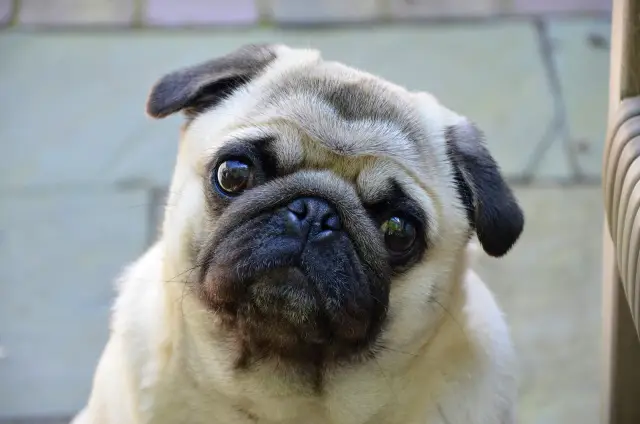
Who are the members of the Modern Crossbreed family?
Here are all 10 entries. None was DNA-tested in the Parker study, so all are placed by history. "Appeared" is the period in which the cross is first documented, and some dates are rough. None has its own article in this atlas yet.
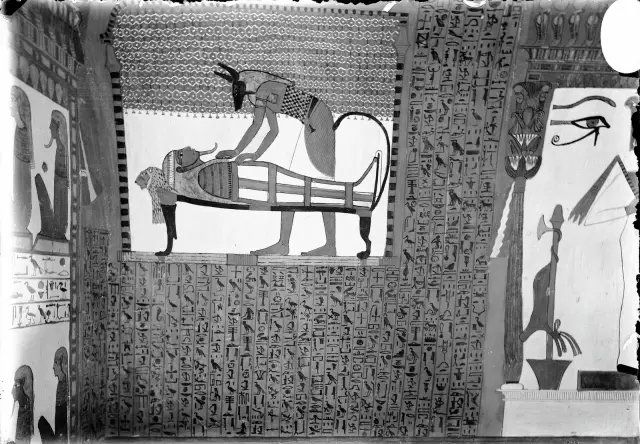 GuideDogs in myth around the worldFrom Anubis and Cerberus to Fenrir, Xolotl and the Tiangou: how cultures across the world imagined dogs as guardians, guides and monsters.
| Breed | Country | Status | Size | Appeared | DNA-tested |
|---|---|---|---|---|---|
| Cockapoo | United States | Living | Small | 1950 to 1960 | By history |
| Goldendoodle | United States | Living | Medium | 1969 to 1992 | By history |
| Northern Inuit Dog | United Kingdom | Living | Large | 1980 to 1990 | By history |
| Puggle | United States | Living | Small | 1980 to 1990 | By history |
| Tamaskan Dog | Finland | Living | Large | 1980 to 2006 | By history |
| Labradoodle | Australia | Living | Large | 1988 to 1989 | By history |
| Australian Labradoodle | Australia | Living | Medium | 1989 to 1998 | By history |
| Cavapoo | United States | Living | Small | 1990 to 2000 | By history |
| Maltipoo | United States | Living | Toy | 1990 to 2000 | By history |
| Pomsky | United States | Living | Small | 2011 to 2014 | By history |
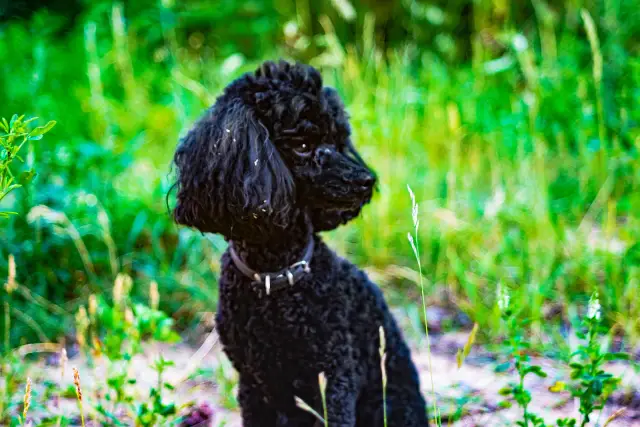
Which parents made which crosses?
| Cross | Parent breeds | Evidence |
|---|---|---|
| Labradoodle | Labrador Retriever + Poodle | Conron, 1989 (high confidence) |
| Australian Labradoodle | Labrador + Poodle, built on Conron's cross | Medium confidence |
| Goldendoodle | Golden Retriever + Poodle | Medium confidence |
| Cockapoo | American Cocker Spaniel + Poodle | Medium confidence |
| Cavapoo | Cavalier King Charles Spaniel + Poodle | Medium confidence |
| Maltipoo | Maltese + Poodle | Medium confidence |
| Puggle | Pug + Beagle | Medium confidence |
| Pomsky | Pomeranian + Siberian Husky | Medium confidence |
| Northern Inuit Dog | Husky, Malamute, German Shepherd, perhaps Samoyed | Medium to low confidence |
| Tamaskan Dog | Siberian Husky, Alaskan Malamute, German Shepherd; maybe a Northern Inuit offshoot | Medium to low confidence |
 GuideDog laws by country: tax, insurance and licencesDog tax, compulsory liability insurance, licences, microchips and leash rules in Germany, Austria, Switzerland, Spain, Ireland, the UK, the US and more.
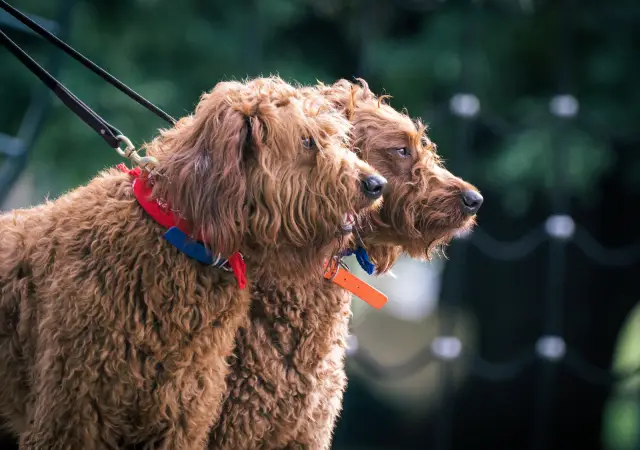 Labradoodlewith the Labrador Retriever
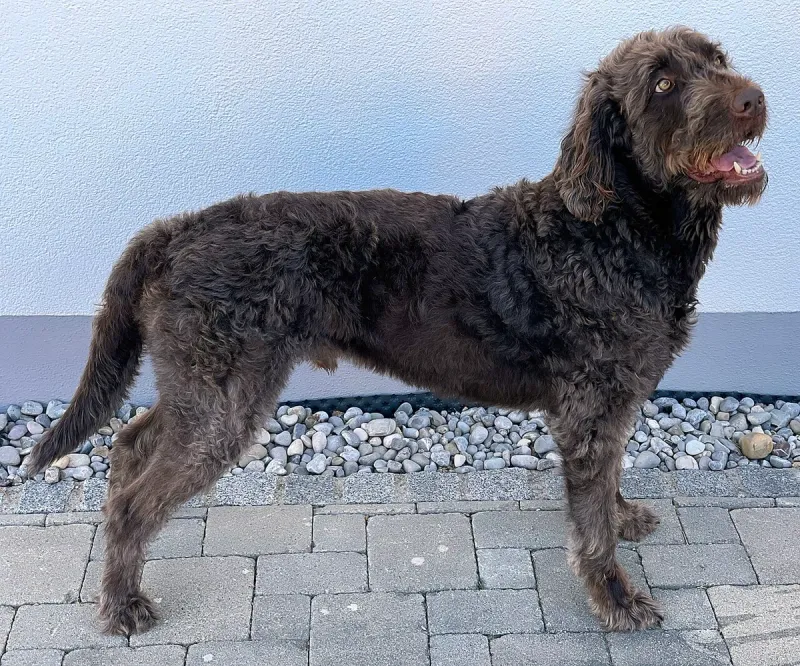 Australian LabradoodleLabrador, built on the Labradoodle
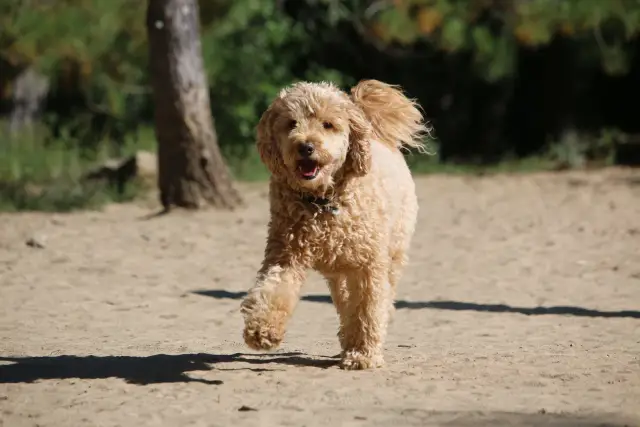 Goldendoodlewith the Golden Retriever
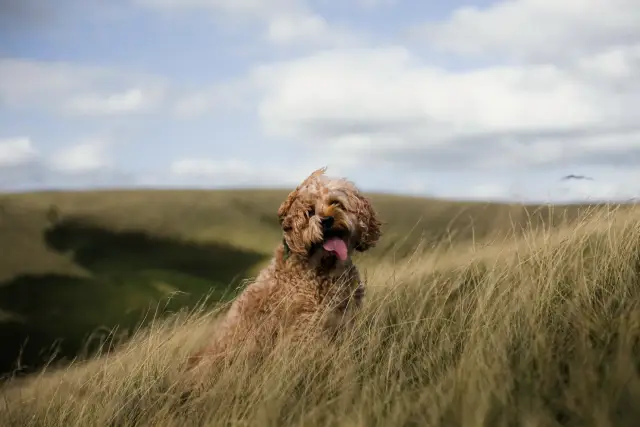 Cockapoowith the American Cocker Spaniel
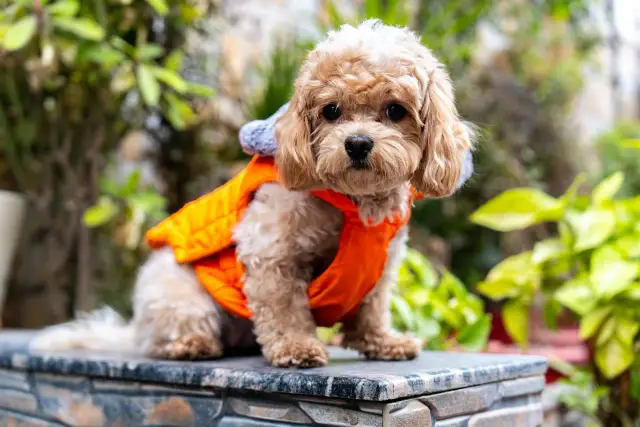 Cavapoowith the Cavalier King Charles
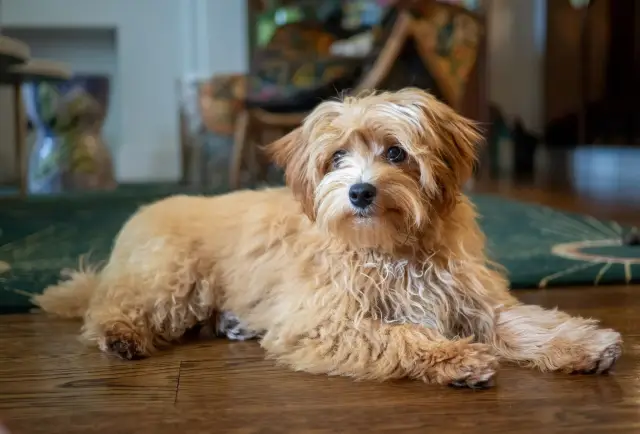 Maltipoowith the Maltese
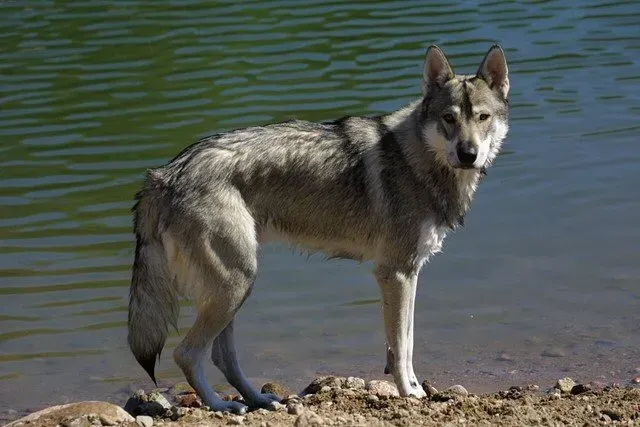 Northern Inuit DogMalamute and German Shepherd
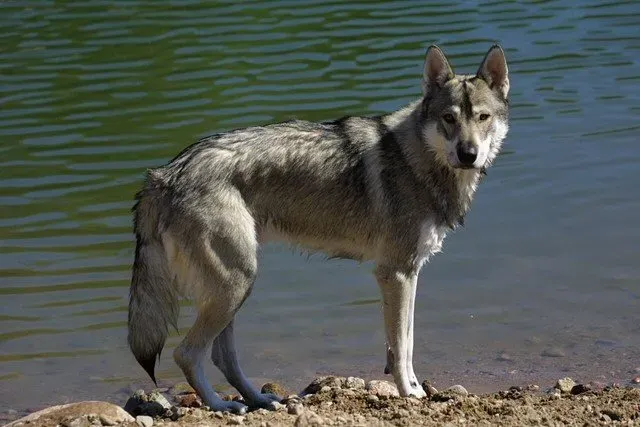 Tamaskan DogMalamute and German ShepherdLabradoodlewith the Labrador RetrieverAustralian LabradoodleLabrador, built on the LabradoodleGoldendoodlewith the Golden RetrieverCockapoowith the American Cocker SpanielCavapoowith the Cavalier King CharlesMaltipoowith the MalteseNorthern Inuit DogMalamute and German ShepherdTamaskan DogMalamute and German Shepherd
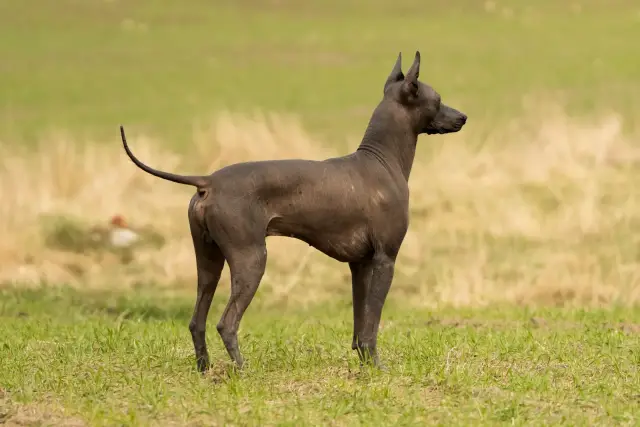
What do crossbreeds have in common?
A blended look. Poodle crosses usually have a woolly or wavy coat, and the Maltipoo and Cavapoo are small. The Goldendoodle and Labradoodle are medium to large, and Australian Labradoodle is medium. Looks vary by litter, since both parents contribute.
 GuideDogs in science and spaceSpace dogs Laika, Belka and Strelka, Pavlov's dogs, Snuppy the clone, the dog genome and scent detection: what dogs did for science, and what it cost them.
Parent traits. Temperament and energy come from the parents. Two athletic parents give an energetic dog. The Husky crosses (Pomsky, Northern Inuit, Tamaskan) inherit a strong northern-dog drive and can be hard to keep happy in a small home. Breed club descriptions say so, but these are not studies.
Grooming. Many Poodle crosses need regular brushing and clipping to avoid matting. This is general breed-club guidance.
No studbook. With no breed standard, nobody checks a puppy against a written ideal. That is why parent health tests matter more for crosses.
Hybrid vigour: are crossbreeds healthier?
The idea is that mixing two breeds lowers the chance of the same inherited fault coming from both sides. It is partly true, and the evidence is mixed.
 GuideLivestock guardian dogs: what they do and who they suitWhat livestock guardian dogs do, how they differ from herding dogs, 40 LGD breeds by country, the DNA evidence, and whether they make good pets.
Bellumori and colleagues (Journal of the American Veterinary Medical Association, 2013) compared mixed-breed and purebred dogs seen at a university teaching hospital in California, UC Davis, between 1995 and 2010. They reviewed 27,254 dogs with an inherited disorder and checked 24 conditions against matched healthy dogs. Of the 24, 13 showed no difference between purebred and mixed-breed dogs, including hip dysplasia. Ten were more likely in purebreds, among them dilated cardiomyopathy, elbow dysplasia, cataracts and hypothyroidism. One, ruptured cranial cruciate ligament, was more likely in mixed breeds.
Three cautions. These were mixed-breed dogs in general, not designer crosses of two known breeds. All were hospital patients at one university, so the sample is not a fair picture of all dogs. And the authors suggested that disorders found equally in both groups may be old mutations spread widely across breeds. A cross of two breeds that carry the same fault can still pass it on. So test the parents. Hybrid vigour is a lower average risk for some conditions, not a guarantee.
What health issues are linked to crossbreeds?
Most crossbreeds live healthy lives, and what matters most is the health of the two parents. Our Breed sources give life spans of 10 to 16 years. No breed-wide health study exists for these crosses, so we give no "about 1 in N" figures, except those named in the Bellumori study above.
 Family storyAlpineRead the family's story: origins, members, DNA
| Condition | What it is | How common | What helps |
|---|---|---|---|
| Conditions of either parent | Eye, joint, heart or skin problems that the Poodle, Retriever, Spaniel or other parent breed carries | Varies with the parents; no cross-specific numbers found | Ask for health test results for both parents by name, such as hip and elbow scores and eye checks |
| Flat-face breathing (Puggle) | A short muzzle from the Pug parent can narrow the airway | No numbers found for the Puggle; see the Pug article | Choose a longer-muzzled puppy, ask a vet to check breathing |
| Matted coat and skin | Woolly coats trap dirt and mats | No study found | Brushing several times a week, regular clipping |
Conron's own concern was that breeders without health testing followed his idea. A responsible breeder of any dog tests the parents, shows them and answers questions.
Which members of the family are extinct?
None. All 10 are living. Some, like the Pomsky, are so new that they are still being defined.
 Family storyAmerican Cur & FeistRead the family's story: origins, members, DNA

Are there surprises in this family?
- A "hypoallergenic" claim that studies do not back. The first Labradoodle's fame began with a publicity line, not a trial.
- The maker's regret. Wally Conron wished he had never made the Labradoodle.
- Pomsky photos that were not Pomskies. Early online pictures are reported to have shown Finnish Lapphund puppies.
- Wolf looks without wolf blood. The Northern Inuit and Tamaskan look like wolves but come from northern dogs and German Shepherds. For true wolf crosses see Wolfdog hybrid.
- A famous cast. Northern Inuit dogs played the Stark direwolf pups on television.
 Family storyAmerican TerrierRead the family's story: origins, members, DNA

What does research say about crossbreeds?
No published study covers coat predictability by generation or on temperament of designer crosses.
 Family storyAncient American dogsRead the family's story: origins, members, DNA
- Bellumori et al. (JAVMA, 2013) compared inherited disorders in 27,254 dogs.
- Vredegoor et al. (2012) measured Can f 1 in hair, coat and homes of "hypoallergenic" breeds including the Labradoodle.
- Nicholas et al. (2011) found no dog allergen difference in homes with "hypoallergenic" dogs.
- Parker et al. (2017) did not test these crosses, so no DNA clade is known.

Which crossbreed suits which owner?
This is an atlas question, not a buyer's guide. If you like a crossbreed, think about the two parents, since both matter.
 Family storyAncient BasalRead the family's story: origins, members, DNA
- Poodle crosses (Labradoodle, Goldendoodle, Australian Labradoodle). Active families who will brush and clip, and who know a low-shedding coat is not a guarantee against allergy.
- Small Poodle crosses (Cockapoo, Cavapoo, Maltipoo). Companion dogs for homes of all sizes. Need company and grooming.
- Puggle. A small, sturdy companion. Ask a vet about breathing.
- Pomsky, Northern Inuit, Tamaskan. Energetic northern-type dogs for owners with time, space and training skills.
Mixed dogs of similar type wait in shelters and breed rescues. See adopting a dog before choosing a puppy from a breeder.

Fun facts about designer crossbreeds
- Conron tried 33 dogs over three years before the first Labradoodle, by his account.
- The first Labradoodle to pass the Hawaii allergy test was named Sultan.
- Six of the 10 crosses have the Poodle as a parent.
- Northern Inuit dogs appeared in the first season of Game of Thrones.
- The Cockapoo has the longest life span, 14 to 16 years.
 Family storyArctic dogsRead the family's story: origins, members, DNA

Related families
- European dogs: the parent of the Modern Crossbreed family.
- Poodle: the parent family of six of the ten crosses.
- Retriever: Labrador and Golden, parents of two doodles.
- Spaniel: Cocker and Cavalier parents of the Cockapoo and Cavapoo.
- Asian Spitz: the Husky and Malamute, behind the wolf-look crosses.
- Wolfdog hybrid: crosses with real wolves.
- dog hybrids: dogs crossed with wolves, coyotes and jackals.
- dog family tree: see where every family sits.
 Family storyAsian SpitzRead the family's story: origins, members, DNA

Frequently asked questions
What is a designer dog?
A dog bred on purpose from two recognised breeds, sold under a blended name. Not a breed in the kennel club sense.
Who created the Labradoodle?
Wally Conron, in Australia, in 1989, to find a guide dog for a person whose partner was allergic to dogs.
Are crossbreeds healthier than purebreds?
Sometimes. A study of 27,254 dogs found 13 of 24 inherited disorders equally common in both and 10 more likely in purebreds (Bellumori et al., 2013). One was more likely in mixed breeds. Parent health still matters.
Are Labradoodles hypoallergenic?
No cross or breed has been shown to be allergen-free. Studies found no evidence for the term (Vredegoor et al., 2012).
What does F1 mean?
A first-generation cross, with one parent of each breed.
Are crossbreeds recognised by kennel clubs?
No. The major clubs do not register the Puggle, Labradoodle or similar crosses as breeds.
Is this a DNA family like the others?
No. It is inferred by the atlas and is not a Parker 2017 clade.
Read next
Family storyEuropean dogsRead the family's story: origins, members, DNA Family storyNordic SpitzRead the family's story: origins, members, DNA
 Family storyRetrieverRead the family's story: origins, members, DNA
Sources (7)
- Bellumori, T. P., et al. (2013). Prevalence of inherited disorders among mixed-breed and purebred dogs: 27,254 cases (1995 to 2010). Journal of the American Veterinary Medical Association, 242(11), 1549 to 1555.
- Vredegoor, D. W., et al. (2012). Can f 1 levels in hair and homes of different dog breeds: lack of evidence to describe any dog breed as hypoallergenic. Journal of Allergy and Clinical Immunology, 130.
- Nicholas, C. E., et al. (2011). Dog allergen levels in homes with hypoallergenic compared with nonhypoallergenic dogs. American Journal of Rhinology and Allergy, 25.
- News interviews with Wally Conron on the Labradoodle (BBC, ABC podcast and others), September to October 2019; Psychology Today interview, 2014.
- Press and breed-club accounts of the Puggle (Wallace Havens), the Pomsky, the Northern Inuit Dog and the Tamaskan Dog; Tamaskan Dog Register history.
- Parker, H. G., et al. (2017). Genomic analyses reveal the influence of geographic origin, migration, and hybridization on modern dog breed development. Cell Reports, 19(4), 697 to 708.
- Breed records in the atlas data (Dogs Atlas, internal data).