What are the Ancient Basal breeds?
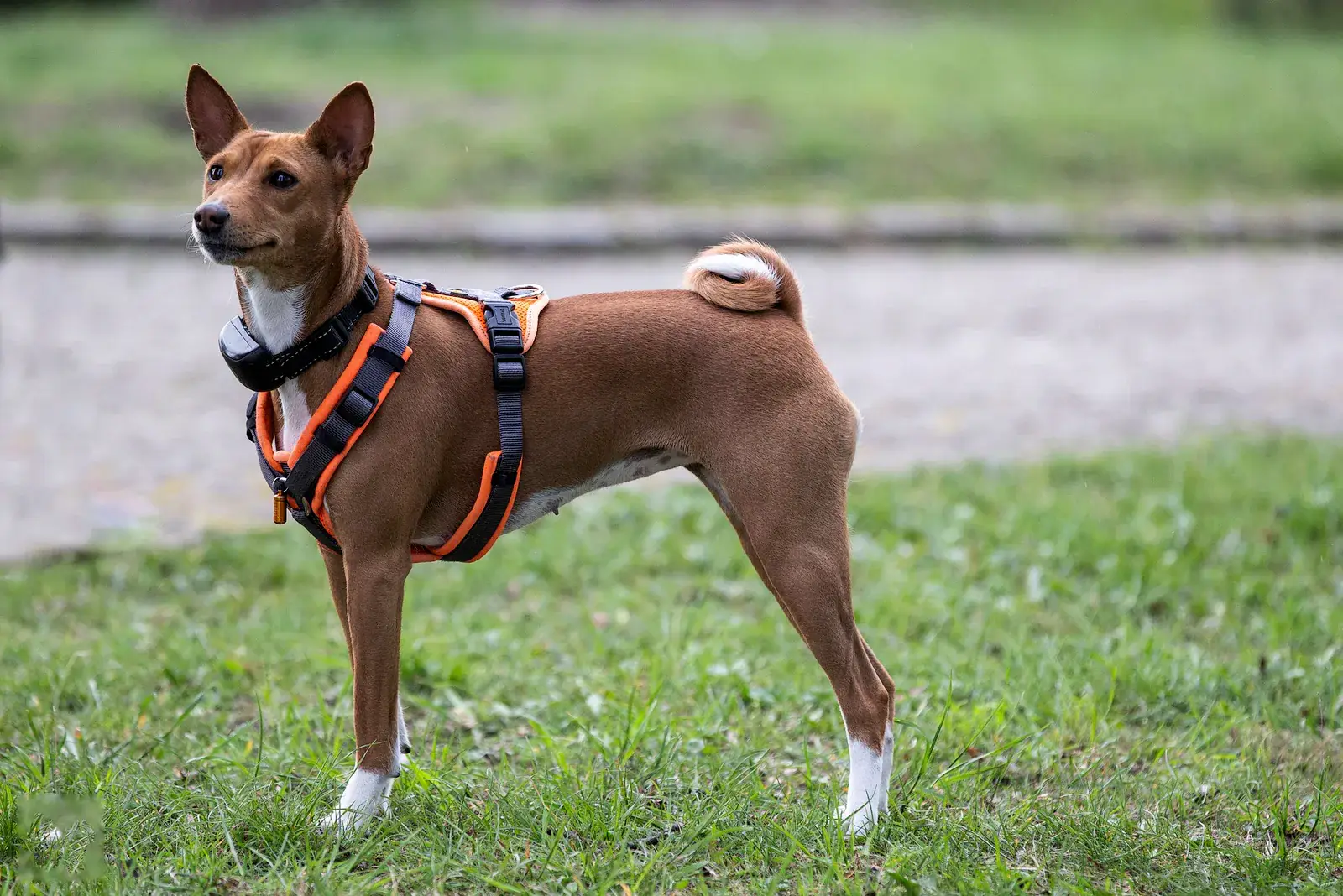
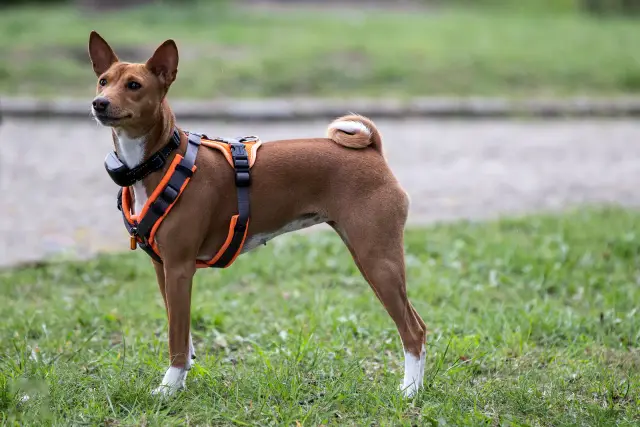
The Ancient Basal family has one member in the atlas data: the Basenji, a small, short-coated hound from Central Africa best known as the "barkless dog". It is a family of one because DNA did not place it inside any group of other breeds.
 GuideService, therapy and emotional support dogs: what's the difference?Service dog vs emotional support dog vs therapy dog: the real differences, your rights in the USA and Europe, and why online certificates mean nothing.
In this atlas a family is a branch of the dog family tree found by comparing DNA. It is not a kennel club group. The Basenji is a special case. In the study behind the atlas tree, it did not cluster with any other breed. This atlas keeps it in its own family by inference, so the tree has a place for it.
 Member breedBasenji3000 BCE to 1937 · Democratic Republic of the CongoAncient WorldGuideService, therapy and emotional support dogs: what's the difference?Service dog vs emotional support dog vs therapy dog: the real differences, your rights in the USA and Europe, and why online certificates mean nothing.
Quick facts about the Ancient Basal family
| Fact | Answer |
|---|---|
| Family type | Placed by inference; the Basenji was "unclustered" in Parker et al. (2017) |
| Parent | Levantine and African dogs (see the dog family tree) |
| Breeds in this atlas | 1 (living) |
| Breeds with DNA tested in the study | 1, no clade assigned |
| Homeland | Central Africa (Congo Basin) |
| Typical size | Small |
| Core job | Village hunting dog |
| Strongest tie | Rat Terrier, 24.6 Mb shared |
 GuideDog hybrids: what dogs can and cannot breed withCan dogs breed with wolves, coyotes, jackals or foxes? Wolfdogs, coydogs, the Sulimov dog and Dogxim explained, with chromosomes and DNA studies.
 ArticleThe first known dog on every continentEarliest accepted dog on each continent, from Bonn-Oberkassel to the dingo: dates, sites, how dogs arrived and which breeds carry those first dogs.GuideDog hybrids: what dogs can and cannot breed withCan dogs breed with wolves, coyotes, jackals or foxes? Wolfdogs, coydogs, the Sulimov dog and Dogxim explained, with chromosomes and DNA studies.
What does "basal" mean?
On a family tree, a basal lineage is one that branches off close to the base, early in the history of the group. It does not sit inside a later cluster. It says nothing about how "primitive" the animal is. A basal dog has had as much time to change as any other.
 GuideHow to adopt a dog from a shelter or rescueHow to adopt a dog from a shelter or rescue: the process, costs in general terms, choosing a dog, the first weeks and what if it does not work out.
Two ideas often get mixed up with this. One is that basal dogs are wolves in disguise. They are not: they are domestic dogs. The other is that a basal breed has stayed the same for thousands of years. DNA cannot show that. It only shows that the breed does not share ancestry with the large clusters that formed from European breeds in the 1800s.
A summary on Wikipedia says whole-genome studies place both the Basenji and the dingo near the base of the domestic dog tree. For the dingo side, see the Dingo and Pacific family.
 ArticleDog Breed Family Tree: How All Dog Breeds Are RelatedThe dog breed family tree from Ice Age wolves to 29 breed families.GuideHow to adopt a dog from a shelter or rescueHow to adopt a dog from a shelter or rescue: the process, costs in general terms, choosing a dog, the first weeks and what if it does not work out.
Family or group: what is the difference?
"Family" in this atlas means a DNA clade. "Group" means a kennel club group. The FCI files the Basenji in Group 5, spitz and primitive types, and the AKC files it in the Hound Group. Neither tells you where it sits in the DNA tree.
 Family storyAlpineRead the family's story: origins, members, DNA
A clade needs at least two members that group together. The Basenji does not. Parker et al. (2017) analysed 1,346 dogs from 161 breeds and sorted them into 23 clades. The Basenji is marked "unclustered", meaning it did not fall firmly inside any of the 23.

Where the Ancient Basal family sits in the tree
The parent in the atlas data is Levantine and African dogs, the broad branch for old dogs of the Middle East and Africa. There is no breed page for that branch yet, so the dog family tree is the place to see it.
 Family storyAmerican Cur & FeistRead the family's story: origins, members, DNA
The nearest family with a similar story is Pariah & Village Dog, which holds free-living dogs from many continents. The Basenji is a village dog by origin, but it has been bred as a registered breed in the West since the 1930s.

Name and origin
- Basenji comes from a Lingala word meaning "villager" or "dog of the bush".
- Other names are Congo Dog, Zande Dog and African Barkless Dog.
- Ancient is a popular label. The atlas data dates the breed from 3000 BCE with low confidence, and gives 1937 for when it was established in the West.
 Family storyAmerican TerrierRead the family's story: origins, members, DNA
History of the Basenji
 Family storyAmerican ToyRead the family's story: origins, members, DNA
Village hunting dogs
In the forest and savanna of the Congo basin, the Basenji was a working village dog, kept for hunting rather than as a pet. Writers of the 1920s and 1930s, including Olivia Burn, describe small dogs hunting with their people. The idea that it appears in ancient Egyptian pictures is a popular story and has not been proved.
The Western breed
The first Basenjis shown in the West were a pair exhibited at Crufts in London in 1895. Several early imports died of distemper. The English breed grew from a small group of founders in the 1930s, and the Kennel Club registered it as the Basenji. From England, dogs went to the United States and Canada. The Basenji article tells this story in full.
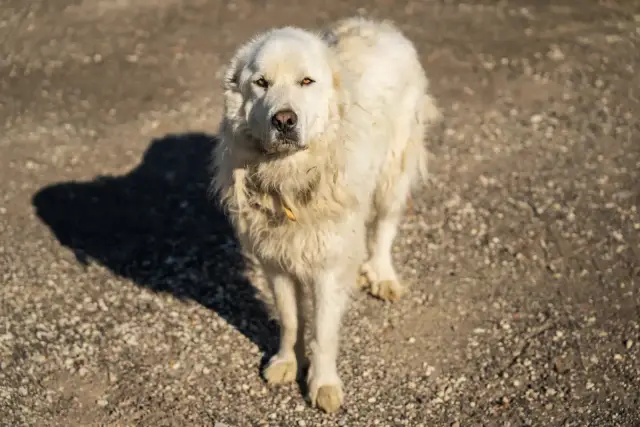
Who are the members of the Ancient Basal family?
One breed in the atlas data, tested in the study. "Appeared" is the period in which the breed took shape, as best the atlas records can say.
 Family storyAncient American dogsRead the family's story: origins, members, DNA
| Breed | Country | Status | Size | Appeared | DNA-tested |
|---|---|---|---|---|---|
| Basenji | Democratic Republic of the Congo | Living | Small | 3000 BCE to 1937 | Yes (Parker 2017) |
Family tree and DNA ties
The numbers are megabases (Mb, millions of DNA letters) that two breeds share in matching stretches in the Parker study.
 Family storyArctic dogsRead the family's story: origins, members, DNA
| Pair | Shared DNA (Mb) | What it tells us |
|---|---|---|
| Basenji and Rat Terrier | 24.6 | The larger tie, with no clear history behind it |
| Basenji and Azawakh | 12.5 | A light link to an African sighthound |
Source: Parker et al. 2017, Cell Reports, shared haplotypes between 161 breeds (1,346 dogs).
There are only two ties in the atlas data for the Basenji. The Rat Terrier is an American farm terrier (see the American Terrier family) and the Azawakh is a sighthound of the Sahel (see the Mediterranean family). The study cannot say which way genes flowed, or when. A shared stretch of DNA can come from a distant ancestor or from a recent cross.

What the Ancient Basal breeds share
With one member, the family has nothing to compare, so here is what the Basenji shows.
 Family storyAsian SpitzRead the family's story: origins, members, DNA
Look. Small, light-boned, with short, fine hair and a tail that curls over the back.
Voice. It does not bark in the usual way. It yodels, crows, growls and screams.
Job. Village hunting, including driving game into nets.
Temperament. Independent and alert, in breed writing. This is a tendency, not a promise.

Health themes
Most Basenjis live long, healthy lives. This section lists what breeders screen for and what owners can watch for. "About 1 in N" figures appear only where a named study gives them. Many figures from breed clubs come from dogs that were tested by choice, so they do not describe the whole breed.
 Family storyAsian ToyRead the family's story: origins, members, DNA
| Condition | What it is | How common | What helps |
|---|---|---|---|
| Fanconi syndrome | Kidneys lose the ability to hold on to sugar, salts and other substances, usually between about 4 and 8 years | In a 2011 BCOA data set of dogs tested by choice, about 40% probable carriers and about 3% probably affected | DNA test; do not breed two carriers |
| Pyruvate kinase deficiency | A red blood cell enzyme defect that causes anaemia | In 186 Australian dogs: 20 carriers (about 1 in 9), none affected | DNA test; do not breed two carriers |
A 2024 paper by Farias and colleagues in the journal Genes traced Fanconi syndrome in Basenjis to a deletion in the FAN1 gene. The UK Kennel Club health survey of 2004 reported a median life span of 13.6 years in 46 dogs, a small sample. The atlas records list 13 to 14 years.

Extinct members
None in the atlas data.
 Family storyContinental HerderRead the family's story: origins, members, DNA

Surprises in the Ancient Basal family
- A family of one. The tree has a box for the Basenji because the DNA did not give it a neighbour.
- A link to a Rat Terrier. The Basenji shares 24.6 Mb with the Rat Terrier, a breed from the United States. The study offers no history for it.
- Old does not mean unchanged. Western Basenjis come from a few founders of the 1930s, with new African stock added in the 1980s and 2010.
 Family storyDingo & PacificRead the family's story: origins, members, DNA

Which Ancient Basal breed suits which owner?
This is a guide to type, not a promise for any single dog.
Family storyDomestic dogRead the family's story: origins, members, DNA- Owners who like a quiet, athletic, independent dog. The Basenji needs daily exercise, secure fencing and patience in training.
- Owners who want a dog that is easy to coax into obedience. The Basenji may not be it, since it is independent by nature.
Fun facts about the Ancient Basal breeds
- Basenji means "villager" in the Lingala language.
- The Basenji's voice is a yodel, not a bark.
- A 2024 study found the gene change behind the breed's best-known kidney condition.
- The Basenji and the dingo are both placed near the base of the dog tree in genome studies.
 Family storyDroverRead the family's story: origins, members, DNA
Related families
- Pariah & Village Dog: free-living village dogs, the closest in story to the Basenji's origin.
- Dingo and Pacific: the dingo, also placed near the base of the tree.
- American Terrier: the Rat Terrier, which shares 24.6 Mb with the Basenji.
- Mediterranean: the Azawakh, which shares 12.5 Mb with the Basenji.
 Family storyEast Eurasian dogsRead the family's story: origins, members, DNA

Frequently asked questions
What does basal mean for dog breeds?
It means the lineage branched off near the base of the family tree, early in the group's history.
Is the Basenji the oldest dog breed?
Not proven. The atlas data gives 3000 BCE with low confidence, and the Egyptian link is a popular story. DNA shows that it is distinct, not that it is oldest.
Why is the Basenji in a family by itself?
In the Parker study it was unclustered, meaning it did not fall inside any of the 23 clades.
Is the Basenji a wolf-like dog?
No. It is a domestic dog. Basal means early branch on the tree, not wild.
Do Basenjis really not bark?
They do not bark in the usual way, but they make other sounds, including a yodel.
Read next
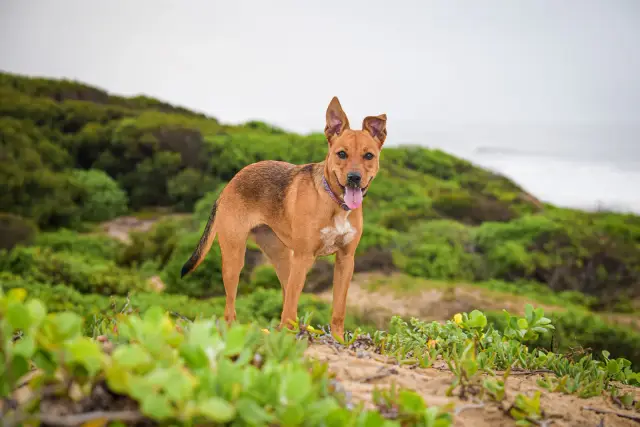 Family storyLevantine and African dogsRead the family's story: origins, members, DNA
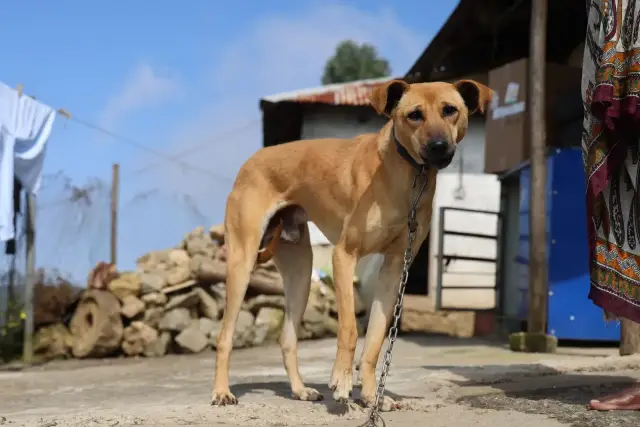 Family storyWest Eurasian dogsRead the family's story: origins, members, DNA
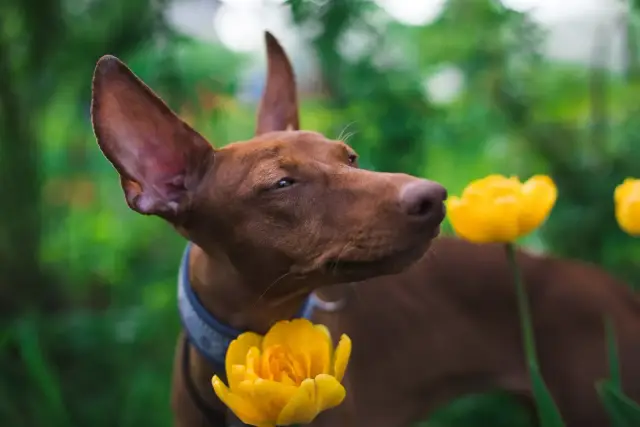 Family storyMediterraneanRead the family's story: origins, members, DNA
Sources (8)
- Parker, H. G., et al. (2017). Genomic analyses reveal the influence of geographic origin, migration, and hybridization on modern dog breed development. Cell Reports, 19(4), 697 to 708.
- Farias, F. H. G., et al. (2024). FAN1 deletion variant in Basenji dogs with Fanconi syndrome. Genes.
- Edwards, R. J., et al. (2021). Chromosome-length genome assembly and structural variations of the primal Basenji dog genome. BMC Genomics.
- Basenji Club of America, health and Fanconi test data.
- Kennel Club (UK), Purebred Dog Health Survey, 2004.
- FCI standard for the Basenji (43).
- Wikipedia, Basenji, checked against the sources above.
- Breed records in the atlas data (Dogs Atlas, internal data).