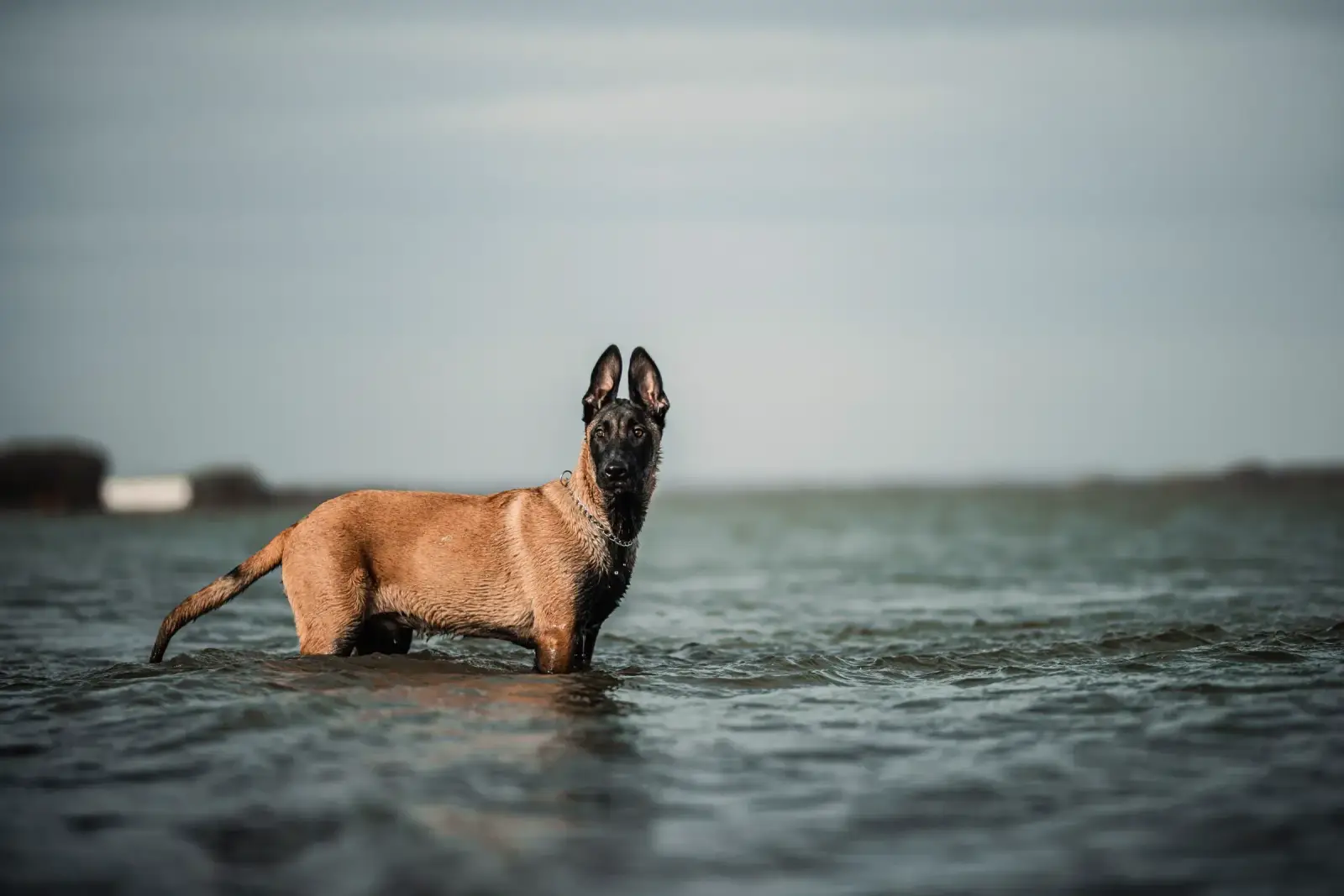
What is a continental herder?
A continental herder is a European shepherd dog: a farm and flock dog from France, Belgium, Italy, Spain, the Netherlands and neighbouring countries. Many of them work in a different way from the British collie. Instead of running wide to gather sheep, the classic continental dog patrols the edge of an unfenced flock and keeps it out of the crops. In the 1800s, a handful of these local types were turned into registered breeds, and some of them became the police and military dogs we know today.
 Save
 ArticleDog Breed Family Tree: How All Dog Breeds Are RelatedThe dog breed family tree from Ice Age wolves to 29 breed families.
In this atlas, the Continental Herder family is a set of 39 breeds that share DNA and history. It is a genetic family, not the kennel club "Herding" or "Sheepdogs and Cattledogs" group. Two famous dogs are missing. The German Shepherd and the Berger Picard sit in the New World family, and both are explained below. This page shows who belongs, why, and how the breeds are tied together.
Quick facts about the Continental Herder family
| Fact | Answer |
|---|---|
| Family type | Genetic clade (Parker et al. 2017) |
| Parent | European dogs |
| Breeds in this atlas | 39 (all living) |
| Breeds with DNA tested in the study | 5 (all with strong support) |
| Main homelands | Spain (7), Belgium (6, plus one shared with France), France (5) |
| Typical size | Large (19 of 39) or medium (17). Also 2 small and 1 giant |
| Core job | Herding and guarding flocks and cattle, later police and military work |
| Shared look | Sturdy, athletic build; coats range from smooth to long, rough or corded |
| Shared temperament | Alert, loyal to one household, quick to learn, needs a job |
 GuideSmartest dog breeds: what the rankings measure and what they missCoren's smartest dog breeds list, what it measured, what newer dog cognition research says, three kinds of dog intelligence and why smart dogs need work.
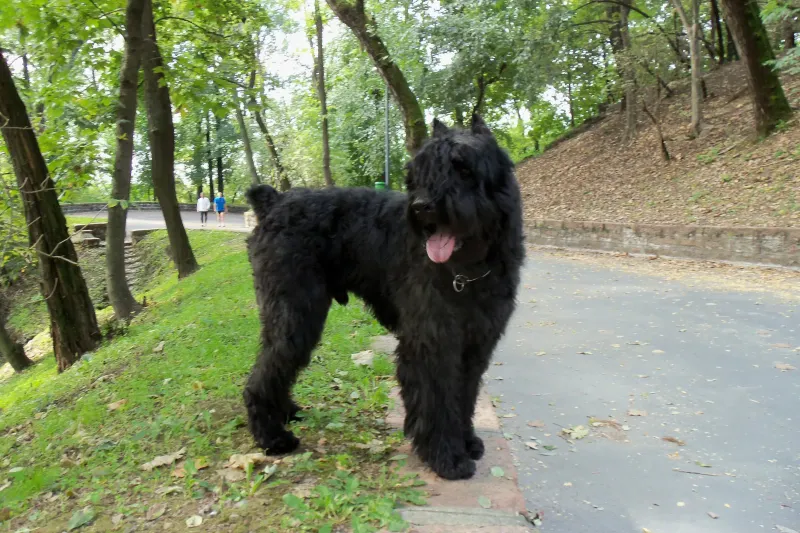 Member breedBouvier des Flandres1800 to 1912 · Belgium, FranceIndustrial RevolutionGuideSmartest dog breeds: what the rankings measure and what they missCoren's smartest dog breeds list, what it measured, what newer dog cognition research says, three kinds of dog intelligence and why smart dogs need work.
Family or group: what is the difference?
In this atlas, "family" always means a DNA clade, a branch of the family tree found by comparing genomes. "Group" is used only for kennel club groups such as the AKC Herding Group or FCI Group 1.
 GuideIs your dog suited to therapy work?How to make your dog a therapy dog: temperament checklist, first training steps, how Pet Partners, TDI and Pets As Therapy assess dogs, and welfare limits.
The two do not match. Kennel clubs sort dogs by job. DNA sorts them by shared ancestry. Five of our 39 breeds were sampled by Parker et al. (2017): the Briard, the Bouvier des Flandres, and three Belgian varieties (Malinois, Tervuren, Groenendael). They fall into one Continental Herder clade, with strong support. The other 34 are placed here by written history, so they are best estimates. In the table below, the first five rows are DNA-tested and the rest are placed by history.
The kennel clubs also scatter the family. Most members sit in FCI Group 1 with the sheepdogs, but the Hovawart is in FCI Group 2 with the guard and mastiff-type breeds.
Where does the family sit in the dog family tree?
The Continental Herder family hangs from the European dogs branch of the dog family tree. Its siblings under that branch include the Retriever, Spaniel, Scent Hound, Poodle and Pointer and Setter families, plus the Alpine, Pinscher and Drover families.
 GuideLivestock guardian dogs: what they do and who they suitWhat livestock guardian dogs do, how they differ from herding dogs, 40 LGD breeds by country, the DNA evidence, and whether they make good pets.
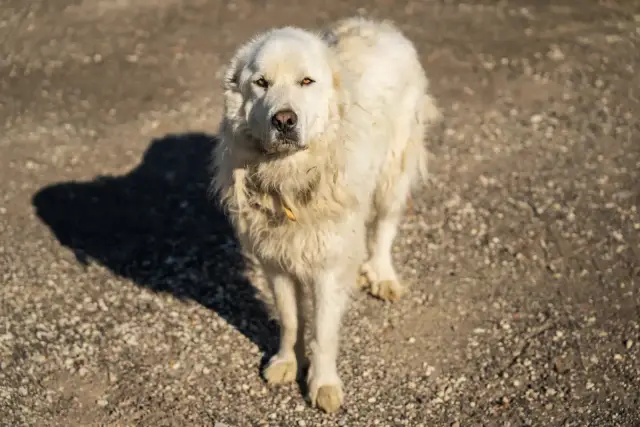
The nearest relatives are other herders. British collie types sit in the UK rural family. The Hungarian herders sit in their own family. The big white and mountain guardians, such as the Pyrenean Mountain Dog, sit in the Mediterranean family. A herder and a guardian can look alike and still be only distant cousins.
Why are they called continental herders?
"Continental" is the label for the European mainland, as opposed to the British Isles. The family name in the Parker et al. (2017) study is "Continental Herder", and this atlas shows it as "Shepherd dogs" on the tree. The names of the breeds themselves are mostly places:
 GuideDog hybrids: what dogs can and cannot breed withCan dogs breed with wolves, coyotes, jackals or foxes? Wolfdogs, coydogs, the Sulimov dog and Dogxim explained, with chromosomes and DNA studies.
- Briard is from Brie, the region east of Paris. Beauceron is from the Beauce plains near Paris.
- Malinois is from Malines (Mechelen), Tervuren from the village of Tervuren, Groenendael from Château Groenendael, and Laekenois from the royal estate of Laeken.
- Bouvier des Flandres is French for "cow-herder of Flanders", and Bouvier des Ardennes for "cow-herder of the Ardennes".
- Catalan Sheepdog comes from the Catalan gos d'atura, "dog that stops (the flock)".
- Hovawart joins Middle High German hova ("yard") and wart ("watchman").
- Can de Palleiro is named after the haystack (palleiro) where it traditionally sleeps.
What is the history of continental herders?
 GuideDogs in Legends and Fairy TalesDogs in folklore and fairy tales: Black Shuck, The Tinderbox, Saint Guinefort, Panhu, Greyfriars Bobby, Barry and Old Drum, with legend and history kept apart.
Before 1800: farm dogs by region
Shepherd dogs lived with flocks across Europe for many centuries, but they were not "breeds" in the modern sense. A dog in Brie, one in the Bergamo Alps and one in Aragon were each bred for local work, climate and flock, and nobody wrote down a standard. The atlas dates the older types to between 1300 and 1700, with low or medium confidence.
In France, a writer named Abbé Rozier described two kinds of sheepdog in 1809, the Berger de Brie and the Berger de Beauce. That is among the first written signs that the two types were seen as different.
1800 to 1860: working types without papers
In the 1800s, farmers across northern Europe still bred for work, not looks. The Flemish cattle dog, the Dutch farm dog and the Belgian shepherds of the Ardennes and Brabant all took shape as local types on small farms. Fences, roads and carts slowly cut the need for flock patrol, and this is the background to the next stage.
1860 to 1900: the breed movement
Dog shows opened the door. The first Paris dog show in 1863 included French sheepdogs, and breed histories say a Briard bitch named Charmant won a prize there. The Briard was entered in the French national stud book, the Livre des Origines Françaises, in 1885. The first Beauceron was registered with the Société Centrale Canine in 1893. The naming of the Beauceron is credited to the French writer Pierre Mégnin, who used the name in his 1888 book on war dogs. Sources differ on the exact dates of standards and clubs, so treat them as approximate.
Germany and Belgium moved at the same time:
- 1891, Germany: the Phylax Society formed to create a standard German sheepdog from local types. It fell apart by 1894 over whether looks or work should come first.
- 1891, Belgium: the Club du Chien de Berger Belge was founded in Brussels, led by Professor Adolphe Reul of the Cureghem Veterinary School. Reul travelled to see shepherd dogs at work and organised a gathering where about 117 dogs were examined. Accounts differ slightly on the count and dates. A first detailed standard followed in 1892. The club began with one breed in several coat varieties, which is why the Malinois, Tervuren, Groenendael and Laekenois are four varieties of one Belgian Shepherd.
- 1898, Netherlands: the first standard for the Dutch Shepherd was written, and in 1914 the brindle coat was made the only allowed colour so the breed would look different from the German and Belgian shepherds.
- 1899, Germany: Max von Stephanitz and a friend founded the Verein für Deutsche Schäferhunde (SV) in April, around the dog Horand von Grafrath. Their standard said looks were welcome but must not put working ability in doubt. See the German Shepherd page for the full story.
1900 to today: police, war and revival
The new breeds soon found new work. The city of Ghent in Belgium is credited with starting the first organised police dog service in 1899, using Belgian sheepdogs, according to police history sources. Germany followed with police dog training in the 1920s and chose the German Shepherd. The Belgian Malinois joined police and army units later and is now a standard choice for many forces. See Belgian Malinois.
Two World Wars cut the numbers of several breeds. Breed histories report that the Bouvier des Flandres and the Briard both served as messenger, sentry and ambulance dogs, and both lost many animals (as reported in breed club histories). Breeders rebuilt the lines afterwards.
Revival and new creation kept going. Kurt Friedrich Koenig began reviving the Hovawart in 1915 from old farm-dog types, using Kuvasz, Newfoundland, German Shepherd, Leonberger and Bernese Mountain Dog in the mix. Many Iberian and Italian regional dogs were recorded or recognised only in the late 1900s or 2000s. The newest breeds in the family, such as the Can de Chira (2020) and the Carea Leonés (2016), were officially described in the last few decades.
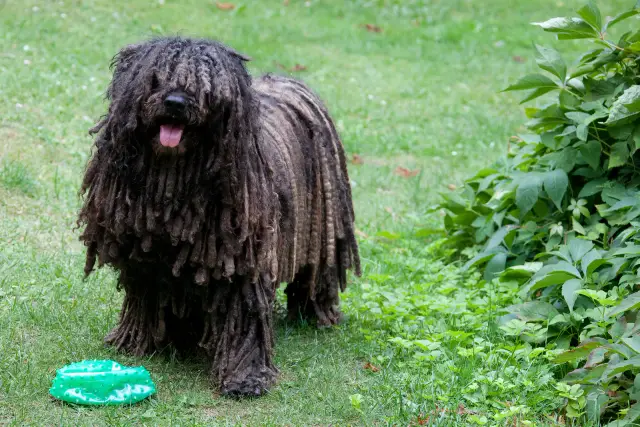
Who are the members of the Continental Herder family?
The family has two layers. The old farm dogs of France, Belgium, Italy and Iberia are the core. Around them sit newer breeds made from German Shepherds, Belgian Shepherds and Briards, such as the Kunma, Shiloh Shepherd and King Shepherd. The Belgian Shepherd entry is the umbrella for the four varieties, which are listed separately.
 GuideDog Clothes: When Dogs Need Coats, and a Short History of Dog FashionDo dogs need coats in winter? When clothes help, when costumes stress a dog, safe fit, reflective gear, and a short history of dog fashion and dog art.
| Breed | Country | Status | Size | Appeared | DNA-tested |
|---|---|---|---|---|---|
| Briard | France | Living | Large | 1300 to 1897 | Yes (Parker 2017) |
| Bouvier des Flandres | Belgium, France | Living | Large | 1800 to 1912 | Yes (Parker 2017) |
| Belgian Malinois | Belgium | Living | Large | 1891 to 1901 | Yes (Parker 2017) |
| Belgian Tervuren | Belgium | Living | Large | 1891 to 1901 | Yes (Parker 2017) |
| Groenendael | Belgium | Living | Large | 1891 to 1901 | Yes (Parker 2017) |
| Hovawart | Germany | Living | Large | 1200 to 1937 | By history |
| Bohemian Shepherd | Czech Republic | Living | Medium | 1300 to 1984 | By history |
| Croatian Sheepdog | Croatia | Living | Medium | 1374 to 1969 | By history |
| Barbado da Terceira | Portugal | Living | Medium | 1500 to 1990 | By history |
| Basque Shepherd Dog | Spain | Living | Medium | 1500 to 1995 | By history |
| Beauceron | France | Living | Large | 1500 to 1896 | By history |
| Bergamasco Shepherd | Italy | Living | Large | 1500 to 1956 | By history |
| Carea Leonés | Spain | Living | Medium | 1500 to 2016 | By history |
| Catalan Sheepdog | Spain | Living | Medium | 1500 to 1929 | By history |
| Corsican Dog | France | Living | Medium | 1500 to 2003 | By history |
| Majorca Shepherd Dog | Spain | Living | Medium | 1500 to 2003 | By history |
| Pastor Garafiano | Spain | Living | Medium | 1500 to 2003 | By history |
| Pastore della Lessinia e del Lagorai | Italy | Living | Medium | 1500 to 1990 | By history |
| Polish Lowland Sheepdog | Poland | Living | Medium | 1500 to 1959 | By history |
| Portuguese Sheepdog | Portugal | Living | Medium | 1500 to 1930 | By history |
| Can de Chira | Spain | Living | Medium | 1600 to 2020 | By history |
| Cane di Oropa | Italy | Living | Medium | 1600 to 1900 | By history |
| Can de Palleiro | Spain | Living | Large | 1700 to 2001 | By history |
| Armant | Egypt | Living | Medium | 1800 to 1900 | By history |
| Bouvier des Ardennes | Belgium | Living | Large | 1800 to 1923 | By history |
| Pyrenean Sheepdog | France | Living | Small | 1800 to 1926 | By history |
| Pyrenean Sheepdog (Smooth-faced) | France | Living | Small | 1800 to 1926 | By history |
| Dutch Shepherd | Netherlands | Living | Large | 1850 to 1898 | By history |
| Belgian Shepherd | Belgium | Living | Large | 1891 to 1901 | By history |
| Laekenois | Belgium | Living | Large | 1891 to 1901 | By history |
| Mantiqueira Shepherd | Brazil | Living | Medium | 1900 to 2015 | By history |
| East European Shepherd | Russia, Belarus | Living | Large | 1930 to 1964 | By history |
| White Shepherd | United States | Living | Large | 1933 to 1969 | By history |
| Schapendoes | Netherlands | Living | Medium | 1940 to 1952 | By history |
| Kunming Wolfdog | China | Living | Large | 1953 to 2007 | By history |
| White Swiss Shepherd Dog | Switzerland | Living | Large | 1970 to 2011 | By history |
| Shiloh Shepherd | United States | Living | Large | 1974 to 1990 | By history |
| King Shepherd | United States | Living | Giant | 1990 to 1995 | By history |
| Kunma | China | Living | Large | 1990 to 2010 | By history |
 Save
Who descends from whom, and which ties are strongest?
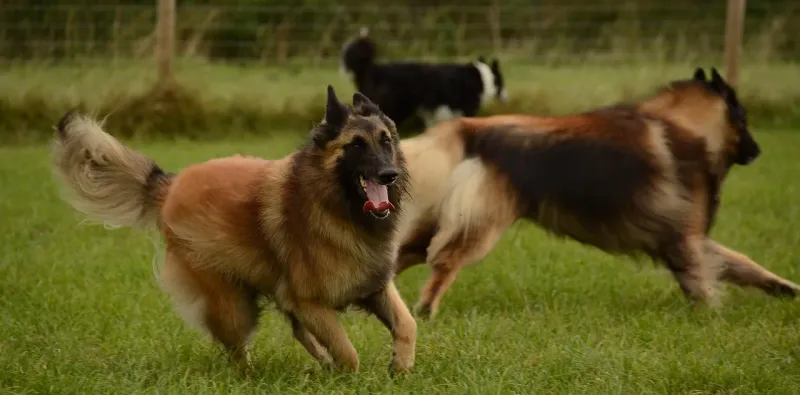
The strongest DNA tie in the family is not between two breeds in the usual sense. The Groenendael and the Tervuren share 278.2 Mb of identical DNA segments in Parker et al. (2017), by far the highest figure in the family. They are coat varieties of one Belgian Shepherd, so that is expected. The Malinois shares 88.4 Mb with the Tervuren and 76.3 Mb with the Groenendael.
 ArticleThe first known dog on every continentEarliest accepted dog on each continent, from Bonn-Oberkassel to the dingo: dates, sites, how dogs arrived and which breeds carry those first dogs.
Next comes the link between the Bouvier des Flandres and the Berger Picard, at 77.6 Mb. The Picard is placed in the New World family in the study, but its overlap with the Bouvier is the strongest outside the Belgian Shepherd. The Malinois also shares 42.6 Mb with the German Shepherd, which fits the shared herding background of two breeds built in the same decade. The Briard shares 11.8 Mb with the Groenendael and 10.5 Mb with the Tervuren, which is modest.
The written record adds more:
- The Bouvier des Ardennes was established after 1910 by crossing the Bouvier des Flandres with the Belgian Malinois, and perhaps the Briard.
- The Portuguese Sheepdog (Serra de Aires) is believed to descend from Briards imported into Portugal in the early 1900s, crossed with the Pyrenean Sheepdog.
- The Hovawart was revived from 1915 with five outside breeds, as described above.
- The White Swiss Shepherd Dog descends from the White Shepherd, which was bred from white German Shepherds in North America. White dogs imported to Switzerland from the early 1970s founded it.
- The Kunma has a Kunming Wolfdog sire and a Belgian Malinois dam. The Kunming Wolfdog itself came from German Shepherds crossed with local dogs and wolfdogs, in China from 1953.
- The Pastor Garafiano on La Palma was shaped by crossings with Belgian shepherds in the last century.
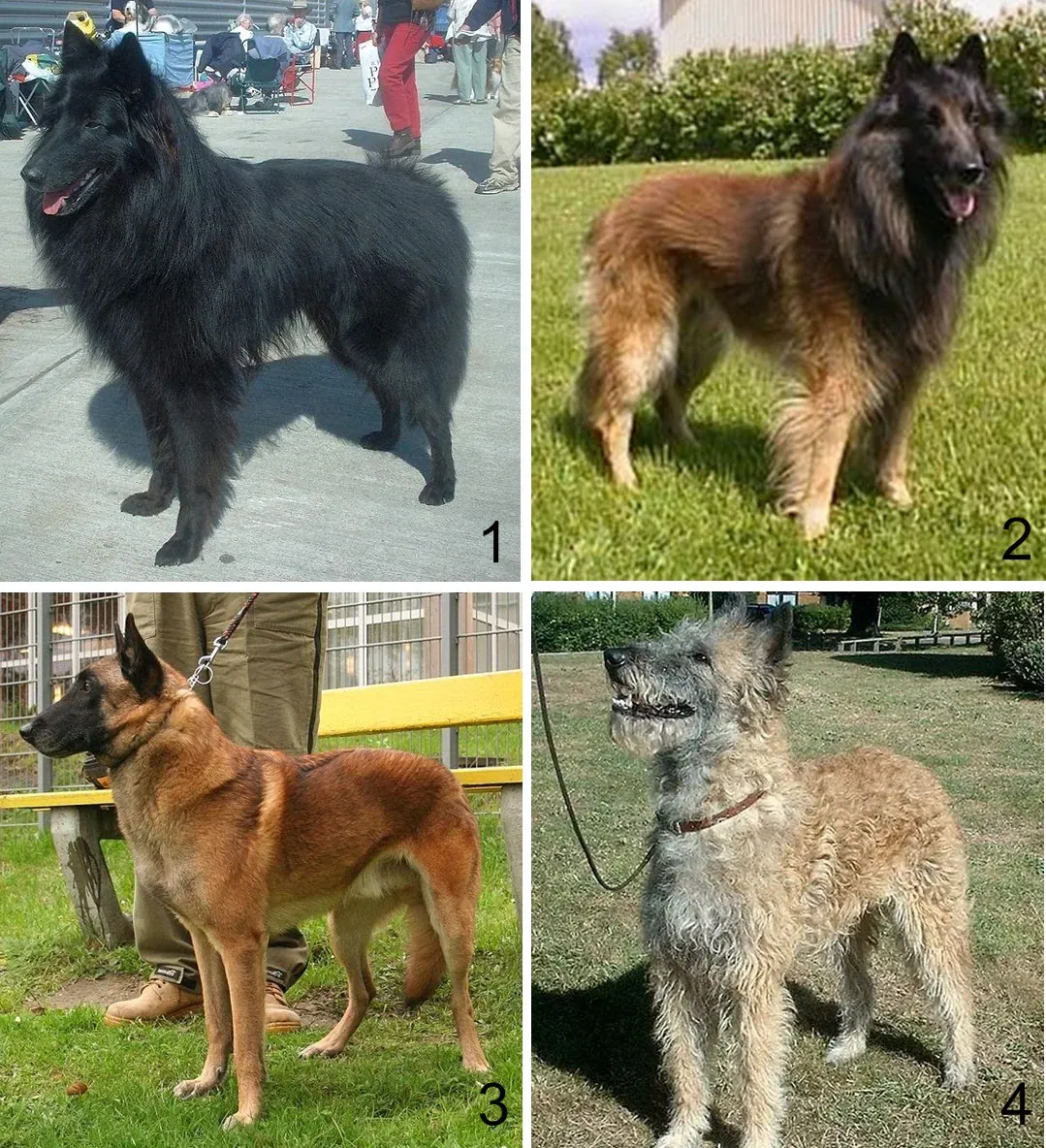
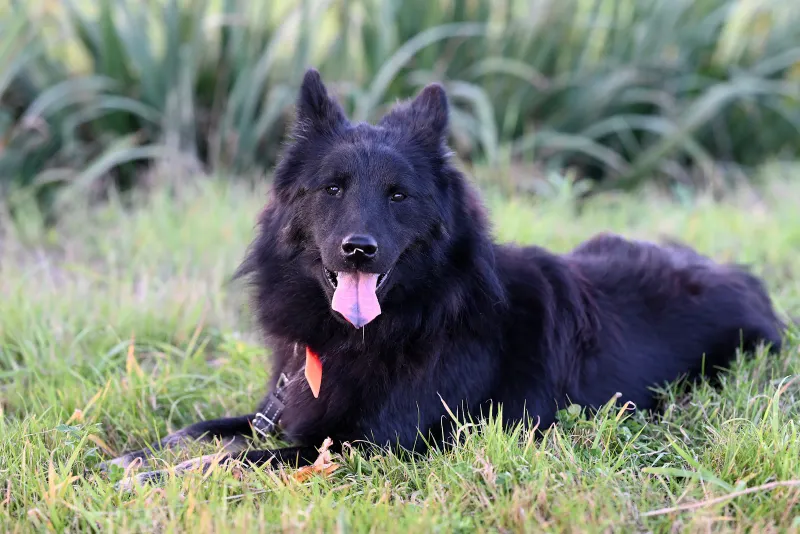 Groenendael
 Tervuren
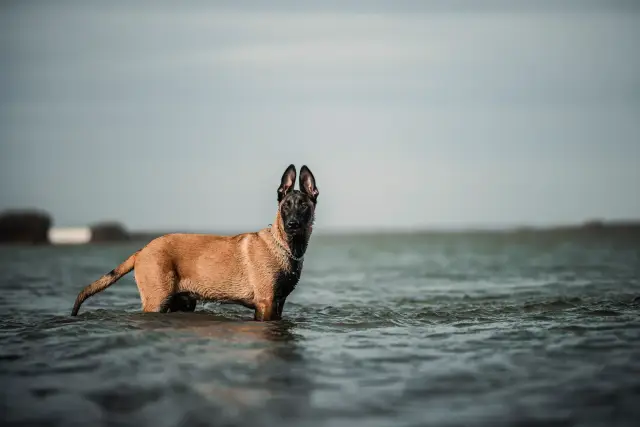 Malinoisalso a parent of the Bouvier des Ardennes
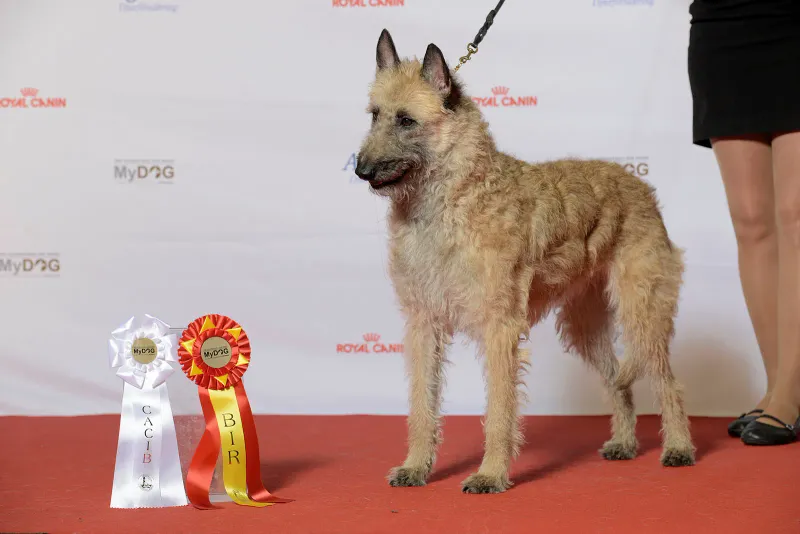 Laekenois
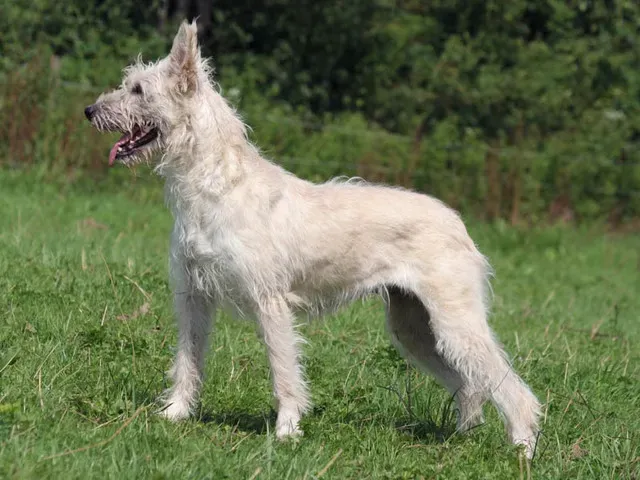 Bouvier des Ardennescrossed with the MalinoisBouvier des Ardennescrossed with the Malinois
What do continental herders have in common?
Job. All were bred to work around livestock or farms. Most worked in the tending style described below, not the gathering style of the British collie.
 GuideBanned and restricted dog breeds by countryWhich dog breeds are banned or restricted, country by country: UK, Ireland, France, Germany, Denmark, Norway, Spain, Australia and more.
Build. Sturdy, athletic, medium to large dogs with good stamina. The two small members are the Pyrenean Sheepdog and its smooth-faced variety. The King Shepherd is the one giant.
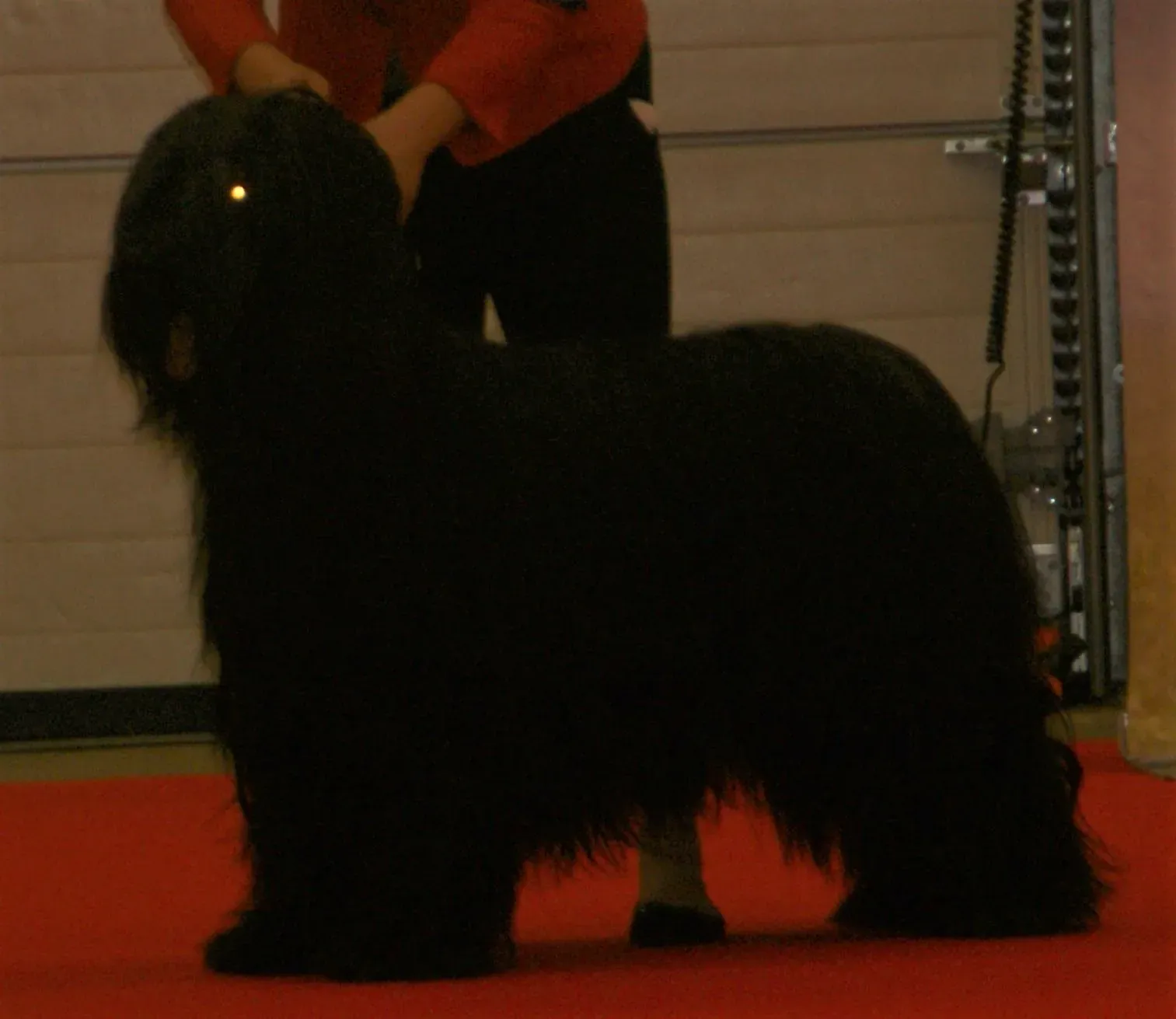
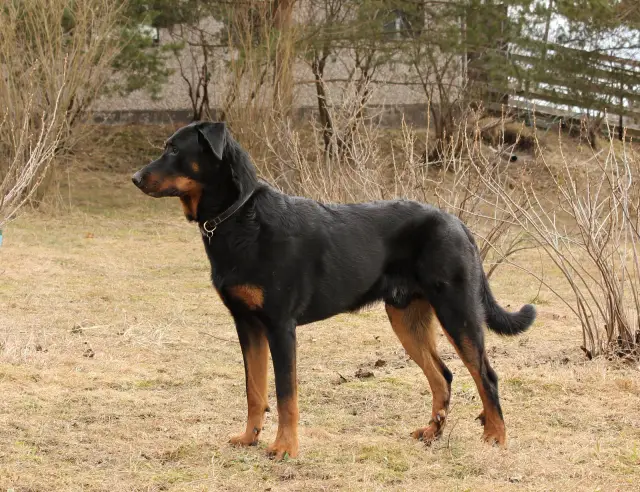
Coat. The range is huge. The Malinois and the Beauceron have short, dense coats. The Briard has a long, flowing, goat-like coat, the Bouvier a rough, tousled one, and the Bergamasco forms flat felted mats, called flocks, over the body. The Belgian varieties cover short, long and rough in one breed.
Temperament. Alert, quick to learn and closely bonded to their people. Many are reserved with strangers because they also guarded property. Most need a real daily job, such as dog sports, tracking or obedience, and become bored or noisy without one. This is a general tendency, not a promise, and each dog differs.
Tending and gathering
Tending and gathering are two ways of working sheep. A gathering dog, such as a Border Collie, runs wide around the flock and brings it to the handler. A tending dog does not gather. It circles the grazing flock and acts as a moving fence, keeping sheep off the crops and off the road on unfenced land. Writers on herding link tending mainly to Germany and France, where flocks grazed open land beside cultivated fields. The German Shepherd is the best-known tending breed. Most members of this family have a tending background, though some, such as the Bouvier, worked mainly with cattle.
What health issues are linked to continental herders?
Most continental herders live healthy, active lives. The breeds are large and athletic, so the checks that matter most are joints, eyes and, in some lines, the nervous system. Breeders screen for these, and owners can watch for them. Numbers below come only from named studies. Where a figure is from a related breed, the table says so. Lifespan is 10 to 12 years for the Briard, Beauceron and Bouvier, and 12 to 14 or more for most medium herders.
 GuideHow to adopt a dog from a shelter or rescueHow to adopt a dog from a shelter or rescue: the process, costs in general terms, choosing a dog, the first weeks and what if it does not work out.
| Condition | What it is | How common | What helps |
|---|---|---|---|
| Epilepsy | Repeated seizures with no other cause found | Danish study of Groenendael and Tervueren born 1995 to 2004: about 1 in 11 dogs (9.5%) (Berendt et al. 2008). A single extended pedigree in a related study was much higher, so it is not a breed rate | Ask the breeder about seizures in the pedigree. A vet-led plan if seizures start |
| Hip dysplasia | A loose or poorly shaped hip joint that can lead to arthritis | Malinois: about 1 in 19 dogs (5.2%) in a large European screening dataset (PLOS ONE, 2017). Other herders differ and are not directly comparable | Hip scoring of both parents, healthy weight, no hard jumping while growing |
| Degenerative myelopathy | Slow, late-onset spinal cord disease in older dogs, linked to the SOD1 gene | Best studied in the German Shepherd: 8 of 50 young dogs in a UK referral sample carried two copies, about 1 in 6 (Holder et al. 2014). Not measured in most herders | DNA test of breeding dogs |
| Inherited retinal disease | A vision disorder passed down in families | Seen in the Briard, where a gene change in RPE65 causes early blindness (Veske et al. 1999). No prevalence figure found | DNA test of breeding dogs; annual eye exams |
| Bloat (stomach twist) | Gas and a twisted stomach in deep-chested dogs, an emergency | Large deep-chested breeds are at higher risk (Glickman et al. 2000). No herder-specific figure found | Smaller, calm meals, no hard exercise at mealtimes, know the signs |
| Ear and skin problems | Itching, allergies and infections | Seen in drop-eared and heavy-coated herders. No named figure for the family | Regular ear and coat checks, vet care |
For the German Shepherd, the best-studied relative, see the German Shepherd health table. The Malinois profile, Belgian Malinois, has more on that breed.
Which continental herder breeds are extinct?
None are listed as extinct. All 39 are living. A few are rare, though. Several Iberian and Italian regional dogs, such as the Can de Chira, Pastor Garafiano and Cane di Oropa, have small populations and local clubs working to keep them going.
 GuideHow to get an assistance dogHow to get a service dog or assistance dog in the USA, UK, Germany, France, Spain, Italy and the Netherlands: accredited schools, waits, owner-training and travel.
Are there surprises in the Continental Herder family?
- The German Shepherd is not a member. In Parker et al. (2017) it sits in the New World clade, where the genetic signal centres on it. Breeds built partly from it, such as the Hovawart, Kunming Wolfdog and White Swiss Shepherd, still land here by history.
- The Berger Picard sits elsewhere too. It is also in the New World clade, though it shares more DNA with the Bouvier des Flandres than with most breeds.
- The Hovawart is a guard breed to FCI. It is in Group 2 but tied to this family by history and by its German Shepherd crosses.
- Four varieties, one breed. The Malinois, Tervuren, Groenendael and Laekenois are a single Belgian Shepherd to most clubs and the FCI.
- A shepherd in Egypt. The Armant is listed here as an Egyptian herding dog, named for the town of Armant (Ermant) in Upper Egypt.
- A herder from China and one from Brazil. The Kunming Wolfdog was developed by the Chinese army from 1953, and the Kunma followed from 1990. The Mantiqueira Shepherd comes from the Serra da Mantiqueira in Brazil.
- Four island herders. Corsica, Mallorca, La Palma and Terceira each have their own breed in the family.
 GuideService, therapy and emotional support dogs: what's the difference?Service dog vs emotional support dog vs therapy dog: the real differences, your rights in the USA and Europe, and why online certificates mean nothing.

Which continental herder suits which owner?
These are general profiles. Individual dogs vary a great deal, so meet the parents and talk to breeders and breed clubs.
 GuideDogs in myth around the worldFrom Anubis and Cerberus to Fenrir, Xolotl and the Tiangou: how cultures across the world imagined dogs as guardians, guides and monsters.
- Active households with time to train: the Belgian Malinois is intense and sensitive. It does best with experienced owners who can give it a daily job.
- Large rural homes: the Briard and the Beauceron are big, loyal farm dogs. Both need space and early socialisation, and the Briard needs regular grooming.
- Handlers who want a tireless worker: the Dutch Shepherd is lean and athletic, and is used for police work and dog sports.
- Owners who want a calmer guardian: the Bouvier des Flandres and Hovawart are steady, watchful family guards with a grooming need.
- People who love a unique coat: the Bergamasco has felted flocks that need special care but little brushing.
- Smaller homes: the Pyrenean Sheepdog is small, quick and lively. It still needs plenty of exercise.
- People who want a white shepherd: the White Swiss Shepherd Dog is a newer, working-bred herder, so it still needs daily exercise and training.
Fun facts about continental herders
- A Briard bitch named Charmant is reported to have won a prize at the first Paris dog show in 1863.
- The Groenendael takes its name from a château near Brussels where the breeder Nicolas Rose kept his black dogs.
- The Dutch Shepherd's brindle coat became compulsory in 1914 to set it apart from its look-alike neighbours.
- The Catalan name of the Catalan Sheepdog means "dog that stops the flock".
- The Bergamasco's coat is made of three hair types and forms flat felted mats called flocks.
- The Kunma's name joins Kunming and Malinois.
- The first organised police dog service, in Ghent, Belgium in 1899, is credited with using Belgian sheepdogs.
 GuideDogs of Japan: the native breeds and their storiesJapanese dog breeds explained: the six Nihon Ken, the Chin, Tosa, Japanese Spitz and Terrier, Hachiko, wartime near-extinction, DNA and who they suit.
 GuideDog Breeds by Country: Which Nations Made the Most?Dog breeds by country: how many breeds each nation produced in the Dogs Atlas data, from the UK and France to Japan, plus national dogs and families.GuideDogs of Japan: the native breeds and their storiesJapanese dog breeds explained: the six Nihon Ken, the Chin, Tosa, Japanese Spitz and Terrier, Hachiko, wartime near-extinction, DNA and who they suit.
Related families
- European dogs: the parent of the Continental Herder family.
- UK rural: British collies and sheepdogs, which work by gathering.
- Mediterranean: livestock guardians such as the Pyrenean Mountain Dog and Kuvasz, used in the Hovawart.
- Retriever: the Newfoundland, another Hovawart ancestor.
- Pointer and Setter: the other large European branch of working dogs.
 GuideDogs in science and spaceSpace dogs Laika, Belka and Strelka, Pavlov's dogs, Snuppy the clone, the dog genome and scent detection: what dogs did for science, and what it cost them.
 GuideBest dog breeds for familiesBest dog breeds for families, small homes, allergies, first-time owners and seniors, ranked from our breed ratings, with honest limits and a table.GuideDogs in science and spaceSpace dogs Laika, Belka and Strelka, Pavlov's dogs, Snuppy the clone, the dog genome and scent detection: what dogs did for science, and what it cost them.
Frequently asked questions
What is the difference between a continental herder and a German Shepherd?
The German Shepherd is a continental herding dog by history, but in DNA it sits in the New World family, not this one. The practical difference: the German Shepherd was bred as a single national breed, while the Continental Herder family is a wide set of regional European dogs.
What is the difference between a Malinois and a German Shepherd?
They are separate breeds. The Parker 2017 study finds 42.6 Mb of . The Malinois is usually lighter in build and is a coat variety of the Belgian Shepherd.
Briard or Beauceron?
Both are large French herders from the Paris region. The Briard has a long, goat-like coat and the Beauceron a short, dense black-and-tan coat. Both carry double rear dewclaws, a feature. The Briard needs more grooming.
Are continental herders good family dogs?
Many are, with training and exercise. They are alert and loyal, but some are reserved with strangers and need early socialisation.
How long do continental herders live?
It depends on the breed. Breed clubs give 10 to 12 years for the Briard, Beauceron and Bouvier and 12 to 14 or more for the Malinois, Bergamasco and most medium herders. No large study has measured median lifespan for the whole family.
Do they all herd?
No. Many now work as police, search and service dogs, and many are family pets. The instinct to circle, nip and control movement can show in everyday life, such as with children or bikes.
Which are the rarest breeds in the family?
Several regional Iberian and Italian dogs, such as the Can de Chira, Pastor Garafiano and Cane di Oropa, have small populations.
Read next
 Family storyRetrieverRead the family's story: origins, members, DNA
 Family storyPoodleRead the family's story: origins, members, DNA
 Family storyPointer SetterRead the family's story: origins, members, DNA
Sources (13)
- Parker, H. G., et al. (2017). Genomic analyses reveal the influence of geographic origin, migration, and hybridization on modern dog breed development. Cell Reports, 19(4), 697 to 708.
- Berendt, M., et al. (2008). Prevalence and characteristics of epilepsy in the Belgian shepherd variants Groenendael and Tervueren born in Denmark 1995 to 2004. Acta Veterinaria Scandinavica, 50, 51.
- Holder, A. L., et al. (2014). Assessing the prevalence of the SOD1 mutation associated with degenerative myelopathy in German Shepherd dogs in the UK. Canine Genetics and Epidemiology.
- Awano, T., et al. (2009). Genome-wide association analysis reveals a SOD1 mutation in canine degenerative myelopathy that resembles amyotrophic lateral sclerosis. PNAS.
- Veske, A., et al. (1999). Retinal dystrophy of Swedish Briard/Briard-Beagle dogs is due to a 4-bp deletion in RPE65. Genomics.
- Glickman, L. T., et al. (2000). Non-dietary risk factors for gastric dilatation-volvulus in large and giant breed dogs. Journal of the American Veterinary Medical Association.
- Large European screening dataset on hip and elbow dysplasia by breed. PLOS ONE (2017).
- Fédération Cynologique Internationale, standards for the Belgian Shepherd Dog (no. 15), Briard (no. 113), Beauceron (no. 44), Dutch Shepherd (no. 223) and Hovawart (no. 190).
- Verein für Deutsche Schäferhunde (SV) and Phylax Society, breed history summaries.
- Breed club and encyclopaedia histories of the Briard, Beauceron and Dutch Shepherd.
- Wikipedia, Old German herding dogs, and the Herding Instinct Institute article on breed-specific herding styles (tending and gathering).
- Wikipedia, Police dog, on the Ghent police dog service of 1899.
- Breed records in the atlas data (Dogs Atlas, internal data).