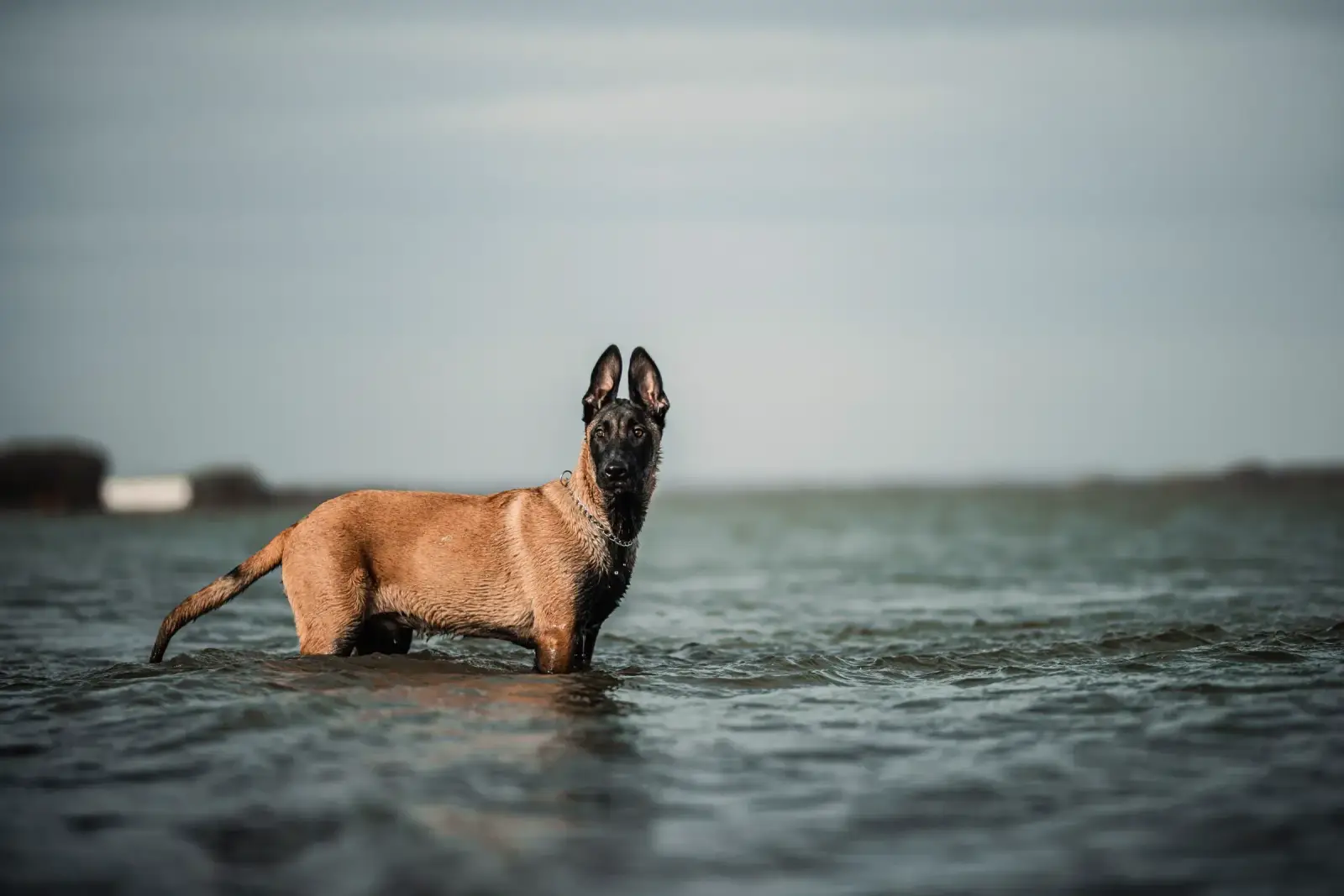
It is one of four coat varieties of the Belgian shepherd, and the one most often seen today in police, military and detection work. Fast, athletic, intensely focused and quick to learn, it is also one of the most demanding dogs a person can bring home. This profile covers where the Malinois came from, how it relates to the Groenendael, Tervuren and Laekenois, what the breed standards say, what the health research shows and, honestly, who should and should not own one.
Belgian Malinois quick facts
 Related breedBelgian Shepherd1891 to 1901 · BelgiumVictorian Breed Boom
- Closest DNA relatives
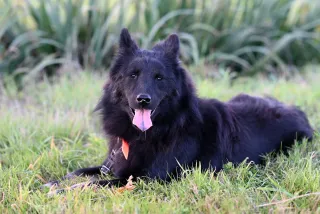
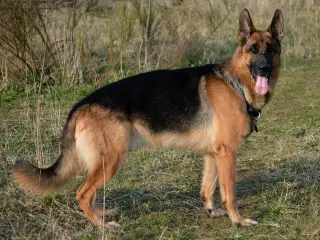
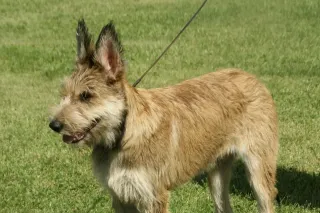
- Tervuren, Groenendael, German Shepherd, Berger Picard
- Country of origin
- Belgium (Mechelen region)
- Period of development
- About 1891 to 1901 (atlas data); first club and standard 1891 to 1892
- Original job
- Herding and guarding livestock and farms
- Type
- Herding dog. FCI: Group 1, Sheepdogs and Cattledogs, listed as a variety of the Belgian Shepherd Dog (no. 15). AKC: Herding Group, a separate breed. UK Kennel Club: Pastoral Group
- Height
- FCI ideal about 62 cm dogs, 58 cm bitches. AKC 61 to 66 cm dogs, 56 to 61 cm bitches
- Weight
- FCI about 25 to 30 kg dogs, 20 to 25 kg bitches
- Coat
- Short, straight, dense, with a woolly undercoat
- Colour
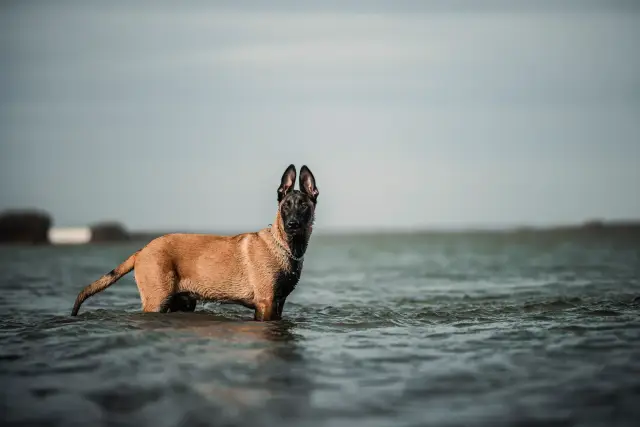
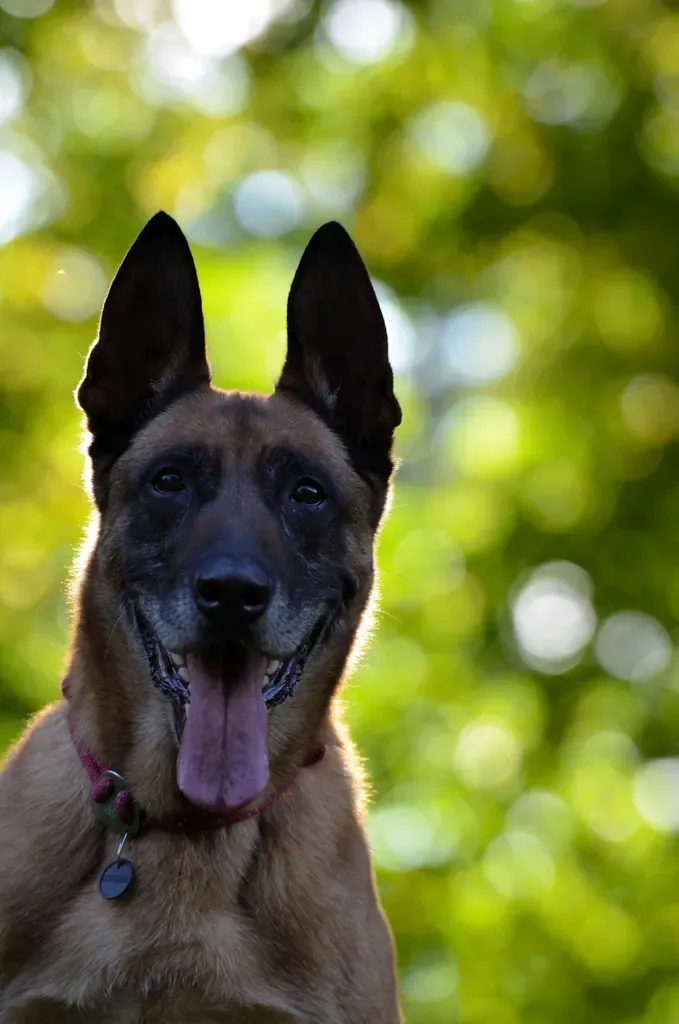
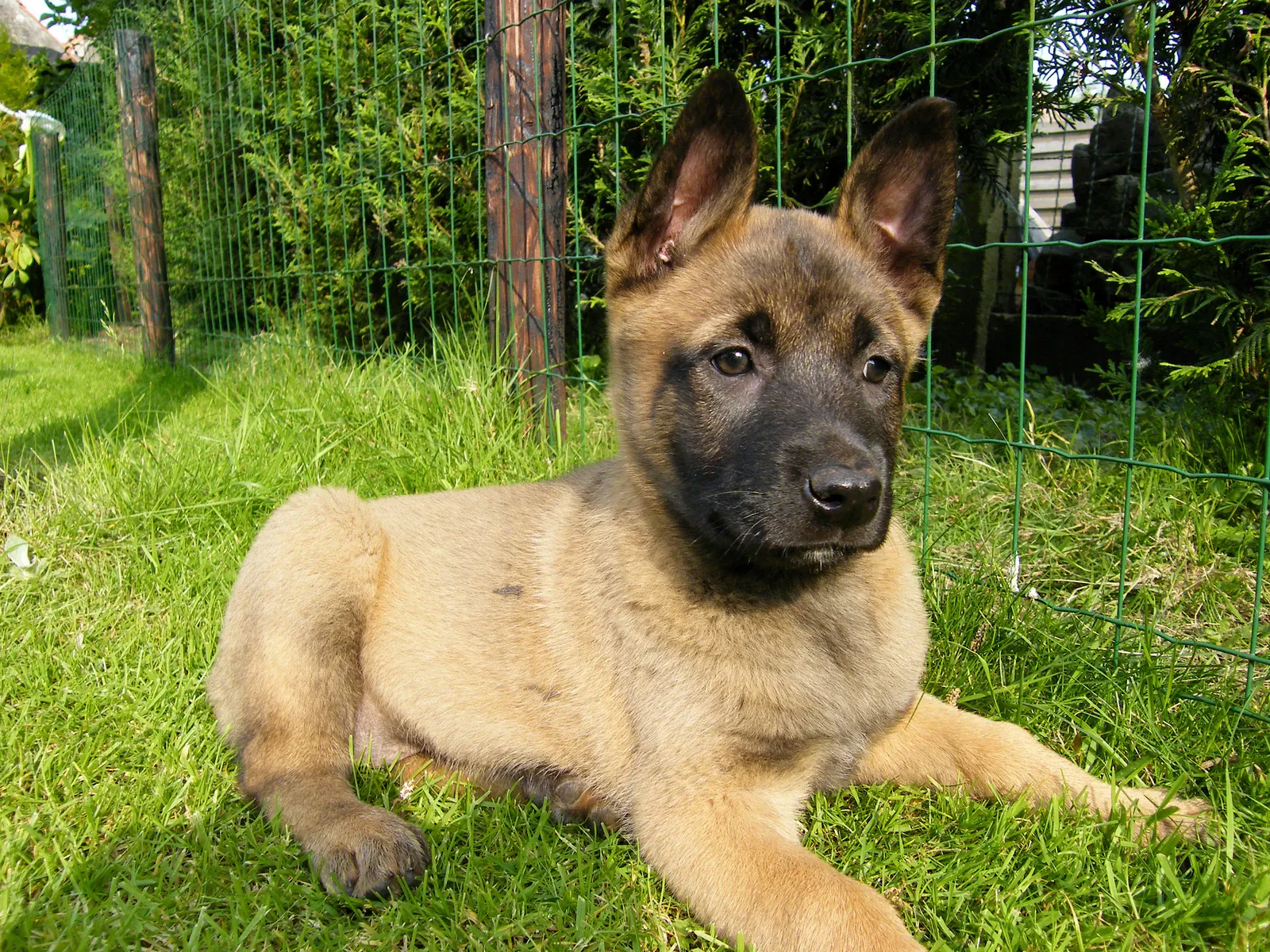
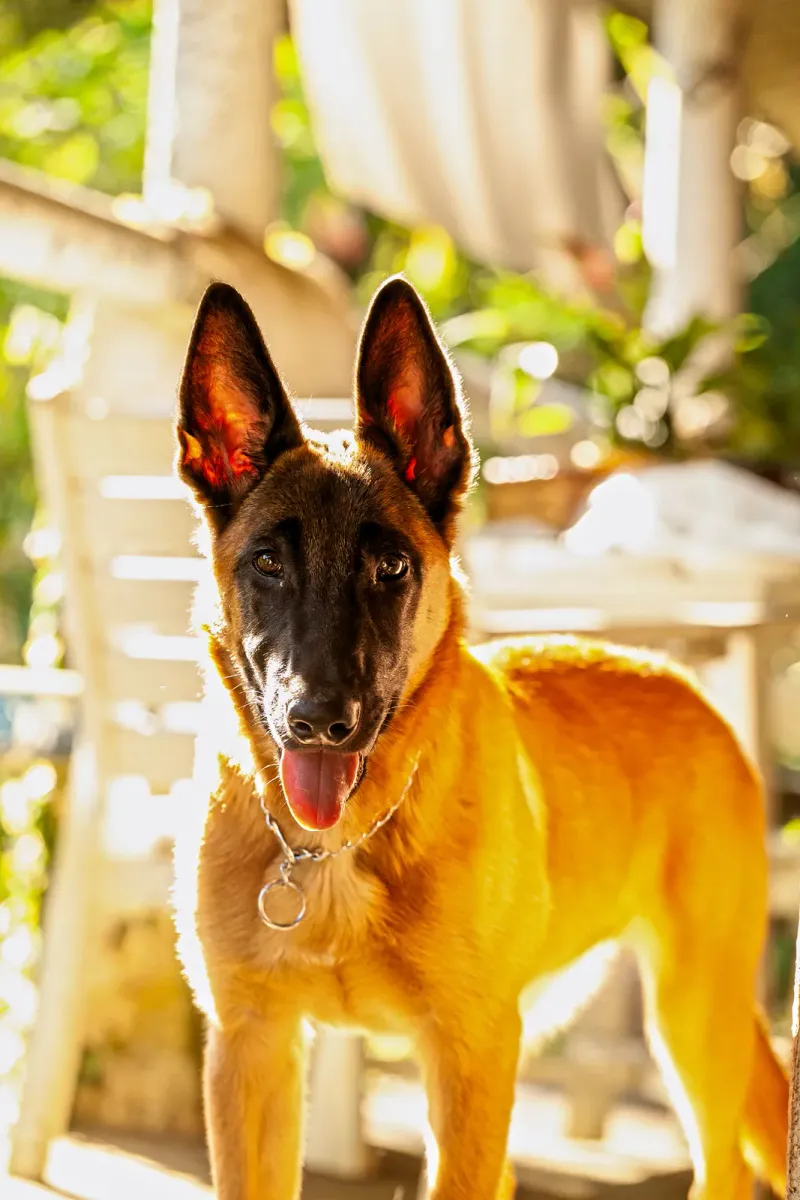
- Fawn to mahogany with a black overlay, black mask and black ears
- Life span
- Atlas data: 12 to 14 years
- Exercise
- High: well over an hour a day plus real mental work
- DNA family
- Continental Herder (Parker et al. 2017)
- Other names
- Mechelaar, Mechelse Herder, Chien de Berger Belge Malinois
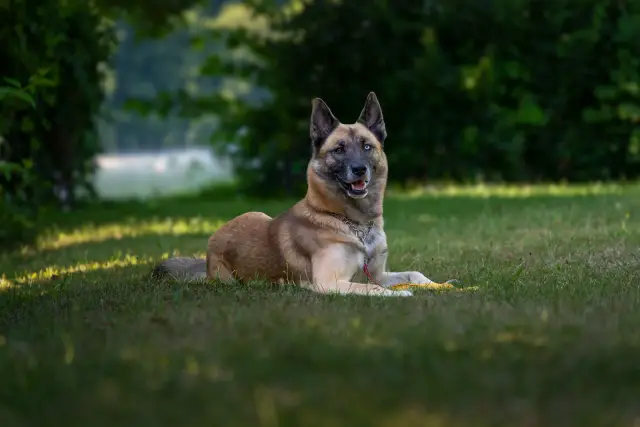
Drawn to scale in real centimetres. Its back reaches about 61 cm, just above your knee; its head about 77 cm, your hip.
Where it sits in the tree
Victorian Breed Boom · 1850 to 1913
Name and origin
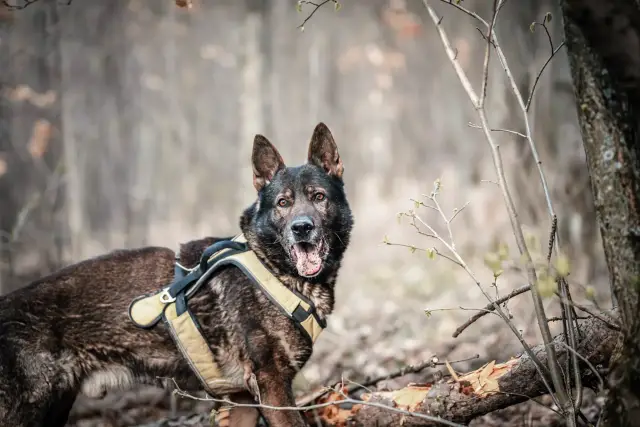 Related breedDutch Shepherd1850 to 1898 · NetherlandsVictorian Breed Boom
The name comes from Malines, the French form of Mechelen, a city in the Flemish province of Antwerp between Brussels and Antwerp. In Dutch the dog is the Mechelse Herder or Mechelaar. The Malinois was the short-haired fawn dog of that region, one of several local types of working shepherd dog that Belgian farmers kept in the 19th century.
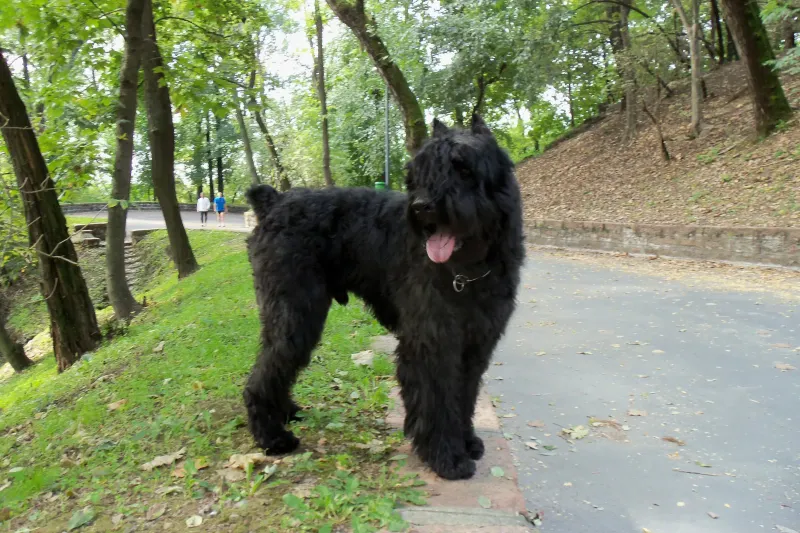
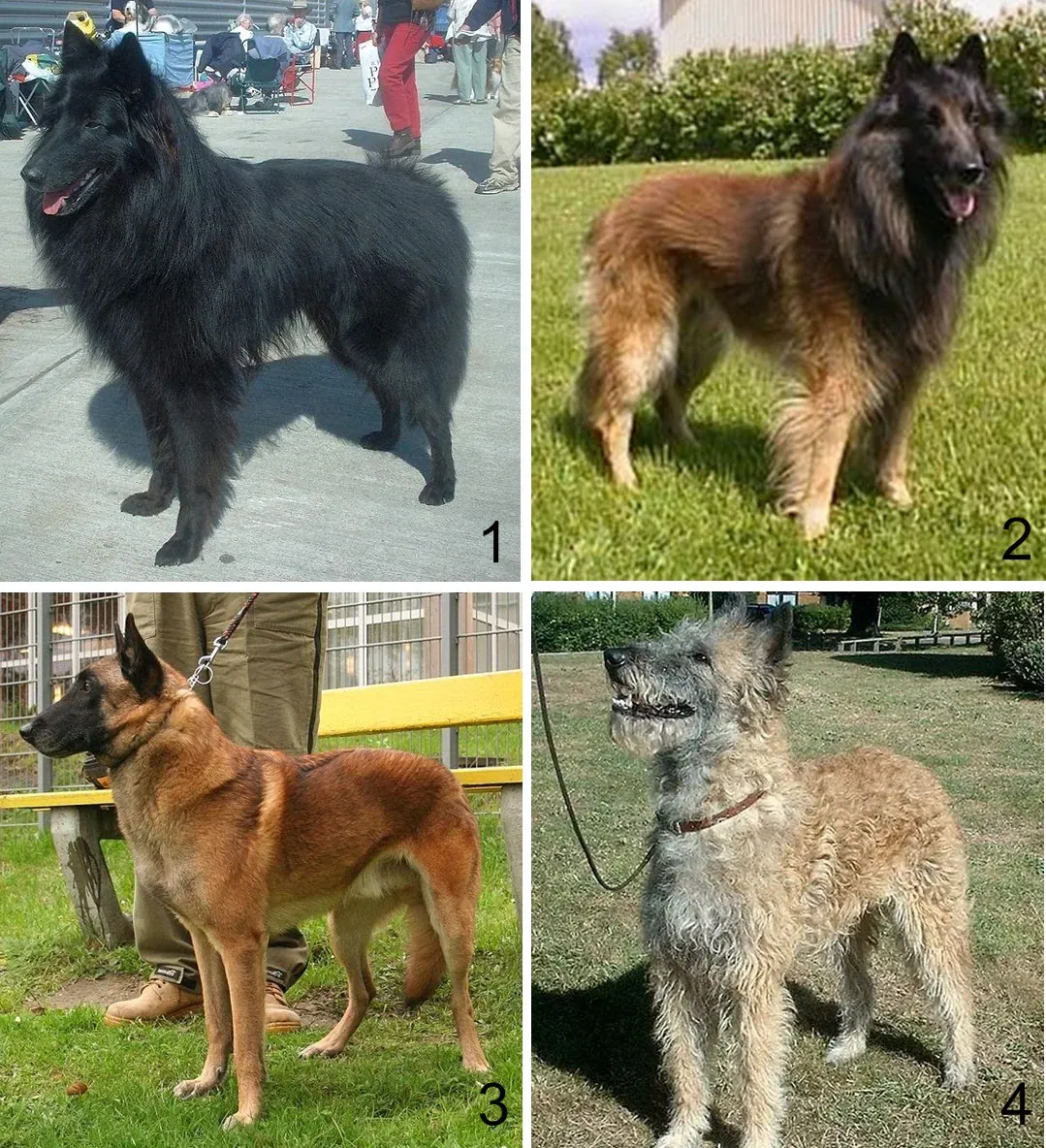
Three other varieties share the root. The Groenendael is long-haired and solid black, named after the Groenendael estate near Brussels. The Tervuren is long-haired in fawn or mahogany with a black overlay, named after the village of Tervuren. The Laekenois is rough and wiry in fawn, named after the Royal Castle of Laeken. All four were treated as one breed, the Belgian shepherd dog, with the coat as the only dividing line.
Is the Malinois a separate breed?
It depends on whom you ask. The FCI, which covers most of continental Europe, lists one breed, the Belgian Shepherd Dog (standard no. 15), with four varieties that are judged under one standard. The American Kennel Club (AKC) splits them: it recognises the Belgian Malinois, Belgian Tervuren and Belgian Sheepdog (the Groenendael) as three separate breeds, and the Belgian Laekenois as a fourth. The UK Kennel Club also lists the varieties separately. Our knowledge base follows the FCI view and treats the Malinois as a variety of the Belgian Shepherd while giving it its own page, because most people search for it by name.

History
 Same eraAmerican Cocker Spaniel1870 to 1946 · United StatesVictorian Breed Boom
Sorting out the Belgian herding dogs
At the end of the 1800s Belgium had a great many herding dogs of varied type and very different coats. Fences, roads and carts were reducing the work for drovers' dogs, and enthusiasts wanted to define and keep the types. The central figure was Professor Adolphe Reul of the Cureghem Veterinary School in Brussels, who travelled to examine shepherd dogs at work. In 1891 the Club du Chien de Berger Belge was founded in Brussels, and in the same year Reul organised a gathering at Cureghem where 117 dogs were assembled and examined (accounts differ slightly on the count and on exact dates). A first detailed standard followed in 1892. The club began with one breed and several coat varieties; the atlas data places the breed's appearance between 1891 and 1901.
Dogs that herd, guard and work
The Malinois was valued for being quick, hard and tireless. By the early 1900s the short coat and the fawn colour with a black mask were fixed, and breeders in the Mechelen region kept the type close to its working roots. Belgian shepherds were used by police and armies in the early 20th century. The AKC recognised the Malinois as its own breed in 1959.
Police and military work
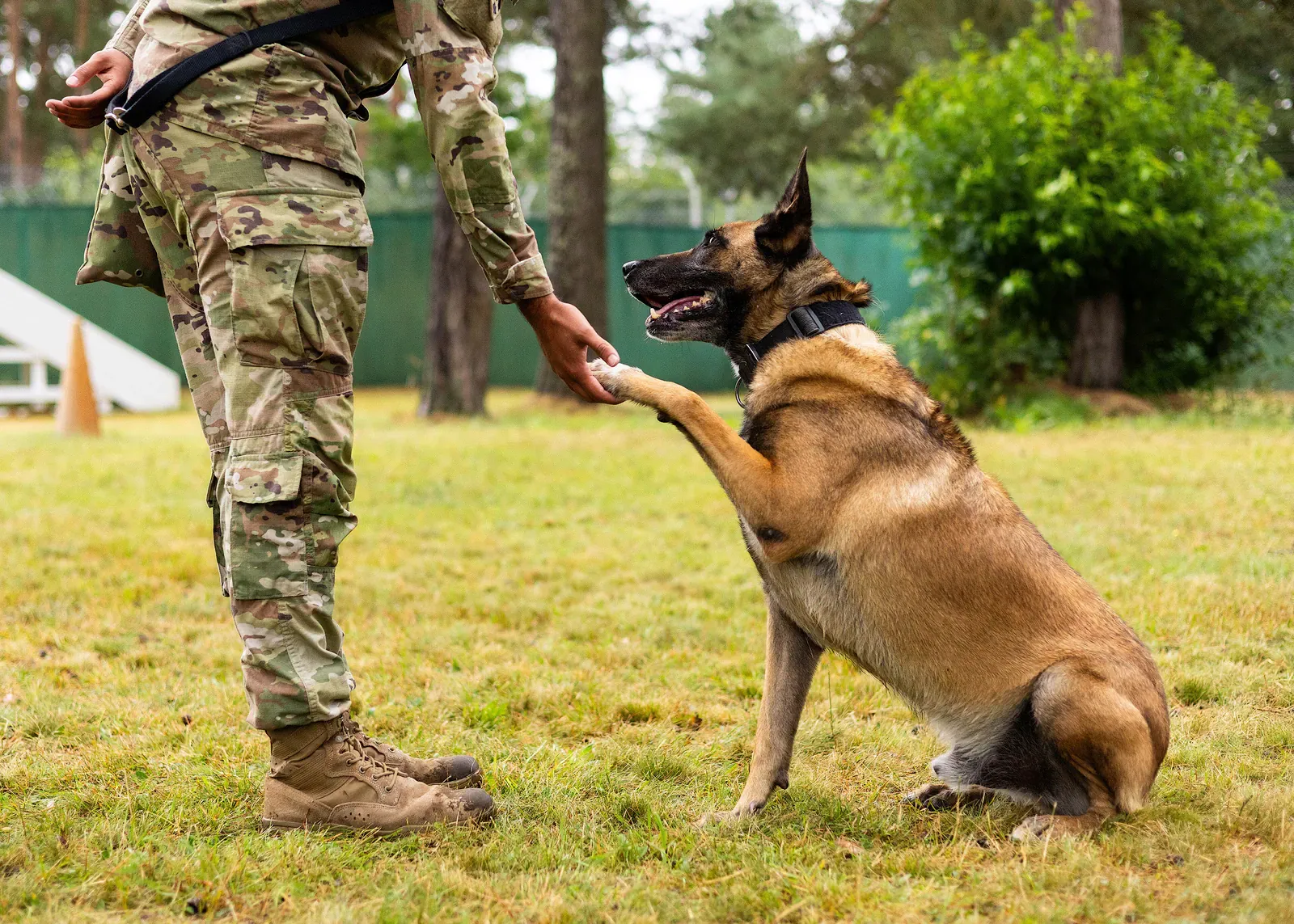
Since the late 20th century the Malinois has become the preferred dog for much police, military and customs work worldwide. The reasons are consistent: high drive, speed, agility, a strong willingness to bite and hold on command, and a body lighter than a German Shepherd's, which suits parachuting and helicopter work. Police and military units in many countries use it; the Israeli and US military working-dog studies cited below are examples.
The best known individual is Cairo, a Malinois assigned to a US Navy SEAL team. He was shot and wounded in Afghanistan in 2009 and was part of the team that carried out the 2011 raid on Osama bin Laden's compound in Pakistan, where he was the only member whose name was made public. His handler, Will Chesney, wrote about him in the memoir No Ordinary Dog (with Joe Layden). Details of what exactly the dog did in the compound come mostly from the handler's account and press reports, so they are not independently verified.
 Save
Clubs and recognition
The FCI standard for the Belgian Shepherd Dog was drawn up by the breed's home country, Belgium, and is the reference for the four varieties. The AKC recognised the Malinois in 1959 as a separate breed; the Tervuren and the Sheepdog were recognised in the same period. The UK Kennel Club lists the Belgian Shepherd Dog (Malinois) in the Pastoral Group. The American Belgian Malinois Club maintains the AKC .
Relatives and DNA
 Same familyAmerican Eskimo Dog1900 to 1917 · United StatesVictorian Breed Boom
To see where the Continental Herder family sits among all 29 families, open the dog breed family tree.
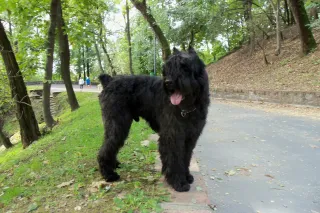
In the 2017 study of Parker and colleagues, which compared the genomes of 161 dog breeds, the Malinois falls in the Continental Herder family, alongside the Tervuren, Groenendael, German Shepherd, Berger Picard and others. It shares the most DNA with its own varieties:
- Belgian Tervuren: 88.4 shared.
- Groenendael: 76.3 Mb.
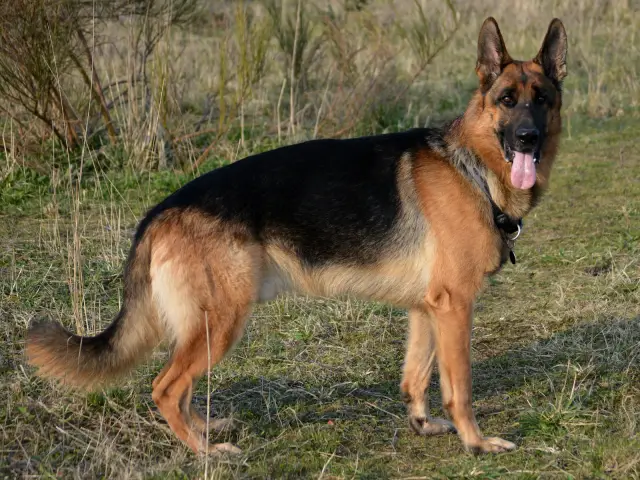
- German Shepherd: 42.6 Mb.
- Berger Picard: 30.0 Mb.
- Bouvier des Flandres: 15.5 Mb.
The large overlap with Tervuren and Groenendael confirms that the varieties are very close genetically; the main separations are coat and colour. The German Shepherd shares more than the other continental herders because both come from the same pool of central European herding dogs, bred in the same years. The Malinois is also an ancestor, in the atlas data, of the Bouvier des Ardennes and the Kunma.
Sister breeds · 3
- Belgian Tervuren1891 to 1901
- Groenendael1891 to 1901
- Laekenois1891 to 1901
Descend from it · 2
- Bouvier des ArdennesBelgium
- KunmaChina
- Belgian Tervuren88.4 Mb 3.7%
- Groenendael76.3 Mb 3.2%
- German Shepherd42.6 Mb 1.8%
- Berger Picard30.0 Mb 1.3%
- Bouvier des Flandres15.5 Mb 0.6%
- Chinook15.3 Mb 0.6%
- Cane Paratore11.4 Mb 0.5%
- Xoloitzcuintle9.8 Mb 0.4%
Source: Parker et al. 2017. Percent of the whole genome.
The breed standard
 Looks relatedAmerican Pit Bull Terrier1850 to 1898 · United StatesVictorian Breed Boom
A breed standard is the written ideal for a breed that kennel clubs judge dogs against. The Malinois standards agree on the look: a well-balanced, square, muscular dog with an elegant, proud carriage.
| Trait | What the standards say |
|---|---|
| Height | FCI: ideal about 62 cm for dogs and 58 cm for bitches, with a tolerance of about 2 cm either way. AKC: 61 to 66 cm for dogs and 56 to 61 cm for bitches |
| Weight | FCI: about 25 to 30 kg for dogs and 20 to 25 kg for bitches. AKC: no weight in the standard (about 27 to 36 kg for dogs and 18 to 27 kg for bitches as commonly reported) |
| Build | FCI and AKC: square outline, medium-boned, strong without heaviness; the standards want a lighter, more elegant build than the German Shepherd |
| Coat | FCI and AKC: short and straight, with a dense woolly undercoat; shortest on the head and ears |
| Colour | FCI and AKC: rich fawn to mahogany, with a black overlay; black mask and black ears; white is limited to a small patch on the chest and the toes |
| Head | FCI and AKC: clean-cut, long, dry, with a moderate stop and a pointed muzzle |
| Ears | FCI and AKC: erect, triangular, set high |
| Eyes | FCI and AKC: medium, almond-shaped, brown, with a lively, intelligent expression |
Mask and overlay. The mask must be pronounced and cover the upper and lower lips and the eyelids in one black zone. The black overlay is the dark tipping on the hairs of the fawn coat; it should be strongest on the back and on the muzzle.
Varieties in the standard. The other three Belgian varieties differ mainly by coat. The Groenendael is long and black, the Tervuren is long and fawn with black overlay, and the Laekenois is rough and wiry in fawn. Under the FCI all are judged by the same standard apart from coat; the AKC has separate standards for each.
Temperament
 Related breedAmerican Staffordshire Terrier1850 to 1936 · United StatesVictorian Breed Boom
The Malinois is an intense, working-minded dog. The breed's strengths are the same as the reasons it is hard to live with: it learns fast, has a very high drive to move and to work, is alert and protective of its people and place, and does not switch off easily. See the smartest dog breeds for how this breed compares with others on trainability.
Drive and energy. A Malinois bred from working lines needs a job: scent work, obedience, protection sports, herding or real work. Without one, the energy tends to come out as destruction, barking, spinning, chasing and nipping. The American Belgian Malinois Rescue reported that most of its surrendered dogs came from lines bred for protection sport and working use, and that the usual reasons were behaviour problems linked to lack of socialisation and training or an energy level the home could not meet (AKC feature on Malinois rescue).
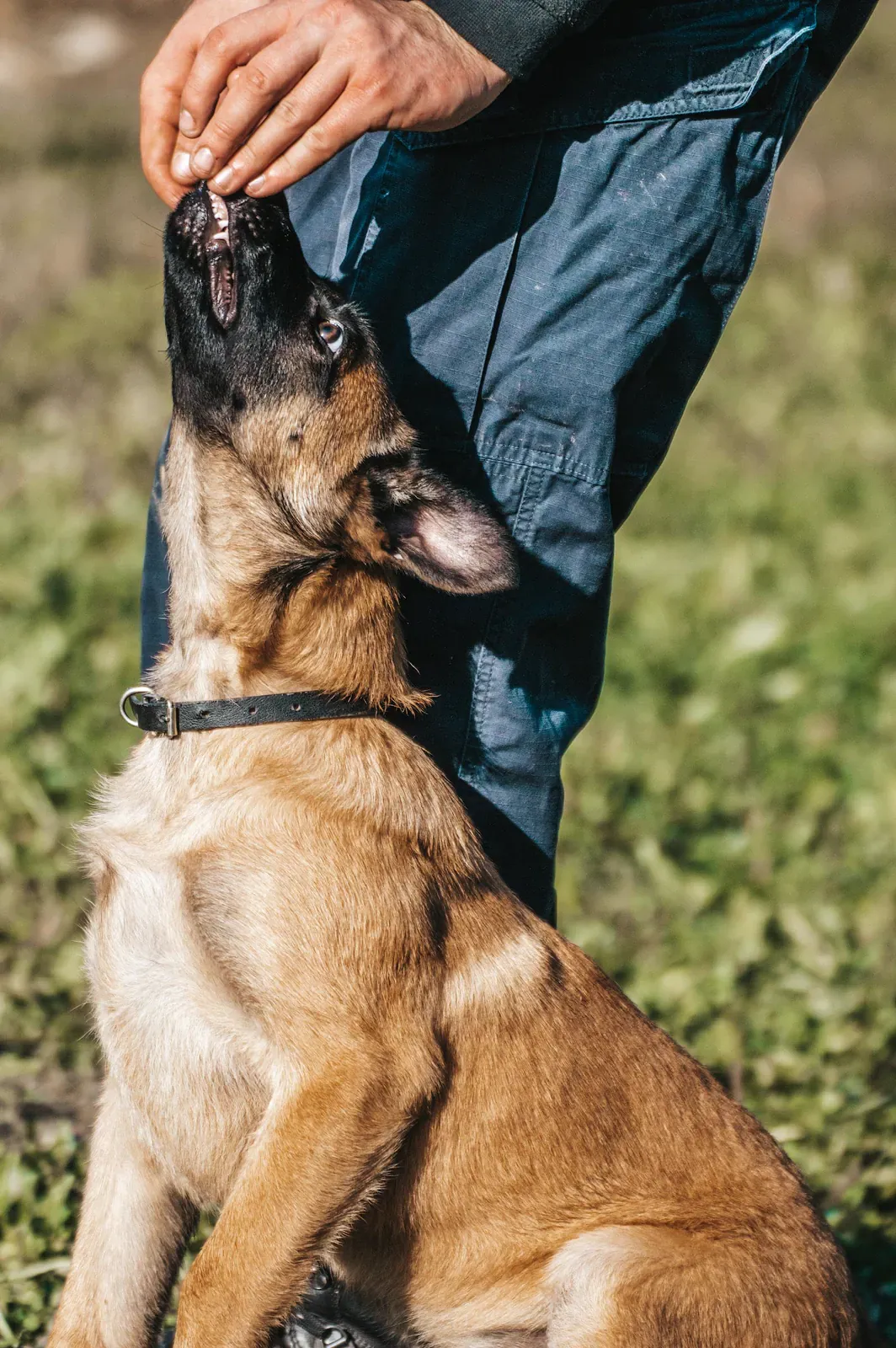
Biting and the grip. Because the breed is selected for the will to bite and hold, the Malinois can mouth, nip and grab, especially as a young dog. This is normal for the type, and it needs structured teaching from early on. In a 2015 conference presentation, German behaviourists Esther Schalke and Hans Ebbers described 24 dogs housed over seven years after their owners gave them up for aggression, of which 22 were Malinois. They noted that all the dogs had earlier been trained in ways that either triggered very high arousal and used harsh correction to control it, or built frustration through poorly structured impulse-control training. This is a small, non-peer-reviewed sample with no comparison group, so it shows a risk pattern in some homes, not how common the problem is.
Sensitivity. Most Malinois are sensitive to tone, handling and routine. In a 2012 study of 42 Malinois in German police training, 85.7% showed at least one submissive body signal during obedience exercises under high arousal. The authors read this as a sign that the breed responds to stress and pressure with appeasing behaviour, which is another reason that harsh methods tend to backfire. The study did not find that age, sex or real criminal contact changed this.
With people and other animals. A well-socialised Malinois is loyal and affectionate with its household, often reserved with strangers. Many do well with children they grow up with, but a fast dog that herds by nipping can frighten and bruise small children. Many Malinois do not do well with dogs of the same sex, and cat and small-pet safety depends on early exposure and on how strong the chase drive is.
 Herding dog behaviourBorder Collie behaviour problems and how to train themBorder Collie behaviour and training: why they nip, chase, fixate and fear noise, what to do about each, and a weekly plan for owners.Related breedAmerican Staffordshire Terrier1850 to 1936 · United StatesVictorian Breed Boom
Working instincts and training
 Related breedAustralian Kelpie1870 to 1902 · AustraliaVictorian Breed Boom
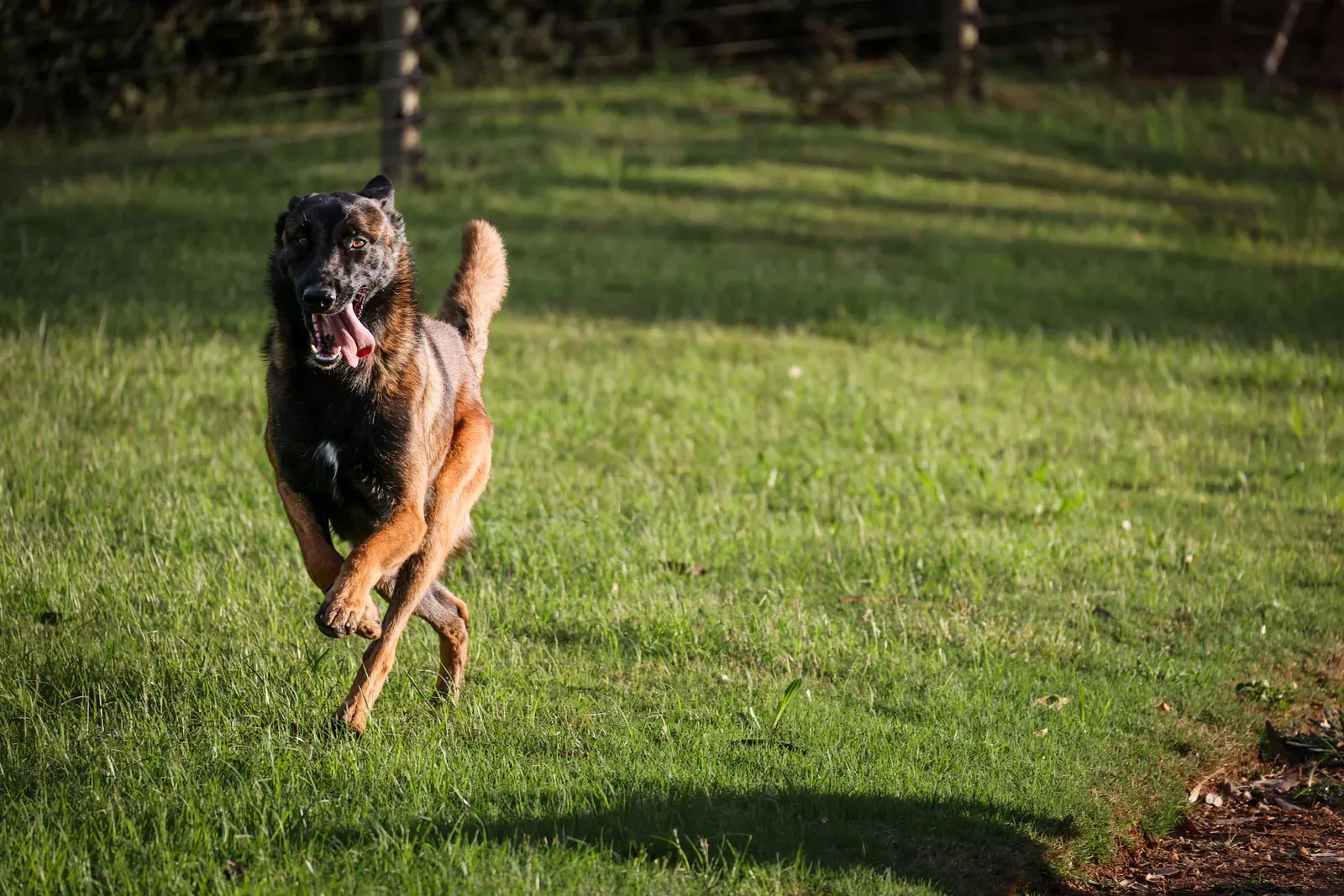
The Malinois is a herding dog first. It circles, runs, spins, nips at heels and fixes on movement. Traffic, cyclists and children running can all trigger it.
- Start early. Puppy classes, controlled meetings with a wide range of people and places, and calm handling in the first months matter more than for most breeds.
- Teach an off switch. Settling on a mat, waiting at doors and relaxing in a crate are skills a Malinois needs to be taught, because it will not learn them on its own.
- Reward-based methods. The Malinois learns fast, and it also learns quickly from mistakes; the behavioural data above point away from harsh methods.
- Real jobs. Scent games, nose work, agility, obedience, dock diving, tracking and herding give a Malinois a place to put its energy. Protection sport should be done only with qualified trainers.
- Mental load. Twenty minutes of training can tire the dog more than an hour of plain walking.
 Save
A Malinois puppy that is under-exercised and under-stimulated will find its own work, and it often becomes a problem. A Malinois with a daily plan and a clear routine is a very different dog.
 Save
Health
 Related breedBasset Hound1860 to 1885 · United KingdomVictorian Breed Boom
Most Belgian Malinois live active, healthy lives, and the breed is regarded as one of the sounder working breeds. Breeders and owners still screen for a short list of conditions, and it helps to know them. Hip and elbow scoring has long been standard practice in working lines.
Prevalence data for the Malinois alone are limited. Where a named study gives a figure, it is shown as about 1 in N dogs. Where the figure comes from a related Belgian variety, the table says so.
| Condition | What it is | How common | What helps |
|---|---|---|---|
| A loose or poorly shaped hip joint that can lead to arthritis | About 1 in 19 Malinois in a large US screening dataset (5.2% affected, OFA records 1970 to 2015, PLOS ONE 2017). A 2021 Turkish study of 52 security Malinois with A-graded hips found low mean hip scores | Hip scoring of both parents, lean body weight, controlled exercise while growing | |
| Elbow dysplasia | Abnormal elbow development, often causing front-leg lameness | Not shown among the lowest-prevalence breeds in the same table; no Malinois-specific figure found | Elbow scoring of both parents, vet check if a young dog limps |
| Epilepsy | Repeated seizures with no other cause found | Seen in Belgian shepherds. In a Danish study of Groenendael and Tervueren born 1995 to 2004, about 1 in 11 had epilepsy (9.5%). No Malinois-specific figure found | Ask the breeder about seizures in the pedigree; a vet-led plan if seizures occur |
| Eye conditions (for example cataract and retinal disease) | Changes in the lens or retina | Reported in the breed; no named prevalence study found | Annual eye test of breeding dogs |
| Cruciate ligament injury | Tear of the knee ligament, often in athletic dogs | Reported in active dogs; no Malinois study found | Lean weight, fitness, careful jumping and landing |
| Skin and ear problems | Allergies, itching or infections | Seen in the breed; no named prevalence study found | Vet diagnosis, regular ear checks |
The epilepsy figure is for related Belgian varieties, not the Malinois, and the genetics of the varieties overlap strongly (see Relatives and DNA). That is why the Belgian Shepherd breed clubs treat seizures as a breed-wide concern.
Lifespan. Breed sources give 12 to 14 years, which matches what the breed clubs and many guides say. No large Malinois-specific study of age at death exists, so this is a typical range, not a measured median. Some individuals reach 15 or 16 years with good care.
Working-dog injuries. Dogs that do protection sport, police work or high-impact agility carry the usual athlete risks: sprains, cruciate tears, toe and nail injuries, and back strain. Fitness, warming up, lean weight and sensible surfaces reduce these.
 Ticks and fleasTicks and fleas on dogs: how to check, remove and prevent themTicks and fleas on dogs: how to tell them apart, check your dog, remove a tick safely, break the flea life cycle and prevent both.
 GuidesPractical guidesBehaviour, training, health and adoptionRelated breedBasset Hound1860 to 1885 · United KingdomVictorian Breed Boom
Living with a Belgian Malinois
 Related breedBoston Terrier1870 to 1893 · United StatesVictorian Breed Boom
| Daily reality | Rating | Why |
|---|---|---|
| Exercise per day | High | A bred-for-work dog; well over an hour of activity plus training |
| Training needs | High | Fast learner that needs structure, socialisation and a consistent handler |
| Grooming | Low | Short coat; weekly brushing, more in the moult |
| Shedding | High | Dense undercoat; sheds all year with heavier seasonal moults |
| Barking | Medium | Alert and vocal; worse when bored or under-exercised |
| Time alone | Poor | Needs company and activity; long hours alone invite destruction |
| Children | Varies | Loyal with its family, but fast, mouthy and herd-driven; supervision is a must |
| Other dogs | Varies | Can be fine with early socialisation; many are intense or same-sex intolerant |
| Cats and small pets | Varies | Strong chase drive in many; depends on early exposure and on the individual |
| Flat living | Poor | Possible only with extreme dedication to exercise and training |
| Heat tolerance | Fair | Short coat but active, dark-masked dog; keep hard exercise to cooler hours |
| Cold tolerance | Good | Dense undercoat |
| First-time owner fit | Poor | Intense and sensitive; best with experienced, committed handlers |
A great fit if
- You already have experience with working or herding breeds, or you have a trainer lined up from day one.
- You want a dog sport partner and will do scent work, obedience, tracking or similar several days a week.
- You work from home, or you can include the dog in most of your day.
- You are happy to spend months teaching calm and manners, not only tricks.
Think twice if
- You want a quiet, easy family pet.
- You live in a small flat with no access to outdoor space or training grounds.
- You are away from home for long hours.
- You are drawn by the breed's image as a police or military dog, not by the daily work it needs.
Before you get one
- Health tests. Ask the breeder for hip and elbow scores for both parents, and for eye test results. Ask about seizures, cruciate injuries and temperament in the pedigree, and ask to see the original certificates.
- Puppy or adult rescue. Breed rescues exist and place Malinois of all ages, often adults with known temperaments. An adult whose behaviour is already clear may be a safer first step than a puppy from working lines.
- First year. Plan for puppy classes, plenty of safe exposure to people, places and surfaces, and calm exercise while the joints grow. Hard impact work should wait until growth plates close, as your vet advises.
- Line matters. Working and sport lines are far more driven than show lines. Ask the breeder what the dogs are bred for and whether it fits a pet home.
 Save
Similar breeds to consider
- Groenendael. Same breed in FCI terms, but long-haired, black and often a little less intense.
- Belgian Tervuren. Long fawn coat; the closest relative by DNA in our data.
- German Shepherd. Heavier and calmer in most lines, with its own health needs, and a good option for people who want a working-type dog.
- Dutch Shepherd. Another high-energy continental herder with a similar work ethic.

Belgian Malinois fun facts
 Related breedBoxer1880 to 1904 · GermanyVictorian Breed Boom
- The Malinois is named after Mechelen (Malines), a city between Brussels and Antwerp.
- The Cureghem gathering that began the breed in 1891 brought together 117 shepherd dogs (accounts vary slightly).
- Cairo, the Malinois on the 2011 bin Laden raid, was the only member of the team whose name was made public (per his handler's publisher).
- The Malinois shares 88.4 Mb of DNA with the Tervuren in the Parker 2017 study, more than with any other breed.
Frequently asked questions
Is a Belgian Malinois a good family dog?
For most families, no. It can be loyal and gentle with its household, but it needs several hours of activity and training each day, and it can be mouthy and herd-driven around small children. It suits experienced, active homes best.
How big is a Belgian Malinois?
The gives about 62 cm and 25 to 30 kg for dogs, about 58 cm and 20 to 25 kg for bitches. The range is 61 to 66 cm for dogs and 56 to 61 cm for bitches.
How long do Belgian Malinois live?
Typically 12 to 14 years. No large Malinois-specific study of age at death has been published.
What is the difference between a Belgian Malinois and a German Shepherd?
The Malinois is lighter, shorter-coated and generally more driven and sensitive. The German Shepherd is larger, heavier and in many lines calmer. Both come from the continental herding dog pool.
What is the difference between the four Belgian shepherd varieties?
Mostly coat: the Groenendael is long and black, the Tervuren long and fawn, the Laekenois rough and fawn, the Malinois short and fawn with a black mask. The FCI counts them as one breed; the AKC lists them as separate breeds.
What health problems do Belgian Malinois get?
Hip and , epilepsy (documented in related Belgian varieties), eye disease and injuries from athletic work. Breeders screen hips, elbows and eyes.
Read next
 Closest DNAGerman Shepherd42.6 Mb shared
 FamilyContinental HerderThe whole family
 Adopt a dogDog Shelters in EuropeFind dog shelters in Europe, learn how shelters differ from country to country and why adopting a dog is a good option.
Sources (14)
- Fédération Cynologique Internationale, Belgian Shepherd Dog (four varieties), standard no. 15, revised 2018.
- American Kennel Club, Belgian Malinois breed standard and breed history pages.
- American Belgian Malinois Club, official breed standard.
- UK Kennel Club, Belgian Shepherd Dog (Malinois) breed page.
- Club du Chien de Berger Belge (founded 1891) and Professor Adolphe Reul, Cureghem Veterinary School: breed history as summarised in breed encyclopaedias and the FCI standard.
- Parker H.G. et al., "Genomic analyses reveal the influence of geographic origin, migration, and hybridization on modern dog breed development", Cell Reports, 2017.
- Chesney W. and Layden J., No Ordinary Dog, 2020 (on the Malinois Cairo and the 2011 raid).
- Berendt M. et al., "Prevalence and characteristics of epilepsy in the Belgian shepherd variants Groenendael and Tervueren born in Denmark 1995 to 2004", Acta Veterinaria Scandinavica, 2008.
- Oberbauer A.M., Keller G.G., Famula T.R., "Long-term genetic selection reduced prevalence of hip and elbow dysplasia in 60 dog breeds", PLOS ONE, 2017 (OFA data; Malinois at 5.2% for hip dysplasia).
- Turkish study of hip dysplasia in Belgian Malinois used in security units (52 dogs), 2021.
- Schalke E. and Ebbers H., "Acquirement of dogs with previous biting incidents for police dog work", International Working Dog Conference, 2015.
- Study of body postures of Belgian Malinois during police dog training in Germany, 2012.
- Journal of Special Operations Medicine, Fall 2017, military working dog bite events in an Israeli unit.
- American Belgian Malinois Rescue, surrender trends as reported by the AKC.