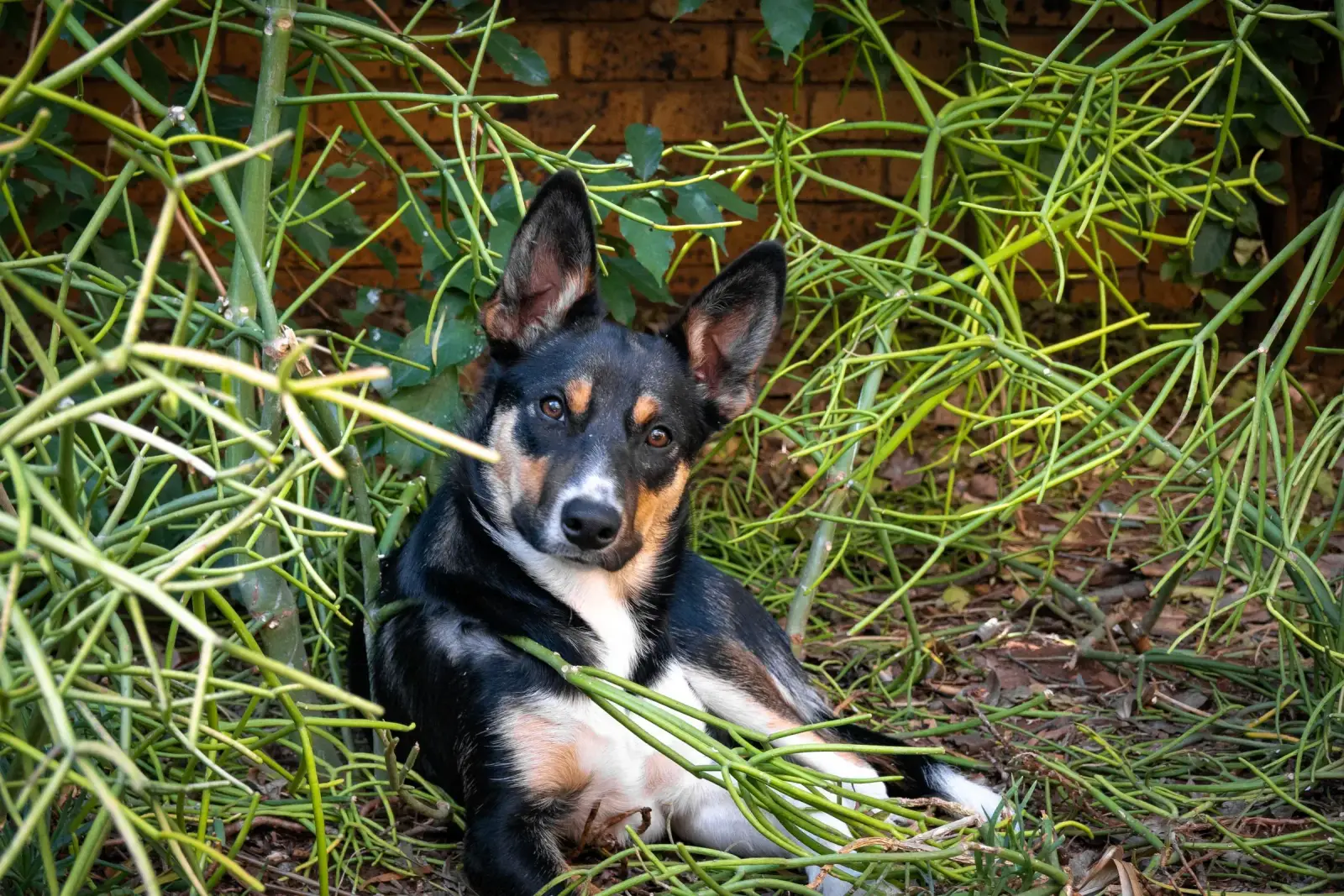
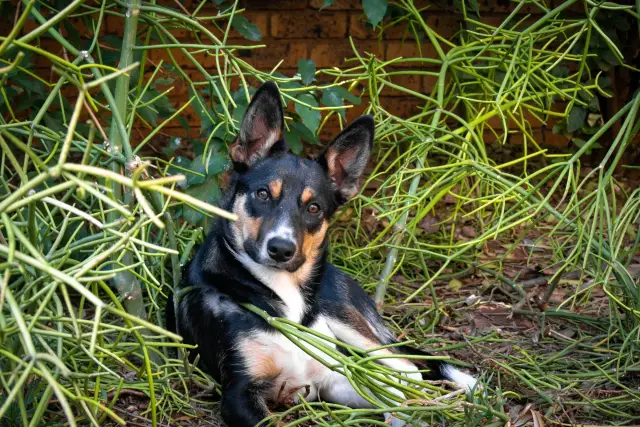
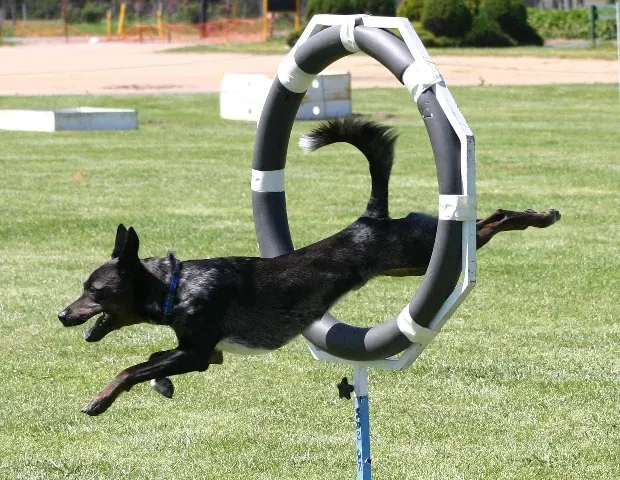
It is known for stamina, intelligence and a habit of running along the backs of sheep to move them. There are two types: the Working Kelpie, bred for work and registered through the Working Kelpie Council, and the show Kelpie, registered through the Australian National Kennel Council (ANKC). The popular story that the Kelpie has a dingo parent has no support in the one genetic study that tested it, though that study did not test the whole genome. Cerebellar abiotrophy, an inherited balance disorder with DNA tests, is the best-documented health issue.
Australian Kelpie quick facts
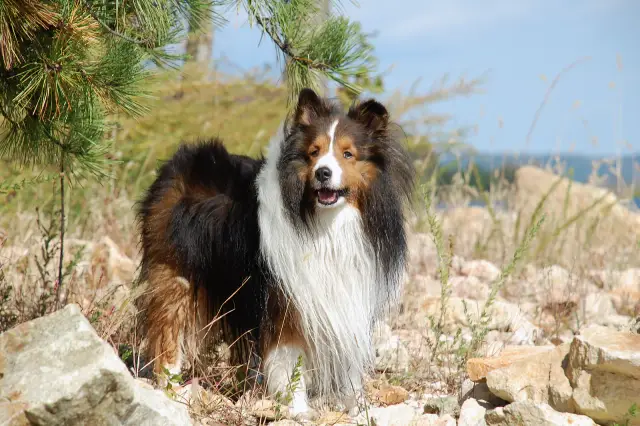 Related breedShetland Sheepdog1700 to 1909 · United KingdomEarly Modern Era
- Closest DNA relatives
- Border Collie (62.6 ), then Bearded Collie (41.8 Mb)
- Country of origin
- Australia (Victoria)
- Period of development
- 1870 to 1902 (atlas data, high confidence)
- Original job
- Mustering sheep, and later cattle, on large Australian stations
- Type
- Herding dog. FCI: Group 1, Sheepdogs and Cattledogs, standard no. 293. UKC: recognised
- Other names
- Kelpie; Working Kelpie (for the working type)
- Height
- FCI: 46 to 51 cm dogs, 43 to 48 cm bitches
- Weight
- Not set by the FCI standard; breed summaries give about 14 to 20 kg (Wikipedia, secondary)
- Life span
- 12 to 15 years (atlas data)
- DNA family
- UK Rural (Parker et al. 2017, atlas data)
Drawn to scale in real centimetres. Its back reaches about 47 cm, your knee; its head about 60 cm, just above your knee.
Where it sits in the tree
Victorian Breed Boom · 1850 to 1913
Name and origin
 Related breedPembroke Welsh Corgi1100 to 1934 · United KingdomEarly Middle Ages
The breed is named after one dog. According to the Casterton story, a black-and-tan collie pup born in Victoria was given the name Kelpie, after the water spirit of Scottish folklore, and she became the foundation bitch. The atlas data records the name the same way: after a famous early bitch called Kelpie, from the Scottish water spirit. The breed's earliest dogs were British working collies, so its roots are Scottish, but its form and its fame are Australian.
The atlas data notes one common slip: the breed was founded at Warrock Station near Casterton in Victoria, not in New South Wales. New South Wales still matters, because the foundation bitch's puppies were born there.

History
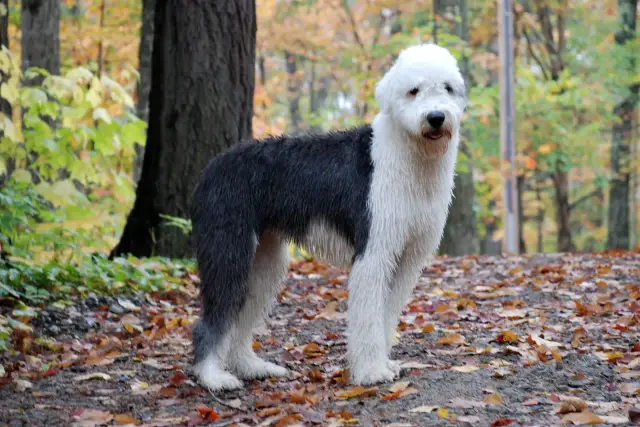 Same eraOld English Sheepdog1700 to 1888 · United KingdomEarly Modern Era
Scottish collies in Victoria
Settlers brought working collies from Scotland to Australia from the 1860s. The Working Kelpie Council of Australia says the breed grew from the mixing of the offspring of three pairs of working collies imported by three early landholders. Casterton's account names George Robertson of Warrock Station, which stands on the Glenelg River, as the importer. One encyclopedia entry on Casterton names a different farmer, George Patterson, so the owner's name is not settled. Australian Geographic says Robertson imported two Sutherland (Highland smooth) collies in the 1860s and that two other settlers brought collies in as well.
Gleeson and the first Kelpie
The usual story goes like this. A drover named Jack Gleeson, from nearby Dunrobin, got a black-and-tan pup from Robertson's nephew at Warrock in exchange for a horse and called her Kelpie. Australian Geographic adds that some people claimed the horse was stolen. Gleeson took her to New South Wales, where she was mated with a collie named Moss. Their puppies founded the line.
Sources disagree on several details:
- Her birth year. Casterton's brochure and walking trail give 1871. Australian Geographic gives 1869.
- Where she was mated. Sources name the area of Ardlethan in New South Wales, with some naming North Bolero station in the Merool district.
- The "1872" date. Many books place a famous sheepdog trial at Forbes, New South Wales, in 1872, where a dog called King's Kelpie (owned by Charles King) did well. The Working Kelpie Council's own research says the trial, with the prize shared between King's Kelpie and a Tasmanian dog named Tweed, took place in 1879, from newspaper reports of August 1879. The 1872 date traces to family accounts and the writer Robert Kaleski. So "1872" is an old and widely repeated date that the Council disputes.
Casterton and Ardlethan both claim the breed. One account says the first Kelpie was born near Casterton and that Ardlethan is where the breed was refined. Casterton put up a Kelpie statue in 1996.
Breeding and a standard
Robert Kaleski is said to have published the first Kelpie standard in 1904. Another source says the Kelpie was first registered as a breed in Australia in 1902. Dates differ between sources. By 1902, the atlas data counts the breed as established.
A breed that split in two
Over the twentieth century the breed divided into two types. Working Kelpies stayed with stock people and were bred for ability, while a show type was bred for a set appearance. The Working Kelpie Council was formed in 1965 to look after the working dogs. See "Working Kelpie vs show Kelpie" below.
Today
Working Kelpies still muster sheep and cattle across Australia and in many other countries. The town of Casterton holds a Kelpie Muster each June. It began in 1997 as a working dog auction and became the Casterton Kelpie Festival in 2001.
The dingo-cross story
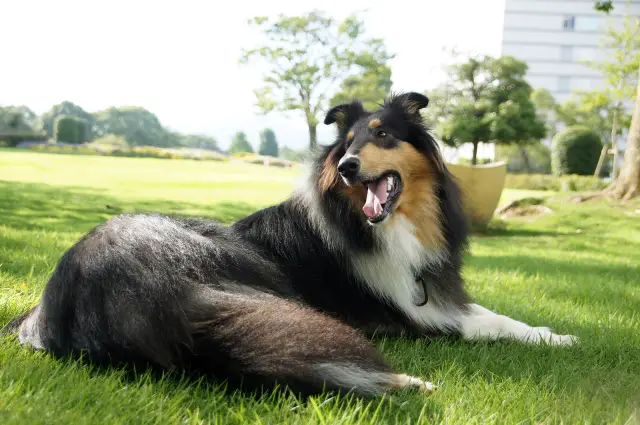 Related breedRough Collie1800 to 1886 · United KingdomIndustrial Revolution
A popular account says the Kelpie came from a Scottish collie crossed with a dingo around 1870. A 1950 newspaper repeated it, and many Australians believed that their working dogs owed some toughness to dingo blood.
The evidence is thin on both sides:
- Against. A University of Sydney study (Genes, 2019) tested the gene variants behind coat colour and ear type in Kelpies, the visible traits that a dingo cross should leave. It found no support for a shared ancestry with the dingo.
- Limits. The lead author, Claire Wade, said that news reports saying the study showed "no dingo ancestry" went too far. The study tested particular traits, not the whole genome.
- For. A report that about 4 percent of Kelpie DNA looked dingo-like comes from a video, tested few dogs and few markers, and has not been published as data, so it cannot be treated as evidence.
What can be said is that the story is a legend, and that the one peer-reviewed test did not support it. A small dingo contribution has not been ruled out, because whole-genome evidence is missing. The Dingo has its own page.
Relatives and DNA
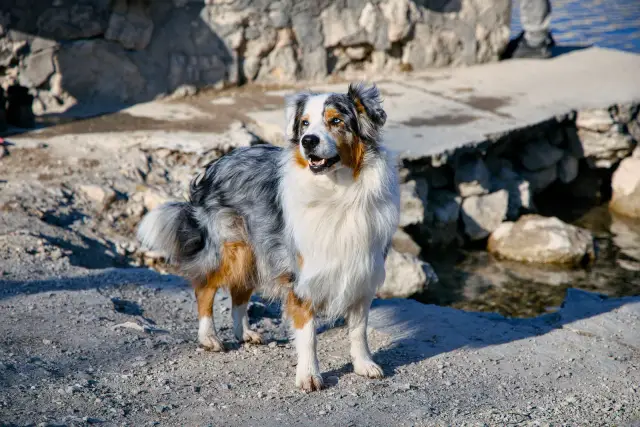 Same familyAustralian Shepherd1840 to 1957 · United StatesIndustrial Revolution
The atlas data puts the Australian Kelpie in the UK Rural family, the Parker et al. (2017) DNA group of British farm and herding breeds. It lists the Smooth Collie as the founding breed, with low confidence, and notes that an early Kelpie bitch was mated to a Smooth Collie named Moss. The Koolie and the Australian Cattle Dog are listed as breeds that descend from the Kelpie in the atlas data.
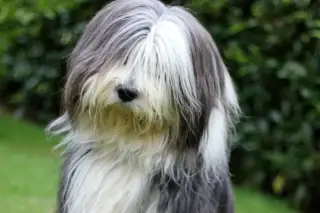
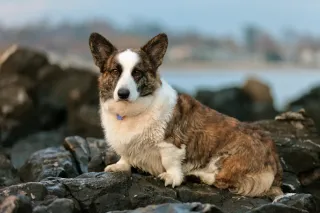
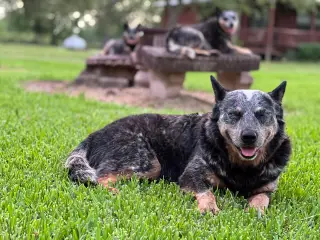
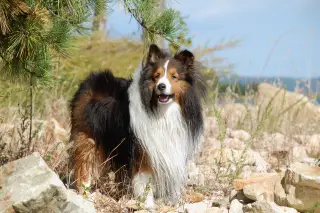
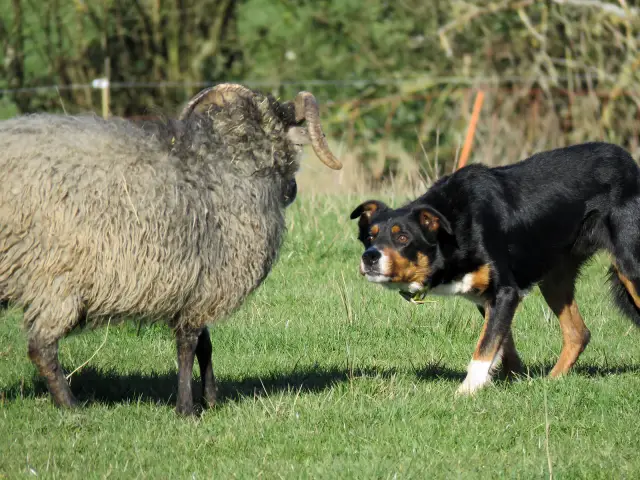
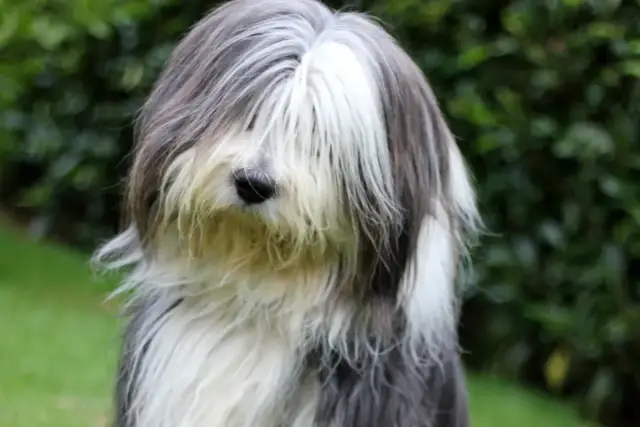
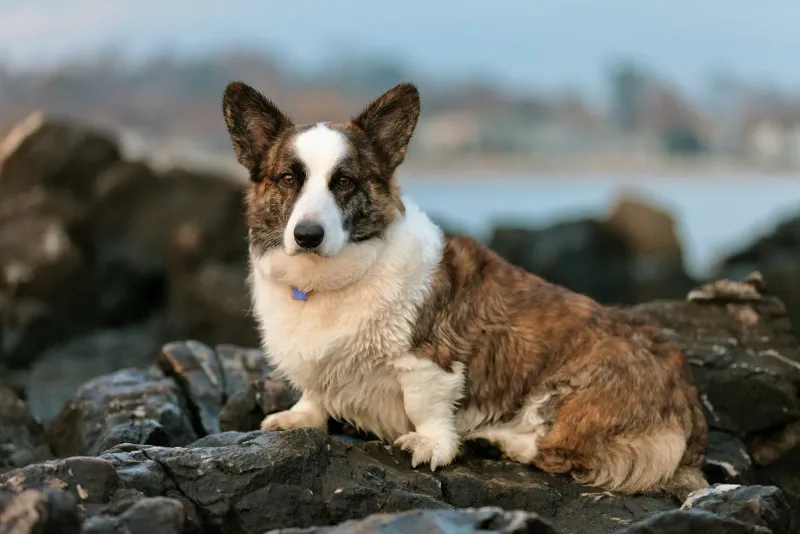
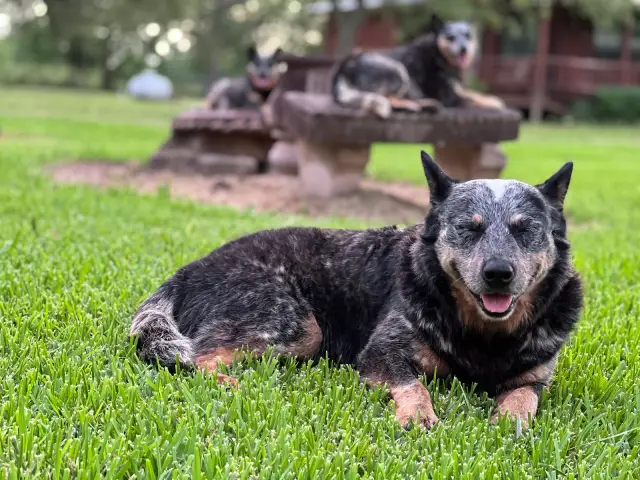
In the Parker et al. data used here, the Kelpie shares most DNA with the Border Collie, then the Bearded Collie. After that come the Cardigan Welsh Corgi, Australian Cattle Dog and Shetland Sheepdog at 20 to 23 Mb.
- Kelpie and Border Collie
- Kelpie and Bearded Collie
- Kelpie and Cardigan Corgi
- Kelpie and Australian Cattle Dog
- Kelpie and Shetland Sheepdog
Descend from it · 2
- KoolieAustralia
- Australian Cattle DogAustralia
- Border Collie62.6 Mb 2.6%
- Bearded Collie41.8 Mb 1.7%
- Cardigan Welsh Corgi23.0 Mb 1.0%
- Australian Cattle Dog22.4 Mb 0.9%
- Shetland Sheepdog20.2 Mb 0.8%
- Pembroke Welsh Corgi18.2 Mb 0.8%
- Old English Sheepdog17.9 Mb 0.7%
- Rough Collie17.9 Mb 0.7%
- Australian Shepherd15.4 Mb 0.6%
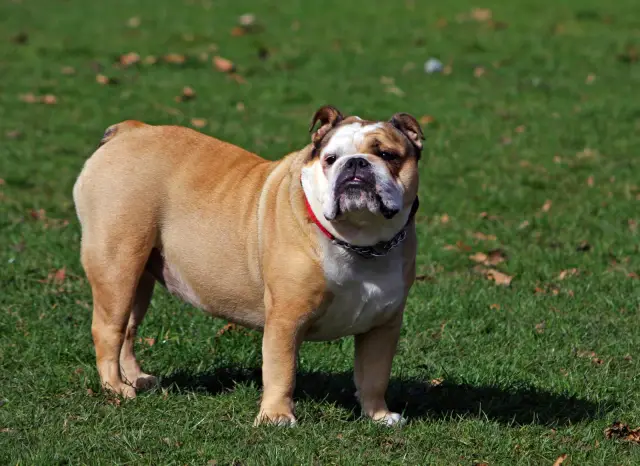
- Bulldog11.1 Mb 0.5%
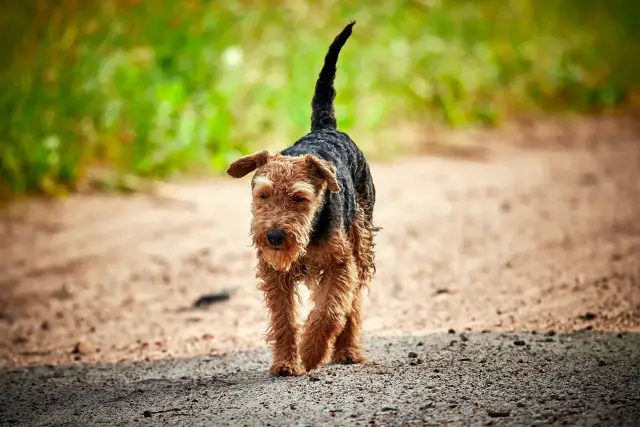
- Airedale Terrier10.9 Mb 0.5%
Source: Parker et al. 2017. Percent of the whole genome.
Kelpie vs Border Collie
 Related breedBulldog1835 to 1875 · United KingdomIndustrial Revolution
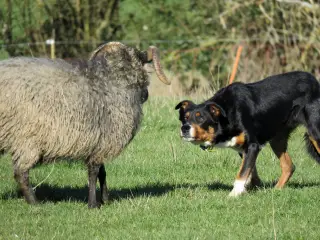
The Border Collie is the Kelpie's closest DNA relative in the data. Both are driven working collies, but they work differently. The Border Collie is known for the stare, the "eye", and works quietly at a distance. The Kelpie is a lean, hardy dog that often works close and can run over a flock's backs in a pen. Both need a job and a daily schedule. Comparisons of style come from breed and working-dog accounts, not a study.
Working Kelpie vs show Kelpie
 Related breedAiredale Terrier1850 to 1880 · United KingdomVictorian Breed Boom
| Point | Working Kelpie | Show Kelpie |
|---|---|---|
| Registry | Working Kelpie Council of Australia (formed 1965) | Australian National Kennel Council (ANKC) |
| Bred for | Ability to work stock | A set appearance under the standard |
| Colours | A wide variety (Wikipedia) | Limited by the standard |
Because the Working Kelpie Council accepts many looks, many working Kelpies would not pass the show standard. The two types are one breed in name, but a puppy from working lines will usually be more driven than one from show lines. Ask a breeder which type they breed.
The breed standard
 Looks relatedBorzoi1200 to 1650 · RussiaLate Middle Ages
A is the written ideal a kennel club judges dogs against. The Kelpie standard asks for a lean, hard, muscular dog of medium size with a double coat and an alert, intelligent expression.
| Trait | What the standards say |
|---|---|
| Group | FCI: Group 1, Sheepdogs and Cattledogs, standard no. 293 (definitive). UKC: recognised |
| Height, FCI | 46 to 51 cm for dogs and 43 to 48 cm for bitches (KUSA and Canadian Kennel Club reproductions) |
| Weight | No official weight in the sources found; Wikipedia gives 14 to 20 kg, and another source 11 to 20 kg for bitches |
| Coat | Double coat: a short dense undercoat and a close, hard, flat outer coat (Canadian Kennel Club copy) |
| Colours, FCI | Black, black and tan, red, red and tan, fawn, chocolate and smoke blue |
| Temperament, FCI | Extremely alert, eager and highly intelligent, with a mild, tractable disposition and nearly inexhaustible energy |
| Faults, FCI | Aggressive or overly shy dogs are disqualified |
No ANKC figures are given.
Temperament
 Related breedGreyhound800 CE to 1850 · United KingdomEarly Middle Ages
The standard describes an eager, tractable dog with nearly inexhaustible energy and strong loyalty. Working Kelpies are known for being quick to learn and hard to tire. A Kelpie without a task tends to invent one, such as herding children, chasing cars or digging. This comes from breed descriptions and the standard's wording, not from a study.
With the family. Kelpies bond closely with their people and tend to follow them around. Their herding urge can show as nipping at heels.
With other dogs and animals. No study was found. The herding drive means that cats, poultry and small pets need careful introduction.
Training. They learn quickly and respond best to varied, short, reward-based sessions. Dog sports such as agility, herding trials and obedience suit them.

Health
 Related breedIrish Wolfhound100 BCE to 1885 · IrelandAncient World
Most Kelpies live long, active lives; the atlas data gives 12 to 15 years. This section lists what breeders screen for. Only one condition has a named study, and no condition has a published prevalence figure, so the table says "no figure found".
| Condition | What it is | How common | What helps |
|---|---|---|---|
| Cerebellar abiotrophy (CA) | An inherited loss of cells in the part of the brain that controls balance, causing wobbliness, head tremor and a wide stance | No breed-wide figure found. A 2022 study compared 45 affected dogs with 290 healthy Kelpies | DNA tests, and the Working Kelpie Council advice that for each CA type one parent in every mating must be clear |
| Hip and | Loose or misshapen joints | Listed by breed guides; no figure found | Hip and elbow scores of the parents |
| Inherited eye conditions | Such as progressive retinal atrophy | Listed by breed guides; no figure found | Eye tests of breeding dogs |
| Injuries | Sprains, torn ligaments and pad cuts from running | Common in working and sport dogs by nature; no figure found | Warm-up, conditioned fitness, and rest |
Cerebellar abiotrophy in detail. A University of Sydney team (Genes, 2022) compared 45 affected working Kelpies with 290 healthy ones and found two regions of DNA linked to the disease, on chromosomes 9 and 20. It is inherited in a way, so both parents must pass on the risk to a puppy. Dogs with the chromosome 20 haplotype can show signs before 10 weeks of age, while dogs with the chromosome 9 haplotype tend to show ataxia later. A variant in the VMP1 gene on chromosome 9 followed the later-onset form. The Council's guidance dates from 2020 and may have been updated.
None of this means a Kelpie will have the condition: most do not. It means asking a breeder to show DNA test results for both parents.
 Ticks and fleasTicks and fleas on dogs: how to check, remove and prevent themTicks and fleas on dogs: how to tell them apart, check your dog, remove a tick safely, break the flea life cycle and prevent both.
 GuidesPractical guidesBehaviour, training, health and adoptionRelated breedIrish Wolfhound100 BCE to 1885 · IrelandAncient World
Living with an Australian Kelpie
 Related breedItalian Greyhound500 BCE to 1900 · ItalyAncient World
| Daily reality | Rating | Why |
|---|---|---|
| Exercise per day | High | Bred for long days of work; plan on well over an hour plus mental tasks (standard: almost inexhaustible energy) |
| Training needs | High | Eager and clever; needs structure and a job |
| Grooming | Low | Short, hard coat; weekly brushing |
| Shedding | Medium | Double coat with seasonal moults |
| Barking | Medium | Alert; varies, and bored dogs bark more |
| Time alone | Poor | Close bonds and high energy; long hours alone tend to bring trouble |
| Children | Fair | Good with family when trained; may herd or nip, so supervise |
| Other dogs | Fair | Varies; no study found |
| Cats and small pets | Varies | Herding drive; evidence is thin |
| Flat living | Poor | High exercise needs; a yard and daily outings fit better |
| Heat tolerance | Good | Short coat and an Australian working history (no source rates it formally) |
| Cold tolerance | Fair | Short double coat; no source rates it |
| First-time owner fit | Poor | Strong drive; best for owners ready for training and sport |
A great fit if
- You want a sport or working partner and will train most days.
- You are active outdoors, run or hike and can include a dog.
- You have a yard or farm and access to open space.
- You enjoy teaching tricks, agility or herding.
Think twice if
- You work long hours with nobody home.
- You want a calm couch companion.
- You live in a small flat with limited outings.
- You do not want a dog that tries to herd family members.
Before you get one
- Health tests to ask a breeder for: DNA test results for cerebellar abiotrophy for both parents, hip and elbow scores, and eye tests.
- Which type: decide between a working line and a show line, because energy and drive differ.
- Puppy or adult rescue: Kelpie rescues exist, and some adults are already trained.
- First year: expect training classes, puzzle work and plenty of running.
Similar breeds to consider
- Border Collie. The closest DNA relative, more intense in the eye and just as demanding.
- Australian Cattle Dog. Another Australian working dog, sturdier, with a more guarded nature.
- Koolie. A related Australian herder, often in colour.
- Australian Shepherd. A herding breed with a similar level of drive, developed in the United States.

Australian Kelpie fun facts
 Related breedMiniature American Shepherd1968 to 2015 · United StatesModern Era
- The breed is named after one dog, Kelpie, whose name comes from a Scottish water spirit.
- Casterton and Ardlethan both claim to be the breed's birthplace, and Casterton has a Kelpie statue from 1996.
- The Casterton Kelpie Muster started in 1997 as a working dog auction and became a festival in 2001.
- The oft-quoted 1872 trial date is disputed: the Working Kelpie Council says the Forbes trial was in 1879.
Frequently asked questions
Is the Kelpie part dingo?
That is a popular story, but a 2019 University of Sydney study of coat colour and ear genes found no support for it. The study did not test the whole , so a small contribution is not ruled out.
Where does the Kelpie come from?
From Scottish working collies imported to Victoria, with a foundation bitch named Kelpie from Warrock Station near Casterton in the 1870s, according to local accounts.
What is the difference between a Working Kelpie and a show Kelpie?
The Working Kelpie Council registers dogs bred for work, with many colours accepted. The ANKC registers show dogs against a fixed standard.
How big is an Australian Kelpie?
The standard gives 46 to 51 cm for dogs and 43 to 48 cm for bitches. Breed summaries give 14 to 20 kg.
How long do Kelpies live?
Atlas data says 12 to 15 years.
Is a Kelpie a good family dog?
In an active family that offers daily exercise, training and a job, yes. In a home with little time, it can become destructive.
Read next
Closest DNABorder Collie62.6 Mb shared FamilyUK RuralThe whole family
 Adopt a dogDog Shelters in EuropeFind dog shelters in Europe, learn how shelters differ from country to country and why adopting a dog is a good option.
Sources (14)
- Working Kelpie Council of Australia, pages "Origin of the Kelpie", "Who we are" and the Forbes trial and King's Kelpie history.
- Working Kelpie Council of Australia, "Cerebellar abiotrophy (CA) Kelpie ataxias" (breeding guidance, 2020).
- Wade C. et al., "Cerebellar abiotrophy in Australian working Kelpies is associated with two major risk loci", Genes, 2022.
- Chew T. et al., "Genomic characterization of external morphology traits in Kelpies does not support common ancestry with the Australian Dingo", Genes, 2019, and the University of Sydney news release of 27 May 2019.
- Working Kelpie Council of Australia, "Dingo involvement in the Kelpie" (reply to Bill Robinson).
- Australian Geographic, "Kelpie country", 2023.
- Monument Australia, "The Kelpie" (Casterton statue entry).
- Glenelg Shire Council, Casterton brochure 2023, and the Kelpie Walking Trail material.
- Stock and Land and The Standard (Australian regional press), reports on the Casterton Kelpie Muster.
- Fédération Cynologique Internationale, standard no. 293, Australian Kelpie, as reproduced by the Kennel Union of Southern Africa and the Canadian Kennel Club.
- Dogs Australia (ANKC), Australian Kelpie breed page.
- Parker H.G. et al., "Genomic analyses reveal the influence of geographic origin, migration and hybridization on modern dog breed development", Cell Reports, 2017.
- Fogle B., The New Encyclopedia of the Dog, 2009 (atlas data source).
- Wikipedia, Australian Kelpie and Casterton, Victoria (secondary, for dates, weights and the Patterson attribution).