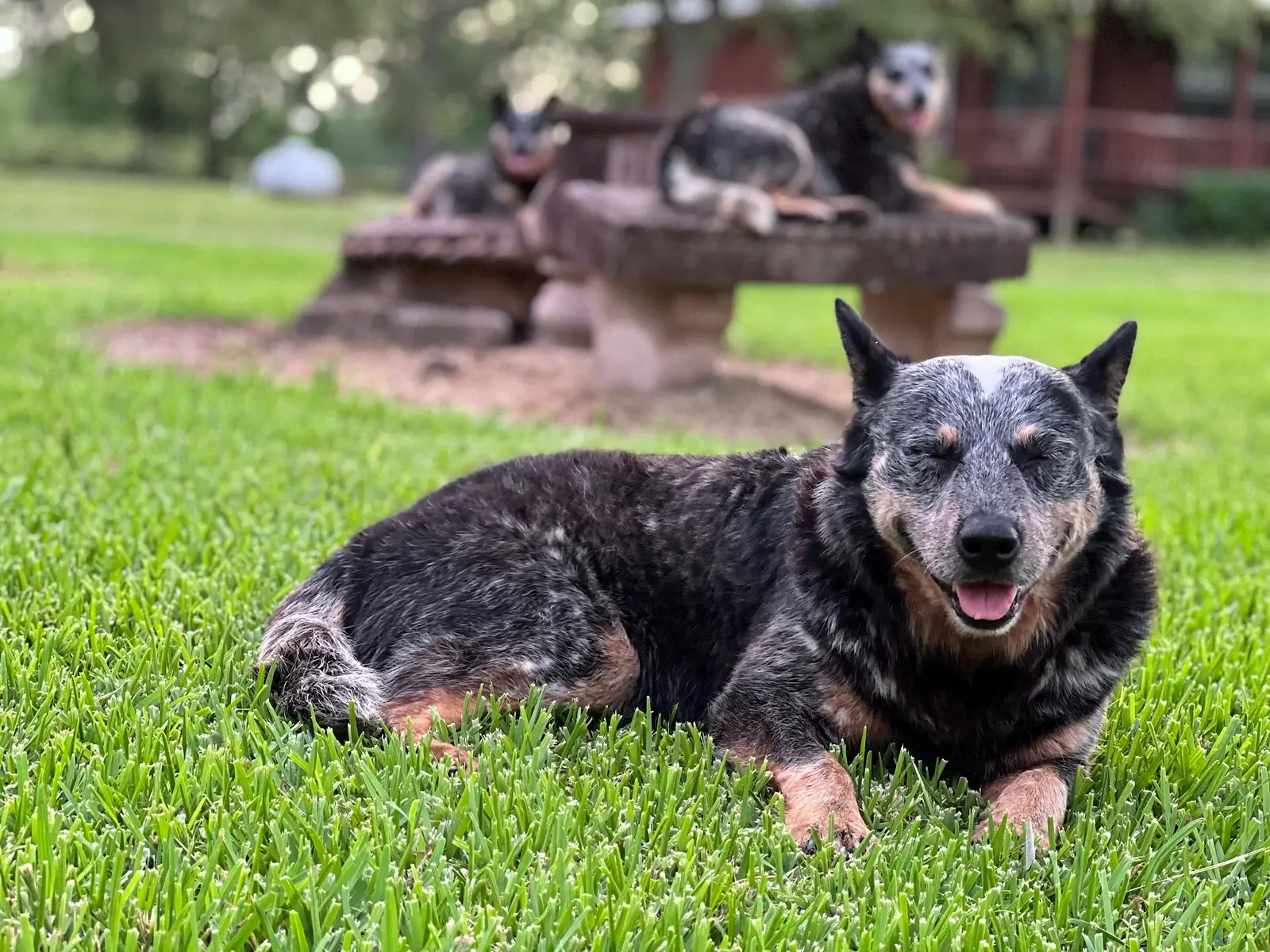
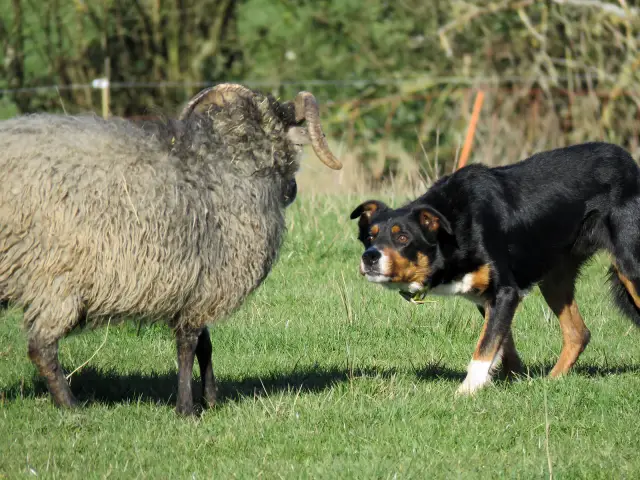
It is known as the Blue Heeler or Red Heeler (and in places the Queensland Heeler) because it drives cattle by nipping at their heels, then drops low or dodges the kick. It is tough, loyal and extremely energetic, and it carries the mark of its ancestry: part collie, part dingo, with a strong influence from other Australian breeders' crosses. This profile covers where it came from, what the standards say, what the health research shows, the story of Bluey the record-age dog and who this breed really suits.
Australian Cattle Dog quick facts
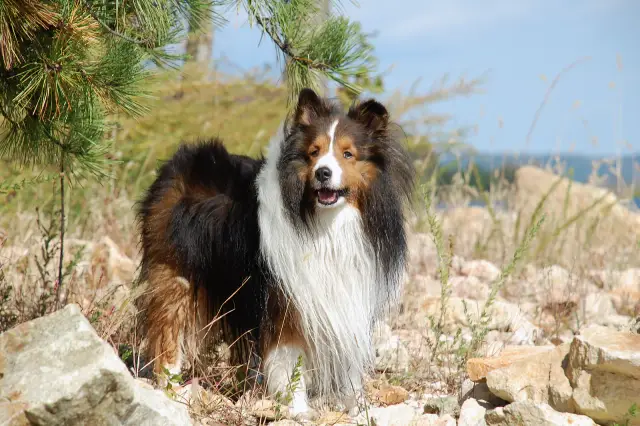 Related breedShetland Sheepdog1700 to 1909 · United KingdomEarly Modern Era
- Closest DNA relatives
- Australian Kelpie, Border Collie, Bearded Collie
- Country of origin
- Australia (New South Wales and Queensland)
- Period of development
- About 1840 to 1903 (atlas data); first written standard 1903
- Original job
- Droving cattle over long distances on rough, open country
- Type
- Herding dog. : Group 1, Sheepdogs and Cattledogs (except Swiss Cattledogs), standard no. 287. : Herding Group. UK Kennel Club: Pastoral Group
- Height
- Dogs 46 to 51 cm, bitches 43 to 48 cm (UK Kennel Club)
- Weight
- About 15 to 22 kg (breed profiles; Canadian Kennel Club standard 15 to 22.75 kg)
- Coat
- Short, smooth double coat, weather resistant
- Colour
- Blue (mottled or speckled) or red speckled, with or without tan or other markings
- Life span
- Atlas data: 12 to 16 years
- Exercise
- High: well over an hour a day plus work for the mind
- DNA family
- UK Rural (Parker et al. 2017)
- Other names
- Blue Heeler, Red Heeler, Queensland Heeler
Drawn to scale in real centimetres. Its back reaches about 47 cm, your knee; its head about 60 cm, just above your knee.
Where it sits in the tree
Industrial Revolution · 1800 to 1849
Name and origin
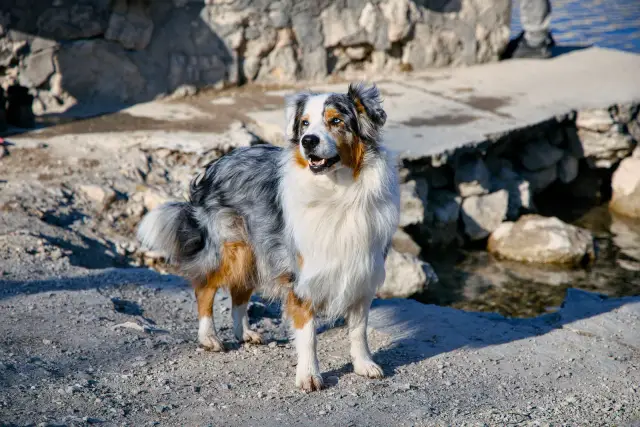 Related breedAustralian Shepherd1840 to 1957 · United StatesIndustrial Revolution
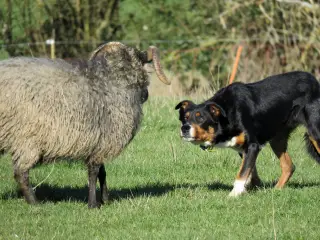
The breed is called Cattle Dog because that is its job. The Heeler nickname describes how it works: it nips at the heels of cattle that will not move, which stops a bullock that tries to turn on the drover. The colour nicknames are simply the two coat colours, blue and red, which share one standard. The old name Queensland Heeler reflects the state where many working lines were kept.
Its origin is a mixture of dogs, which is why the breed is sometimes called a "dingo-collie cross" and sometimes more carefully a "Hall's Heeler descendant". The dingo is a free-ranging Australian canid, believed to have arrived with humans thousands of years ago. The idea was to combine the hardiness, silence and stamina of the dingo with the drive of a herding dog, and then add more refinement through other crosses.

History
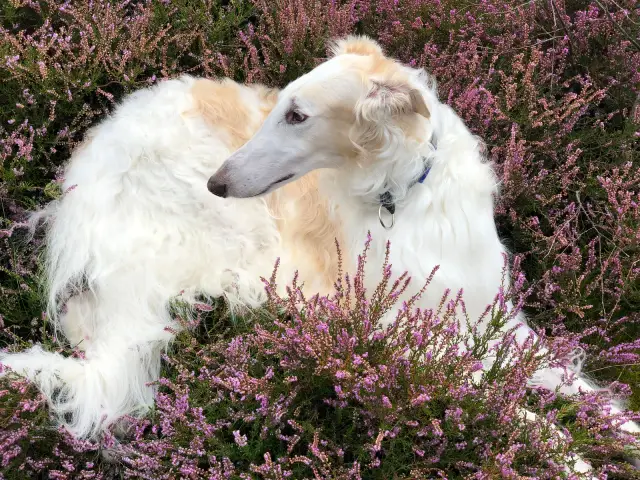 Same eraBorzoi1200 to 1650 · RussiaLate Middle Ages
Thomas Hall and the Hall's Heelers
The story starts with Thomas Simpson Hall, a New South Wales pastoralist whose family held land in the Hunter Valley. In the 1800s he imported blue-speckled Highland Collies from Scotland and crossed them with dingoes. The dogs became known as Hall's Heelers and were valued because they could handle wild cattle on long drives. Sources disagree on when this began. Dates between 1825 and the 1840s appear in popular accounts, and the atlas data gives 1840, so we state it as "the early to mid 1800s". The breeding records were lost, which is why exact details of the crosses are uncertain.
For roughly thirty years the Hall's Heelers were used mostly by the Hall family and their workers. After Hall's death in 1870 the dogs spread more widely. The drover Jack Timmins is linked to another line, known as the Timmins Biters, which were noted as keen biters. The atlas keeps Hall's Heeler as its own page: Hall's Heeler.
The Bagust brothers and the show ring
In the 1880s Jack and Harry Bagust of Sydney bred from Hall's Heelers and, according to the atlas data and secondary accounts, crossed in Dalmatians and Australian Kelpies. The Dalmatian cross is traditionally said to have made the dogs calmer around horses and loyal to the rider. The Kelpie cross added speed and working style. They are reported to have bred many and kept few until the blue type bred true by about 1890. In the 1890s a group of men formed the Cattle Dog Club of Sydney, which started the practice of showing and standardising the dogs.
Robert Kaleski and the 1903 standard
Robert Kaleski, a Sydney writer and breeder, wrote the first for the cattle dog. It is most often dated 1903 (one source gives 1902), and Kaleski himself said breeders had begun to "fix the type", so he drew up a standard on those lines. He also recorded the Hall's Heelers on Dartbrook station in the Upper Hunter. His standard described the long-tailed cattle dog, which is the dog we know today; the bob-tailed type later went to a different breed, the Australian Stumpy Tail Cattle Dog.
The Bentley mark
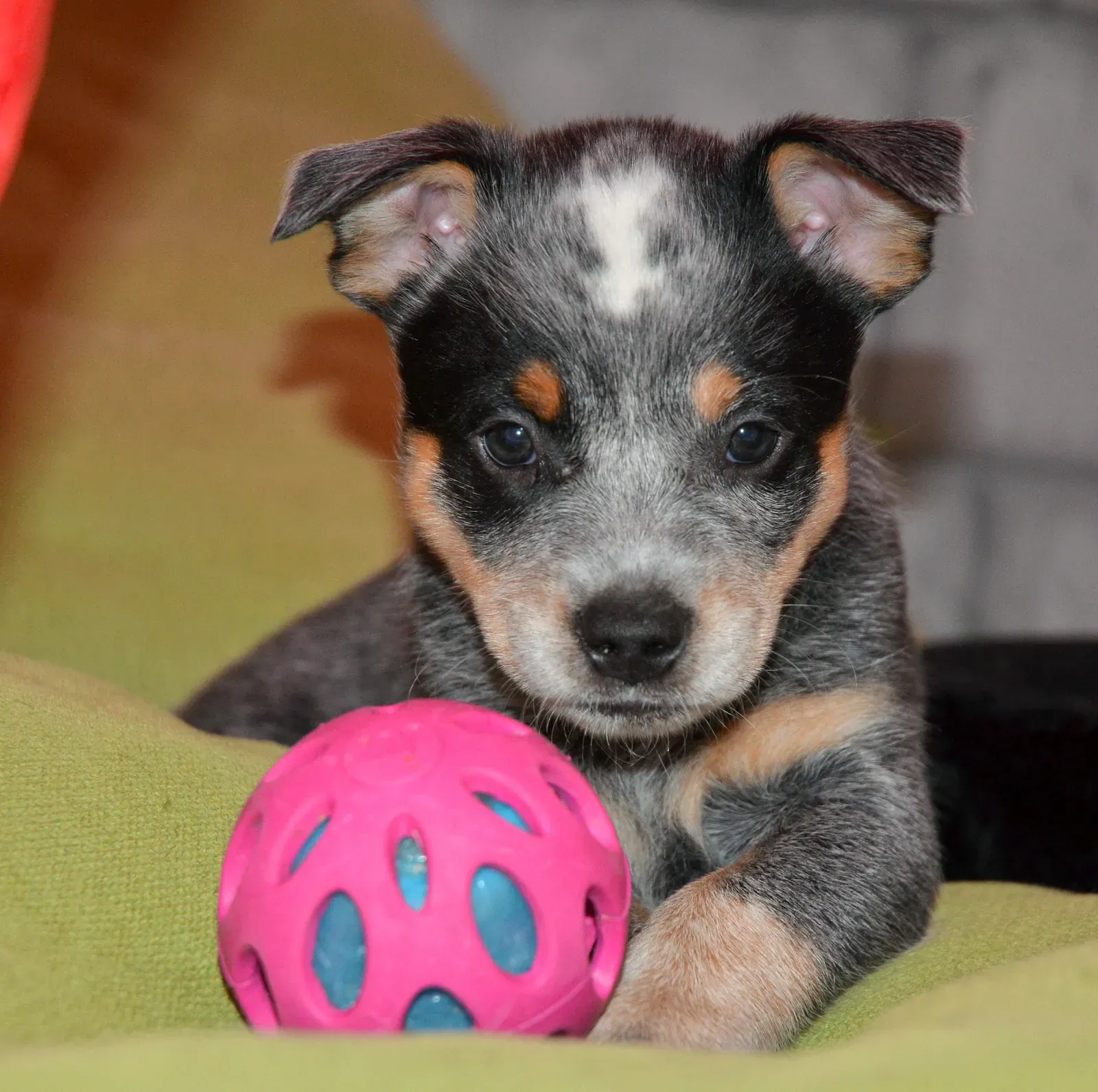
Some dogs have a small white patch, a star, on the forehead. It is called the Bentley mark, said to be after a dog owned by Tom Bentley. The story is folklore, not documented fact. The mark is accepted but not required, and the standards treat it as a permitted marking.
Clubs and recognition
The FCI lists the Australian Cattle Dog as a definitive breed (standard no. 287), with Australia as the country of origin. The AKC recognises it in the Herding Group, and the UK Kennel Club in the Pastoral Group. In Australia the breed standard is held by the national kennel body, which is the reference for the FCI text.
Bluey, the record-age dog
The most famous Australian Cattle Dog is Bluey, from Rochester in central Victoria, who died in 1939 reportedly at the age of 29 years and 5 months. His owners were Les and Rosalie Hall. Guinness World Records has listed him as the oldest dog ever recorded. The claim is not beyond doubt, because there is no modern veterinary or microchip proof and the dates rest on owner and shire registration records. After the Portuguese dog Bobi, claimed to have reached 31 years in 2023, lost the title when Guinness said there was "no conclusive evidence" of his birth date, Bluey was discussed as the record holder again. We treat Bluey as a well-loved record with a documented but not independently verified age. For ordinary pet dogs, 12 to 16 years is a realistic range.
Relatives and DNA
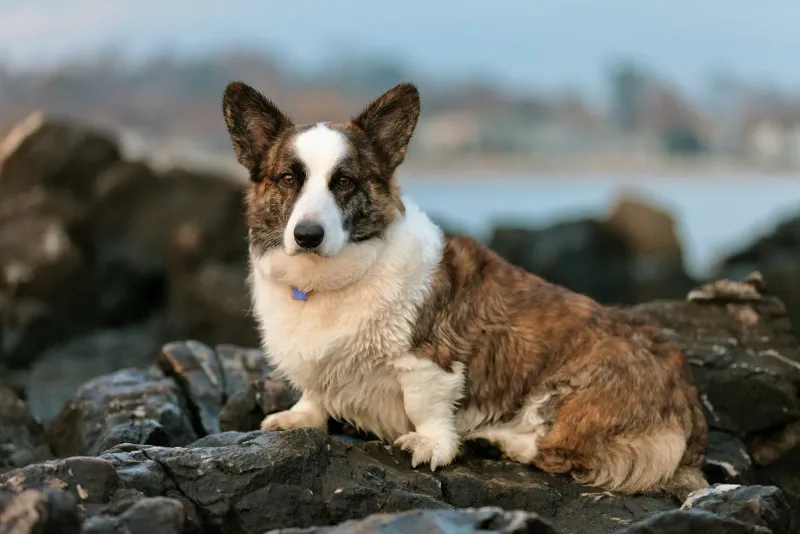 Same familyCardigan Welsh Corgi1200 to 1934 · United KingdomLate Middle Ages
The Parker 2017 study places the Australian Cattle Dog in the UK Rural family, a group of British and colonial rural working dogs. The closest DNA relatives in our data are:
- Australian Kelpie: 22.4 shared.
- Border Collie: 17.8 Mb.
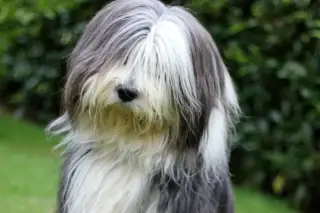
- Bearded Collie: 16.2 Mb.
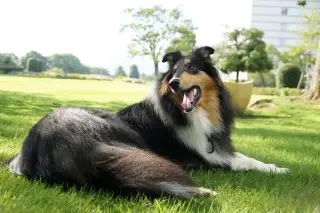
- Rough Collie: 14.3 Mb.
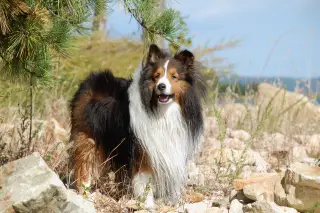
- Shetland Sheepdog: 11.7 Mb.
The Kelpie link matches the history of crossing. The collie links match the Highland Collie ancestors. The dingo and the Dalmatian are listed as ancestors in the atlas data with lower confidence. The sibling breed is the Australian Stumpy Tail Cattle Dog, which shares the Hall's Heeler root. Other breeds in the atlas data that go back to the same working type include the Lancashire Heeler, but that is a British dog with a different origin and not a close relative.
Sister breeds · 1
- Australian Stumpy Tail Cattle Dog1830 to 1917
- Australian Kelpie22.4 Mb 0.9%
- Border Collie17.8 Mb 0.7%
- Bearded Collie16.2 Mb 0.7%
- Rough Collie14.3 Mb 0.6%
- Shetland Sheepdog11.7 Mb 0.5%
Source: Parker et al. 2017. Percent of the whole genome.
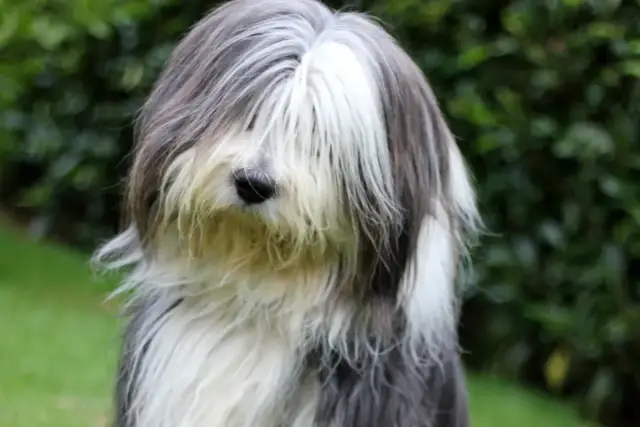
The breed standard
 Looks relatedGreyhound800 CE to 1850 · United KingdomEarly Middle Ages
A breed standard is the written ideal for a breed that kennel clubs judge dogs against. The Australian standard is the base for the others, so they agree on the main points.
| Trait | What the standards say |
|---|---|
| Height | UK Kennel Club and FCI: dogs 46 to 51 cm, bitches 43 to 48 cm |
| Weight | Canadian Kennel Club: 15 to 22.75 kg desirable. Not set in the standards of most other clubs |
| Build | UK Kennel Club and FCI: strong, compact, symmetrical, slightly longer than tall, with substance and agility |
| Coat | UK Kennel Club and FCI: smooth, double, weather-resisting; short outer coat, dense undercoat |
| Colour | FCI and UK Kennel Club: blue, blue-mottled or blue-speckled, with or without black, blue or tan markings; or red speckled, with or without darker red markings. Puppies are born white and the colour develops |
| Head | FCI and UK Kennel Club: broad skull, medium muzzle, strong jaw |
| Ears | FCI and UK Kennel Club: erect, medium size, wide-set, pricked |
| Tail | FCI and UK Kennel Club: moderate length, with a slight curve, hanging at rest |
| Eyes | FCI and UK Kennel Club: oval, dark brown, alert |
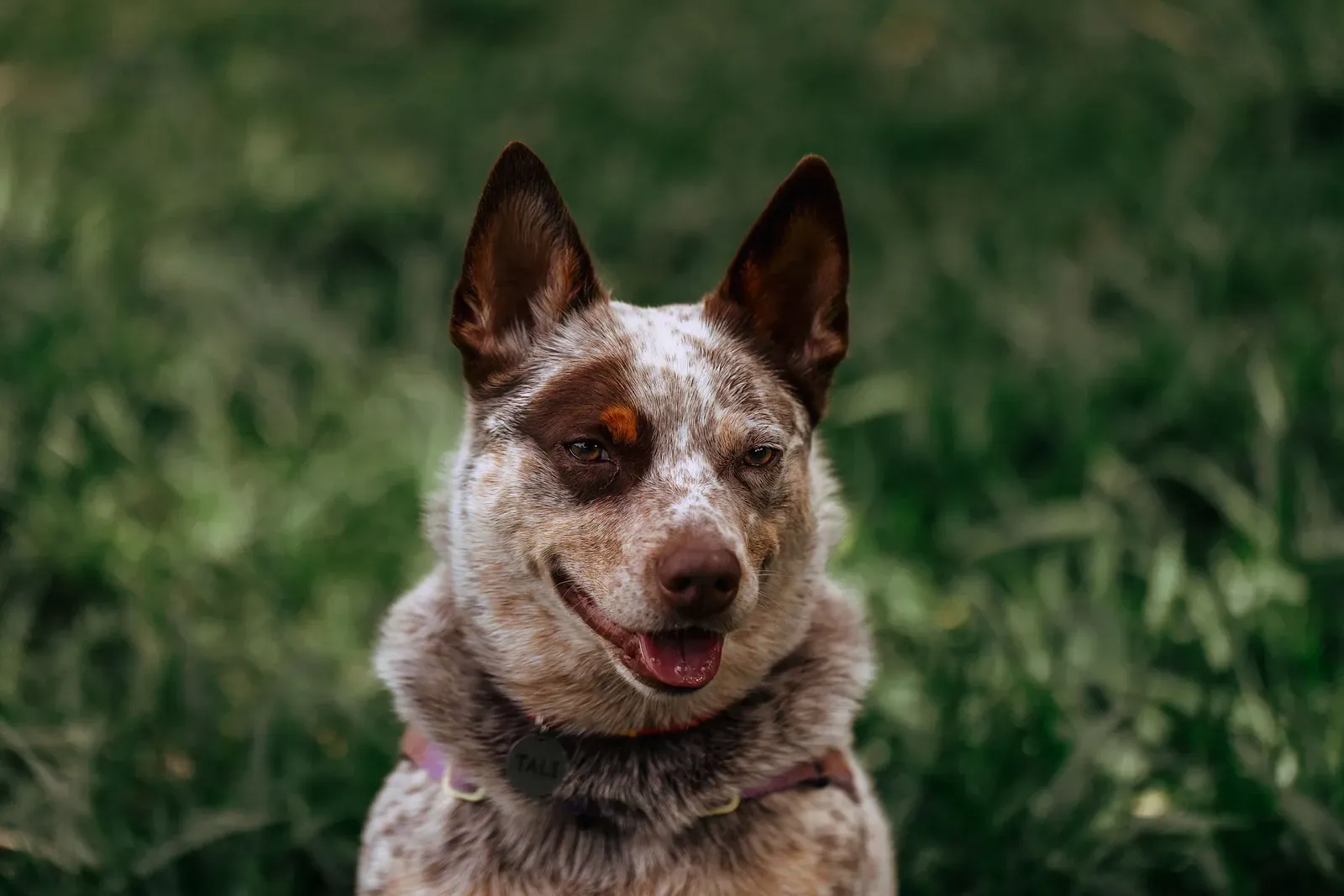
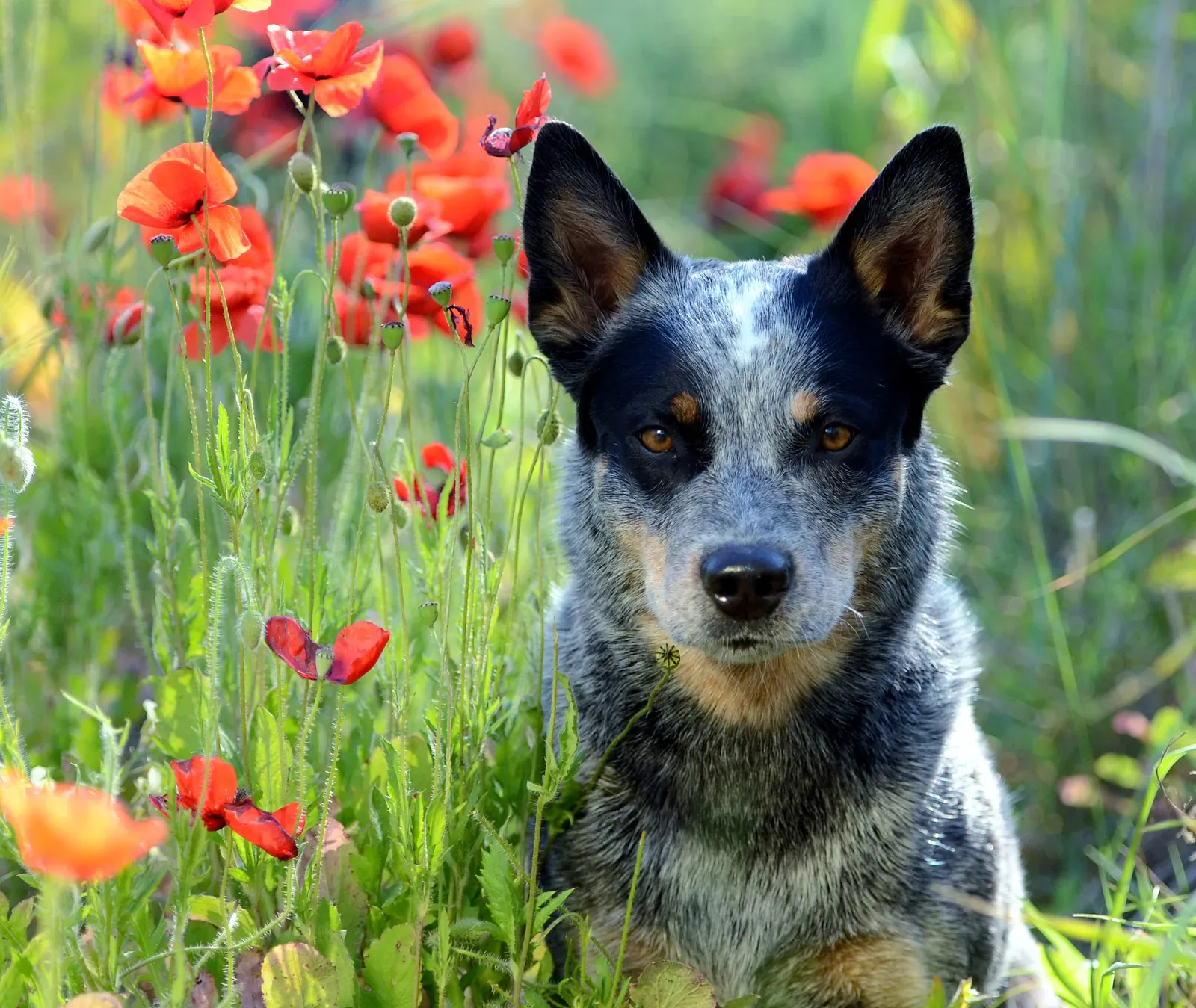
Blue and red. Blue dogs are black pigmented with a mottled or speckled grey-blue effect on the white hairs. Red dogs have a red speckled coat. Both colours share the same breed and temperament; the choice is purely one of look.
Bentley mark. The small white mark on the forehead is acceptable in both colours.
Size warning. The Canadian Kennel Club standard sets disqualification limits (dogs over 52 cm or under 44.5 cm, for example). Dogs outside the range can still be healthy pets, but breeders aim for the standard.
Temperament
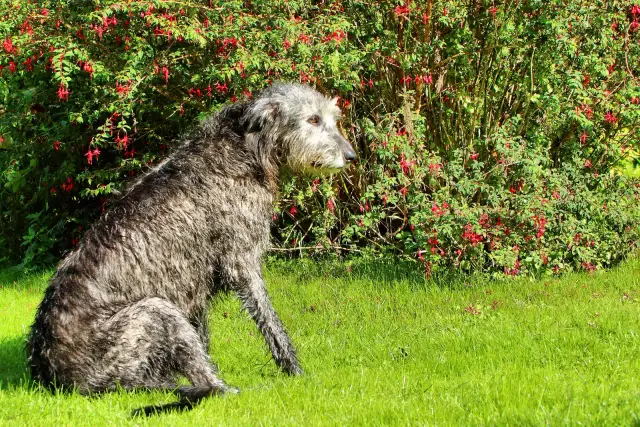 Related breedIrish Wolfhound100 BCE to 1885 · IrelandAncient World
The Australian Cattle Dog is a working dog through and through: alert, watchful, intelligent and very loyal to one person or family. It is wary of strangers and has a strong sense of duty, which can show as guarding and nipping. See the smartest dog breeds for how this breed compares with others on trainability.
Drive and energy. The breed was made for days of hard work on foot. It needs vigorous exercise every day and a job for its mind. Without both, it finds its own entertainment, which can be chewing, digging, barking or herding children.
Heel nipping. This is a normal behaviour for the breed, not a fault of training. A Cattle Dog may nip the heels of children, visitors, other pets and joggers. It can be redirected with early training, but it needs to be managed and supervised.
Loyalty and sensitivity. Many bond closely with one person and shadow them around the house. They tend to be less demonstrative than a retriever but very faithful. They do not do well with harsh handling, but they also test boundaries.
With strangers, children and other animals. A well-socialised Cattle Dog can be reliable with a family it has grown up with, but is typically reserved with strangers. With small children, the herding nip and the dog's speed make supervision essential. Same-sex dog aggression and a high chase drive for cats and small animals are common reports, so introductions need planning.
Mental sharpness. The breed is smart enough to work out gates and latches. A common comment from owners is that a Cattle Dog needs a problem to solve.

Working instincts and training
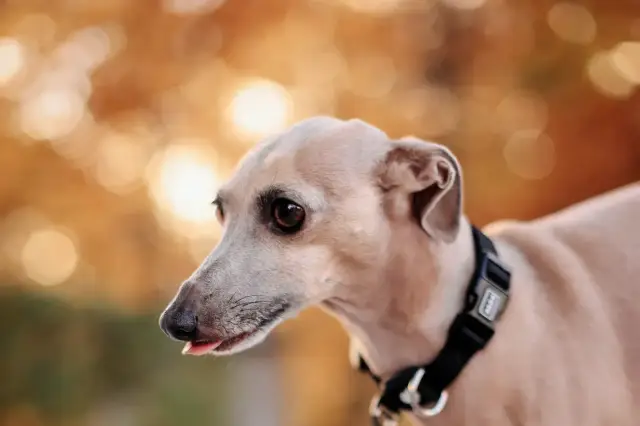 Related breedItalian Greyhound500 BCE to 1900 · ItalyAncient World
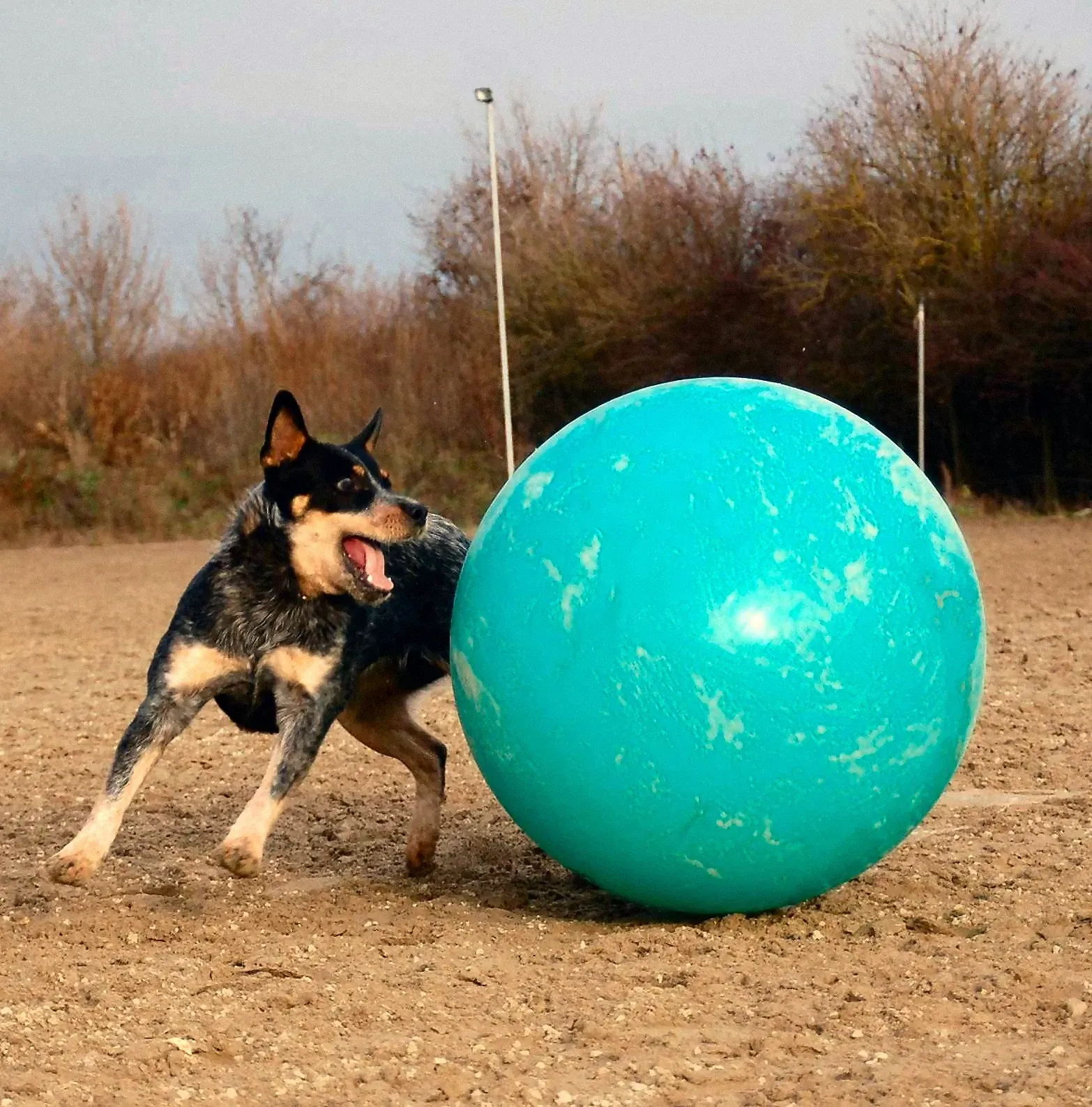 Save
- Socialise early. Meet many people, dogs and places in the first months, in short and positive experiences.
- Teach an off switch. Settling in a crate or on a mat is a learned skill for this breed.
- Use rewards, not force. Cattle Dogs are bold and can resist pressure. Clear, consistent, reward-based training is more effective.
- Give it a job. Herding, agility, obedience, tracking, flyball, scent games and trick training all work. A long, easy walk alone is not enough.
- Manage the nip. Teach a stop cue for heel nipping, and keep the dog away from running children until it is reliable.
Health
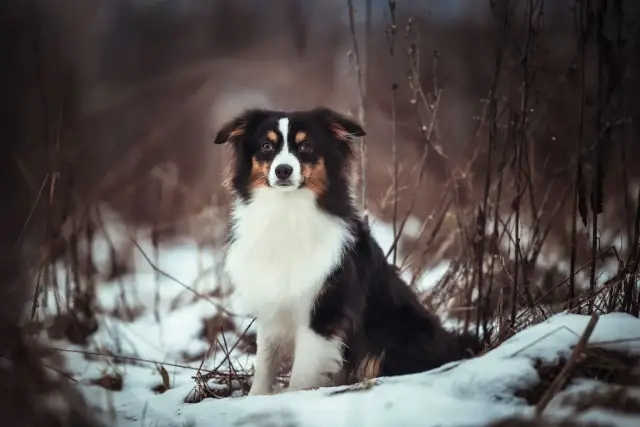 Related breedMiniature American Shepherd1968 to 2015 · United StatesModern Era
Most Australian Cattle Dogs are tough, long-lived and healthy, and the breed is considered one of the hardier working types. A small number of inherited conditions are well known, and responsible breeders screen for them. Where a named study gives a figure, it is shown as about 1 in N dogs; where none does, the table says so.
| Condition | What it is | How common | What helps |
|---|---|---|---|
| Congenital hereditary deafness | Hearing loss present from birth, in one or both ears | About 1 in 9 dogs (10.8%) in a University of Queensland study of 899 Cattle Dogs; about 1 in 30 (3.3%) were deaf in both ears (Sommerlad et al., BMC Veterinary Research, 2012) | BAER hearing test of puppies and breeding dogs; ask the breeder for results |
| Progressive retinal atrophy (PRA, prcd form) | Slow loss of the light-sensing cells of the retina, leading to night blindness and later sight loss | Listed among breeds with the prcd mutation; no breed-specific frequency found | DNA test for prcd of breeding dogs; eye exams |
| Late-onset PRA (rcd4) | A second inherited form of PRA with later onset | A DNA test exists for Cattle Dogs; no frequency found | DNA test for rcd4; eye exams |
| A loose or poorly shaped hip joint that can lead to arthritis | A 2023 Brazilian X-ray study of 49 Cattle Dogs found about 1 in 2 dysplastic (46.9%), a small sample and not breed-wide | Hip scoring of both parents, lean weight, controlled exercise in puppies | |
| and joint injury | Abnormal elbow growth; sprains and cruciate injuries in athletic dogs | Reported; no named prevalence study found | Elbow scoring, fitness, careful jumping and landing |
| Lens luxation and other eye conditions | Displacement of the lens, cataract | Reported in herding and terrier-type breeds; no named Cattle Dog study found | Regular eye checks, DNA tests where available |
About the deafness study. The Queensland team tested 899 dogs with BAER, a hearing test that records the brain's response to clicks. Deafness was linked to coat: dogs with a mask on both sides of the face and dogs with pigmented body spots were less often deaf. In a separate 2014 analysis, ten breeding kennels that tested for 10 years had not clearly reduced the rate, even when both parents tested normal, which shows that testing alone is not a cure and suggests that the trait needs careful breeding. A smaller 2010 study of 315 Stumpy Tail Cattle Dogs found 17.8% deaf, but that group was chosen for a genetic study and does not represent the whole breed.
Hearing and daily life. A deaf Cattle Dog can lead a full life. Hand signals, vibration cues and a visual routine replace voice, and a deaf dog should be kept on a lead or fenced near roads.
Lifespan. Breed sources give 12 to 16 years. Online figures range from about 10 to 14 years, and no reliable primary study covers the breed, so the range is a guide rather than a measured median.
Obesity and boredom. Because Cattle Dogs are driven and eat well, weight is usually easy to manage with exercise, but an under-worked dog fed treats can become overweight, which stresses its joints.
 Ticks and fleasTicks and fleas on dogs: how to check, remove and prevent themTicks and fleas on dogs: how to tell them apart, check your dog, remove a tick safely, break the flea life cycle and prevent both.
 GuidesPractical guidesBehaviour, training, health and adoptionRelated breedMiniature American Shepherd1968 to 2015 · United StatesModern Era
Living with an Australian Cattle Dog
 Related breedOld English Sheepdog1700 to 1888 · United KingdomEarly Modern Era
| Daily reality | Rating | Why |
|---|---|---|
| Exercise per day | High | A droving dog; well over an hour of activity plus mental work |
| Training needs | High | Smart, strong-willed, needs early socialisation and consistent rules |
| Grooming | Low | Short coat; weekly brushing |
| Shedding | Medium | Sheds, with heavier seasonal moults from the undercoat |
| Barking | Medium | Alert and vocal when bored or guarding |
| Time alone | Poor | Needs company and work; bored dogs destroy |
| Children | Varies | Loyal to its family, but the heel nip and speed need management and supervision |
| Other dogs | Varies | Can be dog-selective; early socialisation helps |
| Cats and small pets | Varies | Strong chase and herding drive; depends on early exposure |
| Flat living | Poor | Only with serious daily exercise and training |
| Heat tolerance | Good | Bred for hot Australian country; still keep hard work to cooler hours |
| Cold tolerance | Good | Dense double coat |
| First-time owner fit | Fair | Trainable, but needs an owner willing to do the daily work |
A great fit if
- You are active and enjoy long hikes, runs or dog sport.
- You have a secure garden or yard and a plan for training every day.
- You want a dog that works closely with you and bonds deeply.
- You have experience with herding dogs, or you will attend training classes.
Think twice if
- You are out for long hours and the dog would be alone.
- You live in a small flat with limited outdoor access.
- You have young children and cannot supervise closely.
- You want a laid-back dog that is friendly with everyone.
Before you get one
- Health tests. Ask the breeder for BAER hearing results for the puppies and parents, and prcd and rcd4 DNA test results, along with hip and elbow scores and an eye exam certificate. Ask to see the originals.
- Puppy or adult rescue. Cattle Dog rescues place adults whose temperament is known, which can suit people unsure about the demands of a puppy.
- First year. Plan for puppy classes, safe exposure to many people and places, and careful, gentle exercise while joints grow. A bored Cattle Dog puppy learns quickly, including the wrong habits.
- Working or show lines. Working lines are more driven. Ask the breeder what the dogs are bred for and how they live.
 Save
Similar breeds to consider
- Australian Kelpie. The closest DNA relative; faster and lighter, equally energetic.
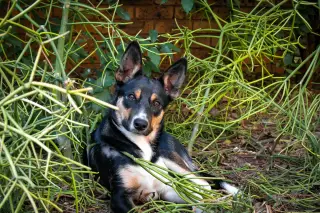
- Border Collie. Intelligent and driven herder; more eye and less nip.
- Australian Shepherd. American herding dog, often a little more people-oriented.
- Australian Stumpy Tail Cattle Dog. The bob-tailed sibling breed with the same Hall's Heeler root.

Australian Cattle Dog fun facts
 Related breedPembroke Welsh Corgi1100 to 1934 · United KingdomEarly Middle Ages
- Puppies are born white and their blue or red colour grows in over the first weeks.
- The white forehead star is called the Bentley mark, after a dog in a story told by breeders.
- Bluey of Rochester, Victoria, is said to have lived to 29 years and 5 months, and Guinness has listed him as the oldest dog ever recorded.
- The Kelpie shares 22.4 Mb of DNA with the Australian Cattle Dog in Parker 2017, more than any other breed in our data.
Frequently asked questions
Is the Australian Cattle Dog a good family dog?
It can be, in an active, experienced family that trains it and supervises it with children. It is not a good choice for a quiet home or for a family that cannot give it daily exercise.
What is the difference between a Blue Heeler and a Red Heeler?
Only the coat colour. Both are Australian Cattle Dogs under the same standard.
How big is an Australian Cattle Dog?
Dogs stand 46 to 51 cm and bitches 43 to 48 cm. Typical weight is about 15 to 22 kg.
How long do Australian Cattle Dogs live?
The atlas data gives 12 to 16 years. Bluey, a dog in Victoria, is reported to have reached 29, but that is an exceptional case and not independently verified.
Are Australian Cattle Dogs prone to deafness?
Congenital deafness is documented. In a study of 899 dogs, about 1 in 9 were deaf in at least one ear and about 1 in 30 in both. Breeders can use BAER testing.
Do Australian Cattle Dogs bite?
They nip heels as a herding behaviour, and they can be wary of strangers. Early training and supervision reduce the risk.
Read next
 Closest DNAAustralian Kelpie22.4 Mb shared
 FamilyUK RuralThe whole family
 Adopt a dogDog Shelters in EuropeFind dog shelters in Europe, learn how shelters differ from country to country and why adopting a dog is a good option.
Sources (13)
- Fédération Cynologique Internationale, Australian Cattle Dog, standard no. 287.
- UK Kennel Club, Australian Cattle Dog breed page and breed standard.
- Canadian Kennel Club, Australian Cattle Dog breed standard.
- American Kennel Club, Australian Cattle Dog breed information.
- Kaleski R., cattle dog breed standard, 1903, as described in Australian breed histories.
- Parker H.G. et al., "Genomic analyses reveal the influence of geographic origin, migration, and hybridization on modern dog breed development", Cell Reports, 2017.
- Sommerlad S.F. et al., "Prevalence of congenital hereditary sensorineural deafness in Australian Cattle Dogs and associations with coat characteristics and sex", BMC Veterinary Research, 2012.
- Sommerlad S.F. et al., "Congenital sensorineural deafness in Australian Stumpy-tail Cattle Dogs is an autosomal recessive trait that maps to CFA10", PLoS ONE, 2010.
- Queensland research team, study of BAER screening and deafness prevalence in ten breeding kennels, Animal Genetics, 2014.
- Radiographic findings in the coxofemoral joint of Australian Cattle Dogs, Brazilian Journal of Veterinary Research and Animal Science, 2023.
- OptiGen, prcd-PRA and rcd4 DNA test information for Australian Cattle Dogs.
- Guinness World Records, oldest dog ever, and news coverage of Bluey and Bobi (Canberra Times, SBS), 2023.
- Wikipedia, Halls Heeler, Australian Cattle Dog and Robert Kaleski (used for the history, with dates compared across sources).