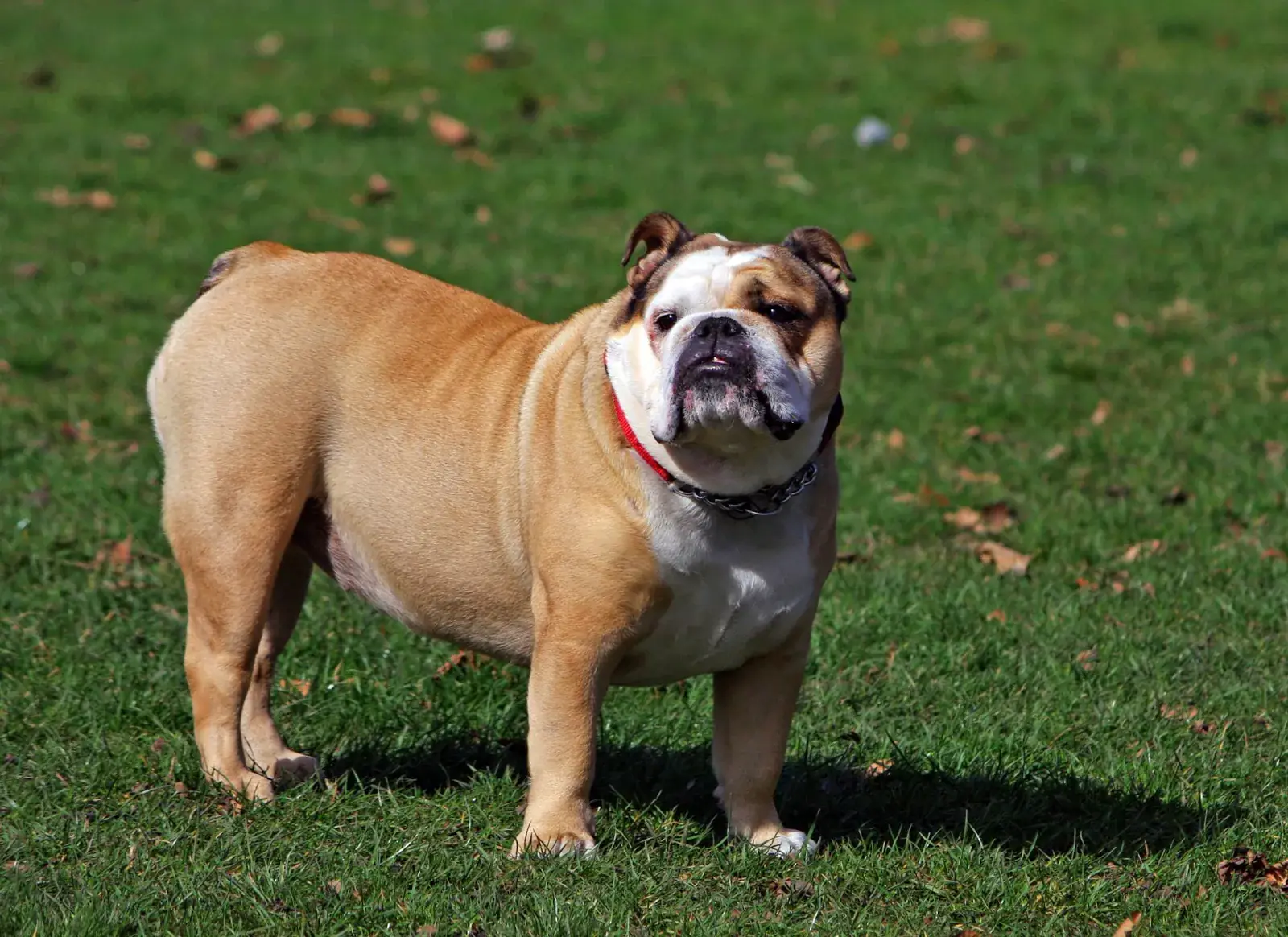
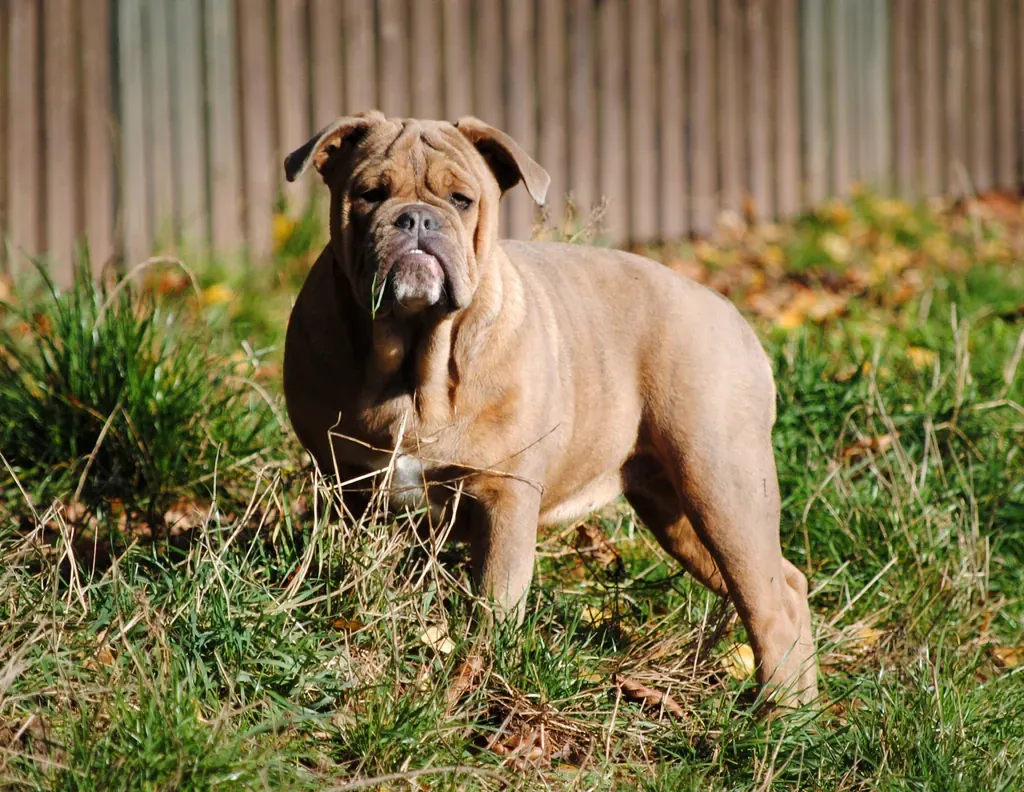
Its ancestors were bred for bull-baiting, a blood sport banned in England in 1835. Victorian fanciers then reshaped what was left of the type into a gentle, calm house dog, and the breed became a national symbol of Britain. Today the Bulldog is loved for its easy-going nature, but its extreme build brings well documented breathing, skin and birth problems, and a median life span of about 7 years in UK data.
Bulldog quick facts
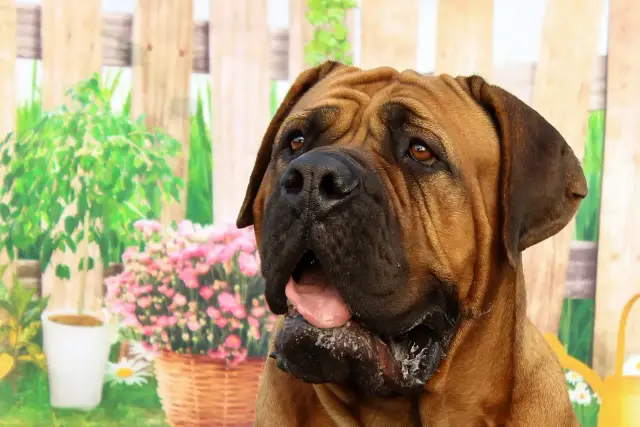 Related breedDogue de Bordeaux1300 to 1896 · FranceLate Middle Ages
- Closest DNA relatives
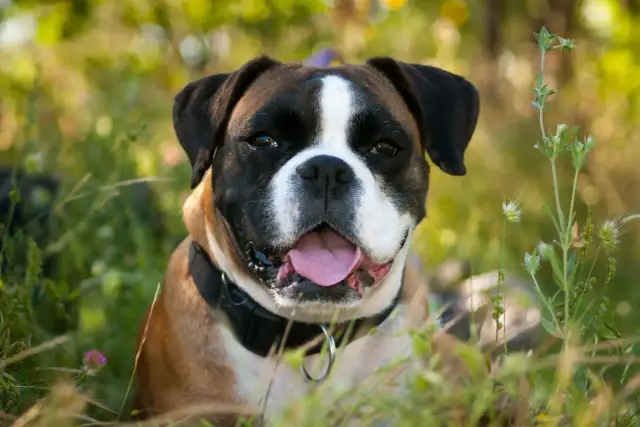
- Boerboel, Bullmastiff, Boxer, French Bulldog
- Descendant breeds
- Boxer, American Bully, Olde English Bulldogge, Continental Bulldog
- Other names
- British Bulldog, English Bulldog
- Country of origin
- United Kingdom (England, Great Britain)
- Period of development
- About 1835 to 1875 (atlas data); the older Bulldog type is recorded in the 1600s
- Type
- Companion dog ( Group 2, standard no. 149; Non-Sporting Group; UK Kennel Club Utility Group)
- Weight in the standards
- Dogs 25 kg, bitches 23 kg (FCI and UK Kennel Club); about 23 kg and 18 kg in the AKC standard (50 and 40 pounds)
- Coat
- Short, fine, close and flat
- Colours
- Brindle, red, fawn, white, piebald and mixes (details below)
- Life span
- Atlas data: 8 to 10 years. UK VetCompass study: median 7.2 years
- Exercise
- Low. Short daily walks (Kennel Club breed information)
- DNA family
- European Mastiff (Parker et al. 2017)
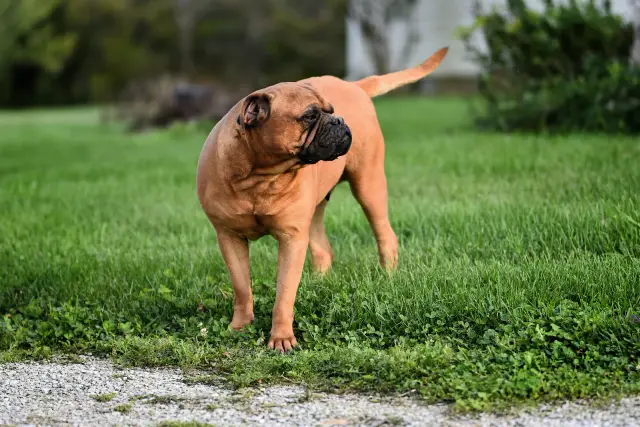
Where it sits in the tree
Industrial Revolution · 1800 to 1849
Name and origin
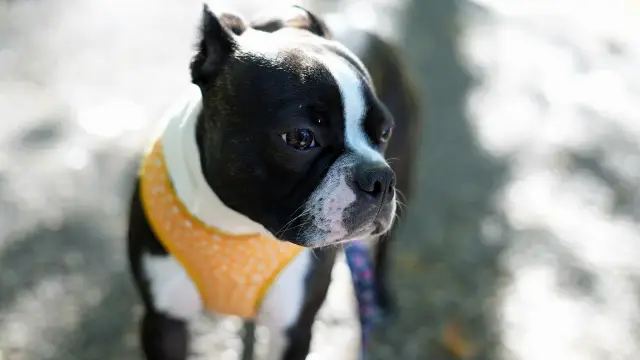 Related breedBoston Terrier1870 to 1893 · United StatesVictorian Breed Boom
"Bulldog" simply means a dog used against bulls. The atlas data gives the etymology as the breed's use in bull-baiting, and the word is recorded in print in the early 1600s. "English Bulldog" and "British Bulldog" are the common names used outside the kennel clubs, which register the breed as the Bulldog. The FCI lists Great Britain as the country of origin.
Where did the dog come from? Old writers described heavy English "bandogs" and mastiff-type dogs for guarding and baiting. The atlas data lists the Old English Bulldog as the direct parent of the modern Bulldog, with English Mastiff-type dogs behind it. The link is rated medium confidence, because pedigrees from before the 1800s do not exist. Older claims about Alaunts and other ancient war dogs are traditional stories, not documented lines.

History
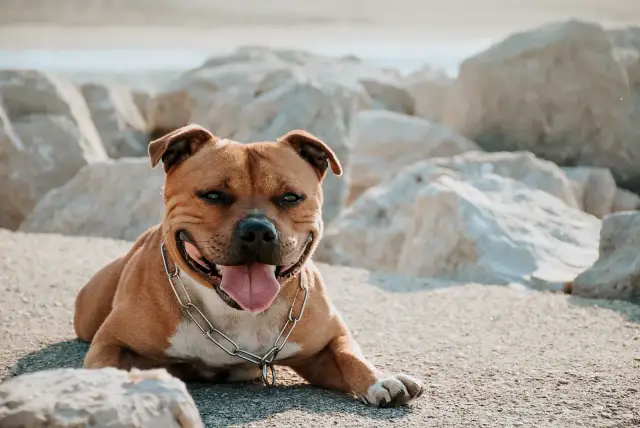 Same eraStaffordshire Bull Terrier1800 to 1935 · United KingdomIndustrial Revolution
Bull-baiting
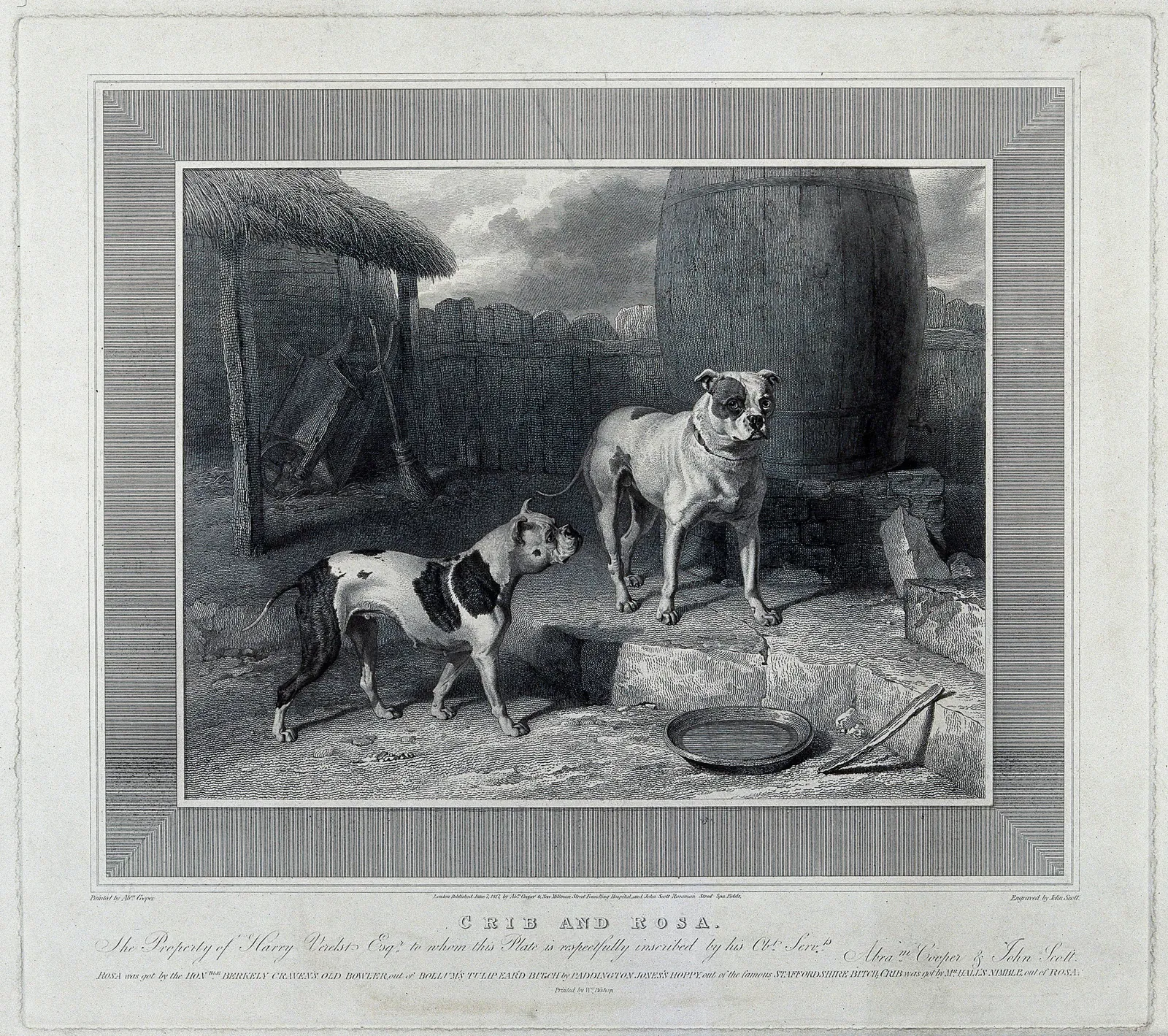
From the 1600s to the early 1800s, English towns held bull-baiting: a bull was tethered and dogs were set on it, with crowds betting on the outcome. The dogs that did best were low, wide, tough and tenacious, with a strong jaw and a loose neck skin. Baiting was also believed to make the meat tenderer, which kept the custom alive. This is where the Bulldog's short, broad head and heavy front came from.
The 1835 ban
The Cruelty to Animals Act of 1835 made bull-baiting illegal in England. The dogs lost their job, and the working type began to vanish. Some owners crossed Bulldogs with terriers to make fast fighting dogs, which led to the Bull Terrier and the Staffordshire Bull Terrier (atlas data lists the Bull and Terrier as a sibling of the Bulldog). The old Bulldog nearly disappeared from the countryside.
Victorian reshaping
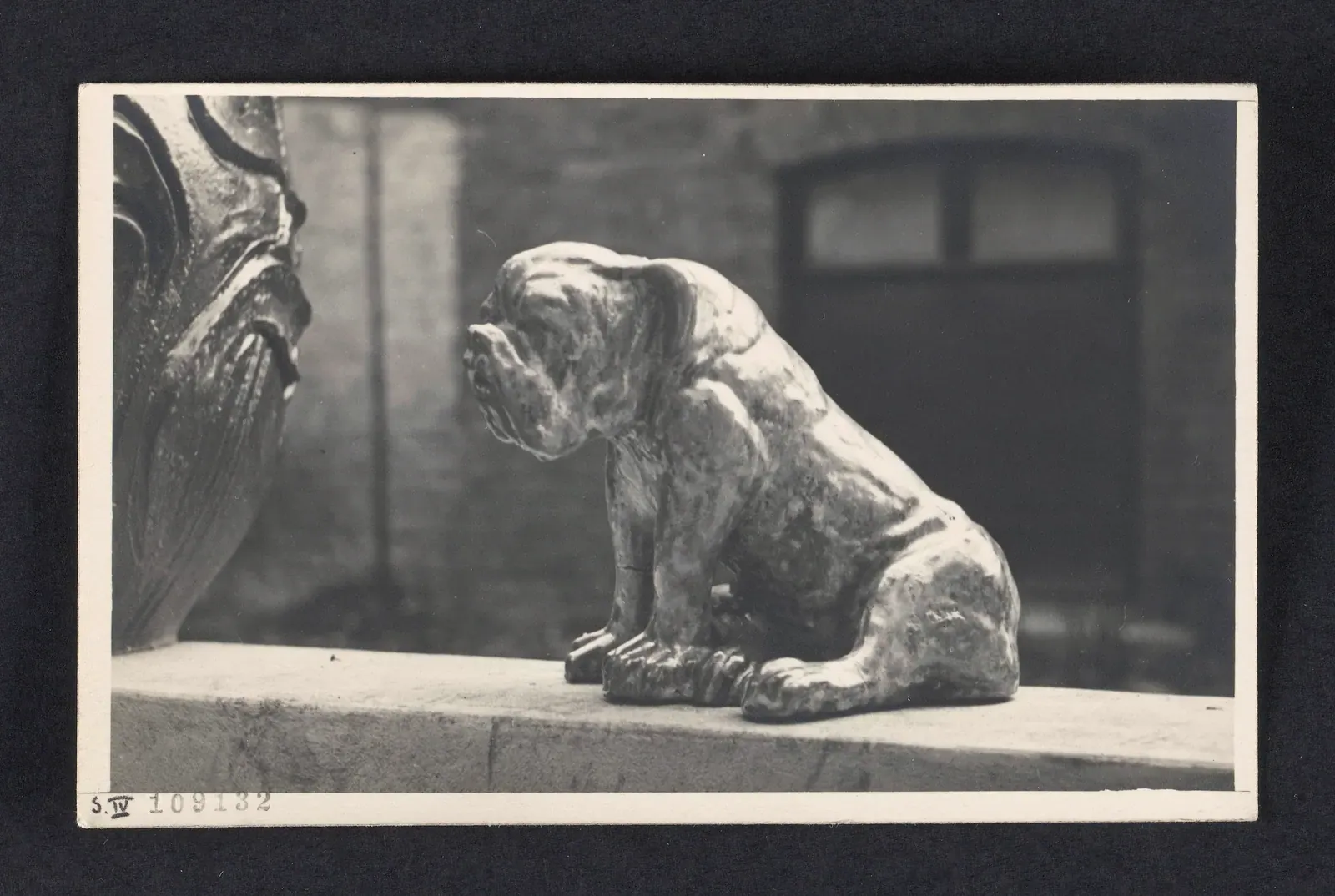
A few breeders kept the type alive as a show and companion dog. Early dog shows, including the Birmingham show of 1859, gave Bulldogs a stage. A first Bulldog Club formed in 1864 and lasted only a few years. The Bulldog Club formed in March 1875 and still exists; it wrote the first standard that year.
Show breeders selected for a shorter muzzle, wider chest, heavier skin folds and a calmer temperament than the baiting dogs had. The result looked much different from its ancestors. A well-known test in 1894 pitted an athletic dog of the older type, King Orry, against a heavier modern show dog, Dockleaf, in a 20 mile walk. King Orry finished; Dockleaf collapsed. The story is often used to show how far the show type had moved from the working dog.
 Save
 Save
Recognition
| Year | Event |
|---|---|
| 1835 | Cruelty to Animals Act bans bull-baiting in England |
| 1859 | Birmingham show gives Bulldogs a place in the show ring |
| 1875 | The Bulldog Club formed in Britain and a written |
| 1886 | AKC recognises the Bulldog |
The FCI lists the breed as standard no. 149 (definitive), group 2, with Great Britain as country of origin.
A national symbol
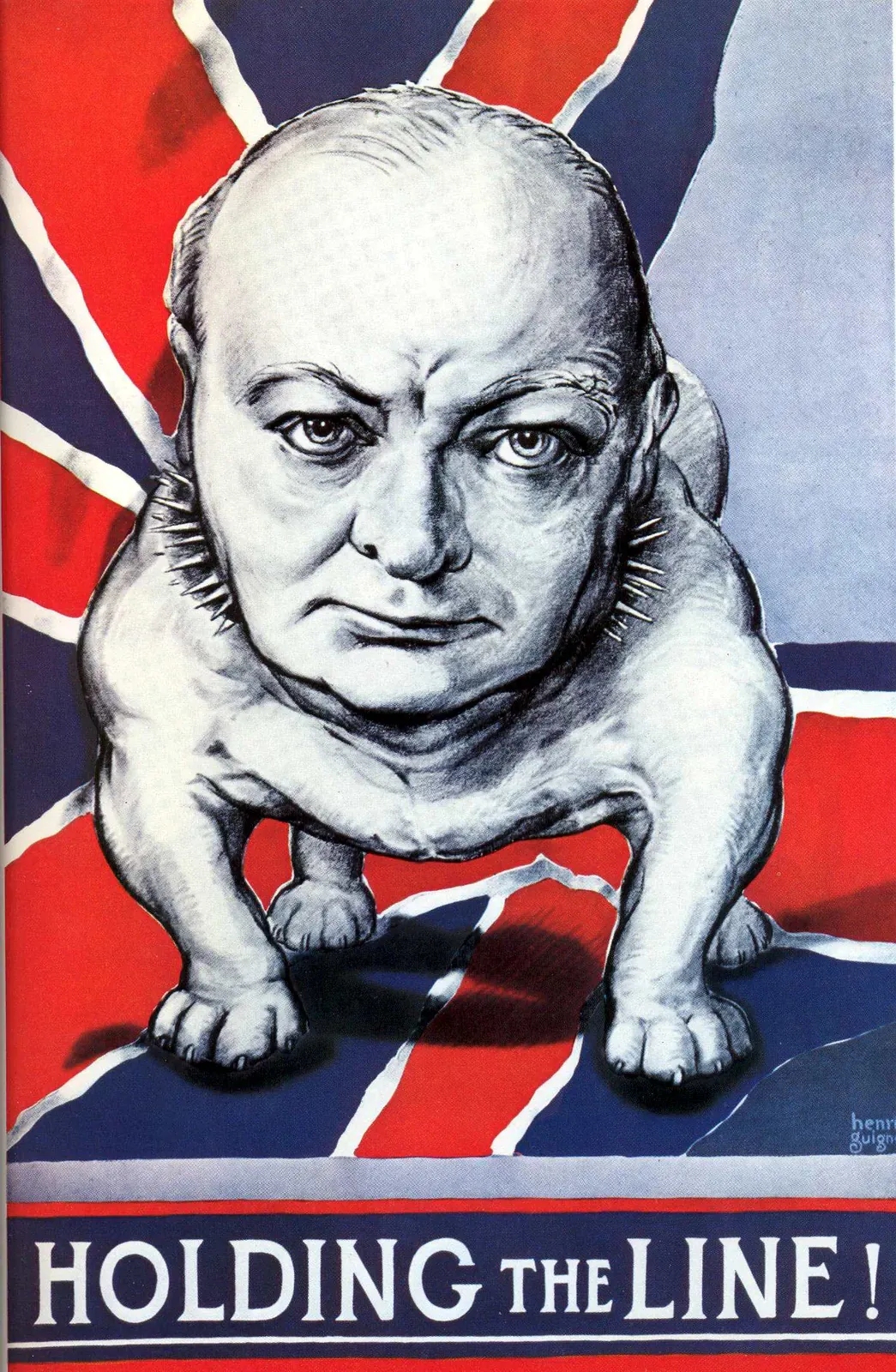
The Bulldog became the image of British stubbornness. The cartoon figure "John Bull" is often drawn with one, and during the Second World War the dog was associated with Winston Churchill and his defiance. In the United States the Bulldog is a school and military mascot: Yale's Handsome Dan, the University of Georgia's Uga and the US Marine Corps' Chesty are all Bulldogs. Few other breeds stand for a country this strongly.
 Save
Ancestors, descendants and relatives
 Same familyAmerican Staffordshire Terrier1850 to 1936 · United StatesVictorian Breed Boom
Ancestors. The Old English Bulldog is the listed parent. Earlier ancestors in the atlas data are the English Mastiff, the Alaunt, the Alpine Mastiff and the mythical "Canis pugnax". Treat the last three as historical labels, not proven dogs.
Descendants. The knowledge base lists the Boxer, the American Bully, the Olde English Bulldogge and the Continental Bulldog as children, and also the Dogo Argentino and Dogue Brasileiro further down the line. The Olde English Bulldogge and Continental Bulldog are modern attempts to bring back a longer-nosed, healthier "old type" Bulldog.
Siblings. American Bulldog, Alapaha Blue Blood Bulldog, Bull and Terrier, Toy Bulldog.
What DNA says
A 2017 study by Parker and colleagues (Cell Reports) analysed 1,346 dogs from 161 breeds and sorted them into 23 clades. The Bulldog sits in the "European Mastiff" clade, with other heavy molosser-type dogs. The study also measured shared , long stretches of identical DNA inherited from common ancestors. More shared () point to crossing or common founders, though the study cannot say which way genes moved.
Source: Parker et al. 2017, as recorded in this site's breed database.
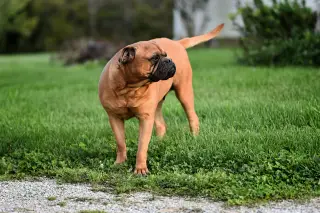
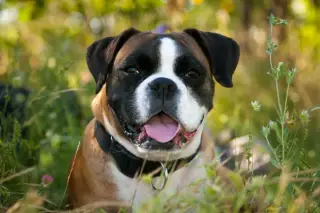
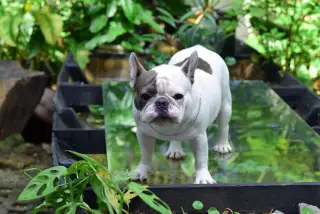
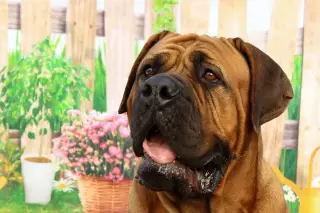
The Bulldog's two nearest partners are the Boerboel and the Bullmastiff, both mastiff-bulldog crosses. The French Bulldog (27.8 Mb) and the Boston Terrier (21.1 Mb) come from small Bulldogs, which fits their history as Bulldog offshoots. See the French Bulldog, Boxer, Bullmastiff and European Mastiff family.
 Save
Sister breeds · 4
- American Bulldog1700 to 1980
- Alapaha Blue Blood Bulldog1800 to 1979
- Bull and Terrier1800 to 1860
- Toy Bulldog1850 to 1890
Descend from it · 4
- BoxerGermany
- Olde English BulldoggeUnited States
- American BullyUnited States
- Continental BulldogSwitzerland
- Boerboel44.7 Mb 1.9%
- Bullmastiff42.8 Mb 1.8%
- Boxer34.4 Mb 1.4%
- French Bulldog27.8 Mb 1.2%
- Dogue de Bordeaux21.8 Mb 0.9%
- Boston Terrier21.1 Mb 0.9%
- Staffordshire Bull Terrier19.1 Mb 0.8%
- American Staffordshire Terrier18.9 Mb 0.8%
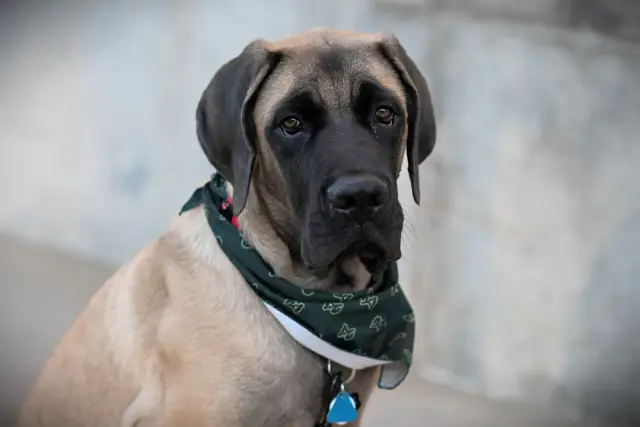
- English Mastiff16.3 Mb 0.7%
- Glen of Imaal Terrier14.5 Mb 0.6%
- Cane Corso13.3 Mb 0.6%
- Bull Terrier12.5 Mb 0.5%
- Australian Kelpie11.1 Mb 0.5%
- Kerry Blue Terrier11.1 Mb 0.5%
- Soft-coated Wheaten Terrier10.7 Mb 0.4%
Source: Parker et al. 2017. Percent of the whole genome.
| Breedwith Bulldog | with Bulldog (Mb)Shared DNA (Mb) |
|---|---|
| Boerboel | 44.7 |
| Bullmastiff | 42.8 |
| Boxer | 34.4 |
| French Bulldog | 27.8 |
| Dogue de Bordeaux | 21.8 |
| Boston Terrier | 21.1 |
| Staffordshire Bull Terrier | 19.1 |
| American Staffordshire Terrier | 18.9 |
| English Mastiff | 16.3 |
Source: Parker et al. 2017, Cell Reports, shared haplotypes between 161 breeds (1,346 dogs).

The breed standard
 Looks relatedEnglish Mastiff1300 to 1880 · United KingdomLate Middle Ages
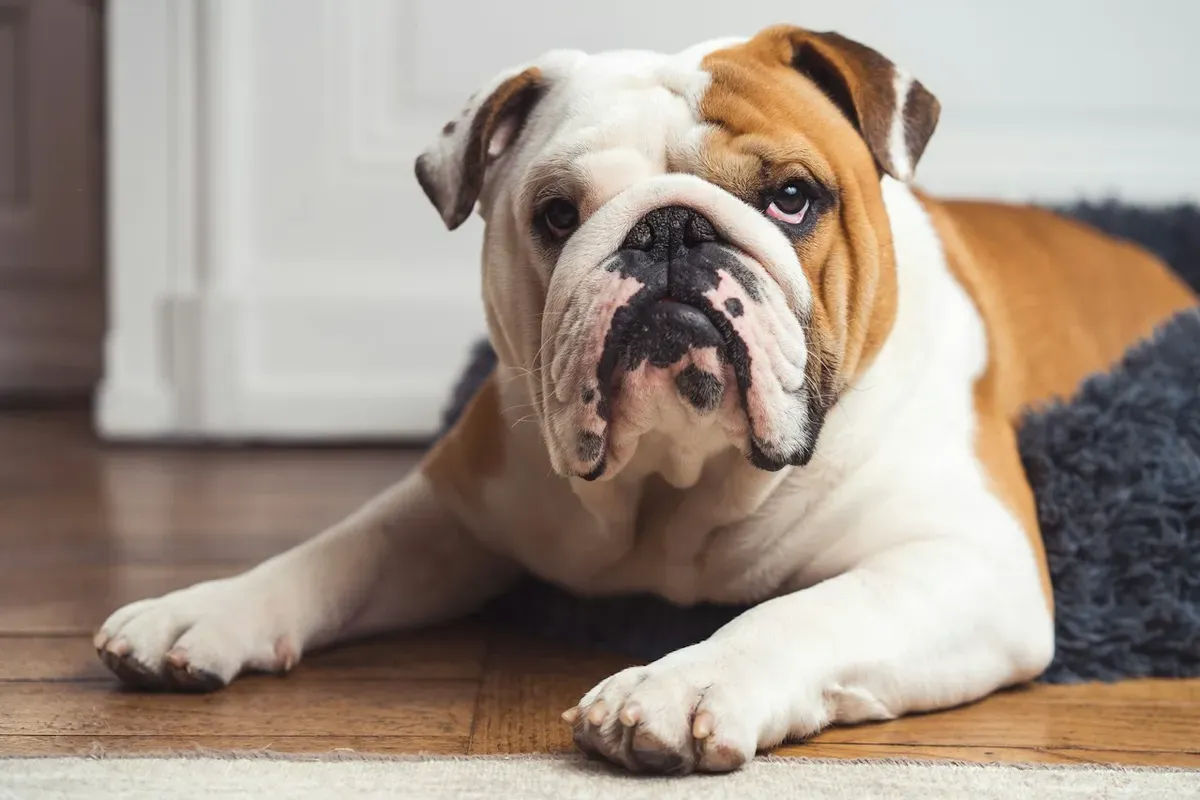
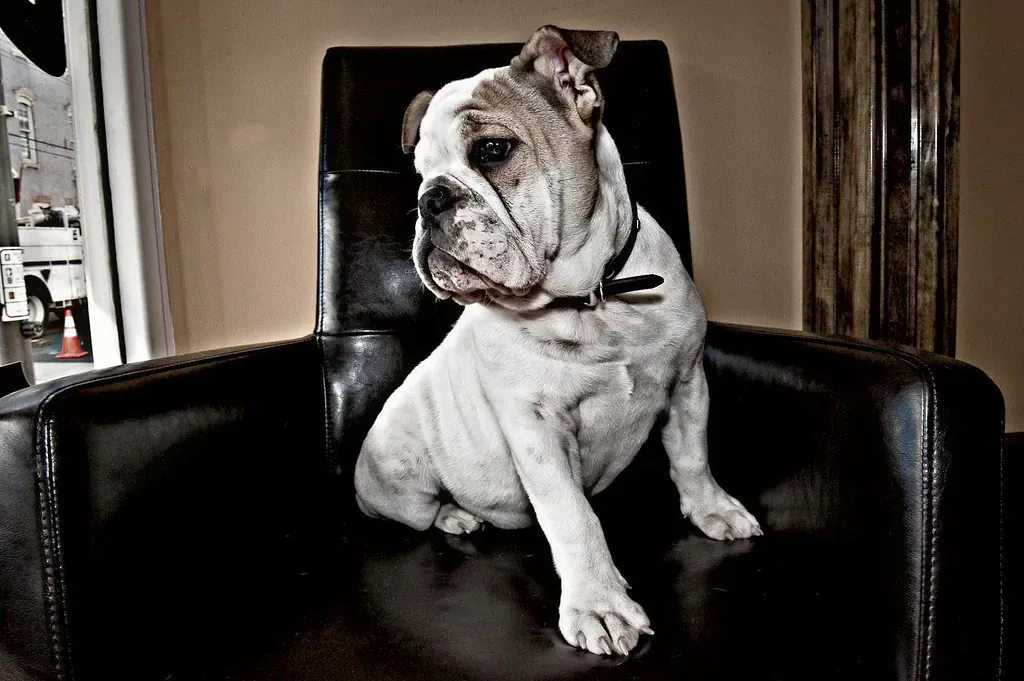
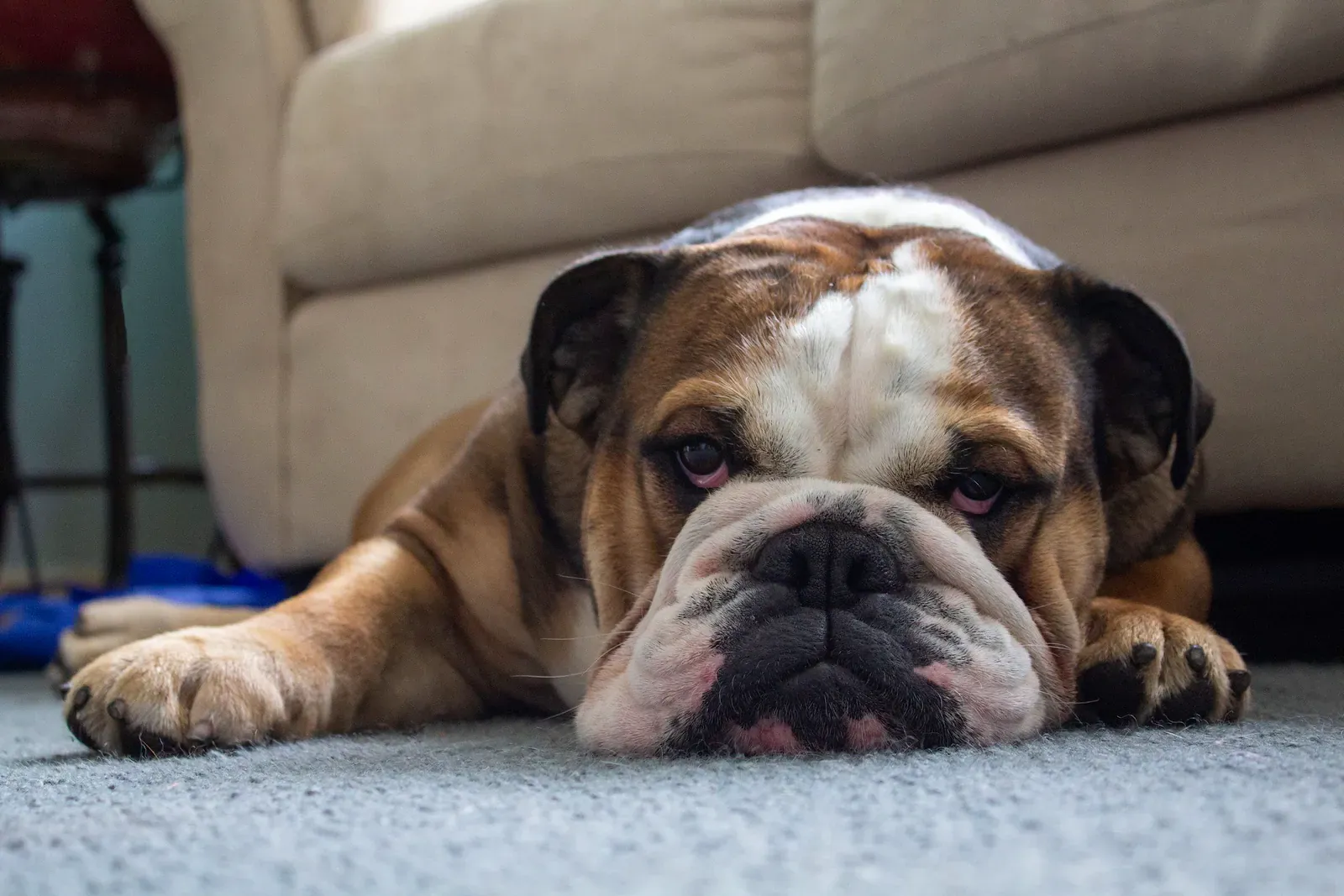
A breed standard is the written ideal a kennel club judges dogs against. For the Bulldog it describes a medium-sized, short-faced, wide, heavy-set dog with a low, loose, rolling build.
| Trait | FCI | AKC | UK Kennel Club |
|---|---|---|---|
| Weight | Dogs 25 kg, bitches 23 kg | Dogs about 23 kg (50 lb), bitches about 18 kg (40 lb) | Dogs 25 kg, bitches 23 kg |
| Coat | Short, fine, close, smooth | Straight, short, flat, close, fine | Fine, short, close |
| Colours | Brindle, red, fawn, white and mixes | Red, white, fawn, fallow or mixes; brindle and piebald patterns accepted | Brindle, red, fawn, white, piebald |
| Head | Large, wide, short face, "flews" hanging over the jaw | Massive, short-faced | Large, short-faced, broad |
| Ears | Small, thin, set high, "rose" ear | Small, thin, rose ear | Small, thin, rose ear |
| Build | Low, wide, heavy; chest wide; rolling gait | Same description | Same description |
All three standards describe the same dog and differ mostly in weight units and colour wording. Clubs have also tightened wording on exaggeration: the UK Kennel Club puts the Bulldog in Breed Watch Category 3, which tells judges to look for signs of respiratory difficulty (laboured breathing, noise, excessive effort) and not to reward dogs that show them.
Typical weights seen in practice are higher. In the UK VetCompass study, mean adult bodyweight was 26.0 kg overall (27.6 kg for males and 24.3 kg for females), above the standard figures.
Temperament
 Related breedCane Corso1000 to 1996 · ItalyEarly Middle Ages
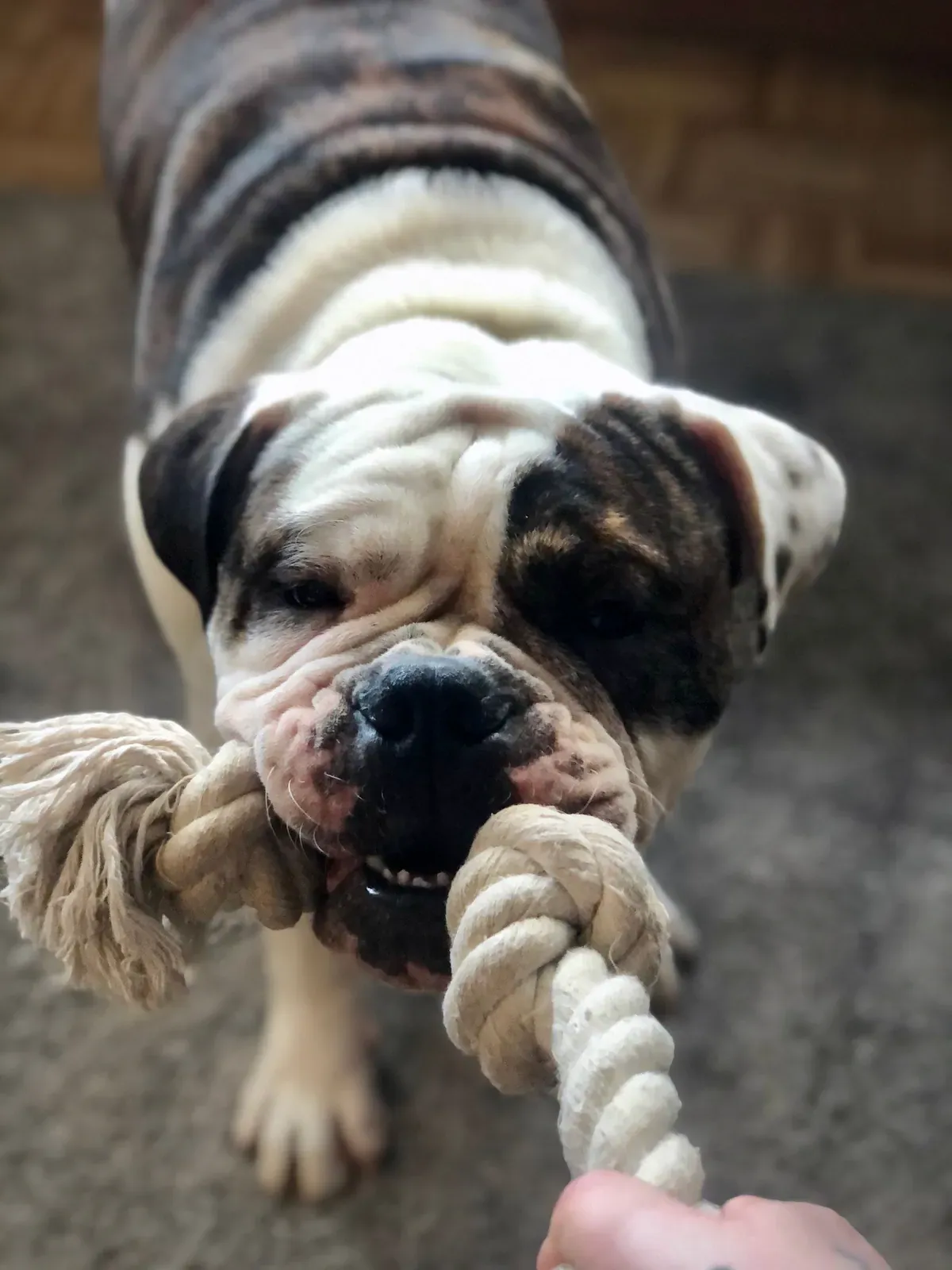
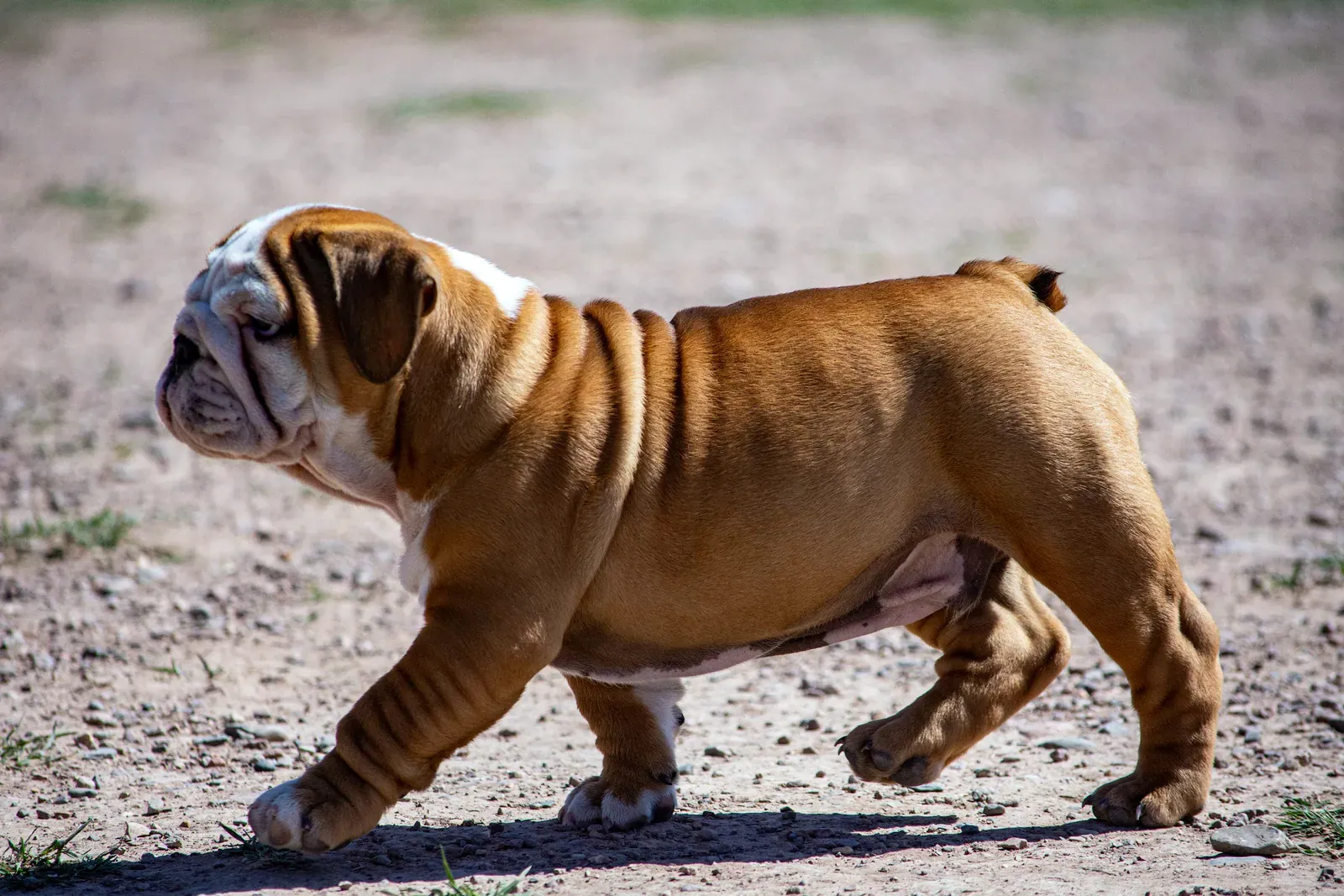
The Kennel Club describes a calm, affectionate breed that thrives on human company, "gentle and good natured". Most Bulldogs are placid, loyal and sociable with family. They are not built for speed or long runs. Many are stubborn about training, because they are slow to react and quick to sit down when they decide a walk is over. Early puppy training and calm, short sessions work best. Some males can be dog-selective as adults, and a low-key household suits them. Individuals vary, so judge by the parents and the breeder's own dogs.
The same calmness hides a trap: because Bulldogs tolerate lying around, owners may not notice how little they move, and weight gain is one of the more common recorded problems (see Health).
 Save

Health
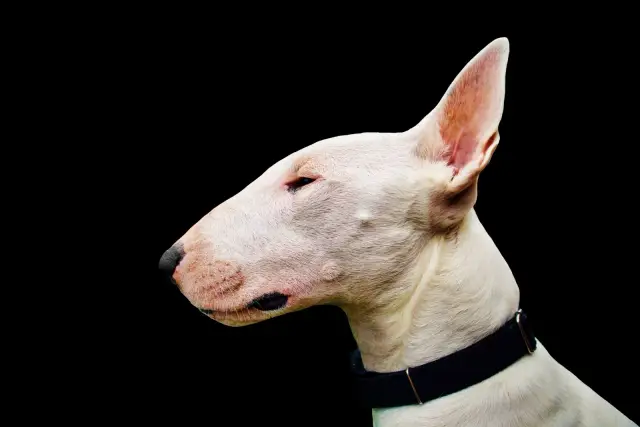 Related breedBull Terrier1850 to 1888 · United KingdomVictorian Breed Boom
Many Bulldogs live comfortable lives, and plenty of owners enjoy years of quiet company. Still, the Bulldog is one of the most health-challenged breeds in published research, and the cause is mostly body shape: a very short skull, skin folds, a wide head and a narrow pelvis. Good breeders choose dogs with a longer nose, tidier skin and free breathing. Owners can watch for early signs and keep the dog lean.
Life span
The O'Neill study (Disorders of Bulldogs under primary veterinary care in the UK in 2013, PLoS ONE 2019, from the RVC VetCompass project) followed 1,621 Bulldogs and found a median life span of 7.2 years: 7.9 years for females and 6.7 years for males. Leading causes of death, where recorded, were heart disease (11.8 percent), tumours (10.9 percent) and brain disorders (9.1 percent). The atlas data lists 8 to 10 years from breed references; the VetCompass figure is a median from real veterinary records, so it is used as the main number. About 70.8 percent of the dogs had at least one recorded disorder in the year.
Conditions and how common they are
| Condition | What it is | How common | What helps |
|---|---|---|---|
| Ear infection (otitis externa) | Inflamed, often itchy ear canals | About 1 in 8 dogs (12.7 percent), O'Neill 2019 | Regular ear checks and cleaning advised by a vet |
| Skin infection (pyoderma) | Bacterial skin infection | About 1 in 11 (8.8 percent) | Early vet treatment, keeping folds clean and dry |
| Skin fold dermatitis | Soreness where folds of skin rub and hold moisture | About 1 in 13 (7.8 percent) | Daily fold cleaning, weight control; breeding for fewer folds |
| Overweight or obesity | Extra weight that adds to breathing and joint strain | About 1 in 11 recorded (8.7 percent) | Measured food, regular walks, vet weight checks |
| "Cherry eye" (prolapsed gland of the third eyelid) | Pink swelling at the inner corner of the eye | About 1 in 15 (6.8 percent) | Vet surgery if needed |
| Entropion | Eyelid rolls inward and rubs the eye | About 1 in 28 (3.6 percent) | Vet surgery; breeders avoid affected dogs |
| BOAS (breathing) | Narrow airways from the short skull (see below) | About 1 in 29 recorded in notes (3.5 percent); much higher when tested | Breathing grading; vet assessment; weight control |
Cutaneous (skin) problems were the largest group at 28.6 percent of dogs (about 1 in 3.5), then eye disorders at 18.0 percent, ear disorders at 13.0 percent and upper respiratory disorders at 10.5 percent. The authors concluded that many common Bulldog disorders are linked with their appearance and recommended avoiding exaggerated skin folds.
Breathing: brachycephaly and BOAS
Bulldogs are brachycephalic, meaning short-skulled. The soft tissues in the nose and throat do not shrink with the skull, which narrows the airway. This causes brachycephalic obstructive airway syndrome (BOAS): noisy breathing, snoring, trouble exercising, heat intolerance and, in bad cases, collapse. The Packer team at the Royal Veterinary College (PLoS ONE 2015) found risk rises sharply as the muzzle gets shorter relative to the skull, and that a thicker neck and extra weight add to the risk.
A breed-specific study by Liu and colleagues (PLoS ONE 2017) examined 201 Bulldogs and graded 51.2 percent as affected by BOAS (functional grade II or III), about 1 in 2. That is much higher than the 3.5 percent recorded in everyday vet notes, because many owners treat the noise as normal and many dogs are never examined. A thicker neck relative to the skull and a higher body condition score both raised the odds.
Help for owners and breeders is available. The Kennel Club and University of Cambridge run the Respiratory Function Grading Scheme for Bulldogs, Pugs and French Bulldogs. It scores breathing at rest and after three minutes of brisk walking, from grade 0 (no noise) to grade 3. Breeders can use grades to pick dogs with clear breathing. Surgery to widen the nostrils or shorten the soft palate can help some dogs, and a vet can advise.
Skin folds
The wrinkles on the face and the "screw tail" form deep folds where moisture and bacteria collect. Skin fold dermatitis and pyoderma are common as a result (table above). Gentle cleaning and drying of the face folds, tail pocket and between the toes is a daily routine for most owners, and a vet can advise on irritated areas.
Caesarean births
Bulldog heads are broad and the mother's pelvis is narrow, so natural birth is often hard. O'Neill and colleagues (Veterinary Record 2017), studying emergency vet practices in the UK, found that among bitches already in difficult labour (dystocia), 86.7 percent of Bulldogs ended up having a caesarean, 7.6 times the odds of a crossbred dog. This number is for bitches who had trouble; it does not mean every Bulldog litter is born by caesarean. Even so, a majority of Bulldog litters are planned or emergency caesareans, which is why most Bulldog puppies come from vet-assisted births and why artificial insemination is often used. A good breeder will explain how their dogs' litters are born.

Welfare debate
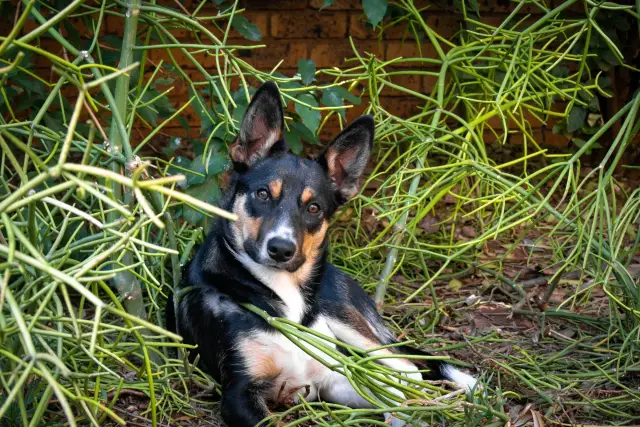 Related breedAustralian Kelpie1870 to 1902 · AustraliaVictorian Breed Boom
The breed is the centre of a long, calm debate between breeders, vets and welfare groups. The facts that people agree on are the ones above: short-skull breathing problems, skin disease, a short life span and frequent caesareans.
- The case for changing breeding. The VetCompass team and welfare groups argue that , not bad luck, drives most of the problems, so breeding choices can change the numbers. They advise buyers to choose dogs with a visible nose, open nostrils and clean skin. The O'Neill study also found Bulldogs rising from 0.35 percent of the 2009 birth cohort to 0.60 percent of the 2013 cohort, so more puppies are being bred.
- The kennel clubs' response. The UK Kennel Club moved the Bulldog into Breed Watch Category 3, requires judges to penalise breathing difficulty, funds the breathing grading scheme with Cambridge, and has revised the standard wording. Breeders in the Bulldog clubs say careful selection is already producing healthier lines.
- Law. In 2022 the Oslo District Court ruled in a case brought by the Norwegian Society for the Protection of Animals that breeding Bulldogs and Cavalier King Charles Spaniels broke Norway's animal welfare law. The Court of Appeal overturned the ruling for the Bulldog but kept it for the Cavalier. In December 2023 the Norwegian Supreme Court agreed, upholding the ban for the Cavalier but not for the Bulldog. The Bulldog case therefore remains lawful to breed in Norway, though the courts accepted the evidence of breathing problems.
- Alternatives. Some owners prefer outcrossed "old type" dogs such as the Olde English Bulldogge and the Continental Bulldog. These are not recognised by major kennel clubs.
None of this means a Bulldog cannot be a happy pet. It means the choice of dog, and the breeder, matters more than usual.
 Save
Living with a Bulldog
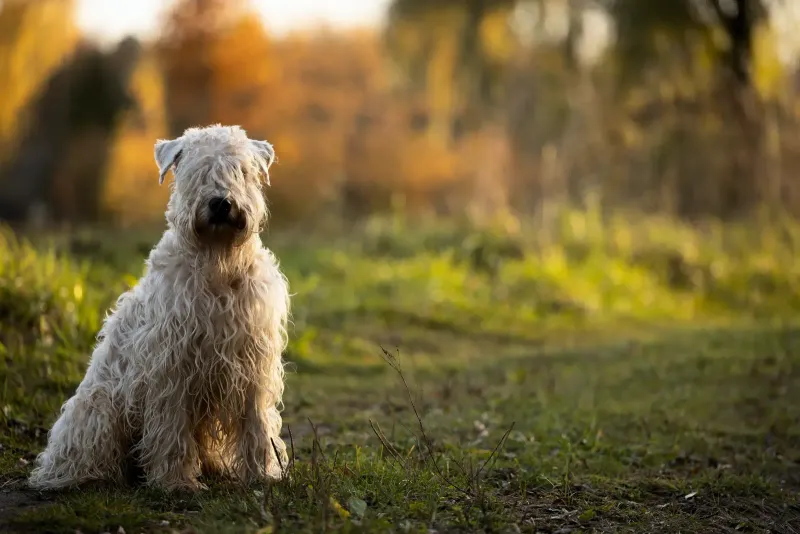 Related breedSoft-coated Wheaten Terrier1700 to 1937 · IrelandEarly Modern Era
| Area | Rating | Why |
|---|---|---|
| Exercise per day | Low | Short daily walks (Kennel Club); over-exercise in heat is risky |
| Training needs | Medium | Willing but stubborn; short, calm sessions |
| Grooming | Low to medium | Short coat weekly; daily fold cleaning |
| Shedding | Medium | Short coat sheds lightly year round |
| Barking | Low | Usually quiet; snoring is common |
| Time alone | Fair | Sociable breed; varies by dog |
| Children | Good | Gentle and tolerant in most dogs; supervise because of the dog's weight |
| Other dogs | Fair | Varies; some males are dog-selective |
| Cats and small pets | Fair | Low prey drive in most; varies |
| Flat living | Good | Calm indoors, but stairs and heat need thought |
| Heat tolerance | Poor | Short airways cannot cool the dog well (BOAS research above) |
| Cold tolerance | Fair | Short coat; limited by lack of undercoat |
| First-time owner fit | Fair | Easy temperament, but heavy vet needs |
A great fit if
- you want a calm indoor companion and walks of 20 to 30 minutes suit you
- you have a cool home or air conditioning in summer
- you can handle daily skin fold care
- you are ready for regular vet visits and possibly pet insurance
Think twice if
- you want a running or hiking partner
- you live somewhere hot or cannot keep the dog cool
- you are away all day
- you cannot afford sudden vet bills or surgery
Before you get one
Ask a breeder for: breathing grade results from the Respiratory Function Grading Scheme for both parents, hip and elbow scores, and a clear account of how past litters were born. Check that the parents have visible nostrils and can walk and breathe quietly. Breed rescues exist and often have adult Bulldogs of known temperament and health. First year expectations: puppy vaccinations, fold cleaning, careful weight control and early vet checks of the nose, eyes and skin.
Similar breeds to consider
- Bullmastiff: calm, bigger, longer-nosed, much better breathing.
- Boxer: Bulldog descendant, athletic and playful, a less extreme face.
- Staffordshire Bull Terrier: sturdy and affectionate, much more active.
- English Mastiff: very large, gentle, a longer muzzle.

Bulldog fun facts
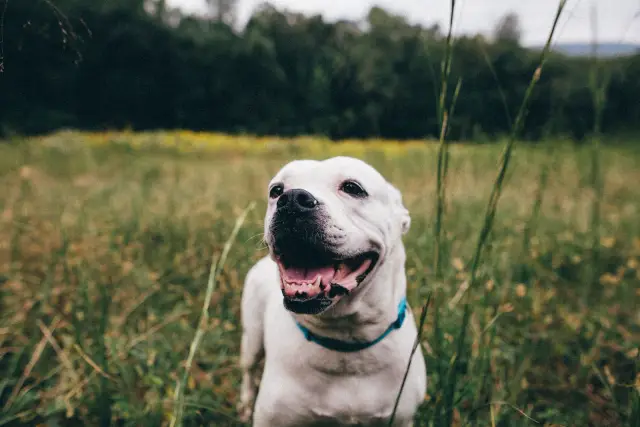 Related breedAmerican Bulldog1700 to 1980 · United StatesEarly Modern Era
- A Bulldog called King Orry beat the heavier Dockleaf in an 1894 20 mile walk, a famous contest between old and modern types.
- Yale's Handsome Dan is a Bulldog and is often called the first live college mascot in the United States.
- Chesty, the US Marine Corps mascot, is a Bulldog.
- The Cruelty to Animals Act of 1835 ended bull-baiting but not the Bulldog.
Frequently asked questions
Are Bulldogs good family dogs?
Often yes. They are calm, affectionate and patient. Supervise children because of the dog's weight, and plan for vet costs.
How long do Bulldogs live?
The UK study found a median of 7.2 years (7.9 for females, 6.7 for males). Breed references say 8 to 10 years.
How much exercise does a Bulldog need?
Little: short daily walks, taken in cool weather.
Why do Bulldogs snore and breathe loudly?
Because of their short skull and narrow airways (BOAS). Noisy breathing is common but is not harmless, so ask a vet to assess it.
Why do Bulldogs often need caesarean births?
The pup's head is large compared with the mother's pelvis. In one UK study, 86.7 percent of Bulldogs with birth difficulty ended up having a caesarean.
What is the difference between a Bulldog and a French Bulldog?
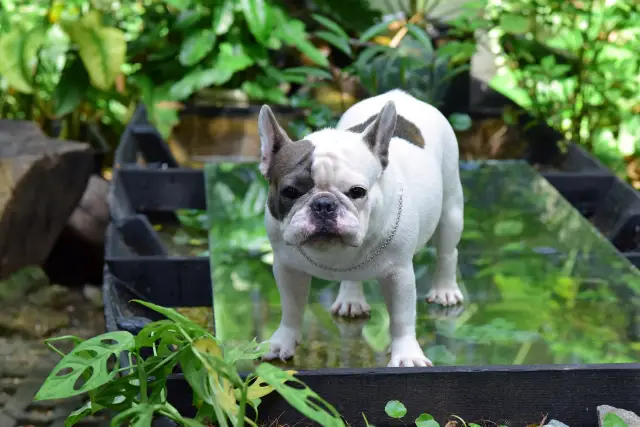
The French Bulldog is smaller with erect "bat" ears and descends from small Bulldogs. See French Bulldog.
Is the English Bulldog the same as the British Bulldog?
Yes. Both names mean the Bulldog recognised by the kennel clubs.
Is Bulldog breeding banned anywhere?
A Norwegian court case ended in 2023 with a breeding ban for Cavaliers but not for Bulldogs.
Read next
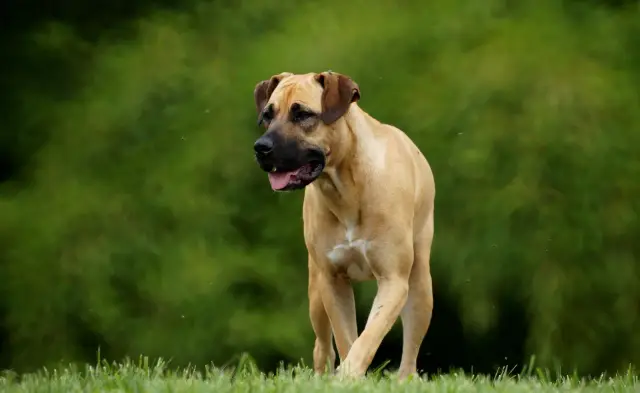 Closest DNABoerboel44.7 Mb sharedSister breedAmerican Bulldog1700 to 1980
 Adopt a dogDog Shelters in EuropeFind dog shelters in Europe, learn how shelters differ from country to country and why adopting a dog is a good option.
Sources (13)
- American Kennel Club, Bulldog breed information and standard; recognition history.
- Bulldog Club of America, standard colour requirements.
- Cruelty to Animals Act 1835 (United Kingdom).
- Fédération Cynologique Internationale, Bulldog, standard no. 149.
- Liu N.C. et al., "Conformational risk factors of brachycephalic obstructive airway syndrome (BOAS) in pugs, French bulldogs, and bulldogs", PLoS ONE, 2017.
- O'Neill D.G. et al., "Disorders of Bulldogs under primary veterinary care in the UK in 2013", PLoS ONE, 2019.
- O'Neill D.G. et al., canine dystocia in 50 UK first-opinion emergency-care practices, Veterinary Record, 2017.
- Packer R.M.A. et al., "Impact of facial conformation on canine health: brachycephalic obstructive airway syndrome", PLoS ONE, 2015.
- Parker H.G. et al., "Genomic analyses reveal the influence of geographic origin, migration, and hybridization on modern dog breed development", Cell Reports, 2017.
- The Kennel Club (UK), Bulldog breed information, Breed Watch Category 3, and Respiratory Function Grading Scheme (with University of Cambridge).
- Norwegian court rulings on breeding of Bulldogs and Cavalier King Charles Spaniels: Oslo District Court 2022, Oslo Court of Appeal, Supreme Court of Norway 2023.
- Wikipedia, "Bulldog" (dates and mascots, checked against the sources above).
- Atlas data, breed records and Parker 2017 shared-haplotype table (this site).