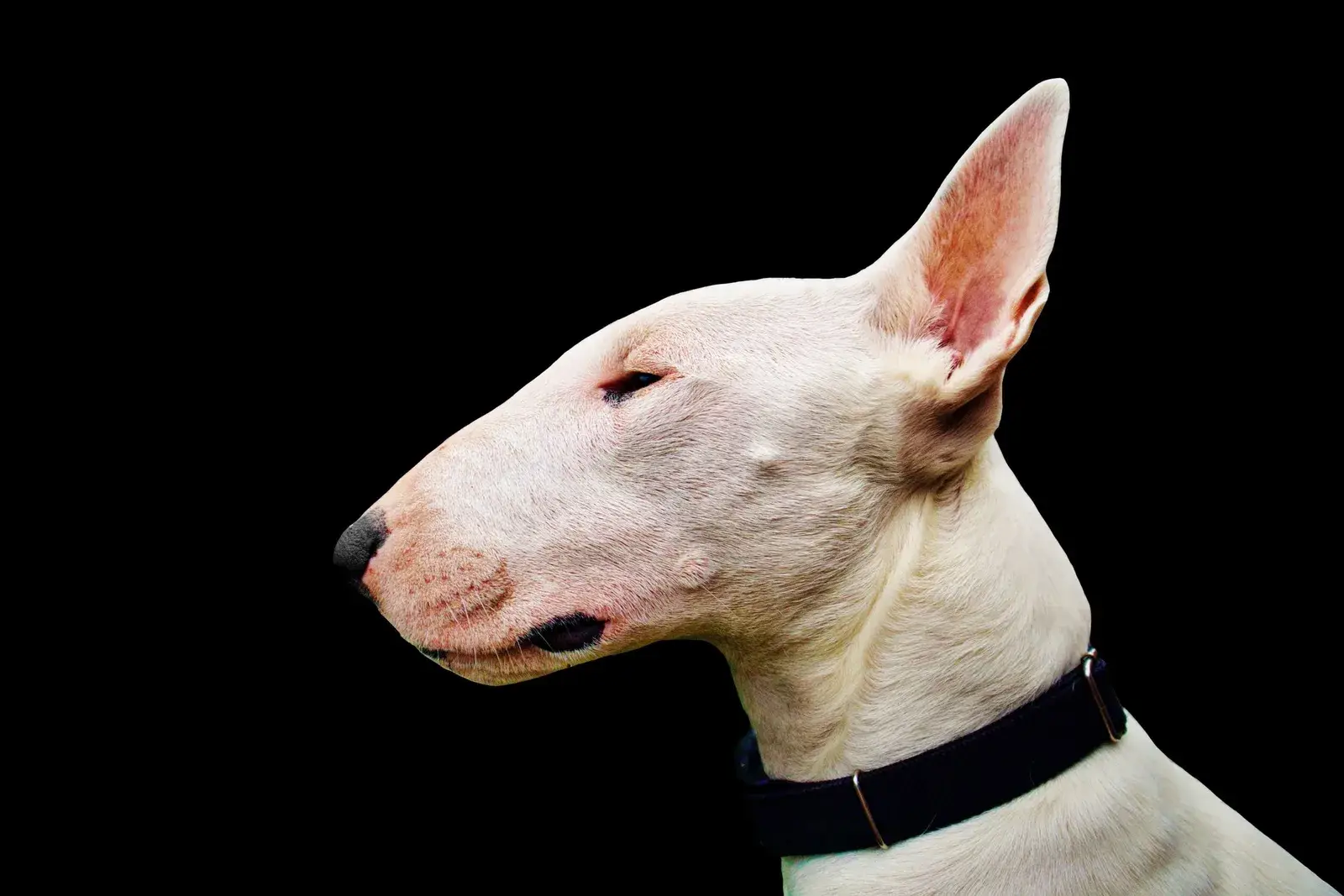
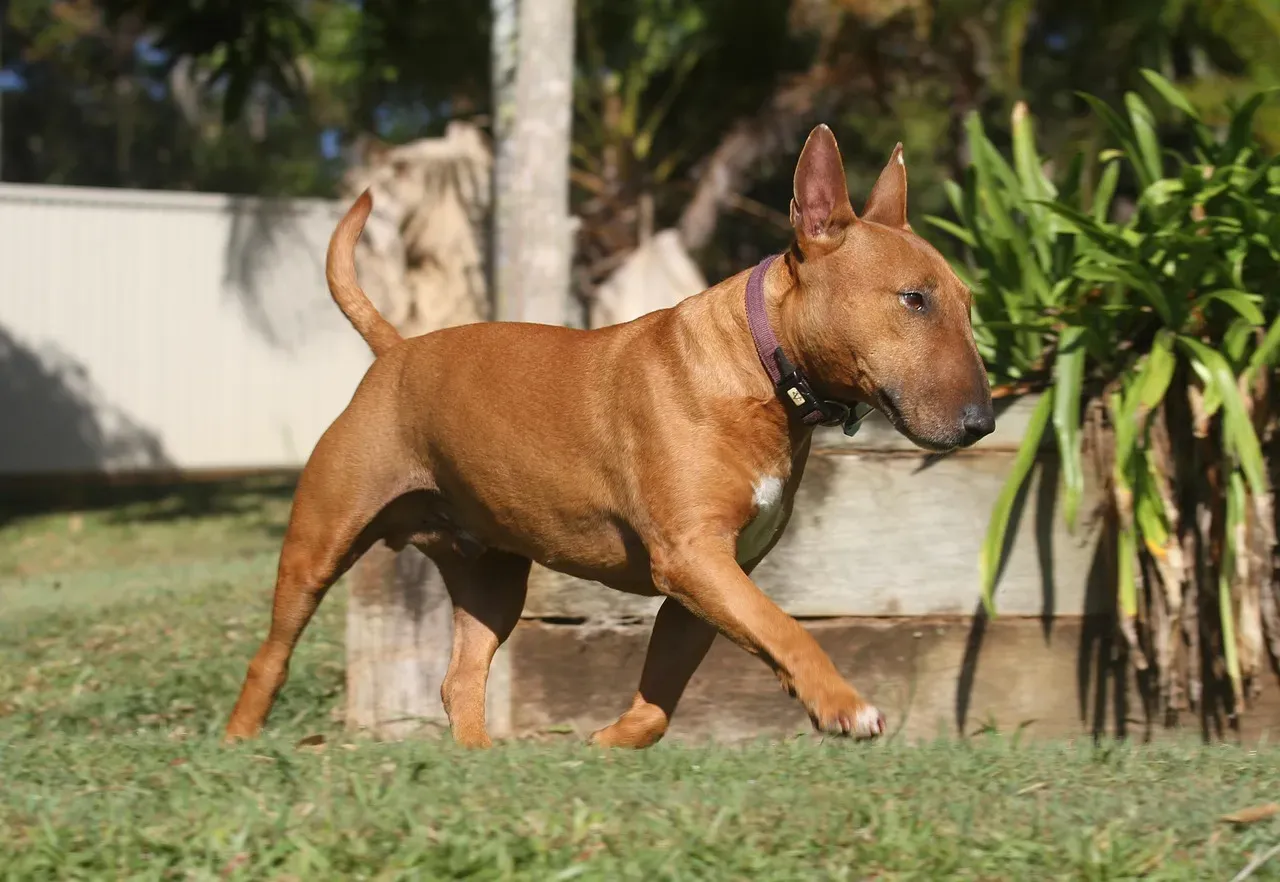
It was built in the mid-1800s by crossing bull and terrier dogs with the English White Terrier, and it grew from a fighting-dog background into a show and companion breed. It is playful, strong-willed and devoted to its people. It suits owners who have time for daily exercise, firm and patient training, and company for a dog that dislikes being alone. The atlas data gives a life span of 10 to 14 years.
Bull Terrier quick facts
 Related breedAmerican Bulldog1700 to 1980 · United StatesEarly Modern Era
- Country of origin
- England (Birmingham and the Black Country)
- Period of development
- About 1850 to 1888 (atlas data)
- Original job
- Ratting, baiting and fighting dog; later a show dog and companion
- Type
- Terrier ( Group 3, Terriers; FCI standard no. 11; Terrier Group; UK Kennel Club Terrier Group)
- Height
- No limits in the standards. Adults commonly stand about 50 to 55 cm
- Weight
- No limits in the standards. Adults commonly weigh about 20 to 35 kg
- Coat
- Short, flat, harsh, glossy
- Colour
- White, or coloured (brindle preferred in the FCI wording)
- Life span
- 10 to 14 years (atlas data)
- Other names
- English Bull Terrier, Gladiator
- DNA family
- European Mastiff family (Parker et al. 2017)
- Closest DNA relative
- Miniature Bull Terrier (412.1 shared)
- Related varieties
- White and coloured; the Miniature Bull Terrier is a separate breed in the FCI
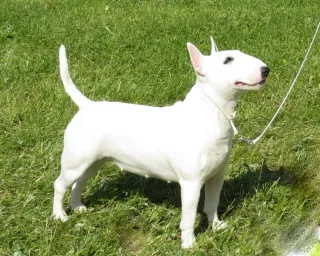
Drawn to scale in real centimetres. Its back reaches about 45 cm, just below your knee; its head about 57 cm, just above your knee.
Where it sits in the tree
Victorian Breed Boom · 1850 to 1913


Name and origin
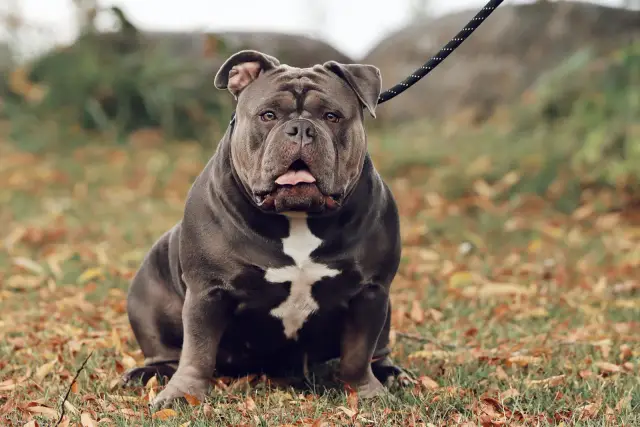 Related breedAmerican Bully1980 to 2004 · United StatesModern Era
The name says what the dog was. "Bull" points to the Old English Bulldog, "terrier" to the small, quick vermin dogs of Britain. Before the Bull Terrier had a standard, dogs of this mix were called bull-and-terriers, and the Bull Terrier is the line a Birmingham dealer named James Hinks refined from them.
There are three questions about the origin worth separating.
- Where it began. The FCI lists Great Britain as the country of origin. Hinks worked in Birmingham, and the breed's early centre was the English Midlands.
- Who made it white. Hinks is credited with setting the all-white "Bull Terrier" type. He crossed bull-and-terrier dogs with the English White Terrier, a smooth, elegant, now extinct terrier, to refine the head and give a cleaner, taller dog.
- What else went in. Many breed histories say Hinks also used Dalmatian blood and perhaps a sighthound such as the Whippet or Greyhound to lengthen the legs and smooth the outline. Hinks kept no public stud records, so these additions are accounts handed down by breeders, not documented fact.
The atlas data gives 1850 to 1888 as the period in which the Bull Terrier took shape, with high confidence.

History
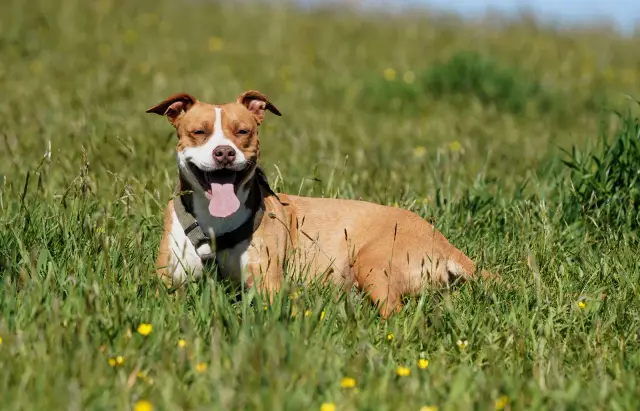 Same eraAmerican Pit Bull Terrier1850 to 1898 · United StatesVictorian Breed Boom
From bull-and-terrier to Hinks
In early 19th-century Britain, working men crossed Old English Bulldogs with terriers to get dogs with the grip of a bulldog and the speed of a terrier. They were used for ratting pits, bull and bear baiting and dog fights until the Cruelty to Animals Act of 1835 banned baiting in England, after which fighting went underground. These bull-and-terrier dogs were of every colour and size. The atlas data treats them as the direct parent type of the Bull Terrier.
The white cavalier
James Hinks wanted something else: a dog that looked as good as it fought. His white dogs were cleaner in outline, longer in the leg and lighter than the older fighting types. In 1862 Hinks showed a white bitch named Puss, which became the best-known early example. The venue is given differently by different writers, so treat the details of the show as uncertain. What is not in doubt is that the white dog became fashionable in the 1860s and 1870s, and gentlemen's companions were called "white cavaliers".
Show ring and standard
Show breeders lengthened the muzzle and rounded it into the downfaced, egg-shaped head of today. The first Bull Terrier club in Britain was formed in the 1880s, and the breed was shown and recognised by the Kennel Club in England and by the American Kennel Club in the 19th century. Over the following decades the head type became more fixed, and a famous standard feature, the lack of a stop (the dip between forehead and muzzle), set the breed apart.
Coloured dogs
Early Bull Terriers were mostly white because Hinks preferred them, but deafness in white dogs and the loss of the old fighting colours led some breeders to bring in coloured dogs. Breed histories say that crosses to the Staffordshire Bull Terrier helped in this work in the early 1900s. The coloured Bull Terrier is now a variety of the same breed. Sources give differing dates for when each major club accepted it as a separate variety, so no single year is given here.
Miniature and relatives
Small Bull Terriers were bred alongside the full-size dog from the 1800s. The Miniature Bull Terrier, with a height limit of 35.5 cm in the FCI standard, has its own breed number (FCI no. 359). In the atlas data it is the Bull Terrier's closest DNA relative by a wide margin.
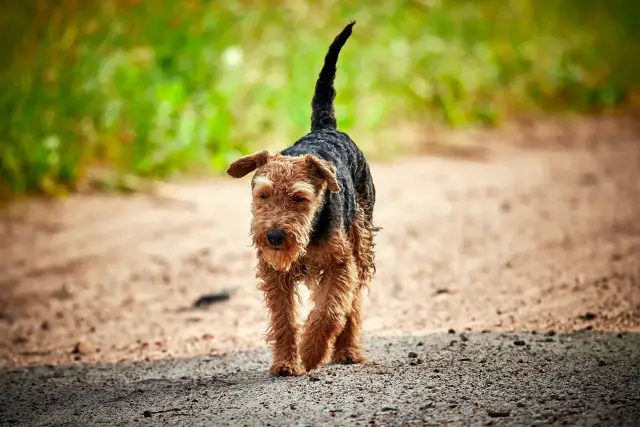
Relatives and DNA
 Same familyBoerboel1650 to 1983 · South AfricaEarly Modern Era
The Bull Terrier belongs to the European Mastiff family in the Parker 2017 DNA study, which grouped 161 breeds into 23 clades. The atlas data records two parent lines.
 Miniature Bull Terrier
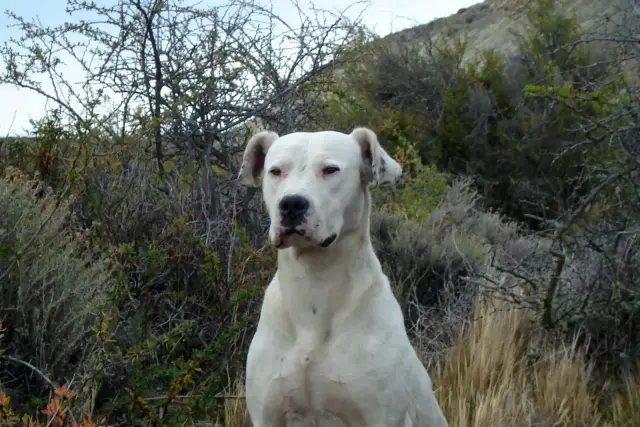 Dogo Argentinobuilt with several other breeds
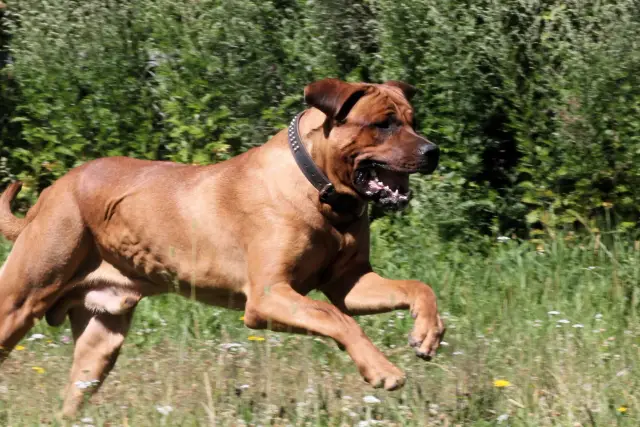 Tosabuilt with several other breedsMiniature Bull TerrierDogo Argentinobuilt with several other breedsTosabuilt with several other breeds
Parent lines (atlas data)
- Bull and terrier. The mixed bulldog-and-terrier dogs of the early 1800s, the main source of the Bull Terrier.
- English White Terrier. Crossed in by Hinks. This smooth terrier died out in the early 20th century, but its influence is in the Bull Terrier's clean outline.
Descendant breeds (atlas data)
- Miniature Bull Terrier. The small version, now a separate breed.
- Dogo Argentino. Argentina's big-game dog; the Bull Terrier is among the breeds listed in its mix.
- Tosa. Japanese fighting dog; some histories list Bull Terrier blood, among other breeds.
- Smooth Fox Terrier. The atlas data lists the Bull Terrier among the dogs behind it.
What does DNA say?
In the Parker study, shared show which breeds share long stretches of identical DNA through common ancestors or crossing. More shared (Mb) means more likely a recent link. The study cannot say which breed gave genes to which.
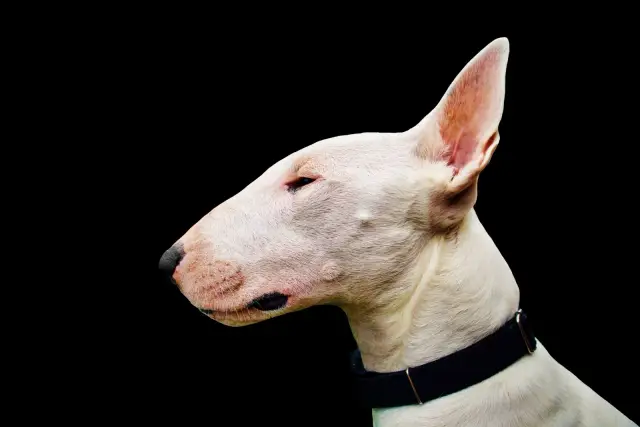
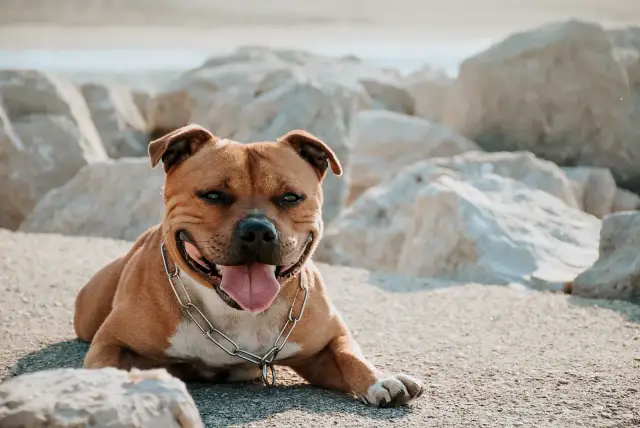
- Bull Terrier and Miniature Bull Terrier
- Bull Terrier and Staffordshire Bull Terrier
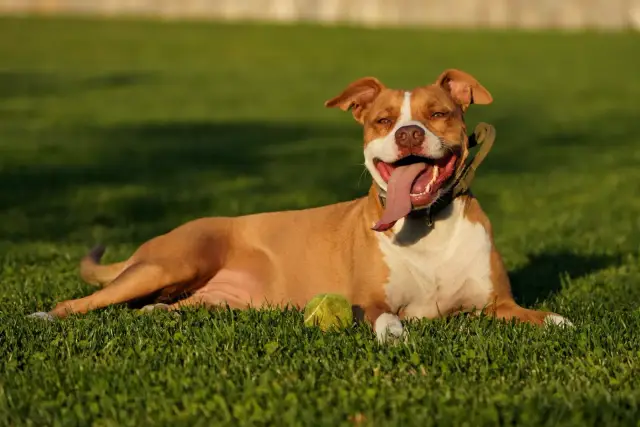
- Bull Terrier and American Staffordshire Terrier
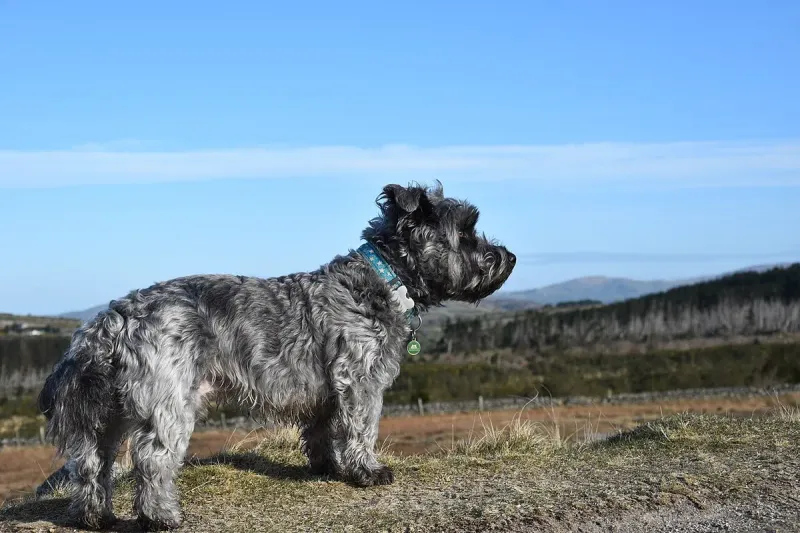 Bull Terrier and Glen of Imaal Terrier
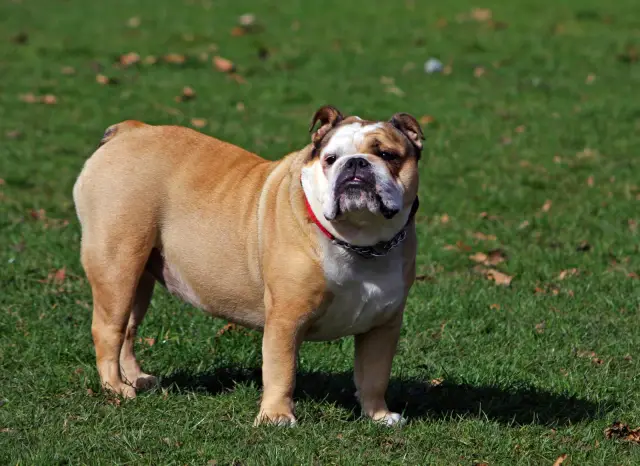
- Bull Terrier and Bulldog
Other breeds on the list are the Boston Terrier (11.2 Mb) and the Toy Manchester Terrier (9.8 Mb). The Miniature is almost certainly the same stock held at a smaller size. The Staffordshire Bull Terrier and American Staffordshire Terrier sit well below it. They are cousins, not copies, which fits breed histories: the Staffordshire is a bull-and-terrier type that stayed small and was not refined in the Hinks mould.
 Save
Sister breeds · 3
- Staffordshire Bull Terrier1800 to 1935
- American Pit Bull Terrier1850 to 1898
- Boston Terrier1870 to 1893
Descend from it · 9
- Smooth Fox TerrierUnited Kingdom
- Córdoba Fighting DogArgentina
- Gull TerrierPakistan, India
- TosaJapan
- Miniature Bull TerrierUnited Kingdom
- Dogo ArgentinoArgentina
- Plummer TerrierUnited Kingdom
- Bull ArabAustralia
- Dogue BrasileiroBrazil
- Miniature Bull Terrier412.1 Mb 17.2%
- Staffordshire Bull Terrier39.6 Mb 1.7%
- American Staffordshire Terrier29.0 Mb 1.2%
- Glen of Imaal Terrier13.2 Mb 0.5%
- Bulldog12.5 Mb 0.5%
- Boston Terrier11.2 Mb 0.5%
- Toy Manchester Terrier9.8 Mb 0.4%
Source: Parker et al. 2017. Percent of the whole genome.
The breed standard
 Looks relatedBoxer1880 to 1904 · GermanyVictorian Breed Boom
A is the written ideal for a breed that kennel clubs judge dogs against. The Bull Terrier standards from the FCI (no. 11), the AKC and the UK Kennel Club agree on the main points. The most unusual thing about them is that they give no height or weight.
| Trait | What the standards say |
|---|---|
| Height and weight | FCI: no weight or height limits; there should be an impression of maximum substance for size, consistent with quality and sex. The Miniature has a limit of 35.5 cm (FCI no. 359) |
| Head | FCI: long, strong and deep, but not coarse, egg-shaped when seen from the front, filled and downfaced, with no stop |
| Eyes | FCI: narrow, triangular, obliquely set, dark and deep-set, giving a piercing look |
| Ears | FCI: small, thin and close together, carried stiffly erect |
| Body | FCI: well rounded, with a deep chest and a short, strong back |
| Tail | FCI: short, set low, carried horizontally and tapering to a point |
| Coat | FCI: short, flat and harsh, with a fine gloss |
| Colour | FCI: white, with markings on the head allowed, or coloured, in which brindle is preferred; other colours are accepted. Coloured dogs are judged on the same points as white ones |
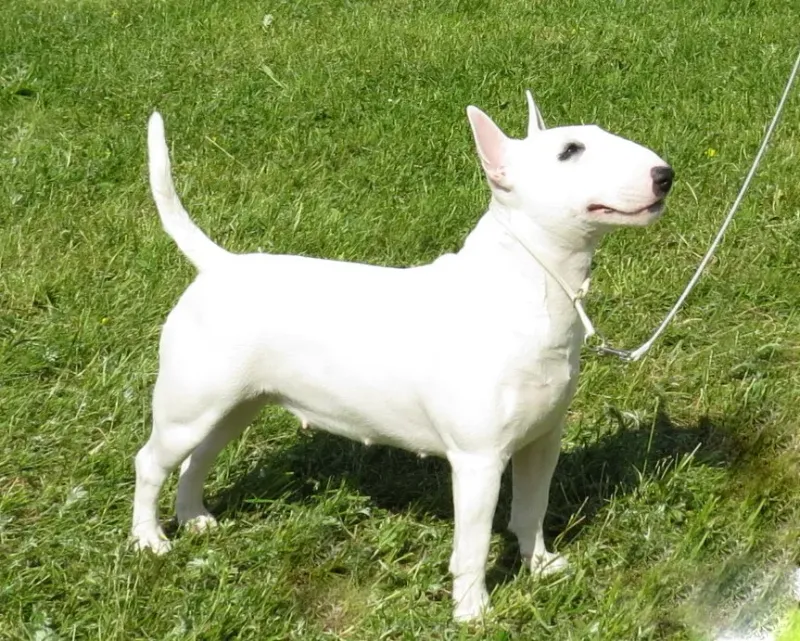
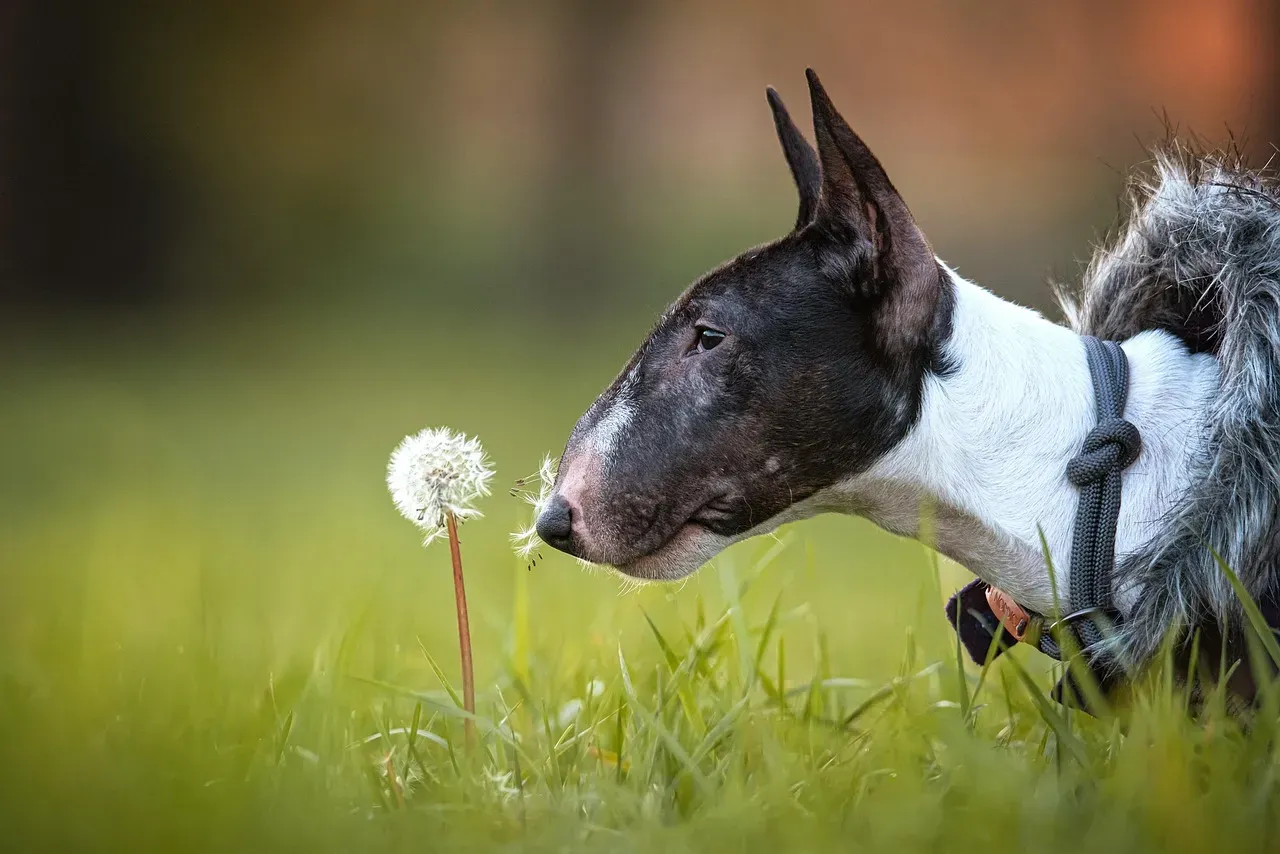
The standards describe a strong, muscular, symmetrical dog with a bold, determined and intelligent expression. The small, deep-set, triangular eyes and the downfaced profile give the Bull Terrier its unmistakable look.
White and coloured. The two are one breed, judged together under the same standard in the FCI and in the UK, and they share the same temperament. Coloured dogs are not a separate "bloodline" and do not differ in health except for the deafness link described below.
Size in practice. Because the standards set no limits, pet dogs vary. Breed references commonly put adults at about 50 to 55 cm and about 20 to 35 kg, with males heavier. If you want a small dog, ask about the Miniature, which has its own standard.
 Save

Temperament
 Related breedBullmastiff1860 to 1924 · United KingdomVictorian Breed Boom
The FCI standard describes a dog of even temperament that responds to discipline, although it can be stubborn. It calls the Bull Terrier courageous and full of spirit, with a happy disposition, active and fond of people. The sketch matches how owners describe it: a clown with muscles.
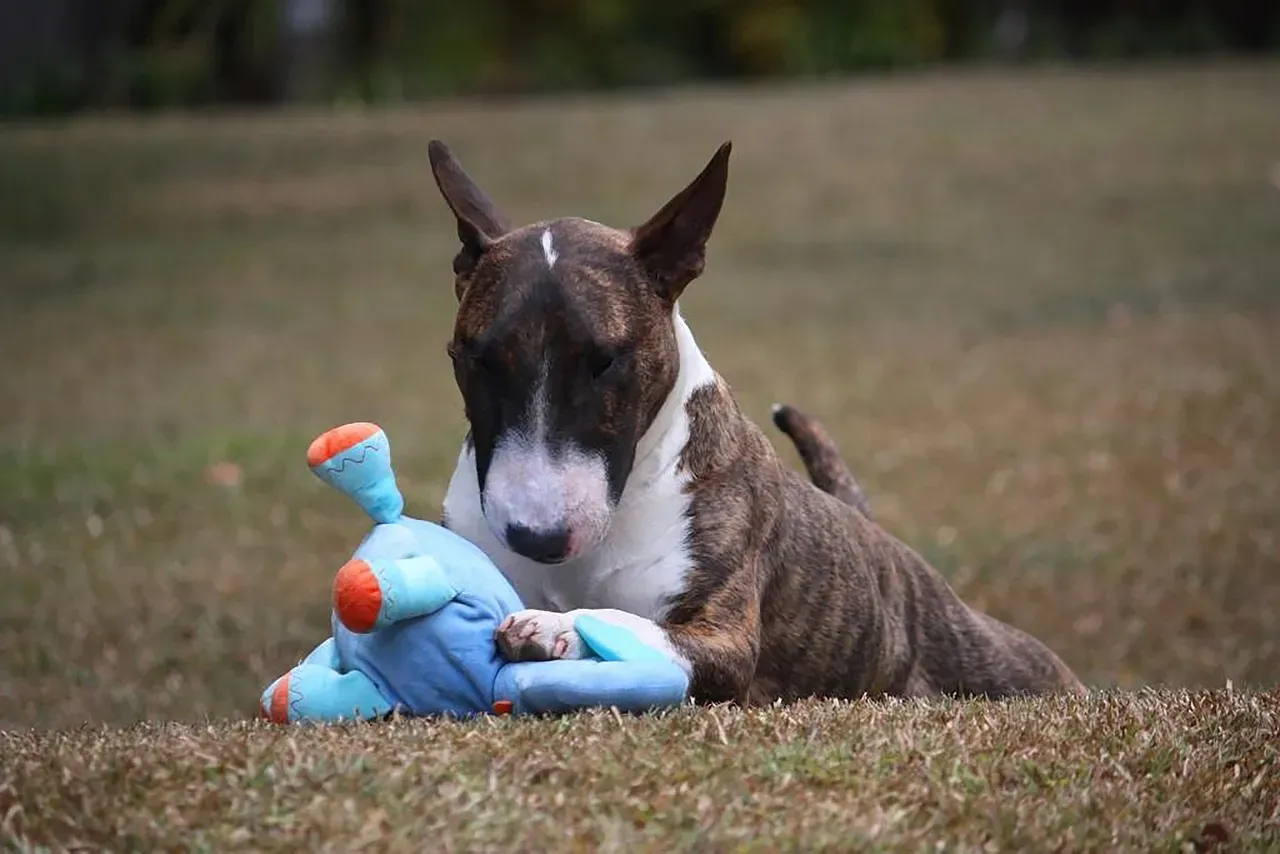
- Playful and people-seeking. Bull Terriers want to be with their family, and they play hard into adulthood. Many are happy to chase a ball, tug a rope or invent games.
- Strong-willed. The breed has a stubborn streak. It learns quickly but does not always see the point of repeating a command. Short, varied, reward-based sessions work better than drilling.
- Strong. For a medium-sized dog, the Bull Terrier is very powerful. A dog that pulls on the lead at 25 kg is a real problem, so lead manners need early work.
- Other animals. The terrier and bull-and-terrier background shows. Many Bull Terriers are dog-selective as adults and can chase small animals. Early, careful socialisation helps, but it does not remove the instinct.
- Children. Many Bull Terriers love children, and the breed has a long record as a family companion. Its size, bounce and strength mean young children should be supervised.
Training and exercise
Bull Terriers do best with a clear routine, positive training and a daily outlet for energy. The usual advice for a strong, energetic terrier is an hour or more a day, with play and mental work as well as walks. A bored Bull Terrier can destroy furniture or invent its own jobs.
One behavioural condition has been studied in the breed. Moon-Fanelli and colleagues (Journal of the American Veterinary Medical Association, 2011) described compulsive tail chasing in Bull Terriers, a repetitive spinning that in some dogs takes up hours a day. They reported links with early signs in puppies and with other behaviours such as trancing. Ask a vet or behaviourist early if a young dog spins often or cannot be interrupted.

Health
 Related breedCane Corso1000 to 1996 · ItalyEarly Middle Ages
Most Bull Terriers live healthy lives. This section lists what breeders screen for and what owners can watch for, with figures where a named study gives one. Information here is general. Talk to a vet about your own dog.
Life span. The atlas data gives 10 to 14 years. No UK primary-care study gives a median life span for the Bull Terrier that we can cite here.
| Condition | What it is | How common | What helps |
|---|---|---|---|
| Congenital deafness | Hearing loss present from birth, in one or both ears | One US study of puppies and adults at clinics and shows reported about 11 percent, about 1 in 9. A Polish BAER screening of 117 Bull Terriers found 17 deaf dogs, about 1 in 7 (14.5 percent); deafness was more common in white dogs than coloured | BAER hearing test of puppies before they go home; breeders test both parents and avoid breeding deaf dogs |
| Hereditary nephritis and kidney disease | Inherited kidney damage that can show in young adults | Seen more often in Bull Terriers than in many breeds; no published study gives a figure | Ask breeders about kidney screening of breeding dogs (for example urine protein tests); a vet can check urine and blood |
| Compulsive tail chasing | A repetitive behaviour linked to anxiety and possibly genetics | Described in the breed by Moon-Fanelli et al. 2011; no population figure | Early behaviour help, enough exercise and mental work, vet advice if it continues |
| Skin allergies and itchy skin | Inflammation and scratching, often in white short-coated dogs | Seen often by vets in the breed; no published study gives a figure | Vet-guided allergy work, sun protection for thin white skin on the belly, regular skin checks |
| Heart disease | Valve or outflow problems in the heart | Reported in the breed by breed clubs; no figure from a named study | Vet heart check and a listen for murmurs before breeding; ask the breeder for results |
| Lethal acrodermatitis | A rare inherited disorder affecting skin, growth and the immune system in puppies | Rare; ; breeders can test | DNA test of breeding dogs so that are not mated |
| Overweight and obesity | Excess body fat that loads joints and heart | Common in many terriers; no published breed figure | Measured meals, regular exercise, body condition checks with a vet |
White dogs and deafness. Congenital sensorineural deafness is linked to white coat colour and to the genes for coat pigment. De Risio, Freeman and Lewis (BMC Veterinary Research, 2016) tested hearing by BAER in 1,060 English Bull Terrier puppies. They found that deafness occurs mainly in white dogs and that there is genetic variation in it beyond coat colour. The practical message is that breeders can reduce the risk by testing and by choosing parents carefully, and that a deaf Bull Terrier can still live a happy life with training that uses hand signals and vibration.
Kidneys. Hereditary kidney disease is one reason Bull Terrier clubs encourage health screening. Ask any breeder what they test and what the results were.

Breed-specific rules
Related breedDogo Argentino1928 to 1973 · ArgentinaModern EraIn most countries the Bull Terrier is not restricted, but in some it is. Ireland's Control of Dogs Regulations 1998 list the Bull Terrier among the breeds that must be muzzled and on a short lead in public. Rules vary by country, state and city and change, so check local laws, and also check landlord and insurer rules before you buy.
The Bull Terrier is a different breed from the Pit Bull Terrier type that some laws name. They are often confused because of the "bull" name and the shared history of the bull-and-terrier. See the American Pit Bull Terrier and Staffordshire Bull Terrier pages for those breeds.
Living with a Bull Terrier
 Related breedDogue de Bordeaux1300 to 1896 · FranceLate Middle Ages
| Daily reality | Rating | Why |
|---|---|---|
| Exercise per day | High | An hour or more is the usual advice for an energetic, strong terrier |
| Training needs | High | Quick but stubborn (FCI standard); needs a firm, patient, reward-based approach |
| Grooming | Low | Short coat; a weekly brush and a wipe over |
| Shedding | Medium | Short hairs shed year-round, with heavier moults |
| Barking | Varies | Not known as a nuisance barker, but varies by dog |
| Time alone | Poor | Bonds closely; bored or lonely dogs can be destructive |
| Children | Varies | Often loves them; strong and bouncy, so supervise |
| Other dogs | Varies | Often dog-selective as adults; careful early socialisation |
| Cats and small pets | Varies | Terrier chase instinct; depends on the dog and early exposure |
| Flat living | Fair | Can manage if exercise needs are met; can be noisy when excited |
| Heat tolerance | Fair | Thin white skin can sunburn; avoid midday heat |
| Cold tolerance | Fair | Short, thin coat with little undercoat; may need a coat in cold weather |
| First-time owner fit | Fair | Loving but strong and stubborn; a good trainer helps |
A great fit if
- You want a playful, affectionate dog that wants to be with you most of the day.
- You are active and enjoy training, play and daily walks.
- You are patient and consistent and can handle a strong dog.
- You are happy to spend on health screening and a vet's attention to skin.
Think twice if
- You are away from home for long hours.
- You want a dog that is easy with every other dog and small animal.
- You have very young children and little time for supervision.
- You live where the breed is restricted, or where your landlord or insurer excludes it.
Before you get one
- Health tests. Ask the breeder for BAER hearing results for the puppies and parents, kidney screening results for the parents, a heart check, and the DNA test result for lethal acrodermatitis. Ask for original certificates.
- Puppy or adult rescue. Breed rescues exist and often place adults whose temperament is already known. An adult can be a good match for someone who wants a clearer picture.
- First year. Plan for puppy classes, steady lead training before the dog is strong, regular company, and a lean body weight.
Similar breeds to consider
- Miniature Bull Terrier. The same look and character in a smaller frame.
- Staffordshire Bull Terrier. Shorter, stockier and famously fond of people, with its own health needs.
- Boston Terrier. A smaller companion with bull-and-terrier roots, but a flat face and different needs.
- Dogo Argentino. A white, powerful relative, much larger and bred for hunting, so a very different home.

Bull Terrier fun facts
 Related breedEnglish Mastiff1300 to 1880 · United KingdomLate Middle Ages
- The head is the breed's trademark: from the front it is egg-shaped, and in profile it curves smoothly from the skull to the nose with no stop.
- General George S. Patton owned a Bull Terrier named Willie, which appears in accounts of his life.
- Bull Terriers were once called "white cavaliers" because Hinks's dogs were meant to look dashing as well as fight.
- The Miniature Bull Terrier shares 412.1 Mb of DNA with the Bull Terrier in the Parker 2017 study, more than any other breed.
Frequently asked questions
Are Bull Terriers good family dogs?
They can be. They love people and play, but they are strong and boisterous, so training, supervision around young children and daily exercise matter.
How big is a Bull Terrier?
The standards set no height or weight limit. Adults commonly stand about 50 to 55 cm and weigh about 20 to 35 kg.
How long do Bull Terriers live?
The atlas data gives 10 to 14 years.
What health problems do Bull Terriers get?
Congenital deafness (especially in white dogs), kidney disease, skin allergies, heart conditions and compulsive behaviours are the most discussed. Breeders can test for some of them.
Is a Bull Terrier the same as a Pit Bull or a Staffordshire?
No. They share bull-and-terrier roots, but they are separate breeds with different standards. The atlas data lists the Staffordshire and the American Pit Bull Terrier as siblings, not copies.
Are Bull Terriers banned anywhere?
Some places restrict the breed, including Ireland. The UK Dangerous Dogs Act does not list it by name. Always check local rules.
Why is the Bull Terrier's head egg-shaped?
Show breeders selected for a long, filled, downfaced head during the 19th century. It is a bred shape, not a natural one.
Read next
Closest DNAStaffordshire Bull Terrier39.6 Mb shared FamilyEuropean MastiffThe whole family
 Adopt a dogDog Shelters in EuropeFind dog shelters in Europe, learn how shelters differ from country to country and why adopting a dog is a good option.
Sources (14)
- American Kennel Club, Bull Terrier breed standard and breed history pages.
- Control of Dogs Regulations 1998, S.I. No. 442/1998 (Ireland).
- De Risio L., Freeman J., Lewis T., "Prevalence, heritability and genetic correlations of congenital sensorineural deafness and pigmentation phenotype in the English bull terrier", BMC Veterinary Research, 2016.
- Fédération Cynologique Internationale, Bull Terrier, standard no. 11.
- Fédération Cynologique Internationale, Miniature Bull Terrier, standard no. 359.
- Fogle B., The Encyclopedia of the Dog, 2009.
- Moon-Fanelli A.A. et al., "Characteristics of compulsive tail chasing and associated risk factors in Bull Terriers", Journal of the American Veterinary Medical Association, 2011.
- Parker H.G. et al., "Genomic analyses reveal the influence of geographic origin, migration, and hybridization on modern dog breed development", Cell Reports, 2017.
- Polish BAER screening of 117 Bull Terriers, Polish veterinary journal report (deafness by unilateral and bilateral status).
- The Bull Terrier Club (UK), breed history and health information.
- The Kennel Club (UK), Bull Terrier breed standard and breed information.
- US prevalence study of deafness in Bull Terriers at clinics and dog shows (11 percent).
- Regional breed histories of James Hinks and the 1862 show appearance of Puss.
- Dogs Atlas breed records and Parker 2017 shared-haplotype table (this site).