What are the Mediterranean dog breeds?
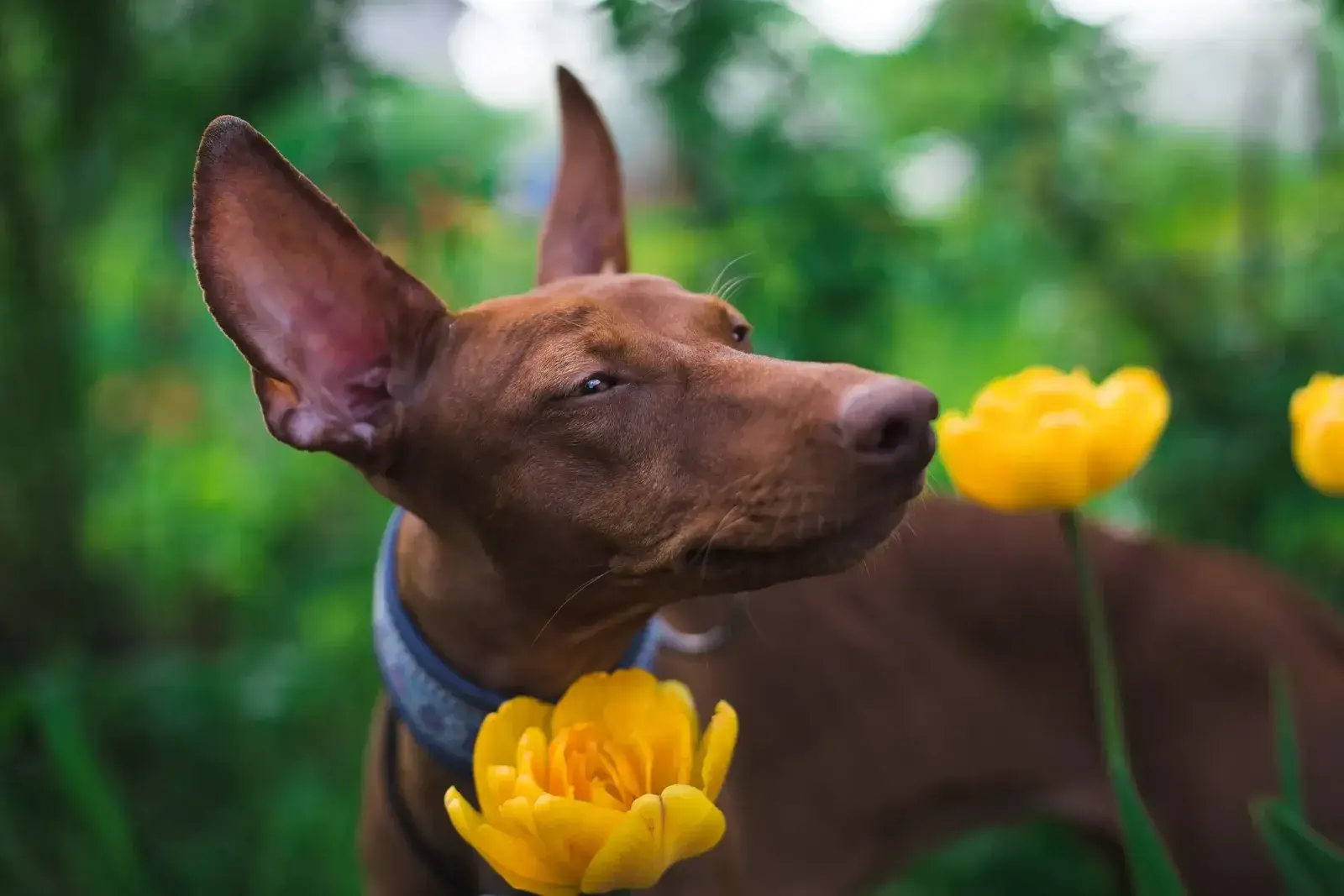
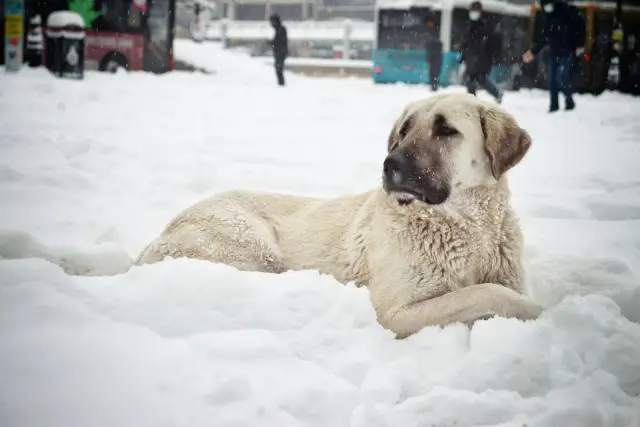
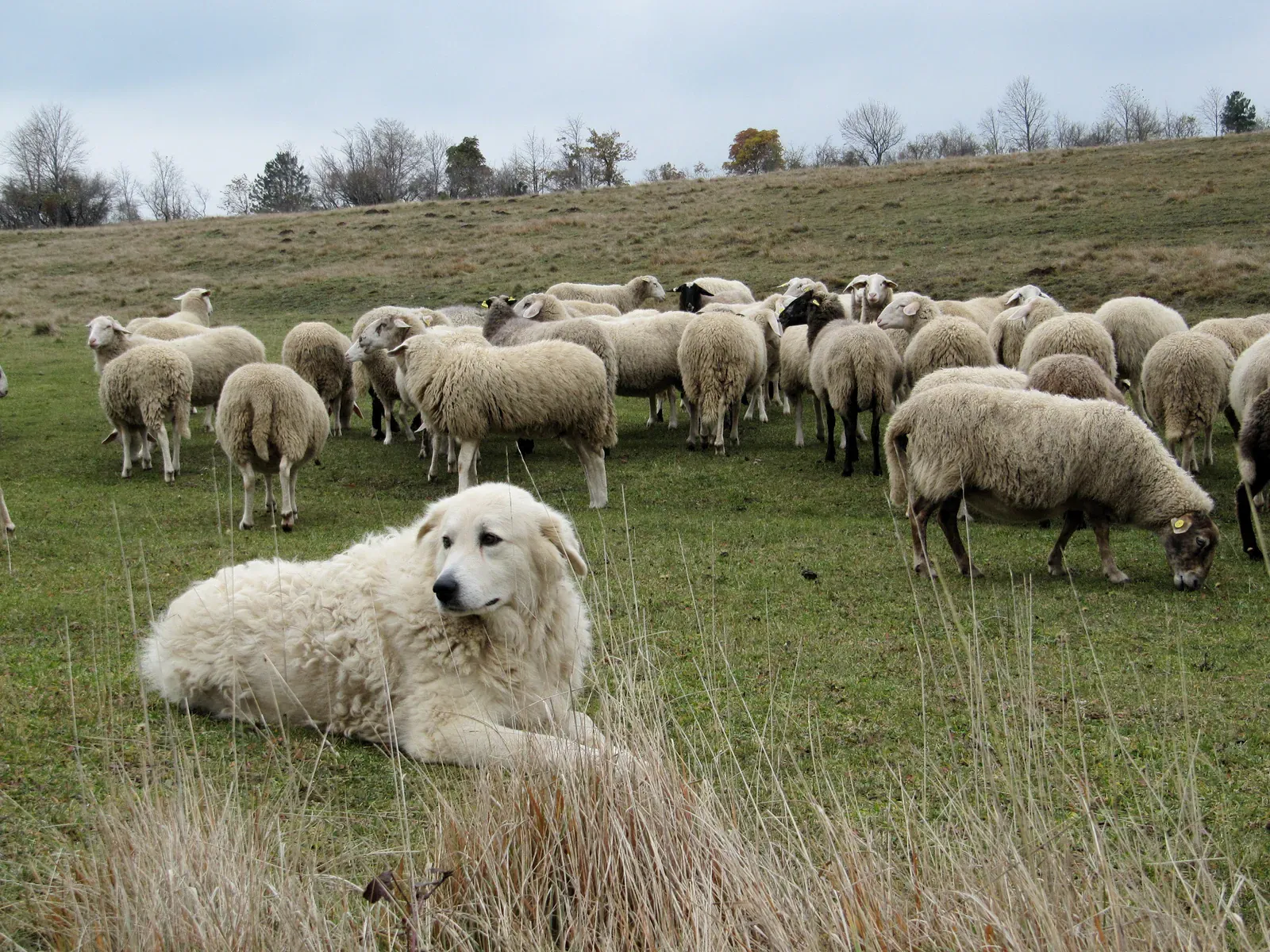
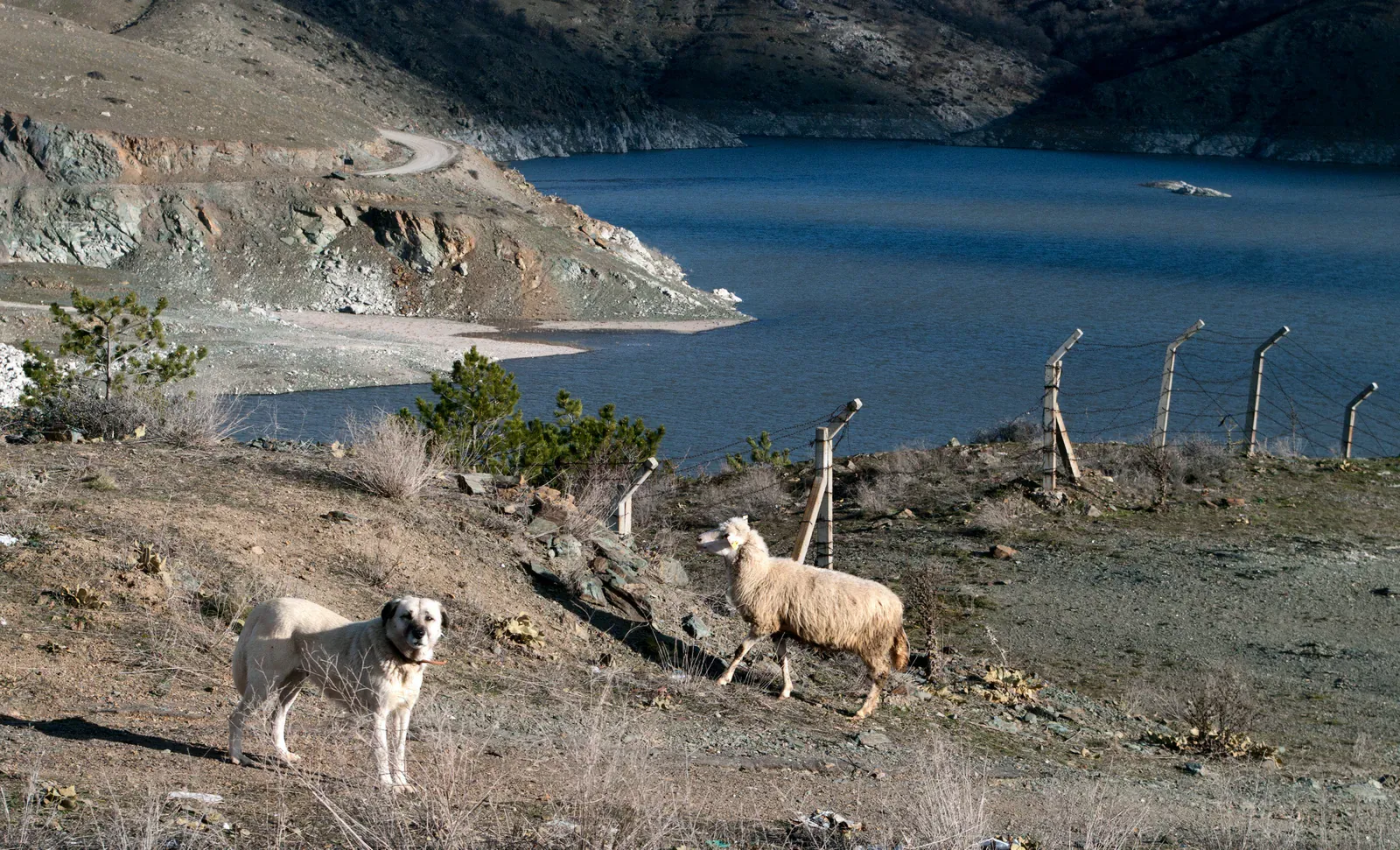
Mediterranean dog breeds are the Mediterranean family, a large branch of the dog tree with two very different kinds of dog in it. One kind is lean hunting hounds that run down game by sight: the Saluki, Afghan Hound, Sloughi, Azawakh, Pharaoh Hound and the podencos of Spain and Portugal. The other kind is heavy flock guardians that live with sheep and goats: the Kangal, Komondor, Kuvasz, Pyrenean Mountain Dog and dozens of shepherd dogs from the Balkans to the Himalayas.
 GuideDogs in science and spaceSpace dogs Laika, Belka and Strelka, Pavlov's dogs, Snuppy the clone, the dog genome and scent detection: what dogs did for science, and what it cost them.
In this atlas the family holds 71 breeds and types. Only 13 of them were DNA-tested in the key study, so most of the page is built on written history and is labelled that way. It is a genetic family, not the same as a kennel club "Hound" or "Working" group. This page explains who is in, why hounds and guardians share a branch, and what is solid and what is only tradition.
Quick facts about the Mediterranean family
| Fact | Answer |
|---|---|
| Family type | Genetic clade (Parker et al. 2017) |
| Parent | West Eurasian dogs |
| Breeds in this atlas | 71 (69 living, 2 extinct) |
| Breeds with DNA tested in the study | 13, all with strong support |
| Types of dog | 40 livestock guardians, 16 sighthounds, 11 primitive hounds, 2 guard dogs, 2 herding dogs |
| Main homelands | India (9), Spain (7), Turkey (5), Portugal (5), Italy (5), Romania (4) |
| Typical size | Giant (27) or large (24). Also 20 medium |
| Recognised by a kennel club | 52 of 71 |
| Shared look | None across the whole family. Two body plans: lean runner, massive guardian |
 GuideDogs in myth around the worldFrom Anubis and Cerberus to Fenrir, Xolotl and the Tiangou: how cultures across the world imagined dogs as guardians, guides and monsters.
Family or group: what is the difference?
In this atlas, "family" always means a DNA clade, a branch of the family tree found by comparing genomes. "Group" is used only for kennel club groups such as the AKC Hound Group or FCI Group 10 (Sighthounds).
 GuideDogs in Legends and Fairy TalesDogs in folklore and fairy tales: Black Shuck, The Tinderbox, Saint Guinefort, Panhu, Greyfriars Bobby, Barry and Old Drum, with legend and history kept apart.
The two do not match here. A kennel club would put the Saluki in the hounds and the Kangal in the working dogs, in different rooms. DNA put them on one branch. Thirteen of our 71 breeds were sampled by Parker et al. (2017). The other 58 are placed here by written history, region and breed descriptions, so they are best estimates. In the members table below, the first 13 rows are DNA-tested and the rest are placed by history.
What did Parker 2017 name, and what did this atlas add?
Parker et al. (Cell Reports, 2017) compared the genomes of 1,346 dogs from 161 breeds and sorted almost all of them into 23 clades. One of those clades was labelled Mediterranean. The authors note that this clade and the UK Rural clade each contain both sighthounds and working breeds, two very different kinds of dog.
 GuideHow to get an assistance dogHow to get a service dog or assistance dog in the USA, UK, Germany, France, Spain, Italy and the Netherlands: accredited schools, waits, owner-training and travel.
That is the whole published claim. The paper sampled breeds, not village dogs, and it did not list livestock guardians as a "Mediterranean" idea. What this atlas added:
- 13 breeds with DNA: Saluki, Pyrenean Mountain Dog, Pharaoh Hound, Cirneco dell'Etna, Ibizan Hound, Sloughi, Azawakh, Maremmano-Abruzzese Sheepdog, Kuvasz, Afghan Hound, Kangal, Komondor and Leonberger.
- 58 breeds placed by history: these are breeds that were not in the study but share a region and a body plan with the tested ones. A Caucasian Shepherd Dog sits here because it resembles the Kangal and Kuvasz, not because anyone sequenced it.
- A display name: "Ancient hounds and flock guardians" is this atlas's plain-language label. It is not a name from the paper.
So treat the DNA-tested core as established and the rest as informed placement. If more breeds are sampled, some may move.
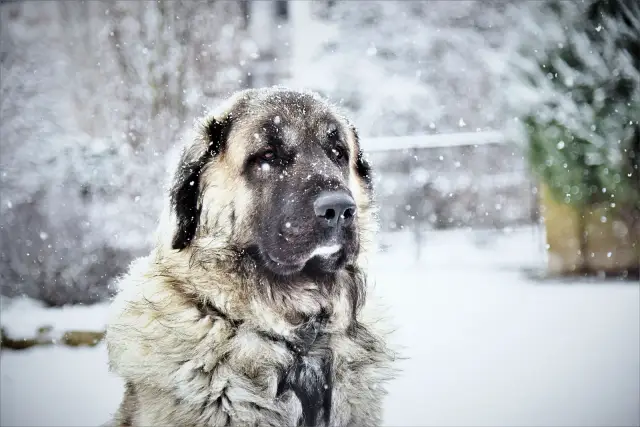
Where does this family sit in the tree?
It is a child of West Eurasian dogs, the broad branch of European and Near Eastern breeds. Its siblings are European dogs and Levantine and African dogs. For the whole tree, see the dog family tree.
 GuideService, therapy and emotional support dogs: what's the difference?Service dog vs emotional support dog vs therapy dog: the real differences, your rights in the USA and Europe, and why online certificates mean nothing.
Not every well-known sighthound is here. The Greyhound, Whippet, Scottish Deerhound, Irish Wolfhound and Borzoi are tested in the same study but fall in the UK rural family. The Basenji sits in a separate basal family. The long-legged running shape appears to have arisen more than once, so "sighthound" is a shape and a job, not a single DNA branch. See Greyhound, Borzoi and Irish Wolfhound for those breeds.
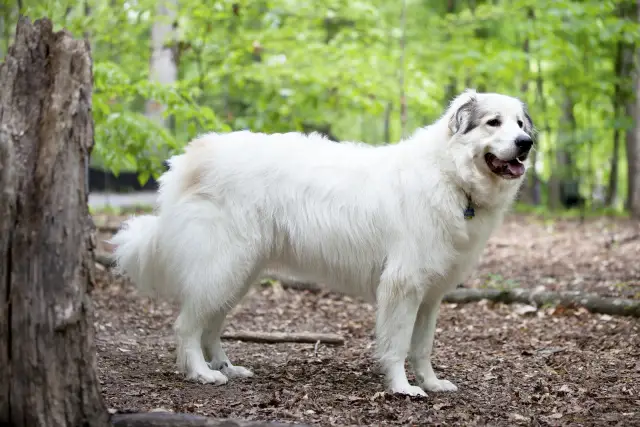
What does the name "Mediterranean" mean?
The label is geographic. The tested core comes from the lands around the Mediterranean and its edges: Malta, Sicily, Ibiza, Italy, the Pyrenees, Hungary, Turkey, Morocco and Mali, with the Saluki and Afghan Hound reaching further east. The atlas then extends the family along the same belts of sheep country, through the Balkans and Carpathians to Central Asia, the Himalayas and southern India.
 GuideDog hybrids: what dogs can and cannot breed withCan dogs breed with wolves, coyotes, jackals or foxes? Wolfdogs, coydogs, the Sulimov dog and Dogxim explained, with chromosomes and DNA studies.
Several names in the family say what the dog does or where it lives:
- Sighthound in this atlas means a dog that hunts by sight and speed. Saluki and Sloughi share a root with Arabic salūqī, perhaps from the ancient city of Seleucia or from Saluq.
- Cretan Hound, Podenco, Ca de Conills. Ca de Conills is Catalan for "rabbit dog". Pharaoh Hound's Maltese name, Kelb tal-Fenek, also means "rabbit dog".
- Ovcharka and Kangal. Ovcharka is Russian for "sheepdog". The Kangal is named for the town of Kangal in Sivas Province, Turkey.
- Gampr is Armenian for "powerful, strong", an old word for a sheepdog.
What is the history of the Mediterranean family?
Dates below come from our breed records and breed histories. Where a claim rests on art or tradition, it is labelled.
 GuideDogs of Japan: the native breeds and their storiesJapanese dog breeds explained: the six Nihon Ken, the Chin, Tosa, Japanese Spitz and Terrier, Hachiko, wartime near-extinction, DNA and who they suit.
Before 1000 BCE: the first hunting and herding dogs
- About 3500 to 2500 BCE. The Tesem is the oldest entry, an Egyptian hunting dog named from the ancient word ṯzm, "hunting dog". It is extinct and is known from art and writing only. We list it by history, not DNA.
- 3000 BCE onward. Long-legged hounds with curled tails appear on seals from Tepe Gawra in northern Iraq. Art shows a hound type, not a breed, and does not prove the Saluki descends from those dogs (art-based claim).
- Before 1000 BCE. Livestock guardians are thought to have followed the spread of herding in Anatolia and Central Asia. This is a historical assumption, not a dated record.
1000 BCE to 1000 CE: islands, deserts and flocks
- 700 BCE onward. Hounds of the Maltese type are said to have arrived with Phoenician traders. This is tradition, a plausible story with no firm record.
- 500 BCE. The atlas first document the hound types of Ibiza and Sicily and of North Africa, ancestors of the Ibizan Hound, Cirneco dell'Etna and Sloughi (rough dates).
- 500 to 900 CE. The Azawakh appears among the Tuareg of the Sahara, and the Kuvasz is recorded on the Hungarian plain by about 900.
1000 to 1800: regional types
- 1000 to 1500. Most of the guardian types date from here: Akbash, Kars Dog, Sarplaninac, Tornjak, Himalayan Sheepdog, Estrela Mountain Dog and the Romanian shepherds. Many were never written down, so the dates are rough.
- 1200. The Komondor is first recorded in Hungary.
- 1500 to 1800. Indian hounds such as the Chippiparai, Mudhol Hound and Rajapalayam appear. The Dalbo Dog, a Swedish farm guardian, is recorded in the 1700s and later died out.
1800 to today: shows, standards and rebuilding
- 1846. The Leonberger is created in Germany. Its founder, Heinrich Essig, claimed St Bernard, Newfoundland and Pyrenean Mountain Dog blood, but the atlas marks these claims as disputed.
- 1880s to 1930s. The atlas dates the Kuvasz, Komondor and Pyrenean Mountain Dog as modern breeds to this span.
- 1920s to 1950s. Armenian and Caucasian dogs are used to build Soviet guard breeds. The Moscow Watchdog, built in the 1950s from St Bernards, Caucasian Shepherd Dogs and other stock, is the youngest line in the family.
- 1973 to 1974. The atlas dates the Sloughi and Pharaoh Hound to these years as their start in modern registries.
- 1989 to 2020. Several Turkish, Balkan and Romanian guardians are newly standardised, including the Kangal, which the atlas dates to 1989.
Some details above are from breed histories and club pages, not from stud books checked for this page.
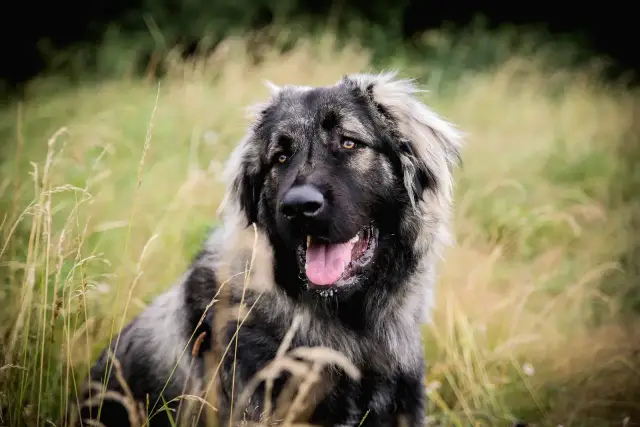
Who are the members of the Mediterranean family?
Here are all 71 breeds. The 13 breeds with DNA tested in the study come first. The other 58 are placed by history and are hidden until you choose to show all 71. "Appeared" is the period in which the breed or type is first documented, and some dates are rough. Only the breeds with an article in this atlas are linked.
 Family storyAlpineRead the family's story: origins, members, DNA
| Breed | Country | Status | Size | Appeared | DNA-tested |
|---|---|---|---|---|---|
| Saluki | Iraq | Living | Medium | 3000 BCE to 1922 | Yes (Parker 2017) |
| Pyrenean Mountain Dog | France | Living | Giant | 1000 BCE to 1923 | Yes (Parker 2017) |
| Pharaoh Hound | Malta | Living | Medium | 700 BCE to 1974 | Yes (Parker 2017) |
| Cirneco dell'Etna | Italy | Living | Medium | 500 BCE to 1939 | Yes (Parker 2017) |
| Ibizan Hound | Spain | Living | Large | 500 BCE to 1950 | Yes (Parker 2017) |
| Sloughi | Morocco | Living | Medium | 500 BCE to 1973 | Yes (Parker 2017) |
| Azawakh | Mali | Living | Large | 500 CE to 1900 | Yes (Parker 2017) |
| Maremmano-Abruzzese Sheepdog | Italy | Living | Large | 500 CE to 1958 | Yes (Parker 2017) |
| Kuvasz | Hungary | Living | Giant | 900 CE to 1884 | Yes (Parker 2017) |
| Afghan Hound | Afghanistan | Living | Large | 1000 to 1800 | Yes (Parker 2017) |
| Kangal Shepherd Dog | Turkey | Living | Giant | 1000 to 1989 | Yes (Parker 2017) |
| Komondor | Hungary | Living | Giant | 1200 to 1920 | Yes (Parker 2017) |
| Leonberger | Germany | Living | Giant | 1846 to 1895 | Yes (Parker 2017) |
| Tesem | Egypt | Extinct | Medium | 3500 BCE to 2500 BCE | By history |
| Cretan Hound | Greece | Living | Medium | 3000 BCE to 1990 | By history |
| Central Asian Shepherd Dog | Turkmenistan, Uzbekistan, Kazakhstan | Living | Giant | 2000 BCE to 1990 | By history |
| Armenian Gampr | Armenia | Living | Giant | 1000 BCE to 1900 | By history |
| Bankhar Dog | Mongolia | Living | Giant | 1000 BCE to 1900 | By history |
| Karakachan | Bulgaria | Living | Giant | 1000 BCE to 1990 | By history |
| Kazakh Tazy | Kazakhstan | Living | Large | 1000 BCE to 1990 | By history |
| Portuguese Podengo | Portugal | Living | Medium | 1000 BCE to 1950 | By history |
| Caucasian Shepherd Dog | Russia | Living | Giant | 500 BCE to 1920 | By history |
| Georgian Shepherd | Georgia | Living | Giant | 500 BCE to 2010 | By history |
| Greek Shepherd | Greece | Living | Large | 500 BCE to 1990 | By history |
| Kuchi | Afghanistan | Living | Giant | 500 BCE to 1900 | By history |
| Kurdish Mastiff | Iraq | Living | Giant | 500 BCE to 1900 | By history |
| Podenco Andaluz | Spain | Living | Medium | 500 BCE to 2004 | By history |
| Podenco Canario | Spain | Living | Medium | 500 BCE to 1990 | By history |
| Podenco Valenciano | Spain | Living | Medium | 500 BCE to 2017 | By history |
| Aidi | Morocco | Living | Large | 500 CE to 1500 | By history |
| Taigan | Kyrgyzstan | Living | Medium | 500 CE to 1990 | By history |
| Akbash | Turkey | Living | Giant | 1000 to 1800 | By history |
| Aksaray Malaklisi | Turkey | Living | Giant | 1000 to 1900 | By history |
| Bakharwal | India | Living | Large | 1000 to 1900 | By history |
| Himalayan Sheepdog | Nepal, India | Living | Large | 1000 to 1900 | By history |
| Kars Dog | Turkey | Living | Giant | 1000 to 2010 | By history |
| Levriero Sardo | Italy | Living | Medium | 1000 to 2000 | By history |
| Macedonian Shepherd Dog Karaman | North Macedonia | Living | Giant | 1000 to 2020 | By history |
| Rize Koyun | Turkey | Living | Giant | 1000 to 2010 | By history |
| Šarplaninac | North Macedonia | Living | Large | 1000 to 1939 | By history |
| Tibetan Kyi Apso | China | Living | Large | 1000 to 1990 | By history |
| Tornjak | Bosnia and Herzegovina, Croatia | Living | Large | 1000 to 1972 | By history |
| Vikhan | Pakistan, India | Living | Large | 1000 to 1990 | By history |
| Estrela Mountain Dog | Portugal | Living | Giant | 1200 to 1933 | By history |
| Sarabi | Iran | Living | Giant | 1200 to 1990 | By history |
| Banjara Hound | India | Living | Large | 1500 to 1900 | By history |
| Bucovina Shepherd Dog | Romania | Living | Giant | 1500 to 2001 | By history |
| Ca de Conills | Spain | Living | Medium | 1500 to 2000 | By history |
| Cão de Gado Transmontano | Portugal | Living | Giant | 1500 to 2004 | By history |
| Carpathian Shepherd Dog | Romania | Living | Giant | 1500 to 2005 | By history |
| Castro Laboreiro Dog | Portugal | Living | Large | 1500 to 1935 | By history |
| Chippiparai | India | Living | Large | 1500 to 1900 | By history |
| Kaikadi | India | Living | Medium | 1500 to 1900 | By history |
| Kanni | India | Living | Large | 1500 to 1900 | By history |
| Mahratta Hound | India | Living | Medium | 1500 to 1900 | By history |
| Mudhol Hound | India | Living | Medium | 1500 to 1900 | By history |
| Perro Majorero | Spain | Living | Medium | 1500 to 1994 | By history |
| Rafeiro do Alentejo | Portugal | Living | Giant | 1500 to 1953 | By history |
| Rajapalayam | India | Living | Large | 1500 to 1990 | By history |
| Romanian Mioritic Shepherd Dog | Romania | Living | Giant | 1500 to 2005 | By history |
| Spino degli Iblei | Italy | Living | Medium | 1500 to 2000 | By history |
| Tatra Shepherd Dog | Poland | Living | Giant | 1500 to 1963 | By history |
| Karst Shepherd | Slovenia | Living | Large | 1600 to 1939 | By history |
| Maneto | Spain | Living | Medium | 1600 to 2000 | By history |
| Slovak Cuvac | Slovakia | Living | Large | 1600 to 1964 | By history |
| Dalbo Dog | Sweden | Extinct | Large | 1700 to 1900 | By history |
| South Russian Ovcharka | Ukraine | Living | Large | 1790 to 1966 | By history |
| Rampur Greyhound | India | Living | Large | 1800 to 1900 | By history |
| Sardinian Shepherd Dog | Italy | Living | Medium | 1800 to 1990 | By history |
| Romanian Raven Shepherd Dog | Romania | Living | Large | 1900 to 2015 | By history |
| Moscow Watchdog | Russia | Living | Giant | 1950 to 1985 | By history |
Which breeds belong to the hound side?
Twenty-seven of the 71 are hounds of some kind: 16 sighthounds and 11 primitive hounds. They fall into four regional clusters.
 Family storyAmerican Cur & FeistRead the family's story: origins, members, DNA
- Middle East and Central Asia. Saluki, Afghan Hound, Taigan and Kazakh Tazy. These are coursing hounds of open country, some used with a falcon.
- Africa. Sloughi, Azawakh and the extinct Tesem. These are smooth-coated desert runners.
- Mediterranean islands and coasts. Pharaoh Hound, Cirneco dell'Etna, Ibizan Hound, the Spanish Podencos (Andaluz, Canario, Valenciano), Portuguese Podengo, Ca de Conills, Cretan Hound, Levriero Sardo and Spino degli Iblei. These are rabbit hunters that use ears and nose as well as eyes.
- India. Chippiparai, Mudhol Hound, Rajapalayam, Kanni, Kaikadi, Mahratta Hound, Banjara Hound and Rampur Greyhound.
Many of these are called "primitive hounds" because they look like regional landraces rather than show-ring breeds. That word describes appearance and history, not simpler DNA.

Which breeds belong to the guardian side?
Forty breeds are livestock guardians, plus two guard dogs and two herding dogs. A livestock guardian lives with the flock and defends it, often against wolves, rather than herding it. They tend to be large, white or pale, and independent. They are bred to decide without orders.
 Family storyAmerican TerrierRead the family's story: origins, members, DNA
- Turkey and the Caucasus. Kangal, Akbash, Aksaray Malaklisi, Kars Dog, Rize Koyun, Armenian Gampr, Caucasian Shepherd Dog, Georgian Shepherd.
- Central Asia and Iran. Central Asian Shepherd Dog, Bankhar Dog, Sarabi, Kuchi.
- Himalaya and India. Himalayan Sheepdog, Bakharwal, Vikhan, Tibetan Kyi Apso.
- Balkans. Sarplaninac, Karakachan, Greek Shepherd, Karst Shepherd, Tornjak, Macedonian Shepherd Dog Karaman.
- Carpathians and Central Europe. Kuvasz, Komondor, Carpathian Shepherd Dog, Bucovina Shepherd Dog, Romanian Mioritic Shepherd, Slovak Cuvac, Tatra Shepherd Dog.
- Italy, France, Iberia. Maremmano-Abruzzese Sheepdog, Sardinian Shepherd Dog, Pyrenean Mountain Dog, Estrela Mountain Dog, Rafeiro do Alentejo, Cao de Gado Transmontano, Castro Laboreiro Dog.

Who descends from whom, and which ties are strongest?
Two kinds of evidence are used here. One is written history: what breeders say they crossed. The other is DNA: how many megabases (Mb, millions of DNA letters) two breeds share in matching stretches. A larger number means closer shared ancestry, though it can also reflect a recent split or crossing.
 Family storyAmerican ToyRead the family's story: origins, members, DNA
The strongest ties among the hounds, from the Parker study as recorded:
| Pair | Shared DNA (Mb) | What it tells us |
|---|---|---|
| Cirneco dell'Etna and Pharaoh Hound | 142.7 | The closest pair in the family, two island hounds of the central Mediterranean |
| Ibizan Hound and Pharaoh Hound | 92.0 | A third island hound with the same prick-eared look |
| Cirneco dell'Etna and Ibizan Hound | 37.0 | The three form one tight cluster |
| Afghan Hound and Saluki | 27.8 | The two best-known Asian sighthounds are close cousins |
| Azawakh and Sloughi | 17.9 | Two African sighthounds, Sahara and Maghreb |
| Azawakh and Basenji | 12.5 | A link across the family border to the Basenji |
| Sloughi and Saluki | 12.0 | The Arab hound root shows up in DNA |
| Kangal and Saluki | 9.8 | A small link between a guardian and a hound |
Source: Parker et al. 2017, Cell Reports, shared haplotypes between 161 breeds (1,346 dogs).
The three island hounds are far closer to each other than any other pair, and the Saluki and Afghan Hound are the best-supported cousins. In the written record, the Chippiparai is thought to descend from the Saluki, though this is not well documented, and the Rampur Greyhound is a 19th-century cross of local hounds with the English Greyhound.
On the guardian side, the atlas has links such as Armenian Gampr to Caucasian Shepherd Dog (medium confidence), Podenco Andaluz to Maneto (medium confidence), and a series of disputed crosses behind the Leonberger. The Leonberger's strongest DNA ties are to the St Bernard (44.7 Mb), Rottweiler (26.9) and German Shepherd (26.4), breeds from other families, which shows how mixed it is.
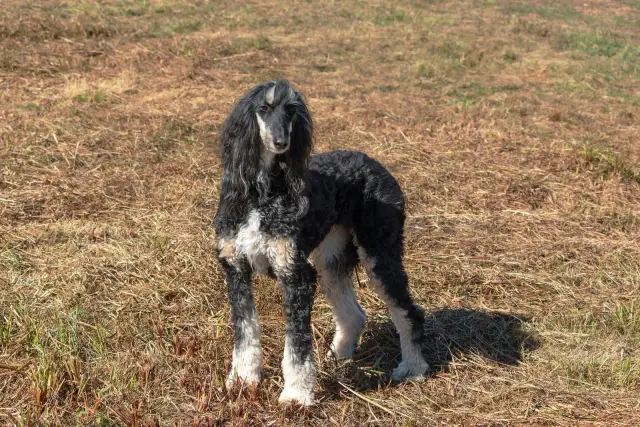
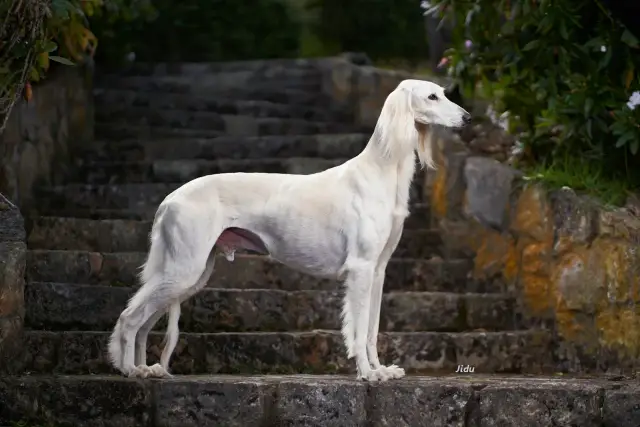
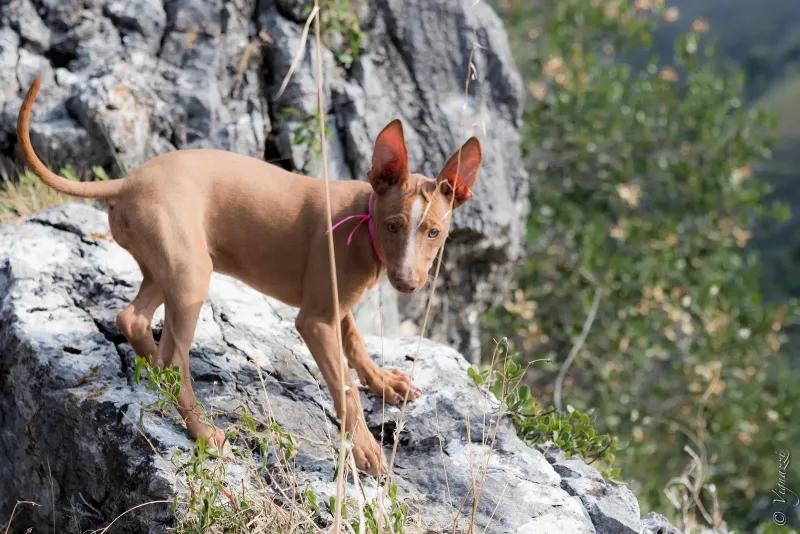
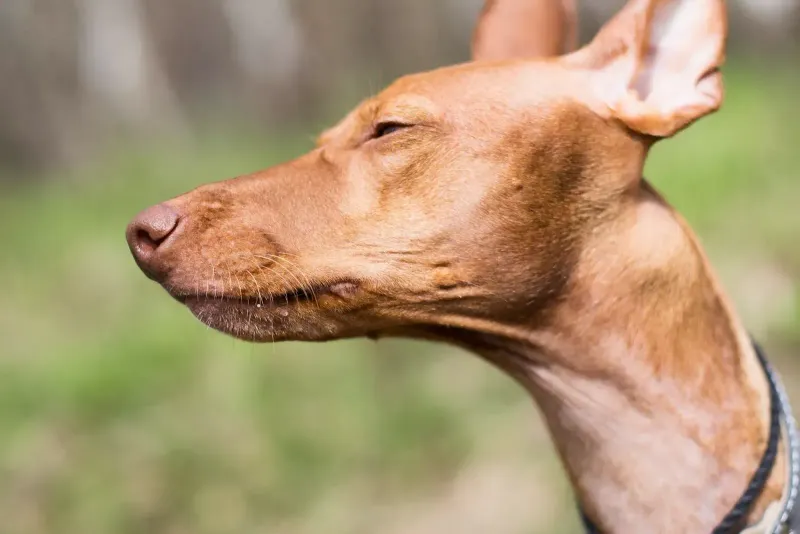 Cirneco and Pharaoh Hound
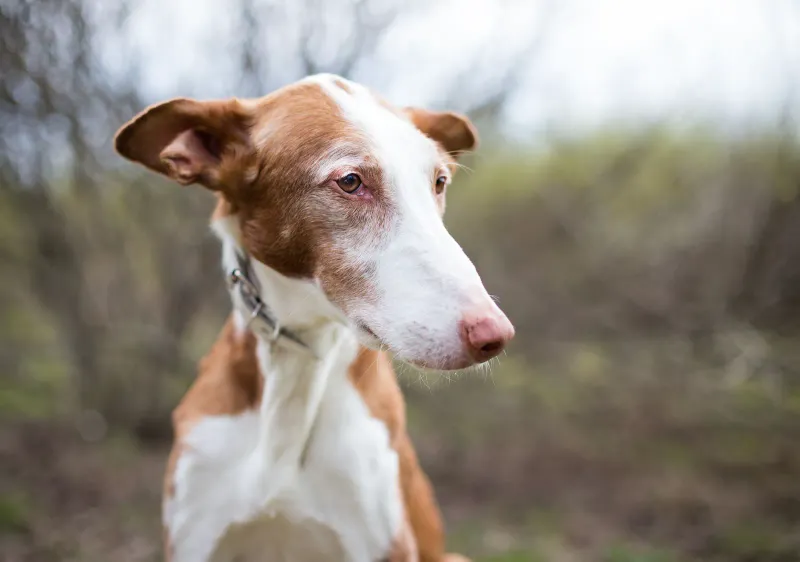 Ibizan Hound and Pharaoh Hound
- Cirneco and Ibizan Hound
- Afghan Hound and Saluki

What do the Mediterranean breeds have in common?
Not as much as a gundog or terrier family. There are two body plans, so the shared traits are about climate and independence.
 Family storyAncient American dogsRead the family's story: origins, members, DNA
Hounds. Deep chest, narrow waist, long legs and a long tail. Short or fringed coats in the desert breeds, heavier coats in the Afghan Hound from the mountains. Quiet, reserved with strangers and sensitive to harsh handling.
Guardians. A massive frame, a thick double coat, and a calm, watchful nature. Many have a pale coat so a shepherd can tell dog from wolf in half light. They are slow to anger, but they guard with force.
Shared by both. Independence. A sighthound decides on its own when to chase. A flock guardian decides on its own when to act. Both were bred for people far from the owner and are poor choices for owners who want constant obedience.
Temperament. Mostly reserved and loyal, with a strong sense of territory in the guardians and a strong chase drive in the hounds. This is a general tendency, not a promise, and each dog differs.
What health issues are linked to these breeds?
Most dogs in this family live healthy lives, and a few well-documented points follow. Health depends on the breed, not the family. Breeders screen for what they can, and owners can watch for the rest. Figures appear only where a named study gives them.
 Family storyAncient BasalRead the family's story: origins, members, DNA
| Condition | What it is | How common | What helps |
|---|---|---|---|
| Slow drug clearance in sighthounds | Lean dogs clear some anaesthetic drugs, such as thiopental and propofol, more slowly, so recovery can take longer | Best proven in the Greyhound: slower thiopental, thiamylal and propofol clearance than in mixed-breed dogs (reviewed by Court 1999, Clinical Techniques in Small Animal Practice). Evidence for other sighthounds is weaker, and no prevalence figure is published | Tell the vet the breed before any sedation. Vets can choose drugs and warming plans to suit |
| Heart disease in Salukis | Heart muscle and rhythm problems | In a UK Kennel Club and BSAVA survey (Adams et al. 2010), 16 of 93 reported conditions were heart disease, about 1 in 6. Small, owner-reported sample | Regular vet checks and heart listening |
| Cardiac haemangiosarcoma in Salukis | A cancer of blood vessel cells in the heart | A Saluki Health Research and Michigan State University outline (2000) found it in 17 of 55 hearts submitted. Not a breed-wide rate, since most hearts came from dogs that died suddenly | Report breathlessness, weakness or collapse to a vet promptly |
| Leonberger polyneuropathy | Nerve disease that weakens the legs and can affect breathing in young adults | LPN1 (an ARHGEF10 deletion, Ekenstedt et al. 2014, PLoS Genetics) explained about 11% of 528 diagnosed Leonbergers in a later study; a second gene, GJA9 (LPN2), was reported by Becker et al. 2017, BMC Genomics. A University of Minnesota page gives a carrier rate of about 12%, about 1 in 8 | DNA tests exist for LPN1 and LPN2 and have cut LPN1 cases. Ask the breeder for results |
| Bloat (gastric dilatation volvulus) | The stomach fills with gas and can twist | Glickman et al. 2000 (JAVMA) reported about 6% (about 1 in 17) of large and giant dogs developing it; risk rose with age, a close relative with bloat, fast eating and a raised bowl. Figures for individual members of this family are not published | Two or three smaller meals, slower eating, ask a vet about preventive options in deep-chested dogs |
| Hips and elbows in giants | Joint fit problems | No family-wide figure found | Hip and elbow scoring of both parents, lean weight |
The anaesthesia point deserves care. The Greyhound, which sits in the UK rural family here, is the only sighthound with firm science behind it. Genetic work has linked slow propofol clearance in Greyhounds to variants in the CYP2B11 and POR genes (Martinez et al. 2019, Scientific Reports). Whether Salukis, Afghan Hounds and others behave the same way is unclear, so vets generally treat all sighthounds with care.

Which Mediterranean breeds are extinct?
Two of the 71 are extinct.
 Family storyArctic dogsRead the family's story: origins, members, DNA
- Tesem. An Egyptian hunting hound recorded from about 3500 to 2500 BCE, known from tomb art and writing. It is often named as a forerunner of the Pharaoh Hound and Sloughi. No DNA exists to test that, so the link is a label for a claim, not a result.
- Dalbo Dog. A large Swedish farm guardian from Dalsland, recorded from the 1700s to about 1900. It disappeared as farming changed.

Are there surprises in the Mediterranean family?
- Hounds and guardians share a branch. A Saluki and a Kangal could hardly look more different, yet Parker et al. put both in this clade, and the atlas shows a 9.8 Mb DNA link between them.
- The Pharaoh Hound is not from Egypt. Its name suggests Pharaohs, but it is the national hunting dog of Malta. The Egyptian link is tradition. Boyko et al. (2009, PNAS), studying African village dogs, found Pharaoh Hounds clustered with non-native rather than indigenous African dogs, which also argues against a simple Egyptian origin.
- The Cirneco and Pharaoh Hound share 142.7 Mb. That is more than any retriever pair in the atlas.
- The Greyhound is elsewhere. It sits in UK rural with the Borzoi and Irish Wolfhound.
- The Leonberger is a giant mix. It was built in Germany by crossing several big breeds, yet its DNA lands here, which fits the disputed Pyrenean Mountain Dog blood.
- Many members are rare landraces. Nineteen were not recorded by a kennel club, including the Cretan Hound and most Indian hounds.
 Family storyAsian SpitzRead the family's story: origins, members, DNA

What does research say about these breeds?
The key paper is Parker et al., "Genomic analyses reveal the influence of geographic origin, migration, and hybridization on modern dog breed development," Cell Reports, 2017. It built a tree of 161 breeds from 1,346 dogs. The Mediterranean clade held the 13 breeds listed above. The other 58 follow written history and are best estimates.
 Family storyAsian ToyRead the family's story: origins, members, DNA
An earlier study, Parker et al. (Science, 2004), sampled 85 breeds and found a small set of "ancient" breeds separating from the rest, including the Saluki and Afghan Hound. As reported in later reviews, that finding measures how different a breed's DNA is today. It does not give a date or show that a breed looks like dogs drawn in ancient art.

Which Mediterranean breed suits which owner?
This is a guide to temperament, not a promise for any single dog.
 Family storyContinental HerderRead the family's story: origins, members, DNA
- A runner with a quiet home. A Saluki or Sloughi suits owners with a fenced yard, a safe place to run and tolerance for a dog that won't come back from a chase.
- A hound that hunts. Podencos and the island hounds are busy, athletic and vocal. They suit experienced owners with space and time.
- A property to guard. A Kangal, Kuvasz or Pyrenean Mountain Dog suits rural owners who can fence and socialise a large dog early.
- A flock owner. The Maremmano and Sarplaninac are bred for real stock work.
- Not for first-time owners. Many guardians are too large and independent for beginners, and some local landraces are rare and hard to find outside their homeland.

Fun facts about the Mediterranean breeds
- The Pharaoh Hound is said to "blush", its nose and ears turning rosy when excited.
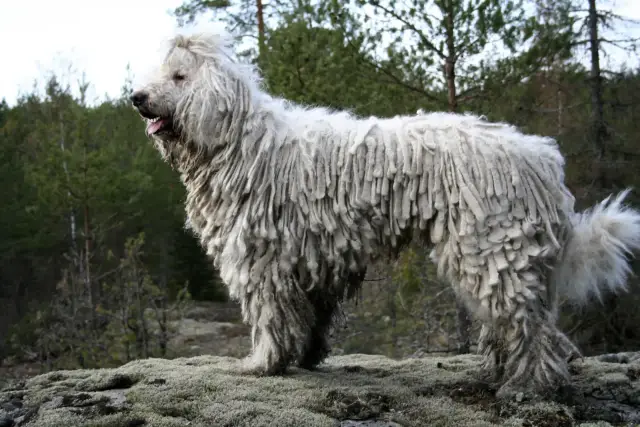
- The Komondor's corded coat is formed by the dog's own hair, not added by grooming.
- The first cloned dog, Snuppy, born in 2005, was an Afghan Hound.
- The Tesem and Dalbo Dog are both gone, one from Egypt and one from Sweden, and neither can be DNA-tested.
- The Azawakh was bred by the Tuareg of the Sahara, who traditionally kept it as a guard and hunter.
 Family storyDingo & PacificRead the family's story: origins, members, DNA

Related families
- West Eurasian dogs: the parent of the Mediterranean family.
- European dogs: a sibling branch.
- Levantine and African dogs: a sibling branch with village and desert dogs.
- UK rural: the Greyhound, Whippet, Borzoi and Irish Wolfhound, sighthounds of a different clade.
- European mastiff: the Kurdish Mastiff's older relatives.
- Pariah and village dog: the Indian pariah, said to be behind the Bakharwal.
 Family storyDomestic dogRead the family's story: origins, members, DNA

Frequently asked questions
What are the main types of Mediterranean dog breeds?
In this atlas: sighthounds such as the Saluki, Afghan Hound and Sloughi; primitive hounds such as the Pharaoh Hound and podencos; and livestock guardians such as the Kangal, Komondor and Kuvasz.
Are the Saluki and Afghan Hound related?
Yes. They share 27.8 Mb in the Parker study, the closest tested pair among the sighthounds.
Is the Greyhound a Mediterranean breed?
Not in the atlas. It is tested in the same study but falls in the UK rural family.
Is the Pharaoh Hound from ancient Egypt?
The link is tradition. Maltese hounds are said to have arrived with Phoenician traders, but this is a story, not a record, and no DNA ties the breed to ancient Egyptian dogs.
What is the difference between a Komondor and a Kuvasz?
Both are Hungarian guardians. The Komondor has a corded coat, and the Kuvasz has a wavy white double coat.
Do sighthounds need special care with anaesthesia?
The Greyhound clears some drugs slowly, and vets take care with other sighthounds too. Tell the vet the breed.
How long do these dogs live?
It depends on the breed. The atlas lists 12 to 16 years for the Sloughi, 12 to 15 for the Kangal and 9 to 11 for the Moscow Watchdog. These are breed-record ranges, not studies.
Read next
 Family storyUK RuralRead the family's story: origins, members, DNA
 Family storyLevantine and African dogsRead the family's story: origins, members, DNA
 Family storyDroverRead the family's story: origins, members, DNA
Sources (13)
- Parker, H. G., et al. (2017). Genomic analyses reveal the influence of geographic origin, migration, and hybridization on modern dog breed development. Cell Reports, 19(4), 697 to 708.
- Parker, H. G., et al. (2004). Genetic structure of the purebred domestic dog. Science, 304, 1160 to 1164.
- Boyko, A. R., et al. (2009). Complex population structure in African village dogs and its implications for inferring dog domestication history. PNAS, 106(33), 13903 to 13908.
- Court, M. H. (1999). Anesthesia of the sighthound. Clinical Techniques in Small Animal Practice, 14(1).
- Martinez, S. E., et al. (2019). Pharmacogenomics of poor drug metabolism in Greyhounds: CYP2B11 genetic variation, breed distribution, and functional characterization. Scientific Reports.
- Adams, V. J., et al. (2010). Methods and mortality results of a health survey of purebred dogs in the UK (Kennel Club and BSAVA survey).
- Saluki Health Research and Michigan State University (2000). Cardiac haemangiosarcoma outline.
- Ekenstedt, K. J., et al. (2014). An ARHGEF10 deletion is highly associated with a juvenile-onset inherited polyneuropathy in Leonberger and Saint Bernard dogs. PLoS Genetics.
- Becker, D., et al. (2017). A GJA9 frameshift variant is associated with polyneuropathy in Leonberger dogs. BMC Genomics, 18, 662.
- Glickman, L. T., et al. (2000). Incidence of and breed-related risk factors for gastric dilatation-volvulus in dogs; and Non-dietary risk factors for gastric dilatation-volvulus in large and giant breed dogs. JAVMA, 216 and 217.
- University of Minnesota Canine Genetics Laboratory, Leonberger Health Panel information.
- The Kennel Club (UK), AKC and Fédération Cynologique Internationale breed standards.
- Breed records in the atlas data (Dogs Atlas, internal data).