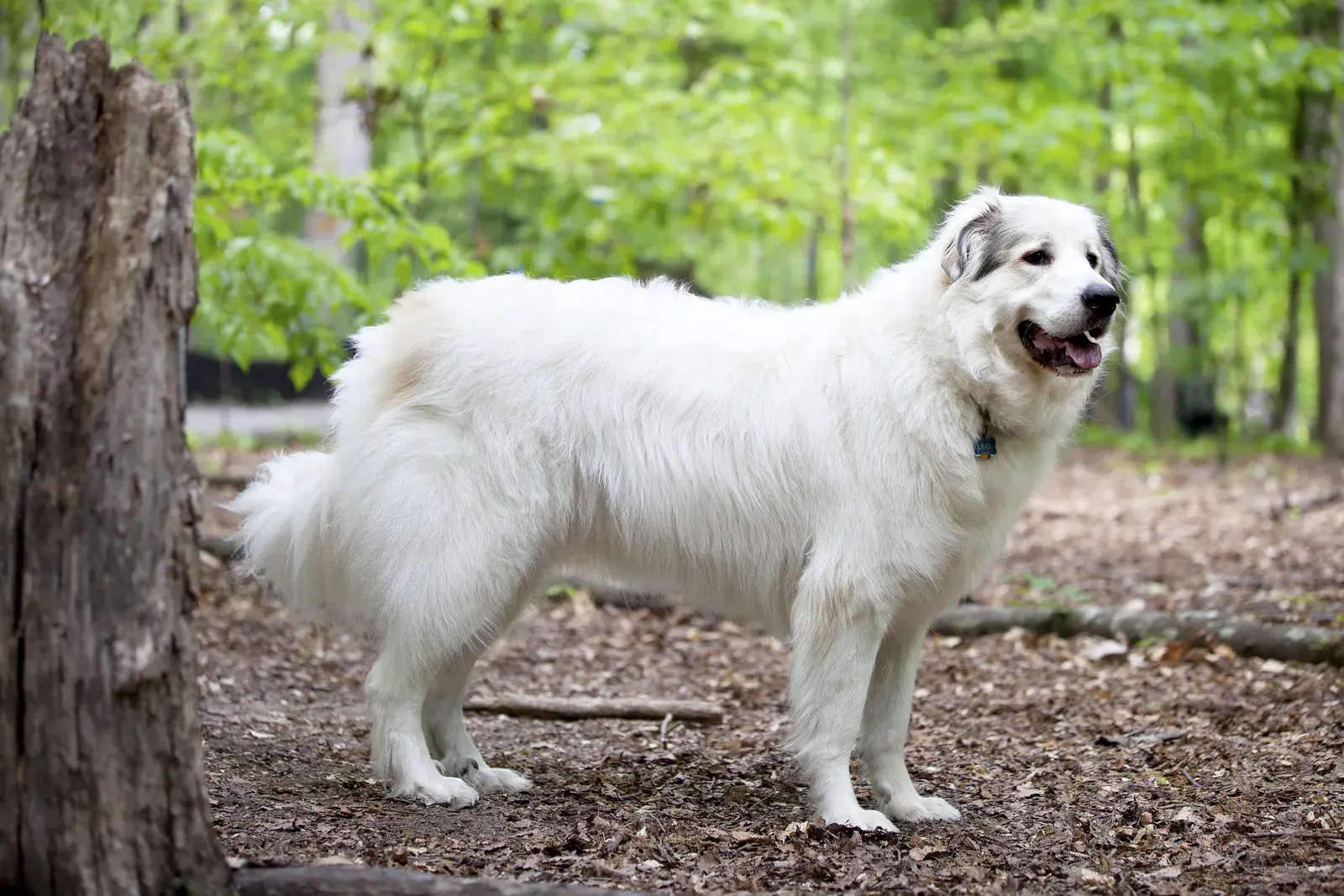
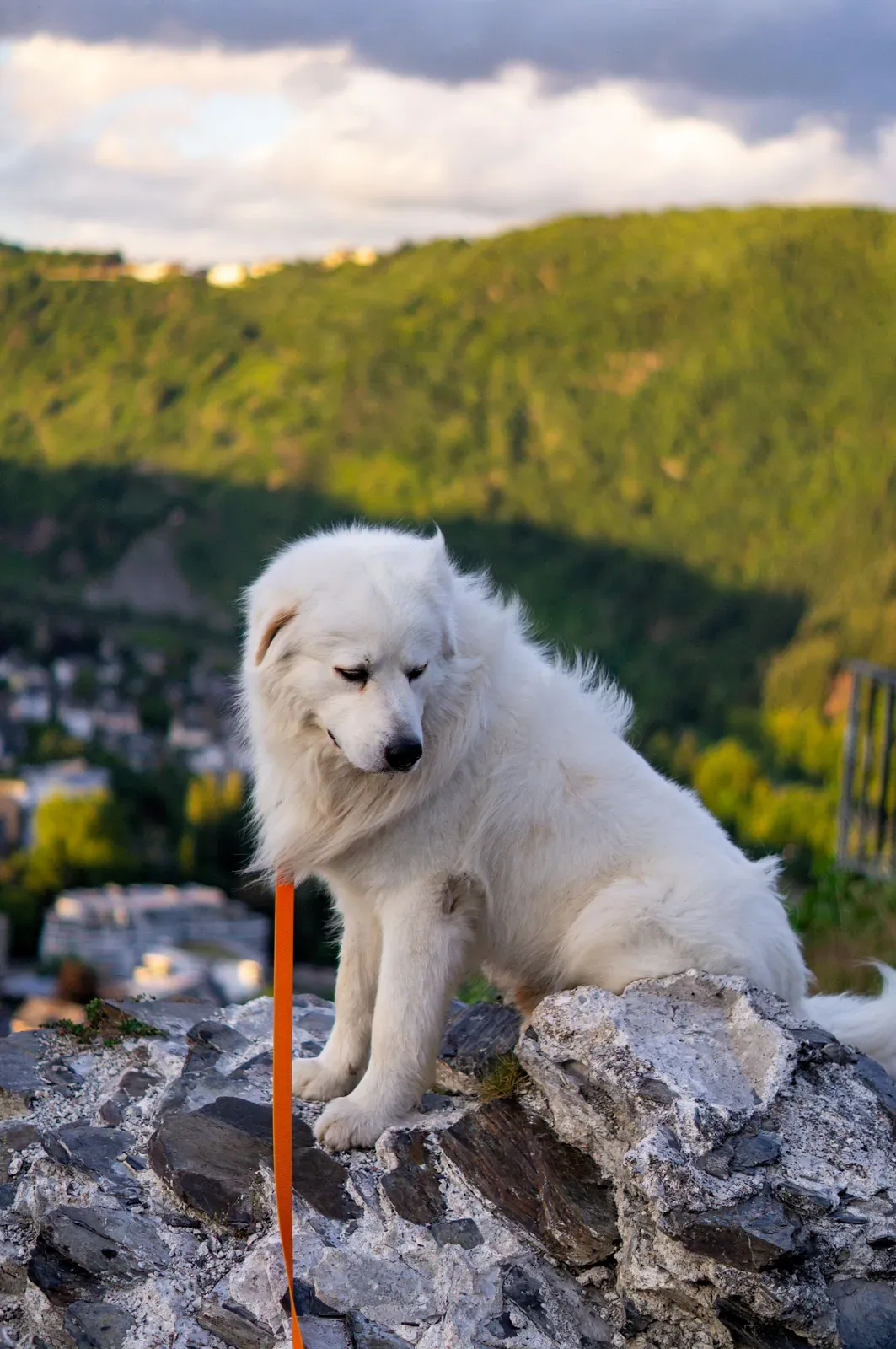
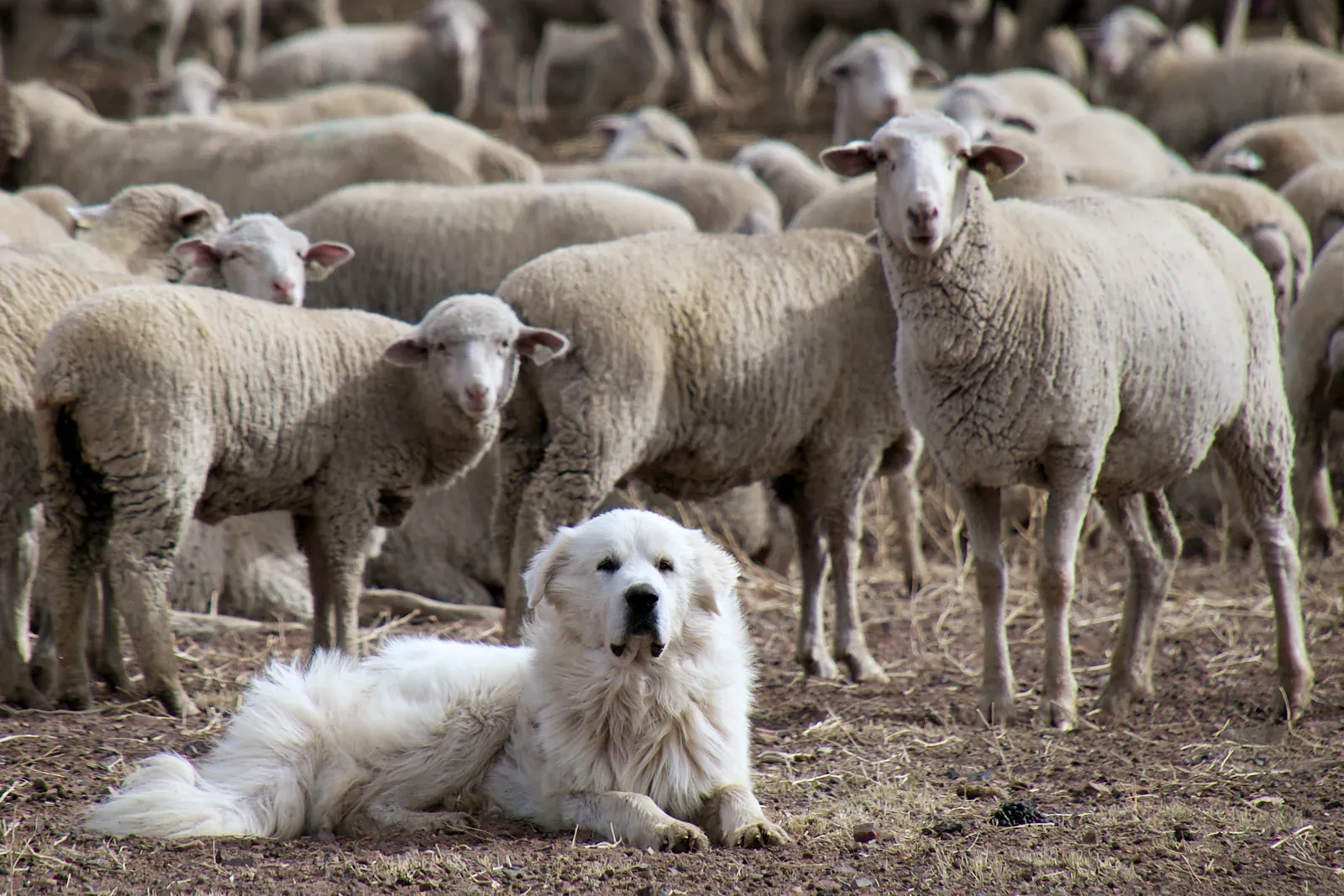
Shepherds there used it to guard flocks against wolves and bears. It is a calm, patient, thick-coated dog that is gentle with its own animals and family, independent in its judgement, and likely to bark through the night. Farms in the United States use it against coyotes, and homes use it as a large, devoted companion. It suits owners with space, a secure fence and a tolerance for noise. The atlas data gives a life span of 10 to 12 years.
Pyrenean Mountain Dog quick facts
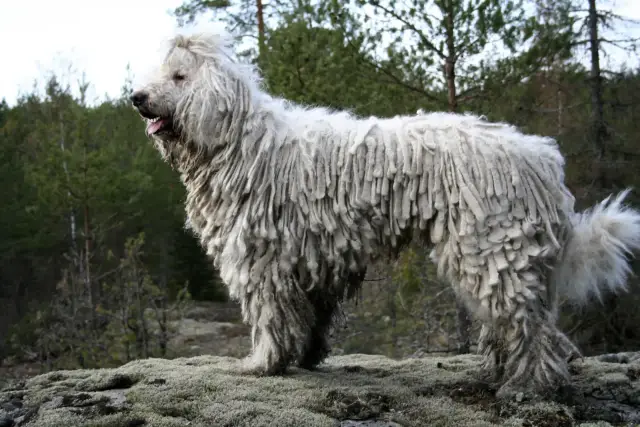 Related breedKomondor1200 to 1920 · HungaryLate Middle Ages
- Country of origin
- France (Pyrenees)
- Original job
- Guarding sheep in the mountains against wolves and bears
- Type
- Livestock guardian, Molossian mountain type ( Group 2, Section 2.2; FCI standard no. 137; Working Group; UK Kennel Club recognised)
- Height
- UKC: dogs 27.5 to 31.5 inches (about 70 to 80 cm), bitches 25.5 to 29.5 inches (about 65 to 75 cm)
- Coat and colour
- Dense double coat; white, with or without patches of badger, wolf-grey or reddish tan (as reported)
- Distinctive feature
- Double dewclaws on both hind legs
- Life span
- Atlas data: 10 to 12 years
- AKC recognition
- 1933 (sources agree)
- DNA family
- Mediterranean family (Parker et al. 2017)
- Sister breed
- Pyrenean Mastiff (Spain), per atlas data
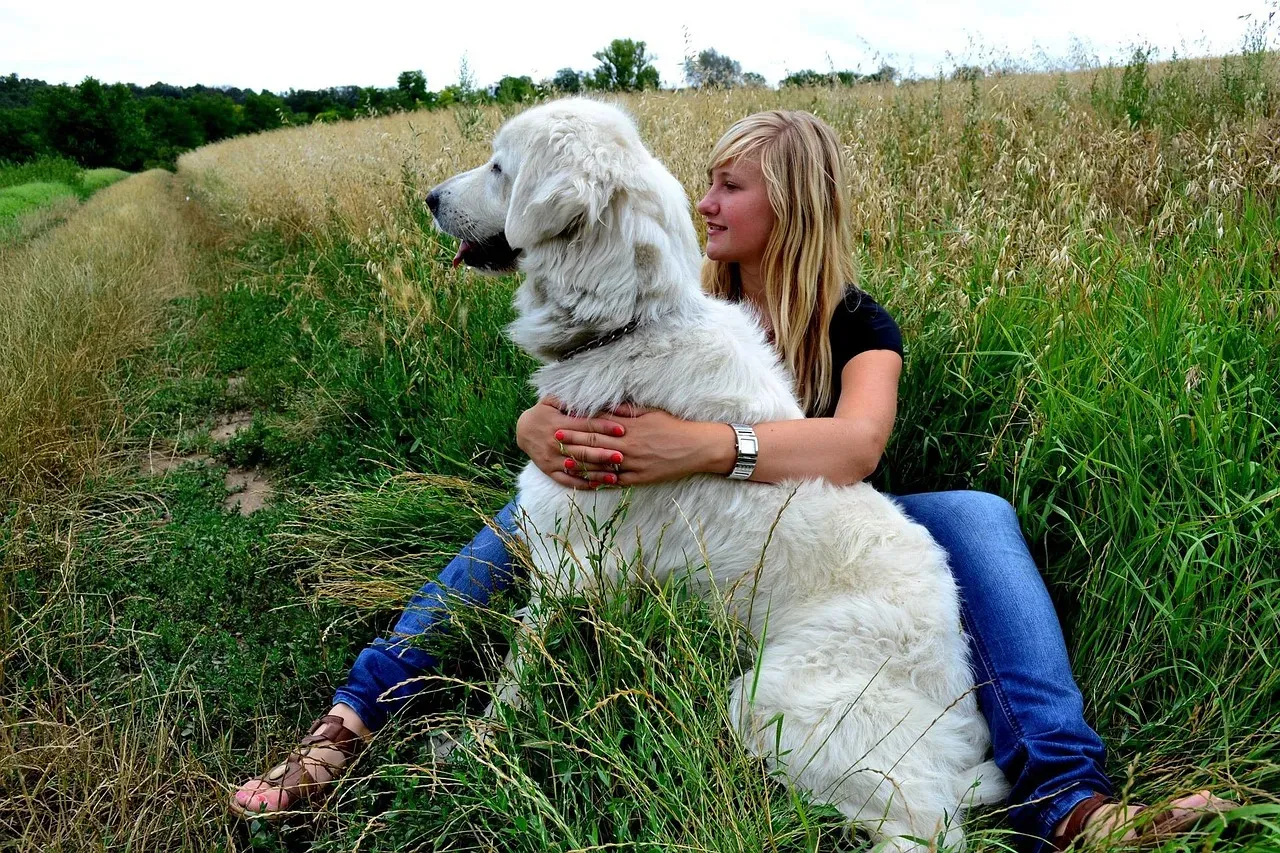
Drawn to scale in real centimetres. Its back reaches about 73 cm, mid-thigh; its head about 92 cm, your hip.
Where it sits in the tree
Ancient World · 3,000 BCE to 499
Name and origin
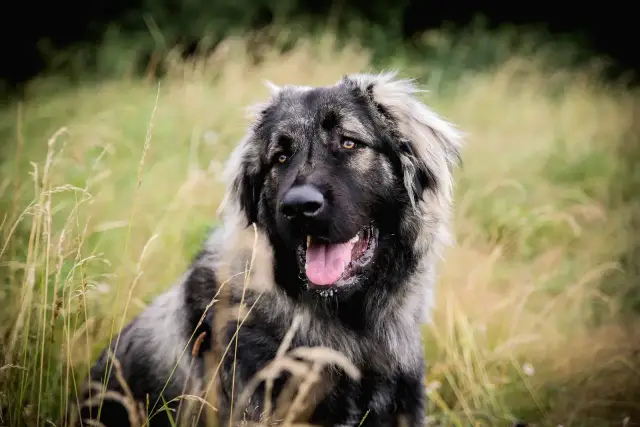
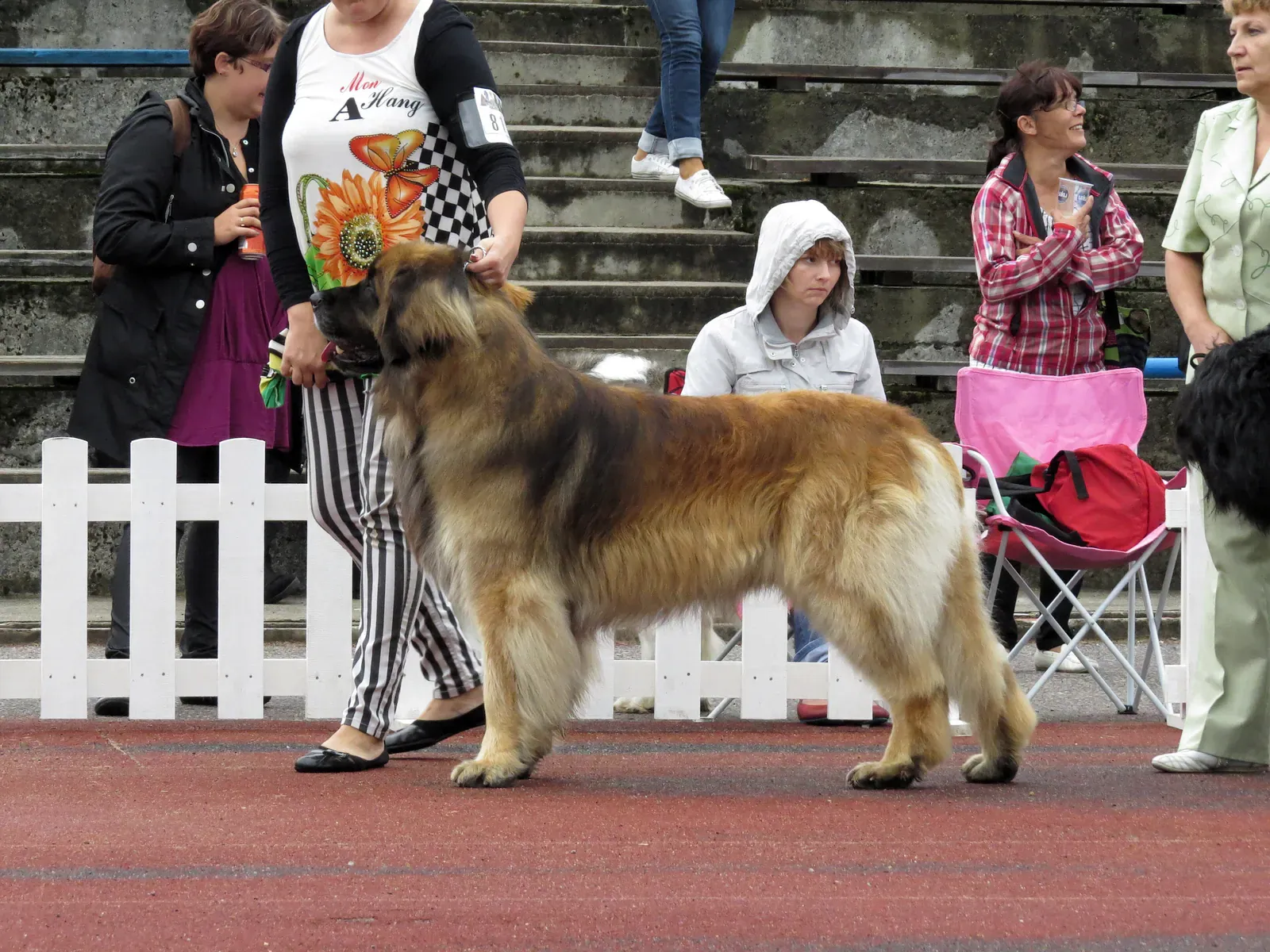
 Related breedLeonberger1846 to 1895 · GermanyIndustrial Revolution
The breed is named for the Pyrenees, the range along the border of France and Spain. "Patou" is the local word in southern France for the dog, from Occitan patou, which means shepherd (atlas data). The French name is Chien de Montagne des Pyrenees. The English-speaking world split the name: the UK and FCI use Pyrenean Mountain Dog, and the AKC uses Great Pyrenees.
Where the dog came from. The usual account says the dogs were guardians of Pyrenean flocks for centuries, alongside shepherds who followed seasonal grazing up and down the mountains. The atlas data gives the first appearance as about 1000 BCE (medium confidence), which reflects the old tradition of mountain flock guardians rather than a documented record of this exact breed. One source quotes French writings from 1407 describing "Great Dogs of the Mountains" as guardians of the Chateau of Lourdes. That reference is not traced to a primary text, so treat it as a claim.
Ancestry, with caution. One source seen says DNA evidence indicates the Pyrenees and mastiffs are not related, which fits the DNA placement below, but the source does not name the study.
Two countries, two dogs. The Pyrenean Mountain Dog (France) and the Pyrenean Mastiff (Spain) come from two sides of the same range. Atlas data treats them as closely related sister breeds. They look different: the mastiff is heavier-headed, while the Pyrenean Mountain Dog is a white, thick-coated mountain dog. Do not confuse them with the Pyrenean Sheepdog, a small herding dog from the same mountains.
 Save

History
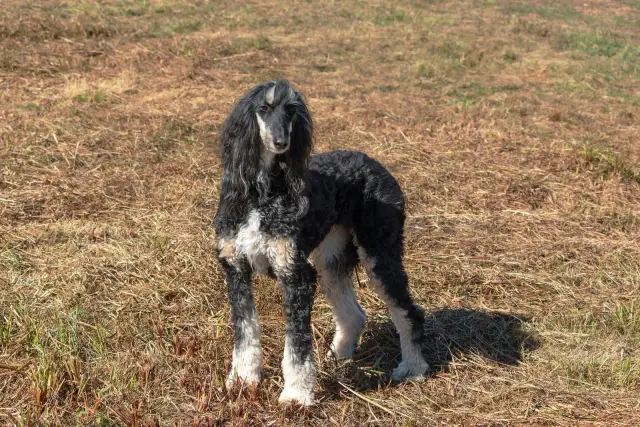
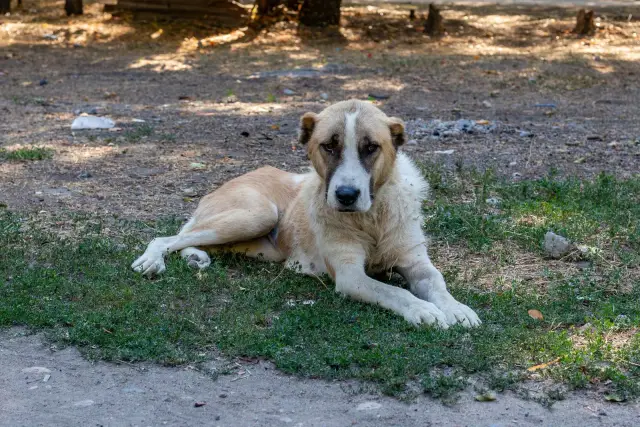
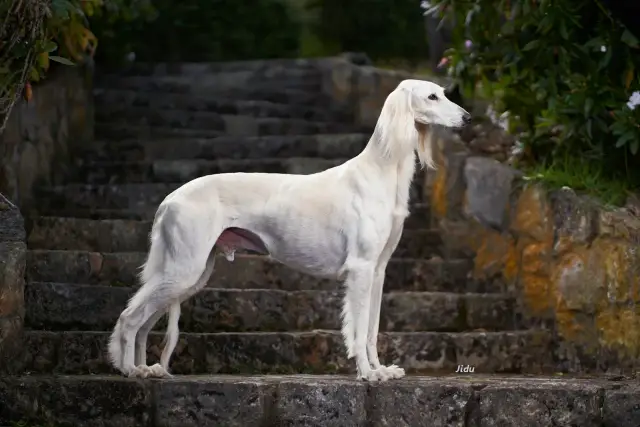 Same eraSaluki3000 BCE to 1922 · IraqAncient World
Mountain shepherds. For most of its history the breed worked in the mountains. Flocks grazed high pastures in summer, and a large dog stayed with the sheep day and night. Dogs that were gentle with sheep, hardy in cold weather and brave against predators were kept and bred.
The court and the legend. The best-known story says the breed became fashionable among French nobility and was named the "Royal Dog of France" under King Louis XIV. Sources give the date as 1675, but the AKC's own history page says, according to legend, the king named it in 1665, so the date itself is uncertain. Both are legends. No primary court record exists. The story also says the dauphin's court took up the dogs and kept them at royal châteaux.
The Americas. The AKC's article credits the Marquis de Lafayette with bringing the first Great Pyrenees to the United States in 1824. The AKC says quality breeding stock was imported in the early 1930s, and the breed was officially recognised by the AKC in February 1933. Sources agree on 1933.
Standardisation. The FCI standard is no. 137, in Group 2, Section 2.2 (Molossian breeds, mountain type, without working trial). The atlas data dates the established modern breed to 1923.
On the farm. In the United States the breed became a coyote guardian on sheep ranches (see "Working on farms" below).
Relatives and DNA
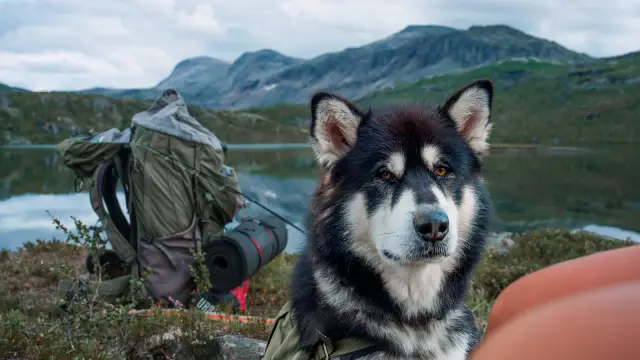 Same familyAlaskan Malamute1000 BCE to 1935 · United StatesAncient World
The Pyrenean Mountain Dog belongs to the Mediterranean family in Parker et al. (2017, Cell Reports), who analysed 1,346 dogs from 161 breeds. It was one of 13 breeds in that family sampled directly, with strong support. This family also holds the sighthounds of the Mediterranean and the heavy guardians such as the Kuvasz and Maremmano-Abruzzese Sheepdog.
What our data records. The atlas record for the Pyrenean Mountain Dog lists no shared-haplotype links, so there is no table of shared to give. The data lists these descendant breeds, with the Pyrenean Mountain Dog as an ancestor or influence: the Leonberger, Hovawart, King Shepherd, Pumi and Clumber Spaniel. These are history-based links from older breed accounts, not DNA results. For the Leonberger, the founder Heinrich Essig claimed Pyrenean Mountain Dog blood along with St Bernard and Newfoundland blood, and our data marks these claims as disputed.
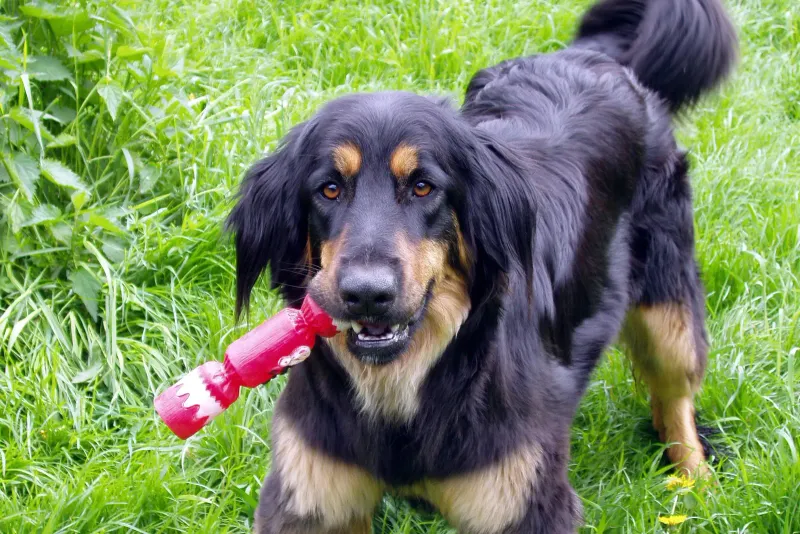
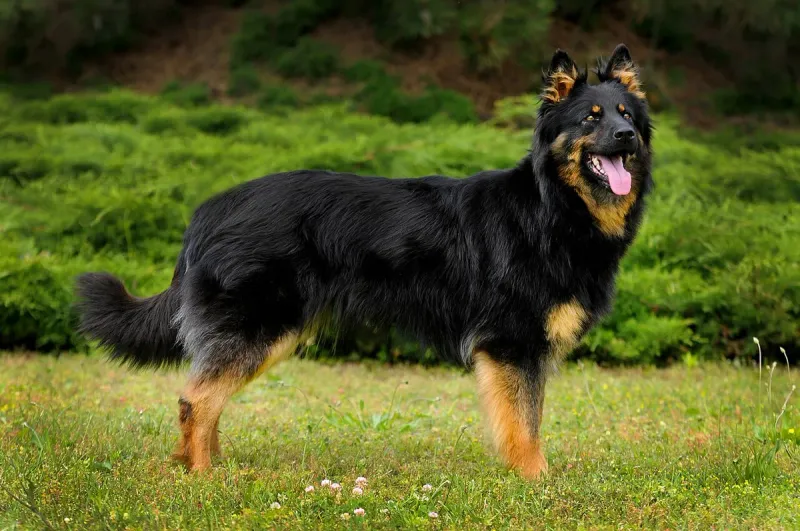
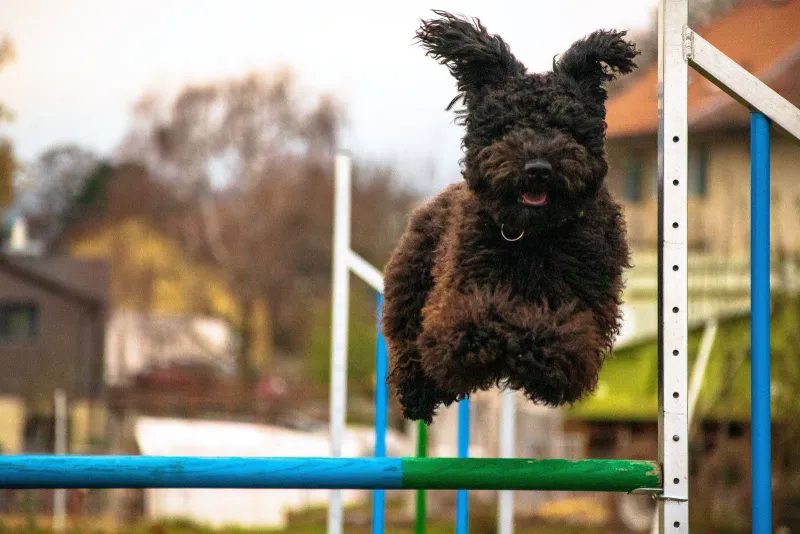
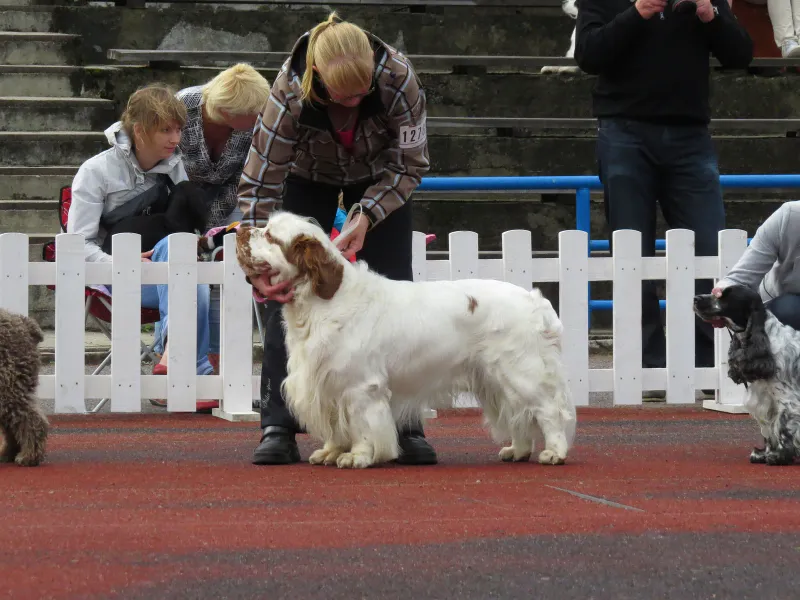
Sister breed. The Pyrenean Mastiff is listed as a sibling with medium confidence, a note says "separate breeds from the two sides of the Pyrenees but closely related". The Pyrenean Mastiff is placed in the European Mastiff family, not Mediterranean, so the sibling link is by geography and history, not DNA.
 Save
Sister breeds · 1
- Pyrenean Mastiff1500 to 1977
Descend from it · 4
- PumiHungary
- Clumber SpanielUnited Kingdom
- LeonbergerGermany
- King ShepherdUnited States
The breed standard
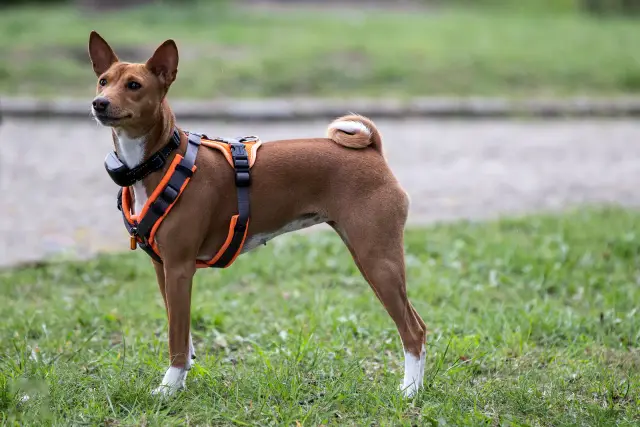 Looks relatedBasenji3000 BCE to 1937 · Democratic Republic of the CongoAncient World
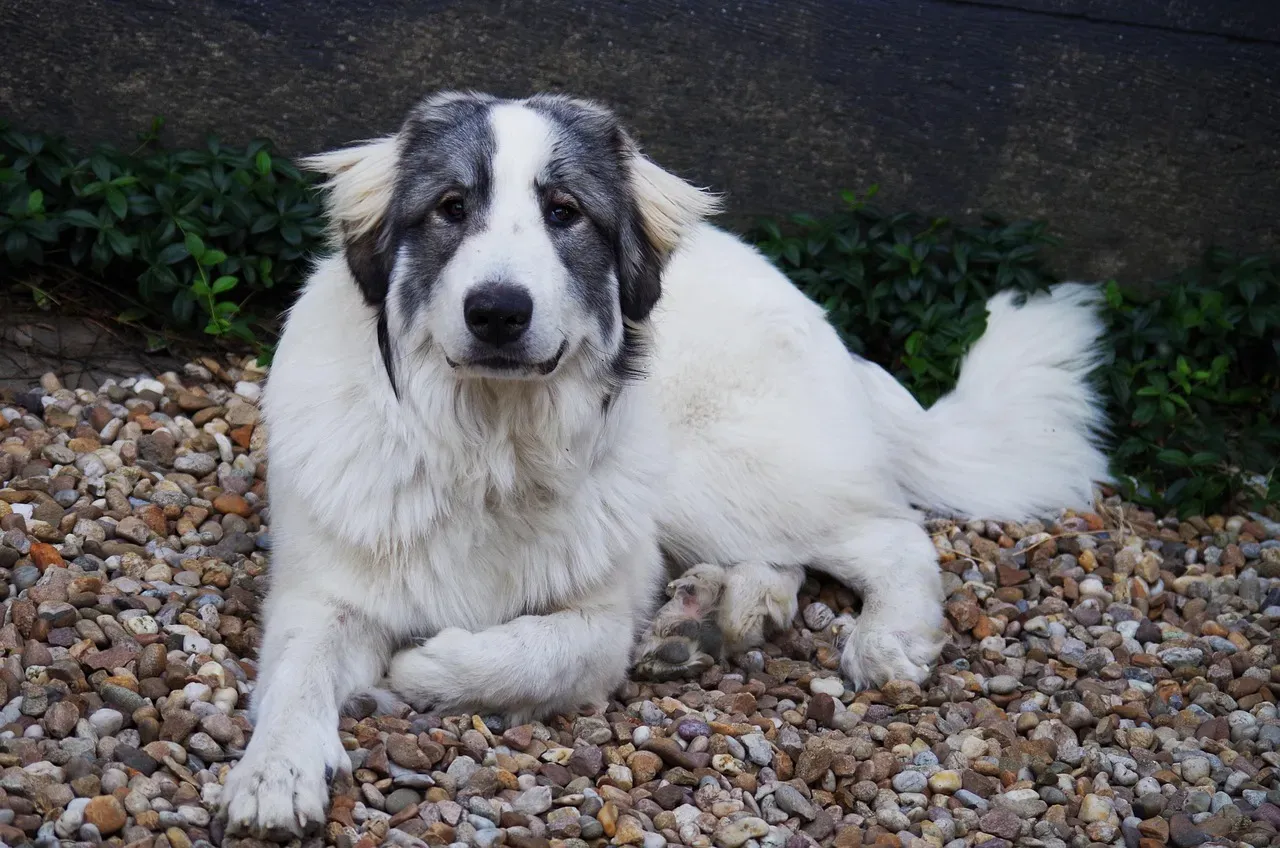
A is the written ideal for a breed that kennel clubs judge dogs against. The table gives only figures that clubs publish and leaves out the rest.
| Trait | What the standards say |
|---|---|
| Height | UKC: dogs 27.5 to 31.5 inches (about 70 to 80 cm), bitches 25.5 to 29.5 inches (about 65 to 75 cm) |
| Weight | Commonly reported range of 55 to 75 kg (encyclopedia summary) |
| Coat | UKC: dense and double; topcoat fairly long and flat, with a crisp feel around the shoulders and back |
| Colour | White, with or without patches of badger, wolf-grey or reddish tan on the head and up to a third of the body (as reported) |
| Dewclaws | UKC: double dewclaws on both rear legs; lacking them is a disqualification. FCI 2025 faults list: no dewclaws, a single dewclaw or atrophied double dewclaws on the hind feet is a fault |
| Classification | FCI no. 137, Group 2, Section 2.2 |
Double dewclaws. A dewclaw is a thumb-like digit on the inside of a dog's leg. Most dogs have them on the front legs only. The Pyrenean Mountain Dog is expected to have a double dewclaw on each hind leg. The UKC treats their absence as a disqualification, and the FCI treats it as a fault.
White coat. The standards describe white, with or without patches of badger, wolf-grey or reddish tan on the head and up to a third of the body. White is shared with other guardians such as the Akbash and Maremma, which the Utah State study above grouped as "white dogs".
 Save
Temperament
 Related breedCarolina Dog1000 BCE to 1990 · United StatesAncient World
- Calm and patient. The breed is known for being steady, quiet around its own stock and gentle with young animals.
- Independent. Like other guardians, it was bred to make its own decisions when the shepherd was far away. It may not obey a command that makes no sense to it.
- Protective. The same instinct that guards sheep guards the family and garden. It treats strangers at the gate with suspicion.
- Barks at night. Guardians are most alert in the dark, when predators move. A dog on duty may bark through the night. In a home with close neighbours, that can be a problem. See the guide to livestock guardian dogs.
- Roams. A dog whose territory is "everything I can see" tests fences. Secure, high fencing is basic equipment, not an extra.
- Slow to mature. Giant guardians keep puppy behaviour for a long time; expect a big, clumsy adolescent for two or more years.
 Save

Working on farms
 Related breedChow Chow200 BCE to 1895 · ChinaAncient World
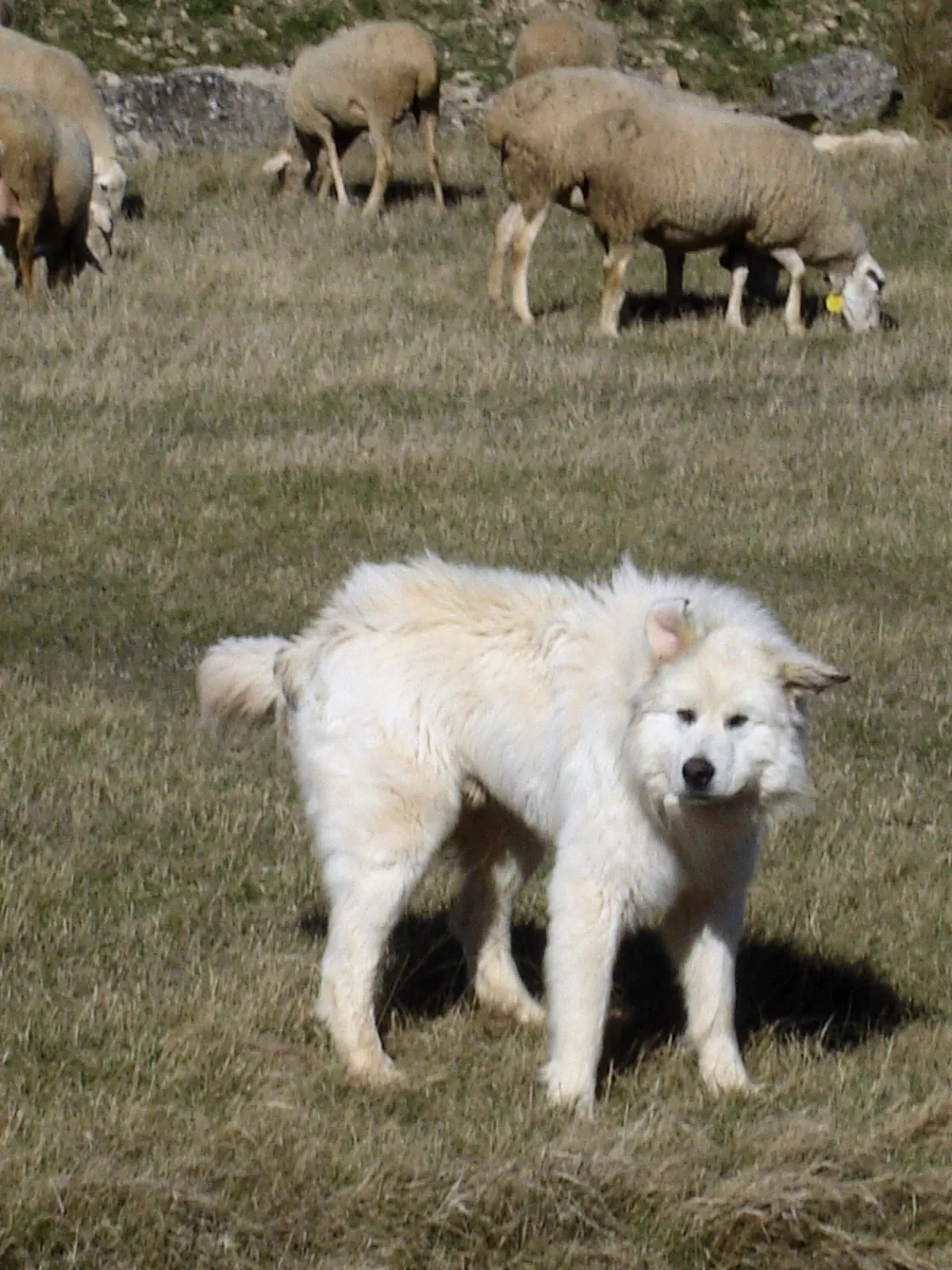
The Pyrenean Mountain Dog was one of the first European guardians used on American sheep farms, and the research on it is large.
- North Dakota, 1981. Pfeifer and Goos (published 1982) studied 36 ranches. Their ranchers held 52 Great Pyrenees (44 working, 8 in training) and 2 Komondors. Average annual predation by coyotes fell from about 6 percent of the flock before guard dogs to about 0.4 percent after.
- Colorado. Andelt's work with 134 producers found dogs reduced coyote predation on lambs in fenced pastures and in some open range, but not on ewes. A later Colorado comparison (Andelt 1999) found that among producers using a single breed, losses and ratings did not differ by breed; among producers using several breeds, the Akbash was rated more effective than the Great Pyrenees.
- A large survey. A survey of 399 producers in the US and Canada rated guarding dogs as very effective (71 percent), with no breed rated higher than the others (Green and Woodruff, USDA).
- A newer four-year study. A Wildlife Services and Utah State study of 54 sheep producers in five Western states grouped Great Pyrenees with Akbash and Maremma as "white dogs", and found larger breeds reduced depredation compared with those white dogs by 61 to 95 percent. The Great Pyrenees was not one of the three focus breeds, so this study cannot be read as a result for the breed. It is known only through a trade report.
What this means. Guarding dogs usually cut losses, and no single breed is clearly best. The Great Pyrenees is calm and good with sheep, but some farmers prefer other breeds for roaming or aggression.
 Save
Health
 Related breedDingo3000 BCE to 1500 BCE · AustraliaAncient World
Most Pyrenean Mountain Dogs live healthy lives. This section lists what breeders screen for and what owners can watch for. Few breed-specific studies exist, so many rows say so plainly and give no invented figures. Information here is general. Talk to a vet about your own dog.
Life span. The atlas data gives 10 to 12 years. No breed-specific UK life span exists for the breed. A Royal Veterinary College study of giant breeds, which did not name the Pyrenean Mountain Dog, put the average giant-dog life span at 8.9 years, and found 73.8 percent of giant dogs had at least one disorder recorded a year, against 65.8 percent across all breeds. That is context for giant dogs, not a figure for this breed.
| Condition | What it is | How common | What helps |
|---|---|---|---|
| The hip joint forms loosely and wears early | In a review of OFA hip records, the Great Pyrenees row showed 8.7 percent dysplastic across 5,890 dogs, about 1 in 11 (the table was garbled and the data about a decade old; OFA data comes from owners who chose to submit) | Hip scores on both parents (OFA, or the BVA/Kennel Club scheme); keep puppies lean; avoid hard jumping on growing joints | |
| Bone cancer (osteosarcoma) | A bone tumour, most often in a leg bone | The PDSA lists it among health problems of the breed, and the AKC Canine Health Foundation names the Great Pyrenees among long-limbed breeds with higher frequency in large and giant breeds. The Edmunds 2021 UK study gives no breed prevalence or odds ratio for the Pyrenean Mountain Dog | Ask a vet about any limb lameness that lasts more than a few days; keep an adult dog lean; no screening test exists |
| Bloat (GDV) | The stomach fills with gas and may twist | Large or giant size and a deep, narrow chest are the common risk factors. Glickman's prospective study put the Great Dane highest at 53 cases per 1,000 dog years; the Great Pyrenees was not on that list, so we have no breed figure | Several small meals, calm time after eating, and a vet at once if the belly swells or the dog retches without vomiting |
| Deafness | Hearing loss, usually present from birth | The PDSA lists it for the breed; no figure found | Hearing test (BAER) for puppies from breeding lines, where available |
| Panosteitis, patellar luxation, epilepsy, entropion | Bone pain in growing dogs; slipping kneecap; seizures; inward-rolling eyelid | The PDSA lists these as health problems the breed is prone to; no figures found | Vet checks, eye checks and knee checks for breeding dogs |
The UK Kennel Club classes the Pyrenean Mountain Dog as a Category Two breed, meaning it has visible features of concern if exaggerated (as reported by the PDSA). In practice that means buying from a breeder who avoids exaggerated features, such as too much loose skin or heavy eyelids.
Ask a vet about your own dog's risks, and ask a breeder for certificates, not general reassurance.
 Save

Living with a Pyrenean Mountain Dog
 Related breedItalian Greyhound500 BCE to 1900 · ItalyAncient World
 Save
| Daily reality | Rating | Why |
|---|---|---|
| Exercise per day | Medium | Daily walks and room to patrol; it is not a running or jogging dog |
| Training needs | High | Independent; calm, consistent handling and early socialisation are needed |
| Grooming | High | Long, thick double coat; brush several times a week and daily at seasonal shed |
| Shedding | High | Heavy seasonal shed; white hair on everything |
| Barking | Poor | Night barking is part of the job; neighbours will hear it |
| Time alone | Fair | Used to long watches, but bored guardians dig, bark and roam |
| Children | Varies | Gentle with its own family; its size and protectiveness mean supervision |
| Other dogs | Varies | Territorial; early socialisation helps |
| Cats and small pets | Varies | Often trustworthy with animals it grew up with; no source rates the breed directly |
| Flat living | Poor | Giant guardian; needs a secure garden or land |
| Heat tolerance | Poor | Thick double coat; no source rates it directly, so keep exercise to cool hours |
| Cold tolerance | Good | Developed in mountain country with a dense double coat |
| First-time owner fit | Fair | Gentle in nature, but independence, size and barking make it hard for new owners |
A great fit if
- You have a large, secure garden or land with high fencing.
- You live where night barking will not cause problems.
- You want a calm guardian for sheep, goats or poultry and can raise a puppy with them.
- You can brush a thick coat several times a week.
Think twice if
- You live in a flat or a close-packed street.
- You want a dog that comes when called and walks off-lead anywhere.
- You live in a hot climate with no shaded, cool space.
- You are away most of the day.
Before you get one
- Health tests. Ask for hip scores on both parents, elbow scores where available, and a vet's note on eyes and knees. Ask for original certificates.
- Dewclaws. Check that the puppy has the double hind dewclaws the standards expect.
- Working or show lines. Ask to see the parents and, for working dogs, how they behave with stock.
- Puppy or adult rescue. Breed rescues exist, and many place adults whose behaviour is known.
- First year. Plan for fencing, calm socialisation and a lean body weight; large puppies grow fast.
Similar breeds to consider
- Kuvasz. Hungarian white guardian of similar size.
- Maremmano-Abruzzese Sheepdog. Italian white guardian, slightly smaller.
- Kangal Shepherd Dog. Turkish guardian with a short coat, which needs less grooming.
- Leonberger. A companion giant with some Pyrenean history in its founder's account.

Pyrenean Mountain Dog fun facts
 Related breedMaltese500 BCE to 1888 · MaltaAncient World
- Most dogs have dewclaws on the front legs only; the Pyrenean Mountain Dog is expected to have double dewclaws on each hind leg.
- The Marquis de Lafayette is credited with bringing the first Great Pyrenees to the United States in 1824 (AKC).
- In a North Dakota study of 36 ranches, most guard dogs were Great Pyrenees, and predation fell from about 6 percent to about 0.4 percent of the flock.
- The Royal Dog of France story is a legend; most sources give 1675, and the AKC's page also gives 1665.
Frequently asked questions
Are Great Pyrenees good family dogs?
They are gentle and protective with their own family, but size, independence and night barking mean they suit homes with land, experience and a fence.
How big is a Pyrenean Mountain Dog?
UKC: dogs 27.5 to 31.5 inches (about 70 to 80 cm) and bitches 25.5 to 29.5 inches (about 65 to 75 cm). A commonly reported weight range is 55 to 75 kg.
How long do they live?
Breed sources give 10 to 12 years. No breed-specific longevity study exists.
Why do Great Pyrenees bark at night?
Guardians were bred to watch for predators, which come at night. Barking is part of the job.
Why do they have double dewclaws?
The standards expect them on the hind legs. A dewclaw is a thumb-like digit; most dogs have single dewclaws, if any, on the front legs.
Do Great Pyrenees protect against coyotes?
In a North Dakota study of 36 ranches, most guard dogs were Great Pyrenees and coyote predation fell from about 6 percent to about 0.4 percent of the flock. A Colorado survey found no breed differences among single-breed users.
Read next
 FamilyMediterraneanThe whole family
 Adopt a dogDog Shelters in FranceTen big cities checked, how adoption works, fees in euros
Sources (17)
- American Kennel Club, Great Pyrenees history page and "9 facts" article.
- American Kennel Club Canine Health Foundation, osteosarcoma research portfolio entry on large dog breeds.
- Andelt W.F., "Relative effectiveness of guarding dog breeds to deter predation on domestic sheep in Colorado", 1999.
- Andelt W.F., Colorado guarding dog survey of 134 producers, 1986 (as summarised in a conservation evidence review).
- Edmunds G.L. et al., "Dog breeds and body conformations with predisposition to osteosarcoma in the UK: a case-control study", Canine Medicine and Genetics, 2021.
- Fédération Cynologique Internationale, Pyrenean Mountain Dog, standard no. 137.
- Glickman L.T. et al., prospective study of gastric dilatation-volvulus in large and giant breeds (as summarised in veterinary reviews).
- Green J.S. and Woodruff R.A., survey of 399 sheep producers on guarding dogs (as summarised in range management literature).
- OFA hip dysplasia database review of breeds with at least 5,000 evaluations (Breeding Better Dogs summary).
- Parker H.G. et al., "Genomic analyses reveal the influence of geographic origin, migration, and hybridization on modern dog breed development", Cell Reports, 2017.
- PDSA, Pyrenean Mountain Dog breed information.
- Pfeifer W.K. and Goos M.W., guard dogs and gas exploders as coyote depredation control tools in North Dakota, 1982.
- Royal Veterinary College (VetCompass), giant dog breeds health study, as reported by the RVC and MRCVSonline.
- Showsight Magazine, "Great Pyrenees: history of the dog of the mountains".
- United Kennel Club, Great Pyrenees breed standard.
- Wildlife Services and Utah State University, four-year study of livestock guardian dog breeds on Western sheep operations, as reported in Farm Progress.
- Dogs Atlas breed records and Parker 2017 shared-haplotype table (this site).