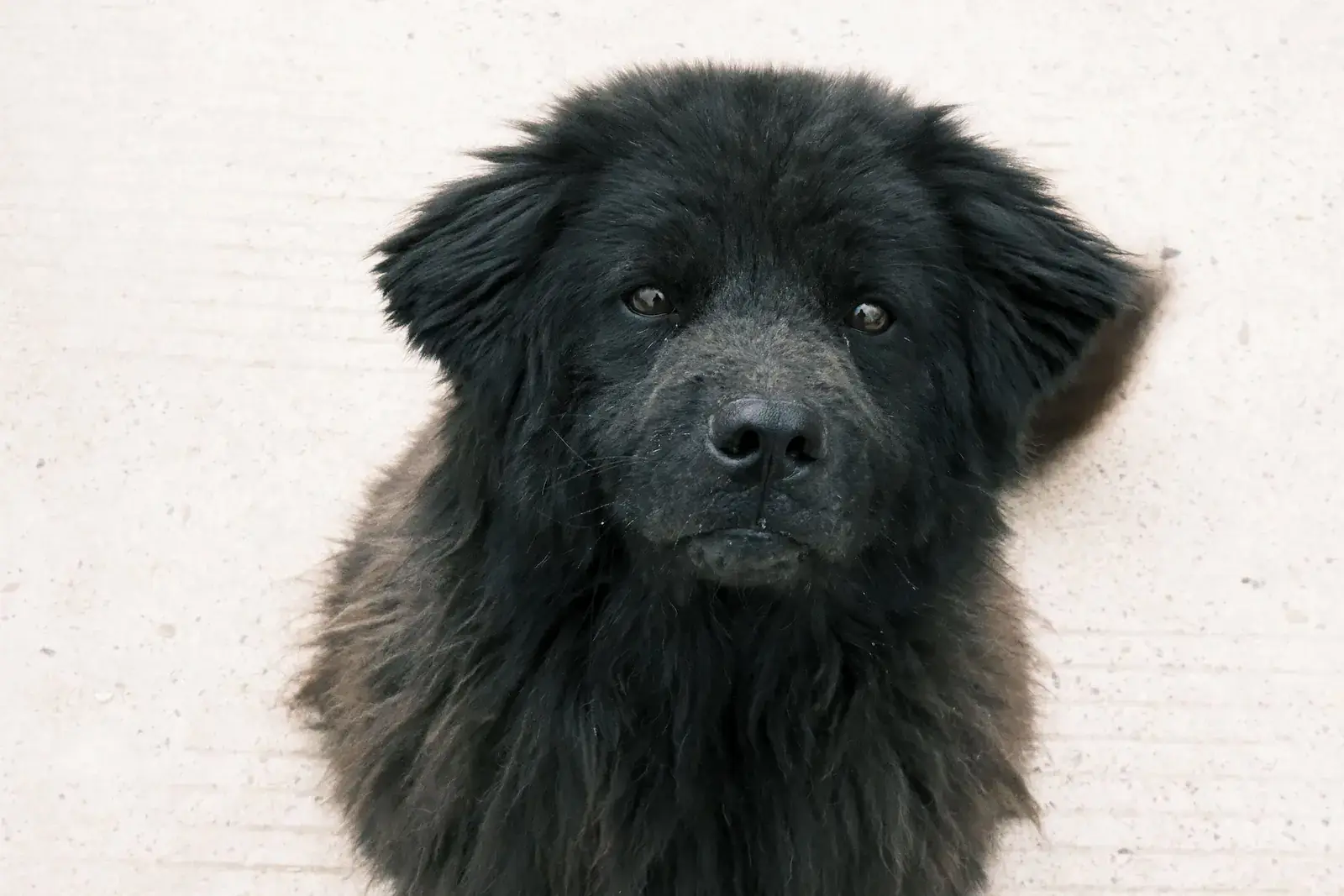
It grew from the larger dogs that fishermen used to haul nets, pull carts and fetch people and gear out of cold water. The webbed feet, thick water-shedding coat and gentle nature that came from that work are still the breed's hallmarks. Adults are heavy (about 54 to 69 kg in the FCI and UK Kennel Club standards), they drool, and they shed a lot. In return you get one of the most patient and people-loving dogs there is. Typical life span is 8 to 10 years.
Newfoundland quick facts
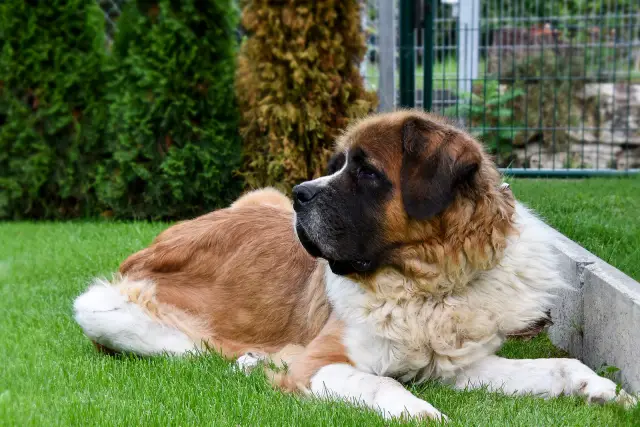 Related breedSt. Bernard1650 to 1884 · SwitzerlandEarly Modern Era
- Closest DNA relatives
- Golden Retriever, Black Russian Terrier, Labrador Retriever
- Descendant breeds
- St. Bernard, Leonberger, Flat-Coated Retriever, Landseer, Black Russian Terrier, Hovawart (atlas data)
- Country of origin
- Canada (island of Newfoundland, province of Newfoundland and Labrador)
- Period of development
- From about 1600 to the 1880s (atlas data; low-to-medium certainty, as records are thin)
- Original job
- Fishermen's helper: hauling nets and fish carts, retrieving from the sea
- Type
- Water dog (FCI Group 2, Pinscher and Schnauzer, Molossoid and Swiss Mountain and Cattledogs, standard no. 50; Working Group; UK Kennel Club Working Group)
- Height
- FCI averages: dogs 71 cm, bitches 66 cm
- Weight
- FCI: about 68 kg dogs, 54 kg bitches. UK Kennel Club: dogs 64 to 69 kg, bitches 50 to 54.5 kg
- Coat
- Dense, water-resistant double coat; flat to slightly wavy outer coat
- Colour
- Black is the classic colour; the black-and-white "Landseer" pattern is named after a painter
- Life span
- Atlas data: 8 to 10 years. UK Kennel Club lists under 10 years
- Exercise
- Up to about 1 hour a day (UK Kennel Club); loves swimming
- DNA family
- Retriever family (Parker et al. 2017)
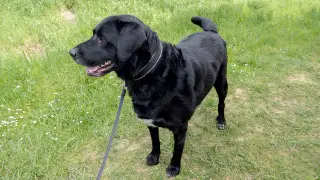
Drawn to scale in real centimetres. Its back reaches about 69 cm, mid-thigh; its head about 87 cm, your hip.
Where it sits in the tree
Early Modern Era · 1600 to 1799
Name and origin
 Related breedEnglish Mastiff1300 to 1880 · United KingdomLate Middle Ages
The breed is named after its home island. "Newfoundland" comes from "new found land", the English name given to the territory after European fishermen and explorers began visiting in the late 1400s. The dog is also called "Newfie" by owners and, in some countries, simply "Newfoundland dog". The FCI lists it as a Canadian breed, standard no. 50.
How the breed began is not fully documented. The most common account is that it descends from the St. John's water dog, a smaller island working dog, crossed with larger dogs brought by European fishermen. Portuguese fishermen are often named as a source of large guarding dogs (the Rafeiro do Alentejo is the usual suggestion), and English mastiff-type dogs are also proposed. Our own data keeps these links at low confidence: they are plausible, not proven. What the written record does show is that large black water dogs were working in Newfoundland fishing communities by the early 1800s and were already famous enough to be exported to Britain.

History
 Same eraChesapeake Bay Retriever1807 to 1918 · United StatesIndustrial Revolution
Fishermen's dogs on the island
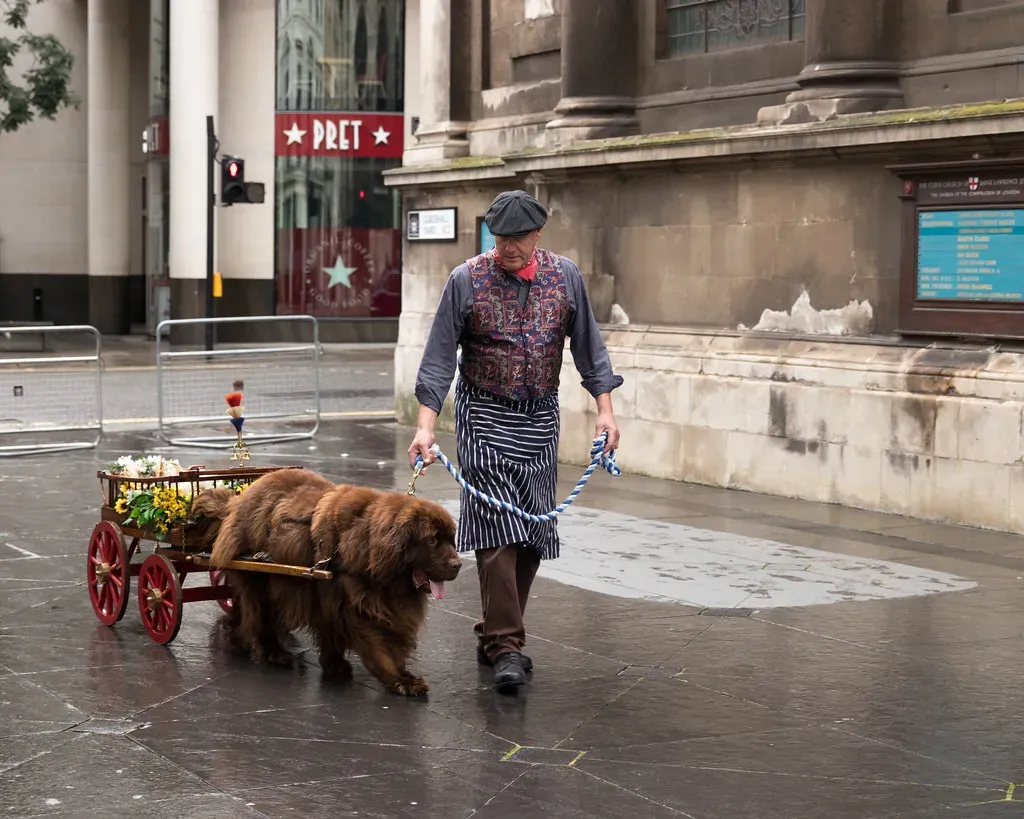
Visitors to the island in the 1700s and 1800s described big, strong dogs that lived with fishing families. Reported jobs include hauling fishing nets out of the water, pulling carts of fish and firewood to market, and retrieving lost gear and people from rough seas. The coat repels water, the feet are webbed, and the dog swims with a powerful stroke. Those traits make sense for a dog that spent its working life on and in cold water.
The St. John's water dog connection
The St. John's water dog (also called the lesser Newfoundland) was a smaller, shorter-coated dog that worked beside fishermen on the Grand Banks. It was probably a mixed descendant of English, Irish and Portuguese working dogs and was valued for temperament and work ability, not for looks. It is widely described as the foundation of modern retrievers: dogs taken to England from Newfoundland in the 1800s fed into the Labrador Retriever and, through crosses, other retrievers. The pure St. John's water dog is now extinct (see St. John's Water Dog). The Newfoundland is its larger, heavier-coated cousin, not its direct replacement.
Our DNA data fits the story. In the Parker 2017 study, the Newfoundland sits in the same Retriever family as the Labrador, Golden Retriever and Flat-Coated Retriever.
A law that nearly ended the breed
Several accounts say the breed came close to disappearing at the start of the 20th century. They blame a law of 1780 that limited households on the island to one dog, aimed at protecting sheep. Breeding in Newfoundland itself fell away, and the strongest lines were kept up abroad. In the 1900s the Newfoundland official and breeder Harold Macpherson is credited with helping to restore the breed on the island. The dates in popular retellings vary, so treat the details as reported history, not as a record you can check line by line.
Paintings, poets and Landseer
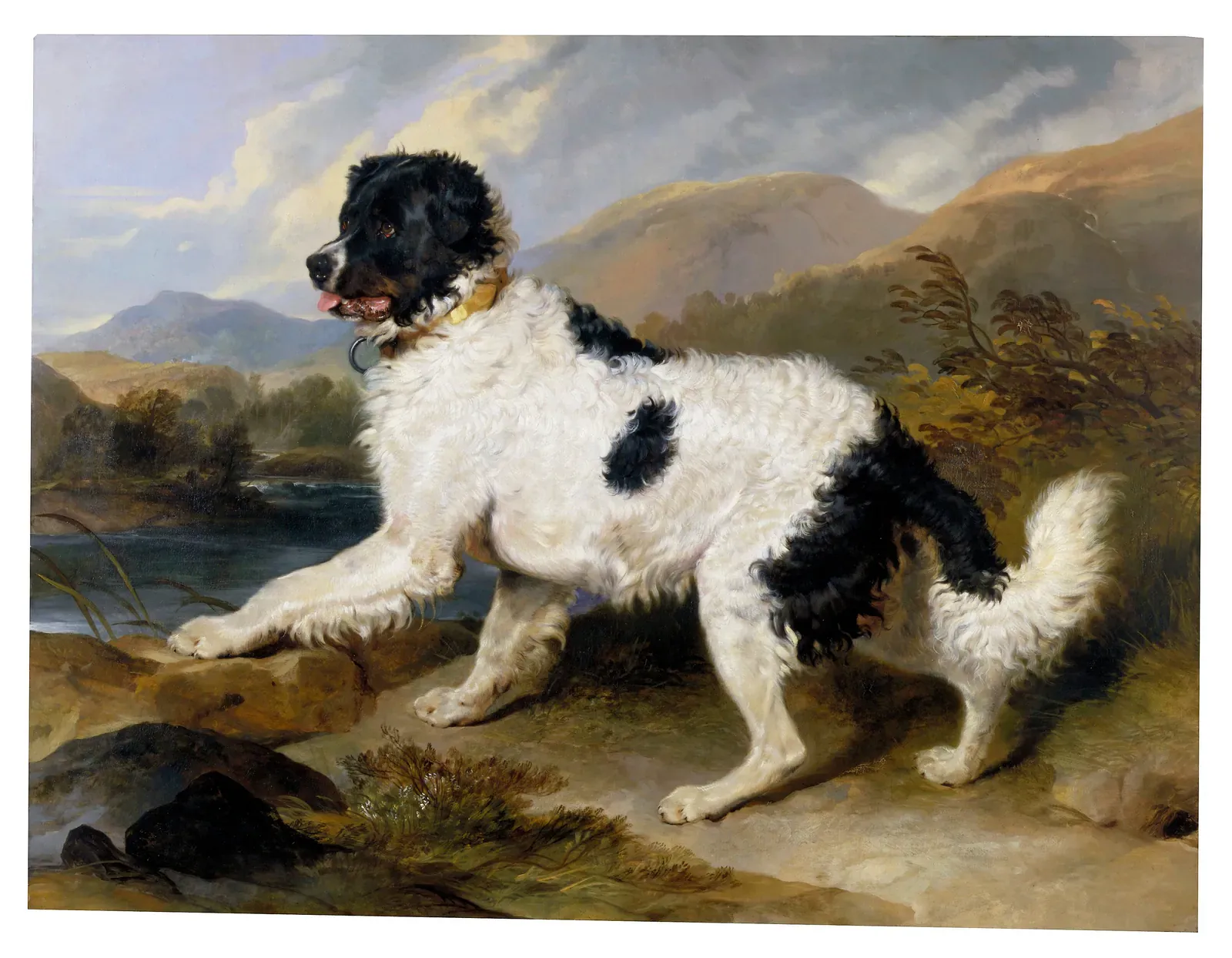
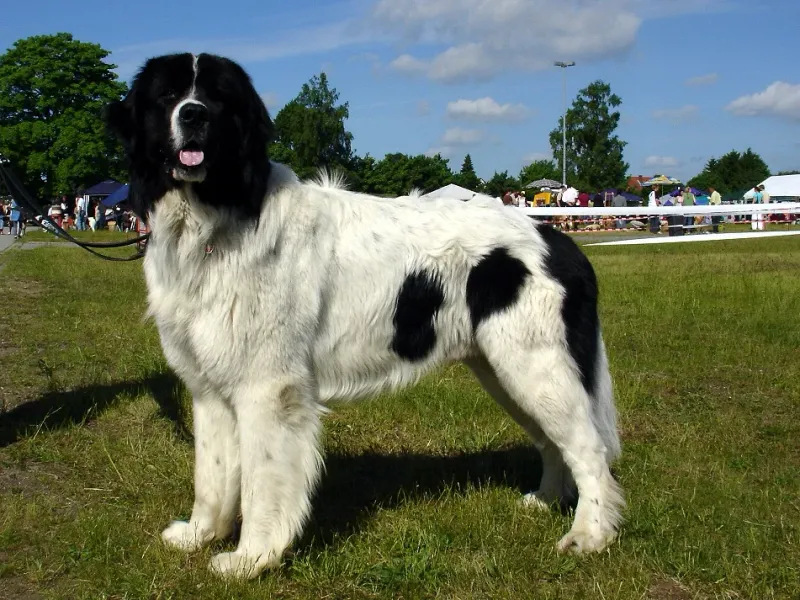
By the 1800s the Newfoundland was a fashionable dog in Britain. The painter Sir Edwin Landseer painted black-and-white Newfoundlands so often (his "A Distinguished Member of the Humane Society" is the best known) that the black-and-white pattern took his name. Owners and breeders still call it "Landseer". The pattern is a colour variety of the Newfoundland in some countries and a separate breed, the Landseer, in others. Our database lists the Landseer as its own entry.
Byron's Boatswain
The poet Lord Byron owned a Newfoundland named Boatswain. When the dog died of rabies in 1808, Byron put up a monument for him at Newstead Abbey, bigger than his own planned tomb, with an inscription now known as "Epitaph to a Dog". The dog was bitten by a rabid dog and Byron nursed him anyway. The death date appears as both 10 and 18 November 1808 in different sources. Part of the epitaph's text is often credited to Byron alone, but his friend John Cam Hobhouse is reported to have written the prose preamble. Byron asked in his will to be buried beside the dog, but this was not carried out.
 Save
Nana in Peter Pan
J. M. Barrie's "Peter Pan" (1904 play, 1911 novel) gives the Darling children a nursemaid who is a dog: "a prim Newfoundland dog" named Nana, hired as a nurse because she was so reliable. Barrie's own dog Luath, a black-and-white Newfoundland of the Landseer type, is reported to have been the model. The first actor to play Nana on stage, Arthur Lupino, is said to have studied Luath at Barrie's home, and the costume makers used a sample of Luath's fur. Barrie and his wife had earlier owned a St. Bernard named Porthos; the wife later wrote that he could never have made a Nana. Disney's 1953 film changed Nana into a St. Bernard, which is why many people picture the wrong breed.
Water rescue: facts and legends
 Related breedNova Scotia Duck Tolling Retriever1860 to 1945 · CanadaVictorian Breed Boom
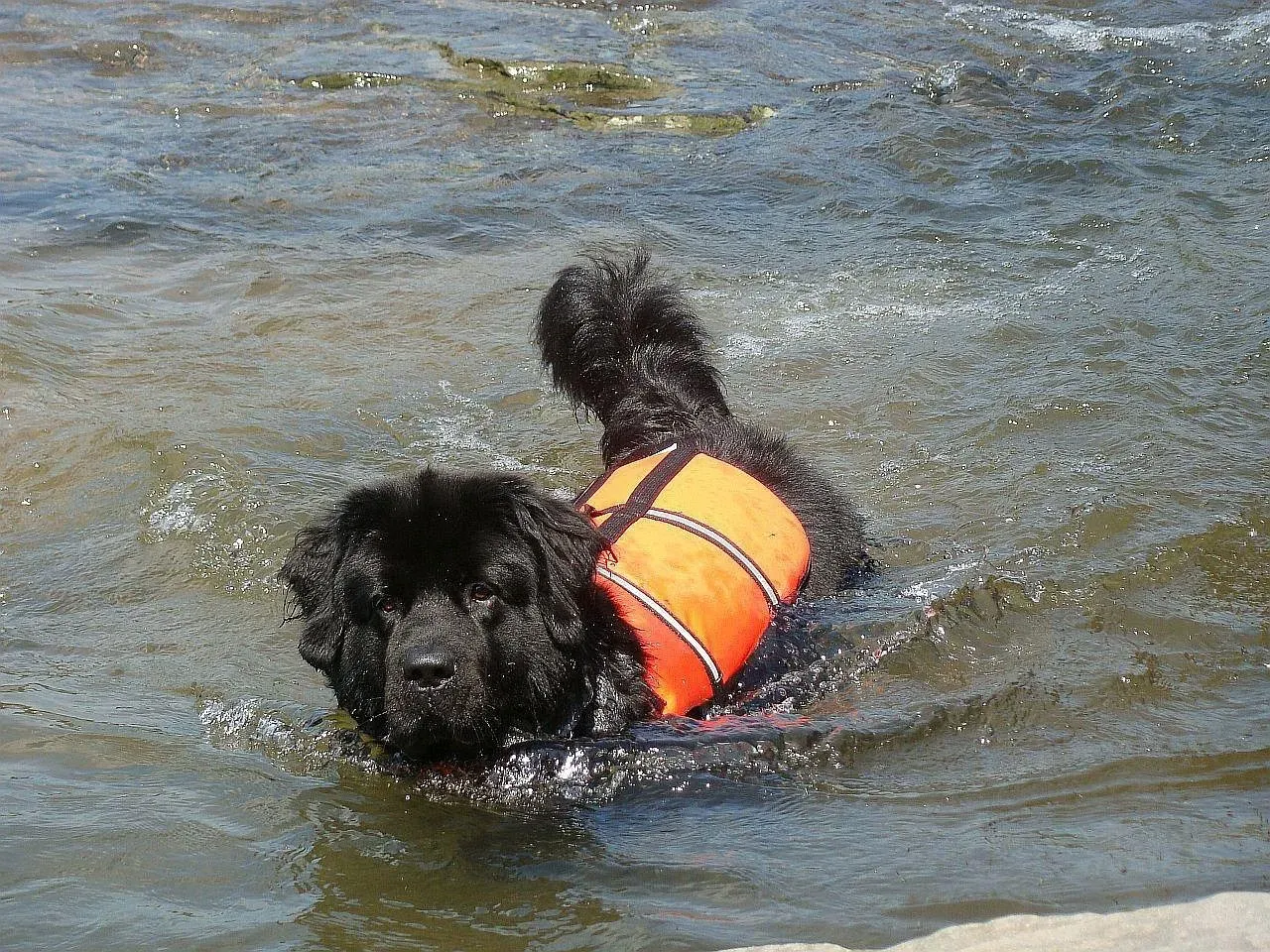
The Newfoundland's water instincts are real and are still used. Newfoundland clubs run water-rescue training and tests in which dogs swim out to a person, tow a boat or carry a line. The breed's strong swimming, calm temper and willingness to haul make it a natural for this work.
The stories of historic rescues need more care. The best-known is the wreck of the SS Ethie in December 1919 on the west coast of Newfoundland. A dog is said to have swum ashore with a line, which let all the people on board get to land. A Government of Newfoundland and Labrador news release from 2000 notes that newspapers of the time describe a "collie-type" dog, and that later accounts call it a Newfoundland. Retellings give the dog the name Tang and say it received a medal from Lloyd's of London, and they disagree even on where the ship went aground (Cow Head and Bonne Bay both appear). Treat the Ethie dog as a well-attested local story whose breed and details grew in the telling. Other tales of dogs saving drowning swimmers in Britain, including several attached to famous Newfoundlands, are in the same category: believable for the breed, hard to verify.
Relatives and DNA
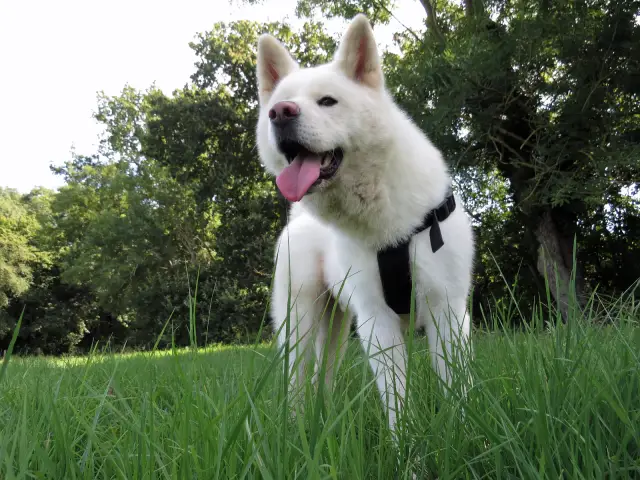 Same familyAkita1600 to 1931 · JapanEarly Modern Era
The Newfoundland is a parent breed for several others and sits near the centre of a small web of giant and water breeds.
- Parents. St. John's Water Dog (medium confidence in our data), Rafeiro do Alentejo and English Mastiff (both low confidence).
- Siblings. The Curly-Coated Retriever, Labrador Retriever and Chesapeake Bay Retriever, all descended in part from the same Newfoundland island dogs.
- Descendants and crosses. Hovawart, St. Bernard (Newfoundlands were crossed into the hospice dogs in the 1800s), Leonberger, Mackenzie River Husky, Flat-Coated Retriever, Landseer, Moscow Water Dog and Black Russian Terrier.
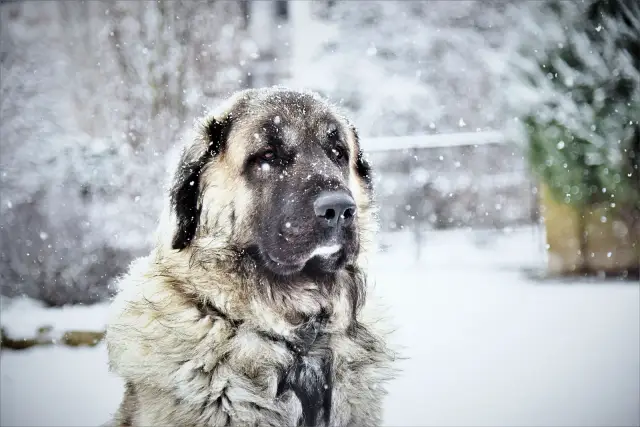
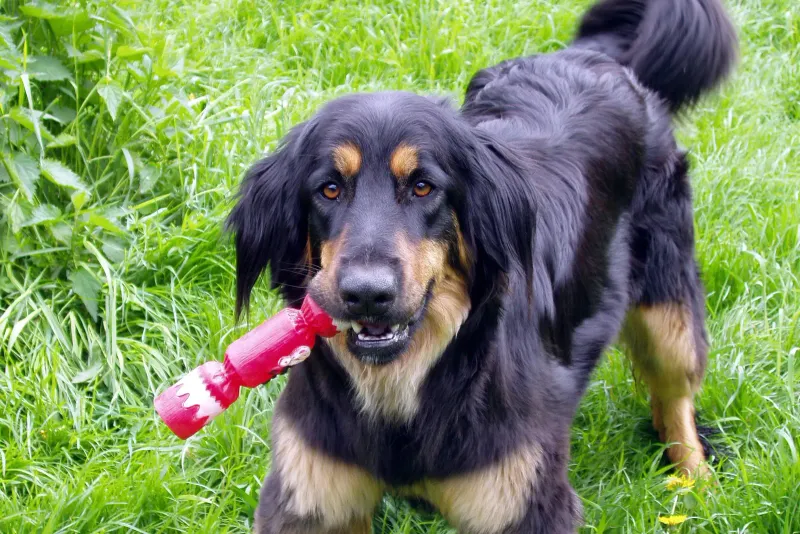
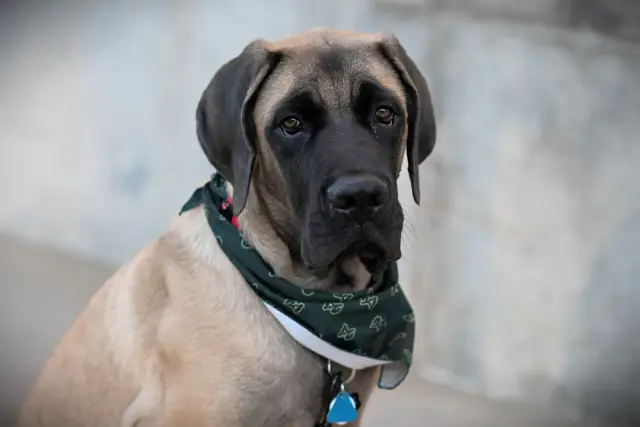
 English Mastiffreported parent, low confidence
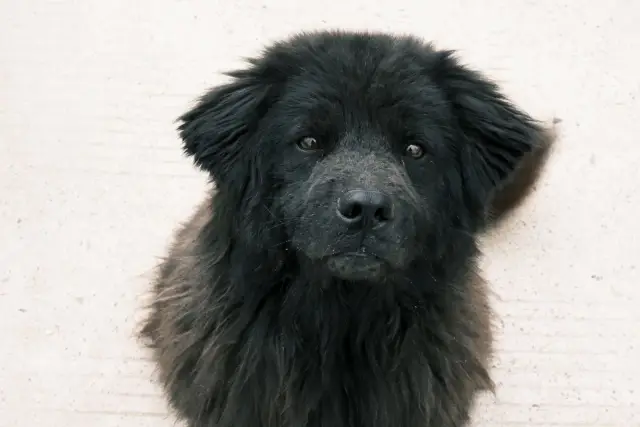
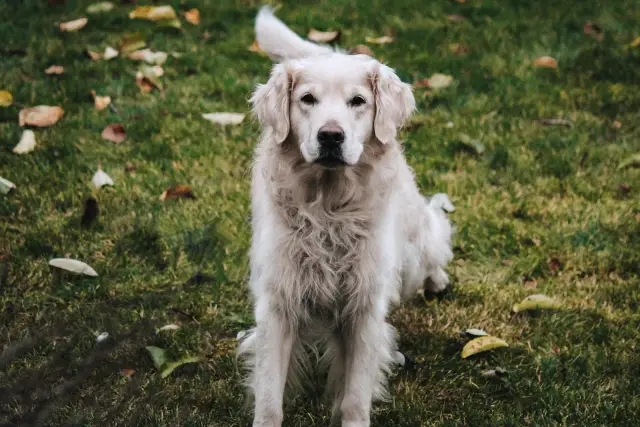
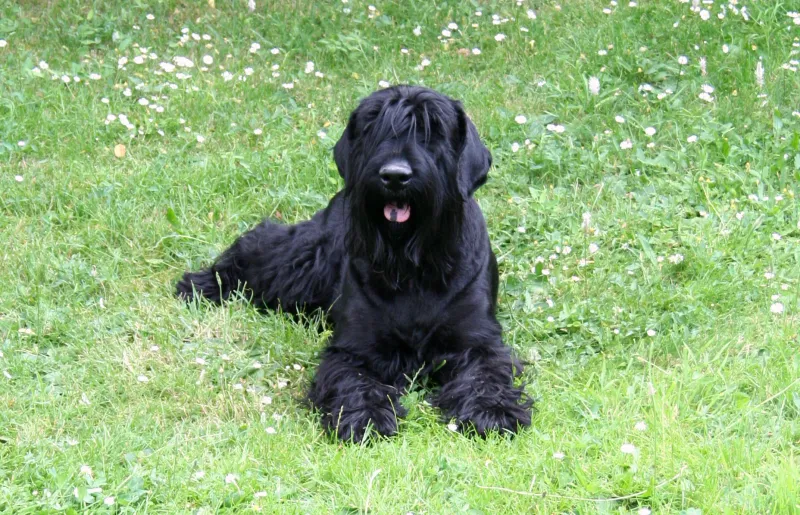
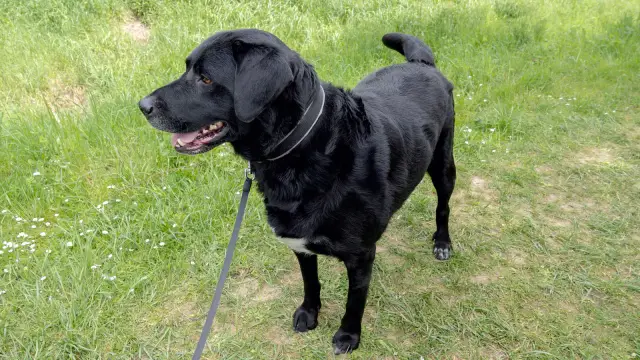
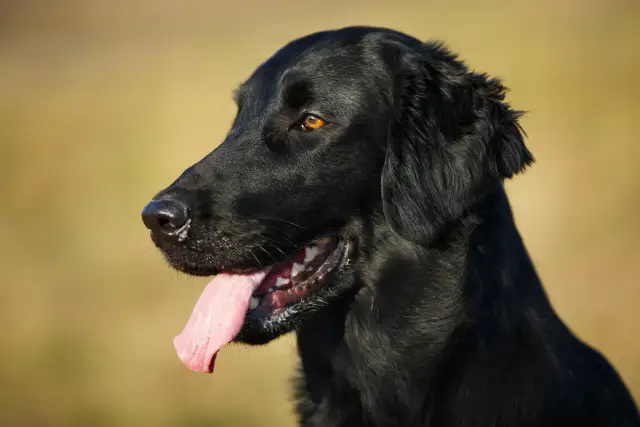
- Newfoundland and Golden Retriever
- Newfoundland and Black Russian Terrier
- Newfoundland and Labrador Retriever
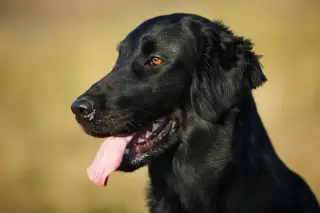
- Newfoundland and Flat-Coated Retriever
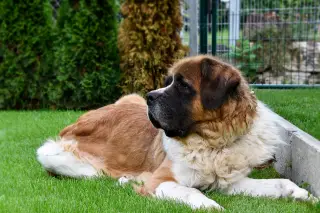
- Newfoundland and St. Bernard
Parker et al. (2017) placed the Newfoundland in the Retriever family, with strong support. "Family" here means a DNA group of breeds, not a kennel-club group, and the Newfoundland sits in the FCI's molossoid group on paper even though its DNA places it with the retrievers.
Sister breeds · 3
- Curly-coated Retriever1800 to 1860
- Labrador Retriever1800 to 1903
- Chesapeake Bay Retriever1807 to 1918
Descend from it · 8
- HovawartGermany
- St. BernardSwitzerland
- LeonbergerGermany
- Mackenzie River HuskyCanada
- Flat-coated RetrieverUnited Kingdom
- LandseerGermany, Switzerland
- Moscow Water DogRussia
- Black Russian TerrierRussia
- Golden Retriever19.5 Mb 0.8%
- Black Russian Terrier19.0 Mb 0.8%
- Labrador Retriever17.8 Mb 0.7%
- Flat-coated Retriever17.6 Mb 0.7%
- St. Bernard12.3 Mb 0.5%
- English Mastiff12.1 Mb 0.5%
- Curly-coated Retriever10.3 Mb 0.4%
Source: Parker et al. 2017. Percent of the whole genome.
| Breedwith the Newfoundland | with the Newfoundland (Parker 2017, Mb)Shared DNA (Parker 2017, Mb) |
|---|---|
| Golden Retriever | 19.5 |
| Black Russian Terrier | 19.0 |
| Labrador Retriever | 17.8 |
| Flat-Coated Retriever | 17.6 |
| St. Bernard | 12.3 |
| English Mastiff | 12.1 |
| Curly-Coated Retriever | 10.3 |
Source: Parker et al. 2017, Cell Reports, shared haplotypes between 161 breeds (1,346 dogs).
The breed standard
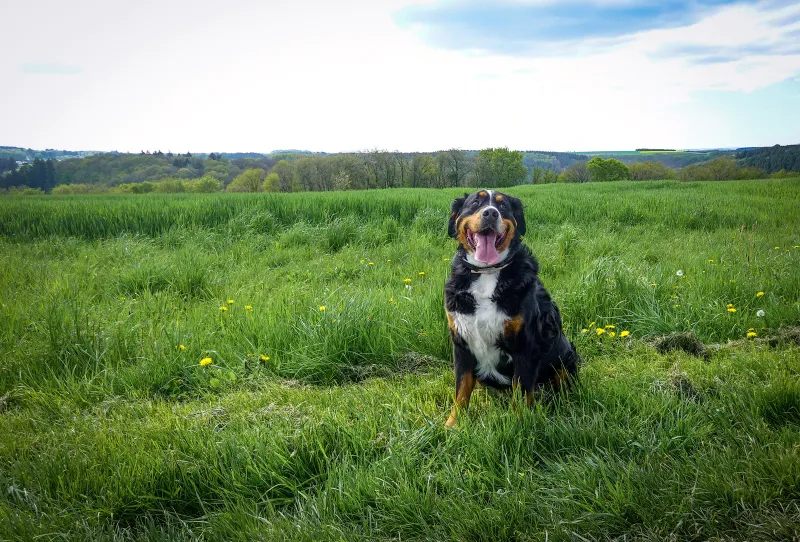 Looks relatedBernese Mountain Dog1700 to 1907 · SwitzerlandEarly Modern Era
A is the written ideal for a breed that kennel clubs judge dogs against. The FCI and UK Kennel Club standards for the Newfoundland agree closely on size. Both say that size is desirable but must not come at the cost of symmetry, soundness, power and correct movement.
| Trait | What the standards say |
|---|---|
| Height, dogs | FCI: average 71 cm. UK Kennel Club: same average |
| Height, bitches | FCI: average 66 cm. UK Kennel Club: same average |
| Weight, dogs | FCI: about 68 kg. UK Kennel Club (2018 text): 64 to 69 kg |
| Weight, bitches | FCI: about 54 kg. UK Kennel Club (2018 text): 50 to 54.5 kg |
| Large size | FCI: desirable, but not to be favoured over symmetry, soundness, structural power and gait |
The Kennel Club also published a 2025 version of the standard. Its weights have not been checked here. The AKC standard was not found in the searches for this article, so no AKC figures are given.
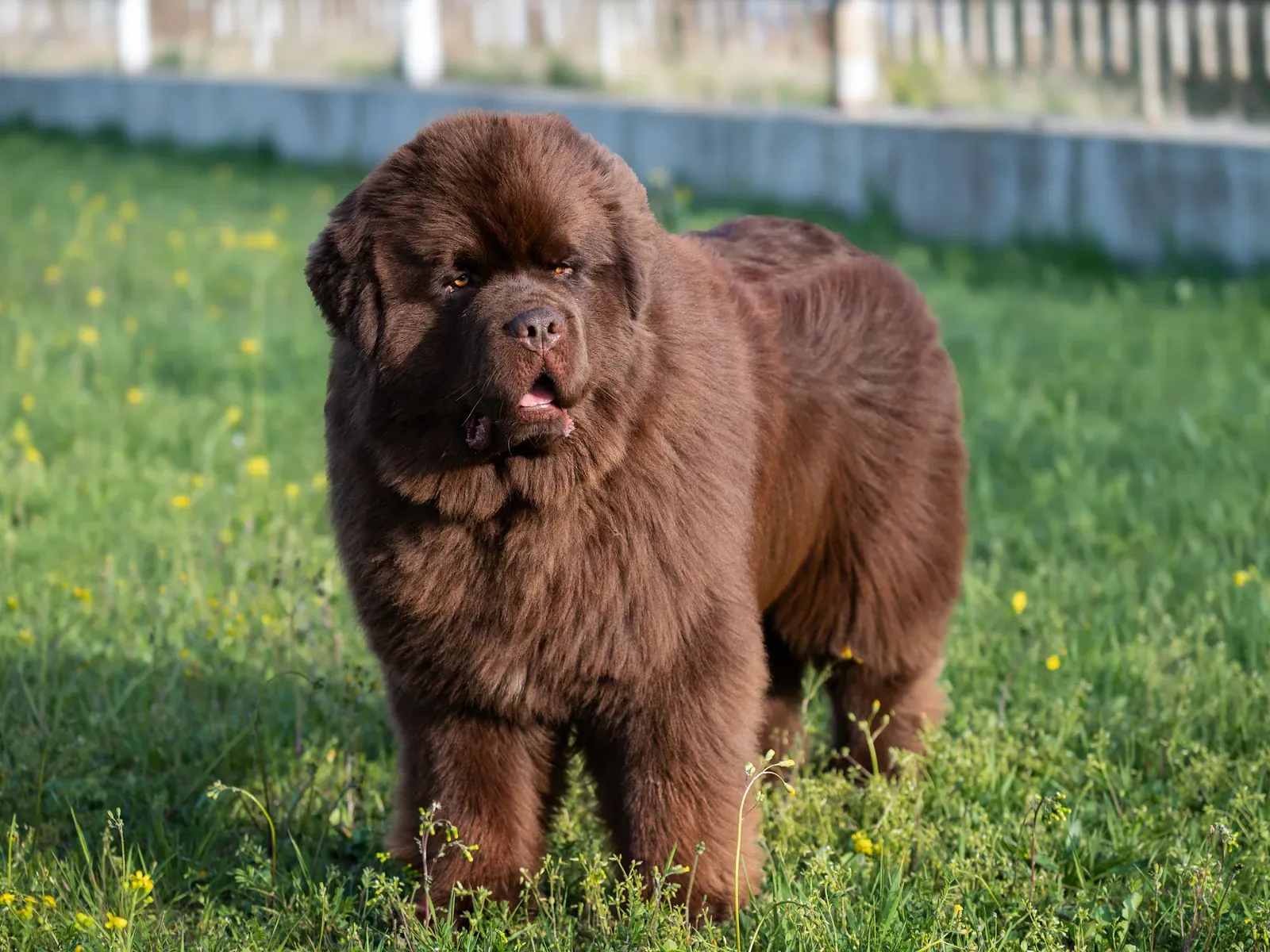
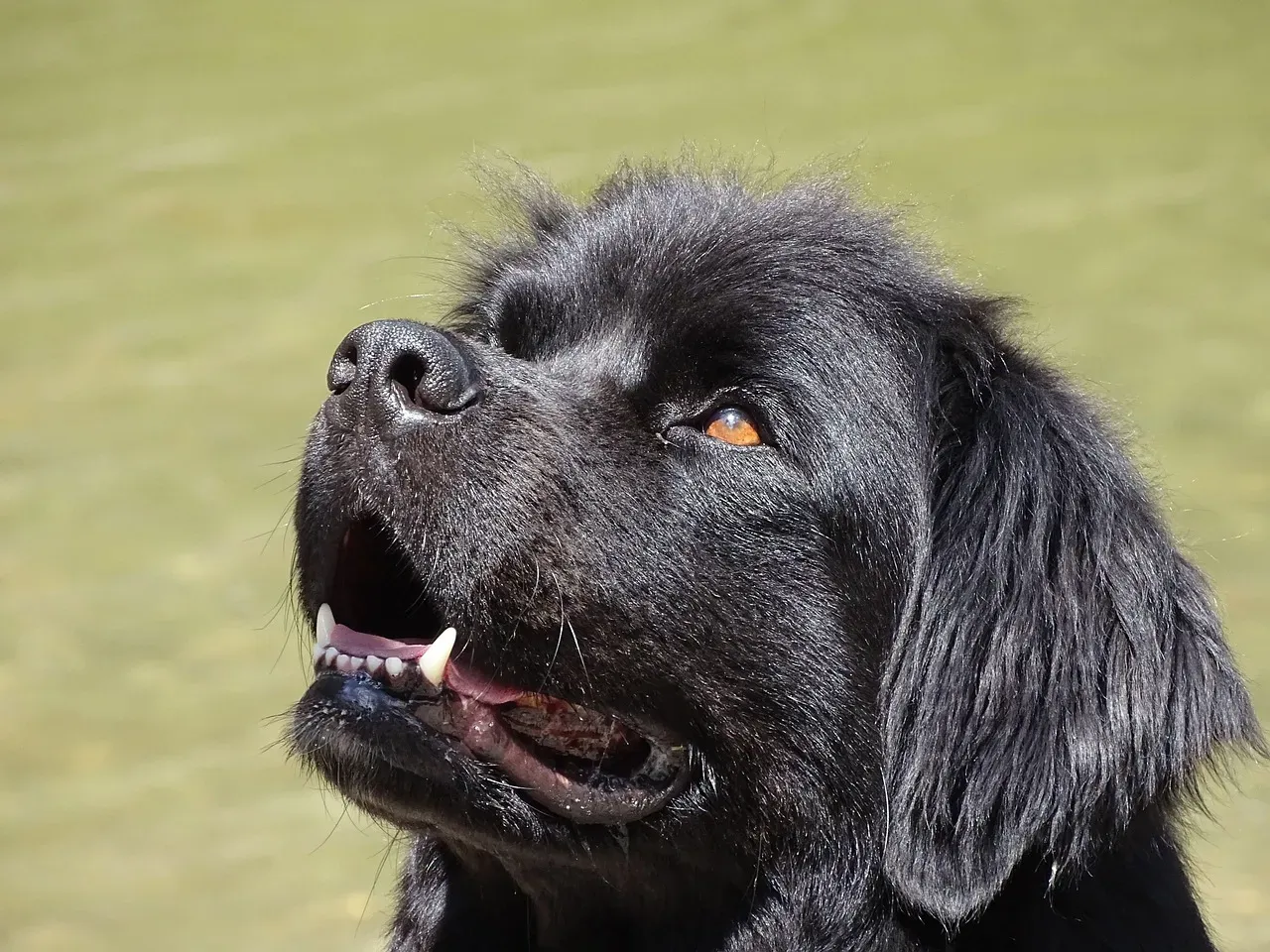
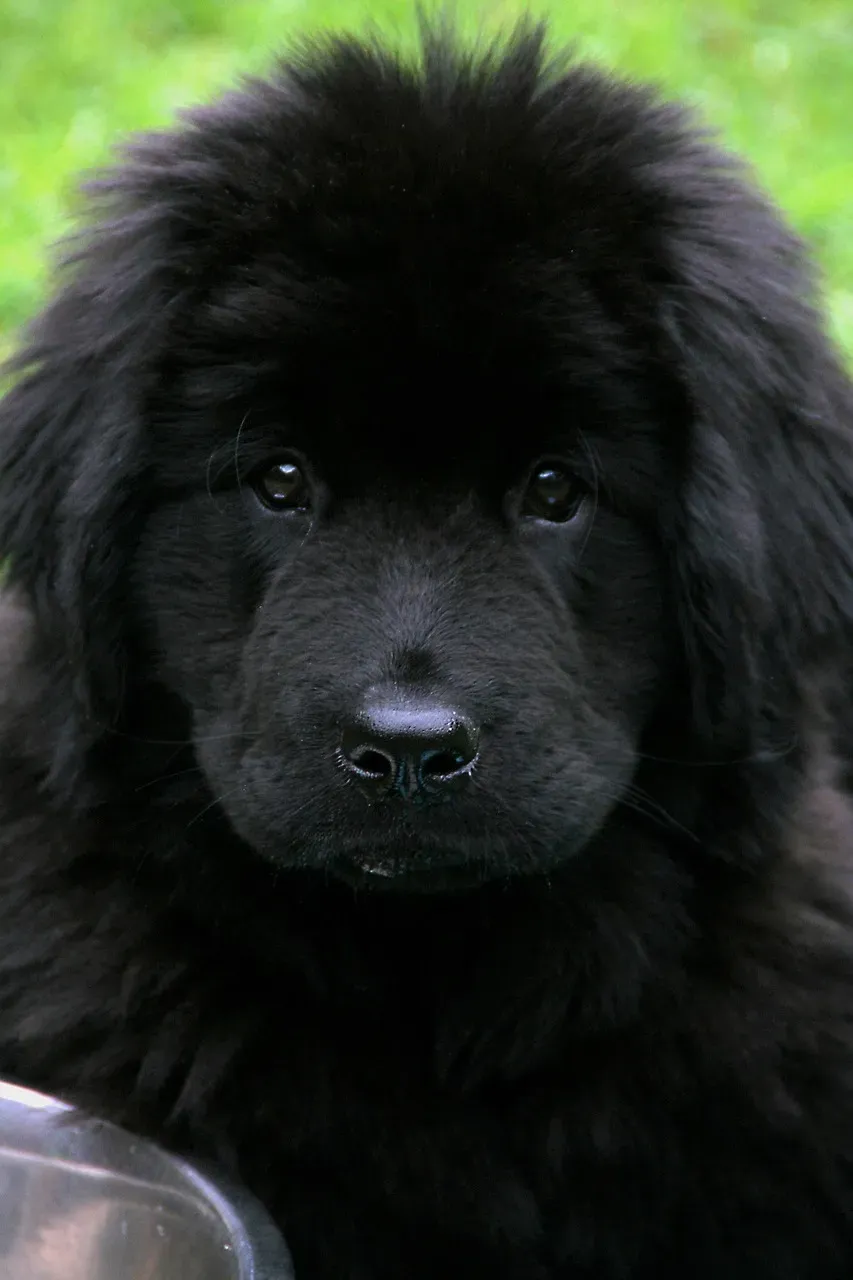
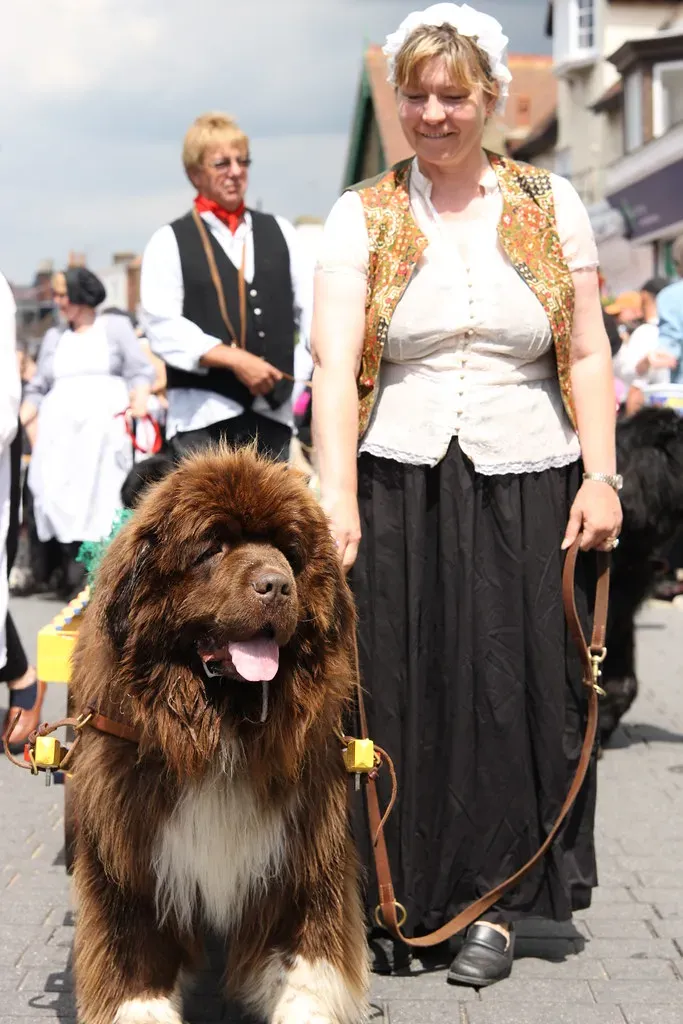
What the dog looks like. A heavy-boned, deep-chested dog with a broad skull, a short square muzzle, small ears that lie flat, and a long, thick tail used as a rudder when swimming. The feet are large and webbed. The coat is a double coat with an oily, water-resistant outer layer and a soft, dense undercoat.
Colours and the Landseer. Black is the colour most people picture. The black-and-white pattern is the "Landseer" colour, treated as a colour of the Newfoundland in some registries and as its own breed in others. Standards differ on colour wording, so check the current text of the club you plan to show under.
Temperament
 Related breedBlack Mouth Cur1700 to 1900 · United StatesEarly Modern Era
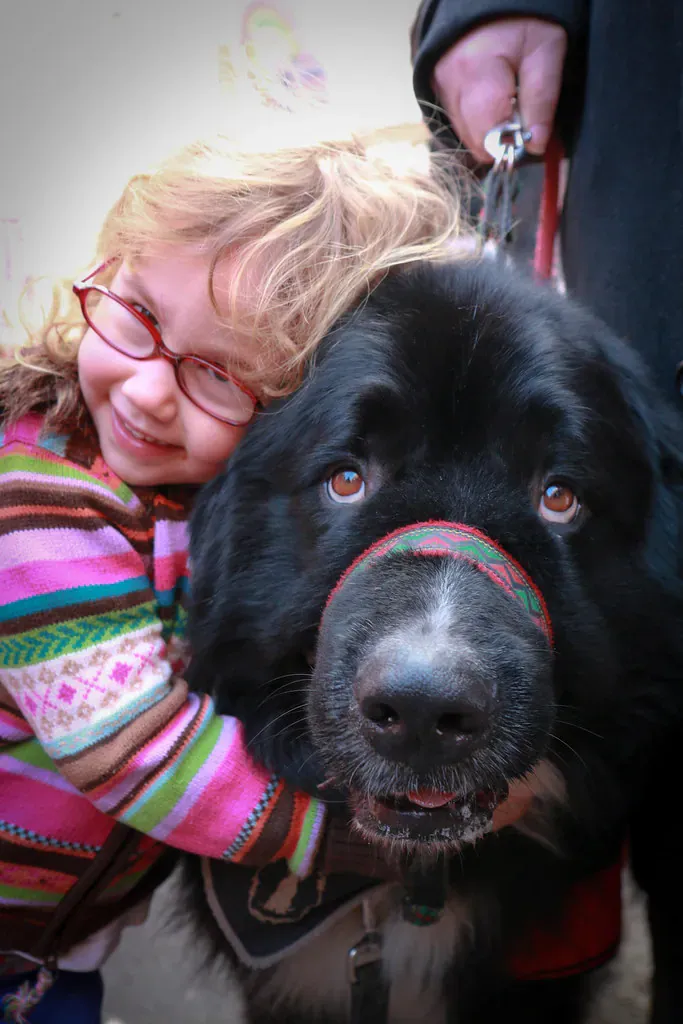
The standard asks for a sweet, gentle and sociable dog, and most pet Newfoundlands match this. They are calm indoors, patient with children, and tuned in to people. Many owners describe them as dogs that lean on you, follow you from room to room and want to be where the family is. They are not guard dogs by training, but their size alone puts off most strangers.
Intelligence and willingness make them easy to teach, though they learn at a steady, not fast, pace. They respond well to praise and food and badly to harsh handling. The dog's size is the main training issue: a puppy that jumps up or pulls on the lead at 10 kg is a bigger problem at 60 kg. Start early with lead manners, a reliable recall and calm greetings.
The breed's water drive can be strong. Many Newfoundlands will wade into any water they find and pull toward ponds, rivers and puddles. They sometimes try to tow or "rescue" swimmers, including children, who did not ask for help.
 Save

Working instincts and training
 Related breedBluetick Coonhound1700 to 1945 · United StatesEarly Modern Era
Today the breed works in water-rescue tests, draught (cart) work, therapy-dog visits and as a companion. Its instincts are:
- Retrieving and towing. Many dogs carry and tow objects, which is how they once fetched nets and boat lines.
- Swimming. Strong, with a deep, powerful stroke. Introduce water early and safely.
- Hauling. Draught work is a popular breed sport: dogs are hitched to a small cart.
- Staying close. Newfoundlands bond to their people and do poorly if left alone for long periods.
Keep training sessions short and friendly. Give young dogs lots of rest: very large puppies grow quickly, and too much hard exercise, jumping or stairs can stress growing joints. Your vet can guide you.
Health
 Related breedBoerboel1650 to 1983 · South AfricaEarly Modern Era
Most Newfoundlands live healthy lives for their size. The conditions below are the ones breeders screen for and owners can watch for. The breed's life span is shorter than that of smaller dogs: our atlas data gives 8 to 10 years, and the UK Kennel Club lists it as under 10 years. No large published study with a "1 in N" figure was found for the Newfoundland for every condition below, so only "how common" statements that come from a named source are given.
| Condition | What it is | How common | What helps |
|---|---|---|---|
| Subaortic stenosis (SAS) | A narrowing just below the aortic valve of the heart, so the heart works harder to push blood out | A pedigree study of more than 230,000 Newfoundlands (Reist-Marti et al. 2012, Veterinary Record) found it more common than earlier studies had reported; true numbers may be higher because cases go unreported | Heart screening by a vet or cardiologist before breeding; ask for results of both parents |
| Cystinuria | An inherited problem in which cystine leaks into the urine and can form stones in the bladder | inheritance (Casal et al. 1995); the causal gene change is known (Henthorn et al. 2000); no breed-wide frequency was found | DNA test (SLC3A1); do not breed two together; vet care if stones form |
| Hip and elbow dysplasia | Loose or poorly formed joints that lead to arthritis | Named as a concern for the breed by the PDSA; no figure found | Hip and elbow scoring of parents; lean weight; avoid hard exercise in growing puppies |
| Bloat (gastric dilatation and volvulus) | The stomach fills with gas and may twist; an emergency | Described by the PDSA as a risk in deep-chested dogs; no breed figure found | Several small meals, rest after eating, know the signs and get a vet at once; ask a vet about preventive surgery |
| Heart muscle disease (dilated cardiomyopathy) | The heart muscle becomes weak and the chamber enlarges | Listed in breed guides; no prevalence figure found in the searches | Regular vet checks; heart screening where offered |
Research on subaortic stenosis
SAS is the Newfoundland's best-studied inherited problem. Reist-Marti and colleagues (2012) analysed pedigree data from more than 230,000 Newfoundlands in Europe and North America, including 6,023 dogs diagnosed with SAS. Affected dogs were more inbred and more closely related to each other than the average dog, which points to a genetic cause. Sex made no difference, which fits inheritance on a non-sex chromosome. The best-fitting model was codominant inheritance with incomplete penetrance in carriers.
A second team (Stern et al. 2014, Human Genetics) tested 93 Newfoundlands and 180 control dogs from 30 breeds. They found a three-letter insertion in the PICALM gene that was linked to SAS, and they suggested it could be used as a breeding test. The two studies do not agree on the exact pattern of inheritance, and a later project at Michigan State University, funded by the Morris Animal Foundation and the Newfoundland Club of America, was set up to find the causal variants. Practical advice: buy only from breeders who have had both parents' hearts examined by a cardiologist, and ask to see the result.
Cystinuria
Cystinuria in the Newfoundland is caused by a nonsense mutation in exon 2 of the SLC3A1 gene (Henthorn et al. 2000, Human Genetics), recorded in OMIA as c.586C>T. It is autosomal recessive: a dog needs two copies to be affected, while a carrier with one copy is usually healthy. Tests are available, so breeders can avoid carrier-to-carrier pairings. The condition is genetically different in other breeds; the Newfoundland test does not apply to them.

Drooling, size and coat: the honest version
 Related breedBorder Terrier1700 to 1920 · United KingdomEarly Modern Era
Drool. Newfoundlands drool, especially after drinking, when hot, or when they see food. Their loose lips and jowls hold saliva. Owners typically keep a towel in the kitchen and expect marks on walls and furniture. Some dogs drool little; others a lot. You cannot know which until the dog is grown.
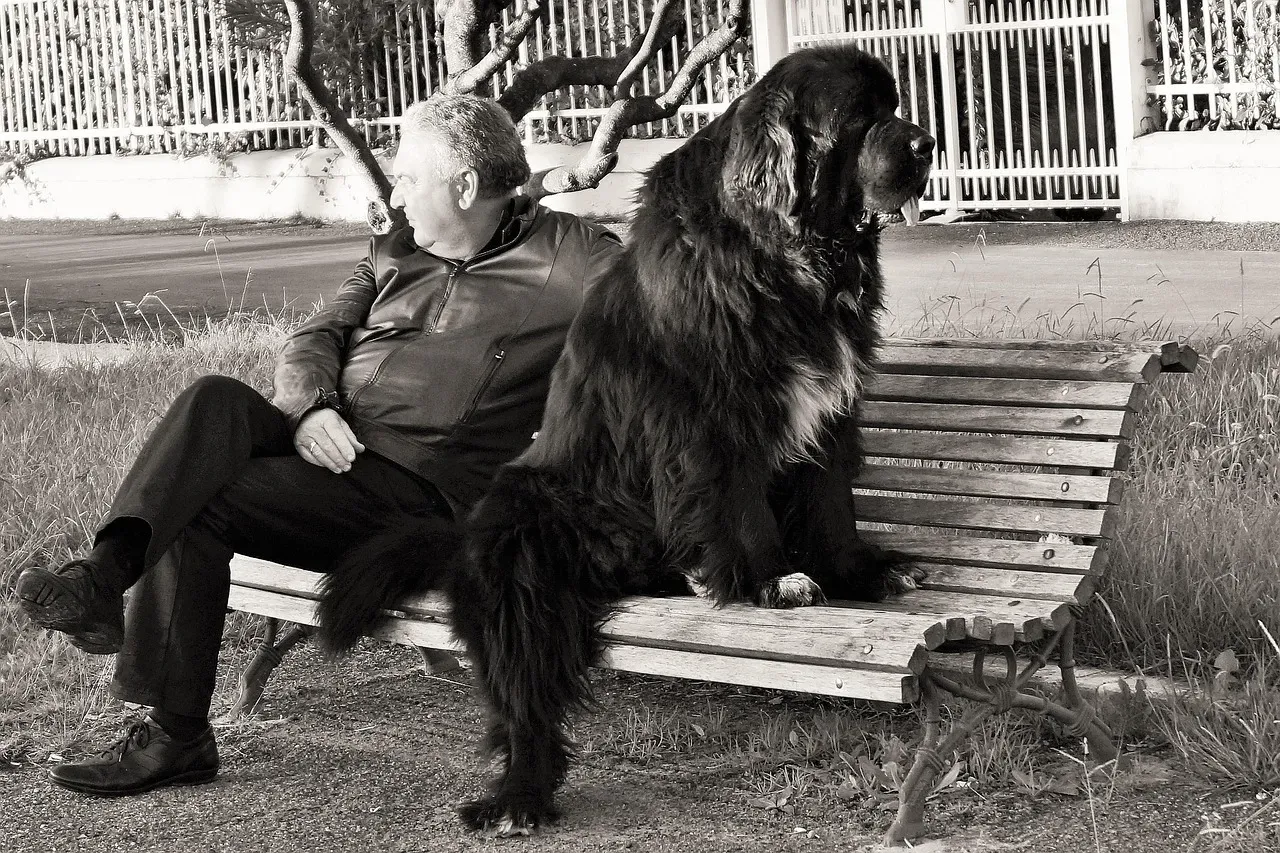
Size. An adult is about 54 to 69 kg and fills the back of a car. A standing dog can put its paws on a kitchen counter. Vet bills, food, kennel fees and flea or worming doses all scale with weight. Lifting a sick or injured 60 kg dog is a real concern for people with a bad back.
Coat. The Kennel Club lists daily grooming as the breed's need, and other breed guides say several times a week plus extra at the twice-yearly moult. A dense double coat mats behind the ears, under the legs and on the feathering. Expect hair in the house year round and heavy shedding twice a year. The coat is also a heat problem: Newfoundlands overheat in warm weather and should be kept cool.
Living with a Newfoundland
 Related breedCatahoula Leopard Dog1700 to 1979 · United StatesEarly Modern Era
 Save
 Save
| Daily reality | Rating | Why |
|---|---|---|
| Exercise per day | Medium | Up to about 1 hour (UK Kennel Club); swimming is a favourite |
| Training needs | Medium | Willing and gentle; size makes early lead and manners training essential |
| Grooming | High | Daily brushing listed by the Kennel Club; seasonal heavy moult |
| Shedding | High | Dense double coat sheds all year and heavily twice a year |
| Barking | Low | Not typically a barker; varies by dog |
| Time alone | Poor | People-bonded; long hours alone are not recommended |
| Children | Good | Patient and tolerant with children; supervise because of the dog's size |
| Other dogs | Good | Generally sociable; early socialisation helps |
| Cats and small pets | Varies | Evidence is thin; depends on early exposure |
| Flat living | Poor | A giant dog needs space; stairs are hard on joints |
| Heat tolerance | Poor | Thick double coat; keep cool and exercise in cooler hours |
| Cold tolerance | Good | Bred for cold water and weather |
| First-time owner fit | Fair | Gentle and willing, but size, grooming and vet costs are large |
A great fit if
- You have a house with a garden, and ideally safe access to water for swimming.
- You want a calm, affectionate companion that is happy to be near you all day.
- You are happy to brush most days and wipe up drool.
- You can afford the cost of a giant dog and want to plan for a shorter life span.
Think twice if
- You are away from home all day.
- You live in a hot climate with no air conditioning or in a flat with many stairs.
- You prefer a spotless house or are sensitive to dog hair and drool.
- You cannot physically handle a dog of 50 kg or more.
Before you get one
- Health tests. Ask for a cardiologist's heart examination (for SAS) for both parents, hip and elbow scores, and the cystinuria DNA result for both parents. Ask to see original certificates.
- Puppy or adult rescue. Newfoundland breed rescues exist and often place adult dogs whose size and temperament are already known.
- First year. Plan for puppy classes, steady short walks rather than hard runs, and a lean body weight. Find a vet who knows giant breeds and learn the signs of bloat before you need them.
Similar breeds to consider
- St. Bernard. A giant, gentle rescue breed with Newfoundland blood, though a bit less water-oriented.
- Labrador Retriever. A close relative in the Retriever family with a much smaller body and more energy.
- Landseer. The black-and-white relative, with a similar nature and some different breeding lines.
- Leonberger. A giant, family-friendly dog with a Newfoundland and St. Bernard background.

Newfoundland fun facts
 Related breedCoton de Tulear1600 to 1970 · MadagascarEarly Modern Era
- The Newfoundland's webbed feet help with swimming, and the dog's tail works like a rudder.
- Barrie's Nana in "Peter Pan" is a Newfoundland; Disney's film made her a St. Bernard.
- The word "Landseer" comes from a painter, Sir Edwin Landseer, who made the black-and-white colour famous.
- Byron's Newfoundland Boatswain has a monument at Newstead Abbey that is larger than the poet's own planned tomb.
Frequently asked questions
Are Newfoundlands good family dogs?
Yes, in homes with space. They are patient and gentle, but their size means every contact with a small child needs supervision.
How big is a Newfoundland?
The gives average heights of 71 cm (dogs) and 66 cm (bitches) and weights of about 68 kg and 54 kg. The UK Kennel Club lists 64 to 69 kg for dogs and 50 to 54.5 kg for bitches.
How long do Newfoundlands live?
Our atlas data gives 8 to 10 years, and the UK Kennel Club lists under 10 years. Some breed guides quote 10 to 12 years, but the sources vary.
Do Newfoundlands drool a lot?
Yes. Loose lips and jowls hold saliva, which is released after drinking, in heat or around food. Some dogs drool little.
What health problems do Newfoundlands get?
The best-documented are subaortic stenosis (heart), cystinuria (bladder stones, with a DNA test), hip and , and bloat.
What is a Landseer Newfoundland?
A black-and-white Newfoundland. The name comes from the painter Edwin Landseer. In some registries it is a colour of the Newfoundland, in others a separate breed.
Read next
Closest DNAGolden Retriever19.5 Mb sharedSister breedLabrador Retriever1800 to 1903 Adopt a dogDog Shelters in EuropeFind dog shelters in Europe, learn how shelters differ from country to country and why adopting a dog is a good option.
Sources (15)
- Fédération Cynologique Internationale (FCI), Newfoundland, standard no. 50.
- The Kennel Club (UK), Newfoundland breed standard (2018 version, as reproduced by a national kennel union) and Newfoundland breed information page.
- Parker H.G. et al., "Genomic analyses reveal the influence of geographic origin, migration, and hybridization on modern dog breed development", Cell Reports, 2017.
- Reist-Marti S.B. et al., "Genetic evidence of subaortic stenosis in the Newfoundland dog", Veterinary Record, 2012.
- Stern J.A. et al., PICALM insertion associated with subaortic stenosis in Newfoundlands, Human Genetics, 2014.
- Morris Animal Foundation, "Understanding heart disease in Newfoundland dogs" (Michigan State University project).
- Liu J. et al. (with Henthorn P.S.), "Canine cystinuria: polymorphism in the canine SLC3A1 gene and identification of a nonsense mutation in cystinuric Newfoundland dogs", Human Genetics, 2000.
- Online Mendelian Inheritance in Animals (OMIA), Cystinuria, type I-A in the dog (OMIA 000256-9615), citing Casal et al. 1995.
- Government of Newfoundland and Labrador, news release on the SS Ethie rescue story, 2000.
- Canadian Encyclopedia, "Newfoundland dog".
- Wikipedia, "Newfoundland dog" and "St. John's water dog" (history overview).
- Wikipedia, "Epitaph to a Dog" (Lord Byron and Boatswain, 1808).
- J. M. Barrie, "Peter Pan", text of the novel (Project Gutenberg).
- The Newfoundland (thenewfoundland.org), page on Nana and Luath.
- PDSA, Newfoundland breed information.