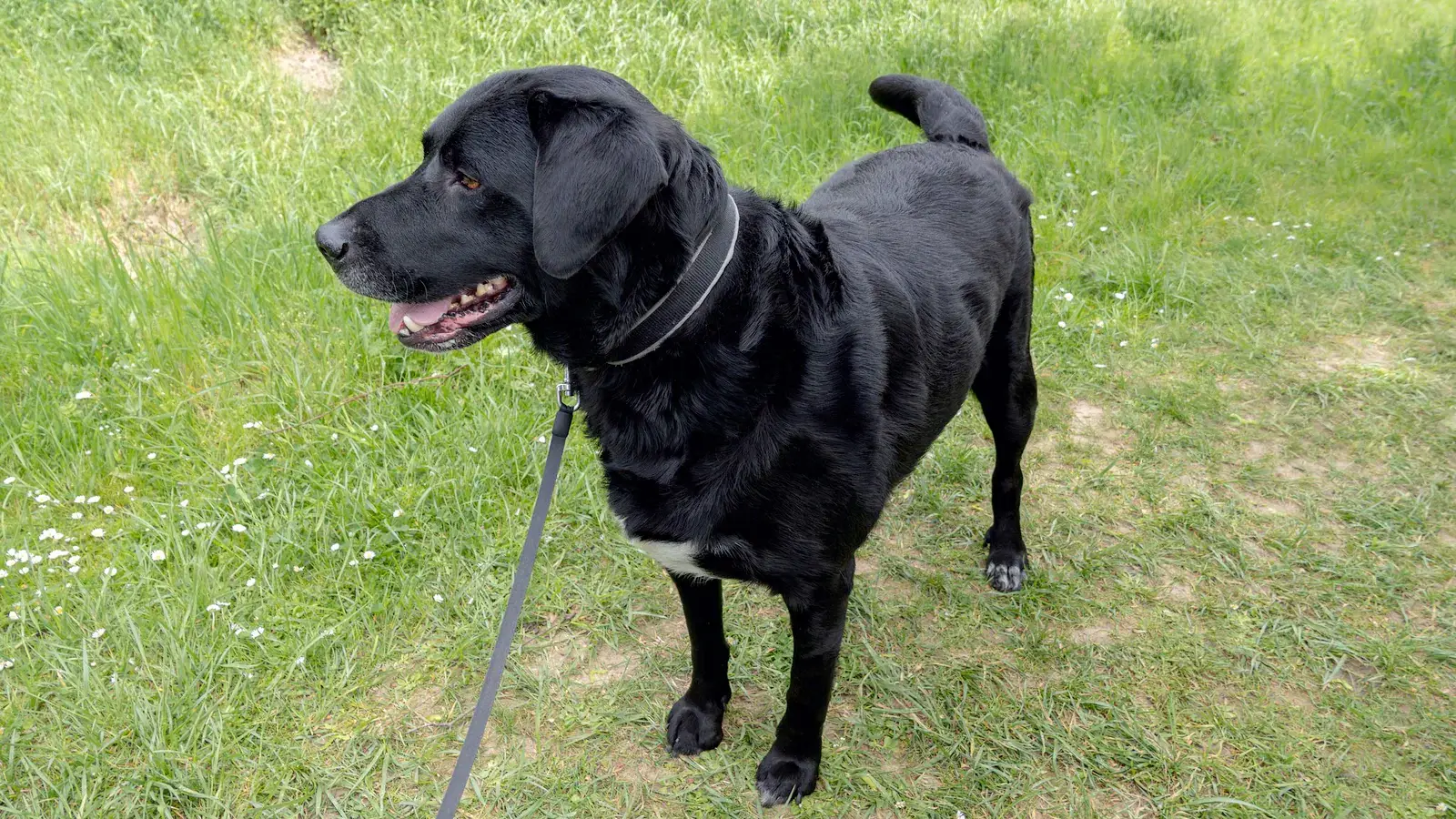
What is a retriever?
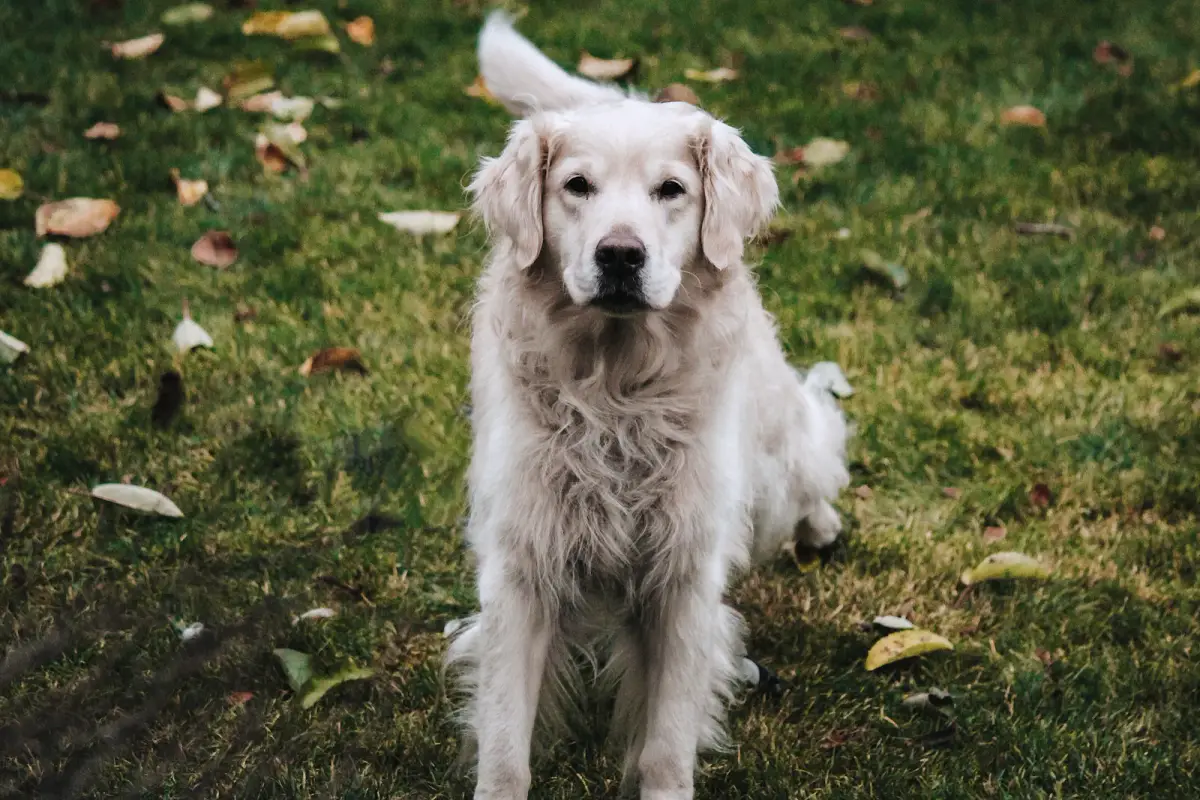
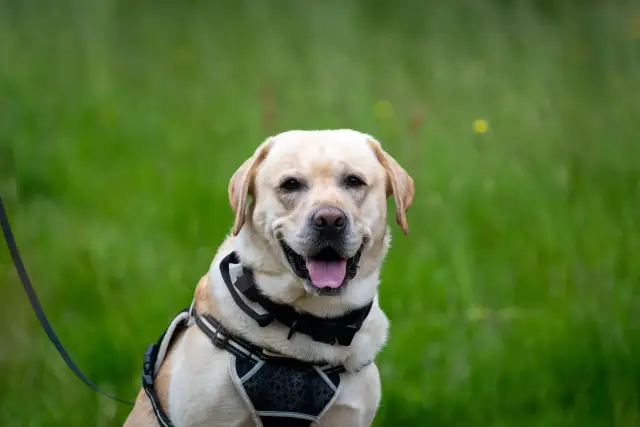
A retriever is a gundog bred to find shot game, often in water, and bring it back to the hunter without damaging it. Most of the breeds in this family were built in Britain in the 1800s, when breech-loading guns and organised shooting made a soft-mouthed, steady dog useful. Two of them, the Labrador and the Golden, are now among the most common family dogs in the world.
 Save
 GuideHow to get an assistance dogHow to get a service dog or assistance dog in the USA, UK, Germany, France, Spain, Italy and the Netherlands: accredited schools, waits, owner-training and travel.
In this atlas, the Retriever family is a group of 10 breeds that share DNA and history. It is a genetic family, not the same thing as the kennel club "Retriever" or "Sporting" group. The Newfoundland is here, and so is a dog with "spaniel" in its name. This page explains who belongs, why, and how the breeds are tied together.
Quick facts about the Retriever family
| Fact | Answer |
|---|---|
| Family type | Genetic clade (Parker et al. 2017) |
| Parent | European dogs |
| Breeds in this atlas | 10 (9 living, 1 extinct) |
| Breeds with DNA tested in the study | 7 (6 with strong support, 1 with weak support) |
| Main homelands | United Kingdom (4) and Canada (3) |
| Typical size | Large (6 of 10). Also 2 giant and 2 medium |
| Core job | Retrieving shot game from land and water |
| Shared look | Water-shedding coat, strong tail, broad head |
| Shared temperament | Biddable, eager to please, strong carrying instinct |
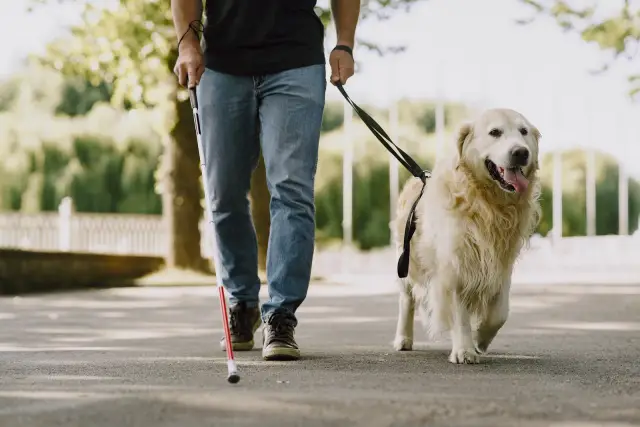 GuideService, therapy and emotional support dogs: what's the difference?Service dog vs emotional support dog vs therapy dog: the real differences, your rights in the USA and Europe, and why online certificates mean nothing.
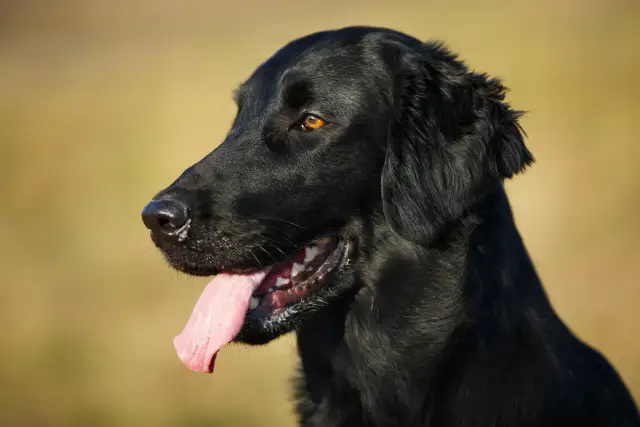 Member breedFlat-coated Retriever1860 to 1880 · United KingdomVictorian Breed BoomGuideService, therapy and emotional support dogs: what's the difference?Service dog vs emotional support dog vs therapy dog: the real differences, your rights in the USA and Europe, and why online certificates mean nothing.
Family or group: what is the difference?
In this atlas, "family" always means a DNA clade, a branch of the family tree found by comparing genomes. "Group" is used only for kennel club groups such as the AKC Sporting Group or FCI Group 8.
 GuideDog Breeds by Country: Which Nations Made the Most?Dog breeds by country: how many breeds each nation produced in the Dogs Atlas data, from the UK and France to Japan, plus national dogs and families.
The two do not match. Kennel clubs sort dogs by job. DNA sorts them by shared ancestry. Seven of our 10 breeds were sampled by Parker et al. (2017) and fall into one Retriever clade. The other three are placed here by written history, so they are best estimates. In the table below, the first seven rows are DNA-tested and the rest are placed by history.
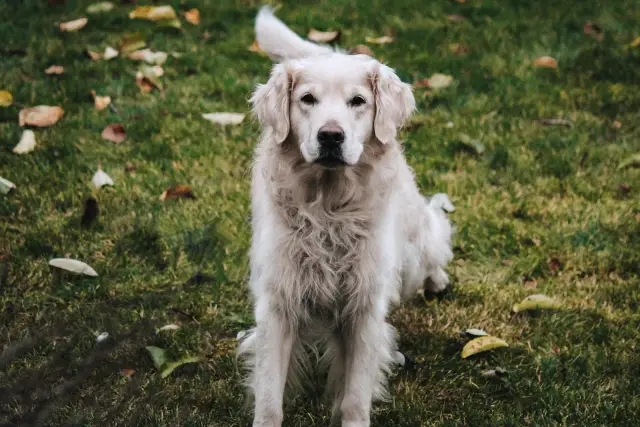
Where do retrievers come from?
Two places, joined by fishing boats.
 ArticleDog Breed Family Tree: How All Dog Breeds Are RelatedThe dog breed family tree from Ice Age wolves to 29 breed families.
The first is the island of Newfoundland, off the east coast of Canada. Fishermen there kept short-coated water dogs that hauled nets and fetched fish that fell off hooks. They were called St. John's water dogs after the island's main port. The second is Britain, where sportsmen bought those dogs in the early 1800s and mixed them with local spaniels, setters and water dogs.
The atlas lists the St. John's water dog as an ancestor of the Labrador, the Newfoundland and the Chesapeake Bay Retriever, with medium confidence for the Curly-coated Retriever. The dog itself no longer exists as a breed.
Two older water spaniels are also part of the story: the Irish Water Spaniel, which is in the family, and the extinct Tweed Water Spaniel, which sits in the Poodle family. See Poodle.
Why are they called retrievers?
The name is a job title: a dog that finds and brings back what a hunter has shot. Specific names came later. The Labrador is named for Labrador, though the breed was developed in Britain from dogs of Newfoundland. The Golden is named for its coat, the Chesapeake for its bay, and "tolling" in the Toller comes from Middle English tollen, to lure.
 GuideDog Clothes: When Dogs Need Coats, and a Short History of Dog FashionDo dogs need coats in winter? When clothes help, when costumes stress a dog, safe fit, reflective gear, and a short history of dog fashion and dog art.
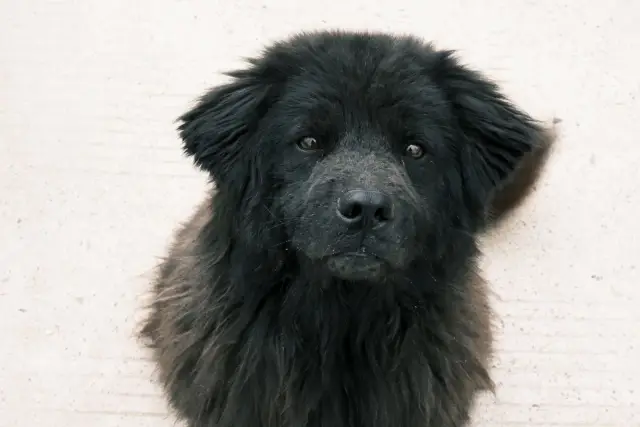
What is the history of retrievers?
 GuideIs your dog suited to therapy work?How to make your dog a therapy dog: temperament checklist, first training steps, how Pet Partners, TDI and Pets As Therapy assess dogs, and welfare limits.
Before 1800: water dogs
Water dogs existed in Europe for centuries. The Irish Water Spaniel appears in records from the 1600s, and the Newfoundland and its small cousin the St. John's water dog also appear in the 1600s.
1800 to 1860: British estates
- 1807. Two puppies, Sailor and Canton, were rescued and identified as St. John's water dogs. The atlas traces the Chesapeake Bay Retriever to them.
- About 1809. The second Earl of Malmesbury is recorded as shooting over imported St. John's dogs.
- 1814. Colonel Peter Hawker describes the St. John's breed in his shooting manual.
1860 to 1900: the retriever breeds take shape
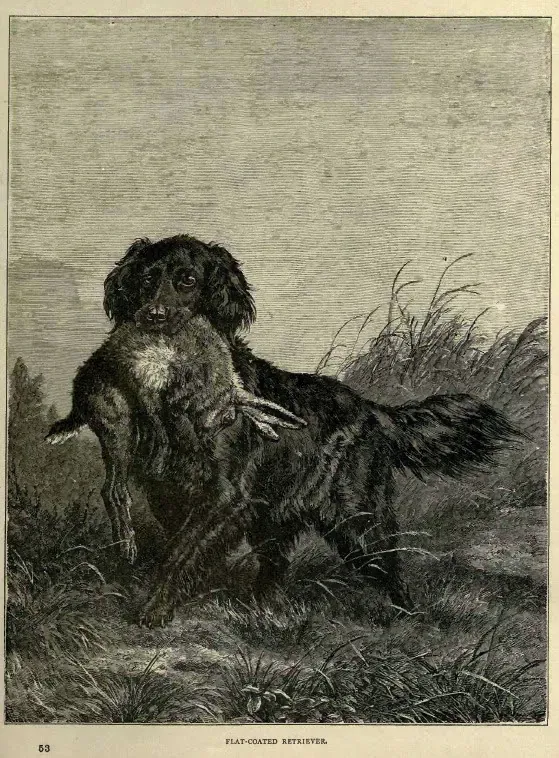
- 1860s. The Flat-coated Retriever is built in England. It was popular with gamekeepers and was once the main black retriever.
- 1864 to 1868. Dudley Marjoribanks, later Lord Tweedmouth, breeds a yellow retriever from a Flat-coat named Nous and a Tweed Water Spaniel named Belle at Guisachan in Scotland. This is the start of the Golden Retriever, which appears in the stud book kept at Guisachan.
- From the 1860s. The Nova Scotia Duck Tolling Retriever is developed in Nova Scotia to lure ducks within gun range by playing near the shore (the atlas gives 1860 as the start).
1900 to today: clubs and recognition
- 1903. The UK Kennel Club recognises the Labrador Retriever.
- 1911. Yellow retrievers get a class of their own as the Golden.
- 1945. Canada's records point to this date for the Nova Scotia Duck Tolling Retriever. It reached other registries later.
- 1930s to 1960. Continental breeders recreate black and white Newfoundlands, now called the Landseer, as a separate breed.
Some details above are from breed histories and club pages, not from stud books checked for this page.
 Save
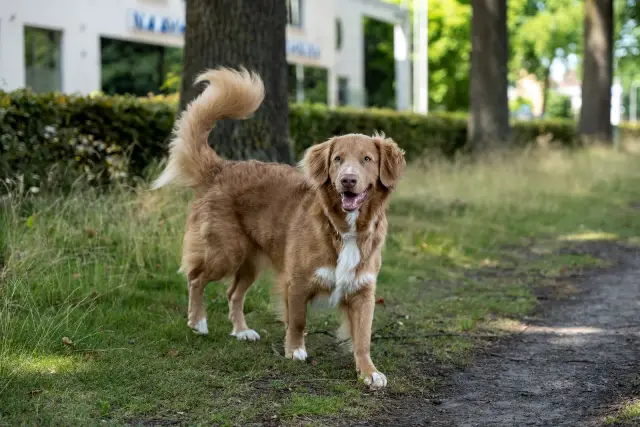
Who are the members of the Retriever family?
Here are all 10 breeds. The 7 breeds with DNA tested in the study come first. The other 3 are placed by history and are hidden until you choose to show all 10. "Appeared" is the period in which the breed or type is first documented, and some dates are rough. Only the breeds with an article in this atlas are linked.
 GuideDogs in Legends and Fairy TalesDogs in folklore and fairy tales: Black Shuck, The Tinderbox, Saint Guinefort, Panhu, Greyfriars Bobby, Barry and Old Drum, with legend and history kept apart.
| Breed | Country | Status | Size | Appeared | DNA-tested |
|---|---|---|---|---|---|
| Irish Water Spaniel | Ireland | Living | Large | 1600 to 1850 | Yes (Parker 2017) |
| Newfoundland | Canada | Living | Giant | 1600 to 1886 | Yes (Parker 2017) |
| Curly-coated Retriever | United Kingdom | Living | Large | 1800 to 1860 | Yes (Parker 2017) |
| Labrador Retriever | United Kingdom | Living | Large | 1800 to 1903 | Yes (Parker 2017) |
| Flat-coated Retriever | United Kingdom | Living | Large | 1860 to 1880 | Yes (Parker 2017) |
| Nova Scotia Duck Tolling Retriever | Canada | Living | Medium | 1860 to 1945 | Yes (Parker 2017) |
| Golden Retriever | United Kingdom | Living | Large | 1868 to 1911 | Yes (Parker 2017) |
| St. John's Water Dog | Canada | Extinct | Medium | 1600 to 1800 | By history |
| Chesapeake Bay Retriever | United States | Living | Large | 1807 to 1918 | By history |
| Landseer | Germany, Switzerland | Living | Giant | 1900 to 1960 | By history |
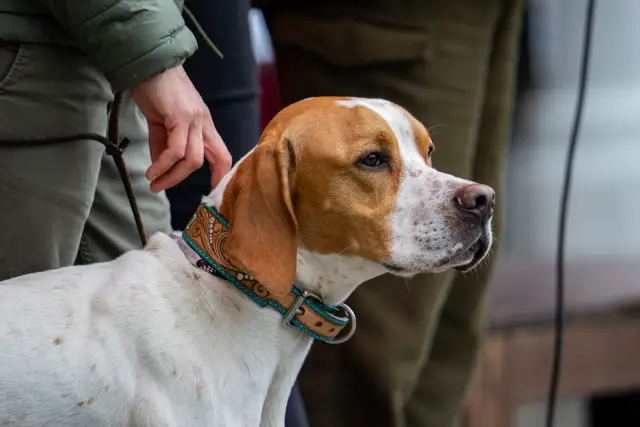
Who descends from whom, and which ties are strongest?
Two kinds of evidence are used here. One is written history: what breeders say they crossed. The other is DNA: how many megabases (Mb, millions of DNA letters) two breeds share in matching stretches. A larger number means a closer shared ancestry, though it can also reflect a recent split or crossing.
 GuideHow to adopt a dog from a shelter or rescueHow to adopt a dog from a shelter or rescue: the process, costs in general terms, choosing a dog, the first weeks and what if it does not work out.
The strongest ties among Retriever breeds, from the Parker study as recorded:
| Pair | Shared DNA (Mb) | What it tells us |
|---|---|---|
| Flat-coated and Golden | 67.0 | Nous, the foundation sire of the Golden, was a Flat-coat |
| Flat-coated and Labrador | 57.0 | Two black British gundogs of the same era |
| Golden and Labrador | 35.1 | Close, but through shared gundog breeding, not parentage |
| Golden and Newfoundland | 19.5 | A smaller, older link through water dogs |
| Labrador and Newfoundland | 17.8 | Both trace to dogs from the island of Newfoundland |
| Flat-coated and Newfoundland | 17.6 | Newfoundland blood is thought to be in the Flat-coat |
| Curly-coated and Golden | 15.9 | Shared water dog and gundog roots |
| Curly-coated and Irish Water Spaniel | 15.5 | Water dogs with tight curly coats |
Source: Parker et al. 2017, Cell Reports, shared haplotypes between 161 breeds (1,346 dogs).
The most useful lesson is that the Labrador and Golden Retriever are cousins, not parent and child. The atlas lists the Golden as having a link to the Labrador, but most histories say the Golden began separately at Guisachan from 1868, and the Labrador entry says so too. Their DNA overlap fits two breeds fed by the same British gundog pool.
In the written record, the Golden Retriever comes from the Flat-coated Retriever and the extinct Tweed Water Spaniel, with later Irish Setter and Bloodhound blood at medium confidence. The Flat-coat itself is thought to carry Newfoundland, St. John's water dog and setter blood, the last two at low confidence. The Landseer was recreated from the Newfoundland.
The Nova Scotia Duck Tolling Retriever stands apart. Its DNA ties are strongest not to other retrievers but to the Rough Collie (28.7 Mb) and Shetland Sheepdog (20.9 Mb), and the study notes that these herding dogs contributed to it. Its clade support is weak, so it is the least certain member.
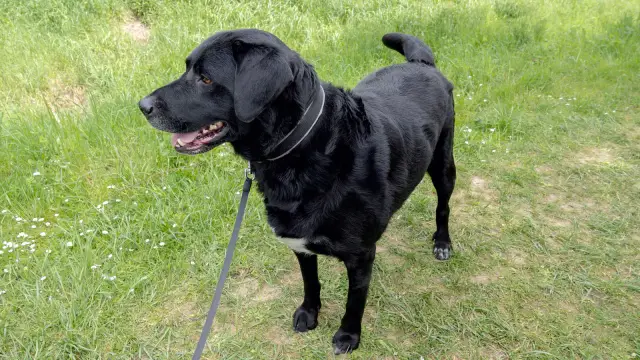 Labrador Retriever
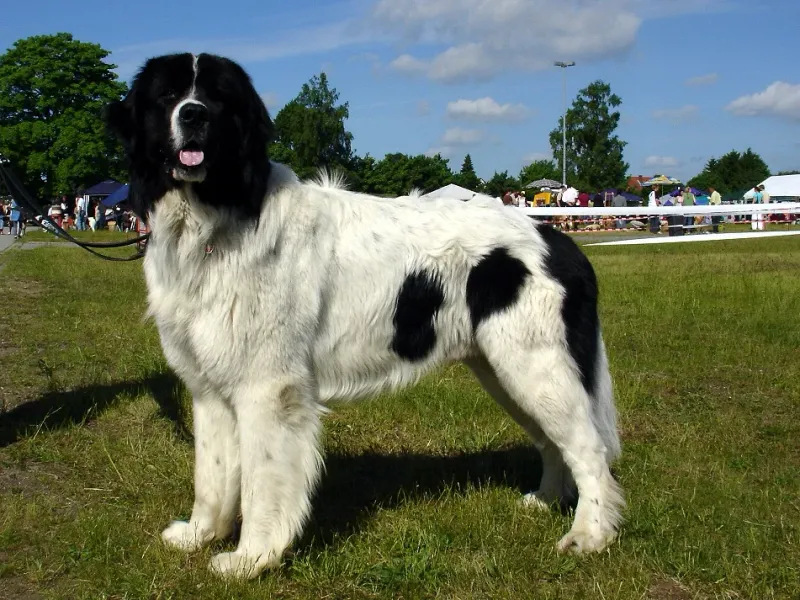 Landseerrecreated from the Newfoundland
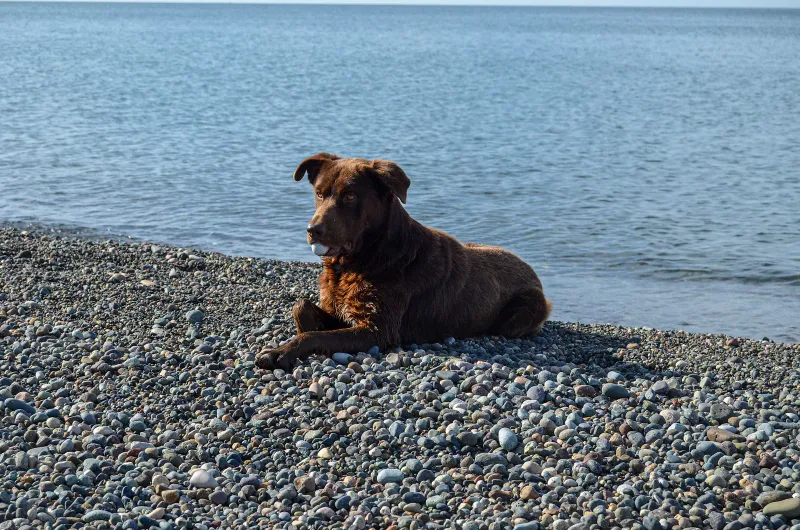 Chesapeake Bay Retrieverfrom puppies of 1807Labrador RetrieverLandseerrecreated from the NewfoundlandChesapeake Bay Retrieverfrom puppies of 1807
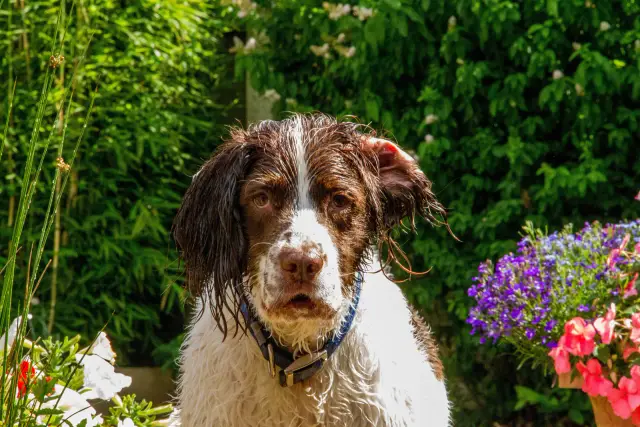
What do retrievers have in common?
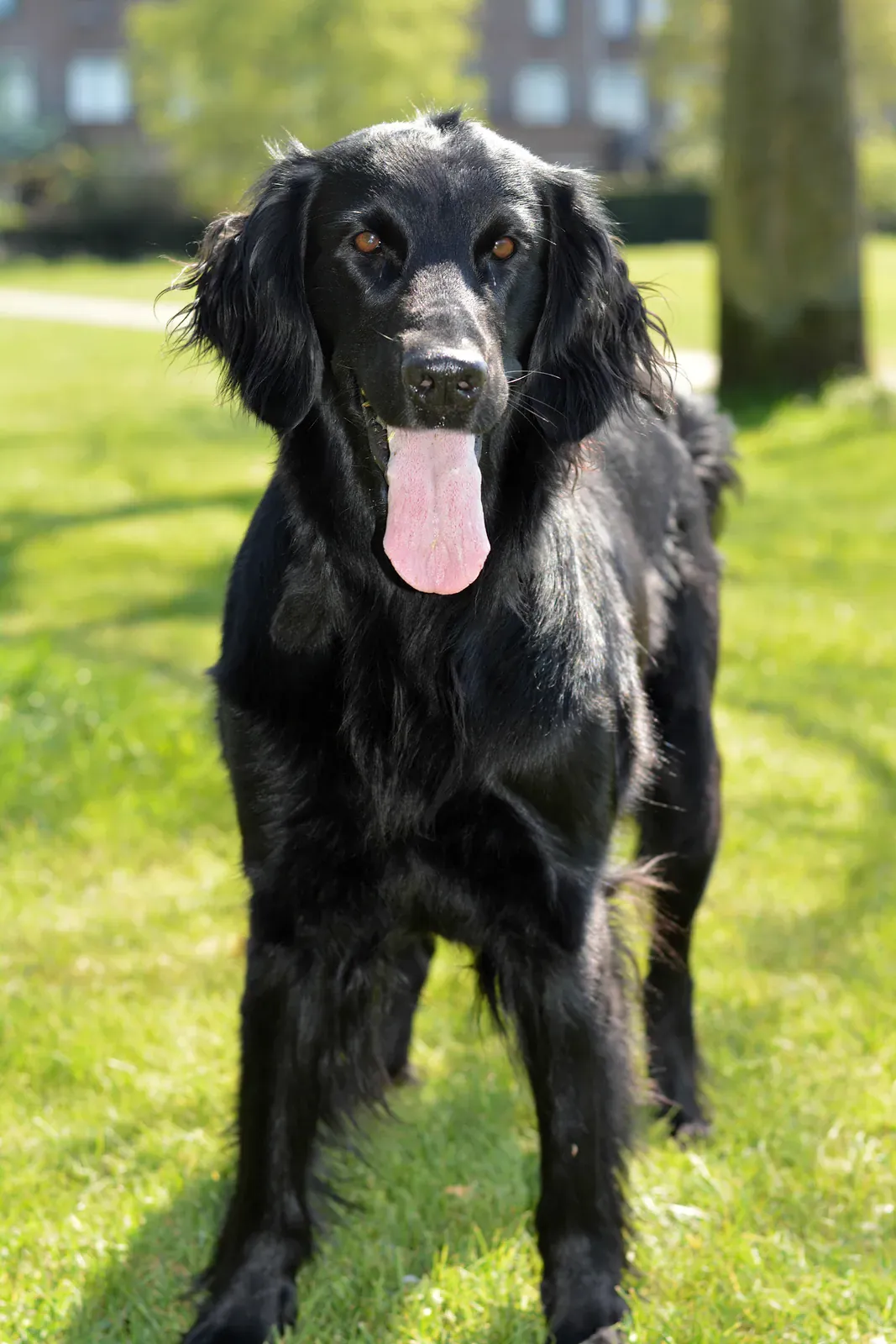
Coat. Most have a dense, water-shedding coat over a soft undercoat. The Curly-coated wears tight curls and the Irish Water Spaniel a topknot of curls, while the Flat-coated and Golden have longer, flatter coats with feathering. Expect shedding in the Labrador and Golden and regular brushing in all of them.
 ArticleThe first known dog on every continentEarliest accepted dog on each continent, from Bonn-Oberkassel to the dingo: dates, sites, how dogs arrived and which breeds carry those first dogs.
Build. A broad head and strong jaws, with a thick tail that works as a swimming rudder. Most are large and athletic. The Newfoundland and Landseer are giants. The Toller is the medium-size exception.
Mouth. A good retriever has a "soft mouth," meaning it carries game without puncturing it. This is a trait bred for over generations, and many members still carry toys and shoes with great care.
Temperament. Biddable, friendly and eager to work for people. They tend to be easy to train and good with children, though young dogs are bouncy and mouthy. The Chesapeake is more independent and protective than the Labrador. The Toller is busy and intense. This is a general tendency, not a promise, and each dog differs.

What health issues are linked to retrievers?
Most retrievers live healthy lives. Health depends on the breed, not on the family, so only a few well-documented examples are given. For each, breeders screen and owners can watch.
 GuideLivestock guardian dogs: what they do and who they suitWhat livestock guardian dogs do, how they differ from herding dogs, 40 LGD breeds by country, the DNA evidence, and whether they make good pets.
- Cancer in Golden Retrievers. The Golden Retriever Lifetime Study (Morris Animal Foundation, launched 2012) follows over 3,000 dogs to find risk factors. A genome-wide study (Tonomura et al. 2015, PLoS Genetics) found shared risk regions for hemangiosarcoma and lymphoma. See the Golden Retriever article for figures.
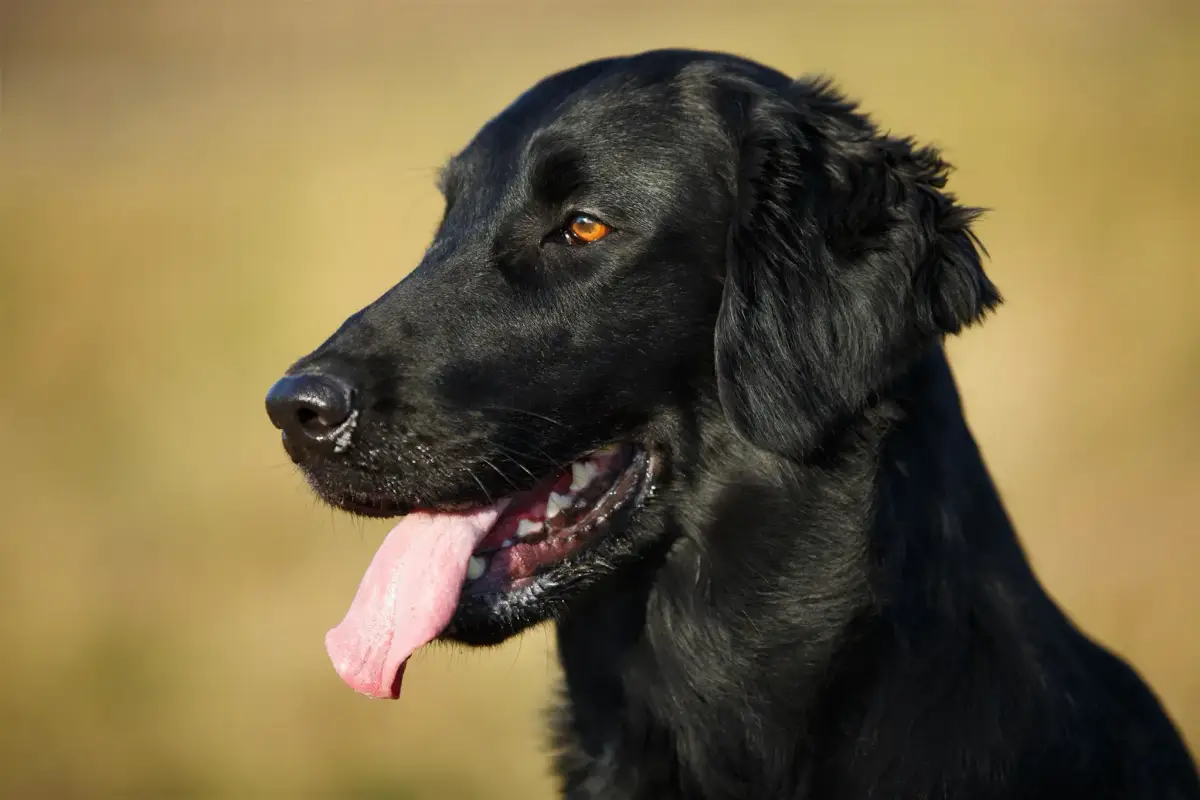
- Histiocytic sarcoma in Flat-coated Retrievers. This is a cancer of immune cells, and the breed is known for it. A UK cohort of 174 Flat-coats followed from 1996 to 2007 found 72 dogs (about 2 in 5) died from cancer, and soft tissue sarcoma, mainly histiocytic sarcoma, was the largest group (Dobson et al. 2009, Veterinary and Comparative Oncology). A later genetic study compared 177 affected and 132 healthy Flat-coats. Commonly quoted breed risk is about 1 in 5 dogs, but this is not from a population-wide survey.
- Obesity in Labradors. A 14 base pair deletion in the POMC gene is linked to weight gain and food motivation (Raffan et al. 2016, Cell Metabolism). About 1 in 4 Labradors carry a copy. Keep dogs lean. See the Labrador Retriever article.
- Exercise-induced collapse. A DNM1 gene variant causes collapse after hard exercise in Labradors (Patterson et al. 2008). A DNA test exists, and the UC Davis Veterinary Genetics Laboratory lists it for the Chesapeake Bay Retriever too.
- Addison's disease in Tollers. The adrenal glands fail to make enough hormones. A 2007 study (Burton et al.) found Tollers developed it earlier than other breeds, at an average age of 2.6 years. A UC Davis presentation reports about 1.4 percent of the breed, a figure not confirmed in the full paper. Vets treat it with lifelong medicine.
- Other tests. Chesapeake breeders also test for degenerative myelopathy and ectodermal dysplasia (UC Davis VGL). Newfoundland breeders screen the heart for subaortic stenosis and test for cystinuria. No breed-wide prevalence has been published for these.
Hip and elbow scoring is recommended across the large retriever breeds. Ask a vet or the breed club which tests apply to the breed before choosing a puppy.
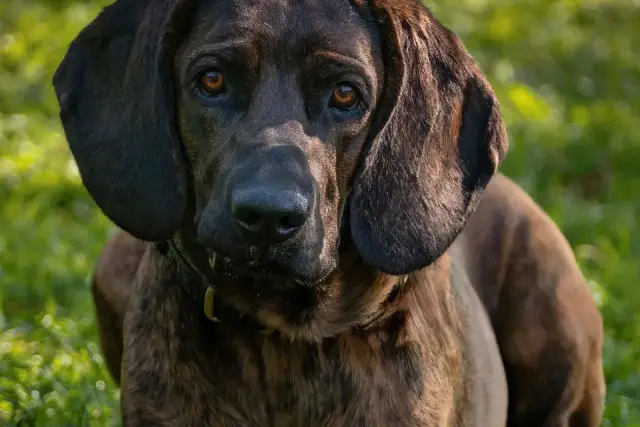
Which Retriever breeds are extinct?
One of the 10 is extinct.
 GuideDog laws by country: tax, insurance and licencesDog tax, compulsory liability insurance, licences, microchips and leash rules in Germany, Austria, Switzerland, Spain, Ireland, the UK, the US and more.
- St. John's Water Dog: a medium-size water dog of Newfoundland, recorded between 1600 and 1800. It is the root of the Labrador and the Chesapeake, and is listed here by history, not by DNA.
The extinct Tweed Water Spaniel, which fed the Golden, sits in the Poodle family.
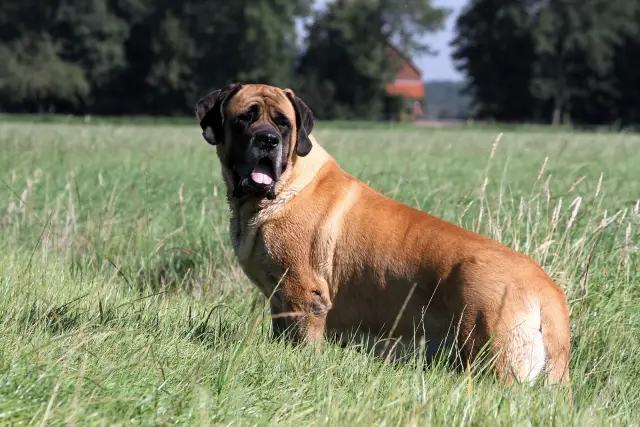
Are there surprises in the Retriever family?
- The Labrador is not from Labrador. Its home is Newfoundland by ancestry and Britain by breeding.
- The Newfoundland is a retriever by DNA. It is a giant working dog, not a gundog, but it clusters with the Labrador and Golden.
- The Irish Water Spaniel is here. It has "spaniel" in its name but groups with retrievers, with the Curly-coated sharing 15.5 Mb with it.
- The Toller is a retriever with herding DNA. Its tightest ties are to the Rough Collie and Shetland Sheepdog.
- The Landseer is a Newfoundland. It is a recreation, not a separate old breed.
- Other retriever-like breeds sit elsewhere. Spaniels are in the Spaniel family, and the Poodle's water-dog cousins are in Poodle.
 GuideDogs in science and spaceSpace dogs Laika, Belka and Strelka, Pavlov's dogs, Snuppy the clone, the dog genome and scent detection: what dogs did for science, and what it cost them.
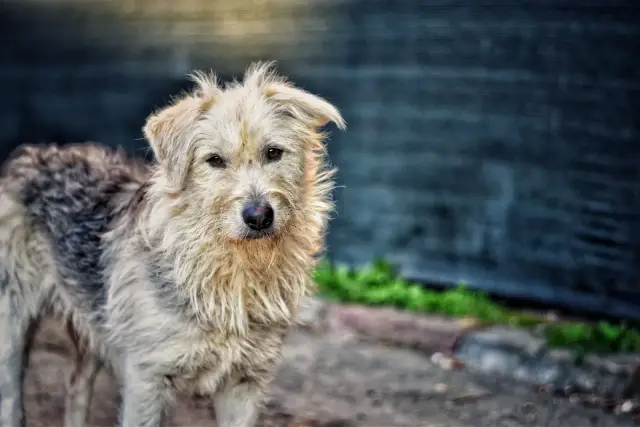
What does research say about retrievers?
The key paper is Parker et al., "Genomic analyses reveal the influence of geographic origin, migration, and hybridization on modern dog breed development," Cell Reports, 2017. It built a family tree of 161 breeds from 1,346 dogs. Retrievers came out as one clade, though only 7 of our 10 breeds were in the study. The other three follow written history, and these assignments are best estimates that could shift when more breeds are sequenced.
 GuideDogs of Japan: the native breeds and their storiesJapanese dog breeds explained: the six Nihon Ken, the Chin, Tosa, Japanese Spitz and Terrier, Hachiko, wartime near-extinction, DNA and who they suit.
For the broader picture of how families link up, see the dog family tree.

Which retriever suits which owner?
This is a guide to temperament, not a promise for any single dog.
 GuideBanned and restricted dog breeds by countryWhich dog breeds are banned or restricted, country by country: UK, Ireland, France, Germany, Denmark, Norway, Spain, Australia and more.
- First-time family. The Labrador and Golden are the usual picks, since both are trainable and gentle. Both need daily exercise and weight care.
- Active and playful. The Flat-coated Retriever stays puppy-like for years. The Toller suits energetic owners who want a sport dog.
- Water and hunting. The Chesapeake and Curly-coated Retrievers are tough working dogs, more independent and less forgiving of weak training.
- Calm, big and patient. The Newfoundland and Landseer are gentle giants that need space and a tolerance for drool.
- Allergy-minded owners. The Curly-coated and Irish Water Spaniel shed little, but no dog is allergen-free.
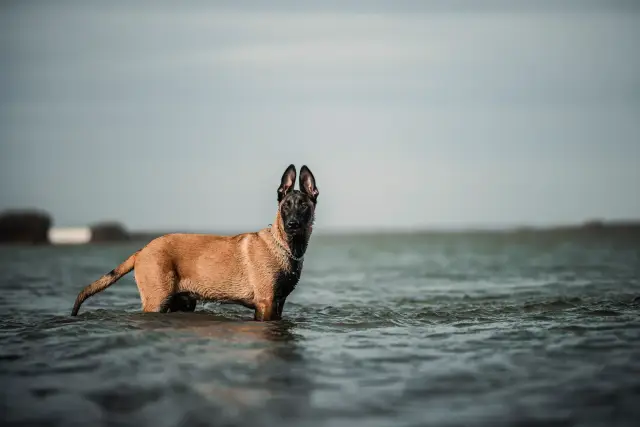
Fun facts about retrievers
- The Golden Retriever's first stud book, kept at Guisachan, came to light only in 1952.
- The UK Kennel Club recognised the Labrador in 1903.
- The Toller lures ducks by playing in the shallows. "Tolling" comes from an old English word meaning to lure.
- The Landseer is named after the painter Sir Edwin Landseer, who painted black and white Newfoundlands.
- Chesapeake Bay Retrievers trace to two puppies, Sailor and Canton, rescued in 1807.
 GuideDog hybrids: what dogs can and cannot breed withCan dogs breed with wolves, coyotes, jackals or foxes? Wolfdogs, coydogs, the Sulimov dog and Dogxim explained, with chromosomes and DNA studies.
 GuideBest dog breeds for familiesBest dog breeds for families, small homes, allergies, first-time owners and seniors, ranked from our breed ratings, with honest limits and a table.GuideDog hybrids: what dogs can and cannot breed withCan dogs breed with wolves, coyotes, jackals or foxes? Wolfdogs, coydogs, the Sulimov dog and Dogxim explained, with chromosomes and DNA studies.
Related families
- European dogs: the parent of the Retriever family.
- Poodle: home of the Tweed Water Spaniel and English Water Spaniel, ancestors of the Curly-coated and Golden.
- Spaniel: land gundogs that the retrievers were mixed with.
- Pointer and Setter: Irish Setter blood in the Golden, setter blood in the Flat-coat.
- UK rural: Rough Collie and Shetland Sheepdog, behind the Toller.
 GuideDogs in myth around the worldFrom Anubis and Cerberus to Fenrir, Xolotl and the Tiangou: how cultures across the world imagined dogs as guardians, guides and monsters.
 GuideSmartest dog breeds: what the rankings measure and what they missCoren's smartest dog breeds list, what it measured, what newer dog cognition research says, three kinds of dog intelligence and why smart dogs need work.GuideDogs in myth around the worldFrom Anubis and Cerberus to Fenrir, Xolotl and the Tiangou: how cultures across the world imagined dogs as guardians, guides and monsters.
Frequently asked questions
What are the main types of retrievers?
In the atlas: Labrador, Golden, Flat-coated, Curly-coated, Chesapeake Bay, and the Nova Scotia Duck Tolling Retriever, plus the Newfoundland, Landseer and Irish Water Spaniel, which share their DNA family.
Are the Labrador and Golden Retriever related?
Yes, as cousins. They share 35.1 Mb in the Parker study, but the Golden began separately at Guisachan and is not a Labrador descendant.
What is a St. John's water dog?
An extinct water dog of Newfoundland, and the ancestor of the Labrador, Newfoundland and Chesapeake Bay Retriever.
Which retriever is the calmest?
Often the Newfoundland, but it depends on the dog.
Are retrievers good family dogs?
Many are, if the family can give daily exercise and training. Young retrievers are bouncy.
How long do retrievers live?
It depends on the breed. The UK study by McGreevy et al. (2018) gave a median of 12.0 years for Labradors, and a UK analysis (Royal Veterinary College ) reported about 12.5 years for Goldens.
Read next
 Family storyModern CrossbreedRead the family's story: origins, members, DNAFamily storyEuropean dogsRead the family's story: origins, members, DNA
 Family storyDroverRead the family's story: origins, members, DNA
Sources (13)
- Parker, H. G., et al. (2017). Genomic analyses reveal the influence of geographic origin, migration, and hybridization on modern dog breed development. Cell Reports, 19(4), 697 to 708.
- Tonomura, N., et al. (2015). Genome-wide association study identifies shared risk loci common to two malignancies in golden retrievers. PLoS Genetics.
- Dobson, J., et al. (2009). Mortality in a cohort of flat-coated retrievers in the UK. Veterinary and Comparative Oncology.
- Raffan, E., et al. (2016). A deletion in the canine POMC gene is associated with weight and appetite in obesity-prone Labrador retriever dogs. Cell Metabolism.
- Patterson, E. E., et al. (2008). A canine DNM1 mutation is highly associated with the syndrome of exercise-induced collapse. Nature Genetics.
- McGreevy, P. D., et al. (2018). Labrador retrievers under primary veterinary care in the UK. Canine Genetics and Epidemiology.
- Burton, et al. (2007). Addison's disease in the Nova Scotia Duck Tolling Retriever. Epidemiology study cited in genetic literature.
- Morris Animal Foundation, Golden Retriever Lifetime Study, 2012 onward.
- University of California Davis Veterinary Genetics Laboratory, Chesapeake Bay Retriever and Nova Scotia Duck Tolling Retriever test pages.
- Hawker, P. (1814). Instructions to Young Sportsmen.
- Stonex, E. (1952). Breed history from the Guisachan record book.
- The Kennel Club (UK) and Fédération Cynologique Internationale, retriever breed standards.
- Breed records in the atlas data (Dogs Atlas, internal data).