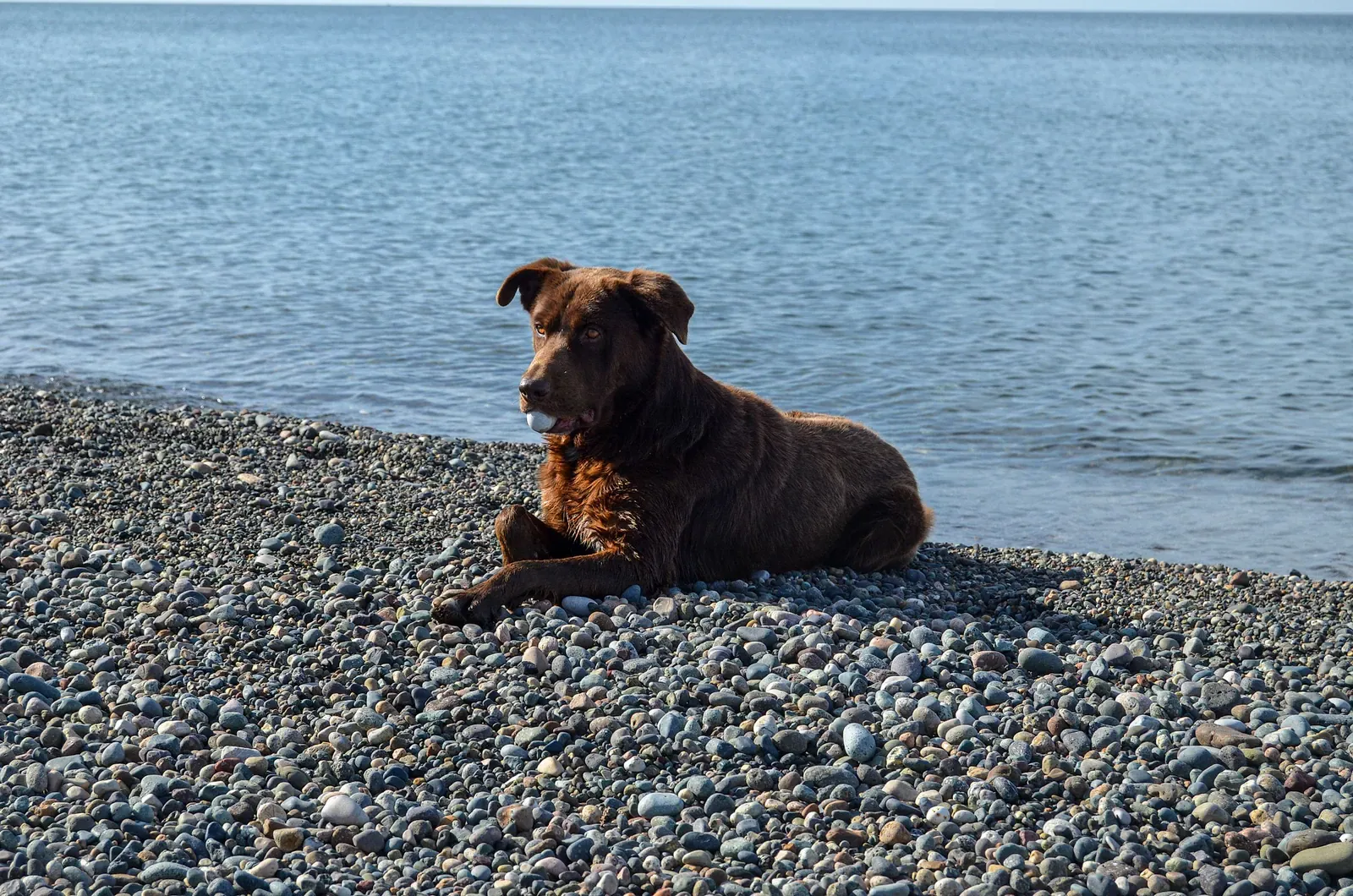
It has an oily, wavy double coat in shades of brown, sedge or dead grass, and yellow to amber eyes. It is a strong, independent worker that is affectionate with its own family and reserved with strangers. It suits owners who want a water-loving, active companion and will put in daily exercise and firm, patient training. It is usually called the "Chessie".
Chesapeake Bay Retriever quick facts
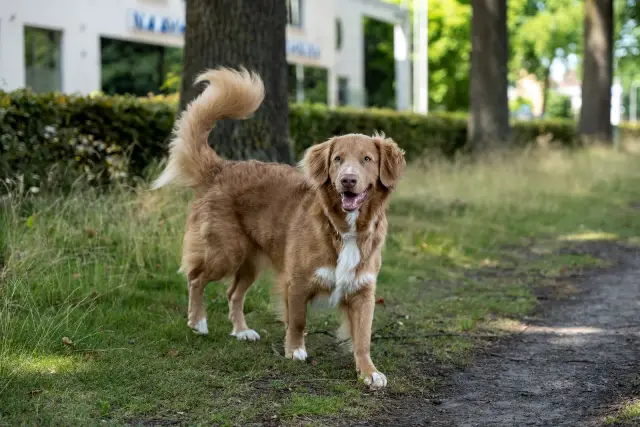 Related breedNova Scotia Duck Tolling Retriever1860 to 1945 · CanadaVictorian Breed Boom
- Country of origin
- United States (Chesapeake Bay region, Maryland)
- Period of development
- 1807 to 1918 (atlas data); unified type accepted by the in 1918
- Foundation dogs
- Sailor and Canton, two pups saved from a wreck off Maryland in 1807
- Type
- Retriever ( Group 8, standard no. 263; AKC Sporting Group; UK Gundog Group)
- Height
- UK standard: dogs 58 to 66 cm, bitches 53 to 61 cm
- Weight
- UK standard gives none. Canadian standard: dogs 29.5 to 36.25 kg, bitches 25 to 31.75 kg
- Coat
- Short, harsh, oily outer coat over a dense woolly undercoat; waves allowed on neck, shoulders, back and loins
- Colours
- Dead grass (straw to bracken), sedge (red gold), any shade of brown, or ash
- Eyes
- Yellow or amber, clear, set wide apart
- Life span
- Atlas data: 10 to 13 years
- Exercise
- More than 2 hours a day (Royal Kennel Club breed information)
- Family
- Retriever family (atlas data)
- Other name
- Chessie
Drawn to scale in real centimetres. Its back reaches about 60 cm, just above your knee; its head about 76 cm, mid-thigh.
Where it sits in the tree
Industrial Revolution · 1800 to 1849
Name and origin
 Related breedAustralian Cattle Dog1840 to 1903 · AustraliaIndustrial Revolution
The name is geographic. The Chesapeake Bay is the huge tidal estuary that runs through Maryland and Virginia, and the breed was built there to retrieve waterfowl for hunters. The atlas data lists the origin as Maryland, United States, and the etymology as "from the Chesapeake Bay, where it retrieved waterfowl".
Names changed before the breed settled. Dogs of this type were called Chesapeake Ducking Dogs in the 1800s, and the AKC says its 1918 standard was written under the name Chesapeake Water Dog. Today the breed is the Chesapeake Bay Retriever in the United States and the Retriever (Chesapeake Bay) in the UK Kennel Club listings. The FCI lists it as Chesapeake Bay Retriever, standard no. 263, with the United States as country of origin.

History of the Chesapeake Bay Retriever
 Same eraBorder Collie1800 to 1915 · United KingdomIndustrial Revolution
1807: Sailor and Canton
The founding story is well known. In 1807 a ship sailing from Newfoundland to Poole, England, was wrecked in a gale off the Maryland coast. The AKC history says the boat Canton rescued the crew and two dogs aboard, a male called Sailor and a female called Canton. The AKC describes both as St. John's water dogs, the old fishing-dog type from Newfoundland. Other accounts call them Newfoundlands, so the exact type is not settled.
The pups were sold to different owners on the Chesapeake shores. George Law, who bought them for a guinea each, wrote an account of the dogs almost 40 years later, in which he said they were bred to local dogs, with ability valued above pedigree. The Chesapeake Bay Retriever is not a pure descendant of two dogs. It grew from these two and from the local retrievers they were crossed with. The atlas data lists the St. John's Water Dog as the parent breed, with high confidence in that link.
1800s: ducking dogs of the bay
Hunters on the bay shot waterfowl in icy water for long days, so they wanted a dog that could break ice, swim far and carry heavy birds. That requirement shaped the breed more than looks did. A thick, oily coat that sheds water, strong legs and a calm, stubborn nature were kept, and softer dogs were not. This is why the breed stands apart from the Labrador and Golden Retriever, which were shaped by different hunting traditions in Britain.
One breed from two strains
By the 1880s the dogs of the two bay shores were treated as separate strains named after Sailor and Canton. The AKC says that in 1887 fanciers of "Chesapeake Ducking Dogs" met at a show in Baltimore and agreed that the strains were one breed. Sources vary on the exact year of the first such meetings, so treat 1877 to 1887 as the window.
Kennel club recognition
| Year | Event |
|---|---|
| 1807 | Sailor and Canton rescued off Maryland |
| 1887 | Baltimore meeting agrees the two strains are one breed |
| 1888 | AKC recognises the breed, the first retriever to be accepted |
| 1918 | AKC accepts a unified |
| 1964 | Maryland names the Chesapeake Bay Retriever its official state dog |
The FCI lists the breed as definitive. The UK Kennel Club, now the Royal Kennel Club, also recognises it.
Relatives and DNA
 Same familyBouvier des Flandres1800 to 1912 · Belgium, FranceIndustrial Revolution
The atlas data places the Chesapeake Bay Retriever in the Retriever family. Its listed ancestor is the St. John's Water Dog, an extinct Newfoundland type that also fed into the Newfoundland and the Labrador Retriever. The Royal Kennel Club says the breed shares some common ancestry with the Labrador, and that it is thought to descend from crosses between Newfoundlands and retrievers.
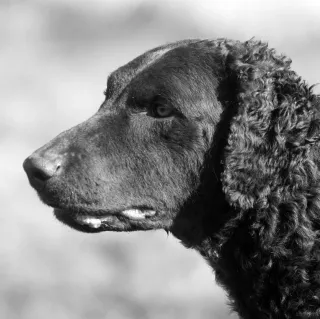
The atlas data holds no Parker et al. 2017 shared-DNA figures for the Chesapeake Bay Retriever, so no table is given here. The 2017 study (Parker and colleagues, Cell Reports) sorted 161 breeds into clades by DNA. Atlas siblings in the family are the Newfoundland, the Curly-Coated Retriever and the Labrador Retriever.
One descendant is listed in the atlas data: the Boykin Spaniel, the South Carolina hunting dog.
Here is how the Chessie compares with the retrievers most people know:
See also the Labrador Retriever and the Golden Retriever pages.
Sister breeds · 3
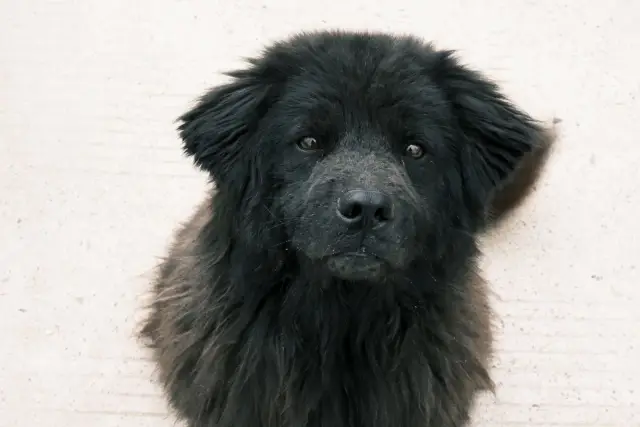
- Newfoundland1600 to 1886
- Curly-coated Retriever1800 to 1860
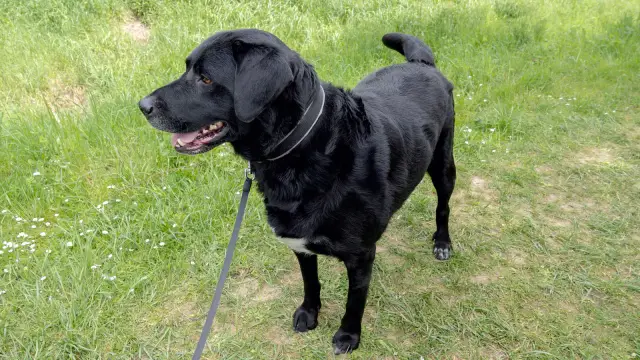
- Labrador Retriever1800 to 1903
Descend from it · 1
- Boykin SpanielUnited States
| Trait | Chesapeake Bay Retriever | Labrador Retriever | Golden Retriever |
|---|---|---|---|
| Origin | Maryland, United States | Newfoundland and England | Scotland |
| Coat | Short, oily, wavy, brown shades | Short, dense, black, yellow or chocolate | Long, feathered, gold shades |
| Reputation | Independent, protective, reserved with strangers | Outgoing, eager | Friendly, gentle |
| Typical build | Medium-large, muscular | Medium-large | Medium-large |
The breed standard
 Looks relatedBulldog1835 to 1875 · United KingdomIndustrial Revolution
A breed standard is the written ideal that judges compare each dog against. The Royal Kennel Club standard calls the Chessie a "well-proportioned, active worker with a strong muscular appearance". It adds that the coat, a distinctive oily double coat, can handle ice and snow.
| Trait | What the standards say |
|---|---|
| Height | Royal Kennel Club: dogs 58 to 66 cm, bitches 53 to 61 cm; oversized or undersized dogs are highly undesirable |
| Weight | Royal Kennel Club: none given. Canadian Kennel Club: dogs 29.5 to 36.25 kg, bitches 25 to 31.75 kg |
| Head | Royal Kennel Club: broad, round skull, medium stop, muzzle about as long as the skull, pointed but not sharp; nose and lips match the coat colour |
| Eyes | Royal Kennel Club: medium-sized, very clear, yellow or amber, set wide apart |
| Ears | Royal Kennel Club: relatively small, well set up, medium leather, carried close to the head |
| Coat | Royal Kennel Club: thick, reasonably short, harsh oily outer coat, dense woolly undercoat, not over 4 cm long; may wave on neck, shoulders, back and loins |
| Colours | Royal Kennel Club: dead grass, sedge, any shade of brown or ash; small white spots on chest, belly, toes or back of the feet allowed; self-coloured dogs preferred |
| Faults | AKC: disqualifications include a coat that is curly or has a tendency to curl all over the body |
The standard says the sexes should look noticeably different, and that a straighter coat is acceptable if it stays water-resistant. The AKC and other sources mention that rear dewclaws are a disqualification under the AKC standard, although the first two dogs had them.
Colour names need explaining. "Dead grass" runs from straw to bracken, a dried-reed look that hides the dog in a duck blind. "Sedge" is a red gold. A black dog does not meet the standard, and any other colour than those listed is unacceptable under the Royal Kennel Club standard.
Temperament
 Related breedEnglish Cocker Spaniel1800 to 1892 · United KingdomIndustrial Revolution
The Royal Kennel Club describes a courageous, keen dog with a strong love of water. It calls the breed independent and affectionate, reserved with strangers and a good guardian of home and family. Its listed temperament is a bright and happy disposition, alert and intelligent, eager to work.
In daily life that means a retriever with more edge than most. Many Chessies are protective of their people and property. Some are happy to meet visitors once introduced, while others stay aloof. Early, calm socialisation matters more here than in the friendly Labrador. A Chessie that never meets strangers as a puppy can turn wary or pushy as an adult.
Breed writers also describe the Chessie as willing but strong-minded. The breed was bred to work far from its handler in harsh conditions, which favours dogs that make their own decisions. Training works best when it is consistent, short and varied, with play in it. Heavy-handed methods tend to backfire with a dog this tough.
Working life
The breed's job has not changed much. It retrieves ducks and geese, often in cold water, and it enjoys swimming. Beyond field trials and hunt tests, Chessies also suit obedience, tracking and agility. A dog bred for ice-water retrieves tends to be tough and enduring but not hurried, which is why many owners call them steady rather than frantic.
At home, expect a dog that likes a job. Daily retrieving games, swimming where safe, and training sessions suit it far better than walks alone. The Royal Kennel Club lists more than 2 hours of exercise a day for the breed.

Health of the Chesapeake Bay Retriever
 Related breedEnglish Springer Spaniel1800 to 1902 · United KingdomIndustrial Revolution
Most Chessies are sturdy dogs, but like all breeds they carry some inherited risks. The conditions below are the ones breed clubs and genetic studies point to. Information here is general. Talk to a vet about your own dog.
How long do they live? The atlas data gives 10 to 13 years. No breed-specific lifespan study is published, so ask a breeder about the ages their dogs have reached.
What do clubs recommend? The American Chesapeake Club health statement lists hip and elbow evaluation, an eye examination and DNA tests for exercise-induced collapse (EIC) and (DM) for breeding dogs. The UK Kennel Club offers a DNA test for prcd-PRA, an inherited eye disease, for the breed.
| Condition | What it is | How common | What helps |
|---|---|---|---|
| Exercise-induced collapse (EIC) | Autosomal condition: dogs collapse after intense exercise. The DNM1 mutation (R256L) was first reported in Labradors (Patterson et al. 2008) | Seen in Chesapeakes too (Minor et al. 2011). Episodes usually last 5 to 10 minutes, with recovery within about 30 minutes (OFA). AKC Canine Health Foundation notes that dogs with two copies in this breed seem less likely to collapse than Labradors. No published breed rate | DNA test of both parents; avoid hard exercise and heat in affected dogs |
| Degenerative myelopathy (DM) | Progressive disease of the spinal cord. Dogs slowly lose use of the hind legs (American Chesapeake Club) | The breed is among those reported to be affected. No published breed rate | DNA test of breeding dogs; vet care and rehabilitation |
| Progressive retinal atrophy (prcd-PRA) | Inherited loss of the light-sensing cells in the retina; locus mapped by Acland et al. 1998 | No published breed rate | DNA test; eye screening of breeding dogs |
| Loose or malformed hip joint | No published breed rate | Hip scoring of breeding dogs; healthy weight | |
| Developmental elbow problem | No published breed rate | Elbow evaluation of breeding dogs | |
| Type 3 von Willebrand disease | Inherited bleeding disorder | Reported in the breed; no published breed rate | DNA test; tell the vet before surgery |
| Cataract and regional alopecia | Eye lens clouding; patchy hair loss | Reported in the breed | Eye exams; vet check |
A healthy-looking dog can still carry a recessive gene, which is why testing both parents matters. For EIC, a dog with two copies may look normal until a hard run on a warm day.
Heat. The thick coat is built for cold water. Chessies can overheat in warm weather, so exercise early or late and give shade and water.
Choosing a puppy. Ask the breeder for hip, elbow and eye results and for EIC, DM and prcd-PRA test results of both parents. A breeder who cannot show them is a risk. Ask about the age and cause of death of relatives, not just their show or field titles.

Living with a Chesapeake Bay Retriever
 Related breedGerman Shorthaired Pointer1800 to 1872 · GermanyIndustrial Revolution
| Daily reality | Rating | Why |
|---|---|---|
| Exercise | High | More than 2 hours a day (Royal Kennel Club) |
| Training needs | High | Intelligent but independent; needs consistent handling |
| Grooming | Low to medium | Short coat; brush weekly, bathe rarely so the natural oils stay |
| Shedding | Medium | Sheds, especially in spring and autumn |
| Barking | Medium | Alert; some are vocal when excited |
| Time alone | Poor | A bored working retriever can destroy a garden or a sofa |
| Children | Fair | Can be good family dogs if well socialised; size and strength need supervision |
| Strangers | Reserved | Guardian instincts; needs early socialisation |
| Other dogs | Varies | Some are dominant; introduce with care |
| Cats and small pets | Fair | Retriever instincts, but a strong chase drive in some |
| Flat living | Poor | Needs a garden and regular outdoor work |
| Heat tolerance | Fair | Thick coat; avoid hard exercise in heat |
| Cold and water | Excellent | The coat sheds water and shrugs off ice |
| First-time owner | Fair | Doable with training classes; not the easiest retriever |
The coat needs little work. A weekly brush removes loose hair and dried mud. Frequent baths strip the oils that make the coat water-resistant, so it is best to rinse with water in most cases and use shampoo rarely. Dry the ears after swimming.
A great fit if you...
- love water, hiking, hunting or other outdoor sports;
- want a loyal dog that guards the home without needing to be taught;
- can give firm, calm and fair training;
- have a garden and a home that can take wet, muddy dogs.
Think twice if you...
- want a dog that greets every visitor with a wagging body;
- are away most of the day;
- live in a flat with no outdoor space;
- dislike a "wet dog" smell and a muddy hall.
Similar breeds to consider
- Labrador Retriever: friendlier to strangers, easier for new owners.
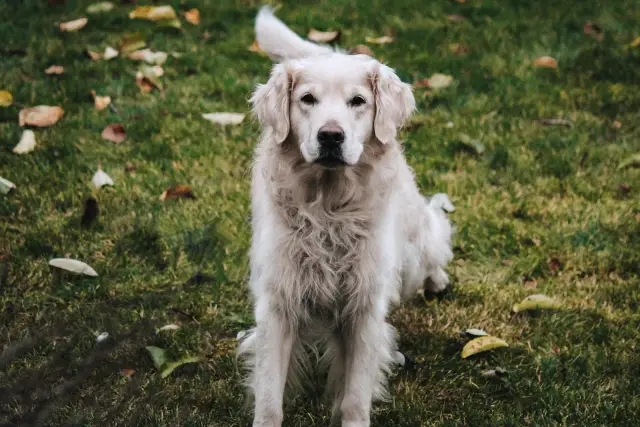
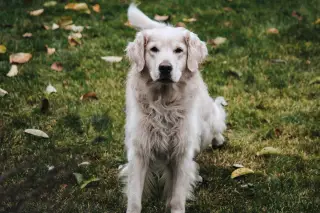
- Golden Retriever: gentler and more eager to please, with a longer coat.
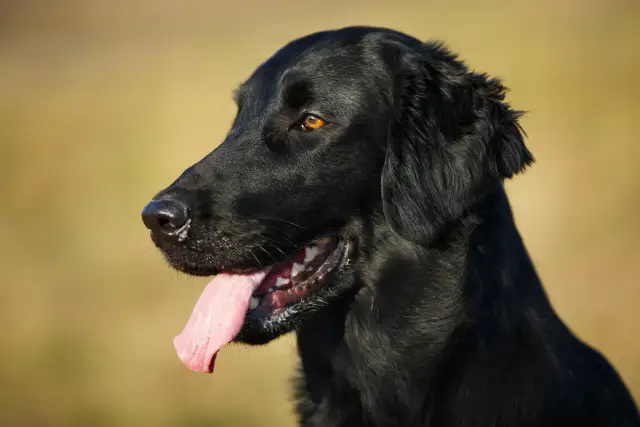
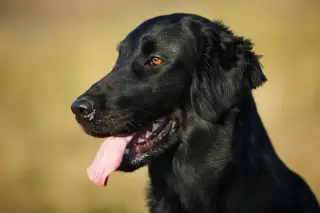
- Flat-Coated Retriever: cheerful retriever with a black or liver coat.
- Nova Scotia Duck Tolling Retriever: smaller, lively water retriever.

Chesapeake Bay Retriever fun facts
 Related breedJack Russell Terrier1819 to 1976 · United KingdomIndustrial Revolution
- Maryland named the Chesapeake Bay Retriever its official state dog in 1964.
- It was the first retriever breed the AKC recognised, in 1888.
- Famous owners reportedly include Theodore Roosevelt and George Armstrong Custer.
- The breed is a mascot at the University of Maryland, Baltimore County.
- The coat is oily enough that water runs off it, and a shake is often all it needs to be nearly dry.
- The two founding dogs were rescued from a shipwreck, and their story is the most-told legend of the breed.
Frequently asked questions
Are Chesapeake Bay Retrievers good family dogs?
They can be, in active families that give them training and exercise. They are protective and reserved with strangers, so socialisation and supervision with children matter.
How big do Chesapeake Bay Retrievers get?
Under the Royal Kennel Club standard, dogs stand 58 to 66 cm and bitches 53 to 61 cm. The Canadian standard gives 29.5 to 36.25 kg for dogs and 25 to 31.75 kg for bitches.
How long do Chesapeake Bay Retrievers live?
Atlas data gives 10 to 13 years. No breed-specific lifespan study is published.
What colour is a Chesapeake Bay Retriever?
Dead grass, sedge, any shade of brown or ash. Black does not meet the standard.
How much exercise does a Chesapeake Bay Retriever need?
More than 2 hours a day, including swimming or retrieving games and training.
Do Chesapeake Bay Retrievers shed?
Yes, moderately. The short, oily coat needs a weekly brush.
What is the difference between a Chesapeake and a Labrador?
The Chessie is more independent and protective, with an oily, wavy coat in brown shades. The Labrador is usually more outgoing with strangers.
Read next
 Sister breedNewfoundland1600 to 1886
 FamilyRetrieverThe whole family
 Adopt a dogDog Shelters in EuropeFind dog shelters in Europe, learn how shelters differ from country to country and why adopting a dog is a good option.
Sources (13)
- Wikipedia, "Chesapeake Bay Retriever".
- American Kennel Club, Chesapeake Bay Retriever history; and Chesapeake Bay Retriever breed page.
- American Chesapeake Club and AKC, Chesapeake Bay Retriever Health Statement 2026.
- Acland G.M. et al., "Linkage analysis and comparative mapping of canine progressive rod-cone degeneration (prcd) establishes potential locus homology with retinitis pigmentosa (RP17) in humans", Proceedings of the National Academy of Sciences, 1998.
- Fédération Cynologique Internationale, Chesapeake Bay Retriever, standard no. 263.
- Minor K.M. et al., "Presence and impact of the exercise-induced collapse associated DNM1 mutation in Labrador retrievers and other breeds", The Veterinary Journal, 2011.
- Online Mendelian Inheritance in Animals, Exercise-induced collapse in the dog.
- Orthopedic Foundation for Animals, Exercise-Induced Collapse.
- Parker H.G. et al., "Genomic analyses reveal the influence of geographic origin, migration, and hybridization on modern dog breed development", Cell Reports, 2017.
- Patterson E.E. et al., "A canine DNM1 mutation is highly associated with the syndrome of exercise-induced collapse", Nature Genetics, 2008.
- Royal Kennel Club (UK), Retriever (Chesapeake Bay) breed standard and breed information pages.
- Canadian Kennel Club, Chesapeake Bay Retriever breed standard.
- Atlas data, breed records (this site).