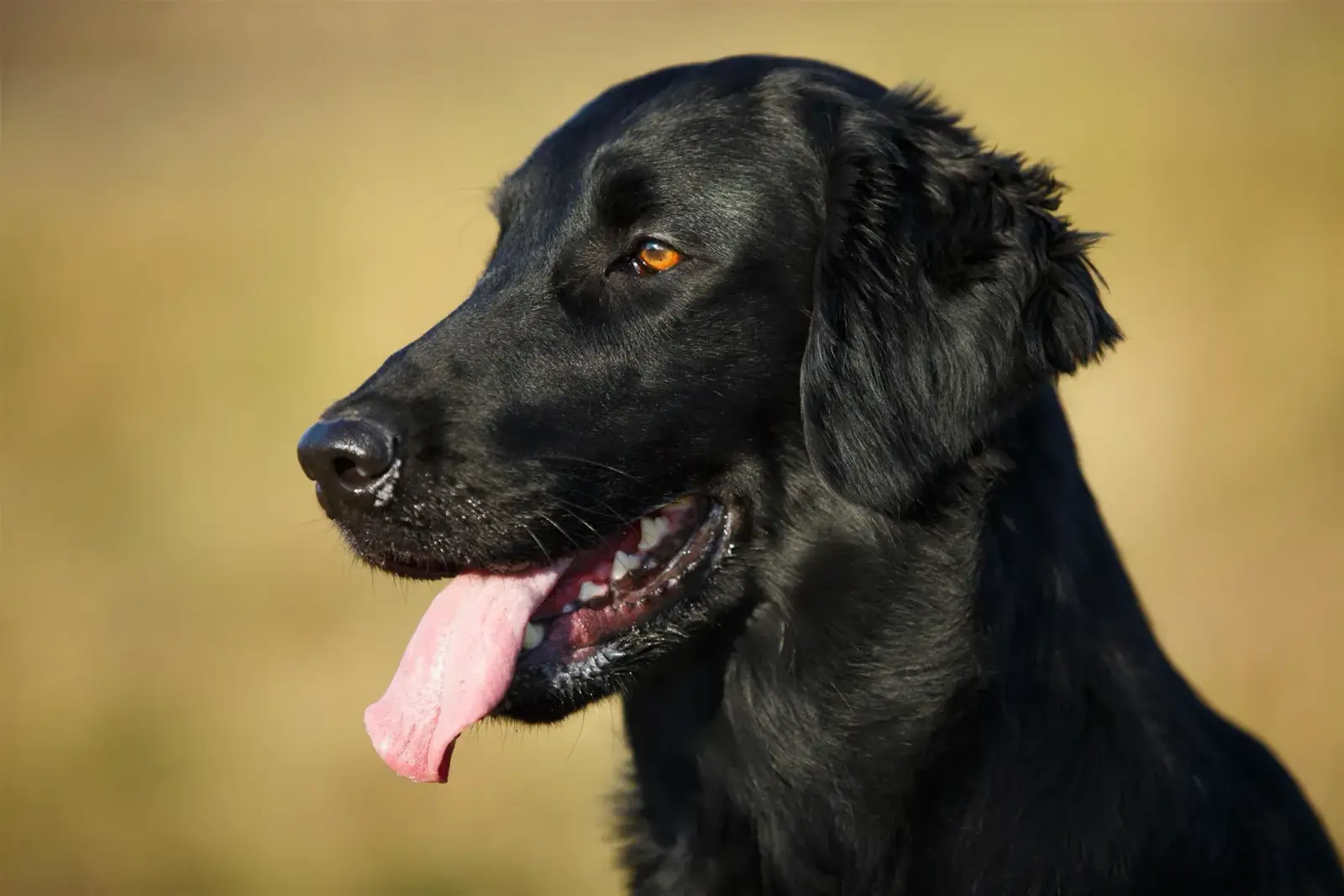
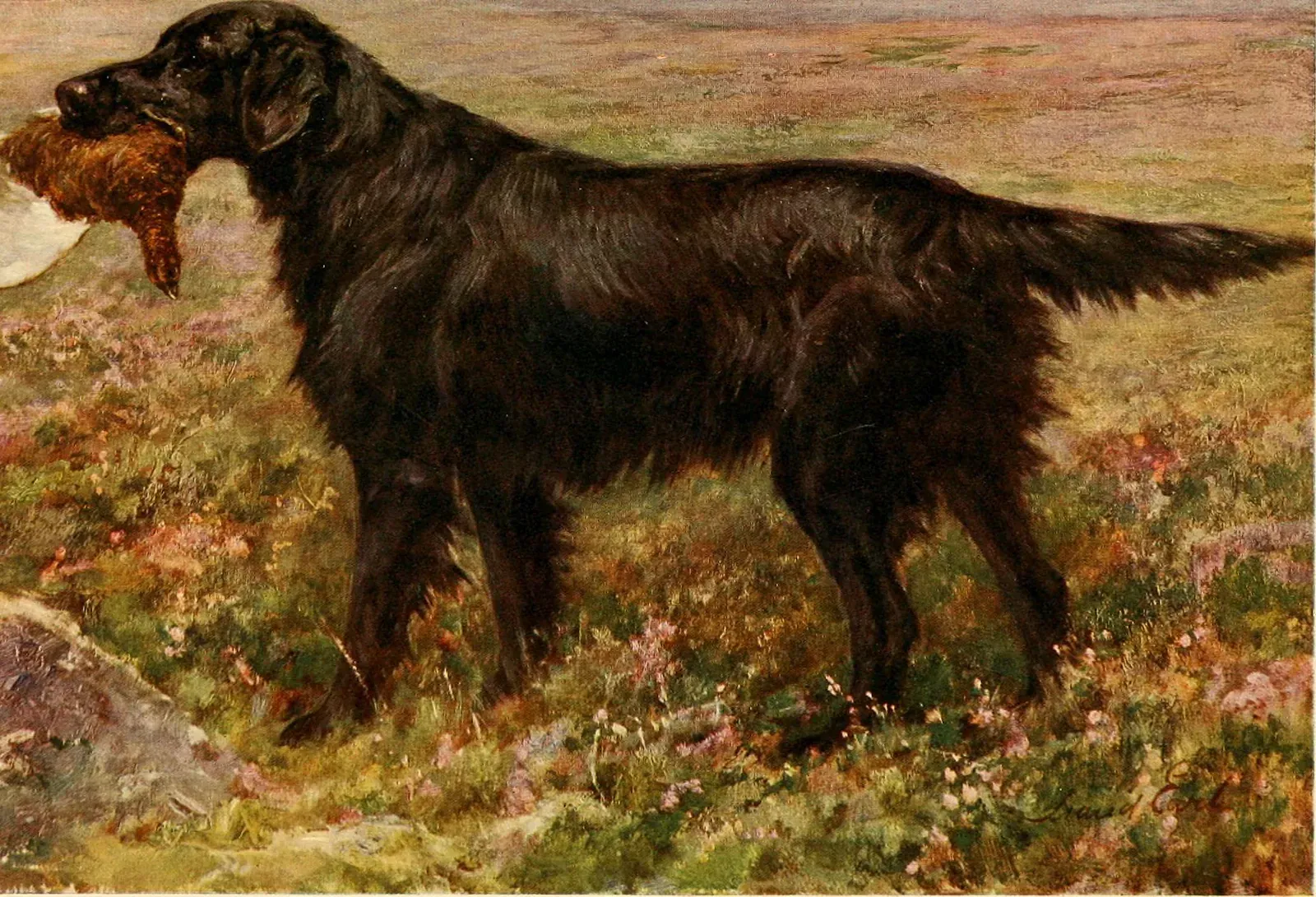
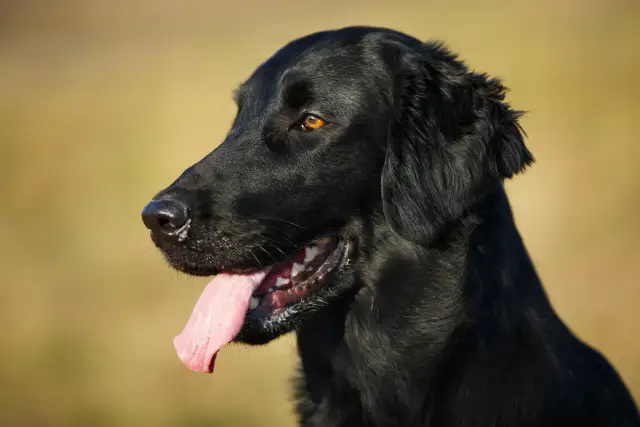
It was shaped in the second half of the 1800s as a gamekeeper's retriever and became one of the most popular shooting dogs of the Victorian age. It is the sleek, feathered cousin of the Golden Retriever and the Labrador Retriever, and the Golden was bred partly from it. The FCI lists it as breed no. 121 in Group 8. In the DNA study by Parker and colleagues (2017) it belongs to the Retriever family. Expect a cheerful, bouncy dog that stays puppyish for years, a life span of about 8 to 10 years in the atlas data, and a serious health point that every buyer should know: cancer, above all histiocytic sarcoma.
Flat-coated Retriever quick facts
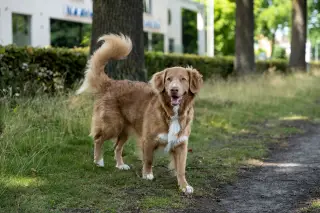
 Related breedNova Scotia Duck Tolling Retriever1860 to 1945 · CanadaVictorian Breed Boom
- Country of origin
- Great Britain (FCI); England in the atlas data
- Period of development
- 1860 to 1880 (atlas data, high confidence)
- Other names
- Flat-coat; Flat Coated Retriever (FCI spelling)
- Size
- Dogs about 59 to 61.5 cm, bitches about 56.5 to 59 cm at the withers (Kennel Club and FCI)
- Weight
- About 27 to 36 kg for dogs (Kennel Club)
- Life span
- Atlas data: 8 to 10 years; UK survey median about 10 years
- Coat
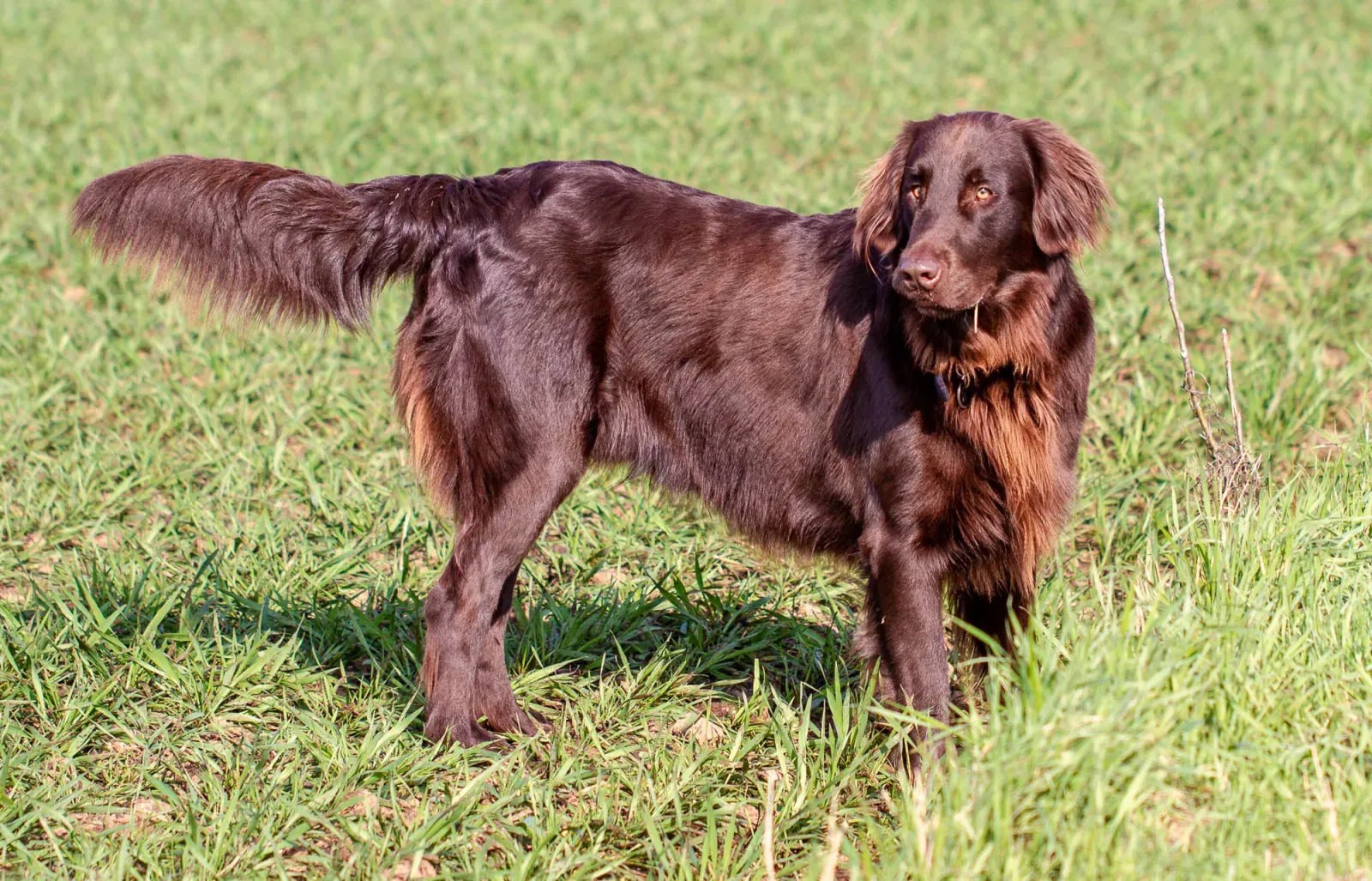
- Dense, flat, medium-length coat with feathering; black or liver
- Group
- FCI Group 8, standard no. 121; AKC Sporting; UK Kennel Club Gundog
- Recognised by
- FCI, AKC, UK Kennel Club
- Family
- Retriever (Parker 2017, strong support)
- Energy
- High; needs long daily exercise and a job for the mind
Drawn to scale in real centimetres. Its back reaches about 59 cm, just above your knee; its head about 75 cm, mid-thigh.
Where it sits in the tree
Victorian Breed Boom · 1850 to 1913

Name and origin
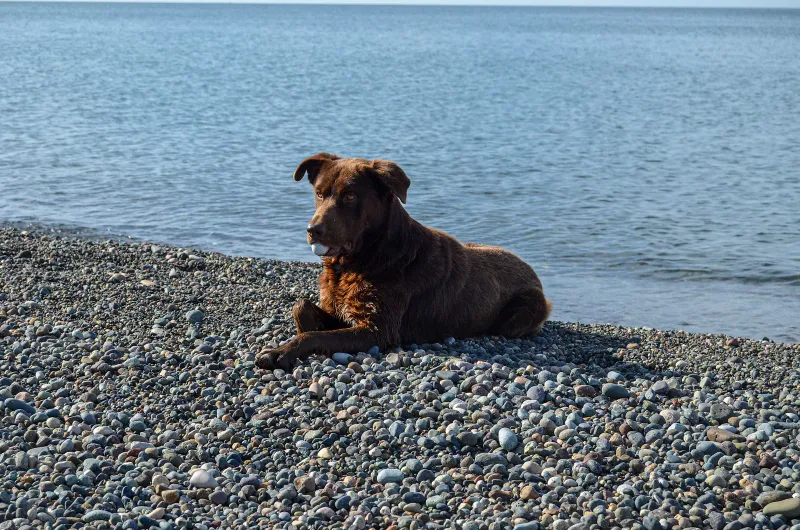 Related breedChesapeake Bay Retriever1807 to 1918 · United StatesIndustrial Revolution
The name describes the coat. It lies flat against the body, in contrast to the tight curls of the Curly-coated Retriever, which was the other great black retriever of the same period. "Retriever" describes the job: to sit quietly while game is shot, then mark where it fell and bring it back undamaged. The atlas records the etymology simply as "for its flat-lying coat".
Early on the type was known as the Wavy-coated Retriever, because the first dogs had a coat with some wave in it. As breeders selected for a straighter, flatter coat, the name Flat-coated took over. In Spanish and German the FCI spelling Flat Coated Retriever is used, and the short form Flat-coat is the one every owner uses.
The country of origin is Great Britain in the FCI standard. The atlas places the development in England in the years 1860 to 1880, in the period it calls the Victorian breed boom, when shooting estates, new dog shows and the new Kennel Club all pushed breeders to fix types.

History
 Same eraAmerican Cocker Spaniel1870 to 1946 · United StatesVictorian Breed Boom
Gamekeepers' retrievers of the 1800s
Before the 1800s a retrieving dog was whatever the shooter had: a water spaniel, a setter, a farm dog. Breech-loading guns and the driven shoot changed that. Game was now shot at greater numbers and at greater range, and shooters needed a dog that would mark falls, find birds on land and in water, and carry them gently. Writers on the breed describe the early Flat-coat as a dog bred for these gamekeepers and estate shoots, mostly in the north of England and the Midlands.
The foundation breeds
The atlas lists three possible parent breeds, all with different confidence levels, and the record is made of breed-writers' accounts, not of studbooks.
- Newfoundland. Newfoundlands brought to British ports are thought to figure in the ancestry. The atlas rates this link medium confidence, with support from the Parker 2017 study. See Newfoundland.
- St. John's Water Dog. The small, short-coated working dog of Newfoundland, now extinct, is said to be part of the ancestry. The atlas rates the link low and treats it as a claim from breed histories. See St. John's Water Dog.
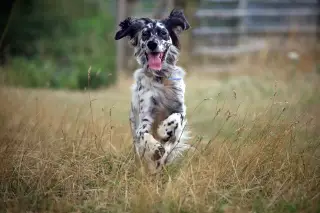
- Setters. Setter blood, for example the English Setter, may have been added for scenting skill and for the feathered tail and legs. This is also low confidence.
Other breeds are named in some accounts, among them sheepdogs and water spaniels. Treat all of these as the standard stories of the breed. The oldest dogs were never recorded in the way modern breeds are, and the main reason to mention them is that they explain the Flat-coat's mix of water-dog drive, setter elegance and a thick, protective coat.
S. E. Shirley and the Kennel Club
The man most often credited with shaping the Flat-coat is Sewallis Evelyn Shirley (1844 to 1904), who was also a founder of the Kennel Club in 1873 and its first chairman. Britannica gives the 1870s for the breed's development. Shirley worked to separate the flat-coated type from the curly-coated retriever and is described in several accounts as largely responsible for the coat seen today. Dogs of his Ettington kennel appear in many early pedigrees. Dates for individual dogs differ between accounts, so the broad outline is enough.
 Save
Popularity before 1900
By the turn of the twentieth century the Flat-coat was among the most popular gun dogs in Britain. Its black, glossy coat and elegant outline suited the show ring, and its skill suited the field. Then it lost ground. Breed histories say that the Labrador Retriever, easier to breed to a fixed type and with a shorter coat that shed water, took over as the working retriever of choice, and that the two world wars reduced numbers of the Flat-coat to very few dogs. Some accounts say the breed came close to disappearing by the end of the Second World War and was saved by a handful of breeders. The exact numbers are not agreed, and the story is repeated more often than it is documented.
The Golden Retriever connection
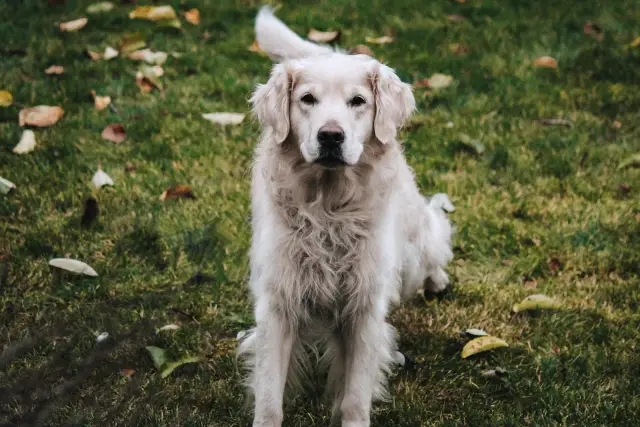
The Golden Retriever is the Flat-coat's best-known descendant. Wikipedia and several breed histories list the Flat-coated Retriever among the foundation stock of the Golden, along with the Tweed Water Spaniel, a red setter, a Bloodhound and a Labrador. The best-known account starts in 1868, when Sir Dudley Marjoribanks, later Lord Tweedmouth, mated a yellow retriever with a Tweed Water Spaniel. Early yellow dogs were registered as a variety of the Flat-coat, and in 1920 the "Yellow or" was dropped and the Golden Retriever became a breed of its own. The atlas data lists the Golden Retriever as the one child breed of the Flat-coat. See Golden Retriever.
Recognition today
The FCI lists the Flat Coated Retriever as breed no. 121, with Great Britain as the country of origin, in Group 8 (Retrievers, Flushing dogs, Water dogs). The AKC places it in the Sporting Group and the UK Kennel Club in the Gundog Group. All three recognise the same two colours, black and liver.
Relatives and DNA
 Same familyAmerican Eskimo Dog1900 to 1917 · United StatesVictorian Breed Boom
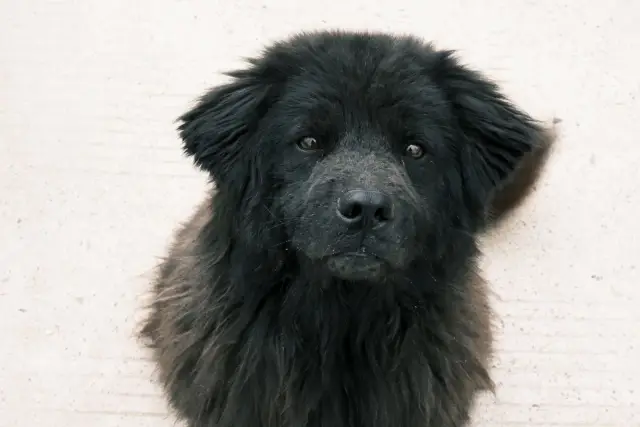
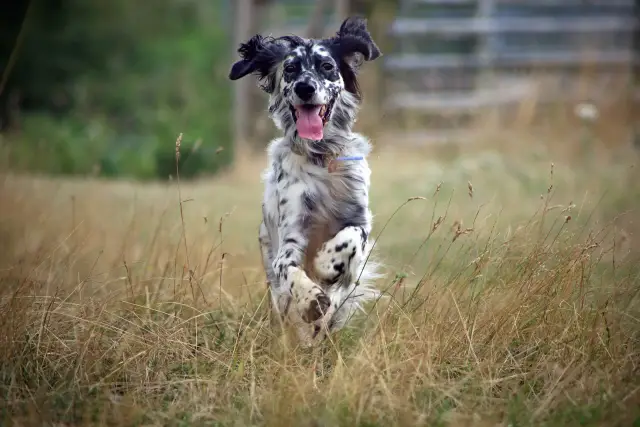
The Parker 2017 study places the Flat-coated Retriever in the Retriever family, with strong support. The breeds that share the most DNA with it are the retriever breeds. The figures below are in () from that study, where a larger number means a closer relationship.
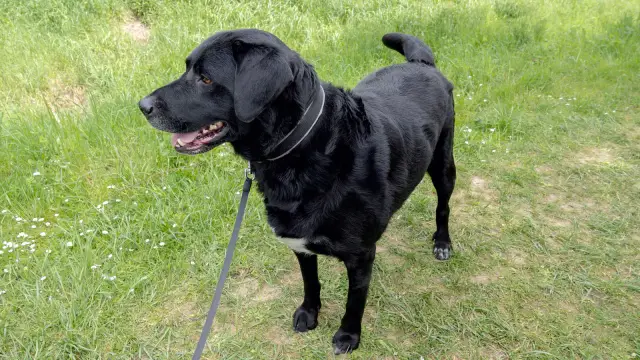
- Flat-coated Retriever and Golden Retriever
- Flat-coated Retriever and Labrador Retriever
- Flat-coated Retriever and Newfoundland
- Flat-coated Retriever and English Setter
The jump between the first two figures and the rest is large. It fits the written history: the Golden descends partly from the Flat-coat, and the Labrador was part of the same Victorian retriever world. The Newfoundland and English Setter figures match the old claims of Newfoundland and setter blood, though the Parker study cannot say when or how the blood arrived. The result for the Curly-coated Retriever is low, which supports the view that the two black retrievers were kept apart by breeders from early on.
Descend from it · 1
- Golden RetrieverUnited Kingdom
- Golden Retriever67.0 Mb 2.8%
- Labrador Retriever57.0 Mb 2.4%
- Newfoundland17.6 Mb 0.7%
- English Setter11.7 Mb 0.5%
- Nova Scotia Duck Tolling Retriever11.2 Mb 0.5%
- Irish Water Spaniel11.1 Mb 0.5%
- Curly-coated Retriever10.8 Mb 0.5%
Source: Parker et al. 2017. Percent of the whole genome.
| Breed | Shared DNA (Mb) |
|---|---|
| Golden Retriever | 67 |
| Labrador Retriever | 57 |
| Newfoundland | 17.6 |
| English Setter | 11.7 |
| Nova Scotia Duck Tolling Retriever | 11.2 |
| Irish Water Spaniel | 11.1 |
| Curly-coated Retriever | 10.8 |
Source: Parker et al. 2017, Cell Reports, shared haplotypes between 161 breeds (1,346 dogs).
The Flat-coated Retriever breed standard
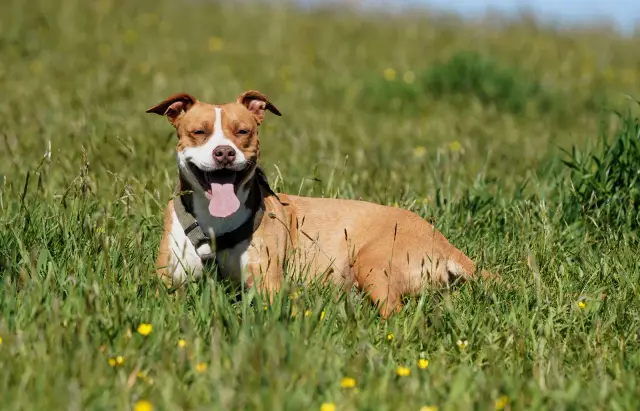 Looks relatedAmerican Pit Bull Terrier1850 to 1898 · United StatesVictorian Breed Boom
The standards of the FCI, the UK Kennel Club and the AKC agree on the main points. Size ranges differ by a centimetre or two, because each club words the range its own way.
| Trait | What the standards say |
|---|---|
| General appearance | Kennel Club: bright, active dog of power and raciness, with a long, clean head and a kind expression. A balanced, functional gundog |
| Height | Kennel Club and FCI: dogs about 59 to 61.5 cm, bitches about 56.5 to 59 cm. AKC: dogs 23 to 24.5 in (58 to 62 cm), bitches 22 to 23.5 in (56 to 60 cm) |
| Weight | Kennel Club: about 27 to 36 kg for dogs |
| Head | Long, moulded in a "one-piece" way, with a flat skull running into a long muzzle without a harsh stop |
| Eyes | Dark brown or hazel, medium size, with a kind, intelligent look |
| Coat | Dense, fine to medium texture, as flat as possible, with feathering on legs and tail |
| Colour | Black or liver (all clubs). Yellow and other colours are faults or not accepted |
| Tail | Short, straight, with moderate feathering, carried happily and never much above the line of the back |
| Gait | Free, ground-covering movement, with drive from the hindquarters |
| Temperament | Kennel Club: bright, optimistic, friendly. The dog should show a keen interest in its work |
A tip for buyers: the standards describe a lean, racy dog, and not a heavy one. A well-made Flat-coat has a long, clean outline, with a deep but not barrel-shaped chest. Heavy bone and a thick head are more common in show lines of the other retrievers, and are not what the standard asks for here.
Liver is a real colour with a real gene behind it. A liver Flat-coat has a deep brown coat, with matching nose and eye rims. Black is dominant, so a litter from two black dogs may include a liver puppy if both carry the liver gene. Liver is rarer in the show ring and common enough in the field, and no health difference between the two colours is published.
Flat-coated Retriever temperament
 Related breedAmerican Staffordshire Terrier1850 to 1936 · United StatesVictorian Breed Boom
The Flat-coat is known as the "Peter Pan" of the retriever breeds. The nickname is credited to the breed writer Paddy Petch, author of The Complete Flat-Coated Retriever, and it means a dog that keeps a puppy's spirit long after it has grown up. Many owners say the dog does not settle until it is four or five years old. That joy has a practical side: for years you share a house with a large, wagging, bouncing dog.
- With people. Friendly and open with family, friends and strangers. It is not a watchdog, and it will greet a burglar the way it greets the postman.
- With children. Good natured and patient, but large, strong and boisterous when young. Small children can be knocked over by a happy tail or a joyful jump. Supervise the early years.
- With other dogs. Usually sociable. The breed was kept in groups on estates and tends to get on well with other dogs.
- Trainability. Quick, eager and happy to work for food or a retrieve. It learns fast and also gets bored fast, so short, varied sessions work better than drilling.
- Retrieving instinct. Strong. Expect it to carry socks, shoes, toys and the odd dead bird. A game of fetch is the reward it values most.
- Mouth. Many Flat-coats chew and mouth as puppies, and chewing can last well into adolescence. Offer proper things to carry and chew.
- Noise. Not a big barker, though it will talk to you.
 Save
Exercise and mental work
An adult needs at least an hour or two of real exercise a day, and many need more in their first five years. A walk on the lead is not enough. It wants off-lead running in a safe place, swimming where it is safe, and games that use its nose and mouth. A job helps: gundog training, working tests, scent work, dummy retrieving, agility and rally all suit the breed. Many owners compete in field trials and in the show ring with the same dog.
Without work it finds its own. A bored young Flat-coat may dig, chew, steal food off counters and run through the house. This breed rewards an owner who enjoys training as much as walking.

Grooming and coat care
 Related breedAustralian Kelpie1870 to 1902 · AustraliaVictorian Breed Boom
The coat is easier than it looks. It is a single, flat coat with feathering, which sheds a little all year and more in spring and autumn. Brush the dog two or three times a week with a pin brush or a comb to remove loose hair and keep the feathering from matting behind the ears, on the chest, the legs and the tail. Bathing a few times a year is enough. Trim the feet and tidy the feathers if you want the show look. Check the ears after swimming, because heavy, hairy ears hold water and can lead to infections. Clean the teeth and cut the nails as for any large dog.
Health
 Related breedBasset Hound1860 to 1885 · United KingdomVictorian Breed Boom
The atlas gives a life span of 8 to 10 years. A Danish and a UK survey, relayed by breed health sources, give a median of about 10 years, and the 2014 UK Kennel Club Pedigree Breed Health Survey is described as showing an improved median of 10 years. A UC Davis breed document gives an average of about 8 years. The ranges overlap, and the lower figure is the one a buyer should keep in mind.
Cancer is the central health issue. In a UK cohort study of 174 Flat-coats followed from 1996 to 2007, Dobson and colleagues (Veterinary and Comparative Oncology, 2009) found that 72 dogs (42 percent) died of confirmed tumours, at an average age of about 9 years. A further 61 dogs (35 percent) died of other causes, at an average age of about 12 years. Soft tissue sarcoma, mainly histiocytic sarcoma, was the leading tumour type, affecting 32 dogs, or 44 percent of those with tumours. An earlier single-clinic series (Fidel and colleagues, 2006) counted 37 cases of histiocytic sarcoma and found that it made up 36 percent of the malignant tumours seen in the breed over the study period. A 2021 report from the US National Institutes of Health put the lifetime risk at roughly 1 in 5 for the breed. Other sources say that more than half the breed die of cancer. The difference between figures comes from what is counted as a confirmed tumour, so the 42 percent figure is the one with a clear definition. In plain words, a Flat-coat is more likely than most breeds to die of cancer, and a large fraction of them do so before their tenth birthday.
Histiocytic sarcoma is an aggressive cancer of white blood cells, which often appears in joints, the lungs, the spleen or the lymph nodes. Early signs include a lump, lameness that does not settle, a cough or weight loss. There is no screening test for it. The best a buyer can do is to ask about cancer in the pedigree, and the best an owner can do is to see the vet quickly about any new lump or limp. Research projects on the breed's genes are running at university level, and owners are often invited to join them.
| Condition | What it is | How common | What to do |
|---|---|---|---|
| Histiocytic sarcoma | An aggressive cancer of immune cells that spreads fast | About 1 in 5 dogs over a lifetime (a 2021 US genetic study); 36 percent of malignant tumours in one clinic series (Fidel 2006) | Ask about cancer history in the pedigree; prompt vet visit for any lump, lameness or cough |
| Other tumours | Soft tissue sarcomas and other cancers | 42 percent of dogs in a UK cohort died of confirmed tumours (Dobson 2009) | Regular checks; early imaging when something changes |
| A loosely fitting hip joint that wears and becomes painful | Under 3 percent in OFA data | Hip scores of both parents (BVA/KC or OFA); keep the dog lean | |
| Patellar luxation | Kneecap that slips out of its groove | 4.2 percent of males and 3.2 percent of females in a 1997 US club survey (old data) | Knee check by a vet before breeding |
| Eye disease | Progressive retinal atrophy, glaucoma and related conditions | No published figure | Annual eye examination of breeding dogs |
| Gastric dilatation and volvulus (bloat) | The stomach swells and can twist, an emergency in deep-chested dogs | No published figure for this breed | Smaller meals, no hard exercise around meals, know the signs; ask a vet about preventive stomach tacking |
Hips and knees. Hip dysplasia is less of a problem in this breed than in many large dogs. The OFA statistics give a rate of under 3 percent, and the UK average hip score is described as 9 under the BVA/Kennel Club scheme. Even so, ask to see both parents' scores. The knee figures come from a survey done decades ago and should be read with care.
Eyes. Breeders in many countries test for progressive retinal atrophy and glaucoma. Ask what was tested and see the certificates.
Bloat. A large, deep-chested dog is at risk of a twisted stomach. The signs are a swollen belly, retching with nothing coming up, drooling and restlessness. It is an emergency and the dog needs a vet at once.
Choosing a puppy. Meet the mother, ask about the causes and ages of death in the last three generations, ask for the hip scores and the eye certificates, and expect a waiting list. A reputable breeder will talk about cancer openly and will not call the breed healthy without comment. National breed clubs run health surveys and can say which breeders take part.
 Save

Living with a Flat-coated Retriever
 Related breedBelgian Malinois1891 to 1901 · BelgiumVictorian Breed Boom
A great fit if
- You want a cheerful, people-loving dog that joins in with everything.
- You have time to exercise it for two hours a day when it is young, and to train it.
- You enjoy a dog sport, gundog work or long country walks, and have some access to safe swimming.
- You are at home for a good part of the day, or have a dog walker and a household that shares the care.
- You can accept the risk of an early death from cancer and the cost of vet care for a large dog.
Think twice if
- You want a calm, sedate dog from the first year. The Flat-coat's puppyhood lasts long.
- You live in a small flat and cannot give it daily running room.
- You are away at work for long hours. It is a social dog and does badly alone.
- You want a guard dog. This one welcomes everyone.
- A short life span would be hard on your family. A breed with this cancer rate calls for realistic expectations.
Before you get one
Visit a breeder's dogs and meet adults, not just puppies. Join a breed club, ask about health testing and cancer in the pedigree, and read the club's health survey. Check the rescue networks as well, since young Flat-coats given up by owners who could not cope with their energy do come up. Costs are those of any large dog: food, insurance or a savings fund, vet visits, training classes and a good car crate.
Similar breeds to consider
- Golden Retriever. A close relative with a gentler pace and a golden coat. It has a long coat that needs more brushing.
- Labrador Retriever. A shorter coat, a steadier temperament and a larger body of health data.
- Curly-coated Retriever. The other black retriever of the Victorian age, more reserved and more independent.
- Irish Setter. A feathered, racy gundog with similar energy.

Flat-coated Retriever fun facts
 Related breedBelgian Shepherd1891 to 1901 · BelgiumVictorian Breed Boom
- The Golden Retriever was registered as a variety of the Flat-coat in its early years, before it became a breed in 1920.
- "Peter Pan of the retrievers" is the Flat-coat's nickname, since it stays playful for years.
- The Kennel Club was founded in 1873, and one of its founders, S. E. Shirley, is the best-known name in the early history of the breed.
- The breed has two colours, black and liver, and no yellow.
- A Flat-coat's tail is a visible signal: it wags with the whole back half of the dog.
- Its coat sheds water well, and the breed enjoys swimming.
- The Parker 2017 study puts it closest to the Golden and the Labrador, in that order.
Frequently asked questions
How long do Flat-coated Retrievers live?
The atlas gives 8 to 10 years. UK survey data give a median of about 10 years. In a UK cohort of 174 dogs, those that died of tumours did so at an average age of about 9 years, and those that died of other causes at about 12.
Are Flat-coated Retrievers good family dogs?
Yes, for an active family. They are friendly and patient with children, but large and boisterous for the first years. They need daily exercise and company.
What is the difference between a Flat-coated Retriever and a Golden Retriever?
The Flat-coat is black or liver with a flat coat, a longer, leaner head and a lighter body. The Golden is gold or cream with a thicker, longer coat. The Golden was bred partly from the Flat-coat, and the two share more DNA than the Flat-coat shares with any other breed except the Labrador.
Why do Flat-coated Retrievers get cancer so often?
Researchers do not yet know all the reasons. Histiocytic sarcoma runs in families of dogs, and studies are looking for the genes involved. The Bernese Mountain Dog is the other breed with a high rate. Ask a breed club about current research.
Do Flat-coated Retrievers shed a lot?
They shed moderately, more in spring and autumn. Brushing two or three times a week keeps the hair under control.
How much exercise does a Flat-coated Retriever need?
An adult needs at least one to two hours a day, with off-lead running and something for the mind. Young dogs need more.
Can a Flat-coated Retriever live in a flat?
It can if it gets its exercise outside, but a house with a garden suits it better. It is a bouncy dog and does not do well in a small space with little activity.
Is the Flat-coated Retriever a rare breed?
It is far less common than the Labrador or the Golden. The atlas data lists it as a living, officially recognised breed in the , the and the UK Kennel Club.
Are Flat-coats easy to train?
Yes, for people who keep sessions short and positive. They learn quickly and are happy to work for a retrieve or a treat, but they are slow to mature and easily distracted.
Read next
Closest DNAGolden Retriever67.0 Mb sharedFamilyRetrieverThe whole family Adopt a dogDog Shelters in EuropeFind dog shelters in Europe, learn how shelters differ from country to country and why adopting a dog is a good option.
Sources (15)
- FCI Standard no. 121, Flat Coated Retriever (Group 8)
- The Kennel Club (UK), Flat Coated Retriever breed standard
- American Kennel Club, Flat-Coated Retriever breed standard
- Parker et al. 2017, Genomic analyses reveal the influence of geographic origin, migration, and hybridization on modern dog breed development, Cell Reports
- Dobson et al. 2009, Mortality in a cohort of flat-coated retrievers in the UK, Veterinary and Comparative Oncology
- Fidel et al. 2006, Histiocytic sarcomas in flat-coated retrievers: a summary of 37 cases, Veterinary and Comparative Oncology 4(2)
- Kennel Club Pedigree Breed Health Survey 2014, as reported by the Kennel Club breed health coordinator
- UC Davis Veterinary Genetics Laboratory, Flat-Coated Retriever breed document
- Orthopedic Foundation for Animals, hip dysplasia statistics for the Flat-Coated Retriever
- National Institutes of Health, 2021 report on the canine genome and histiocytic sarcoma
- Flat-Coated Retriever Society of America, 1997 health survey
- Encyclopaedia Britannica, Flat-coated retriever
- Fogle, B. 2009, The New Encyclopedia of the Dog
- Country Life, 2022, timeline of the Golden Retriever
- Paddy Petch, The Complete Flat-Coated Retriever