
It was bred to find game birds and indicate them by crouching, or "setting", so the hunter could net or shoot them. Today it is mostly a family companion and show dog, with a smaller field-bred line that stays closer to its working roots. It is exuberant, friendly and slow to mature, and it needs a lot of daily running and company. The atlas data gives a life span of 12 to 15 years, and the breed is recognised by the FCI, the AKC and the UK Kennel Club.
Irish Setter quick facts
 Related breedVizsla1350 to 1935 · HungaryLate Middle Ages
- Country of origin
- Ireland
- Period of development
- About 1700 to 1886 (atlas data, medium confidence)
- Original job
- Finding game birds and marking them by crouching, for the hunter to net or shoot
- Type
- Pointer and setter (FCI Group 7, Pointing dogs, standard no. 120 "Irish Red Setter"; AKC Sporting Group; UK Kennel Club Gundog Group)
- Height
- FCI: males 58 to 67 cm, females 55 to 62 cm
- Weight
- AKC and CKC: ideal show weight about 70 lb (32 kg) for males and 60 lb (27 kg) for females; the FCI gives no weight range
- Coat
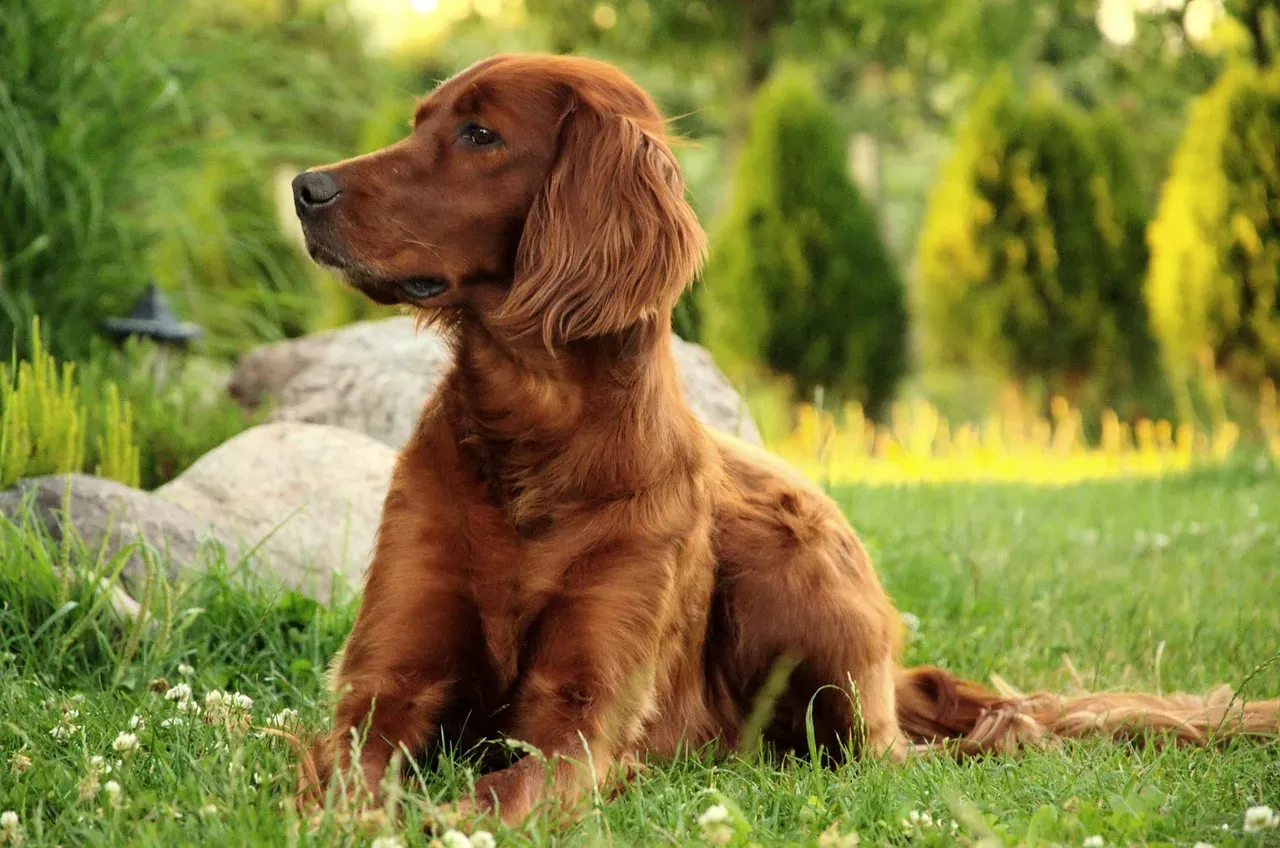
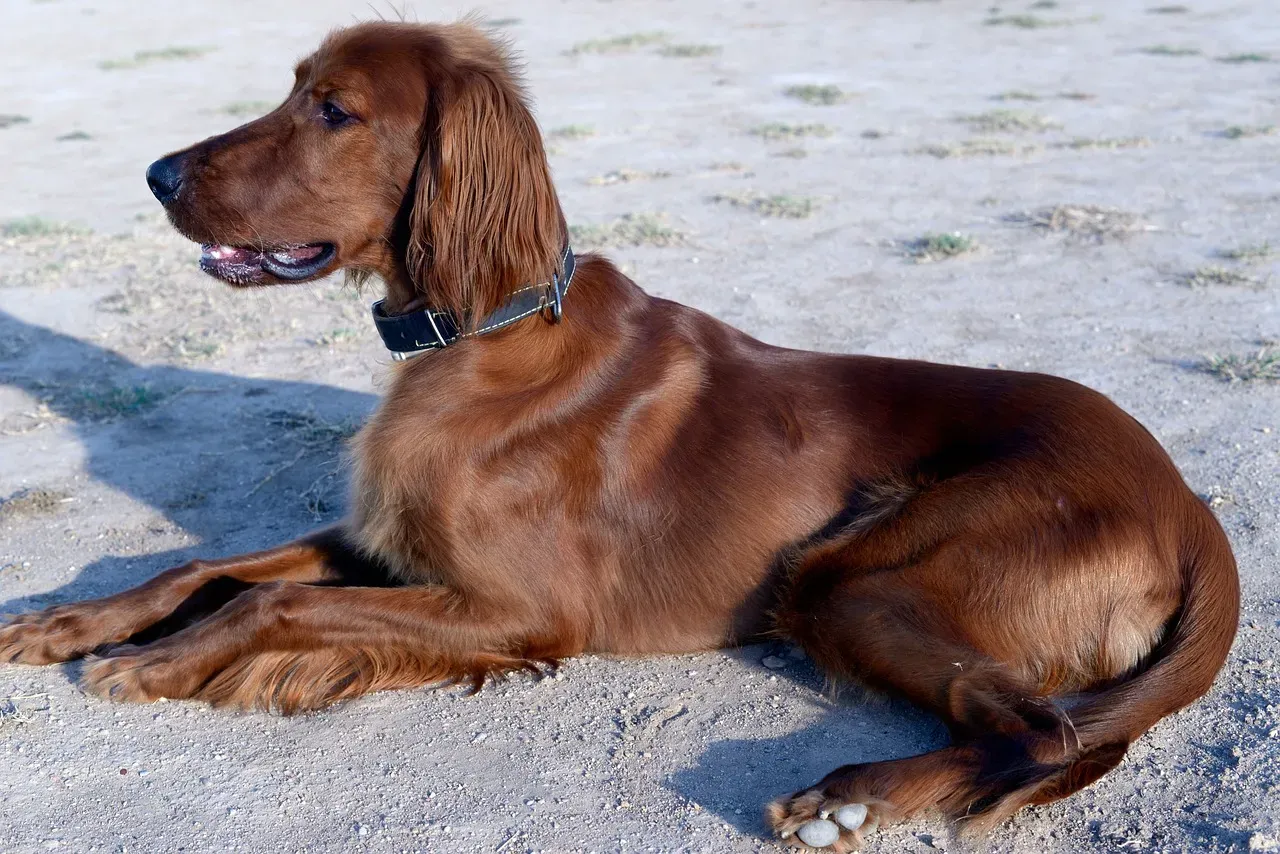
- Fine, silky, flat, with long feathering on the ears, chest, belly, legs and tail
- Colour
- Rich chestnut or mahogany red; small white marks on chest, throat or toes are allowed in several standards
- Life span
- 12 to 15 years (atlas data)
- Other names
- Red Setter, Irish Red Setter
- DNA family
- Pointer Setter family (Parker et al. 2017), with strong support
- Closest DNA relative
- Gordon Setter (36.8 shared), then English Setter (24.5 Mb)
- Related breeds
- Gordon Setter, English Setter, Irish Red and White Setter, Golden Retriever
Drawn to scale in real centimetres. Its back reaches about 62 cm, mid-thigh; its head about 79 cm, your hip.
Where it sits in the tree
Early Modern Era · 1600 to 1799





Name and origin
 Related breedDalmatian1700 to 1890 · CroatiaEarly Modern Era
The name is a place plus a job. "Irish" gives the country, and "setter" comes from the dog's behaviour on scenting game: it crouches, or sets, so the hunter can approach. The FCI lists the breed as the Irish Red Setter, which is also the name Irish clubs use, and "Red Setter" is a common short form.
Three questions about the origin are worth separating.
- Where it began. Ireland. The FCI gives Ireland as the country of origin, and the atlas data places the breed on the island, with a development window from about 1700 to 1886.
- What it came from. The atlas data lists no documented ancestors. Setters in general are thought to descend from spaniel and pointer types of earlier centuries, and the atlas data puts the Irish Setter in the Pointer Setter family. Specific recipes found in older books, such as precise lists of crosses, are not backed by pedigrees and should be read as stories.
- Who set the type. The atlas data records the Irish Red Setter Club in Dublin as the body that drew up the first standard, approved in 1886. Before that, breeders in Ireland kept red and red-and-white setters as one loose type, and the atlas data notes that the two were once mated together.

History
 Same eraGerman Shorthaired Pointer1800 to 1872 · GermanyIndustrial Revolution
Irish setters before the standard
Setters were working gundogs in Ireland and Britain long before there were kennel clubs. Hunters wanted a dog that could cover rough ground, find birds by scent and stay still until the net or gun was ready. In Ireland, estates kept setters of several colours, and red, and red-and-white dogs were common. The atlas data says red and red-and-white setters were once mated together as one Irish Setter type. A common account says the Earl of Enniskillen helped start the fashion for solid red dogs in the early 1800s by breeding mainly from red animals. That account comes from breed histories and is not backed by a surviving , so read it as tradition.
The first standard
The Irish Red Setter Club in Dublin drew up a standard that was approved on 29 March 1886. The date matches the end of the atlas development window. The standard fixed the solid red coat as the goal, and the red-and-white dogs were later developed as their own breed. The Irish Red and White Setter is now recognised separately by the FCI and by clubs in Ireland and Britain.
Show type and field type
Through the late 1800s and the 1900s, breeders who showed their dogs and breeders who worked them started to select for different things. Histories from the Irish Setter Club of America describe a show-type dog that grew taller, heavier and more heavily coated, and a field-bred dog that stayed lighter and faster. The field line is often called the Red Setter. Both types are the same registered breed in most countries, but they can look and behave differently, so ask which type you are buying.
The breed abroad
The Irish Setter reached North America in the 1800s and became a popular show breed and family dog. The AKC lists it in the Sporting Group, and the Irish Setter Club of America keeps the and health programme. The UK Kennel Club places it in the Gundog Group. The Canadian Kennel Club also publishes a standard, which gives the same ideal size as the American text.
Famous Irish Setters
One of the best-known pets was King Timahoe, the Irish Setter of US President Richard Nixon, named after Timahoe in County Kildare, Ireland, home of his Quaker ancestors. The Nixon Presidential Library records the dog among the family pets.

Relatives and DNA
 Same familyWeimaraner1810 to 1897 · GermanyIndustrial Revolution
In the Parker 2017 DNA study, which grouped 161 breeds into 23 clades by shared stretches of DNA, the Irish Setter falls into the Pointer Setter family, and the atlas data rates the clade support as strong. That means the placement is firm: the breed groups with the other setters and the continental pointers.
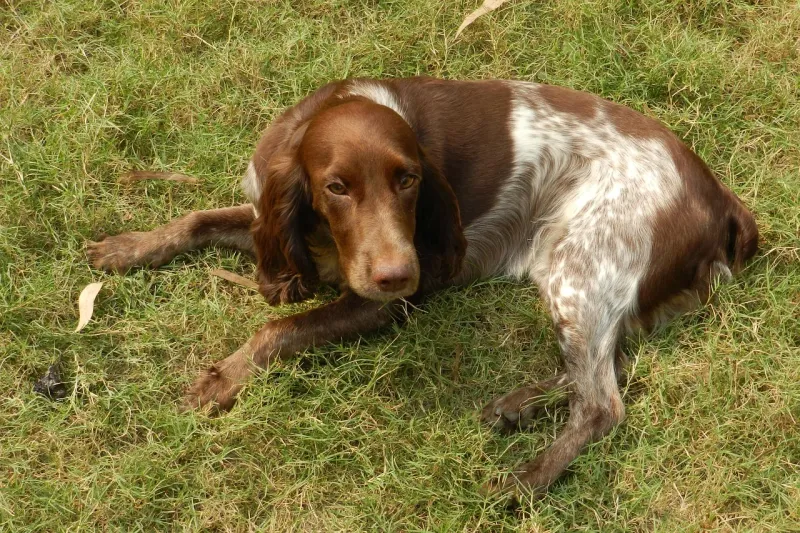 Irish Red and White Settersibling, once bred together
 Irish Red and White Settersibling, once bred together
Sibling and descendant breeds (atlas data)
- Irish Red and White Setter. Red and red-and-white dogs were once mated together as one Irish Setter type. Medium confidence.
- Golden Retriever. The atlas data lists it as a child of the Irish Setter. Golden Retriever histories describe an outcross to a red setter in the early lines, and the atlas data should be read as that account, not as a modern parentage.
- Goldendoodle. A modern cross, listed as a descendant through the Golden Retriever.
What does DNA say?
Shared show which breeds share long stretches of identical DNA through common ancestors or crossing. A higher number of shared (Mb) means a more recent link. The study cannot say which breed gave genes to which.

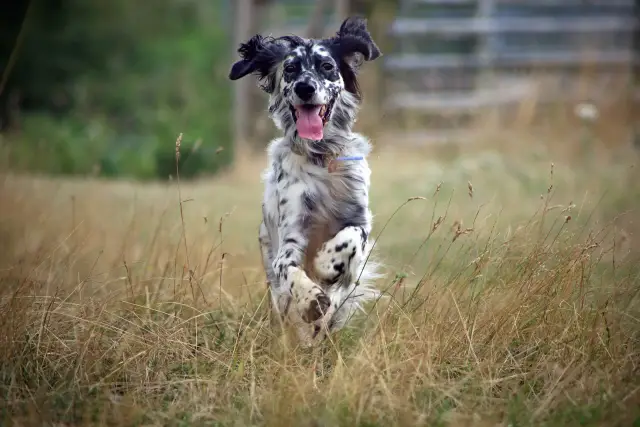

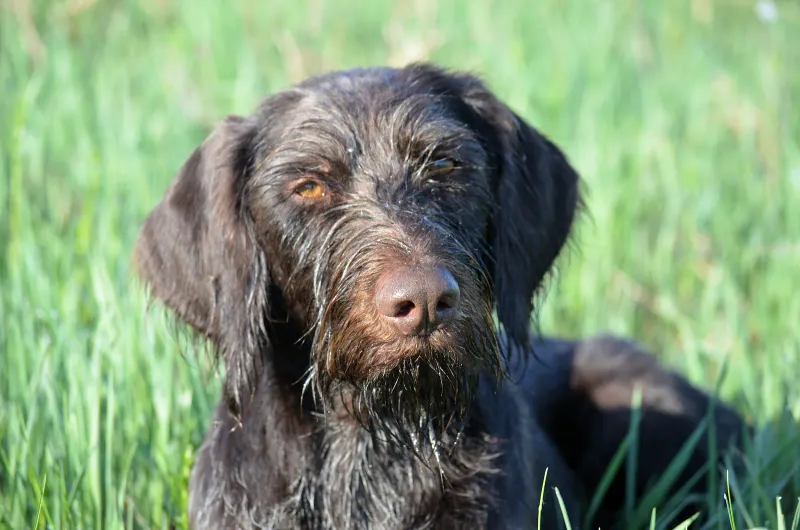

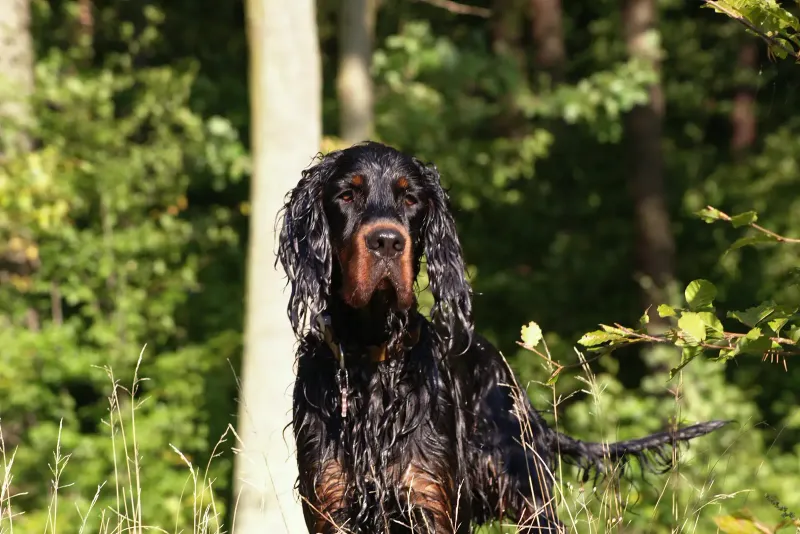 Irish Setter and Gordon Setter
- Irish Setter and English Setter
- Irish Setter and Brittany
- Irish Setter and German Wirehaired Pointer
- Irish Setter and Golden Retriever
The pattern fits the history. The three setters share the most DNA, which matches a common stock of British and Irish setters, and the Brittany, a continental pointing spaniel, comes next. The Golden Retriever, a gundog of a different type, shares about as much with the Irish Setter as the German Wirehaired Pointer does, which is a reminder that these figures show shared stretches, not a straight line of descent.
Sister breeds · 1
- Irish Red and White Setter1600 to 1944
Descend from it · 1
- Golden RetrieverUnited Kingdom
- Gordon Setter36.8 Mb 1.5%
- English Setter24.5 Mb 1.0%
- Brittany15.8 Mb 0.7%
- German Wirehaired Pointer15.6 Mb 0.7%
- Golden Retriever15.4 Mb 0.6%
- Vizsla12.5 Mb 0.5%
- Irish Water Spaniel11.7 Mb 0.5%
- Spinone Italiano10.3 Mb 0.4%
- Curly-coated Retriever10.2 Mb 0.4%
Source: Parker et al. 2017. Percent of the whole genome.
The breed standard
 Looks relatedWirehaired Pointing Griffon1874 to 1887 · FranceVictorian Breed Boom
A breed standard is the written ideal for a breed that kennel clubs judge dogs against. The Irish Setter standards describe a tall, racy gundog with a long, lean head, a deep chest, a feathered tail and a flowing red coat. Clubs agree on the picture; they differ in how they express size.
| Trait | What the standards say |
|---|---|
| Height | FCI (no. 120): males 58 to 67 cm, females 55 to 62 cm. AKC and CKC: ideal about 27 in (69 cm) for dogs and 25 in (64 cm) for bitches, with a variation of about an inch either way |
| Weight | AKC and CKC: about 70 lb (32 kg) for dogs and 60 lb (27 kg) for bitches in show condition. FCI: no weight range given |
| Coat | FCI and AKC: short and fine on the head, front of legs and tips of ears; moderate length, flat and free of curl on the body, with long silky feathering on ears, back of legs, belly, chest and tail |
| Colour | CKC: mahogany or rich chestnut red. Kennel Club: rich chestnut with no trace of black; a little white on chest, throat or toes is acceptable |
| Head | Long and lean with a clearly defined stop and a muzzle of moderate depth, as the standards state |
| Build | Deep chest, strong loin, a tail set low and carried level or below the back |
| Size note | The Kennel Club says the size described is a guide and a dog may be larger or smaller |
Show type and field type. All the major standards describe the same ideal, but field-bred dogs are often smaller and lighter than the show type. If you want a hunting companion or a sports partner, ask the breeder what lines the puppy comes from.
Colour. Solid red is the aim. The standards allow a small amount of white on the chest, throat or toes. A dog with large white patches is closer to the Irish Red and White Setter, which is a separate breed.

Temperament
 Related breedAkita1600 to 1931 · JapanEarly Modern Era
The Irish Setter has a reputation as a happy, rowdy and affectionate dog. Club descriptions, including those of the Irish Setter Club of America, describe a dog that is outgoing and playful, that stays puppyish for years, and that wants to be with its people. The FCI standard lists its use as a gundog and family dog.
Training and exercise
The breed is smart and willing, but it is easily distracted and slow to mature. Many dogs act like adolescents until they are three. Short, positive, varied sessions work better than long drills, and recall training needs patience because a setter that picks up a scent can go a long way. The breed needs daily running in a safe area. An hour or more of exercise each day is a reasonable baseline for a young adult, and field-bred dogs usually need more.
With children and other pets
Irish Setters are generally friendly with children and other dogs. The risk lies in their size and energy: a young setter can knock down a toddler during play. They tend to be good with other dogs, and many live happily with cats if introduced early, though a bird dog's chase instinct varies.
Alone time and company
The breed is people-oriented and does not like long hours alone. A bored setter may dig, chew or bark. It does best in a home where someone is around for much of the day, or where a dog walker or a second dog can fill the gaps.

Health
 Related breedAmerican Bulldog1700 to 1980 · United StatesEarly Modern Era
Most Irish Setters live healthy lives, and the atlas data gives 12 to 15 years. This section lists what breeders screen for and what owners can watch for. Figures are given only where a named study supplies one. The information is general. Talk to a vet about your own dog.
Life span. The atlas data gives 12 to 15 years. No breed-level survey is quoted here.
| Condition | What it is | How common | What helps |
|---|---|---|---|
| Gastric dilatation-volvulus (bloat) | The stomach fills with gas and may twist, which is an emergency | Irish Setters had about 3.5 times the odds of bloat compared with other dogs in a 1994 US case-control study (Glickman et al.); the UK VetCompass study also ranked the breed among the higher-risk ones. No study gives a lifetime figure | Know the signs (unproductive retching, swollen belly, restlessness); go to a vet at once; slower feeding, no raised bowl and quiet time after meals are advised by researchers; ask about preventive stomach surgery |
| Progressive retinal atrophy (rcd1 and rcd4) | An inherited loss of retinal cells that leads to blindness | Seen in the breed; a 2000 Australian study of 38 dogs found no rcd1 mutation | DNA tests of breeding dogs; yearly eye exams |
| Canine leukocyte adhesion deficiency (CLAD) | An inherited immune disorder in which puppies get repeated bacterial infections | Rare today thanks to testing; no published figure | DNA test of breeding dogs; are not mated to carriers |
| A loose hip joint that wears the cartilage | Seen in large breeds; no published figure | Hip scoring of the parents; healthy weight; steady exercise while growing | |
| Allergies and ear problems | Itchy skin and ear infections, often with long feathered ears | No published figure | Vet check; regular ear cleaning and drying; coat care |
| Overweight | Excess body fat that loads joints | Common in many breeds; no published figure | Measured meals, daily running, body condition checks |
Bloat. The Glickman team's 1994 study in the Journal of the American Veterinary Medical Association compared 1,934 dogs with the condition with other dogs, and listed the Irish Setter among the five breeds with the highest risk (odds ratio 3.5, 95 percent confidence interval 2.4 to 5.0). The same research group's 2000 prospective study found that older age, a close relative with a history of bloat, fast eating and a raised food bowl were associated with higher risk. A UK study (Evans and Adams, 2010) reported on the mortality and morbidity of the condition in pedigree dogs. The Irish Setter Club of America is a sponsor of the AKC Canine Health Foundation bloat initiative. Talk to your vet about the signs and about preventive surgery for deep-chested dogs.
Eye and immune tests. The ISCA recognises DNA tests for CLAD and for rcd1 and rcd4 PRA. Ask the breeder to show results for both parents, and a current eye certificate.

Living with an Irish Setter
 Related breedBlack Mouth Cur1700 to 1900 · United StatesEarly Modern Era
 Save
| Daily reality | Rating | Why |
|---|---|---|
| Exercise per day | High | Bred to cover ground; an hour or more of running, more for field lines |
| Training needs | Medium | Willing and smart, but slow to mature and easily distracted |
| Grooming | Medium | Brush several times a week, trim feathering, check and clean the ears |
| Shedding | Medium | Moderate shedding that rises with seasonal coat change |
| Barking | Low | Not a strong barker; may bark when bored |
| Time alone | Poor | Needs company and activity |
| Children | Good | Friendly and playful; supervise young children because of its size |
| Other dogs | Good | Usually sociable |
| Cats and small pets | Fair | Chase instinct varies; early introduction helps |
| Flat living | Poor | Large and energetic; does better with a garden |
| Heat tolerance | Fair | Avoid hard exercise in the heat |
| Cold tolerance | Fair | A silky coat gives less protection than a double coat |
| First-time owner fit | Fair | Friendly but boisterous; first-timers need training support |
A great fit if
- You want a friendly, active dog for long runs, hikes or field work.
- You are home often and can give your dog company during the day.
- You have a secure garden or access to a safe off-lead area.
- You are ready to wait through a long, silly adolescence.
Think twice if
- You are out of the house for long hours.
- You want a calm, low-energy dog.
- You live in a small flat with no easy access to open space.
- You cannot commit to brushing and ear care.
Before you get one
- Ask the breeder for DNA results for CLAD and PRA, hip scores, and an eye certificate for both parents.
- Ask whether the lines are show-bred or field-bred and what each means for energy and size.
- Learn the signs of bloat before you bring the puppy home, and know the nearest emergency vet.
- Adult dogs and rescues exist. Ask the national breed club about rescue contacts.
Similar breeds to consider
- Gordon Setter. The closest DNA relative in the atlas data; heavier, black and tan, and a little calmer.
- English Setter. A speckled setter with a similar friendly manner and feathered coat.
- Irish Red and White Setter. A related breed with a white base coat and a more field-oriented line.
- Golden Retriever. A gundog of a different type with a similar family manner.

Irish Setter fun facts
 Related breedBluetick Coonhound1700 to 1945 · United StatesEarly Modern Era
- A president's dog. King Timahoe, Richard Nixon's Irish Setter, was named after a village in Ireland.
- Once one type. Red and red-and-white setters were mated together as one Irish type before the clubs split them.
- A date for the standard. The Dublin club's standard was approved on 29 March 1886.
- Two names. The FCI lists the breed as the Irish Red Setter, and most owners say Red Setter.
Frequently asked questions
How big does an Irish Setter get?
The standard gives 58 to 67 cm for males and 55 to 62 cm for females. The and CKC ideal is about 27 in (69 cm) and 70 lb (32 kg) for males.
How long does an Irish Setter live?
The atlas data gives 12 to 15 years.
Are Irish Setters good family dogs?
Yes, for active families who are home often. They are friendly and playful, and strong enough to knock over small children by mistake. They do not suit homes where the dog is alone for long hours.
How much exercise does an Irish Setter need?
An hour or more of running a day is a reasonable baseline. Field-bred dogs usually need more, and so do young dogs.
Do Irish Setters get bloat?
The breed is on the list of higher-risk breeds in a 1994 study (odds ratio 3.5) and in UK work. Learn the signs and talk to your vet about prevention.
What is the difference between an Irish Setter and an Irish Red and White Setter?
They are separate breeds today. The Irish Setter is solid red, and the Red and White has a white base coat with red patches. The atlas data records that they were once bred together as one type.
Read next
Closest DNAEnglish Setter24.5 Mb shared FamilyPointer SetterThe whole family
 Adopt a dogDog Shelters in EuropeFind dog shelters in Europe, learn how shelters differ from country to country and why adopting a dog is a good option.
Sources (15)
- American Kennel Club, Irish Setter breed standard.
- Canadian Kennel Club, Setter (Irish) breed standard.
- Evans K.M., Adams V.J., "Mortality and morbidity due to gastric dilatation-volvulus syndrome in pedigree dogs in the UK", Journal of Small Animal Practice, 2010.
- Fédération Cynologique Internationale, Irish Red Setter, standard no. 120.
- Fogle B., The Encyclopedia of the Dog, 2009.
- Glickman L.T. et al., "Analysis of risk factors for gastric dilatation and dilatation-volvulus in dogs", Journal of the American Veterinary Medical Association, 1994.
- Glickman L.T. et al., prospective study of risk factors for gastric dilatation-volvulus in large dogs, Journal of the American Veterinary Medical Association, 2000.
- Irish Setter Club of America, official breed standard, breed history and health information.
- Parker H.G. et al., "Genomic analyses reveal the influence of geographic origin, migration, and hybridization on modern dog breed development", Cell Reports, 2017.
- Richard Nixon Presidential Library and Museum, records on the White House pets.
- Royal Veterinary College, VetCompass programme, gastric dilatation-volvulus research.
- The Kennel Club (UK), Irish Setter breed standard.
- University of California Davis Veterinary Genetics Laboratory, progressive retinal atrophy in Irish Setters.
- University of Melbourne, genetic screening for progressive retinal atrophy in the Australian population of Irish Setters, 2000.
- Dogs Atlas breed records and Parker 2017 shared-haplotype table (this site).