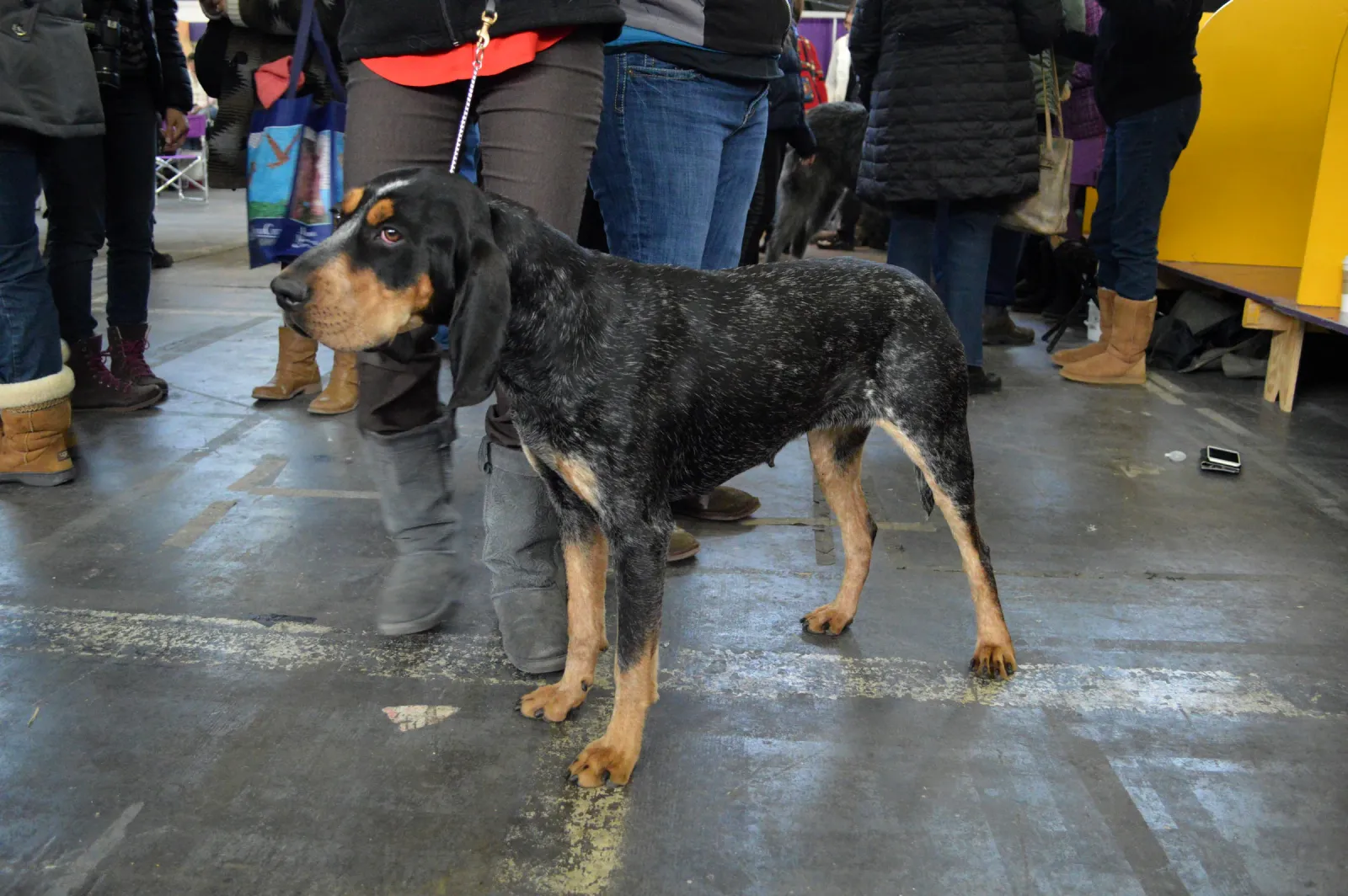
It descends mainly from French and English hounds, and the United Kennel Club (UKC) has registered it as its own breed since 1946. It suits active owners who have space, a secure fence and neighbours who can live with a big baying voice. It tends to struggle in small flats and in homes where it is left alone for long hours.
Bluetick Coonhound quick facts
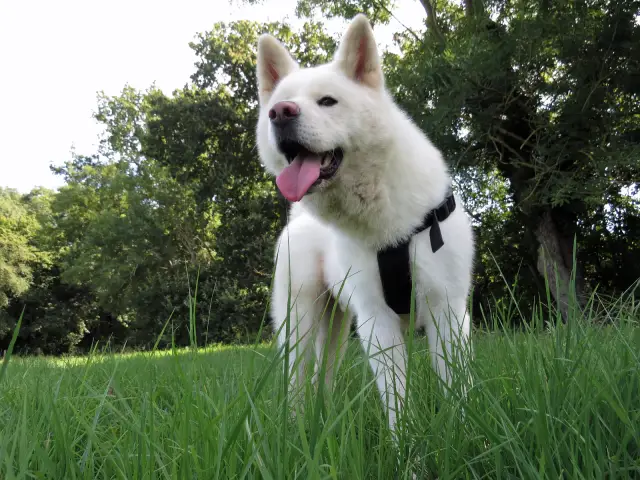 Related breedAkita1600 to 1931 · JapanEarly Modern Era
- Country of origin
- United States (Louisiana, in the atlas data)
- Period of development
- About 1700 to 1945 (atlas data); separate UKC registration from 1946
- Type
- Scent hound ( Hound Group; UKC Scenthound Group)
- Height
- UKC: males 56 to 69 cm, females 53 to 64 cm
- Weight
- UKC: males 25 to 36 kg, females 20 to 29 kg
- Coat
- Short, medium-coarse, smooth and glossy
- Colour
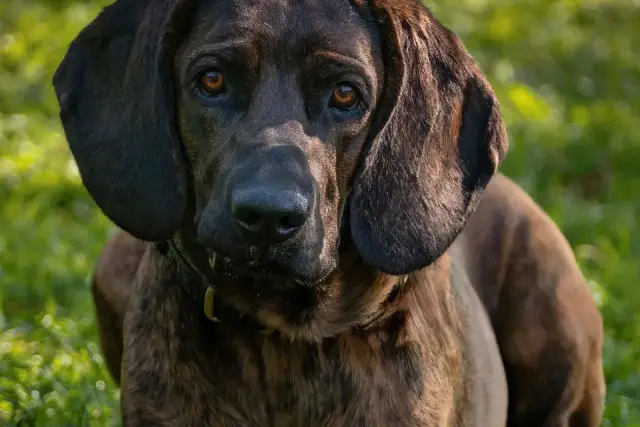
- Dark blue, thickly mottled, with black spots; tan markings on the eyebrows, cheeks, feet and chest are usual
- Life span
- Atlas data: 11 to 12 years
- Recognition
- UKC (1946), AKC (2009)
- Atlas family
- Scent Hound
- Other names
- Bluetick
Drawn to scale in real centimetres. Its back reaches about 61 cm, just above your knee; its head about 77 cm, your hip.
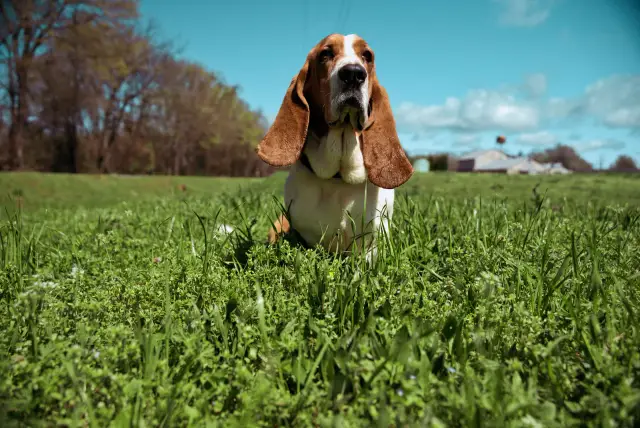
Where it sits in the tree
Early Modern Era · 1600 to 1799
Name and origin
 Related breedBernese Mountain Dog1700 to 1907 · SwitzerlandEarly Modern Era
The name describes the coat. "Bluetick" refers to the dark ticking, small dense flecks of black on a white ground, that makes the dog look blue-grey from a distance. "Coonhound" refers to the job: a hound that trails raccoons by scent and "trees" them, meaning it follows the animal until it climbs, then stays at the trunk and barks until the hunter arrives. The atlas data gives the etymology simply as the breed's blue ticked coat.
The breed's home is the American South. The atlas data places its origin in Louisiana, and the breed is described as developed there from the Grand Bleu de Gascogne, a large French hound, crossed with English Foxhound blood. Some accounts describe the ancestry more loosely, as several hounds brought from abroad that were mixed over generations, so the exact starting point is not documented.

History
 Same eraBlack Mouth Cur1700 to 1900 · United StatesEarly Modern Era
Hounds from France and England
Hunters in the colonial and early republic South wanted dogs that could run game by scent over rough, wooded country, often at night. Packs of hounds had been brought over from Britain and France, and breeders mixed them for voice, nose and stamina. The Grand Bleu de Gascogne, a big blue-mottled hound from southwestern France, is the usual named ancestor of the Bluetick. English Foxhounds and American Foxhounds, including Black and Tan Virginia types, are named as further contributors. The atlas data also lists the Bloodhound and older hounds such as the Talbot and Southern Hound among the distant ancestors of this hound . Stories that give the breed one founding dog or one single importer circulate among hunters, but they cannot be traced to dated records, so treat them as lore.
From coonhound to named breed
Through the 19th and early 20th centuries, coonhunters bred for working ability, not appearance. Blue-mottled hounds were common among them, and many were registered in hunting clubs under other names. According to histories of the breed, such dogs were entered in the UKC as English Foxhounds or as general Coonhounds.
In 1946 a group of Bluetick breeders asked the UKC to list the Bluetick Coonhound as a separate breed and wrote a first . That is the usual date given for its recognition as a breed. The atlas data ends the formative period at 1945 for the same reason.
Kennel club recognition
| Year | Event |
|---|---|
| 1946 | UKC begins registering the Bluetick Coonhound as a separate breed |
| 2009 | AKC recognises the breed, effective 30 December |
The has no standard for the breed. Many American working Blueticks are still registered only with hunting registries such as the UKC and are never shown.

Relatives and DNA
 Same familyBoerboel1650 to 1983 · South AfricaEarly Modern Era
The atlas data lists the Bloodhound among the distant scent hound ancestors and the Grand Bleu de Gascogne, English Foxhound and American Foxhound as the direct parents. All three of those parent links carry medium confidence in the atlas data. The Bluetick sits in the Scent Hound family in this atlas. No shared-DNA figure for the Bluetick Coonhound has been published.
The atlas lists three French sibling breeds that share the Grand Bleu de Gascogne ancestry: the Basset Bleu de Gascogne, the Griffon Bleu de Gascogne and the Petit Bleu de Gascogne. They are far smaller or rougher-coated than the Bluetick, but they carry the same blue mottled colouring.
A family relationship that owners often ask about is with other American coonhounds. Bluetick, Black and Tan, Redbone, Treeing Walker and English Coonhounds all came from the same foxhound-and-hound stock, and were once registered together. They are now separate breeds with separate standards.
Sister breeds · 3
- Basset Bleu de Gascogne1500 to 1900
- Griffon Bleu de Gascogne1600 to 1900
- Petit Bleu de Gascogne1800 to 1955
The Bluetick Coonhound breed standard
 Looks relatedBorder Terrier1700 to 1920 · United KingdomEarly Modern Era
A breed standard is the written ideal that club judges compare each dog against. Two clubs apply to this breed.
| Trait | What the standards say |
|---|---|
| Height | UKC: males 22 to 27 in (56 to 69 cm), females 21 to 25 in (53 to 64 cm) |
| Weight | UKC: males 55 to 80 lb (25 to 36 kg), females 45 to 65 lb (20 to 29 kg) |
| Build | Strong, medium-large, athletic hound built for speed and endurance |
| Coat | AKC: medium-coarse, lying close to the body, smooth and glossy; not rough, not too short |
| Colour | AKC: dark blue, thickly mottled body, with black spots on back, ears and sides; more blue than white ticking is preferred |
| Markings | Tan is usual over the eyes, on the cheeks, chest and feet; solid blue dogs without tan also meet the colour standard |
| Gait | AKC: active and vigorous, carried firmly, head and tail well up |
Other registries give wider size ranges. The Continental Kennel Club, for example, lists males up to 30 inches and 100 pounds. The UKC and AKC figures above are the ones used by most show judges and breeders in North America.
Temperament
 Related breedCatahoula Leopard Dog1700 to 1979 · United StatesEarly Modern Era
The Bluetick Coonhound is an energetic, affectionate and intelligent hound with a strong nose and a strong prey drive. In a house, a well-exercised Bluetick is usually friendly, gentle with its own family and happy to lie on the nearest sofa. Outdoors it is a different animal: a nose-driven, single-minded tracker that can follow a scent for kilometres and cannot be called off easily.
The voice
Coonhounds are bred to give tongue, meaning to bark or bay on the trail so a hunter far behind can follow. Blueticks are among the vocal ones, and owners should expect a loud, carrying, repetitive bay when the dog is excited, bored or has found something interesting. This is not a training failure; it is the job the breed was selected for. It does mean the breed is a poor match for flats, terraced housing or any home with thin walls.
Nose, prey drive and the fence
- Trailing. A Bluetick will follow a track with its head down and ignore a recall. Walks on lead or in a fenced area are safer than off-lead walks near roads.
- Prey drive. Squirrels, cats, rabbits and other small animals trigger a chase. Introduce a Bluetick to cats very carefully, and expect it to treat small pets outside the family as quarry.
- Fencing. Hounds climb, dig and squeeze. A tall, buried fence is worth the cost.
Training and daily life
Blueticks are intelligent and capable of learning, but they are independent and easily distracted by smell. Short, varied, food-rewarded sessions work better than long drills. Many owners find scent sports such as tracking, nose work and coonhound trials a good outlet. The AKC's coonhound events let a Bluetick use its nose and voice the way it was bred to.

Health
 Related breedCoton de Tulear1600 to 1970 · MadagascarEarly Modern Era
Published breed-specific research on Bluetick Coonhounds is thin. No large peer-reviewed survey of Bluetick health or lifespan exists, so the information below is general, drawn from the breed type, and is not a rate for the Bluetick population. Talk to a vet about your own dog.
The atlas data gives a life span of 11 to 12 years, which matches what most breed profiles say for large hounds. For comparison, a large English study of 102,609 dogs (O'Neill and colleagues, The Veterinary Journal, 2013) put the median lifespan across all breeds at 12.0 years.
| Condition | What it is | How common | What to do |
|---|---|---|---|
| Ear infections | Long, thin, hanging ears hold moisture and wax, which allows bacteria and yeast to grow | A common complaint in hanging-eared hounds; no Bluetick rate published | Check and dry ears after swimming or muddy hunts; see a vet for redness, smell or head shaking |
| Hip and | Joint malformation that can cause lameness and early arthritis | Listed as a concern for the breed; no Bluetick rate published | Breeders should screen hips and elbows (OFA); keep a healthy weight |
| Gastric dilatation-volvulus (bloat) | A swollen, twisted stomach; an emergency | A known risk in deep-chested large breeds; no Bluetick rate published | Feed smaller meals, avoid hard exercise right after eating; go to a vet at once if the belly swells |
| Cataracts and kneecap problems | Eye clouding and slipping kneecaps | Occasionally reported | Regular vet checks |
Most Blueticks come from working lines in which hunting ability matters more than health testing. If you buy from a breeder, ask whether hips and elbows have been scored (OFA) and what the parents died of, and how old.

Living with a Bluetick Coonhound
 Related breedDalmatian1700 to 1890 · CroatiaEarly Modern Era
| Daily reality | Rating | Why |
|---|---|---|
| Exercise | High | Bred to run for hours; needs long daily exercise in a secure place |
| Training needs | Medium to high | Intelligent but independent and scent-driven |
| Grooming | Low | Short coat; weekly brushing, regular ear care |
| Shedding | Medium | Short hairs, shed year-round |
| Barking | Very high | Bred to bay on the trail |
| Time alone | Poor | Bored hounds bay, dig and escape |
| Children | Good | Usually friendly with its own family; boisterous when young |
| Other dogs | Good | Hunted in packs; usually dog-friendly |
| Cats and small pets | Poor | Strong prey drive |
| Flat living | Poor | Size and voice |
| First-time owner | Fair | Affectionate, but needs time and a secure garden |
A great fit if you...
- have a house with a high, secure fence and some space;
- are active, and happy to walk or run most days;
- want a friendly, affectionate, big dog;
- can enjoy tracking or scent work.
Think twice if you...
- live in a flat or close to thin-walled neighbours;
- are away from home most of the day;
- want a dog that can be trusted off-lead near roads;
- own cats or other small pets that live loose in the house.
Before you get one. Meet the parents if you can, and ask how they behave at home as well as in the field. Ask about hip and elbow scores. Adult rescues are often available, and an adult hound's voice and recall are already known.
Similar breeds to consider
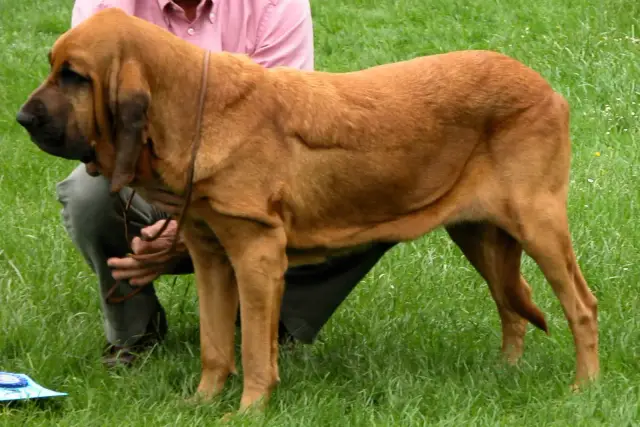
- Bloodhound: a larger, heavier scent hound with a wrinkled face and a very strong nose.
- Beagle: a much smaller scent hound with a similar voice.
- Basset Hound: a low-slung scent hound that is calmer indoors.

Bluetick Coonhound fun facts
 Related breedGreat Dane1600 to 1880 · GermanyEarly Modern Era
- The University of Tennessee's live mascot, Smokey, has been a Bluetick Coonhound since the first Smokey was chosen at a 1953 football game.
- A "blue tick" is not a parasite: the name describes the black flecks on the white coat.
- Before 1946, Blueticks were registered by the UKC under other names, so many hunters' dogs had no separate breed history.
- The AKC accepted the breed in 2009, more than six decades after the UKC.
Frequently asked questions
Are Bluetick Coonhounds good family dogs?
They can be. They are affectionate and friendly, but they are loud, active and need a secure garden. They are not a good match for flats or for families who cannot give them daily exercise.
Do Bluetick Coonhounds bark a lot?
Yes. They were bred to bay on the trail, and many are very vocal.
How big do Bluetick Coonhounds get?
UKC standard: males 56 to 69 cm and 25 to 36 kg, females 53 to 64 cm and 20 to 29 kg.
How long do Bluetick Coonhounds live?
The atlas data gives 11 to 12 years.
What colour is a Bluetick Coonhound?
Dark blue, thickly mottled, with black spots on the back, ears and sides. Tan markings are usual above the eyes, on the cheeks, chest and feet.
Is the Bluetick Coonhound the same as a Bloodhound?
No. Both are scent hounds and both have Southern Hound ancestors, but the Bluetick is a faster, lighter hound bred to tree raccoons, and the Bloodhound is a heavier tracking hound bred to follow a human trail.
Read next
 FamilyScent HoundThe whole family
 Adopt a dogDog Shelters in EuropeFind dog shelters in Europe, learn how shelters differ from country to country and why adopting a dog is a good option.
Sources (10)
- Wikipedia, "Bluetick Coonhound".
- American Kennel Club, December 2009 Chairman's Report.
- University of Tennessee Libraries, Volopedia: Smokey.
- United Kennel Club, Bluetick Coonhound official breed standard.
- American Kennel Club, Bluetick Coonhound breed page, including the breed standard.
- Fogle B., The New Encyclopedia of the Dog, 2009.
- O'Neill D.G. et al., "Longevity and mortality of owned dogs in England", The Veterinary Journal, 2013.
- Orthopedic Foundation for Animals, hip dysplasia information.
- Show Sight Magazine, history and coat colour articles on the Bluetick Coonhound.
- Atlas data, breed records (this site).