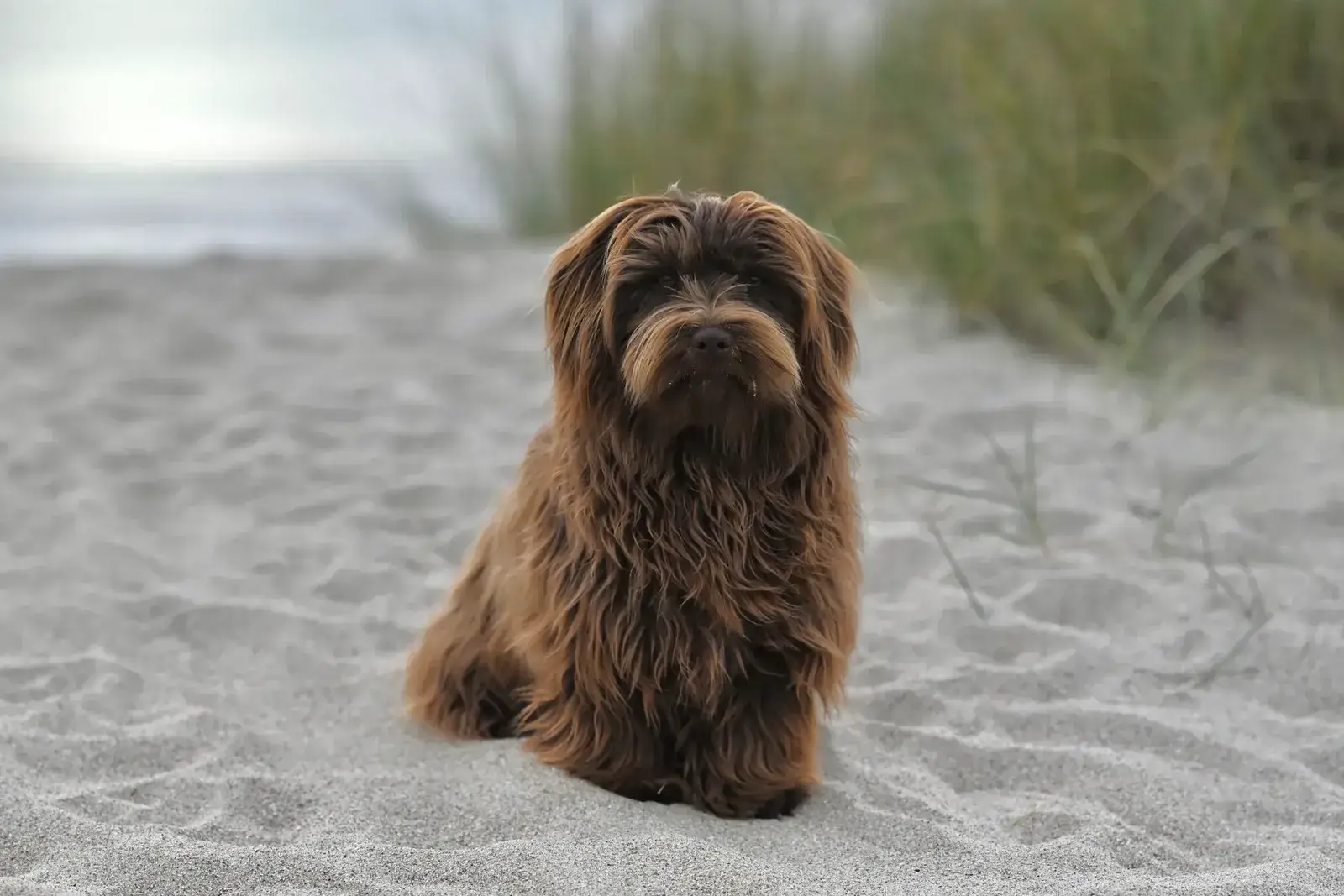
It belongs to the Bichon group alongside the Bichon Frisé, Maltese and Bolognese. It stands 23 to 27 cm at the withers, weighs roughly 3 to 6 kg and usually lives into its early teens. It is cheerful, people-focused and happiest when it can follow its owner from room to room.
Havanese quick facts
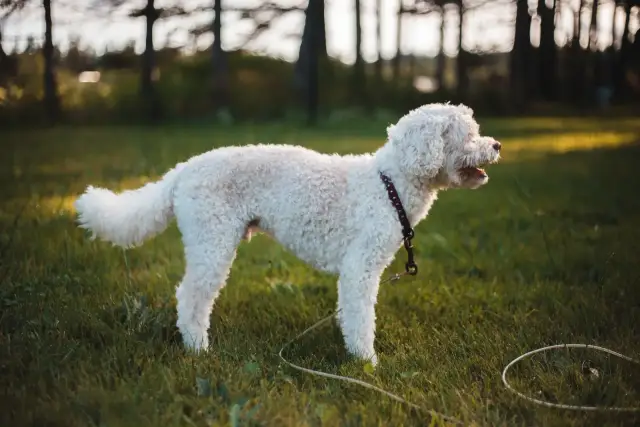 Related breedLagotto Romagnolo1500 to 1991 · ItalyAge of Exploration
- Other names
- Bichon Havanais, Havana Silk Dog, Blanquito de la Habana (the extinct forerunner)
- Country of origin
- Cuba ()
- FCI group
- Group 9, Companion and Toy Dogs (standard no. 250)
- AKC group
- Toy
- Height at withers
- 23 to 27 cm ideal; 21 to 29 cm allowed (FCI)
- Weight
- About 3 to 6 kg (: 7 to 13 lb)
- Coat
- Long, soft, silky, straight to wavy
- Colours
- All colours and patterns accepted
- Lifespan
- 14 to 16 years in breed sources; 13.6 years median in the 2017 Havanese Club of America study
- DNA family
- Poodle (Parker 2017)
Drawn to scale in real centimetres. Its back reaches about 25 cm, your shin; its head about 32 cm, your shin.

Where it sits in the tree
Early Modern Era · 1600 to 1799


Name and origin
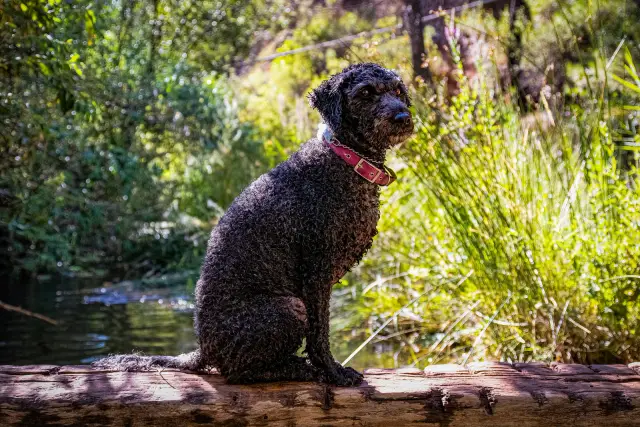 Related breedPortuguese Water Dog1200 to 1938 · PortugalLate Middle Ages
The breed is named after Havana, the capital of Cuba. The French form "Bichon Havanais" is the official FCI name, and "Havana Silk Dog" is an older English nickname that describes the coat. Spanish speakers sometimes use "Blanquito de la Habana", the "little white dog of Havana". That name belongs to the forerunner of the modern breed, which is now extinct. It was a smaller, mostly white dog.
Cuba's national dog has a European story behind it. The FCI lists Cuba as the country of origin but also names the Western Mediterranean basin as the area where the type developed. Spanish settlers and traders carried small white lapdogs to the Americas from the sixteenth century, and the breed's ancestors are generally traced to dogs shipped from Tenerife in the Canary Islands. These Bichon Tenerife dogs mixed with other small dogs on the island and developed over generations into the Blanquito.
Writers disagree on the route, and each theory is labelled here as a theory, not a fact:
- Tenerife route. Ship records from Tenerife to Cuba are said to list small dogs among the cargo, which points to the Bichon Tenerife as the founder. This is the version most breed histories repeat.
- Italian captains. The FCI standard says the type developed along the Spanish and Italian coasts of the western Mediterranean and was probably brought to Cuba early by Italian sea captains. That would point to the Bolognese or Maltese side of the Bichon family.
- Poodle cross. Several sources say Poodles reached Cuba from France and other countries in the nineteenth century and were crossed with the white Blanquito. The result was a slightly larger dog in many colours that kept the silky coat. The Blanquito is also described by some historians as the same line under an older name, so the cross is debated.
- Argentina route. The AKC cites breed historian Jeannette Stark, who suggests the Bolognese went with Italian sailors to Spanish settlements in South America and met the now-extinct South American Toy Poodle before reaching Cuba. The AKC adds that the true story is unknown, but the breed was developed in Cuba.
- The tobacco legend. The FCI standard notes that the most common brown shade of these dogs, tobacco, gave rise to the legend that the breed came from Havana.
Exact dates of this process are poorly recorded. Our knowledge base places the breed's appearance in a wide window, from about 1600 to its modern recognition in the late twentieth century, and treats the Tenerife link as likely rather than proven.

History
 Same eraSpanish Water Dog1500 to 1980 · SpainAge of Exploration
A lapdog of the Cuban upper class
On the island, the Blanquito became the lapdog of wealthy families in Havana and other towns. Breed histories describe dogs that were kept at home, shared among relatives and passed on as gifts rather than sold. The small size, a friendly nature and a soft coat suited a life indoors in a warm climate.
The 1959 revolution
The Cuban revolution of 1959 changed life for those households. Many upper-class families left the island, and dogs that stayed behind were no longer bred in an organised way. AKC breed history reports that only a few families managed to take their Havanese out of the country: the Perez and Fantasio families, who settled in Florida, and a Senor Barba, who moved to Costa Rica. By the 1960s the breed had nearly disappeared in Cuba.
Rebuilding in the United States
In the mid 1970s, American dog fancier Dorothy Goodale saw the surviving dogs and decided to rebuild the breed. Accounts differ in detail. Several sources say she obtained eleven purebred Havanese from Barba in Costa Rica, representing four bloodlines. The AKC says she first acquired six pedigreed dogs: an adult bitch, four of her female puppies and a male from another line. Either way, the numbers are tiny, and the modern American population descends from a founder group of around a dozen dogs.
Goodale co-founded the Havanese Club of America in 1979 and set up a registry. The AKC recognised the breed in 1996 and placed it in the Toy group. Today the Havanese is also registered with the FCI, the UK Kennel Club and many other clubs worldwide.
Where sources disagree on numbers, both are given: eleven dogs in the founding stock in some accounts (six from Cuban families in Florida plus five from Costa Rica), six pedigreed dogs at the start in the AKC account. Goodale is said to have found the Cuban families through an advertisement in a Miami newspaper. About 1,307 Havanese registered with the Havanese Club of America were accepted for AKC registration when the breed was recognised in 1996.
Recognition around the world
- 1979: Havanese Club of America founded.
- 1991: the United Kennel Club recognised the breed (July 1991). The same year Zoila Portuondo Guerra founded the Cuban Club of the Bichon Havanese, a member of the Cuban Kennel Club, which belongs to the FCI. A commemorative Cuban stamp followed in 1992.
- 1996: AKC recognition, Toy group.
- FCI: standard no. 250, Group 9, Section 1 (Bichons and related breeds), Cuba as country of origin. The FCI text was published on 31 October 2016 and records that a few dogs were smuggled out of Cuba and their descendants survived in the USA.
- UK Kennel Club: lists the breed in the Toy group. The year of recognition is not documented here, so no date is given.
Where the 1959 events meet the 1970s rebuilding, the FCI summary and the AKC account agree on the main point: the modern breed rests on a handful of exported dogs.
A small founder group has a cost. Genetic variety is limited, and breeders and health researchers have paid close attention to inherited eye problems in the breed (see the Health section).
 Save

Relatives and DNA
 Same familyAkita1600 to 1931 · JapanEarly Modern Era
The Havanese is part of the Bichon family, a group of small, long-coated companion dogs from the Mediterranean region. Relatives include the Bichon Frisé, the Maltese and the Bolognese, plus the Coton de Tulear, the Bolonka and the Löwchen. The old family name "Barbichon" (Bichon) is used for this group, and DNA ties it to the Poodle.
The DNA study by Parker and colleagues (2017) places the Havanese in the Poodle family, a clade of breeds grouped by shared ancestry. In that study the Havanese shares by far the most DNA with the Maltese: about 126 (Mb) of matching segments. It shares about 29 Mb with the Bichon Frisé and about 18 Mb with the Poodle. Our records list the Bichon Frisé as the breed's parent type, with medium confidence.
shows kinship, not a family tree. All these dogs had a similar job and similar ancestors, and breeders crossed them freely in the past.
Sister breeds · 2
- Coton de Tulear1600 to 1970
- Bolonka1951 to 1966
- Maltese125.9 Mb 5.2%
- Bichon Frisé29.0 Mb 1.2%
- Poodle17.6 Mb 0.7%
Source: Parker et al. 2017. Percent of the whole genome.

The breed standard
 Looks relatedBernese Mountain Dog1700 to 1907 · SwitzerlandEarly Modern Era
A is the written ideal for a breed. Kennel clubs publish it, and show judges compare each dog against it. The FCI and AKC standards describe the same dog with small differences.
| Trait | What the standards say |
|---|---|
| Height | FCI: 23 to 27 cm ideal, 21 to 29 cm allowed; AKC: 8.5 to 11.5 in (about 21.5 to 29 cm), 9 to 10.5 in ideal |
| Weight | FCI: no weight given; AKC: 7 to 13 lb (about 3 to 6 kg) |
| Proportions | FCI: body length to height at the withers 4:3; AKC: slightly longer than tall |
| Coat | FCI: soft, silky, long; AKC: soft, long, wavy or curly allowed |
| Colours | FCI: all colours accepted; AKC: all colours and patterns accepted |
| Group | FCI: Group 9, Companion and Toy Dogs; AKC: Toy |
The key points common to the standards:
- Head and eyes. Dark, almond-shaped eyes and a soft, intelligent expression.
- Ears. Dropped and folded, with a slight lift at the base, framed by long hair.
- Tail. Carried arched forward over the back and covered in long silky hair.
- Movement. A springy, light gait, often called the "Havanese spring".
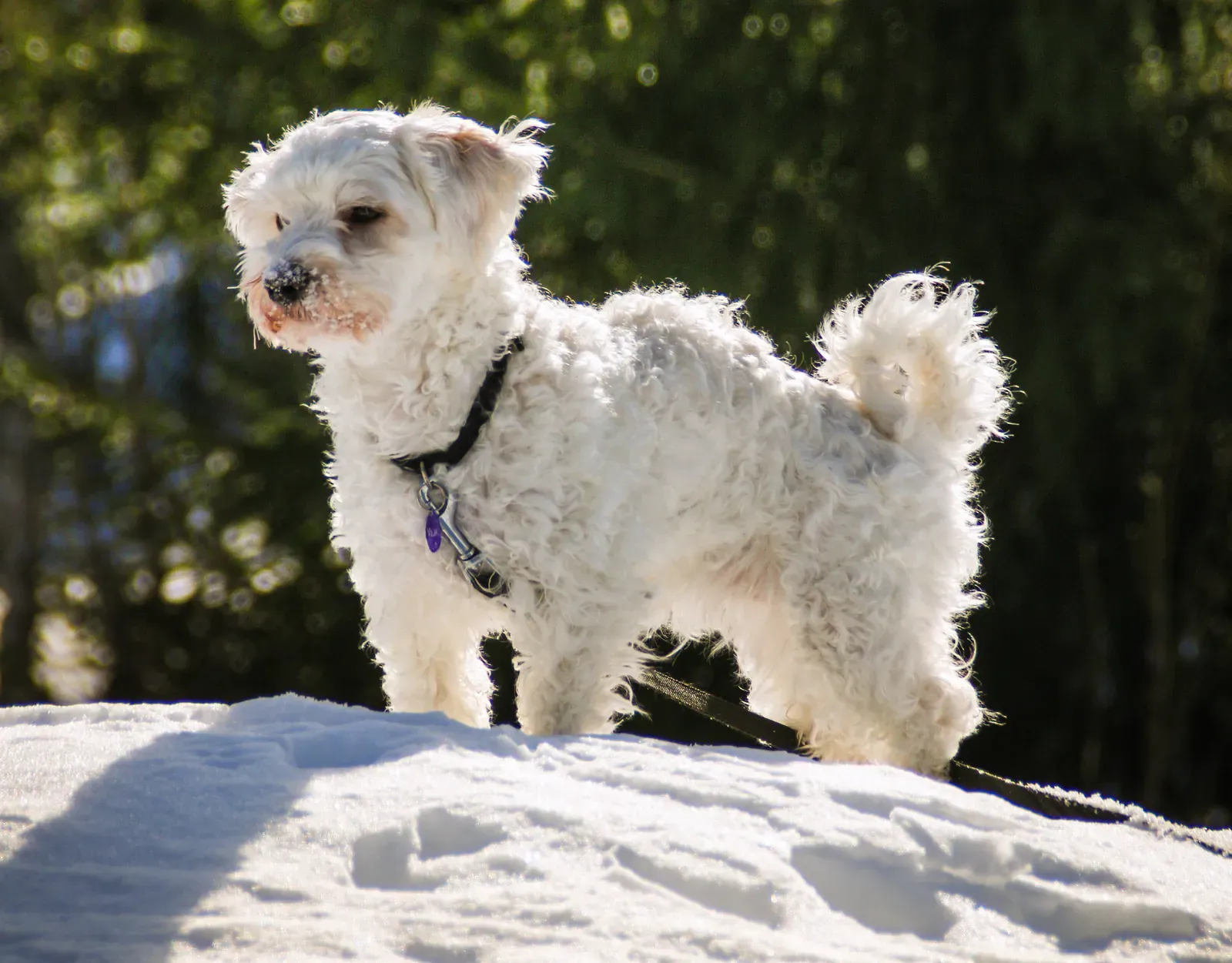
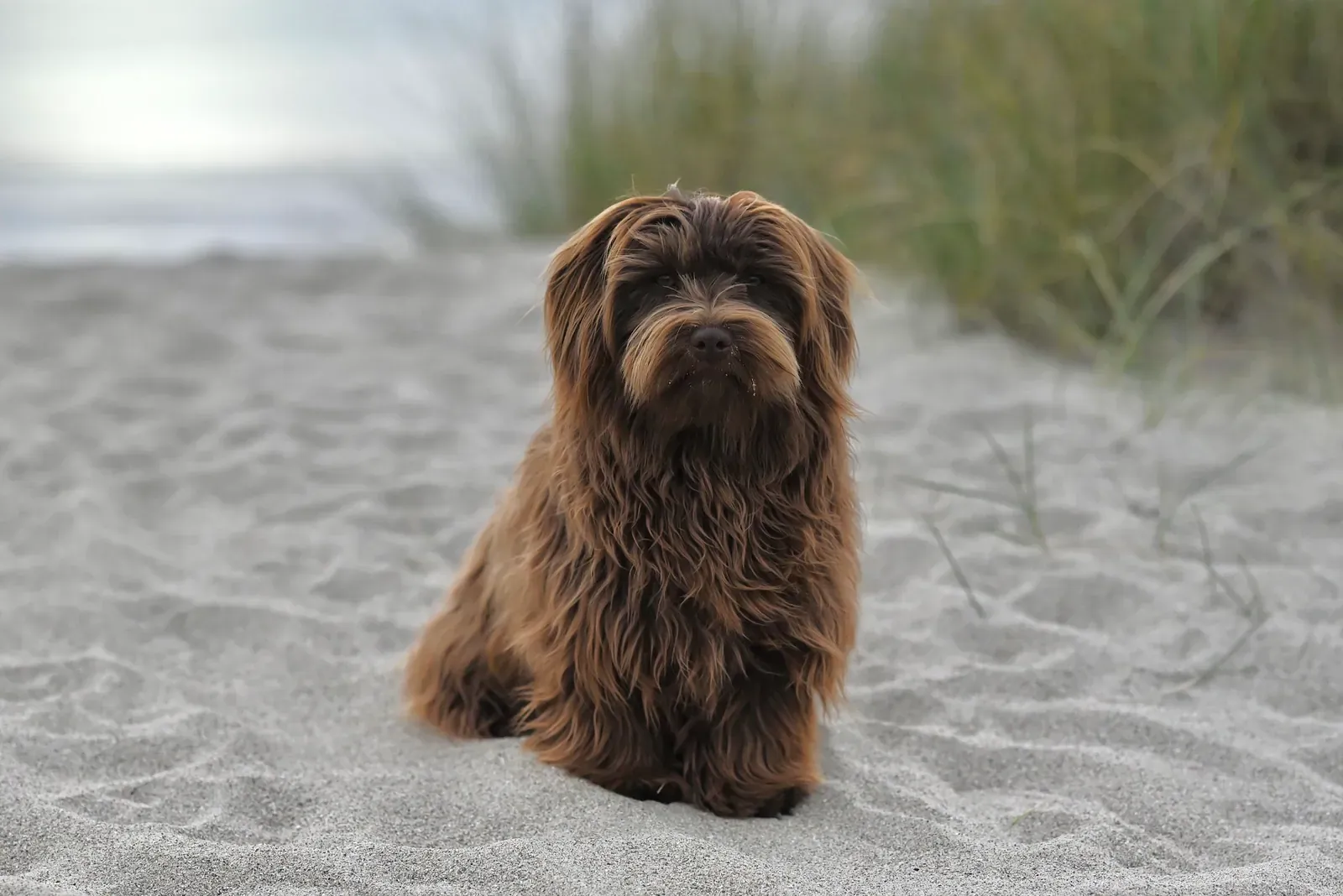
- Coat. Long, soft and light. A single colour or any pattern is allowed, from white and cream to black, chocolate, and tri-colour.
Wording differs between clubs, and standards are revised, so read the current text from your own club.
The Havanese coat
 Related breedBlack Mouth Cur1700 to 1900 · United StatesEarly Modern Era
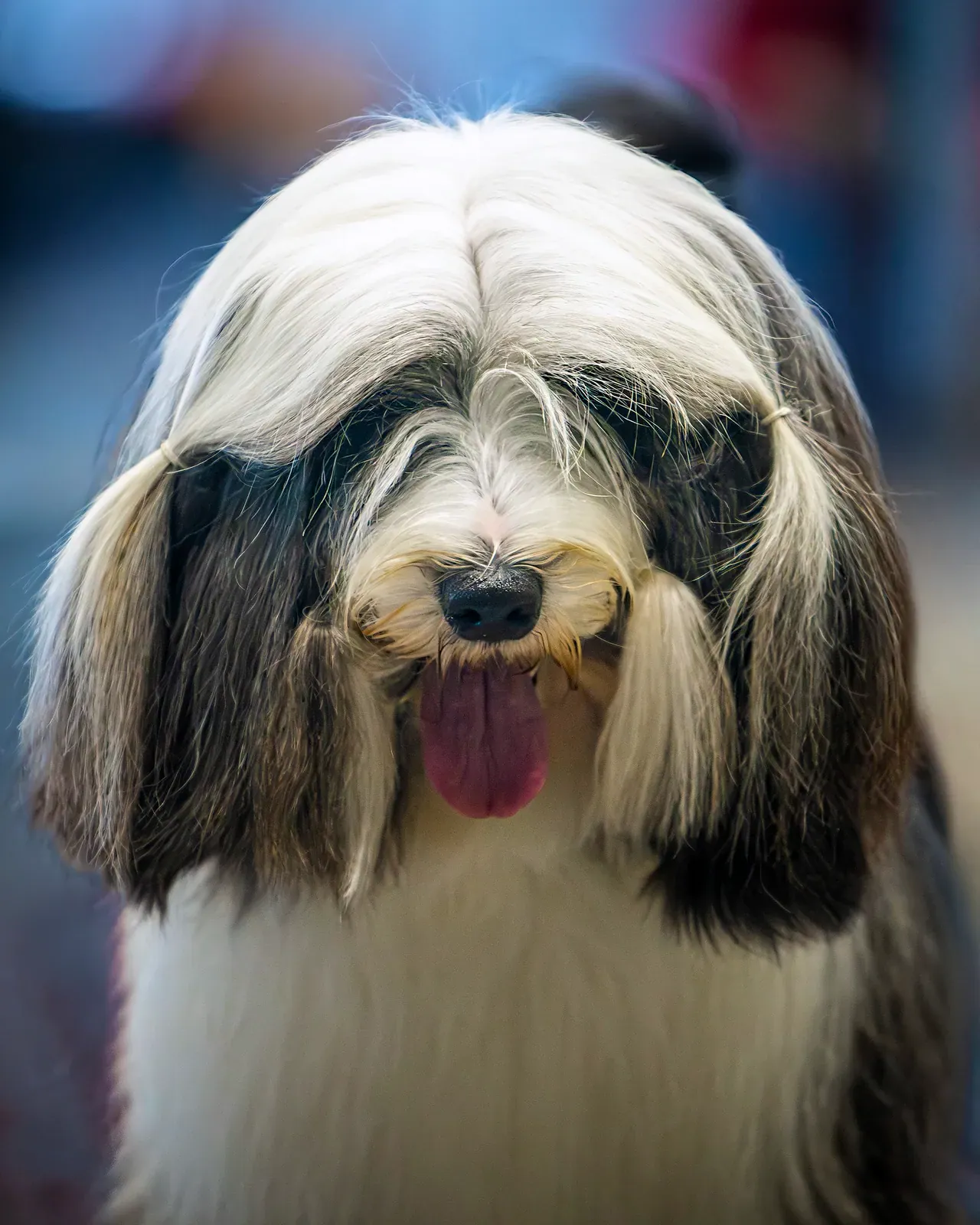
The coat is the breed's signature feature and the part of ownership that needs the most time. Havanese hair is long, soft and light, closer to silk than to fur. It can lie straight, wave or form loose curls, and it can change texture as the puppy matures.
- Shedding. The Havanese loses little hair into the house. Loose hairs tend to stay caught in the coat rather than fall out, which is why the breed is often chosen by people who dislike shedding. Dogs that shed little are not allergy-proof, though. Allergy sufferers should spend time with the individual dog before committing.
- Brushing. The long coat tangles and mats, especially behind the ears, under the legs and around the collar. Plan on brushing the full coat several times a week, down to the skin.
- Pet trim. Many owners clip the coat short, often called a puppy cut. It cuts grooming time a lot. Show dogs keep the long coat and are brushed daily.
- Bathing. Every few weeks is typical for a long coat. Always brush out tangles before a bath, because water tightens mats.
- Colours. From white through cream, gold and sable to black, chocolate and parti-colour. Coat colour can lighten or change as the dog ages.
The long hair around the eyes also needs attention. Fine hair near the face can irritate the eyes (see the health notes on distichiasis below).
Temperament
 Related breedBluetick Coonhound1700 to 1945 · United StatesEarly Modern Era
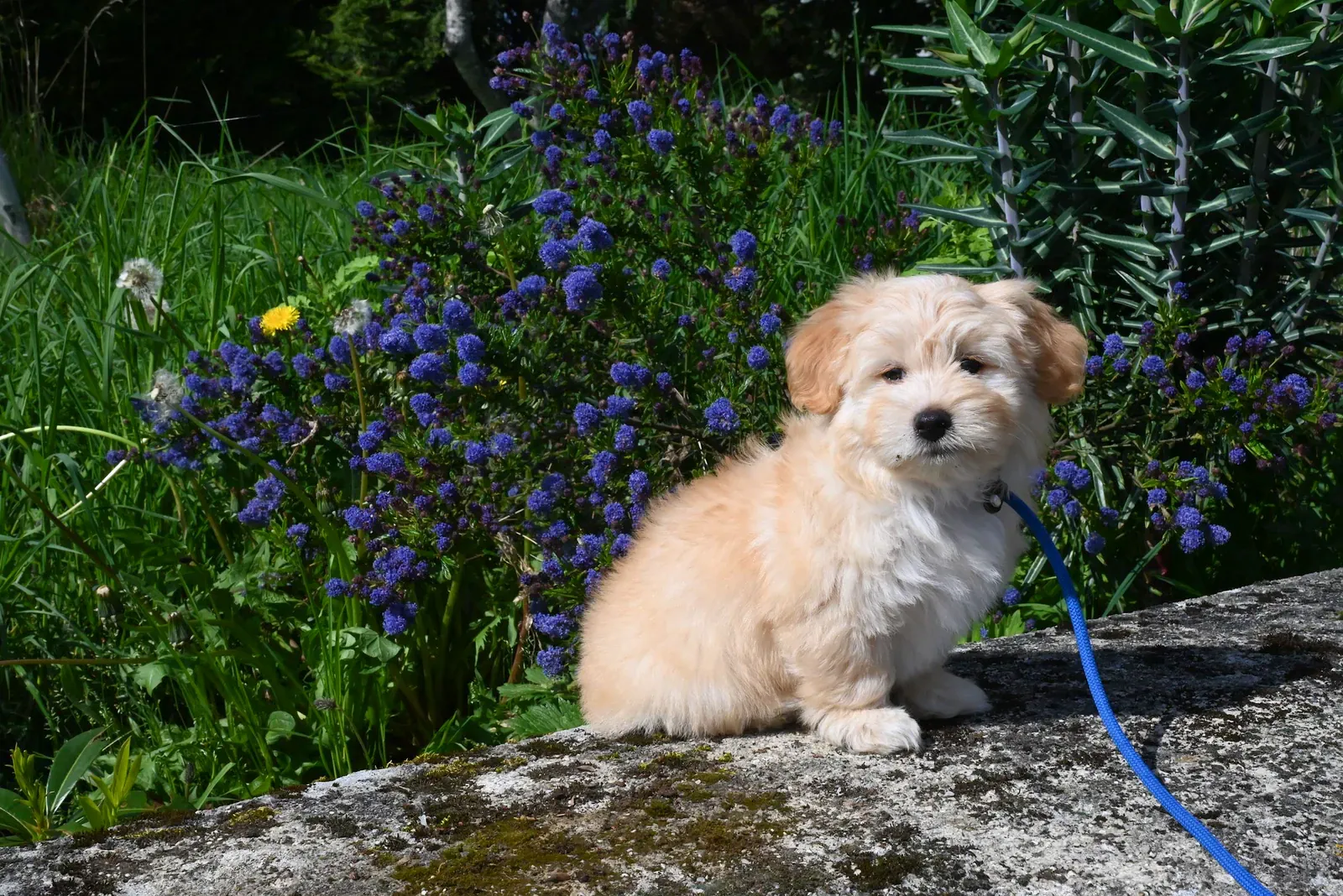
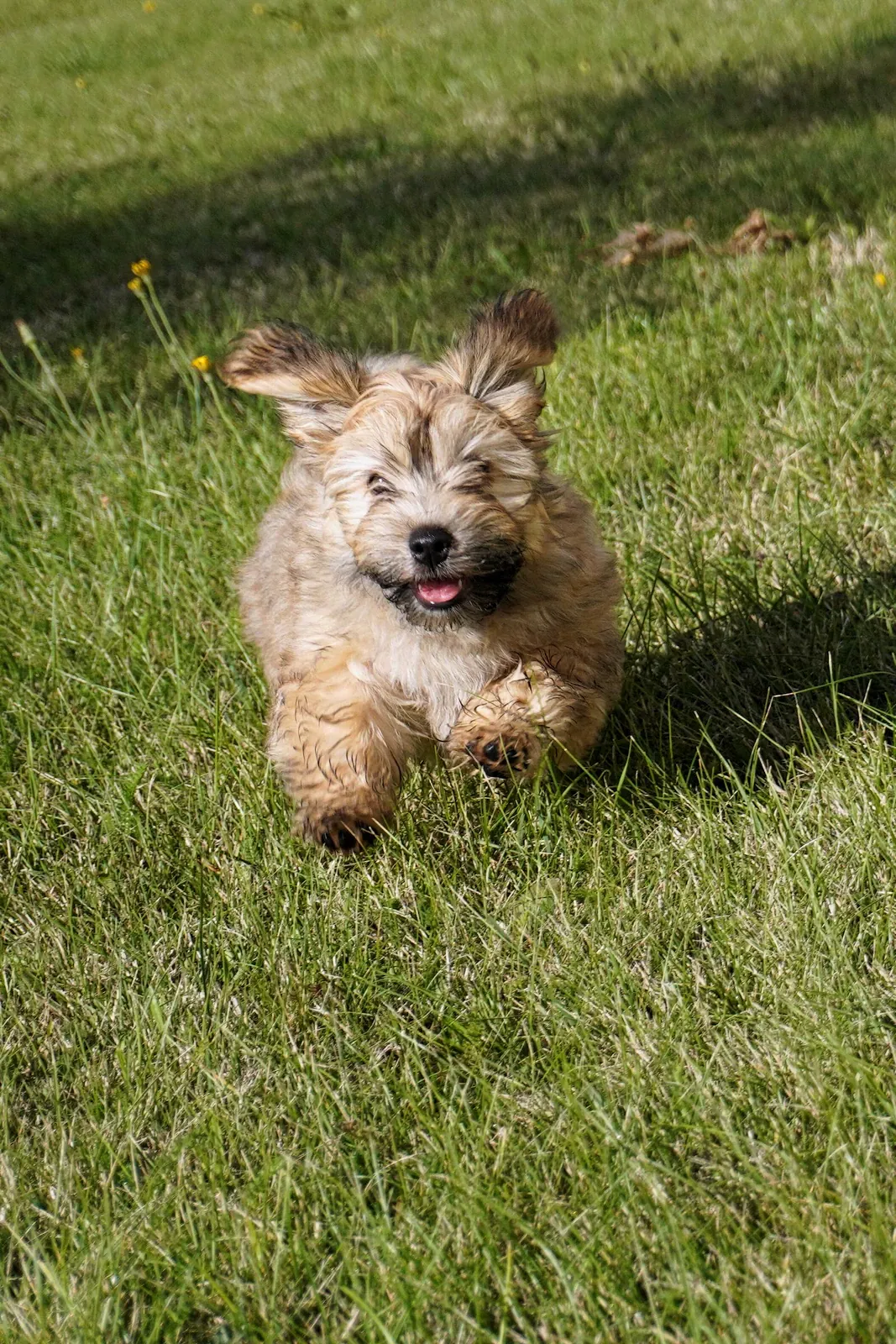
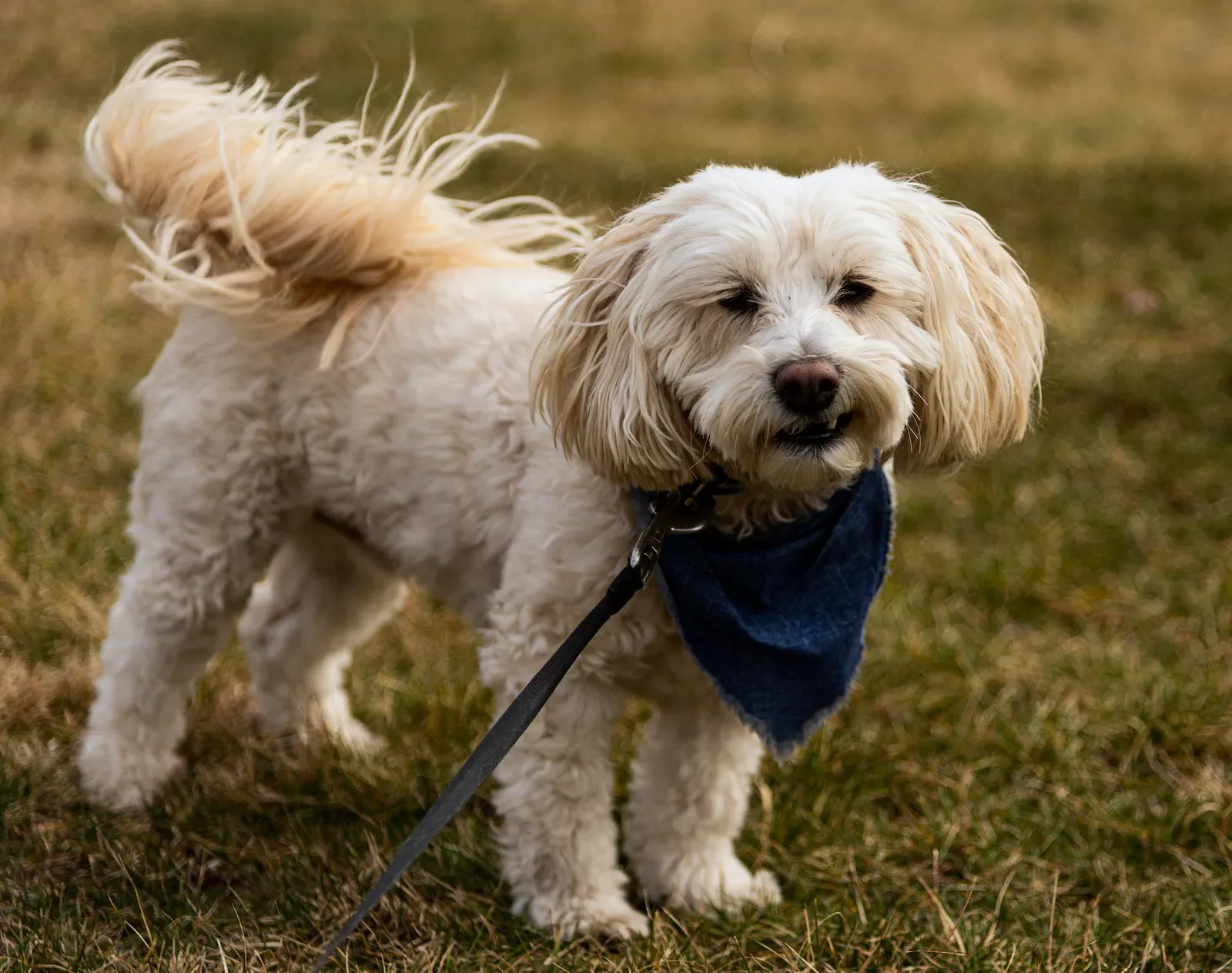
The Havanese is bright, cheerful and strongly attached to its family. Breed clubs describe it as a companion first and foremost: it wants to be with people, it learns quickly and it tends to be playful well into old age. It often trots after its owner from room to room, so the breed suits a home where someone is around for much of the day.
- Friendliness. Most Havanese welcome visitors and get along with other dogs and pets. Early socialisation makes this more reliable.
- Trainability. The breed is quick to learn and eager to please, and it responds well to rewards and short, upbeat sessions. Toilet training can take patience in small dogs, as in many toy breeds.
- Energy. A moderate level. A couple of walks and some play are enough. Many Havanese enjoy trick training, agility and scent games.
- Voice. Some bark at sounds and visitors. Dogs left alone a lot may bark or fret.
- Alone time. The breed was bred for company, and long stretches alone can be hard. Gentle practice from puppyhood helps.
Temperament varies from dog to dog. A good breeder will tell you about the parents' character as well as their health.

Health
 Related breedBoerboel1650 to 1983 · South AfricaEarly Modern Era
Most Havanese live long, active lives. The points below are what breeders screen for and what owners can watch for. They are not a prediction for any one dog.
Lifespan. The 2017 Havanese Longevity Study run by the Havanese Club of America reported a median age at death of 13.6 years (plus or minus 0.3 years). Breed sources often quote 14 to 16 years for healthy dogs, so a good guide is that a lifespan in the early to middle teens is normal.
| Condition | What it is | How common | What helps |
|---|---|---|---|
| Distichiasis | Extra eyelashes grow from the lid edge and can rub on the eye | About 1 in 7 dogs (14.5% of 1,156 Norwegian Havanese; Bellamy, Lingaas and Madsen, 2021) | Annual eye exam by a veterinary eye specialist; lubricating drops or minor treatment if the lashes cause irritation; breeding from clear parents |
| Cataract | Clouding of the eye lens | About 1 in 20 Havanese eye exams in Norway (about 5%); about 1 in 9 in North America (11.57%), as reported in Bellamy and Lingaas (2023) | Yearly eye exams (CAER/ECVO); breed only from eye-tested dogs; watch for a cloudy or bluish look in the eye |
| Patellar luxation | The kneecap slips out of its groove | Seen in toy breeds in general; OFA patella testing is part of the Havanese CHIC programme | Patella exam from one year of age; keep the dog lean; vet checks if the dog skips or holds up a back leg |
| Hip problems | Poor hip joint fit | Hip testing is part of the CHIC programme | OFA hip evaluation of parent dogs; healthy weight |
Patella and the club surveys. The Havanese Club of America 2004 owner survey reported luxating patellas in about 5% of dogs. The 2017 longevity survey covered 512 mostly AKC-registered Havanese, with dogs up to almost 19 years old; it also reported that dogs surviving past 9 or 10 years had a longer average life, closer to 15 years. The follow-up Rainbow Bridge Survey from 2018 collected causes of death for 156 dogs, mostly from club members. These are owner-reported club surveys, not vet-record studies. No paper reports Havanese results on their own.
Notes on the eye findings:
- The 2021 distichiasis paper found the trait is strongly heritable, which is why selecting breeding stock by eye exam can reduce it over time.
- The 2023 cataract paper (Bellamy and Lingaas, Canine Genetics and Epidemiology) looked at DNA from 57 unaffected dogs and 7 dogs with posterior polar cataract. It found two regions of the linked to this form of cataract. The most common forms in the breed are cortical and anterior suture-line cataract, with posterior polar cataract also reported.
- These studies describe dogs registered in Norway and, for the cataract figure, in North America. Rates elsewhere may differ.
Heart and cancer. The 2017 Havanese Club of America survey reported that cancer and cardiovascular disease were the two most common causes among early deaths in the sample, at roughly a quarter each. This is a club survey of owners, not a vet record study, so treat it as a pointer rather than a rate. Regular check-ups let a vet pick up a heart murmur early.
What helps overall.
- Ask the breeder for results of the CHIC tests: hips, patellas and a current eye exam (CAER).
- Keep the dog at a healthy weight, since extra weight strains knees and heart.
- Brush the teeth and book dental checks; small mouths crowd teeth.
- Book a yearly eye check with a vet if the dog squints, tears heavily or rubs at its eyes.

Living with a Havanese
 Related breedBorder Terrier1700 to 1920 · United KingdomEarly Modern Era
| Question | Rating | Reason |
|---|---|---|
| Exercise per day | Low to medium | A couple of short walks and play at home are enough |
| Training needs | Medium | Quick and eager to please, toilet training may take time |
| Grooming | High | Brushing several times a week, or a regular clip |
| Shedding | Low | Loose hair stays in the coat rather than on the floor |
| Barking | Medium | Some bark at visitors and noises; varies by dog |
| Time alone | Poor | Bred as a constant companion |
| Children | Good | Friendly and playful; supervise young children around a small dog |
| Other dogs | Good | Generally sociable if socialised early |
| Cats and small pets | Good | Usually fine with cats it has met; varies |
| Flat living | Good | Small size and moderate energy fit an apartment |
| Heat tolerance | Fair | Originates in a warm climate, but a long coat needs shade and clipping in summer |
| Cold tolerance | Fair | Fine for walks in cool weather; a small body loses heat |
| First-time owner | Good | Easy to train and affectionate, with a time cost for grooming |
A great fit if...
- Someone is at home for most of the day.
- You are happy to brush a dog several times a week or pay for regular clipping.
- You want a friendly small dog for walks, tricks and cuddles.
- You live in a flat or small house.
Think twice if...
- You are away for long hours every day.
- You want a dog that needs no grooming.
- You want a guard dog or a rugged outdoor companion.
- You dislike barking from a small dog.
Before you get one
- Ask the breeder for hip, patella and eye (CAER) results for both parents, and for the date of the last eye exam.
- Meet at least one parent and see how the dog lives.
- Breed clubs and rescue groups place adult Havanese too; adults often come house-trained.
- In the first year, plan for vaccinations, training classes, socialisation, neutering decisions and a grooming routine.
Similar breeds to consider
- Bichon Frisé: a fluffier, white relative with a similar cheerful nature.
- Maltese: a smaller silky-coated Bichon, the Havanese's closest DNA relative in the Parker 2017 study.
- Coton de Tulear: a cotton-soft coat and a gentle temperament.
- Cavalier King Charles Spaniel: a small, friendly companion with a different coat and different health concerns.
 Save

Fun facts
 Related breedCatahoula Leopard Dog1700 to 1979 · United StatesEarly Modern Era
- The Havanese is Cuba's national dog and the only breed native to the island.
- The breed's "Blanquito de la Habana" ancestor is extinct, and almost all modern Havanese in the United States trace back to roughly a dozen dogs.
- The Havanese moves with a distinctive spring in its step, which the breed standards describe as part of its character.
- After the 1959 revolution the breed survived through a few exiled families, and Dorothy Goodale reportedly found them through a newspaper advertisement in Miami. The United Kennel Club recognised the breed in 1991, five years before the AKC.
FAQ
Is the Havanese a good family dog?
Yes, for most families. The Havanese is friendly, playful and tolerant, and it likes company. Small children should be supervised, as with any small dog.
Does the Havanese shed?
Very little. Loose hair tends to stay caught in the coat, so the dog needs regular brushing to prevent tangles. It is not guaranteed to suit people with allergies.
How long does a Havanese live?
Breed sources often give 14 to 16 years. The 2017 Havanese Club of America longevity study reported a median age at death of 13.6 years.
What is the difference between a Havanese and a Bichon Frisé?
Both are small Bichon-type dogs. The Havanese has a long, silky, wavy coat in many colours and a springy gait. The Bichon Frisé has a dense, curly, powder-puff coat that is usually white. In the Parker 2017 DNA study, the two share about 29 of matching DNA.
Do Havanese bark a lot?
They can. Many bark at visitors and sounds, and dogs left alone for long periods may bark more. Training and company help.
Are Havanese hypoallergenic?
No dog is allergy-proof. The Havanese sheds little because loose hair stays in the coat, but the dander and saliva that trigger allergies are still there. Spend time with the individual dog first.
Where does the Havanese come from?
Cuba is the country of origin, and the Havanese is the island's national dog. Its ancestors are traced to small white Bichon dogs from the western Mediterranean, probably via Tenerife, and possibly crossed with Poodles in the nineteenth century. Historians disagree on the route (see Name and origin).
Read next
 Closest DNAMaltese125.9 Mb shared
 Sister breedCoton de Tulear1600 to 1970
 Adopt a dogDog Shelters in EuropeFind dog shelters in Europe, learn how shelters differ from country to country and why adopting a dog is a good option.
Sources (11)
- Fédération Cynologique Internationale (FCI), Standard no. 250, Bichon Havanais (Havanese)
- American Kennel Club, Havanese breed standard and Havanese History: Bouncing Back from Exile
- Havanese Club of America, Health and Testing Guide, CHIC programme and the 2017 Havanese Longevity Study
- Bellamy KKL, Lingaas F, Madsen P. Heritability of distichiasis in Havanese dogs in Norway. Canine Genetics and Epidemiology, 2021
- Bellamy KKL, Lingaas F. Cataracts in Havanese: genome wide association study reveals two loci associated with posterior polar cataract. Canine Genetics and Epidemiology, 2023
- Parker HG et al. Genomic analyses reveal the influence of geographic origin, migration, and hybridization on modern dog breed development. Cell Reports, 2017
- Stark J. and Showsight Magazine, Havanese history and origins
- Havanese Club of America, 2004 Health Survey and 2018 Rainbow Bridge Survey
- United Kennel Club, Havanese breed standard
- Fogle B (2009). The New Encyclopedia of the Dog.
- Wikipedia, Havanese dog (history overview)