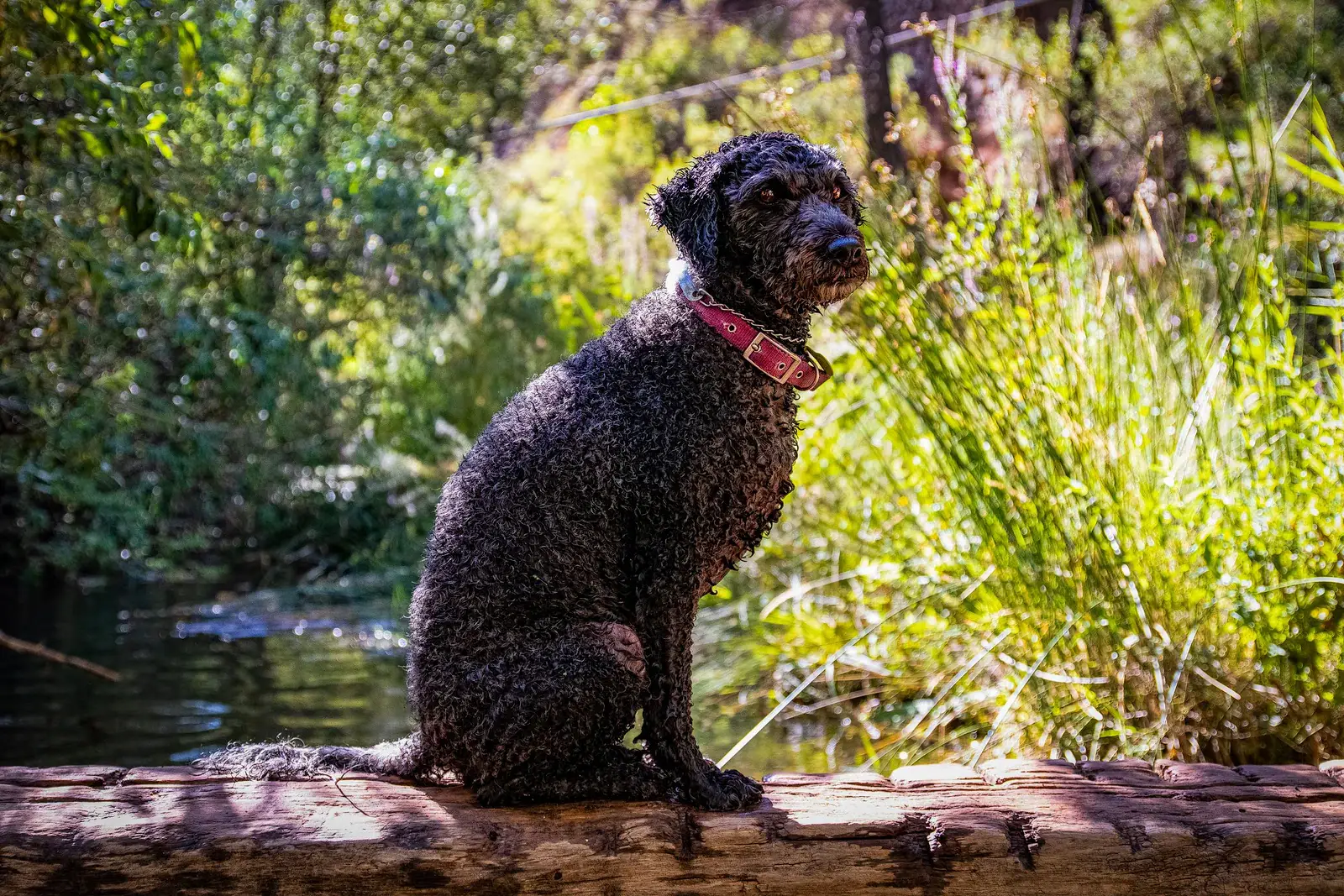
Fishermen used it to herd fish into nets, carry messages between boats and retrieve lost gear. It is lively, eager to work and strongly bonded to its family, and it needs daily exercise, ideally with water, plus regular clipping. The atlas data gives a life span of 11 to 13 years, and the breed is recognised by the FCI, the AKC and the UK Kennel Club.
Portuguese Water Dog quick facts
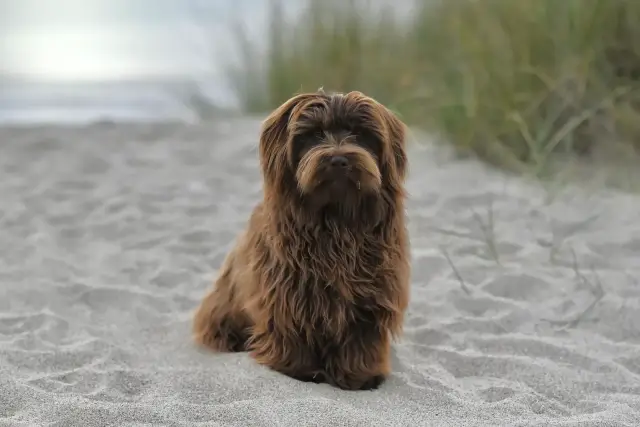 Related breedHavanese1600 to 1991 · CubaEarly Modern Era
- Country of origin
- Portugal, Algarve coast
- Period of development
- About 1200 to 1938 (atlas data, medium confidence)
- Original job
- Fishing helper: herding fish into nets, retrieving tackle, carrying messages between boats
- Type
- Water dog (FCI Group 8, Retrievers, flushing dogs and water dogs, standard no. 37; AKC Working Group; UK Kennel Club Working Group)
- Height
- FCI: males 50 to 57 cm, females 43 to 52 cm
- Weight
- FCI: males 19 to 25 kg, females 16 to 22 kg
- Coat
- Single coat, curly or wavy, no undercoat; often clipped in the lion or retriever clip
- Colour
- Black, brown, black and white, brown and white (FCI and Kennel Club wording differs slightly)
- Life span
- 11 to 13 years (atlas data)
- Other names
- Cão de Água, Algarvian Water Dog, Portuguese Fishing Dog
- DNA family
- Poodle family (Parker et al. 2017), with weak support
- Closest DNA relative
- German Shepherd (28.7 shared), with Berger Picard (17.8 Mb) and Poodle (12.9 Mb)
- Related breeds
- Poodle, Spanish Water Dog, Barbet
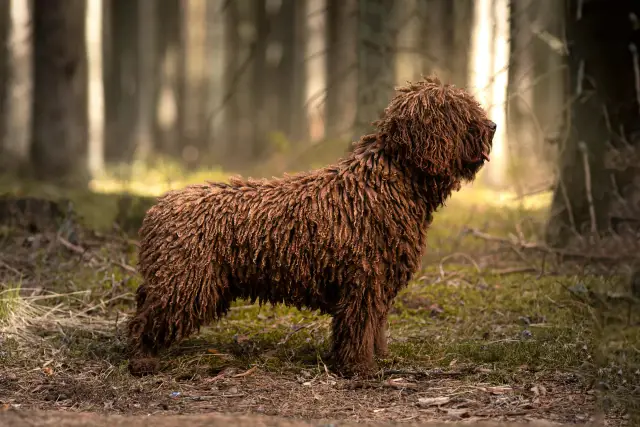
Drawn to scale in real centimetres. Its back reaches about 51 cm, your knee; its head about 64 cm, mid-thigh.
Where it sits in the tree
Late Middle Ages · 1200 to 1499
Name and origin
 Related breedLagotto Romagnolo1500 to 1991 · ItalyAge of Exploration
The name is functional. "Cão de água" is Portuguese for "water dog", and English-speaking clubs simply translated it. Other names in the atlas data are Algarvian Water Dog, after the southern province where the type was best known, and Portuguese Fishing Dog.
Three questions about the origin are worth separating.
- Where it began. Portugal. The FCI lists Portugal as the country of origin, and the atlas data places the breed on the Algarve coast. The development window runs from about 1200 to 1938, with medium confidence.
- What it came from. Nobody can show a documented ancestor. Popular accounts tell of dogs brought by Moors, Goths or traders, or of dogs that sailed with Portuguese ships. These are legends: they are repeated in many breed histories, but no pedigree or written record backs them. The atlas data links the breed with the Poodle and the Spanish Water Dog as siblings, with medium and low confidence, and notes that the Portuguese and Spanish water dogs probably share an ancestor.
- Who saved it. Most histories credit Vasco Bensaude, a Portuguese shipping magnate, who in the 1930s began collecting fishermen's dogs to revive a type that was fading as boats modernised. His kennel name is given as Algarbiorum, and a dog named Leão is the one most often named as a foundation sire. Accounts differ on details such as how many dogs he used and what share of today's pedigrees trace back to Leão, so treat such numbers as unconfirmed.

History
 Same eraMaltese500 BCE to 1888 · MaltaAncient World
Fishing boats of the Portuguese coast
For centuries small dogs travelled with Portuguese fishing crews. Breed histories describe three jobs: driving fish into nets, retrieving broken tackle or fish that slipped away, and acting as couriers between boats and from ship to shore. The jobs suited a dog that swam well, took commands at a distance and tolerated cold water. The traditional "lion clip", with a mane over the front and a shaved back half, is explained in club histories as a way to keep the chest warm and lighten the hindquarters for swimming. That reason is the club's account, not something a study has tested. The Kennel Club repeats it in its description of the clip.
Near extinction and revival
The atlas data dates the end of the development window to 1938, which fits the story of Bensaude's work in the 1930s. By then, motorised boats and nylon nets had reduced the need for a fishing dog, and the type was concentrated in a few coastal villages. Bensaude's breeding programme, together with local fishermen and veterinarians, produced registered stock. The Clube Português de Canicultura (CPC), the national kennel club, holds the standard and the in Portugal.
Export and recognition
Portuguese Water Dogs reached the United Kingdom and the United States in the mid 1900s. The Portuguese Water Dog Club of America was founded in 1972, and the AKC lists the breed in the Working Group. The FCI standard is no. 37, with Portugal as the country of origin, and the UK Kennel Club places the breed in its Working Group.
The White House dogs
The breed became widely known in April 2009, when the Obama family received a six-month-old Portuguese Water Dog named Bo, a gift from Senator Edward Kennedy. A second dog, Sunny, joined in August 2013. Press reports at the time said the family chose the breed partly because of an allergy in one of the daughters. That points to a common question about low-shedding coats, which is answered in the Temperament and Health sections below: no study shows that any breed is hypoallergenic.
Relatives and DNA
 Same familySpanish Water Dog1500 to 1980 · SpainAge of Exploration
In the Parker 2017 DNA study, which grouped 161 breeds into 23 clades by shared stretches of DNA, the Portuguese Water Dog falls into the Poodle family. The atlas data marks the clade support as weak, which means the placement is less certain than for most breeds. The atlas data also lists the Poodle and the Spanish Water Dog as siblings, and does not list parent or descendant breeds.
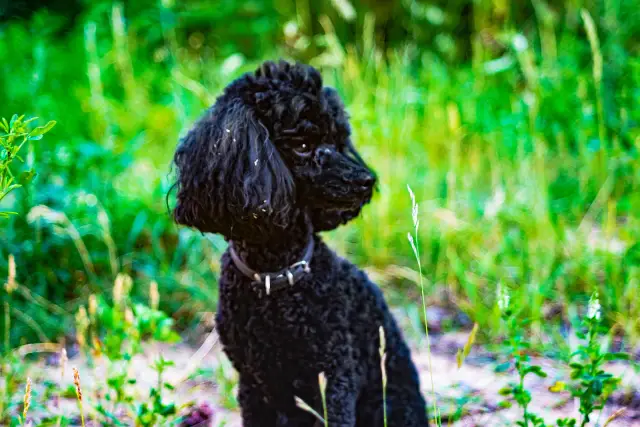 Poodlemedium confidenceSpanish Water Doglow confidence
Sibling breeds (atlas data)
- Poodle. A water retriever by origin, and the atlas data says the two appear to have developed from the same ancient genetic pool. Medium confidence.
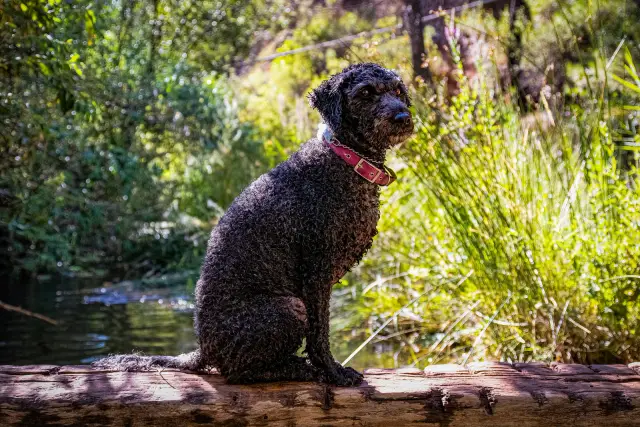
- Spanish Water Dog. The Iberian counterpart, with a similar curly coat and herding and retrieving jobs. Low confidence: the link rests on one general source.
What does DNA say?
Shared show which breeds share long stretches of identical DNA through common ancestors or crossing. A higher number of shared (Mb) means a more recent link. The study cannot say which breed gave genes to which.
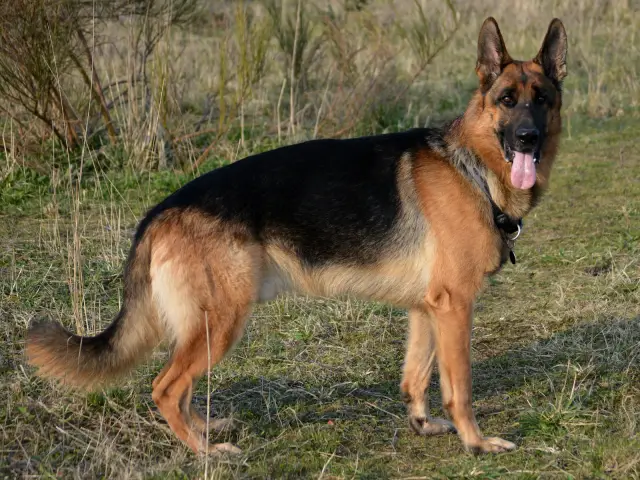
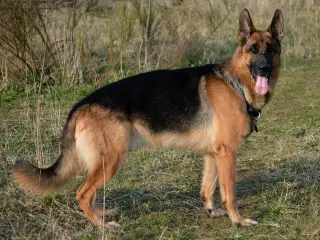
- Portuguese Water Dog and German Shepherd
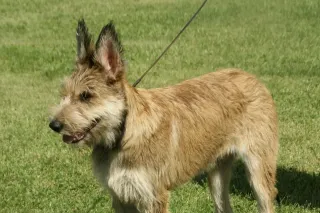
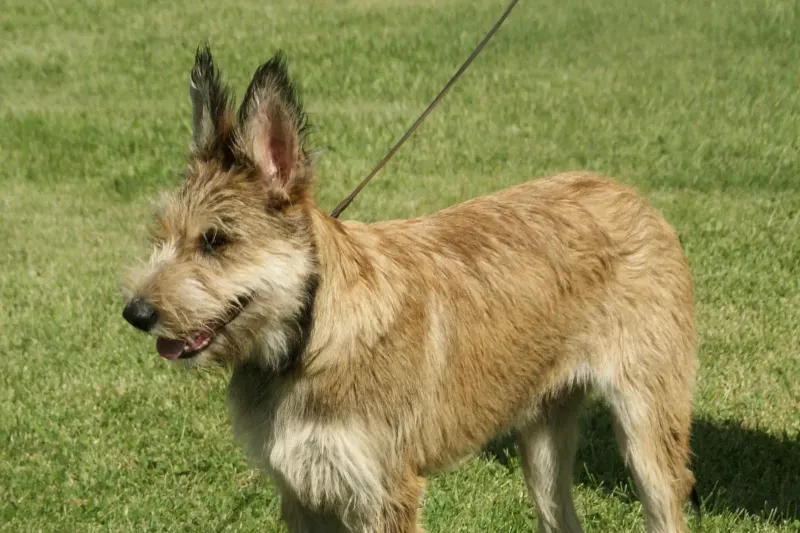 Portuguese Water Dog and Berger Picard
- Portuguese Water Dog and Poodle
The numbers are small compared with those of close relatives in other families, which fits an old, isolated, small population. The German Shepherd result does not mean the two breeds are close relatives in the historical sense. A large shared stretch can come from common ancestry far back in time, and the study does not say which breed gave genes to which. The Poodle result matches the shared "water dog" history in the atlas data.
Sister breeds · 2
- Poodle1400 to 1874
- Spanish Water Dog1500 to 1980
- German Shepherd28.7 Mb 1.2%
- Berger Picard17.8 Mb 0.7%
- Poodle12.9 Mb 0.5%
Source: Parker et al. 2017. Percent of the whole genome.
The breed standard
 Looks relatedBorzoi1200 to 1650 · RussiaLate Middle Ages
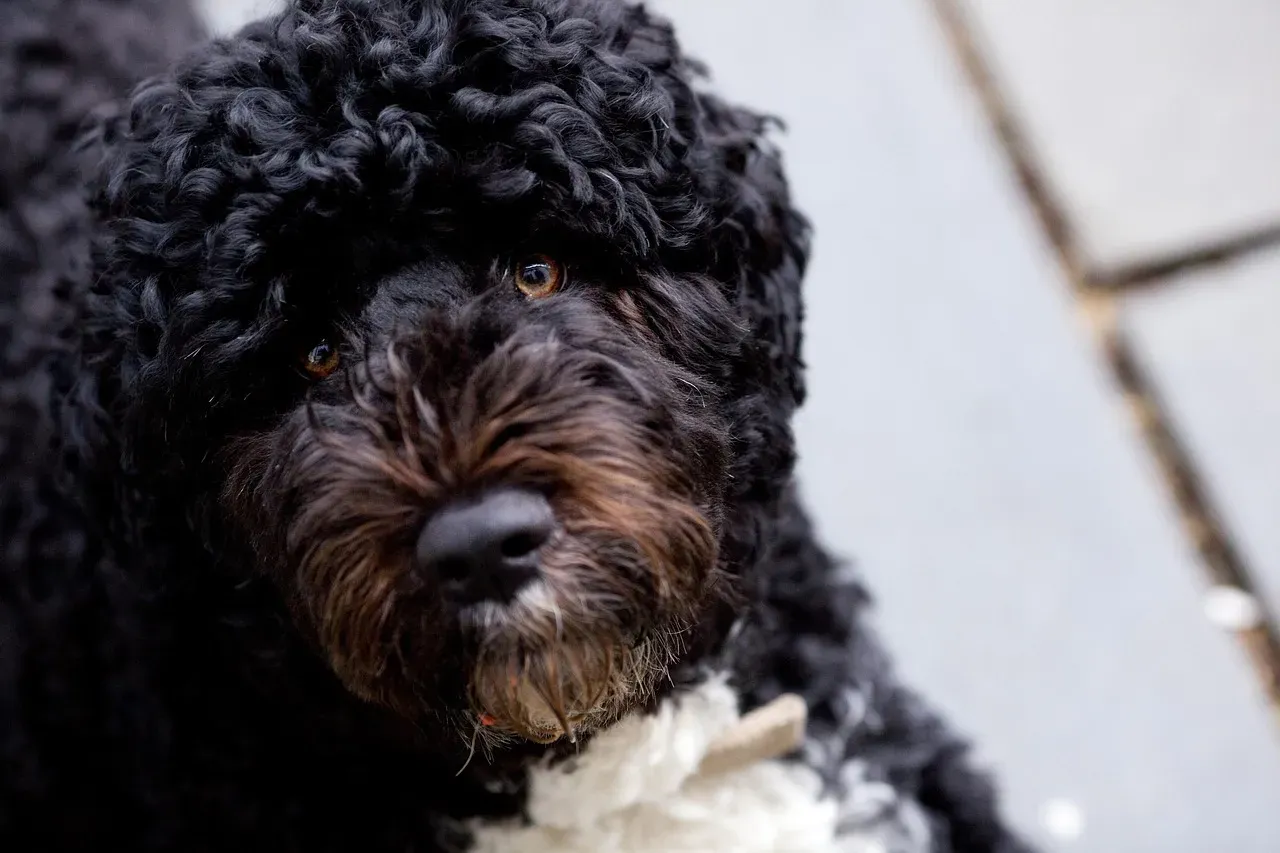
A is the written ideal for a breed that kennel clubs judge dogs against. The Portuguese Water Dog standards describe a strong, well-muscled, medium-sized dog with a broad head, a deep chest and a tail that is carried curled when the dog is excited. They agree on most points; the main differences are in wording.
| Trait | What the standards say |
|---|---|
| Height | FCI (no. 37): males 50 to 57 cm, ideal 54 cm; females 43 to 52 cm, ideal 46 cm. AKC and UKC: males about 20 to 23 in (51 to 58 cm), females about 17 to 21 in (43 to 53 cm) |
| Weight | FCI: males 19 to 25 kg, females 16 to 22 kg. AKC: males about 42 to 60 lb (19 to 27 kg), females about 35 to 50 lb (16 to 23 kg) |
| Coat | FCI and AKC: two types, curly (compact cylindrical curls, slightly lustreless) and wavy (falls in gentle waves with a slight sheen); no undercoat |
| Clip | Kennel Club: traditional lion clip with a mane over the front and clipped hindquarters; AKC and UKC also describe the retriever clip, a short even trim |
| Colour | Kennel Club: black, black and white, brown, brown and white; apricot, cream and gold are listed as not in the standard. FCI: black, white, shades of brown, and black or brown with white |
| Head | FCI: broad, well proportioned, with a slightly domed skull and a visible stop |
| Feet | Toes webbed, as the standards state |
| Size note | The Kennel Club says the size described is a guide and a dog may be larger or smaller |
Varieties in the standard. There is one breed with two coat types. Curly and wavy dogs can appear in the same litter. The clip is a grooming choice, not a variety. The lion clip is the older, traditional trim; the retriever clip is easier for family dogs.
Colour. The FCI wording lists black, white and shades of brown, with black and white or brown and white combinations. The Kennel Club names only four colours as in the standard and lists apricot, cream and gold as not in it. When you read a breeder's list, check the registry you plan to use.
 Save
Temperament
 Related breedCardigan Welsh Corgi1200 to 1934 · United KingdomLate Middle Ages
The Portuguese Water Dog was bred to work next to its people on a small boat, and the temperament follows from that. Club descriptions, including those of the Portuguese Water Dog Club of America and the FCI, describe a dog that is intelligent, spirited, loyal and eager to work, and that stays close to its family. The FCI standard describes a dog of brave, resourceful character that obeys commands.
Training and exercise
The breed learns quickly and tends to get bored with repetition. Short, varied sessions, with retrieving, scent games or trick training, suit it better than long drills. Daily exercise needs are high: club guidance for working-bred dogs often runs to well over an hour, split across the day, and many owners add swimming. A dog that lacks outlets may dig, chew or invent its own jobs.
With children and other pets
Most Portuguese Water Dogs are cheerful and playful with children, but they are strong, fast dogs and can knock over toddlers by mistake. They tend to get along with other dogs when socialised early. Because the breed worked among fish, birds and boat gear, some will chase small animals or birds. Introduce cats and small pets with care.
Coat and allergies
The Portuguese Water Dog has a single coat that sheds little, and the loose hair is often caught in the curls instead of falling. Many allergic people find this easier to live with. No study shows that any breed is hypoallergenic, because the allergens are in the saliva and skin flakes, not only in the hair. If allergy matters, spend time with the particular dog before you commit.

Health
 Related breedDogue de Bordeaux1300 to 1896 · FranceLate Middle Ages
Most Portuguese Water Dogs live healthy lives, and the atlas data gives 11 to 13 years. This section lists what breeders screen for and what owners can watch for. Figures are given only where a named study supplies one. The information is general. Talk to a vet about your own dog.
Life span. The atlas data gives 11 to 13 years. No breed-level survey is quoted here.
The Portuguese Water Dog Club of America works with the Orthopedic Foundation for Animals (OFA) Canine Health Information Center (CHIC) programme, which lists the tests a breeder should complete before breeding. These include hip evaluation and DNA tests for inherited diseases.
| Condition | What it is | How common | What helps |
|---|---|---|---|
| GM1 gangliosidosis | An inherited storage disease in which a missing enzyme builds up fats in nerve cells; signs begin in young puppies | Rare today thanks to DNA testing. Early breeders reported a carrier rate of several percent; no recent published figure | DNA test of breeding dogs (a single mutation in the GLB1 gene is known); are not mated to carriers |
| Juvenile dilated cardiomyopathy (JDCM) | An inherited heart disease of puppies that weakens the heart muscle | Rare; no published figure | Breeder screening and heart tests recommended by the breed club; ask for results |
| Progressive retinal atrophy (prcd-PRA) | An inherited loss of retinal cells that leads to night blindness and later vision loss | Seen in the breed; no recent published figure | DNA test of breeding dogs; yearly eye exams |
| A loose hip joint that wears the cartilage | Seen in many medium and large breeds; no published figure | Hip scoring of parents through the OFA or the national scheme; healthy weight; joint-friendly exercise | |
| Coat and skin problems | Dry, brittle or oddly textured coat, or itchy skin | No published figure | Vet check; grooming routine; ask the breeder about coat quality in the line |
| Overweight | Excess body fat that loads joints and shortens healthy life | Common in many breeds; no published figure | Measured meals, regular swimming and walks, body condition checks |
GM1 gangliosidosis. The disease was linked to a single DNA change, known as R60H in the GLB1 gene (Online Mendelian Inheritance in Animals, OMIA). Because one change explains the affected dogs, a DNA test can identify carriers, and breeders can avoid carrier-to-carrier matings. The test is on the CHIC list, so ask the breeder to show results for both parents.
Hips and eyes. Hip dysplasia and eye disease are screened by scoring and exams. A scored hip result for both parents, and a current eye certificate, are reasonable things to ask for.
Ears and skin. Dogs that swim often can get wet ears. Dry the ears after a swim and ask the vet about cleaning if you see redness or smell.

Living with a Portuguese Water Dog
 Related breedEnglish Mastiff1300 to 1880 · United KingdomLate Middle Ages
| Daily reality | Rating | Why |
|---|---|---|
| Exercise per day | High | Bred for a day on the water; most need an hour or more, with swimming and play |
| Training needs | High | Intelligent and quick, but needs consistent, varied work to stay focused |
| Grooming | High | Clip every 6 to 8 weeks or so; brush through the curls to prevent mats |
| Shedding | Low | Single coat that sheds little; loose hair stays in the curls |
| Barking | Medium | Alert and vocal when bored or excited; depends on the dog |
| Time alone | Poor | Strongly bonded to its people; can become anxious or destructive if left for long hours |
| Children | Good | Playful and sturdy; supervise young children because of its strength |
| Other dogs | Good | Usually sociable if raised with other dogs |
| Cats and small pets | Fair | A working dog with chase interest; varies with early introduction |
| Flat living | Fair | Possible with a lot of outdoor exercise; indoors it needs jobs |
| Heat tolerance | Fair | Loves water; avoid hard exercise in the heat |
| Cold tolerance | Good | Bred for cold sea water, though the coat is single |
| First-time owner fit | Fair | Willing and smart, but demanding in energy and grooming |
A great fit if
- You want a medium-sized dog for an active life: hiking, swimming, dog sports.
- You can give an hour or more of exercise every day and some mental work.
- You are happy to learn clipping or to pay a groomer every 6 to 8 weeks.
- You are at home for much of the day, or can arrange company for the dog.
Think twice if
- You work long hours away from home with no dog care.
- You want a low-maintenance coat. Low shedding means high grooming.
- You have small pets that must stay safe from a dog with a chase instinct.
- You expect a calm dog without daily exercise.
Before you get one
- Ask the breeder for DNA results for GM1 gangliosidosis and prcd-PRA, plus hip scores and eye certificates, for both parents. The CHIC list names the tests the breed club asks for.
- Choose a breeder who raises the puppies in the home and lets you meet the parents.
- Adult dogs and rescues exist. Ask the national breed club about rescue contacts.
- Plan for the first year: socialisation classes, a groomer you trust, and a place to swim safely.
Similar breeds to consider
- Poodle. A sibling breed in the atlas data with a similar low-shedding coat and a choice of sizes.
- Spanish Water Dog. The Iberian water dog, more of a herder, with a woolly coat.
- Barbet. A French water dog with a long curly coat, for those who like the look and the work.
- Lagotto Romagnolo. An Italian water retriever turned truffle dog, with a curly coat that needs regular grooming.

Portuguese Water Dog fun facts
 Related breedJindo1200 to 1962 · South KoreaLate Middle Ages
- Messenger by sea. Breed histories say fishing crews used the dogs to carry messages between boats and the shore, as well as to retrieve nets.
- Webbed toes. The standards describe webbed toes, which help with swimming.
- Two first dogs. The Obama family's Bo arrived in 2009 and Sunny in 2013, both Portuguese Water Dogs.
- The rescued breed. Accounts of Bensaude's work in the 1930s describe how a handful of coastal village dogs became the basis of the breed.
Frequently asked questions
How big does a Portuguese Water Dog get?
The standard gives 50 to 57 cm and 19 to 25 kg for males, and 43 to 52 cm and 16 to 22 kg for females. The and UKC wording is close in inches and pounds.
How long does a Portuguese Water Dog live?
The atlas data gives 11 to 13 years.
Is a Portuguese Water Dog hypoallergenic?
No breed is hypoallergenic according to the studies available. The coat sheds little, which helps some allergic people, but the allergens are also in saliva and skin flakes. Meet the dog first.
Do Portuguese Water Dogs shed?
Very little. Loose hair stays in the curls, so regular brushing and clipping matter more than vacuuming.
Are Portuguese Water Dogs good family dogs?
They can be, for active families who are home often. They are playful and affectionate, and strong enough to knock over small children by mistake. They do not suit homes where the dog is alone for long hours.
Which health tests should a breeder have done?
The breed club and the OFA CHIC list include hip evaluation and DNA tests for GM1 gangliosidosis and prcd-PRA, with other tests that can change. Ask for the results for both parents.
Read next
Closest DNAGerman Shepherd28.7 Mb sharedSister breedPoodle1400 to 1874 Adopt a dogDog Shelters in EuropeFind dog shelters in Europe, learn how shelters differ from country to country and why adopting a dog is a good option.
Sources (15)
- American Kennel Club, Portuguese Water Dog breed standard.
- Clube Português de Canicultura, Cão de Água Português breed information.
- Fédération Cynologique Internationale, Cão de Água Português (Portuguese Water Dog), standard no. 37.
- Fogle B., The Encyclopedia of the Dog, 2009.
- Online Mendelian Inheritance in Animals (OMIA), GM1 gangliosidosis in dogs, entry 000402-9615.
- Orthopedic Foundation for Animals, Canine Health Information Center, Portuguese Water Dog requirements.
- Parker H.G. et al., "Genomic analyses reveal the influence of geographic origin, migration, and hybridization on modern dog breed development", Cell Reports, 2017.
- Portuguese Water Dog Club of America, breed information and health programme.
- Portuguese Water Dog Club of Canada, standard comparison document.
- The Kennel Club (UK), Portuguese Water Dog breed standard and breed information.
- United Kennel Club, Portuguese Water Dog breed standard, 2007 revision.
- University of California Davis Veterinary Genetics Laboratory, canine genetic disease tests.
- Westminster Kennel Club, Portuguese Water Dog breed page.
- White House, announcement of the Obama family dog Bo, April 2009.
- Dogs Atlas breed records and Parker 2017 shared-haplotype table (this site).