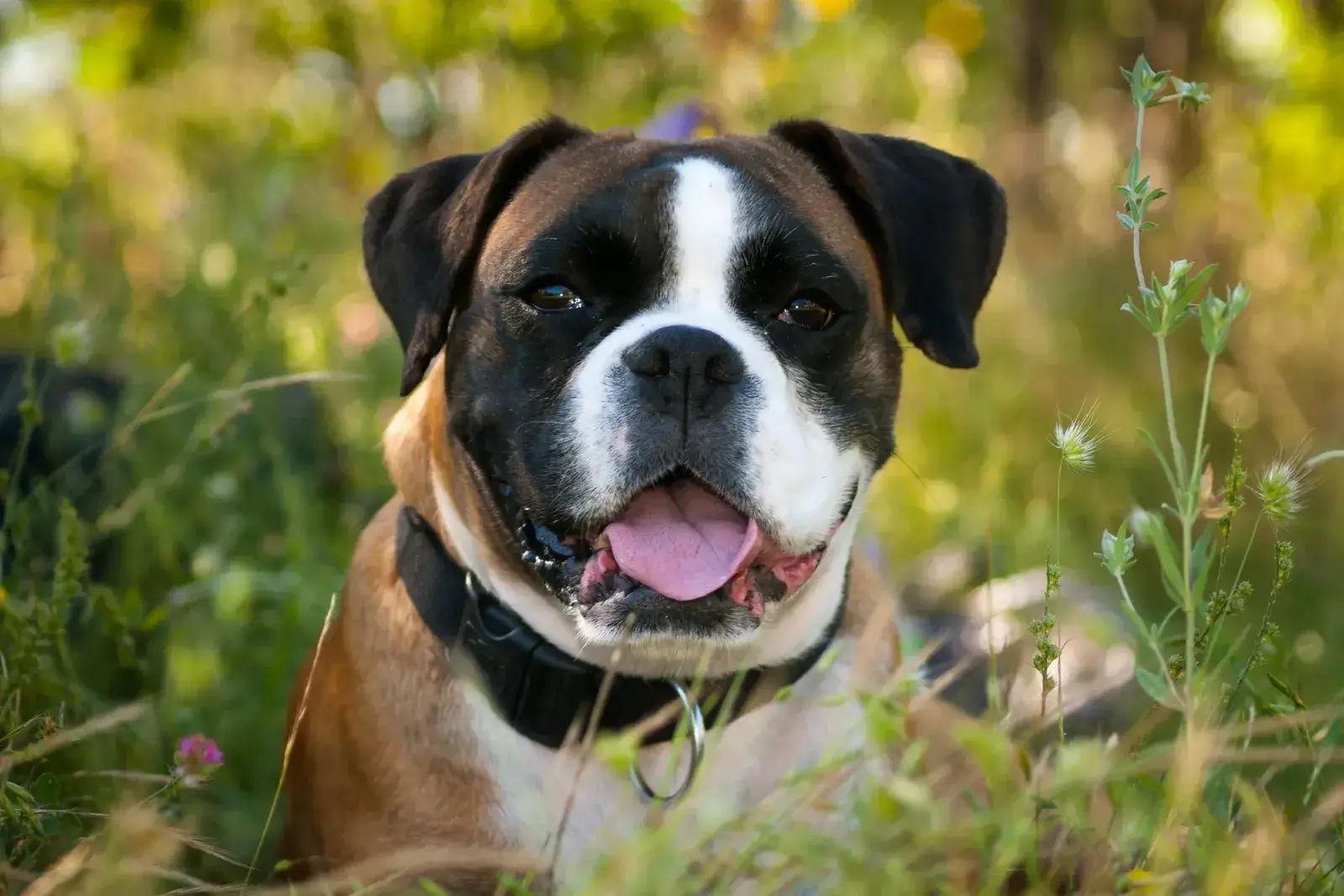
It is playful, loyal and energetic, and it stays puppyish for years. The median lifespan in a large UK veterinary study was 10.5 years. Heart disease (ARVC) and cancers are the main health topics for owners and breeders.
Quick facts
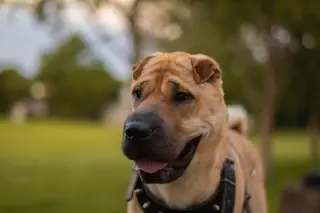
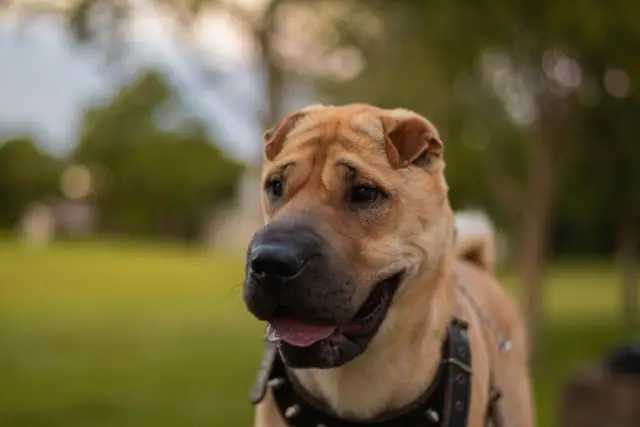 Related breedShar Pei200 BCE to 1973 · ChinaAncient World
- Origin
- Germany (Munich)
- Developed
- 1890s to 1904
- Ancestors
- Bullenbeisser, English Bulldog
- DNA family
- European Mastiff
- FCI group
- Group 2, standard no. 144
- AKC group
- Working
- Height
- Males 57 to 63 cm, females 53 to 59 cm (FCI)
- Weight
- About 30 kg or more (males), about 25 kg (females)
- Coat
- Short, smooth
- Colours
- Fawn, brindle, with white markings
- Median lifespan
- 10.5 years (VetCompass, UK)
- Other names
- German Boxer, Deutscher Boxer
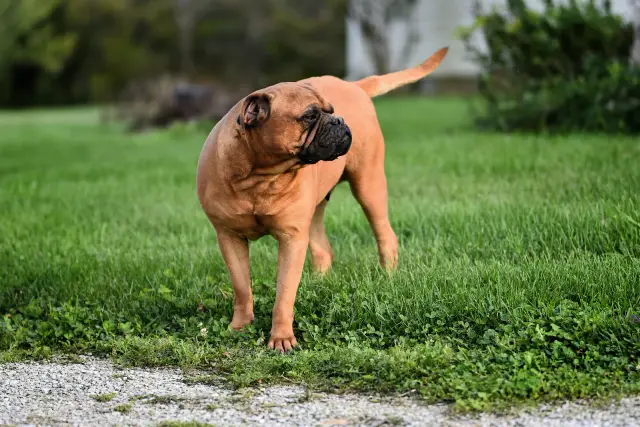
Drawn to scale in real centimetres. Its back reaches about 59 cm, just above your knee; its head about 74 cm, mid-thigh.
Where it sits in the tree
Victorian Breed Boom · 1850 to 1913

Name and origin
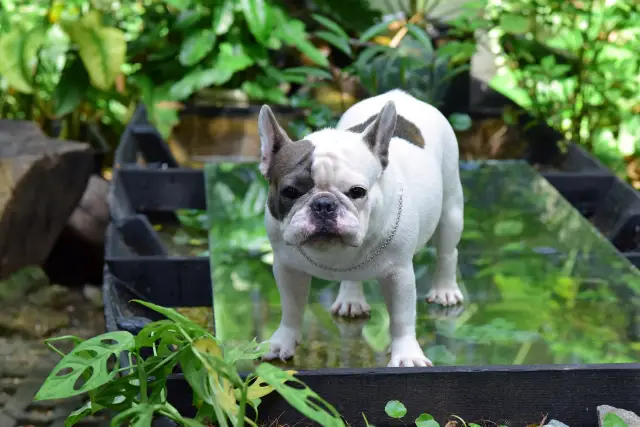 Related breedFrench Bulldog1850 to 1898 · FranceVictorian Breed Boom
The breed's official German name is Deutscher Boxer. Nobody can prove where "Boxer" comes from, and breed historians list several competing ideas. Treat all of them as theories.
- Boxl, a local name. The explanation favoured in several breed histories says the smaller Brabanter type of Bullenbeisser was known in Bavaria as Boxl, and that Boxer is a corruption of that word. In Bavarian dialect the same word is also used for short trousers, so the link is uncertain.
- Bierboxer. Munich had mixed Bullenbeisser-type dogs nicknamed Bierboxer, after the beer gardens where owners took them. Deutscher Boxer may be a shortened form of that nickname.
- Boxing play. The popular idea is that the name comes from the way the dog rears and bats with its front paws. The German verb boxen and the noun Boxer were in use long before the breed, but one source doubts that the dog's play is the origin.
- A dog called Boxer. A Munich dog of unknown ancestry, said to have been called simply Boxer, appears in some pedigree stories. This shows the word was in use locally, not that the breed took its name from him.
Germany is the country of origin, and the breed took its modern shape in Munich. The FCI lists it as Deutscher Boxer, standard number 144.

History
 Same eraAmerican Staffordshire Terrier1850 to 1936 · United StatesVictorian Breed Boom
Bullenbeisser roots
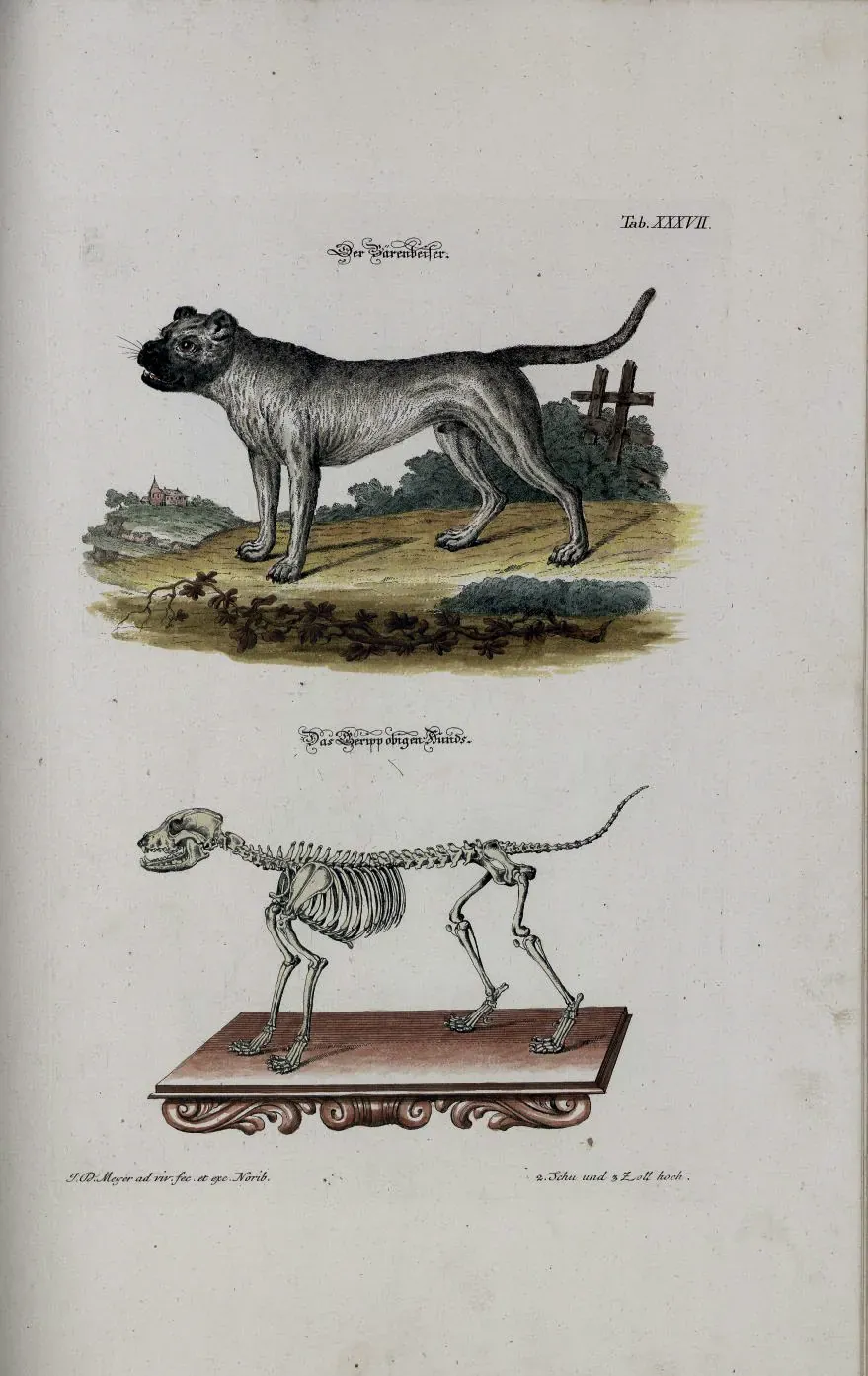
The Boxer's main ancestor is the Bullenbeisser, a stocky German hunting mastiff whose name means "bull biter". For centuries these dogs worked for hunters in the forests, seizing bear, wild boar and deer and holding them until the hunters arrived. Some accounts name the Brabanter Bullenbeisser, from the Brabant region around present-day Belgium and the Netherlands, as a smaller regional type of the same dog.
The Bullenbeisser itself no longer exists as a separate breed. Its blood lives on in the Boxer, and its working purpose, a strong dog with a powerful grip and a short muzzle that lets it breathe while holding, shows in the Boxer's head to this day. You can read more on the Bullenbeisser page.
 Save
English Bulldog blood
In the 19th century, hunting with big game dogs faded. Breeders in Germany crossed the remaining Bullenbeisser with Bulldogs from Britain. The Bulldog of that time was the lighter, longer-legged Old English Bulldog and not the heavy, flat-faced dog of today. The cross gave the new dogs a shorter muzzle and a more even temper, and it fixed the square, athletic build. Heidi Parker's 2017 DNA study fits this picture, as the section below shows.
Munich in the 1890s and the first club
Munich was the centre of the work. The Munich club's own chronicle (compiled for 1895 to 1956 by Friederun Stockmann and Theo Mueller) credits Friedrich Roberth, a cynologist born in Vienna who moved to Munich in 1894, with starting the push to fix the breed. Other histories spell his name Robert and name Elard Koenig and R. Hoepner as his partners. In 1895 the club chronicle records a trial class for Boxers at a St. Bernard club show in Munich, judged by Roberth. Together they founded the first Boxer club, the Deutscher Boxer Club, in Munich. Some sources date the founding a year later, in 1896, so the exact year is not settled.
The founders wrote the first as a guide for their breeding. Sources give different dates for the written text, from the 1890s to a revised standard of 1904 or 1905, and much of that early wording survives in the current standard. The first dog entered in the is also named differently by different sources: the Munich chronicle gives a dog called Flocki, while the AKC history names Muhlbauer's Flock, a dog two generations from a dam called Alt's Schecken. Records from the 1890s are thin, so treat these names as tentative.
Recognition in other countries
The AKC history page says the club registered its first Boxer in 1904. The American Boxer Club also gives 1904 for official recognition. For decades the breed was little more than a curiosity in the United States and was filed awkwardly among the bulldog types of the Non-Sporting group, until it moved to the Working group in 1935, according to the Canine Chronicle. The same year the American Boxer Club began its work. A first AKC champion is dated to 1915 by the Canine Chronicle, and the AKC history names Dampf vom Dom, though sources differ on the details.
Friederun Stockmann's "vom Dom" kennel is credited by a breed-history source with giving the Boxer its international profile in the 1930s, through exhibitions and shows.
In Britain the Kennel Club registers the Boxer in the Working group. Its standard does not recognise cropping or docking. A naturally short-tailed line was developed in the UK in anticipation of a docking ban, and these dogs were accepted by the Kennel Club in 1998. Kennel Club data show UK Boxer registrations peaked in 2011 at almost 5,300 dogs and fell to 2,650 by 2023, according to a Statista chart.
Wartime work
The Boxer's intelligence and nerve made it useful to armies. During World War I, German forces used Boxers as messenger dogs, pack , guard dogs and attack dogs. Dates for police use vary: the American Boxer Club says Boxers were officially recognised as police and guard dogs in 1925, after proving their working qualities in the war, while the AKC history says the Boxer was one of the first breeds picked for police training in Germany in 1904. The Canine Chronicle names a war veteran, Rolf von Vogelsberg, as the acknowledged prototype of the modern Boxer. After World War II, soldiers returning from Germany, notably American servicemen, brought dogs home, and the Boxer became popular across the world.
Relatives and DNA
 Same familyBoston Terrier1870 to 1893 · United StatesVictorian Breed Boom
The 2017 study by Heidi Parker and colleagues grouped the Boxer in the European Mastiff family of breeds. This is a family defined by DNA, and it is different from a kennel club group.
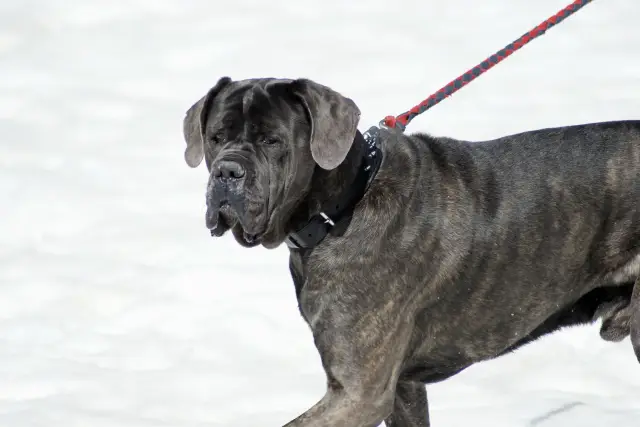
The largest amount of in the study is with the Cane Corso (63 ) and the Dogue de Bordeaux (50.5 Mb). Sharing is also seen with the Bulldog (34.4 Mb), which fits the history above. Smaller matches include the French Bulldog, the Boston Terrier and the English Mastiff.
The Boxer in turn helped to create two South American breeds, the Dogo Argentino and the Dogue Brasileiro.
Descend from it · 2
- Dogo ArgentinoArgentina
- Dogue BrasileiroBrazil
- Cane Corso63.0 Mb 2.6%
- Dogue de Bordeaux50.5 Mb 2.1%
- Bulldog34.4 Mb 1.4%
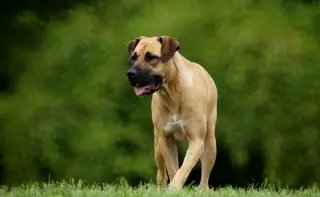
- Boerboel31.8 Mb 1.3%
- Shar Pei22.5 Mb 0.9%
- French Bulldog17.8 Mb 0.7%
- American Staffordshire Terrier14.8 Mb 0.6%
- Boston Terrier13.9 Mb 0.6%
- Glen of Imaal Terrier11.7 Mb 0.5%
- English Mastiff11.3 Mb 0.5%
- Staffordshire Bull Terrier11.1 Mb 0.5%
- Kerry Blue Terrier11.0 Mb 0.5%
- Irish Terrier10.7 Mb 0.4%
- Bullmastiff10.3 Mb 0.4%
- Cane Paratore10.2 Mb 0.4%
Source: Parker et al. 2017. Percent of the whole genome.
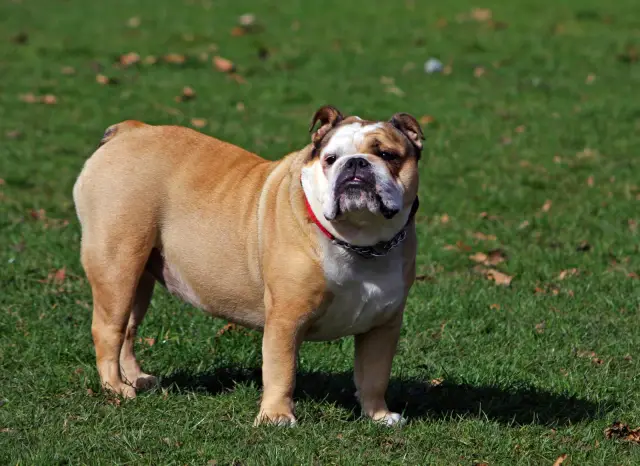
The breed standard
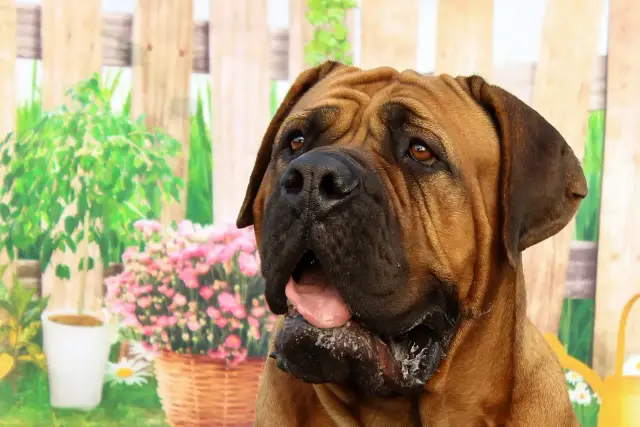
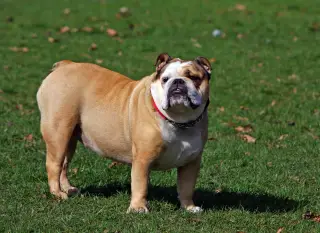
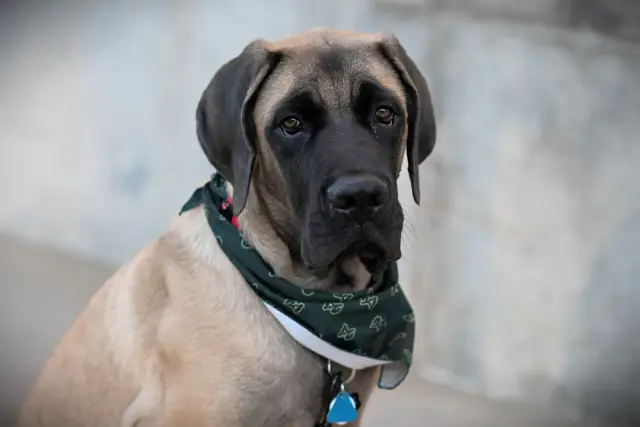 Looks relatedEnglish Mastiff1300 to 1880 · United KingdomLate Middle Ages
A breed standard is the written ideal of a breed. Judges at dog shows compare each dog with it, and breeders use it as a goal.
| Trait | What the standards say |
|---|---|
| Height, males | FCI: 57 to 63 cm; AKC: 23 to 25 in (58 to 64 cm); UK KC: size given as a guide only |
| Height, females | FCI: 53 to 59 cm; AKC: 21.5 to 23.5 in (55 to 60 cm); UK KC: size given as a guide only |
| Weight | FCI: males over 30 kg at about 60 cm, females about 25 kg at about 56 cm; AKC and UK KC: judged on balance rather than a fixed figure |
| Coat | FCI: short, hard, glossy, close fitting; AKC: short, glossy, smooth; UK KC: short, shiny, smooth |
| Colours | FCI: fawn or brindle with white markings; AKC: fawn or brindle, white not over a third of the coat; UK KC: fawn or brindle, white markings allowed |
| Tail and ears | FCI, AKC and UK KC: natural ears and tails are accepted; the UK KC standard does not recognise cropping or docking |
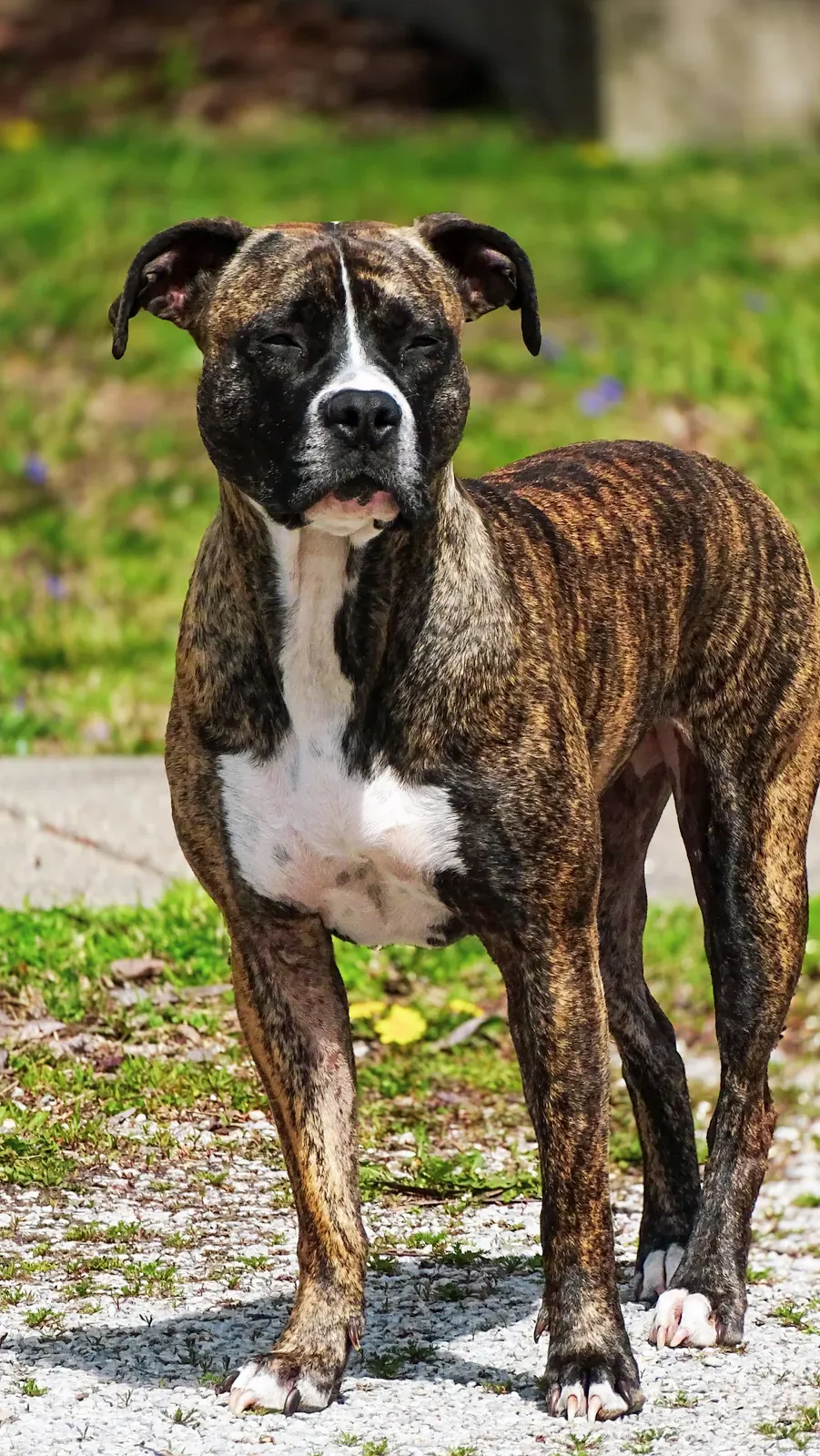
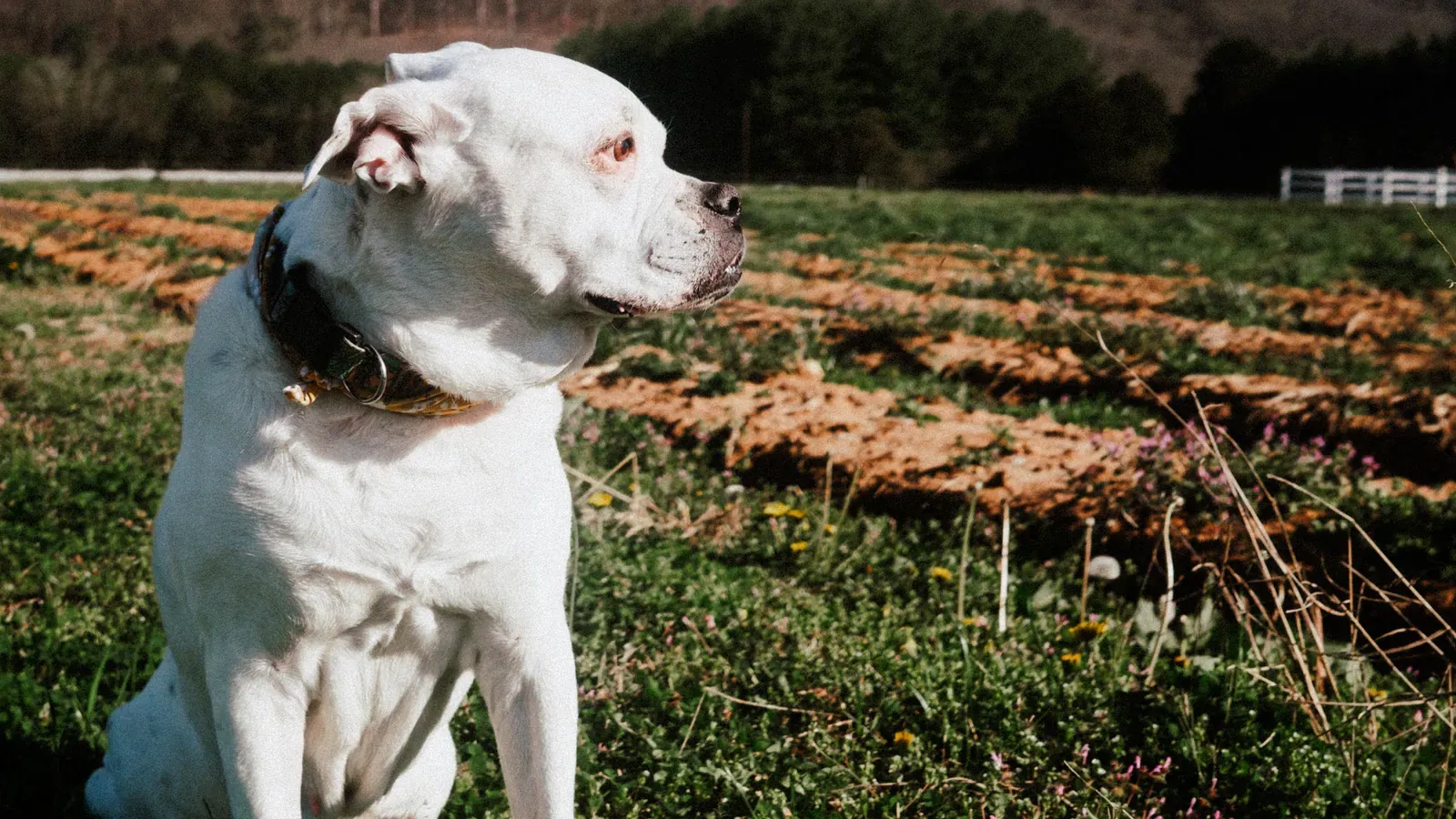
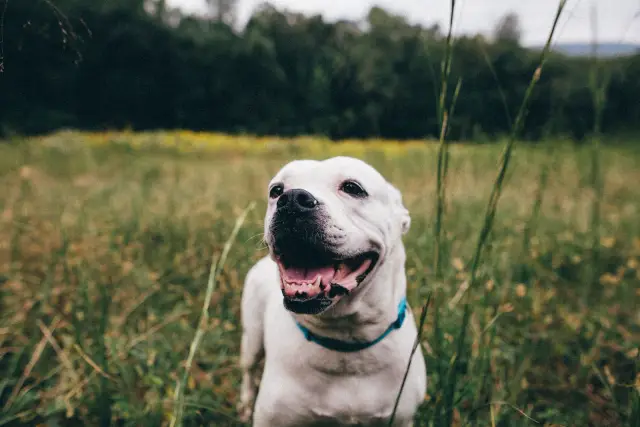
The FCI describes a medium-sized, sturdy dog of compact, square build and strong bone. Fawn runs from light fawn to dark deer red. Brindle has dark or black stripes over a fawn background that must contrast clearly. The head is the Boxer's signature: a broad, blunt muzzle, a slightly undershot jaw and a dark mask. The standards do not accept a fully white dog for showing, but white Boxers are born in many litters and are a normal part of the breed. A UK VetCompass study found little evidence of health differences between white and non-white Boxers, and median longevity did not differ between them either (O'Neill and colleagues, 2023).
Temperament
 Related breedStaffordshire Bull Terrier1800 to 1935 · United KingdomIndustrial Revolution
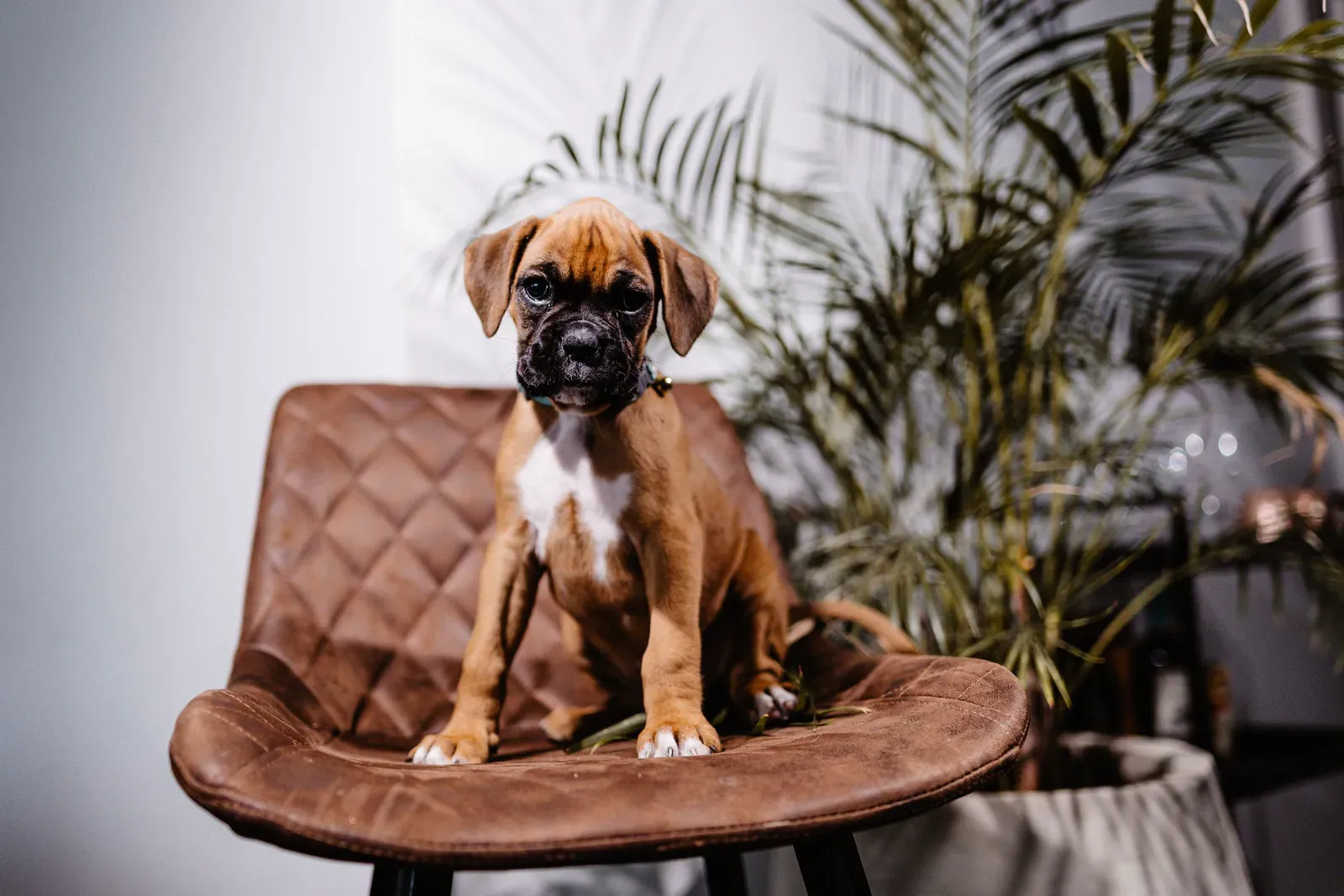
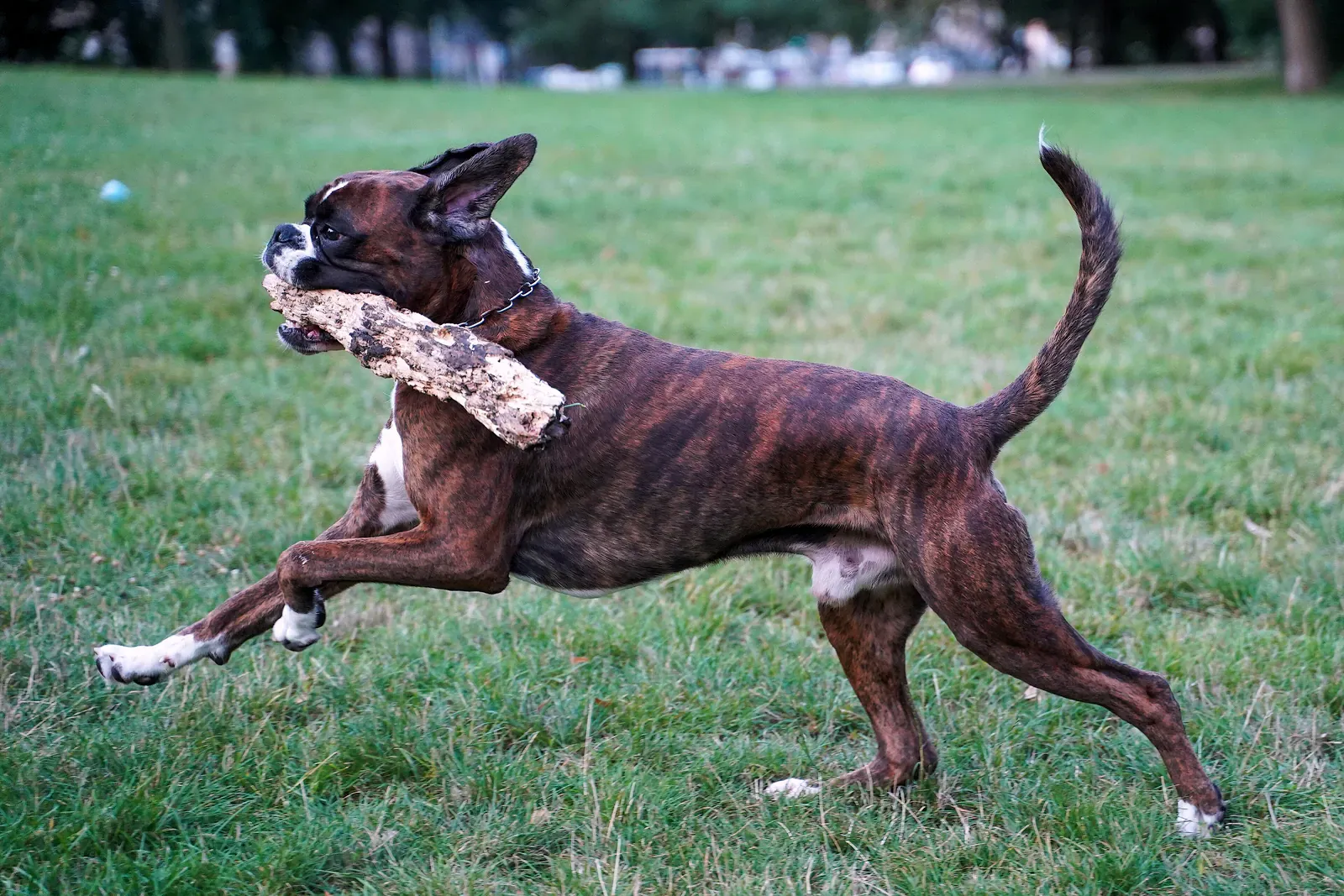
The Boxer is known for being bouncy, devoted and clownish. It forms a strong bond with its family and tends to be gentle and patient with children it knows, although a big, energetic young dog can knock over small ones by accident. Breed clubs describe it as alert and fearless, with a watchful nature that suits a family guard dog.
Boxers mature slowly. Many act like puppies until they are three years old, so expect a long adolescence. They are clever and willing, yet they can be stubborn, and they tire of repetitive drills quickly. Short, playful training sessions with praise and food rewards work well. Rough or angry methods tend to shut them down.
Most Boxers love company and cope poorly with being left alone for long hours. Early meetings with other dogs and people help, since some males can be pushy with dogs they do not know.

Health
 Related breedBullmastiff1860 to 1924 · United KingdomVictorian Breed Boom
Many Boxers live active, healthy lives. The points below are what breeders screen for and what owners can watch for, and none of them means your dog will be affected.
Lifespan. The VetCompass programme at the Royal Veterinary College studied 3,219 Boxers in UK veterinary practices (published 2023, Canine Medicine and Genetics). The median age at death of the 346 Boxers that died during the study was 10.46 years, with half falling between 9.0 and 12.0 years.
The authors concluded that the longevity of Boxers was consistent with other breeds of similar body size. The range was wide, from 2.76 to 18 years. A separate VetCompass life-table study of UK dogs that died between 2016 and 2020 also places the Boxer at roughly 10 years, though that figure appears only in a news summary.
Common problems in that study.
| Condition | What it is | How common | What helps |
|---|---|---|---|
| Ear infection (otitis externa) | Inflamed, sore ear canal | About 1 in 14 dogs (7.2%) | Regular ear checks, early vet visits |
| Epulis | Non-cancerous gum growth | About 1 in 17 dogs (5.8%) | Vet exam; removal if it grows |
| Corneal ulcer | Scratch or sore on the eye surface | About 1 in 20 dogs (5.0%) | Prompt vet care for squinting or red eyes |
| Periodontal disease | Gum and tooth disease | About 1 in 22 dogs (4.6%) | Tooth brushing, dental checks |
| Cancers, all types together | Tumours of any kind | About 1 in 7 dogs (14.2%) | Check lumps early, yearly vet exams |
The same study placed cancers among the main health priorities of the breed. Neoplasia was the second largest disorder group, behind skin disorders (17.7%). Boxer owners should run their hands over the dog regularly and ask a vet about any new or changing lump. Most lumps turn out to be harmless, and early removal gives the best results when they are not.
Boxer cardiomyopathy (ARVC)
Arrhythmogenic right ventricular cardiomyopathy, or ARVC, is often called Boxer cardiomyopathy. The heart muscle of the right side is gradually replaced by fatty and fibrous tissue, which can disturb the heart rhythm. Signs, when they appear, include fainting or collapse, weakness and an irregular pulse. It is a disease of adult dogs, usually middle-aged and older.
Researchers led by Kathryn Meurs at North Carolina State University found an eight base pair deletion in the striatin gene linked to the disease (Meurs and colleagues, Human Genetics, 2010). Dogs with two copies of the change had more rhythm abnormalities than dogs with one. Carrying the change does not mean a dog will become ill, because the effect varies from dog to dog. A DNA test and a Holter monitor (a 24 hour heart rhythm recording) are both used by breeders. A cardiologist can also check the heart by ultrasound. The Merck Veterinary Manual describes ARVC as occurring mainly in Boxers, and says more than 100 to 300 extra beats (ventricular premature complexes) in 24 hours is generally considered diagnostic. It also says only about 10% of affected dogs in the US go on to develop dilated cardiomyopathy and heart failure. No reliable breed-wide prevalence figure exists, because many dogs are never diagnosed. Cornell researchers note that the disease is so common in the breed that finding unaffected control dogs for gene mapping is hard.
What helps. Ask a breeder whether both parents have been DNA tested for the striatin change and have had a yearly Holter check. Dogs with rhythm problems can be treated with medicine, and an early diagnosis gives more options. In the VetCompass data, heart murmurs were recorded more often in males than in females, so a vet should listen to your Boxer's heart at every check.
Other points
Boxers have a short muzzle, but it is less flat than that of the Bulldog, and most breathe well. Hot days still call for care, and exercise should be moved to the cool part of the day. Urinary incontinence in spayed females and skin masses were also seen more often in females in the VetCompass study.

Living with a Boxer
 Related breedAmerican Bulldog1700 to 1980 · United StatesEarly Modern Era
| Topic | Rating | Why |
|---|---|---|
| Exercise per day | High | Active, athletic dog; plan about 1 to 2 hours |
| Training needs | Medium | Clever but stubborn; early, consistent training |
| Grooming | Low | Short coat; weekly brush |
| Shedding | Medium | Short hairs, light but steady |
| Barking | Low to medium | Alert, not a constant barker |
| Time alone | Poor | Bonds closely, dislikes long absences |
| Children | Good | Playful and affectionate; supervise with toddlers |
| Other dogs | Fair | Varies; socialise early |
| Cats and small pets | Varies | Depends on early exposure |
| Flat living | Fair | Possible if exercised well |
| Heat tolerance | Fair | Short muzzle; avoid hot hours |
| Cold tolerance | Fair | Thin short coat, a coat helps in winter |
| First-time owner fit | Fair | Fine for a committed, active beginner |
A great fit if you:
- are active and enjoy daily walks, play and games
- are home for much of the day
- want a loyal, funny family dog
- can stay calm and consistent in training
Think twice if you:
- are away from home all day
- want a calm, low-energy dog in the first years
- need a dog that is always quiet with strangers
- are uneasy about a possible vet bill for heart or skin care
Daily life. Plan a long walk or play session morning and evening. A fenced garden helps, but a bored Boxer left outside will dig and bark. Chew toys and puzzle feeders soak up energy on wet days. Boxers drool little but snore, and their short coat needs only a weekly rub with a rubber mitt. Because they mature slowly, many owners find the second and third years harder than the first.
Before you get one. Ask the breeder for the ARVC (striatin) DNA test result and a Holter or cardiology check on both parents. Breed rescues exist for Boxers, and an adult dog shows its real temperament. In the first year, expect chewing, jumping up and a lot of energy. Training classes help.
Similar breeds to consider. The Great Dane is a calm giant with a similar short coat. The Dobermann is also a short-coated German working dog, more reserved. The Bullmastiff shares the mastiff roots and is quieter. The Rottweiler is another strong German guard breed.
 Save

Fun facts
 Related breedAmerican Bully1980 to 2004 · United StatesModern Era
- The first Boxer club was founded in Munich in 1895 (some sources say 1896), after a Boxer trial class at a St. Bernard club show.
- Name theories include Boxl, the Bavarian name for the small Brabanter, and Bierboxer, a Munich nickname linked to beer gardens.
- The AKC registered its first Boxer in 1904, but the breed only moved into the Working group in 1935.
- UK Boxer registrations fell from almost 5,300 in 2011 to 2,650 in 2023 (Kennel Club data via Statista).
FAQ
How long do Boxers live?
The median in the 2023 study of UK Boxers was 10.46 years. Many live longer, some past 12 years.
Why is a Boxer called a Boxer?
The exact origin is not documented. Theories include its habit of batting with its front paws in play, Boxl as a local name for the smaller Brabanter Bullenbeisser, and Bierboxer, a Munich nickname.
What is Boxer cardiomyopathy?
It is ARVC, a heart muscle disease that can cause rhythm problems. A striatin gene change is linked to it, and DNA tests and Holter checks are used by breeders.
Are Boxers good with children?
Usually yes. They are playful and affectionate, but young dogs are bouncy, so supervise play with small children.
Do Boxers get cancer?
Cancers were the second largest disorder group in the VetCompass study, at about 1 in 7 dogs. Early checks of any lump help.
When was the Boxer breed recognised?
The first club was founded in Munich in 1895. The registered its first Boxer in 1904, and the breed joined the AKC Working group in 1935 (Canine Chronicle). The lists it as standard no. 144.
How big do Boxers get?
The FCI gives 57 to 63 cm for males and 53 to 59 cm for females, with males over 30 kg and females about 25 kg. The AKC gives 23 to 25 in and 21.5 to 23.5 in.
Read next
 Closest DNACane Corso63.0 Mb shared
 FamilyEuropean MastiffThe whole family
 Adopt a dogDog Shelters in GermanyTen big cities checked, how adoption works, what it costs
Sources (13)
- FCI Standard no. 144, Deutscher Boxer
- American Kennel Club, Boxer breed standard
- O'Neill DG and colleagues, VetCompass, Royal Veterinary College: Boxer disorders and longevity study, Canine Medicine and Genetics, 2023
- Meurs KM and colleagues, Human Genetics, 2010: striatin deletion in Boxer ARVC, North Carolina State University
- Parker HG and colleagues, 2017: genomic analyses of dog breed relationships
- Deutscher Boxer Club Munich, club chronicle 1895 to 1956, compiled by Friederun Stockmann and Theo Mueller
- American Boxer Club, breed history pages
- American Kennel Club, Boxer history
- The Kennel Club (UK), Boxer breed standard
- Canine Chronicle, history of the Boxer in America
- Statista, Kennel Club registration data for Boxers in the UK
- Merck Veterinary Manual, arrhythmogenic right ventricular cardiomyopathy
- Cornell University College of Veterinary Medicine, canine ARVC mapping