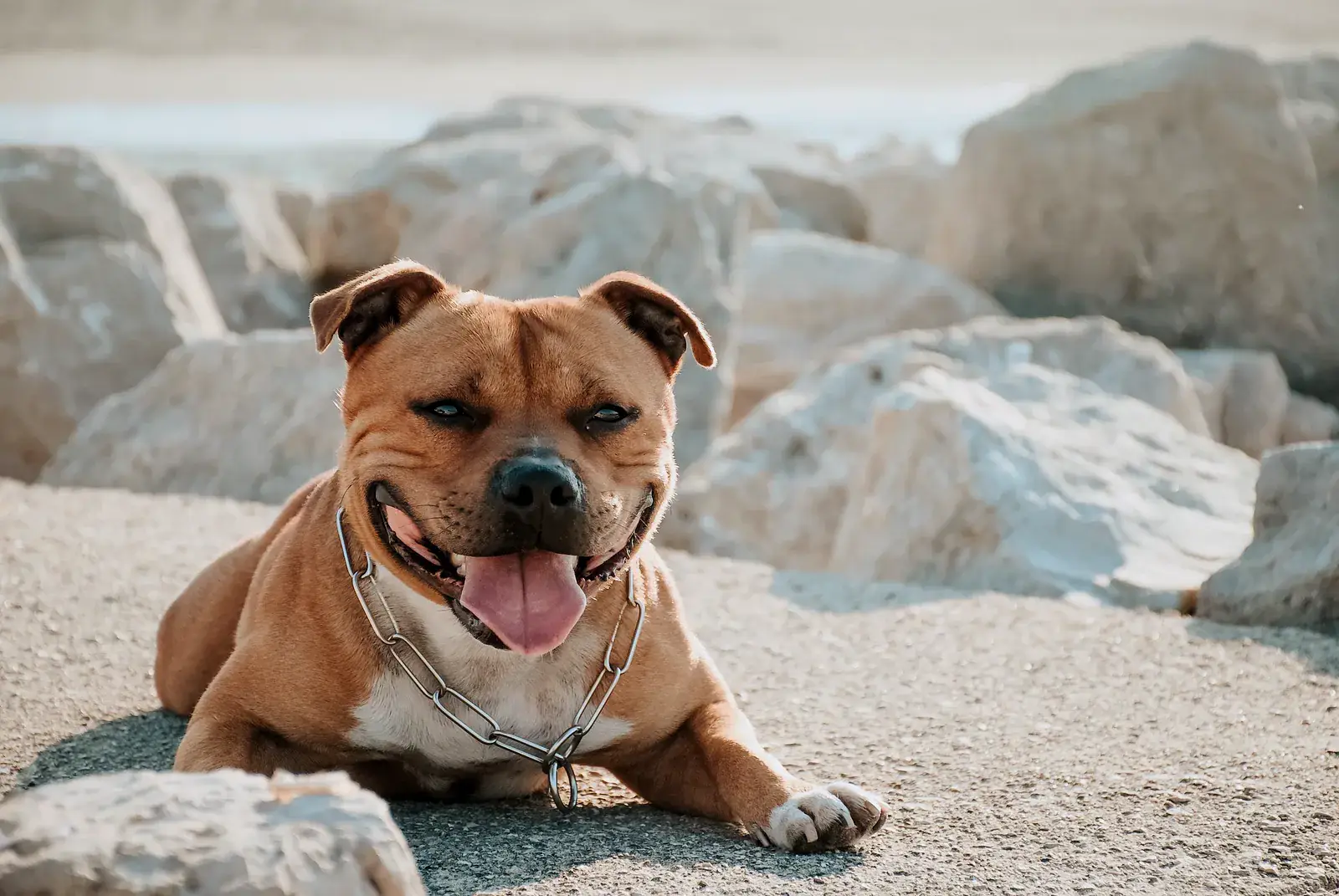
It grew out of the bull-and-terrier dogs of the 1800s, which were bred for the pit. Those dogs were later kept as working-class companions, and the Kennel Club recognised the breed in 1935. Today the Staffy is one of the most common dogs in the UK, known for its love of people, its strength and its stubborn streak. It suits owners who want an affectionate, energetic dog and will train it, exercise it daily and manage it carefully around other dogs. The Kennel Club gives a life span of 12 to 14 years.
Staffordshire Bull Terrier quick facts
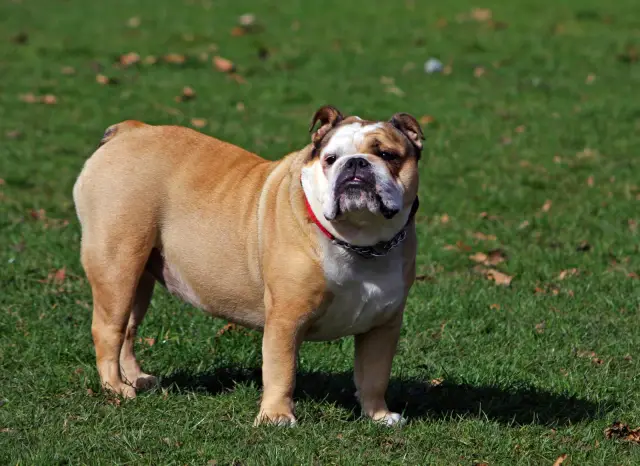 Related breedBulldog1835 to 1875 · United KingdomIndustrial Revolution
- Closest DNA relatives
- Miniature Bull Terrier, Bull Terrier, Glen of Imaal Terrier, American Staffordshire Terrier
- Country of origin
- United Kingdom (Black Country, Staffordshire and West Midlands, England)
- Period of development
- Early to mid 1800s from bull-and-terrier crosses; breed type fixed in the early 1900s; Kennel Club recognition 1935
- Original job
- Pit fighting and baiting (history); later a companion and ratter
- Type
- Terrier ( Group 3, Terriers, standard no. 76; Terrier Group; UK Kennel Club Terrier Group)
- Height
- 36 to 41 cm (Kennel Club and FCI); 14 to 16 in (AKC)
- Weight
- Dogs 13 to 17 kg, bitches 11 to 15.4 kg (Kennel Club)
- Coat
- Short, smooth, close
- Colour
- Red, fawn, white, black, blue, brindle, or any of these with white
- Life span
- Kennel Club: 12 to 14 years. Breed sources: 12 to 14 years
- Exercise
- Daily; about an hour or more is typical advice from UK clubs
- DNA family
- European Mastiff family (Parker et al. 2017)
- Ancestors
- Bull-and-terrier crosses; Old English Bulldog
Drawn to scale in real centimetres. Its back reaches about 39 cm, just below your knee; its head about 49 cm, your knee.
Where it sits in the tree
Industrial Revolution · 1800 to 1849
Name and origin
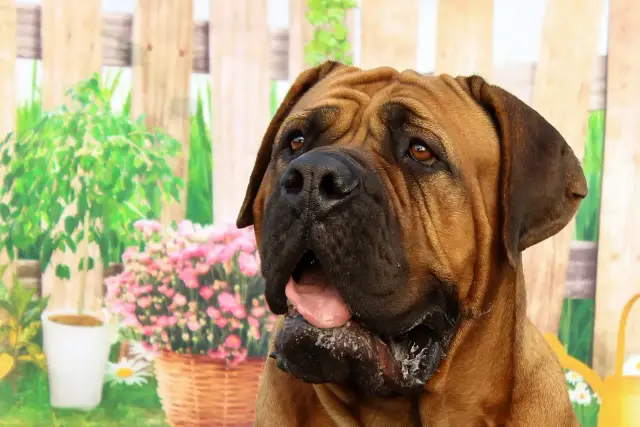 Related breedDogue de Bordeaux1300 to 1896 · FranceLate Middle Ages
The name points to Staffordshire, the English county at the heart of the breed's early story, and to the bull-and-terrier cross behind it: a bulldog for strength and tenacity, a terrier for speed and quickness. In everyday speech the breed is the Staffy, Staffie or Stafford. It is not the same breed as the American Staffordshire Terrier, which was developed in the United States from related stock and is registered separately.
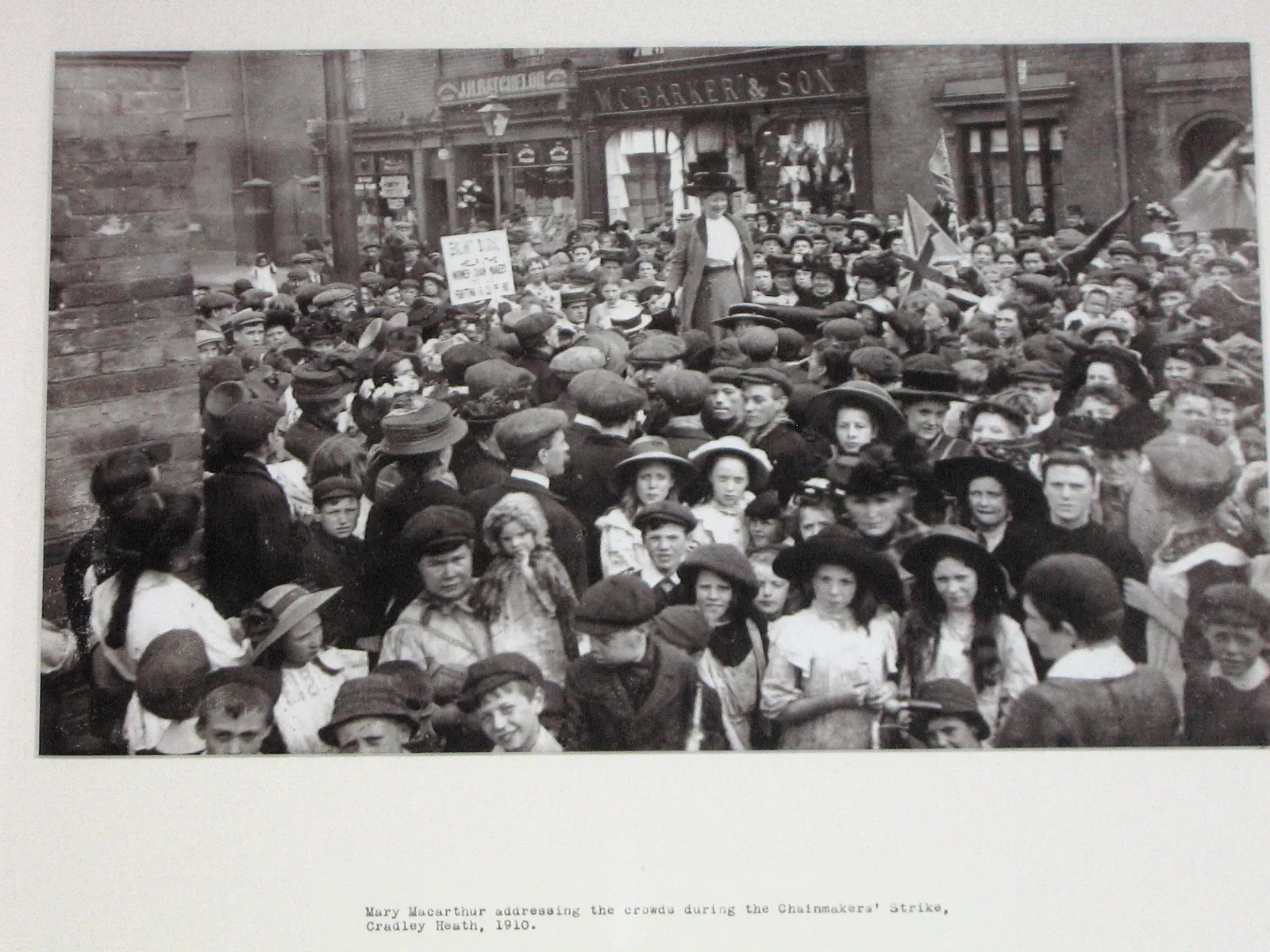
The breed's home is the Black Country, a region of coal pits, forges and chain and nail workshops west of Birmingham. Towns such as Cradley Heath, Dudley and Wednesbury appear again and again in the breed's history. Several sources describe early Staffords as the dogs of miners and metalworkers.
 Save

History
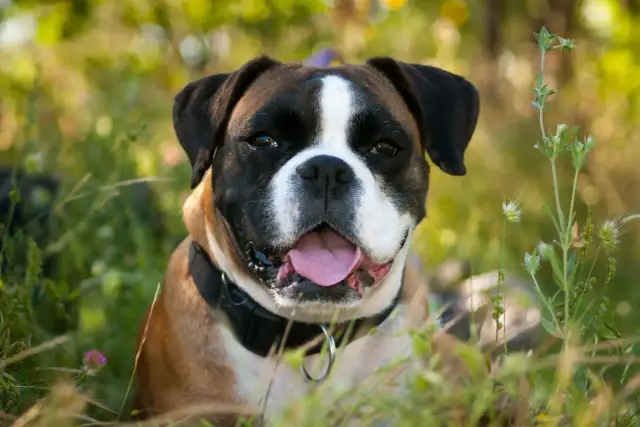 Same eraBoxer1880 to 1904 · GermanyVictorian Breed Boom
From bull-baiting to the pit
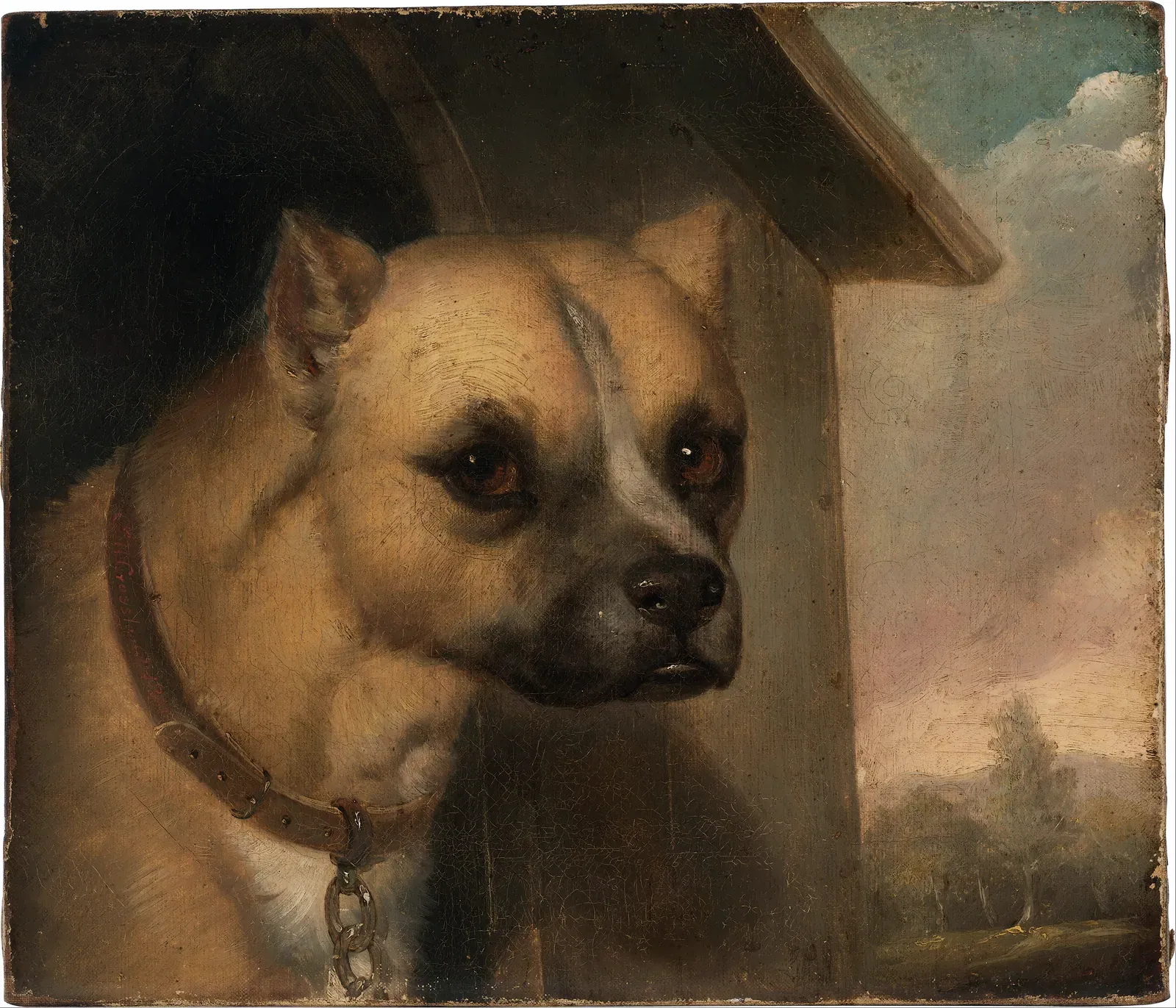
The Staffordshire Bull Terrier descends from the "bull and terrier" dogs of the early 1800s. These came from crossing the Old English Bulldog, a heavy, short-faced dog used in bull-baiting, with local terriers. The aim was a dog with the bulldog's courage and grip and the terrier's agility. Parker et al. (2017) place the modern Staffy in the European Mastiff DNA family, alongside bulldog-type breeds, which fits that story.
Bull-baiting and bear-baiting were banned in Britain by the Cruelty to Animals Act of 1835. Organised dog fighting then moved indoors and underground, and the bull-and-terrier dogs were bred for it. This is a plain part of the breed's history, and it explains a great deal about the dog's build, drive and reputation. Pit dogs were lighter than the old bulldogs, so that they could move quickly and fight over a longer time. Dog fighting was made illegal again in later laws, including the Cruelty to Animals Act of 1849 and the Protection of Animals Act of 1911, but it did not vanish at once. It continued in secret in industrial areas for decades. It is a crime in the UK today.
Dogs from the Black Country were also kept as pets, as household ratters and as companions for working families. Sources on the breed describe them as inexpensive, tough dogs that were part of working-class life in the region.
 Save
Shaping a breed
Through the late 1800s and early 1900s, the type was refined from "pit dog" to a recognisable breed. In the same period James Hinks of Birmingham was developing the white Bull Terrier from related crosses, which drew attention to the bull-and-terrier family. The Black Country dogs stayed smaller and stockier than the Bull Terrier, and were generally bred for working ability rather than show points.
A dog named Gentleman Jim, owned by the breeder Joseph Dunn, is often named in breed histories as an influential early example of the type. Breed accounts say his build helped shape the first written standard. This comes from breed club writing and related accounts rather than from Kennel Club archives, so treat the details as traditional.
Kennel Club recognition in 1935
Breeders in the Black Country wanted the dogs recognised as a pedigree breed. Fanciers gathered in Cradley Heath around 1934 and formed a breed club, and, according to breed accounts, the Kennel Club recognised the Staffordshire Bull Terrier on 25 May 1935. The year 1935 is given by several sources. The specific date and the names of the organisers come from breed club histories.
Recognition took some time to achieve because of the breed's fighting past. Showing the dogs and writing a first helped establish the Staffy as a show and companion breed. The Kennel Club registered the first dogs and the breed gained its own club.
What is the Old English Staffordshire Terrier?
The atlas has no separate breed called the "Old English Staffordshire Terrier". The name points to the older form of the Staffordshire Bull Terrier: the Black Country dog before the breed got its modern name.
Before 1935 these dogs had no fixed name. Owners and writers called them bull and terriers, pit dogs, or simply Staffordshire terriers, after the county most of them came from. The dog behind all of these names is the same one: the Black Country fighting and ratting dog that became today's Staffy.
The modern name settled in 1935. "Bull Terrier" already belonged to James Hinks's white show breed, so the Black Country fanciers registered their dogs as the Staffordshire Bull Terrier. In the United States, dogs from the same stock were registered by the American Kennel Club as the "Staffordshire Terrier" from 1936. That breed was renamed the American Staffordshire Terrier in 1972, to tell it apart from the English Staffy, which the AKC recognised in 1974.
Spread abroad
The breed went to the United States, where the American Kennel Club recognised it in 1974 (some sources say 1975 or 1976). It is in the Terrier Group there. The FCI lists it as a Group 3 terrier, standard no. 76, with Great Britain as the country of origin.
Relatives and DNA
 Same familySoft-coated Wheaten Terrier1700 to 1937 · IrelandEarly Modern Era
The Parker et al. (2017) study of 161 breeds, "Genomic analyses reveal the influence of geographic origin, migration, and hybridization on modern dog breed development" (Cell Reports), places the Staffordshire Bull Terrier in the European Mastiff family. In this article, "family" means that DNA , not a kennel club group.
The data from that study gives the breeds with which the Staffy shares the most DNA segments, in ():
The pattern fits the history. The closest relatives are the bull-and-terrier breeds. The bulldog-type breeds follow. The breed's roots in the European Mastiff family come through the Old English Bulldog and the mastiffs. Breed histories list the bull-and-terrier and the Old English Bulldog as ancestors and the American Pit Bull Terrier as a sibling breed.
A shared ancestry does not make breeds identical. The Staffy, the American Staffordshire Terrier and the American Pit Bull Terrier are three separate breeds with separate registries and standards.
 Save
 Save
Sister breeds · 3
- American Pit Bull Terrier1850 to 1898
- Bull Terrier1850 to 1888
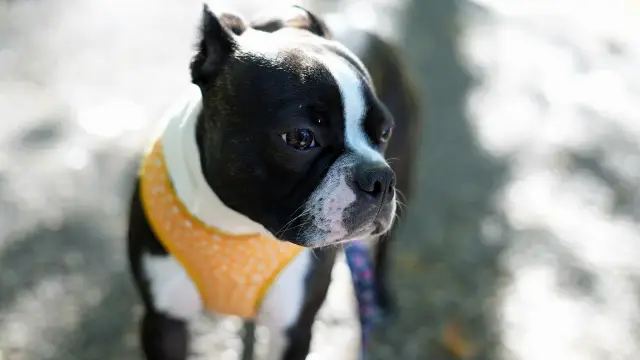
- Boston Terrier1870 to 1893
- Miniature Bull Terrier46.2 Mb 1.9%
- Bull Terrier39.6 Mb 1.7%
- Glen of Imaal Terrier30.6 Mb 1.3%
- American Staffordshire Terrier25.5 Mb 1.1%
- Boston Terrier19.8 Mb 0.8%
- French Bulldog19.6 Mb 0.8%
- Bulldog19.1 Mb 0.8%
- Parson Russell Terrier11.7 Mb 0.5%
- Dogue de Bordeaux11.3 Mb 0.5%
- Boxer11.1 Mb 0.5%
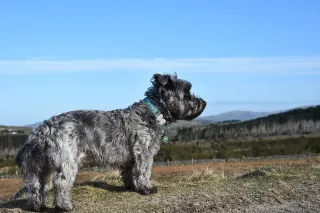
- Soft-coated Wheaten Terrier9.8 Mb 0.4%
Source: Parker et al. 2017. Percent of the whole genome.
| Breed | (Mb) |
|---|---|
| Miniature Bull Terrier | 46.2 |
| Bull Terrier | 39.6 |
| Glen of Imaal Terrier | 30.6 |
| American Staffordshire Terrier | 25.5 |
| Boston Terrier | 19.8 |
| French Bulldog | 19.6 |
| Bulldog | 19.1 |
Source: Parker et al. 2017, Cell Reports, shared haplotypes between 161 breeds (1,346 dogs).

The breed standard
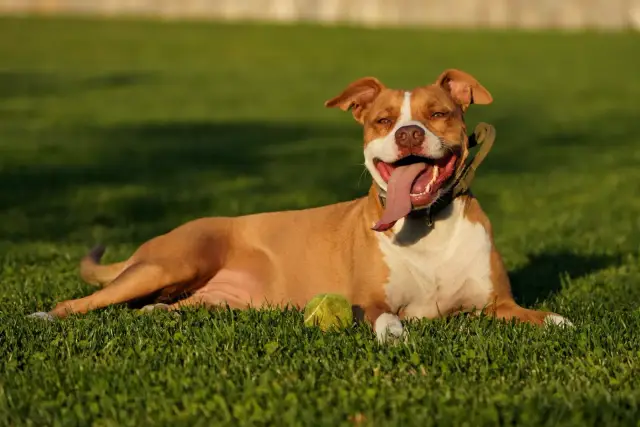
 Looks relatedAmerican Bulldog1700 to 1980 · United StatesEarly Modern Era
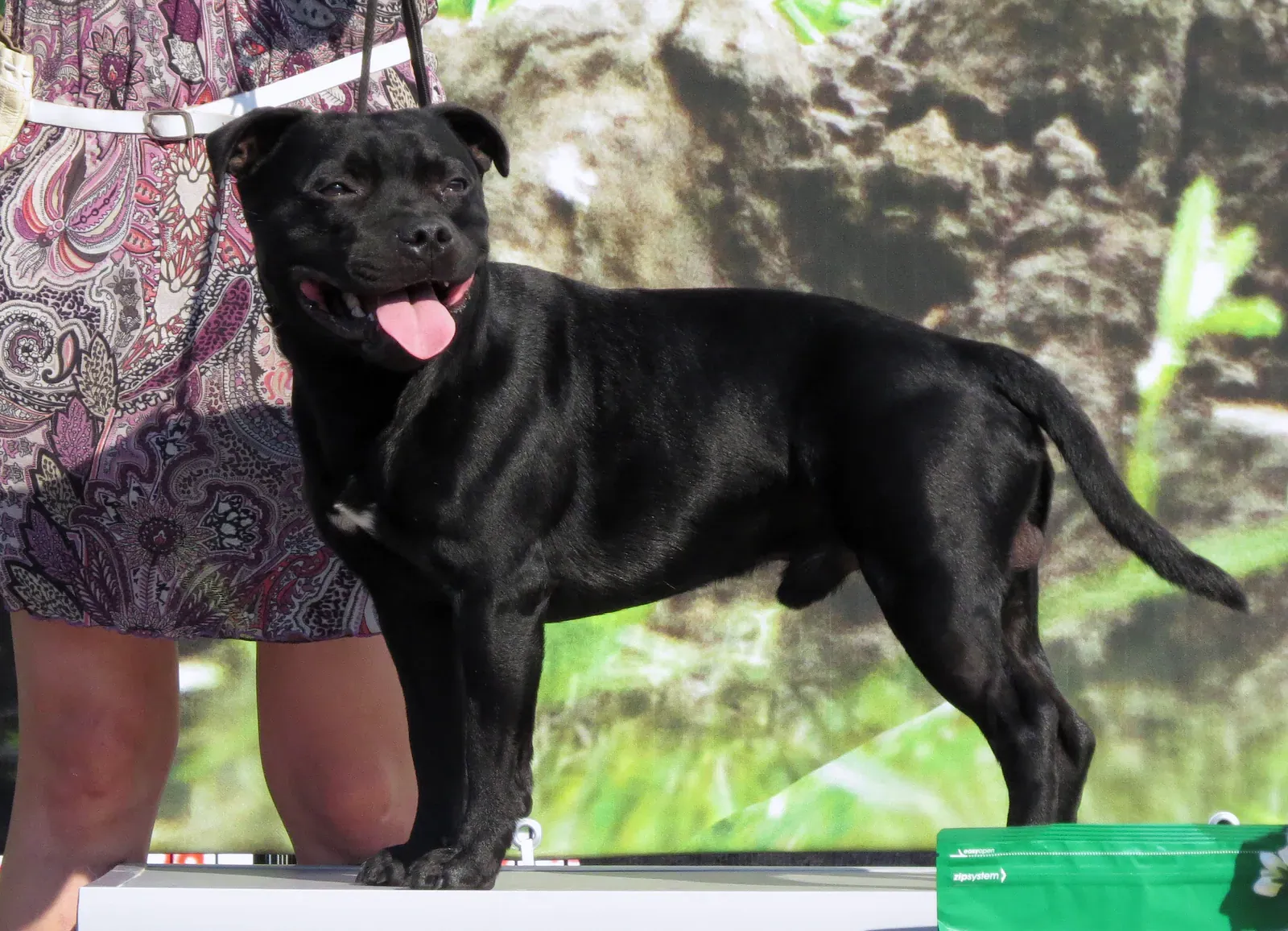
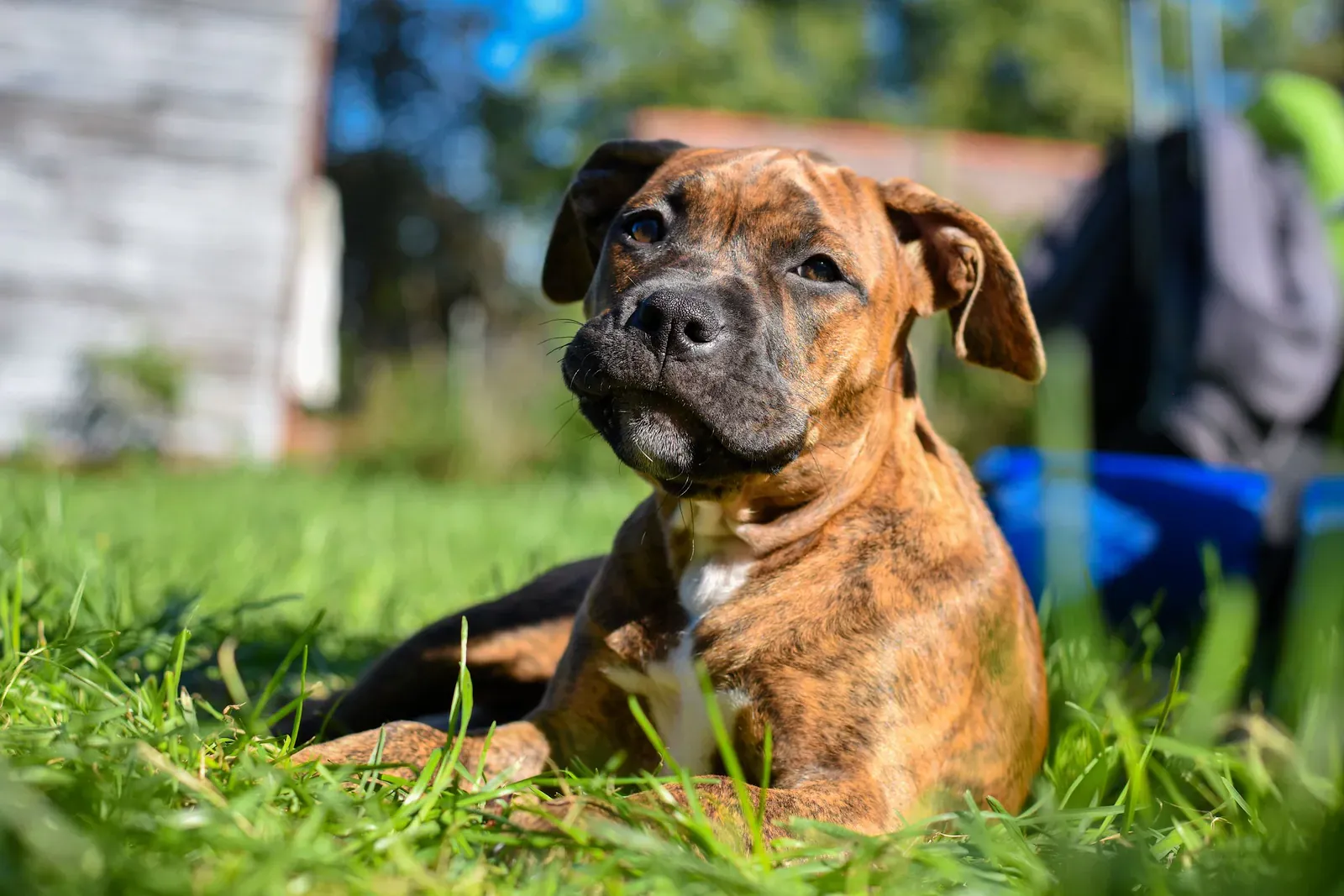
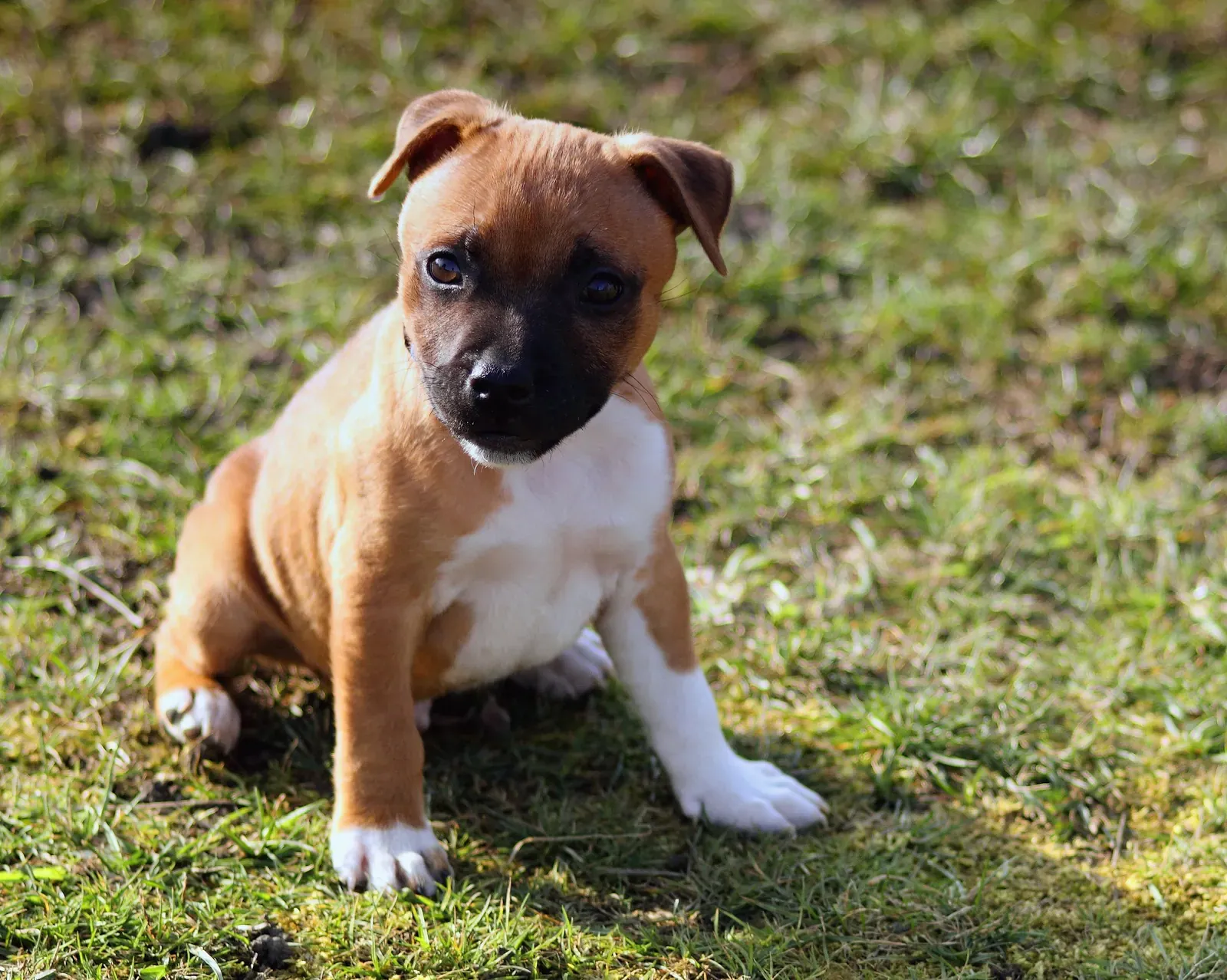
A breed standard is the written ideal for a breed that kennel clubs judge dogs against. The Kennel Club, FCI and AKC standards for the Staffy agree closely on size and look. The FCI standard (no. 76) is based on the British one.
| Trait | What the standards say |
|---|---|
| Height | 36 to 41 cm at the withers, related to weight (Kennel Club, FCI); 14 to 16 in (AKC) |
| Weight, dogs | 13 to 17 kg (Kennel Club, FCI); 28 to 38 lb (AKC) |
| Weight, bitches | 11 to 15.4 kg (Kennel Club, FCI); 24 to 34 lb (AKC) |
| Coat | Smooth, short and close to the skin (Kennel Club, AKC) |
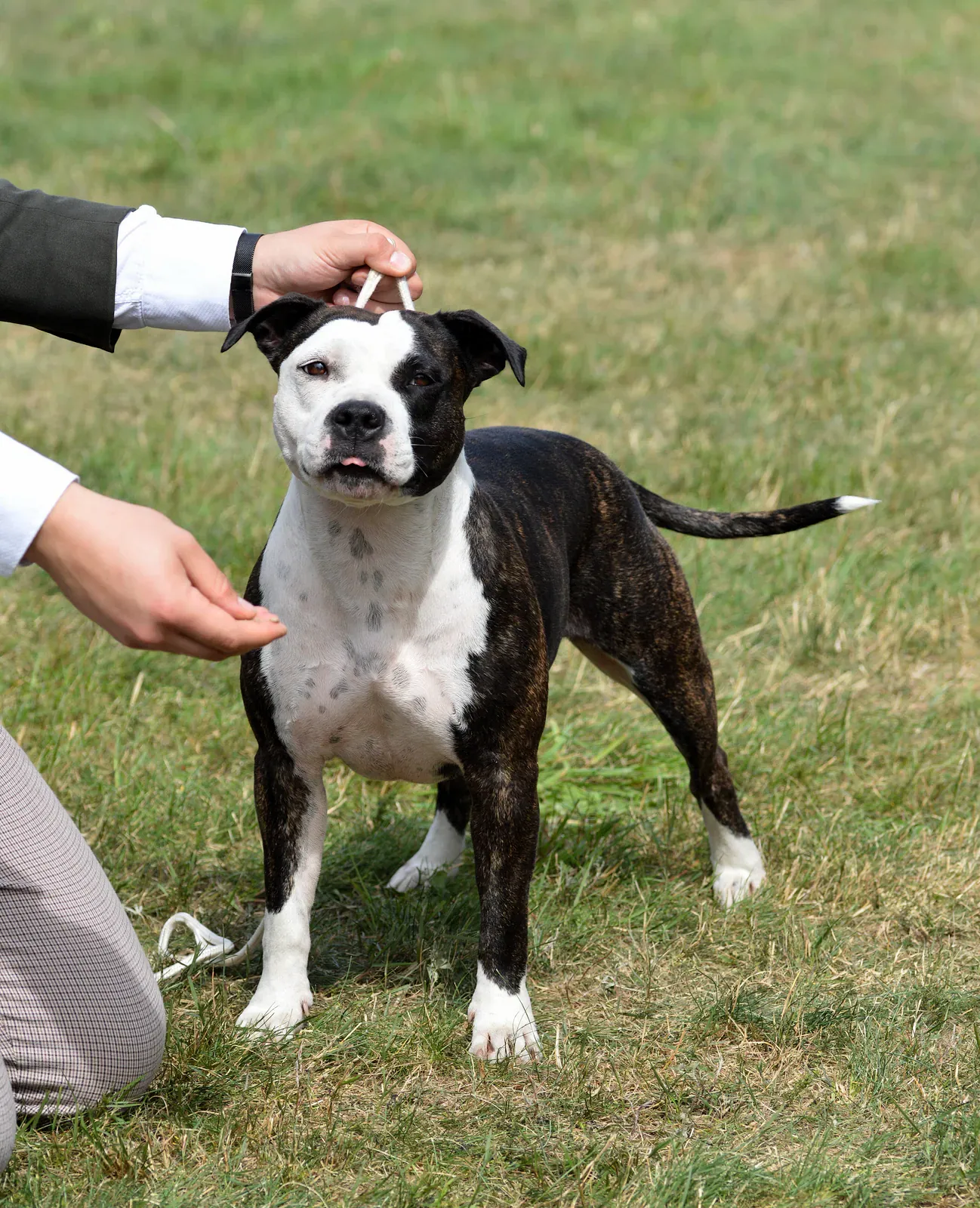
| Colour | Red, fawn, white, black or blue, or any of these with white; any shade of brindle, or brindle with white (Kennel Club, AKC) |
| Head | Short, deep through, broad skull; distinct stop; short foreface; black nose (Kennel Club) |
| Ears | Rose or half-pricked, not large or heavy (Kennel Club) |
| Build | Muscular, active, agile; wide front; well-sprung ribs (Kennel Club) |
The Kennel Club notes that the weights are a guide, so an individual dog may be larger or smaller. The standards describe the temperament as bold, fearless and totally reliable with children, a line that is quoted often and is discussed in the nanny dog section below.
Colours. Black and tan and liver are listed as undesirable in the Kennel Club standard; check the current wording before showing a dog. Blue and white colours are in the standard, and brindle is the common colour in many UK pet Staffies.
Temperament
 Related breedAmerican Bully1980 to 2004 · United StatesModern Era
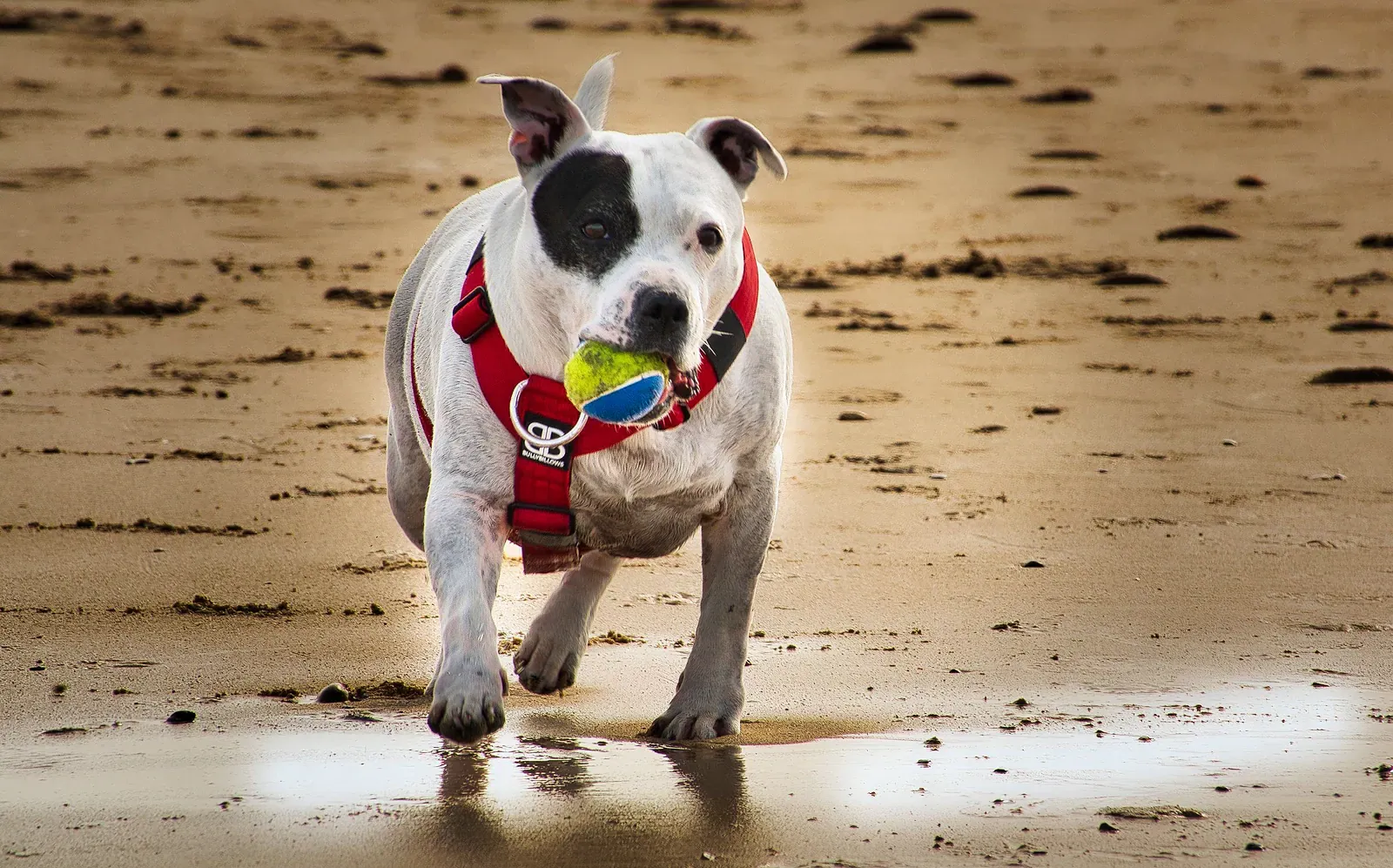
Breed clubs and the Kennel Club describe the Staffy as affectionate, brave, clever and highly attached to people. The Kennel Club standard calls the dog bold, fearless and totally reliable with people, and it names its great affection for children. These are the traits that fans of the breed describe in daily life: a dog that wants to be on the sofa, close to its family, and joins in with any game.
Staffies are also strong, energetic and often determined. Many are eager to please, but they can also be stubborn, and they can pull hard on the lead. They tend to be playful well into adulthood.
Behaviour with other dogs needs honest attention. Because the breed was developed for fighting other dogs, some Staffies are reactive or intolerant of other dogs, especially of the same sex, as they mature. Many live happily with other dogs, and early, careful socialisation helps, but breed club guidance warns owners to keep a dog on a lead where they cannot predict its reaction. This is a tendency, not a rule.
On people, the evidence is encouraging. In the 2020 VetCompass study of UK veterinary records by Pegram and colleagues, Staffordshire Bull Terriers did not have higher odds of being recorded with aggression than other dogs (odds ratio 1.09, 95% confidence interval 0.75 to 1.58, which is statistically no difference). That is a record of what owners told vets, not a behaviour test, but it fits what breed clubs report.
 Save
The nanny dog story
You will often read that Staffies were "nanny dogs" that Victorian families trusted to mind their children. This is a story, not a documented fact. No reliable Victorian record of the term has been found; one source traces the phrase's use for the Staffy to the 1970s, and another suggests it spread later as a way to counter the breed's bad image. The Kennel Club standard does praise the breed's reliability with children, and many Staffies are gentle with them. But a dog's behaviour depends on the individual dog, its early life and its training. No dog of any breed should be left alone with a small child.

Training and daily life
 Related breedAmerican Pit Bull Terrier1850 to 1898 · United StatesVictorian Breed Boom
Staffies learn quickly and respond best to reward-based, consistent training with short sessions. They are people-focused, so isolation and boredom can lead to chewing and digging. Their strength means that lead manners are worth training from puppyhood, and a well-fitted collar or chest strap helps while the habit builds.
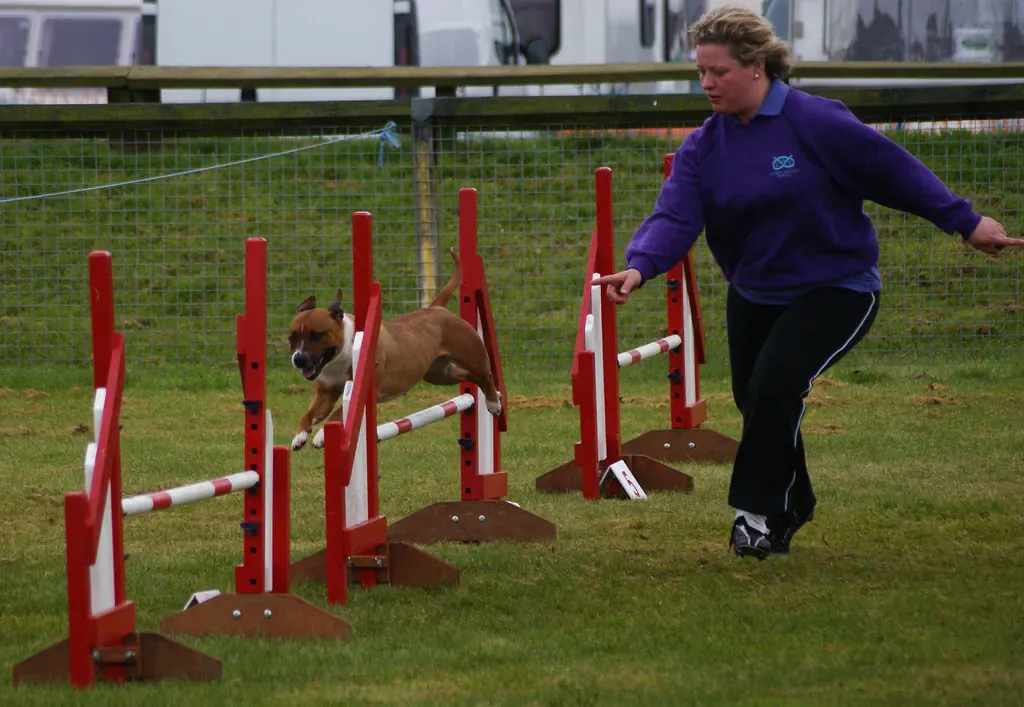
Common training priorities are recall, a calm greeting for visitors and other dogs, and learning to settle. Many Staffies are good at agility, flyball and obedience, which give the energy and the brain something to do.
 Save
Health
 Related breedBoerboel1650 to 1983 · South AfricaEarly Modern Era
Most Staffordshire Bull Terriers live long, healthy lives. The breed is a sturdy type with no extreme face or body shape, and the 2020 VetCompass study found no evidence that Staffies have more health problems overall than other dogs. This section covers what breeders screen for and what owners can watch for.
What the big study found. Pegram et al. (2020, Canine Medicine and Genetics) compared 1,304 Staffordshire Bull Terriers with 21,029 other dogs in UK vet records. The Staffies had higher odds of 4 of 36 common disorders, lower odds of 5, and no difference for 27. The ones with higher odds were seizure disorder (about twice the odds), atopic dermatitis (about 1.9 times), skin masses (about 1.8 times) and stiffness (about 1.8 times). Lower odds were found for conditions such as patellar luxation, retained baby teeth, heart murmur, dental disease and anal sac impaction.
| Condition | What it is | How common | What helps |
|---|---|---|---|
| Hereditary cataract (HC-HSF4) | Inherited cloudiness of the lens that can start in young dogs and affect sight | A French source reports about 1 in 14 dogs as (about 7%); no UK breed-wide figure found | DNA test for HC-HSF4; eye scheme examination; breed carriers only to clear dogs |
| L-2-hydroxyglutaric aciduria (L-2-HGA) | Inherited metabolic disease that affects the brain; signs include seizures, tremors and an unsteady gait, usually from 6 months to 1 year | A commercial lab reports about 1 in 9 carriers (10.8% of 130 UK dogs; 11.4% of 131 in Finland); frequency in the whole population is unknown | DNA test; carriers can be bred safely to clear dogs |
| Seizure disorder | Repeated fits from various causes | Seen more often than in other dogs (about twice the odds, Pegram 2020) | Vet work-up; ask whether L-2-HGA was tested |
| Atopic dermatitis | Allergic skin disease with itch | Seen more often than in other dogs (about 1.9 times the odds, Pegram 2020) | Vet-led allergy management |
| Skin lumps | Mostly benign masses | Seen more often than in other dogs (about 1.8 times the odds, Pegram 2020) | Have any new lump checked |
| Elbow joint development problem | Uncommon in the breed; the Kennel Club lists elbow scoring as a recommended test | Elbow scheme scoring of breeding dogs | |
| Overweight | Extra body fat that stresses joints | Common in many pet dogs; no published breed figure | Measured meals, regular exercise |
Both DNA tests are simple. The two named tests are hereditary cataract (HC-HSF4) and L-2-HGA. The Kennel Club lists both for the breed, and the breed clubs ask breeders to use them. Both conditions are , which means a dog must inherit one copy of the changed gene from each parent to be affected. A carrier looks normal. Two carriers can produce affected puppies (25% of a litter on average), but a carrier mated to a clear dog produces no affected pups. This is why test results on both parents matter.
The L-2-HGA test. The mutation was identified in the Staffordshire Bull Terrier in the early 2000s: Abramson and colleagues described the disease in affected Staffies in the UK in 2003, and Penderis and colleagues (2007) reported the gene change in the L2HGDH gene. The Animal Health Trust developed the test. It is one of the best-known examples of a DNA test helping a breed reduce an inherited disease.
The cataract test. The hereditary cataract test, also developed by the Animal Health Trust, finds a change in the HSF4 gene, described by Mellersh and colleagues. The same gene change has been reported in other bull breeds, such as the Boston Terrier and the French Bulldog. Staffy puppies are sometimes sold as "clear by parentage", which means both parents tested clear and the pup cannot be affected.
Lifespan. The Kennel Club gives 12 to 14 years. A secondary report of a VetCompass longevity study (O'Neill et al., 2022) gave 11.3 years for the breed, close to the all-dog average of 11.2, though that figure comes from a secondary report of the study.

Staffordshire Bull Terriers and the law in the UK
 Related breedBullmastiff1860 to 1924 · United KingdomVictorian Breed Boom
The Staffordshire Bull Terrier is not a banned type in the UK. The Dangerous Dogs Act 1991 prohibits four types: the Pit Bull Terrier type, the Japanese Tosa, the Dogo Argentino and the Fila Brasileiro. The Staffy is a Kennel Club breed and is not listed. Other countries' lists are in banned dog breeds by country. Nor is it covered by the 2023 addition of the XL Bully type to the list in England and Wales.
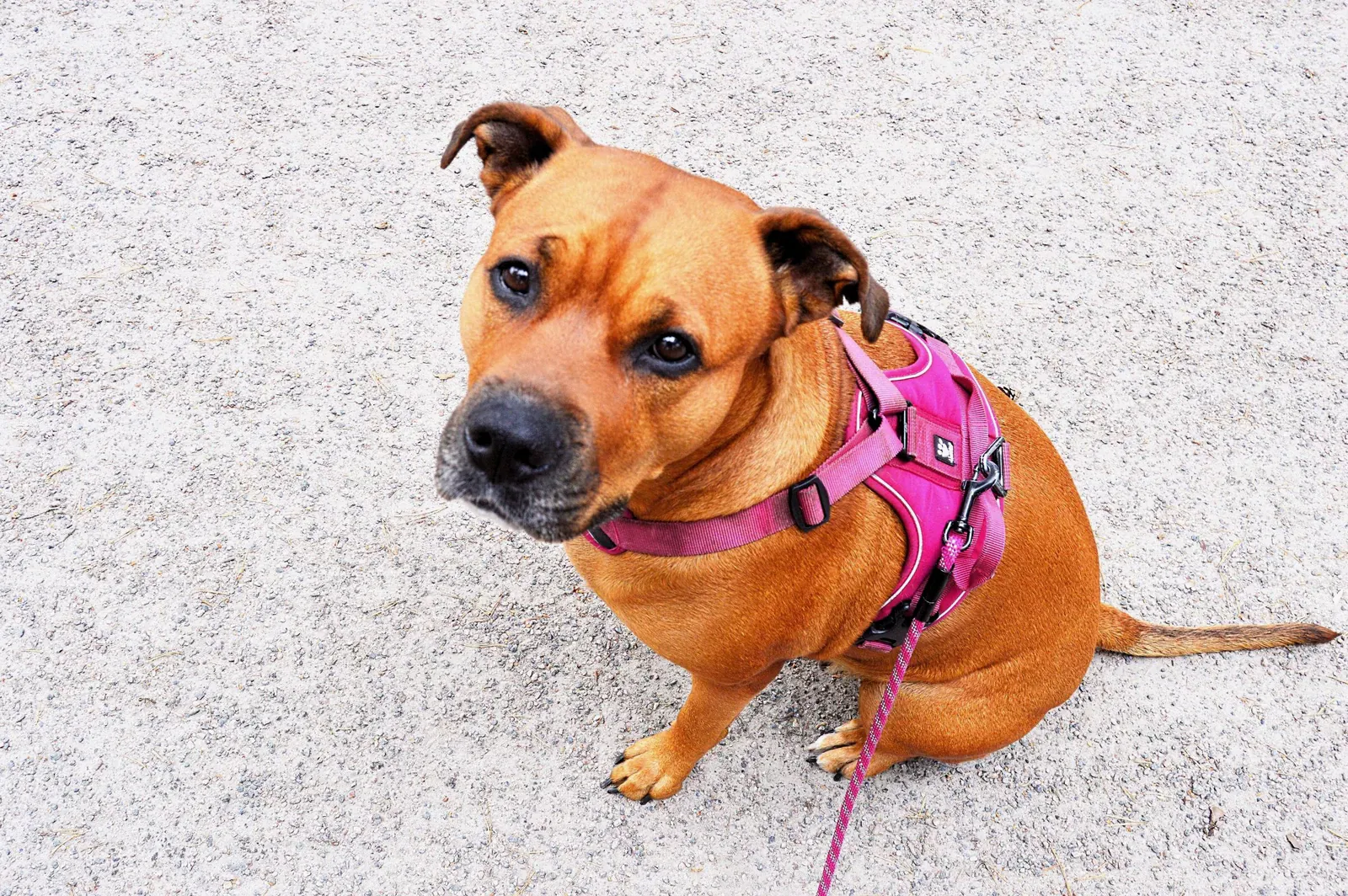
The law judges by a dog's physical type rather than by its name or registration. A dog that is an American Pit Bull Terrier type can be banned even if it is called something else. Staffies are sometimes mistaken for banned types, and a few owners have had to explain their dog to police or other officials. A Kennel Club registration and pedigree help. Anyone who is unsure about a particular dog should check the current official guidance from the government or a vet or legal adviser.
Some landlords and insurers apply their own rules to "bull breeds", so ask before you commit. The Kennel Club and breed clubs say the stigma has real welfare effects: reports from rescues, including a Scottish charity that reported a steep rise in Staffy abandonments over a decade, link that to the breed's reputation.
 Save
Popularity
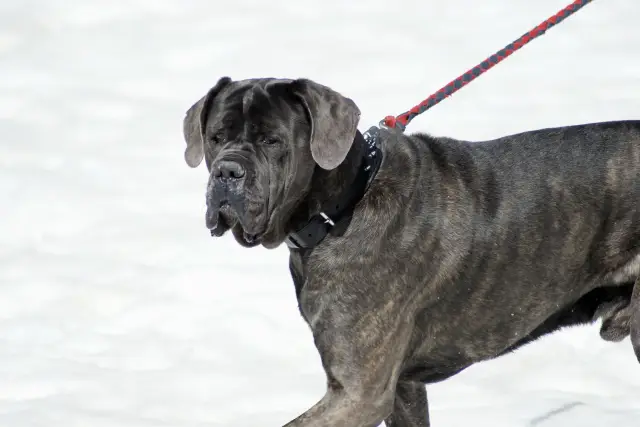 Related breedCane Corso1000 to 1996 · ItalyEarly Middle Ages
The Staffy is consistently among the UK's most registered terriers and most common dogs. Kennel Club statistics, as reported by newspapers, show roughly 6,300 registrations in 2023 and 5,375 in 2025, down in recent years. The registered numbers understate the real population, because many Staffies and Staffy crosses are not registered. The breed is also very common in UK rescue centres, which is one reason to consider an adult Staffy from a breed rescue.
Living with a Staffordshire Bull Terrier
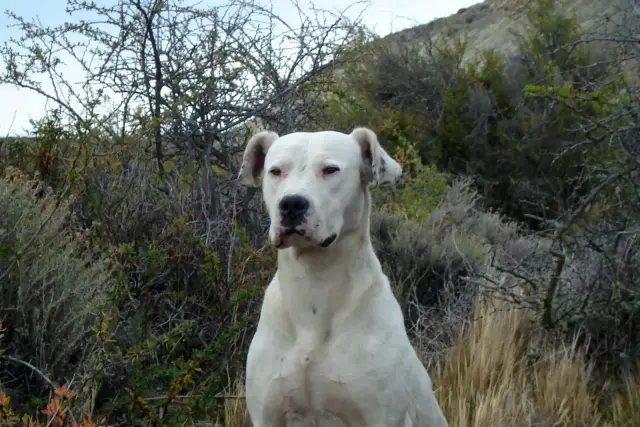 Related breedDogo Argentino1928 to 1973 · ArgentinaModern Era
| Daily reality | Rating | Why |
|---|---|---|
| Exercise per day | Medium to High | Strong, athletic terrier; about an hour or more of walks and play is typical advice |
| Training needs | Medium | Clever and eager but stubborn; reward-based training from puppyhood |
| Grooming | Low | Short smooth coat; weekly brushing is enough |
| Shedding | Medium | Short hair sheds lightly all year |
| Barking | Low to Medium | Not noted as a heavy barker; varies by dog |
| Time alone | Poor | Very people-bound; long hours alone can lead to destructive habits |
| Children | Good, with supervision | The standard praises its reliability with children; supervise every dog with every child |
| Other dogs | Varies | Fighting history; many are dog-selective, especially as adults; careful socialisation |
| Cats and small pets | Varies | Terrier chase instinct; depends on early exposure; evidence is thin |
| Flat living | Fair | Medium size, but needs real exercise outside |
| Heat tolerance | Fair | Short coat and a broad head; take care in hot weather |
| Cold tolerance | Fair | Short coat with little undercoat; a coat helps in winter |
| First-time owner fit | Fair | Affectionate and learns fast, but strong and needs consistent handling |
A great fit if
- You want a loyal, cheerful companion who wants to be with you much of the day.
- You can give an hour or more of daily exercise and training.
- You are happy to keep your dog on a lead around dogs you do not know.
- You are ready to enrol in a training class and keep training for the first two years.
Think twice if
- You want a dog that will meet every dog at the park off lead.
- You are out of the house for long hours, with no one to share the day.
- You live where a landlord or insurer excludes bull breeds and cannot find a way around this.
- You want a very quiet, low-energy dog.
Before you get one
- Health tests. Ask the breeder for the DNA results for hereditary cataract (HC-HSF4) and L-2-HGA, ideally for both parents, plus the eye scheme certificate and any elbow scores. Ask for the original certificates. Both tests are listed by the Kennel Club for the breed.
- Puppy or adult rescue. Staffy rescues are common and place many adults whose behaviour with children and dogs is already known. An adult can suit a first-time owner who wants a clear picture.
- First year. Plan for puppy classes, calm socialisation with a range of dogs and people, lead training, and a lean weight.
Similar breeds to consider
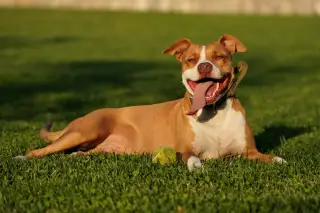
- American Staffordshire Terrier. A related, usually larger bull-and-terrier breed from the United States with similar affection and strength.
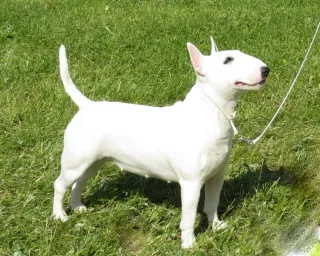
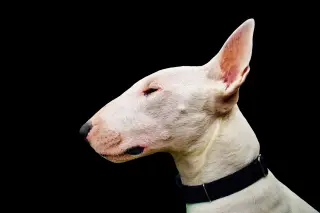
- Bull Terrier. A close DNA relative with a distinctive egg-shaped head and a comical, active nature.
- Boxer. Playful and loyal with a similar family-minded nature, but bigger and a different type of dog.
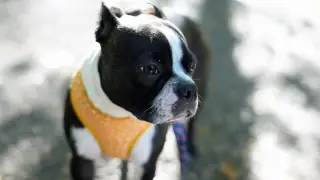
- Boston Terrier. A smaller companion with some shared bull-breed ancestry; its short face brings its own health needs.

Staffordshire Bull Terrier fun facts
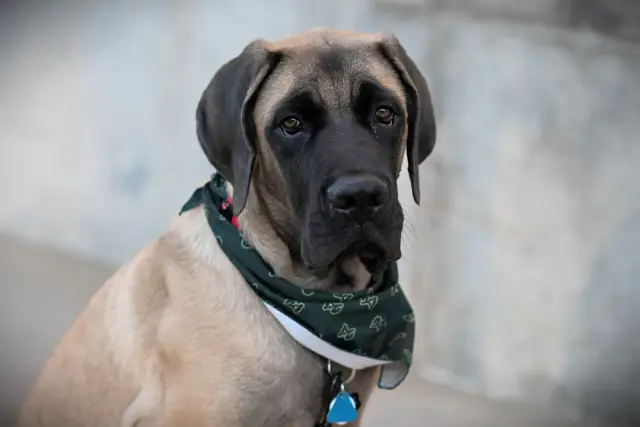 Related breedEnglish Mastiff1300 to 1880 · United KingdomLate Middle Ages
- The breed was recognised by the Kennel Club in 1935, and the American Kennel Club recognised it in 1974.
- A dog called Gentleman Jim is said in breed histories to have set the type for the first standard.
- The L-2-HGA disease was first described in Staffies in 2003, and a DNA test was made available within a few years.
- The Staffy and the Miniature Bull Terrier share more DNA (46.2 Mb in Parker et al., 2017) than any other breed in the atlas data.
Frequently asked questions
Are Staffordshire Bull Terriers good with children?
The Kennel Club standard describes the breed as reliable with children, and many Staffies are gentle family dogs. As with every breed, supervise all contact and teach children how to treat a dog.
Were Staffies really nanny dogs?
It is a myth, or at best an undocumented story. No Victorian record of the term is known, and the phrase seems to have become popular much later.
How big does a Staffordshire Bull Terrier get?
36 to 41 cm tall. Dogs weigh 13 to 17 kg and bitches 11 to 15.4 kg (Kennel Club).
How long do Staffordshire Bull Terriers live?
The Kennel Club gives 12 to 14 years. A secondary report of a UK study listed about 11.3 years.
What health tests should a Staffy breeder do?
The DNA tests for hereditary cataract (HC-HSF4) and L-2-HGA, an eye examination, and elbow scoring (Kennel Club).
Is the Staffordshire Bull Terrier banned in the UK?
No. It is not one of the four types in the Dangerous Dogs Act 1991. The law goes by a dog's type, so some owners are asked to show their dog is a Staffy.
Read next
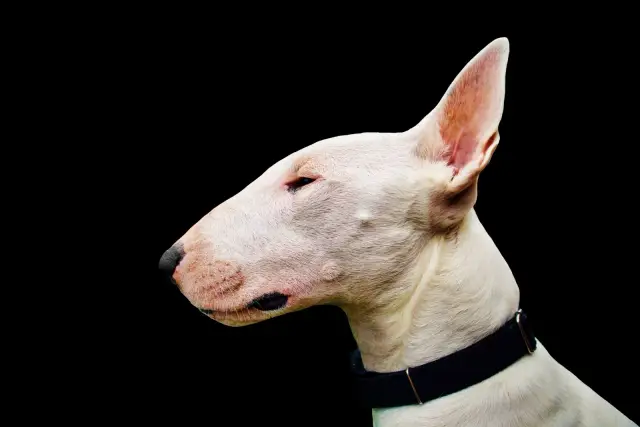 Closest DNABull Terrier39.6 Mb sharedSister breedAmerican Pit Bull Terrier1850 to 1898
 Adopt a dogDog Shelters in EuropeFind dog shelters in Europe, learn how shelters differ from country to country and why adopting a dog is a good option.
Sources (15)
- The Kennel Club (UK), Staffordshire Bull Terrier breed standard and breed information pages (health testing and exercise advice).
- American Kennel Club, Staffordshire Bull Terrier standard.
- Fédération Cynologique Internationale, Staffordshire Bull Terrier, standard no. 76.
- Pegram C. et al., "Staffordshire Bull Terriers in the UK: their disorder predispositions and protections", Canine Medicine and Genetics, 2020 (VetCompass, Royal Veterinary College).
- Teng K.T. et al., "Life tables of annual life expectancy and mortality for companion dogs in the United Kingdom", Scientific Reports, 2022 (VetCompass).
- Parker H.G. et al., "Genomic analyses reveal the influence of geographic origin, migration, and hybridization on modern dog breed development", Cell Reports, 2017.
- Penderis J. et al., L-2-hydroxyglutaric aciduria in the Staffordshire Bull Terrier, L2HGDH gene mutation, 2007.
- Abramson C.J. et al., first description of L-2-hydroxyglutaric aciduria in Staffordshire Bull Terriers, 2003.
- Mellersh C.S. et al., hereditary cataract and HSF4 in the Staffordshire Bull Terrier, Animal Health Trust.
- Animal Health Trust, owner guidance on hereditary cataract and L-2-HGA DNA tests.
- Pawprint Genetics, L-2-HGA test page (carrier percentages in UK and Finnish dogs; underlying study not named).
- Cruelty to Animals Act 1835, Cruelty to Animals Act 1849 and Protection of Animals Act 1911 (UK).
- Dangerous Dogs Act 1991 (UK), as amended.
- Edinburgh Dog and Cat Home, statement on Staffy abandonment (Scotsman report).
- Wikipedia, "Staffordshire Bull Terrier" (secondary; used for date cross-checks).