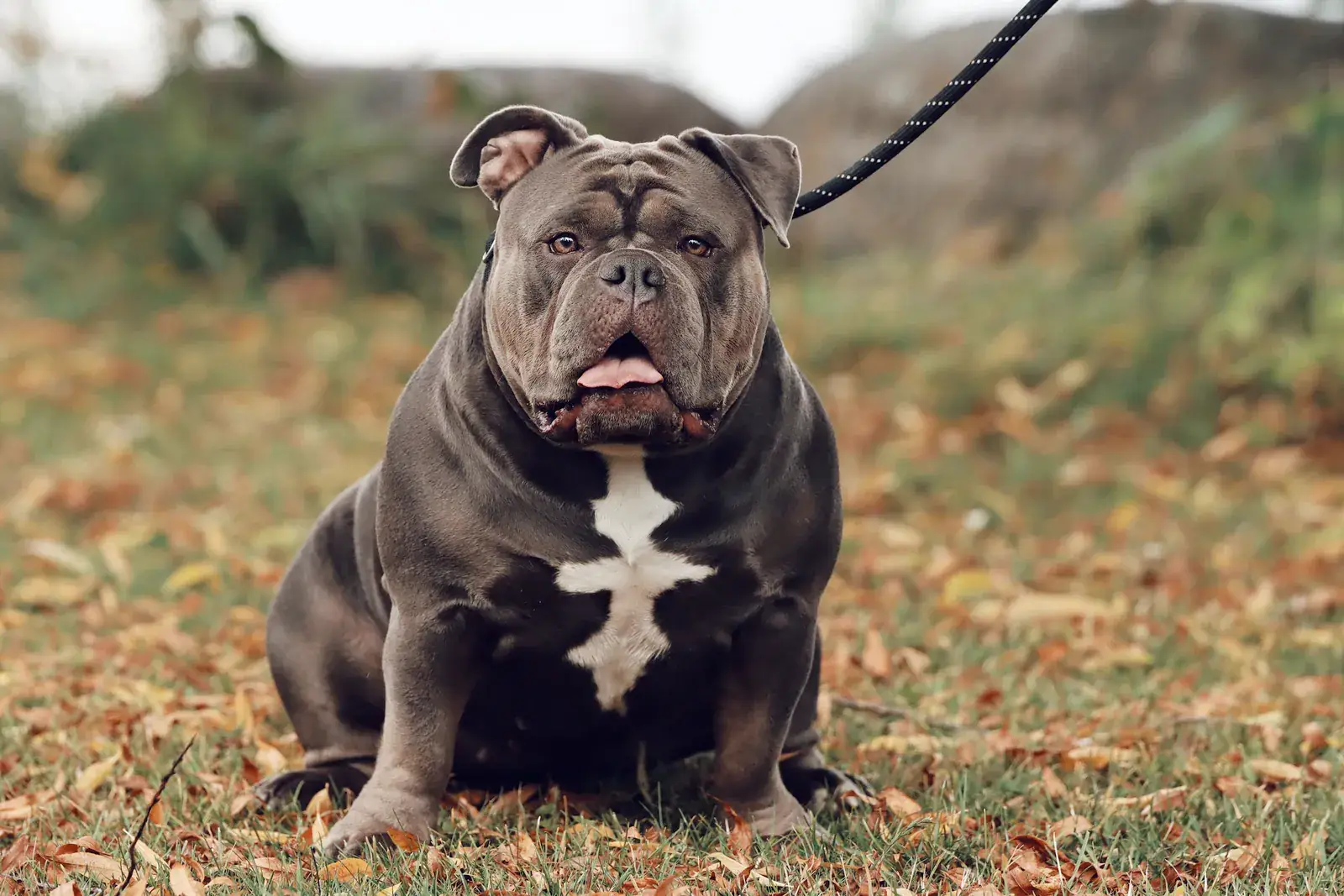
It was bred as a companion, not as a fighting dog, and its standard asks for a calm, people-friendly temperament. Breeders produce four varieties by height: Pocket, Standard, Classic and XL. The American Bully Kennel Club (ABKC) was set up for it in 2004, and the United Kennel Club (UKC) recognised it in 2013. Since 2023 the XL type has been prohibited in England and Wales and then in Scotland, which has made the breed one of the most debated dogs in Britain. The atlas data gives a life span of 10 to 13 years.
American Bully quick facts
 Related breedBoston Terrier1870 to 1893 · United StatesVictorian Breed Boom
- Country of origin
- United States
- Period of development
- 1980s to 2004 (atlas data); main development in the 1990s
- Foundation
- American Pit Bull Terrier and American Staffordshire Terrier lines; American Bulldog, English Bulldog and Olde English Bulldogge reported in some lines (UKC)
- Original job
- Companion dog; no working role
- Type
- Bull and fighting dog family; medium size
- Registries
- ABKC (2004), UKC (July 2013). Not recognised by the , the or the UK Kennel Club
- Varieties
- Pocket, Standard, Classic, XL (ABKC and UKC both describe these, with differences in detail)
- Height
- Pocket under 17 in, Standard 17 to 20 in, XL over 20 in for males (UKC)
- Life span
- 10 to 13 years (atlas data)
- DNA family
- European Mastiff (placed by inference with its relatives)
- Closest relatives
- American Pit Bull Terrier, American Staffordshire Terrier


Where it sits in the tree
Modern Era · 1914 to today



Name and origin
 Related breedBoxer1880 to 1904 · GermanyVictorian Breed Boom
"Bully" is a colloquial word for the bull-and-terrier family of dogs, short for "bull" breeds, and people use "bully breeds" to cover everything from the Bulldog to the Staffordshire Bull Terrier. When breeders in the 1990s began selecting for a heavier, wider, more muscular companion version of the pit bull type, the name stuck, and the "American" prefix marks the place where this particular type was created.
Not the same as other "bullies". The American Bully is not a Bulldog, a French Bulldog or an American Bulldog, though the last three are listed as breeds used in some lines. It also differs from the American Pit Bull Terrier, which is a lighter, leaner working-type terrier. The word "XL Bully" in the UK refers to the largest variety of the American Bully, and also to a legal type defined by the ban (see below).
The name has caused confusion in law and in the press. In Britain, "XL Bully" became the term for any large, heavily built bully-type dog, whether or not it was registered as an American Bully.

History
 Same eraBull Terrier1850 to 1888 · United KingdomVictorian Breed Boom
From pit bull lines to a companion type
The atlas data places the breed's development between about 1980 and 2004. Breeders working with American Pit Bull Terriers and American Staffordshire Terriers in California, Virginia and elsewhere began choosing for a wider chest, thicker bones, a blockier head and a calm manner, in place of the lean athletic build of the working APBT. Some added bulldog-type breeds, according to the UKC, to deepen the muscular look. The American Bully was an intentional departure: the aim was a stable, friendly companion that looked powerful.
Razor's Edge and other lines
Two kennel names are repeatedly mentioned in accounts of the breed's early years. Razor's Edge, started by David Wilson in the 1990s from American Staffordshire Terrier stock, is credited with popularising the heavy "bully style" with blue coats, a compact body and a large head. Gotti, a line associated with Richard Barajas, is the other. Both claims come mostly from breeder and encyclopedia accounts, and the exact lines used are disputed within the community, so treat the details as reported, not documented. What is clear is that a small number of kennels set the type that others copied.
 Save
Registries: ABKC 2004 and UKC 2013
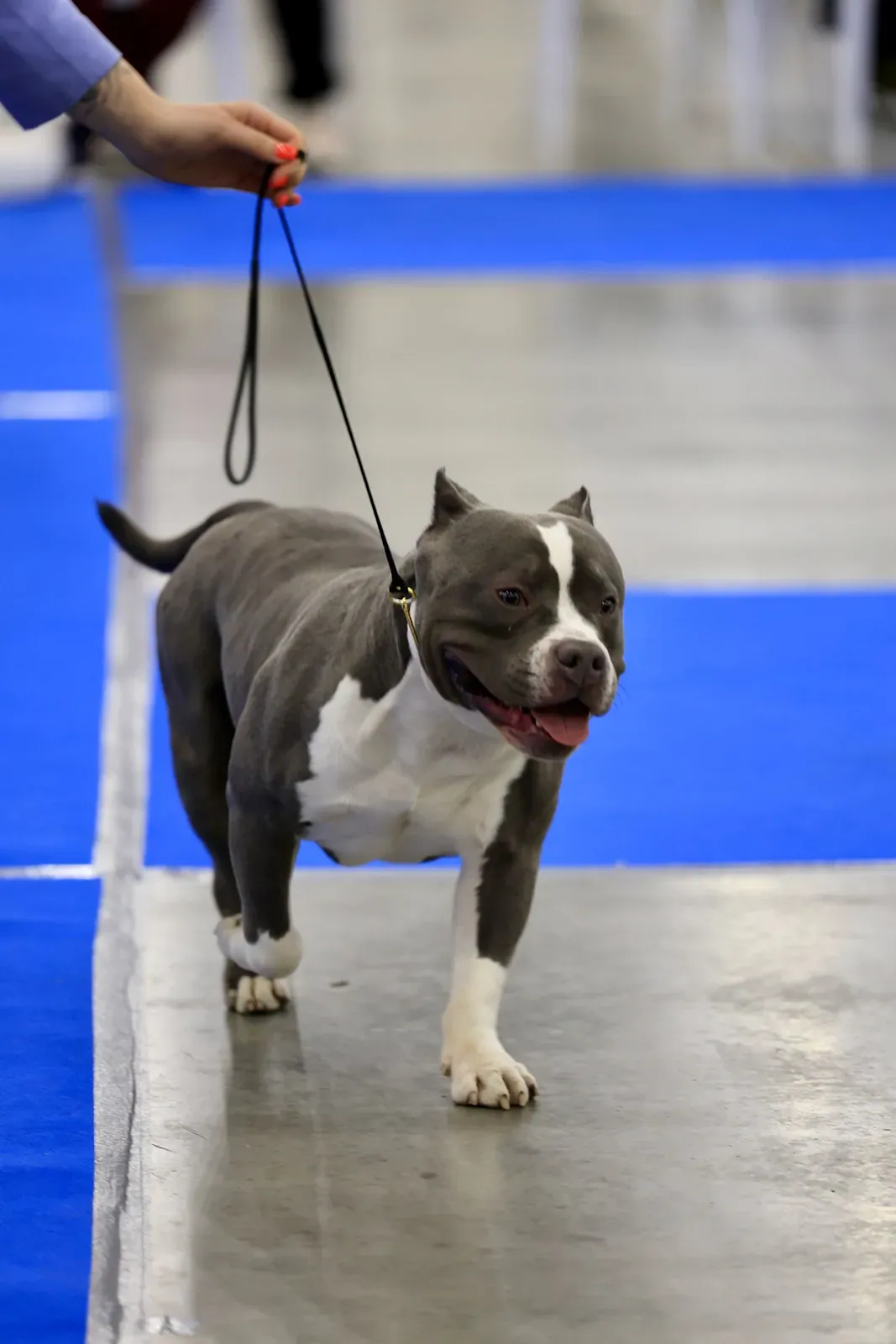
The American Bully Kennel Club was created in 2004 as a registry for the type. Early ABKC rules reportedly required dogs to trace to the founding lines, and later admitted others. The European Bully Kennel Club recognised the breed in 2008. The United Kennel Club recognised the American Bully on 15 July 2013, with its own written standard. The ABKC describes four varieties and the UKC describes the same range. Sources differ on exactly how many varieties each club recognises, so check the current standard.
None of the big all-breed clubs, the AKC, the FCI or the UK Kennel Club, recognise the American Bully. The UK Kennel Club does not register it.
Popularity and the rise of the XL
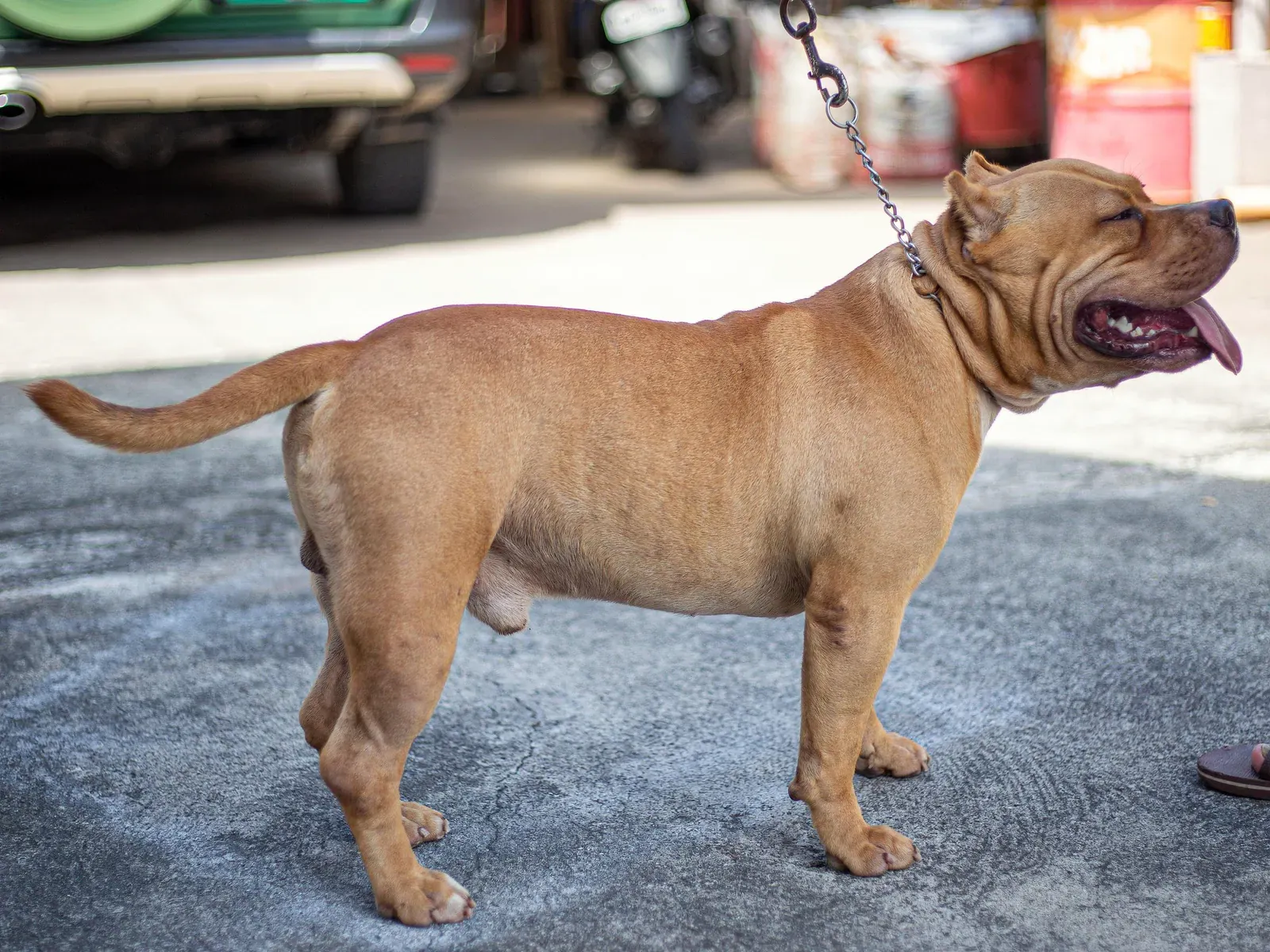
From the 2010s the American Bully became fashionable in the United States and then in Britain, driven by social media and a market for ever heavier, larger dogs. The XL variety, with males over 20 in (51 cm), became the most visible. Many dogs sold in the UK as "XL Bullies" were imported or bred by people with no connection to the registries. That mismatch between a registered breed, a market label and a legal definition is at the centre of the UK debate.
 Save

Relatives and DNA
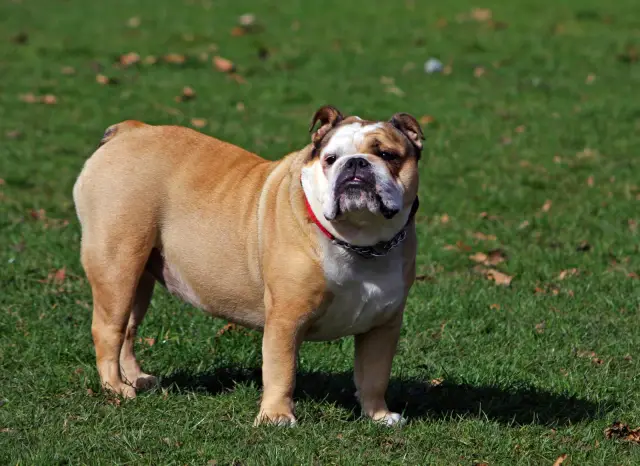 Same familyBulldog1835 to 1875 · United KingdomIndustrial Revolution
The American Bully is placed in the European Mastiff family in the atlas data. It was not sampled in the 2017 Parker et al. study, so the placement is inferred from its parent breeds, not measured.
Because the Bully was assembled from several bull-type breeds in the span of a few decades, individual dogs differ more than in an old, closed breed, and a pet with a "Bully" label may be of mixed ancestry.
Sister breeds · 1
- American Staffordshire Terrier1850 to 1936
| Relationship | Breed | Note |
|---|---|---|
| Foundation | American Pit Bull Terrier | Main foundation breed (atlas data, medium confidence) |
| Foundation | American Staffordshire Terrier | Sibling line; widely used in early Bully kennels |
| Reported additions | American Bulldog, Bulldog, Olde English Bulldogge | Named by the UKC as used for a muscular look |
| Deeper ancestors | Bull-and-terrier, Old English Bulldog, Bullmastiff-type stock | European Mastiff family |
The breed standard
 Looks relatedBullmastiff1860 to 1924 · United KingdomVictorian Breed Boom
A is the written ideal that a kennel club judges dogs against. The American Bully has standards from the ABKC and the UKC. The FCI, AKC and UK Kennel Club have none, so there is no column for them. Figures below come from secondary summaries of these standards and from the UKC's breed document, so check the current text of each club before relying on a number.
| Trait | What the standards say |
|---|---|
| UKC: males under 17 in and not less than 14 in (36 to 43 cm); females under 16 in and not less than 13 in (33 to 41 cm) | |
| Standard | UKC: males 17 to 20 in (43 to 51 cm); females 16 to 19 in (41 to 48 cm). ABKC: the same ranges |
| Classic | UKC: same height as Standard, with a lighter frame and less body mass. ABKC: same height range, lighter build |
| XL | UKC: males over 20 to 23 in (51 to 58 cm); females over 19 to 22 in (48 to 56 cm). ABKC (as reported): males 21 to 23 in, females 19 to 22 in |
| Weight | Neither club sets varieties by weight. Heights decide the variety |
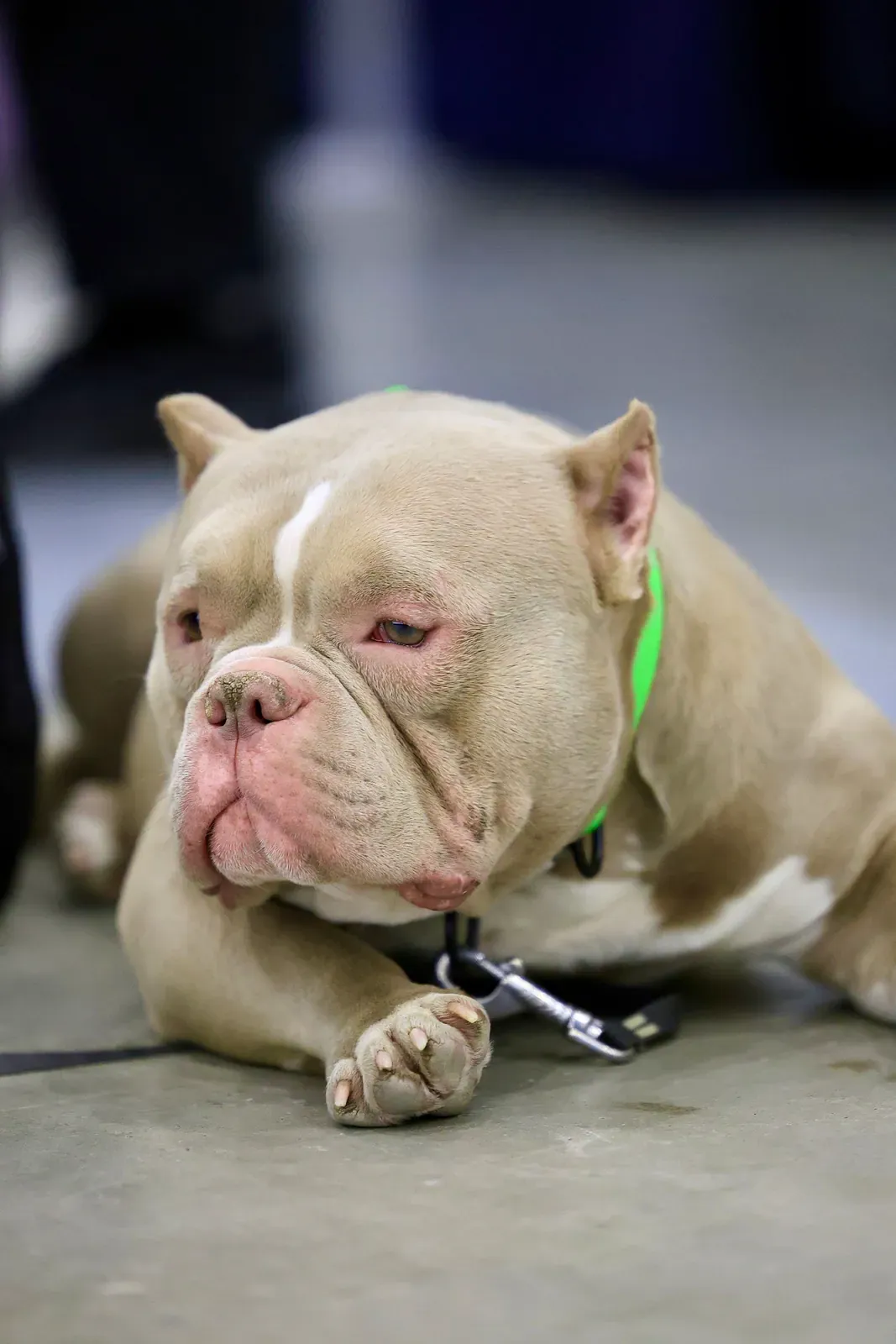
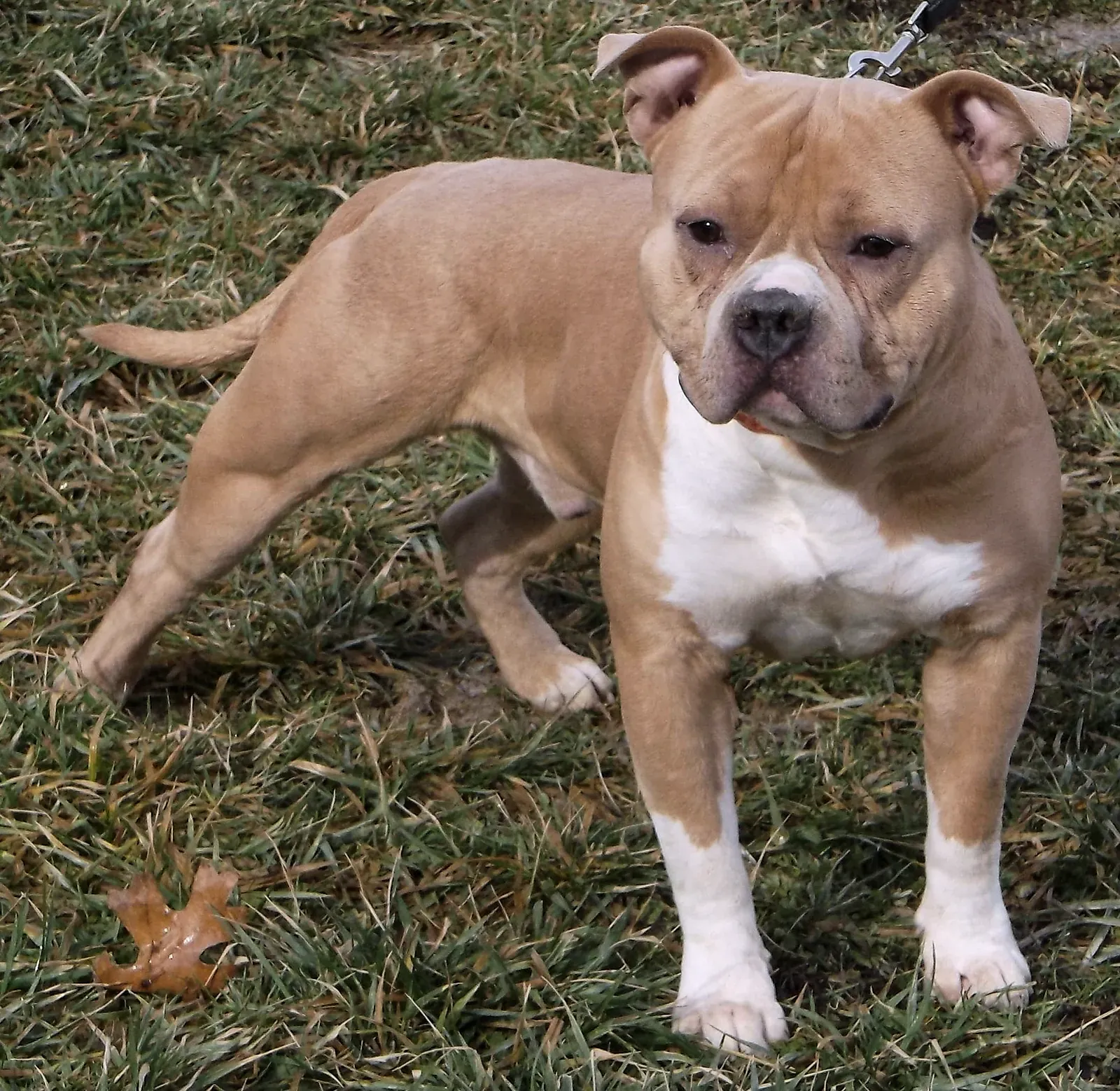
| Build | UKC: medium to large, heavily muscled, with a broad chest and a compact look |
| Coat | Short and close; several colours and patterns are accepted. Check each club's list for the colours it excludes |
| Head | Medium length, deep, broad skull and a square muzzle |
Varieties, not sizes. In the standards, Pocket, Standard, Classic and XL are varieties of one breed. Dogs are usually shown in the Standard class until they are about a year old and then move to their own variety. A Pocket is not a miniature of the others: it is a short, stocky adult.
Not every "XL Bully" fits the XL standard. The UK legal definition sets out different measures (height from 20 in for males and 19 in for females, with a list of physical features), so a dog can be an XL Bully in law without being a registered XL American Bully.
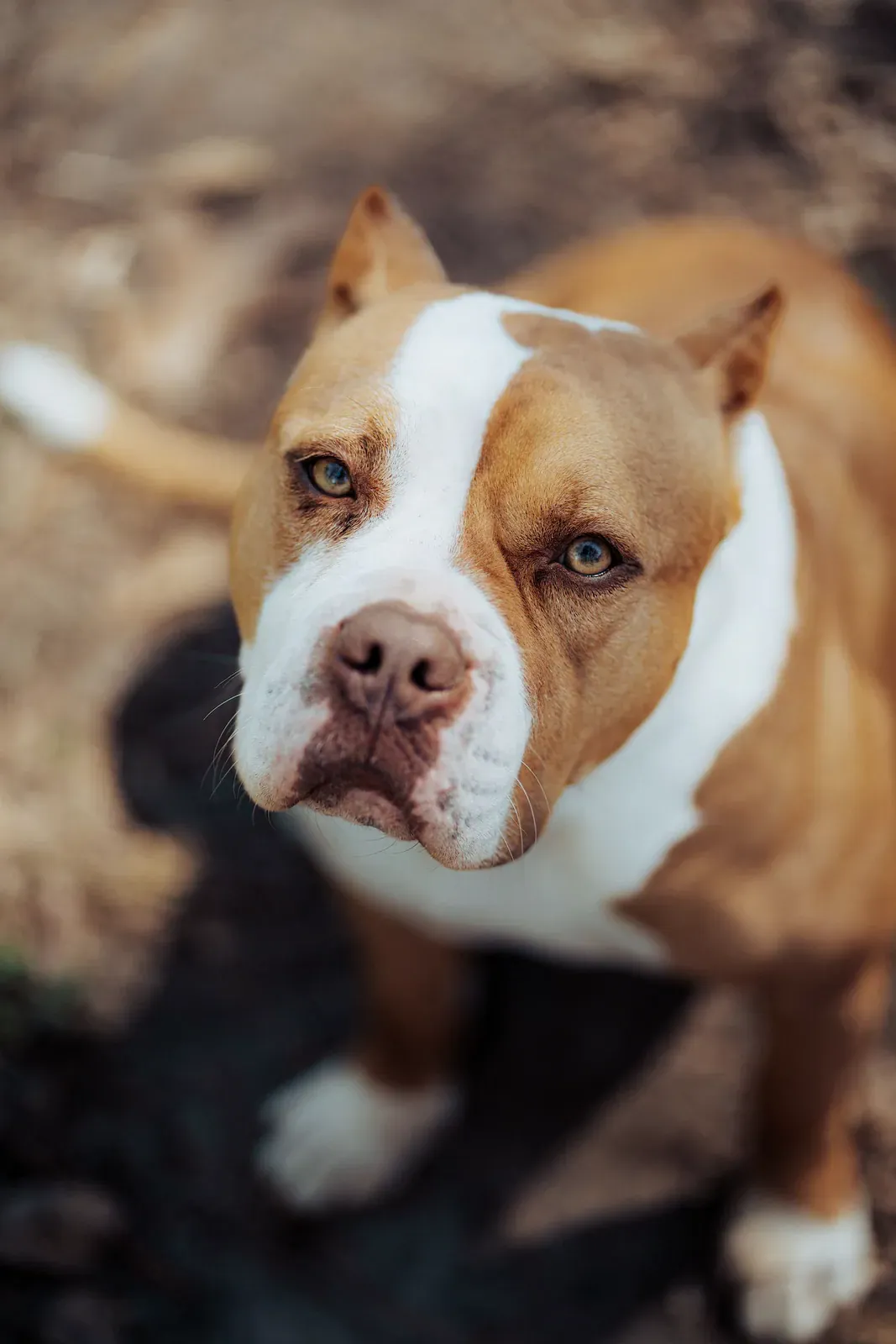


Temperament
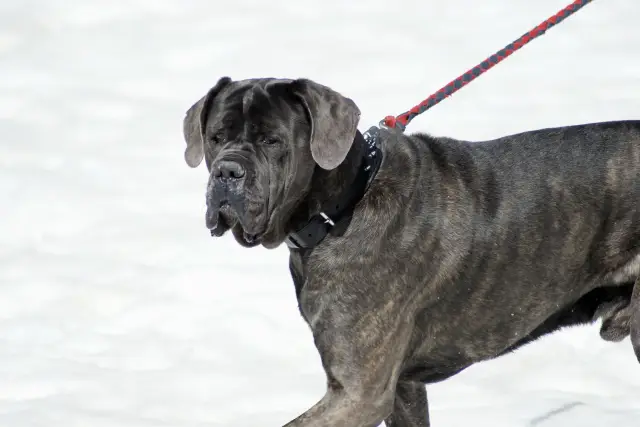 Related breedCane Corso1000 to 1996 · ItalyEarly Middle Ages
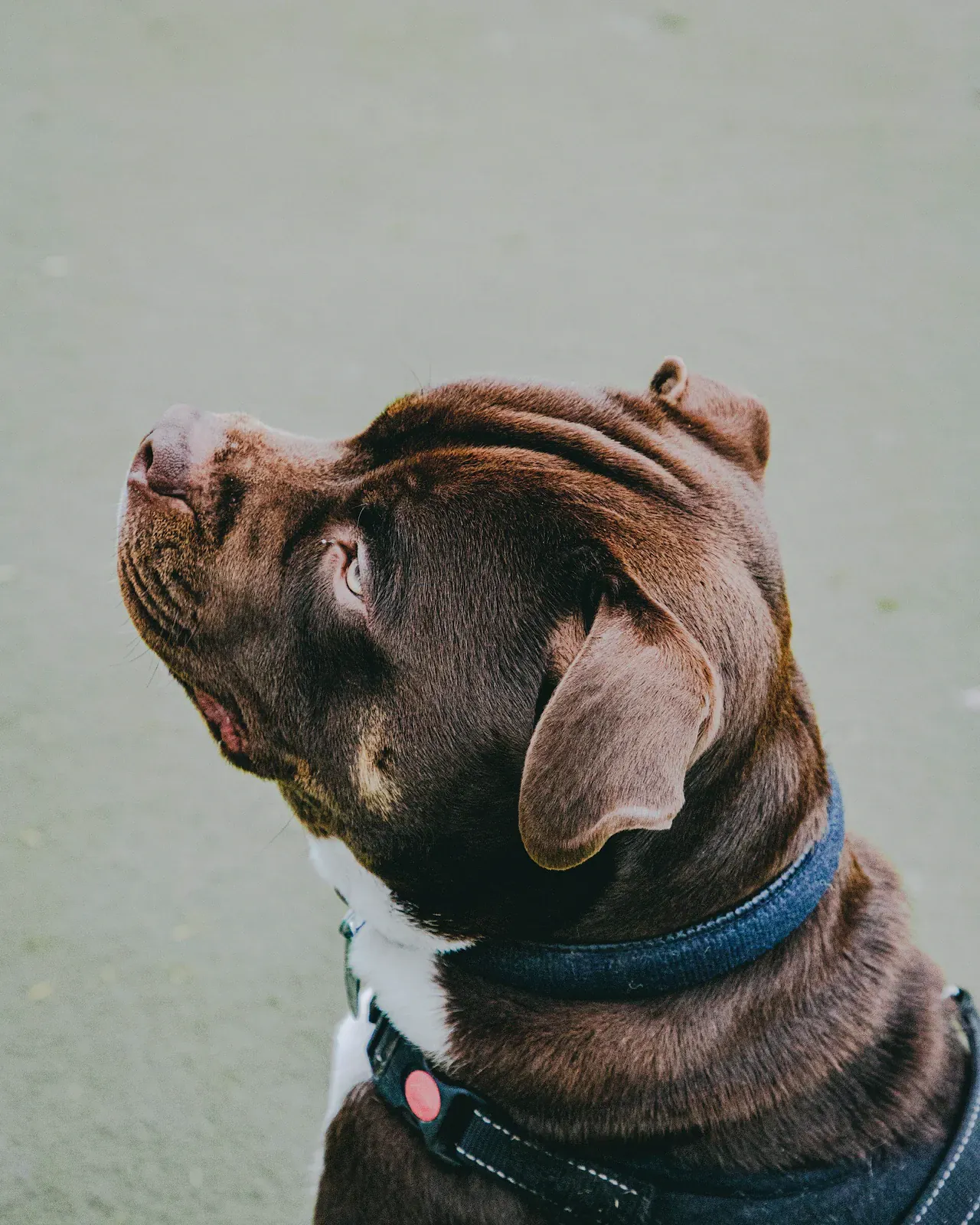
The ABKC and UKC standards ask for a confident, friendly, outgoing dog that is good with people, and both state that aggression toward people is not typical and should be penalised. Breeders and owners describe the Bully as affectionate, clownish, attached to its family and eager for attention. This reflects the aim of the type: a companion that looks tough but is calm.
Three practical points for owners.
- Size and strength. A well-built Bully of 25 to 50 kg can knock over a child or an older adult in play, so training basic manners (sit, wait, loose-lead walking) matters.
- Other dogs. Because the foundation breeds were fighting dogs, some Bullies show intolerance of other dogs, especially of the same sex, as adolescents. How common this is has not been measured in a published study. Socialisation, neutering decisions with a vet, and careful introductions help.
- Individual variation. Dogs from careful breeders who select for temperament usually differ from dogs bred only for size. There is no study that ranks the American Bully's temperament against other breeds.
The Bully has a short history and a small number of formal behaviour studies. What can be said honestly is that the written ideal is friendly, and that individual outcomes depend on breeding, rearing and training.
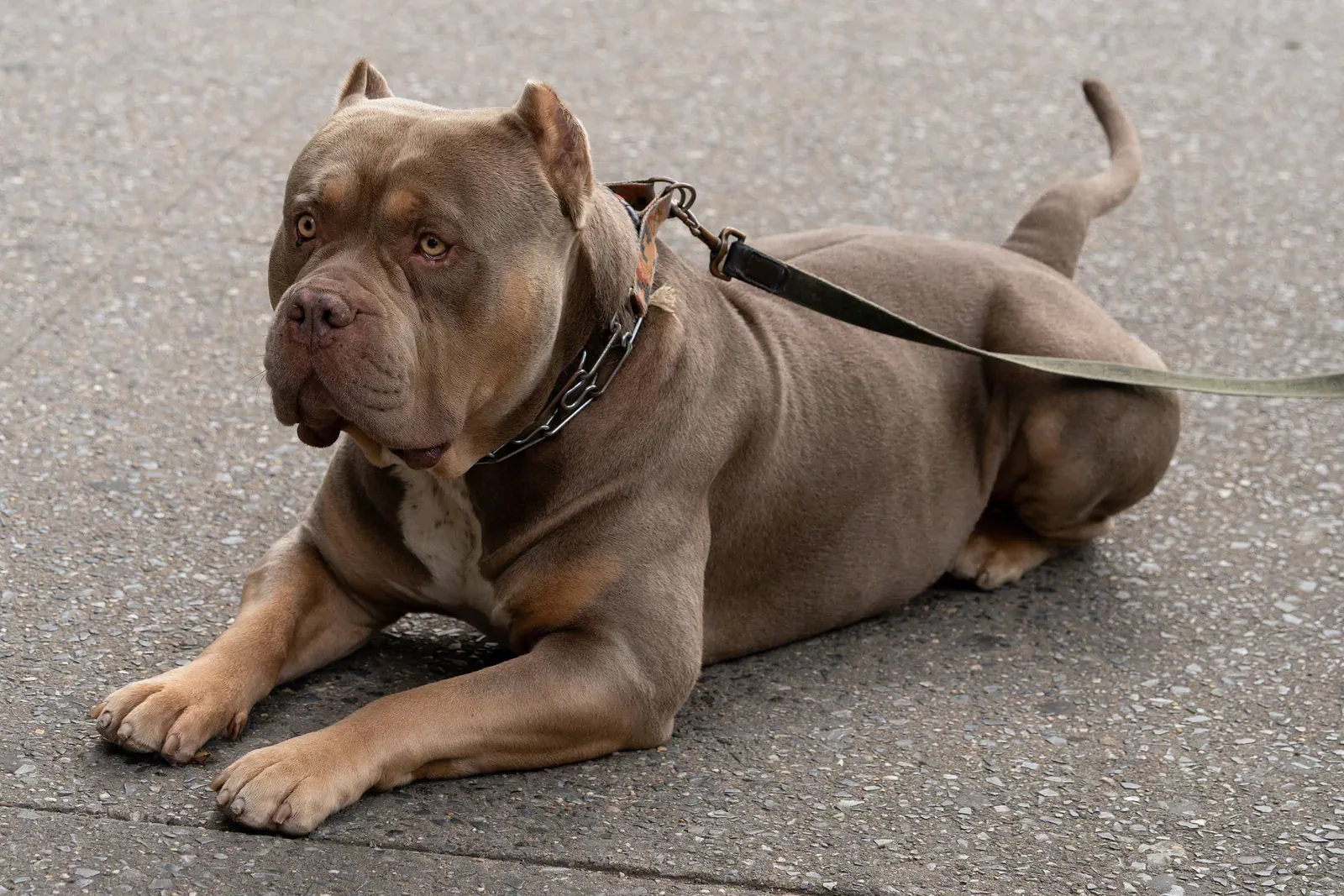

Health
 Related breedDogo Argentino1928 to 1973 · ArgentinaModern Era
Many American Bullies live healthy lives for 10 to 13 years (atlas data). Health, however, is the area with the weakest evidence. No large published veterinary population study of the American Bully was found for this article, so there are no "about 1 in N" prevalence figures, and no figure from a related breed is applied here.
What is known comes from the type of body the breed is bred toward, and from vet reports.
| Condition | What it is | How common | What helps |
|---|---|---|---|
| Joint and mobility problems | Hip and elbow problems, worn joints, from heavy bone and muscle | Not measured in a named study; the concern is raised by vets for very heavy, short-legged types | Moderate build, lean body weight, hip and elbow scoring of breeding dogs |
| Breathing difficulty | Narrowed airways in dogs with short, wide skulls and flat faces | Not measured in this breed; the Bully's muzzle is usually longer than a Bulldog's, so risk varies by dog | Choose a dog with an open nose and a muzzle of normal length; vet check |
| Skin fold and skin allergy problems | Irritation in skin folds or from allergy | Reported by vets; no named study | Cleaning folds, vet diagnosis |
| Surgical bleeding | Excess bleeding after surgery such as neutering | A 2024 University of Surrey survey of vets reported a marked increase in complications in XL Bullies after the UK ban (survey, results not yet published at the time of searching) | Tell your vet the breed and discuss clotting tests where advised |
| Overweight | Extra body weight that stresses joints and heart | Common in pet dogs of all breeds | Measured meals, daily exercise |
What to look for in a puppy. Because no breed-wide health scheme exists, the best protection is to ask for the parents' hip and elbow scores, a vet's assessment of their breathing, and a family history showing dogs that move and breathe comfortably. Be cautious about extreme versions: very short legs, a very heavy frame and a flat face are all features that vets and welfare groups have raised concerns about in bulldog-type dogs generally.

Breed laws and the bite-statistics debate
 Related breedDogue de Bordeaux1300 to 1896 · FranceLate Middle Ages
The UK ban is below. The rules in other countries are in banned dog breeds by country.
The UK XL Bully ban, 2023 to 2024
The American XL Bully was added to the Dangerous Dogs Act 1991 in England and Wales by a statutory order in late 2023. The sequence, as reported by the government and law firms:
- September 2023. The Prime Minister announced that the government would ban the XL Bully type after a series of attacks in the press.
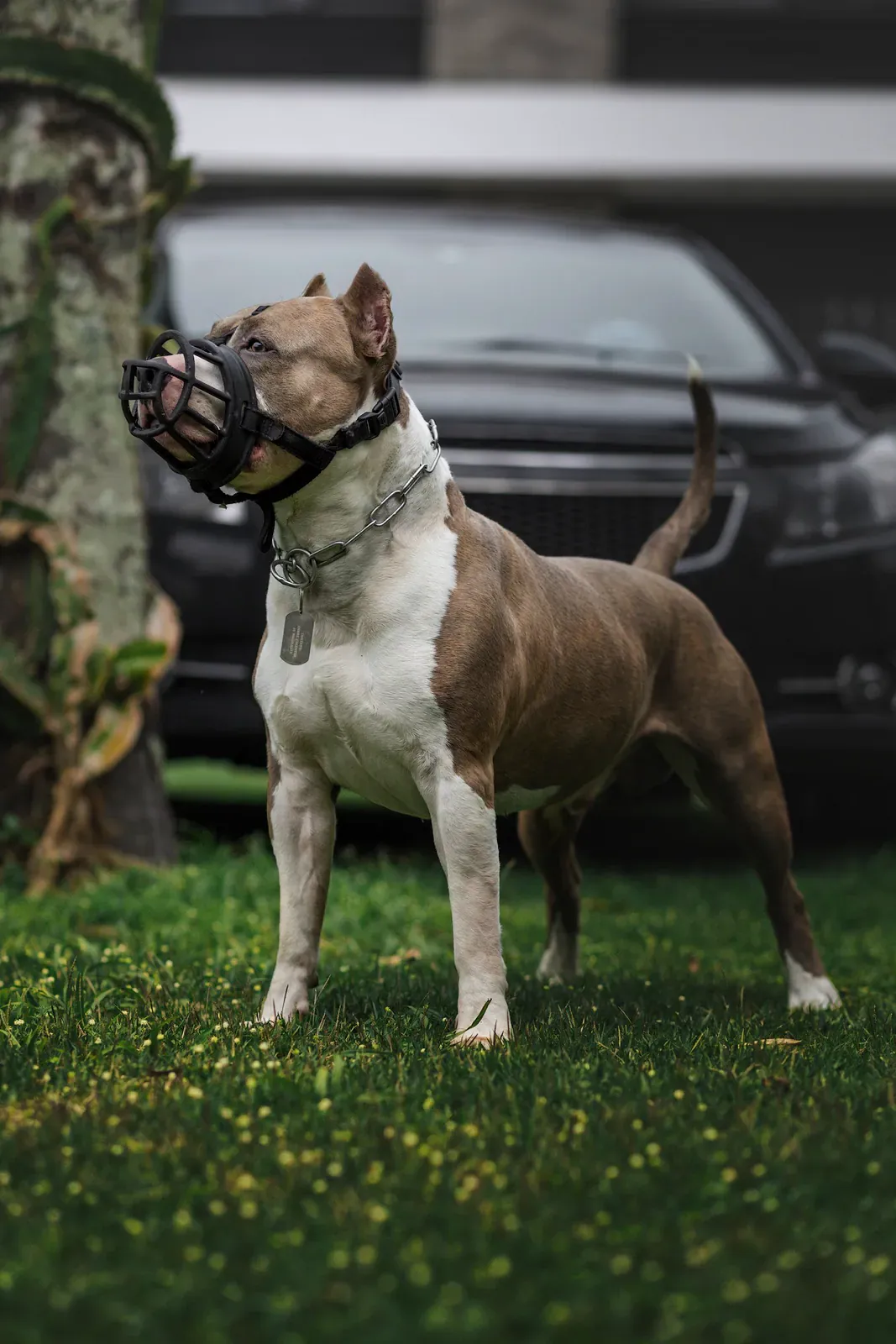
- 31 December 2023. In England and Wales it became illegal to breed, sell, advertise, exchange, gift, rehome or abandon an XL Bully type, or to allow one to stray. In public, owners had to keep the dog on a lead and muzzled.
- 1 February 2024. It became a criminal offence to own an XL Bully type in England and Wales without a Certificate of Exemption. The exemption required registration, neutering, microchipping, insurance and other conditions.
- Scotland and Northern Ireland. Scotland announced in January 2024 that it would require an exemption certificate to own the type, with further steps through 2024. The Scottish Government said its measures were not simply a ban. Northern Ireland's position is less clear. Dates and details differ by nation, so check current rules.
How the law defines the type. There is no breed standard for "XL Bully" in the law. It uses a physical definition: a minimum height (20 in at the withers for adult males, 19 in for adult females), a heavy, broad head, a blocky muzzle, a heavily muscled body and other features. Dogs need not match every feature to be caught.
The government's rationale
The Department for Environment, Food and Rural Affairs (DEFRA) said, in an October 2023 written answer, that its assessment of public data showed the American XL Bully type had been disproportionately involved in fatal attacks. The government said there had been 23 deaths from dog attacks since the start of 2021, with XL Bullies disproportionately involved. Press reports citing the BBC said the type was linked to six of the 10 fatal dog attacks in the UK in 2022. The same government sources note that there are no official statistics on dog attacks by breed, so the claim rests on case reports, not a rate per dog.
The criticism
The Dog Control Coalition, a group that includes the Kennel Club, the RSPCA and Dogs Trust, said in 2023 that it opposes banning any breed, that bans have historically proven ineffective in keeping the public safe, and that dogs can only be assessed as an XL Bully type when fully mature, leaving puppies and juveniles in a grey area. The RSPCA said it did not agree with the broad legal definition but would comply with the law. The Royal College of Veterinary Surgeons set out guidance for vets on how to handle the ban, including euthanasia requests. Critics also point to the cost to responsible owners and to animal welfare charities, and to the large number of dogs that could not be rehomed.
Supporters of the ban argue that this type combines high body weight with strong biting force and a large and growing population, so that when it goes wrong the injuries are severe, and that the human cost justified rapid action.
What happened afterwards
Evidence is still developing. The National Police Chiefs' Council said in January 2025 that it had not yet seen evidence of a reduction in dog attacks, although official figures were not yet available. A 2024 analysis of police data from 27 forces reported by The Independent found that recorded incidents of out-of-control dogs injuring people had risen by 9% since the ban. These are early, uncontrolled figures, and many things changed at once, so they do not show whether the ban worked or failed.
 Save
The research on breed and bite risk
The general evidence on breed and bite risk applies here and has the same limits as for other pit bull type dogs.
- Identification. Olson et al. (2015, The Veterinary Journal) compared shelter staff's visual breed calls with DNA for pit bull type dogs, and found only moderate agreement (median 67 to 78%), with many false positives. If shelters cannot reliably identify the type, bite reports and legal definitions based on looks are uncertain too.
- Co-occurring factors. Patronek et al. (2013, JAVMA) studied 256 fatal bite cases in the US from 2000 to 2009 and found four or more preventable factors together in about 80% of them, such as the absence of a person able to intervene and a dog that was not neutered.
- The AVMA review. The AVMA's 2014 literature review notes that pit bull type dogs appear more often in the small number of very severe or fatal cases, and that this may reflect local popularity, reporting bias and how dogs are kept, and states that breed-specific bans have not been shown to reduce the rate or severity of bite injuries.
These studies are mostly from the US and cover pit bull types in general, not the American Bully or the British XL Bully specifically. They do not settle the UK question, and neither the claim that this type is uniquely dangerous nor the claim that breed is irrelevant is established by them.
Living with an American Bully
 Related breedEnglish Mastiff1300 to 1880 · United KingdomLate Middle Ages
 Save
Ratings reflect the standards, the club descriptions and this article. Where evidence is thin they say "Varies". In the UK, check the XL Bully rules before anything else.
| Daily reality | Rating | Why |
|---|---|---|
| Exercise per day | Medium | Moderate energy; walks and play daily; heavy types tire in heat |
| Training needs | High | Strong dog; manners training is a must |
| Grooming | Low | Short coat, weekly brushing |
| Shedding | Medium | Sheds lightly year-round |
| Barking | Low | Not a noted barker |
| Time alone | Fair | Bonds closely; long absences can lead to chewing |
| Children | Varies | Breed ideal is friendly, but size needs supervision |
| Other dogs | Varies | Some are intolerant; early socialisation helps |
| Cats and small pets | Varies | Terrier ancestry; evidence is thin |
| Flat living | Fair | Possible with daily outings |
| Heat tolerance | Poor | Heavy muscle and, in some, a short muzzle |
| Cold tolerance | Fair | Thin short coat |
| First-time owner fit | Fair | Gentle in intent but strong; needs a trainer |
A great fit if
- You want a home-loving, affectionate dog and will put time into training.
- You have a sturdy lead, a secure garden and a plan for exercise in cooler hours.
- You live where the type is legal and have checked the rules.
- You can afford vet care for a heavy dog.
Think twice if
- You live in England, Wales or Scotland and the dog would be classed as an XL Bully type: the conditions and exemption rules are strict.
- You want a dog that can go off-lead among strange dogs.
- You are looking for a very short-legged, flat-faced or extreme-sized dog: ask whether the dog can move and breathe comfortably.
- You expect a guard dog: the standard asks for a people-friendly dog.
Before you get one
- Check the law. Confirm the rules for your country, region and landlord, and for any insurer.
- Health checks. Ask a breeder for hip and elbow scores, and an honest vet view on the parents' breathing and movement.
- Puppy or adult. Rescues take in adults. Ask about their history with children and other dogs.
- First year. Plan for puppy classes, lead training and lean growth.
Similar breeds to consider
- American Staffordshire Terrier. Lighter, AKC-recognised, a long-standing show breed.
- Staffordshire Bull Terrier. Smaller, with a strong reputation as a family dog in the UK.
- American Bulldog. Taller and athletic, for active owners.
- Bullmastiff. Large and calm, a heavier alternative.

American Bully fun facts
 Related breedFrench Bulldog1850 to 1898 · FranceVictorian Breed Boom
- The UKC recognised the American Bully on 15 July 2013.
- In the UK, "XL Bully" is a legal type defined by height and features, not a registered breed name.
- The Pocket variety is defined by height, not weight.
- The ABKC was created in 2004 specifically for this type.
Frequently asked questions
What is an American Bully?
A companion dog developed in the US from the 1990s from American Pit Bull Terrier and American Staffordshire Terrier lines. It is registered with the ABKC and UKC.
What is the difference between an American Bully and a pit bull?
The Bully is heavier, wider and calmer by design. The American Pit Bull Terrier is a leaner working-type terrier with a longer history.
What sizes does the American Bully come in?
Four varieties by height: Pocket, Standard, Classic and XL. Standard males are 17 to 20 in (UKC).
Are XL Bullies banned?
In England and Wales, owning an XL Bully type without a Certificate of Exemption has been illegal since 1 February 2024. Scotland introduced similar rules in 2024. Check the current law.
Why was the XL Bully banned?
The government said the type was disproportionately involved in fatal attacks. Critics, including the Dog Control Coalition, said breed bans are ineffective and the definition is unclear.
How long do American Bullies live?
The atlas data gives 10 to 13 years. No large study of the breed was found.
Read next
 Sister breedAmerican Staffordshire Terrier1850 to 1936
 FamilyEuropean MastiffThe whole family
 Adopt a dogDog Shelters in EuropeFind dog shelters in Europe, learn how shelters differ from country to country and why adopting a dog is a good option.
Sources (17)
- American Bully Kennel Club (ABKC), breed history and standard.
- American Veterinary Medical Association, "The role of breed in dog bite risk and prevention", literature review, 2014.
- Dangerous Dogs Act 1991 and the 2023 order adding the XL Bully type (England and Wales).
- Department for Environment, Food and Rural Affairs, written answer on XL Bully dogs, October 2023.
- Dog Control Coalition and The Kennel Club (UK), response to changes to the Dangerous Dogs Act, September 2023.
- Encyclopaedia Britannica, American Bully entry.
- European Bully Kennel Club, recognition of the breed, 2008.
- GOV.UK, XL Bully type guidance and definition.
- National Police Chiefs' Council, statement on the XL Bully ban, January 2025.
- Olson K.R. et al., "Inconsistent identification of pit bull-type dogs by shelter staff", The Veterinary Journal, 206, 2015.
- Patronek G.J. et al., "Co-occurrence of potentially preventable factors in 256 dog bite-related fatalities in the United States (2000 to 2009)", JAVMA, 2013.
- Royal College of Veterinary Surgeons, XL Bully dog ban guidance.
- RSPCA, position on the American XL Bully.
- Scottish Government, announcement on XL Bully exemption, January 2024.
- United Kennel Club, American Bully breed standard (recognised 15 July 2013).
- University of Surrey, survey of surgical complications in XL Bullies, reported in Vet Times, 2024.
- Dogs Atlas breed records (this site).