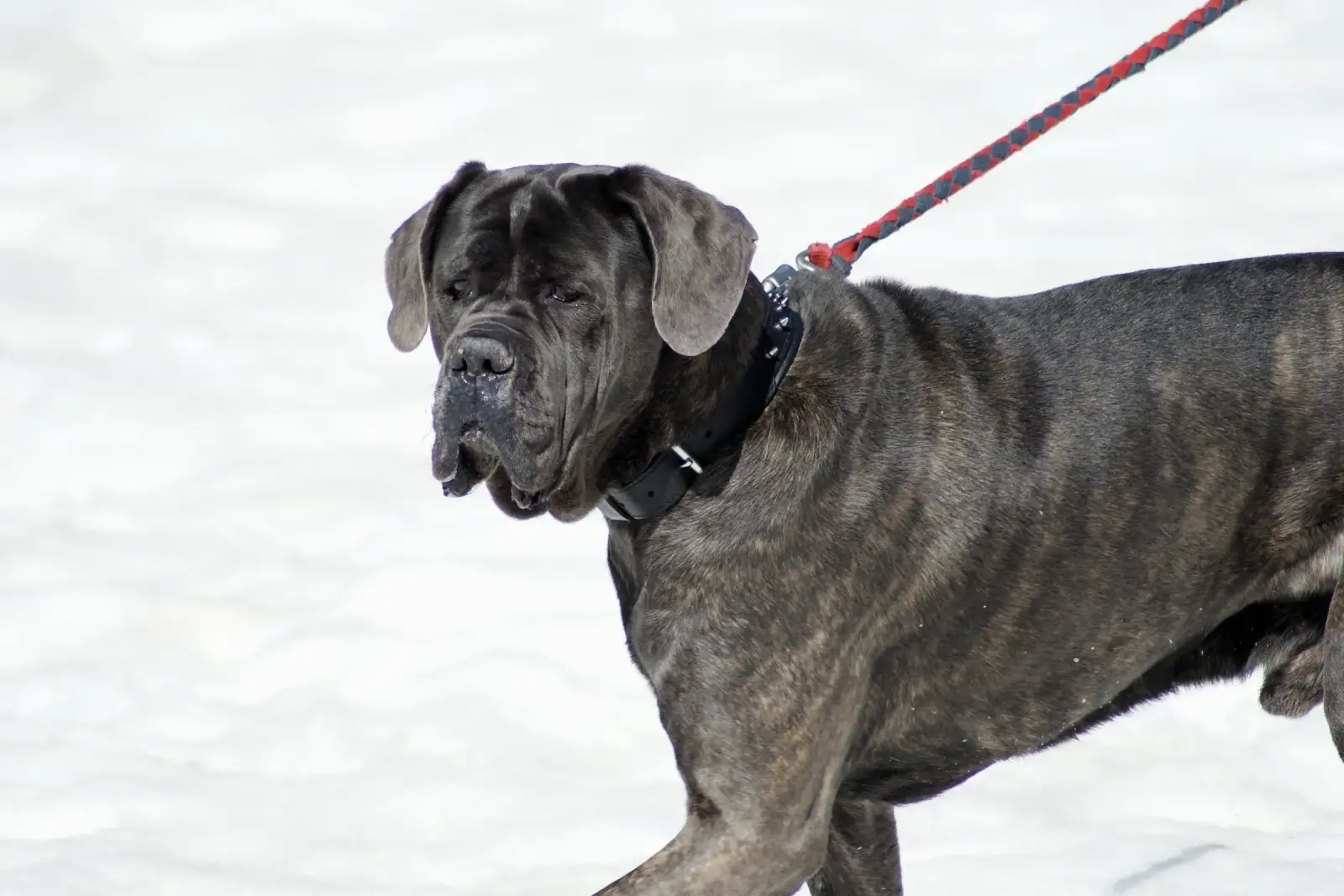
Farmers used it to guard property, drive cattle and help with large game, and the breed almost vanished in the 20th century before a small group of enthusiasts rebuilt it from a few surviving dogs from the 1970s and 1980s. Today it is one of the most searched dog breeds online. It suits experienced, confident owners who can train and socialise a powerful dog, and it is a poor match for first-time owners or anyone who wants a casual pet.
Cane Corso quick facts
 Related breedDogue de Bordeaux1300 to 1896 · FranceLate Middle Ages
- Closest DNA relatives
- Neapolitan Mastiff, Boxer, Bullmastiff
- Descendant breeds
- None listed
- Other names
- Italian Mastiff, Cane Corso Italiano
- Country of origin
- Italy (atlas data: Apulia, southern Italy)
- Period of development
- Old rural type; modern breed rebuilt from about 1973 to 1983; recognised by the Italian kennel club in 1994
- Type
- Guard dog, molossoid (FCI Group 2, standard no. 343; Working Group)
- Height
- FCI: males 64 to 68 cm, females 60 to 64 cm, with 2 cm tolerance either way
- Weight
- FCI: males 45 to 50 kg, females 40 to 45 kg
- Coat
- Short, dense, glossy, with a light undercoat
- Colours
- Black, grey shades, fawn shades (including red), brindle; small white patches on chest, chin and feet tolerated
- Life span
- Atlas data: 9 to 12 years. Studies: median about 9.3 years (2017), about 8.1 years (UK, 2024 report)
- Exercise
- Moderate to high; daily walks, training and a secure garden
- DNA family
- European Mastiff (Parker et al. 2017)
Drawn to scale in real centimetres. Its back reaches about 65 cm, mid-thigh; its head about 83 cm, your hip.

Where it sits in the tree
Early Middle Ages · 500 to 1199





Where does the name "Cane Corso" come from?
 Related breedBoerboel1650 to 1983 · South AfricaEarly Modern Era
"Cane" is Italian for "dog". "Corso" is less certain. The most common explanation links it to the Latin cohors, which meant an enclosure for cattle or poultry and later a guard or guardian. The idea is that these were the dogs of the farmyard. Some writers connect it to the island of Corsica, but that is unproven. The name is pronounced roughly KAH-neh KOR-so, and the plural is Cani Corsi. Outside Italy it is sometimes sold as the Italian Mastiff.

What is the history of the Cane Corso?
 Same eraRottweiler100 CE to 1901 · GermanyAncient World
Roman molosser or farm dog?
Many breed pages say the Cane Corso descends from the Roman molossus, the big war and arena dog of the ancient world. Treat that as legend. No DNA study or written record links today's breed to a specific Roman dog. What is documented is a type of heavy farm and guard dog that was common across rural southern Italy for centuries. Farmers kept these dogs to guard houses and livestock, to move cattle and pigs, and to help hold large game such as wild boar. They were working animals, not show animals, and they were bred for ability and nerve rather than looks. The atlas data dates this old very loosely, from about the year 1000.
Decline in the 20th century
The dogs lived on small farms, and their numbers followed the farms. Mechanisation, the loss of the old sharecropping system (mezzadria) after the 1960s, depopulation of the countryside and two world wars all cut the number of working farm dogs. By the 1970s the type was close to extinct, remembered mostly in isolated areas of the south.
The revival
In 1973 Professor Francesco Ballotta and Dr Antonio Morsiani began looking for surviving dogs and are credited, in breed-club histories, with finding a first group of about 19 and breeding a first litter generation in the late 1970s. Wikipedia dates the start of selective breeding from about 1980. The breed society, the Società Amatori Cane Corso (SACC), was founded in 1983. These dates come from breed-club and encyclopedia accounts and could not be checked against the original Italian records.
Recognition
| Year | Event |
|---|---|
| About 1973 | Search for surviving dogs begins |
| 1983 | Società Amatori Cane Corso founded |
| 1994 | Recognised by the Italian kennel club (ENCI) |
| 1996 | FCI accepts the breed (sources say provisionally; see note) |
| 2007 | Full FCI recognition, according to Wikipedia |
| 2010 | AKC recognises the breed in the Working Group |
The atlas data lists the FCI status as definitive under standard no. 343 and gives 1996 as the end of the development period. Wikipedia describes 1996 as provisional and 2007 as full recognition. Either way, 1996 is when the FCI first took the breed in. The UK Kennel Club also recognises it.
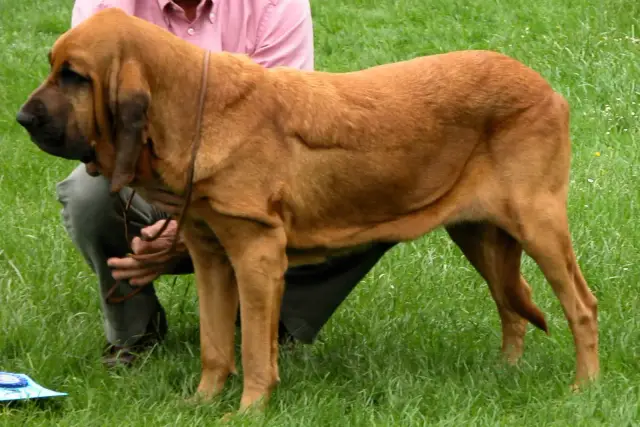
Which breeds are ancestors, descendants and relatives of the Cane Corso?
 Same familyBulldog1835 to 1875 · United KingdomIndustrial Revolution
The European Mastiff family is one branch of the dog breed family tree, which maps how all dog breeds are related.
The atlas data lists no fixed parent or descendant breeds for the Cane Corso. It is a regional landrace revived from local stock. Its one listed sister breed is the Neapolitan Mastiff.
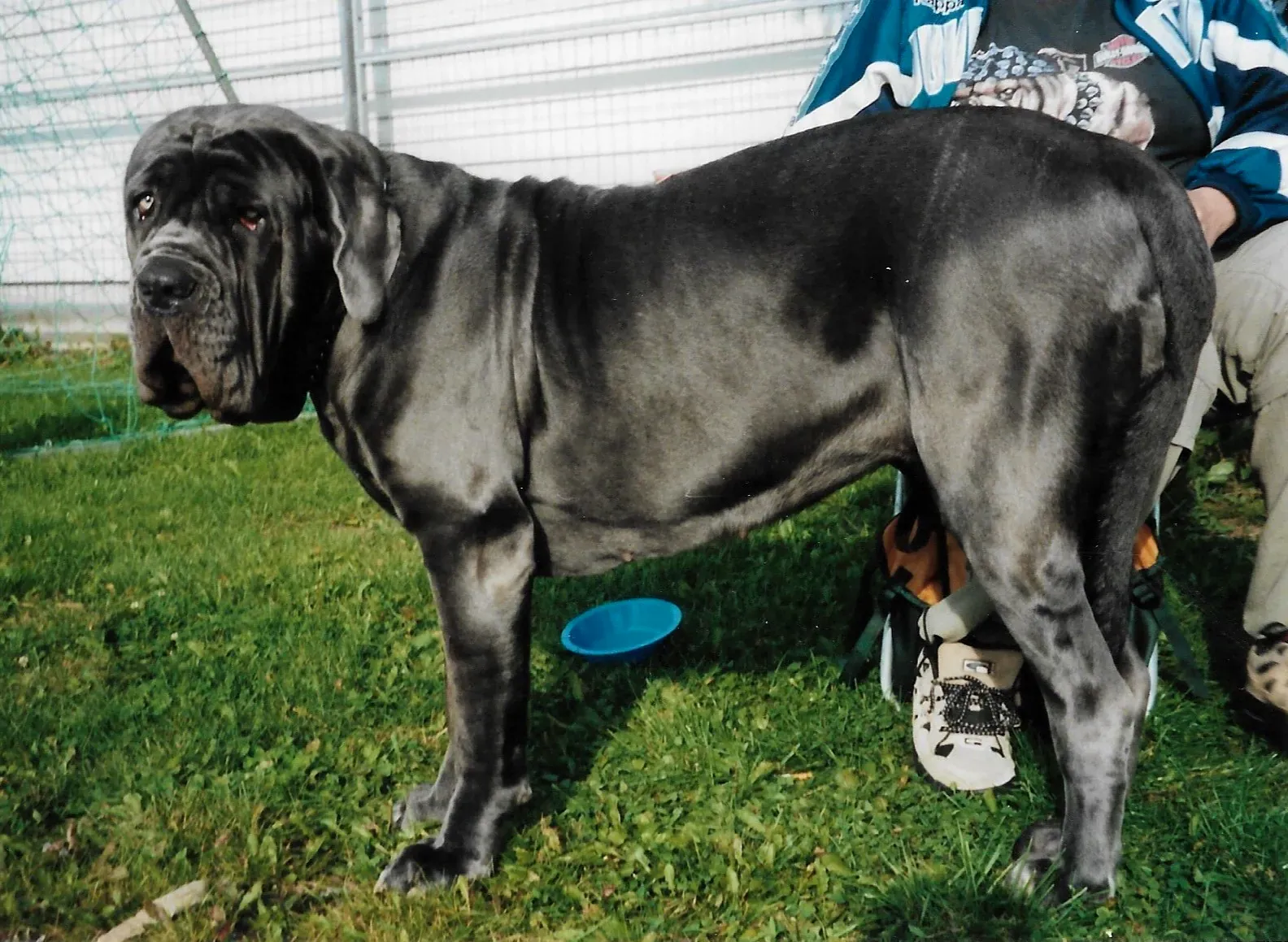
Cane Corso and Neapolitan Mastiff
Both breeds come from the traditional guard dogs of Italy and are described as closely related. The Neapolitan Mastiff is the heavier, loose-skinned dog with heavy jowls and wrinkles, kept mainly as a guardian and show dog. The Cane Corso is leaner, taller in the leg, with a tighter, drier skin and a more athletic build. Their DNA overlap in the 2017 Parker study is the highest of any breed in the Cane Corso's table by a wide margin (see below). Both were rebuilt from the Italian farm-dog stock in the 20th century, so their roots overlap.
What does DNA say?
A 2017 study by Parker and colleagues (Cell Reports) analysed 1,346 dogs from 161 breeds and sorted them into 23 supported clades. The Cane Corso sits in the European Mastiff family, which the study supports strongly. It also measured shared , long stretches of identical DNA inherited from common ancestors. The more () two breeds share, the stronger the sign of shared founders or crossing. The study cannot say which way the genes flowed.
Source: Parker et al. 2017, as recorded in this site's breed database.
The Neapolitan Mastiff share of 189.8 Mb is about three times that of the next breed, which backs the claim that the two Italian guard dogs share close roots. The Boxer, Bullmastiff and other mastiff types follow, which fits the Cane Corso's place in the European Mastiff family.
 Save
Sister breeds · 1
- Neapolitan Mastiff1946 to 1949
- Neapolitan Mastiff189.8 Mb 7.9%
- Boxer63.0 Mb 2.6%
- Bullmastiff44.3 Mb 1.8%
- English Mastiff26.4 Mb 1.1%
- Dogue de Bordeaux17.2 Mb 0.7%
- Boerboel16.7 Mb 0.7%
- Rottweiler15.0 Mb 0.6%
- Bulldog13.3 Mb 0.6%
- St. Bernard13.1 Mb 0.5%
Source: Parker et al. 2017. Percent of the whole genome.
| Cane Corso | Neapolitan Mastiff | |
|---|---|---|
| Build | Athletic, lean, square-ish | Massive, heavy, rectangular |
| Skin | Tight, minimal wrinkles | Loose, wrinkled, heavy dewlap |
| Typical weight | 40 to 50 kg | Heavier (see the Neapolitan Mastiff page) |
| Role today | Guard, companion, sport | Guard, companion, show |
| Breedwith Cane Corso | with Cane Corso (Mb)Shared DNA (Mb) |
|---|---|
| Neapolitan Mastiff | 189.8 |
| Boxer | 63.0 |
| Bullmastiff | 44.3 |
| English Mastiff | 26.4 |
| Dogue de Bordeaux | 17.2 |
| Boerboel | 16.7 |
| Rottweiler | 15.0 |
| Bulldog | 13.3 |
| St. Bernard | 13.1 |
Source: Parker et al. 2017, Cell Reports, shared haplotypes between 161 breeds (1,346 dogs).

The breed standard
 Looks relatedSt. Bernard1650 to 1884 · SwitzerlandEarly Modern Era
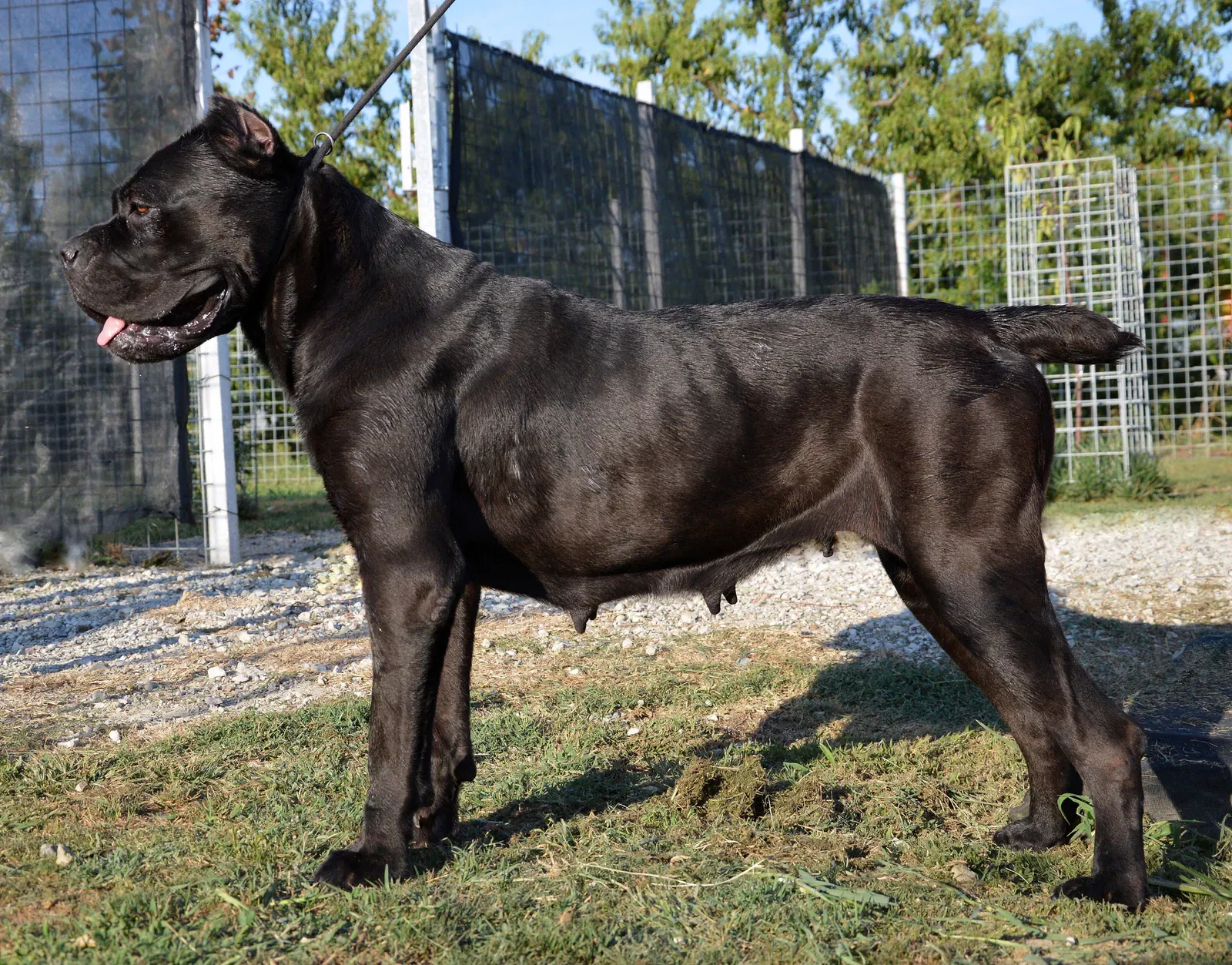
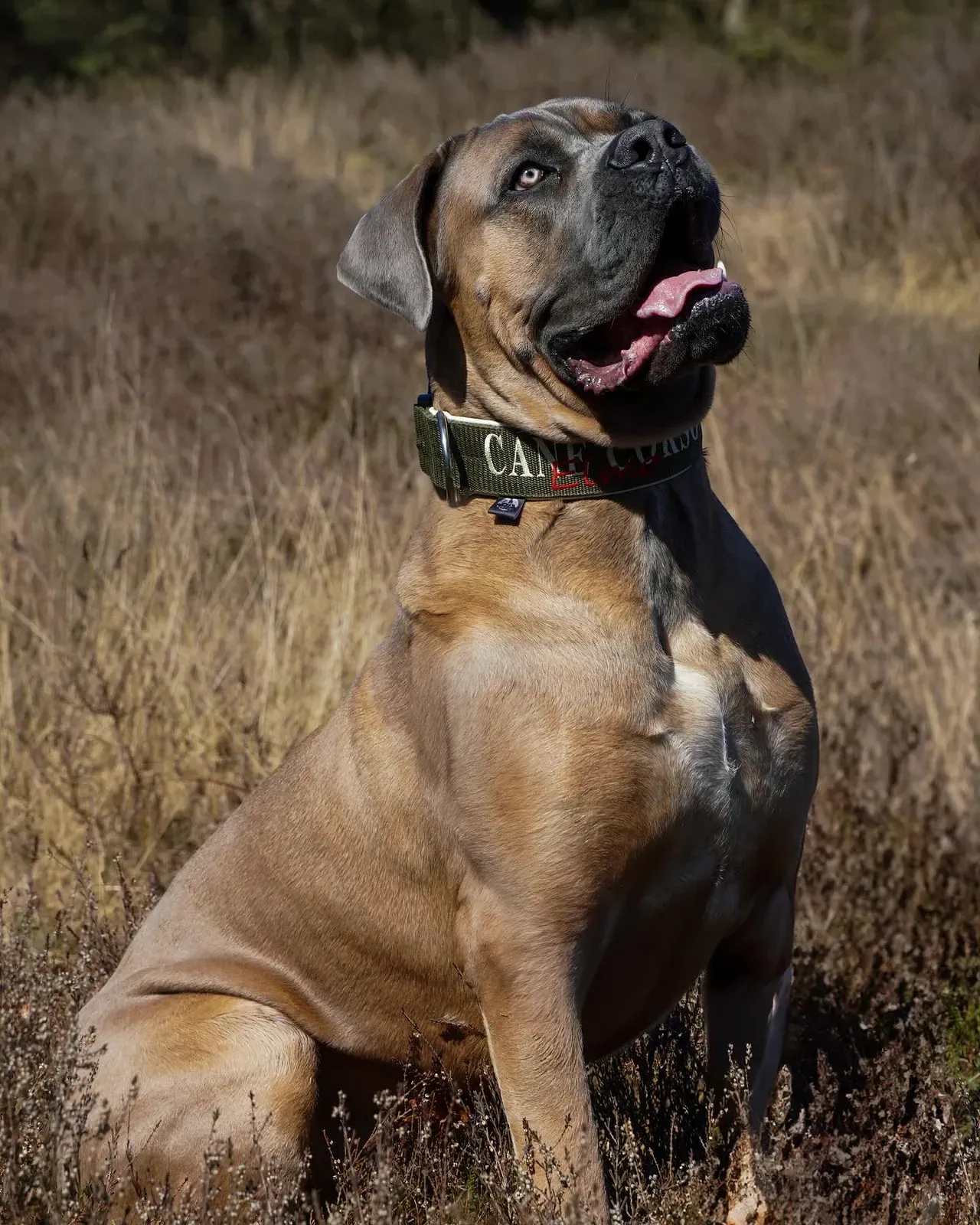
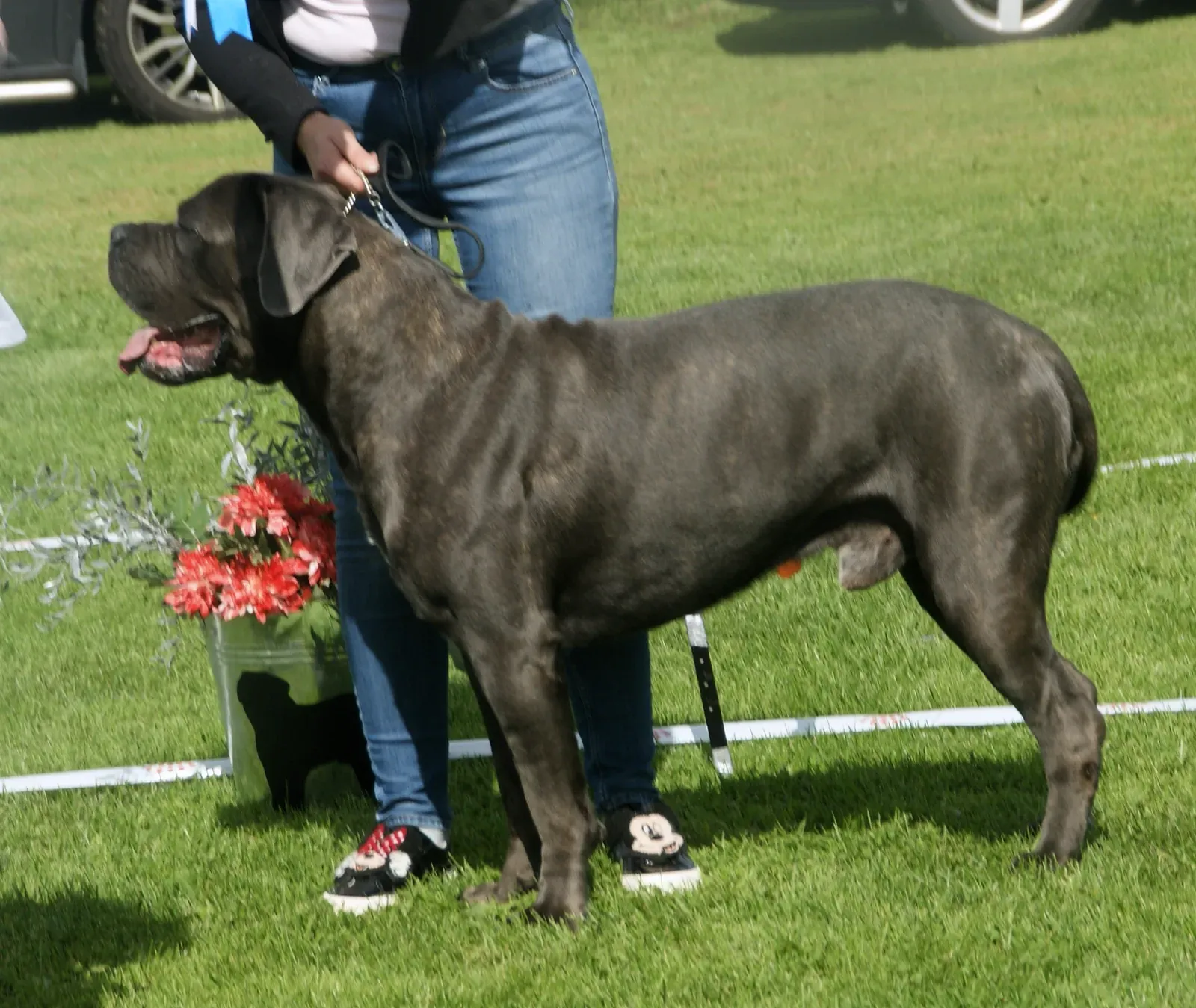
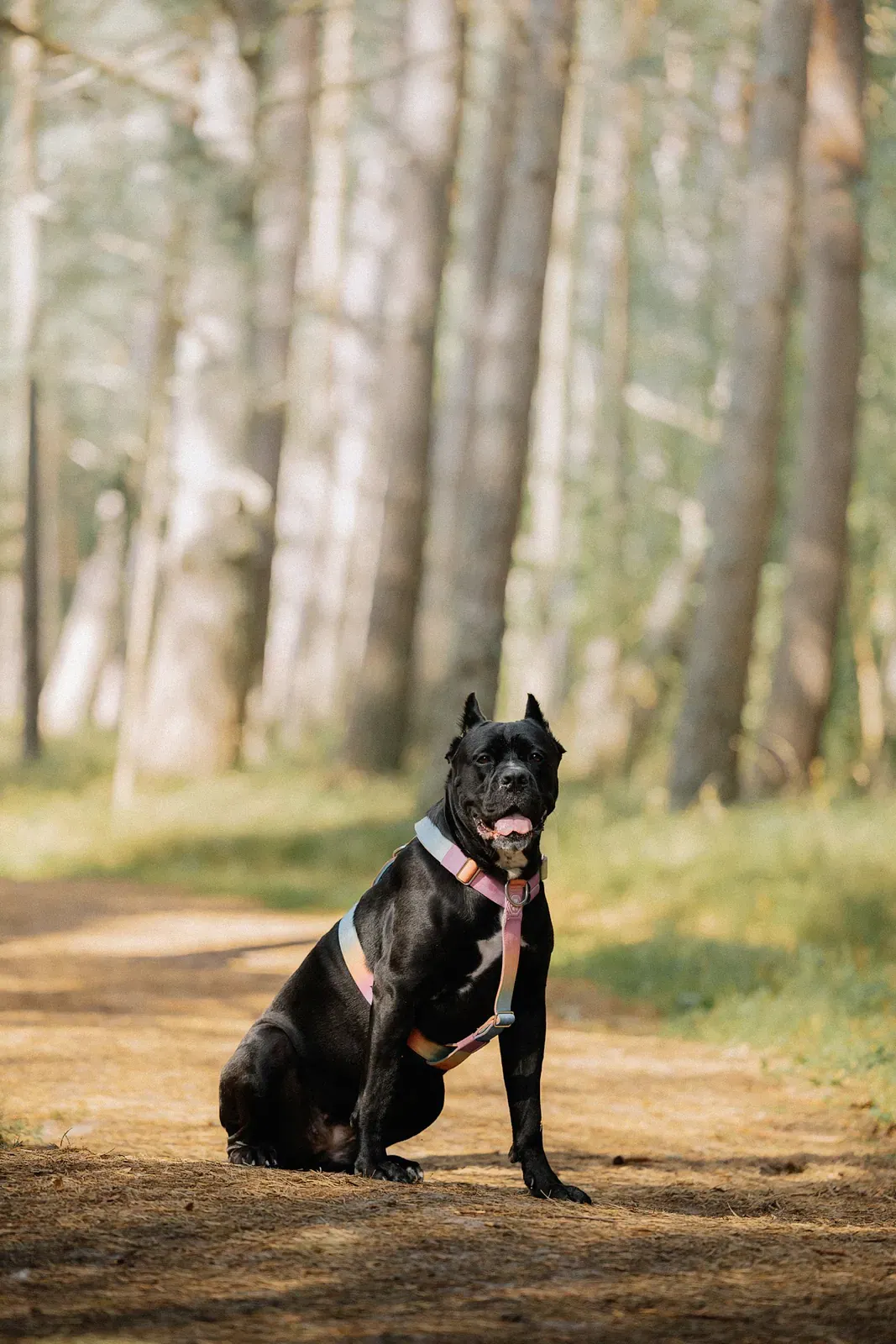
A is the written ideal for a breed that kennel clubs judge dogs against. The FCI standard describes a medium to large, sturdy, muscular dog with an athletic, elegant build, slightly longer than tall and powerful without being heavy.
| Trait | What the standards say |
|---|---|
| Height | FCI: males 64 to 68 cm, females 60 to 64 cm, tolerance 2 cm either way (other references give 62 to 70 cm males, about 4 cm less females) |
| Weight | FCI: males 45 to 50 kg, females 40 to 45 kg |
| Coat | FCI: short, stiff, glossy, light undercoat |
| Colour | FCI: black, lead grey, slate grey, light grey, light fawn, deer fawn, dark fawn, red, with or without brindling |
| Head | FCI: large, broad skull, short square muzzle |
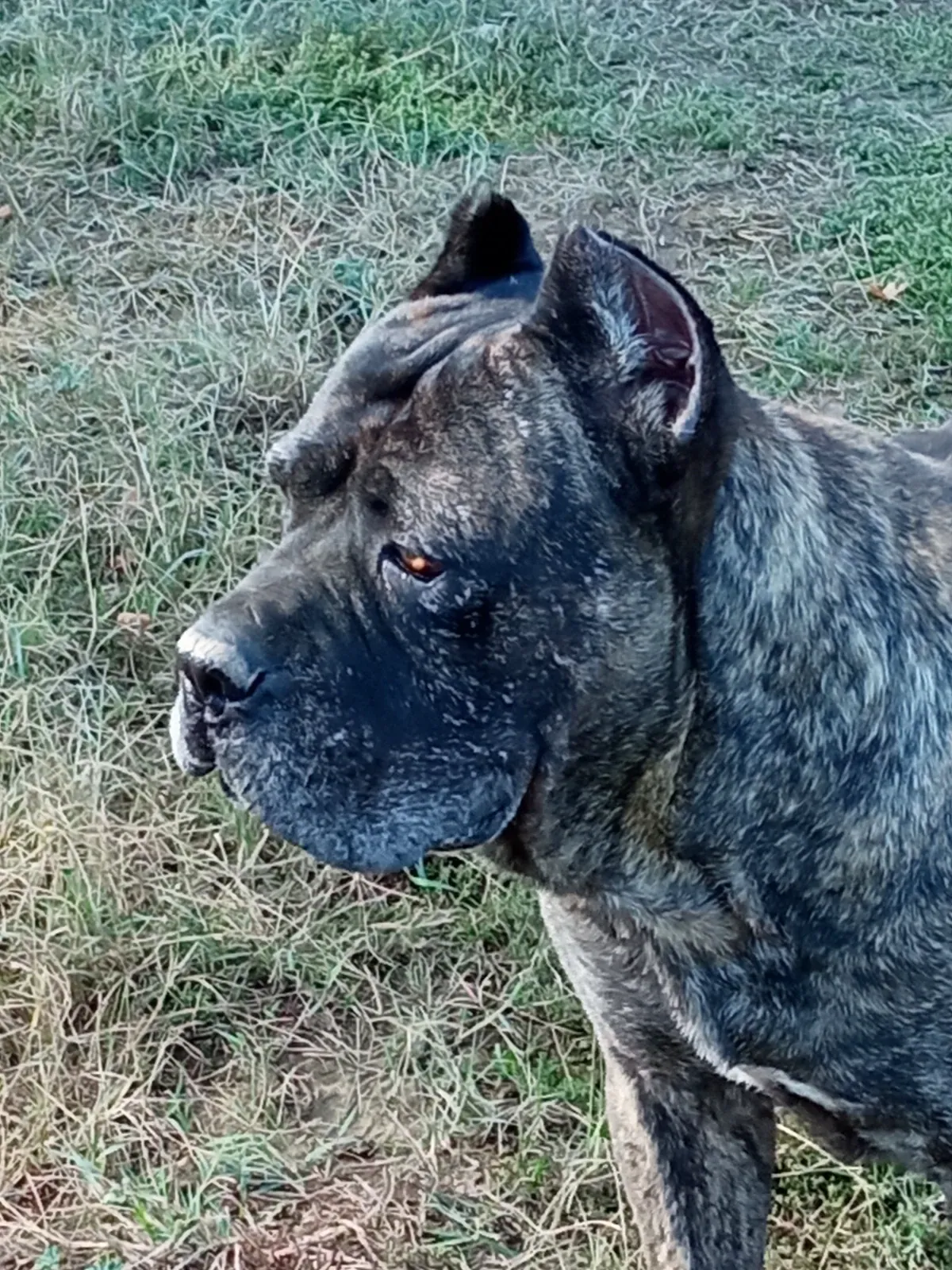
| Ears | FCI: triangular, drooping, medium, set wide and high, described uncropped |
Many pet dogs are heavier than the standard weight, and overweight dogs have more joint problems.
Coat. Short, stiff and glossy, with a light undercoat. It sheds moderately and needs weekly brushing, more in the spring and autumn.
Colours. Fawn and red dogs usually carry a black or grey mask. A small white patch on the chest, chin or feet is tolerated.
 Save
 Save
 Save
 Save
 Save
 Save

What is the Cane Corso's temperament like?
 Related breedAmerican Bulldog1700 to 1980 · United StatesEarly Modern Era
The FCI standard calls for a dog that is attached to its family, protective, and calm with people it knows. In the Italian working trials, a dog is expected to stay calm near harmless strangers, ignore gunfire, and defend its owner if attacked. In daily life that means a dog that is watchful, serious and devoted to its household, usually reserved with strangers, and often not friendly toward unfamiliar dogs.
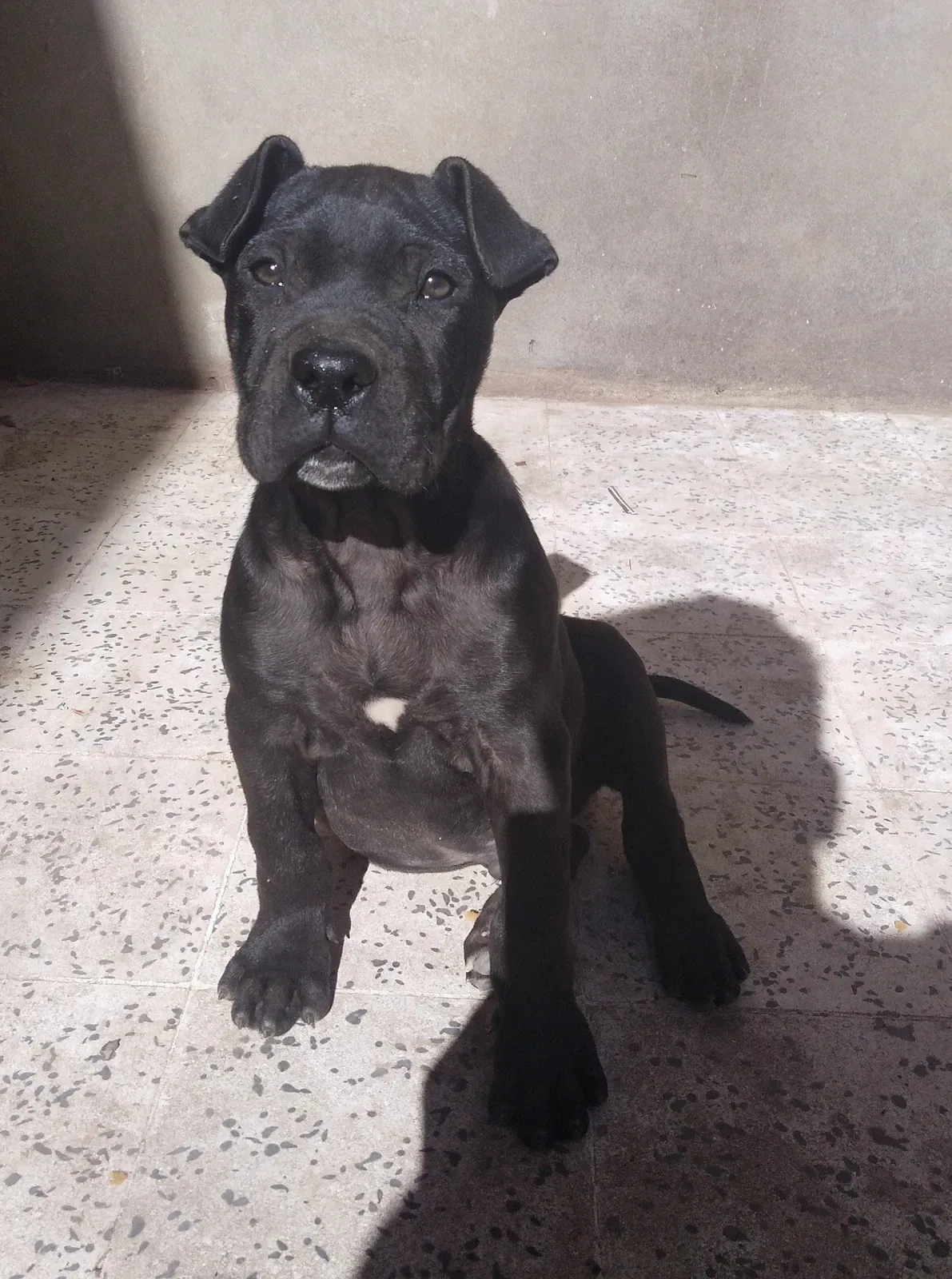
Temperament depends heavily on breeding, early socialisation and handling. A Cane Corso that meets many people, places and dogs as a puppy tends to grow into a steadier adult. One that is isolated, tied up or trained with harsh methods can become fearful or reactive, and a frightened 45 kg dog is a safety risk. Ask any breeder about both parents' behaviour, not only their looks, and meet the adults.
Common issues reported by owners and trainers include:
- Guarding. The breed was made to guard. Visitors, delivery people and other dogs can trigger it.
- Strength. Even a young dog can pull a person over. Lead and recall training early matters.
- Size around children. A friendly adult can still knock a small child down. Always supervise.
- Dominance myths. Modern trainers favour reward-based training over confrontation, which usually makes strong guarding breeds worse.

Living with a Cane Corso
 Related breedAmerican Bully1980 to 2004 · United StatesModern Era
A well-bred, well-socialised Cane Corso is often gentle and loyal with its own family, including children, but only in the right home.
| Daily reality | Rating | Why |
|---|---|---|
| Exercise per day | Medium | Daily walks, training and a secure garden |
| Training needs | High | Needs months of early socialisation and ongoing reward-based training |
| Grooming | Low | Short coat; weekly brushing |
| Shedding | Medium | Moderate, heavier in spring and autumn |
| Barking | Varies | Guards against visitors and delivery people; individual |
| Time alone | Poor | Think twice if you are away most of the day |
| Children | Fair | Gentle with own family when well socialised, but can knock a small child down |
| Other dogs | Poor | Other dogs can trigger its guarding instinct |
| Cats and small pets | Varies | Not covered in the sources used for other pets |
| Flat living | Poor | Large dog needing a secure fenced property |
| Heat tolerance | Varies | Varies, not covered in the sources used |
| Cold tolerance | Varies | Varies, not covered in the sources used |
| First-time owner fit | Poor | Strong guard breed; not a beginner's breed |
A great fit if
- You have experience with large or guarding dogs.
- You can spend months on early socialisation and ongoing reward-based training.
- You have a secure fenced property.
- You accept that studies report a median lifespan of about 8 to 9 years (atlas data gives 9 to 12) and can budget for joint care and large-dog vet bills.
Think twice if
- This is your first dog.
- You want a dog that greets everyone, or you have frequent unfamiliar visitors and no plan for them.
- You are away most of the day.
- You rent where breed restrictions apply, or live with frail adults or small children who cannot be supervised. Check insurance and housing rules first.
Before you get one
- Health tests. Ask for both parents' hip and elbow results in writing, and ask about both parents' behaviour, not only their looks. Meet the adults.
- Bloat. Learn the signs of gastric dilatation and volvulus, an emergency in deep-chested large breeds.
- First year. Start lead and recall training early, keep a lean weight to protect the joints, and socialise widely.
Similar breeds to consider
- Neapolitan Mastiff. Another Italian mastiff, heavier and calmer, with a loose, wrinkled build.
- Presa Canario. Guarding mastiff type with a similar need for experienced handling.
- Dogue de Bordeaux. Mastiff with a family-focused nature and shorter lifespan.
- Boerboel. Large guarding breed that needs early socialisation and a secure property.

Cane Corso ear cropping and breed restrictions
 Related breedAmerican Pit Bull Terrier1850 to 1898 · United StatesVictorian Breed Boom
Ear cropping. Traditionally Cane Corso ears were cropped into a short triangle, which is why many photos show pointed ears. Cropping is a surgical procedure with no health benefit for the dog. The FCI standard describes uncropped ears, and cropping is illegal in the UK and in many European countries. In the UK, importing a dog that has already been cropped abroad is not an offence, and a University of Liverpool SAVSNET study of UK veterinary records (2023 news release) found cropped-ear dogs were mostly imported. The British Veterinary Association opposes cropping. In the US, cropping remains legal in most states and the AKC standard accepts it, though many vets decline to perform it. If you see an advert for a UK-born puppy with cropped ears, treat it as a red flag.
Breed restrictions. Rules differ by country, state and city. An overview by country is in banned dog breeds by country.
- UK. The Cane Corso is not on the list of breeds banned under the Dangerous Dogs Act (those are the Pit Bull Terrier type, Japanese Tosa, Dogo Argentino and Fila Brasileiro, plus the XL Bully type since 2024). Owners remain legally responsible for their dog's behaviour.
- US. No state bans the breed, but some cities, counties, housing providers and military housing restrict it, and some home insurers exclude it or charge more.
- Elsewhere. Several countries and regions list the breed or require muzzles, licences or tests. Rules change, so check local law before buying or travelling with one.
Why is the Cane Corso the most searched dog breed?
 Related breedAmerican Staffordshire Terrier1850 to 1936 · United StatesVictorian Breed Boom
Search studies from 2022 and 2023 reported that the Cane Corso was the most Googled dog breed in the United States, with about 1.3 million searches a month, and the top breed in 46 of 50 states. Later reports say it is also the most searched breed in a dozen European countries and has high search volume in the UK. These figures come from news summaries of search-data studies, not from registrations, and popularity in searches does not match registrations. The AKC ranking, which counts registrations, is a separate measure. Likely reasons for the interest are the breed's striking looks, appearances on social media and its guarding reputation. For the dog, popularity is not good news: fashion drives careless breeding and many unprepared owners.
What health problems affect Cane Corsos?
 Related breedBoston Terrier1870 to 1893 · United StatesVictorian Breed Boom
The breed is among the shorter-lived of large dogs. A 2017 study in the Open Veterinary Journal (Korec and colleagues) examined 232 dogs from 73 kennels in 25 countries and found a median lifespan of 9.29 years. Black brindle dogs lived longest (10.30 years) and dogs of other colours shortest (8.09 years). A UK report published in 2024 gives an average of about 8.1 years. The breeder-run sample in the 2017 study may skew toward well-cared-for dogs. The information here is general. Talk to a vet about your own dog.
| Condition | What it is | Evidence |
|---|---|---|
| Malformed hip joint causing pain and arthritis | Baldinger et al., PLoS ONE 2020: French screening 1997 to 2017, Cane Corso had the highest prevalence of 10 breeds at 51.9 percent, falling from 72.7 to 49.9 percent over the period | |
| Elbow dysplasia | Developmental elbow joint disease | Listed as a breed predisposition (Wikipedia, breed club health pages) |
| Gastric dilatation and volvulus (bloat) | Stomach swells and twists, an emergency | Deep-chested large breeds are at risk; vets advise smaller meals and urgent care at first signs |
| Eyelid problems (entropion, ectropion) and cherry eye | Eyelid rolling in or out; prolapsed third-eyelid gland | Listed as breed predispositions |
| Demodicosis | Skin disease from Demodex mites, often in young dogs | Listed as breed predisposition |
| Idiopathic epilepsy | Seizures with no identified cause | Listed as breed predisposition |
| Hypothyroidism | Underactive thyroid gland | Listed as breed predisposition |
Hip scoring is the main screening tool. Breeders in many countries use radiographic schemes with grades from A (normal) to E (severe), and many breed clubs require results before breeding. Ask for the parents' hip and elbow results in writing. French results improved over 20 years of screening, which shows careful selection works.

Research and science
 Related breedBull Terrier1850 to 1888 · United KingdomVictorian Breed Boom
Beyond health surveys, a 2022 paper in BMC Veterinary Research reported four genes associated with longevity in Cane Corsos (TDRP, MC2R, FBXO25 and FBXL21), based on a comparison of long-lived dogs and others. It is an early finding, not a screening test. The Parker 2017 study placed the breed within the European Mastiff with strong support.
Cane Corso fun facts
 Related breedDogo Argentino1928 to 1973 · ArgentinaModern Era
- Modern breed histories say the first Cane Corso litters of the revival came in the late 1970s from about 19 dogs found by two enthusiasts.
- The Italian working trial asks for a calm dog that ignores gunfire.
- The Cane Corso's DNA overlap with the Neapolitan Mastiff (189.8 Mb) is the largest among its relatives in the 2017 study.
- Black brindle Cane Corsos lived about a year longer than the overall median in the 2017 longevity study.
- The breed took the AKC Working Group in 2010, only a few years after full FCI recognition in 2007.
Frequently asked questions
How big does a Cane Corso get?
Males 64 to 68 cm and 45 to 50 kg, females 60 to 64 cm and 40 to 45 kg under the standard.
How long do Cane Corsos live?
Atlas data gives 9 to 12 years. A 2017 study found a median of 9.29 years, and a UK report gives about 8.1 years.
Is the Cane Corso aggressive?
It is a guarding breed with strong protective instincts. Breeding, early socialisation and training decide whether it is steady or reactive. It is not a beginner's breed.
What is the difference between a Cane Corso and a Neapolitan Mastiff?
The Neapolitan Mastiff is heavier with loose, wrinkled skin. The Cane Corso is leaner and more athletic. They are close DNA relatives.
Are Cane Corsos banned?
Not in the UK or any US state, but some cities, housing providers and insurers restrict them, and rules vary by country.
Why are Cane Corso ears cropped?
Tradition and appearance. It has no health benefit, the FCI standard describes uncropped ears, and it is illegal in the UK and many European countries.
What health problems do Cane Corsos have?
Hip and , bloat, eyelid problems, demodicosis, epilepsy and hypothyroidism are the main ones listed.
Do Cane Corsos shed?
Yes, moderately, with heavier shedding in spring and autumn.
Read next
 Closest DNANeapolitan Mastiff189.8 Mb shared
 FamilyEuropean MastiffThe whole family
 Adopt a dogDog Shelters in EuropeFind dog shelters in Europe, learn how shelters differ from country to country and why adopting a dog is a good option.
Sources (12)
- Baldinger L. et al., "Prevalence of canine hip dysplasia in 10 breeds in France, a retrospective study of the 1997-2017 radiographic screening period", PLoS ONE, 2020.
- Korec E., Chalupa P., Hancl J., Korcova J., Bydzovska M., "Longevity of Cane Corso Italiano dog breed and its relationship with hair colour", Open Veterinary Journal, 2017.
- "Four novel genes associated with longevity found in Cane corso purebred dogs", BMC Veterinary Research, 2022.
- Fédération Cynologique Internationale, Cane Corso Italiano, standard no. 343.
- American Kennel Club, Cane Corso breed information and history pages.
- The Kennel Club (UK), Cane Corso breed information.
- Wikipedia, "Cane Corso" and "Neapolitan Mastiff" (used for dates and summaries, checked against the other sources listed).
- University of Liverpool SAVSNET, "Dogs with cropped ears in the UK: a population-based study using electronic health records" and 2023 news release.
- British Veterinary Association, position on ear cropping.
- Parker H.G. et al., "Genomic analyses reveal the influence of geographic origin, migration, and hybridization on modern dog breed development", Cell Reports, 2017.
- News reports of 2022 to 2023 Google search studies on the most searched dog breeds (reported by US and UK news outlets).
- Atlas data, breed records and Parker 2017 shared-haplotype table (this site).