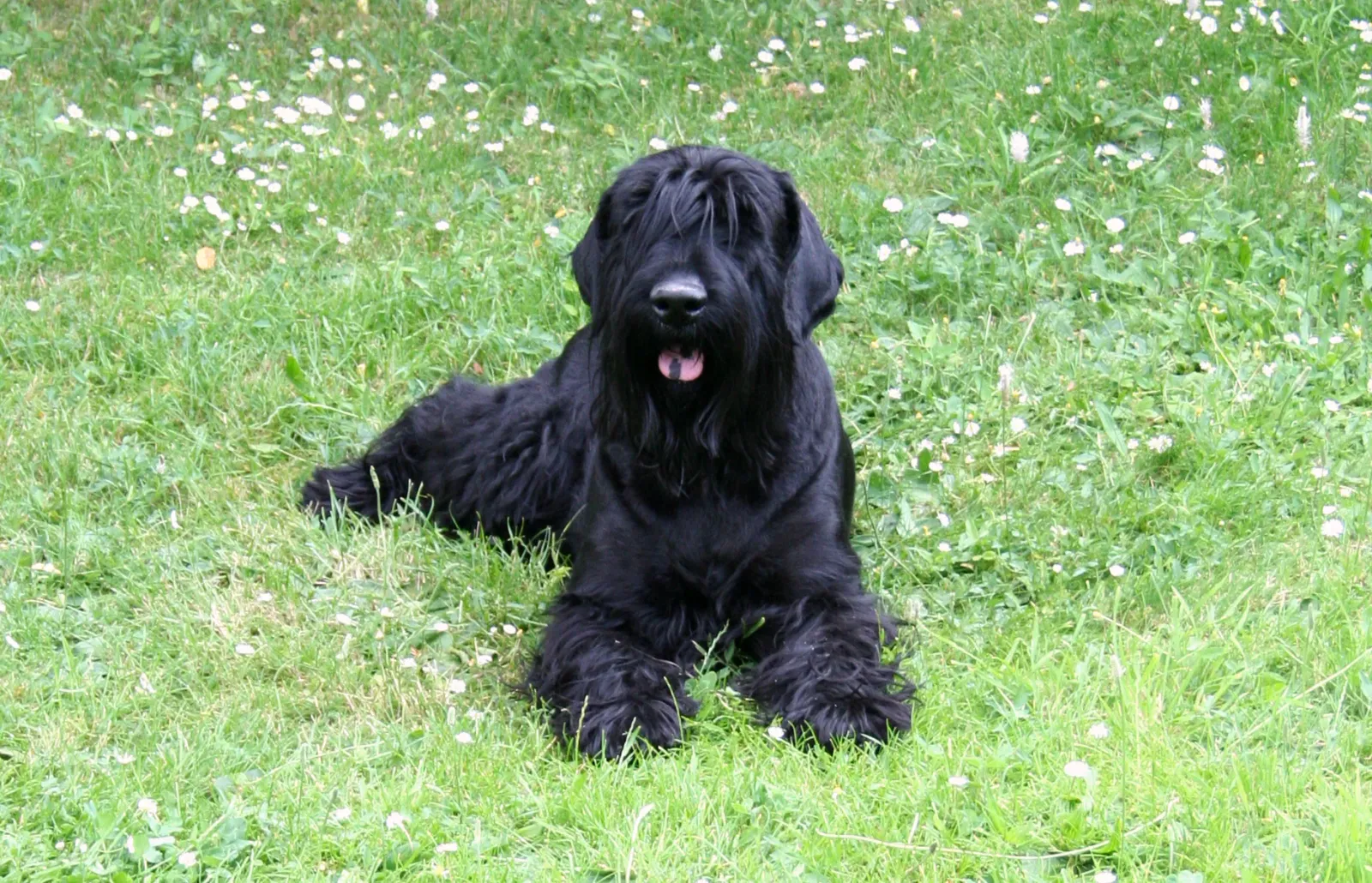
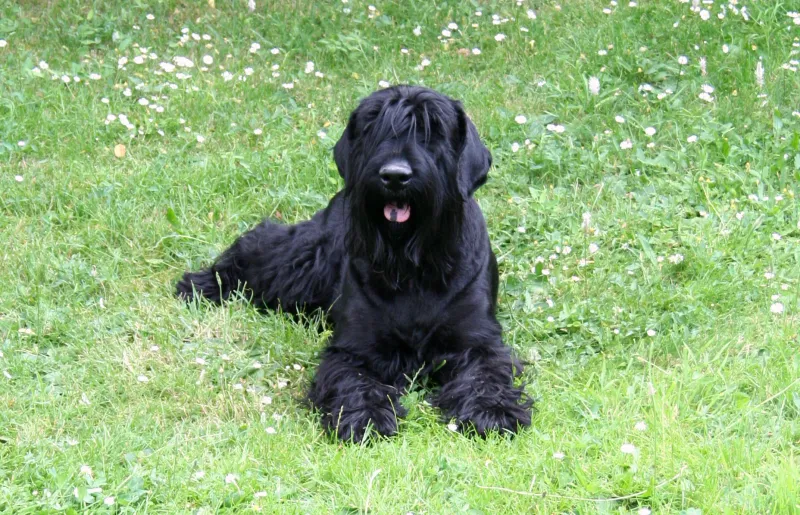
Despite the name it is not a true terrier: it was built from large working breeds, mainly the Giant Schnauzer, Rottweiler, Airedale Terrier and Newfoundland. It is calm and watchful with its family and reserved with strangers. It suits experienced owners who can give a large, strong dog training, socialisation and regular coat care, and it tends to struggle with owners who cannot.
Black Russian Terrier quick facts
 Related breedLeonberger1846 to 1895 · GermanyIndustrial Revolution
- Closest DNA relatives
- Rottweiler, Giant Schnauzer, Airedale Terrier
- Country of origin
- Soviet Union, today Russia (Moscow region)
- Period of development
- About 1949 to 1984 (atlas data)
- Type
- Guard dog ( Group 2, standard no. 327; AKC Working Group)
- Height
- AKC: males 69 to 76 cm, females 66 to 74 cm; height above 76 cm is a serious fault
- Coat
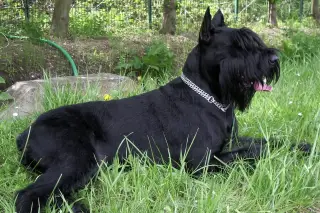
- Dense, harsh, with a soft undercoat; trimmed beard, moustache and eyebrows
- Colour
- Black; a little grey is allowed in some standards
- Life span
- Atlas data: 10 to 12 years
- Recognition
- FCI (1984), AKC (2004), The Kennel Club (UK)
- DNA group
- "Drover" , strong support (Parker et al. 2017)
- Other names
- Russian Black Terrier, Chornyi Terrier ("Chyorny terrier"); sometimes nicknamed "Stalin's Dog"
Drawn to scale in real centimetres. Its back reaches about 71 cm, mid-thigh; its head about 90 cm, your hip.
Where it sits in the tree
Modern Era · 1914 to today
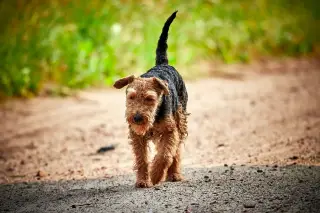
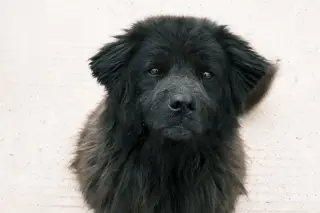
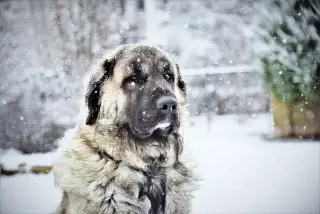
Name and origin
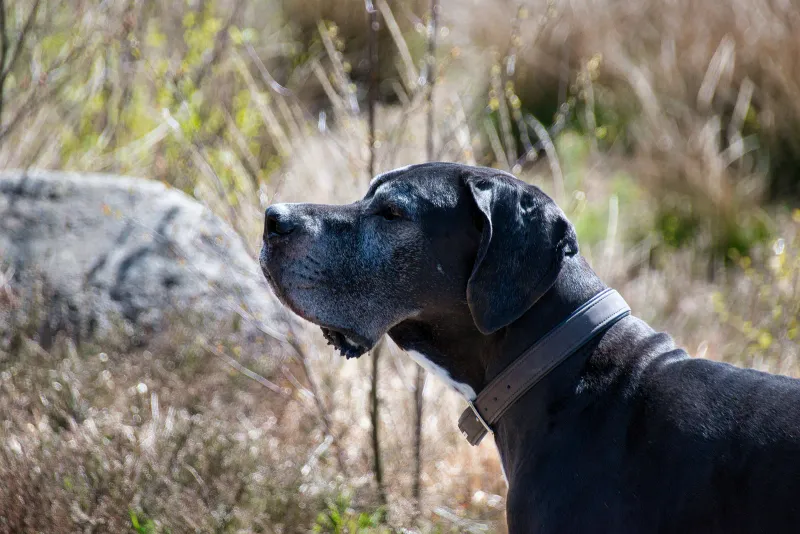 Related breedGreat Dane1600 to 1880 · GermanyEarly Modern Era
The breed's Russian name, Chornyi terrier, means "black terrier". The name stuck even though the dog does not belong to the terrier group: the atlas data records that it is not a true terrier. The FCI uses the official name Russkiy Tchiorny Terrier (Russian Black Terrier), while the AKC and many English-speaking clubs say Black Russian Terrier. The nickname "Stalin's Dog" is sometimes used in English, and it refers to the Soviet era in which the breed was made, not to a record that Stalin owned or ordered this particular dog.

History
 Same eraGreater Swiss Mountain Dog1700 to 1909 · SwitzerlandEarly Modern Era
The Red Star Kennel
After the Second World War the Soviet army wanted a large, tough, trainable service dog that could cope with Russian winters. The AKC says the effort began in the 1930s but stalled, because the revolution and wars had left the country short of purebred stock. The main programme dates from the late 1940s: one account gives a government directive of 1949 and development through the 1950s. It took place at the Red Star (Krasnaya Zvezda) Kennel, a state military kennel near Moscow.
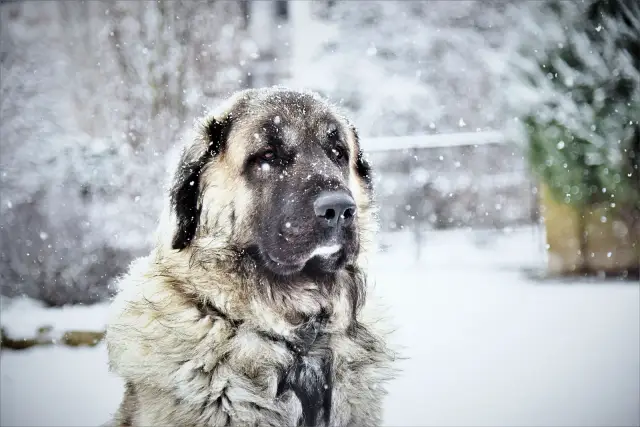
Breeders there used a dozen or more breeds, with one source counting up to 17 in total. Four are named as the core: the Giant Schnauzer, the Rottweiler, the Airedale Terrier and the Newfoundland. The atlas data also names the Caucasian Shepherd Dog, the South Russian Shepherd Dog and the Moscow Water Dog. The Moscow Water Dog was a Newfoundland-type breed that was itself bred in the Soviet Union and is now extinct or nearly so. The aim was a dog with the Schnauzer's coat and trainability, the Rottweiler's guarding strength, the Airedale's courage and the Newfoundland's size and endurance.
Working life and release to civilians
The dogs worked for the military police and the border guards, guarding prisons, border crossings and military sites. For years only the kennel bred them. Sources give 1956 or 1957 as the date the first puppies went to civilian breeders, and the first is dated either 1956 or 1958 depending on the source. The breed was shown in Moscow in the mid-1950s.
Kennel club recognition
| Year | Event |
|---|---|
| 1984 | FCI recognition (the FCI standard is no. 327, country of origin Russia) |
| 2004 | AKC recognises the breed in the Working Group |
The breed is now bred widely outside Russia, including in the United States and Europe, and national breed clubs keep their own pedigree rules.
Relatives and DNA
 Same familyBernese Mountain Dog1700 to 1907 · SwitzerlandEarly Modern Era
The atlas data names the Giant Schnauzer, Airedale Terrier and Rottweiler as foundation breeds and the Newfoundland, Caucasian Shepherd Dog, South Russian Shepherd Dog and Moscow Water Dog as breeds that were crossed in. Those links carry medium confidence in the atlas data.
What does DNA say?
The 2017 Parker study (Cell Reports) analysed 1,346 dogs from 161 breeds and sorted them into 23 clades. The Black Russian Terrier falls in the Drover clade with strong support, the clade that also holds the Rottweiler, the Schnauzers, the Mastiff-type working breeds and many cattle-droving breeds. The study also measured shared , long stretches of identical DNA inherited from common ancestors. The more () two breeds share, the stronger the sign of crossing or shared founders. It cannot say in which direction the genes flowed.
Source: Parker et al. 2017, as recorded in this site's breed database.
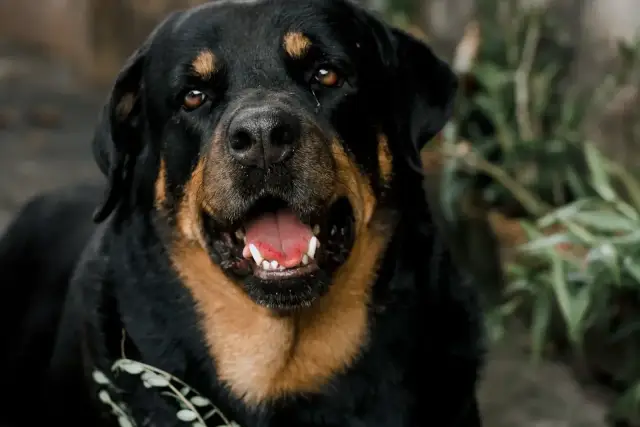
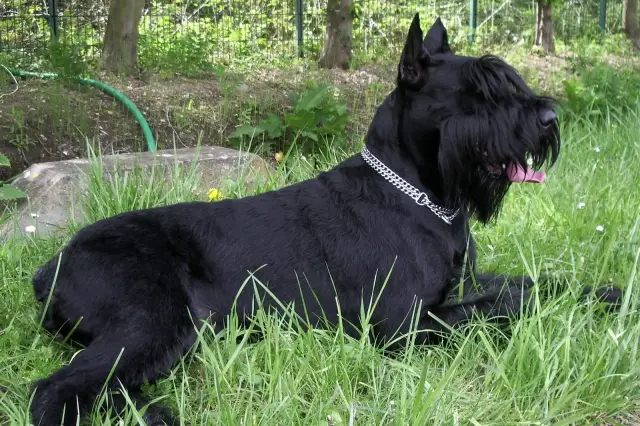
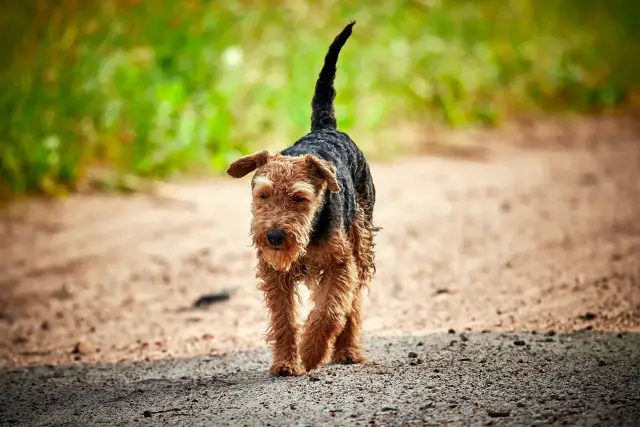
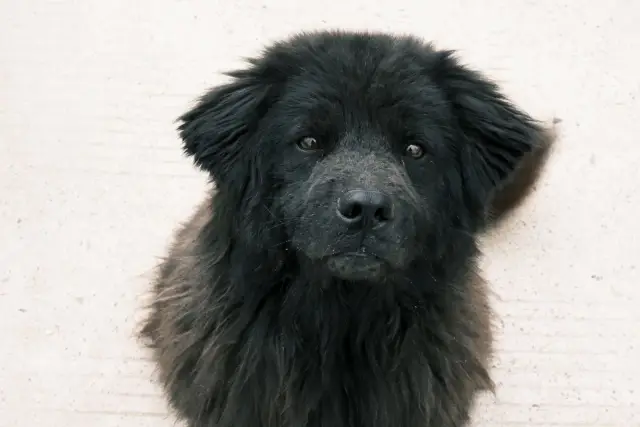
- Black Russian Terrier and Rottweiler
- Black Russian Terrier and Giant Schnauzer
- Black Russian Terrier and Airedale Terrier
- Black Russian Terrier and Newfoundland
- Black Russian Terrier and Leonberger
The Rottweiler tops the table by a wide margin, about twice the Giant Schnauzer figure, which suggests the Rottweiler contributed more to the modern breed's than the stories about the foundation crosses alone would imply. The Airedale figure is much lower than the Schnauzer one, although both are named foundation breeds. The Newfoundland, a breed with a very different history, still shows a link at 19 Mb, and the other entries are larger working breeds that share distant mastiff and drover ancestry.
- Rottweiler180.2 Mb 7.5%
- Giant Schnauzer88.3 Mb 3.7%
- Airedale Terrier38.2 Mb 1.6%
- Newfoundland19.0 Mb 0.8%
- Leonberger15.9 Mb 0.7%
- Great Dane13.1 Mb 0.5%
- Greater Swiss Mountain Dog11.7 Mb 0.5%
- Bernese Mountain Dog11.1 Mb 0.5%
- Dobermann9.8 Mb 0.4%
Source: Parker et al. 2017. Percent of the whole genome.
| Breedwith Black Russian Terrier | with Black Russian Terrier (Mb)Shared DNA (Mb) |
|---|---|
| Rottweiler | 180.2 |
| Giant Schnauzer | 88.3 |
| Airedale Terrier | 38.2 |
| Newfoundland | 19.0 |
| Leonberger | 15.9 |
| Great Dane | 13.1 |
| Greater Swiss Mountain Dog | 11.7 |
| Bernese Mountain Dog | 11.1 |
| Dobermann | 9.8 |
Source: Parker et al. 2017, Cell Reports, shared haplotypes between 161 breeds (1,346 dogs).
The Black Russian Terrier breed standard
 Looks relatedDobermann1880 to 1900 · GermanyVictorian Breed Boom
A breed standard is the written ideal that club judges compare each dog against. The FCI, AKC and The Kennel Club (UK) each publish one.
| Trait | What the standards say |
|---|---|
| Height | AKC: males 27 to 30 in (69 to 76 cm), desired 27 to 29 in (69 to 74 cm); females 26 to 29 in (66 to 74 cm), desired 26 to 28 in (66 to 71 cm). Over 30 in is a serious fault. Height should not outweigh type, proportion and movement |
| Build | Large, sturdy and well-balanced working dog with strong bone |
| Head | Broad skull, strong muzzle with beard and moustache, dark eyes |
| Coat | Dense, rough and slightly wavy, with a thick undercoat; trimmed to the characteristic bearded look |
| Colour | Black; some standards allow a little grey |
| Gait | Powerful and free, with good reach |
The FCI standard gives desired heights of 72 to 76 cm for males (no less than 70, no more than 78) and 68 to 72 cm for females (no less than 66, no more than 74).
Temperament
 Related breedAlaskan Klee Kai1970 to 1988 · United StatesModern Era
The Black Russian Terrier Club of America describes the breed as calm, confident and courageous. In practice that means a dog that is steady and often quiet at home, devoted to its own people, and aloof with strangers. It was designed to guard, and it takes the job seriously: a Black Russian Terrier is watchful and protective and can become unmanageable without early socialisation and consistent handling.
Guarding and strangers
- Socialisation. Puppies need regular, calm contact with many people, places, noises and other dogs in the first year. An under-socialised giant guard dog can become fearful or reactive.
- Training. The breed learns quickly and is generally eager to work with its owner, but it is strong and large, so basic training has to start early. Firm, fair and consistent handling suits it better than harsh correction.
- Size. An adult male can weigh as much as many people can comfortably handle. Lead control matters from puppyhood.
Activity
The breed was built to work for hours, in cold weather, but it is not a frantic dog. Daily walks and some mental work such as obedience, tracking or protection-type sports suit it. Many owners say it relaxes indoors if its exercise needs are met.
Health
 Related breedAmerican Akita1945 to 1956 · United StatesModern Era
Published studies of Black Russian Terrier health are few, and most figures below come from breed-club and hip and elbow registry summaries. They describe the dogs whose owners chose to test, not the whole breed, and they are not exact rates for every Black Russian Terrier.
The atlas data gives a life span of 10 to 12 years. Some sources give up to 14 years. That is typical for a giant breed. For comparison, O'Neill and colleagues (The Veterinary Journal, 2013) found a median age at death of 12.0 years across 102,609 dogs of all breeds in England.
| Condition | What it is | How common | What to do |
|---|---|---|---|
| Loose, misshapen hip joints that cause pain and arthritis | No published figure; the breed club lists it as a main health concern | Hip X-rays of breeding dogs after 24 months; healthy weight; ask for scores | |
| Abnormal elbow joint development | No published figure | Elbow X-rays of breeding dogs; ask for scores | |
| Bloat (gastric dilatation-volvulus) | A swollen, twisted stomach; an emergency | A recognised risk in deep-chested giant breeds; no breed rate published | Smaller meals, rest after eating; seek a vet at once if the belly swells |
| Eye and skin problems | Several breed sources mention eye disorders and skin allergies | No published rate | Ask breeders for eye test results |
Cornell University's veterinary school ran a study enrolling Black Russian Terriers to look for a genetic marker for hip and elbow dysplasia in the breed, which would help breeders reduce both conditions. Until a reliable test exists, X-ray scoring of both parents is the best protection. The Black Russian Terrier Club of America recommends hip and elbow testing for breeding dogs.
 Ticks and fleasTicks and fleas on dogs: how to check, remove and prevent themTicks and fleas on dogs: how to tell them apart, check your dog, remove a tick safely, break the flea life cycle and prevent both.
 GuidesPractical guidesBehaviour, training, health and adoptionRelated breedAmerican Akita1945 to 1956 · United StatesModern Era
Living with a Black Russian Terrier
 Related breedAmerican Bully1980 to 2004 · United StatesModern Era
| Daily reality | Rating | Why |
|---|---|---|
| Exercise | Medium to high | Long daily walks and mental work |
| Training needs | High | Large, strong and protective; early socialisation is essential |
| Grooming | High | Dense coat mats without brushing; trimming every few weeks for the show look |
| Shedding | Low | Low-shedding coat, but loose hair stays in the coat and tangles |
| Barking | Medium | Alert barker when someone approaches |
| Time alone | Poor | A bonded guard dog; dislikes long isolation |
| Children | Fair | Devoted to its family but very large; supervise around small children |
| Other dogs | Varies | Depends on socialisation; same-sex dogs can be tense |
| Cats and small pets | Varies | Depends on early exposure |
| Flat living | Poor | Size; better with a house and garden |
| Heat tolerance | Poor | Thick black coat |
| Cold tolerance | Very good | Bred for Russian winters |
| First-time owner | Poor | Needs experience with giant, protective breeds |
Sources disagree on how often the coat needs brushing: from once or twice a week up to several times a week, and professional trimming for the beard, ears and feet. Plan for regular, long brushing sessions, and a groomer every one to two months if you do not trim at home.
A great fit if you...
- have experience with large, strong guarding breeds;
- have a secure house and garden and a car big enough for a giant dog;
- will commit to early socialisation and training classes;
- enjoy grooming, or can afford a groomer.
Think twice if you...
- are a first-time owner or want a dog that greets every visitor;
- live in a small flat;
- are away from home for long hours;
- do not want a heavy grooming routine.
Before you get one. Ask for hip and elbow scores for both parents and about their temperament with strangers. Visit the kennel and meet adult dogs. Because the breed is rare in many countries, expect a waiting list, and ask the national breed club for breeder lists.
Similar breeds to consider
- Giant Schnauzer: a closer-coated, high-energy foundation breed.
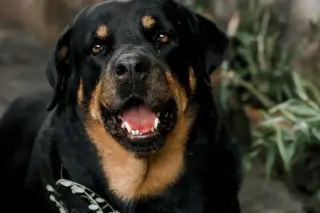
- Rottweiler: the closest DNA relative, with a short coat that needs no trimming.
- Newfoundland: giant, calm and water-loving, with a long coat.
- Leonberger: a giant, friendly companion with a double coat.

Black Russian Terrier fun facts
 Related breedCavapoo1990 to 2000 · United StatesModern Era
- The breed was made by the Soviet army, and the first civilian puppies left the Red Star Kennel in the mid-1950s.
- Despite the name, it is not a terrier. The word "terrier" comes from its Russian name only.
- The Rottweiler shares about twice as much DNA with it as the Giant Schnauzer does (180.2 Mb against 88.3 Mb).
- The AKC added the breed to its Working Group in 2004.
Frequently asked questions
Is the Black Russian Terrier a real terrier?
No. It was bred from large working breeds and the name comes from the Russian "Chornyi terrier".
How big do Black Russian Terriers get?
standard: males 69 to 76 cm and females 66 to 74 cm.
Do Black Russian Terriers shed?
Little, but the dense coat needs regular brushing and trimming to stop matting.
Are Black Russian Terriers good family dogs?
They can be devoted to their own family, but they are large and protective, and need experienced owners and early socialisation.
How long do Black Russian Terriers live?
Atlas data gives 10 to 12 years.
Which breeds make up the Black Russian Terrier?
Giant Schnauzer, Rottweiler, Airedale Terrier and Newfoundland are the core, with other breeds named by some sources.
Read next
Closest DNARottweiler180.2 Mb sharedFamilyDroverThe whole family Adopt a dogDog Shelters in EuropeFind dog shelters in Europe, learn how shelters differ from country to country and why adopting a dog is a good option.
Sources (12)
- Wikipedia, "Black Russian Terrier" and "Moscow Water Dog".
- American Kennel Club, Black Russian Terrier breed page, including the breed standard; and Black Russian Terrier history: the Soviet superdog.
- Fédération Cynologique Internationale, Russian Black Terrier, standard no. 327.
- The Royal Kennel Club (UK), Russian Black Terrier breed standard.
- United Kennel Club, Black Russian Terrier breed standard.
- Hancock D., Dogs of the Shepherds, 2011.
- Parker H.G. et al., "Genomic analyses reveal the influence of geographic origin, migration, and hybridization on modern dog breed development", Cell Reports, 2017.
- O'Neill D.G. et al., "Longevity and mortality of owned dogs in England", The Veterinary Journal, 2013.
- Cornell University College of Veterinary Medicine, "Demystifying dysplasias", 2014.
- Show Sight Magazine, "The origins and development of the Black Russian Terrier".
- Black Russian Terrier Club of America, breed temperament and health testing recommendations.
- Atlas data, breed records and Parker 2017 shared-haplotype table (this site).