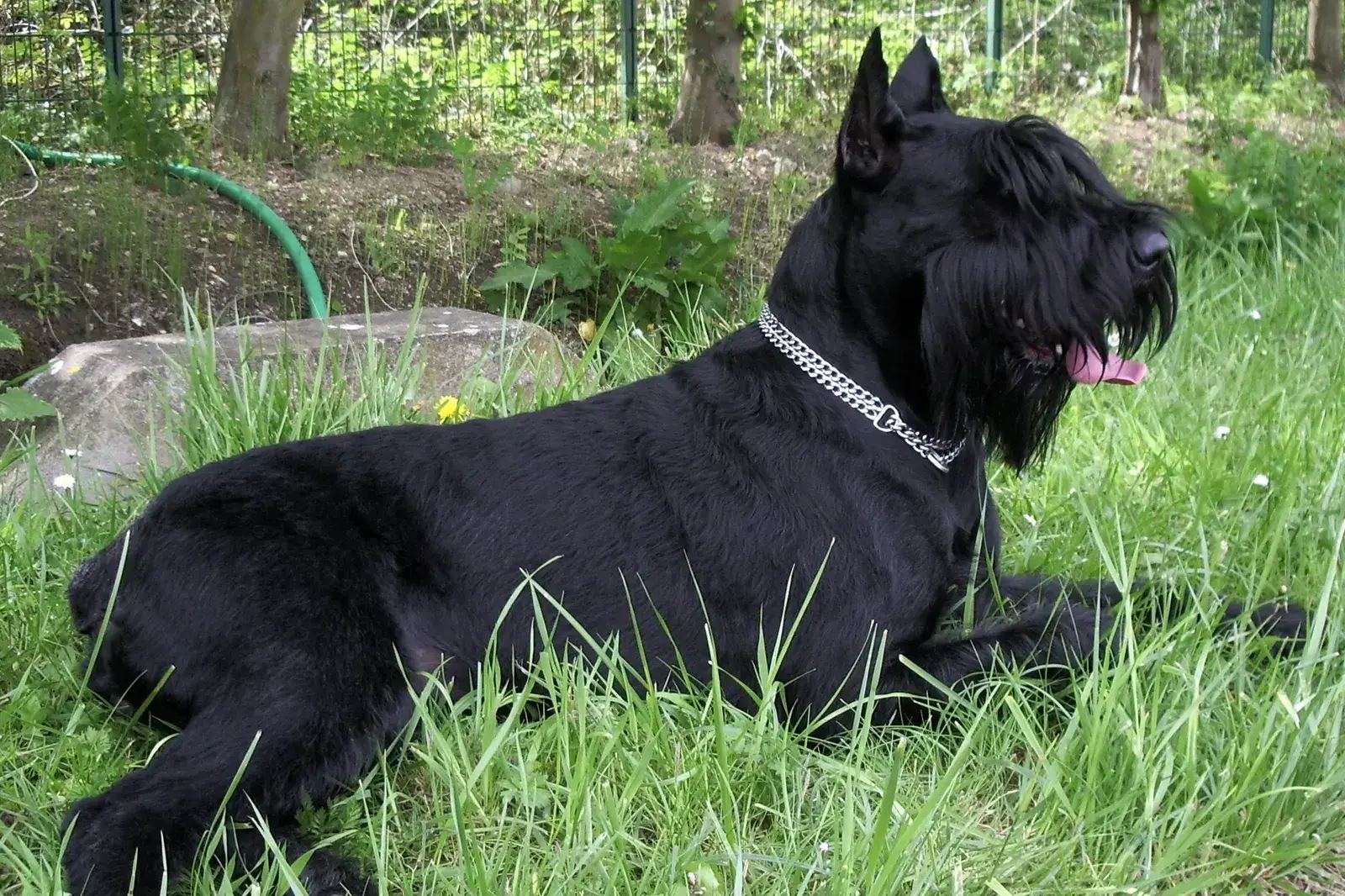
It stands 60 to 70 cm tall, weighs 35 to 47 kg and wears the same bearded face as its smaller relatives, the Standard and Miniature Schnauzer. After the railways ended long cattle drives, it moved into police, military and guard work, and today it also competes in obedience and protection sports and lives with experienced owners as a companion. It is intelligent, strong, loyal and demanding. It suits owners who can train a large dog firmly and kindly, give it hard daily exercise and keep up with coat care. Atlas data puts its life span at 10 to 12 years.
Giant Schnauzer quick facts
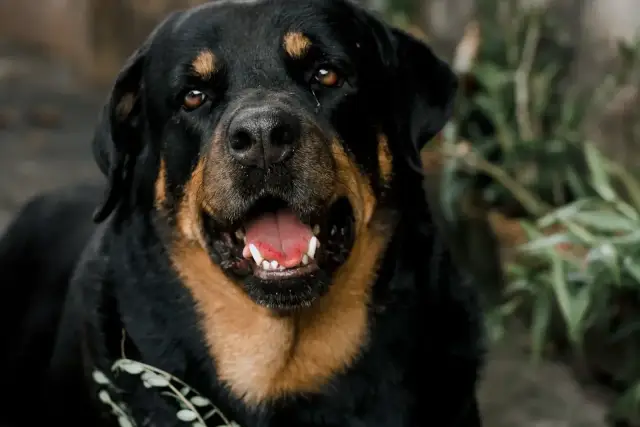 Related breedRottweiler100 CE to 1901 · GermanyAncient World
- Country of origin
- Germany (Bavaria)
- Period of development
- Atlas data: 1850 to 1923; first shown in Munich in 1909
- Original job
- Cattle drover, farm and merchant guard
- Group
- FCI Group 2 (Pinscher and Schnauzer, Molossoid and Swiss Mountain and Cattledogs), standard no. 181; AKC Working Group; UK Kennel Club Working Group
- Height
- 60 to 70 cm (FCI)
- Weight
- 35 to 47 kg (FCI)
- Coat
- Hard, wiry outer coat over a soft undercoat
- Colours
- Pure black; pepper and salt
- Life span
- Atlas data: 10 to 12 years. A 2024 UK study of 155 breeds: 12.1 years
- DNA family
- Drover (Parker et al. 2017)
- Closest DNA relative
- Black Russian Terrier
- Other names
- Riesenschnauzer, Munich Schnauzer
Drawn to scale in real centimetres. Its back reaches about 65 cm, mid-thigh; its head about 83 cm, your hip.
Where it sits in the tree
Victorian Breed Boom · 1850 to 1913
Name and origin
 Related breedAmerican Cocker Spaniel1870 to 1946 · United StatesVictorian Breed Boom
The name
The German name Riesenschnauzer joins Riese, "giant", and Schnauze, "snout" or "muzzle": the giant with the bearded snout. The breed appeared at a Munich show in 1909 and was long known as the Munich Schnauzer (Münchener). One account says the 30 dogs entered in 1909 were listed as "Russian Bear Schnauzers", while another says they were entered as Riesenschnauzers. The sources disagree on the catalogue name, so treat the 1909 date as firm and the name as uncertain. Wikipedia says a Munich Schnauzer club was formed in 1907.
One family, three sizes
"Schnauzer" covers three separate breeds of one type: the Miniature Schnauzer (30 to 35 cm), the Standard Schnauzer (45 to 50 cm) and the Giant (60 to 70 cm). The Standard is the original. The Giant is the one built for heavy work.
Bavarian drover and guard
In southern Germany, the Giant's ancestors worked as drovers. They moved cattle along roads from farms to market towns, and they guarded the stockyards, the butchers and the dealers who carried cash. The same dogs were kept by merchants and in the brewery trade, where a large, alert dog was useful in a yard. One of our sources found no mention of a brewery link, so treat the brewery part as a repeated claim and not a documented fact. What the sources agree on is the cattle and guard work in Bavaria.
Where did the size come from?
Accounts disagree on how the dog was made:
- Selection from big Standard Schnauzers. The widely held view is that breeders took the largest Standard Schnauzers and bred them together. The atlas data names the Standard as the parent, with low confidence, and describes the Giant as a larger version of it.
- Crosses with other big working breeds. The Kennel Club's breed history says cattlemen added Rottweiler, Great Dane, sheepdogs and perhaps Bouvier blood. This is a claim from breed histories. No breeding records survive, and the sources do not agree on which breeds were used.
The truth may be a mix. Farmers bred for work and did not keep pedigrees, so every account of the early Giant is reconstruction.

History
 Same eraAmerican Eskimo Dog1900 to 1917 · United StatesVictorian Breed Boom
From the drove road to the show ring
Dogs of this type were working in Bavaria from at least the 19th century. The atlas data places the breed's development between 1850 and 1923 with medium confidence. Cattle drives were the dogs' main job until the railways took the cattle off the roads, and the sources link the breed's decline as a drover to that change. Breeders in Munich then began to show the dogs, and by 1909 there were enough of them to fill a class at a Munich show.
Police and military work
When droving ended, the sources say the Giant found work as a police and military dog in Europe. Its size, nerve and trainability suited that job, and it spread to other working roles. We hold no verified dates for the first police use, so this article does not give any.
Clubs and recognition
German breeders formed the Munich Schnauzer club in 1907 (Wikipedia). The Pinscher-Schnauzer Klub, formed by a merger in 1918, later covered the Schnauzer breeds. Today the FCI lists the Giant as no. 181 with Germany as the country of origin, the AKC places it in the Working Group and the UK Kennel Club does the same. We hold no verified year for AKC or UK recognition.
| Club | Group |
|---|---|
| FCI | Group 2: Pinscher and Schnauzer, Molossoid and Swiss Mountain and Cattledogs (no. 181) |
| AKC | Working Group |
| UK Kennel Club | Working Group |
Relatives and DNA
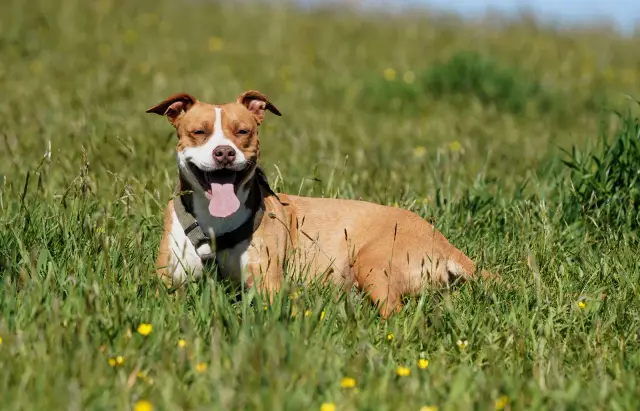 Same familyAmerican Pit Bull Terrier1850 to 1898 · United StatesVictorian Breed Boom
Atlas data places the Giant Schnauzer in the "Drover" family and not in the Schnauzer family of its smaller cousins. In Parker and colleagues (Cell Reports, 2017), which analysed 1,346 dogs from 161 breeds, the Giant fell in the Drover clade with strong support. The study measured shared , long stretches of identical DNA inherited from common ancestors. The more () two breeds share, the closer their shared ancestry or the likelier a past cross. It cannot show in which direction genes flowed.
The standout result is the Black Russian Terrier. It shares 88.3 Mb with the Giant, far more than any other breed. That fits its history: the atlas data records the Giant Schnauzer as a named foundation breed at the Red Star Kennel, the Soviet army kennel that created the Black Russian Terrier.
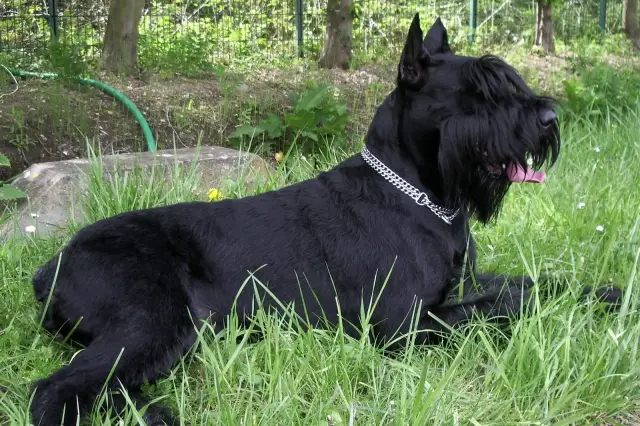
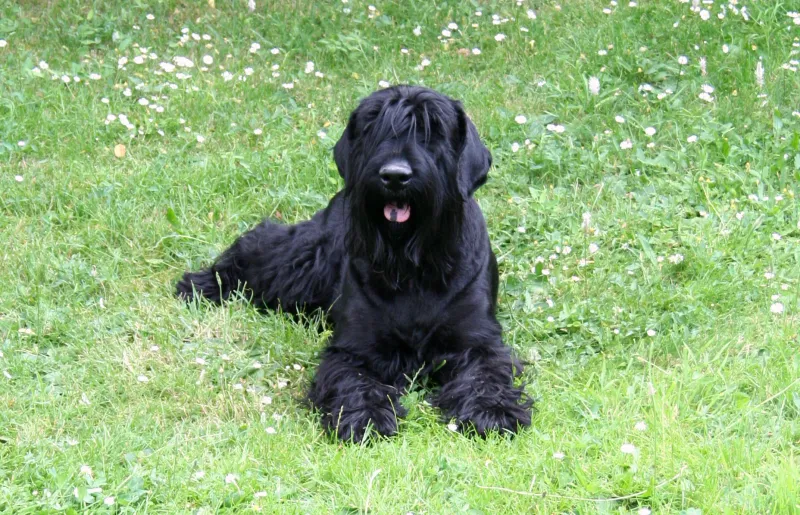
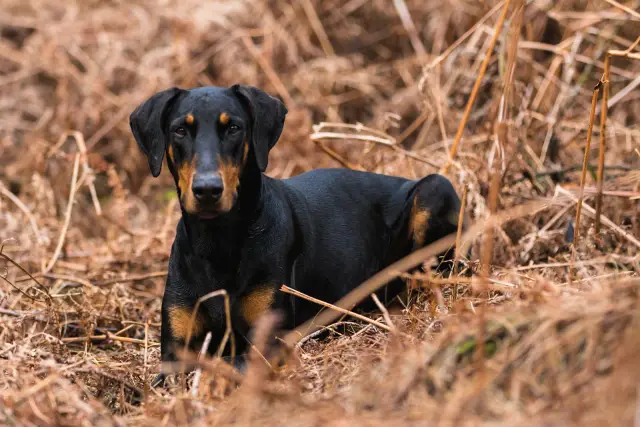
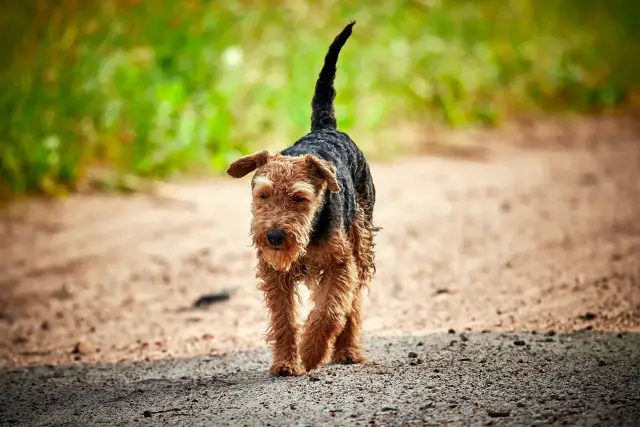
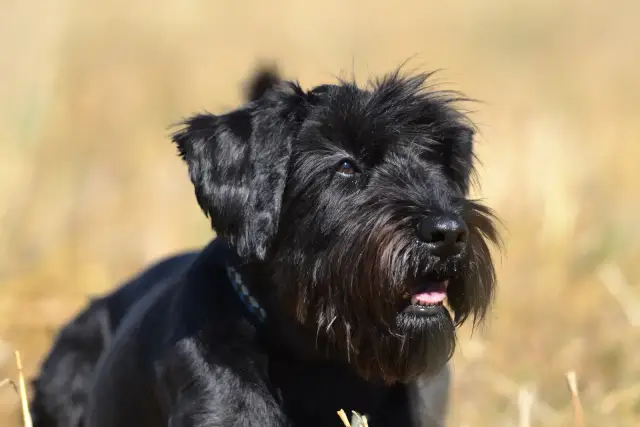
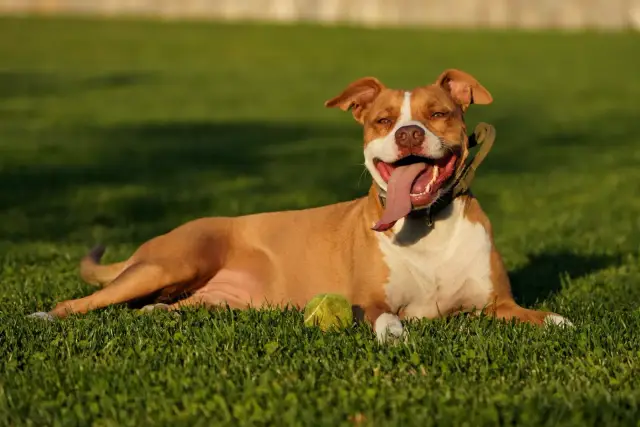
- Giant Schnauzer and Black Russian Terrier
- Giant Schnauzer and Dobermann
- Giant Schnauzer and Airedale Terrier
- Giant Schnauzer and Standard Schnauzer
The Dobermann and Airedale figures show some shared ancestry in the study's sample, and they do not mean either breed was used to build the Giant. The Giant shares 24.2 Mb with the Standard, and the study places the two in different clades even though the atlas data lists the Standard as the Giant's parent. The Giant's sibling in the atlas data is the Miniature Schnauzer.
Sister breeds · 1
- Miniature Schnauzer1888 to 1899
Descend from it · 1
- Black Russian TerrierRussia
- Black Russian Terrier88.3 Mb 3.7%
- Dobermann25.1 Mb 1.0%
- Airedale Terrier24.6 Mb 1.0%
- Standard Schnauzer24.2 Mb 1.0%
Source: Parker et al. 2017. Percent of the whole genome.
| Breedwith Giant Schnauzer | with Giant Schnauzer (Mb)Shared DNA (Mb) |
|---|---|
| Black Russian Terrier | 88.3 |
| Dobermann | 25.1 |
| Airedale Terrier | 24.6 |
| Standard Schnauzer | 24.2 |
Source: Parker et al. 2017, Cell Reports, shared haplotypes between 161 breeds (1,346 dogs).
The breed standard
 Looks relatedAmerican Staffordshire Terrier1850 to 1936 · United StatesVictorian Breed Boom
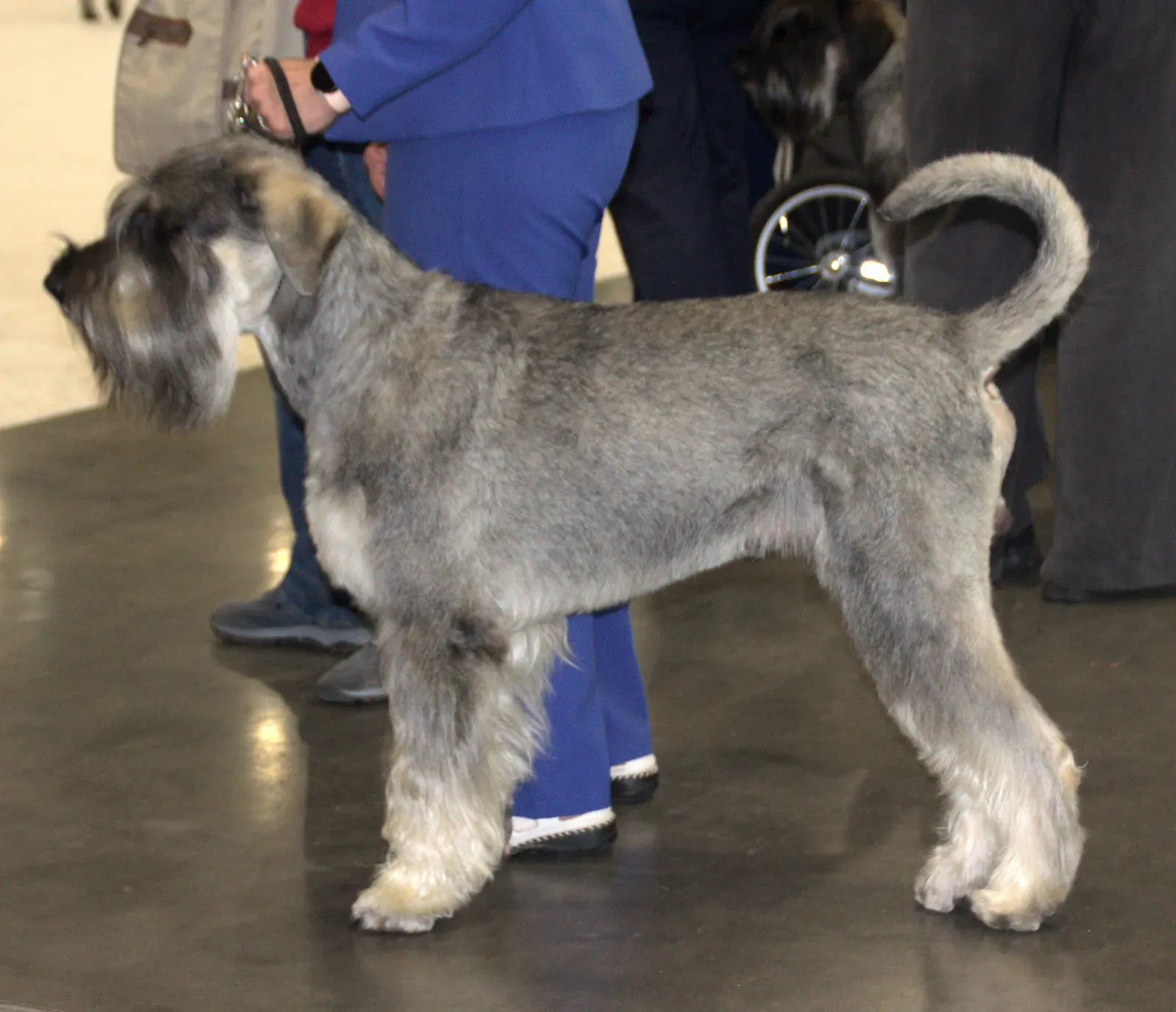
A is the written ideal that a kennel club judges dogs against. It describes size, coat, colour, head and build. Clubs write their own versions, so details differ.
| Trait | What the standards say |
|---|---|
| Height at withers | FCI: 60 to 70 cm for dogs and bitches. AKC: dogs 25.5 to 27.5 inches (about 65 to 70 cm), bitches about 23.5 to 25.5 inches (about 60 to 65 cm). UK Kennel Club: dogs 65 to 70 cm, bitches 60 to 65 cm |
| Weight | FCI: 35 to 47 kg. AKC and UK Kennel Club: no weight set in the standard |
| Coat | FCI, AKC and UK Kennel Club: hard, wiry outer coat over a dense undercoat |
| Colours | FCI: pure black; pepper and salt. AKC: solid black; pepper and salt. UK Kennel Club: black; pepper and salt |
| Head | FCI, AKC and UK Kennel Club: strong, elongated, with bearded muzzle and bushy eyebrows |
| Ears | FCI and AKC: set high and folded; the AKC also describes cropped ears where cropping is legal |
| Build | FCI, AKC and UK Kennel Club: powerful, square-built, with a strong back and deep chest |
The UK Kennel Club says its size is a guide to the ideal, and that a given dog may not match it exactly. The AKC figures come from breed reference summaries and not from the club's own page. Check the current standards before showing a dog.
Colours. Pepper and salt is a mix of black and white banded hairs that gives a grey look. Pure black has a black undercoat. Some sources also mention black and silver, but we have no club standard that accepts it, so we do not list it.
Size in practice. This is a big dog. A male at the top of the FCI range stands 70 cm at the withers and weighs close to 47 kg, which is about the weight of a large adult person. It needs space in the car, in the home and in the yard.
 Save
Temperament
 Related breedAustralian Kelpie1870 to 1902 · AustraliaVictorian Breed Boom
The Giant Schnauzer is intelligent, spirited and loyal to its family. It was a guard before it was a companion, and that shows: most are watchful with strangers, protective of the home and self-assured. Breed clubs describe a dog that is reliable with its own people, playful and affectionate, and reserved or wary with outsiders.
It is more power and more reserve than the Standard Schnauzer. A poorly trained Giant can pull a person off their feet or push through a door, so basic obedience matters more than it does for a small dog. Individual dogs vary a lot, and early socialisation counts as much as breeding.
Behaviour and daily needs
- Exercise. A drover's dog needs hard daily exercise: long walks, runs, hikes, games and training. A bored Giant can be loud and destructive. We hold no verified hours figure.
- Training. Quick to learn and often strong-willed. It does best with a calm, consistent owner and early classes. Harsh methods work badly with a dog this size and this sharp.
- Guarding. Strong. Plan for visitors, delivery people and the garden gate before they become a problem.
- Other animals. Boldness with strange dogs is common. Small pets and cats need careful introductions.
- Grooming. Brush the wiry coat weekly and trim or hand strip at regular intervals. The beard needs wiping after meals.

Health
 Related breedBasset Hound1860 to 1885 · United KingdomVictorian Breed Boom
Most Giant Schnauzers live active lives into their senior years. The conditions below are the ones breeders screen for and owners can watch for. They do not mean that your dog will develop any of them. Large breeds as a group live shorter lives than small ones, and the Giant follows that pattern.
Life span. A study of about 585,000 British dogs from 155 breeds (McMillan et al., Scientific Reports, 2024) lists the Giant Schnauzer at 12.1 years, against 12.7 years for purebred dogs overall and 12.0 years for crossbreeds. Atlas data gives a wider 10 to 12 years. The two sources describe different populations and methods.
No peer-reviewed study gives a prevalence for the conditions below, so the table does not borrow numbers from other breeds. and eye disease are named in breed guides for the Giant, and the PDSA names urinary incontinence and urinary stones as breed concerns.
| Condition | What it is | How common | What helps |
|---|---|---|---|
| Bloat (gastric dilatation and volvulus) | The stomach fills with gas and may twist, which is an emergency | Deep-chested breeds are at higher risk. No published figure for this breed | Smaller meals, no hard exercise right after eating, know the signs (swollen belly, retching with no vomit) and go to a vet at once |
| Hip dysplasia | A poorly fitting hip joint that can wear early and cause stiffness | Named in breed guides. No published figure for this breed | Hip scoring of both parents, healthy weight, avoiding over-exercise in puppies |
| Eye disease | Includes dry eye (keratoconjunctivitis sicca), glaucoma and cataracts | Listed in breed summaries. No published figure | Eye certification of breeding dogs, regular eye checks |
| Hypothyroidism | A slow thyroid that can cause weight gain, tiredness and coat changes | Listed in breed guides. No published figure | Blood test at the vet, daily tablet if needed |
| Urinary problems | Includes bladder stones and urinary incontinence (PDSA) | No published figure | Plenty of water, quick vet check if the dog strains or leaks |
| Cancer | A group of illnesses, common in older large dogs | No published figure for this breed | Regular vet checks, report lumps early |
 Ticks and fleasTicks and fleas on dogs: how to check, remove and prevent themTicks and fleas on dogs: how to tell them apart, check your dog, remove a tick safely, break the flea life cycle and prevent both.
 GuidesPractical guidesBehaviour, training, health and adoptionRelated breedBasset Hound1860 to 1885 · United KingdomVictorian Breed Boom
Living with a Giant Schnauzer
 Related breedBelgian Malinois1891 to 1901 · BelgiumVictorian Breed Boom
| Daily reality | Rating | Why |
|---|---|---|
| Exercise per day | High | A drover's dog; needs hard daily exercise and mental work |
| Training needs | High | Strong, clever and sharp; needs firm, kind and early training |
| Grooming | High | Weekly brushing and regular trimming or hand stripping; beard cleaning daily |
| Shedding | Low | Wiry coat sheds little, but dead hair stays in the coat until stripped. Varies |
| Barking | Medium | A guard breed that alerts; amount varies |
| Time alone | Poor | Bred to work with people; boredom can lead to noise and damage |
| Children | Fair | Loyal and playful with its own family but large and strong; always supervise |
| Other dogs | Fair | Boldness with strange dogs is common. Varies |
| Cats and small pets | Fair | Drive and size need careful introductions. Varies |
| Flat living | Poor | A big, active dog; possible only with very strong daily exercise |
| Heat tolerance | Fair | Dense coat on a large frame; take care in hot weather. No breed study found |
| Cold tolerance | Good | Wiry double coat; dry the wet beard and legs |
| First-time owner fit | Poor | Size, strength and guarding instinct suit experienced owners |
A great fit if
- You have experience with large, strong-willed dogs.
- You want a dog for hiking, running or dog sports, and will train it every day.
- You have a secure yard and space in the home and car.
- You will book regular coat care or learn to hand strip.
Think twice if
- This is your first dog.
- You work long hours away from home with no plan for company.
- You live in a small flat or have no safe place to exercise a large dog.
- You want a dog that is friendly with every stranger.
Before you get one
- Health tests to ask a breeder for. Hip scores for both parents and a current eye certificate for both parents. Ask your national breed club which other tests it advises.
- Puppy or adult rescue. Breed rescues exist in some countries. An adult dog's size, temperament and manners are already visible.
- First year. Plan for early socialisation, puppy classes, house training and alone training. Costs for food, vet care and boarding are higher for a dog of this size.
Similar breeds to consider
- Standard Schnauzer. The same type in a medium body that is easier to handle.
- Black Russian Terrier. The closest relative in the DNA study, equally big and demanding.
- Rottweiler. Another German drover and guard dog, with a short coat and less grooming.
- Dobermann. A German guard dog with a smooth coat and a sleeker build.

Fun facts
 Related breedBelgian Shepherd1891 to 1901 · BelgiumVictorian Breed Boom
- The Giant Schnauzer was first shown at a Munich show in 1909, and one account says the catalogue called it the "Russian Bear Schnauzer".
- The Black Russian Terrier shares 88.3 Mb of DNA with the Giant, far more than any other pair of breeds in the study.
- A big male can reach 70 cm at the withers under the FCI standard, and 47 kg in weight.
- Railways ended the long cattle drives, so drovers' dogs had to find new jobs.
Frequently asked questions
How big does a Giant Schnauzer get?
60 to 70 cm at the withers and 35 to 47 kg under the standard.
How long do Giant Schnauzers live?
Atlas data gives 10 to 12 years. A UK study of 155 breeds gives 12.1 years (McMillan et al., 2024).
What is the difference between a Giant and a Standard Schnauzer?
Size and job. The Standard is 45 to 50 cm and was a farm ratter and guard. The Giant is 60 to 70 cm and was a cattle drover and guard. The Standard is the original breed.
Do Giant Schnauzers shed?
Very little, because of the wiry coat, but they need regular brushing and trimming.
Are Giant Schnauzers good family dogs?
They can be, with experienced owners who train them from puppyhood and give them daily exercise. They are loyal and protective but large and strong, so supervision with children is a must.
What colours does a Giant Schnauzer come in?
Pure black and pepper and salt are the accepted colours at the FCI, the and the UK Kennel Club.
Read next
Closest DNABlack Russian Terrier88.3 Mb shared Sister breedMiniature Schnauzer1888 to 1899
 Adopt a dogDog Shelters in GermanyTen big cities checked, how adoption works, what it costs
Sources (13)
- American Kennel Club, Giant Schnauzer breed standard and breed history articles.
- Dogs New Zealand, Giant Schnauzer breed information.
- Fédération Cynologique Internationale, Riesenschnauzer (Giant Schnauzer), standard no. 181.
- Fogle B., The Encyclopedia of the Dog, 2009 (as listed in the atlas data).
- McMillan K.M. et al., "Longevity of companion dog breeds: those at risk from early death", Scientific Reports, 2024.
- National Purebred Dog Day, "The Russian Bear Schnauzer" (name story).
- Parker H.G. et al., "Genomic analyses reveal the influence of geographic origin, migration, and hybridization on modern dog breed development", Cell Reports, 2017.
- PDSA, Giant Schnauzer breed information.
- Showsight Magazine, Giant Schnauzer origin and history articles.
- The Kennel Club (UK), Giant Schnauzer breed standard and breed information.
- United Kennel Club, Giant Schnauzer breed standard.
- Wikipedia, "Giant Schnauzer" (used for dates and summaries, checked against the other sources listed).
- Dogs Atlas breed records and Parker 2017 shared-haplotype table (this site).