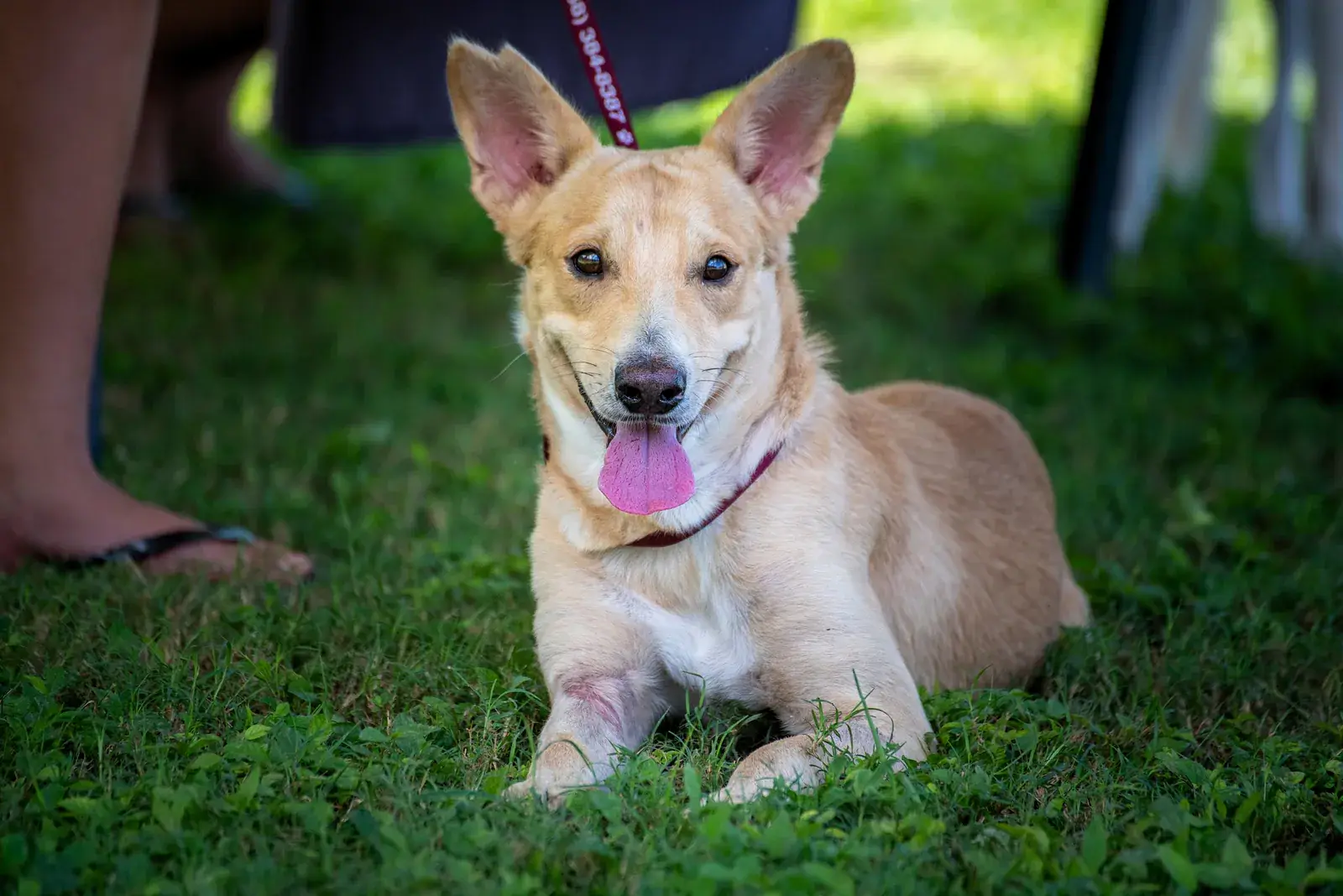
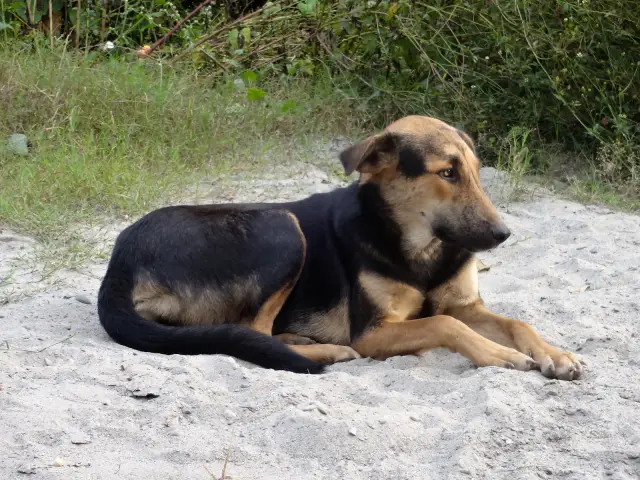
It was described in the 1970s as a free-ranging dog living on the pine savannas of South Carolina and Georgia, and it is now a registered breed. Where it came from is still debated. Some researchers think it carries a little ancestry from dogs that lived in North America before Europeans arrived, while a large 2018 genome study found almost none of that legacy in modern dogs. Today it is an alert, independent, pack-minded companion that does best with an active owner who understands primitive dog behaviour.
Carolina Dog quick facts
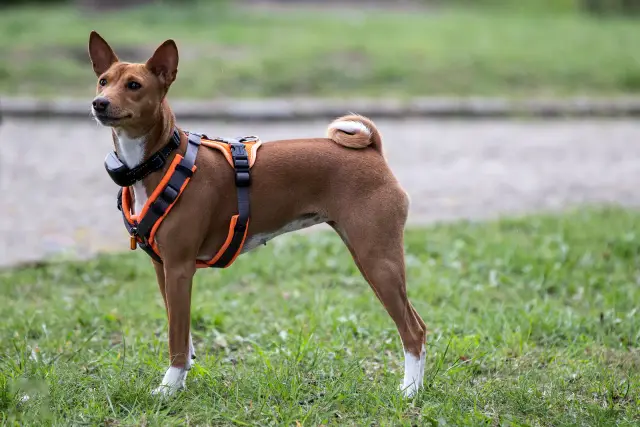 Related breedBasenji3000 BCE to 1937 · Democratic Republic of the CongoAncient World
- Country of origin
- United States; South Carolina and Georgia (atlas data)
- Period of development
- Not known. Atlas data gives a very wide range with low confidence, from the ancient world to 1990
- Original job
- None; it was found living free-ranging, not bred for a task
- Type
- Medium dog of pariah type. Recognised by the United Kennel Club (UKC)
- Family (Parker 2017)
- Pariah and Village Dog (atlas data)
- Other names
- American dingo, Dixie dingo
- Size
- Medium. Published ranges differ between sources, so none is given here as the standard's figure
- Life span
- Atlas data: 12 to 15 years; most breed profiles agree
- Colours
- Ginger is preferred in the UKC standard, with paler markings; other shades are listed by other sources
- Signature feature
- Fish-hook shaped tail with a white tip, pricked ears
Where it sits in the tree
Ancient World · 3,000 BCE to 499
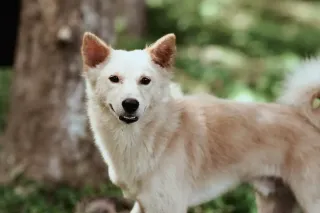
Name and origin
 Related breedCaucasian Shepherd Dog500 BCE to 1920 · RussiaAncient World
The name Carolina Dog comes from the Carolinas, where the free-ranging dogs were described in the 1970s. The atlas data gives the same etymology. "American dingo" is a nickname that came from a resemblance, not from a family tie. The dogs look like Australian dingoes: ginger or buff, lean, with pricked ears and a bushy tail. The biologist who studied them first, I. Lehr Brisbin, said their behaviour reminded him of Australian dingoes more than of the European dogs brought by colonists. A 2013 mitochondrial DNA study found that dingoes and the New Guinea singing dog belong to haplotype A29, while the Carolina Dog's unique haplotype is A184, so that study found no DNA link between them. The Dingo and the New Guinea Singing Dog are separate lineages.

History
 Same eraCentral Asian Shepherd Dog2000 BCE to 1990 · Turkmenistan, Uzbekistan, KazakhstanAncient World
Brisbin and the Savannah River Site
The story starts in the 1970s. Brisbin, a biologist at the University of Georgia's Savannah River Ecology Laboratory, did fieldwork on the roughly 300 square mile (about 780 square kilometre) Savannah River Site in South Carolina. According to published accounts, while monitoring animals for radioactive contaminants he occasionally came across wild dogs roaming the pine savannas and the edges of dumps. One account says his first specimen came from a pound in Augusta, Georgia. He noticed that the dogs looked and behaved alike across the area, hunted in packs and flashed the white underside of the tail as a signal, and he began to study them.
His hypothesis was that the dogs descended from dogs that belonged to Native Americans, possibly arriving some 12,000 years ago, though sources give different estimates. That is a hypothesis, not a finding.
Recognition
The United Kennel Club recognises the breed. The UKC's own standard says it was recognised on 1 January 1995, while secondary sources say 1996, so 1995 is the primary-source date. The UKC says it revised the standard effective 2 January 2023 at the request of the Carolina Dog Society. The UKC is the only recognising club.
Where do Carolina Dogs come from? What DNA says
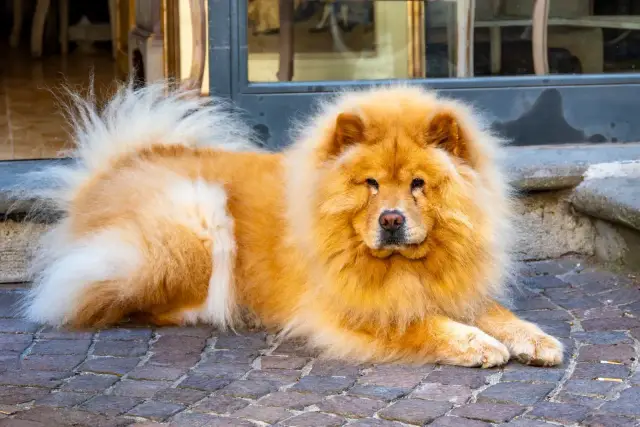 Related breedChow Chow200 BCE to 1895 · ChinaAncient World
The question people search for is whether the Carolina Dog is a living piece of the dogs that came to the Americas with the first people. The honest answer is that the evidence so far is mixed, and a clean yes or no is not available.
The wider story of how dogs reached the Americas is in first dogs on every continent, and the pre-contact lineages are in the Ancient American dogs family. The atlas data places the Carolina Dog in the Pariah and Village Dog family.
van Asch and colleagues (2013, Proceedings of the Royal Society B). The team sequenced mitochondrial DNA of free-ranging and registered dogs from the Americas and reported evidence that many American breeds carry pre-Columbian ancestry. For the Carolina Dog, they found a mitochondrial haplotype, A184, that had not been recorded before and that belongs to a group of East Asian types. Summaries report that about 37% of the Carolina Dogs tested carried it, but that figure is not confirmed in the paper itself, so treat it as a secondary number. The authors presented this as the first DNA-based evidence that the Carolina Dog may have an ancient Asian origin.
Ní Leathlobhair and colleagues (2018, Science). A later study, "The evolutionary history of dogs in the Americas", sequenced 71 mitochondrial and 7 nuclear genomes of ancient dogs from North America and Siberia spanning about 9,000 years. It concluded that dogs in the Americas form a that likely came from Siberia with people, and that after Europeans arrived these dogs almost completely disappeared, leaving a small genetic legacy in modern dogs. One report says the evidence found no more than 4 percent pre-contact ancestry in any sample. Perri has suggested that earlier mitochondrial studies may not have separated pre-contact ancestry from modern Arctic dog ancestry, since the two carry similar mitochondrial types.
What can and cannot be said.
- The Carolina Dog does carry an uncommon mitochondrial type that groups with East Asian dogs, which is consistent with, but does not prove, descent from pre-contact dogs.
- Mitochondrial DNA follows only the mother's line, so it cannot show how much of the whole genome is pre-contact.
- Whole-genome work found very little pre-contact ancestry in modern dogs, though the 2018 reports did not describe the Carolina Dog on its own.
- Brisbin's 1970s hypothesis of Native American dogs remains a hypothesis.
The breed standard
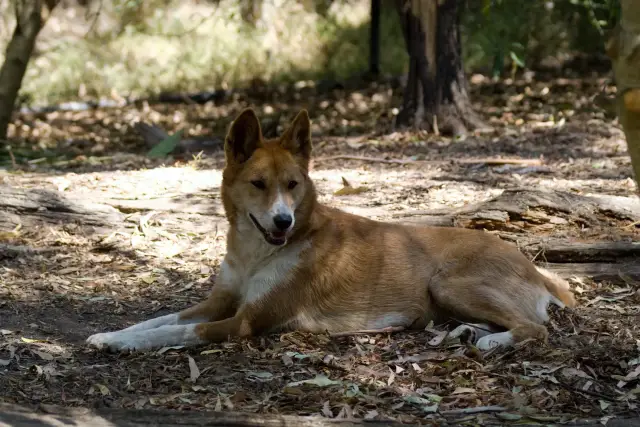 Looks relatedDingo3000 BCE to 1500 BCE · AustraliaAncient World
A is the written ideal that a kennel club judges dogs against. Only the UKC has one for this breed. Sources that quote its height and weight text differ, so no figure is given.
| Trait | What the standards say |
|---|---|
| Type (UKC) | Medium, lean, pariah type |
| Colour (UKC) | Ginger preferred, with paler buff markings; some sources list tan, buff, pale yellow and |
| Tail (UKC) | Fish-hook shaped at the end; carriage varies with mood; often white-tipped |
| Ears | Pricked, in the descriptions of the dogs |
| Height and weight | Sources differ; check the current UKC standard |
Temperament and behaviour
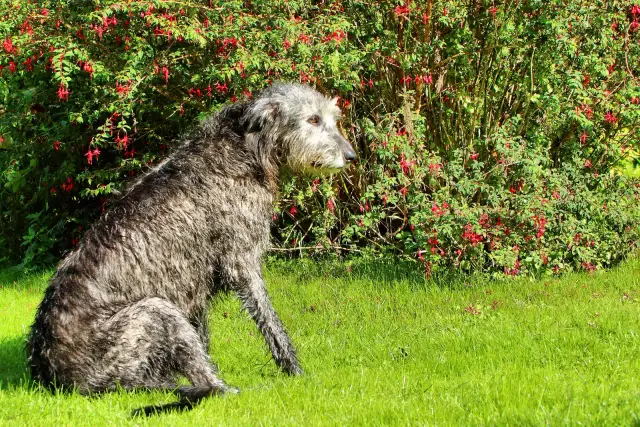 Related breedIrish Wolfhound100 BCE to 1885 · IrelandAncient World
Breed descriptions agree on a few traits: alert, independent, reserved with strangers, strongly bonded to its family. These descriptions come from rescue and breed profiles, and no behaviour study of the breed exists.
Pack behaviour. Brisbin reported that the free-ranging dogs hunted in packs and signalled with the tail. He also reported that males often stayed with the females after a litter was born, unlike most domestic dogs. These are his field observations, not tested results.
Snout pits. The most unusual behaviour is the "snout pit", a small hole dug with the nose. According to Brisbin's reports, as relayed by WUNC and Patricia McConnell, almost all the females he observed (98%) dug these pits, only between September and January. He found no sign that the dogs were eating insects or animals there, so one hypothesis is that they were getting minerals from the sand, possibly linked to pregnancy. This is a hypothesis and Brisbin said himself that the behaviour still puzzled him.

Health
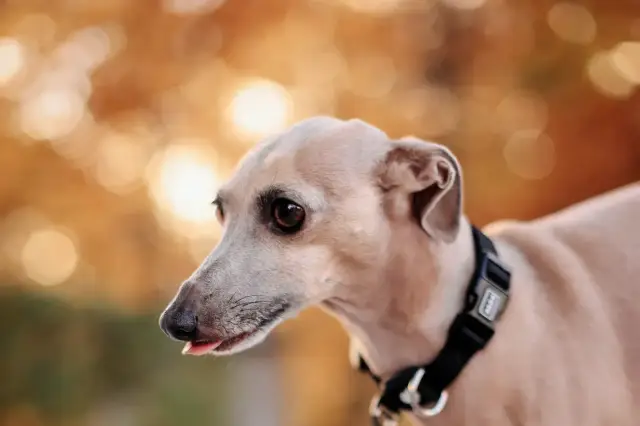 Related breedItalian Greyhound500 BCE to 1900 · ItalyAncient World
Most Carolina Dogs are healthy, and sources describe the breed as generally healthy with few major problems. This section lists what sources mention. No named prevalence study exists, so there are no numbers.
| Condition | What it is | How common | What helps |
|---|---|---|---|
| Hip and | Joints that form loosely and wear | Mentioned by one source; no figure found | Ask the breeder or rescue about joint history, keep a healthy weight |
| Skin allergies | Itchy skin, ear infections or upset stomach | Mentioned by one source; no figure found | Vet check, spot triggers early |
Life span. The atlas data gives 12 to 15 years. Most breed profiles agree, but no measured median exists.

Living with a Carolina Dog
 Related breedMaltese500 BCE to 1888 · MaltaAncient World
| Daily reality | Rating | Why |
|---|---|---|
| Exercise per day | High | Lean pariah type that likes to roam and run |
| Training needs | Medium to High | Independent; do best with patient, reward-based training and early socialisation |
| Grooming | Low | Short coat |
| Shedding | Medium | Short coat that sheds; varies by dog |
| Barking | Varies | Alert dog; no data |
| Time alone | Fair | Strong family bond; varies |
| Children | Varies | Depends on socialisation and the individual dog |
| Other dogs | Varies | Pack-minded in Brisbin's field reports; no study of pet dogs |
| Cats and small pets | Poor | Free-ranging background; ask any rescue about the individual dog |
| Flat living | Poor | Active dog |
| Heat tolerance | Varies | Comes from the warm South; no study found |
| Cold tolerance | Varies | Short coat; no study found |
| First-time owner fit | Fair | Needs patience with an independent dog |
A great fit if
- You want an active walking or running companion.
- You have a securely fenced garden.
- You enjoy a dog with a reserved, thoughtful character.
- You are happy to adopt from a rescue, since many Carolina Dogs are rescued.
Think twice if
- You want a dog that greets every stranger.
- You have cats, rabbits or other small pets in the house.
- You cannot secure the garden; a roaming instinct is likely in a free-ranging type.
- You are away for long days.
Before you get one
The breed is registered with the UKC only, and many Carolina Dogs are found through rescues or breeders that follow the UKC standard. Ask for joint history and for a visit to meet the parents. An adult rescue shows its temperament up front. Plan for early socialisation, a secure fence and a leash in open spaces.
Similar breeds to consider
- Dingo. The wild Australian dog the nickname compares it with, though not a pet.
- Black Mouth Cur. Another American Southern working dog, but bred for work.
- Xoloitzcuintle. A pre-contact American breed with a documented history.
- New Guinea Singing Dog. A rare primitive dog with a different DNA lineage.

Carolina Dog fun facts
 Related breedPug400 BCE to 1885 · ChinaAncient World
- The dogs flash the white underside of the tail as a signal, according to Brisbin.
- Brisbin first met them on the Savannah River Site while monitoring wildlife.
- The "dingo" nickname comes from looks, not from DNA.
- The UKC says it recognised the breed on 1 January 1995.
Frequently asked questions
What is a Carolina Dog?
A medium, ginger-coated, pariah-type dog from the American South, found free-ranging in the 1970s and now registered by the UKC.
Is the Carolina Dog a dingo?
No. The nickname is from its looks. A 2013 DNA study found that dingoes carry haplotype A29, while the Carolina Dog's unusual type is A184.
Is the Carolina Dog descended from pre-contact American dogs?
That has been proposed, but the DNA is mixed. A 2013 study found an East Asian-type mitochondrial haplotype, and a 2018 study found almost no pre-contact legacy in modern dogs.
Why do Carolina Dogs dig snout pits?
Brisbin reported the habit in females between September and January and suggested minerals as one explanation. It is a hypothesis.
How long do Carolina Dogs live?
The atlas data says 12 to 15 years, and most profiles agree.
Are Carolina Dogs good family dogs?
It depends on early socialisation and the individual dog. They suit active households without small pets.
Read next
 FamilyPariah & Village DogThe whole family
 Adopt a dogDog Shelters in EuropeFind dog shelters in Europe, learn how shelters differ from country to country and why adopting a dog is a good option.
Sources (12)
- United Kennel Club, Carolina Dog breed standard (recognition date, colour, tail) and breed standard changes notice, 2023.
- Wikipedia, "Carolina Dog" (secondary: Brisbin, Savannah River Site, recognition dates, size ranges).
- WUNC, "Is the Carolina dog native to North America? New science says maybe", 2013.
- Patricia McConnell, The Other End of the Leash, blog post on Carolina Dogs (Brisbin's snout pit reports).
- Local Life SC, "Wayback Lowcountry: Carolina Dog" (Brisbin's early work; secondary).
- van Asch B. et al., "Pre-Columbian origins of Native American dog breeds, with only limited replacement by European dogs, confirmed by mtDNA analysis", Proceedings of the Royal Society B, 2013 (PMC3730590).
- National Geographic, 2013 report on American dog breed origins.
- Ní Leathlobhair M. et al., "The evolutionary history of dogs in the Americas", Science, 2018 (PubMed 29976825), and University of Cambridge news release.
- Archaeology magazine, "The American Canine Family Tree", Nov to Dec 2018.
- PetMD and Wisdom Panel Carolina Dog profiles (secondary: health, size, colours).
- Parker H.G. et al., "Genomic analyses reveal the influence of geographic origin, migration and hybridization on modern dog breed development", Cell Reports, 2017.
- Atlas data, Carolina Dog knowledge record (etymology, family, life span).