When and where were dogs domesticated?
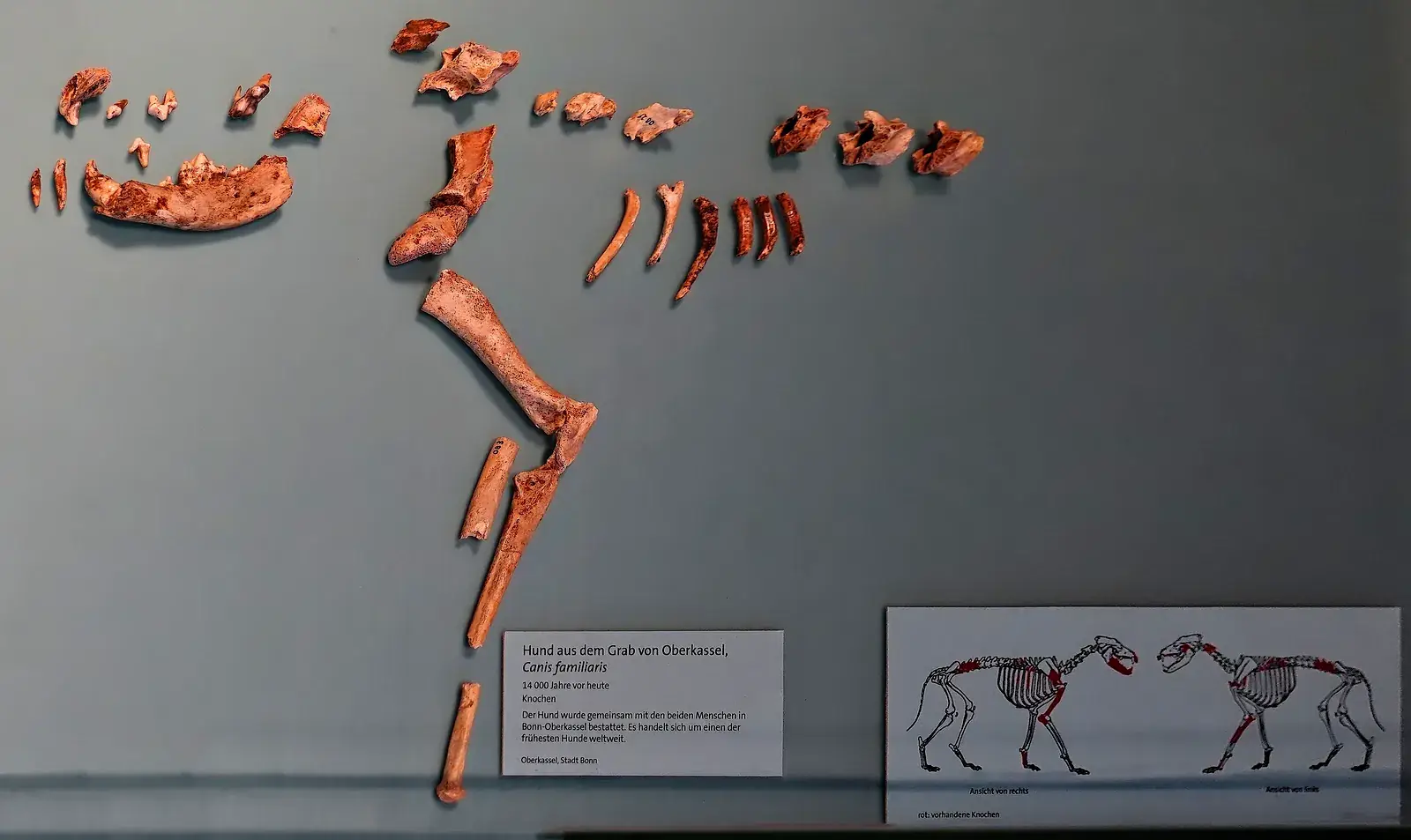
Nobody knows exactly. The oldest dog that most researchers accept is the Bonn-Oberkassel dog from Germany, buried about 14,200 years ago. Genetic work puts the split of dogs from wolves far earlier, and scientists still argue about whether dogs began once or twice, and in which part of Eurasia.
 GuideDogs in myth around the worldFrom Anubis and Cerberus to Fenrir, Xolotl and the Tiangou: how cultures across the world imagined dogs as guardians, guides and monsters.
In this atlas the domestic dog is the tamed root of the dog family tree. It comes from the extinct Late Pleistocene wolf, sits beside the grey wolf, and holds every dog lineage and breed family below it.
 ArticleThe first known dog on every continentEarliest accepted dog on each continent, from Bonn-Oberkassel to the dingo: dates, sites, how dogs arrived and which breeds carry those first dogs.GuideDogs in myth around the worldFrom Anubis and Cerberus to Fenrir, Xolotl and the Tiangou: how cultures across the world imagined dogs as guardians, guides and monsters.
Quick facts about the Domestic Dog branch
| Fact | Answer |
|---|---|
| Branch type | Domestic root, living |
| Parent | Late Pleistocene wolf |
| Sister branch | Grey wolf |
| Time in this atlas | About 38,000 to 13,000 years ago (low confidence) |
| Oldest widely accepted dog | Bonn-Oberkassel, Germany, about 14,200 years ago |
| Conservative date for the first dogs | About 14,500 years ago (Bergström 2020) |
| Lineages by 11,000 years ago | At least five (Bergström 2020) |
| Main studies | Larson 2012, Thalmann 2013, Frantz 2016, Botigué 2017, Bergström 2020 and 2022 |
 GuideDogs in Legends and Fairy TalesDogs in folklore and fairy tales: Black Shuck, The Tinderbox, Saint Guinefort, Panhu, Greyfriars Bobby, Barry and Old Drum, with legend and history kept apart.
 GuideDog hybrids: what dogs can and cannot breed withCan dogs breed with wolves, coyotes, jackals or foxes? Wolfdogs, coydogs, the Sulimov dog and Dogxim explained, with chromosomes and DNA studies.GuideDogs in Legends and Fairy TalesDogs in folklore and fairy tales: Black Shuck, The Tinderbox, Saint Guinefort, Panhu, Greyfriars Bobby, Barry and Old Drum, with legend and history kept apart.
What this branch is
The domestic dog branch covers every dog from the first tamed wolves to the pets of today. It is not a breed. It is the trunk from which the lineages grew, and the lineages are older than almost all breeds. Most modern breeds took shape in the last few centuries, grouped into families by DNA (Parker et al., 2017).
 GuideLivestock guardian dogs: what they do and who they suitWhat livestock guardian dogs do, how they differ from herding dogs, 40 LGD breeds by country, the DNA evidence, and whether they make good pets.
For dated finds on each continent, see first dogs by continent.
 ArticleDog Breed Family Tree: How All Dog Breeds Are RelatedThe dog breed family tree from Ice Age wolves to 29 breed families.GuideLivestock guardian dogs: what they do and who they suitWhat livestock guardian dogs do, how they differ from herding dogs, 40 LGD breeds by country, the DNA evidence, and whether they make good pets.
When and where: the debate
Timing. Skoglund and colleagues (Current Biology, 2015) placed the split between dog ancestors and modern wolves at about 27,000 to 40,000 years ago, using a 35,000-year-old Taimyr wolf genome. A split is not a domestication: it dates when the two lines separated, not when people first kept dogs.
 GuideDog laws by country: tax, insurance and licencesDog tax, compulsory liability insurance, licences, microchips and leash rules in Germany, Austria, Switzerland, Spain, Ireland, the UK, the US and more.
The oldest dogs. Bones from Goyet in Belgium (about 36,000 years), Predmosti in Czechia (about 31,000 years) and Razboinichya in the Altai (about 33,000 years) look dog-like, but have no secure genetic line to later dogs, and are contested. The Bonn-Oberkassel dog (14,223 +/- 58 cal BP, Janssens et al., 2018) is the oldest widely accepted one. Bergström and colleagues (Science, 2020) call about 14,500 years a conservative date for the first dogs.
Place. Several answers are on the table:
- Europe: Thalmann and colleagues (Science, 2013), reading ancient mitochondrial DNA.
- Siberia: Perri and colleagues (PNAS, 2021), by about 23,000 years ago.
- Unsettled across Asia and Europe: Larson and colleagues (PNAS, 2012) combined genetics, archaeology and biogeography and argued that the question stayed open.
 GuideDog Clothes: When Dogs Need Coats, and a Short History of Dog FashionDo dogs need coats in winter? When clothes help, when costumes stress a dog, safe fit, reflective gear, and a short history of dog fashion and dog art.GuideDog laws by country: tax, insurance and licencesDog tax, compulsory liability insurance, licences, microchips and leash rules in Germany, Austria, Switzerland, Spain, Ireland, the UK, the US and more.
One origin or two?
The big argument is whether dogs were domesticated once or in two places.
 GuideHow to get an assistance dogHow to get a service dog or assistance dog in the USA, UK, Germany, France, Spain, Italy and the Netherlands: accredited schools, waits, owner-training and travel.
Two origins. Frantz and colleagues (Science, 2016) found a deep split between East Asian and Western Eurasian dogs, dated to about 14,000 to 6,400 years ago, similar in age to the earliest dogs in each region. They read it as separate domestications from different wolf populations, with Eastern dogs later partly replacing the western ones.
One origin. Botigué and colleagues (Nature Communications, 2017) sequenced early and later Neolithic dogs from Germany and reported no genetic support for the dual origin. Nature's news coverage described their result as pointing to a single origin set earlier in time.
A third view. Bergström and colleagues (Science, 2020) sequenced 27 ancient dog genomes and found that all dogs share ancestry distinct from living wolves, with at least five lineages already separate by 11,000 years ago. In their 2022 Nature wolf study, dogs drew on at least two wolf populations, and they said the data fit either two domestications that later merged in the west or a single one. The debate is not closed.
 GuideSmartest dog breeds: what the rankings measure and what they missCoren's smartest dog breeds list, what it measured, what newer dog cognition research says, three kinds of dog intelligence and why smart dogs need work.GuideHow to get an assistance dogHow to get a service dog or assistance dog in the USA, UK, Germany, France, Spain, Italy and the Netherlands: accredited schools, waits, owner-training and travel.
What DNA shows
The first dogs did not stay in place. They moved with people into every inhabited continent: Near East about 12,000 years ago, Siberia about 9,500 years ago, and the Americas around 10,000 years ago (see the first dogs page).
 GuideIs your dog suited to therapy work?How to make your dog a therapy dog: temperament checklist, first training steps, how Pet Partners, TDI and Pets As Therapy assess dogs, and welfare limits.
- Bergström 2020: dogs in the Near East and Africa share Levant-related ancestry. In Europe, early dog ancestry was later replaced almost completely.
- Skoglund 2015: Taimyr wolf ancestry in Siberian Husky and Greenland Dog.
- Parker 2017: modern breeds fall into DNA clades, grouped in this atlas as families. Only some are tested; the rest are placed by history.
 GuideBest dog breeds for familiesBest dog breeds for families, small homes, allergies, first-time owners and seniors, ranked from our breed ratings, with honest limits and a table.GuideIs your dog suited to therapy work?How to make your dog a therapy dog: temperament checklist, first training steps, how Pet Partners, TDI and Pets As Therapy assess dogs, and welfare limits.
What branches from here
The domestic dog has these child branches in the atlas.
 GuideService, therapy and emotional support dogs: what's the difference?Service dog vs emotional support dog vs therapy dog: the real differences, your rights in the USA and Europe, and why online certificates mean nothing.
- East Eurasian dogs: the eastern lineage, with Asian and Arctic families.
- West Eurasian dogs: the western lineage, with European and Levantine and African branches.
- Pariah and Village Dog: free-living dogs placed here by the atlas, not by a single DNA study.
- Wolfdog Hybrid: breeds with a recent wolf parent, which also hang from the grey wolf.
Deeper branches include European dogs, Levantine and African dogs, Arctic dogs and ancient American dogs, all linked on the dog family tree page.
- Goyet, Belgium about 36,000 years, dog-like but contested
- Bonn-Oberkassel, Germany about 14,200 years, the oldest widely accepted dog
- Predmosti, Czechia about 31,000 years, contested
- Razboinichya Cave, Altai about 33,000 years, contested
- Taimyr Peninsula a 35,000-year-old wolf whose genome helped date the dog and wolf split
- Ain Mallaha, Near East dogs in the Near East about 12,000 years ago
- Zhokhov Island, Siberia dogs in Siberia about 9,500 years ago
 GuideDog Breeds by Country: Which Nations Made the Most?Dog breeds by country: how many breeds each nation produced in the Dogs Atlas data, from the UK and France to Japan, plus national dogs and families.GuideService, therapy and emotional support dogs: what's the difference?Service dog vs emotional support dog vs therapy dog: the real differences, your rights in the USA and Europe, and why online certificates mean nothing.
Surprises
- The oldest widely accepted dog was buried with two people and had canine distemper, so it was probably nursed.
- The ancestors of Siberian dogs and Greenland dogs mixed with Ice Age wolves after domestication.
- Old European dog ancestry was almost entirely replaced later, so today's European breeds do not trace to the Bonn-Oberkassel dog.
- Dog ancestry comes from at least two wolf sources, yet researchers still disagree on one origin or two.
 GuideDogs in science and spaceSpace dogs Laika, Belka and Strelka, Pavlov's dogs, Snuppy the clone, the dog genome and scent detection: what dogs did for science, and what it cost them.
 GuideDogs of Japan: the native breeds and their storiesJapanese dog breeds explained: the six Nihon Ken, the Chin, Tosa, Japanese Spitz and Terrier, Hachiko, wartime near-extinction, DNA and who they suit.GuideDogs in science and spaceSpace dogs Laika, Belka and Strelka, Pavlov's dogs, Snuppy the clone, the dog genome and scent detection: what dogs did for science, and what it cost them.
Related pages
- Late Pleistocene wolf
- Grey wolf
- Pariah and Village Dog
- Wolfdog Hybrid
- Dog family tree
- First dogs by continent
 GuideHow to adopt a dog from a shelter or rescueHow to adopt a dog from a shelter or rescue: the process, costs in general terms, choosing a dog, the first weeks and what if it does not work out.
 GuideBanned and restricted dog breeds by countryWhich dog breeds are banned or restricted, country by country: UK, Ireland, France, Germany, Denmark, Norway, Spain, Australia and more.GuideHow to adopt a dog from a shelter or rescueHow to adopt a dog from a shelter or rescue: the process, costs in general terms, choosing a dog, the first weeks and what if it does not work out.
FAQ
When were dogs domesticated?
Not settled. The oldest widely accepted dog is about 14,200 years old; genetic splits date earlier, around 27,000 to 40,000 years ago for the dog and wolf split (Skoglund 2015).
Where were dogs first domesticated?
Unsettled. Europe, Siberia and East Asia have been proposed.
Were dogs domesticated once or twice?
Frantz 2016 argued twice, Botigué 2017 found no support for that, and Bergström 2022 says the data fit either.
What was the first dog?
The oldest widely accepted is the Bonn-Oberkassel dog from Germany. Older bones are disputed.
Are modern breeds ancient?
Most breeds are recent, from the last few centuries. The lineages they carry are far older.
Which lineages came from the first dogs?
East and West Eurasian dogs, then Arctic, European, Levantine and African, and ancient American lineages.
Read next
 Family storyLate Pleistocene wolfRead the family's story: origins, members, DNA
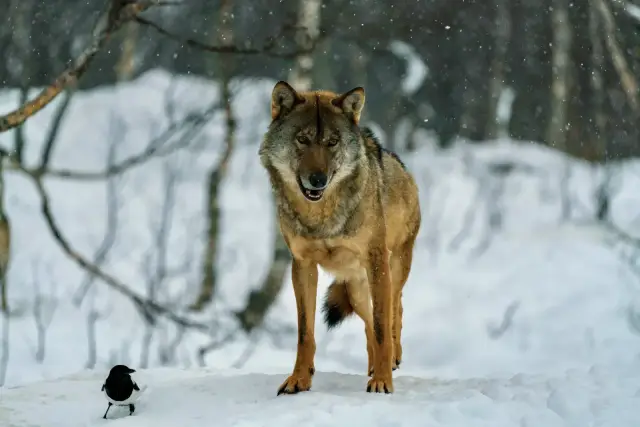
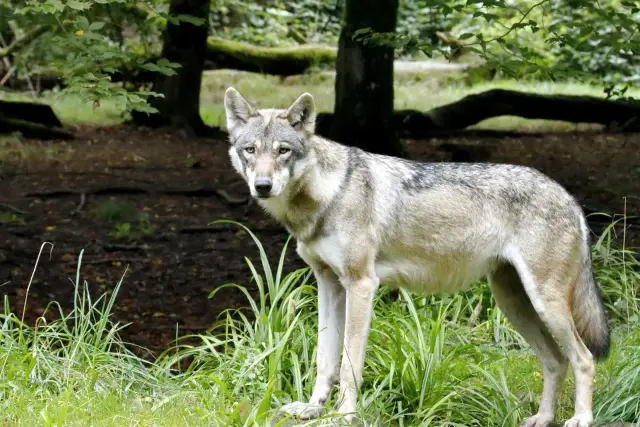 Family storyGrey wolfRead the family's story: origins, members, DNA
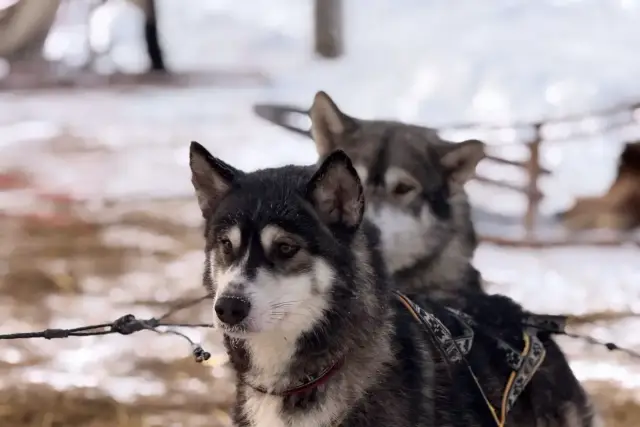 Family storyArctic dogsRead the family's story: origins, members, DNA
Sources (10)
- Larson, G. et al. (2012). Rethinking dog domestication by integrating genetics, archeology, and biogeography. PNAS 109(23): 8878-8883.
- Thalmann, O. et al. (2013). Complete mitochondrial genomes of ancient canids suggest a European origin of domestic dogs. Science 342(6160): 871-874.
- Skoglund, P. et al. (2015). Ancient wolf genome reveals an early divergence of domestic dog ancestors and admixture into high-latitude breeds. Current Biology 25(11): 1515-1519.
- Frantz, L.A.F. et al. (2016). Genomic and archaeological evidence suggest a dual origin of domestic dogs. Science 352(6290): 1228-1231.
- Botigué, L.R. et al. (2017). Ancient European dog genomes reveal continuity since the Early Neolithic. Nature Communications 8: 16082.
- Parker, H.G. et al. (2017). Genomic analyses reveal the influence of geographic origin, migration, and hybridization on modern dog breed development. Cell Reports 19(4): 697-708.
- Bergström, A. et al. (2020). Origins and genetic legacy of prehistoric dogs. Science 370(6516): 557-564.
- Bergström, A. et al. (2022). Grey wolf genomic history reveals a dual ancestry of dogs. Nature 607: 313-320.
- Perri, A.R. et al. (2021). Dog domestication and the dual dispersal of people and dogs into the Americas. PNAS.
- Janssens, L. et al. (2018). A new look at an old dog: Bonn-Oberkassel reconsidered. Journal of Archaeological Science.