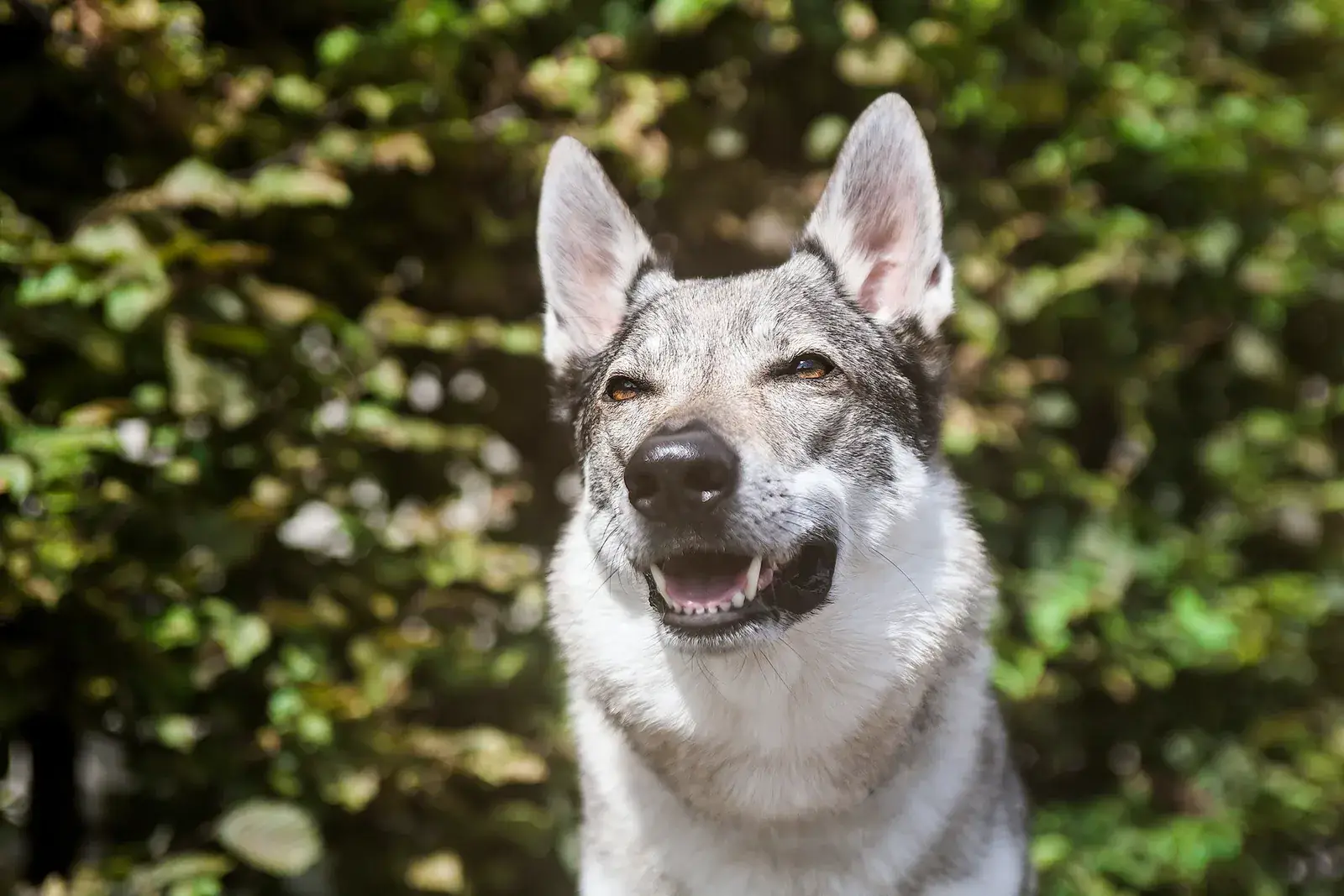
What are the wolfdog breeds?
The wolfdog breeds are established lines that began when a grey wolf was crossed with a domestic dog, almost always a German Shepherd, and the offspring were then bred on as dogs. This family holds five of them from five countries: the Czechoslovakian Wolfdog, Saarloos Wolfdog, Lupo Italiano, Volkosob and Calupoh. All are large and all are listed as living.
 GuideHow to get an assistance dogHow to get a service dog or assistance dog in the USA, UK, Germany, France, Spain, Italy and the Netherlands: accredited schools, waits, owner-training and travel.
This is not a DNA clade from the Parker et al. (2017) dog breed study, because no member was tested there. It is an inferred family, and the only one in this atlas with two parents that are both: the domestic dog and the grey wolf. A wolfdog breed is different from a pet "wolf hybrid" with a wolf parent or grandparent. For the wider picture, including coyote, jackal and fox crosses, read dog hybrids.
Quick facts about the Wolfdog Hybrid family
| Fact | Answer |
|---|---|
| Family type | Inferred by the atlas, not a Parker 2017 clade |
| Parents | Domestic dog and Grey wolf |
| Entries in this atlas | 5 (all living) |
| Members DNA-tested in the Parker study | 0 |
| Homelands | Netherlands, Slovakia and Czech Republic, Italy, Russia, Mexico |
| Size | All five are large |
| Typical life span | 10 to 16 years |
| Dog parent in all four records that name one | German Shepherd |
| Kennel club status | Czechoslovakian and Saarloos recognised by the FCI; Calupoh nationally in Mexico; Lupo Italiano and Volkosob not recognised |
| Shared story | A wolf bred to a German Shepherd, then bred on for generations |
 GuideService, therapy and emotional support dogs: what's the difference?Service dog vs emotional support dog vs therapy dog: the real differences, your rights in the USA and Europe, and why online certificates mean nothing.
 Related familyPariah & Village DogRead the family's story: origins, members, DNAGuideService, therapy and emotional support dogs: what's the difference?Service dog vs emotional support dog vs therapy dog: the real differences, your rights in the USA and Europe, and why online certificates mean nothing.
Family or group: what is the difference?
In this atlas, "family" means a branch of the dog family tree, usually a DNA clade from Parker et al. (2017). "Group" is used only for kennel club groups.
 GuideHow to adopt a dog from a shelter or rescueHow to adopt a dog from a shelter or rescue: the process, costs in general terms, choosing a dog, the first weeks and what if it does not work out.
Here the FCI places both the Czechoslovakian Wolfdog and the Saarloos Wolfdog in its Group 1 (sheepdogs and cattle dogs), which tells you the kennel clubs treat them as dogs. Our family is built another way: by the wolf in the pedigree. No member has a Parker clade, so all five are placed by history. The German Shepherd, their shared dog ancestor, belongs to the New World family, so these breeds also sit as "children" of that family.
 GuideDog hybrids: what dogs can and cannot breed withCan dogs breed with wolves, coyotes, jackals or foxes? Wolfdogs, coydogs, the Sulimov dog and Dogxim explained, with chromosomes and DNA studies.GuideHow to adopt a dog from a shelter or rescueHow to adopt a dog from a shelter or rescue: the process, costs in general terms, choosing a dog, the first weeks and what if it does not work out.
Where do they come from?
From human attempts to add a wolf's stamina and senses to a trained dog, in Europe and then Mexico.
 Family storyAlpineRead the family's story: origins, members, DNA
Four of the five records name the same recipe: a German Shepherd crossed with a wolf. The wolves differ: Carpathian for the Czechoslovakian Wolfdog, a wolf of disputed type for the Saarloos, an Italian (Apennine) wolf for the Lupo Italiano, a Mexican wolf for the Calupoh. The Volkosob is the odd one out, with no dog parent named. Press accounts of the Russian programme also describe German Shepherds and a wolf.
Grey wolves and domestic dogs share 78 chromosomes and can have fertile young, so such crosses work biologically. Bergström and colleagues (Nature, 2022) show that dogs descend from grey wolf ancestors, which is why the two remain so close.

Why are they called wolfdogs, Saarloos and Calupoh?
- Czechoslovakian Wolfdog. Named for Czechoslovakia, where German Shepherds were crossed with Carpathian wolves. Its local name is Československý vlčák.
- Saarloos Wolfdog. Named for Leendert Saarloos, the Dutch breeder who crossed a German Shepherd with a wolf. Also spelled Saarlooswolfhond.
- Lupo Italiano. Italian for "Italian wolf", after the wolf ancestry claimed by its creator.
- Volkosob. Russian "volkosob", from "volk" (wolf) and "sobaka" (dog).
- Calupoh. From Nahuatl, roughly "dog-wolf".
- Wolfdog. Any dog with wolf ancestry. "Wolf hybrid" is used for the same thing, often for a recent cross.
 Family storyAmerican Cur & FeistRead the family's story: origins, members, DNA

What is the history of the wolfdog breeds?
 Family storyAmerican TerrierRead the family's story: origins, members, DNA
1930s: the Saarloos Wolfdog
Leendert Saarloos began in the Netherlands in the 1930s. The atlas says 1935 and a Siberian wolf. A 2024 genomic review describes a female European wolf, thought to come from Rotterdam Zoo, crossed with a German Shepherd male, and other sources give 1932. The date and wolf type are unsettled. The stud book and early pedigrees are not public, and the number of wolves used is not known. The Dutch Kennel Club recognised the breed in 1975 and the FCI in 1981.
1955 to 1983: the Czechoslovakian Wolfdog
In 1955 Colonel Karel Hartl began crossing a German Shepherd with a Carpathian wolf as an experiment at the Czechoslovak military kennels, partly for border patrol work. The first litter, from the wolf Brita and the German Shepherd Cézar, was born on 26 May 1958 at Libějovice. Later records add wolves in 1960, 1968, 1974 and 1983. The breed became a national breed in Czechoslovakia in 1982 and is now listed by the FCI as standard number 332. Sources disagree on the year of FCI recognition, so we give none. The AKC holds it in its Foundation Stock Service. Smetanová and colleagues (PLoS ONE, 2015) found that the genomes of four wolf founders were deeply mixed into the dog gene pool of the breed.
1960s: the Lupo Italiano
The atlas gives 1960 to 1990 with low confidence. A 2017 genetic study dates the breed to 1966, a cross of Apennine wolves and German Shepherds. Mario Messi is named as the head of the work. The breed's founders claim wolf ancestry, though genetic studies put the wolf content in doubt. It is not a recognised breed.
1970s to 2000: the Volkosob
Reported as a Russian border dog programme from a military institute kennel in Perm. There is no standard, no herdbook and no kennel club that registers it. Press reports say the programme is closed after some 46 to 50 animals. These are secondhand accounts.
1990s: the Calupoh
A Mexican project from the mid 1990s, a cross of Mexican wolf and German Shepherd, inspired by pre-Hispanic dogs. The Federación Canófila Mexicana recognised it as a breed in September 1999. No source supports the claim that it was an army project.

Who are the members of the Wolfdog Hybrid family?
Here are all 5 entries. None was DNA-tested in the Parker study, so all are placed by history. "Appeared" is the period in which the breed is first documented, and some dates are rough. None has its own article in this atlas yet. A sixth wolf-named breed, the Kunming Wolfdog, is filed under Continental herder because its wolf ancestry is disputed.
 Family storyAmerican ToyRead the family's story: origins, members, DNA
| Breed | Country | Status | Size | Appeared | DNA-tested |
|---|---|---|---|---|---|
| Saarloos Wolfdog | Netherlands | Living | Large | 1935 to 1975 | By history |
| Czechoslovakian Wolfdog | Slovakia, Czech Republic | Living | Large | 1955 to 1999 | By history |
| Lupo Italiano | Italy | Living | Large | 1960 to 1990 | By history |
| Volkosob | Russia | Living | Large | 1970 to 2000 | By history |
| Calupoh | Mexico | Living | Large | 1994 to 1999 | By history |

Who descends from whom, and which ties are strongest?
There is no DNA table from Parker et al. here. The ties below come from records and later genome studies.
 Family storyAncient American dogsRead the family's story: origins, members, DNA
| Pair | Evidence | What it tells us |
|---|---|---|
| Czechoslovakian Wolfdog and German Shepherd | Hartl's records; High confidence | Carpathian wolf crossed with German Shepherd from 1955 |
| Saarloos Wolfdog and German Shepherd | High confidence | Crossed with a wolf in the 1930s |
| Lupo Italiano and German Shepherd | Medium confidence | Wolf content disputed |
| Calupoh and German Shepherd | Medium confidence | Mexican wolf crossed with German Shepherd |
| Czechoslovakian and Saarloos wolfdogs | A 2025 study of 46 and 20 dogs | The Saarloos had higher inbreeding and longer runs of identical DNA |
Summaries of genome work put the grey wolf share of the Czechoslovakian and Saarloos wolfdogs at roughly 20 to 40 percent, depending on the study. Treat these numbers as approximate. Pedigree arithmetic ("one eighth wolf") is not the same thing: after many generations the real wolf share can differ from the paper figure.
Czechoslovakian WolfdogCarpathian wolf, from 1955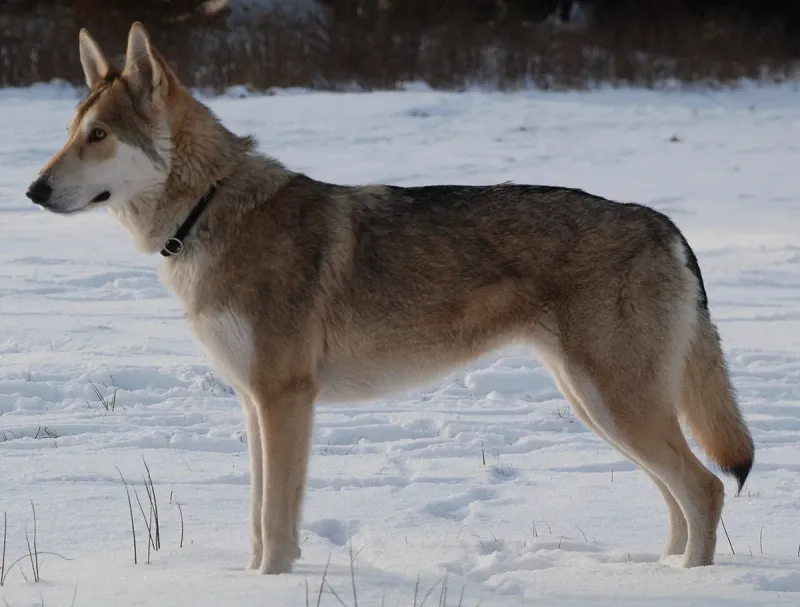 Saarloos WolfdogEuropean or Siberian, disputed
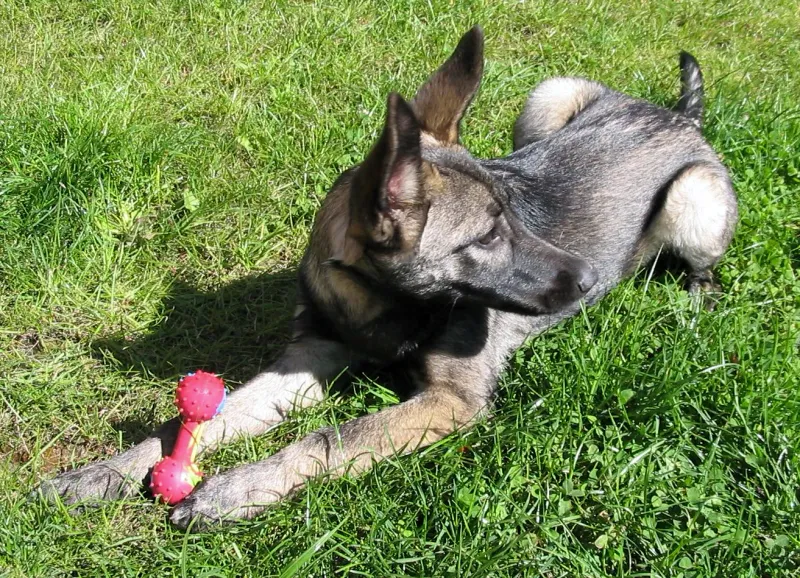 Lupo ItalianoApennine wolf, disputed
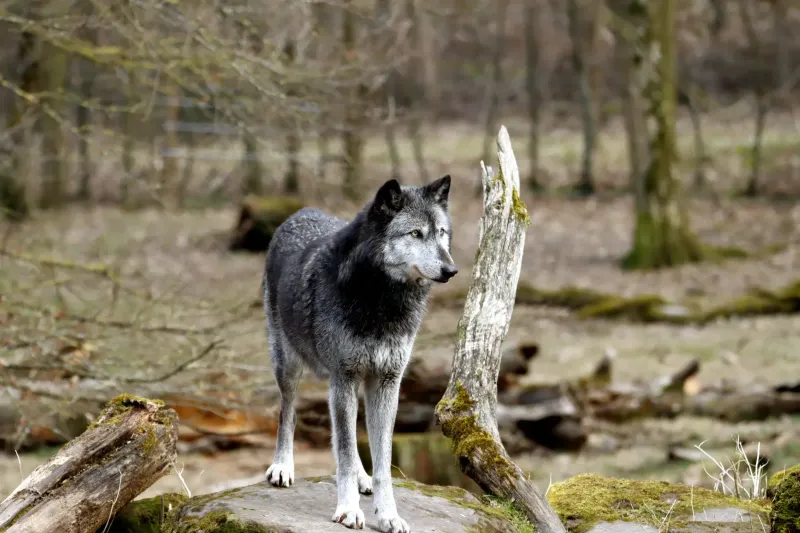 CalupohMexican wolf
 Volkosobwolf type not namedCzechoslovakian WolfdogCarpathian wolf, from 1955Saarloos WolfdogEuropean or Siberian, disputedLupo ItalianoApennine wolf, disputedCalupohMexican wolfVolkosobwolf type not named

What do the wolfdog breeds have in common?
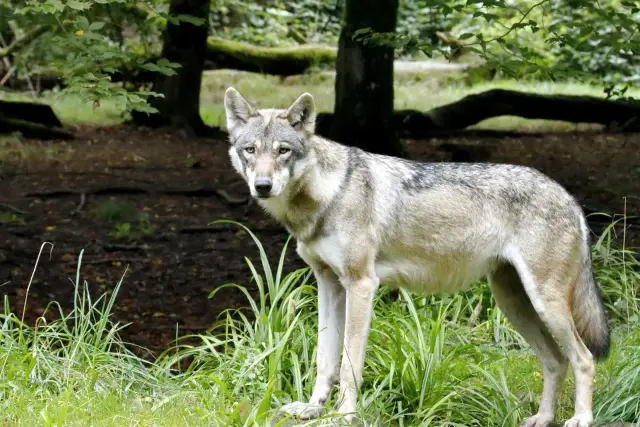
A wolf-like look. Large, long-legged, with erect ears and wolf-grey or sable coats. The Czechoslovakian Wolfdog and Saarloos are the two with written standards.
 Family storyAncient BasalRead the family's story: origins, members, DNA
Reserved temperament. Standard descriptions of the Saarloos call it shy, reserved, closely bonded with the family and wary of strangers. This is a club description, not a study.
Need for space and social contact. Wolf-like dogs tend to be wary of strangers, to mature slowly, to chew, dig, climb and escape, and to need more space and social contact than most dogs (see dog hybrids).
A working past. The Czechoslovakian Wolfdog began in military kennels, the Volkosob for border guards, the Lupo Italiano for work with police and search teams in its present form, and the Calupoh was inspired by pre-Hispanic dogs.
Welfare and the law
A pet "wolf hybrid" is a different animal from a wolfdog breed, but the rules often blur them.
 Family storyArctic dogsRead the family's story: origins, members, DNA
The core welfare issue. The mix of wolf and dog traits is hard to predict, even within one litter. Many wolfdogs end up in rescues because homes cannot meet their needs, and animal welfare groups and veterinary bodies commonly advise against high-content wolfdogs as pets.
Rabies. The United States Centers for Disease Control compendium says the effectiveness of rabies vaccine in wildlife and hybrids has not been established and that no vaccine is licensed for them. A state public health memo adds that a vaccinated hybrid is still treated as unvaccinated after a bite. The AVMA and state public health veterinarians recommend laws against keeping wild animals and wild-domestic crosses as pets.
The United States. There is no federal ban. State and county rules range from a ban to a permit to no rule, and online lists conflict, so ask your state wildlife agency and local animal control.
The United Kingdom. Under the Dangerous Wild Animals Act 1976, hybrids close to a wolf (first and second generation) need a council licence, according to Countryfile. Defra letters take a broader view and let councils decide for dogs many generations removed. A popular "three generations" rule is not confirmed by any source.
Elsewhere. No reliable source is available for Germany, the Netherlands, Czechia, Italy, Russia or Mexico. Rules differ by country, and some recognised breeds are treated as dogs.
Percentage claims. A seller's "75 percent wolf" label is often not backed by a DNA test, so treat it with caution.

What health issues are linked to wolfdog breeds?
No breed-wide health study exists for most of these breeds, so there are no "about 1 in N" numbers. Breed sources give 10 to 16 years as the life span range.
 Family storyAsian SpitzRead the family's story: origins, members, DNA
- Small founding groups. A 2025 genomic study of 46 Czechoslovakian and 20 Saarloos wolfdogs found a higher inbreeding coefficient and longer runs of identical DNA in the Saarloos, which fits a breed started from a few wolves. Smetanová and colleagues (2015) describe how a few wolf founders shaped the Czechoslovakian gene pool.
- Inherited disease. Breeders of the established breeds use health testing, but club test lists vary, so none are named here.
- Vaccines. Rabies vaccine is not licensed for wolf hybrids in the United States (see above). Ask a vet about local rules.
- Behaviour as welfare. Many wolfdogs end up in rescues when a home cannot meet their needs for space and company (see above).

Which members of the family are extinct?
None. All five are living, though the Volkosob programme is reported to be closed and the Lupo Italiano is kept by a non-profit body that, according to one account, does not sell dogs and leases them to volunteers, police and rescue teams.
 Family storyAsian ToyRead the family's story: origins, members, DNA

Are there surprises in this family?
- Four of five start with a German Shepherd. The tame parent is nearly always the same dog.
- Wolf share is smaller than the story. Summaries of genome work give about 20 to 40 percent for the two main breeds, and the Lupo Italiano's wolf content is disputed.
- A secret pedigree. The Saarloos stud book and its early pedigree are not public.
- Kunming is not here. The Chinese Kunming Wolfdog has a disputed wolf link and sits in another family.
- No army for the Calupoh. A claim that the Mexican breed began as an army project has no support in any source.
 Family storyContinental HerderRead the family's story: origins, members, DNA
 GuideDog Clothes: When Dogs Need Coats, and a Short History of Dog FashionDo dogs need coats in winter? When clothes help, when costumes stress a dog, safe fit, reflective gear, and a short history of dog fashion and dog art.Family storyContinental HerderRead the family's story: origins, members, DNA
What does research say about wolfdog breeds?
- Smetanová et al. (PLoS ONE, 2015) studied the Czechoslovakian Wolfdog's genetics, "From wolves to dogs, and back".
- A 2025 genomic review and study compared Czechoslovakian and Saarloos wolfdogs and described how the Saarloos began.
- Bergström et al. (Nature, 2022) traced the wolf ancestry of dogs.
- CDC rabies compendium gives the vaccine position for hybrids.
 Family storyDingo & PacificRead the family's story: origins, members, DNA

Which wolfdog suits which owner?
This is an atlas question, not a buyer's guide. For most homes, none of these dogs is a good fit.
 Family storyDomestic dogRead the family's story: origins, members, DNA
- Czechoslovakian Wolfdog. The one for very experienced owners who can offer a large space, firm training and a lot of company.
- Saarloos Wolfdog. A shy, closely bonded dog for a quiet household with experience of nervous dogs.
- Lupo Italiano, Volkosob and Calupoh. Rare, and mostly bred for work. Not available in most countries.
If you like the look, ask a vet and a rescue about similar dogs. The German Shepherd and the Asian Spitz breeds have a wild look and are bred as dogs. See dog hybrids for more.

Fun facts about wolfdog breeds
- The first Czechoslovakian hybrid litter was born on 26 May 1958.
- The Calupoh's name is Nahuatl for "dog-wolf".
- The Saarloos has an FCI standard (number 311), as does the Czechoslovakian Wolfdog (number 332).
- Volkosob is just the Russian for "wolf-dog".
- The Czechoslovakian Wolfdog has been a Slovak national breed since the 1990s.
 Family storyDroverRead the family's story: origins, members, DNA

Related families
- Domestic dog: one of the two parents.
- Grey wolf: the other parent.
- New World: the family of the German Shepherd.
- Continental herder: the family of the Kunming Wolfdog.
- Modern crossbreed: wolf-look crosses made without wolves.
- Pariah and village dog: free-living dogs, also an inferred family.
- dog hybrids: wolf, coyote, jackal and fox crosses.
- dog family tree: see where every family sits.
 Family storyEast Eurasian dogsRead the family's story: origins, members, DNA

Frequently asked questions
What is the difference between a wolfdog and a wolfdog breed?
A wolfdog is any dog with wolf ancestry, often a recent cross. A wolfdog breed has been bred as a dog for many generations with a standard and pedigree.
Which breeds are in this family?
Czechoslovakian Wolfdog, Saarloos Wolfdog, Lupo Italiano, Volkosob and Calupoh.
How much wolf is in a Czechoslovakian Wolfdog?
Summaries of genome studies suggest roughly 20 to 40 percent, depending on the study. Treat these numbers as approximate.
Are wolfdogs legal?
It depends where you live. Ask local animal control.
Can a wolfdog get a rabies vaccine?
In the US, none is licensed for wolf hybrids (CDC).
Are wolfdogs good pets?
For most homes, no. See the welfare section above.
Is this a DNA family like the others?
No. It is inferred by the atlas and is not a Parker 2017 clade.
Read next
 Family storyGrey wolfRead the family's story: origins, members, DNAFamily storyEuropean dogsRead the family's story: origins, members, DNA
 Family storyModern CrossbreedRead the family's story: origins, members, DNA
Sources (10)
- Smetanová, M., et al. (2015). From wolves to dogs, and back: genetic composition of the Czechoslovakian Wolfdog. PLoS ONE.
- Genomic review of wolfdog breeds, including the origin of the Saarloos Wolfdog (2024 to 2025), and a 2025 comparison of 46 Czechoslovakian and 20 Saarloos wolfdogs.
- Bergström, A., et al. (2022). Grey wolf genomic history reveals a dual ancestry of dogs. Nature, 607, 313 to 320.
- Czechoslovakian Wolfdog breed club histories (Hartl, 1955 to 1983) and FCI breed standards 311 and 332.
- Federación Canófila Mexicana records and press accounts of the Calupoh; accounts of the Lupo Italiano and its 2017 genetic study; press accounts of the Volkosob.
- United States Centers for Disease Control, Compendium of Animal Rabies Prevention and Control (wildlife and hybrids); North Carolina public health memo on wolf hybrids; California Veterinary Medical Association summary of AVMA Trust guidance.
- Countryfile (UK) on the Dangerous Wild Animals Act and wolf-dog hybrids; Defra correspondence on hybrids.
- Dogs Atlas topic: dog hybrids.
- Parker, H. G., et al. (2017). Genomic analyses reveal the influence of geographic origin, migration, and hybridization on modern dog breed development. Cell Reports, 19(4), 697 to 708.
- Breed records in the atlas data (Dogs Atlas, internal data).