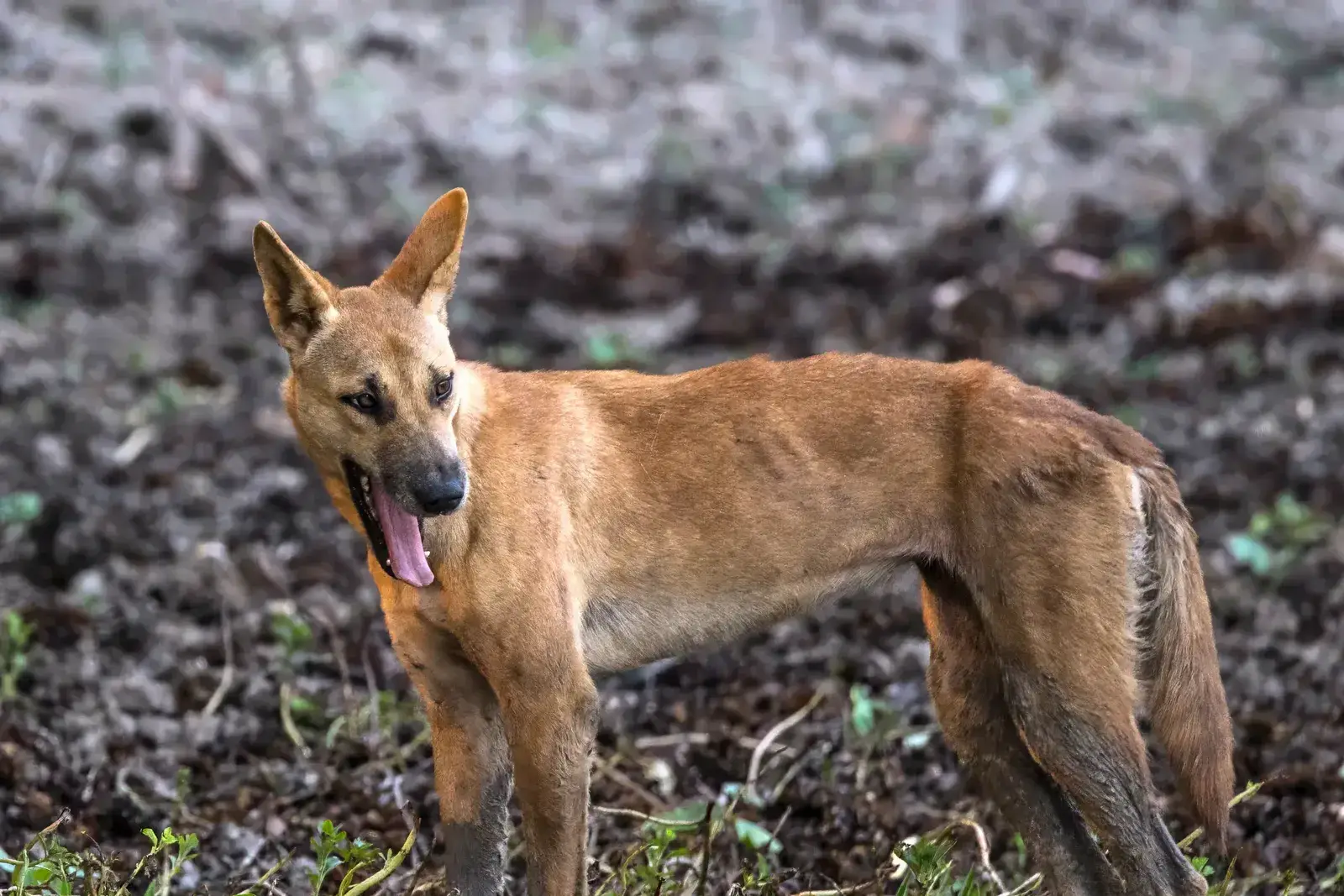
What are the Dingo and Pacific dogs?
The Dingo and Pacific family is a small set of dogs that spread across the islands of Southeast Asia and the Pacific, travelling by boat with people. It holds the dingo of Australia, the New Guinea Singing Dog, and the dogs that Polynesian voyagers took across the ocean as far as Hawaii and New Zealand. Five of its seven entries are extinct.
 GuideHow to get an assistance dogHow to get a service dog or assistance dog in the USA, UK, Germany, France, Spain, Italy and the Netherlands: accredited schools, waits, owner-training and travel.
This family is different from most pages in this atlas. It is not a DNA clade from the Parker et al. (2017) dog breed study, because no member was tested there. It is an inferred family: this atlas placed these dogs together from history and from later genome work, and filed them under East Eurasian dogs. Read every date and tie below as a best estimate.
Quick facts about the Dingo and Pacific family
| Fact | Answer |
|---|---|
| Family type | Inferred by the atlas, not a Parker 2017 clade |
| Parent | East Eurasian dogs |
| Entries in this atlas | 7 (2 living, 5 extinct) |
| Entries with DNA tested in the Parker study | 0 |
| Homelands | Australia, Papua New Guinea, French Polynesia, Hawaii, New Zealand |
| Typical size | Small (6 of 7). The dingo is medium |
| Core job | Companion, hunting help, food in some islands |
| Shared story | Carried over water by people from island Southeast Asia |
| Kennel club status | None recognise the dingo, Singing Dog or Pacific dogs as breeds |
 GuideIs your dog suited to therapy work?How to make your dog a therapy dog: temperament checklist, first training steps, how Pet Partners, TDI and Pets As Therapy assess dogs, and welfare limits.
Family or group: what is the difference?
In this atlas, "family" means a branch of the dog family tree. For most families that branch comes from a DNA clade in Parker et al. (2017). "Group" is used only for kennel club groups.
 GuideService, therapy and emotional support dogs: what's the difference?Service dog vs emotional support dog vs therapy dog: the real differences, your rights in the USA and Europe, and why online certificates mean nothing.
Here the two ideas are far apart. No kennel club recognises these dogs, so there is no group. And no member has a Parker clade, so the family is placed by a different kind of evidence. Our placement under East Eurasian dogs rests on later studies. Bergström et al. (Science, 2020) found the New Guinea Singing Dog and the dingo among modern East Asian dogs in its analysis. Archaeology supports a sea route from island Southeast Asia. That is good evidence for the region and weak evidence for exact family ties. In the table below, all seven are placed by history and later genome work.
Where do they come from?
From Southeast Asia, by sea.
 GuideDogs in science and spaceSpace dogs Laika, Belka and Strelka, Pavlov's dogs, Snuppy the clone, the dog genome and scent detection: what dogs did for science, and what it cost them.
Water has always separated Australia from the Asian mainland, even when sea levels were lower. Balme has argued that it is extremely unlikely dingoes reached Australia without people, given the water gap. Savolainen and colleagues (PNAS, 2004) found that all dingoes share one mitochondrial type that is also found in East Asian and Arctic American dogs, and suggested a small founding group of East Asian dogs. The Singing Dog of the New Guinea highlands lies close by on the map and on the tree. Surbakti and colleagues (PNAS, 2020) found that wild dogs living in the New Guinea highlands are close to the captive Singing Dogs.
The Pacific dogs take a different, later route. Polynesian voyagers carried dogs into the Pacific in canoes, along with pigs and chickens, as they settled islands from about 1000 BCE onward. The Marquesan, Tahitian, Hawaiian and New Zealand dogs are local forms of that one stock.
Why are they called Dingo, Singing Dog and Kurī?
- Dingo. From the Dharug word din-go, used for tame camp dogs near Sydney, according to the atlas. The Dharug are the Aboriginal people of the Sydney region. Other nations use their own names.
- New Guinea Singing Dog. For its yodel-like howl, which rises and falls in pitch and sounds like singing.
- Kurī. Māori for "dog". This was the name used by Māori for the dog of Aotearoa.
- Poi dog. Hawaiian dogs were called poi dogs for the pounded taro paste (poi) that made up much of their diet. Their Hawaiian names include ʻīlio.
- Polynesian dog. Named for Polynesia, from Greek words for "many islands".
- Tahitian dog. Known locally as ʻūrī māʻohi, "native dog".
 Family storyAlpineRead the family's story: origins, members, DNA
What is the history of dingoes and Pacific dogs?
 Family storyAmerican Cur & FeistRead the family's story: origins, members, DNA
Before 1000 BCE: dogs reach the islands
Dogs lived across Eurasia for thousands of years before this. The Singing Dog is dated to 8000 BCE, but with low confidence. No dated bones support it, so treat it as an upper guess. For the wider story see first dogs on every continent.
About 3,500 years ago: dingoes reach Australia
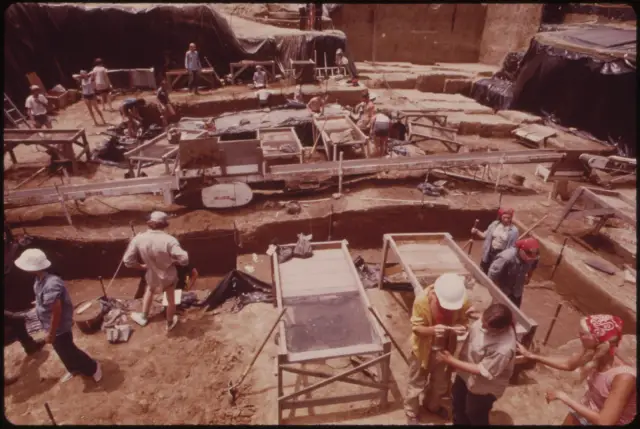
Balme, O'Connor and Fallon (Scientific Reports, 2018) dated dingo bones from Madura Cave on the Nullarbor Plain directly. The bones show that dingoes were in southern Australia by 3,348 to 3,081 years ago. Earlier estimates ran from 5,000 to 4,000 years from archaeological layers and up to 18,000 years from DNA clocks, but those did not date the bones themselves. O'Connor reasons that dingoes were introduced around 3,500 years ago, since the Nullarbor is far from the north coast where they probably landed. The team suggests the dogs spread across the mainland quickly.
Our own data lists the dingo from 3000 to 1500 BCE with medium confidence, which fits this result.
1000 BCE to 1300 CE: dogs across the Pacific
- From about 1000 BCE. The atlas begins the Polynesian dog here, with low confidence.
- 300 to 1000 CE. The Marquesan Dog and the Tahitian Dog are listed in this window.
- About 1000 to 1200. The Hawaiian Poi Dog is dated here.
- 1250 to 1300. The Kurī reaches New Zealand with Māori ancestors, in the 13th century, per the atlas.
1800s to today: loss and survival
All the Pacific dogs are extinct as pure types. The Kurī died out as a distinct breed after interbreeding with European dogs, according to New Zealand sources. The dingo and Singing Dog survive. In Australia, European settlers crossed dingoes with herding dogs in the 1800s, a story told in the Australian Cattle Dog article. In 2020, Surbakti and colleagues showed that the Singing Dog lives on in the wild in the New Guinea highlands, where many had feared it was extinct or mixed with village dogs.

Who are the members of the Dingo and Pacific family?
Here are all 7 entries. None were DNA tested in the Parker study, so all are placed by history. "Appeared" is the period in which the breed or type is first documented, and some dates are rough. Polynesian Dog is a parent type; the Marquesan, Tahitian, Hawaiian and Kurī entries are its island forms. None of the members has its own article in this atlas yet.
 Family storyAmerican TerrierRead the family's story: origins, members, DNA
| Breed | Country | Status | Size | Appeared | DNA-tested |
|---|---|---|---|---|---|
| New Guinea singing dog | Papua New Guinea | Living | Small | 8000 BCE to 1957 | By history |
| Dingo | Australia | Living | Medium | 3000 BCE to 1500 BCE | By history |
| Polynesian Dog | French Polynesia, United States, New Zealand | Extinct | Small | 1000 BCE to 1000 | By history |
| Marquesan Dog | French Polynesia | Extinct | Small | 300 CE to 1000 | By history |
| Tahitian Dog | French Polynesia | Extinct | Small | 800 CE to 1000 | By history |
| Hawaiian Poi Dog | United States | Extinct | Small | 1000 to 1200 | By history |
| Kurī | New Zealand | Extinct | Small | 1250 to 1300 | By history |

Who descends from whom, and which ties are strongest?
There is no Parker DNA table for this family, so the strongest ties come from other studies and from the written record.
 Family storyAmerican ToyRead the family's story: origins, members, DNA
| Pair | Evidence | What it tells us |
|---|---|---|
| Dingo and New Guinea Singing Dog | Savolainen 2004; Bergström 2020; Surbakti 2020 | Sister lineages from East Asian dogs. Cairns (2017) puts their split at about 6,000 to 8,000 years ago, a figure we know only from a university press release |
| Dingo (ancient, New South Wales coast) and Singing Dog | PNAS 2024 ancient dingo genomes | More shared ancestry than dingoes of southern Australia show |
| Polynesian Dog and Kurī | Greig et al. 2015, 2018 | Kurī dogs came from a small group of closely related dogs, probably from East Polynesia |
| Kurī and Indonesian village dogs | Greig et al. 2015 | Mitochondrial DNA closest to modern Indonesian dogs, not proof of one origin |
| Polynesian Dog and the island dogs | Medium confidence | Marquesan, Tahitian, Hawaiian and Kurī are forms of one stock |
Greig and colleagues (PLoS ONE, 2015) sequenced 14 dogs from Wairau Bar in New Zealand, from an oven dated to about 1320 to 1350 CE. They fell into five maternal lineages, which suggests the founding group was small or closely related. A 2018 follow-up with 23 more dogs, from New Zealand and the southern Cook Islands, confirmed the low diversity (Greig et al., Journal of Pacific Archaeology).
The dingo has one more tie in the written record. The Australian Cattle Dog and the Hall's Heeler list the dingo as an ancestor, and the Dingo entry lists them as its children. These are recent crosses, not part of the family.
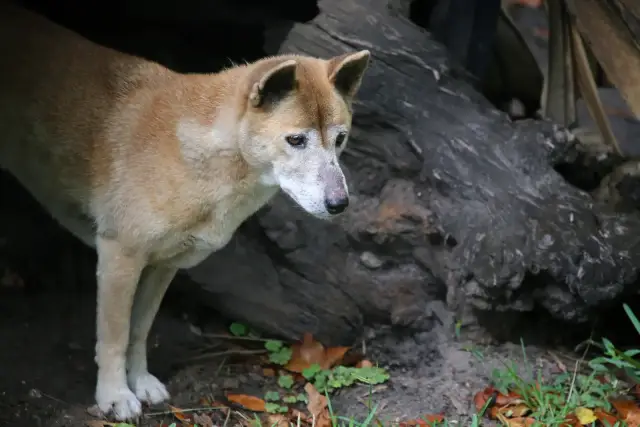 New Guinea Singing Dogliving
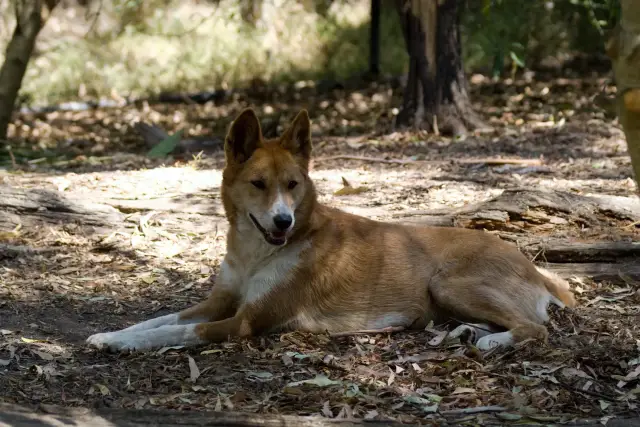 Dingoliving, Australia by about 3,500 years ago
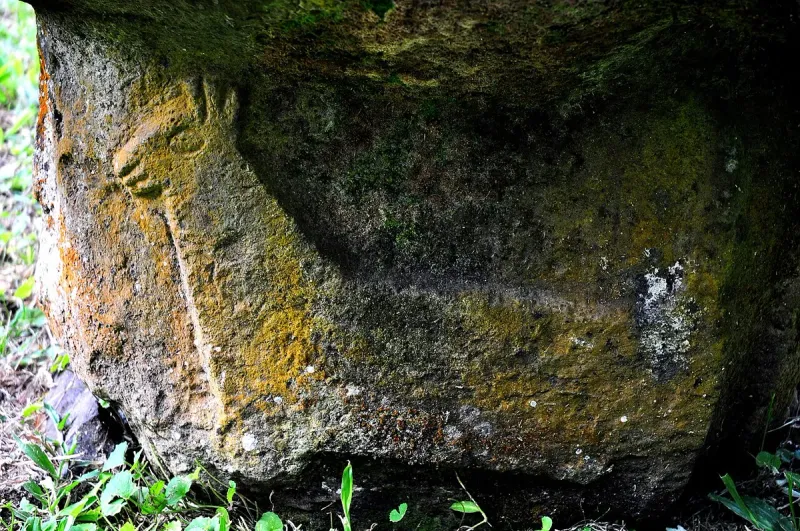 Marquesan Dogextinct
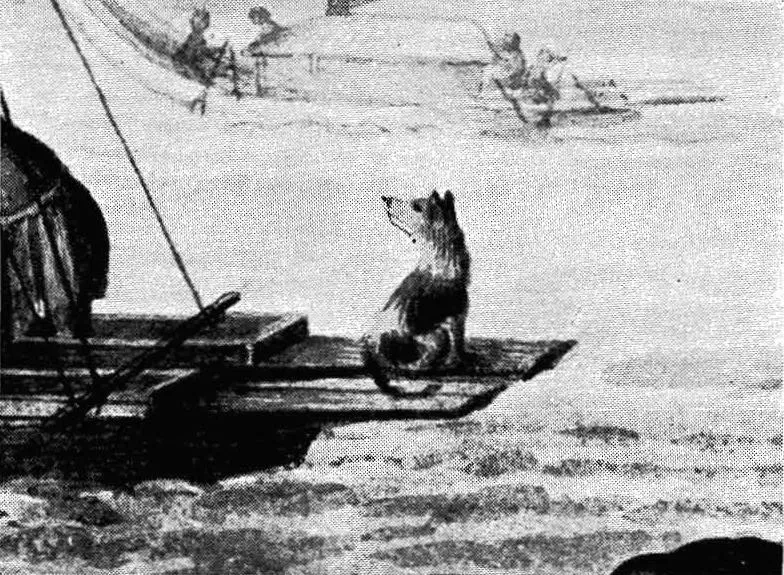 Tahitian Dogextinct
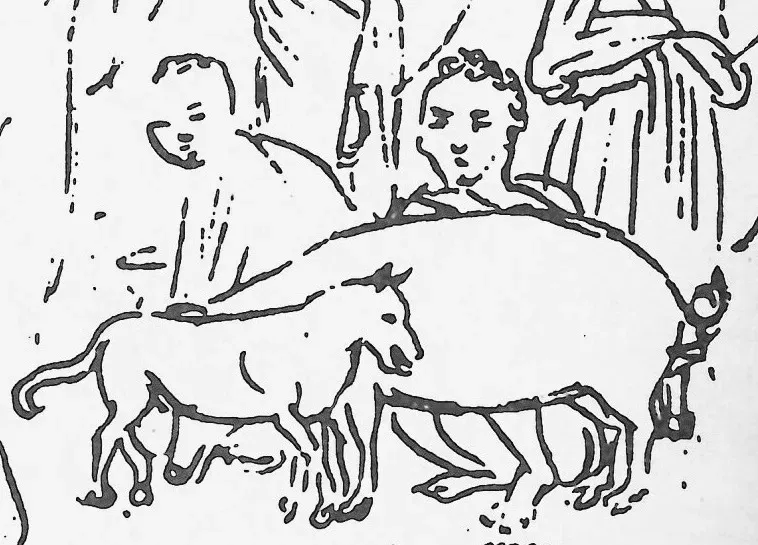 Hawaiian Poi Dogextinct
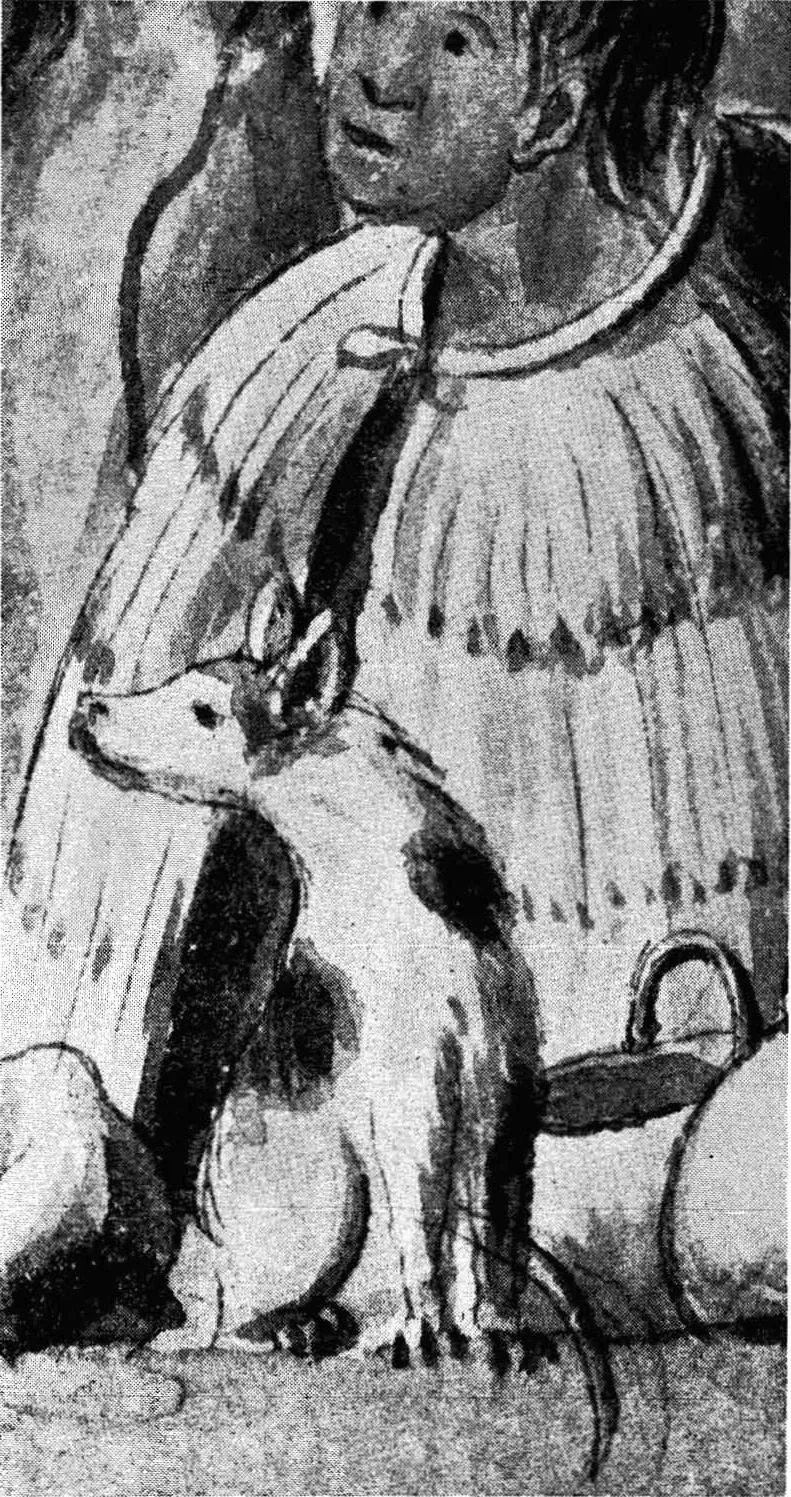 Kurīextinct, New ZealandNew Guinea Singing DoglivingDingoliving, Australia by about 3,500 years agoMarquesan DogextinctTahitian DogextinctHawaiian Poi DogextinctKurīextinct, New Zealand

What do these dogs have in common?
Travel. All of them crossed water with people. Dingo and Pacific dogs are rare cases where we can follow a dog population along a settlement route.
 Family storyAncient American dogsRead the family's story: origins, members, DNA
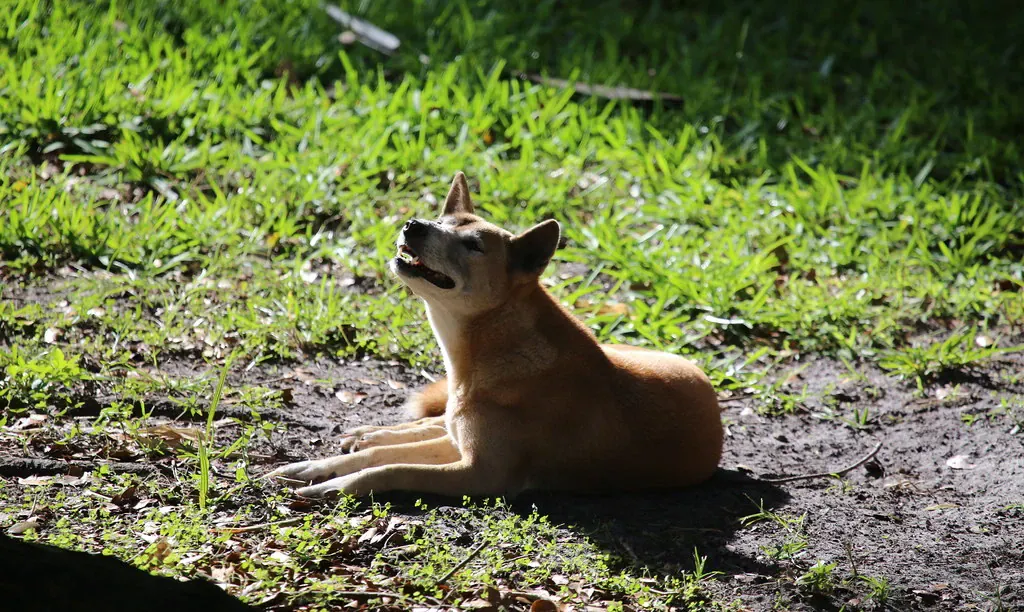
Look. Mostly small to medium, lean, with erect ears and a curved or bushy tail. The dingo is a medium dog, usually sandy to ginger. The Singing Dog is smaller and known for a very flexible spine and wide-ranging joints. The looks of the Pacific dogs are uncertain, because no living animals remain and written descriptions are scarce.
Voice. The Singing Dog's howl changes pitch. Dingoes howl and bark little compared with most breeds, a trait often noted in accounts of the dingo.
Closeness to people. Dingoes and Pacific dogs lived alongside people without the long selective breeding that made European breeds. That is why they are called by scientists "tamed" more than "bred" in some papers (see the species debate below).
Is the dingo a dog, a wolf or its own species?
This is an open argument among taxonomists, and both sides publish. The three names in use over the last 30 years are Canis lupus dingo (a wolf subspecies), Canis dingo (a species) and Canis familiaris (a domestic dog) (Cairns et al., Australian Mammalogy, 2025).
 Family storyAncient BasalRead the family's story: origins, members, DNA
The case for Canis familiaris. Jackson and colleagues (Zootaxa, 2017) argued that all domestic dogs, dingoes included, should keep the name Canis familiaris. Their reasons were that no evidence showed that several dog species were needed, and that familiaris (Linnaeus, 1758) is older than dingo (Meyer, 1793), so it has priority. Their rebuttal to critics says that archaeology and genomics show the dingo is of recent origin in Australia and shares ancestry with other domestic dogs.
The case for Canis dingo. Smith and colleagues (Zootaxa, 2019) replied that the dingo is a geographically isolated form, distinct in genes, looks, ecology and behaviour, and largely free of signs of domestication. Crowther and colleagues had suggested the name Canis dingo in 2014. Cairns and colleagues (2025) argue that dingoes are on a different evolutionary path from domestic dogs and propose an independent expert review.
What we do. This atlas calls the dingo a dog lineage and lists it among East Eurasian dogs, because the genome studies place it there. We note that this is a choice about where to file it, not a ruling on its name. No formal ruling by the International Commission on Zoological Nomenclature was found.

Dingoes and Aboriginal Australians
The dingo is part of Aboriginal and Torres Strait Islander history, and the relationship has many forms across many nations. This section reports what researchers have written. It does not speak for any nation.
 Family storyArctic dogsRead the family's story: origins, members, DNA
Balme and O'Connor have argued from archaeology that women often took dingoes on foraging trips to hunt small animals such as goannas, and that dingoes appear in Dreaming stories, ceremonies, songs and rock art in parts of the continent. A 2023 study of the Curracurrang site near Sydney (Koungoulos and colleagues) found dingo burials, dated to about 2,000 years ago, that closely matched human burials nearby. The remains came from pups to adults, which suggests dingoes were kept for long periods, as companions, guards, warmth and hunting help. Deborah Bird Rose's essay "Dingo kinship" (2013) discusses the animal through kinship and ethics, noting that people see dingoes as anything from relatives to pests.
Research also says dingoes were tamed and not domesticated in the genetic sense, which is part of why the species debate above matters.
What health issues are linked to these dogs?
There are no breed health programmes or published breed-wide screening for these dogs, so no "1 in N" figures can be given. Here is what is known.
 Family storyContinental HerderRead the family's story: origins, members, DNA
- Wild dogs. Dingoes and highland wild dogs live wild. The atlas gives lifespans of 10 to 14 years for the dingo and 15 to 20 for the Singing Dog, which are ranges from breed sources, not clinical studies.
- A small captive gene pool. Surbakti and colleagues (2020) note that captive Singing Dogs show inbreeding. They say that knowing a wild population exists helps conservation programmes to diversify the captive population.
- Pacific dogs. No living animals remain, so there is no health data. Ancient DNA shows the New Zealand founding group was small or closely related (Greig et al. 2015, 2018).
- Keeping a dingo or Singing Dog. Laws and welfare needs differ by region. Check local rules and a vet before considering one. We do not give advice on keeping wild animals.
 Save

Which members of the family are extinct?
Five of seven.
 Family storyDomestic dogRead the family's story: origins, members, DNA
- Polynesian Dog. The parent type, dated by the atlas to 1000 BCE to 1000 CE.
- Marquesan Dog. From the Marquesas Islands, named by Mendaña in 1595.
- Tahitian Dog. From Tahiti and the Society Islands.
- Hawaiian Poi Dog. Dated by the atlas to about 1000 to 1200.
- Kurī. The dog of New Zealand, dated by the atlas to 1250 to 1300, which died out as a separate type after mixing with European dogs.
Their DNA lives on in museum bones and archaeological sites, and ancient genomes are how we learn about them.

Are there surprises in this family?
- A dog, a wolf, or neither. Taxonomists still argue about the dingo's name.
- Dingoes are old and not very old. The oldest firm date is about 3,300 years ago, far later than 18,000 years in some DNA estimates (see Madura Cave above).
- The Singing Dog is wild again. Highland wild dogs in New Guinea are close to the captive Singing Dogs (Surbakti et al. 2020).
- Japan's Jōmon dogs. Genome work on Jōmon dogs finds them closest, among living dogs, to dingoes. See the Shiba Inu article.
- Pacific dogs came from very few dogs. The New Zealand dogs show five maternal lineages in 14 animals.
 Family storyDroverRead the family's story: origins, members, DNA
What does research say about these dogs?
- Savolainen et al. (PNAS, 2004) studied dingo mitochondrial DNA and found a single type, suggesting a small founding group.
- Greig et al. (PLoS ONE, 2015) sequenced complete mitochondrial genomes of 14 Kurī dogs.
- Bergström et al. (Science, 2020) placed the Singing Dog and dingo among East Asian dogs.
- Surbakti et al. (PNAS, 2020) showed that highland wild dogs are the original Singing Dogs.
- Balme, O'Connor and Fallon (Scientific Reports, 2018) gave the Madura Cave dates.
 Family storyEast Eurasian dogsRead the family's story: origins, members, DNA

Which of these dogs can you meet?
This is an atlas question, not a purchase guide. The Dingo and Pacific dogs are not pets to compare with breeds.
Family storyEuropean dogsRead the family's story: origins, members, DNA- Dingo. Wild or in sanctuaries in Australia. Not a kennel club breed.
- New Guinea Singing Dog. Captive populations exist in conservation breeding programmes and wild highland dogs live in Papua.
- Pacific dogs. None remain. You can see the story in museums and in the writings of researchers.
- Dingo-cross dogs. The Australian Cattle Dog is a herding breed that carries dingo ancestry. It needs plenty of work.

Fun facts about the dingo and Pacific dogs
- The word dingo comes from the Dharug language of the Sydney area.
- Madura Cave bones were excavated in the 1960s and dated in 2018.
- The Singing Dog's howl is named a "song" for the way its pitch changes.
- The Kurī was the only domestic animal that Māori brought to New Zealand, according to New Zealand sources.
- Our oldest Pacific entry, the Polynesian Dog, is a type and no longer a living population.
 Family storyEuropean MastiffRead the family's story: origins, members, DNA
Related families
- East Eurasian dogs: the parent of the Dingo and Pacific family.
- Arctic dogs: a sister lineage of East Eurasian spitz and sled dogs.
- Asian Spitz: Shiba Inu, Akita, Husky and other dogs from the same region.
- Pariah and village dog: free-living dogs, another inferred family.
- first dogs on every continent: the dated arrival of dogs in Oceania and elsewhere.
- dog family tree: see where every family sits.
 Family storyGrey wolfRead the family's story: origins, members, DNA

Frequently asked questions
What is in the Dingo and Pacific family?
In the atlas: Dingo, New Guinea Singing Dog, Polynesian Dog, Marquesan Dog, Tahitian Dog, Hawaiian Poi Dog and Kurī.
When did dingoes arrive in Australia?
Direct dating of bones from Madura Cave shows they were in southern Australia by 3,348 to 3,081 years ago (Balme et al. 2018). They probably landed in the north earlier.
Is a dingo a dog?
It depends on who you ask. Some scientists call it Canis familiaris, others Canis dingo, others a wolf subspecies. See the species section above.
Are dingoes and Singing Dogs related?
Yes, as sister lineages from East Asian dogs. Highland wild dogs in New Guinea are close to captive Singing Dogs.
What happened to the Hawaiian poi dog and the Kurī?
Both are gone as separate types. The Kurī died out after interbreeding with European dogs.
Is this a DNA family like the others?
No. It is inferred by the atlas and is not a Parker 2017 clade.
Are dingoes related to the Australian Cattle Dog?
Yes. The atlas lists the dingo as an ancestor of the Australian Cattle Dog through Hall's Heelers.
Read next
 Family storySmall SpitzRead the family's story: origins, members, DNA
 Family storyNordic SpitzRead the family's story: origins, members, DNA
 Family storyPariah & Village DogRead the family's story: origins, members, DNA
Sources (14)
- Balme, J., O'Connor, S., Fallon, S. (2018). New dates on dingo bones from Madura Cave provide oldest firm evidence for arrival of the species in Australia. Scientific Reports, 8, 9933.
- Savolainen, P., et al. (2004). A detailed picture of the origin of the Australian dingo, obtained from the study of mitochondrial DNA. Proceedings of the National Academy of Sciences.
- Surbakti, S., et al. (2020). New Guinea highland wild dogs are the original New Guinea singing dogs. Proceedings of the National Academy of Sciences, 117(39).
- Bergström, A., et al. (2020). Origins and genetic legacy of prehistoric dogs. Science.
- Greig, K., et al. (2015). Complete mitochondrial genomes of New Zealand's first dogs. PLoS ONE.
- Greig, K., et al. (2018). Ancient DNA evidence for the introduction and dispersal of dogs in New Zealand. Journal of Pacific Archaeology.
- Jackson, S. M., et al. (2017). The dogma of dingoes: taxonomic status of the dingo. Zootaxa.
- Smith, B. P., et al. (2019). Taxonomic status of the Australian dingo: the case for Canis dingo Meyer, 1793. Zootaxa.
- Cairns, K. M., et al. (2025). Taxonomic tangles posed by human association: the dingo. Australian Mammalogy.
- Koungoulos, L., et al. (2023). Dingo burials at Curracurrang, New South Wales, and the human-dingo relationship.
- Rose, D. B. (2013). Dingo kinship. Wildlife Australia.
- Balme, J., O'Connor, S. (research on dingoes and Aboriginal social organisation in Holocene Australia).
- Parker, H. G., et al. (2017). Genomic analyses reveal the influence of geographic origin, migration, and hybridization on modern dog breed development. Cell Reports, 19(4), 697 to 708.
- Breed records in the atlas data (Dogs Atlas, internal data).