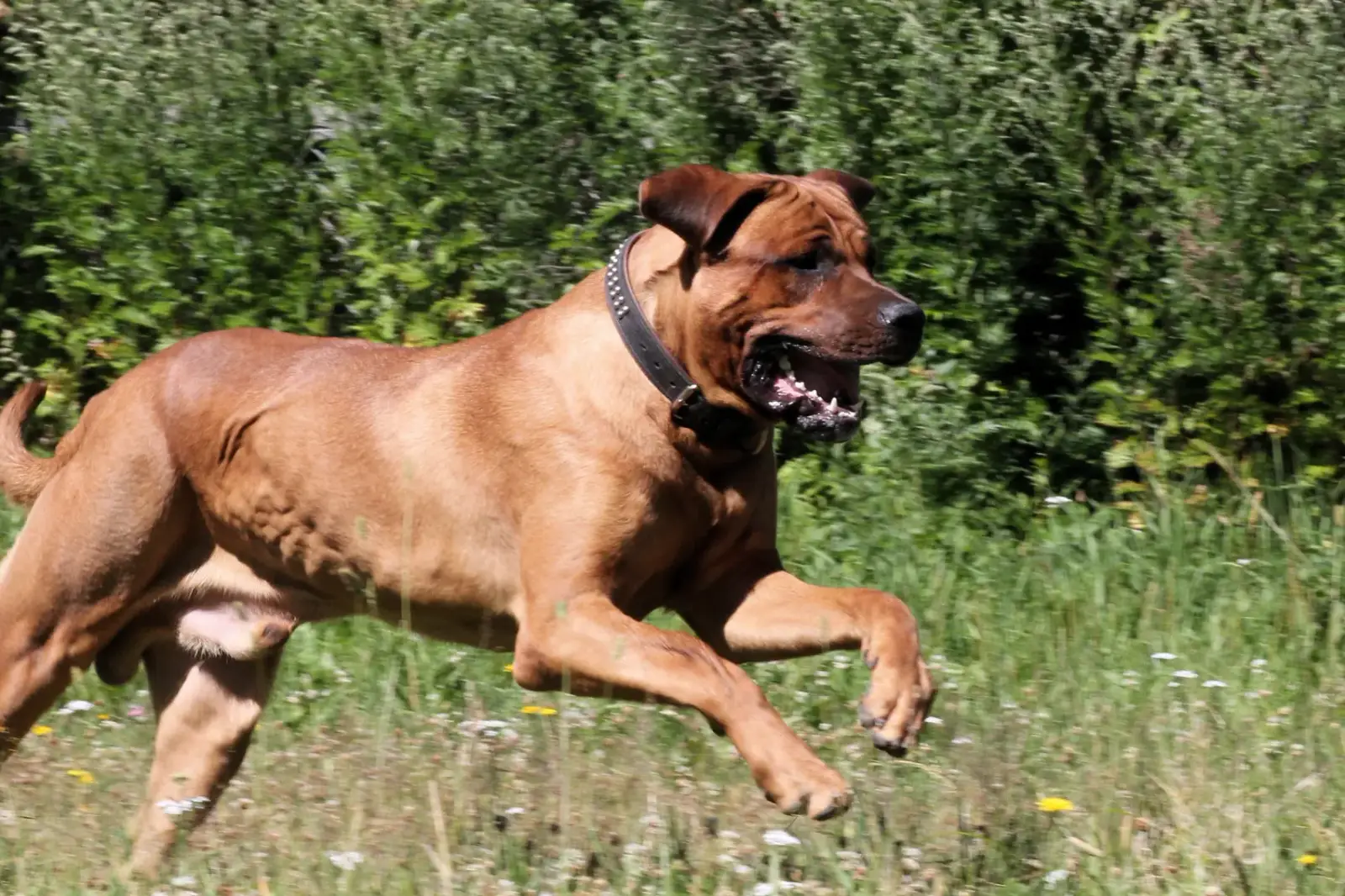
It was developed in the second half of the 19th century as a fighting dog by crossing the native Shikoku dog with European breeds such as the Old English Bulldog, the English Mastiff and the Great Dane. Today it is a rare breed, kept as a guardian and show dog by a small number of specialist owners. It is banned or restricted in a number of countries, including the United Kingdom, Denmark, Norway and Australia (for import), so anyone considering one needs to check local law first.
Tosa quick facts
 Related breedBoerboel1650 to 1983 · South AfricaEarly Modern Era
- Country of origin
- Japan (Kochi, formerly Tosa Province, Shikoku)
- Period of development
- About 1868 to 1924 (atlas data, medium confidence); crosses recorded from 1872
- Original job
- Dog fighting in Japan; today guardian and show dog
- Type
- Molossoid, mastiff type (FCI Group 2, standard no. 260; UKC recognised; Foundation Stock Service)
- Height
- FCI minimum: dogs 60 cm, bitches 55 cm; no maximum
- Weight
- No weight in the FCI standard
- Coat
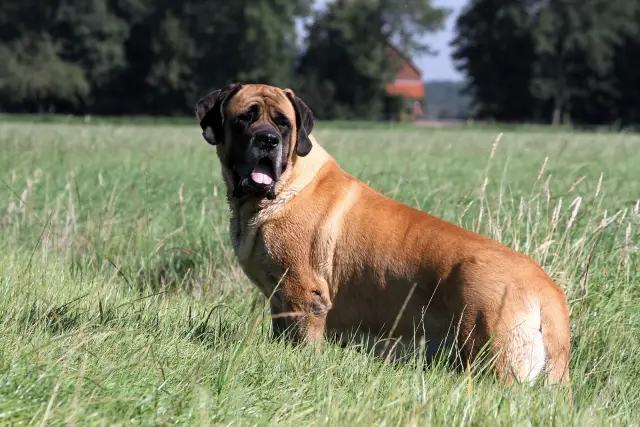
- Short, smooth, little care needed
- Colours
- Red, fawn, apricot, black, brindle; a little white on chest and feet allowed (FCI)
- Life span
- Atlas data: 10 to 12 years
- Exercise
- Moderate daily exercise, firm training, strong fencing
- DNA family
- European Mastiff family (Parker et al. 2017)
- Ancestor breeds
- Shikoku, Old English Bulldog, English Mastiff, St Bernard, German Shorthaired Pointer, Great Dane, Bull Terrier
- Descendant influence
- Used as an outcross in the early Akita
- Legal status
- Banned or restricted in a number of countries; see the law section below
Drawn to scale in real centimetres. Its back reaches about 58 cm, just above your knee; its head about 73 cm, mid-thigh.

Where it sits in the tree
Victorian Breed Boom · 1850 to 1913
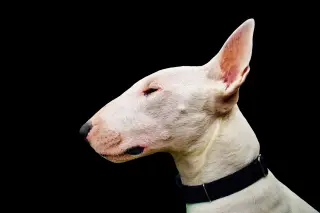
Name and origin: why is it called the Tosa?
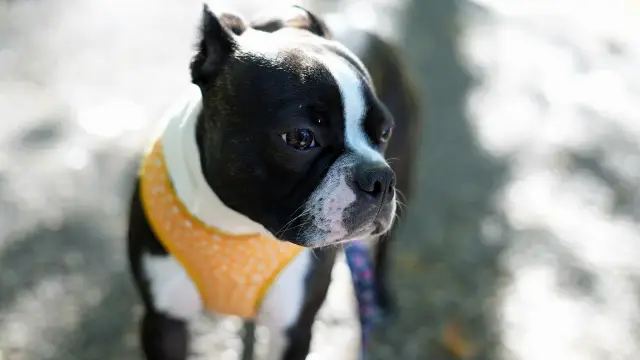 Related breedBoston Terrier1870 to 1893 · United StatesVictorian Breed Boom
The breed is named after Tosa, the old name of the area that is now Kochi Prefecture, on the south coast of Shikoku. "Inu" and "Ken" are both Japanese words for dog, so "Tosa Inu" and "Tosa Ken" simply mean "dog of Tosa". Outside Japan the breed is often called the Japanese Mastiff, and the UK law names it the "Japanese tosa".
The Tosa is the largest of the dogs that Japan considers its own. It is not one of the six native Nihon Ken, the old spitz-type dogs such as the Akita and Shiba Inu. It was built on a native dog but shaped with European breeds into a different kind of dog. For the wider picture of Japanese dogs see the dogs of Japan guide.

History of the Tosa
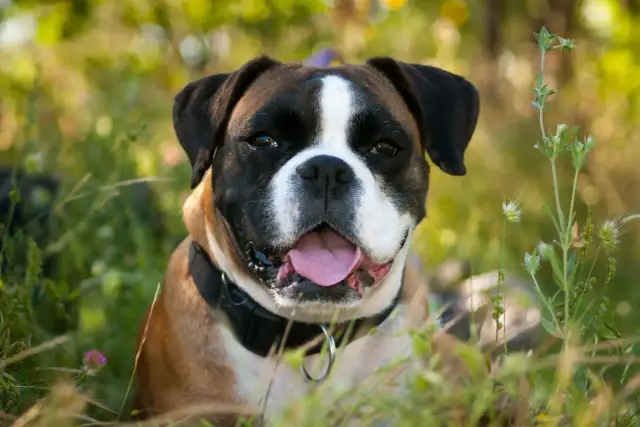 Same eraBoxer1880 to 1904 · GermanyVictorian Breed Boom
Fighting dogs in Tosa Province
In the second half of the 19th century, breeders in Tosa wanted bigger and stronger dogs than the smaller native Shikoku dog. They crossed their dogs with European breeds.
The Tosa's fighting history should be stated plainly. The breed was developed to fight other dogs in organised matches. Reference works describe it as the only dog legally allowed in Japanese dog fighting, and these matches followed their own written rules. One rule was that the dog should remain silent. In Japan the Tosa is compared with a sumo wrestler, and the dogs are even shown in sumo-style accoutrements.
The crosses
The atlas data records these outcrosses:
| Year | Breed crossed in | Stated purpose |
|---|---|---|
| 1872 | Old English Bulldog | Size and power |
| 1874 | English Mastiff | Size and power |
| 1876 | St Bernard | Size and power |
| 1876 | A "German Pointer" (taken here to mean the German Shorthaired Pointer) | Size and power |
| 1924 | Great Dane | Size and power |
| Not dated | Bull Terrier | Named among the breeds used |
The dates come from one chain of sources, and some of them are listed with medium confidence in the atlas data. The English breeds in the list are the English Mastiff, St Bernard, German Shorthaired Pointer, Great Dane and Bull Terrier.
The early 20th century
Tosa breeding was widespread in Japan in the early 20th century.
Into the 20th century
The Tosa also left a mark on other Japanese dogs. The Akita article in this atlas describes outcrosses to the Tosa in the early 1900s, when some owners wanted bigger, heavier dogs, and Japanese enthusiasts later worked to remove that influence. See the dogs of Japan guide for the whole story of the Akita and its preservation.
The Tosa reached South Korea from Japan in 1955. It became the dominant breed in Korean dog fighting, known locally as tugyeon, and Korean-bred Tosas were exported to Taiwan. The breed therefore spread beyond Japan largely through its use in fighting.
Tosa relatives and DNA
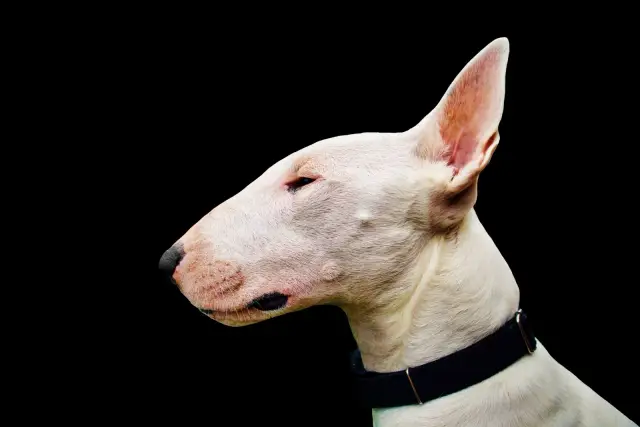 Same familyBull Terrier1850 to 1888 · United KingdomVictorian Breed Boom
The Parker et al. 2017 study placed the Tosa in the European Mastiff family, which is what the history above predicts: the breed owes its size and head to mastiff-type dogs from Europe. The atlas data records the Shikoku dog as the base of the breed, with the mastiff, bulldog, St Bernard, Great Dane, pointer and Bull Terrier added on top. The Shikoku itself belongs to the Asian spitz group. The Tosa therefore combines an Asian spitz foundation with European molosser and bulldog blood.
The Tosa has no close DNA sister in the atlas data. Its main living relatives by shared history are the Akita and the mastiff breeds named above. For a wider view see the dog family tree.
Descend from it · 1
- AkitaJapan
The Tosa breed standard
 Looks relatedBulldog1835 to 1875 · United KingdomIndustrial Revolution
A is the written ideal that judges compare each dog against. The FCI standard (no. 260, "Tosa", country of origin Japan) is the reference in most countries. It puts the breed in Group 2, the Pinscher, Schnauzer, Molossoid and Swiss Mountain and Cattledog group.
| Trait | What the standard says |
|---|---|
| Height (FCI) | Minimum at the withers: dogs 60 cm, bitches 55 cm. No upper limit is set |
| Weight | The FCI standard gives no weight |
| Coat | Short and smooth |
| Colours (FCI) | Red, fawn, apricot, black and brindle. Slight white on the chest and feet is allowed |
| Overall look | A large, heavy-bodied, muscular dog with a broad head, strong neck and powerful build |
Size differences between Japan and abroad
A buyer may meet a wide range of sizes, and may be shown a large dog with a heavy build. The FCI standard sets only minimum heights, so a very large dog is not a sign of a better one.
Tosa temperament
 Related breedBullmastiff1860 to 1924 · United KingdomVictorian Breed Boom
Published, peer-reviewed behaviour data on the Tosa is very thin. What follows comes from the breed's history and the way experienced owners and breed clubs describe it, not from a study.
The Tosa was bred for fighting under rules that included silence, so it is usually described as a quiet, serious dog. It is a large, heavily built guardian type, and a poorly socialised dog of this kind can be a serious problem, particularly with other dogs. The breed needs early, careful socialisation with people and dogs, consistent training from a confident owner, and fencing that a large, strong dog cannot push through.
Training advice is the same as for other big guardian types: start young, use reward-based methods, keep the dog under control in public and never leave it unsupervised with other dogs or children. See also the socialising your dog guide.

Is the Tosa banned? Laws by country
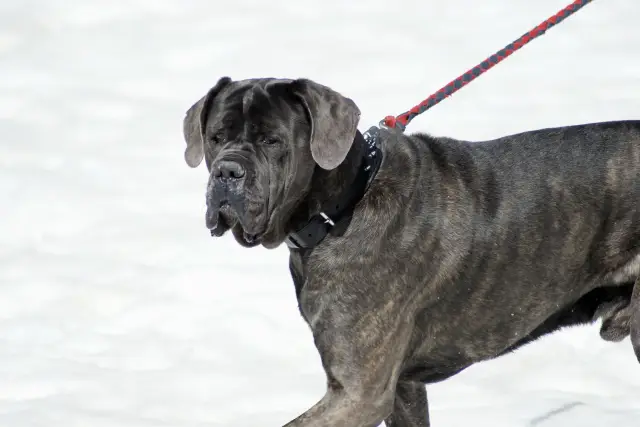 Related breedCane Corso1000 to 1996 · ItalyEarly Middle Ages
The Tosa is covered by breed-specific legislation in several countries, mainly because it was bred for fighting. The laws below are summarised from official texts and government pages. Rules change, so check the current law and ask your local authority before buying, importing or travelling with the dog. This section is general information, not legal advice. Our guides on banned dog breeds and dog laws by country give a wider view.
| Country | What the law does | Official source |
|---|---|---|
| United Kingdom (England, Wales and Scotland) | The Japanese Tosa is named in section 1 of the Dangerous Dogs Act 1991. Breeding, selling, exchanging or giving away, abandoning, or allowing one in public without a muzzle and lead is an offence, and keeping one needs a certificate of exemption | Dangerous Dogs Act 1991, section 1 |
| Ireland | The Japanese Tosa is a restricted breed. The dog may be owned, but in public it must be muzzled and on a strong lead no more than 2 metres long held by a person aged 16 or over | Control of Dogs Regulations 1998 |
| Denmark | One of 13 banned breeds: keeping and breeding are forbidden, and tourists may not bring the dogs in, though transit is allowed | Danish Veterinary and Food Administration |
| Norway | One of six banned breeds, covering crossbreeds; breeding and importing are illegal | Mattilsynet (Norwegian Food Safety Authority) |
| Australia | Import of the Japanese Tosa is prohibited under the federal customs rules; states and councils add their own rules | Customs (Prohibited Imports) Regulations 1956 |
| France | Category 2 "guard and defence dogs": owner needs a permit and the dog has rules for public places | French Ministry of Agriculture |
| Spain | Potentially dangerous dog: the owner needs a licence from the town hall, with liability insurance, and the dog must be on a lead and muzzled in public | Real Decreto 287/2002 |
In Japan the breed is not banned. In England and Wales the law judges a dog by its type, not by its papers or its name, so a dog that looks like a Tosa can come under the Act even without a pedigree. Several other countries have similar laws and the list is longer than the table, so check before you travel: a ban on keeping a breed can also mean you may not bring the dog in on holiday.
A few facts sit alongside the laws. Studies of dog-bite data cited in the banned dog breeds guide, from the Netherlands and Ireland, have questioned whether breed-specific laws reduce bites. The Tosa is rare, so national bite statistics say little about it. The bans are mainly driven by the breed's origin as a fighting dog and its large size.
Tosa health
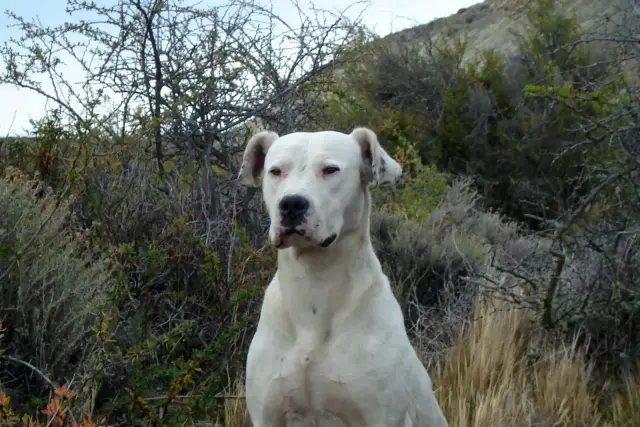 Related breedDogo Argentino1928 to 1973 · ArgentinaModern Era
The atlas data gives a life span of 10 to 12 years, which is typical for a large to giant breed. Published, breed-specific health surveys for the Tosa are scarce, so the list below describes risks known for large, deep-chested dogs, not measured Tosa rates. Information here is general. Talk to a vet about your own dog.
| Condition | What it is | How common | What to do |
|---|---|---|---|
| Gastric dilatation-volvulus (bloat) | The stomach fills with gas and may twist; an emergency | Glickman and colleagues (JAVMA, 2000) found the risk is higher in large and giant dogs with deep chests; no published Tosa figure | Know the signs (swollen belly, retching with nothing coming up); ask your vet about a preventive stomach tack |
| Hip and | Joints that develop badly; can cause pain and arthritis | Common in large breeds; no published Tosa figure | Ask the breeder for joint scores of both parents; keep puppies lean |
A Tosa's care costs are higher than for a small dog, because of food, vet bills and equipment. Give a breeder or rescue your questions about health testing before you commit.

Living with a Tosa
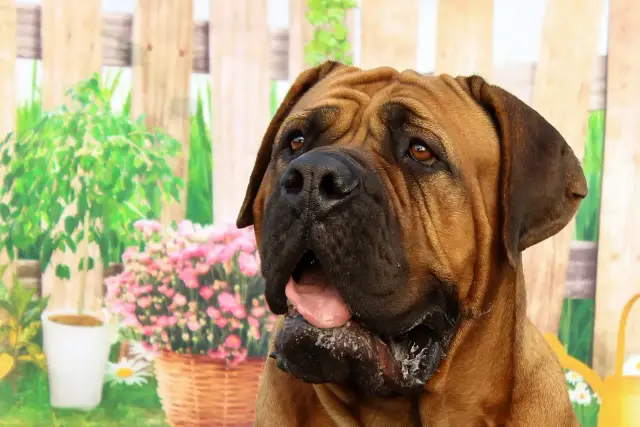 Related breedDogue de Bordeaux1300 to 1896 · FranceLate Middle Ages
Who a Tosa suits
A Tosa suits an experienced owner who understands large guardian dogs, lives where the breed is legal, has a secure property and is willing to train and socialise the dog every day for life. It suits an owner who will accept the legal duties that come with the breed in their area, and who has checked that insurance and housing rules allow it.
Who should look elsewhere
A Tosa is a poor match for first-time dog owners, for homes with young children or other dogs that cannot be kept apart safely, for flats with thin walls and for anyone who may need to travel with the dog internationally. If you like Japanese dogs but want a family-friendly one, compare the Shiba Inu and Akita first, and check the law for any mastiff-type guardian before you choose one.
Buying or adopting
Before you look for a Tosa, check the law where you live. Ask a national kennel club or an experienced breed club for a breeder who health-tests the parents and raises puppies in a home. See the adopting a dog guide for how to judge a rescue or a breeder.

Tosa fun facts
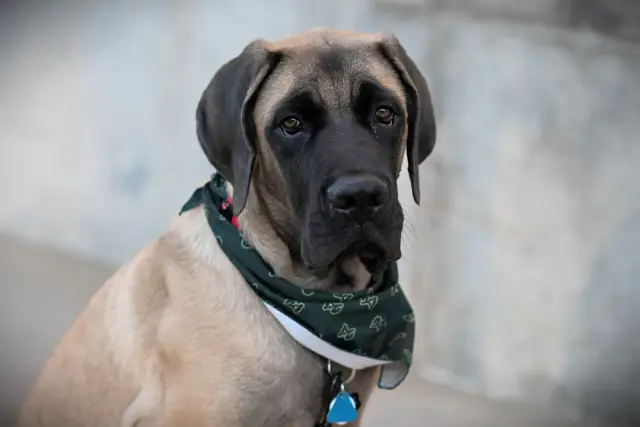 Related breedEnglish Mastiff1300 to 1880 · United KingdomLate Middle Ages
- The word "Tosa" is the old name of Kochi on Shikoku.
- The Tosa was bred to fight silently.
- In Japan, the Tosa is compared with a sumo wrestler.
- Japanese-bred Tosas are usually smaller than foreign-bred ones.
- The UK Dangerous Dogs Act names the Japanese Tosa in its first section.
- The Tosa left a mark on the early Akita through outcrosses in the early 1900s.
Frequently asked questions
Is the Tosa a dangerous dog?
The breed was developed for fighting, is large and strong, and is not suitable for inexperienced owners. Individual dogs differ, and a well-socialised, well-trained dog from a careful breeder is a different animal from a neglected one.
Is the Tosa banned in the UK?
Yes. The Japanese Tosa is named in section 1 of the Dangerous Dogs Act 1991. It can only be kept with a certificate of exemption.
Is the Tosa banned in Japan?
No. It is a breed of Japan and is not banned there.
How big is a Tosa?
The standard sets minimum heights of 60 cm for dogs and 55 cm for bitches, with no upper limit. The FCI standard gives no weight.
How long do Tosas live?
The atlas data gives 10 to 12 years.
What does Tosa Inu mean?
"Inu" is dog and "Tosa" is the old name of Kochi, so it means "dog of Tosa".
Can I take a Tosa on holiday abroad?
Often not. Several countries ban the breed or its import, and some ban entry even for visitors. Check the rules of every country you will pass through.
Read next
 FamilyEuropean MastiffThe whole family
 GuideDogs of Japan: the native breeds and their storiesJapanese dog breeds explained: the six Nihon Ken, the Chin, Tosa, Japanese Spitz and Terrier, Hachiko, wartime near-extinction, DNA and who they suit.
Sources (13)
- Wikipedia, "Tosa (dog breed))" and "Shikoku dog" (used for dates, sizes and the Korean history, checked against the other sources listed).
- Fédération Cynologique Internationale, Tosa, standard no. 260.
- Parker H.G. et al., "Genomic analyses reveal the influence of geographic origin, migration, and hybridization on modern dog breed development", Cell Reports, 2017.
- Glickman L.T. et al., "Incidence of and breed-related risk factors for gastric dilatation-volvulus in dogs", Journal of the American Veterinary Medical Association, 2000.
- Dangerous Dogs Act 1991, section 1 (UK).
- Control of Dogs Regulations 1998 (Ireland).
- Danish Veterinary and Food Administration, list of prohibited dog breeds.
- Norwegian Food Safety Authority (Mattilsynet), banned dogs page.
- Customs (Prohibited Imports) Regulations 1956 (Australia).
- French Ministry of Agriculture, page on category 1 and 2 dogs.
- Real Decreto 287/2002 (Spain), applying Ley 50/1999.
- Cornelissen J.M.R. and Hopster H., "Dog bites in The Netherlands: a study of victims, injuries, circumstances and aggressors to support evaluation of breed specific legislation", The Veterinary Journal, 2010.
- Creedon N. and O Suilleabhain P.S., "Dog bite injuries to humans and the use of breed-specific legislation: a comparison of bites from legislated and non-legislated dog breeds", Irish Veterinary Journal, 2017.