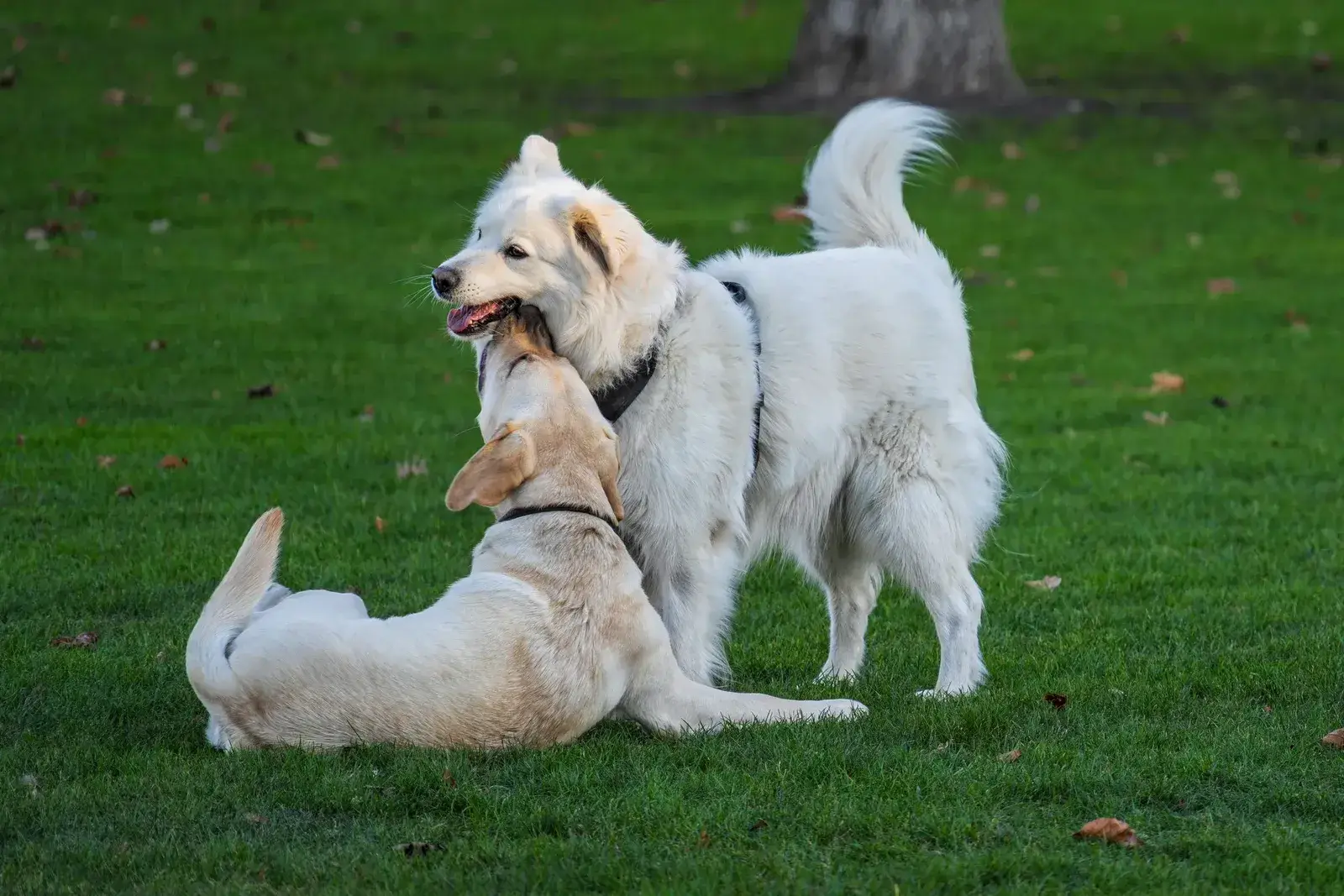
The sensitive period runs from about 3 weeks to roughly 12 to 14 weeks of age, so the breeder and the first weeks at home matter most. It is not too late for an older dog, but the work is slower and aims at confidence, not at "meeting everyone". Go at the dog's pace, pair new things with food, let the dog leave, and ask for help if it shows fear that does not ease.
| Quick facts | |
|---|---|
| Sensitive period | About 3 to 12 weeks, with fear responses growing after that (Scott and Fuller 1965, Freedman and colleagues 1961) |
| Earliest puppy classes | From 7 to 8 weeks, after one vaccine set and a first deworming (AVSAB 2008) |
| Goal | A relaxed dog, not a dog that greets everything |
| Method | Short, calm exposures, food, distance, choice |
| Adult dogs | Slower, helped by desensitisation and counterconditioning |
| Related guides | Dog training basics, How to calm a reactive dog |
What socialisation means
Socialisation is learning what is normal. A puppy that has met children, vacuum cleaners, bicycles, lifts, vets and men in hats while feeling safe will treat these as background. A puppy that has not may meet the same things for the first time at 8 months, when it is bigger, faster and more able to react.
 GuideDog Breeds by Country: Which Nations Made the Most?Dog breeds by country: how many breeds each nation produced in the Dogs Atlas data, from the UK and France to Japan, plus national dogs and families.
Three points are often missed.
- It is not the same as meeting dogs. Most of what a puppy needs to learn is about people, places and objects. Dog-to-dog play is one small part, and a dog can be perfectly social with its own household and still be worried by a crowded street.
- It is not about quantity. Fifty frightening meetings teach less than ten calm ones. What matters is the dog's feeling at the time.
- It does not end at 16 weeks. The early window is the easiest time, not the only one. Dogs keep learning about the world through adolescence and adult life.
The word covers two jobs: learning to cope with the world (habituation) and learning good manners with other dogs and people (social skills). Both need the dog to feel safe first.
 GuideWhy does my dog do that? 15 common behavioursWhy does my dog lick me, stare, eat grass, spin, sigh or roll in smelly things? 15 everyday dog behaviours explained, with when to ask a vet.GuideDog Breeds by Country: Which Nations Made the Most?Dog breeds by country: how many breeds each nation produced in the Dogs Atlas data, from the UK and France to Japan, plus national dogs and families.
The sensitive period
The idea of an early window comes from work at the Jackson Laboratory in Bar Harbor, Maine. Scott and Fuller (Genetics and the Social Behavior of the Dog, 1965) described a "critical period" for social development, beginning at about 3 weeks of age and lasting to roughly 12 weeks. Freedman, King and Elliot (Science, 1961) kept puppies with little human contact in the early weeks and found that the puppies became wary of people, and that contact needed to start early to be easily accepted.
 GuideSmartest dog breeds: what the rankings measure and what they missCoren's smartest dog breeds list, what it measured, what newer dog cognition research says, three kinds of dog intelligence and why smart dogs need work.
Modern writers prefer "sensitive period" to "critical period", because the window closes gradually and later learning is still possible. Reviews also quote a range of 3 to 12 or 14 weeks. A 2022 narrative systematic review of canine socialisation (Animals, 2022) noted that most public socialisation advice still leans on these 1950s and 1960s experiments, and called for newer studies.
Newer evidence points the same way, with caveats:
- Appleby and colleagues (Veterinary Record, 2002) compared dogs referred for aggression or avoidance with other dogs. Dogs with little experience of urban environments between 3 and 6 months were more likely to show aggression to unfamiliar people and avoidance. The study looked back in time, so it shows an association, not proof of cause.
- Puurunen and colleagues (Scientific Reports, 2020) surveyed owners of about 6,000 pet dogs in Finland. Poor socialisation at 7 to 16 weeks was linked to fear of strangers and of other dogs. Breed, size, sex and living environment also played a part, and the data are owner reports.
- A large 2025 study of 4,497 dogs (Scientific Reports) linked adverse experiences in the first six months of life to more fear and aggression in adulthood.
- Howell, King and Bennett (Veterinary Medicine: Research and Reports, 2015) reviewed the evidence on puppy classes and adult behaviour. They found some support for benefits, but also studies with no clear effect, and they called the evidence less clear than popular advice suggests.
Taken together: early positive experience helps and early deprivation hurts, but socialisation is not a vaccine. Genetics, the mother's temperament, health and later experience all count, and a well-socialised puppy can still become a nervous adult.
 GuideAdvanced dog trainingAdvanced dog training explained: the 3 Ds, proofing, off-lead recall, formal heel, distance stays, impulse control, tricks, scent work, dog sports and Good Citizen schemes.GuideSmartest dog breeds: what the rankings measure and what they missCoren's smartest dog breeds list, what it measured, what newer dog cognition research says, three kinds of dog intelligence and why smart dogs need work.
Safe exposure before vaccines are finished
Many owners are told to keep the puppy indoors until the vaccine course ends, at 14 to 16 weeks or later. By then much of the sensitive period has passed. The American Veterinary Society of Animal Behavior (AVSAB), in its 2008 position statement on puppy socialisation, advised that puppies can start socialisation classes from 7 to 8 weeks of age, with at least one set of vaccines given at least 7 days before the first class and a first deworming. It said the chance of death from a behaviour problem is greater than the chance from infection when sensible precautions are taken, and that early socialisation should be the standard of care.
 GuideHow to Groom a Dog: Brushing, Baths, Nails and CoatsHow to groom a dog at home: coat types, brushing, how often to bathe, cutting nails, ears, teeth, shedding, matting and whether to shave a double coat.
A small US study, Stepita, Bain and Kass (Journal of the American Animal Hospital Association, 2013), collected data from clinics and trainers in four cities. Of 279 vaccinated puppies that attended socialisation classes, none was suspected of or diagnosed with canine parvovirus. The authors concluded that vaccinated puppies in classes were at no greater risk than vaccinated puppies outside them. This is not a guarantee, and the study enrolled puppies after at least one vaccine.
What this means in practice, with your vet's advice for your area:
- Ask your vet when your puppy may go out, and follow local disease risk. Parvovirus risk differs by region and by how common unvaccinated dogs are.
- Choose clean, controlled places. A class where the floors are cleaned and every puppy has proof of vaccination is safer than a public pavement used by unknown dogs.
- Carry the puppy in a bag or your arms to see streets, cafes and car parks. Watching the world from a safe place counts as exposure.
- Invite healthy, vaccinated adult dogs you know to your garden or home, one at a time.
- Avoid places where unknown dogs have been until your vet says it is safe: public grass, dog parks, pet shop floors.
 GuideDog training basicsDog training basics: how dogs learn, what you need, and step-by-step lessons for name, sit, down, stay, recall, loose lead walking, leave it, drop it and settle, plus a 4-week plan.GuideHow to Groom a Dog: Brushing, Baths, Nails and CoatsHow to groom a dog at home: coat types, brushing, how often to bathe, cutting nails, ears, teeth, shedding, matting and whether to shave a double coat.
A week-by-week puppy plan
The weeks below count from the day the puppy comes home, usually at 8 weeks. Each step takes only a few minutes. Keep a small pot of soft treats and stop while the puppy is still happy.
 GuideIs your dog suited to therapy work?How to make your dog a therapy dog: temperament checklist, first training steps, how Pet Partners, TDI and Pets As Therapy assess dogs, and welfare limits.
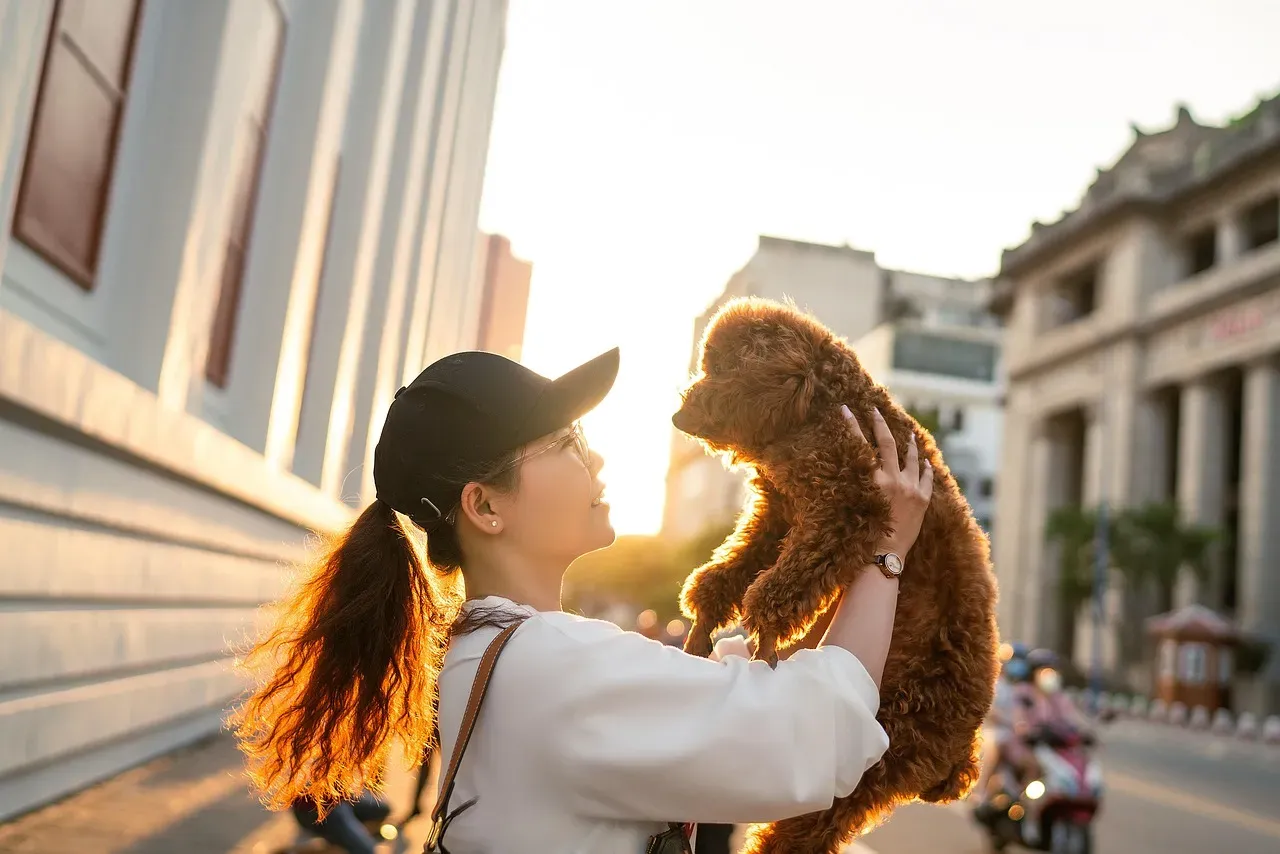 Save
Weeks 1 and 2: home and handling
- Let the puppy learn the house first. Keep visitors few and calm.
- Handle paws, ears, mouth and tail gently, with a treat for each. This helps with later vet visits and grooming.
- Introduce one new person a day, who sits on the floor and lets the puppy approach.
- Play household sounds quietly (washing machine, doorbell, TV), then a little louder over days.
- Short rides in the car, with a treat at the end.
Weeks 3 and 4: wider people and surfaces
- Meet a mix of people: children (supervised), people with hats, glasses, beards, umbrellas, walking sticks, uniforms.
- Walk on carpet, tile, grass, wooden steps, metal grates, a wobbly board.
- First vet visit, ideally just to say hello and get a treat.
- Start a puppy class if your vet agrees. Look for small groups, off-lead play for short bursts and an instructor who uses reward-based methods.
- Practise being left alone for a few minutes with a chew, to build calm.
Weeks 5 and 6: outside the home
- When your vet agrees, take short walks in quiet streets, then busier ones. Sit on a bench at a distance from traffic and let the puppy watch.
- Sounds: traffic, trains in the distance, bicycles, prams, a skateboard.
- Meet one calm, vaccinated adult dog at a time. Let the puppy approach and leave when it wishes.
- Lift and carry the puppy briefly, as a vet or groomer would.
Weeks 7 and 8: variety and confidence
- Visit a cafe terrace or a friend's home. A mat and chew help the puppy settle.
- Meet different dog types: large, small, flat-faced, long-haired. Keep each meeting short.
- Practise the lead, harness and collar, and get the puppy used to a lift or stairs.
- Practise the skills from dog training basics: name, sit, recall. They give the puppy something to do when things are new.
Weeks 9 to 12: keep it going
- Repeat the earlier steps in new places. A puppy that is relaxed in your kitchen may be worried in a friend's.
- Add moving things: joggers, scooters, delivery vans, open umbrellas.
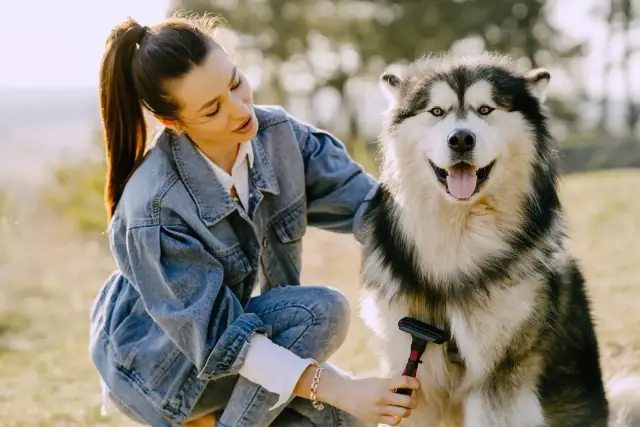
- Practise with water, bath, nail clipping and brushing, with food.
- Do one new thing a day and one familiar thing a day. Ending on something known keeps the day easy.
Adolescence and beyond
Many dogs go through a stage between about 6 and 18 months when they seem to forget their early work, bark at things they once ignored or become wary of new objects. Behaviour experts often call these "fear periods", but the timing varies from dog to dog and the science on fixed dates is thin. Treat it as normal: go back a step, lower the difficulty, give distance and keep the rewards flowing. Do not push the dog through it.
Guideline numbers such as "100 different people by 3 months", often credited to Ian Dunbar, are a way to remind owners that variety matters. They are not a test. Calm, repeated experiences are better than a record.
 GuideBest dog breeds for familiesBest dog breeds for families, small homes, allergies, first-time owners and seniors, ranked from our breed ratings, with honest limits and a table.GuideIs your dog suited to therapy work?How to make your dog a therapy dog: temperament checklist, first training steps, how Pet Partners, TDI and Pets As Therapy assess dogs, and welfare limits.
Reading your dog's body language
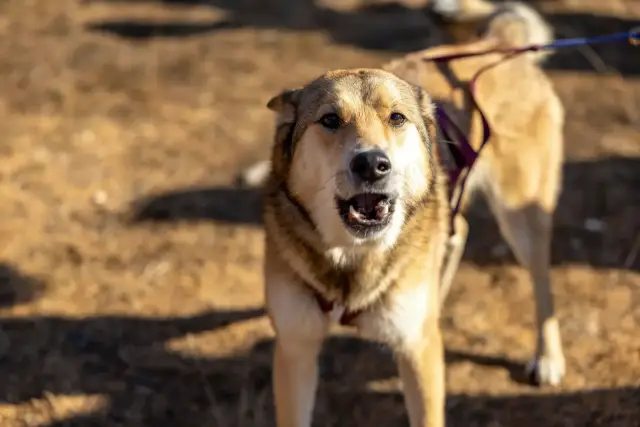
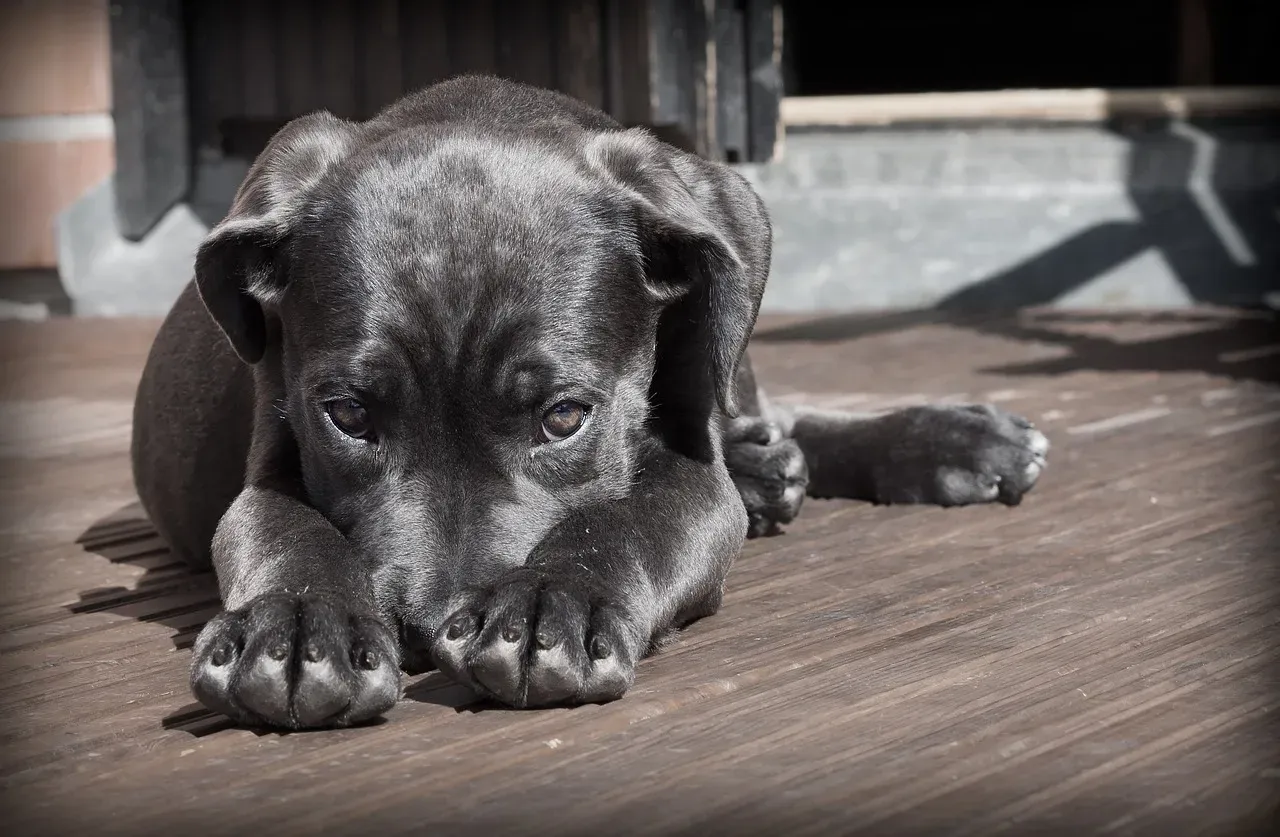
Socialisation only works if the dog feels good. You need to see the early signs of worry and respond before the dog has to bark or bite.
 GuideHow to calm a reactive dogHow to calm a reactive dog: why dogs bark and lunge, what to do in the moment, a step-by-step training plan, what to avoid and when to get help.
 Save
 Save
| Sign | What it can mean | What to do |
|---|---|---|
| Loose body, soft eyes, wagging with the whole body | Relaxed, interested | Continue, keep it short |
| Play bow, bouncy, takes breaks | Play | Let it run; call a break if it gets rough |
| Lip licking, yawning, looking away | Mild stress | Add distance; slow down |
| Ears back, tail low or tucked, body low | Fear | Give space; end the exposure |
| Freezing, hard stare, stiff body | Very worried or about to react | Calmly move away; do not scold |
| Hiding behind you, trying to leave | Wants out | Let it leave; it is not "rude" |
| Turning the head, whale eye (whites of the eyes showing) | Discomfort | Reduce the stimulus |
| Barking, lunging, growling | Distance too short, or too much | Increase distance; if it repeats, see how to calm a reactive dog |
Growling is communication. A dog that is punished for growling may learn to skip the warning and go straight to a bite. If the dog growls, thank it, move away and think about what was too much.
The rule of thumb is simple: the dog should be able to choose. If it moves towards something, good. If it moves away, let it. Never lift a scared dog toward the thing it fears.
 GuideMy Dog Has Bad Breath: Causes and What to DoDog breath smells? Gum disease is the usual cause, but sweet or ammonia smells can mean illness.GuideHow to calm a reactive dogHow to calm a reactive dog: why dogs bark and lunge, what to do in the moment, a step-by-step training plan, what to avoid and when to get help.
Socialising an adult dog
Adult dogs, including rescues and dogs that were kept in a yard or small home, can learn too. The window is not closed, but the work looks different.
 GuideDog laws by country: tax, insurance and licencesDog tax, compulsory liability insurance, licences, microchips and leash rules in Germany, Austria, Switzerland, Spain, Ireland, the UK, the US and more.
Start with the dog you have
Take a short history if you can: where the dog came from, what it is scared of, what it enjoys. A dog from a shelter, a puppy mill or a hoarding case may be wary of many things. Large studies link rough early life to more fear and aggression, but they also show wide differences between individual dogs. Do not assume the worst, and do not assume the dog will be fine.
A slow first month
Many rescue workers speak about a "3-3-3" pattern, with 3 days to decompress, 3 weeks to learn the routine and 3 months to settle. It is a rule of thumb, not a scientific timetable, but it describes something true: new dogs need quiet and a routine before extras.
- Keep the home calm for the first days. Few visitors, a safe bed, regular meals and walks.
- Walk in quiet places at quiet times.
- Do not take the dog to a party, a market or a festival in the first weeks.
- Teach a few simple behaviours from dog training basics: name, sit, hand touch. They give the dog a job to do when stressed.
Desensitisation and counterconditioning
 Save
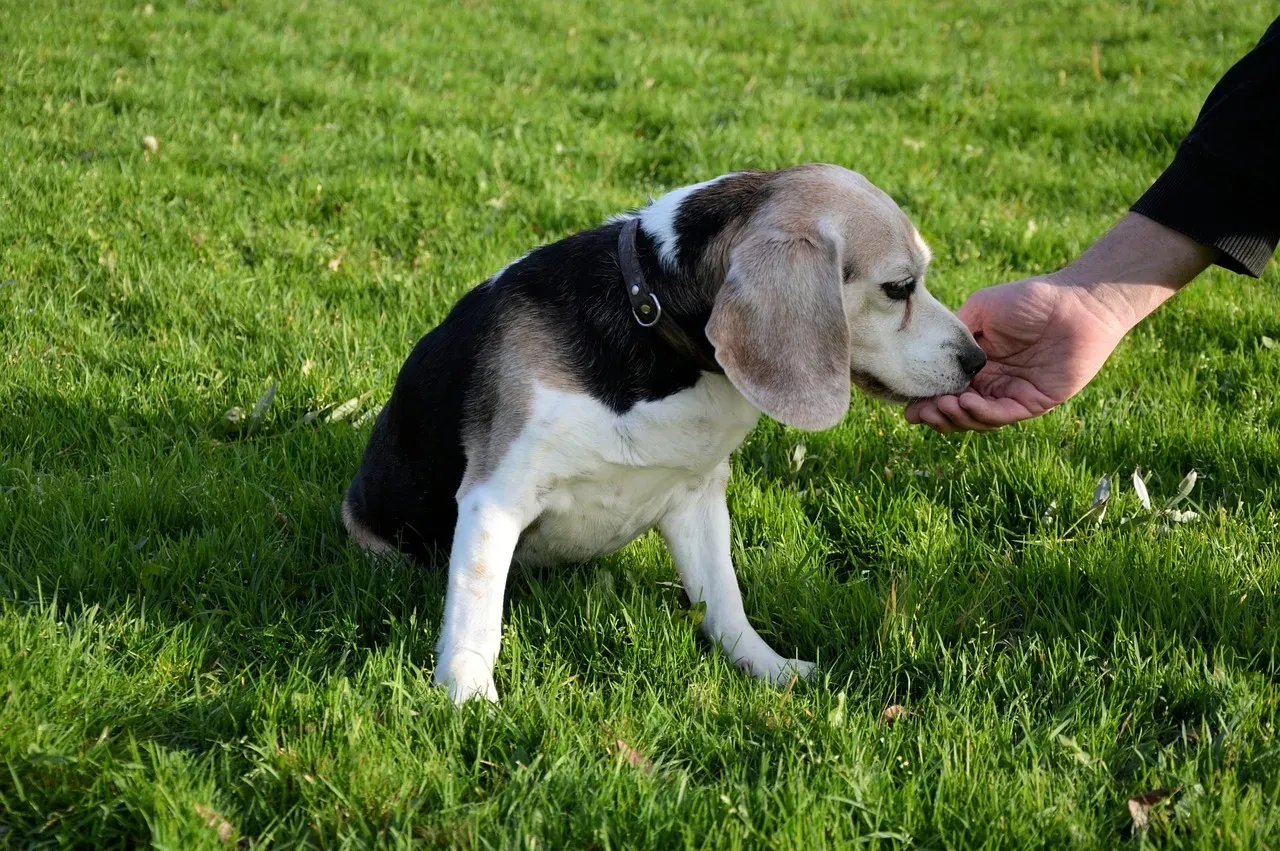
For a dog that is afraid, general "exposure" is not enough. The standard method is desensitisation and counterconditioning: show the fearful thing at a level so low that the dog stays relaxed, then pair it with food, and make it a little harder over weeks. A report on the behavioural rehabilitation of extremely fearful dogs (Applied Animal Behaviour Science, 2022), many from shelters and rescues, described a programme built on this approach; 86 percent of dogs graduated and nearly all were adopted. It was a single programme without a control group, but it matches what behaviourists teach.
Step by step:
- Find the distance at which the dog notices the trigger but stays relaxed and takes food.
- Treat each time it looks at the trigger. Stay at that distance until the dog looks back at you with a loose body.
- Move 1 metre closer only when the dog is easy.
- If the dog stiffens, stops eating or pulls away, go back to the last easy distance.
- Finish the session with a calm activity: a sniff walk, a chew or a nap.
The fuller step-by-step version, with lead handling and the threshold idea, is in how to calm a reactive dog. This guide covers general confidence; that one covers dogs that already bark and lunge.
 GuideMy Dog Injured His Paw: First Aid and When to See a VetDog paw injury: cut pads, torn nails, grass seeds, hot pavement burns and limping.GuideDog laws by country: tax, insurance and licencesDog tax, compulsory liability insurance, licences, microchips and leash rules in Germany, Austria, Switzerland, Spain, Ireland, the UK, the US and more.
Common mistakes
- Flooding. Putting the dog in a situation it cannot escape and hoping it will "get used to it". A fearful dog in a crowd learns that people are scary and that nobody listens. It does not learn calm.
- Dog parks too early. Off-leash dog parks mix unknown dogs and unknown vaccination status, and owners may not watch closely. A public health review found benefits for people and dogs, but limited evidence on dog bite risk and on disease spread. For a puppy before the vaccine course is complete, and for a shy dog of any age, a dog park is usually the wrong place to start.
- Forced greetings. Pulling the dog towards a stranger or another dog because "he needs to learn". Let it choose.
- Too much at once. A day of a crowd, a cafe, the vet and the groomer is too much for a puppy. Stop before the dog is tired.
- Punishing fear. Scolding a dog for barking, growling or hiding tells it that its warnings are wrong and that the trigger is a bad sign. It makes things worse over time.
 GuideMy Dog Is Coughing: Causes and When to See a VetDog coughing, honking or hacking? Emergency signs, kennel cough, collapsing trachea, heart cough, what to do at home and when to see a vet.
 GuideMy Dog Is Vomiting: Causes and What to DoDog throwing up? Vomiting vs regurgitation, emergency signs like bloat, common causes, safe home care, what not to do, and when to see a vet.GuideMy Dog Is Coughing: Causes and When to See a VetDog coughing, honking or hacking? Emergency signs, kennel cough, collapsing trachea, heart cough, what to do at home and when to see a vet.
When to get help
Contact a qualified, reward-based trainer or a veterinary behaviourist if:
 GuideMale vs Female Dogs: Differences, Myths and NeuteringMale vs female dogs: what research says about size, trainability and affection, marking, mounting, roaming, and the spay or neuter timing decision.
- Your puppy or dog freezes, hides, trembles or tries to escape for most of a walk.
- The dog does not eat treats in places it used to be fine.
- It lunges, barks or growls at people or dogs, even at a distance.
- It has bitten or snapped at a person or another dog.
- The fear is getting worse, not better, after a few weeks of careful work.
- You are afraid of your dog, or it is unsafe for others.
Ask your vet first to rule out pain or illness, because pain can make a dog touchy. In many countries the title "dog trainer" is not protected, so ask about methods. Choose someone who uses rewards, explains the plan and does not use shock, prong or choke tools. For a dog that already barks and lunges, the full plan is in how to calm a reactive dog. For general skills, see dog training basics.
 GuideTicks and fleas on dogs: how to check, remove and prevent themTicks and fleas on dogs: how to tell them apart, check your dog, remove a tick safely, break the flea life cycle and prevent both.GuideMale vs Female Dogs: Differences, Myths and NeuteringMale vs female dogs: what research says about size, trainability and affection, marking, mounting, roaming, and the spay or neuter timing decision.
Socialisation checklist
Use this as a guide, not an exam. Tick items off when the dog is relaxed, not just tolerating.
 GuideDogs in science and spaceSpace dogs Laika, Belka and Strelka, Pavlov's dogs, Snuppy the clone, the dog genome and scent detection: what dogs did for science, and what it cost them.
| Category | Examples | Done |
|---|---|---|
| People | Men, women, children, people in hats, glasses, beards, uniforms, with sticks, wheelchairs, prams | |
| Handling | Paws, ears, mouth, tail, brushing, bath, nail trim, lifting | |
| Dogs | Calm adult, puppy, large, small, flat-faced, long-haired | |
| Other animals | Cats, livestock, birds, according to your life | |
| Surfaces | Grass, gravel, tile, metal grate, steps, wet floors, wobbly board | |
| Sounds | Vacuum, doorbell, thunder recording, traffic, trains, fireworks recording | |
| Moving things | Bikes, scooters, joggers, prams, cars, delivery vans | |
| Places | Car, vet, groomer, cafe, shop doorway, park, friend's house | |
| Alone time | Short absences, crate or pen, quiet play | |
| Equipment | Collar, harness, lead, muzzle (with training), coat |
 ArticleDog Breed Family Tree: How All Dog Breeds Are RelatedThe dog breed family tree from Ice Age wolves to 29 breed families.GuideDogs in science and spaceSpace dogs Laika, Belka and Strelka, Pavlov's dogs, Snuppy the clone, the dog genome and scent detection: what dogs did for science, and what it cost them.
Frequently asked questions
When should I start socialising my puppy?
From the day it comes home, usually at about 8 weeks. Start in the house, then in controlled places with vet advice. AVSAB advises puppy classes from 7 to 8 weeks after one vaccine set and a first deworming.
Can I take my puppy out before it is fully vaccinated?
Often yes, with care. Ask your vet. Carry the puppy in busy places, avoid places where unknown dogs have been, and use controlled spaces such as classes with proof of vaccination.
My dog is scared of other dogs. What should I do?
Stay far enough away that the dog stays calm, give treats when it notices another dog, and do not force greetings. For a dog that barks or lunges, read how to calm a reactive dog.
Are dog parks good for socialisation?
For most puppies and shy dogs, they are not a good start. They have unknown dogs, unknown vaccination status and uneven supervision. A confident, fully vaccinated adult with good recall may enjoy them, but one-to-one meetings with known dogs are safer for learning.
Read next
 Family storyScent HoundRead the family's story: origins, members, DNA
 Family storyRetrieverRead the family's story: origins, members, DNA
 Adopt a dogDog Shelters in GermanyTen big cities checked, how adoption works, what it costs
Sources (11)
- Scott, J.P. and Fuller, J.L. (1965). Genetics and the Social Behavior of the Dog. University of Chicago Press.
- Freedman, D.G., King, J.A. and Elliot, O. (1961). Critical period in the social development of dogs. Science, 133(3457), 1016 to 1017.
- Appleby, D.L., Bradshaw, J.W.S. and Casey, R.A. (2002). Relationship between aggressive and avoidance behaviour by dogs and their experience in the first six months of life. Veterinary Record, 150(14), 434 to 438.
- Puurunen, J., Hakanen, E., Salonen, M.K. and others (2020). Inadequate socialisation, inactivity, and urban living environment are associated with social fearfulness in pet dogs. Scientific Reports, 10, 3527.
- Howell, T.J., King, T. and Bennett, P.C. (2015). Puppy parties and beyond: the role of early age socialization practices on adult dog behavior. Veterinary Medicine: Research and Reports, 6, 143 to 153.
- Stepita, M.E., Bain, M.J. and Kass, P.H. (2013). Frequency of canine parvovirus infection in vaccinated puppies that attended puppy socialization classes. Journal of the American Animal Hospital Association, 49(2), 95 to 100.
- American Veterinary Society of Animal Behavior (2008). Position statement on puppy socialization.
- Canine socialisation: a narrative systematic review (2022). Animals, 12(21), 2895.
- Influence of early life adversity and breed on aggression and fear in dogs (2025). Scientific Reports.
- Behavioral rehabilitation of extremely fearful dogs: report on the efficacy of a treatment protocol (2022). Applied Animal Behaviour Science.
- Public health considerations associated with the location and operation of off-leash dog parks (review). Journal of Community Health, 2018.
Socialising with other dogs
Dogs need to learn to read each other, but not every dog needs to play with every dog.
This is a good place to repeat the advice in the reactive dog guide: forced meetings make a worried dog worse. Distance and calm passing are kinder.