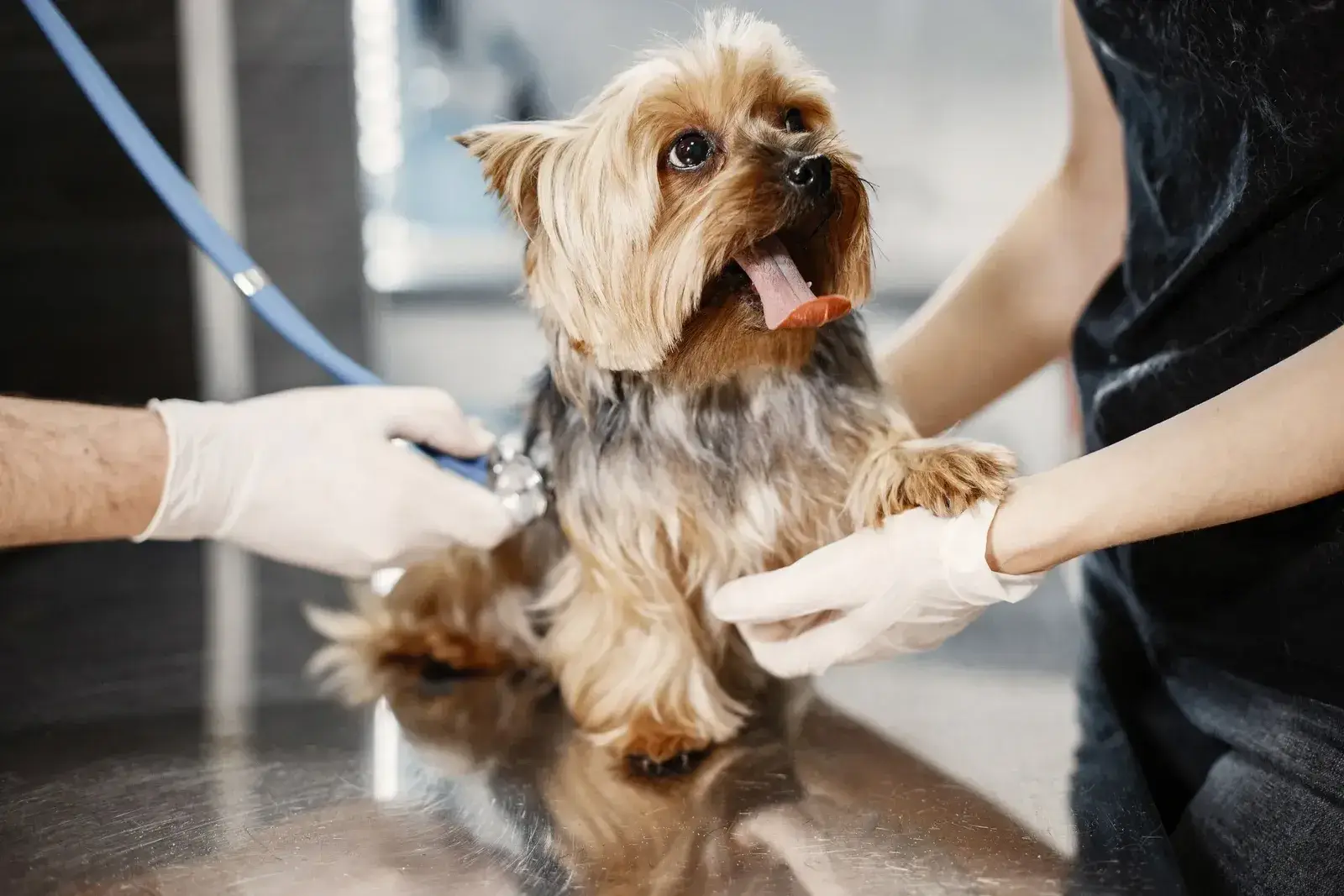
Most coughs in dogs come from a mild infection like kennel cough and clear up on their own. Some point to a windpipe problem in small breeds, and some, especially in older dogs, can come from the heart or lungs. This guide covers the emergency signs, the usual causes, what you can do at home and what to avoid. It is general information. A vet who examines your dog decides what is wrong.
Is this an emergency?
PDSA says to take your dog to a vet immediately if they cannot breathe properly, have collapsed, have white, grey or blue gums, or are getting rapidly worse. Go now if you see any of these, and phone the clinic on the way if you can:
 GuideMy Dog's Eye Is Red: Causes and When to See a VetRed, weepy or squinting dog eye? Emergency signs, common causes like conjunctivitis and ulcers, what to do at home, what to avoid, and when to see a vet.
- Struggling to breathe. Your dog stretches the neck out, breathes with the belly, breathes very fast at rest, or cannot settle.
- Blue, grey or white gums, or a blue tongue. This means the body is short of oxygen.
- Collapse or fainting during or after a coughing fit.
- A coughing fit that will not stop.
- Something stuck in the throat. Gagging, pawing at the mouth, drooling and retching without bringing anything up. Do not push your fingers deep into the throat, as that can push the object further down.
Stay calm and keep your dog cool and quiet on the way, because stress makes breathing worse (PDSA). If you are unsure, phone the clinic. The Royal Veterinary College and AAHA both publish respiratory distress guidance for pet owners.
 GuideMy Dog Keeps Licking His Paws: Causes and What HelpsDog licking paws all the time: allergies, parasites, injury, yeast and boredom.GuideMy Dog's Eye Is Red: Causes and When to See a VetRed, weepy or squinting dog eye? Emergency signs, common causes like conjunctivitis and ulcers, what to do at home, what to avoid, and when to see a vet.
Common causes
A cough is a sign, not a diagnosis. The usual causes:
 GuideMy Dog Stepped on a Bee: What to DoDog stung by a bee or wasp: emergency signs of an allergic reaction, safe first aid, what not to give, and when to see a vet.
- Kennel cough. The most common reason for a sudden dry cough in an otherwise bright dog. Details below.
- Tracheal collapse. A harsh honking cough in small and toy breeds. Details below.
- Heart disease. A softer cough in older dogs, often worse at night or when lying down.
- Chronic bronchitis. Inflamed airways cause a dry, hacking cough that tends to get worse with exercise and over time.
- Allergies or asthma-like airway inflammation. Dust, smoke, sprays and pollen can irritate the airways.
- Pneumonia. A deeper, wetter cough with a tired dog, often with a temperature and poor appetite.
- Heartworm. A mosquito-borne parasite. A mild cough is often the first sign. It depends on where you live, so ask your vet whether it matters locally.
- Something in the throat. A grass seed, a piece of stick or a bone fragment.
- Pulling on a collar. A tight collar can set off coughing, especially in small breeds with a weak windpipe.
 GuideMy Dog Has Bad Breath: Causes and What to DoDog breath smells? Gum disease is the usual cause, but sweet or ammonia smells can mean illness.GuideMy Dog Stepped on a Bee: What to DoDog stung by a bee or wasp: emergency signs of an allergic reaction, safe first aid, what not to give, and when to see a vet.
Kennel cough
PDSA describes kennel cough as an airway infection that causes a dry, hacking cough. It is often called infectious tracheobronchitis. Dogs may cough in fits, sometimes followed by retching and gagging.
 GuideMy Dog Has Diarrhea: What Should I Do?Dog diarrhea: emergency signs, common causes, safe home care, what not to give, and when to see a vet.
- How it spreads. Through the air and on shared surfaces, wherever dogs mix: parks, boarding kennels, grooming parlours, training classes. The germs can survive in the environment for several weeks.
- How long it lasts. Signs usually last one to three weeks according to PDSA, and 10 to 20 days according to Merck, with the cough easing after the first five days. PDSA says most dogs improve on their own, though some need treatment from a vet. A vet may want to see any dog that is off its food, has a temperature or is very tired.
- Keeping others safe. PDSA advises keeping a coughing dog away from other dogs and public places while there are signs and for two to three weeks afterwards.
- Vaccine. A kennel cough vaccine exists. PDSA calls vaccination the best way to prevent it, especially for dogs that mix with many others or go into kennels. The vaccine covers Bordetella bronchiseptica and canine parainfluenza virus. Other germs can cause a similar cough, so a vaccinated dog can still catch a cough. Your vet can tell you what protection your dog has and how often it needs renewing.
Puppies, old dogs and dogs with heart or lung disease can get sicker from kennel cough, so call the vet sooner for them.
 GuideTicks and fleas on dogs: how to check, remove and prevent themTicks and fleas on dogs: how to tell them apart, check your dog, remove a tick safely, break the flea life cycle and prevent both.GuideMy Dog Has Diarrhea: What Should I Do?Dog diarrhea: emergency signs, common causes, safe home care, what not to give, and when to see a vet.
Honking cough and tracheal collapse
The trachea, or windpipe, is a tube held open by rings of cartilage. In tracheal collapse it loses stiffness and flattens. Merck Veterinary Manual says it is most common in toy and miniature breeds, though a large dog can occasionally have it. The cause is unknown. The usual sign is a dry, honking cough that becomes chronic, sometimes with laboured breathing. It often starts with excitement, exercise or pulling on the lead.
 GuideWhy Does My Dog Eat Grass? What Studies SayDog eating grass? What a large owner survey found, why dogs do it, when it is normal, when to worry (vomiting, lawn chemicals, toxic plants), what to do.
Merck notes it is more frequent in dogs that are overweight, that have heart disease or have another lung disease such as chronic bronchitis. Weight loss is described as central to management. A vet may also advise less excitement, a chest strap in place of a collar and medicines to calm the cough.
The atlas's breed articles mention this risk. See Pomeranian, Yorkshire Terrier and Chihuahua for what each article says about the windpipe.
A severe attack can cause blue gums or a blue tongue. PDSA describes dogs recovering after emergency treatment. If your dog has an attack like this, go straight to a vet.
 GuideMy Dog Is Lethargic: Causes and When to Call a VetDog tired, weak or not himself? Normal tiredness vs lethargy, emergency signs, common causes, what to note for the vet and what to avoid.GuideWhy Does My Dog Eat Grass? What Studies SayDog eating grass? What a large owner survey found, why dogs do it, when it is normal, when to worry (vomiting, lawn chemicals, toxic plants), what to do.
Coughing and the heart
In older dogs, a cough that comes mostly at night, when lying down or after exercise can be linked to the heart. When the heart does not pump well, fluid can build up in the lungs and trigger coughing. Other signs can be tiring easily, faster breathing at rest, weakness or fainting, a swollen belly and pale or bluish gums.
 GuideDog Is Not Eating or Drinking: What to DoDog not eating or drinking water? Why not drinking is more urgent, causes, puppies and small dogs, home care, and when to call a vet.
Not every cough in an older dog comes from the heart, and many dogs with a heart murmur live well for years with treatment and checks. A vet listens to the chest and may suggest an ultrasound of the heart. If your older dog has a new cough that does not clear in a few days, book a check. A quick visit can rule things in or out and costs little compared with waiting.
 GuideMy Dog Injured His Paw: First Aid and When to See a VetDog paw injury: cut pads, torn nails, grass seeds, hot pavement burns and limping.GuideDog Is Not Eating or Drinking: What to DoDog not eating or drinking water? Why not drinking is more urgent, causes, puppies and small dogs, home care, and when to call a vet.
What you can do at home
For a bright dog with a mild cough and no emergency signs:
 GuideDog Runny Nose: Causes, Discharge Colours and Vet SignsDog nose leaking or sneezing? Clear vs coloured discharge, nosebleed emergencies, causes like allergies and grass seeds, home care, and when to see a vet.
- Rest. Short, calm walks on a lead. Skip dog parks, daycare and boarding until the cough is gone.
- Use a chest strap lead instead of a collar so nothing presses on the windpipe.
- Keep the air clean. No smoke, sprays, air fresheners or dusty bedding near your dog.
- Keep water available, and keep your dog warm and comfortable.
- Steam. A steamy bathroom, for example while you run a shower, may help some dogs. Never leave your dog alone in a steamy room or make them stay if they are not relaxed.
- Count breaths. At rest, asleep, count breaths for 30 seconds and double it. Note the number, and tell your vet if it keeps rising. Your vet can tell you what range is normal for your dog.
- Film the cough on your phone. Vets find a recording very useful, because dogs often stop coughing in the clinic.
- Keep other dogs away if you suspect kennel cough. At the clinic, tell reception you have arrived and wait outside until you are called, so the infection does not spread.
 GuideMy Dog Is Vomiting: Causes and What to DoDog throwing up? Vomiting vs regurgitation, emergency signs like bloat, common causes, safe home care, what not to do, and when to see a vet.GuideDog Runny Nose: Causes, Discharge Colours and Vet SignsDog nose leaking or sneezing? Clear vs coloured discharge, nosebleed emergencies, causes like allergies and grass seeds, home care, and when to see a vet.
What not to do
- No cough medicines unless a vet prescribes them. The right treatment depends on why your dog is coughing.
- No honey or herbal remedies in place of a vet check for a cough that lasts. They do not treat the cause.
- Do not leave a cough that is getting worse. Waiting a day is fine for a bright dog. Waiting a week is not.
- Do not use a collar and lead to hold a coughing dog back hard.
- Do not give leftover antibiotics. They treat bacteria only, and most coughs have other causes.
 GuideMy Dog Keeps Scratching: Causes and When to See a VetDog scratching non-stop? Emergency signs, fleas, allergies, mites, skin infections, food allergy, what to do at home and when to see a vet.
 GuideMy Dog Keeps Shaking His Head: Ear Infection GuideDog shaking head, scratching ears or smelly ears? Ear infection signs, causes, ear haematoma, emergency signs, what to do and what to avoid.GuideMy Dog Keeps Scratching: Causes and When to See a VetDog scratching non-stop? Emergency signs, fleas, allergies, mites, skin infections, food allergy, what to do at home and when to see a vet.
When to see a vet
Book a visit (same day if your dog seems unwell) if:
 GuideDog Clothes: When Dogs Need Coats, and a Short History of Dog FashionDo dogs need coats in winter? When clothes help, when costumes stress a dog, safe fit, reflective gear, and a short history of dog fashion and dog art.
- The cough has lasted more than a few days, or longer than a week at the outside. PDSA suggests seeing a vet for a cough that has lasted more than a few days.
- The cough makes your dog collapse or faint.
- The cough brings up blood. Call your vet the same day.
- It is getting worse, or your dog tires faster than usual.
- Your dog has a temperature, is off food or is lethargic.
- The cough is mainly at night, or when your dog lies down.
- Your dog is a puppy, a senior or has a known heart or lung problem.
- You are unsure whether a recent cough is kennel cough.
If your dog is coughing and also vomiting or has other signs, see dog vomiting and dog not eating or drinking. Fast, heavy breathing without a cough is covered in dog panting. A cough with a runny nose or sneezing is covered in dog runny nose. For other odd noises, see why does my dog.
The emergency signs, kennel cough and home care advice in this guide were checked against PDSA and the Merck Veterinary Manual in November 2026.
 GuideMy Dog Is Panting a Lot: Normal or Worrying?Dog panting heavily? Normal vs worrying panting, heatstroke signs and cooling steps, pain, anxiety, Cushing's disease, and when to see a vet.GuideDog Clothes: When Dogs Need Coats, and a Short History of Dog FashionDo dogs need coats in winter? When clothes help, when costumes stress a dog, safe fit, reflective gear, and a short history of dog fashion and dog art.
FAQ
Why is my dog coughing?
Common causes are kennel cough, windpipe problems in small breeds, heart disease in older dogs, bronchitis, allergies and something stuck in the throat. A vet decides which.
Is kennel cough serious?
Often not. PDSA says most dogs improve on their own. It can be worse in puppies, older dogs and dogs with other illness. See a vet if your dog is unwell, off food or has a temperature.
Can dogs get kennel cough from the vaccine?
Vaccination is the best prevention according to PDSA. Ask your vet about what protection your dog has and any short-lived side effects.
Why does my dog cough like something is stuck?
Kennel cough, tracheal collapse and a real blockage can all sound like this. If the dog is gagging, drooling or struggling to breathe, treat it as an emergency.
Why is my dog coughing and gagging?
A dry fit followed by retching and gagging is typical of kennel cough. A dog that keeps retching with nothing coming up and cannot settle needs a vet right away.
Why does my dog cough at night?
A cough that is mainly at night or when lying down can be linked to the heart in older dogs. Book a vet check.
Why does my small dog honk when he pulls on the lead?
This fits tracheal collapse. Switch to a chest strap lead and ask a vet to check, since weight and treatment make a big difference.
Can dogs cough because of a collar?
Yes, a collar pressing on the windpipe can trigger coughing, especially in small breeds with a weak trachea.
Should I take my dog to the vet for a cough?
If it lasts more than a few days, keeps getting worse or comes with tiredness, a temperature or poor appetite, yes. In an emergency, go now.
Can I give my dog cough syrup?
Not unless your vet prescribes it. The right medicine depends on why your dog is coughing, so a vet needs to examine your dog first.
Read next
 Family storyEuropean dogsRead the family's story: origins, members, DNA
 Family storyAmerican TerrierRead the family's story: origins, members, DNA
 Family storyAncient American dogsRead the family's story: origins, members, DNA
Sources (5)
- PDSA, "Kennel Cough" pet health hub leaflet (signs, spread, isolation for two to three weeks, vaccination as best prevention).
- PDSA, "First aid for pets struggling to breathe" (when to go to a vet immediately, gum colour, keeping a pet calm).
- PDSA, "Coughing in dogs" pet health hub leaflet (when a cough needs a vet visit, tracheal collapse signs).
- Merck Veterinary Manual, pet owner version, "Tracheal Collapse in Dogs", Ned F. Kuehn, DVM (breeds affected, honking cough, risk factors, weight management).
- Royal Veterinary College, "Respiratory distress in cats and dogs" fact file, and AAHA, "Respiratory distress in pets" (breathing difficulty as an emergency).